Tag: Business

  • Singapore December retail sales drops 3 per cent

    Singapore December retail sales drops 3 per cent

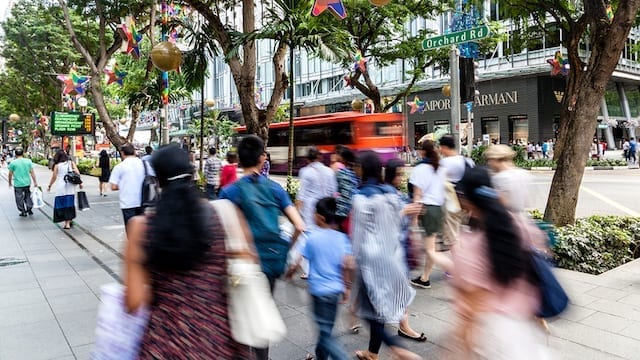
    Singapore retail sales in December slipped 3 per cent year on year. Including motor vehicles in the data, they fell by 6 per cent. There was a month-on-month decline of  4.1 per cent excluding vehicles, largely due to the online-sales boom driven by Singles Day and Black Friday in November.

    Online retailing continues to eat into traditional channels, accounting for 5.5 per cent of total sales in December, which compares favourably with the festivals-driven 6.6 per cent in November.

    The main drivers of change in monthly data was a 20.7 per cent slump in motor vehicle sales, and a 16.8 per cent fall in sales of computer and telecommunications equipment, largely down to  new product releases in December 2017.

    Singapore retail sales in December of recreational goods, watches and jewellery and furniture and household equipment decreased between 3.9 per cent and 5.8 per cent. Statistics Singapore attributed that to lower demand for sporting goods, jewellery and furniture. Conversely, sales of medical goods and toiletries increased 1.8 per cent.

    Sales of food and beverage services increased 4.5 per cent in December, compared to the same month last year.

    Sales by food caterers, fast-food outlets, restaurants and other eating places (such as cafes) all increased, by between 2.5 per cent and 6.6 per cent year on year.

  • Grab-Uber deal comes under fresh antitrust scrutiny in Vietnam

    Grab-Uber deal comes under fresh antitrust scrutiny in Vietnam

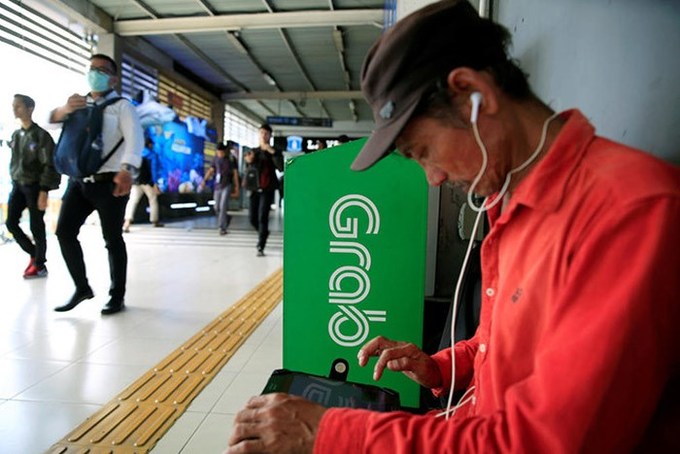
    Vietnamese authorities are set to further investigate the merger between Grab and Uber last year for possible violation of antitrust regulations. The Competition Council said after a thorough examination of documents and arguments furnished by both parties it has discovered a number of new details related to possible violation of competition laws by ride-hailing platform Grab’s acquisition of Uber’s business operations last March.

    It has returned the case dossiers to the Ministry of Industry and Trade’s competition and consumer protection department for further investigation. The investigation is expected to go on until April this year.

    Last year Singapore-based Grab acquired Uber in Southeast Asia in return for a 27.5 percent stake.

    Vietnam’s Competition Law requires any merger or acquisition that results in a company gaining a 30 percent market share to be reported to competition authorities.

    If a company gains a 50 percent market share from the deal, it can only be carried out with express permission from the authorities.

    The department’s preliminary investigation found Grab’s market share had exceeded 50 percent since the acquisition.

    But Grab insists it had acted legally and that the competition authorities have misinterpreted the scope of relevant markets when calculating the market share.

    Last October the Philippines’s competition watchdog fined the two companies a cumulative 16 million pesos ($296,873) saying they had completed the deal too soon and that the quality of service had dipped.

    Singapore’s competition authority fined them a total of S$13 million ($9.5 million) and announced other measures to address competition concerns arising from the merger.

  • World’s first digital mall launched in India by Digital Mall of Asia

    World’s first digital mall launched in India by Digital Mall of Asia

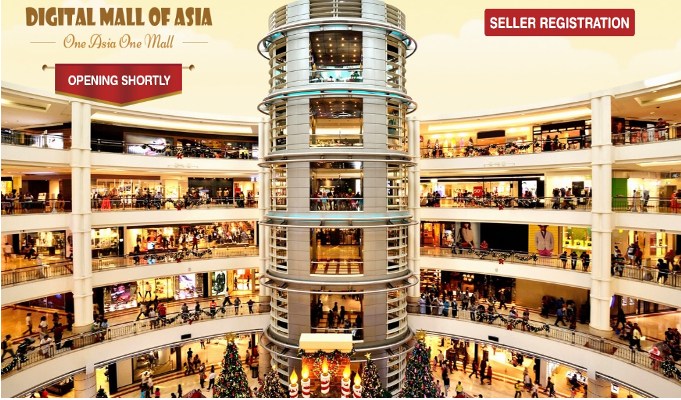
    In a revolutionary development that could potentially redefine the global retail and e-commerce industries, Digital Mall of Asia (DMA), a first-of-its-kind digital e-commerce platform merging the real estate and the digital spaces, has announced the launch of its Noida mall. The launch took place at the company’s registered office in the Film City, Noida, setting an unprecedented example of how online portals and brick-and-mortar retailers can transcend the digital-physical divide to optimize their consumer outreach and revenue generation.

    An initiative by Yokeasia Malls Pvt. Ltd., DMA is a disruptive innovation by an Indian organization recreating the experience of a physical mall in the digital space. In an industry where most of the key names are being run or backed by foreign players, this unique and disruptively innovative initiative by Yokeasia Malls has the potential to put the novelties of Digital India on the world map.

    The Need

    The launch of DMA Noida addresses the challenges that retailers often face and empowers them to maximize their business footprint with innovative digital offerings and an unmatched value proposition. DMA operates on a zero commission model; retailers at DMA don’t have to pay anything apart from the rent, a major revolution in a space where all the major E-commerce players charge somewhere between 5-35 percent of the revenue. Moreover, the organization will provide an immediate settlement of all payments received, ensuring complete transparency and reliability. It is also working towards completely eradicating the issue of the sale of counterfeit or fake merchandise. These unique features, apart from its focus on digital innovation, makes DMA a powerful and pioneering presence in the e-commerce space, both in India and on a global level.

    The Solution

    Going beyond the concept of a typical e-commerce portal, DMA’s Noida mall will have 11 towers with 10 floors each, adding up to a total of more than 5,000 shops and an available inventory currently worth approximately Rs 500 crore. The mall will incorporate visual and sensory elements to offer an immersive, stimulating environment and will have dedicated towers for different categories such as men, women, kids, electronics, home and kitchen, education, financial services, food court, hypermarket, digiplex, and online nightclub. Fundamentally, DMA Noida has all the elements that make up a physical mall, albeit virtually.

    The Value Addition

    By creating a new ‘digital asset’ class providing attractive returns, DMA also envisions to transform the general perception towards the term ‘investment’ while ensuring security, profit, and convenience for investors. The shops in the Noida mall are available for both sale (to investors) and rental (to retailers), whereas the shops in the rest of the 20 cities are available only to rent at present.

    Commenting on the launch and the idea behind, Rishabh Mehra, Managing Director and CEO – Digital Mall of Asia, remarked, “We, at Digital Mall of Asia, are beyond ecstatic to launch our Noida mall and we are certain of its potential to bring about a revolution in the digital and retail space worldwide. This project is aimed at serving many purposes, from an industry-wide transformation to retailer empowerment through our zero-commission model. But most importantly, DMA is our effort against data colonization. I wholeheartedly agree with Mr Mukesh Ambani’s stance on how India’s data must be owned by Indians, and not controlled by global corporations. In this era of data-driven revolution, we hope that DMA’s disruptive innovation sets an example for our contemporaries to follow through and bring the ownership of Indian data back to where it belongs – in our own hands.”

    The launch in Noida also marks DMA’s first step towards a pan-India launch in 20 cities including New Delhi, Mumbai, Bengaluru, Pune, Chandigarh, Jaipur, Lucknow, Coimbatore etc. After a pan-India expansion, DMA plans to expand its operations across the Asian market and has already begun the process of seller registration in China, Japan, South Korea, Malaysia, Thailand, Indonesia, and Singapore.
  • Malaysia to post 4.4% GDP growth for Q4 2018: StanChart

    Malaysia to post 4.4% GDP growth for Q4 2018: StanChart

    Standard Chartered has projected Malaysia’s gross domestic product (GDP) to remain at 4.4% in the fourth quarter (Q4) of 2018. However, full-year GDP is expected to come in lower at 4.6% compared with 5.9% in 2017. Bank Negara Malaysia will release Q4 GDP data on Thursday.

    “We estimate GDP growth of 4.4% y/y, similar to Q3. Private consumption may have eased from the 9% y/y growth in Q3 as the boost from the tax holiday in June-August 2018 likely faded. Nevertheless, a rebound in mining and agriculture activity may have supported growth,“ Standard Chartered said in a research note.

    It added that private consumption was the main growth driver in 2018, accounting for 92% of GDP growth in the nine months (9M) of 2018 versus 64% for the same period of 2017, benefiting from the “tax-holiday” boost and strong labour market conditions.

    Meanwhile, private investment eased (primarily on lower investment in residential and commercial properties in the first quarter) and public investment extended its decline in 9M 2018.

    “Our GDP growth tracker suggests downside risk to our Q4 GDP growth forecast, with our tracker being reliant on more readily available externally driven activity data, such as IP, and less reflective of strong domestic consumption,” it said.

    Standard Chartered forecast 4.9% GDP growth for 2019, saying that private consumption is likely to remain the main growth pillar.

    “Beyond the consumer sector, we are slightly cautious on growth, especially given weak external demand. However, we see two one-off supportive factors. First, goods and services tax (GST) and income tax refunds amounting to RM37 billion (2.5% of GDP) may support spending (but these refunds have not been disbursed yet, posing downside risk to our growth forecast). Second, resumption of production capacity in the mining sector may also help.”

    On monetary policy, Standard Chartered said the latest meeting of Bank Negara Malaysia’s Monetary Policy Committee in January suggested that it is more dovish on the global outlook but still comfortable on domestic growth, underpinned by private consumption and private investment.

    “We maintain our call for Bank Negara Malaysia to keep rates on hold in 2019, with risks skewed towards a cut, especially if external demand worsens further and affects domestic activity.”

  • Officine Panerai makes debut in Malaysia

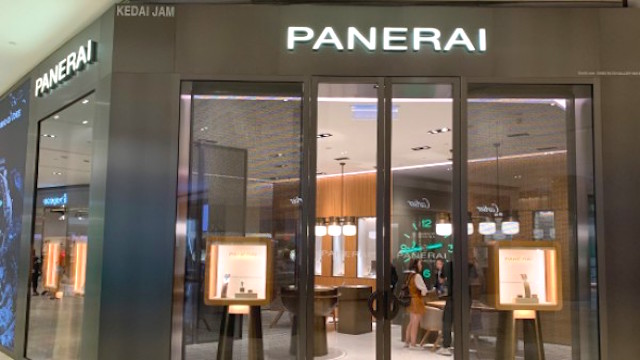
    Officine Panerai makes debut in Malaysia

    “Together with partner Swiss Watch Gallery, we look forward to providing an exceptional experience for our clients and conveying our values and Swiss know-how”, said Panerai Southeast Asia and Oceania MD Giacomo Cinelli at the launch.

    “It’s a little exhausting for the local watch collectors here to keep having to travel to a Panerai boutique, so we are here for our existing clients and we provide an entrance and platform for the new ones as well”, he said.

    Submersible timepieces feature prominently in the store’s range, retailing from RM57,700 (US$14,180) to RM168,470 ($41,400).

  • Vietnamese logistics startup raises $5.5 mln in latest funding round

    Vietnamese logistics startup raises $5.5 mln in latest funding round

    Logivan, a web platform that helps trucks connect with potential customers, said it has raised $5.5 million in the latest funding round. The investment comes from two Asian angel investors and Indonesian venture capitalist Alpha JWC Ventures. One of the angel investors is David Su, a founding managing partner at private equity firm Matrix Partners China, who invested through his family office.

    He said: “Vietnam is the next rising star in the growing Southeast Asia region and it is well poised to experience a similar growth trajectory as we witnessed over the past years in China.

    “Vietnam’s logistics industry is highly fragmented, logistics costs make up 23 per cent of Vietnam’s GDP, with 90 per cent of trucks in Vietnam being owned by individuals. Given the success of Manbang (a Chinese truck-hailing firm), we believe that Logivan has the potential to emulate its success.”

    According to e27, an online Tech media platform for Asia, Logivan will be investing in data analysis to optimize user experience, artificial intelligence, truck-matching, and pricing algorithms to minimize empty trips and in human resources.

    Last year, Logivan raised $600,000 in April from Singapore-based Insignia Ventures Partners and $1.75 million in August from Singaporean private equity firms Ethos Partners and Insignia and Vietnamese investment fund VinaCapital Ventures.

    It has raised a total of $7.9 million to date.

    Founded in 2017 by Cambridge graduate Pham Khanh Linh, the company offers a logistics service which optimizes trucks’ routes and minimizes empty return trips.

    She came up with the idea after observing that 60-70 percent of trucks in Vietnam returned empty after dropping off their loads because they could not connect with potential customers.

    In 2018 Logivan claims to have connected more than 22,000 transportation partners with every major commercial truck type. It also has 10,000 shipping companies registered on its system.

  • Uniqlo opens Manchester flagship, expands beyond London

    Uniqlo opens Manchester flagship, expands beyond London

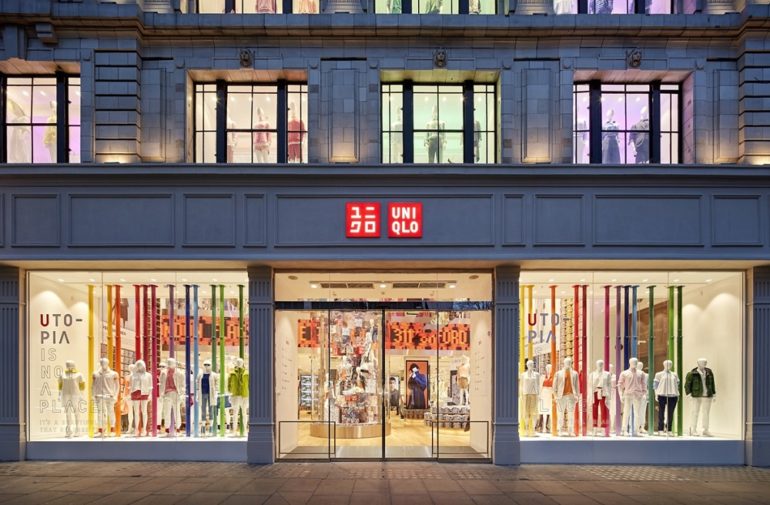
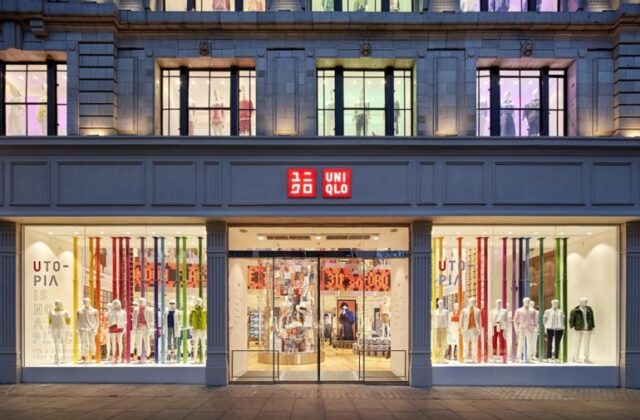
    Japanese retail chain Uniqlo is expanding its store network internationally, announcing the opening of its latest store in the UK. Opening in the city of Manchester, Uniqlo is returning the British city after leaving Manchester back in 2004, not long after it entered the UK market. Uniqlo revealed the news this week on its Instagram: “Uniqlo Manchester – opening spring 2019. Tokyo heads up North. Register for updates on our Manchester store opening at the link in bio.”

    The post also gave location details, revealing the store is slated for Manchester Arnadale at 57 Market Street. The address is the former-space of closed down UK retail chain BHS, which shuttered on Market Street in August 2016, after 35 years of service on the city’s main shopping strip.

    The new store will occupy a 22,690 square feet and will sell Uniqlo’s full range of core items for men, women and kids, as well as jeans and t-shirts.

    The retailer said that the expansion north of London was an important step in its UK growth.

    “The launch of Uniqlo in Manchester represents another major milestone for us in the UK, as we continue to expand our presence in this important market for the company worldwide,” Uniqlo chief executive Taku Morikawa said.

    “We are very excited to be able to offer Uniqlo LifeWear to the people of Manchester and surrounding areas for the first time and show how our high quality, comfortable and functional clothing can help improve their everyday lives.”

    It is hoped that Uniqlo Manchester will fair better than BHS, and in turn compete strongly with fellow fast-fashion brands Primark and H&M, which are currently set up in the millennial-heavy city.

    Uniqlo first launched 20 stores in the UK, but then closed 15 sites outside of London three years later, including two in Manchester.

    It currently operates nine stores across London, one in Kent at Bluewater shopping centre and another in Oxford at Westgate.

    In its most recent earnings update, Uniqlo Europe said that in the year up to August 31, 2018, profits rose from €673,000 to €6.3million on a turnover of €533million, up from €410million.

  • Malaysia to double palm oil used in transport biodiesel to 20%: Minister

    Malaysia to double palm oil used in transport biodiesel to 20%: Minister

    Malaysia aims to double the palm oil content in biodiesel used for the transport sector to 20% next year, as Southeast Asia’s third-largest economy looks to cut record stockpiles and boost prices, a government minister said. The government will also raise the palm oil content in biofuel for the industrial sector to 10% next year from a 7% quota being rolled out this July, Primary Industries Minister Teresa Kok said, speaking at a conference.

    Malaysia’s palm oil inventories fell to 3.001 million tonnes in January on increasing demand and falling production, but that was still near the two-decade high of 3.22 million tonnes recorded a month earlier.

    The increases in the amount of palm oil mandated for biodiesel – known as B20 for transport and B10 for industrial use – should lift use of the vegetable oil in biofuels to 1.3 million tonnes annually, the minister said.

    Kok said her ministry has submitted a proposal to the cabinet to set up a biofuel stabilisation fund to manage the price of biofuels, a similar mechanism to the export levy fund imposed by fellow palm oil producer Indonesia.

    “What if the palm oil price is high and the diesel price has gone up a lot? That would be costly for the public to use biodiesel, so we need to stabilise the price so biofuel will be more attractive to consumers,“ Kok said.

    “I have suggested (a stabilisation fund) in cabinet meeting before but we still need to have deeper discussion with other ministries.”

    Top palm producer and exporter Indonesia began collecting levies from palm exporters in 2015 to help finance the development of its palm-based biodiesel programme, as well as funding other palm oil agenda, such as replanting.

    However, Indonesia’s government temporarily removed the levy in November after a sharp drop in prices hit farmers.

  • LG U+ expected to acquire CJ Hello this week

    LG U+ expected to acquire CJ Hello this week

    LG U+’s plan to acquire cable TV company CJ Hello could be finalized as early as this week. Progress with the deal has been slow since Korea’s smallest mobile carrier first began considering the acquisition early last year. Industry sources said Monday that the deal is mostly finalized and, with a board meeting scheduled on Thursday, is likely to be concluded this week.

    With the acquisition, LG U+ will become the second-largest player in the domestic paid TV market. KT, with both an internet protocol TV (IPTV) service and satellite subsidiary KT Skylife, is currently the market leader.

    Paid TV services in Korea include cable TV, satellite TV and IPTV.

    LG U+ will likely acquire a 53.92 percent stake in CJ Hello from CJ’s entertainment arm CJ ENM. The cost is expected to be around a trillion won ($888.6 million).

    The acquisition would give the mobile carrier more negotiating power when acquiring or producing content. The carrier could also be in a strong position to lure CJ Hello’s 4.16 million subscribers, as of the first half of 2018, to its mobile service by offering favorable rates.

    LG U+ is already using its partnership with Netflix to attract more customers to its mobile and IPTV service.

    Once the mobile carrier decides to go ahead with the deal, it then needs to be approved by the Fair Trade Commission (FTC), the Ministry of Science and ICT and the Korea Communications Commission. In 2016 when SK Telecom tried to acquire CJ Hello, then CJ HelloVision, the deal fell through as the antitrust body disapproved on the grounds that the acquisition could hurt fair market competition.

    This time, though, FTC head Kim Sang-jo hinted during a recent interview that the commission would take a more positive stance regarding the deal considering the rapid changes in the media market. Kim questioned whether broadcasting and telecommunications can be considered completely separate in a quickly changing market.

    It is still to be seen whether LG U+ will more explicitly announce its intent to acquire CJ Hello and expand its paid TV services. The carrier is holding a press briefing for the launch of a new IPTV service targeting senior citizens in Seoul. Many questions are expected to focus on the acquisition deal and future IPTV strategy.

    Competitors KT and SK Telecom are also considering acquiring cable broadcasting companies to counter LG U+’s move. KT is reportedly interested in acquiring cable broadcasting company D’Live, which has a 6.45 percent share of the Korean paid TV market as of the first half of 2018. KT and KT Skylife control more than 30 percent of the market while CJ Hello owns 13 percent and LG U+ has 11.41 percent.

  • Japan’s Zozo expects profit fall, cuts outlook

    Japan’s Zozo expects profit fall, cuts outlook

    Online fashion store Zozo reported its firs-ever profit decline since its launch, adding to the announcement that it plans to discontinue its innovative Zozo suit, as it moves away for custom-fit fashion. One of Japan’s fastest-growing start-ups, Zozo said it expects full-year for the fiscal year ending March 2019 to fall 12%, dipping to 17.8 billion yen ($164 million).

    Zozo said it expects full-year operating profit of 26.5 billion yen, down around 19% from a year earlier. It previously forecast profit to rise to 40 billion yen.

    Sales are still predicted to reach double-digit growth, up 20% to 118 billion yen. However, that’s much lower than an initial forecast of 247 billion yen.

    By category, private-brand revenues are forecast to total 3 billion yen, just 15% of the 20-billon yen prediction made last year. Profits at the new apparel brand will also be negative, registering a loss of 12.5 billion yen.

    Zozo holds close to a 50 percent share of Japan’s e-commerce market for mid to high-end fashion. The Tokyo-based retailer had tried to branch out by launching its private brand and a made-to-measure service. Dubbed the ‘Zozosuit’, a black-and-white spotted body suit that allowed user to take and upload personal body measurements, the suit was overhauled after complaints on how long the suits took to arrive, with some customers complaining the suit did not fit, causing more delays.

    “By distributing the ‘Zozosuit’ for free so that people could take measurements, we were hoping to create demand for the Zozotown business, including the private brand. But the impact did not have the scale that we had hoped for,” the company said in a statement.

    Zozo said it now expects to pay a year-end dividend of 10 yen per share instead of an original forecast of 22 yen.

  • Vietnamese car maker plans private share issue

    Vietnamese car maker plans private share issue

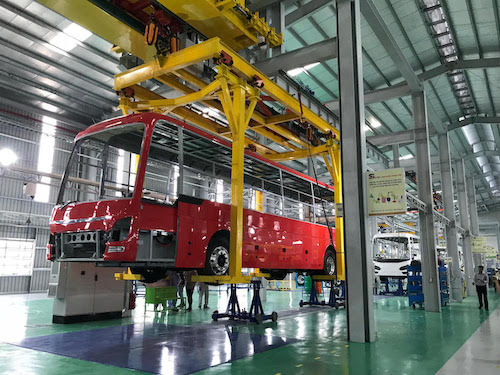
    Truong Hai Auto Corporation (THACO) is planning to issue more than 30.3 million shares to a strategic shareholder. The company is currently collecting shareholders’ opinions on a draft resolution to authorize a private placement worth an estimated total of VND3.89 trillion ($167.19 million) to Jardine Cycle & Carriage, a Singaporean diversified conglomerate that specializes in investment in car manufacturing.

    The share issue aims to raise additional capital to finance THACO’s investment and business plans this year, the company said in a circular issued to shareholders last week.

    The 30.3 million shares proposed in this placement make up 1.82 percent of THACO’s current chartered capital, and will raise the Singaporean shareholder’s stake in the car manufacturer to 26.57 percent.

    The share ownership of remaining shareholders will remain unchanged. Currently, 6.8 percent of THACO is owned by billionaire Tran Ba Duong, founder and chairman of the company, and another 60.6 percent by Tran Oanh JSC, a holding company owned by Duong and his family.

    The shares are expected to be issued soon after the State Securities Commission has confirmed the receipt of all documentation regarding the private placement.

    Dong Nai-based THACO was established as an auto and commercial vehicle maker in 1997. It has a plant in central province of Quang Nam and 89 showrooms and 53 dealerships.

    It makes trucks and buses and assembles cars for brands like Kia (South Korea), Mazda (Japan), and Peugeot (France).

    Jardine Cycle & Carriage Ltd, which is part of the Jardine Group of companies, has a diverse business portfolio. They have long term shareholdings in major manufacturers such as Jakarta based Astra International, as well as other interests in the refrigeration, cement and milk business.

    In Singapore, Jardine C&C is best known as the retailer of Mercedes Benz, Mitsubishi, Kia, Citroen, DS, and Maxus motor vehicles. The company has a current market capitalisation of S$14.55 billion (US$10.71 billion).

  • Mercedes back in No. 4 spot on E-class sales in Korea

    Mercedes back in No. 4 spot on E-class sales in Korea

    Mercedes-Benz outsold local carmakers in Korea to finish fourth in domestic sales in January, industry data showed Monday. The Korean unit of the German automaker sold 5,796 vehicles last month, equal to 4 percent of the total 114,632 vehicles. The sum places it fourth after Hyundai Motor (31.2 percent), Kia Motors (22.8 percent) and SsangYong Motor (6.1 percent).

    January sales for Mercedes-Benz Korea shrank 22.8 percent compared with the month before, but they were still higher than the monthly sales by Renault Samsung Motors (3.5 percent) and GM Korea (3.1 percent).

    The last time that the German brand reached No. 4 in monthly sales was back in April last year, a ranking that followed the closure of a local assembly plant by GM Korea two months earlier. Mercedes-Benz defended the ranking for three months before slipping to No. 6 in May last year.

    In yearly sales, Mercedes-Benz Korea sold 70,798 units for a market share of 4.5 percent last year, behind Renault Samsung (5.7 percent) and GM Korea (5.5 percent).

    Industry watchers attribute the sales increase to the success of the E-Class. January sales of the lineup were the 12th highest at 3,392 units, a number meaning that one E-Class vehicle was sold for every three Grandeur autos from Hyundai Motor purchased.

    The E-Class cars outsold Genesis, an independent brand launched by Hyundai that is pitted as its domestic rival, last year.

    The “diesel-gate” scandal that pounded German brands also helped promote the E-Class, which are mostly gasoline cars,

    “This year, BMW and Audi are scheduled to release new sedans, and a full-change Genesis G80 is also due soon,” one source noted. “This will likely affect the sales of the E-Class.”

  • Starbucks Malaysia celebrates Reserve’s success

    Starbucks Malaysia celebrates Reserve’s success

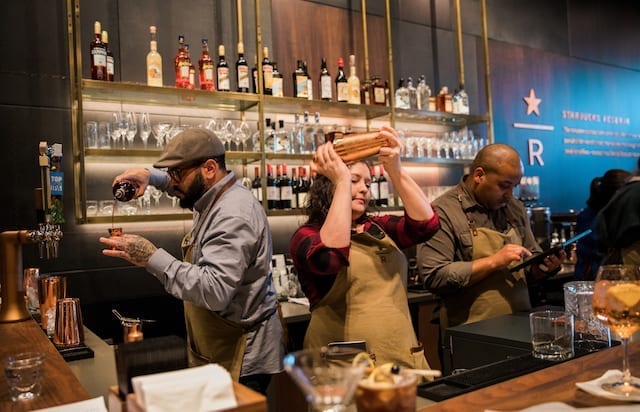
    Starbucks Malaysia plans to open two or three of its premium Reserve concept stores annually. The brand’s eighth Starbucks Reserve store opened at the end of last month, a 5000sqft flagship at Berjaya Times Square, three years after the first outlet launched at The Gardens Mall.

    “We did not anticipate such a strong reception for the new concept store”, said Starbucks Malaysia & Brunei MD Sydney Quays. “We were surprised because a lot of people were interested to learn about coffee and the various ways of brewing.

    “This is what inspired us to open more Starbucks Reserve stores. The opening of the Starbucks Reserve Berjaya Times Square amplifies our passion for coffee and our ongoing commitment to continue providing unprecedented coffee experiences and knowledge to the Malaysian community, while fostering a culture of human connection”, he said.

    The new rollout schedule aims to cater to Starbucks’ loyal customers’ burgeoning interest in coffee. The brand is planning 30 Starbucks outlets per year including the Reserve venues, as well as regular stores, drive-thrus and small-format stores.

  • Vietnam prosecutors support Grab appeal against Vinasun

    Vietnam prosecutors support Grab appeal against Vinasun

    Prosecutors in Ho Chi Minh City have appealed a verdict ordering Grab to pay compensation to domestic taxi firm Vinasun. They want the appeal court to quash the order requiring the Singapore ride-hailing firm to pay VND4.8 billion ($206,000) in compensation for alleged losses and reject all of Vinasun’s demands. Grab violated a pilot transport ministry scheme and government decree for ride-hailing services, according to the verdict.

    But the prosecutors argue this is groundless since Grab is a passenger transport firm licensed by competent authorities under the pilot scheme and its activities did not violate the law.

    They also dismiss the contention that Grab had caused Vinasun losses of nearly VND42 billion ($1.81 million) as one-sided with no practical or legal basis since it was based solely on an assessment by the court-appointed Cuu Long Inspection Company.

    “In reality, Vinasun’s decline in revenue involves many factors such as the corporate governance capability and the government’s policies and laws.”

    “Therefore, Vinasun’s demand for compensation from Grab is completely groundless.”

    They say Grab’s business activities are legal and Vinasun’s decline in revenues and profits have been partially due to consumers switching to Grab as they found the ride-hailing firm’s services to be superior to those provided by Vinasun and other traditional taxi firms.

    “Grab did not violate the law, there is no causal link between Grab’s allegedly illegal activities and Vinasun’s losses, Grab is not at fault.”

    Vinasun filed the suit against Grab at the HCMC People’s Court in June 2017, accusing it of abusing the Ministry of Transport’s pilot scheme and committing violations.

    The trial began last February, but was adjourned several times before the court last December accepted parts of Vinasun’s demands and ordered Grab to pay the compensation. Grab has appealed.

  • Samsung to pay its biggest tax bill ever as profits rise

    Samsung to pay its biggest tax bill ever as profits rise

    Samsung Electronics is expected to pay 16.8 trillion won ($15 billion) in corporate taxes this year, up 20.1 percent from a year earlier, due to its record earnings, its regulatory briefing showed Monday. It is expected to cough up 28.6 percent of its operating profits, which reached an all-time high of 58.9 trillion won in 2018, according to its consolidated financial statement.

    The estimated tax amount is the highest amount ever for the company, 2.4 times the number from 2015 and over 14 times from 2009, its past reports showed.