Tag: Business

  • Korean Air swings to net loss in 2018 from 2017 profit

    Korean Air swings to net loss in 2018 from 2017 profit

    Korean Air Lines said Tuesday it swung to a net loss in 2018 from a year earlier due to hefty foreign-exchange losses. The Korean flag carrier posted a net loss of 167.59 billion won ($150 million), after a net profit of 801.9 billion won a year earlier. As the dollar rose to 1,118.1 won at the end of 2018 from 1,071.4 won at the end of 2017, foreign-exchange translation losses reached 363.6 billion won and it cut into the annual earnings results, the statement said.

    The won’s weakness also drove up net interest costs to 454.8 billion won, up 55.5 billion won from the previous year, it said. Operating profit fell 28 percent to 676.33 billion won last year from 939.78 billion won a year ago. Sales climbed 7.7 percent.

  • SK Innovation net falls 21% in 2018 on oil price decline

    SK Innovation net falls 21% in 2018 on oil price decline

    SK Innovation, Korea’s largest oil refiner, said Thursday that its earnings sank 21 percent last year on lower oil prices and less demand for petrochemical goods. Net profit reached 1.69 trillion won last year, compared with a profit of 2.15 trillion won a year earlier, the company said in a regulatory filing.

    Operating income dropped 34.2 percent year-on-year to reach 2.12 trillion won, while sales spiked 18.1 percent to 54.5 trillion won over the cited period.

  • The Sanctuary by Pure Yoga opens at HKIA

    The Sanctuary by Pure Yoga opens at HKIA

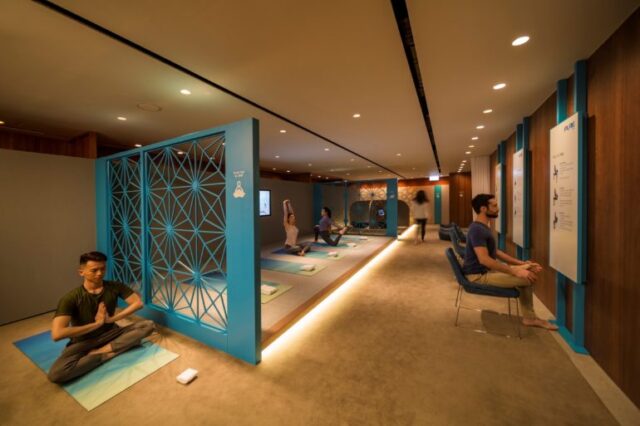
    A visit to Cathay Pacific’s Business Class lounge at The Pier in Hong Kong has just become even more beneficial for mind, body and soul following the opening of The Sanctuary by Pure Yoga. Designed in partnership with the Pure Group, The Sanctuary by Pure Yoga is a 700 square-foot area divided into two zones – The Body Sanctuary, which is dedicated to yoga, and The Mind Sanctuary, where travellers can meditate to focus and calm the mind.

    Cathay Pacific General Manager Customer Experience and Design, Vivian Lo said: “Wellness is becoming increasingly important to our customers and The Sanctuary by Pure Yoga in our Pier Business Class lounge is the perfect place for to relax before the flight. We listen to the needs of our customers and continuously evolve to improve their experience with us.

    “Whether it’s dining at our popular Noodle Bar, catching up with some work, or enjoying a drink at the bar or at the Teahouse, there are myriad ways for our customers to spend time at the lounge. Now they’ll also be encouraged to meditate and practice yoga before flying with us.”

    The Body Sanctuary

    Among the wellness offerings, The Body Sanctuary provides travellers with a space for gentle yoga with guided videos led by Pure Yoga teachers. There’s also a secluded space for self-practice. Seated stretching is an alternative option; chairs overlook instructions on how to stretch different parts of the body whilst seated. The exercises are designed to improve circulation, enhance joint mobility, and relax the mind for a comfortable and restful journey.

    The Mind Sanctuary

    Within The Mind Sanctuary there are two types of meditation on offer. The first is audio meditation: four cushioned pods are equipped with noise-cancelling headphones and iPads, and customers can listen to guided meditation sessions narrated by Pure Yoga’s expert teachers. The second is gazing meditation: comfortable cushions overlook graphics placed on the wall ahead and facilitate Trataka yoga practice.

    These practices help to improve focus, memory and visualisation skills, as well as centring the mind in a state of awareness and attention.

    Wellness on the ground and in the air

    The Sanctuary by Pure Yoga is the latest collaboration between Cathay Pacific and the Hong Kong-headquartered Pure Group following the January 2018 launch of ‘Travel Well with Yoga’, a series of inflight videos to help passengers ease into their journeys with meditation and yoga.

    Additionally, Diamond and Gold Marco Polo Club members arriving in Hong Kong on Cathay Pacific or Cathay Dragon flights are given complimentary one-day access to any Pure Fitness centre or a choice of any Pure Yoga class up to 12 times a year.

    Pure Group Regional Marketing Director Gary Wise said: “We’re delighted to extend this fantastic partnership between Pure Yoga and Cathay Pacific, giving people even more chance to feel the benefits of yoga and meditation on their travels. No matter how rushed the trip is, just a few minutes of calm can make all the difference.”

    The Sanctuary by Pure Yoga is open to travellers who have access to Cathay Pacific The Pier Business Class Lounge at Hong Kong International Airport, as well as Diamond, Gold and Silver Marco Polo Club members. Cathay Pacific and Cathay Dragon First and Business Class passengers will also be able to enjoy the new offering.

  • Avery Baker resigns from Tommy Hilfiger

    Avery Baker resigns from Tommy Hilfiger

    Tommy Hilfiger will jettison the chief brand officer role following the departure of incumbent Avery Baker in June, the fashion label has confirmed. Baker has announced plans to step down from the job in June. The marketer will then rejoin the company on a consulting basis, primarily as part of a new brand advisory board staffed by external advisors and chief executive officer Daniel Grieder.

    Baker’s C-suite brand responsibilities will be divided among other senior members of staff. She is currently responsible for global marketing, communications, brand strategy, creative direction for product design, global licensing and creative services.

    The marketer joined the PVH-owned company in 1998. She landed the chief marketing officer title in 2011 after a stint as executive vice-president of global communications and marketing.

    She was named chief brand officer in 2014.

  • 5 Tips for Digital Transformation

    5 Tips for Digital Transformation

    Retailers know they need to evolve, even though they cannot do it overnight. But while there’s no silver bullet for transforming culture, collaboration, and workflows inside a large organization, there are steps you can take to make sure your business is receptive to the change it’s about to undergo.

    Understand performance goals

    Before you start, you need to understand the business problem and the role that technology is going to play. Solving complex organizational issues needs the relentless management of changes in behavior, process, and technology all working together to support your performance goals and objectives.

    Collaboration is not a KPI

    Decide how you’re going to measure your KPIs. And remember that collaboration is not a KPI – it’s a means to an end. KPIs could include customer satisfaction, getting products to store faster, selling more products per visit, or retention. You need to get down to that granular detail.

    Shut things off

    If you have an existing tool which people did not like and you invest in something new to overcome those challenges and frustrations, you need to have a path to turning that tool off or at least turning off the elements that are now conflicting. This will impact adoption of new tools and ways of working.

    Educate, educate, educate

    Launching a tool is the easy part, the real work begins when people use it. People need to be educated on what they should be using it for. Show some examples of what ‘good’ looks like, and also what the tool should not be used for. Design an internal marketing campaign and treat it exactly the same as an external campaign. A product-driven approach could help here. Think about how companies try to refresh products in the market over time to improve adoption.

    Put somebody in charge

    For any system, and especially for a collaborative experience, you need someone who can get employees to use the tool in the right way at different times. That might be a community manager who understands the business cycle. Putting up content is the single most important driver of getting people to use the platform and to entice them to contribute their own.

  • Little Caesars Philippines opens first store in Manila

    Little Caesars Philippines opens first store in Manila

    Pizza chain Little Caesars has opened its first restaurant in the Philippines. Little Caesars Philippines made its debut on Saturday, the first restaurant opened under the brand’s new franchise relationship with local operator Palmtree PH Foods Corp. It opened at the Metrosquare Building in Ermita with a promotional celebration that involved family activities and free pizza offerings.

    “Little Caesars is excited to celebrate the opening of its first restaurant in the Philippines, and to finally share our delicious pizzas with everyone”, said Paula Vissing, senior VP international for Little Caesars Pizza.

    Palmtree owner James Kodrowski, who manages a group of companies that operate in the region, said: “Little Caesars Pizza is exactly what this market needs … We believe that the Hot-N-Ready concept will have undeniable market appeal, as well as our commitment to excellent guest service, and superior value.

    It is our ambition to make Little Caesars the new favorite pizza of the Philippines.”

    Little Caesars Singapore also launched this month as the brand continues to experience growth internationally. The brand is the third largest pizza chain in the world, currently operating in 23 countries and territories.

  • Shandong Ruyi buys Invista’s global Lycra business

    Shandong Ruyi buys Invista’s global Lycra business

    Chinese textile and retail investment company Shandong Ruyi has bought the US-based Lycra business for an undisclosed sum. Shandong Ruyi, whose retail investments include Aquascutum and SMCP (Sandro, Maje, and Claudie Pierlot), will take over the world-famous lycra brand, all assets and contracts relating to Lycra from current owner Invista and rename the business The Lycra Company.

    Lycra’s CEO Dave Trerotola said in a statement the company was fortunate to have been acquired by Shandong Ruyi.

    “[The] company shares our vision and our commitment to delivering high-quality products, technical expertise, and unmatched marketing support to our valued customers,” he said.

    The new company will operate as an independent subsidiary, and will continue to manufacture advanced fibre and technology solutions for the apparel and hygiene industries. The Lycra Company also owns a raft of consumer and trade brand names, including Lycra HyFit, Lycra T400, L by Lycra, Coolmax, Thermolite, Elaspan, Supplex, Tactel, and Terathane.

    “With the continued investment of Ruyi, we look forward to working with our customers to bring exciting innovations to market. Our new shareholder’s textile and retail experience will be a tremendous asset as we develop differentiated fibres that deliver the lasting performance benefits consumers have come to know and expect from our brands,” said Trerotola.

    The acquisition includes eight manufacturing facilities, four research and development labs, 17 offices located in 14 countries, and about 3000 employees. Current management and employees will continue in their roles.

    Yafu Qiu, chairman of the board of Shandong Ruyi, promised his company would continue to invest in The Lycra Company’s innovation pipeline and brands in order to grow the business.

    “As a spandex producer ourselves, we have admired the iconic Lycra brand for years, and we see the value The Lycra Company adds to our business. We believe its assets and capabilities are a perfect complement to our own and will help strengthen our position as a world-class, fully integrated textile company.”

    The Lycra Company’s legacy stretches back to 1958 with the invention of the original spandex yarn, Lycra fibre.

    Shandong Ruyi Investment Holding is the largest textile and apparel company in China, and ranks among the Top 100 Chinese multinational enterprises. It is headquartered in Jining, Shandong and operates 13 domestic industrial parks.

  • Starbucks to open three more Starbucks Reserve in Malaysia

    Starbucks to open three more Starbucks Reserve in Malaysia

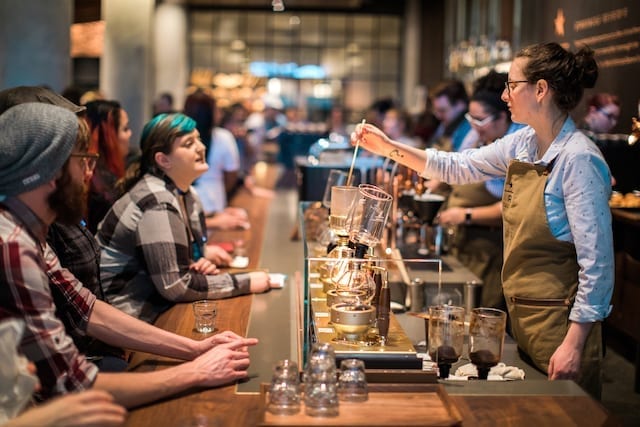
    Berjaya Starbucks Coffee Company Sdn Bhd, which opened its eight Starbucks Reserve concept store in Berjaya Times Squar, plans to open two to three more such stores this year. “The reception has been really good for Starbucks Reserve (stores). We hope to be able to have about two or three Reserve (outlets) every year,” Berjaya Food Bhd’s CEO and Starbucks Malaysia and Brunei managing director Sydney Quays said.

    “The Reserve concept store is not something that you can open many because it is very exclusive. The coffees that we have in a Reserve are very exclusive and you don’t get that in other outlets. So it is very critical that we expand carefully and in locations that are very well appreciated,” he added.

    Historically, Quays said the group has always aimed to open 30 stores a year, with investment around RM50 million to RM60 million.

    According to Quays, the investment for a Reserve concept store is 30% higher compared to the non-Reserve concept stores.

    The Starbucks Reserve Berjaya Times Square joins locations at The Garden Mall, Sunway Pyramid, SkyAvenue Genting Highlands, Publika, Desa Parkcity, Four Seasons Place Kuala Lumpur and Paradigm Mall Johor.

    On its outlook, Quays believes the consumer sentiment has improved as a lot of uncertainty is over, and the rising tourists numbers also augurs well for its business.

    Asked whether the sugar tax announced in Budget 2019 will impact its business, Quays said he is of the view that the new tax will not be a big issue for Starbucks Malaysia.

    “Obviously sugar is an add on product for us, but we have not experienced any negativity in that and I don’t think it will affect us very much,” he said, adding that increase in price to its products is unlikely at this point of time.

    Berjaya Starbucks has 282 outlets in the country comprising 42 drive-thru outlets.

  • US set to green-light direct flights from Vietnam

    US set to green-light direct flights from Vietnam

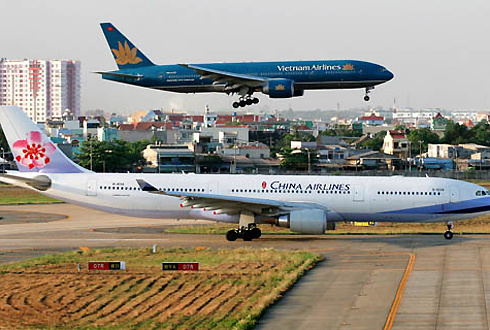
    U.S. aviation authorities are expected to grant a Category 1 rating to Vietnam soon, allowing direct flights between the two countries. Two U.S. officials who asked not be named said that the permission should be issued in the coming weeks. Dinh Viet Thang, head of the Civil Aviation Authority of Vietnam (CAAV), said that the U.S. Federal Aviation Administration (FAA) completed safety assessments in December and was supposed to provide the results this month.

    “But as the U.S. government was closed, we couldn’t receive the results. We expect to have it soon,” he said.

    Local airlines including state-owned Vietnam Airlines, budget airline Vietjet and new private airline Bamboo Airways have already expressed interest in opening direct flights between Vietnam and the U.S.

    The direct route is expected to cater to the large demand for travel between both countries.

    Passengers travelling between Vietnam and the U.S. now have to transit through different countries and territories like China, Hong Kong and Japan.

    Vietnam has never held an FAA rating, unlike Thailand, which once had a Category 1 rating and is seeking to regain it after a downgrade to Category 2. The FAA determines whether a country has a 1 or 2 rating depending on its safety assessment of the country’s airlines.

    The Vietnamese government had early last year approved plans to expand the network of national carriers to major markets including Australia, China, Europe and the U.S.

    Under plan, Vietnam Airlines will go through with its proposal to open non-stop services to the U.S., starting with direct flights to San Francisco or Los Angeles.

    Vietnam and the U.S. signed an air transport agreement in 2003 to allow airlines to operate direct flights between the two countries.

    In 2004, national flag carrier Vietnam Airlines sought permission from the U.S. to provide direct services. However, the request was denied because the CAAV did not meet safety supervision requirements set by the FAA.

    Vietnam’s aviation industry has seen increasing demand in recent years. The country welcomed 12.5 million air passengers last year, up 14.4 percent from 2017, according to the General Statistics Office.

    The country’s aviation traffic increased 16 percent on average each year from 2010 to 2017, data from its civil aviation regulator shows.

  • Li & Fung appoints Joseph Phi as new group president

    Li & Fung appoints Joseph Phi as new group president

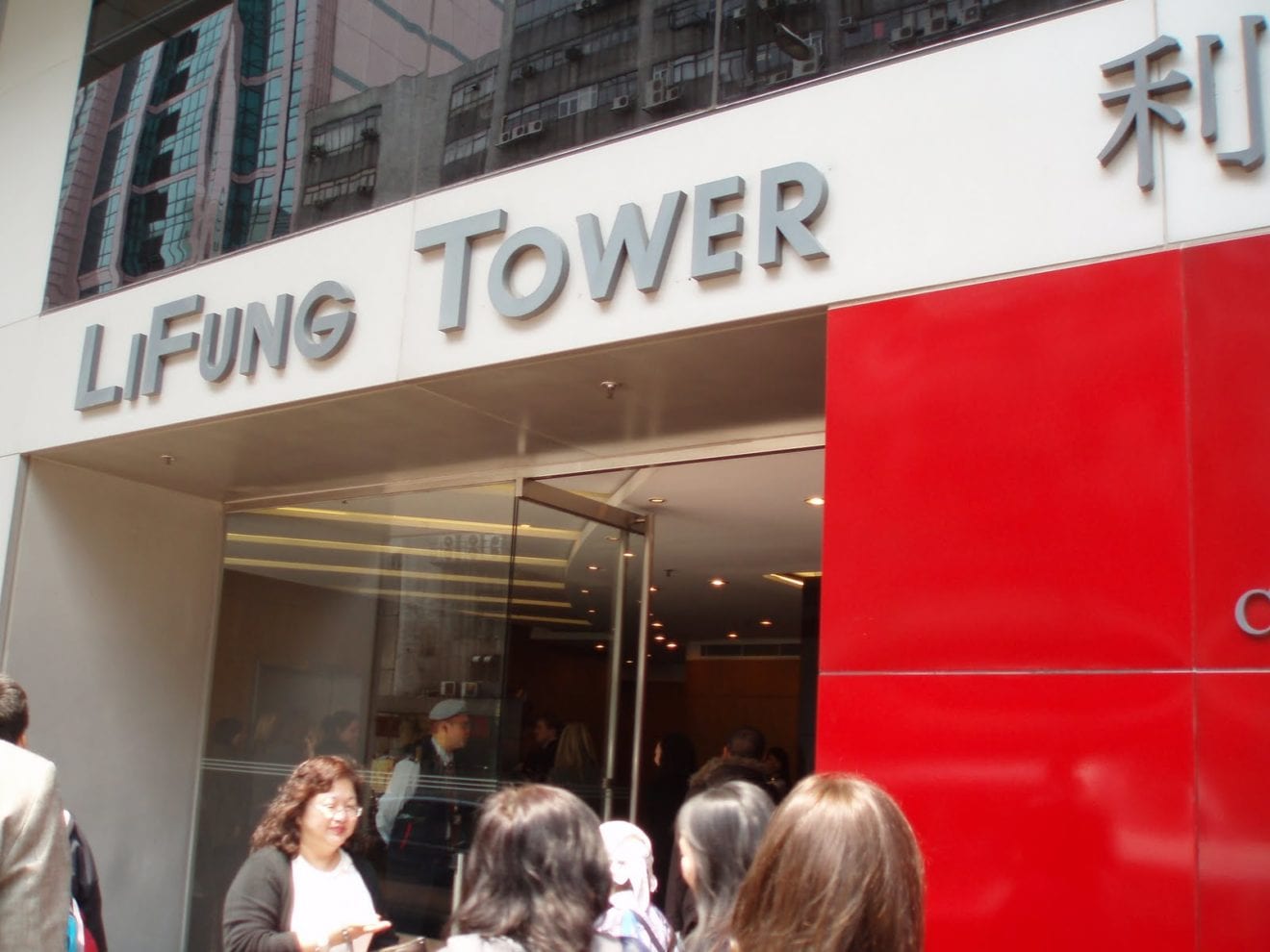
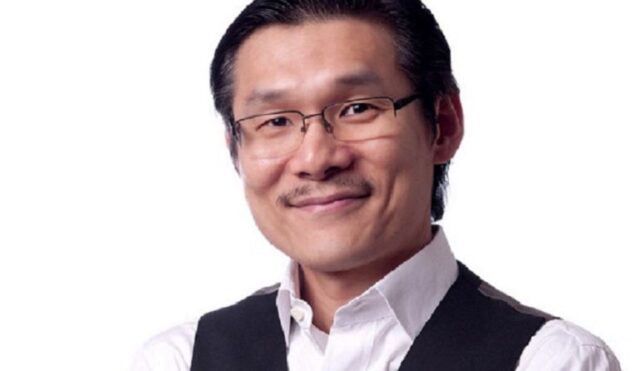
    Li & Fung has appointed Joseph Phi as the company’s Group President. As Group President, Joseph will lead the company’s Supply Chain Solutions operating groups, including Business Development. He will continue as President, LF Logistics and to serve on the Board of Directors of Li & Fung. He will report to Spencer Fung, Group CEO.

    Joseph has a strong track record at tLFhe company having organically grown its logistics business over the past decade. He has nearly 20 years’ experience with the company and is well positioned to assume this important leadership role.

    Joseph joined Li & Fung in 1999 and was previously executive director of Integrated Distribution Services Group Limited from 2004 until its acquisition by Li & Fung in 2011. He is Chairman of GS1 Hong Kong and a Director of its Management Board and is a Member of Supply Chain 50.

    He is an advisory committee member of Hong Kong Trade Development Council’s Logistics Services and honorary advisor of the Asian Logistics and Maritime Conference. He also serves as an advisory committee member of Eye Fund, a charitable institution in HK.

    Joseph graduated magna cum laude from the University of The Philippines (UP) with a Bachelor of Science degree in Industrial Engineering and attained a Master of Business Administration degree with top honors also from the same university.

    He is a 2011 recipient of UP College of Business Administration Distinguished Alumnus Award and 2013 recipient of UP Industrial Engineering Alumni Award and UP Alumni Engineers Global Achievement Award for Logistics. Between 2014 and 2018, he was an Adjunct Professor in the School of Business and Management at The Hong Kong University of Science and Technology.

    Joseph takes over from Marc Compagnon, who served as Group President and Executive Director of Li & Fung Limited from July 2014 and has moved to the Fung Group as Senior Advisor while remaining on the Board of Li & Fung Limited as a Non-Executive Director.

    Fung Group is the major shareholder of Li & Fung, whose core businesses operate across the entire global supply chain for consumer goods including sourcing, logistics, distribution and retail.

    Spencer Fung, CEO of Li & Fung said, “Our goal is to build the supply chain of the future to help our customers navigate the digital economy and to improve the lives of one billion people in the supply chain, and I am confident Joseph is the right person to build on the solid foundation that Marc has built and to take this to the next stage of development.”

  • Behind Amazon’s 63 per cent income rise

    Behind Amazon’s 63 per cent income rise

    The latest Amazon results are positive – but there is now a clear divergence in performance between the top and bottom lines. On the profit front, Amazon’s results are impressive. Net income increased by 63.1 per cent and operating income by 78 per cent. Much of this is coming from the AWS segment, where income from operations rose by 61 per cent. However, some credit should also go to the North American operation where volume increases helped ease up operating profits by 33 per cent. These uplifts come in spite of the fact that Amazon is still investing huge amounts in the business. Therefore they go a long way to justify the myriad of projects that Amazon has undertaken and continues to undertake.

    While the profit lines look rosy, the sales line presents a mixed bag. The slowdown in product growth is now tangible and although an 8.2 per cent uplift is strong compared to many retailers, by Amazon’s standards it is a weak performance. On a divisional basis, North America held up better than international markets, largely thanks to the confidence of the American consumer. Even so, sales growth in North America has also dipped.

    There are several dynamics at play here. First, is the maturity of Amazon’s operation: Amazon is now a massive retailer and it is simply unrealistic to expect it to keep on growing at its historic pace. However, more concerningly, this maturity is also coinciding with a period of rising competition. Retailers like Target and Walmart have invested heavily in their online operations and pulled out all the stops this holiday season. Our data show that they made solid customer gains, and some of that dented Amazon’s growth. In our view, the gap between Amazon and the rest is now narrowing.

    Another area of concern is Whole Foods. Amazon’s results show that sales at physical stores dropped by 2.7 per cent over last year, largely thanks to the grocery division. The investment in lower prices partly explains this, but it does not account for the bulk of the decline. In our opinion, much of this is because Whole Foods’ proposition is simply not up to scratch. Basics and commodity products still cost way more than at rivals like Target, and this is one of the reasons perceptions that Whole Foods is needlessly expensive have persisted. Such expense is not justified by store experience nor by customer service, both of which remain lackluster.

    Arguably, a holiday period that coincided with strong consumer finances should have been fertile ground for Whole Foods to thrive. However, very little effort was made to entice or enthrall customers. Aside from fresh counters, the festive product line up was incredibly poor with a noticeable lack of treats and interesting items. As a result, many consumers simply went elsewhere.

    We are cognisant that many of the Whole Foods issues are not of Amazon’s making. However, the poor performance underlines how much work remains to be done in transforming the chain’s fortunes.

    Despite these niggles, we remain positive about Amazon. The Prime platform still has enormous potential, there is plenty of upside in devices, and there are many opportunities to improve own-brands (some of which have underperformed). Taken together, along with AWS, this means Amazon has scope for future growth.

    However, it is also clear that Amazon will now need to work doubly hard to achieve any future sales gains.

  • Vingroup reports $25 mln revenue from vehicle, smartphone sales

    Vingroup reports $25 mln revenue from vehicle, smartphone sales

    Vietnam’s largest listed private company Vingroup has reported revenues of VND600 billion ($25.77 million) from car, electric motorbike and phone sales last year. VinFast, a Vingroup subsidiary, became the country’s first indigenous car manufacturer last October and showed off its first two car models at the Paris Motor Show in France. It has begun to accept bookings and deposits for the cars, and will start selling them next August.

    Last November it launched its first two electric scooters, but has not disclosed sales figures.

    VinSmart, the Vingroup unit that produces smart electronic devices, launched four new phones in December in a market of 95 million people currently dominated by Samsung and Apple.

    Its factory in the northern city of Hai Phong is capable of making five million phones a year in the first phase.

    The company also hopes to expand to markets outside Vietnam, and will make smart TVs and other smart products soon.

    Vingroup is a conglomerate with the country’s largest real estate operations and interests in retail, healthcare and resorts.

    The conglomerate reported profit before tax of over VND13.8 trillion ($592.6 million) last year, up 52 percent from 2017, on net revenues of VND122.57 trillion ($5.24 billion).

  • Palm falls as data shows slower exports

    Palm falls as data shows slower exports

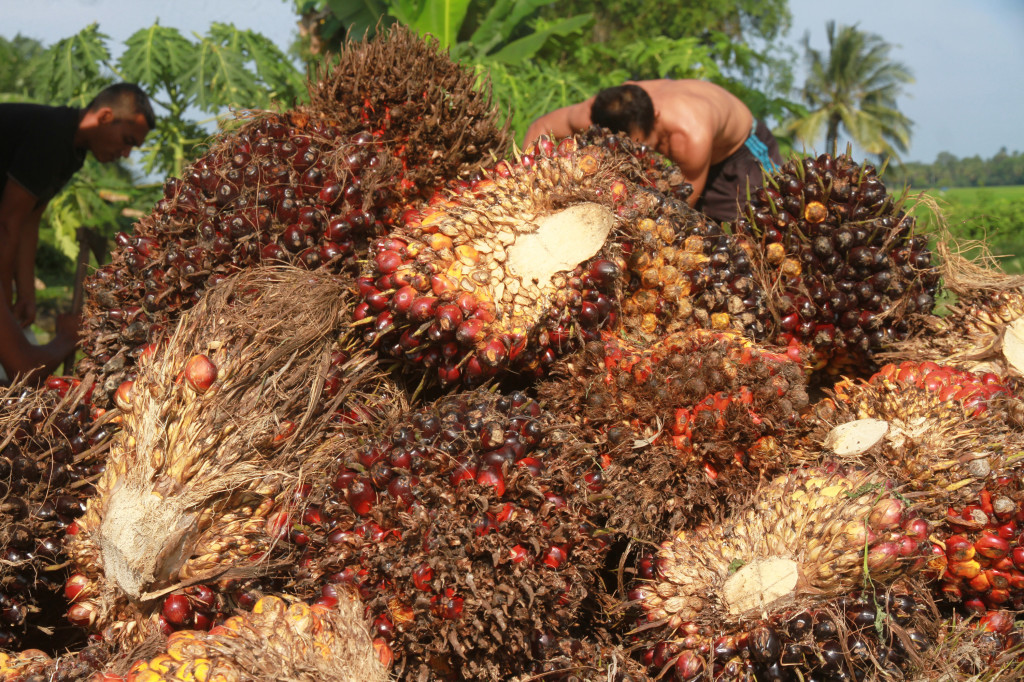
    Malaysian palm oil futures fell last week, after data from a cargo surveyor showed exports grew more slowly than expected in January. The benchmark palm oil contract for April delivery on Bursa Malaysia Derivatives Exchange dropped 0.2% to RM2,299 a tonne. Trading volumes stood at 24,751 lots of 25 tonnes each.

    “The export numbers released are below yesterday’s (Wednesday’s) market rumour. The ringgit’s strength also pushed the market lower,” a Kuala Lumpur-based trader said, adding that the coming long holiday weekend should prompt traders to cover short positions. “That should limit any big sell-offs,” the trader said.

    Cargo surveyor Intertek Testing Services said yesterday exports of Malaysian palm oil products for January rose 14.7%, while independent inspection company AmSpec Agri Malaysia reported a 15.5% increase.

    Palm oil may slide into a range of RM2,256-RM2,274 per tonne, as its correction from the Jan 28 high of RM2,333 looks incomplete, Wang Tao, a Reuters market analyst for commodities and energy technicals said.

  • Retail meets art in HK for Chinese New Year

    Retail meets art in HK for Chinese New Year

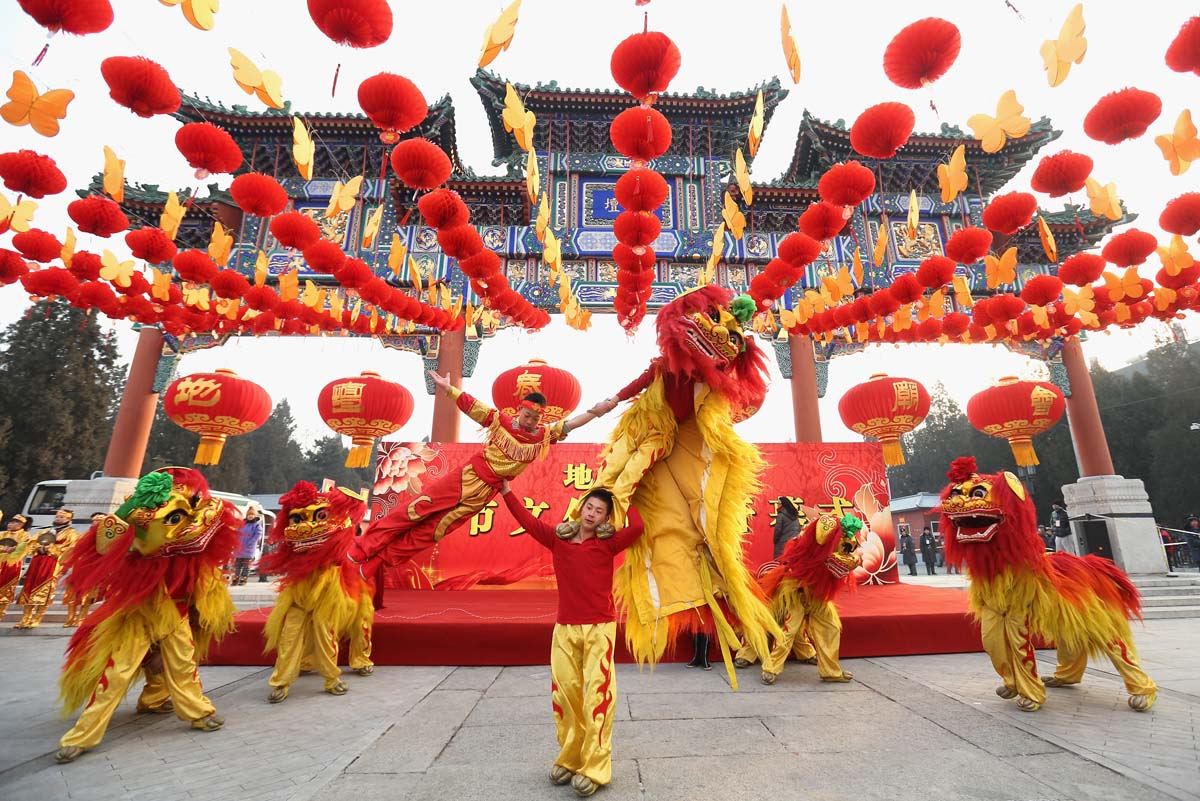
    Next week it Chinese New Year. It officially begins on February 5th, 2019, and ends on February 19th. This year will be the year of the Pig. It is the most important festival for Chinese people, so the city is fully decorated with festive installations. The retail world celebrates it with decorations and promotions. In Hong Kong, all shopping malls have already unveiled their gigantic installations.

    In the financial heart of the city,  the floral pinwheels have turned IFC into the Garden of Fortune.

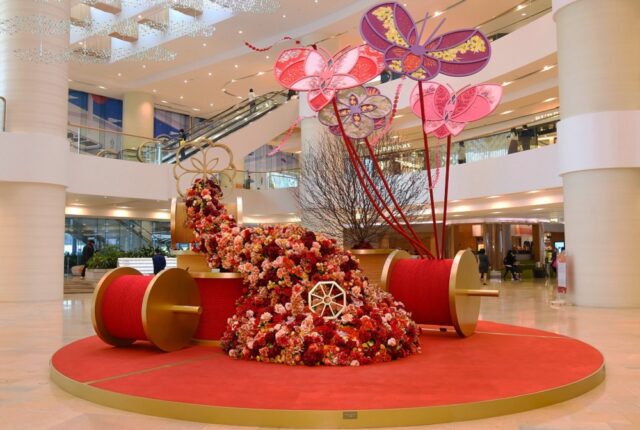
    Dedicated to providing memorable and engaging experiences for guests beyond shopping and dining, the Chinese New Year is no exception for IFC mall as it presents The Garden of Fortune, a splendid installation featuring pinwheels to welcome good fortune and embrace new changes along with incorporating floral elements for a contemporary spin.

    From 26 January to 17 February 2019, shoppers can visit the interactive display and enjoy music performances to ring into an auspicious new year.

    Pinwheels have long been a symbol of luck with fascinating roots in Chinese culture. Traditionally associated with welcoming wealth, pinwheels are constructed using a variety of bright colors to greet the god of fortune, which are believed to bring prosperity and blessings to both homes and businesses. Playing on the Chinese tradition that pinwheels attract good luck, The Garden of Fortune is embellished with this auspicious symbol.

    The pinwheels are designed in the shape of peach blossoms, peonies and begonias – flowers that represent prosperity and fortune in Chinese culture – to empower guests with positive vibes as they walk through the Garden of Fortune.

    Upon entering the installation, guests are invited to play an interactive pinwheel game to start the new year with blessings to share and bestow upon friends and loved ones. ifc mall has collaborated with young local calligrapher, Rita Lee, to create downloadable “fai chuns” to share with family and friends after completing the game.

    Lee started learning Chinese calligraphy at the age of 6 and has nurtured her talent with over 20 years of experience. She is known for blending different styles to create art that balances the tradition of Chinese calligraphy with contemporary flair. “I’m excited about this partnership with ifc mall as it allows me to use my craft to extend blessings to all Hong Kongers who visit the Garden of Fortune,” says Lee. “The installation’s fusion of traditional pinwheels with modern floral elements also reflects the same juxtaposition in my style of calligraphy.”

    Pacific Place has built “Where Fortune Takes Flight” to welcome the Chinese New Year 2019. Queenie said that her design ideas come from the traditional Chinese New Year Candy box and chocolate from her childhood. Thus, they became the patterns of the kites, flying in the shopping mall. Queenie used vibrant colors and energetic brush strokes to draw on the kites, symbolizing a colorful and fruitful new year.An exquisite spring garden filled with blossoming flowers and over 60 flying kites, symbolising “Where Fortune Takes Flight”. Exclusively designed by Queenie Law, the kites soar to the highest heights and spread Chinese blessings throughout the mall and into the new year ahead.
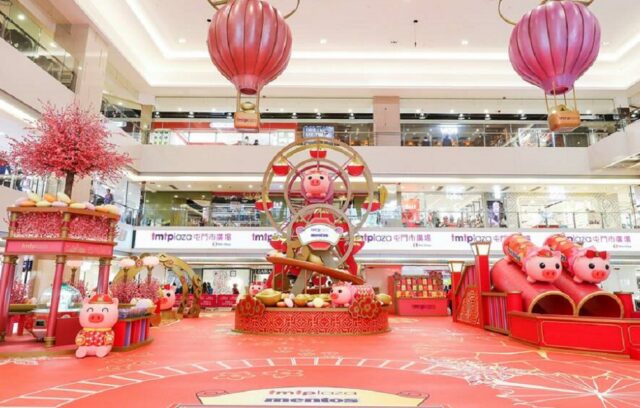
    In Tsim Sha Tsui, Harbour City will welcome the Year of the Pig with the “HAPPIG New Year” celebration, featuring a seven-metre tall gigantic “Wishing Treasure Bowl” at Ocean Terminal Forecourt from 25 Jan to 19 Feb 2019.

    The treasure bowl is structured with multiple frames, on which colorful ropes were tied delicately to create geometrical festive patterns from cherry blossoms to gold coins.

    The contemporary design is a stylish take on the Chinese New Year classic, wishing everyone joy and fortune for the Year of the Pig.
    Newly introduced this year is an interactive wishing experience, inviting visitors to win a lucky pouch by taking part in a mini game and donating HK$20 near the“Wishing Treasure Bowl” installation.

    Each lucky pouch contains a Good Fortune Card with predictions for the coming year, and a “Wishing Gold Coin” which can be deposited into “Make a Wish Piggy Bank” for making a wish. The coin will roll through a lucky tunnel connecting the piggy bank to the gigantic “Wishing Treasure Bowl”, bringing fortunate blessings to everyone for the New Year.

     

  • AirAsia strengthens Malaysia-Thailand connectivity with new Chiang Rai hub

    AirAsia strengthens Malaysia-Thailand connectivity with new Chiang Rai hub

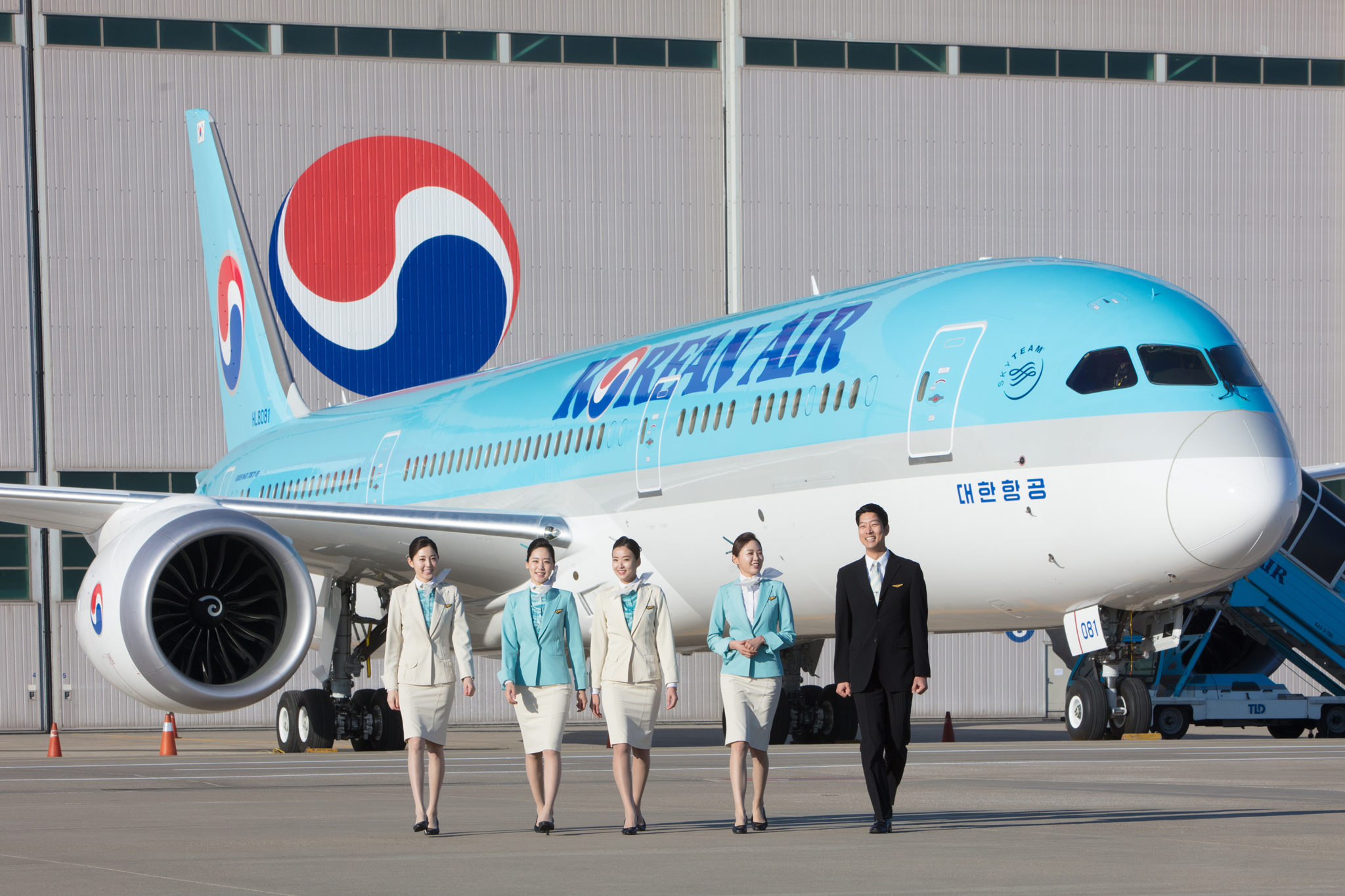
    AirAsia has further strengthened Malaysia-Thailand connectivity with the launch of a new route from Kuala Lumpur to Chiang Rai, its seventh and newest hub in Thailand. AirAsia Thailand, which will base an Airbus A320ceo at Chiang Rai’s Mae Fah Luang International Airport, will also operate new services to Phuket, Singapore and Macau, providing a massive boost to the local tourism and business communities, the airline said in a statement.

    AirAsia currently operates a total of six routes to and from the capital of Thailand’s northernmost province, including existing services from Bangkok Don Mueang and Hat Yai.

    AirAsia Thailand director of ground operations Witchunee Kuntapeng said the opening of its new hub in Chiang Rai is much like building a new home.

    “Chiang Rai has great potential to be one of the top tourism destinations in Thailand, with its unique Lanna culture and hill tribe way of life recently gaining global attention.

    “We believe it is a great time to promote Chiang Rai to travelers and are pleased to see that our four new routes between Chiang Rai and Phuket, Macau, Singapore and Kuala Lumpur have been well received. We’d like to thank the local community for their wonderful support,” Kuntapeng added.

    A welcoming ceremony led by Chiang Rai vice governor Paskorn Boonyalug, Tourism Authority of Thailand executive director for the East Asia region Titiporn Manenate and local travel agents was held at the new hub for each of AirAsia’s four inaugural flights from Phuket, Macau, Singapore and Kuala Lumpur between Jan 30 and Feb 1, 2019.

    The flight from Kuala Lumpur saw a load factor of 85% percent, proving the airline’s efforts to promote Chiang Rai as a leading destination for overseas visitors was off to a great start, it added.