Tag: Business

  • AirAsia eyes Vietnam launch, turnaround India and Japan units

    AirAsia eyes Vietnam launch, turnaround India and Japan units

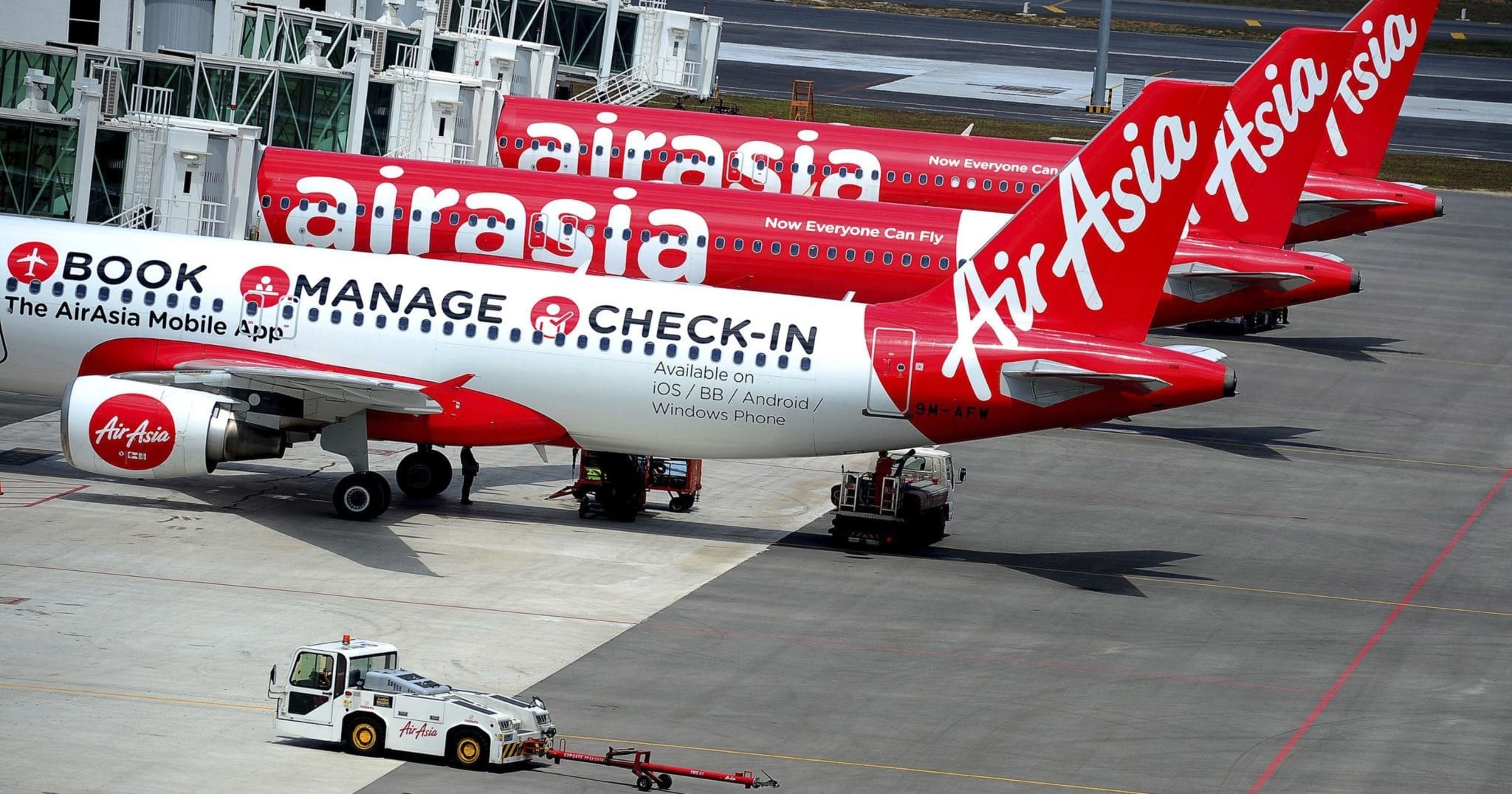
    AirAsia Group chief executive Tony Fernandes says the group has no plans to establish new subsidiaries over the next three years, apart from a unit in Vietnam. In a series of tweets, Fernandes says the low-cost carrier will focus its efforts on launching AirAsia Vietnam, as well as making Indonesia AirAsia and AirAsia Philippines “very profitable”. Last December, AirAsia signed a memorandum of cooperation with Thien minh Travel for a Vietnamese joint venture.

    Meanwhile, AirAsia‘s Indonesia and Philippines units, which have suffered losses over the years, have had their financials incorporated into the Group since the start of 2017. AirAsia has said that it is planning for a secondary listing for its Indonesia operations in fiscal 2019.

    Fernandes is also expecting AirAsia India and AirAsia Japan to be profitable by 2021. AirAsia India is working towards launching international services while AirAsia Japan plans to start connecting to points in North Asia.

    “We have a great seam[less] franchise. Indonesia, Malaysia, Thailand, Philippines and Vietnam… All the major populations and growing economies. Coupled with two great countries to enable us to cover the world – India and Japan.”

    The AirAsia Group previously had plans to launch a China unit and signed a MoU in May 2017. The pact with China Everbright Group and the Henan Government Working Group however lapsed in August 2018.

  • DHL announce ecommerce service expansion in Turkey

    DHL announce ecommerce service expansion in Turkey

    German based logistics firm DHL Express has said it will be investing more on ecommerce operations and infrastructure in Turkey in a bid to expedite parcels passing to and from Europe and several other parts of the world. A key part of the innovations and improvements will be a new operations hub at Istanbul airport but more developments are planned.

    The announcements were made at the DHL International Cross Border eCommerce Summit, which took place in Istanbul during December. And it was noted that the importance of Turkey is its strategic position as the meeting point between Europe, Africa and Asia. As a crucial trading hub, they reckon that DHL will be able to move consignments to numerous destinations in the Middle East and Africa more quickly by operating through Turkey.

    This makes Turkey a very important country for us, and we are working to make it a regional hub,” Leendert van Delft, VP Global Sales Programs DHL Express said. The operation center at the airport in Istanbul will be the first step in that direction the vice president announced. “Today, when you look at the world, everyone speaks of the US and China as ecommerce markets. But in the case of Turkey, you’re not at the initial phase of this journey, but you have actually moved from the infancy to the stage of walking. It is time for Turkey to run now.

    DHL says that their current share of global ecommerce deliveries is estimated to be in the region of 29% but they they hope to achieve something closer to between 40-50% by the end 2020. They also note that the DHL portion of same stood at 5% in 2016 and increased to 10% at the start of 2017 before rising to 15% in November 2017. And as competition and ecommerce increases, an ongoing share of business of roughly 25-30% is their reported aim.

  • New Vietnam international airport welcomes first passenger flight

    New Vietnam international airport welcomes first passenger flight

    An international airport that will be used for both commercial and military purposes was officially opened to traffic after two years of construction. A Vietnam Airlines Airbus A321 carrying Vietnam’s Prime Minister Nguyen Xuan Phuc and government officials made the first touchdown at the Van Don International Airport near the world-famous Ha Long Bay on Sunday morning, marking the opening of the first private airport in Vietnam.

    Construction of the airport, 50 kilometers away from Ha Long Bay in the northern province of Quang Ninh, began in 2015.

    The 325-hectare (803 acres) airport, owned by real estate giant Sun Group, costs VND7.7 trillion ($330 million) and can handle 2.5 million passengers a year equivalent to 1,250 passengers per hour. Its parking bay will have place for at least four aircraft by 2020 and seven by 2030.

    It is expected to focus on services to Northeast Asian destinations like South Korea, Japan, Taiwan, and mainland China and Southeast Asian ones like Thailand, Malaysia, Singapore, and Cambodia. Domestically, flights will mostly be to and from the southern and central regions.

    The airport now has four gates and the number will be increased to seven by 2030.

    Prime Minister Nguyen Xuan Phuc said at the airport’s opening ceremony that Quang Ninh has much potential to attract more tourists and the new airport would help the province raise the number of tourists from current 15 million to 50 million in the coming time.

    As Van Don District is home to one of the three special economic zones planned in the country, the airport is expected to open up opportunities for socio-economic development in the area, including tourism at Ha Long Bay, said Nguyen Duc Long, Chairman of Quang Ninh Province.

    The private airport is among a series of infrastructure projects aimed at boosting the tourism industry, including a new expressway between Ha Long and the proposed special economic zone in Van Don and the Ha Long International Passenger Port, which were both officially operational from December 30.

    The launch of the Van Don Airport made it easier for foreign tourists to touch down in Ha Long Bay, which was named among the world’s seven new natural wonders by Swiss organization New Open World in 2011.

    The bay was used to film the recent Hollywood blockbuster “Kong: Skull Island”, and has been raved about by many travel bloggers.

    Quang Ninh welcomed 7.5 million travelers in the first half of 2018, including 2.46 million foreigners, up 14 percent from a year ago. Tourism revenues for the period rose 31 percent year-on-year to VND12.8 trillion ($546.7 million), according to official figures.

    Vietnam’s aviation industry has experienced rapid growth in recent years. The country served some 106 million passengers this year, a 12.9 percent increase from last year and highest of all time.

  • Retail trends to look forward to in 2019

    Retail trends to look forward to in 2019

    Retail industry in India is undoubtingly one of the fastest growing retail industry in the world. It is the largest among all industries accounting to 10 percent of the country GDP and employs around 8 percent of the workforce. The retail industry is an experiential motley that is currently going through a robust transformation. Be it employing new technologies or exploring new store formats, revamping business strategies or creating personal experiences; retailers are indeed getting ready for the future by looking beyond conventional retail and evolving along with their modern consumers.

    India is also expected to become the world’s fastest growing e-commerce market, driven by robust investment in the sector and rapid increase in the number of Internet users.

    As the opportunities are immense, let’s take a look what retail trends the stalwarts think will rule in 2019:

    – Customization – The need for customized products and services is increasing thereby pushing the demand for personalized goods and services. With a pragmatic approach, the interface between companies, brands and customers will improve. Social media conversation tracing is going to be trending in 2019, which is a ground-breaking path to the future of handling customer behavior for tailor-made solutions. Also, studies reveal customers come down in favor of personalization — up to a point. They enjoy seeing products and deals personally relevant to them.

    – Brand Experience – It’s not just about selling the products to the customers but also providing them with the best experience too. Most retailers recognize this shift, but the majority struggle with strategies to transform their organization to deliver on consumers’ increasingly demanding expectations. Emerging online brands naturally seek to disrupt traditional ways of doing business and developed digital-first models that have created better experiences.

    On the other hand, established retail brands are burdened with legacy systems that are not optimized for today’s environment. The core – people, service, and experience – are strength to maintain and to satisfy today’s consumer they must integrate the flow of information and resources across the networks of employees, stores and partners.

    Hence, experiences will make a compelling occurance that consumers will always remember and be more than happy to share with one another.

    – Customer Retention – Customer retention is often far more effective and profitable than customer acquisition. An individual shopper want personal recognition. While loyalty programs offer rewards to existing customers the challenge is the acquisition of new customers. Innovation in content is the key to retaining and acquiring customers.

    – Retailers that step up their social media strategies will thrive – The rise of Instagram Stories, Facebook Live and messenger apps will fundamentally change how retailers interact with consumers online. Simply posting photos or updates on a brand’s social media handles won’t work anymore. Retailers will need to up their social media game and use social networks and apps to tell stories and engage with fans in real time.

    – Display – Retail displays is a strategic aspect of the business that can help attract customers, retain their interest, and increase sales. Visual merchandising helps to set a brand apart from competition by creating attractive and fascinating windows that can pull the consumer in to the store. Effective retail displays attract potential customers to the store. When designing displays, choose engaging colours, unique décor and stock arrangements to appeal both the head and the heart of customers.
    Once the brand has attracted potential customers, the brand can Improve chances of making a sale by doing research to see what works in other retail spaces, and keeping an eye on how customer traffic flows through the store.


  • Samsung Heavy lands $189 million LNG carrier deal

    Samsung Heavy lands $189 million LNG carrier deal

    Samsung Heavy Industries said Monday that it has clinched a deal worth 210 billion won ($189 million) to build a liquefied natural gas (LNG) carrier. The contract, with a European shipper, calls for Samsung Heavy to deliver the vessel by March 2021, the company said in a regulatory filing.

    With the latest contract, Samsung Heavy has clinched deals valued at a combined $6.3 billion so far this year to build 49 ships, including 18 LNG carriers and 13 container vessels.

  • Goldwin tops sports market growth through store investment

    Goldwin tops sports market growth through store investment

    Marketing of sports brands has become increasingly retail-led in the last decade and a focus on retailing has enabled Goldwin to make serious gains while the two biggest domestic brands, Asics and Mizuno, have been distracted by overseas expansion. Goldwin took a close look at its beleaguered business 15 years ago and decided retail could be its salvation. At current rates it will catch up with Mizuno’s domestic sales in a few years.

    Goldwin was a struggling sports apparel distributor 15 years ago, floundering in declining wholesale channels, the implosion of the ski boom, and a fear of risking all on expensive retail investment, resulting in sales collapsing from a peak of ¥78 billion to less than ¥50 billion.

    No longer. The rights owner for The North Face and Helly Hansen in Japan posted another strong set of results in 1H2018: sales jumped 16.2% to ¥33.4 billion and operating profit doubled to ¥3.1 billion. The strong first half follows an equally good 2017 when sales rose 15.6%, the eighth straight year of growth. Operating profit reached ¥7.1 billion, up 81% and the highest for 25 years.

    Sales for FY2018 ending March are expected to come in 13.6% higher at ¥80 billion, with operating profit of ¥9.1 billion, up 28.1%. If these numbers turn out to be correct, Goldwin will have achieved it highest sales ever and met the goals set out in its medium-term plan ending March 2021, two years ahead of schedule. It has now updated the medium-term plan from ¥80 billion to ¥90 billion in sales, operating profit from ¥6.5 billion to ¥11 billion, and an ROE of 15% against a forecast 11.2% (the ROE in FY2017 was 15.4% and is forecast at 18% for FY2018).

    What has changed? The key factor is the success of its outdoor brands, which accounted for ¥49 billion, or 70%, of sales in FY2017, and in particular the change in management’s willingness to invest in retail stores in shopping centres a decade ago.

    Since the decision to invest in retail, Goldwin has opened well-executed stores in busy malls such as Lalaport and Lumine, as well as some very popular outlet stores. Today, its own directly operated stores account for 56% of sales. In addition, Goldwin garners another 5% of sales from e-commerce, still a small percentage but online sales were up 50% in a year. This performance is far better than either of the two largest domestic brands, Asics and Mizuno. Goldwin had little choice than to risk all given its dependence on the Japanese market for almost all its sales, forcing it to seek an alternative to its traditional wholesale model.
    Goldwin has focused investment on key brands rather than try to lift all boats at once.

    The growing appetite for outdoor fashions from both active consumers and those who just like the outdoor look, has helped propel The North Face and Helly Hansen in the last few years. In contrast, other Goldwin brands, like Ellesse, Canterbury and Speedo, which are sold at wholesale and through department store corners, have seen sales languish, falling 3.3% in FY2017.

    What is impressive about Goldwin’s stores is relentless effort to attract new footfall. In-store events are held regularly to pull in customers and deepen interaction, with customer feedback passed back to product planning and marketing teams. Goldwin also locates stores close to outdoor sports activities, such as its Nagano and Niseko The North Face Gravity stores which combine merchandise sales with ski rental services and even a library of books on outdoor sports. At the new National Stadium in Gaien-mae, it has opened an athletics complex/store called Neutralworks by Goldwin.
    On the supply side, Goldwin has worked to simplify supply chains through more direct contracts with factories, which in turn has helped streamline inventory management, resulting in a lower cost of sales, better sell-through and an increase in operating profit margins from 4.9% to 9.4%.

    Given the intense competition and the plethora of similar product from multiple sports brands, Goldwin has been investing in product innovation for both its own brands and licensed product. In 2017 it built a technical research centre in Toyama – where the company was founded – at which it develops new fabrics and performance functions using environmental chambers and motion capture systems. It has also partnered with other companies: it uses a synthetic, protein-based, petroleum-free silk developed by Spiber (in which it has invested ¥3 billion) for jackets and hoodies, and has licensed odour-reducing, sweat-absorbing fabrics originally developed by Jaxa for astronauts’ underwear.

    Goldwin is now investing in stores for other promising brands. It opened stores in Aoyama, Tokyo and Sapporo for the US brand Woolrich in October, and forecasts sales growth of 6.5% this year. Goldwin plans 10 stores for Woolrich through FY2020. For its eponymous Goldwin brand it opened the first flagship store in November in Nijubashi Square in Marunouchi.

    Going forward, plans for overseas expansion look promising for the first time. In the last two years, it introduced a new logo and updated merchandise for the Goldwin brand. It will transform what was a domestic skiwear label into a lifestyle sports label with global reach, similar to Descente’s plans for its own brand. In A/W 2019 a new lifestyle collection of sports apparel and accessories will be launched at home and overseas – this year the ‘hero’ product, a down parka using synthetic silk from Spiber, was gold winner at the European sports trade show, ISPO Munich.

    Last year, Goldwin acquired a stake in Woolrich International, a UK-based entity that owns the Woolrich brand, and plans to “participate actively” in its global development, particularly in Asia, including production – it has created a premium collection for the brand this year.

    Investment in sports retail stores will increase at home over the next couple of years, with all major sports brands looking to expand. The success of Japan in the soccer World Cup, big expectations for the Japan team in the 2019 Rugby World Cup, and the upcoming Olympics in 2020 all contribute to consumer interest in sports. Goldwin itself is hoping for an afterglow effect after the Olympics – what it calls “Golden Sports Years” – but the even more important trend is growing interest in health and well-being in general.

    What also makes the prospects for sports brands so bullish over the next decade is that interest in active sports, and the attire to go with this, is common to all age groups in Japan. This includes the fast growing population segment, the over 60s, ensuring sustained demand for many years to come. Sports and sports fashion is in many ways one of the few consumer categories to be largely immune to a demographically challenged market like Japan.

    Some local sports firms have been complacent in taking for granted customer loyalty to Japanese brands, but Goldwin has matched international brands in development of solid retail concepts, mixing innovative products with store entertainment and services, the basis of its new found success. Asics and Mizuno will be hoping that investment plans in the next few years will be enough to restore the balance.
     

  • Vietnamese banks deposit rates rise as usual at year end

    Vietnamese banks deposit rates rise as usual at year end

    Banks usually hike deposit interest rates and even offer promotions at the year end, and this year has been no different. On December 19 Sacombank announced a rise in interest rates on deposits of three months from 5.2-5.3 percent to 5.5 percent, and on deposits of 12 months from 6.9 percent to 7.7 percent. VPBank has increased its rates by 0.1-0.7 percentage points, with deposits of 18 months and more carrying the highest rate of 7.8 percent.

    State-owned banks such as BIDV and Vietinbank have hiked rates by 0.1 to 0.5 percentage points.

    The management of a joint-stock bank headquartered in the south said lending usually rises in the last quarter of the year to meet the rising demand for short-term credit to serve the working capital needs of companies.

    As a result, many banks increase their deposit rates, especially for short terms, it said.

    Besides, experts said lenders are running out of time to use 45 percent of short-term capital for medium- and long-term loans, with the ratio to be reduced to 40 percent on January 1.

    The National Financial Supervisory Commission has recently estimated that credit growth to have slowed significantly to 15 percent this year from 18 percent in 2017.

  • VN-Index ends year 10 percent lower

    VN-Index ends year 10 percent lower

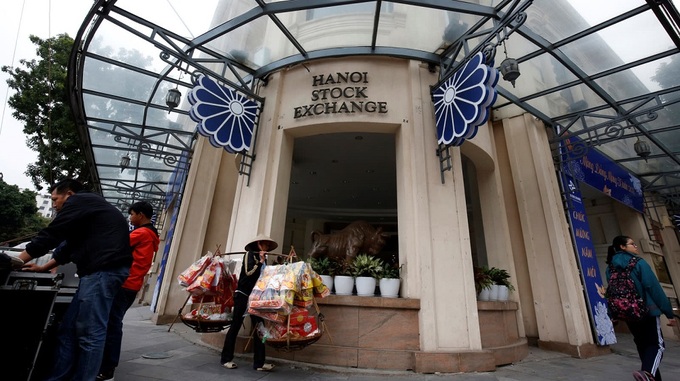
    The VN-Index closed the last trading day of 2018 at 892.54 points, down almost 10 percent from the year’s outset. This was a drop of 93 points from January 2, the first trading day of the year. The benchmark closed below the 900-point mark on Friday, a drop of over 25 percent from its peak at over 1,200 points in April. The VN30-Index, representing the 30 largest tocks in terms of capitalization, closed at 854.99 points, dropping 10.46 from Thursday, or 1.21 percent lower.

    Many stocks in the VN30-Index also ended in the red. Diary giant Vinamilk closed at VND120,000 ($5.2), 2.6 percent lower.

    Vietnam’s top petro importer and distributor Petrolimex fell 5.69 percent to VND53,000 ($2.3), while food company Masan dropped 1.9 percent to VND77,500 ($3.36).

    However, the HNX-Index on the Hanoi Stock Exchange and the UPCoM-Index for unlisted public companies ended in the green, up 0.24 percent and 0.46 percent respectively.

    Vietnam’s largest private firm Vingroup (VIC) ended the day at VND95,300 ($4.13), 6.93 percent lower. Vincom Retail’s VRE stock dropped almost five percent to VND27,000 ($1.17).

    Total market capitalization of all three stock markets, the Ho Chi Minh City Stock Exchange (HOSE), HNX and UPCoM, was VND4 trillion ($173.25 million).

    2018 has proved the most turbulent year for VN-Index since the 2008 crisis, ending an increasing run since 2016.

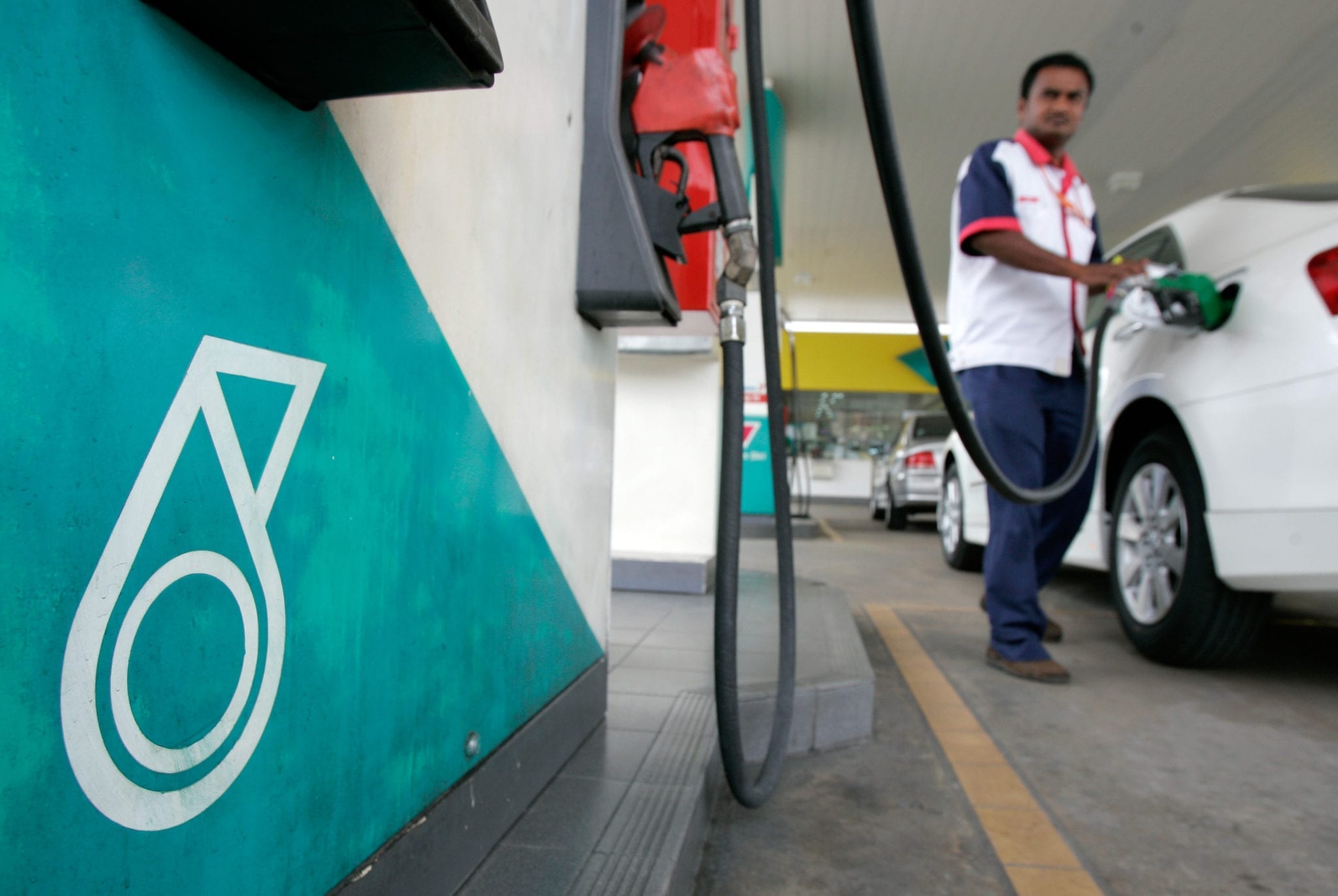
  • Petronas buys 10% of Block 61 onshore Oman

    Petronas buys 10% of Block 61 onshore Oman

    Petroliam Nasional Bhd (Petronas), through its subsidiary, PC Oman Ventures Ltd (PCOVL) has acquired a 10% stake in Block 61, onshore Oman from Makarim Gas Development LLC (MGD), after the conditions for the completion of the transaction were fulfilled. MGD is a subsidiary of Oman Oil Company Exploration & Production LLC. Petronas said the completion of the transaction was formalised at an event held in Muscat, Oman on Dec 27.

    Following the deal, MGD’s stake in Block 61 will be reduced to 30%, while P Exploration (Epsilon) Ltd as the operator holds the remaining 60% stake.

    Petronas noted that the acquisition of Block 61 marks an important step in realising the group’s growth strategy in the upstream sector in the region and globally, as it aligns its activities to ensure sustainable energy supply.

  • IDG Capital and Hong Kong-based I.T Group invests in Acne Studios

    IDG Capital and Hong Kong-based I.T Group invests in Acne Studios

    Acne Studios has sold minority stakes to China-focused investment firm IDG Capital and Hong Kong-based I.T Group, ending almost a year of speculation that the brand would be acquired by a larger rival.

    Acne, one of the earliest and most successful purveyors of the “Scandinavian cool” style that has since become popular across fashion and design, had held talks with potential buyers as far back as 2013, from French luxury conglomerate Kering to private equity firms. Earlier this year, the company was working with Goldman Sachs on a possible sale, at a valuation of up to €500 million ($570 million).

    Instead, IDG and I.T Group will acquire stakes of 30.1 percent and 10.9 percent respectively, from Öresund, Creades and PAN Capital, Acne said in a statement Sunday. Founder Jonny Johansson and executive chairman Mikael Schiller will remain majority shareholders in the business.

    When Acne began shopping itself around earlier this year, the M&A market for fashion and luxury was booming, powered by perceived growth opportunities and increasing market complexity that made it harder and harder for sub-scale players to compete without greater access to the capital — and expertise — that sophisticated and deep-pocketed strategic or private equity investors can bring to the table. Over the course of 2018, Dries Van Noten sold a majority stake to Spanish luxury group Puig for an undisclosed sum, and Missoni sold a 41.2 percent stake to FSI Mid-Market Growth Equity Fund in transaction worth €70 million. Most recently, Michael Kors acquired Versace for $2.1 billion.

    But in recent months, the temperature of the market has changed. The ongoing trade spat between the US and China has fuelled economic uncertainty and raised questions about the future of luxury demand. Shares of publicly traded luxury brands have plummeted.

    The Stockholm-based label, founded in 1996, launched as a niche denim brand and has since built a strong modern contemporary-luxury name, well known for its upscale ready-to-wear and a distinct Scandinavian vibe that is popular with streetwear-attuned millennials. While the brand has yet to develop a strong leather goods offering, its sneakers are gaining traction. Last year, it generated $221 million in sales revenue with Ebitda, a measure of operating profit, of $35 million. It has over 50 own-brand stores in 13 countries.

    However, sales growth slowed at the brand last year, rising just 9 percent, the slowest pace in at least a decade, according to a Goldman Sachs presentation to potential buyers. The brand still generates 43 percent of its sales through a network of 600 wholesalers, a potential point of vulnerability in a world where direct-to-consumer fashion is stealing market share from department stores.

    Acne’s two new investors are likely to give the brand a leg up in Asia, already a key source of growth (Asia drove one-quarter of Acne’s sales last year, second only to Europe, according to the Goldman presentation). I.T Group has served as Acne’s Asian retail partner since the early 2000s. IDG Group, which has also invested in Farfetch and Moncler, specialises in expansion opportunities in China and the rest of Asia (10 of the firm’s 13 offices are based in the Asia region).

    “Acne Studios will greatly benefit from their extensive know-how within fashion and the rapidly evolving universe of online and offline retail,” Schiller said in a statement.

  • Average New Year bonuses in HCMC up 30 pct

    Average New Year bonuses in HCMC up 30 pct

    Average New Year bonus given by HCMC firms to an employee is VND3.4 million ($146), 30 percent higher than in 2018. For the 2019 Roman Calendar New Year, bonuses have been significantly higher than in 2018, Le Minh Tan, director of the HCMC Department of Labor, Invalids and Social Affairs said, citing a survey. The survey covered nearly 2,000 enterprises and 415,000 workers.

    On average, bonuses given by foreign invested enterprises for the New Year was VND9.4 million ($403.65), 70 percent higher than the last, the survey found.

    For this Roman Calendar New Year, the highest bonus was VND500 million ($21,470), given by a foreign-invested enterprise.

    For Lunar New Year (Tet), which falls in February, the highest reported bonus was VND1.17 billion ($50,343), coming from a bank headquartered in HCMC.

    The average reward for Tet offered by enterprises surveyed is over VND10 million ($430.78) per person. Only four respondent businesses reported facing difficulties and not giving Tet bonuses for employees.

    There are still some enterprises that have not announced Tet bonuses for workers, waiting for business results. These firms plan to announce their bonuses by mid-January.

    Last Tet, the highest Tet bonus in HCMC was VND855 million ($36,718), given by an unidentified private enterprise.

  • Korean iPhone owners claim low trade-in prices

    Korean iPhone owners claim low trade-in prices

    iPhone users are accusing Apple of paying Korean customers less for their trade-ins than the devices are worth, while noting differences between promotions in other countries and those in Korea.  If an iPhone owner wants to return an older model when buying a new device, iPhone Korea said it will offer up to a 300,000-won ($268.56) discount on the latest smartphones, the iPhone XS and iPhone XR. Korean customers are outraged.

    They claim that the deal has been made available to them a full month later than in other countries. In the United States, Japan and China, trade-in opportunities started in late November. The amount in compensation is also said to be too low.

    Apple Korea announced on Dec. 24 that it is taking iPhone trade-ins at its retail store in Garosugil, Seoul, and will continue to do so until late January next year.

    If the user returns an older model, it is possible for them to buy the 990,000 won iPhone XR for 690,000 won and the 1.37 million won iPhone XS for 1.07 million won.

    Internet community Clien exploded with comments on Dec. 25, the day after the announcement. “I might as well sell it at the Gangbyeon Electronics Mart rather than returning it to Apple,” said one. Another added: “It is disrespecting the customers.”

    While iPhone Korea only compensates up to 300,000 won for an iPhone 7+ released two years ago, the price for an iPhone 7+ in the second-hand market near Gangbyeon and Sindorim is around 380,000 won, according to mobile community Cetizen.

    If the product is an S class with almost no cracks, the price goes up to 450,000 won.

    After typing in the serial number for a black iPhone 7 with 128 gigabytes into the trade-in page on Apple Korea’s website, a reporter received a quote of 174,000 won. In the second-hand market, users can sell the phone for at least at 289,000 won. Apple is offering 115,000 won less for the device.

    Lee Doo-hee, a programmer who enjoys using Apple products said, “I can get more money if I sell directly, so I do not feel any need to go to the Apple store in person and exchange my iPhone.”

    Apple U.S. announced that it is offering trade-ins of about $300 for those buying an iPhone XR and iPhone XS. This is about 10 percent more than in the Korean market.

    NTT Docomo, Japan’s No. 1 mobile company, is offering the iPhone XR for 25,920 yen ($235.05), around 260,000 won, for those signing a two-year contract. No similar discounts are offered in Korea.

    “For Apple, Korea is the home turf for Samsung Electronics, Apple’s old enemy,” according to a source in the sector.

    “Apple only has to get a fair amount of earnings from hard-core iPhone fans, which possibly account for 15 percent of all mobile communications users in Korea. That is why it is pursuing unfavorable policies, like excluding certain countries from promotions.”

    It is believed that the current promotion from Apple Korea is due to the slump in sales of recent iPhones. High prices are seen as the main cause of the recent slowing of sales growth.

    Kuo Ming-chi, a Taiwanese Apple expert as well as an analyst at TF International Securities, has revised his first-quarter 2019 sales volume estimate for iPhones from a 47 million to 52 million range to a 38 million to 42 million range.

    A report written by Kuo was titled: “Shipments of iPhones in 2019 could be below 190 million.”

    The market value of Apple exceeded one trillion dollars in September last year. It is now around $700 billion.

  • Hong Kong’s Hui Lau Shan debuts in Philippines

    Hong Kong’s Hui Lau Shan debuts in Philippines

    Hong Kong dessert chain Hui Lau Shan will launch in the Philippines in February. The franchise, best known for its mango-based treats,will open at SM Megamall in Mandaluyong City with a range of desserts that are expected to draw on local fruits. Mango desserts have proven popular in the region recently, with prominent social media coverage of long queues for mango floats.

    Hui Lau Shan is a heritage brand originating from a herbal tea & tea trolley that traded in Hong Kong’s Yuen Long back in the 1960s.

  • HK customs seized counterfeit cosmetics

    HK customs seized counterfeit cosmetics

    Hong Kong Customs has seized more than 1300 items of suspected counterfeit cosmetics after raids on three sites this week. In an anti-counterfeiting operation conducted with the assistance of the trademark owners, customs officers took enforcement action at four dispensaries, five medicine stores and a warehouse. The raids took place in Tsim Sha Tsui, Mong Kok and Sheung Shui.

    The suspected counterfeit cosmetics and skin care products have an estimated market value of about $73,000 and included soothing gel, eyebrow pencils and face powder.

    Eight men and five women were arrested, including seven shop owners and six salespersons, aged from 19 to 60. They have all been released on bail as investigations continue.

    In a statement, Hong Kong Customs said it has been carrying out stringent enforcement against the sale of infringing goods and will continue to step up patrols and enforcement actions against infringing activities during the Christmas season.

    “Customs reminds consumers to procure goods at reputable shops and to check with the trademark owners or their authorised agents if the authenticity of a product is in doubt.”

    Retailers were warned to be cautious and prudent in merchandising since the sale of counterfeit goods is a serious crime and offenders are liable to criminal liability.

    Under the Trade Descriptions Ordinance, any person who sells or possesses for sale any goods with a forged trademark commits an offence. The maximum penalty upon conviction is a fine of $500,000 and imprisonment for five years.

  • Bamboo Airways postpones maiden flight again

    Bamboo Airways postpones maiden flight again

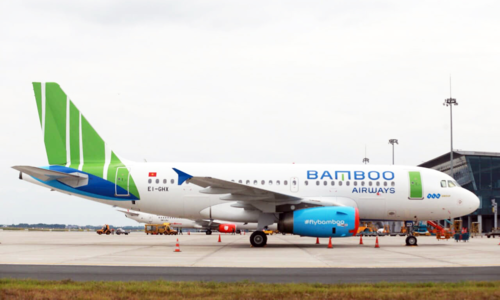
    Vietnam’s newest airline Bamboo Airways will not operate its maiden flight Thursday as scheduled, the second time it has been delayed. Its CEO Dang Tat Thanh said Bamboo Airways could not take off since it is going through “the most difficult examination ever.” “Bamboo Airways is currently going through the final stage of a tight examination by authorities before taking off,” he said, adding that the first flight would now be in mid-January. The airline aimed to launch the first flight on December 29, after failing to launch services in October as previously planned.

    The carrier, owned by conglomerate FLC, received a license last November but is still awaiting an aircraft operator certificate (AOC).

    It was established in May last year with a charter capital of VND700 billion ($30 million), which it increased two months later to VND1.3 trillion ($55.68 million).

    It has signed deals to buy 24 Airbus A320neo and 20 Boeing B787-9 Dreamliner aircraft worth a total of $8.6 billion. Earlier this month it took delivery of the first aircraft, an Airbus A319 leased from an Irish company.

    The airline plans to operate on 100 routes, connecting major cities and travel destinations in Vietnam with the rest of the world.

    FLC chairman Trinh Van Quyet said earlier that the first routes could be between Hanoi and Ho Chi Minh City and from the two cities to Quy Nhon.

    Vietnam has four other carriers still in operation: Vietnam Airlines, Vietjet Air, Jetstar Pacific, and VASCO.