Tag: Business

  • Lifestyle-curation bookstores are changing

    Lifestyle-curation bookstores are changing

    In recent years, bookstores have been disappearing at a fast rate. Aside from major franchise bookstores in downtown areas, many small, neighborhood bookstores have closed, forced out in the digital era. But lately, bookstores have been returning in different forms. New bookstores sell more than just books, offering a wide range of goods from stationery, food and drinks to various merchandise — anything related to lifestyle.

    The trend started with the Kyobo Book Centre, the nation’s largest bookstore franchise, following the model of Tsutaya Books. The Japanese bookstore chain established a successful business model, attracting consumers who may not necessarily be interested in books with its retail products and in-store restaurants.

    The business went against the prejudice of a bookstore as a place where you a person just buys books. Providing comfortable seats for people to read, it helped create a larger reading population.

    Following Kyobo Book Centre’s success, more bookstores opened, offering more products and services than just books. They bill themselves as lifestyle-curation bookstores, or culture complexes.

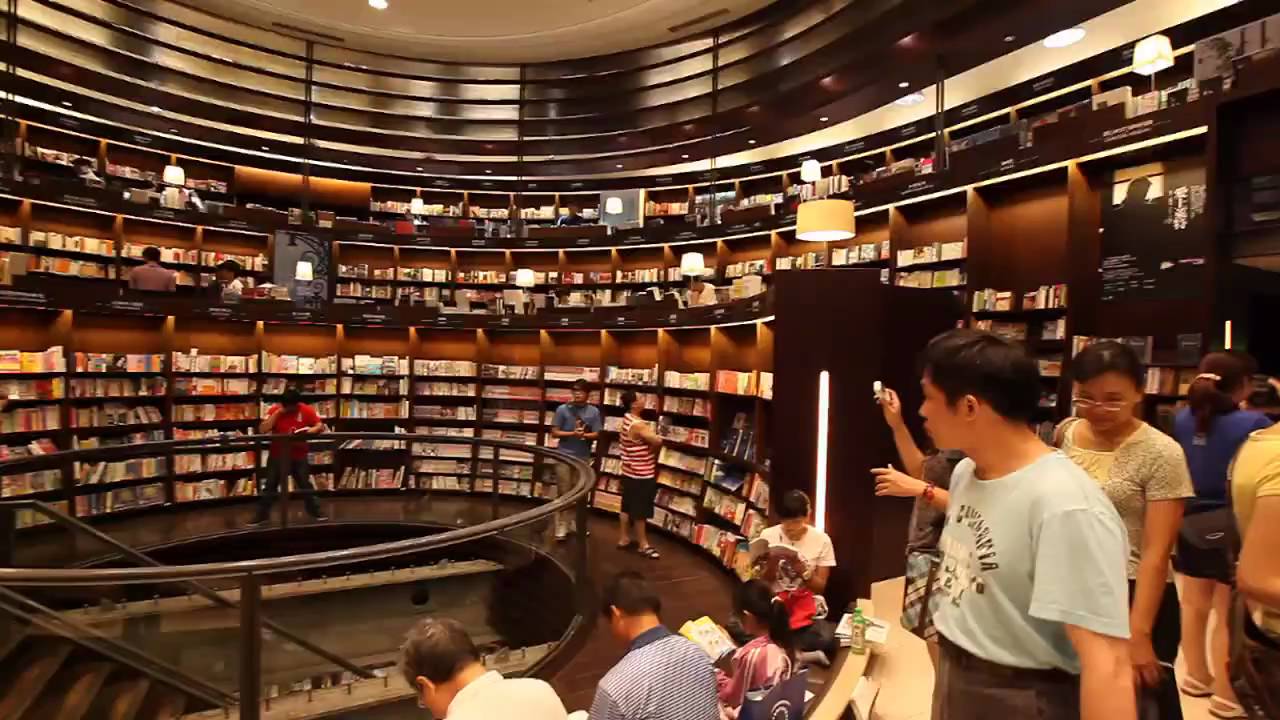
    Arc N Book, which opened last month in central Seoul, deems itself as a city culture complex that introduces books and lifestyles.

    The bookstore has four themed sections: Daily, Weekend, Style and Inspiration. The themed sections provide related products. For instance, the Daily section’s theme is currently black tea. Along with related books, the section displays tea leaves and tea bags for sale.

    On Dec. 15, the bookstore bustled with visitors. While some lounged with books in hand, others photographed the well-decorated space. The “Harry Potter”-styled archway, a book tunnel, was the hottest photo spot.

    “We are strong in foreign books. Foreign-language books take up 7 percent of our books, while it is usually around 2 percent at other bookstores,” said Kim Ji-in, a representative from OTD Corp., which operates Arc N Book.

    “We have around 30,000 books, which may not be big compared to other bookstores. But we are more about curating special books that cannot be found easily,” Kim said.

    Looking at the crowded bookstore filled with people reading, taking photos or sharing quality time with friends, a question popped into mind: Do people really buy books here? You could just grab a book, sit on a comfortable sofa and read for hours.

    According to Arc N Book, sales have been steadily growing since its opening. With encouraging results, the corporation will open another bookstore in Seongsu-dong in eastern Seoul in January. The bookstore, however, aims to be about more than just sales.

    “As a business, we, of course, have to create profit. But it’s not just about that,” Kim said. “We hope to curate a lifestyle, to show people a new way of living and reading.”

    Another question: Does the popularity of such bookstores really mean the reading population is increasing? At Arc N Book, it is clear not everyone comes to read. Some lay not even a single finger on the books.

    “At least these kind of places make people actually go to bookstores. Without these places, people will not be exposed to books at all,” said an official from GimmYoung Publishers, a big player in the publishing industry here.

    “Though they might not buy books right away, they experience the reading culture and learn that people read for leisure. In the long run, they can become future consumers,” the official said.

    Though a similar bookstore, the atmosphere at Choi Ina Books is quite different from that of Arc N Book. It is much quieter, less crowded — more of a library-like atmosphere.

    The bookstore in Seolleung, southern Seoul, is small in size but that doesn’t mean that its book curation ability is weak. Rather, it is all about professional curation here.

    In the publishing industry, Choi Ina Books is one of the most popular bookstores in Seoul. Choi, who retired as a copywriter at Cheil Worldwide, a major advertising firm in Korea, opened the bookstore to share her perspectives and inspirations with the wider public.

    Books in the curated section have been selected by Choi and professionals in the advertising industry. The books also come with handwritten cards that explain why the particular book was chosen and a simple profile of the recommender.

    Here, only purchased books can be brought into the in-store cafe upstairs.

    For those who don’t seek ownership, though, another reading space is available downstairs. It’s a library decorated like the private study of a well-cultured intellectual.

    The library can be used at a price of 14,000 won (US$12.40) for an hour or 22,000 won for two hours. The price includes a cup of coffee and snacks. Though a bit pricey, the space is frequented by office workers in the area seeking some alone time during the day, according to the bookstore.

    Another example of this ilk could be the Hyundai Card libraries. The credit card company currently operates four library-concept establishments across Seoul, each centered on different themes: cooking, travel, design and music.

    Built to be hubs of inspiration and thought in their respective fields, the establishments curate diverse books, including foreign specialty publications that cannot easily be found in Korea. They are open exclusively to Hyundai Card members.

    Though billed as libraries, the establishments neither lend books nor sell them. The books can only be read at the libraries, which also run various programs related to their respective themes.

    For instance, the Cooking Library runs cooking classes as well as self-cooking sessions. The Design Library and Travel Library offer talk sessions. At the Music Library, visitors can also learn to use the deejay booth.
  • Woowa Korea gets $320 million from overseas

    Woowa Korea gets $320 million from overseas

    Woowa Brothers, the operator of the popular food delivery app Baedal Minjok, said Thursday that it succeeded in securing $320 million from major foreign investors including Sequoia Capital, famous for investing in leading tech companies such as Apple and Google.

    According to Woowa Brothers, other major investors include China’s Hillhouse Capital – which is also known for investing in Chinese tech giants including Tencent and Baidu and led this round of funding – and the Singapore government-owned wealth fund GIC.

    The food delivery app developer said the investment has solidified its position as a unicorn company – an unlisted start-up worth over $1 billion – as its post-money valuation is now worth 3 trillion won ($2.66 billion).

    The company said it was able to secure such a large investment thanks to its exceptional growth.

    The Baedal Minjok app, normally referred to as Baemin, now processes nearly 27 million food delivery orders every month, up from 20 million in July. The app has 8 million monthly active users.

    Food delivery sales have more than doubled in the past three years. Baemin processed around 5 trillion won worth of food delivery orders this year, up from 2 trillion won in 2015.

    Since its founding in 2010, Woowa Brothers has received a total of 506.3 billion won in investment. Previous investors include Goldman Sachs, which invested 40 billion won, and Naver, which invested 35 billion won.

    “It’s significant that our company’s growth and future potential was recognized by reputable global investors,” said Oh Se-yoon, Woowa Brothers’ executive vice president and CSO.

    Woowa’s business interests go beyond food delivery. Its other projects include developing delivery robots powered by AI and self-driving technology and building an online system to help restaurant owners manage revenue and customers.

  • Vietnam GDP growth tops 7 pct, highest in a decade

    Vietnam GDP growth tops 7 pct, highest in a decade

    Vietnam’s GDP growth of 7.08 percent this year retained its status as one of the best performing economies in the world. It was the highest growth the country has experienced since 2008 and compared with the median estimate of 6.9 percent in a survey of 12 economists.

    The scale of the economy at present value is over VND5.53 quadrillion ($237.38 billion), with average GDP per capita at $2,587 per person, a $198 increase over 2017, Nguyen Bich Lam, head of the General Statistics Office, said Thursday afternoon.

    According the office, the agriculture, forestry and fisheries sector grew by 3.76 percent this year, and contributed to 8.7 percent to the country’s GDP. Corresponding figures for industry and construction sectors were 8.85 percent and nearly 49 percent; and that of the service sector, 7.03 percent and approximately 43 percent.

    Lam said that the consumer price index (CPI) in December 2018 fell by 0.25 percent compared to the previous month. On average, CPI in 2018 increased by 3.54 percent, well below the 4 percent target set by the National Assembly.

    Export turnover for the year is estimated at over $244.7 billion, up nearly 14 percent compared to 2017.

    The FDI sector (including crude oil) still accounts for nearly 70 percent of export turnover, at more than $175.5 billion.

    On the other hand, Vietnam imported more than $237.5 billion the whole year, up 11.5 percent over 2017.

    Overall, in 2018 Vietnam achieved a trade surplus of $7.2 billion.

    “The quality of economic growth has improved,” Lam said.

    The GSO director general explained that labor productivity this year saw an increase of nearly 6 percent compared to 2017, at VND102 million (nearly $4,512) per person.

  • The highs and lows of Indian retail real estate in 2018

    The highs and lows of Indian retail real estate in 2018

    2018 saw further liberalization of FDI policies, repositioning Indian retail on the global investment map and attracting a large number of global retailers into the country. In H1 2018, private equity investments into Indian retail swelled to over US$ 300 million, denoting a bracing growth of 54 percent over the previous year.

    Worryingly or encouragingly (depending on one’s viewpoint) online retail also witnessed exponential growth in 2018. In fact, online retailing is now expected to be at par with physical retail over the next 5 years. With India positioned to become the world’s fastest-growing e-commerce market, online retail in the country is driven by robust investments and deepening internet penetration in the country.

    As per ANAROCK data, the top cities with significant retail growth in 2018 included MMR, NCR, Bengaluru and Hyderabad
    New retail supply in 2018 was limited to 5.1 mn. sq. ft.
    Interestingly, apart from the top metros tier 2 & 3 cities played a significant role in India’s retail growth story in 2018

    Saturation of the metros due to limited space availability, mounting rental values and escalating infrastructure issues fuelled retail growth in smaller cities like Ahmedabad, Bhubaneshwar, Jaipur, Lucknow, Thiruvananthapuram, etc. New malls that became operational in the smaller cities in 2018 range from anything between 200,000 to 18,00,000 sq. ft. in size, amply vouchsafing the increasing appetite for organized retail in the hitherto underserved cities.

    In response to the huge potential in these markets, both domestic and international brands made deep forays into them via the online route, followed by more gradual offline presence. This disparity is hard to ignore and sends out a clear signal to investors and mall developers – physical retail deployment must pick up considerable pace in these smaller markets in the coming years.

    Other Sunshine Sectors

    The logistics and warehousing sector transformed rapidly in 2018 after the Government granted the coveted infrastructure status to logistics in November 2017. In fact, warehouse stock supply is expected to see substantial increase over the next two years owing to implementation of GST, the Government’s determined infrastructure push and increased interest from national and international investors. Overall, strong economic fundamentals, proactive reforms and increasing use of technology will continue to boost the sector.

  • How the retail industry has fared in 2018

    How the retail industry has fared in 2018

    The overall retail market in India 2018 stood at Rs 43,251 billion and is forecast to grow by 6.4 percent CAGR in 2018-2023. Retailing in India still predominantly takes place in physical stores and shopping behaviour between urban and rural consumers continues to be vastly different. Smaller independents (both grocery retailers and non-grocery specialists) continued to dominate the landscape they faced growing competition from modern outlets opening in out-of-town shopping centres and malls capturing the Tier II & III markets.

    This year, we witnessed modern retailers launch interesting payments schemes and effective pricing strategies to propel the sales. For example, leading retailer Future Group launched its payment wallet Future Pay which can be used in all its retail brand outlets. Retailers also capitalised on growing acceptance of modern retail by developing new marketing schemes and strategies to attract shoppers.

    Additionally, multi-channel strategies remained key for retailers as they are developed online platforms that are also smartphone and tablet compatible to drive Internet sales.

    Furthermore, retailers also increased their new private labels products. This is was done for certain grocery categories like: packaged foods, non-alcoholic drinks, beauty and personal care and home care products.

    Finally, subscription-based retailing practices started to pick up in 2018. Although still relatively niche, and limited only to urban India, the subscription-based model for beauty and personal care and consumer health became quite popular in metropolitan cities.

    What are the retail trends that are going to rule the roost in retail in 2019?

    – Retailing will continue to offer potential for grocery retailers. Convenience stores and forecourt retailers are likely to continue to see healthy growth rates as their format can meet the demands arising from changing lifestyles by offering more convenient shopping solutions, both in terms of location, business hours and product range.

    – Given the rising maturity of retailing in metros/urban areas, retailers have slowly started to focus on the semi-urban consumer base. This has resulted in the slow and steady urbanisation of shopping styles amongst semi-urban consumers.

    – As the labour crunch and high rentals continue to affect the retail landscape in India, hypermarkets are looking to ramp up investment on self-service technology and automation to reduce costs and improve customer experience. Some hypermarkets chains have implemented self-service kiosks at checkout counters, generally with positive results because of reduced waiting times. Investments have also been made into automated ordering systems, which has helped brands reduce storage space at outlets, hence control rental costs. This can be expected to grow during 2019 as well.

    – Furthermore supermarkets are likely to push the broadening of key product categories, such as organic fresh food, soft drinks and packaged food. They are also likely to further narrow the line between foodservice and grocery retailing, with the introduction and integration of new foodservice elements within their stores.

    – Non-grocery retailing will likely be impacted by the growth of internet retailing at the expense of specific store-based retailers and other non-store channels. Consumers are expected to increasingly shop and research products online, with the popularity of smartphones making mobile-optimised sites and shopping apps crucial in attracting consumers. Moreover, social media will be used more often to alert consumers to attractive price promotions and build interest in new product launches. Also, omni-channel strategies will remain key for non-grocery retailers.

    – Non-grocery retailers will increasingly integrate their online brand information with store inventory, as consumers expect to find the same products in both channels. Moreover, to minimise showrooming, players will also need compelling reasons for customers to buy their brands in store, whether in terms of product selection or price competitiveness.

    – The entry of Amazon and Flipkart could stimulate a much-needed increase in the competition, which will bring both opportunities and threats for existing food and drinks retailers in India. Amazon with ‘Amazon Pantry’ and Flipkart with ‘Flipkart Supermart’ eventually launched its online grocery business in 2018. Millennials and affluent consumers were encouraged to change from shopping in physical stores to online in 2018 with convenience and heavy discounts on offer. Also, with increasing investments from player such as Amazon who are expected to buy skate in Future Retail and PayTm who have partnered with BigBasket and Future Group to strengthen its online grocery business, the food and drinks internet retailing is expected to show tremendous growth in 2019.

  • Vietnam FDI disbursement in 2018 tops $19 bln

    Vietnam FDI disbursement in 2018 tops $19 bln

    Foreign direct investment disbursement in Vietnam reached a record $19.1 billion in 2018, a year-on-year increase of 9.1 percent. However, FDI pledges for new projects, capital supplements and stake acquisitions were down 1.2 percent from a year earlier to $35.46 billion, according to the Ministry of Planning and Investment.

    A total of 3,046 new projects have been granted investment certificates since the beginning of the year, with a total registered capital of nearly $18 billion. Nearly 1,170 projects registered to increase their capital by a total of $7.5 billion. The rest of the registered capital was reported in a total of 6,500 instances of capital contribution and share purchases by foreign investors.

    This year, foreign investors injected capital into 18 fields and sectors. The processing and manufacturing industry attracted the highest capital at $16.5 billion, followed by real estate with $6.6 billion, and wholesale and retail sectors with $3.6 billion.

    Japan ranked first in FDI contributions to Vietnam this year, followed by South Korea and Singapore. Localities that attracted the most FDI were Hanoi, Ho Chi Minh City and the northern city of Hai Phong.

    Meanwhile, Vietnam invested nearly $380 million abroad this year, mainly in banking and finance, forestry, and fishing. Vietnamese investors injected capital into 38 different countries and territories, with the highest investment in Laos, followed by Australia, the U.S. and Cambodia.

  • Shiseido makes plans for China

    Shiseido makes plans for China

    Shiseido reinforces the regional headquarters system that oversees the business in China as of January 1, 2019. Moving towards the achievement of its medium-to-long-term strategy, VISION 2020, Shiseido will evolve further to ”Be a Global Winner with Our Heritage” by ensuring sustainable growth in the significantly growing Chinese market.

    Under the new system, Shiseido will reinforce the brand business structure in the China region and its supporting corporate functional structure in order to enhance brand appeal to Chinese consumers and strengthen market execution.

    As to the Brands Business, the management function of the Prestige Brands business in the China region and the CMO function of Cosmetics Brands & Personal Care Brands will be established. Furthermore, the strategic alliance with emerging e-commerce platform companies in the China region will be strengthened under direct control of the CEO of the China region.

    At the same time, Shiseido will proactively support the business strategy and reinforce the corporate functional structure aiming to improve its organizational capability to ensure sustainable business growth.

    Shiseido will continue leading growth through the acquisition of greater competitiveness of the Chinese business and by reviewing the organizational structure to optimize functions for all areas and market characteristics around the world.

  • Strong sales growth for India’s textile manufacturing sector in Q2

    Strong sales growth for India’s textile manufacturing sector in Q2

    The manufacturing sector, particularly textile and iron and steel segments, maintained its pace of sales growth in the second quarter of 2018-19 as compared to the year-ago period, the RBI said on Wednesday. Demand condition in the manufacturing sector “maintained its pace in the September quarter 2018-19 as reflected in strong sales growth (year-on-year)”, as per the RBI analysis of 2,700 listed private sector non-financial companies.

    “The manufacturing sector sales growth was mainly supported by robust demand conditions in chemical and chemical products, iron and steel, and petroleum products industries coupled with significant improvement recorded by textile industry,” the RBI said.

    The central bank said heavy moderation was seen in the sales growth of motor vehicles and other transport equipment, driven in part by a large adverse base effect, and pharmaceutical and medicine industries.

    The information technology (IT) sector also recorded further improvement in sales growth over the year-ago period.

    The manufacturing sector continued to record strong growth in net profits, which received support from other income.

    The RBI said companies in manufacturing sector posted a net profit of Rs 47,100 crore in the reported quarter, up 29.4 per cent from the same period last year. The data is based on abridged financial results of 1,734 companies in the manufacturing sector.

    “Despite continuous contraction in the telecommunication, the services (non-IT) sector posted a turnaround riding on the support from wholesale and retail trade,” the RBI said.

    The profit of IT sector, based on data of 172 firms, was Rs 17,700 crore in the second quarter, up 5.8 per cent over the July-September period of 2017-18.

    As per the RBI, the combined sales of 2,700 companies was Rs 9,81,800 crore in the September quarter, up 18.2 per cent from the year-ago period.

    Their net profit was Rs 71,900 crore, an increase of 41.7 per cent year-on-year.

    On expenditure front, manufacturing companies continued to face rising input cost (cost of raw materials, staff cost) pressures. In case of IT sector, staff costs accelerated in tandem with the improvement in sales growth, the RBI said.

  • Korean passengers break record in November

    Korean passengers break record in November

    Korea’s air passenger traffic reached a new record for November on the back of the rise in the number of Chinese tourists and increased overseas travel demand, government data showed Tuesday. The number of air passengers came to 9.57 million last month, up 5.6 percent from a year earlier, making it a new record for November, according to a tally from the Ministry of Land, Infrastructure and Transport.

    The ministry attributed the surge to the return of Chinese visitors and the steady increase in overseas travel demand.

    Passenger traffic on Chinese routes spiked 24 percent to 1.32 million, slightly lower than the same month in 2016, when a row between the two countries over the U.S. Terminal High Altitude Area Defense (Thaad) missile system had yet to emerge.

    China banned the sale of group travel packages to South Korea in March 2017 due to a diplomatic row with Seoul over the deployment of a Thaad battery in Korea. China has since partially lifted the ban.

    International air passenger traffic rose 8.8 percent on year to a record 7.01 million last month, while domestic passenger traffic dropped 2.5 percent to 2.56 million, according to the ministry.

  • Grab eyes stake in Vinasun, taxi company refuses to play ball

    Grab eyes stake in Vinasun, taxi company refuses to play ball

    Grab’s surprise offer to buy a $2.78-million stake in top taxi company Vinasun has failed, with the latter asking to end negotiations. The negotiations between the two firms began earlier this month for compensation claimed by Vinasun from the Malaysian ride-hailing firm after the People’s Court of Ho Chi Minh City yet again adjourned hearing of a suit Vinasun had filed last year.

    A Vinasun spokesperson told the court following the latest resumption of the trial Wednesday that his firm had declined the offer since Grab had not made an appropriate offer. “We don’t want to continue the negotiations.”

    But Grab does not want the lawsuit to continue.

    Its spokesperson said: “We have become very tired during the 17 months of this trial for damages we did not cause. We do not want Vinasun to waste its time on this meaningless lawsuit. We consider the proposal to buy Vinasun’s stake an investment activity, and we expect to cooperate with Vinasun to end the case in a good way.”

    Vinasun filed the suit against Grab in June last year, accusing it of abusing the Ministry of Transport’s pilot scheme and committing violations.

    It said Grab’s illegal activities were responsible for nearly VND42 billion (nearly $1.8 million) of the VND76 billion ($3.25 million) worth of losses it had suffered in 2016 and the first half of 2017.

    The trial began last February, but was adjourned a month later to allow for more evidence to be gathered. Grab had protested against the value of Vinasun’s losses.

    Last October prosecutors asked the court to accept Vinasun’s petition for compensation of nearly VND42 billion, rejecting Grab’s claim it was a tech firm and not a taxi company.

    Grab responded by writing to Prime Minister Nguyen Xuan Phuc to say that identifying it as a taxi firm would be “a step backward from Industry 4.0.”

    The latest draft of a transport ministry decree requires firms offering taxi services to register as taxi firms before they can apply ride-hailing technologies.

    This means that Grab and other ride-hailing firms have to register afresh as taxi businesses and comply with legal requirements related to operating licenses, drivers’ profiles and taxes.

  • Shanghai Tang goes back to its roots

    Shanghai Tang goes back to its roots

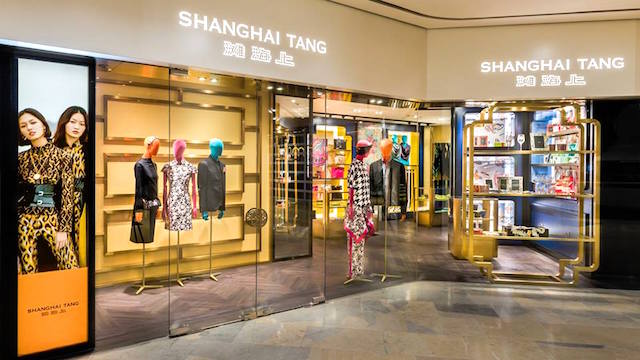
    Shanghai Tang, recently acquired by Chinese entrepreneur Chen Danxia and Lunar Capital, goes back to its roots with the appointment of Victoria Tang-Owen, the daughter of the visionary founder David Tang, as Creative Director.

    Together with the appointment of Victoria to rebuild on her father’s legacy, the brand will continued to be led by the CEO Maurizio De Gasperis, former Managing Director of the brand.

    The headquarters will remain in Hong Kong, and has just welcomed a new General Manager of Global Retail, Elisabetta Bazzini, with extensive experience in Asia working with a number of luxury fashion companies including Gucci, DFS, Versace and Max Mara.

    Leveraging the heritage of the Chinese luxury brand, Victoria is set to reinterpret Shanghai Tang’s unique brand aesthetics.

    Shanghai Tang is the first Chinese authentic contemporary luxury brand founded in 1994 by Sir David Tang, and thereafter under Richemont’s ownership for almost two decades.

  • BMW assembly on the anvil, says Vietnam auto conglomerate

    BMW assembly on the anvil, says Vietnam auto conglomerate

    THACO, a major player in the country’s commercial vehicle segment, plans to assemble German brand BMW cars in Vietnam. Tran Ba Duong, chairman of the Truong Hai Auto Corporation (THACO), said at a conference last week that BMW cars will be the next vehicle that THACO assembles in the country, following other brands like Peugeot, Kia and Mazda.

    He did not reveal further details about when this would happen and what models would be assembled.

    THACO became the sole authorized distributor of BMW in Vietnam starting January this year, after Ho Chi Minh City-based Euro Auto lost its license for smuggling 133 BMW cars in December 2016.

    Duong had said earlier that he plans to open 15 BMW and MINI (a car brand owned by BMW) showrooms by early next year. However, the company currently runs only one BMW showroom in Hanoi, another in HCMC and one MINI showroom, also in HCMC.

    THACO has not revealed its revenue from selling BMW cars this year, but a source told VnExpress that the company sold almost 400 vehicles in the first half of this year. Euro Auto, at its peak, sold 1,400 BMW and 400 MINI cars a year.

    BMW cars were first assembled in Vietnam in 1995 by the VMC company in Hanoi. However, low sales led to the factory’s shutdown in 2005, and VMC had to spend two years selling its inventory.

    Mercedes-Benz is currently the only luxury car brand that assembles its vehicles in Vietnam, and it tops domestic market sales in this segment. Industry insiders say that if BMW cars are assembled in the country again, they could emerge a strong competitor, especially in terms of price.

  • Number of AI speakers in Korea to hit 8 million

    Number of AI speakers in Korea to hit 8 million

    The number of artificial intelligence (AI) speakers in Korea is expected to reach the 8 million mark in the new year as the devices gain popularity, a report by a local digital media lab said Sunday. According to the findings by KT Group affiliate Nasmedia, some 40 percent of the country’s 20 million households will likely have an AI speaker in 2019. The numbers represent a sharp increase from just 1 million units supplied in 2017 and the nearly 3 million that have reached the market this year.

    “The rise in demand comes from greater choice in terms of the products being offered, as well as more upgraded features that have made the AI speakers more attractive to ordinary consumers,” the 2019 digital media and marketing forecast report claimed.

    It added that greater competition among manufacturers to secure the growing market is fueling the spread of such smart devices.

    Korean companies – such as SK Telecom, KT, Naver and Kakao – have all rushed to release new AI speakers.

    Nasmedia said that, in particular, there has been considerable competition in the area of children-related content and audio shopping services with companies vying with one another to “lock” customers into their ecosystem.

    The speakers have been marketed as personal home assistants for adults and even as private tutors for small kids.

  • 5 Tips for Digital Transformation

    5 Tips for Digital Transformation

    Retailers know they need to evolve, even though they cannot do it overnight. But while there’s no silver bullet for transforming culture, collaboration, and workflows inside a large organization, there are steps you can take to make sure your business is receptive to the change it’s about to undergo.

    Understand performance goals

    Before you start, you need to understand the business problem and the role that technology is going to play. Solving complex organizational issues needs the relentless management of changes in behavior, process, and technology all working together to support your performance goals and objectives.

    Collaboration is not a KPI

    Decide how you’re going to measure your KPIs. And remember that collaboration is not a KPI – it’s a means to an end. KPIs could include customer satisfaction, getting products to store faster, selling more products per visit, or retention. You need to get down to that granular detail.

    Shut things off

    If you have an existing tool which people did not like and you invest in something new to overcome those challenges and frustrations, you need to have a path to turning that tool off or at least turning off the elements that are now conflicting. This will impact adoption of new tools and ways of working.

    Educate, educate, educate

    Launching a tool is the easy part, the real work begins when people use it. People need to be educated on what they should be using it for. Show some examples of what ‘good’ looks like, and also what the tool should not be used for. Design an internal marketing campaign and treat it exactly the same as an external campaign. A product-driven approach could help here. Think about how companies try to refresh products in the market over time to improve adoption.

    Put somebody in charge

    For any system, and especially for a collaborative experience, you need someone who can get employees to use the tool in the right way at different times. That might be a community manager who understands the business cycle. Putting up content is the single most important driver of getting people to use the platform and to entice them to contribute their own.

  • Samsung to take eight C-Lab start-ups to CES

    Samsung to take eight C-Lab start-ups to CES

    Samsung Electronics will introduce eight in-house artificial intelligence (AI) start-ups at the Consumer Electronics Show (CES) 2019 to take place next month in Los Angeles, the company said Wednesday. All eight start-ups are under Samsung’s C-Lab, an in-house incubating program that allows employees to embark on a one-year project to realize a business idea. Samsung will organize an independent booth to present their products and services at the four-day exhibition scheduled to take off on Jan. 9.

    All eight of the projects use AI as a core part of their business.

    For example, the mobile app SnailSound uses AI technology to remove background noise and provide clear human voices in a tailored way based on the app’s test results of the user’s hearing abilities.

    Another app called Medeo uses AI to select the best shots in a video while it is being shot.

    Prismit is an AI-based news app that shows news articles of the same topic automatically aligned in the form of a timeline.

    The list also includes Girin Monitor Stand, which helps to correct posture while sitting in front of computer screens, and the Alight desk light, which adjusts light in the best way to enhance one’s concentration.

    The Perfume Blender suggests the best perfume recipe based on a user’s preferences and also comes with a device to make the personalized perfume.

    As well as the eight in-house start-ups that are currently working under Samsung’s C-Lab, eight groups that have already graduated from the scheme will take part in CES 2019 to set up booths of their own.

    Among them, three have earned awards from this year’s CES. Since the program’s launch in 2012, C-Lab has produced 36 spin-offs that now conduct business as start-ups outside of Samsung.