Retail News CRM

Tag: car

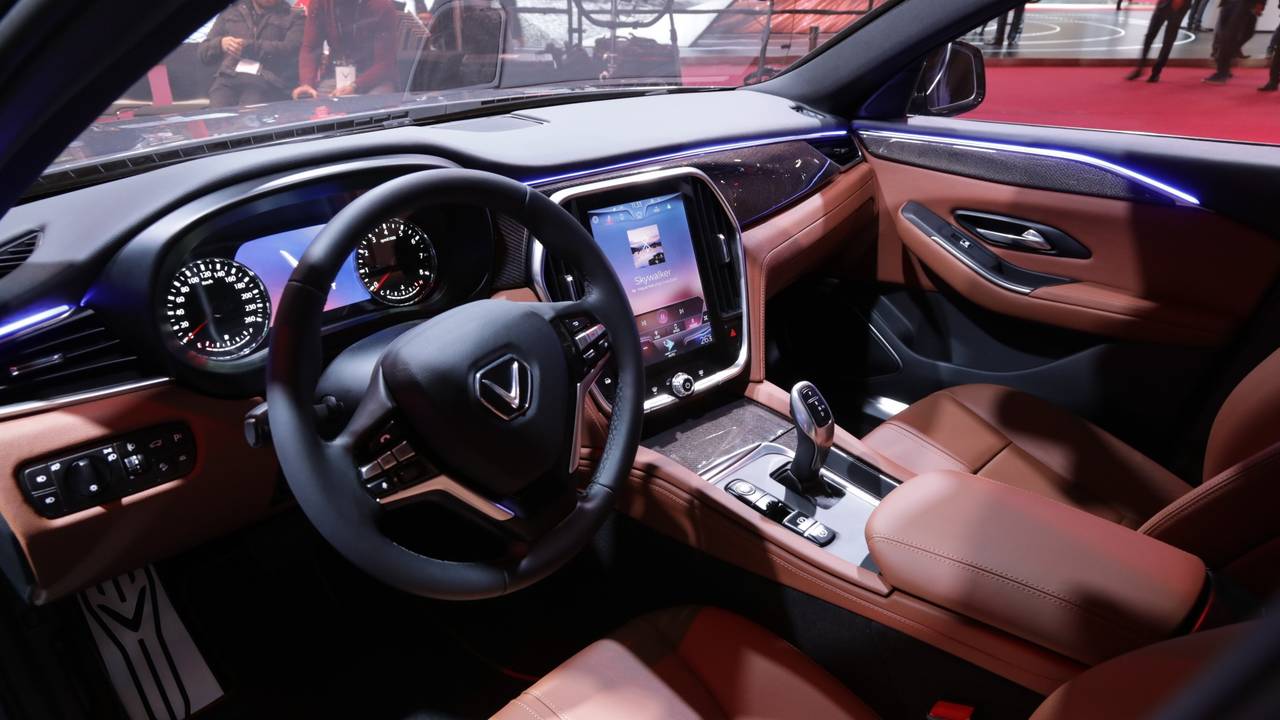
  • VinFast VF 5 Vietnam’s most popular car by wide margin

    VinFast VF 5 Vietnam’s most popular car by wide margin

    VinFast sold 13,000 units of its VF 5 electric car in Vietnam in the first half of the year, making it the top seller in the market.

    A person familiar with the matter said that 20,000 VF 5s were sold globally.

    Mitsubishi Xpander was the second most popular car in Vietnam with 7,773 units, followed by the Ford Ranger, which sold almost exactly the same number.

    But analysts said it is still early to decide if VinFast has won over Vietnamese consumers with the crossover VF 5 as a large number were bought to be used as taxis and ride-hailing vehicles.

    “Eventually all car manufacturers want to sell to retailers, not taxi companies,” an analyst who asked not to be identified said.

    We are making efforts to convince retail consumers to buy the VF 5 by offering personalized color choices and other incentives.

    Many ride-hailing drivers buy the VF 5 for its affordable price and the fact that electricity is cheaper than gasoline.

    Overall, 154,265 cars were sold in the first six months, down 7% year-on-year, according to data from the Vietnam Automobile Manufacturers Association and Hyundai Thanh Cong, which sells Hyundai cars.

    VinFast does not release data by market but said it delivered 21,800 units globally, down 8% year-on-year.

  • Malaysia encourages use of EVs

    Malaysia encourages use of EVs

    The Malaysian government has included the adoption of electric vehicles (EVs) in its National Energy Transition Roadmap (NETR) towards the goal of EVs accounting for 15% of all vehicles sold by the year 2030, rising to 80% by 2050.

    The current import duty and excise duty exemption for fully-imported (CBU) EVs has been extended to December 31, 2025, and EV owners will also continue to enjoy exemption from road tax until the end of next year.

    They will also enjoy a lower tax rate in 2026, after the exemption expires, that will be based on the power output of their EV. When unveiling the new structure, Transport Minister Anthony Loke said it was 85% lower vis-a-vis petrol powered vehicles.

    To encourage the growth of the EV charging network in Malaysia, the government is offering individuals 2,500 MYR (US$530) in yearly income tax relief through to 2027 for the installation, rental, and purchase of EV charging equipment or subscription fees.

    Besides, the country will offer up to 2,400 MYR in tax return to encourage individuals to adopt electric-powered motorcycles. However, this incentive has only been announced for the 2024 assessment year and it is only available for individuals earning no more than 120,000 MYR annually.

    Companies investing in the assembly or manufacturing of energy efficient vehicle (EEV) including hybrids and electric or components for such vehicles are eligible for income tax exemption of 70% or 100% on statutory income respectively for a period of five or ten years.

    Companies investing in green technology services involving EVs such as installation, maintenance, repair of EV charging equipment, EV infrastructure and charging stations are eligible for a 70% tax exemption for three years from the start of their operations.

  • VinFast ranks second in EV sales in Southeast Asia

    VinFast ranks second in EV sales in Southeast Asia

    According to the research firm Counterpoint Research, EV sales in the region more than doubled in the January to March quarter from a year before. Sales of ICE cars,meanwhile, slid by 7%.

    “Vietnam saw an even more impressive growth, with BEV (battery electric vehicle) sales increasing by more than 400%, contributing to nearly 17% of regional sales,” the firm said.

    “As Japanese and Korean automakers, who dominate conventional vehicle sales, lag in EV adoption, Chinese OEMs (original equipment manufacturers) are stepping in to fill the gap,” said Counterpoint analyst Abhik Mukherjee.

    “Over 70% of EV sales in the region are from Chinese brands, led by BYD,” he said. In the first quarter of last year, 75% of all EVs sold in Southeast Asia were made by Chinese car makers.

    Thailand, Southeast Asia’s second-largest economy, where Chinese car makers have committed more than US$1.44 billion to set up new EV production facilities, is leading the charge.

    The regional auto manufacturing hub where Japan’s Toyota Motor and Honda Motor have a major presence accounted for 55% of all Southeast Asia’s EV sales in the first quarter, with the segment growing 44% compared to last year.

    U.S. electric carmaker Tesla saw its market share in the region drop two percentage points to 4% in the first quarter, in spite of its sales growing 37% in the same period.

    A number of Southeast Asian countries, including Thailand and Indonesia, have rolled out incentives to stimulate EV demand and attract new investments – a call answered by Chinese car makers locked in a bruising price competition at home.

    “Southeast Asia is becoming a major expansion region for Chinese OEMs,” Mukherjee said.

  • Citizens’ deposits at banks reach new record high

    Citizens’ deposits at banks reach new record high

    Citizens’ deposits reached a new historic peak of VND6.676 quadrillion (US$262.2 billion) as of the end of March, according to the State Bank of Vietnam.

    This marked a 2.2% growth from the end of 2023.

    Meanwhile, corporate deposits fell 3.1% to VND6.6 quadrillion in the same period .

    After a period of declining interest rates that began last March, many banks have started to raise deposit interest rates since May.

    Analysts expect a rise in deposit interest rates by 0.5 to 1 percentage point, reaching around 7% per year in the year’s second half.

    However, the rates are unlikely to return to the high levels seen at the end of 2022, following a bank-run incident that resulted in a private lender being placed under central bank control.

    Credit growth has only reached 2.4% this year, failing to meet the targets of 5% for the first half and 15% for the entire year, which analysts attribute to a sluggish real estate market.

    The local real estate sector has experienced a significant downturn, leading to major developers facing challenges in repaying debt, including bond interest and principal, due to liquidity constraints and decreasing property values.

    The situation escalated at the end of 2022, following the arrest of Truong My Lan, Chairwoman of Van Thinh Phat group, who is on death row for multiple financial frauds.

    The arrest was part of Vietnam’s anti-corruption campaign, which intensified in late 2021.

  • VinFast recalls over 2,000 EVs

    VinFast recalls over 2,000 EVs

    VinFast is recalling 2,097 electric vehicles to fix various technical issues.

    Some of the VF e34 and VF 5 Plus cars produced between September 2023 and April 2024 face the threat of bolts securing the upper cover of the high-voltage battery becoming loose, leading to a potential reduction in the water resistance.

    This issue affects 23 VF e34 and 131 VF 5 Plus units. VinFast will inspect and tighten the bolts and replace the high-voltage battery if needed.

    VF 6 Plus vehicles produced between March 18 and April 9 this year have a potential defect that could cause the brake fluid hose connectors to crack, leading to possible brake fluid leakage.If the brake fluid drops below the minimum threshold, a warning will appear on the control screen, and the braking system’s effectiveness will be reduced. The number of p otentially affected vehicles is 47.<

    VinFast will inspect and replace the brake fluid hoses in the affected vehicles free of charge.

    In VF 8 and VF 9 (Eco and Plus) cars manufactured between August 2022 and March 2024, incorrect airbag types might have been installed in certain places.

    After approximately 10,000 kilometers of use, an airbag warning and inspection request may appear on the screen.

    If the airbags are not of the correct type, they may not deploy in the event of a severe collision under certain conditions.

    In all, 1,134 VF 8 Eco and VF 8 Plus vehicles and 762 VF 9 Eco and VF 9 Plus vehicles are being recalled.

    VinFast has reported these issues to the Vietnam Register and will individually notify vehicle owners, asking them to bring their vehicles to authorized service centers.

  • Car imports see recovery in March

    Car imports see recovery in March

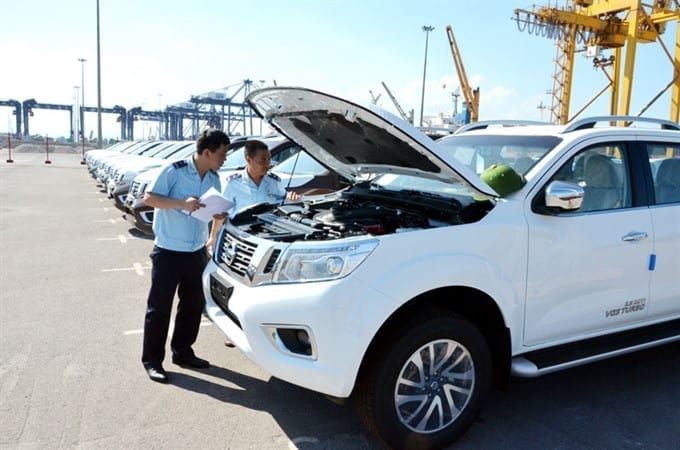
    Import turnover of completely built-up (CBU) cars in March increased by 55.4% in volume and 41.4% in value compared to the previous month.

    A preliminary report from the General Statistics Office (GSO) said that Vietnam imported about 15,000 CBU cars in March with a value of US$287 million.

    However, this import decreased slightly by 1.7% in volume and 18.8% in value compared to the figures in March 2023.

    The strong recovery in CBU car import in March was due to the car import in February falling sharply when businesses stopped all import-export activities during the seven-day Tet (Lunar New Year) holiday.

    Those numbers in February reached 9,650 units in volume and $203 million in value.

    Thus, CBU car import turnover in March had a strong recovery despite the market situation not showing clear positive signals.

    Positive signals from the economic recovery are bringing back higher expectations of domestic car demand.

    The CBU car import is expected to continuously recover in the second quarter of 2024.

    After the Lunar New Year holiday in February, the Vietnamese auto market welcomed many new car models, mainly imported cars.

    GSO also reported that the total import of CBU cars in the first three months of 2024 was estimated at 31,452 units worth $632 million, down 25.1% in volume and 31.7% in value year on year.

    This was still a very low turnover compared to 2023, before the market fell into a period of deep decline in demand.

  • The Apple Car could have changed the face of the auto industry

    The Apple Car could have changed the face of the auto industry

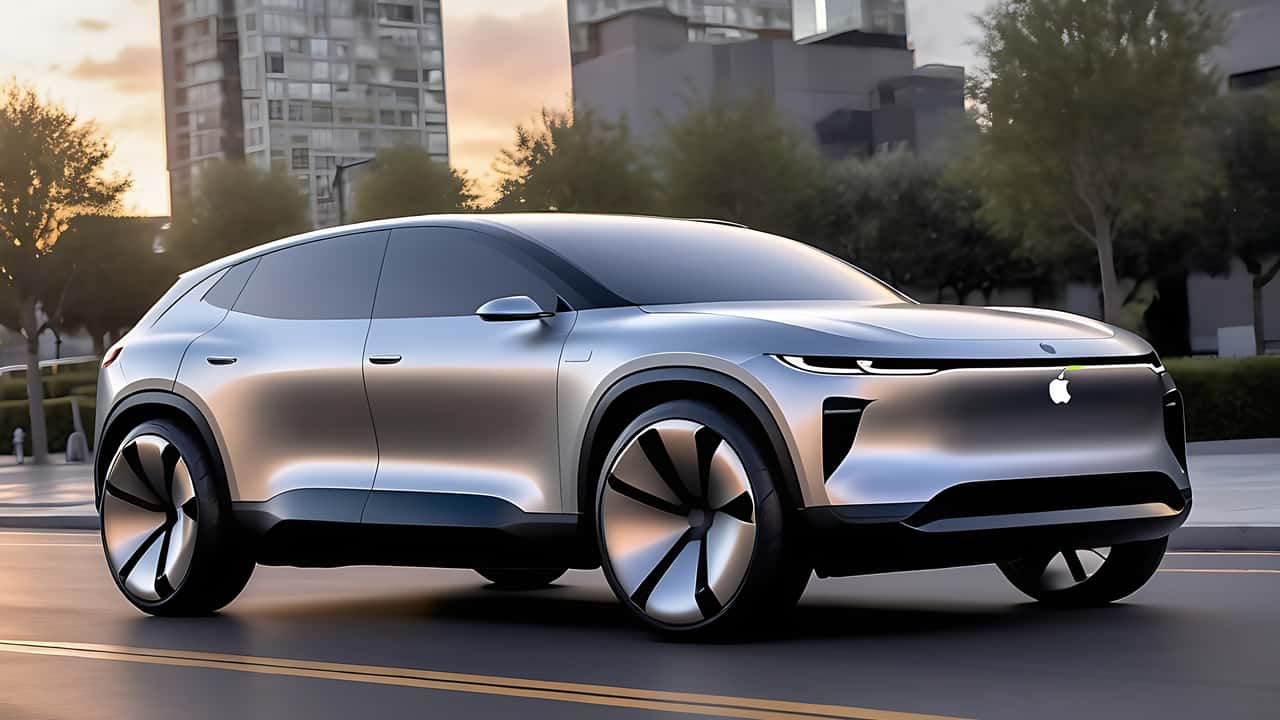
    Last month, Apple calmly went around to the back of company headquarters in Cupertino carrying the self-driving Apple Car files and put a bullet through the project. Apple spent a decade and a ton of money on what would have turned out to be an amazing game-changing vehicle according to the description of what Apple was working on written by Bloomberg’s Mark Gurman in his latest Power On newsletter.

    Gurman said that the design Apple was working on around 2020 was similar to the rounded Canoo Lifestyle Vehicle. This is a van that at the time, looks the same in the front and back so that it always appears that the vehicle is moving forward. Gurman says that the vehicle resembled no other vehicle mass-produced at the time and was designed for full Level 5 autonomous driving.

    While Apple changed the looks of the car’s interior a few times, the look was a minimalist one with seats that looked like those seen in a limo or private jet; the vehicle would accommodate four people. Some versions of the interior featured a big television set in the center to show videos and FaceTime video chats. From the roof of the vehicle, multiple iPad-sized screens were suspended to give passengers access to certain controls. A special air-conditioning system pushed the air along the sides of the interior instead of blowing it right at the passengers’ faces.

    Two previous designs for the Apple Car included the first one which resembled the 1950s Volkswagen microbus; inside Apple, this design was known as the Bread Loaf. The second design for the vehicle looked like the 2017 Volkswagen ID Buzz prototype before VW showed off its concept. The fourth design, the one that looked like the Canoo Lifestyle Vehicle, had CEO Tim Cook and COO Jeff Williams excited.

    But the most recent design also included a less ambitious Level 2 autonomy forcing Apple to add a steering wheel and pedals. The sliding van doors were replaced by gull-wing doors. Nonetheless, it’s all moot at this point anyway and while Apple might have changed the face of the automobile similar to what it did with the smartphone, the company decided to stick to its knitting since the project still had a long way to go and a lot more red ink to spill before it would be ready to be launched.

  • Porsche Studio launches in Singapore

    Porsche Studio launches in Singapore

    German sportscar manufacturer Porsche has opened its Porsche Studio in Singapore intending to provide an improved studio model.

    The new two-story showroom is part of downtown Singapore’s famous Guoco Midtown mixed-use development, near the Bugis heritage zone.

    The venue features a sleek and modern design with Singaporean touches like “breeze block” patterns inspired by historic local architecture and bamboo-like veneers adorned throughout.

    The first floor houses seating areas that can become an intimate fireside discussion atmosphere. On the second floor, more modular spaces can be configured in a variety of ways to accommodate a wide range of activities, including zen-filled yoga classes, high-energy product trainings and presentations, keynote speeches in front of full-length LED walls, and e-sports races held on two in-house simulators.

    “Singapore, renowned for its innovative spirit and entrepreneurial attitude, is the perfect location for this enhanced Porsche Studio,” said Matthias Becker, VP of region overseas and emerging markets at Porsche.

    “With this innovative new format, we aim to test new ideas and ways to interact with our customers and fans, while also offering an unforgettable experience that goes beyond simply selling a car.”

    The new Porsche Studio Singapore also includes a built-in auto lift for moving vehicles around the facility.

    The studio is operated by Porsche Singapore, a joint venture between Porsche Asia Pacific and Eurokars Group established in 2022 to improve customer experiences in the city-state.

  • Vietnam records second largest drop in auto sales across Southeast Asia

    Vietnam records second largest drop in auto sales across Southeast Asia

    Vietnam saw the second sharpest decrease, of 25%, in automobile sales in Southeast Asia last year behind only minuscule market Myanmar.

    According to the ASEAN Automotive Federation (AAF), in the region’s seven main markets, Indonesia, Thailand, Malaysia, the Philippines, Vietnam, Singapore, and Myanmar, 3.35 million vehicles were sold, a 2.1% decline from 2022.

    But the data, compiled from AAF’s members in various countries, does not include sales of Vietnamese firm Hyundai Thanh Cong.

    The leaders, Indonesia and Thailand, saw sales drop by 4% and 8.1%. In Myanmar, automobile sales fell to less than 4,000 in 2023, a decrease of 52.5% compared to 2022.

    The number of cars sold in Vietnam was 369,431, the fifth highest after Indonesia, Malaysia, Thailand, and the Philippines after falling one place from last year. The Philippines went past it in 2023.

    In 2022 Vietnam achieved its highest ever sales of more than 500,000.

    But last year the economic downturn, high bank interest rates and the slump in the real estate and securities markets sent demand for cars plummeting.

    In July the Government halved the automobile registration fee for domestically assembled vehicles, but it failed to revive demand.

    Demand fell in Thailand as banks tightened credit for buying pickup trucks, the most popular segment, according to Thailand Business News.

    Production too fell, but at more than 1.8 million vehicles, Thailand remained the biggest manufacturer in the region.

    Indonesia remained the largest market and also the only country to exceed the million sales mark. Indonesia wants to become an auto production hub, especially for electric vehicles.

    In 2023 it churned out nearly 1.4 million cars, including some of Vietnam’s best-selling vehicles like the Mitsubishi Xpander, which topped the sales chart.

  • Chinese EV giant BYD to begin Vietnam sales in May

    Chinese EV giant BYD to begin Vietnam sales in May

    The world’s biggest electric vehicle maker, China’s BYD, will set up shop in Hanoi in May.

    It would sell its first cars in the sedan and SUV segments, sources familiar with the matter said.

    Its SUV BYD Atto 3 is among the most sought-after cars globally. It has large demand in Sweden and is the best-selling EV in Thailand.

    It has a 60.48-kilowatt-hour battery that allows travel of up to 480 kilometers.

    Its prices start from US$30,750 in Thailand.

    In Vietnam, BYD cars will be imported as complete units from China.

    The company is building a $504-million plant in Thailand, its biggest market outside China, and expects to start production there this year.

    In future BYD cars can be imported to Vietnam from Thailand to enjoy the zero import tax applicable to Southeast Asian countries.

    BYD, established in 2003, sold 1.62 million electric cars last year, second globally behind Tesla with 1.8 million units, though in the last quarter it outpaced past the U.S. company 526,000 to 484,000.

    Ninety percent of its sales were in China.

  • Toyota recalls nearly 26,000 cars to tighten shock absorber nuts

    Toyota recalls nearly 26,000 cars to tighten shock absorber nuts

    Toyota Vietnam has announced the recall of 25,971 Avanza Veloz, and Yaris Cross cars to fix faulty front shock absorber nuts.

    The nuts were not tightened sufficiently due to design issues, and could become loose and cause noises, even fall off.

    The affected Toyota Avanza and Veloz models were manufactured between Jan. 7 and Oct. 28, 2022, in Indonesia, or assembled in Vietnam between Nov. 14, 2022 and Aug. 14, 2023.

    A total of 25,523 Avanza and Veloz cars will be recalled. Also recalled are 448 Yaris Cross cars made in Indonesia between June 2 and Aug. 30, 2023.

    There have been no accidents caused by the fault, the Japanese company said.

    It also said 6,368 Avanza, Veloz and Raize cars manufactured in Indonesia between Sept. 12 and Dec. 7, 2022, have brake pads that are at risk of failing sooner than designed.

    Their front fork dust covers were damaged during assembly, and this could cause dust and water to enter the covers, causing the pads to rust and wear out.

    The affected cars will be repaired free of charge at authorized Toyota dealers. The recall began on Jan. 19 and will last until the repairs are completed.

  • Electrified vehicles rising to trendy choice in Vietnam

    Electrified vehicles rising to trendy choice in Vietnam

    Vietnamese users are becoming more familiar with hybrid and pure electric vehicles because numerous well-known brands have expanded to this category.

    Truong Huy, a technical expert for an electric vehicle software outsourcing company in Ho Chi Minh City, was one of the earliest to come to the Electrified Vehicle Exhibition at Yen So Park, Hanoi, last weekend to learn about the hybrid and pure electric car models.

    “As a person working in technology related to electric vehicles, this exhibition is a good opportunity for me to learn more about the companies,” Huy said while standing next to the chassis of a Hyundai electric car. “Mainly working in software, this is a rare time I have seen a complete hardware platform for an electric vehicle.”

    In the past three years, electric or hybrid cars have gradually become more familiar to Vietnamese customers. But Vietnam has never had an exhibition dedicated to this category, which means few opportunities for Huy and other customers to experience cars from different brands or learn about their software and hardware technologies.

    The Electrified Vehicle Exhibition organized on Jan. 13–14 can be considered the start of events dedicated to fuel-saving and environmentally friendly vehicle lines.

    In previous years, only a small number of electrochemical products were sold on the market, but now it is different.

    In 2020, except for Toyota with the small crossover Corolla Cross with a hybrid engine option, the market did not have a product with a similar or pure electric engine, specifically in the popular segment.

    By 2023, the number of electrochemical products and companies participating in the field has increased, creating a trend big enough to draw customers’ attention.

    The domestic EV segment was led by VinFast in 2023, with an ecosystem ranging from bicycles, motorbikes, cars, and buses. The company has been selling electric cars since 2021 with the VF e34 and has now added VF 5, VF 6, VF 7, VF 8, and VF 9 to the car category alone.

    In addition to VinFast, Hyundai is selling the Ioniq 5 series. Previously, the Korean company launched the Santa Fe hybrid for sale. Its distribution by Thanh Cong Group also hinted at the possibility of the company selling the G80 EV, a pure electric luxury sedan, in the near future.

    Hybrid cars are becoming more diverse with Kicks from Hyundai, CR-Vs from Honda, Sorentos from Kia, and H6s from Haval. Toyota specifically expanded this car segment in Vietnam with the addition of the Altis, Camry, Yaris Cross, Innova Cross, and Alphard.

    Besides Haval, the presence of other Chinese brands in Vietnam, such as Wuling and Haima, helps make the electrified vehicle segment more exciting. Pure electric car options from these brands include the market’s cheapest Wuling Mini EV, or the Haima 7X-E MPV.

    Most of these car models were present at the Electrified Vehicles Exhibition 2024.

    Xuan Huy drove more than 10 km from Ha Dong District to the exhibition to find a second car for his travel in the city. “I went to check all the booths because I do not favor any specific brands. There have been very few occasions when many companies display hybrid or pure electric car products like this.”

    Electrified vehicles are gradually becoming more popular. But many companies believe that customers still need orientation and education about the technology and how to use these products.

    Compared to the technology of internal combustion engine vehicles, which has been familiar to users for hundreds of years, electrified vehicles’s is new.

    “Many people are still concerned about whether electric vehicle technology is suitable for cars that they use every day,” said Son Lam, a representative of TMT Motors, the distributor of the Wuling brand in Vietnam. “Participating in this exhibition is also a way for the company to answer more customers’ concerns about electric vehicles, especially their technology.”

    A Hyundai Thanh Cong representative said that pure electric and hybrid technology is generally still new to the majority of Vietnamese customers. “Disseminating knowledge about electrified vehicles to customers is what the company is doing, this exhibition is one such occasion for us to do that.”

    Lees ook:

  • Bridgestone Vietnam builds 10th bridge in Soc Trang

    Continuing its journey of the “Bridges to Knowledge” project, Bridgestone Vietnam built and inaugurated the 10th bridge, Truong Tho in Soc Trang, on Dec. 27.

    The project was implemented by Bridgestone Tire Sales Vietnam Limited Liability Company to realize Empowerment (Committed to contributing to a society that ensures accessibility and dignity for all) and Ease (Committed to bringing comfort and peace of mind to mobility life).

    The two are part of corporate commitments announced under the “Bridgestone E8 Commitment” in March 2022.

    Soc Trang is known as a beautiful land rich in culture and home to the Kinh, Khmer and Chinese ethnic groups. Though it has advantages in terms of soil and water resources that allow it to grow a range of crops, the life and work of people here still face many difficulties in terms of the movement and transport of agricultural produce.

    For people living in Truong Tho hamlet, Truong Khanh village, Long Phu District, Soc Trang Province, the Truong Tho bridge built in 2008, located on the main road and connecting the village, serves the transportation needs of over 225 households including 153 children.

    The old Truong Tho Bridge was severely damaged on the side, its base had broken concrete and the iron reinforcement was badly rusted.

    According to the local government’s assessment, the bridge was damaged to an alarming extent and needed urgent investment in new construction to ensure users’ safety.

    Bridgestone Vietnam invested in building a new Truong Tho Bridge with a total length of 27 m, width of 3.3 m and a load capacity of up to three tons.

    This new bridge will enable hundreds of students to take a safer path to knowledge, help people transport and trade goods and agricultural products conveniently and improve safety for the community in general and residents of Truong Tho hamlet and Truong Khanh village in particular.

    This is the 10th bridge under its “Bridge to Knowledge” project by Bridgestone Vietnam, which started in 2019. The company said it would continue the journey of serving the community as part of its “Serving Society with Superior Quality” mission.

    Stressing the significance of the Truong Tho construction project, Naoki Inutsuka of Bridgestone Tire Sales Vietnam Limited Liability Company said the 10th bridge is a very important milestone for the company’s commitment to society.

    Bridgestone’s Truong Tho Bridge project received cooperation from the local government, Dealer Vu Manh Thang (Bridgestone’s distributor in Soc Trang), E-XPRO Advertising Company Limited and created enthusiasm among people in Truong Khanh village.

  • Local car market still sees sluggish sales as Tet nears

    Local car market still sees sluggish sales as Tet nears

    The domestic auto market in Vietnam is experiencing a decline in car sales due to sluggish customer demand compared to previous years, according to local car experts.

    The experts said the number of customers visiting car dealerships has not increased compared to previous years, despite price reductions and promotions offered by car manufacturers during the peak shopping season.

    According to a car sales staff at Toyota dealerships in the central area of Hanoi, cars priced under VND1 billion (US$40,983) are particularly challenging to sell. They attribute this trend to the difficult economic conditions and the reluctance of people to spend money on purchasing cars.

    Anh Duc, a car salesman in Pham Hung Street, expressed surprise at the low sales, mentioning that in previous years, they could sell hundreds of cars each month at this time, but recently the numbers have not been reaching even half of that.

    Many dealers hope that demand for cars will increase at the end of the year and the market will become boisterous; however, it is so far still quiet. To reduce their inventory and recover some of their costs, dealers may resort to reducing prices and offering discounts or incentives to attract buyers. In some cases, they may even have to sell cars at a loss to move inventory and free up capital.

    Car consumption in Vietnam has experienced a deep decline this year, despite various efforts to stimulate sales such as launching new models, offering discounts, and providing registration fee support and attractive gifts.

    Specifically, Toyota Vietnam has initiated a program starting in December to offer a 50% discount on registration fees for certain car models. In addition to this discount, there is also a 50% reduction in registration fees for domestically assembled cars as part of the general policy. This policy will be in effect until the end of 2023.

    Honda Vietnam has also announced a 50% registration fee discount program for all car models on sale starting from Dec. 5. Additionally, domestically produced and assembled vehicles are still receiving 50% registration fee support from the government.

    As for Hyundai, the Hyundai Stargazer model had a listed price of VND75-685 million ($23,565-$28,073). In November, the price was reduced by up to 130 million, but it still faced difficulties in selling. In December, the price was further reduced by another VND10 million. Furthermore, the high-end diesel version of the Santa Fe model, which was produced in 2022, is being reduced by VND210 million.

    The decrease in car purchasing power compared to the same period in 2022 is a concerning trend, especially considering that car sales were lower than during the period when the market was affected by the Covid-19 pandemic.

    The statistics from the Vietnam Automobile Manufacturers Association (VAMA) indicate a significant decline in car sales, with a 29% decrease in the first 10 months of 2023 compared to the same period last year, equivalent to the absolute number of 70,000 vehicles.

    Among the car manufacturers, Toyota Vietnam seems to be the most affected, with a 42% decrease in sales during the first 10 months of 2023, amounting to nearly 30,300 vehicles. Other brands like Kia, Honda, and Mitsubishi also experienced significant declines, with decreases of 39%, 36%, and 28%, respectively.

    Hyundai is another car company facing challenges, with a sales decrease of approximately 25%, equivalent to more than 16,000 vehicles. These figures suggest that the automotive market in Vietnam is currently facing obstacles and uncertainties.

    Economist Ngo Tri Long said that the selling prices of many car models have reached their lowest level in nearly 10 years in 2023.

    Some businesses and dealers may have hinted at cutting incentives at the end of the year due to anticipated increased demand; however, car discount promotions are still prevalent and becoming even deeper.

    The difficulties are expected to continue into 2024. High inventory levels can also be a challenge for auto businesses. If consumer demand is lower than expected, dealerships and manufacturers may face excess inventory, which can lead to increased costs and reduced profitability, according to industry insiders.

  • Land Rover Vietnam builds desirability in luxury

    Land Rover Vietnam builds desirability in luxury

    Land Rover Vietnam has implemented a new strategy to enhance client experience, its General Manager Ruud Poels said at the JLR Retailer Hanoi launch of its first global standard retail destination on Nov. 23.

    As an active player in the automotive industry in Vietnam, we did notice a market cooldown after a period of high growth following Covid-19. However, 2023 so far for Land Rover has been a year of exciting developments.

    Product-wise, we launched the Defender 130 and the new Range Rover Sport, thereby updating our popular Defender and Range Rover brands. We are also delighted that our retailers have been busy in the last 11 months fulfilling deliveries of the new Range Rover for pre-ordering clients and more.

    And we are fully focused on the new global Modern Luxury vision by JLR; the first and probably biggest physical result of which you are seeing here is our new JLR Retailer Hanoi, which took 18 months to finish. This is the first of its kind, not just in Vietnam but in the whole world, for JLR.

    I think that’s the strongest proof that Land Rover is performing well in Vietnam, and that we have confidence in the market despite the past slowdown.

    What solutions have you come up with to adapt to this situation?

    We did not wait for the market to show slowing signs to implement meaningful and exciting changes. We have been prioritizing customer experience design for sustainable development in Vietnam.

    Apart from the Global Pilot Store in Hanoi, behind the scenes, there is a lot more happening with regards to team training and facilitating processes to ensure our retailers will be fully ready to offer Modern Luxury client journey, that is retail as an experience.

    It will be inspirational, exclusive, and tailored to suit our clients’ needs to make them feel unique. It will be positively memorable at every touchpoint, building emotions in our Range Rover, Defender, and Discovery brands.

    For marketing, we are also transforming how we present ourselves as a House of Brands on all channels and building desirability toward our clients, whether it be their virtual or physical appearance. The after-sales experience is also obviously elevated with this new facility.

    Overall, we put in efforts to transform the client journey to be human-centered and emotionally engaging throughout the business. We have seen client engagement warming up and resulting in revenue recently, which is a welcome indicator that we are heading in the right direction.

    Under the House of Brands approach with JLR, all three of our brands, including Range Rover, Defender, and Discovery, will be uniquely characterized, and clearly differentiated.

    Range Rover is refined for the leaders of life whose leadership leaves a legacy for others to follow; Defender is capable and durable for those who embrace the impossible in their adventures; and Discovery allows people to get out and explore together.

    What would be the main factors that convince Vietnamese people to buy and use Land Rover cars?

    At Land Rover, we offer luxury, as an experience throughout sales and aftersales. It is an inspirational and emotionally engaging experience.

    We have the ability to personalize our products to our clients’ own specific needs and preferences. That’s not limited to the vehicles but applies to the whole journey that clients will have with us, from the first time they interact with our team, for example, to when we actually meet our clients at the showroom, to vehicle collection, vehicle repair, and further.

    We are transforming and reshaping our business to embody the cutting-edge Modern Luxury vision. To build a loyal relationship with our clients, we need to anticipate their evolving needs and proactively provide solutions based on our expertise and commitment. It would be an exclusive and unique experience. That’s how we would love to build desirability.

    When it comes to the vehicles, we pride ourselves on the craftsmanship that’s present inside and out of them. Take the Range Rover SV, for example. That could very well be the first car in which you can find ceramics as a material for the exterior and interior. That kind of innovation cements its place as the original luxury SUV ever by constantly exploring new ideas to express modern luxury.

    Or if you are interested in the iconic Defender, you will appreciate its 75-year heritage of adventures and rescue missions all around the world, and the current generation is the culmination of all that in terms of off-road expertise.

    How do you assess the current trend of electric vehicles, and what are the objectives of Phu Thai Mobility in this field in Vietnam?

    We are excited by EV development in Vietnam. The goal of Land Rover Vietnam undoubtedly aligns with the global strategy and BEV development roadmap of JLR. As shared previously by JLR, you can expect the global debut of the Range Rover BEV in 2024; a Vietnam launch could follow that, depending on production capability and logistics. We know that there is high desirability for the car globally, and we look forward to having it here for pioneering Vietnamese clients.

    Meanwhile, we are fully prepared to take on BEVs ahead of the first Land Rover BEV. You can find DC and AC chargers at our workshops and retailers. Our technicians are also trained by JLR to work on BEVs with special tooling.

    What are your predictions and expectations for Land Rover in Vietnam over the coming decade?

    With Modern Luxury approach in place, we are in the middle of transforming our business from end to end. The new JLR Retailer Hanoi is the first proof of that, after which you will see many more, from products and services offered to clients to how we have become more than a single brand in the automotive market.

    I think JLR sums it up perfectly about what we ultimately want to become: the creator of the world’s most desirable modern luxury automotive brands for the most discerning of clients.