Tag: car

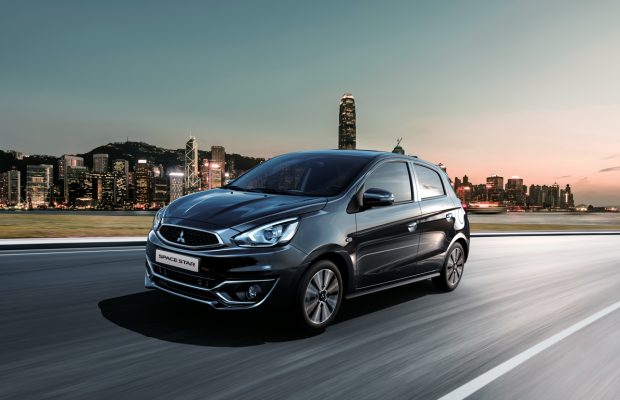
  • Faulty Takata airbags force Mitsubishi to make car recall in Vietnam

    Faulty Takata airbags force Mitsubishi to make car recall in Vietnam

    The defective airbag inflators have been linked to 19 deaths and more than 180 injuries worldwide. Mitsubishi is recalling 2,519 of its Pajero models in Vietnam to replace potentially deadly defective airbag inflators.

    All cars imported between 2007 and 2016 should be taken to the company’s showrooms to receive free replacement inflators, it said. The service can take more than two hours.

    The cars were installed with parts from Japanese supplier Takata, which announced that there were faults with its products in April 2013.

    Takata said that propellant chemicals were mishandled and improperly stored during assembly, which supposedly caused the metal airbag inflators to burst open due to excessive pressure inside. It also blamed humid weather for making the situation worse.

    The announcement came in the wake of massive global recalls, including those made by Toyota in June and October.

    The defective inflators have touched off the largest automotive recall in U.S. history, involving 42 million vehicles. The fault has been linked to 19 deaths and more than 180 injuries worldwide, it said.

    Takata, which filed for bankruptcy protection in June, expects 125 million vehicles fitted with the faulty parts to be recalled worldwide by 2019.

  • Self-driving startups race down a narrowing road

    Self-driving startups race down a narrowing road

    U.S. automotive and technology firms likely have invested some $40 billion to $50 billion in self-driving technology in recent years.

    Lei Xu and Justin Song once worked at electric carmaker Tesla Inc, one of the hottest companies in Silicon Valley. But with interest and investments in autonomous vehicles mounting, they left to pursue what they see as the next big thing.

    Their company, Nullmax, is one of more than 240 startups worldwide, including 75 in Silicon Valley, attempting to design software, hardware components and systems for future self-driving cars, according to a Reuters analysis.

    Xu and Song are bankrolled by corporate money, but unlike many of their fellow entrepreneurs, they skipped funding from Silicon Valley venture capitalists. Founded in August 2016, Nullmax got $10 million from a Chinese firm, Xinmao Science and Technology Co.

    By seeking corporate backing in China, the Nullmax founders managed to sidestep an issue facing other startups in the sector: While big automotive and technology companies are pouring billions into the autonomous vehicle space, Silicon Valley investors so far have been fairly restrained in increasing their bets.

    Headlines have been dominated by old-line players such as General Motors Co, which jolted the industry last year when it bought a tiny San Francisco software company called Cruise Automation for a reported $1 billion. Just this week, top-tier supplier Delphi Automotive PLC acquired Boston-based software startup nuTonomy for $450 million.

    Now, “every startup thinks they will get a billion dollars” in valuation, said Evangelos Simoudis, a Silicon Valley venture investor and an advisor on corporate innovation.

    However, investment in untested startup companies remains relatively modest despite all the buzz and lofty expectations. Total funding of self-driving startups from both corporate and private investors has barely topped $5 billion, the Reuters analysis of publicly available data shows.

    With the notable exceptions of Andreessen Horowitz and New Enterprise Associates, few of the big Valley venture capital firms are heavily invested in the sector. Overall, only seven of the top 30 self-driving startups have received later-stage funding, the Reuters analysis shows, an indication that some venture capitalists are ambivalent about the industry’s potential.

    Skeptics note that few of the startups are making money. And established auto and parts companies have not demonstrated a clear path to revenue and profitability in autonomous vehicles despite their big bets in the space.

    Another sticking point: While the initial wave of self-driving vehicles is expected to begin commercial service in 2019-2020, experts expect the transition from human-driven to automated cars could take a decade or more to roll out.

    Cautions Sergio Marchionne, chief executive officer of Fiat Chrysler Automobiles: “You can destroy a lot of value by chasing your tail in autonomous driving.”

    Corporate investments

    All told, U.S. automotive and technology firms likely have invested some $40 billion to $50 billion in self-driving technology in recent years, mainly through acquisitions and partnerships. The full extent is hard to know because big players such as Alphabet Inc, whose Waymo subsidiary is considered among the front-runners in the arena, have not revealed the full scope of their investments, although it is believed to be in the billions.

    Among the top corporate investors in the sector are Samsung Group, Intel Corp, Qualcomm Inc, Delphi and Robert Bosch GmbH. Corporate investors also have backed five of the six self-driving startups with valuations of $1 billion or more.

    Whether the industry is poised to produce more such unicorns is now a topic of much debate. Two former investors in Cruise Automation, for example, are poles apart in their views of self-driving vehicles and technology.

    Veronica Wu, managing partner in Palo Alto-based Hone Capital, said her company continues to invest in “quite a number” of self-driving startups, while acknowledging that the technology will take time to deploy.

    “It’s a matter of when, not if,” she said. “We’re fairly optimistic.”

    In contrast, Sunny Dhillon of Signia Venture Partners, another Cruise investor, said his firm does not see any attractive investments in the sector right now.

    The hefty price paid by GM for Cruise, he said, “made the space very frothy, with every computer vision and robotics PhD student seemingly emerging with a new self-driving car startup.”

    In addition, he said many established players “already have made their big investments (and) acquisitions” in the sector. That could limit investors’ potential returns and entrepreneurs’ payoffs down the road.

    Quin Garcia, a partner in San Francisco-based AutoTech Ventures, concurs that the space is crowded and valuations are inflated. There may still be “a select few IPOs, but there will be many failures of autonomous vehicle startups” by 2021, he said.

    Nullmax in China

    Those odds haven’t deterred Nullmax founders Xu and Song, who are looking to differentiate themselves.

    With many self-driving startups looking to supply U.S. and European automakers, the Chinese-born entrepreneurs, whose specialties are camera-based vision systems and artificial intelligence, are focused on China. They expect to deliver the first partially automated systems to Chinese automakers by 2020.

    The U.S.-educated entrepreneurs, both 35, now work out of a small shop in Fremont, Calif., not far from Tesla’s sprawling home factory. Xu once worked at Tesla as a senior engineer while Song specialized in supply chain and quality engineering. Tesla declined to confirm their prior employment.

    Xu said the company employs about 50 people, most of them in a larger office in Shanghai. He said the company wants to keep a foot in California, which is a hub of U.S. tech talent, and where regulators have smoothed the way for testing of self-driving vehicles.

    As for how Nullmax plans to cash out, Xu navigated around that question.

    “We’re pretty busy,” he said. “We don’t much time to think about an IPO right now.”
  • Tesla cuts Model 3 part orders to Taiwan supplier Hota

    Tesla cuts Model 3 part orders to Taiwan supplier Hota

    Luxury electric carmaker Tesla plans to slash by 40 percent its orders for parts for the new Model 3 mass-market sedan from Taiwanese auto component maker Hota Industrial Mfg from December, according to a media report.

    Shares of the parts maker dropped nearly 9 percent after the Economic Daily News reported, citing Hota Chairman Shen Kuo-jung, that Tesla had told the firm orders would be cut to 3,000 sets per week from 5,000 sets starting December, due to a “bottleneck” in the production of Model 3.

    Tesla may delay scheduled weekly shipments of 10,000 parts in March by a few weeks until May or June, the report added.

    Hota, which makes gears and axles for vehicles, and Tesla did not immediately respond to a request for comment.

    Earlier this month, Tesla said production bottlenecks had left the company behind its planned ramp-up for the new Model 3 sedan. It began production of the model in July.

  • Hyundai Motor says to consider green car tie-up with China’s local firms

    Hyundai Motor says to consider green car tie-up with China’s local firms

    Hyundai Motor Co says to step up monitoring of possible revisions of South Korea’s free-trade deal with the United States.

    To raise the number of its SUV models in China to 7 by 2020 from 4.

    To consider “flexible” cooperation on green cars with China’s local firms.

  • Nissan’s domestic sales drop after inspection scandal

    Nissan’s domestic sales drop after inspection scandal

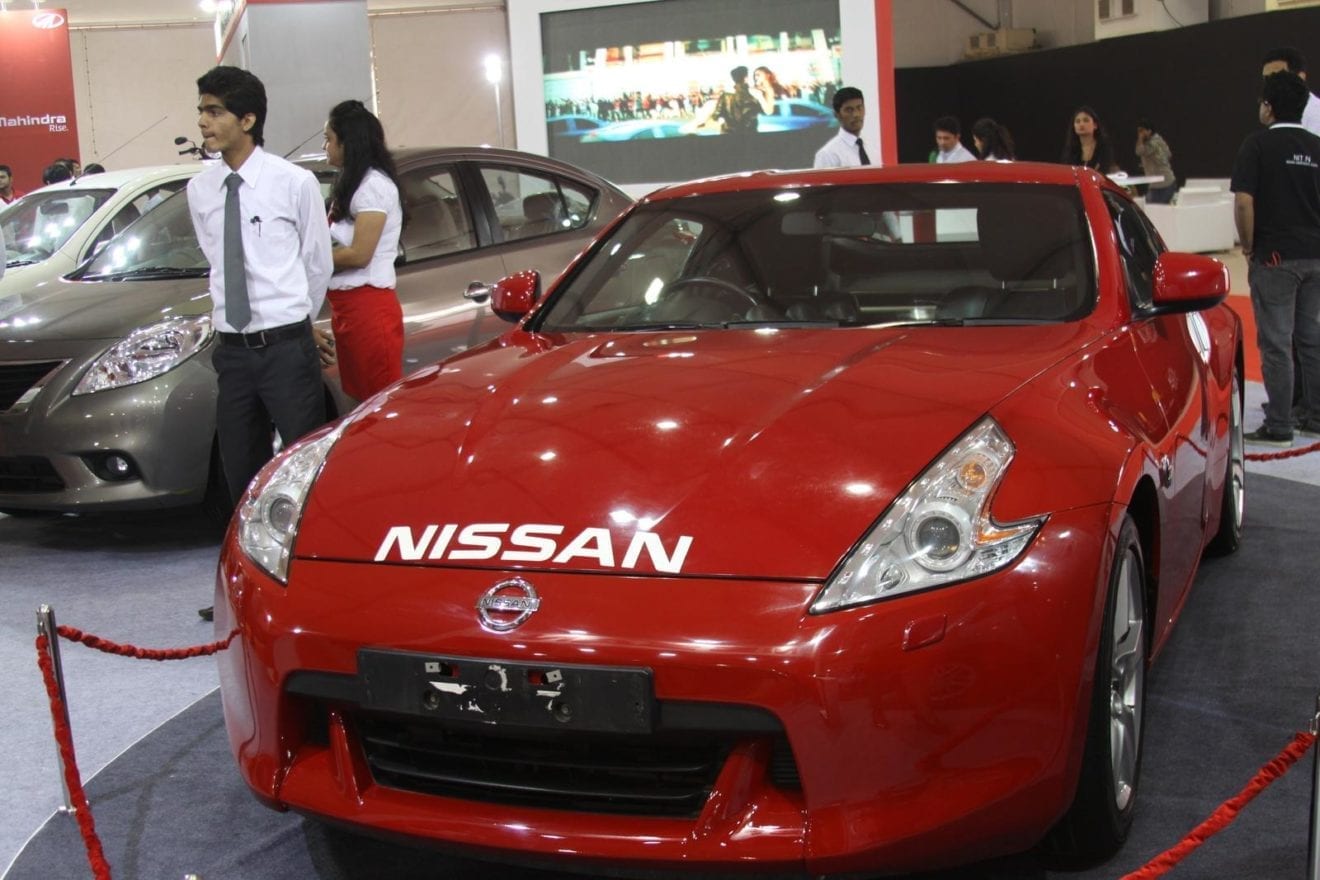
    Japanese automaker Nissan Motor Co Ltd’s domestic sales for the Oct. 1 to Oct. 20 period plummeted 20 percent following recent allegations of misconduct in its inspection procedures, the Nikkei said.

    The Yokohama-based automaker’s domestic sales fell to 12,300 units during the period, the newspaper reported. (s.nikkei.com/2lc9nAm)

    Last week, the country’s second-largest automaker said it would halt production of domestic market vehicles at all six of its Japanese assembly plants to consolidate their inspection lines to comply with the country’s transport ministry requirements.

    The inspection scandal was expected to end the company’s 11-month streak of year-on-year domestic sales growth through September, the business daily said.

    The company could not immediately reached for comment.

  • Australian car manufacturing ends as GM Holden closes plant

    Australian car manufacturing ends as GM Holden closes plant

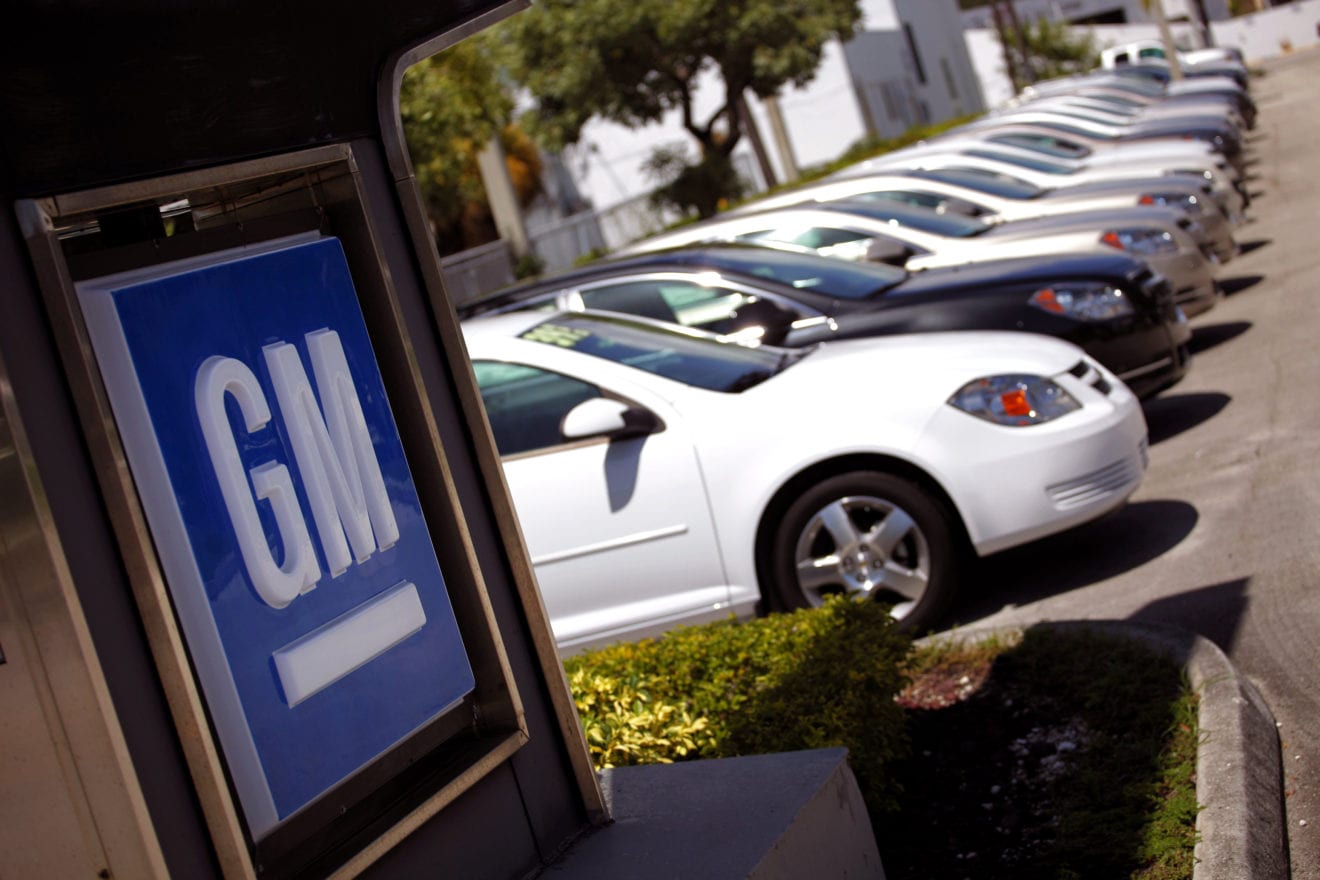
    Australia’s near 100-year automotive industry ended on Friday as GM Holden, a unit of U.S. carmaker General, closed its plant in South Australia to move manufacturing to cheaper locations.

    The closure comes a year after Toyota and Ford similarly moved out, eliminating thousands of manufacturing jobs. It adds pressure on the government to help those made redundant find work in a battleground state ahead of a federal election in 18 months.

    “The end of Holden making cars in Australia is a very sad day for the workers and for every Australian. It is the end of an era,” Prime Minister Malcolm Turnbull told reporters at a regular briefing on Friday. “Everyone has a Holden story.”

    Turnbull has sought to soften the impact of a declining automotive industry in a state which historically determines who forms government by making South Australia a defense industry hub.

    The government plans to increase defense spending by nearly A$30 billion ($23.52 billion) by 2022, with the manufacture of a fleet of frigates, armored personnel carriers and submarines to be concentrated in South Australia.

    But John Camillo, ‎state secretary at Australian Manufacturing Workers’ Union in South Australia, said nearly 2,500 newly unemployed will need government help finding work.

    “They need to be retrained to be able to work in defense, mining, aerospace, because we are going to be building ships,” Camillo told reporters outside the GM Holden plant in Elizabeth, 26 kilometers (16.1 miles) north of state capital Adelaide.

    Camillo was joined outside the factory by hundreds of workers and car enthusiasts who had gathered to greet the last car off the production line.

    “A BEAUTY”

    Rising discretionary income and record-low interest rates have encouraged consumers to buy new cars, but many turned against the large passenger cars for which GM Holden is known.

    “Consumers want fuel-efficient small cars and sports utility vehicles (SUVs), and overseas manufacturers have been able to profit from changing tastes,” William McGregor, industry analyst at ‎IBISWorld, told.

    Monthly SUV sales hit a record in June, surpassing 40,000 cars, Bureau of Statistics data showed.

    GM Holden, whose SUV range proved unpopular with Australians, will shift production to Germany where advanced automation will help keep costs low as it revamps its lineup.

    GM Holden began auto production in 1948 with then-Prime Minister Ben Chifley driving the first car off the production line, declaring it “a beauty”.

    “I have bought four of them,” said Shane Oliver, an AMP Capital economist who described the closure as a “sad day”.

    “But it’s clear that not enough Australians’ agreed, opting for foreign-made SUVs instead.”

  • Daimler recalls over 1 million vehicles worldwide for air bag fix

    Daimler recalls over 1 million vehicles worldwide for air bag fix

    Daimler is recalling more than 1 million Mercedes-Benz cars and sport utility vehicles worldwide to address potential unintended air bag deployments, the German automaker said on Monday.

    The safety recall covers 495,000 vehicles in the United States, 400,000 in Britain, 76,000 in Canada and a few hundred thousand in Germany, company officials said. The German automaker did not immediately have a complete worldwide total.

    An electrostatic discharge, coupled with a broken clock spring and insufficient grounding of steering components, can lead to inadvertent deployment of the driver side front air bag in vehicles subject to the recall, the company said.

    As part of the fix, it said dealers would add new grounding to the steering components.

    A Mercedes-Benz spokeswoman in the United States said there had been “a handful of instances where drivers suffered minor abrasions or bruises” due to the air bag problem.

    No deaths have been reported and the issue is not related to the massive recall of Takata air bag inflators worldwide.

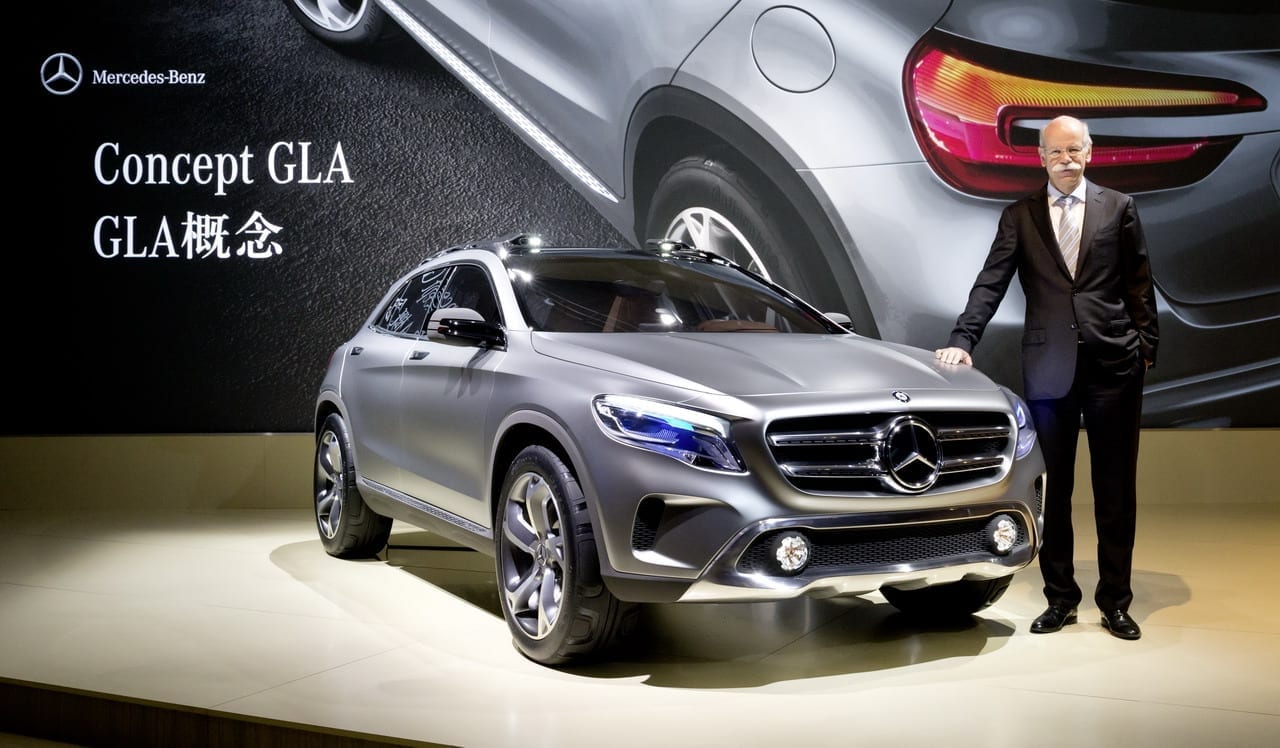
    The recalls covers some 2012-2018 model year A, B, C, and E-Class models and CLA, GLA and GLC vehicles.

  • Mitsubishi to accelerate R&D, capital spending

    Mitsubishi to accelerate R&D, capital spending

    Japanese automaker Mitsubishi is planning to inject more than 600 billion yen ($5.35 billion) in capital spending and research and development (R&D) over the next three years through fiscal 2019 in a bid to turn around its business after recent scandals, the Nikkei said.

    The new plan calls for spending 5 percent of annual sales on equipment and the same proportion on R&D.

    Funds will be used by the company for the development of electrified vehicles and for production in China and Indonesia.

    Mitsubishi Motors will release the specifics of the capital injection in a new medium-term plan due Wednesday, the business daily said.

  • Car vending machines dispense vehicles bought online

    Car vending machines dispense vehicles bought online

    The US motor vehicle industry appear to have removed the last piece of personal interaction involved in the process of purchasing a car, with the launch of car vending machines.

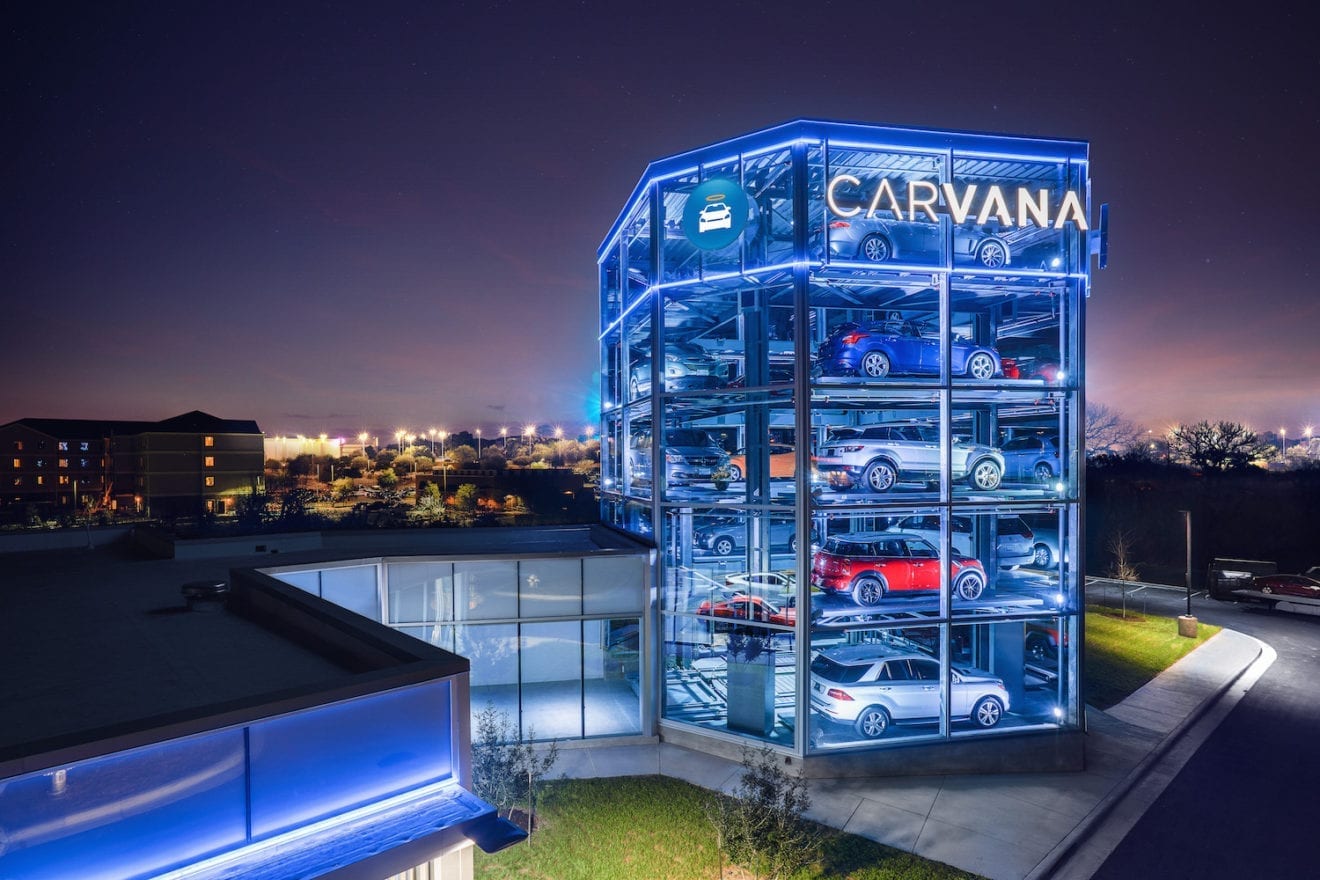
    Shoppers who prefer to bypass physical dealerships can now order and pay for their car online before popping down to a multi-storey building resembling a vending machine to collect their ride.

    NYSE-listed Carvana, a leading eCommerce platform for buying used cars, has launched the latest of its car vending machines in Jacksonville, Florida. The eight storey-high building is fully automated and coin-operated (yes, you did read that correctly) and can house as many as 30 vehicles. Carvana says the buildings “give customers a unique and memorable pickup experience” for cars they buy online.  It is the seventh such building Carvana has opened, the others being in Houston, Austin, San Antonio and Dallas in Texas, Nashville, Tennessee and Raleigh North Carolina.

    Carvana says its system appeals to customers because instead of spending hours walking around dealerships, customers who choose Carvana can search through the company’s national inventory of 7000 vehicles and finance and purchase their car completely online. From start to finish, the entire process takes as little as 10 minutes. All vehicles in Carvana’s inventory have passed a 150-point inspection and have never been in a reported accident or have frame damage. All features, imperfections and updated information about open safety recalls are listed on the car’s vehicle description page.

    Once the online purchase is complete, customers can choose to have their car delivered as soon as the next day, or pick it up from one of the car vending machines. Customers who choose  the vending machine option will receive a commemorative, oversized Carvana coin on-site to activate the vending process and transport the car into the delivery bay. Customers then have a seven-day, money-back guarantee, giving them the chance to see if the vehicle really fits their life. If they aren’t satisfied, they can return the vehicle for a full refund.

    Ernie Garcia, founder and CEO of Carvana says he wants to “bring some fun back into the car buying process”.

    Vehicle pickup at any of Carvana’s car vending machines is free for customers. Those who live outside the metropolitan delivery area but would still like to pick up their car at a vending machine, Carvana will subsidise $200 for an airfare and arrange “white glove transportation” from the airport.

    Founded in 2012 and based in Phoenix, Arizona, Carvana says its mission is to change the way people buy cars.

    “By removing the traditional dealership infrastructure and replacing it with technology and exceptional customer service, Carvana offers consumers an intuitive and convenient online automotive retail platform. A fully transactional website enables consumers to quickly and easily buy a car online, including finding their preferred vehicle, qualifying for financing, completing the purchase and loan with signed contracts, and receiving delivery or pickup of the vehicle,” the company says in a statement.

  • Denso to invest $1 billion creating 1,000 jobs

    Denso to invest $1 billion creating 1,000 jobs

    Japanese auto parts supplier Denso Corp plans to invest $1 billion in its Maryville, Tennessee plant to develop vehicle electrification and safety systems, creating around 1,000 jobs.

    This is the latest in a series of announcements from automakers rushing to bring a large number of electric vehicle models to market in the coming years.

    Policymakers in key markets such as China are pushing a shift to electric cars from internal combustion engines over the next two to three decades, while relatively new rival Tesla is gaining momentum, pressuring traditional automakers to crank up plans for fully electric vehicles.

    Denso said in a statement the investment would expand multiple production lines at the facility to produce advanced safety, connectivity and electrification products for hybrid and electric vehicles. The new jobs will include production workers, technicians and engineers.

    “We are seeing dramatic shifts in the role of transportation in society, and this investment will help position us to meet those changing demands,” Kenichiro Ito, chairman of Denso’s North American board, said in a statement.

    In 2015 the auto supplier announced a $400 million investment in Maryville and the creation of 500 jobs.

    Last week, Toyota Motor announced a joint venture with partner Mazda Motor Corp (7261.T) to develop electric vehicle technology. Toyota will take a 90 percent stake in the joint venture while Mazda and Denso, Toyota’s biggest supplier, will each take 5 percent.

    No. 1 U.S. automaker General Motors said this week it would add 20 new battery electric and fuel cell vehicles to its global lineup by 2023.

    A day later, Ford Motor said it planned to slash $14 billion in costs over the next five years and shift capital investment away from sedans and internal combustion engines to develop more trucks and electric and hybrid cars.

  • Australia new vehicle sales dip in September, commercial still strong

    Australia new vehicle sales dip in September, commercial still strong

    Australian new vehicle sales took a dip in September after a run of record months, though continued strength in the commercial sector augured well for business spending in the economy.

    The Australian Federal Chamber of Automotive Industries’ VFACTS report out on Wednesday showed 100,200 new vehicles were sold in September, down 2.4 percent on the same month last year. Both months had the same number of selling days.

    Sales for the year to date were still running 0.2 percent ahead of the same period in 2016.

    Sales of passenger cars extended their long decline with a fall of 9.3 percent in September, and even the red-hot sports utilities sector took a breather with a dip of 1.3 percent.

    Yet demand for commercial vehicles showed no signs of waning with the light sector up 8.1 percent and heavy vehicles jumping 15.4 percent on September last year.

    Toyota Motor Corp retained first place on the sales ladder with a reduced share of 17.3 percent of the market, while Mazda Motor Corp made a strong showing by taking an unusually high 10.3 percent.

    Hyundai Motor held third spot with 8.1 percent, followed by Mitsubishi at 7.1 percent. The Holden unit of General Motors trailed with 6.9 percent, ahead of Ford at 6.8 percent.

  • China sets 2019 deadline for automakers to meet green-car sales targets

    China sets 2019 deadline for automakers to meet green-car sales targets

    China has set a deadline of 2019 to impose tough new sales targets for electric plug-in and hybrids vehicles, slightly relaxing an earlier plan to launch the rules from next year that had left global automakers worried about being able to comply.

    Car makers will need to amass credits for so-called new-energy vehicles (NEVs) equivalent to 10 percent of annual sales by 2019, China’s industry ministry said in a statement on Thursday. That level would rise to 12 percent for 2020.

    A single vehicle can generate multiple credits meaning the proportion by NEVs by volume would likely be lower.

    The targets, announced by the Ministry of Industry and Information Technology (MIIT), closely mirror previously announced plans, but remove an explicit 8 percent quota for 2018, in effect giving carmakers an extra year grace period.

    The quotas are a key part of a drive by China, the world’s largest auto market, to develop its own NEV market, with a long-term aim to ban the production and sale of cars that use traditional fuels announced earlier this month.

    Global automotive manufacturers, however, had urged a softening of the proposals for all-electric battery vehicles and electric plug-in hybrids.

    Under the rules, car makers will receive credits for new-energy vehicles including plug-in hybrids and fully electric cars that can be transferred or traded. Firms with annual sales volumes above 30,000 units will need to comply with the targets.

    These credits – which will vary depending on the range and performance of the vehicle – will be used to calculate if firms have met their quota, a system which would likely mean the actual proportion NEVs made up of total sales was lower.

    “The rules could result in the production of more than one million EVs annually in China by 2020, or about 4 percent of sales,” Simon Mui, a transport and energy exert at the U.S.-based Natural Resources Defense Council wrote in note.

    GREEN CAR ROLL-OUT

    Carmakers were in general positive about the move.

    “We welcome the Chinese auto industry’s shift towards greater adoption of NEVs and will comply with relevant regulations presented by authorities,” Ford Motor said in a statement responding to the announcement.

    General Motors said it would “strive to comply with the NEV mandatory requirements”, though it added “continued joint efforts by the government and companies are essential to build broad-based consumer acceptance for NEVs”.

    “GM has sufficient capacity to manufacture NEVs in China,” it said in a statement.

    Japan’s Honda Motor said it planned to launch an electric battery car in China next year and would “try to expand our lineup of new energy vehicles” to meet the quotas.

    China is keen to combat air pollution and close a competitive gap between its newer domestic automakers and global rivals. It wants to set goals for electric and plug-in hybrid cars to make up at least a fifth of Chinese auto sales by 2025.

    Reuters reported in August that China would delay the implementation of the NEV quotas until 2019, giving global automakers more time to prepare.

  • Ford, Lyft will partner to deploy self-driving cars

    Ford, Lyft will partner to deploy self-driving cars

    Ford said on Wednesday it will collaborate with Lyft to deploy Ford self-driving vehicles on the ride services company’s network in large numbers by 2021.

    Ford and Lyft teams will begin working together to design software to allow Ford vehicles to communicate with Lyft’s smartphone apps.

    Ford self-driving test vehicles will be connected to Lyft’s network, but at first, customers will not be able to use them, Sherif Marakby, Ford’s vice president for autonomous vehicles and electrification. Ford will put human-driven vehicles on Lyft’s network.

    He did not say when Ford and Lyft expect to offer the first rides in self-driving cars.

    “We’re not building prototypes for the sake of building prototypes,” Marakby said, adding Ford intends to ultimately put thousands of self-driving vehicles in use.

    Ford’s new Chief Executive Jim Hackett is scheduled to meet with investors on Tuesday to outline the Dearborn, Mich. automaker’s strategy for boosting profitability. Ford shares are down 1.65 percent so far this year, while Detroit rival General Motors shares have risen 15.6 percent, and Fiat Chrysler Automobiles NV shares are up 71 percent.

    Hackett’s plans to compete for revenue from mobility services, which include car sharing and ride-hailing, will be one area of focus for investors. The Lyft partnership fills in a piece of the puzzle.

    Ford also is testing delivery services using self-driving vehicles and a van shuttle service. The self-driving vehicles Ford will deploy through Lyft will use software developed by Argo AI, a company in which Ford is investing $1 billion over the next five years.

    The company has said it will invest $700 million in a factory in Flat Rock, Michigan, to make it capable of building electric and self driving vehicles.

    Lyft has said it will offer an open platform for companies to deploy self-driving vehicles on its network, and has partnerships with self driving vehicle technology startup Drive.ai and Alphabet’s Waymo self driving car unit.

    GM has a 9 percent stake in Lyft, acquired for $500 million in January 2016. “Our relationship with GM has always been a non-exclusive relationship,” Raj Kapoor, Lyft’s chief strategy officer.

    GM is also assembling the assets necessary to launch its own ride services using self-driving cars, building its Maven car-sharing unit and preparing to launch mass production of autonomous Chevrolet Bolt electric cars at a factory in suburban Detroit.

  • Indonesia overtakes Thailand to become Vietnam’s top car supplier in August

    Indonesia overtakes Thailand to become Vietnam’s top car supplier in August

    Tariff cuts under a regional trade deal are making cars from Southeast Asia more affordable in Vietnam. Indonesia dethroned Thailand to dominate Vietnam’s car market in August, with Toyota and Ford among the most popular brands, according to Vietnam Customs.

    Nearly 3,000 made-in-Indonesia cars flooded into Vietnam in August, compared to 438 units during the same period last year, official data showed. Most of the vehicles had nine seats and below.

    Thailand was the runner-up, exporting 2,000 cars to Vietnam, followed by China with 800 units.

    The import tariff on cars from Thailand and Indonesia was cut to 30 percent from 40 percent at the start of this year, according to tax authorities. As a result, many imported cars are now 7 percent cheaper, ranging from $18,000-19,000.

    Vietnam’s car imports in August soared 13 percent from the previous month to about 7,800 units worth $190 million, customs data shows.

    However, Thailand still leads the way so far this year, followed by Indonesia and China.

    Vietnam imported at total of 65,485 cars in the first eight months, down 5 percent on-year. Over 60 percent of those came from Thailand and Indonesia.

    The surge in imports from Southeast Asian countries is expected to continue when the import tariff on cars is abolished at the start of 2018 under the ASEAN Trade in Goods Agreement.

  • Tesla working with AMD to develop chip for self-driving car

    Tesla working with AMD to develop chip for self-driving car

    Electric carmaker Tesla is working with Advanced Micro Devices to develop its own artificial intelligence chip for self-driving cars, citing a source familiar with the matter.

    AMD spin-off GlobalFoundries Inc Chief Executive Sanjay Jha said his company is working directly with Tesla. GlobalFoundries, which fabricates chips, has a wafer supply agreement in place with AMD.

    Tesla isn’t completely going it alone in chip development, according to the source, and will build on top of AMD intellectual property.

    More than 50 people are working on the project under Jim Keller, a longtime chip architect and the head of Autopilot hardware and software of Tesla, according to the report.

    AMD shares were up 2.2 percent in extended trading.

    Tesla, AMD, and GlobalFoundries did not immediately respond to requests for comment.