Tag: car

  • Ford’s China sales post strongest growth of year in June

    Ford’s China sales post strongest growth of year in June

    Ford Motor Co said its China sales surged 15 percent in June, their strongest pace of the year, as the industry puts the phasing out of a tax cut behind it, adding that it was optimistic about the outlook for the second half.

    Peter Fleet, Ford’s Asia-Pacific chief, said the first quarter had been difficult after a tax on car purchases rose to 7.5 percent from 5 percent previously.

    Although Ford’s China sales declined 7 percent in the first-half from the same period a year ago, they were up 7 percent in the second quarter. Sales for June alone climbed to more than 100,000 vehicles.

    “I would expect to see for the third-quarter strong single digit percentage growth (for) the industry. That’s certainly how it looks to us based on the run rate and how the month of July has opened up,” Fleet said.

    Ford’s level of discounting tracked an overall 4 percent price decline for the industry so far this year, he said.

    “I’m not interested in driving our prices down to drive market share,” Fleet said.

  • Geely’s Volvo to go all electric with new models from 2019

    Geely’s Volvo to go all electric with new models from 2019

    Geely-owned Volvo Car Group said on Wednesday all new models launched from 2019 will be fully electric or hybrids, spelling the eventual end to nearly a century of Volvos powered solely by the internal combustion engine.

    The Gothenburg-based company will continue to produce pure combustion-engine Volvos from models launched before that date, but said it would introduce cars across its model line-up that ranged from fully electric cars to plug-in hybrids.

    Volvo’s plans make it the first major traditional automaker to set a date for the complete phase-out of combustion-engine-only models though electrification has long been a buzzword across the industry and Elon Musk’s Tesla Motors has been a pure-play battery carmaker from day one.

    “This announcement marks the end of the solely combustion engine-powered car,” Volvo Cars Chief Executive Hakan Samuelsson said in a statement.

    Five new models set to be launched in 2019 through 2021 – three of them Volvos and two Polestar-branded – will all be fully electric.

    “These five cars will be supplemented by a range of petrol and diesel plug in hybrid and mild hybrid 48-volt options on all models,” Volvo said.

    “This means that there will in future be no Volvo cars without an electric motor.”

    Volvo has invested heavily in new models and plants since being bought by Zhejiang Geely Holding Group from Ford Motor Co. in 2010, establishing a niche in a premium auto market dominated by larger rivals such as Daimler’s Mercedes-Benz and BMW.

    Part of its strategy has also been to embrace emerging technologies which allow higher performance electric vehicles as well as, eventually, self-driving cars.

    Only last month, Volvo said it would reshape its Polestar business into a standalone brand, focused on high-performance electric cars aimed at competing with Tesla and the Mercedes AMG division.

    Volvo has also taken steps towards an eventual listing, raising 5 billion crowns from Swedish institutional investors through the sale of newly issued preference shares last year, though the company has said no decision on an IPO has been made.

  • Australia new vehicle sales surge to record in June

    Australia new vehicle sales surge to record in June

    Australian new vehicle sales jumped to a record in June, a second straight month of bumper results that augured well for consumer demand across the economy.

    The Australian Federal Chamber of Automotive Industries’ VFACTS report out on Wednesday showed 134,171 new vehicles were sold in June, up 4.4 percent on the same month last year. Both months had the same number of selling days.

    June is typically a strong month as dealers clear stock for the end of the financial year.

    Sales of sports utilities alone surged 11.7 percent in June, with the upper large segment rising almost 21 percent. Sales of light commercial vehicles climbed 12.2 percent while the heavy vehicle market gained 9.2 percent.

    The willingness to splash out on big-ticket items follows upbeat reports on retail sales for both April and May and points to a likely rebound in consumption for the second quarter after a muted start to the year.

    Toyota Motor Corp retained first place on the sales ladder with 18.3 percent of the market, while Mazda Motor Corp had another strong month taking 9.3 percent.

    Hyundai Motor took third spot with an improved share of 9.1 percent. The Holden unit of General Motors tied with Mitsubishi on 6.9 percent, while Ford trailed with 6.6 percent.

  • VW recalls 385,000 cars for a brake system update

    VW recalls 385,000 cars for a brake system update

    Volkswagen is recalling 385,000 cars in Germany for a software update to their anti-lock brake systems, news agency DPA reported, citing a spokesman for the automaker.

    Volkswagen’s VW, Audi and Skoda brands were affected, it said.

    According to DPA, the braking control system may not function properly in certain driving conditions, such as when the driver over-steers, under-steers or slams on the brakes.

    Volkswagen had no immediate comment.

  • Deputy PM encourages autos carrying Vietnamese brand name

    Deputy PM encourages autos carrying Vietnamese brand name

    Domestic automakers must manufacture autos under the Vietnamese brand name, Deputy Prime Minister Trinh Dinh Dung suggested.

    These autos must be of good quality, reasonably priced and have competitiveness in the region and the world, he added.

    Speaking with representatives of ministries and auto businesses at a conference on the automobile industry’s development in Ha Noi on Wednesday, the deputy PM said the Government was encouraging local, potential and prestigious businesses to co-operate with strategic partners in the world to study, manufacture and assemble autos with Vietnamese brand name.

    As for the support industry, Dung said it would not only meet the domestic market but also be competitive enough to take part in the global automobile manufacturing chain. For doing so, it must access and apply advanced technologies in the world.

    The industry will expand several automobile industrial complexes and centres by re-organising and re-arranging production; strengthening co-operation among automakers, assemblers and part suppliers, in addition to setting up vocational training centres, and conducting research and application to improve the investment efficiency and specialisation.

    To achieve the targets, Dung suggested that auto businesses and Vietnam Automobile Manufacturers’ Association must restructure the automobile industry to identify key products that would suit the country’s development trend, as well as the market demand.

    Each automaker should invest in advanced manufacturing technologies, raise the capacity of management and trade to cut costs, reduce production price, increase capacity, quality and the competitiveness of the products.

    The automakers, assemblers and part suppliers must take initiative, in co-operation with potential foreign partners, to expand manufacturing, as well as to develop the network of auto support industry that would meet international standards.

    The deputy PM requested the MoIT to co-ordinate with relevant sectors and ministries to supplement and complete the legal corridor, create an impartially-competitive environment for domestic automakers and importers, and meet the market principles to match with the country’s international commitments.

    It must define strategic partners in the automobile and support industries; encourage businesses to increase added value in auto manufacturing, especially of products carrying the country’s brand name; strengthen management and solve trade frauds in auto imports.

    The import tax on auto parts and components must also be adjusted.

    Dung has assigned the finance ministry to collaborate with relevant ministries to check and adjust import duties on auto parts and components, which would be in line with the Government’s orientation and international commitments.

    The ministries will study and propose preferential policies on taxes, fees and credit, ensuring the harmonisation of interests of people, the State and businesses. They need to strengthen the management of certificate of origin of complete built-up units, as per import types, which have surged in the recent time.

    The transport ministry will check and fulfil the regulations relevant to quality, safety and technologies, in addition to environment protection in manufacturing and assembling vehicles, reform administration procedures, simplify registration procedures for locally-assembled autos and create favourable conditions for businesses, ensuring high standards, while protecting the rights and interests of consumers.

    Meanwhile, the planning and investment ministry will work with other ministries to study and propose preferential policies to attract large-scale investment projects to Viet Nam, and encourage the development of products carrying Vietnamese brand names and other products suited to the customers’ preferences to increase export of autos to other countries of the ASEAN.

  • Audi to use Valeo’s stop-start technology in sports coupe

    Audi to use Valeo’s stop-start technology in sports coupe

    Luxury carmaker Audi will introduce Valeo’s micro-hybrid “stop-and-start” systems in its RS5 sports coupe, sources told Reuters, in a sign that the Paris-based supplier may be tapping new premium demand for the fuel-saving technology.

    The contract with Volkswagen’s (VOWG_p.DE) upscale Audi division underlines increased spending by automakers on technology designed to reduce carbon dioxide emissions, in response to tightening standards and testing regimes.

    Volkswagen and Valeo both declined to comment.

    Unlike a typical alternator, which converts engine torque to electricity to power a vehicle’s circuitry and charge its battery, the starter-alternator can also re-start the engine in a fraction of a second.

    The Valeo system delivers fuel savings of up to 15 percent by automatically shutting down the engine whenever a car is halted by a red light or traffic, with an in-step reduction of CO2 and pollution emissions in congested cities.

    First introduced in 2004, the so-called “i-StARS” technology is a flagship product of Valeo’s 4 billion euro ($4.6 billion)propulsion systems division, with 3 million units sold.

    But launch customer PSA Group (PEUP.PA) and other volume manufacturers have since dropped it from new models in favor of beefed-up starter motors, a cheaper though less efficient stop-and-start solution.

    The i-StARS system is beginning to find new markets, however, Valeo boss Jacques Aschenbroich told Reuters. “Demand for it is continuing to grow significantly,” the CEO said, predicting double-digit percentage sales rise.

    With the mild-hybrid RS5, which went on sale this month in Germany and in France next week, Audi becomes the first German premium brand to use the technology on its current vehicle lineup.

  • Nornickel bets on battery materials as electric car sales rise

    Nornickel bets on battery materials as electric car sales rise

    Russian miner Norilsk Nickel wants to expand in the market for materials used to make batteries for the fast-growing electric vehicle (EV) sector, its head of marketing and sales told Reuters.

    Nornickel, the world’s second-largest nickel producer and a major cobalt producer, and German chemicals company BASF said on Tuesday they were in talks to supply nickel and cobalt, needed to make lithium-ion batteries, in Europe, as the car industry’s push into electric vehicles gathers pace.

    For Nornickel, this is just the start.

    “We are discussing…transactions with several manufacturers in the industry,” Nornickel’s Markus Meurer said in an interview with Reuters.

    Nornickel and BASF’s talks cover cooperation to set the foundation to supply battery cell producers for electric vehicles in Europe with regionally produced cathode materials, they said on Tuesday.

    Meurer said the project with BASF would be developed over the next few months and that it was too early to say how much metal and in which form it would be supplied.

    “Timing will depend a lot on market development and on technology….The important question is how to enable the ramp-up of production of battery raw materials in parallel with increasing demand,” Meurer said.

    The number of electric vehicles on roads worldwide rose to a record high of 2 million last year, the International Energy Agency (IEA) said this month, as governments clamp down on fossil fuels such as gasoline and diesel.

    UBS recently raised its forecasts for global sales of electric vehicles in 2021 to 3.1 million from 2.5 million and to 14.2 million by 2025 from 9.7 million. It expects electric vehicles to account for 3.1 percent of global car sales in 2021 and 13.7 percent in 2025, against 1 percent this year.

    Last year, nickel demand for electric vehicle batteries rose 20 percent to 15,000 tonnes, according to Nornickel.

    Meurer said he expected demand for nickel from the electric vehicle market to rise to 300,000 tonnes in 10 years from 20,000 tonnes in 2017, making it the second-largest segment for nickel demand after stainless steel.

    Global demand for cobalt, a by-product of nickel and copper, last year was about 100,000 tonnes, of which roughly half was used in batteries to power electric cars. Nornickel produces about 5,000 tonnes of cobalt a year.

    Prices for cobalt metal have nearly tripled to nine-year peaks above $27 a lb from below $10 a lb in Dec 2015.

  • BMW, competing with Tesla, to introduce electric 3 Series

    BMW, competing with Tesla, to introduce electric 3 Series

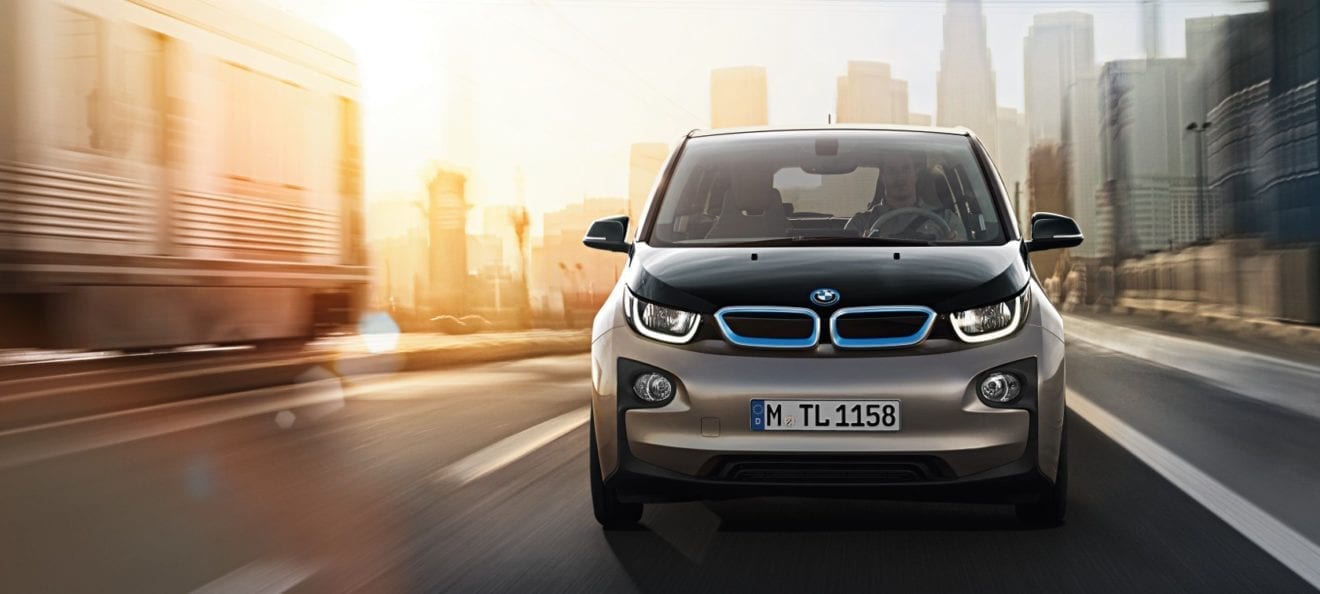
    BMW plans to introduce an electric version of its popular 3 Series in September, a move designed to fend off rival Tesla.

    The German carmaker will present the vehicle at the IAA auto show in Frankfurt in September.

    The 3 series, which is a high volume sales model, will have a range of 400 km (248 miles) and is seen as a direct response to the success of Tesla’s Model 3, according to Handelsblatt.

    BMW declined to comment.

  • Auto firms ask to lower component import taxes

    Auto firms ask to lower component import taxes

    High import taxes on auto components and parts, packaging and logistics expenses are major reasons behind locally-assembled cars costing 10-20 per cent higher than imports from Thailand and Indonesia.

    As such, these are also factors hindering growth of the domestic automobile industry, the automobile working group said at the Vietnam Business Forum (VBF) 2017 recently.

    At the forum, a meeting between the Vietnamese Government and the business community held in Ha Noi, the group said higher prices made local automakers less competitive than imports from ASEAN members, and the situation will worsen when import taxes drop to zero per cent in the region next year.

    Sumito Ishii, general director of General Motors Viet Nam and head of the VBF automobile working group, said major automakers and auto part suppliers felt the local automobile industry was operating on a small scale, so it had not attracted the participation of sufficient global part suppliers.

    “The global suppliers will not invest if there is no clear business plan – whether automakers maintain or raise production in Viet Nam or not,” Ishii said.

    Of the current part suppliers in Viet Nam, more than 90 per cent are foreign-invested businesses, and the majority of auto components, parts and materials are imported.

    To help expand domestic auto production, the Government team currently in charge of the automobile industry should have auto assemblers and part suppliers participate in the process so they can understand the industry’s current situation better, the group said.

    The team should organise monthly conferences to discuss policy drafts for the industry and keep the Prime Minister informed.

    Policy makers should also continue working with businesses to build measures that will help cut production costs, reducing the pressure of competition on local automakers from 2018. Programmes have to be developed to connect businesses in the sector.

    “The connection between foreign investment businesses and domestic businesses is ineffective because there is no available database relevant to domestic parts and component suppliers. If we have a database, businesses can compare and contact local part suppliers easily,” Ishii said.

    He said foreign investment businesses should provide the list of auto parts and components that need to be localised with more details so as to help local suppliers prepare the necessary technologies.

    Meanwhile, local part suppliers would need to focus on meeting production demands, including quality, costs and delivery, and step up co-operation with foreign suppliers.

    “As for the automobile industry, the top priority is to build up a sustainable growth market. Relevant long-term, stable policies are needed to help businesses set up their plans,” Ishii said.

    Large output

    Deputy General Director of the Truong Hai Automobile Company (Thaco), Pham Van Tai, said industry needed an output large enough for businesses to invest in technology, machines and equipment to increase the localisation rate (or the rate of parts that are produced locally) and reduce production costs.

    Tai and representatives of other domestic automakers asked the Government to issue policies protecting the local auto market to help local auto and support industries to develop in a sustainable manner.

    Tai drew attention to proposals made by the Ministry of Industry and Trade (MoIT) recently, noting that they contained effective solutions.

    In the proposal, the MoIT asks the Government to cut import taxes on auto parts and components not produced locally to zero per cent from current 15-20 per cent.

    Meanwhile, import duties on components and parts that are being produced domestically should be maintained at the highest possible level to local production and create stable jobs for more than 120,000 workers in the auto industry, they said.

    “To encourage development of the support industry, the Government needs to exempt it from special consumption tax on locally-produced components and parts, contributing to decreasing the prices of cars in Viet Nam,” said Tai.

    The group also proposed that the Government takes measures to control trade fraud, strictly examine certificates of origin and create a healthy and fair environment for all businesses.

    Deputy MoIT Minister Tran Quoc Khanh said the Government gave a lot of importance to the auto support industry.

    It has issued Decree 111/2015/ND-CP and Decision 68/2017/QD-TTg on a 10-year (2016-2025) plan to develop the support industry, he noted.

    “Apart from the ministry’s measures and proposals from auto businesses, the ministry is willing to discuss the industry’s difficulties in order to ensure sustainable development in the future,” Khanh said.

    Earlier, in an evaluation on the country’s automobile industry after 20 years of development, the MoIT had said the industry had failed to reach its set targets, especially a 40 per cent of localisation rate for cars with nine seats or less by 2005 and 60 per cent by 2010. The current rate is between seven and 10 per cent.

    The quality of local autos has improved but it is yet to match that of imported ones. Prices still remain higher than other countries in the region. Production stagnates at the basic assembly stage of four steps: welding, painting, assembling and examination.

    Besides low market capacity, the ministry said policies on taxes, fees and infrastructure lacked stability and there was no high consensus among State management bodies. These factors have led to a failure in creating favourable conditions for businesses in the auto industry.

  • Car ownership ratio remains low

    Car ownership ratio remains low

    The industry’s growth for 2012-2016 period was 38%, the highest rate in the South East Asia. About 45% of the new cars were registered in Hanoi and HCM City.

    As of 2016, about 211,000 vehicles were registered in HCM City and 291,000 in Hanoi. 600,000 cars were sold in remaining provinces and cities.

    Cars from Japan and South Korea were favoured in Vietnam. Customers now have more choice as more European car brands have appeared in Vietnam such as Renault and Volkswagen.

    However, the car ownership ratio in Vietnam is only 16 cars for 1,000 people. This rate is lower than Malaysia’s 341 cars, Thailand’s 196 cars and Indonesia’s 55 cars.

    According to Solidiance, one of the reasons is because prices are still high. Car manufacturing, as well as supporting industries, are still weak so Vietnam has to import completely built units. Moreover, poor infrastructure and constant congestion have discouraged people from buying cars.

    It is predicted that the demand will continue to rise with steady economic growth and increasing personal incomes. Import taxes will be reduced or lifted from 2018 after Vietnam joins various trade agreements such as the ASEAN Trade in Goods Agreement. As a result, the car prices will fall and become more affordable.

  • Alphabet partners with Avis to manage self-driving car fleet

    Alphabet partners with Avis to manage self-driving car fleet

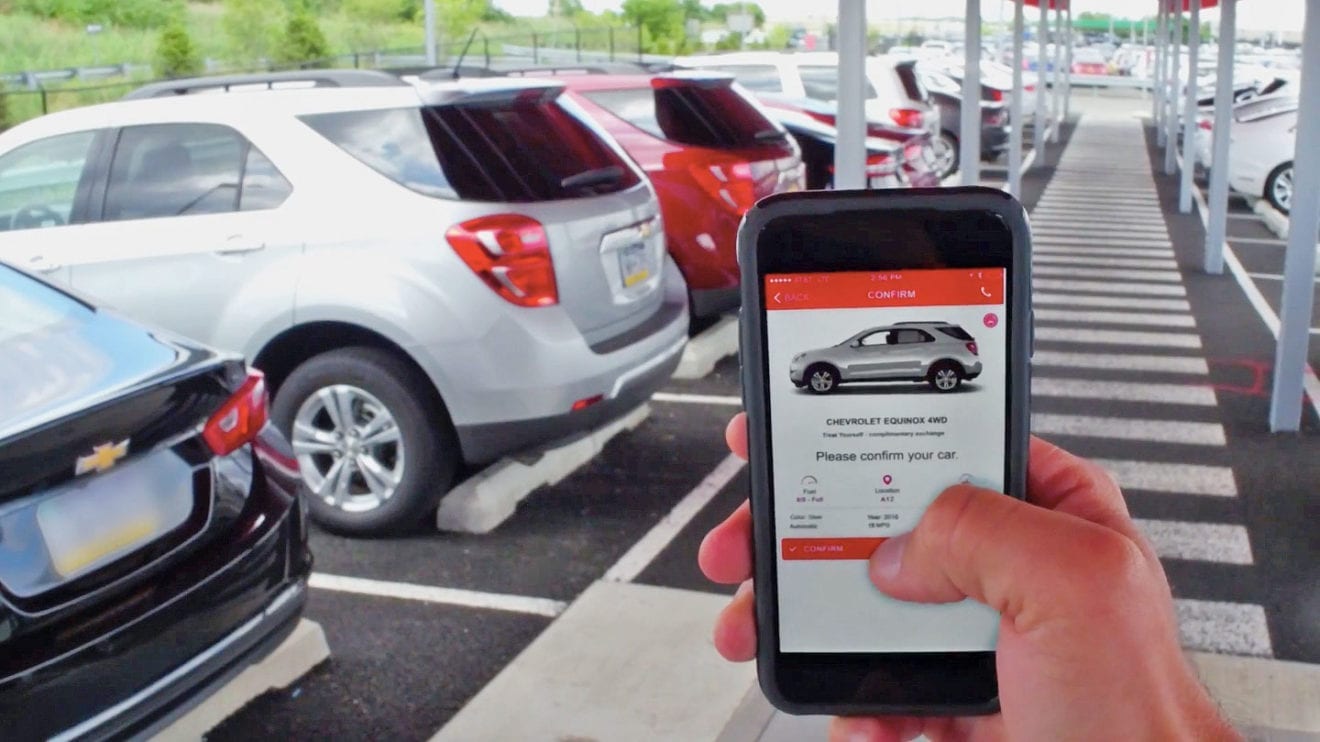
    Waymo, the self-driving car unit of Alphabet Inc, said on Monday it signed a multi-year agreement with Avis Budget Group Inc for the car rental firm to manage its growing fleet of autonomous vehicles, sparking a surge in Avis Budget’s stock.

    Investors bid Avis shares up by as much as 21 percent on Monday, the biggest intraday percentage gain for the stock in more than five years. The shares closed at $27.67, up about 14 percent.

    Shares in traditional rental car companies such as Avis and Hertz Global Holdings have taken a beating as more travelers use ride services such as Lyft and Uber Technologies The Waymo-Avis deal points to a potential future for rental car companies as managers for fleets of shared and autonomous vehicles require their services changing tires, cleaning interiors, and securing vehicles when they are not in operation.

    A Bloomberg report on Monday that Apple was using vehicles supplied by rival rental car company Hertz Global Holdings to test its self-driving car technology prompted a surge in that company’s shares.

    Also on Monday, General Motors Co Chief Financial Officer Chuck Stevens told analysts during a conference call that the automaker has “done a lot of thinking” about how to manage its growing fleet of self-driving vehicles. But he said “it’s early days on how that business model may play out.” GM has a large network of franchised dealers that could provide fleet management services, as well as an alliance with Lyft and its own Maven car-sharing unit.

    Waymo and Avis said they will launch their partnership in Phoenix, Arizona, where Waymo is allowing selected members of the public take rides in self-driving cars, including modified Chrysler Pacifica minivans built by Fiat Chrysler Automobiles NV. Waymo has said it plans to expand its fleet of Chrysler minivans to about 600 vehicles.

    Waymo and Avis did not say whether their partnership will expand to other cities, but John Krafcik, the head of Waymo, said in a statement that “with thousands of locations around the world, Avis Budget Group can help us bring our technology to more people, in more places.”

  • VCAR – Vietnam Limousine for the Southeast Asian market

    VCAR – Vietnam Limousine for the Southeast Asian market

    VCAR, a new generation Limousine of Vietnam, has been launched at a recent ceremony with the participation of nearly 300 businessmen and investors from many Southeast Asian countries like Malaysia, the Philippines, Thailand and Singapore.

    Since the limousine first appeared in Vietnam 5 years ago, thousands of limousines with luxurious and comfortable interiorshave been sold. To grasp this trend, Vinter Capital Group Corporation and its close joint venture partner, Dasan, has manufactured limousines with VCAR brand for the purpose of exporting to Malaysia and other Southeast Asian countries,with the support of the parent company Dynamic Investment Fund from Vinter Capital Group Corporation based in Malaysia, Vietnam and Thailand.

    At the launching ceremony of the new model of limousine, Vinter and Dasan introduced the three versions of VCAR New Generation Limousines, includingVCAR VIP, VCARSolati and VCAR X with excellent and valuable interiors.

    “VCAR Limousine brings about totally new experiences with luxury and comfortable interiors. I hope that the venture between Vinter Capital Group and Dasan will create and bring more versions of VCAR limousine, especially VCAR X to Malaysia in the coming time”, said a Malaysian entrepreneur at the ceremony.

    “Limousine has beenfavored in Vietnam since the very first day. Six versions of limousine have been introduced in the market for the past 5 years. All the essentials of limousine in Vietnam are currently crystallized in VCAR X, a President’s new generation version in Vietnam, produced by Dasan,” said Mr. Le Thanh Tuan, President of VCAR Limousine.

    “The Malaysian market is hard-to-please and much larger compared to Vietnam. Even though the population of Malaysia is only one third of Vietnam, Malaysia’s GDP is three times higher than that of Vietnam. Malaysia’s total number of tourists and revenue from tourism are three times higher, and the income per capita is six times higher. The transportation infrastructure is also one of the best among ASEAN countries. Therefore, VCAR X with its outstanding features would be able to meet the best needs in Malaysia. We believe that the limousine, which is highly favored in Vietnam, could be developed in Malaysia,” Tuan said.

    Dasan and Vinter Capital Grouphave conducted a lot of researches, improvement and investment in order to produce the VCAR limousine with the best standard and unique design to satisfy requirements of the Malaysian market in particular and the Southeast Asian markets in general.

    President of Dasan, Mr. Dang Quang Khanh, said: “Dasan and Vinter Capital Group Corporation will promote operations and fully exploit the assembly and production capacity of factories in Malaysia and supply our products to Malaysia and ASEAN countries in the near future. We will constantly improve the technologies and designs to create more variants of VCAR limousine to satisfy and suit the market trend of Malaysia in particular, as well as other countries in general. Vinter Capital Group Corporation and Dasan expect thatVCAR limousine will be the first Vietnam car brand to reach out to the world”.

    “This event is the milestone of success and close joint venture between Dasan and Vinter Capital Group Corporation. We have committed strongly to support Dasan in expanding the market of VCAR limousine in Malaysia and other ASEAN countries as soon as possible,” said Mr.  Elvin Chew Chee Wooi and Ms. Dolly Hoang Minh Tuyet, Chairman and General Director of Vinter Capital Group.

    “Dasan and Vinter Capital Group had seriously prepared over a year to get this event done. We plan to let the first VCAR limousine to be driven in Malaysia within the next three months,” said Mr. Dang Quang Khanh.

    VCAR X, a President’s new generation version has included all the essentials of existing limousines in Vietnam. Besides strengths of “Ground Specialist”, VCAR X also eliminates redundant and impractical items and overcomes inherent weaknesses of the President version (with two 180-degree-rotation seats), and adds unique interior features that are equipped for the President version.

    With the overwhelming and positive respond by the entrepreneurs and investors from the ASEAN markets, Vinter Capital Group Corporation has committed to launch the limousine as soon as possible.

    Not only manufacturing limousine, Vinter has also actively involved in several segments of business such as property development and investment, agriculture sector, legal and consulting services and resort and restaurant services.

  • Ford bets on low oil prices, moves Focus production to China

    Ford bets on low oil prices, moves Focus production to China

    Ford Motor said on Tuesday it will move some production of its Focus small car to China and import the vehicles to the United States in a long-term bet on low oil prices and stable U.S.-China trade relations despite recent tensions.

    The move suggests China could play a much larger role in future vehicle production for North America, perhaps eclipsing Mexico as a low-cost manufacturing source.

    Ford painted the production shift from Mexico to China, slated for mid-2019, as a purely financial move that will save the company $500 million in reduced tooling costs.

    But Ford also expects to ship about 80,000 vehicles to China this year, including the redesigned Lincoln Navigator luxury sport utility vehicle, which goes into production this fall at Ford’s Kentucky truck plant.

    Ford’s decision to import its first vehicles from China to the United States is also the first major manufacturing investment decision made by new Chief Executive Jim Hackett, who succeeded Mark Fields in May. Discussion about the small-car production shift from Mexico to China began “a couple months ago” under Fields, said Joe Hinrichs, president of global operations.

    The decision also signals a shift in strategy at Ford, which is responding to dwindling U.S. consumer demand for small cars in favor of more expensive and more profitable trucks and SUVs. Cars accounted for more than 50 percent of U.S. auto sales as recently as 2012, but have fallen to just 37 percent of sales this year.

    Ford on Tuesday said it would invest $900 million at the Kentucky truck plant to build the redesigned Navigator and Ford Expedition. It has contingency plans to build more of the big SUVs at an Ohio plant if demand grows.

    In January, after U.S. President Donald Trump repeatedly criticized Ford for shipping small-car manufacturing to Mexico, Ford said it would kill plans to build a $1.8 billion Focus plant in San Luis Potosi and instead produce the new Focus at an existing plant in Hermosillo.

    “The Ford decision shows how flexible multinational companies are in terms of geography,” U.S. Commerce Secretary Wilbur Ross said in a statement.

    Trump did not address the issue on Tuesday.

    White House Press Secretary Sean Spicer said Trump “wants to create a tax system (so) that companies want to come back and bring back jobs in manufacturing here in the United States.”

    Although it is cheaper to build and ship cars to the United States from Mexico than China, “this was not a variable cost decision,” Hinrichs said in a briefing on Tuesday. “It allows us to free up a lot of capital” because Ford now has to retool only one plant – the existing Focus factory in Chongqing – rather than two to supply North America.

    The current Focus will be phased out of production in Wayne, Michigan, in mid-2018, according to Hinrichs. The Wayne plant will begin building a new Ranger midsize truck in late 2018 and a Bronco midsize SUV in 2020.

    Ford executives told Trump last year that moving production to Michigan of bigger vehicles that were more profitable would secure the Wayne plant’s future – a decision later praised by Trump.

    No U.S. jobs will be affected by shifting Focus production to China, Ford said, adding that it employs more U.S. hourly workers and builds more vehicles in the United States than any other automaker.

    The United Auto Workers labor union declined to comment.

    Hinrichs said “the capital saving outweighs the risk” of having to pay a potential border tax, or import tax, on the Chinese-built Focus.

    Ford U.S. Focus sales have fallen 22 percent this year, as low gas prices have helped spur more buyers into larger vehicles. Ford’s full-size F-series pickup truck remains the best-selling U.S. vehicle by a wide margin.

    Unlike many consumer products, few Chinese-made vehicles are sold in the United States.

    General Motors has been exporting Buick and Cadillac vehicles from China to the United States since last year, as has Volvo Cars, a unit of Chinese automaker Geely Automobile Holdings.

  • China problems force Aston Martin into global recall of 1,658 cars

    China problems force Aston Martin into global recall of 1,658 cars

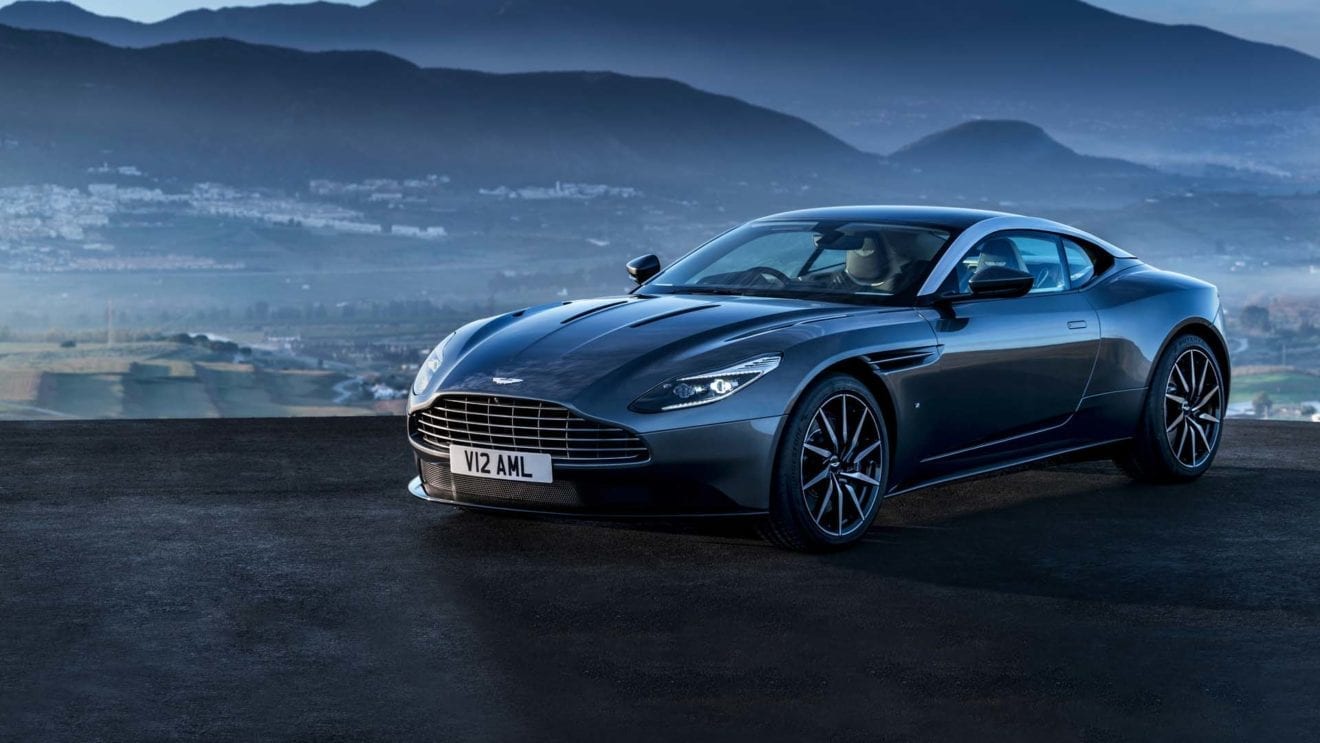
    British sports car maker Aston Martin Lagonda Ltd is ordering a global recall of 1,658 Vantage cars after problems with a routine transmission software update led to incidents in China in which some cars stalled and lost power, its CEO told Reuters.

    Chief executive Andy Palmer said the decision was taken after a team of Aston Martin engineers went to China in May to investigate a problem that several customers there had been complaining about since 2014.

    “Normally (recalls) start in America. I don’t think it is the only example, but it’s interesting that it started from China and becomes a global recall,” Palmer told Reuters by telephone.

    “It demonstrates the importance of China, the sophistication of the customer and the diligence of the authority there.”

    The luxury carmaker, famous for making the car driven by secret agent James Bond, sold 3,259 cars globally last year, nearly 8 percent of them in China.

    Aston Martin’s plan was conveyed on Tuesday to Chinese regulatory agencies that had taken up the issue after dissatisfied customers complained. Formal documents would be submitted by the end of the European day, Palmer said.

    Chinese authorities did not respond to a request for comment.

    The global recall will be unwelcome publicity for a company that has said for years it wants to go public. It reported its first Q1 profit in a decade in May.

    Palmer did not say how much the recall would cost, but knowledgeable people close to the company estimated the total cost at around 300,000 pounds ($380,760).

    The recall will cover 1,658 Vantage cars built between June 2010 and September 2013 with the Sportshift I and Sportshift II automated manual transmission gearboxes, including 113 that were sold in China. The Vantage is the only Aston Martin model with a semi-manual shift.

    FAILURE TO RESET

    Palmer said the problem occurred because some dealerships in China failed to reset the clutch position after software updates to the automatic transmission system.

    “In the normal course of events, when you make a software change, you have to re-teach the engagement position of the clutch. And most of our dealers around the world automatically did that,” he said.

    If the clutch is not re-taught the biting point – the point when the clutch plate engages with the engine plate – “it’s possible that a car could initially stall while in operation”, he said.

    Aston Martin sent its engineers to China after it tried and failed to replicate the stalling problem in its own engineering laboratories. When they arrived, they discovered that some cars suffered unusual noise and vibration, and in worst cases an engine stall, after the new software was installed.

    The stalling caused a complete loss of power in some cases, shutting off the engine and power to the electrically-assisted steering and brakes, making it extremely difficult for a driver to guide the car safely to a stop.

    Given that dealers and customers in China may have less experience operating and maintaining supercars like Aston Martins, Palmer said the company should have spelt out to dealerships what they needed to do.

    “I blame us,” Palmer said. “Basically we should have explicitly said within the service action for the software that we should re-teach the clutch. We didn’t explicitly say that. Therefore we take responsibility for fixing it.”

    Palmer, who joined Aston Martin from Nissan Motor Co in late 2014, said the company knows of 21 instances of potential sudden engine stall, all in China.

    The fluid pipe connectors on the gearboxes would also be replaced during the recall, he said.

    Three years ago Aston Martin recalled most of the cars sold in China that had been built since 2007 after discovering a problem with defective throttle pedals, which it blamed on Chinese subcontractors using counterfeit plastic material.

    “TOO DANGEROUS”

    The Beijing branch of China’s product quality watchdog – the General Administration of Quality Supervision, Inspection and Quarantine (AQSIQ) – in January last year asked the company to investigate the issue and report back.

    AQSIQ’s Defective Product Administrative Center opened its own investigation in April. Also in April, China’s Consumers Association issued a statement saying that there were enough incidents of the Vantage stalling to warrant a recall.

    Carson Guo and his brother James lost their licensed dealership with Aston Martin in Beijing in December 2016 after fielding complaints from customers about stalling cars. Of the eight customers who complained, six had bought Vantages.

    Carson Guo told several customers waged a campaign against the British carmaker via Weibo, China’s answer to Twitter, and at least two received a refund.

    One of the knowledgeable individuals close to Aston Martin said the Guos’ contract was terminated due to a “significant reduction in sales through that outlet”.

    Zhang Jia’ao, a 32-year-old partner at a Beijing-based venture capital firm, did not get a refund.

    He told he bought his Vantage S coupe from the Guo dealership for 2.35 million yuan ($344,287) in 2013, and sold it 11 months later to a used-car dealer for 1.23 million yuan ($180,201) after a series of stalls, some at high speed.

    On one occasion, following a complete loss of power, Zhang only managed to slow the car down by repeatedly bumping the tires against the kerb, he said.

    “It was too dangerous,” Zhang said.

    Asked about the problems Zhang encountered, Simon Sproule, chief marketing officer at Aston Martin Lagonda, said: “The recall will ensure that any issues with this car are fixed.”
  • Hella and ZF enters into partnership for autonomous driving

    Hella and ZF enters into partnership for autonomous driving

    German auto component makers ZF and HELLA have entered a strategic partnership for making products for autonomous vehicles, the company informed a press statement. The partnership will strengthen both the companies in sensor technology, particularly for front camera systems, imaging and radar systems.

    “This strategic partnership for sensor technology with HELLA enhances our position as a complete systems supplier for modern assistance systems as well as autonomous driving functions,” says Dr. Stefan Sommer, CEO of ZF Friedrichshafen AG. “This non-exclusive cooperation with HELLA is an important expansion of our Vision Zero ecosystem of development partnerships. Thus, we can create a wider technological foundation for safety and autonomous driving.”

    ZF will further strengthen its portfolio as a systems supplier which offers both modern assistance systems and autonomous driving functions, whereas HELLA will drive technological development and benefits from a broader market access with its leading technologies. The first joint development project in camera technology will start immediately, with the objective of a market launch in 2020.

    Dr. Rolf Breidenbach, CEO at HELLA KGaA Hueck & Co., adds: “HELLA is a strong and experienced provider of sensor technologies. Our knowledge aligns perfectly with ZF’s expertise. By combining our strengths, we clearly aim to provide market leading and high performing assistance systems and autonomous driving functions. In addition, this cooperation will strengthen HELLA’s position as a well-regarded supplier for imaging and radar sensor technologies.”

    In their first joint project, the partners are targeting a current market trend: In the future, the highest Euro NCAP safety ratings will require the assistance of camera-supported assistance functions. Therefore, the demand for front cameras in all vehicle segments will rise. ZF and HELLA will offer automotive manufacturers a joint product and are starting development immediately with an expected SOP in 2020. ZF brings hardware and its expertise in functions, systems and integration to the table, whereas HELLA and its subsidiary HELLA Aglaia Mobile Vision contribute competence in efficient, tried-and-tested imaging software and application development.

    In the mid to long term, these cooperation partners will also provide camera systems for automated driving functions as well as for commercial vehicles and off-highway applications. ZF expands its camera portfolio and therefore offers more options to customers while continuing to work with established partner. HELLA Aglaia gains a new customer and partner for its independent and open software solutions for driver assistance systems.

    In their cooperative work in the radar systems sector, the partners will also identify opportunities to provide attractive volume-production solutions in the short to mid term by jointly building up their product portfolio. HELLA’s 360° surround view radar systems together with ZF’s mid-range and long-range radar systems will establish a new and comprehensive systems solution.

    While the joint development will focus on systems solutions, each partner will continue to develop and to offer its technology independently on a component level. Here, the true potential of a long-term development partnership lies in the ability to utilize common system architecture as well as product families which are adapted to each other.