Tag: cargo

  • DHL gives India top ranking for growth in the ‘Big Seven’

    DHL gives India top ranking for growth in the ‘Big Seven’

    India’s economy holds the brightest growth prospects of the world’s seven largest economies, according to results from the Global Trade Barometer (GTB) from logistics company DHL.

    GTB analytics assigned India the highest growth indices of the seven countries assessed, due to strong and sustained increases in both air and ocean freight in and out of the country.

    The country’s trade in machinery and high-tech goods continues to underpin its growth, while increased imports of industrial raw materials point to an extended period of trade development for the nation.

    “More than any of the world’s largest economies, India’s major industries have displayed levels of resilience and growth that will buoy business confidence in the short-to-medium term,” said George Lawson, managing director, DHL Global Forwarding India.

    “India’s economy has built up terrific momentum in recent times: Since 2008, its GDP has risen every single year to US$2.44 trillion last year, more than double the levels of a decade ago. As the country continues to invest heavily in infrastructure, we expect it to continue its upward trajectory for the foreseeable future.”

    According to the GTB, businesses in India can expect ocean trade to further improve on already-high levels, largely thanks to demand for commodities and industrial materials from overseas.

    Air freight demand is projected to remain stable at its current highs, sustained by growth in machinery and technology imports. Both India’s air and ocean freight forecasts proved stronger than those of any other country in the GTB — in large part due to every major sector making a positive contribution to the country’s trade.

    Developed jointly by DHL and Accenture, the GTB provides a quarterly outlook on future trade, taking into consideration the import and export data of seven large economies: China, South Korea, Germany, India, Japan, the United Kingdom and the United States. Together, these countries account for 75 per cent of world trade, making their aggregated data an effective bellwether for near-term predictions on global trade. The GTB, which assesses commodities that serve as the basis for further industrial production, predicts that global trade will continue to grow in the next three months, despite slight losses in momentum.

  • Uber cars to become mobile convenience stores

    Uber cars to become mobile convenience stores

    Cargo, a startup intimately tied to Uber, just closed a $5.5 million seed round for its venture that lets drivers sell products to their riders.

    While PSFK has covered Cargo before, the funding represents a significant step forward for the idea and came with more details on how the whole system will work after applied tests of the concept.

    The startup sends drivers a high-tech tray and a monthly supply of goods for free. For every item sold, drivers get a $1 base commission plus 25% of the sale.

    According to Cargo, Uber drivers can earn a $100 more with its service, and some of its top drivers earn up to $300 every month.

    The startup does not exactly work like a store. Many of its products are given by brands like Kellogg’s as freebies to riders. Brands get consumer data from Cargo while Cargo charges brands for access to its distribution network.

    reAccording the startup, the actual sales alone are not even the big source of revenue yet. The startup plans to send out its hardware to 20,000 cars and open in one new city each month for the next six months.

  • DHL to offer more secure shipment service in Indonesia

    DHL to offer more secure shipment service in Indonesia

    DHL Global Forwarding, the air and ocean freight specialist of Deutsche Post DHL Group, has obtained an Authorized Economic Operator (AEO) certification by Indonesia’s customs authority, The Directorate General of Customs and Excise. The AEO certification will allow DHL Global Forwarding Indonesia to provide secure and quality logistics services while offering cost savings that can help customers become more globally competitive.

    The AEO accreditation is a cornerstone of the World Customs Organization’s (WCO) SAFE Framework of Standards to Secure and Facilitate Global Trade, and to date, fewer than 70 companies in Indonesia have been recognized with the certification. The country’s adoption of the AEO program as part of its ongoing Customs and Excise Reform will give trusted companies like DHL Global Forwarding a number of added benefits, including fewer physical consignment checks and preferential treatment in terms of customs regulations. Under the AEO principle of Mutual Recognition, DHL Global Forwarding will now also benefit from being part of a global supply chain that connects AEO-certified organizations, further decreasing shipment time.

    Thomas Tieber, CEO for ASEAN and South Asia, DHL Global Forwarding, said: “Global trade continues to grow positively, and this raises important security concerns for customs authorities around the world. However, stricter security and safety measures alone risk increasing the complexity of cross-border movement of goods and adding transaction costs to the overall supply chain process, potentially impacting the ability of all participants to remain globally competitive.”

    With the AEO, the Indonesian Directorate General of Customs and Excise has helped to ease processing at ports, reduce logistics cost and promote greater ease of business in Indonesia. The Indonesian Directorate General of Customs and Excise also plan to increase the number of AEO-certified companies in Indonesia so as to amplify end-to-end trade synergies and provide a safe and secure trading environment in the country.

    The program shares the same methodology as ISO in terms of implementation, execution, risk assessment and management engagement. To obtain AEO certification in Indonesia, DHL Global Forwarding set up a dedicated AEO team to ensure the business met or exceeded rigorous logistics and customs-related criteria, and high accounting and security standards, as well as proved financial solvency, among other requirements.

    Vincent Yong, Managing Director, DHL Global Forwarding Indonesia, said, “Achieving AEO status in Indonesia not only confirms our commitment to high safety and supply chain security standards in global trade, but also serves as a strong argument for our customers when choosing a logistics partner. The certification will enable us to offer an even more efficient service and deliver better value for our customers.”

    World Customs Organization (WCO) launched the SAFE program globally post 9-11 incident in New York to encourage customs authorities and certified businesses such as logistics providers, exporters and shippers, to be jointly responsible for safe and secure cross-border transactions and keep world trade flowing swiftly. WCO is an independent intergovernmental body whose mission is to enhance the effectiveness and efficiency of customs administrations. There are 182 WCO members, which together process about 98 per cent of world trade.

  • Vincent Yong Takes The Helm at DHL Global Forwarding Indonesia

    Vincent Yong Takes The Helm at DHL Global Forwarding Indonesia

    Southeast Asia logistics veteran Vincent Yong is the new Managing Director of Indonesia for DHL Global Forwarding. In a statement issued yesterday (24 July), DHL said that Yong was “no stranger to complicated situations”.

    The company explained: “As Chief Operating Officer of DHL Global Forwarding Thailand, Yong steered his team through political upheaval in 2006, catastrophic floods in 2011 and numerous changes to the country’s transport infrastructure – significantly expanding the business and consolidating operations in a 100,000-sqft Multimodal Hub at Suvarnabhumi Airport in the process.”

    Yong added: “My time in Thailand saw us go from one ‘adventure’ to another – which helped me develop a practical understanding of challenges; from air and ocean logistics operations to crisis management, security, and overall macroeconomic current affairs – and will prove particularly useful in managing our dynamic business operations in Indonesia.

    “In addition, my most recent role as Regional Head of Technology leads to my strong belief that technology will be a powerful proponent in propelling Indonesia to the next level.”

    “As Indonesia continues to invest in technology and infrastructure — like its Mass Rapid Transit network and expanded airport terminals — we expect the costs of trade and doing business to further ease. Moreover, as the world’s fourth most populous country, Indonesia still holds vast potential for growth in domestic consumption despite slowing growth in imports and exports alike. I’m looking forward to strengthening DHL’s competitive advantage in this fast-evolving market.”

  • Indonesia Logistics Market is Expected to Reach USD 240 Billion by 2021

    Indonesia Logistics Market is Expected to Reach USD 240 Billion by 2021

    3PL market in Indonesia is expected to increase at a five year CAGR of 14.0% in the near future. Jakarta contributed highest revenue share of 38.0% in Indonesia warehousing market in 2016 owing to the industrial parks situated in the largest city Jakarta.

    Indonesia Logistics Market is currently in the growth stage with presence of various organized and unorganized players consisting of a combination of shipping and international freight forwarders, courier providers which are mainly engaged in land transportation and total logistics services providers that operate a multimodal transport model. Players are taking up and diversifying into 3PL segment to enhance their market share. Presently, there are more than 155 logistics and warehouse service providers in Indonesia.

    The freight forwarding market size has increased with the boost in air freight and sea freight, the development of transportation infrastructure and increase in number of freight forwarders, increasing industrial activities, growing FMCG market and rising e-commerce industry. Road freight has the highest share owing to the high number of deliveries that take place through road network. Air freight had the second largest share in the country freight forwarding market. Asian Countries flow corridor is the largest contributor in terms of revenue in the freight forwarding market owing to free trade agreement. The leading players in the industry are DHL, CEVA Logistics, Yusen Logistics, Agility Logistics and others. The freight forwarding market is forecasted to dominate the Indonesia logistics market in future

    Air express logistics has dominated the Indonesia express logistics with 61.0% revenue market share during 2016 owing to major international shipments falling in this category. B2B segment has dominated the express logistics market in Indonesia during 2016. The major players of Express logistic in Indonesia include DHL, FEDEX, First Logistics and JNE Express. High growth rate can be advocated from the growth expected in the e-commerce industry, rise in the demand of perishable goods and the increased use of express delivery by people in case of personal and corporate documents and last mile delivery.

    According to the report by Ken Research, a noteworthy CAGR of 7.9% in revenue in Indonesia Logistics Market is expected in next 5 years till 2021. Freight Forwarding is expected to be the fastest growing segment in future with an expected CAGR of 9.2% from 2016-2021.

  • China’s Alibaba on road to deliver $100 million to XpressBees

    China’s Alibaba on road to deliver $100 million to XpressBees

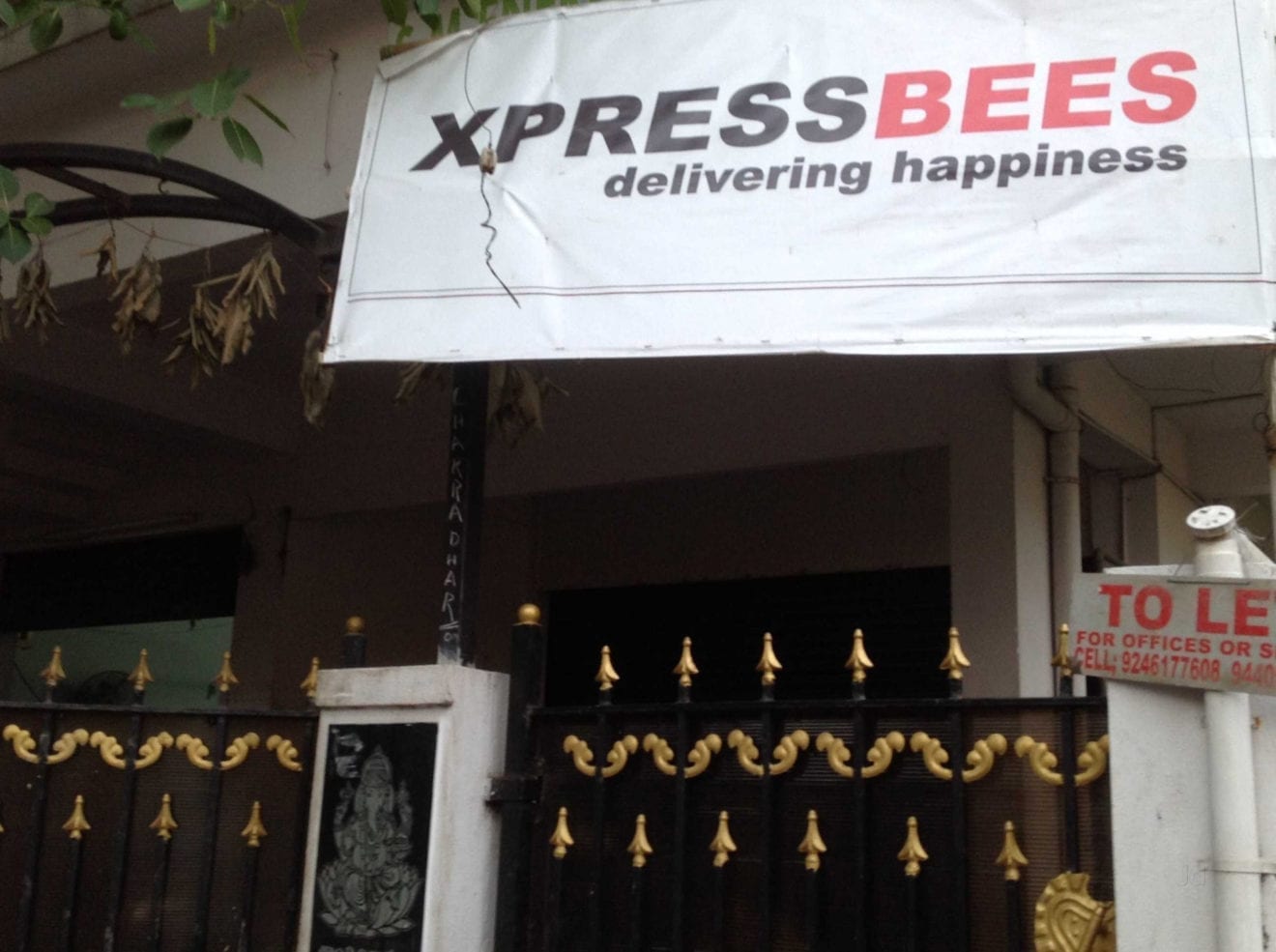
    China’s online commerce giant Alibaba Group Holdings is in advanced talks to pick up a significant minority stake in logistics company XpressBees by making an investment of up to $100 million, said three persons with knowledge of the matter.

    The transaction, which is in the final stages of negotiations, will be Alibaba’s sixth investment in the Indian market as it builds a string of assets to take on homegrown market leader Flipkart and global rival Amazon.

    “The deal is likely to close in the next two-three weeks,” said one of the persons mentioned above. The exact stake Alibaba is picking up in XpressBees could not be determined. Alibaba and XpressBees didn’t respond to queries.

    XpressBees is the logistics business spun out of baby and maternity products retailer FirstCry, known for its acquisition of Mahindra’s Babyoye in 2016. The company competes with other online retail-focused logistics services providers like Delhivery and Ecom Express.

    Talks between XpressBees and Alibaba have been on for about 18 months.

    ET had reported in June 2016 that Alibaba was looking to buy, or invest in, an Indian logistics company specialising in deliveries for online retailers, and toward this end had held talks with Delhivery and XpressBees Logistics.

    If the XpressBees investment goes through, it will help Alibaba build what founder Jack Ma calls the “iron triangle” of businesses in ecommerce (Paytm Mall, Bigbasket), payments (Paytm) and logistics, which can feed off each other.

    In China, the Alibaba Group has online retail businesses called Tmall (B2C, focusing on brands) and Taobao (C2C) and a payments business under affiliate Ant Financial, popularly known as Alipay.

    In September, it increased its stake to a majority in one of China’s largest techenabled logistics companies, Cainiao, which is valued at close to $20 billion. At the time, Alibaba had said it plans to invest over $15 billion in the next five years to develop its global logistics network.

    “Alibaba wants to make Xpress-Bees the Cainiao of India, and over time logistics operations for all companies like Paytm Mall and Bigbasket may get consolidated under it giving it a larger captive customer base,” said the second person mentioned above.

    The impending deals in Bigbasket and XpressBees will take total investments in India by Alibaba along with its payments affiliate Ant Financial to about Rs 11,000 crore, or $1.7 billion, out of which over two-thirds is invested in Paytm. In addition, Ant Financial is also said to be in talks to invest up to $200 million in restaurant discovery and food delivery platform Zomato.

    Shifitng Kaurndia as the portfolio in India grows, Alibaba Group is also likely to move one of its key executives from Hong Kong, senior director Kshitij Karundia, to the country to work more closely with the businesses and look for more investments, said the third person familiar with matter.

    FirstCry entered logistics in 2012 when it decided to start express deliveries of its products and began third-party logistics (3PL) at the beginning of 2015. The company was spun off as Busybees in September 2015 and has ramped up orders significantly since then.

    The business has been built by FirstCry founders Supam Maheshwari and Amitava Saha. After the demerger, Saha has been leading the logistics business as CEO while Maheshwari has been heading First-Cry. XpressBees investors include SAIF Partners, IDG Ventures India, NEA, Vertex Ventures and Valiant Capital, some of which may sell a part of their stake in this deal.

    The company saw revenue go up by 121% in FY17 to Rs 185.42 crore while losses grew 61% to Rs 57.71crore, according to filings with Ministry of Corporate Affairs (MCA).

    Owned by Busybees Logistics Solutions, XpressBees has built the business on about Rs120 crore of capital till now, which is in contrast with competitors Delhivery which has raised Rs 1,600 crore, and Ecom Express, which has racked up around Rs1,000 crore in capital.

    With capital coming in from Alibaba, experts said an XpressBees deal could trigger consolidation. While industry sources pegged Delhivery as the market leader with around 300,000 shipments a day, XpressBees is currently logging 170,000-200,000 while Ecom Express has 120,000-130,000. Large players like Flipkart and Amazon India have also built their own logistics operations, which handle most of their shipments.

    The market for logistics-technology businesses, which include delivery startups, truck aggregators and warehousing firms, is expected to surge to $9.6 billion by 2020 from $1.4 billion in 2015, according to a report by investment bank Avendus Capital. Online retail logistics startups will dominate this space with a market size of $6.6 billion by then.

  • DHL and Air Hong Kong sign 15-year block-space agreement

    DHL and Air Hong Kong sign 15-year block-space agreement

    DHL Express extended its Air Hong Kong (AHK) agreement, which grants DHL Express access to AHK’s overnight air services. The new agreement extends to 2033.

    As part of the deal, DHL Express and AHK formalized a reorganization announced in July, under which majority owner Cathay Pacific will buy out DHL Group’s 40 percent stake in AHK. Under the terms of the new agreement, DHL will also purchase AHK’s eight A300-600 freighters, which will be leased back to AHK. The deal goes into effect on Jan. 1, 2019.

    Once the deal takes effect, DHL will initially have the same access to AHK’s capacity granted by its current agreement, but over time will have more access to flexible aircraft deployment and route selection to support DHL’s growth in the Asia-Pacific region.

    “With Hong Kong’s merchandise exports between January and September 2017 growing by 8.5 percent compared to last year, we’re keenly aware of the upward momentum that the region’s trade lanes are facing,” said Ken Lee, DHL Express Asia Pacific CEO. He added that the deal offers the “greater flexibility” DHL needs to handle any unpredictable changes or demand increases in the region.

    In addition to the AHK deal, DHL Express recently announced an expansion of its Central Asia Hub at the Hong Kong International Airport. The expansion adds 8,000 square meters and improvements including automated x-ray inspection machines and material handling systems. The expansion is scheduled for Q1 2022 completion.

  • SingPost raises rates for international small packets

    SingPost raises rates for international small packets

    Singapore Post Limited is revising its rates for the international delivery of small packets from Jan 2 next year, following new rates set by a United Nations agency.

    Also from the same date, it will stop accepting delivery of international small packets by ship as several postal organisations have ceased to accept such forms of conveyance, it said. Demand for such a service is also low, with most senders choosing to use airmail.

    International postal settlement rates – the amount that SingPost compensates other postal organisations for mail delivery in their country – are being raised on Jan 1 next year.

    These rates are set every four years by the Universal Postal Union (UPU), a UN agency that sets the rules for international mail exchanges.

    Small packets currently come under international airmail rates, said a SingPost spokesman. With the separate pricing structure for small packets, customers sending small packets will have to pay a maximum increase of S$3.40 per item or enjoy maximum savings of S$1.10, depending on the destination and the item weight, he added.

    The firm told The Business Times that international small packets from public consumers do not currently make up a significant part of its volumes, and it is monitoring the effect of the new rate structure for international small packets on its postal business.

    The changes made by UPN reflect rising volumes of e-commerce packets and the higher cost of delivering such packets, said SingPost.

  • FedEx ready for the Christmas rush

    FedEx ready for the Christmas rush

    FedEx expects says it expects to handle 380-400million packages on its global network between Black Friday (24 November) and Christmas Eve.

    It also predicts that it will more than double its average daily volume of 13 million shipments on three Mondays over the Christmas period.

    It attributes the surge to e-commerce-savvy consumers making more last-minute purchases.

    FedEx’s main European hub at Paris-Charles de Gaulle regularly handles over 300 aircraft per week and handles around 1,200 tonnes of freight per day. The Central and Eastern Europe hub in Cologne handles 58 weekly flights to and from Europe, the US, and Asia.

    Worldwide, over 400,000 team members are preparing for the peak season on the FedEx global network, which consists of more than 650 planes (the second largest airline in the world in terms of number of aircraft) and more than 150,000 motorised vehicles.

  • DHL Express expanding Central Asia Hub

    DHL Express expanding Central Asia Hub

    DHL Express has announced a €335m expansion plan for its Central Asia Hub (CAH). The expansion will bring DHL’s commitment to the strategic hub to over €520m. As one of three global hubs for DHL, the expanded CAH will continue to act as the core hub of the DHL Express global and Asia Pacific regional network, handling more than 40% of its total Asia Pacific shipment volumes.

    In a statement issued today (14 November), Ken Allen, CEO of DHL Express, said: “Given the expected rise in international e-commerce and intra-Asian trade, DHL is committed to strengthening our global network and services. Based in a strategically important location to DHL, the expanded Central Asia Hub in Hong Kong will not only bolster our operational capacity in Asia Pacific, but also facilitate the rapidly-growing international trade demands in the region and around the world.”

    The expanded CAH will be equipped with an enhanced material handling system that will boost hub’s throughput capacity from the current 75,000 pieces of shipments per hour to 125,000 pieces per hour.

    When operating at its full capacity, the annual throughput of the expanded CAH is expected to go up by 50% to 1.06m tonnes a year.

    Ken Lee, CEO of DHL Express Asia Pacific, commented: “Connecting with more than 70 DHL Express gateways in the region, the Central Asia Hub plays a significant role in strengthening our existing network of hubs in Asia Pacific, including Shanghai, Singapore and Bangkok. The expansion will also help us capitalize the growth in intra-Asian trade lane that currently contributes to 40% of our revenue in Asia Pacific. Equipped with fully automated X-ray inspection machines, it will increase the speed of our shipment inspection by three times – enabling us to expedite the processing speed of shipments that come through the CAH.”

    The expanded CAH is expected to begin operations in the first quarter (Q1) of 2022.

  • DHL eCommerce launches ServicePoints networks in Asia

    DHL eCommerce launches ServicePoints networks in Asia

    DHL eCommerce has launched ServicePoints networks in key Asian markets. In a statement issued today (24 November), DHL eCommerce said that it has established a network of more than 200 ServicePoints in Thailand – which will enable commerce sellers to ship nationwide and for online shoppers to conveniently pick-up their orders. DHL added that over 1,000 ServicePoints will be launched over the coming months.

    “We are extremely positive about the e-commerce growth in Thailand, and have seen fantastic growth since we launched our domestic delivery network in Thailand in 2016. We will continue to enhance our existing solutions and launch new services to offer greater convenience and choice for sellers and shoppers across Thailand,” said Kiattichai Pitpreecha, Managing Director, DHL eCommerce Thailand.

    “We are really pleased to now be able to offer parcel drop-off and pick-up locations, all of which are easy to access, simple to use and provide a fantastic customer experience.”

    On Tuesday (21 November), DHL eCommerce also announced that it has launched a ServicePoints network in Vietnam.  The company statement said: “DHL eCommerce has already launched more than 100 ServicePoints and will continue to rapidly expand to more than 1,000 in the coming months.”

  • Why SingPost’s logistics segment is a drag to its growth

    Why SingPost’s logistics segment is a drag to its growth

    Intense pricing competition resulted in losses. Singapore Post’s (SingPost) logistics segment went into the red as operating profits turned into a loss of $4.2m in Q2.

    According to Maybank Kim Eng, even excluding provisions, the operating profit would have been $1m, which is much lower than the operating profit of $5m for 1Q2017.

    The segment was in bad debt for a key customer, Quantium Solutions HK.

    Intense pricing competition has also resulted in the loss of business.

    Further weakening of logistics segment could offset the turnaround of mail and logistics segments.

    Whilst the logistics business turned into a weight for the company’s earnings, the drag should still be manageable, the bank said. SingPost’s mail, e-commerce, and associate earnings could still gain momentum, Maybank Kim Eng said.

  • Global delivery service boosts investment in Central Asia hub

    Global delivery service boosts investment in Central Asia hub

    DHL has announced a £300 million expansion of its strategic Central Asia Hub in Hong Kong to bolster regional trade. The expansion brings DHL’s commitment to this strategic hub to over £465 million, making it the largest infrastructural investment by DHL Express in Asia Pacific to date.

    Its announcement comes as the Central Asian Hub (CAH) recorded an average 12 per cent year-on-year growth in its shipping volume in the past decade. As one of three global hubs for DHL, the expanded CAH will continue to act as the core hub of the DHL Express global and Asia Pacific regional network, handling more than 40 per cent of its total Asia Pacific shipment volumes.

    Ken Allen, CEO of DHL Express, said: “Given the expected rise in international e-commerce and intra-Asian trade, DHL is committed to strengthening our global network and services. Based in a strategically important location to DHL, the expanded Central Asia Hub in Hong Kong will not only bolster our operational capacity in Asia Pacific, but also facilitate the rapidly-growing international trade demands in the region and around the world.”

    Webinar: Addressing the challenges of Total Airport Management

    During this webinar, we’ll be discussing the role data plays in airport ecosystems, how operators can connect disparate data sources and the importance of deriving truly actionable intelligence.

    The expanded CAH will be equipped with an enhanced material handling system that will improve productivity and increase the hub’s throughput capacity – from the current 75,000 pieces of shipments per hour to 125,000 pieces per hour. When operating at its full capacity, the annual throughput of the expanded CAH is expected to go up by 50 per cent to 1.06 million tonnes per annum. As a dedicated and purpose-built air express cargo facility at the Hong Kong International Airport, the expanded CAH will handle six times more in terms of shipment volume than when it was first established in 2004.

    Ken Lee, CEO of DHL Express Asia Pacific, said: “Connecting with more than 70 DHL Express gateways in the region, the Central Asia Hub plays a significant role in strengthening our existing network of hubs in Asia Pacific, including Shanghai, Singapore and Bangkok. The expansion will also help us capitalise the growth in intra-Asian trade lane that currently contributes to 40 per cent of our revenue in Asia Pacific. Equipped with fully automated X-ray inspection machines, it will increase the speed of our shipment inspection by three times – enabling us to expedite the processing speed of shipments that come through the CAH.”

    The expanded CAH is expected to begin operations in 2022, in time to capture strong demand in the Pan-Pearl River Delta (PPRD) region and completion of the Three Runway System for the Hong Kong International Airport in 2024. The expansion of the CAH will deliver about 50 per cent increase in warehouse space to 47,000m2.

    Already a TAPA Class A-certified facility, the expanded CAH will boast a state-of-the-art security system with a total of 520 CCTV cameras and an advanced access control system. The CAH also features a quality control centre (QCC) which monitors flight uplift/landing times in real time, reporting any irregularities on the spot, which in turn enables DHL to proactively notify customers in the event of flight delays or cancellations. The QCC is linked to the Asia Pacific Network Control Centre in Hong Kong and more than 70 gateways and over 500 service centres in over 40 cities in other Asian countries.

    Strategically located in Hong Kong, within a four-hour flight time to major cities in Asia Pacific and in the PPRD region, the CAH is complemented by a well-established Asia Air Network which is served by over 800 commercial daily flights.

  • SingPost to invest S$16 mil in island-wide Smart Post Office network

    SingPost to invest S$16 mil in island-wide Smart Post Office network

    The redeveloped SingPost Centre in Paya Lebar was officially launched on Monday (Oct 9) with the first “smart” post office and a new FairPrice supermarket that will serve as a testing ground for new initiatives in retail technology.

    Located next to the Paya Lebar MRT station, the centre houses a shopping centre, the country’s largest post office and SingPost’s flagship Philatelic Store.

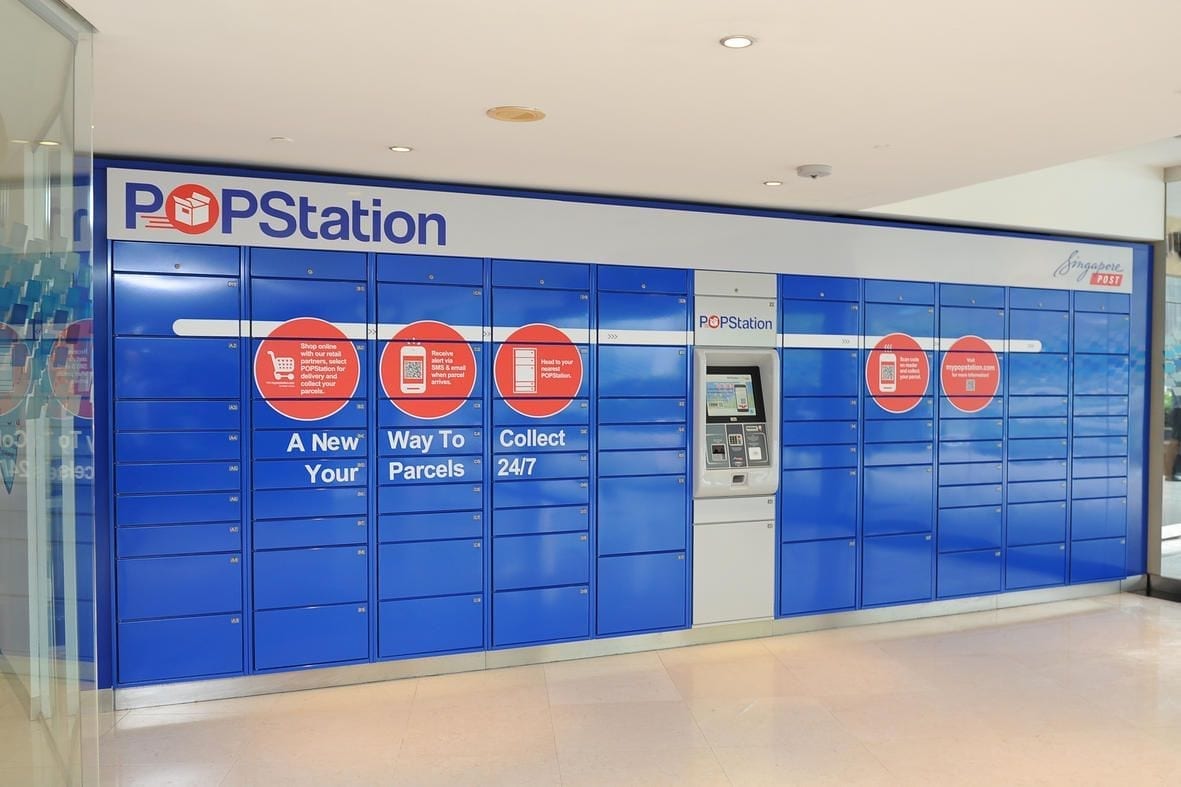
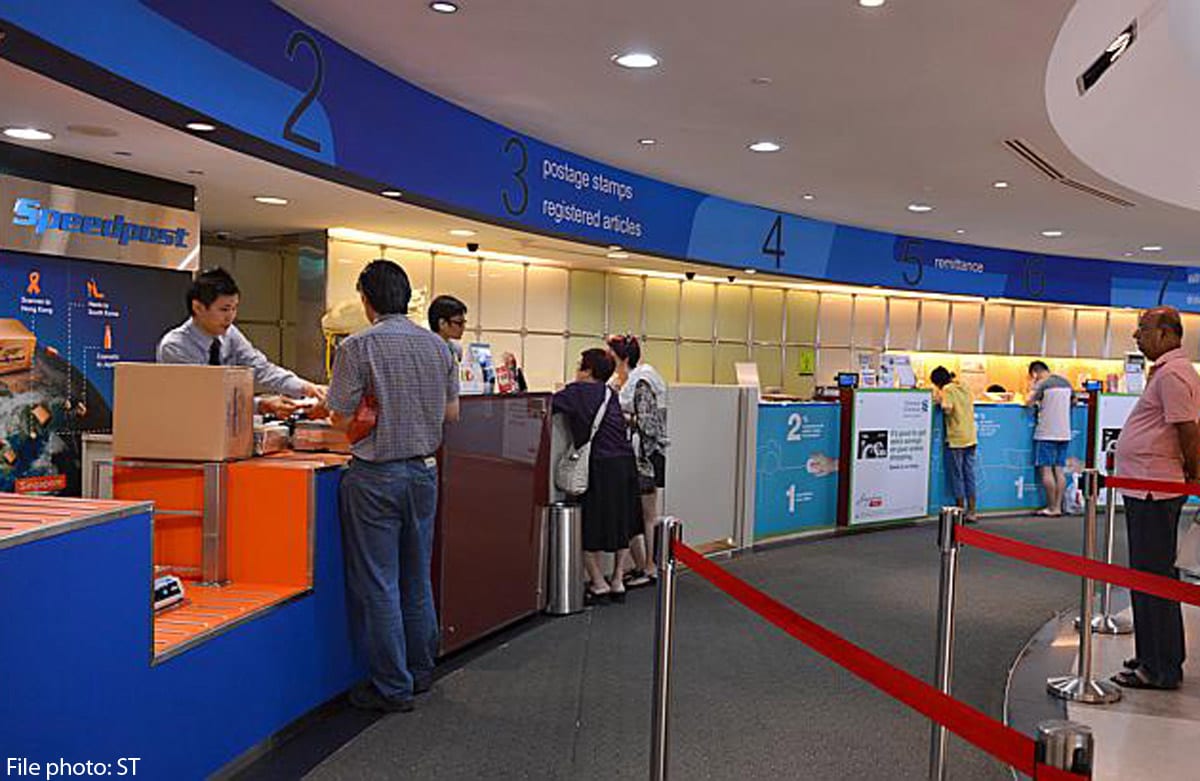
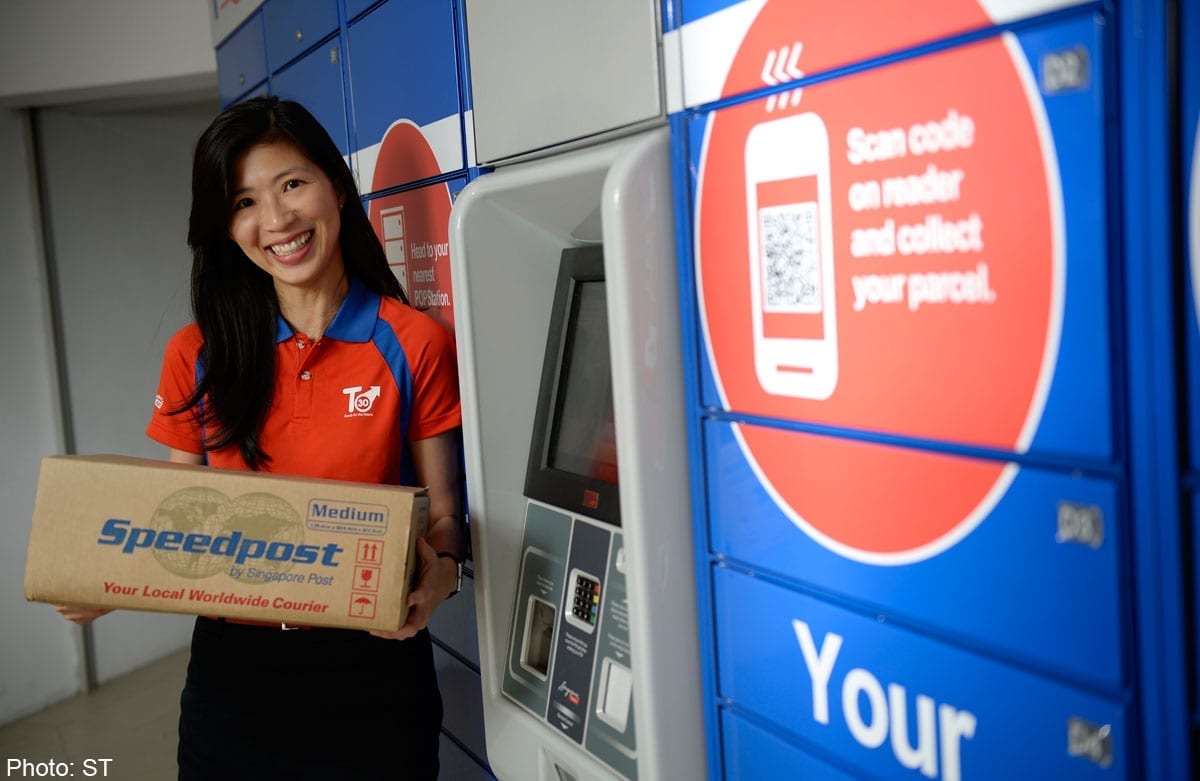
    The 5,328 sq ft General Post Office is the first of SingPost’s smart post offices, featuring a dedicated self-service area with POPStation lockers, upgraded SAM machines offering remittance and other postal services and a drop box for registered articles, accessible at all hours.

    The new drop box allows customers to skip the queue by weighing their parcels and printing labels at the SAM machines before depositing them, said SingPost head of post office network and digital services Bernard Leong.

    Unmanned smart post offices will be rolled out in estates with young families, such as Punggol and Sengkang, in the next one to two years, he added.

    Mr Mervyn Lim, SingPost’s deputy group chief executive (corporate services), said: “The launch of SingPost Centre underscores SingPost’s transformation for a future where technology is changing how people shop, dine and play.”

    The mall’s committed occupancy rate as at Sept 30 was about 80 per cent, he added.

    The five-storey mall, managed by CapitaLand, has 130 tenants including Golden Village, FairPrice, a Kopitiam foodcourt and a rock-climbing gym.

    Apart from bubble tea chain Gong Cha’s return to Singapore later this year (2017) with its flagship outlet in the mall, other new F&B concepts include a food hall designed to look like the old Tanjong Pagar Railway Station and Taiwanese hotpot chain Upot.

    FairPrice’s 22,000 sq ft supermarket, also launched on Monday, is piloting several new initiatives, including the FairPrice@SingPost mobile app that allows customers to locate products with in-store navigation and check stock availability.

    The app, available for download on Apple and Android app stores, also gathers data on shopping habits to deliver user-specific promotions.

    The store will integrate the Scan2Go system currently in use at its Bukit Timah Plaza outlet, where customers can scan purchases with a personal handheld scanner as they shop and pay at self-checkout counters.

    It is also the first supermarket to feature self-checkout counters that can be converted to cashier-assisted ones in under a minute, to accommodate crowd sizes.

    Refrigerated lockers will be piloted at the SingPost Centre branch for the self-collection of online purchases, while an “experiential corner” in the store will allow brands to engage customers using augmented and virtual reality, digital games and interactive booths.

    Speaking at the launch, FairPrice chief executive Seah Kian Peng said: “This technology-driven supermarket will serve as a “living lab” to pilot new and innovative retail technologies, designed to revolutionise the grocery shopping experience.”

  • Yang Kee Logistics to buy second major Oceania logistics company for S$52.1 million

    Yang Kee Logistics to buy second major Oceania logistics company for S$52.1 million

    Yang Kee Logistics Pte Ltd has announced that it has entered into a Scheme Implementation Agreement with New Zealand Exchange Mainboard listed company, Fliway Group Ltd. This will be Yang Kee’s second major Oceania acquisition this year with the support of International Enterprise (IE) Singapore.

    The acquisition value of S$52.1 million for 100 per cent of the shares in Fliway would boost the group’s revenue by another S$81.9 million with a stronger foothold in the Oceania market. This announcement comes on the back of its first Oceania acquisition of Australia logistics company Axima Pty Ltd in March this year. The combined Yang Kee group will have a headcount of over 1050 employees across 12 countries, and an expected revenue of over S$400 million once the acquisition is fully completed.

    Under the SIA, it is proposed that Yang Kee acquires all the outstanding shares in Fliway for NZ$1.22 cash per share by way of a scheme of arrangement. The scheme is conditional on the approval of Fliway’s shareholders and the High Court, amongst other things.

    “It is part of our vision to strengthen our presence in Oceania as we go global. New Zealand has a stable currency and economic outlook, a growing middle class, and a demand for integrated freight and logistics solutions. New Zealand also enjoys strong trade relations with Australia, with bilateral trade reaching NZ$24 billion for the year ended March 2017. We hope to yield greater synergies from the network integration of shared international freight volumes between Fliway and Axima and cross selling opportunities in their combined customer bases to Asia,” said Ken Koh, group CEO of Yang Kee Logistics.

    Fliway is one of New Zealand’s largest fully integrated logistics providers. Having over 40 years of operational experience in New Zealand, it has established strong domestic capabilities in transport and warehousing with substantial presence in the electronics and consumer industries.

    Fliway also has an established international division with a freight arm. One of New Zealand’s largest customs brokers, it is consistently ranked amongst the top customs lodgers of entries by volume. This complements Yang Kee’s earlier strategic acquisition of Australian based company, Axima, to facilitate cross Oceania trade between Australia and New Zealand, as well as trade flows between Oceania and Yang Kee’s existing networks in South East Asia and China.

    “This is a significant milestone for Fliway, and reflects our long held view that there are strong growth opportunities that come from leveraging a larger geographic footprint across Oceania and Asia. Being part of the Yang Kee Group delivers on that and provides scale to support Fliway’s customers, both in New Zealand and throughout the Asia Pacific region,” said Duncan Hawkesby, managing director of Fliway Group Ltd.

    IE Singapore partners Yang Kee Logistics in its global growth strategy

    Yang Kee is partnering IE Singapore as it embarks on an acquisition strategy to gain new networks and capabilities to become a global logistics player. IE Singapore worked with Yang Kee to deepen its foothold in these markets and enhance its end-to-end supply chain networks. This included connecting them to business development leads and providing support in feasibility studies, due diligence, financial and legal professional services for the acquisition of both Fliway and Axima.

    Recognising the importance of a robust and global recruitment HR strategy to support its growth, Yang Kee is working with IE Singapore to develop an international manpower strategy to build a global team, with its Singapore headquarters setting the standards and best practices.

    Said Law Chung Ming, group director for Transport & Logistics, IE Singapore, “The combined strengths of Axima and Fliway enhance Yang Kee’s global networks and supply chain capabilities. Furthermore, their logistics solutions will now serve as a resource for other Singapore companies to access the Australia and New Zealand markets. As we work with Yang Kee on its next stage of growth, talent development will be very critical. Specifically, we need to groom talent with specialised logistics skillsets for new business segments, and market ready skillsets for deep understanding of market needs.”

    For example, to help Yang Kee meet its global manpower needs, IE Singapore supported the company in building presence on LinkedIn, working on a digital employer strategy to engage and recruit relevant employees. Yang Kee is also one of the first few companies on board IE’s Professional Conversion Programme (PCP) – South East Asia Ready Talent for logistics, with two candidates taking part in the programme. They will receive on-the-job training and gain exposure to regional logistics projects, building the company’s manpower capabilities in specialised logistics.

    Yang Kee has also worked with SPRING Singapore to develop relevant skills and knowledge among its employees through a career development pathway. With SPRING’s support, Yang Kee also developed new business capabilities such as specialised services for the chemicals and oil & gas sectors with the launch of its Chemical Logistics Hub, enabling it to secure contracts with large global chemical clients.

    Financing of the acquisition

    The acquisition of Fliway was financed by the Australia and New Zealand Banking Group Limited as well as United Orient Capital, a special situation fund sponsored by the United Overseas Bank Limited.

    Yeo Wee Yap, executive director of United Orient Capital said, “Yang Kee’s experienced management team has helped the group successfully broaden its footprint across the region. We are pleased to support Yang Kee’s internationalisation plan and we look forward to working closely with the group as it embarks on the next phase of growth with its expansion into New Zealand.”

    ANZ is the sole mandated lead arranger, underwriter and bookrunner for Yang Kee’s acquisition of Fliway, as well as the earlier acquisition of Axima.

    Chief executive officer Singapore and head of South East Asia, India and Middle East, ANZ, David Green said, “We are pleased to lead the financing for Yang Kee’s acquisition of Fliway, building on the success of their recent acquisition of Axima which we also supported as lead arranger. We have a strong partnership with Yang Kee and are proud to play a role in supporting their growth strategy alongside important partners like IE Singapore, drawing on our cross-border product capability, transport and logistics sector insights and network across Asia, Australia and New Zealand.”