Retail News CRM

Tag: cargo

  • Rhenus selects winners of the Rhevo Initiative

    Rhenus selects winners of the Rhevo Initiative

    170 ideas, 28 countries and one goal: the 16 winners of the Rhenus corporate initiative entitled “Rhevo” were selected at the headquarters of the Rhenus Group in Holzwickede in July. Using one major final pitch, the finalists from all over the world had the opportunity to persuade the jury of experts drawn from the Rhenus world. The goal of the innovation competition, which was launched in the spring, is to develop new products and innovative business models with digital concepts.

    Each of the 43 finalists had just seven minutes to introduce their business ideas and advertise them to attract investments and other resources so that they can be introduced. They had checked, revised and refined their ideas during many months of work and had built and tested prototypes. They were supported by training sessions and entrepreneurs from the start-up scene during this time.

    The jury examined the finalists’ product ideas to see whether they were suitable for the future and might open up opportunities in the market place. “It was hard facing the jury’s questions. They tested our idea rigorously and examined it intensively from all sides,” said participant Usman Kahn.

    After the pitches were over, it was clear that three ideas would be included in existing internal product developments. 13 will others receive ongoing start-up support. “This will be different, depending on the project. Some providers of ideas will be given more time in order to continue testing the market opportunities for their product ideas; others will receive a budget to continue developing their product,” said the member of the Rhenus Board and jury member, Tobias Bartz, summarising the process.

    “We particularly liked a Spanish/German solution from the field of predictive analytics; it’s designed to help us better predict the needs and behaviour of customers,” jury member Petra Finke, who is Global CIO at Rhenus Freight Logistics, explained. An Asian platform idea for marketing free truck capacity and a Russian team with the prototype of an “instant quotation” solution were particularly singled out.

    The jury consisted of Rhenus Board Member, Tobias Bartz, Petra Finke (Global CIO Rhenus Freight Logistics), Vivek Arya (CEO Rhenus India), Jörn Schmersahl (CEO Rhenus Air & Ocean Europe) and Jan Harnisch (COO Ocean Freight Asia); this was an international group of Rhenus experts with great experience in the fields of digitalisation and business development.

  • DB Schenker Partners Sichuan Jiuye Perishable Goods Supply Chain

    DB Schenker Partners Sichuan Jiuye Perishable Goods Supply Chain

    DB Schenker, one of the leading global logistics service providers, and Sichuan JiuYe Export, a China-based B2B food trading company, have signed a strategic partnership agreement at the A20 New Agriculture Fair in Hangzhou, China. The agreement between the two parties cements their future cooperation in logistic handling of perishable goods.

    Sichuan JiuYe provides cross border one-stop supply chain services to agriculture, food e-commerce and food companies in China and abroad. The company’s main export market is East Europe; major import markets comprise Australia, North America and Europe. By using DB Schenker as freight forwarding provider for its perishable goods, Sichuan JiuYe benefits from DB Schenker’s strong global network and extensive market experience. With an internationally leading and renowned logistics partner, JiuYe aims at growing its business scope by attracting more customers from existing and new markets.

    DB Schenker considers JiuYe as an important strategic partner to strengthen and develop its footprint in the perishable segment in China. While already having a well-established infrastructure for the logistic handling of perishables in JiuYe’s current import countries, DB Schenker sees the cooperation with the food trader as excellent opportunity to further build up its competencies in managing perishable shipments in and out of China.

    The partnership agreement between the two companies results from previous collaborations earlier this year. DB Schenker smoothly executed several air freight export shipments of fresh fruits from China to Russia, Singapore and Hong Kong. Based on the excellent and consistent service performance provided by DB Schenker JiuYe was convinced to have found the right logistics partner in DB Schenker.

    “We are honoured and thrilled by collaborating with Sichuan JiuYe. This is an important milestone for us and brings us closer to our goal to achieve a leading market position in the logistics of perishable goods in China”, says Thomas Sorensen, CEO North/Central China, Schenker China Ltd., at the New Agricultural Fair in Hangzhou.

  • UPS appoints Harld Peters as new China president

    UPS appoints Harld Peters as new China president

    UPS announced the appointment of Harld Peters as the new president of UPS China. A UPS veteran with 18 years of logistics experience, Peters will be responsible for leading strategic initiatives across UPS’s package delivery and supply chain operations in China. Peters succeeds Richard Loi, who will be retiring after 26 years of dedicated service with UPS.

    “The Belt and Road Initiative (BRI) will continue to open new trade corridors between two of the world’s biggest traders,” said Ross McCullough, president of UPS Asia Pacific. “Harld’s extensive experience working closely with European customers across major industry segments positions him well to bolster UPS’s Chinese customers in their efforts to accelerate growth overseas.”

    “As China continues to transform with increased cross-border commerce and with the rise of global markets, I am confident that Harld’s leadership will take UPS to the next level of growth in China,” he added.

    “UPS has made significant strides since we started doing business in Asia over 25 years ago,” said Harld Peters, President of UPS China. “Customers demand more from their partners with China’s transformation from a low cost manufacturing model to an innovation-driven economy. I am excited about leading the next phase in our growth, and building upon Richard’s successes in this key market for UPS. Our commitment to helping China go global will be seen in our upgraded global transportation network, rich industry intelligence and expanded service enhancement.”

    UPS has set in place a multi-year investment and growth plan for China that is focused on widening and deepening its geographical presence, and improving the customer experience through differentiated service offerings. Earlier this year, the company announced the addition of six stations to its Preferred Full and Less-than-Container Load (FCL and LCL) multimodal rail service between Europe and China. It also announced a joint venture with S.F. Holding, the parent company of S.F. Express, to develop and provide international delivery services initially from China to the US, with expansion plans for other destinations.

    Peters formerly served as President of UPS West Europe District, where he led the successful integration of over 10,000 UPS Access Point™ locations, a network of neighborhood stores and businesses that make online shopping and delivery more convenient for customers. He joined UPS in 1999 as a Contract Manager of Supply Chain Solutions in the Netherlands and later assumed various management positions in the Express and Supply Chain Solutions business units throughout Europe, including Vice President of Contract Logistics.

  • Singapore logistics startup Yojee raised another S$3mn

    Singapore logistics startup Yojee raised another S$3mn

    Yojee is a Singapore publicly listed technology company which introduced the new ways of communication and collaboration across the entire supply chain. Raised over 10 million up to date with the last funding round of 3 million came in on the 8th of August via share placement. The company will use the proceedings to further funding long term technology, sales and marketing plan leveraging existing customers and expanding further.

    The company offers everyone an opportunity to join the ‘world’s first’ collaborative cross border logistics network which connects shippers, carriers and freight forwarders in seconds, with already tens of thousands of kilograms of freight moving through the network. For shippers and carriers, the route optimisation algorithms with machine learning capabilities suggest the best asset for each delivery job using both current and historical data, based on more than 30 criteria.

    SmartAssign
    Revolutionary Yojee SmartAssign allows companies to make smart job assignment decisions without touching a button. Fully powered by Yojee Ai (Artificial Intelligence) this mode dynamically determines and passes the job to the most suitable driver for each job based on many different criteria including proximity, available vehicle capacity, driver capacity, road conditions, and many others.

    Yojee aims for a 70% reduction in the headcount required in operations and customer service to manage a logistics business, creating substantial operational savings alongside freight efficiencies by introducing more features promoting autonomous operations.

    In addition to Yojee SmartAssign, Yojee Broadcasts (uberfied mode) can be chosen, this adds a third option for companies’ operational modes, Yojee AI pushes jobs to a number of most suitable drivers and allows them to accept or reject the job, broadcast options are fully configurable including number of drivers per broadcast, time interval before re-broadcasting, which will give additional opportunities to optimise the operations.

    Big data analytics dashboard
    Big data and predictive analytics gives logistics companies the extra edge they need to optimise and manage their operations giving managers the aggregated bird’s eye view to the top data points. Analytics dashboard with customisable display allows real time visualisations of key operational and financial metrics which in addition to seamless dispatch work helps automated systems to function through intelligently routing many different data sets and data streams.

    Control tower enhancement
    Enhancement of Control Tower – users of the Yojee platform software now able to move jobs across companies. fully connected, seamless transfer, networked ecosystem

  • DHL to build life sciences distribution network

    DHL to build life sciences distribution network

    Shanghai Pharma, one of China’s largest listed pharmaceuticals groups, has signed a Memorandum of Understanding (MOU) with DHL Supply Chain to prepare its logistics infrastructure for rapid global expansion.

    Under the MOU, the pharmaceuticals giant – which generated revenues of more than US$18 billion (RMB121 billion) last year – will partner with DHL Supply Chain to enhance quality control measures, streamline distribution processes, and strengthen compliance with local and international food and pharmaceutical regulations. A range of recent government initiatives, including the “two-invoice” or fapiao policy which was rolled out earlier this year, have put greater onus on China’s pharmaceutical sector to improve the transparency and efficiency of local supply chains.[1]

    “The quality and resilience of our logistics infrastructure will determine not only how successfully we adapt to new legislation like fapiao – which seeks to cut down on multiple distributors and mark-ups by only allowing two invoices per goods shipment – but also our ability to capitalise on the huge international growth opportunity for high-grade Chinese pharmaceutical products and medical devices,” said Cho Man, president and executive director, Shanghai Pharma.

    “China’s national market for drugs has grown rapidly in recent years to become the world’s second-largest with an estimated growth to around US$167 billion by 2020 [2]. Our partnership with DHL will help Shanghai Pharma to become one of the world’s foremost pharmaceutical manufacturers – supported by a global distribution network that combines world-class quality control with fast, seamless delivery.”

    To facilitate this planned expansion, the MOU will grant Shanghai Pharma priority access to DHL’s global logistics network including temperature-sensitive life sciences services to Europe. DHL Supply Chain will also support Shanghai Pharma’s supply chain optimisation needs as the manufacturer ramps up its overseas distribution and retailing efforts.

    “China’s pharmaceutical industry has historically suffered from high levels of fragmentation amongst its local customers and distributors, [3] an issue which recent legislative changes like the ‘two-invoice’ policy have sought to combat,” said Yin Zou, CEO Greater China, DHL Supply Chain. “In this regulatory climate, end-to-end supply chain management plays an increasingly crucial role in determining how effectively Chinese pharmaceuticals firms not only maintain sales locally, but gain traction abroad in a cost-effective and sustainable manner.

    “Shanghai Pharma already holds a formidable reputation as one of China’s leaders in pharmaceutical development, manufacturing, distribution and retail. With this partnership, we look forward to applying our global life science expertise to help them establish an efficient and agile supply chain network to provide consumers with reliable and convenient access to medications.”

    “This agreement puts Shanghai Pharma in a strong position to stand out from China’s highly competitive and cost-conscious life sciences industry4 with access to DHL’s market-leading logistics and value-added services,” said Cho Man. “We believe that our partnership will not only greatly benefit both parties, but raise the bar for quality control and supply chain efficiency across China’s entire pharmaceutical industry.”

  • Air cargo experiences strongest first half year growth since 2010

    Air cargo experiences strongest first half year growth since 2010

    The International Air Transport Association (IATA) released data for global air freight markets showing that demand, measured in freight tonne kilometers (FTKs), grew by 10.4% in the first-half of 2017 compared to the first-half of 2016. This was the strongest first half-year performance since air cargo’s rebound from the Global Financial Crisis in 2010 and nearly triple the industry’s average growth rate of 3.9% over the last five years.

    Freight capacity, measured in available freight tonne kilometers (AFTKs), grew by 3.6% in the first half of 2017 compared to the same period in 2016. Demand growth continues to significantly outstrip capacity growth, which is positive for yields.

    Air cargo’s strong performance in the first half of 2017 was confirmed by June’s results. Year-on-year demand growth in June increased 11% compared to the same year-earlier period. Freight capacity grew by 5.2% year-on-year in June.

    The sustained growth of air freight demand is consistent with an improvement in global trade, with new global export orders remaining close to a six-year high. However, there are some signs that the cyclical growth period may have peaked. The global inventory-to-sales ratio has stopped falling. This indicates that the period when companies look to restock inventories quickly, which often gives air cargo a boost, may be nearing an end. Regardless of these developments, the outlook for air freight is optimistic with demand expected to grow at a robust rate of 8% during the third quarter of this year.

    “Air cargo is flying high on the back of a stronger global economy. Demand is growing at a faster pace than at any time since the Global Financial Crisis. That’s great news after many years of stagnation. And, even more importantly, the industry is taking advantage of this momentum to accelerate much-needed process modernization and improve the value it provides to its many customers,” said Alexandre de Juniac, IATA’s Director General and CEO.

  • XPO Logistics announces Q2 2017 results

    XPO Logistics announces Q2 2017 results

    XPO Logistics announced financial results for the second quarter 2017. Revenue was US$3.76 billion for the quarter, compared with $3.68 billion for the same period in 2016. Revenue increased year-over-year by $210.4 million, excluding the second quarter 2016 revenue from the North American truckload unit divested in October 2016. Net income attributable to common shareholders was $47.6 million for the quarter, or earnings of $0.38 per diluted share, compared with net income attributable to common shareholders of $42.6 million, or earnings of $0.35 per diluted share, for the same period in 2016.

    Adjusted net income attributable to common shareholders, a non-GAAP financial measure, was $75.0 million, or adjusted earnings of $0.60 per diluted share for the second quarter of 2017. This compares with adjusted net income attributable to common shareholders of $50.4 million, or adjusted earnings of $0.42 per diluted share, for the same period in 2016. The adjusted net income attributable to common shareholders for the second quarter 2017 excludes: $19.9 million, or $12.8 million after-tax, of integration and rebranding costs; $27.2 million, or $17.6 million after-tax, from non-cash unrealized losses on foreign currency contracts; and a loss on the conversion of convertible notes of $0.4 million, or $0.3 million net of tax. Reconciliations of non-GAAP financial measures used in this release are provided in the attached financial tables.

    Adjusted earnings before interest, taxes, depreciation and amortization (“adjusted EBITDA”), a non-GAAP financial measure, improved to $370.8 million for the quarter, excluding $19.9 million of integration and rebranding costs. This compares with $354.9 million of adjusted EBITDA for the same period in 2016, which included the North American truckload unit.

    XPO Logistics generated $216.0 million of cash flow from operations and $98.1 million of free cash flow in the quarter.

    Raises financial guidance
    The company raised its full year targets for adjusted EBITDA to at least $1.365 billion in 2017 and at least $1.6 billion in 2018.

    XPO Logistics reaffirmed its 2017-2018 cumulative free cash flow target of approximately $900 million, including at least $350 million of free cash flow generated in 2017.

    CEO comments
    Bradley Jacobs, chairman and chief executive officer of XPO Logistics, said, “Our strong start to the year accelerated in the second quarter, with record results for revenue, net income and adjusted EBITDA. The most notable growth came in last mile and contract logistics – two fast-growing parts of the supply chain where we hold leading positions in e-commerce. Importantly, we’re continuing to grow adjusted EBITDA faster than revenue in both transportation and logistics. In North American less-than-truckload, we increased volume while improving the adjusted operating ratio to 84.6%. This is the best quarterly adjusted operating ratio for our LTL business in at least two decades.”

    Jacobs continued, “The investments we’re making in sales and technology have already yielded a record $1.43 billion of new business through June, which is 62% higher than last year. Our global pipeline stands at over $3.3 billion, our cost initiatives have substantial runway, and the operating environment is favorable. Given these strong fundamentals, we raised our two-year guidance. Our new targets are for adjusted EBITDA of at least $1.365 billion in 2017 and $1.6 billion in 2018.”

    Second quarter 2017 results by segment
    Transportation: XPO Logistics’ transportation segment generated revenue of $2.41 billion in the quarter. This compares with $2.42 billion for the same period in 2016, which included $133.4 million of revenue from the North American truckload unit divested on October 27, 2016. Segment revenue was led by increases in truck brokerage and last mile, partially offset by a decrease in global forwarding revenue and unfavorable foreign exchange rates.
    Operating income for the transportation segment increased to $160.0 million in the quarter, compared with $153.2 million a year ago. Adjusted EBITDA for the segment was $282.7 million. This compares with $275.7 million a year ago, which included the truckload unit. The increases in operating income and adjusted EBITDA were primarily due to an improvement in adjusted operating ratio in the North American less-than-truckload unit, to 84.6%, partially offset by higher purchased transportation costs in truck brokerage and intermodal.

    Logistics: The company’s logistics segment generated revenue of $1.40 billion for the quarter, compared with $1.33 billion for the same period in 2016. The year-over-year increase in revenue was primarily due to strong demand for contract logistics in both Europe and North America, partially offset by a decline in managed transportation revenue and unfavorable foreign exchange rates. In Europe, contract logistics growth was led by e-commerce and cold chain contracts in the UK and the Netherlands. In North America, the largest gains came from the e-commerce and industrial sectors.
    Operating income for the logistics segment increased to $64.3 million, compared with $51.1 million a year ago. Adjusted EBITDA for the segment improved to $123.0 million, compared with $106.9 million a year ago. The increases in operating income and adjusted EBITDA were primarily due to revenue growth, productivity improvements and SG&A cost reduction.

    Corporate: Corporate SG&A expense was $39.3 million for the quarter, compared with $34.0 million for the same period in 2016. The increase in corporate expense primarily reflects an increase in share-based compensation expense tied to the increase in the share price of XPO stock.
    Six Months 2017 Financial Results

  • UPS expands alcohol shipping to consumers around the world

    UPS expands alcohol shipping to consumers around the world

    UPS is expanding its ability to ship alcohol, wine and beer to consumers around the world. Using one of the UPS Express shipping services, wine connoisseurs can have their favourite cases of wine shipped directly from the vineyards to their home.

    UPS is helping wineries reach consumers living in 24 of the top 35 wine importing countries, and distilleries in 9 of the top 25 spirit importing countries. Depending on the destination, orders can arrive at the business or consumer’s home within 3 days. All alcohol shipments require an adult signature upon delivery.

    According to the International Organization of Vine and Wine, 43% of all wine is consumed in a country other than where it is produced. The global wine market is expected to reach US$380 billion by 2022.[1] The countries producing and exporting the most wine include Italy, Spain, France, Chile, Australia, South Africa and the United States.[2]

    Europe is the market leader in wine production and consumption. UPS will ship to 23 countries in Europe including these primary markets: Belgium, France, the Netherlands, Switzerland and the United Kingdom.

    Wine consumption is growing rapidly in Asian markets. By 2020, China is expected to surpass the U.S. as the world’s third-largest largest wine importer.[3] The fast growing middle class is driving the demand for premium alcohol. Last year, China imported US$890 million worth of spirits globally.[4]

    UPS will now ship wine, beer and liquor to consumers and businesses in 11 countries throughout Asia Pacific including: China, Hong Kong, Japan, Macau, New Zealand, Philippines, Singapore, South Korea, Taiwan and Thailand. In Malaysia, only businesses can import wine and beer.

    Mexico is earning its place at the table of major wine countries, as consumption has increased by more than 40% in the last 10 years.[5] UPS is shipping wine to Mexico, Argentina and the Dominican Republic. Mexicans are also thirsty for America’s beer, importing $187 million worth in 2016.6

    Canada and the U.S. are key trade partners and as more Canadians buy products online they’re also adding alcohol to their shopping carts. With the expansion, UPS can deliver to 5 of the Canadian Provinces covering 95% of all alcohol imports.[7] The Provinces include Alberta, British Columbia, Manitoba, Ontario and Quebec.

    Boeger, a small family-owned winery in Northern California, recently started global shipping. “It was hard telling our international visitors they couldn’t have our wine because we couldn’t get it to them,” said Tara De La Rosa, hospitality and logistics manager. “We are always looking for ways to expand globally and have our wines on tables around the world.”

    De La Rosa and her team use Paperless Invoice to simplify customs clearance. The UPS shipping system helps wineries, breweries and distilleries avoid delays by uploading all of the required alcohol-related documentation for each country electronically.

    UPS provides automatic tracking and visibility allowing the consumer to follow an order on its global journey. Boeger winery visitors will receive an email notification, in their own language, the day before the scheduled delivery.
    The UPS Express shipping portfolio features three unique service levels: UPS Worldwide Express Plus for early morning delivery, UPS Express for midday deliveries and UPS Express Saver for end-of-day deliveries.

  • DHL Supply Chain makes smart glasses new standard in logistics

    DHL Supply Chain makes smart glasses new standard in logistics

    DHL Supply Chain, the contract logistics specialist within Deutsche Post DHL Group, successfully completed its global augmented reality pilots and is expanding its “Vision Picking” solution in more warehouses around the globe, establishing a new standard in order picking for the industry. The smart glasses provide visual displays of order picking instructions along with information on where items are located and where they need to be placed on a cart, freeing pickers’ hands of paper instructions and allowing them to work more efficiently and comfortably. The international trials have shown an average improvement of productivity by 15 percent and higher accuracy rates. The user-friendly and intuitive solution has also halved on boarding and training times.

    “Digitalization is not just a vision or program for us at DHL Supply Chain, it’s a reality for us and our customers, and is adding value to our operations on the ground. Customers have been very happy about the productivity gains and are equally excited about using innovative technology at their warehouses,” says Markus Voss, chief information officer & chief operating officer, DHL Supply Chain.

    After having completed a pilot program across the U.S., Mainland Europe and the UK throughout different industries such as technology, retail and consumer, DHL has now established the Vision Picking solution for the long run. The technology has matured to become a standard, replicable solution for customers, allowing faster and easier implementation in their operations, helping them to benefit from productivity gains with increased speed of operations and better picking accuracy.

    Employees have been enthusiastic about being able to use state-of-the-art technology and are pleased with how light the smart glasses are, and how much more comfortable the process is now with hands-free picking. “We are very satisfied and happy that the pilot phase went so well and that we can now say augmented reality technology is one of our standard offerings at DHL Supply Chain,” Voss adds. “As one of the first logistics companies using the technology, we have truly established a new way of order picking in the industry.”

    DHL has been working alongside three partners in the pilot phase. Ubimax provided the augmented reality software xPick, whereas the recently announced Glass Enterprise Edition and Vuzix M100 and M300 glasses were used as hardware. Further proofs of concept running in Asia and Australia with other partners show similar promising benefits. Following the success of its Vision Picking program, DHL is looking into additional applications for augmented and virtual reality such as trainings, maintenance, dimension calculations and more.

  • DHL warns of supply chain talent shortage crisis

    DHL warns of supply chain talent shortage crisis

    DHL called upon industry leaders to recognize the growing talent gap crisis in the supply chain sector. The U.S. Bureau of Labor Statistics reports that jobs in logistics are estimated to grow by 26 percent between 2010 and 2020. Furthermore, one global study estimated that demand for supply chain professionals exceeds supply by a ratio of 6:1, with some predicting that ratio could be as drastic as 9:1.

    DHL surveyed more than 350 supply chain and operations professionals in five global regions. The findings revealed that there are a number of reasons contributing to the talent shortage crisis in a rapidly evolving field. The report ‘The Supply Chain Talent Shortage: From Gap to Crisis’ was commissioned by DHL and authored by Lisa Harrington, president of the lharrington group LLC. The report highlights the key supply chain talent challenges experienced today, and identifies opportunities for businesses to compete on a global stage.

    Harrington said, “Leading companies understand that their supply chains – and the people who run them – are essential to their ability to grow profitably. However, the task of finding people with the right skillsets required to run these highly complex operations is increasingly difficult – especially at the middle- and upper management levels. Unless companies solve this problem, it could threaten their very ability to compete on the global stage.”

    The survey revealed the top factors driving the talent shortage:
    – Changing skill requirements: Today, the ideal employee has both tactical/operational expertise and professional competencies such as analytical skills. 58 percent of companies say this combination is hard to find. But tomorrow’s talent must also excel at leadership, strategic thinking, innovation, and high-level analytic and technological capabilities.
    – Aging workforce: As much as a third of the current workforce is at or beyond the retirement age.
    – Lack of development: One third of companies surveyed have taken no steps to create or feed their future talent pipeline.
    – Perception that supply chain jobs lack excitement: The industry is still contending with the impression that other fields are more prestigious and offer more opportunities, fuelling lack of interest in the industry within the world’s future workforce.

    Harrington continues, “Companies are now recognizing that sourcing strategy has a large impact on their bottom line and ability to remain competitive. As one study recently found, companies that excel in talent management increased their revenues 2.2 times as fast and their profits 1.5 times as fast compared to ‘talent laggards.’ That’s a powerful advantage.

    Unfortunately, recruiting the right talent – especially at the critical mid-level and senior management levels – is proving very difficult in today’s environment. New technologies and fundamental areas of the supply chain have changed, meaning they now require that a person has a different and much larger skillset than required when most of the current workforce began their careers.”

    The report outlines numerous opportunities for the industry to start closing this talent gap. Offering clearer career paths and a visible commitment to the professional development of its supply chain staff combined with competitive remuneration packages are just a few ways to develop and retain their current talent. To attract talent, the industry needs to start emphasizing that the future workforce will need to have skills in robotic management, AI and AV control – job aspects that would be attractive to the younger demographic and help combat the negative perception of the sector.

    Louise Gennis, vice president talent management/acquisition, learning & development, DHL Supply Chain, said, “We recommend that companies start with prioritizing the development of their current talent pool to adapt to the changing job requirements through training programs, and then retaining staff through clear career paths. We strive to combat misconceptions surrounding working in the supply chain through highlighting the technological developments which are digitalizing the industry and that are attractive to younger demographics.”

    Gennis cites the success of DHL’s diverse recruitment and development initiatives as evidence that a long-term, well-informed talent management strategy can help businesses mitigate the potentially devastating effects of a shrinking talent pool. “The supply chain talent shortage is now critical enough that it’s on the minds of supply chain managers across all industries, but the gap didn’t develop overnight. Since supply chain solutions are our business, we’ve seen the issue developing over many years – and have used this time to adjust our approach toward attracting, developing and retaining talent accordingly. Our unique expertise helps ensure that job openings are filled by qualified experts wherever we and our customers operate, which will become an increasingly critical success factor as talent resources grow scarcer.”

  • Bahri, Bolloré Logistics launch logistics joint venture

    Bahri, Bolloré Logistics launch logistics joint venture

    Headquartered in Riyadh, the joint-venture will offer end-to-end logistics solutions to support the needs of customers in the Kingdom of Saudi Arabia and the region as well as international companies doing business with the Kingdom.

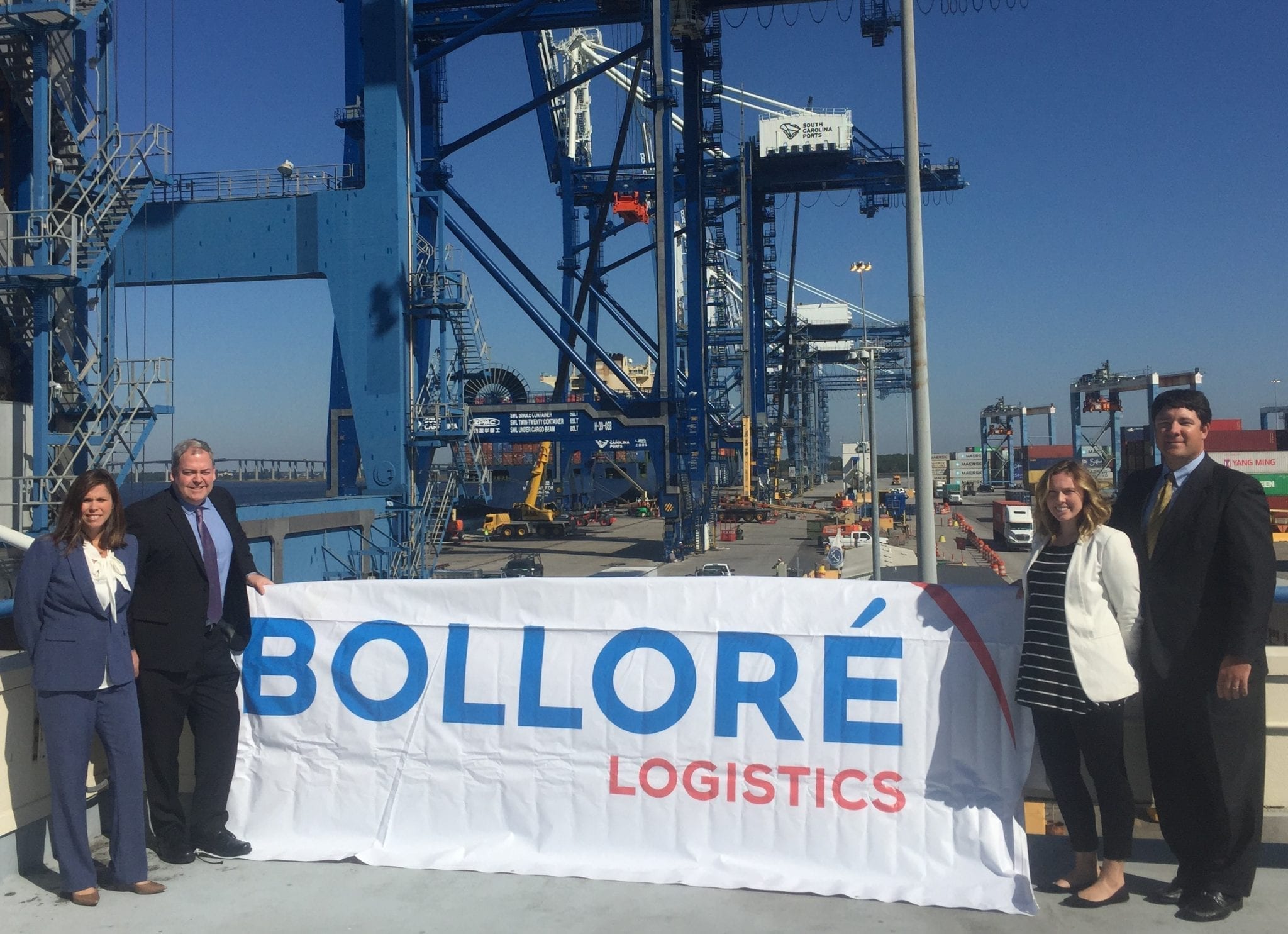
    Bolloré Logistics has signed a joint-venture agreement with Bahri, a recognized global leader in transport and logistics, on July 18th, 2017, in Riyadh, and will now operate under the name Bahri Bolloré Logistics in Saudi Arabia.

    The agreement marks another step of Bolloré Logistics’ expansion into the fast-growing logistics and supply chain management market within the Gulf Cooperation Council (GCC).

    “It is a great honor for us to partner with Bahri, a leading and well recognized transport and logistics player in Saudi Arabia. This collaboration will intensify Bolloré Logistics’ development in the Middle East, which is definitely a key region for our organization, mainly because of its strategic location at the crossroads of Asia, Africa and Europe. The Joint-venture with Bahri also allows us to reinforce our market segments development, especially for Aerospace & Defense, Oil & Gas, Luxury Goods and Healthcare,” said Mr. Philippe Lortal, Chief Executive Officer of Bolloré Logistics Middle East – South Asia.

    “Bolloré Logistics’ global capabilities in logistics and supply chain management, coupled with our regional knowledge and depth of expertise in transportation and logistics services, will help unlock synergies and operational efficiencies powerful enough to propel the new venture toward becoming a logistics partner of choice for companies around the region,” said Mr. Ali Al-Harbi, Acting CEO of Bahri.

    The logistics market in the GCC is worth SAR 176.3 billion (US$47 billion), with Saudi Arabia, with a market size of SAR 71.3 billion (US$19 billion), representing 43 per cent of the combined regional market, according to a report by research consultancy Solidiance. One of the fastest growing countries in the logistics and warehousing industry globally, Saudi Arabia is positioned as the primary entry point for goods in the GCC market, and the Kingdom’s logistics industry has been growing at an average rate of around 6% per year.

  • The art of temperature-controlled logistics

    The art of temperature-controlled logistics

    The average life sciences and healthcare supply chain involves some 25 different parties – companies separately responsible for preparing, moving, holding, or checking the integrity of a shipment. Now imagine that the transiting pharmaceutical products or medical devices must be maintained within a temperature range of 2 to 8°C (36 to 46°F). Understandably, this requires robust systems and meticulous choreography.

    Demand is increasing for the unbroken cold chain – an uninterrupted set of processes from manufacturing and storage to distribution and delivery undertaken in refrigerated conditions. We find that our customers are paying greater attention to the specifics of how their products are being shipped and want to provide more direct input. We therefore work closely with them to identify where we can establish more control mechanisms, enabling customers to track their shipments at all touch points, particularly through global air cargo facilities.

    Today, technology enables us to gather data on any parameter of the supply chain – for example, not just temperature but also humidity, energy consumption, and even whether a door has been opened or closed. By transmitting this data via mobile devices, key processes can be monitored in real time from anywhere in the world. And throughout time, this is generating additional data – current and historical – as shipments move through the supply chain.

    Ensuring cold chain integrity requires using rich analytics algorithms to turn raw data into actionable recommendations and warnings. These can improve storage and handover processes, guide business decisions, and prevent cold chain failures before they occur.

    With temperature-controlled logistics, we use data to mitigate and predict risk. For example, we would start by looking at the validation performance of our packaging. Then, at the next level of our analysis, we would examine our process control around this packaging. We would be asking questions such as “How well can we control the process?” and “What’s the impact if we experience a deviation?”. It is essential that we take a scientific approach to the evaluation of risk through data – this is how we anticipate which process elements could go wrong and which ways any packaging might fail.

    Cold chain logistics is constantly evolving – active and passive packaging solutions, new services provided by the airlines, and more. One of our customer surveys showed that 40% of our life sciences and healthcare customers consider maintaining temperature control to be a major issue. That is why many of our discussions with customers concern harnessing the power of big data and analytics. These highly targeted activities reduce risk and enable better decision making, ensuring we succeed in delivering temperature-controlled healthcare to the world.

  • A community approach in maintaining pharma shipments

    A community approach in maintaining pharma shipments

    In recent years, the demand for reliable end-to-end transport for pharmaceutical cargo has seen a tremendous rise, bringing to light the lack of reliability and data sharing, that affects the entire supply chain. As with every growing industry, the need for improvements and quality checks becomes ever more apparent with the growing demand. The solution: Pharma.Aero, an independent membership driven association comprised of members from airport communities, pharmaceutical shippers and other cargo logistics stakeholders from around the world.

    In 2016, Brussels Airport (BRU) and Miami International Airport (MIA), the first and second International Air Transport Association (IATA) designated pharma hub airports in the world, took on the initiative to create Pharma.Aero – an organisation that would be focused on improving pharma handling and quality in the air cargo industry worldwide.

    The worldwide Pharma.Aero platform will enable its members – consisting of airport communities, airline carriers, pharma shippers, and other logistics stakeholders – to foster strong collaboration amongst themselves. By jointly working on innovative regional initiatives, with an emphasis on the IATA CEIV Program, airports and their operators will achieve excellence in reliable end to end transportation for the shippers and patients.

    The organisation will bring its visions to life by fostering route certification and development of pharmaceutical trade lanes. Therefore, members of the organisation will be able to share expertise, market knowledge and implement best practices within the entire supply chain (from end-to-end). Furthermore, the association will help organise events, projects, workshops, as well as local and regional shipper forums, that connect CEIV airport communities to the end customers: pharmaceutical manufacturers.

    Early adopters

    At the launch of the initiative which was held in Paris, Nathan De Valck, Cargo Product Development manager at Brussels Airport and Chairman of Pharma.Aero reiterated, “with the vision to achieve a reliable end-to-end air transport for pharmaceutical cargo, Pharma.Aero will focus on pharmaceutical shippers and all industry stakeholders who embrace the IATA CEIV program. Members of the organisation will foster route certification/development of pharmaceutical trade lanes, implementation of best practices and sharing of market knowledge and expertise”.

  • Kuehne + Nagel acquires two perishables specialists

    Kuehne + Nagel acquires two perishables specialists

    With the acquisition of CFI, Commodity Forwarders Inc., an airfreight forwarder of perishables products in the USA, and Trillvane Ltd, one of the largest perishables specialists in Kenya, Kuehne + Nagel expands its global perishables network by adding more than 150,000 tons of perishables and further strengthens its position in providing end-to-end international and domestic fresh chain solutions.

    CFI, 1974 established by Alfred Kuehlewind as one-man office in Los Angeles shipping strawberries to Europe, today operates 14 locations throughout the United States including Alaska and Hawaii with more than 700 employees. The company is specialised in airfreight export and import as well as distribution of seafood, all kinds of agricultural products, flowers and greens. As a leader in the US perishable forwarding industry, CFI differentiates itself through its expertise, ability to provide high-end visibility and delivering unprecedented product quality for its customers’ fresh chains.

    Alfred Kuehlewind, Founder and CEO of CFI: “We are looking forward to become part of the Kuehne + Nagel Group. The planned transaction will offer us new growth perspectives and access to a global logistics network. Both companies’ customers will benefit from an extended service scope.”

  • Vietnam and Singapore firms set up logistics joint venture

    Vietnam and Singapore firms set up logistics joint venture

    The new company is expected to improve logistics services at Vietnam’s northern port city of Hai Phong. Quang Binh Import and Export Joint Stock Company has inked a joint venture deal with Transworld GLS Vietnam Ltd, a unit of Transworld Singapore Group, to establish Transworld QBV ICD.

    The joint venture will specialize in providing warehouse, loading and unloading, packing and customs clearance services and other services related to road, rail and waterway transportation at Quang Binh – Dinh Vu ICD (Inland Container Depot) in Hai Phong.

    In its first phase, the company will invest in transport and customs clearance services on an area of 10 hectares at the ICD.

    Quang Binh Import and Export is a producer and distributor of fertilizer, chemicals, agro-aqua products, food and beverages, bonded warehouse and yard service, and import-export and import & re-export service.

    Ranked among the top 500 largest firms in Vietnam by the Vietnam Report Company (VNR) last year, it is also a leading provider of warehousing and logistics services in Hai Phong.

    Understanding the importance of ICDs in the interntional logistics and supply chain, the company decided to invest in the Quang Binh – Dinh Vu ICD last year.

    The Quang Binh-Dinh Vu ICD will be developed in three phases, with the first phase including a warehouse capable of handling 100,000 tons of goods per year and yard’s capacity of 250,000 TEU per year. Once completed, Quang Binh-Dinh Vu will be one of the biggest ICDs in northern Vietnam.

    ICDs are inland customs clearance points used by importers and exporters. A combination of customs departments, carriers, freight forwarders and customs brokers allow exporters and importers to save time and money.

    The joint venture with Transworld GLS Vietnam aims to make the operation of the Quang Binh-Dinh Vu ICD more effective.

    Transworld Singapore is one of the fastest growing companies in Asia and owns nearly 40 container ships and more than 30,000 containers, particularly well-known for its refrigerated container.

    Transworld QBV ICD JSC is looking to develop Quang Binh – Dinh Vu ICD to be an enclosed logistics chain service that entails depot, yard, warehouse, transportation, LOLO equipment and auxiliary infrastructure, serving as the biggest transit and customs clearance point in Northern Vietnam.

    Speaking at the signing ceremony, Mahesh Sivaswamy, chairman of Transworld Singapore, said: “Starting operation, the Transworld QBV ICD will contribute to cost reduction for enterprises by speeding up and improving efficient clearance service at the port. We engage that the volume of import and export cargo going through our depot is going to significantly increase, making a positive contribution to the budget of Hai Phong City.”