Tag: China

  • Korea Fashion Week extends Alibaba’s trade cooperation

    Korea Fashion Week extends Alibaba’s trade cooperation

    Chinese e-commerce giant Alibaba Group launched its Korea Fashion Week with its Taobao, Juhuasuan and Tmall online platforms in Seoul.

    Alibaba pledged to strengthen its exploration of overseas markets and to ink agreements with overseas brands to jointly explore the market, the report said.

    Imported Korean products have achieved annual sales of more than 10 billion yuan (US$1.6 billion) on Alibaba’s online retail platforms, according to statistics released by the company. Best-selling imports include beauty products, women’s clothing, daily life goods and baby products, accounting for 60% of the total market for imported Korean goods, according to statistics.

    The two nations have repeatedly announced moves to boost bilateral trade. In March, the two signed a free trade agreement. In addition, South Korea became one of the top destinations for Chinese tourists traveling abroad, the report said.

    In mid-May, Alibaba chair Jack Ma visited Seoul for the opening ceremony of the group’s Korean shop, indicating more Korean brands and products can reach Chinese consumers through the Alibaba platform.

    Samsung C&T, South Korea’s largest conglomerate with interests in construction, electronics, chemicals, finance and numerous other fields, has already moved three of its apparel brands — Beanpole, Rapido and Mvio — into the Chinese market through Tmall. It plans to cultivate China as its second domestic market, Samsung said.

    Samsung has annual revenue of US$30 billion.

    South Korea’s Eland Group began cooperating with Juhuasuan and Tmall in 2013, and reached sales of over 300 million yuan (US$47 million) last year. The group is expected to double sales to more than 600 million yuan (US$94 million) this year.

    The popularity of Korean TV dramas in China has sustained demand for Korean clothing, with 80% of the 4.32 million Chinese tourists to South Korea in 2013 shopping for clothes, shoes and bags.

    More than 200 Korean fashion brands have joined the Alibaba fashion week in Seoul, with most of them aiming to enter the Chinese market via the Alibaba retail platform. Zhang Jianfeng, president of Alibaba’s retail group, said he hopes to introduce Korean brands to Chinese consumers through their cooperation.
  • Apple to launch online payment in China

    Apple to launch online payment in China

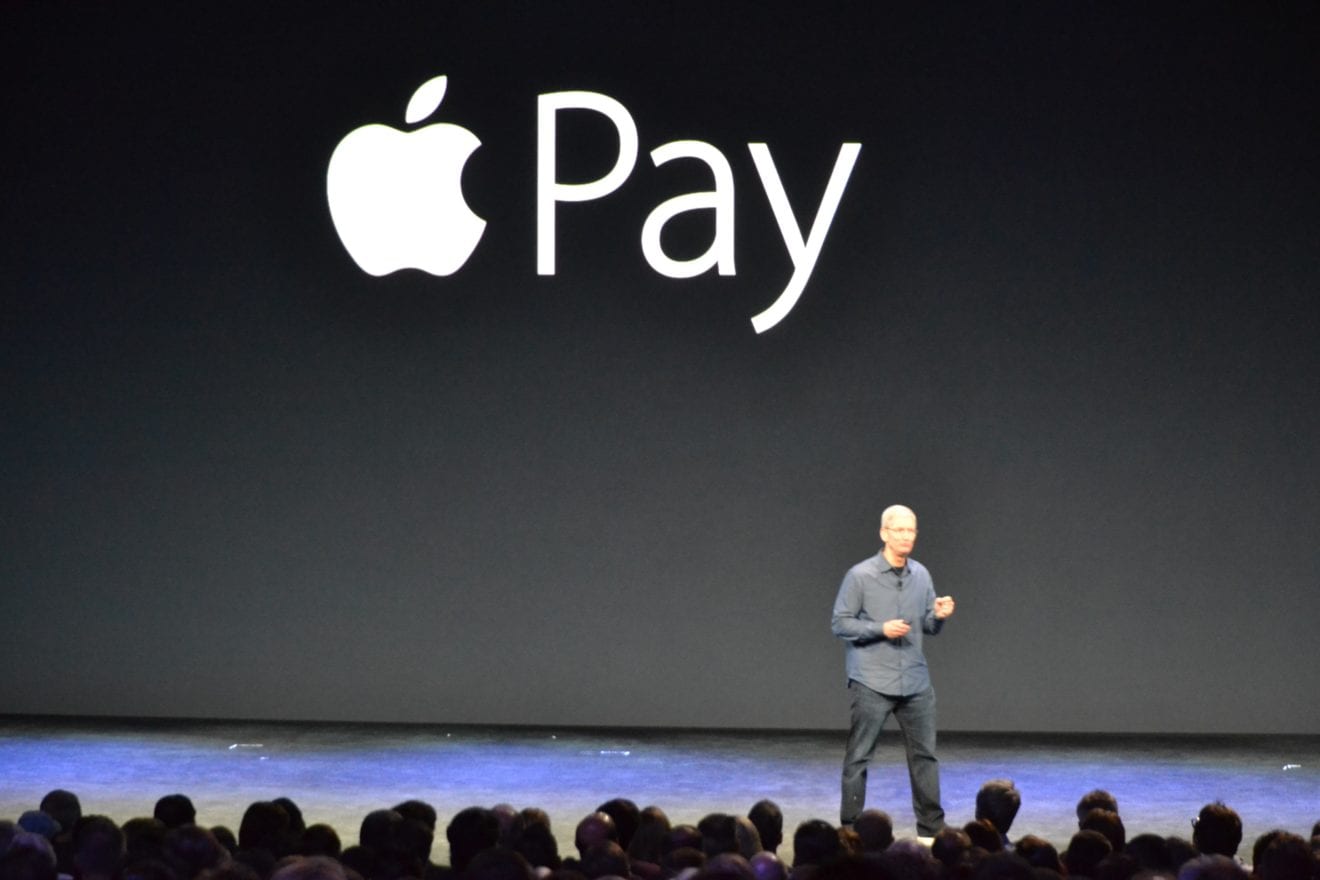
    Apple will launch an online payment service in China, as the tech giant seeks to expand in its largest market outside of the US despite fierce competition from local rivals.

    An Apple Company offering online payment has launched in the Shanghai Free Trade Zone (FTZ), an area set up as a testbed for financial reforms, China News Service reported late Thursday.

    Apple didn’t give a date for the launch, but the company told AFP that CEO Tim Cook hopes to set-up Apple Pay in China “as quickly as possible”.

    Cook previously said that he expects China one day to surpass the United States to become Apple’s largest market.

    But China’s e-commerce giant Alibaba dominates the country’s online payment sector, with the Paypal-like Alipay taking around 80 percent of the market.

    Internet firm Tencent is also catching up with a similar service provided via its popular messaging application WeChat.

  • China August Retail Sales: E-Commerce Remains Robust

    China August Retail Sales: E-Commerce Remains Robust

    China reported August retail sales that grew 10.8%, which beat the consensus 10.6%. Most encouraging was that online retail sales remain robust, underscoring my bullish view on Alibaba. As for offline retail, jewelry grew off a lower base so we view this of a lower quality while it appears that offline electronic retailers are taking share from online retailers, which is a negative to JD.com. We see China retail numbers to be a good read-through to companies such as BABA and JD as well as North American companies with exposure to China such as Tiffany. We reiterate my bullish view on BABA and Nike and our cautious view on JD and TIF.

    Online retail numbers remain robust for the first eight months of the year, and this is a positive indicator to Alibaba. For the first eight months, online retail sales grew 36% and accounted for 9.8% of total retail sales vs. 8% a year ago. Worth reminding investors is that China leads the world in e-commerce penetration and we expect penetration to continue to grow, driven by mobile device penetration in second and third-tier cities as well as the lack of proper retail infrastructure in those cities. We can easily envision China’s online retail penetration to reach 20% in the next 10 years driven by those two factors as well as higher mobile consumption driven by online-to-offline services that are heavily invested in by BABA, Baidu and Tencent. Looking at the individual segments, online sales of services was up a whopping 41%, as were discretionary items such as food. Apparel grew 27% and other discretionary items grew 39%. All these figures imply that August online sales alone grew 27% y/y, still solid given the near-term weakness of the Chinese economy.

    As for offline retail, jewelry grew 17% y/y vs 14% in July but it was largely due to a lower base from last year. As such, we would not be quick to jump into TIF stock until we see material improvement from the demand side. Interestingly, home appliances and electronics accelerated in the month, up 14% vs. 8% in the prior month. This could potentially be a negative to JD.com given this could imply that BABA and Suning JV may be taking share from JD in the online segment.

    In conclusion, we remain bullish on BABA while cautious on JD and TIF.

  • Diesel targets China in copy clampdown

    Diesel targets China in copy clampdown

    Italian lifestyle brand Diesel says it is initiating legal action against an average of three Chinese companies every week in its war against copycats selling copies of its apparel.

    “Hundreds of legal actions are in place against usurpatory brands, especially in China,” the company said in a statement outlining the enormous scale of the counterfeit goods trade and its astonishing campaign to fight back.

    Last year, Diesel says it started a legal action by the US Federal Court in New York, against 83 sites, which were illegally selling counterfeited products by using the cybersquatting technique – registering domain names with “Diesel” in the address.
    So far Diesel closed 3346 sites, sent 4000 ‘cease and desist’ letters, and de-listed 19,000 sites from Google. Just 131 of those sites were in Asian countries.

    “It has been calculated that in this way the company has avoided about 700,000 visits to illegal marketplaces; 9200 bids [from prospective buyers] have been removed completely,” the company said.

    Fake Diesel jeans seized in a raid.

    In Asia, over the past year Diesel obtained to remove 6786 listings on marketplaces, for a total of 1.7 million items.

    Diesel has worked with Customs agencies to seize more than 60,000 items coming from China in 2013, and another 75,000 last year, and more than 80,000 items in the European Community.

    In China, 1300 items have just been confiscated in a factory producing counterfeited t-shirts, and in another factory the police seized 910 pairs of shoes with Diesel logo, along with a quantity of unfinished products worth US$155,000.

    Last month, Diesel successfully closed the case of the ‘Diesel Cluthing’ line, which was signalled by Diesel business partners who found infringing products circulating in the Colombian market. After thorough investigation, the Chinese authorities confiscated 520 jeans infringing the Diesel trademark: the company, who registered this logo, is now under an opposition process.

    On top of these activities, Diesel says it has established a system to register its iconic products and therefore ensure that any potential copy is identified and sequestrated (in the last six months only, four cases have been closed successfully). The latest triumph took place earlier this year, when Diesel finally won back the property of its brand in Indonesia – a legal battle which has lasted 23 years.

  • Fortress Hong Kong flagship opens

    Fortress Hong Kong flagship opens

    Electronics chain Fortress has opened a 10,000 sqft flagship at Times Square.

    The AS Watson Group subsidiary, sells mobile phones and consumer electronics across Hong Kong and Macau. Its new Times Square store is spread over two floors – eight and nine – and split into themed areas.

    Fortress Times Square Hong Kong2

    A dedicated home theatre and TV zone is dominant and there is an area dedicated to demonstrating 3D printing technologies.

    There is also a dedicated Apple space.

    Fortress Times Square Hong Kong1

    Another unique feature of this Fortress Hong Kong store is a cafe serving fresh coffee and offering free WiFi.

    The store was opened by Hong Kong actor and singer Andy Hui.

    It’s been likened to “a digital theme park”.

  • China ‘no catastrophe’ says Bulgari CEO

    China ‘no catastrophe’ says Bulgari CEO

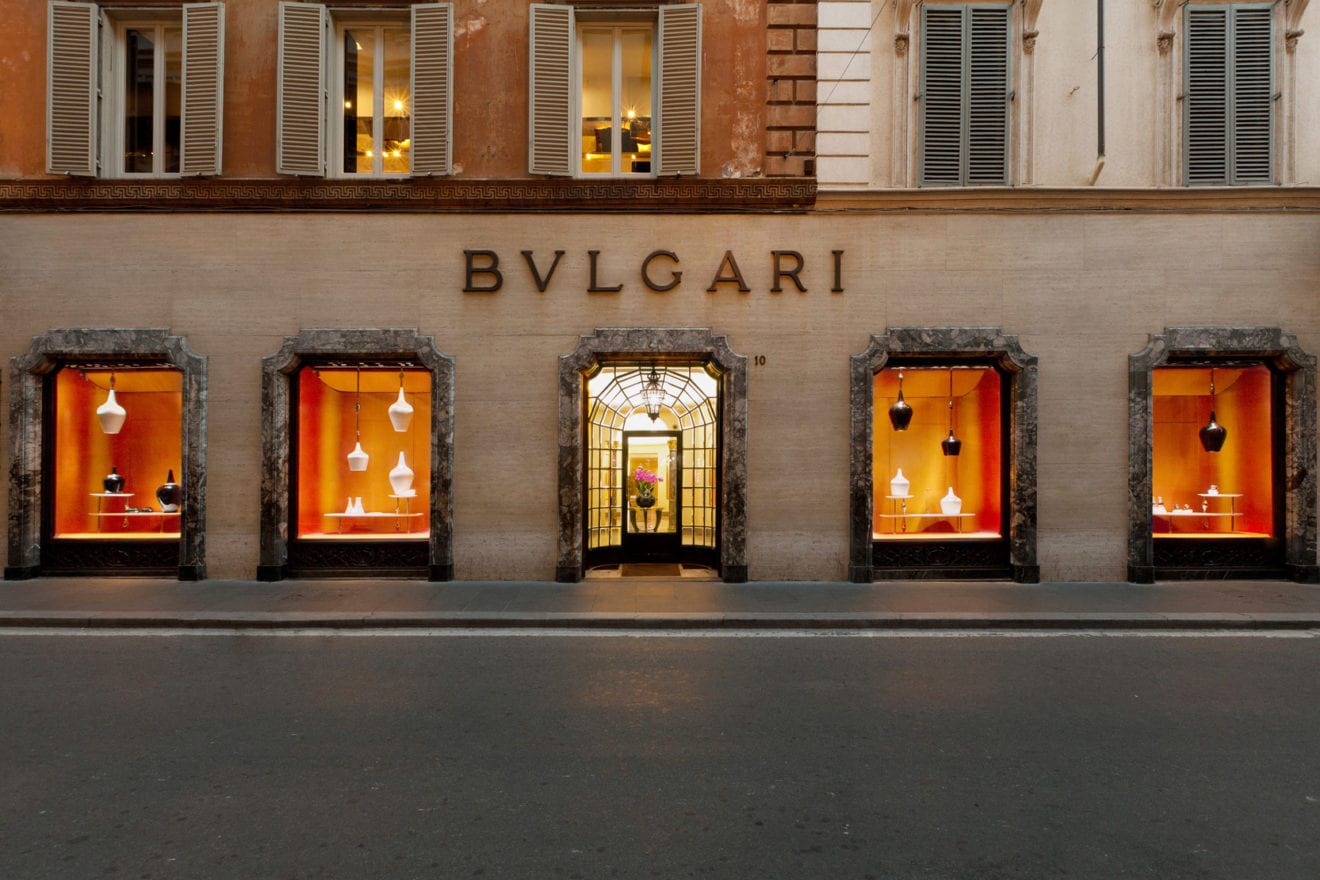
    Slowing luxury sales growth in China is “not a catastrophe, it’s a correction” says Bulgari CEO Jean-Christophe Babin.

    In an interview with international business news organisation Bloomberg, during the World Retail Congress in Rome, Babin warns of overstating China’s current slowdown

    A decline in the luxury sector began last year when the Chinese central government announced a clampdown on graft and gift giving and was later exacerbated by a sharp devaluation of the Chinese currency which triggered a slump in share prices.

    But in the interview – watch it here online – Babin points out that the share price declines have only brought world markets back “to what we all considered a good level last year”.

    He said China’s economy is still growing at about 6.8 per cent which produced enough customers to buy Bulgari’s luxury jewellery.

    While not disclosing figures, Babin said Bulgari’s July and August figures were “exactly in line with the first semester”despite the currency and stock market realignments.

  • Ikea sets new records

    Ikea sets new records

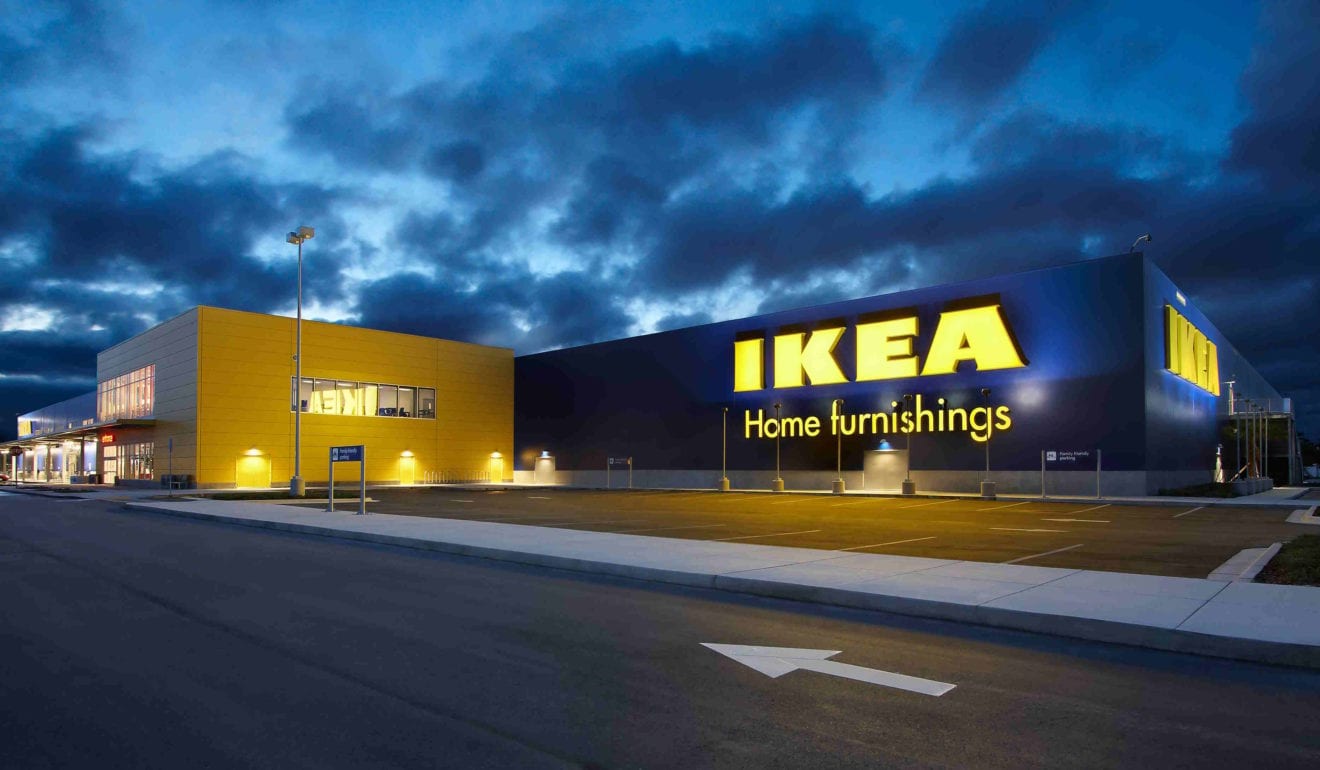
    Ikea has set new records in sales and store visits in its latest financial year, to August 31.

    The Swedish furniture and homewares chain now has 328 stores in 28 countries and says it served 771 million customers in the last year.

    Total sales reached US$35.5 billion.

    “We are growing in almost all our markets and we are happy about last year’s sales development,” said president and CEO Pete Agnefjall.

    The chain’s two fastest growing markets are China and Russia.

    “The Chinese middle class continues developing and in pace with its growth an interest for our product rises too,” said Agnefjall.

    “We have more visitors in our department stores now and we have opened three new stores in China during the year. We are going to open three new stores the next year too…”

    Sales were also strong in Germany, North America and Southern Europe.

  • Hong Kong retail has lost its edge

    Hong Kong has lost its edge as the go-to destination for international tourists seeking retail therapy.

    In a presentation to the 22nd CLSA Investors Forum, CLSA’s  head of consumer and gaming research Aaron Fischer, said luxury retail prices in Hong Kong are now higher than in other markets and if they stay that way “the retail market will suffer”.

    He cited an example of a Louis Vuitton handbag priced 20 per cent cheaper in Tokyo than in Hong Kong.

    Tourists – especially those from the Mainland – are now considering the price differential with Europe and other Asian destinations – and concluding there are more exciting tourist attractions, or new experiences, so deciding against Hong Kong.

    He said while there is no danger of the Hong Kong retail market “collapsing” – it would take threats to personal safety from terrorism or a pandemic to cause that – the sector needed to adjust.

    He said Hong Kong luxury brands were over-stored here. Brands like Louis Vuitton and Prada had about 10 stores in Hong Kong – and more in Macau – yet in cities like New York they had just two or three. If the profitability of these brands in Hong Kong was to be maximised, store networks would need to be cut by 20 or 30 per cent.

    “While sales declined, it does not mean these stores are loss-making. They might close one or two stores but they definitely won’t leave Hong Kong,” he added.

    The 22nd CLSA Investors’ Forum provides more than 1400 global fund managers and 230 leading listed corporations from 30 countries a platform for discussion and debate on market drivers including foreign policy and currency volatility; financial, political and structural reform; capital preservation, corporate governance and more.

  • Online fashion rental store Yeechoo re-launches

    Online fashion rental store Yeechoo re-launches

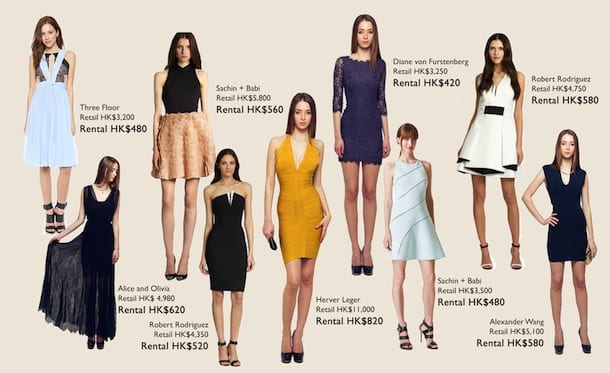
    Online fashion rental store Yeechoo has relaunched, expanding its service outside Hong Kong for the first time.

    The new website was officially released on Monday and from this week the company will ship to customers in Macau, Mainland China, Taiwan and Indonesia.

    The site features new branding and an expanded range of designer and dress collections. It also offers free consultations and trials and makeup demonstrations online.

    “At Yeechoo, what you are choosing is not just a dress, but a set of beautiful experiences,” the company said, revealing its new image.

    “We are Hong Kong/ Greater China’s first online high-end designer dress and accessory rental destination. At only a fraction of the retail price, you get to experience thousands of styles from over 60 luxury brands.”

    It also offers StyleShare, a new initiative it describes as “a pioneer social fashion experience”, allowing customers to borrow ‘pre-loved designer pieces’ and lend  their own, with a community of fashion lovers.

  • ST by Olcay Gulsen Hong Kong opens

    ST by Olcay Gulsen Hong Kong opens

    Dutch fashion brand ST by Olcay Gulsen has made its debut in Hong Kong.

    ST by Olcay Gulsen Hong Kong opened a pop up store to raise brand awareness at Level 1 of Pacific Place on August 31, a prelude to the opening of its first standalone store in the territory, which will open on the lower ground level of Festival Walk at the end of this month.

    ST by Olcay Gulsen was created by designer Olcay Gulsen whose vision was a label offering “affordable luxury clothes” that were keeping up to date with fast fashion trends.

    In just 11 years, Gulsen has developed a significant reputation, not just at home but internationally.

    ST is short for ‘SuperTrash’, her original brand shortened to ST for various ranges including STenim and ST. Girls. The SuperTrash brand specialises in dresses, tops and pants. Her creations are sold in more than 2000 stores worldwide.

    Hong Kong fashion blog Butterboom.com was impressed by the offer in the pop up store.

    “We spotted quite a few dramatic sexy dresses from their fall collection and some great long jacket in teal that we would like in our wardrobe so we are hopeful this brand will make it to fashionista’s list of must-visit shopping stops.”

  • Marks & Spencer to slow China expansion

    Marks & Spencer to slow China expansion

    UK department store chain Marks & Spencer says it will slow its expansion plans in Greater China due to the economic and political turmoil in the two markets.

    The British retailer currently has 20 stores in Hong Kong and 10 in China and had been planning significantly more.

    Back in 2014, CEO Marc Bolland set a target of opening 250 new overseas stores within three years – an ambitious goal even in favourable economic climate.

    This week, M&S’s executive director of marketing & international Patrick Bousquet-Chavanne told news agency Reuters in an interview that while the company remained committed to both markets, the 2014 targets were unreachable.

    “The world has shifted, is a different place… The Syrian situation was very different from what it is today… Putin had not invaded Ukraine and China was growing at close to nine per cent,” he said.

    “It’s reasonable in that context that you would expect a different outlook on the next three years for the company.”

    Last March M&S said it would close five underperforming stores in China to focus on flagship stores and online – and expanding its food offer in Hong Kong.

    He told Reuters M&S still planned a Beijing flagship store during the 2015-16 financial year and that it still planned to open in the cities of Guangzhou and Dalian, but gave no timetable.

    He said the company had seen a softening in its store sales in China as the economy slowed, but no dramatic effect.

    “The sectors in which we trade are not luxury, so we haven’t seen the same dramatic slowdown as some might have,” Bousquet-Chavanne said.

  • Alibaba launches sports company

    Alibaba Group’s expansion into non-eCommerce businesses such as movies and music took another step today as the group announced the establishment of a sports company, aiming to “transform China’s sports industry through Internet-enabled technologies.”

    The company, named Alibaba Sports Group, will be majority owned by Alibaba Group but has backing from Sina Corp., owner of China’s popular microblogging site Sina Weibo, and Yunfeng Capital, a private equity company founded by Alibaba Executive Chairman Jack Ma.

    Alibaba Sports Group will engage in sports media, events, ticketing and other aspects of the industry, leveraging Alibaba Group’s extensive e-commerce, digital entertainment, marketing, cloud computing and other Internet properties, according to an Alibaba press release.

    Alibaba’s Group CEO Daniel Zhang was named chairman of Alibaba Sports. Zhang Dazhong, a veteran of China’s new media and sports industry and a former vice president of Shanghai Media Group, will serve as CEO.

    “Sports has the enduring ability to create shared happiness and encourage healthy lifestyles,” said Zhang in the release. “Alibaba Sports Group aims to transform the China sports industry through the use of Internet-based technologies to bring greater and better products and services to consumers, sports participants and sports fans alike.”

    Alibaba Group’s online shopping site Tmall.com already hosts storefronts for merchandise sold by European football clubs Bayern Munich and Real Madrid. Last month, a documentary of NBA superstar Kobe Bryant was released through Alibaba’s Tmall Set-top Box. Alibaba also has a stake in China’s leading football club Guangzhou Evergrande.

  • Future fashion: Clothes which think

    Future fashion: Clothes which think

    Clothes which change shape; change temperature – and even colour. Welcome to future fashion.

    To celebrate the launch of its new smartwatch, Huawei Consumer Business Group has teamed up with ‘fashion futurologist’ and professor of fashion and technology, Dr Sabine Seymour, to reveal how the integration of technology will transform our wardrobe in the coming decades.

    According Seymour, the transformation in garments will start with our underwear, which will have in-built sensors to track personal data, such as heart rate and body temperature.

    The changes won’t end there, with personalisation in every aspect of our wardrobes. In years to come, we will be able to change the pattern, colour and even the shape and style of our garments.

    “The next development for wearables is going to see technology integrated seamlessly into clothing,” Seymour predicts.

    Her vision of the future of fashion with technology aligns perfectly with Huawei’s point of view on wearables: The Huawei watch embodies this vision, combining classic design with smart technology.

    In the future, we may find there is much more space in our wardrobes, as garments will be able to alter in form, extending and contracting in length, and changing shape and design as required. Therefore, there may only be a need for one dress or shirt and the wearer will be able to download the latest designs.

    Getting hot on public transport or carrying a spare sweater in case of colder weather could also become a thing of the past, as garments will be able to adjust to your body temperature.

    With the rise of 3D printing techniques and on-demand manufacturing, we will see the introduction of the digital cobbler, who can create shoes that fit your feet perfectly, and for the rest of your life.

    Garments will become gesture and touch-sensitive, just like phones, tablets or gaming systems are today, but with a sense of style and a true design aesthetic, explains Seymour.

    Fashion_embracing_technology__-_all_features

    “By connecting your garments to other elements of your life, we will see a move from networked devices to networked people and networked spaces. In future, it will be possible for smart garments to connect to your car, which will adjust your seat according to personal preferences.”

    A major barrier to the networked self is the current limitation of battery life. Using alternative energy sources, such as capturing the kinetic energy of a person as they walk, we will be able to create a new form of sustainable fashion.

  • Dalian Wanda, Suning plan store rollout

    Dalian Wanda, Suning plan store rollout

    Mall operator Dalian Wanda Commercial Properties is partnering with Suning to open electronics stores at Wanda Plazas throughout the Mainland.

    The partnership will see 40 stores open by the end of this year with more planned for next year. Suning, now 20 per cent owned by Alibaba Group, currently has a network of 1600 stores throughout China.

    Dalian Wanda has 100 Wanda Plaza shopping centres in China currently and plans to add 35 by the end of this year.

    The company is changing nature from its original model as a department store operator into a services-based company. It recently announced the closure of its Superstar karaoke chain as well as some of its less profitable department stores.

    The company owns the AMC cinema chain in the US, Hoyts in Australia and China’s largest network of movie theatres.

  • Sainsbury’s lands in China through tie-up with ecommerce giant Alibaba

    Sainsbury’s lands in China through tie-up with ecommerce giant Alibaba

    Sainsbury’s has launched in China through a partnership with Alibaba’s Tmall website five years after first exploring an entry into the country.

    The grocer began testing the waters in China this week, Retail Week has learned, and is initially focusing on selling “high-quality ambient product” to tap into the growing demand in China for premium organic ranges.

    China’s online grocery market is forecast to grow five-fold to almost $180bn (£115bn) by 2020, according to IGD. It will be worth almost $70bn more than the other top nine online grocery markets combined in 2020.

    However, confidence in the growth prospects of the Chinese economy has taken a hit of late as fears grew the economy’s growth was slowing quicker than expected.

    Chinese consumers are placing a growing emphasis on the provenance of products after a series of food supply scandals in the country.

    In January last year Walmart recalled a donkey meat product in China after tests by The Shandong Food and Drug Administration revealed it contained DNA of other animals, including foxes.

    Sainsbury’s is selling own-brand long-life British milk from a Devonshire dairy on its Tmall website. Other products being sold include a baby range and the components of British afternoon tea, including speciality teas, coffees and biscuits.
    A Sainsbury’s spokeswoman said: “‘We are trialling a small number of ambient products for sale on the Alibaba platform, including So Organic and Taste the Difference lines, for sale through the Chinese online market.”
    It is understood Sainsbury’s is not planning to open any physical stores in the country.

    Sainsbury’s first sent a six-man team to China in order to explore the possibility of opening stores in China in 2010.

    However, plans were shelved, and it is believed top executive Darren Shapland stood down as a result in 2011. Shapland had been asked to study the possibility of overseas expansion, including China.

    The Sainsbury’s spokeswoman said it was too early to say how the launch is progressing, but the grocer may release initial results as early as next week.