Tag: China

  • Institutional and retail investors: US vs China

    Institutional and retail investors: US vs China

    When being compared to the USA’s stock markets, China’s markets are fairly young. Even though the Shanghai Stock Exchange (SSE) dates back as early as the 1860s, it was in fact closed down in 1949, then reopened only in 1990, with the mission to create a reliable, efficient and transparent marketplace. The Hong Kong Stock Exchange was also founded in the late 1800s, it wasn’t until the mid-1990s that it started listing the largest Chinese state-owned enterprises.

    The USA’s stock market, in comparison, can be dated back to the late 1700s, meaning that it’s over 200 years old. The New York Stock Exchange (NYSE) originated on Wall Street in 1792 and since then, many more stock exchanges have derived in the US.

    The stock exchanges and their role on the economy

    The USA’s stock exchanges play a significant part in their economy, which isn’t the case as much in China, due to it being a lot younger. While companies in the US rely on equity financing, corporations in China often look to the likes of bank loans.

    Around 52% of the US population owe part of their wealth to equities, while in China it is roughly only 7%, with bigger proportions of their investments going into property and wealth management products, for example.

    With less people owning stocks in China, they aren’t as at risk of having to suffer from the ups and downs in the markets. However, it has been suggested that retail investors there do not put enough focus on their long-term investments, instead choosing to chance their wealth. If China strives to grow its stock markets and attract professional investors, it is going to have to change the opinions of those comparing it to a ‘crazy casino’.

    Coronavirus and the financial markets

    The ongoing pandemic has naturally had a dramatic impact on the global stock markets, disrupting worldwide economic activity. Since the outbreak, the markets have suffered huge losses: more than 30 million people in the US have filed for unemployment benefits, the Dow Jones Industrial Average has seen a significant fall and US oil prices turned negative for the first time. In China, retail sales plummeted 20.5% year on year in January and February, and with their factories being unable to run, they have also been heavily affected by a supply shock. Equity markets have fallen, and the drop in these prices has lowered household wealth in the US to a huge extent.

    With no confirmed end date to the pandemic, there is still some uncertainty when it comes to both the US and China’s economic future. Will the economy be able to snap back once the restrictions on activity have been lifted?
  • Suning opens ‘smart-retail experience centre’ in Nanjing

    Suning opens ‘smart-retail experience centre’ in Nanjing

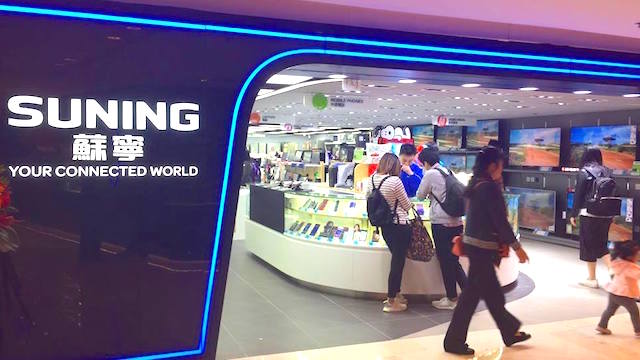
    Chinese retail giant Suning has launched a smart-retail experience centre in Nanjing.

    The venue is the first of its kind for the brand, opening in Suning.com Plaza as an upgrade of the Suning.com flagship store and what it describes as a new benchmark for its strategic retail development. Offline shopping is “considered optional” in the store, and product experience is core to differentiating the concept from traditional shopping outlets.

    The new flagship achieved a gross merchandise volume of RMB10 million (US$1.4 million) within 58 seconds of opening for trading and hit RMB100 million ($14 million) in just 13 hours.

    According to a statement from the company, the store is conceived as a way to “accelerate the promotion of consumption, optimize consumption structure, and improve the quality of economic development”.

    The new store will allow 24-hour sampling across all categories and consumers will be able to purchase products from a smart screen “virtual shelf”, providing an O2O channel that allows shopping experiences via internet tools such as applets, communities, and live streaming.

    The store’s hi-tech showroom features a 400sqm L-shaped interactive LED screen, mainly reserved for product launches and PR events.

  • HSBC Becomes Wholly-Owned Insurer in China

    HSBC Becomes Wholly-Owned Insurer in China

    HSBC agreed to buy out the other 50 percent of shares from its life insurance joint venture in mainland China in yet another milestone for foreign entry into finance on the mainland.

    HSBC will become the sole owner of HSBC Life China after acquiring the shares from its Beijing-based partner National Trust for an undisclosed sum, subject to regulatory approvals including from the China Banking and Insurance Regulatory Commission.

    The HSBC Life China JV was formed in 2009 and currently has a presence in nine mainland cities including Beijing, Guangzhou, Shanghai and Shenzhen. As of December 31 last year, the insurer had 1.03 billion yuan ($146 million) in registered capital.

    According to Swiss Re, China’s insurance market ranks third behind the U.S. and Japan at an estimated $318 billion in premiums. But despite the sizeable scale and the relatively long presence of some foreign players, insurers from abroad hold less than 10 percent market share due to ownership restrictions and limited geographical presence.

    With the recent reforms, which also included lifted ownership caps in the securities, futures and asset management industry, HSBC joins the likes of AXA and Allianz as foreign wholly-owned insurers in mainland China.

    «Despite the current difficult environment engendered by the Covid-19 pandemic, we continue to take steps to implement our growth strategy,» said HSBC chief executive Noel Quinn in a statement. «This transaction supports our ambition to accelerate growth within our Asian franchise, particularly in the dynamic and fast-growing Greater Bay Area, where we fully intend to expand in all lines of businesses.»

  • Chinese tea chain Heytea leaving Hong Kong

    Chinese tea chain Heytea leaving Hong Kong

    Chinese tea chain Heytea has closed three-quarters of its Hong Kong network, leaving just two stores operating, at Causeway Bay’s Times Square and Sha Tin’s New Town Plaza.

    Three of Heytea’s outlets in Tsim Tsa Tsui – at The Sun Arcade and New World Development’s two K11 malls – have been boarded up. A K11 representative shared with Apple Daily that Heytea had rescinded its tenancy at the end of April. The tea chain had entered K11 Art Mall and K11 Musea in March and September last year, respectively. The K11 Musea flagship dubbed the ‘Heytea Lab’ spanned 4000sqft, offering patrons views overlooking Victoria Harbor and featuring the brand’s first tea-cocktail bar. It lasted less than one year.

    Heytea entered Hong Kong in late 2018, with customers queueing for up to four hours at the opening of the inaugural store at New Town Plaza. However, since the protests from June last year, many pro-democratic locals had boycotted the once-hyped tea brand due to its mainland Chinese origins.

    With Hong Kong now divided along political lines, locals initiated their own ‘Hong Kong 5.1 Golden Week’ protest action over the recent long weekend, a reference to the “Five Demands, Not One Less” slogan at the core of last year’s protests. The protest actively supported ‘yellow economy’ businesses that openly support Hong Kong protestors.

    More than 300 Heytea stores continue to operate in Mainland China and the brand made its first international foray into Singapore in 2018. The company sourced its initial funding from He Boquan, an angel investor from IDG Capital, and has just completed another round of financing led by Hillhouse Capital and Coatue Management, valuing the business at RMB16 billion (US$2.3 billion) post-investment.

  • Yum China Profit gain despite Covid-19 virus impact

    Yum China Profit gain despite Covid-19 virus impact

    Yum China emerged from the first quarter in profit despite the disruptive effects of the Covid-19 pandemic on sales and operations.

    While revenue was down 24 percent for the operator of KFC, Pizza Hut in Mainland China, and several local restaurant chains, the company reported an operating profit of US$97 million. That was achieved even after extending support to staff and franchisees, whose income was affected by store closures during the pandemic. Total sales were $1.75 billion, down from $2.3 billion.

    “This achievement under extraordinary circumstances is a testament to our resilient and flexible business model,” said Yum China CEO Joey Wat. “Weathering this storm of all storms gives us great confidence in our ability to thrive in the years ahead by serving our employees, customers, and shareholders.”

    Yum China opened 179 new stores during the March quarter – mostly prior to Lunar New Year – extending its store count to 9295 across more than 1400 cities.

    During the Covid-19 crisis, the company began temporarily closing stores in late January, working within the guidelines of respective local city authorities. Some 35 percent of stores were closed by mid-February at the peak of the outbreak, with significant regional differences. As of last week about 99 percent of its stores have either partially or fully reopened.

    Same-store sales declined in restaurants which remained open, due to reduced operating hours and falling customer numbers. Many of the stores provided only delivery or takeaway services.

    During the first three weeks of January – prior to the pandemic taking hold – the company experienced strong trading across its network. But then same-store sales declined by 40-50 percent compared with last year’s Lunar New Year holiday turnover. By late March, same-store sales had recovered somewhat, down by about 20 percent. Delivery sales accounted for 35 percent of total sales throughout the quarter, almost double the share of a year earlier.

    The company said sales during April – the early weeks of the second quarter – were down by more than 10 percent on a same-store basis.

    The reason Yum China performed so well during the quarter was a mixture of cost control, landlord support, assistance from government agencies and improved labor productivity, which mitigated lower sales and increased expenses due to contactless delivery and increased delivery costs.

    By channel, Pizza Hut was affected more than KFC, with sales down 38 percent, compared to 15 percent (excluding foreign-exchange adjustments).

    Yum China’s net income declined 72 percent from $222 million to $62 million, primarily due to the reduced operating profit and losses in an equity investment in Meituan Dianping.

    Wat said the company relied on its “culture of innovation” to protect stakeholders and support the business during the pandemic-related lockdown.

    “Most importantly, we quickly implemented a safe way to reach our customers through highly sanitary contactless delivery and contactless takeaway. Our digital infrastructure enabled us to stay nimble and communicate quickly with customers and employees online and through mobile technology. We were able to inform our members about compelling offers through our apps, while efficiently adjusting labor hours based on rapidly changing traffic and sales patterns,” he said.

    CFO Andy Yeung said that while the situation in China is gradually stabilizing, the company remains cautious as restaurant traffic is still below pre-outbreak levels.

    “We expect an extended recovery period, and that the pace will be uneven across regions, day parts and segments. On the other hand, global infections continue to rise. It remains difficult to predict the full impact of the pandemic on the broader economy and how consumer behavior may change.”

  • Starbucks China and Sequoia Capital launch technology investment plan

    Starbucks China and Sequoia Capital launch technology investment plan

    Starbucks is to partner with the investment company Sequoia Capital to invest in new technologies that will accelerate the company’s digital innovation in Mainland China.

    The two companies plan to focus on next-generation food and retail technology companies whose products will help Starbucks grow the coffee and retail industry in China, one of its fastest-growing markets globally.

    An early focus will be opportunities to embed digital technologies across Starbucks’ retail business, making the most of data-driven analytics, modeling, and decision making.

    “These may entail adopting creative solutions to enhance front- and back-of-house operations, such as the use of machine learning and predictive intelligence tools in managing Starbucks growing retail operations in China, or the optimization of Starbucks supply chain through precise, real-time inventory management,” the company said in a statement.

    “China’s vibrant environment is a rich ground for entrepreneurship that has seen the emergence of many local innovators that we hugely admire,” said Starbucks China CEO and chairman Belinda Wong.

    “The partnership enables Starbucks to tap into the most dynamic Chinese technology entrepreneurs in order to delight our customers with meaningful innovations created in China, for China.”

    By partnering with Sequoia Capital, Starbucks will gain early access to technologies which it expects will create investment opportunities to grow its China business and keep pace with technology innovations which are driving structural reform across digital, online, and brick-and-mortar retailing.

    “Beyond the direct benefits from this collaboration, Starbucks also hopes to leverage its retail expertise, scale, and infrastructure to help realize the growth aspirations of like-minded purpose-driven companies that have a passion for leading positive change for customers and communities,” said Wong.

    “The partnership presents an exciting platform for our portfolio companies to test, commercialize and scale new innovations for China,” added Neil Shen, steward of Sequoia Capital, and the founding and managing partner of Sequoia Capital China. “Together with Starbucks, we look forward to bringing the digital transformation of the consumer retail industry in China to the next level.”

    This is not Starbucks’ first commitment to identifying and funding new technologies. Last year it launched Siren Ventures in the US to invest in new concepts and technologies.

    “We are excited to tap the tremendous energy of technology entrepreneurs from two of the world’s largest and most dynamic markets, to pioneer innovative solutions that could reimagine the global retail landscape,” said Kevin Johnson, president, and CEO of Starbucks.

  • China retail ‘after Covit-19’ in store innovation says 7Fresh head

    China retail ‘after Covit-19’ in store innovation says 7Fresh head

    China’s retail industry remains behind the curve in-store innovation, which stands as a hurdle to the Chinese market’s inevitable dominance in global retail.

    The observation was among several key insights shared by 7Fresh head Jonathan Wang in a recent interview circulated by JD, which owns the 7Fresh omnichannel fresh-food supermarket business.

    “The key factors driving global retail transformation are quite simple: channel reformation, store format innovation and supply chain management,” said Wang. “China is already leading the global retail industry in channel reformation and digitizing the supply chain, but is still lagging behind the leading players, such as the US and Japan in terms of store innovation.”

    Wang noted that the scale of China’s e-commerce sector currently exceeds that of the US, UK and Japan combined. Despite this lead, China’s traditional offline retailers receive less than 5 percent of their revenues from online channels.

    “In China, some omnichannel supermarkets are far more advanced than those of leading Western supermarkets,” said Wang. “Many Chinese shoppers today are accustomed to ordering online and getting live and fresh seafood, fruits and vegetables, and other produce delivered to their doorsteps within 30 minutes. This is still far from the norm in most major US cities.

    “At 7Fresh supermarkets, online orders typically account for 40 percent to 45 percent while the proportion reached nearly 70 percent in February when Covid-19 was peaking in China. The company’s advanced supply chain technology was clearly the lynchpin to provide the superior omnichannel retail experience.”

    While China’s online business has proven its strength in navigating emerging opportunities, offline retail remains rooted in its store formats. At the same time, the Chinese middle class is growing, along with its desire to spend an increasing disposable income on quality items – exhibiting what is perhaps China’s most rapidly evolving set of consumer habits, tastes, expectations, and buying patterns in recent history.

    “It may be that the retail industry used to be relatively low-key, but since the industry has drawn much greater attention nowadays, people started to become aware of the ‘sexy’ aspect of retail,” said Wang.

    “Most of 7Fresh’s systems are designed as SaaS systems so that they can be adapted easily and quickly. Thanks to digitization, JD’s 7Fresh supermarket was able to break even within one year and a half. Its sales efficiency is three times that of a regular supermarket. Establishing 7Fresh is about exploring retail’s best practices, and we wish to share this excellence with the industry to make a positive impact and improve its capacity overall.”

  • Covid-19 blunts tremendous growth of footwear brand Skechers

    Covid-19 blunts tremendous growth of footwear brand Skechers

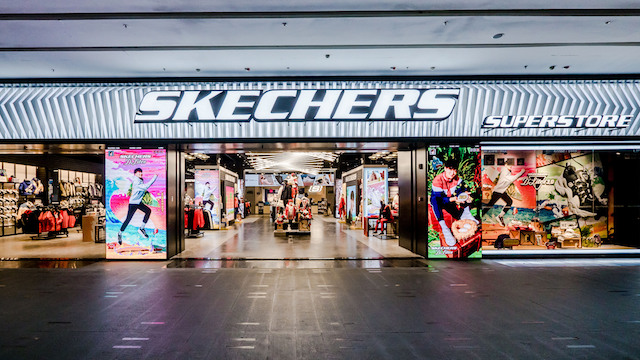
    US footwear brand Skechers has reported a modest 2.7-per-cent drop in first-quarter sales brought on by the coronavirus outbreak – and painted a rosy picture of life beyond the coronavirus crisis.

    “We are in unprecedented times, facing difficult decisions daily as we navigate this global pandemic that has negatively impacted every business throughout our industry and most others,” said Skechers CEO  Robert Greenberg.

    “We know from the triple-digit growth we are experiencing so far this month in our e-commerce business and the positive sales trajectory of our recovering business in China, that Skechers’ product continues to resonate with consumers. As our business begins to return to normal, we firmly believe that our retail partners and customers will look to a brand they trust that delivers comfort, innovation, style, and quality at a value.”

    The firm’s net earnings during the period were US$49.1 million, with adjusted net earnings $59.9 million, reflecting the impact of negative foreign currency rates and certain purchase price adjustments related to the company’s Mexico joint venture.

    “We experienced strong momentum throughout 2019, which continued into the first two months of 2020,” said Skechers COO David Weinberg. “However, due to significantly reduced economic activity in China after January, and the spread of the Covid-19 pandemic around the rest of the world in March, sales decreased 2.7 percent in the first quarter. Until then, Skechers’ business was on track for a new first-quarter sales record.”

    CFO John Vandemore said that despite “an extremely strong end” to last year and an equally strong beginning to this one, the company saw a notable slowdown in markets impacted by the Covid-19 pandemic.

    “We have taken decisive action to fortify our business for the duration of this crisis, including drawing down on our senior unsecured credit facility, actively managing operating expenses, inventory levels and production orders, and deferring non-critical capital expenditures. We are confident that the actions we have taken and will continue to take, combined with the global strength of our brand and balance sheet, will position Skechers to successfully navigate this situation, and poise us to return to growth in the future.”

  • Ikea stores record strong footfall as life eases back to normal in China

    Ikea stores record strong footfall as life eases back to normal in China

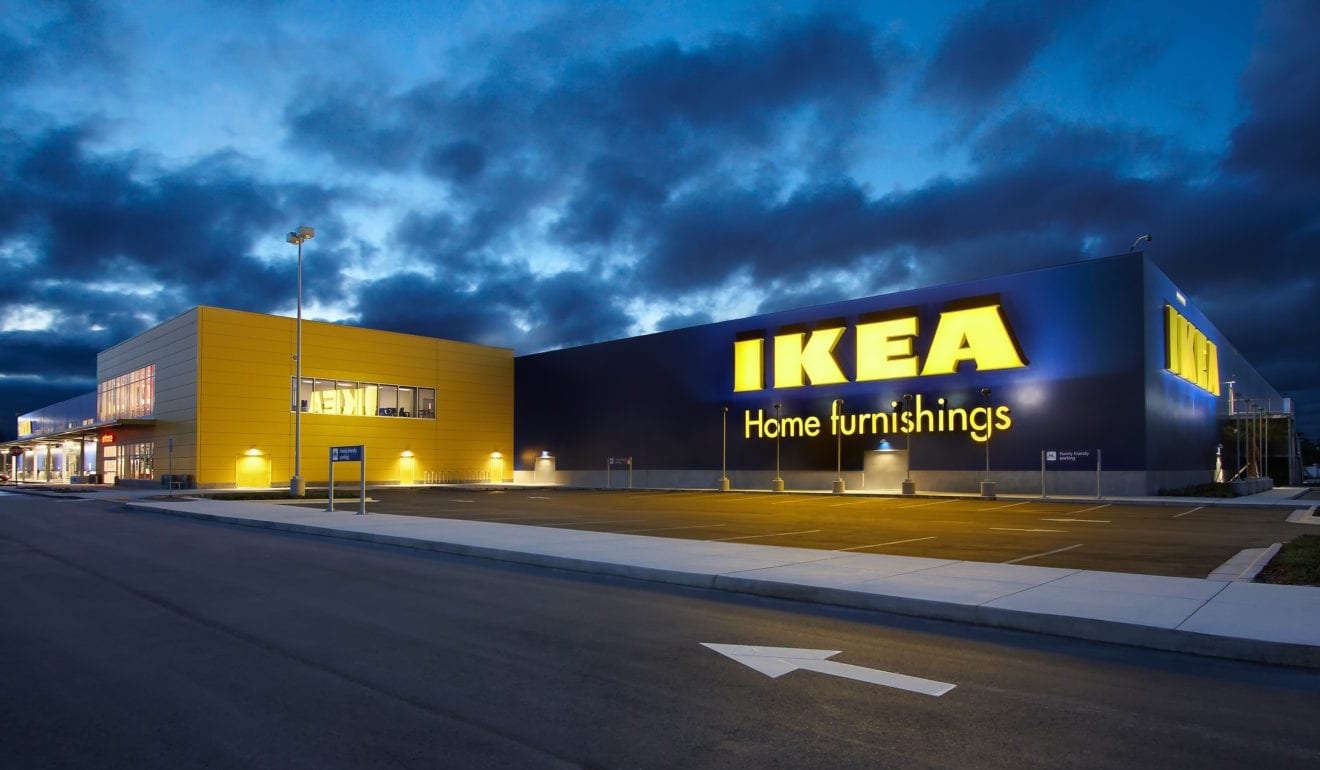
    Furniture and homewares giant Ikea is reporting a quick return of customer footfall to its stores in China as they reopen after the Covid-19 crisis.

    The company opened another three of its large-format stores in Mainland China last week, including one in Wuhan city, and others in Germany and Israel, as movement restrictions were eased. More stores are scheduled to reopen this week.

    Ingka Group, one of Ikea’s largest retail operating divisions, owns 45 shopping centers in China and Europe. It reported that customer footfall in the Chinese centers was back to the level of between 70 and 80 percent of the numbers at the same time last year.

    Shopper confidence there was “recovering rapidly” a spokesperson for the company said.

    Most Ikea China stores have now reopened and some have been trading since the end of last month.

    However, the picture was a little less rosy in German, where 40 of its mall’s 57 tenants had reopened and visitor numbers were at 63 percent of a year earlier.

    During the closures, Ingka waived rent and service charges for tenants and launched e-commerce initiatives to drive traffic to tenants’ websites. The company also helped tenants out with click-and-collect and home-delivery services.

  • Acne Studios open Hangzhou boutique

    Acne Studios open Hangzhou boutique

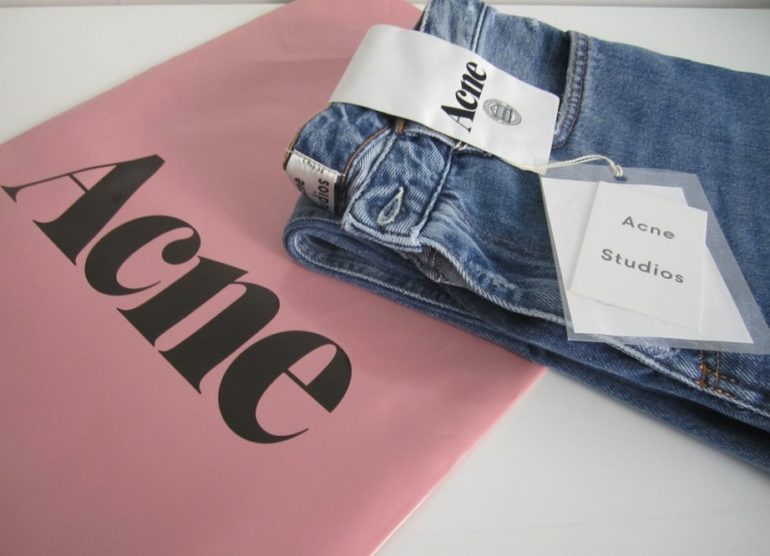
    Swedish luxury-fashion house Acne Studios has opened a new store in Hangzhou following its Nanjing launch.

    The new outlet is setting up a shop in Hangzhou Tower, situated in fast-developing Gongshu as part of a high-end mixed-use complex. With its all-glass facade, the corner store takes its place among other luxury brands poised to do business at the mall and features the architectural design work of Stockholm’s Christian Hallerod.

    The interior is punctuated by grand shelving columns that reach to the ceiling of a store otherwise marked by minimalist elements exemplified by steel shelves and clothing racks. The outlet features fine lighting fixtures by Benoit Lalloz and product display tables by UK designer Max Lamb.

    Acne Studio’s complete product range is available in-store, including its menswear and womenswear collections as well as bags, shoes and accessories.

  • Social group e-commerce booms in China during Covid-19 crisis

    Social group e-commerce booms in China during Covid-19 crisis

    Social group e-commerce is booming, fuelled by the consequences of the coronavirus pandemic, reports Chinese online retail platform JD.

    The online retailing model has experienced a major boost as Chinese consumers under lockdown have recommended products to friends, customers and others in close proximity, with JD’s sales in the sector for the first quarter of this year exceeding that of the entirety of last year.

    An example of the boom is JD’s collaboration with China Youth Travel Service, offering tour guides part-time work as JD “shopping guides” via WeChat to recommend products to friends, customers and others nearby.

    JD’s broader social group e-commerce initiative on WeChat enables participants to act as shopping guides to recommend products in the digital community.

    “JD continues to recommend good products to Chinese consumers through innovative marketing models,” said social group e-commerce initiative head Jiarui Liu.

    “Sales representatives and tour guides from travel agencies have something in common with young moms and middle-aged women. Their customers are highly targeted and have a strong sense of trust, which is consistent with the trust that JD has established over the years. JD highly values working with people who have a strong connection with their customer groups, and it is also a good way to explore new business scenarios.”

    As part social group e-commerce initiative, JD’s cloud-stored solution is assisting offline stores to resume trading post-pandemic. After receiving training, shopping guides can use the solution to generate orders. Thus far, 54,000 shopping guides in the fashion and home industry have joined JD’s cloud storage solution.

  • Lagardere Travel Retail reopens 88 stores in Wuhan Airport

    Lagardere Travel Retail reopens 88 stores in Wuhan Airport

    Lagardere Travel Retail has reopened 88 stores at Wuhan airport after more than two months of lockdown due to the Covid-19 outbreak.

    According to a statement, Lagardere Travel Retail’s sales are expected to resume as the number of passengers passing through Wuhan Airport gradually increases.

    “Our ability to restart operations at Wuhan Airport is testament to the dramatic improvement in the sanitary conditions in Hubei province,” said Eudes Fabre, CEO of Lagardere Travel Retail China. “I wish to thank our staff and business partners for their patience and stoicism throughout this crisis. This reopening sends a strong message of hope and optimism to all in our industry who are affected by the current epidemic.”

    In appreciation of the medical staff’s work in Wuhan, the company is offering free meals at 16 restaurants and cafes together with shopping privileges for all medical workers flying out of the city this month.

    “Traffic volumes are still below what they were pre-crisis, but we’re already seeing an upward trend. After a long lockdown period, people are keen to travel again and there is pent-up consumer demand which will translate into retail sales,” Fabre added.

    All hygiene and security measures, including temperature screening, regular disinfection and social distancing, are still applied at the Wuhan Airport to ensure the safety of staff and passengers.

  • China Car Sales Post First Weekly Rise Since Virus Outbreak

    China Car Sales Post First Weekly Rise Since Virus Outbreak

    China’s retail sales of passenger cars in the week of April 7-12 rose 14% from a year earlier, marking the first weekly rise reported since the coronavirus outbreak, data from the China Passenger Car Association (CPCA) showed.

    Coronavirus to push China’s Q1 GDP into the first decline on record.

    The coronavirus crisis likely knocked China’s economy into its first decline since at least 1992 in the first quarter, raising the pressure on authorities to do more to restore growth as mounting job losses threaten social stability.

    Sales for the first 12 days of the month were down 12% the CPCA data showed

  • Walmart China to invest US$425 million in Wuhan

    Walmart China to invest US$425 million in Wuhan

    Walmart China is to invest US$425 million over the next five years to expand its presence in Wuhan, the origin of the coronavirus pandemic.

    The US-headquartered retail giant will open at least four Sam’s Club membership stores as well as 15 new malls in the territory within the period. It will also set up additional community stores around the provincial capital, to add to its existing 34 outlets and two distribution centers within Wuhan.

    “The framework marks a new milestone between the two parties and a new beginning for a win-win situation,” said Walmart China CEO Wern-Yuen Tan of the firm’s collaboration with Wuhan’s municipal government.

    Wuhan’s 76-day lockdown period was brought to a close last Wednesday with an official final death toll of around 2500 cases caused by the virus – although international observers have cast doubt on that figure.

    According to data released by the American Chamber of Commerce in China, 40 percent of polled companies planned to maintain current levels of investment in China this year, as opposed to 24 percent who were planning cuts, with the remainder saying it is still too early to judge.

  • Permanent home opens for OnTheList Shanghai

    Permanent home opens for OnTheList Shanghai

    OnTheList Shanghai is about to open a permanent showroom in downtown Shanghai, just seven months after the flash-sale pioneer made its debut in the Chinese city.

    After launching its first event last September, OnTheList Shanghai has been working on developing a more long-term presence and building brand awareness through pop-up events there, as part of a region-wide expansion program.

    The new 1000sqm OnTheList Shanghai store will open at Jiangning Road 293 in Shanghai’s famed Jing’an district.

    Co-founder & CFO Diego Dultzin Lacoste describes the store as “a luminous space with an exclusive design which places the customer experience at the heart of its strategy”.

    Given consumers are opting to stay home during the coronavirus pandemic, OnTheList will also hold flash-sale events online, via its WeChat mini program.

    Last September, OnTheList Shanghai debuted with a flash sale on behalf of fashion distributor ImagineX, featuring the brands Club Monaco and Juicy Couture. Products were discounted by up to 90 percent.

    OnTheList turned four in January and during that time has expanded from running short-term sales in pop-up spaces to having its own permanent stores in Hong Kong’s Central, and expanding into Singapore and Taiwan.