Tag: China

  • Chinese bubble-tea chain Naixue Tea eyes IPO

    Chinese bubble-tea chain Naixue Tea eyes IPO

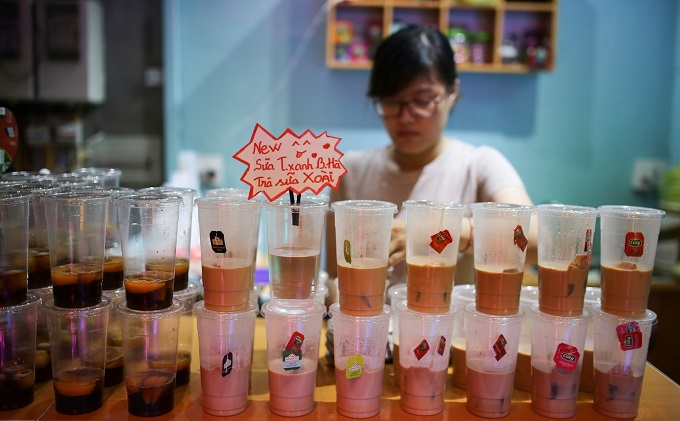
    Chinese bubble tea chain Naixue Tea – also known as Nayuki – is eyeing a listing in the US.

    The move could raise around US$400 million in capital, although many important details of the potential offering remain in flux as private discussions continue between the firm and its advisors.

    Naixue, which sells fresh fruit tea, cold-brew tea and cheese-tea blends as well as bakery items, operates more than 230 locations within China. The firm was launched in 2010 by Shenzhen Pindao Restaurant Management.

    Sources familiar with the transaction asked not to be identified, as the potential listing is still being discussed in private. Any plans may be impacted by the current coronavirus outbreak, which is still having a major effect on business within the country.

  • Tesco to stop Chinese investment

    Tesco to stop Chinese investment

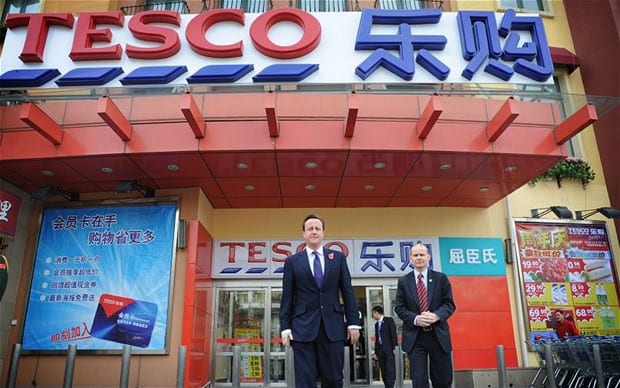
    British multinational groceries and general merchandise retailer Tesco has sold its shares in a Chinese joint venture, ending its operations in the country.

    According to Retail Gazette, the firm’s 20-per-cent shareholding in the Gain Land business has now been sold to a unit of its regional partner, Chinese state-owned conglomerate China Resources Holdings (CRH). The shares were sold for £275 million (US$356.6 million).

    The share transfer, set to take effect on Friday, completes Tesco’s six-year exit strategy from China, which began when the firm merged its 131 branded stores in the country with CRH’s Vanguard outlets. CRH operates close to 3000 Vanguard locations.

    Following the retreat, Tesco will focus on its core business, using the funds from the share sale for general business purposes. The firm has also announced a review of its operations in Malaysia and Thailand.

  • Chinese Startup Fundraising Plunges

    Chinese Startup Fundraising Plunges

    The ongoing coronavirus outbreak has caused capital flows into mainland China’s startups to plunge 60 percent year-to-date.

    Year-to-date, Chinese startup fundraising registered $1.79 billion from a 6-year low of 168 deals – a major plunge from last year’s $4.18 billion and 440 deals in the same period, according to alternatives data provider Preqin. Venture capitalists have only closed six funds thus far, raising $300 million.

    The capital slowdown will likely drag the broader outlook for private equity in the region. Within Asia Pacific, China accounted for around half of all private equity investments and 80 percent of the nearly 3,000 country-specific deals Preqin tracked since 2016.

    A partner at major Chinese venture capital firm SB China Capital, Zhao Chenxi, warned startups to brace for the potential of receiving no venture capital for all of 2020 in his social media account. Wu Shichun, founding partner of Plum Ventures, called the current period a test of the «hell model» for small and medium-sized enterprises that continue to bleed costs with no income.

    Despite assurances from Beijing and regulators about providing financial buffers, data signals a bleaker reality. A report by Tsinghua University and Peking University said that 85 percent of the 1,506 SMEs surveyed in early February expect to run out of cash within three months with one-third of respondents expecting a more than 50 percent cut to annual revenue.

    More mature startups have been the exception to the rule thus far as fundraising activities were relatively less affected. This is especially the case for businesses with strong digital capabilities to navigate around an outbreak that has created a market of 50 million homebound consumers in Hubei province.

    According to a China TH Capital survey, over 81 percent of the 40 late-stage private equity and venture capitalists saw no impact with the remainder seeking to cut back on investment plans for the year ahead.

  • PepsiCo plans to buy Chinese snack Be & Cheery

    PepsiCo plans to buy Chinese snack Be & Cheery

    PepsiCo is poised to purchase Chinese online snack vendor Be & Cheery owned by Haoxiangni Health Food Co.

    PepsiCo had proposed the Be & Cheery acquisition before the coronavirus outbreak began in China.

    Valued at US$705 million, the acquisition will help PepsiCo strengthen its position in Mainland China as the company suffers slowing business growth globally.

    “Be & Cheery adds direct-to-consumer capability, positioning us to capitalize on continued growth in e-commerce, and a local brand that is able to stretch across a broad portfolio of products, through both online and offline channels,” said Ram Krishnan, CEO of PepsiCo Greater China.

    “We also expect to leverage Be & Cheery’s innovation and consumer insights capabilities to drive innovation in other key PepsiCo growth markets.”

    The acquisition still needs approval from Haoxiangni’s shareholders and other customary conditions, according to the company.

    Founded in 2003, Be & Cheery is one of the China’s largest online snack companies. Its products include nuts, dried fruits, meat snacks, baked goods and confectionery.

  • China Jo Jo Drugstores turns to profit in December quarter

    China Jo Jo Drugstores turns to profit in December quarter

    Online and offline pharmaceutical and healthcare retailer and wholesaler China Jo-Jo Drugstores boosted revenue by 7.9 percent in the December quarter

    “We delivered outstanding financial results for the third quarter of 2020, with revenue recording $33.36 million,” said chairman and CEO Lei Liu.

    “Benefiting from the growth in retail drugstores and online pharmacy businesses as well as our strong competitive position in the industry, all of our core businesses performed in line with our expectations.”

    Liu said China Jo Jo was preparing for the coronavirus outbreak by trying to optimize its inventory and ensure it had effective distribution channels to meet the strong domestic demand of pharmaceutical and other healthcare products and services.

    China Jo Jo’s gross profit increased by 2.1 percent to $7.28 million for the quarter, but gross margin decreased by 1.3 percentage points to 21.8 percent.

    Net income for the US-listed company was $460,000, compared to a loss of $2.21 million during the same period a year earlier.

  • Apple China reopens stores slowly

    Apple China reopens stores slowly

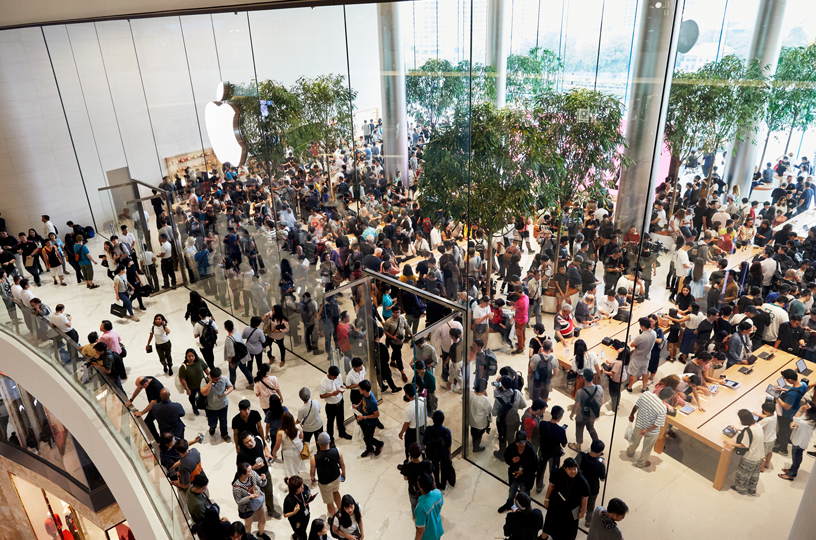
    Apple China has reopened 10 more stores in China, as the business begins to return to normal despite the ongoing coronavirus outbreak.

    The 10 reopened outlets, which are located in Shanghai, Chengdu, Dalian, Guangzhou and Qingdao Vientiane City, will operate with limited business hours, according to stores’ websites.

    It is not yet clear whether or not the 10 Apple China stores will apply the same measures to prevent coronavirus transmission as five stores in Beijing which reopened last week with protection, including temperature checks of customers upon entry

    Meanwhile, Apple warned of global iPhone supply shortages earlier this week, and said it would be unlikely to meet quarterly revenue targets while its Chinese factories remained shut.

    “Work is starting to resume around the country, but we are experiencing a slower return to normal conditions than we had anticipated,” the company said in a statement. “As a result, we do not expect to meet the revenue guidance we provided for the March quarter.”

    Although the iPhone manufacturing partners outside Hubei have resumed production, “they are ramping up more slowly than we had anticipated”.

    Meanwhile, archrival – Samsung – has launched its latest smartphone in Vietnam, saying its factories in the country are running at full capacity during the coronavirus epidemic.

    Nguyen Tri Thong, corporate marketing director at local smartphone unit Samsung Vina Electronics, told the Nikkei Asian Review that Samsung’s new products have been available for delivery as the company has a clear production schedule.

    “The outbreak of the coronavirus did create challenges to many businesses globally. However, we have been mobilizing our backup plans in order to maintain our position,” Thong said. “We don’t see any serious issues in our supply chain at the moment,” he said without giving further details.

  • Beijing Auto Show Delayed Due To Coronavirus

    Beijing Auto Show Delayed Due To Coronavirus

    Organizers of Beijing auto show, which is scheduled to be held in late-April, said on Monday the event will be delayed event due to the coronavirus outbreak.

    Across mainland China, officials said the total number of coronavirus cases rose by 2,048 to 70,548, with 1,770 deaths.

  • Tesla Seeks Approval To Build Longer Range Model 3 Cars In China

    Tesla Seeks Approval To Build Longer Range Model 3 Cars In China

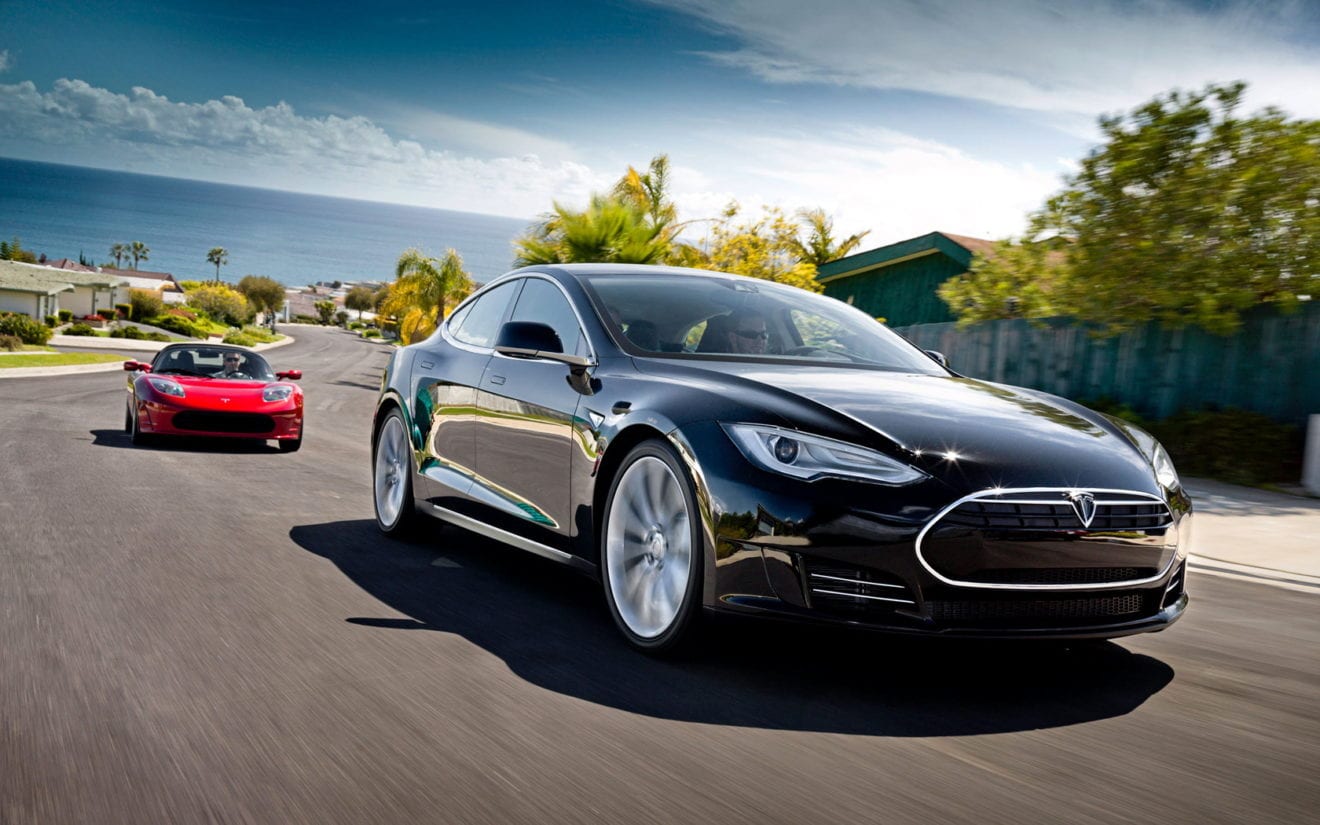
    Tesla Inc is seeking approval from Chinese regulators to offer a new China-made Model 3 variant, a government document shows.

    The variant would have a longer driving range, a source familiar with the matter said.

    Tesla shares overvalued: strategist

    National Securities’ Art Hogan says don’t buy Tesla at current levels because the stock has “gotten ahead of itself.

    Like the current China-made Model 3, which has a standard driving range of more than 400 kilometers, it would be a rear-wheel-drive vehicle, the source said, who was not authorized to talk about the matter and declined to be identified.

    Tesla, which started delivering cars in December from its $2 billion Shanghai factory, also sells longer-range imported Model 3s with an all-wheel-drive in China.

    The electric vehicle maker restarted production in Shanghai on Monday after the government ended an extended holiday that had been put in place due to the new coronavirus outbreak.

  • Global brands continue to shutter stores across China as coronavirus spreads

    Global brands continue to shutter stores across China as coronavirus spreads

    Widespread temporary store closures continue across China as the coronavirus continues to spread throughout the country.

    Officially, China’s New Year holiday – extended by the government for a week to help reduce the spread of the virus – ended yesterday, but office staff was encouraged to work from home.

    Tech giant Apple said on Friday it hoped to reopen corporate offices and contact centers later this week, but the closure of its physical stores would continue indefinitely.

    As at 10am ICT on Tuesday, February 11, 43,108 cases of coronavirus had been confirmed, and 1018 fatalities, almost all of those in Mainland China. However, in an encouraging sign, 4048 people had been confirmed as recovered. The mortality rate has edged up slightly to 2.3 percent with most deaths due to underlying respiratory conditions or pneumonia.

    Brands across fashion, technology and almost every other non-essential retail category continued to shutter stores on the mainland.

    VF Corporation, which owns Timberland, Vans, The North Face and Dickies, says 60 percent of its outlets in Mainland China are closed and those still open have seen “significant declines in retail traffic.”

    Muji and Uniqlo have shut about half of their store networks.

    Japanese makeup company Shiseido estimates its China sales were down 55 percent over Lunar New Year, traditionally a peak selling period. Sales to foreign tourists through Japanese retail outlets were down by 40 percent. The company has launched the Relay of Love Project, “in the hope that everyone affected may return to health and safety as soon as possible”.

    In addition to 1 million CNY (US$143,000) already donated to the Charity Federation of Wuhan, Shiseido will donate a further 10 million CNY ($1.43 million) to the Shanghai Charity Foundation and 1 percent of sales from Asian markets will be reserved for other assistance.

    UK luxury-fashion label Burberry has closed 24 of its 64 stores in China and says those still trading – under reduced hours – have experienced “significant footfall declines”.

    The parent of Kate Spade, Coach and Stuart Weitzman, Tapestry, says it has closed the majority of its stores in China.

    Capri Holdings says that about 150 of its 250 stores trading under the Michael Kors, Versace and Jimmy Choo banners are closed.
  • Yum China launches contactless delivery services

    Yum China launches contactless delivery services

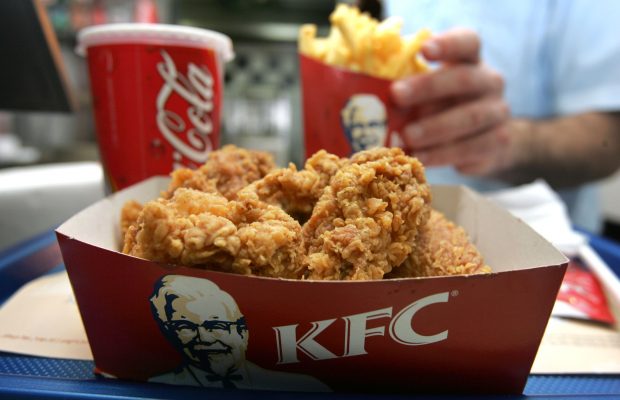
    Yum China, which operates Chinese KFC and Pizza Hut networks, has launched a contactless food-delivery service.

    The move is a response to concerns about transmission of coronavirus between customers and delivery staff – but will also give confidence to consumers who are increasingly buying from food-delivery services to avoid public contact in supermarkets, shopping centers, and restaurants.

    “The health and wellbeing of our employees and customers is our top priority,” said the firm in a written statement to Business Insider, “and the innovative new services will help reduce the risk of person-to-person transmission of the coronavirus and protect our employees and customers”.

    Customers who elect for the contactless service will be instructed to remain at least 10 feet from the masked delivery personnel, who will remove the boxed food from its thermal pouch and place it on an agreed pick-up surface only after visually confirming the receiving party.

    Delivery staff is expected to disinfect their hands before and after every transaction.

    Food may also be picked up in-store in hygienically sealed packages.

  • Paris starts to suffer as Chinese tourists disappear

    Paris starts to suffer as Chinese tourists disappear

    As the hordes of mainland Chinese tourists who used to descend on the prime shopping districts of Paris have dried up within just a fortnight, luxury brands are beginning to plan staff layoffs and other strategies to reduce costs.

    With the rapid spread of the coronavirus across Mainland China, outbound tour groups have been suspended and airlines all over the world have curtailed or canceled all services to the area. In 2018, about 2.2 million Chinese people visited France. But this week, stores they would normally frequent around Paris were almost empty.

    In just one example of the coronavirus’ impact on the city is the manager of cosmetics store Paris Look, Chomphunut Supraditapron, who told Thomson Reuters she fears for her job since the steady daily stream of Chinese shoppers stopped arriving in her store.

    “We need Chinese customers because it is Chinese customers who buy the most,” she said.

    The world-famous Avenue des Champs-Elysees is home to flagship stores for a variety of luxury European brands, including a giant Louis Vuitton Maison and one of the world’s largest Sephora stores.

    LVMH, which owns Louis Vuitton and Sephora, among other luxury retail brands, has seen its stock price fall 9 percent since January 17 – entirely due to fears over the coronavirus’s impact on retail spending. The company’s Paris flagship reportedly attracts 37 million visitors every year.

    Footfall in Paris Maisons has plummeted since the Chinese stopped coming, although, until recently, some of those brands said they are noticing a compensatory upturn in Mainland China sales. That outcome is now in doubt as many retailers have been forced to close more than half of their Chinese stores as authorities try to restrict the spread of the virus.

    The timing of the virus’ outbreak – on the eve of the busiest trading period of the year for any retailer targeting Chinese – Lunar New Year – has exacerbated the problem.

    Regional Tourism Board data shows Chinese shoppers spend an average of €1024 (US$1136) on a five-night stay in Paris – significantly more than the average of tourists from other countries which is around €640

    “The crisis is deepening and we are witnessing some kind of hysteria,” Didier Kling, the head of the Paris chamber of commerce told Thomson Reuters.

  • UBS Doubles China Headcount Early

    UBS Doubles China Headcount Early

    UBS shows no sign of slowing down its mainland China expansion plans despite an ongoing coronavirus outbreak, having met its target set in 2016 to double headcount to 1,200 ahead of schedule.

    UBS group chief executive Sergio Ermotti said in 2016 that the bank would double its China headcount in within five years to tap into the gargantuan domestic financial industry which is undergoing a historic transition to allow greater foreign ownership.

    Sources familiar with the matter said that UBS had already met the target to overall double staff size from 2016’s 600 to 1,200 ahead of its 2022 plan.

    The bank remains committed to wealth management in China despite the ongoing outbreak,, adding that business was largely unaffected with the exception of deferring non-critical travel. For staff that must enter the mainland, the bank has asked that they stay home for a 14-day period afterward before returning to office – the widely used standard to determine if one has been infected by the deadly virus.

    A spokesperson for the bank declined to comment on the matter.

    Even with its current scale, the bank’s hiring spree in mainland China is unlikely to end soon. UBS’s majority-owned investment banking joint venture is also accelerating growth with plans to double its current headcount of around 400 in three to four years, in addition to pursuing full ownership by 2020-end.

    Overall, our plan is to steadily grow China onshore headcount, but we are not just going to compete on size,» said David Chin, APAC head of investment banking and China country head at UBS, to reporters in December last year, placing emphasis on the derivatives business.

    Chinese regulators announced last year that it would scrap foreign ownership limits this year in futures, securities, and mutual fund companies. Global financial institutions including J.P. Morgan, Goldman Sachs and BlackRock are vying for a piece of mainland China’s financial industry as the country undergoes a landmark opening of its $45 trillion market.

  • Fruit containers stuck as China border gate closes

    Fruit containers stuck as China border gate closes

    Over 200 container trucks full of fruit stand idle near a northern border gate as the new coronavirus outbreak halts cross-border trade.

  • Apple iPhone production is set to resume in China on February 10th

    Apple iPhone production is set to resume in China on February 10th

    With the coronavirus claiming the life of 490 people and infecting 24,324 at last count, a number of businesses in China have cut back their operations or have closed altogether. This hits Apple right in the solar plexus since the company depends on contract manufacturers located in China to produce many of its products including the iPhone. The virus also impacted some of Apple’s China-based supply chain.

    Bloomberg reports that the Chinese manufacturer that Apple relies on the most, Foxconn (aka Hon Hai Precision Industry Co.) will resume production on February 10th. Other companies like Quanta Computer Inc., Inventec Corp., and LG Display Co. will also go back to work next week. TF International analyst Ming-Chi Kuo recently cut his estimate of iPhone shipments for the current quarter by 10%. For the calendar first-quarter (Apple’s fiscal second-quarter), Kuo now sees the company delivering 36 million to 40 million iPhones. Apple no longer releases the number of phones it ships during its quarterly reports, but the analyst believes that the manufacturer delivered 38 million during last year’s calendar first-quarter. So for the three months from January through March, he sees iPhone shipments declining as much as 5.3% or rising by as much as that same percentage.

    The February 10th date when production is supposed to ramp up again at Foxconn isn’t exactly written in stone. Some workers are living in municipal lockdowns and transportation of people and materials has slowed down tremendously. The facility where Foxconn builds most of its iPhones is located in Zhengzhou and the factory used by assembler Pegatron to build the device is in Shanghai. Both are more than 311 miles away from Wuhan, the city in China considered to be ground zero for the coronavirus.

    Earlier this week, Apple said that it would shut its stores, corporate offices and consumer centers through February 9th due to an “abundance of caution and based on the latest advice from leading health experts.” Apple is still able to ship orders throughout the country, so those looking to pick up a new iPhone in China won’t be blocked because of the virus.

    Meanwhile, GF Securities analyst Jeff Pu says that companies in the supply chain are seriously concerned about a lack of employees. He notes that “The main variable is whether the government will push back the time for resuming production, though it is not very likely given the complexities of organizing transportation for the returning migrant workers.” Apple has more than 10,000 direct workers in China including those working in the Apple Stores. The firms that make up Apple’s contract manufacturers and supply chain in China have over 1 million people producing parts and assembling Apple’s products.

    While it was feared a week ago that the virus could delay the launch of the iPhone 9, Foxconn now says that it has a backup plan that will allow the next new iPhone model to be released on schedule. As we told you during the waning days of January, trial production of the phone has already started. The iPhone 9 will look like the iPhone 8 down to the 4.7-inch LCD display. But unlike the iPhone 8 which is powered by the 10nm A11 Bionic chipset, the iPhone 9 will be equipped with the same 7nm A13 Bionic SoC found in the 2019 iPhone models. The new device will also be the beneficiary of a 50% hike in memory from 2GB of RAM to 3GB. We could see the iPhone 11’s 12MP Wide camera on the back along with a 1,821mAh battery. The iPhone 9 is expected to start at $399 and could be unveiled next month.

  • Kjus opens Beijing flagship store

    Kjus opens Beijing flagship store

    Luxury sportswear brand Kjus China has opened a flagship store in Beijing, incorporating a VIP lounge with a cafe and highlighting the luxury image of the brand.

    Designed by 5 Star Plus Retail Design, the store features a futuristic, high-tech and luxurious ambiance using cool high-end materials in metal and stone.

    “We used cool, modern, and high-end materials such as metal and stone,” a 5 Star Plus spokesperson explained about the design of the store.

    “Using stone elements in retail fixtures and stone-look flooring helped to create a more luxurious feeling to the store.

    While Kjus stores elsewhere in the world typically use wood, the 5 Star team thought wood would not achieve a futuristic feeling in this location as it is considered something of classic material.

    “However, using wood on a smaller-scale helps to draw a connection to the Switzerland-born brand. We used a wooden background for some of the high-rack equipment, as well as wooden tables, which help to create some warmth in an otherwise cool space.”

    Another important element of the Kjus China store which communicates luxury is to ensure there is enough empty space in the store, without displaying too many SKUs.”

    Special lighting effects and technological advancements are used to explain product features, key products and collections.