Tag: China

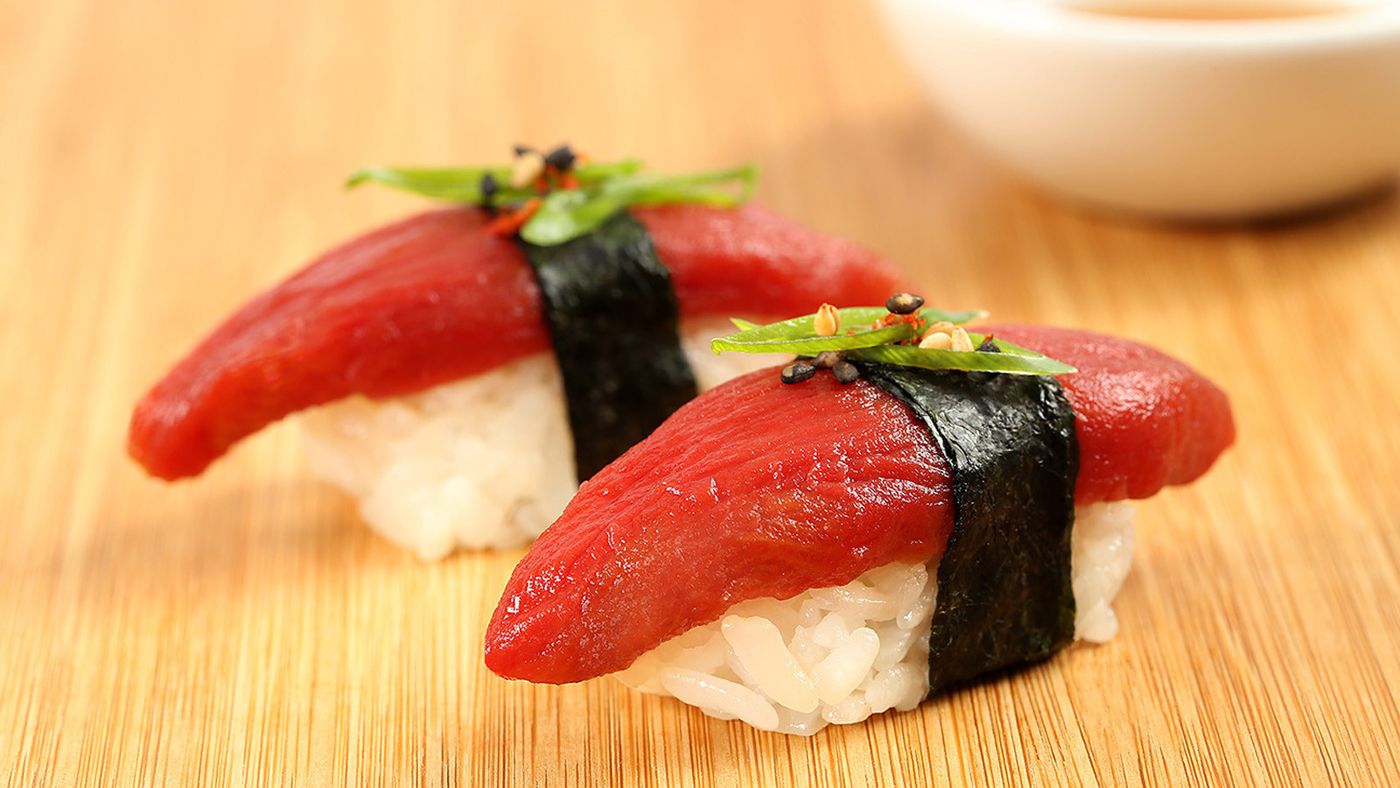
  • Japanese franchise Kura Sushi to launch in China

    Japanese franchise Kura Sushi to launch in China

    Japanese restaurant franchise Kura Sushi is launching in its third overseas market, China.

    The brand has already enjoyed some success in the US and Taiwan, and is now set to open its first Chinese mainland location in Shanghai. Ten further locations are planned for the territory later this year.

    According to a Nikkei report, the firm’s current strategy is to “double its revenues outside Japan to ¥300 billion (about US$2.7 billion) in 2030 by increasing its total number of outlets worldwide to 1000”.

    The move coincides with Kura Sushi’s launch of its global flagship in Tokyo, where it expects to serve 2000 people per day, including around 600 tourists.

  • Kenzo opens on Tmall Luxury Pavilion

    Kenzo opens on Tmall Luxury Pavilion

    Luxury fashion brand Kenzo has launched a flagship store on Tmall Luxury Pavilion, marking the brand’s first partnership in China with an e-commerce provider.

    This also makes Kenzo the first LVMH-owned fashion label to open a standalone store on Alibaba Group’s dedicated platform for luxury and premium brands.

    Kenzo’s flagship store features items from its ready-to-wear, footwear, bags and accessories collections. The brand also launched its kung fu-inspired Chinese New Year capsule collection on the Pavilion, featuring Kenzo’s Kung Fu Rat character, a nod to the zodiac animal of the new lunar year.

    Two items from the new capsule,  a red cap and a zipped card case, also made their global debut on the Pavilion.

    To engage young shoppers, the brand also released a Kung Fu Rat-themed animation and interactive racing game inspired by 1950s comics and martial-arts movies from the 1970s. Pavilion users can play the game, featuring Kung Fu Rat and his Chinese-zodiac companions in a race across a hand-painted landscape, to win special perks and benefits.

    As part of the launch, Kenzo is also offering some of its first Pavilion customers special-edition boxes for purchases as well as interest-free, flexible payment options via Ant Financial’s consumer-lending service, Huabei.

  • Burberry bullish despite Hong Kong sales collapsing

    Burberry bullish despite Hong Kong sales collapsing

    Burberry sales slumped by half in Hong Kong in the third quarter – but the British luxury-fashion label is lifting its full-year forecast as revenue elsewhere compensates.

    Global same-store sales rose by 3 percent as consumers continued to embrace the new collections overseen by incoming creative director Riccardo Tisci.

    The company said the improvement was underpinned by growth in full-price sales although that was undermined in part by ongoing disruptions in the Hong Kong retail market and lower levels of marked-down inventory available.

    Sales in Asia Pacific grew by a low single-digit percentage driven by Mainland China up mid-teens. American sales were stable, while in Europe, the Middle East and Africa, sales grew by a high single-digit percentage.

    “This was another good quarter as new collections delivered strong growth and we continued to shift consumer perceptions of our brand and align the network to our new creative vision,” said CEO Marco Gobbetti. “While mindful of the uncertain macroeconomic environment, we remain confident in our strategy and the outlook for the full year.

    “We now expect full-year total revenue to grow by a low single-digit percentage at CER compared to previous guidance of broadly stable. Adjusted operating margin is expected to remain broadly stable at CER despite the impact of disruptions in Hong Kong.”

    The company said it was continuing to see a strong response from consumers to Riccardo Tisci’s new collections delivering double-digit growth compared to the prior year. “At the end of the quarter, new products accounted for about 75 percent of the range in mainline stores.”

    In China the company continued to focus on inspiring consumers.

    “At the end of December we launched our Lunar New Year campaign which has generated a strong early consumer response. In addition, preparations are underway to take our Autumn/Winter 2020 runway show to Shanghai in April and open our first social retail store in Shenzhen, in partnership with Tencent, in the first half of next financial year.”

    In Japan, the company opened a new flagship store at the Ginza Marronnier building in Tokyo and globally the company continued to refresh stores with about 60 now completed.

  • Investment Banker Bonuses Cut in Asia

    Investment Banker Bonuses Cut in Asia

    Investment bankers at global banks in Asia will see lower bonuses this year due to a slump in dealmaking in the region.

    The bonus pool at UBS’ investment banking unit is 14 percent lower than 2019 for Asia ex-Japan, and 9 percent lower at Morgan Stanley.

    At Citi the decline was lower, at 6 percent, while Goldman Sachs kept overall bonuses flat, the report, which cited unnamed sources, said.-

    According to the publication, slowing economic growth in China, which reached a 30-year low in 2019, was partly behind the slump in dealmaking, with the value of mergers falling 9 percent. Fee compression was also cited as a factor behind the lower bonuses.

    UBS, which is undergoing a global revamp of its business, took a hit as it was suspended from sponsoring IPOs in Hong Kong. The ban was lifted two months early in January.

    Following a record year in 2018, Morgan Stanley’s overall investment banking revenue declined about 12 percent, and its Asia bonus pool was cut after lower merger and acquisition fees, a source said.

  • China Mobile looks to India for future cloud service opportunities

    China Mobile looks to India for future cloud service opportunities

    Reports have stated that the Chinese telco giant has shown immense interest in working with the Indian operators to bring unparalleled cloud networking services.

    Through this, China Mobile could potentially own a substantial stake in the business via a holding company framework.

    This means that while the China-based telecoms major would not be directly involved in the venture’s day-to-day operations, it would still be eligible for board seats and voting rights within the Indian telecom companies.

    According to an unnamed source, reports had surfaced that “top executives of China Mobile met senior management of Bharti Airtel and Vodafone Idea separately in December.”

    “China Mobile is interested in the Indian market” and has expressed its desire to become a holding company “with either of these two companies or even both,” the source said.

  • Chinese E-Commerce Zall Joins Singapore’s Digital Banking

    Chinese E-Commerce Zall Joins Singapore’s Digital Banking

    Business-to-business e-commerce firm, Zall Smart Commerce, will be the latest to apply for a digital banking license in Singapore.

    The Chinese company will be part of consortium joined by Japanese trading company Marubeni and Singapore-based Global eTrade Services, a subsidiary of digital solutions provider CrimsonLogic.

    The consortium is seeking a wholesale digital banking license in Singapore and it hopes to contribute to the city-state’s development as a global financial hub for trading, Zall said in a statement. It joins 14 other groups that have applied for the same license alongside another seven that have applied for digital full-bank licenses, according to the Monetary Authority of Singapore (MAS) said earlier this month. The regulator added that up to five of the licenses could be issued by June this year.

    In addition to its e-commerce business, Zall has some experience in digital finance in mainland China. The firm acquired a virtual banking license for the market in 2017 and has since been operating as Z-Bank.

  • Shanghai Seeks Fintech Hub Status in Five Years

    Shanghai Seeks Fintech Hub Status in Five Years

    The Shanghai government announced a series of policies to motivate firms and talent while formally challenging the similar ambitions of nearby Hangzhou.

    Shanghai’s municipal government is taking an admittedly expedited path, according to a report citing a statement, to becoming a fintech center and will accelerate this development through a series of incentives including a tax cut on related tech firms to 15 percent (from 25 percent) and attractive housing and medical benefits to lure talent.

    Ant Financial, Hangzhou’s homegrown fintech pioneer, also announced yesterday that it would host a fintech conference to support Shanghai’s efforts with expectations to draw up to 30,000 global attendees. The «INCLUSION» conference held in late April will cover themes such as the global digital economy, digital finance, innovative technology, commerce and cities, and sustainability.

    Shanghai’s plans parallel that of Hangzhou’s which is also aiming to be a major hub in the field. In May last year, its local government delivered a plan in to transform the city into a global fintech center by 2030 while leveraging the sector to provide 120 billion yuan ($17.4 billion) in added value to the economy by 2022.

  • Allianz Opens Insurance Holding in China

    Allianz Opens Insurance Holding in China

    Based in Shanghai, the China holding company will support the German insurer’s growth ambitions in the country as it aims to play a larger role in China’s insurance sector and grow with the market.

    Global insurer Allianz has opened China’s first fully foreign-owned insurance holding company, the firm announced in a statement on Thursday.

    Allianz (China) Insurance Holding Company will be led by chairman Sergio Balbinot and CEO Solmaz Altin. The firm said it hopes the establishment of the company will support Allianz’s growth ambitions in China by enhancing its strategic and financial flexibility to capture business opportunities, further increase Allianz’s investment and drive long-term success in the market.

    Allianz received the approval from the China Banking and Insurance Regulatory Commission (CBIRC) to commence operations in November 2019. The launch follows a series of measures recently announced by the Chinese government to further open up and encourage investment in China by foreign financial insurance institutions.

  • Watsons China launches WeChat Work and Cloud stores

    Watsons China launches WeChat Work and Cloud stores

    Health and beauty retailer Watsons has partnered with Tencent’s WeChat Work platform to establish an online presence and launch cloud-based WeChat stores this quarter.

    Watsons China’s launch on WeChat Work and the establishment of cloud stores will enable the brand to provide more personalised, round-the-clock services to its more than 65 million-strong customer base shopping at Watsons’ 3800 physical outlets – each of which will have a corresponding cloud store under the new system.

    “To retain our over 65 million loyal members as well as appeal to new customers, we have to be at the cutting edge of retailing, and find a way to stay close with them,” said Watsons China CEO Kulvinder Birring. “With big data technology, these social-commerce platforms add another dimension to our relationship with customers, enabling us to connect and interact with them, and ultimately become the most-loved brand of our customers.”

    “We’ve been working very closely with Watsons,” said WeChat Work senior industry director Hau Lu. “Combining the advantages of both parties, we will further cooperate and jointly search for more business opportunities.”

    The new Watsons China’s WeChat Work platform will establish a communication channel in which customers can add store staff as WeChat friends, who then become their personal beauty consultants. Customers can seek advice from store staff at any time, from anywhere, and enjoy one-to-one customer service. If a product is not available from a customer’s nearest branch, store staff can help to order the item in the cloud store system. Customers can also choose to have their order delivered via courier, “click & collect” or the “one-hour flash delivery” service.

    “WeChat Work helps us nurture a closer relationship with our customers,” said Wanda Plaza ZhengZhou Watsons store manager Ellen Shen. “They can now contact us any time for personalised service and advice. We’re glad to be able to earn their trust and become their friends. Since its launch, we’ve received very positive response from customers who have added us as friends to enjoy this one-to-one service.”

    Watsons has also introduced an AI chatbot called Wilson, who is a virtual spokesperson for the brand available 24/7 via WeChat Work. The bot can provide customers with professional and personalised advice, aimed at providing an entertaining and useful addition to the shopping experience.

  • DBS Obtains Bond Settlement Agent License in China

    DBS Obtains Bond Settlement Agent License in China

    DBS Bank (China) announced that it received a Bond Settlement Agent license in the China Interbank Bond Market, making it the first and only Singapore bank to be granted such a license.

    DBS Bank (China) has received a Bond Settlement Agent license from the People’s Bank of China to act as a bond settlement agent in the China Interbank Bond Market, the lender said in a statement on Tuesday. Prior to the license, DBS China has been involved in the China bond market as Trial Bond Market Maker in the China interbank bond market for years.

    This license will enable DBS China to serve overseas investors who are interested in the China bond market because from now on, we can provide the bond settlement or custody services to them.

    The China bond market is the largest in Asia and the second-largest in the world and is of significant interest to international investors. With the license, we look forward to introducing more overseas customers to the China bond market and providing our comprehensive service to international institutional investors said Neil Ge, CEO of DBS China in the statement.

    China’s onshore bond market worth was 88 trillion yuan ($13.12 trillion) in February last year, according to the country’s central bank. Since last April, the phased inclusion of Chinese sovereign bonds and debt sold by three key state-owned policy banks into the Bloomberg Barclays Global Aggregate Index has attracted a new group of investors into China’s domestic bonds.

    Up to then, inflows have been dominated by central banks and sovereign wealth funds. With the inclusion of China bonds into such indices, private-sector managers following the index would be looking to join the market.

  • Chinese fruit-vending machines driven by AI

    Chinese fruit-vending machines driven by AI

    AI-run fruit-vending machines are offering Chinese consumers a new way of buying fruit and vegetables.

    The machines, developed two years ago by Beijing Kuo’an Science and Technology, are providing an alternative channel for residents of China’s tier-one and tier-two cities, who traditionally rely on relatively distant large-scale supermarkets and community stores for fruit purchases.

    “Every unit of AI fruit vending machines has 24 smaller sections with different types of fruit or vegetables,” said Beijing Kuo’an Science and Technology chairman Guan Luanjun. “Every section has a built-in set of scales. When customers select their fruit, they can use WeChat or AliPay to scan the QR-code on the Chinese fruit-vending machines to open the relevant section. The section automatically slides out to present the customer with its content. The customer can select and take their fruit or vegetables, and then the section automatically calculates the weight that was removed. The customer can then pay for their fruit or vegetables with WeChat or Alipay.”

    The vending machines feature cameras on both sides, allowing them to monitor customers who operate them, minimising abuse of the service. In addition, WeChat and Alipay provide payment methods that both vendor and customer trust.

    “The main advantage of Convenient E-Fresh machines over traditional, large-scale supermarkets and community stores is the low cost,” said Guan, who adds that the model allows vendors to source fruit at low cost from wholesale markets. “In addition, our automated vending machines only occupy a small area, which means that we save on rent and labour cost in comparison with large-scale supermarkets and community stores that occupy large terrains and employ large numbers of people.”

    The firm currently operates 50 AI Chinese fruit-vending machines in Suzhou, and intends to expand operations across the entire Yangzi River Delta area within two years.

    “We hope to improve consumer knowledge and consumer recognition of the Convenient E-Fresh brand,” adds Guan. “And we plan to scale our operations within two years with AI vending machine units in 500–1000 districts. Furthermore, we are in negotiations with a number of domestic and overseas suppliers to make sure consumers have a broad choice of beautiful and delicious fruits for low prices. We sincerely hope that our efforts help to improve the entire supply chain.”

  • RELX China flagship set to open in Shanghai

    RELX China flagship set to open in Shanghai

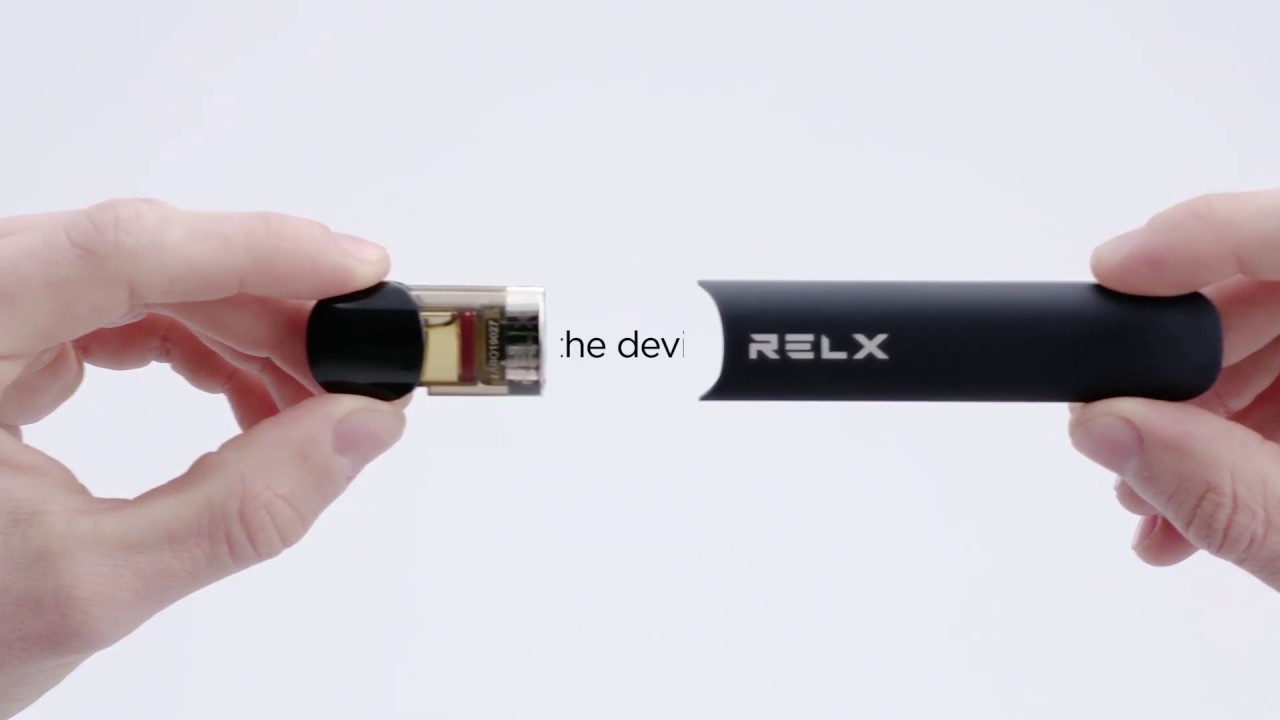
    E-cigarette company RELX Technology has opened its first RELX China flagship and says it aims to have 10,000 stores globally within three years.

    Located in Shanghai’s CBD, the RELX China flagship occupies a 140sqm area, creating a space to educate existing adult smokers and vapers on RELX vapor products.

    “Consumers nowadays prefer immersive shopping experiences, and we want to make this flagship a place where we can not only better communicate with them about our product and values but also better understand their needs,” said Wang Tao, head of RELX’s new retail business.

    According to Wang, RELX will launch stores in various cities, such as Beijing’s 798 art hub and Shenzhen’s Hai Gang Cheng, to provide what he describes as “avant-garde experiences” to consumers.

    The RELX flagship features four zones including a brand experience area, a consumer education area, an interactive zone, and a device-engraving service. The store uses a facial-recognition technology called Project Sunflower to identify minors attempting to enter the store. Customers also have to undergo another layer of verification to ensure their ID matches before making a purchase.

    RELX says it plans to invest RMB 500 million in establishing 10,000 stores globally over the next three years.

    “RELX is investing heavily in breakthrough technologies to enhance franchisees’ profit margins and increase consumer loyalty during the course of its brick-and-mortar expansion,” said Jiang Long, co-founder and head of sales at RELX. “As always, our focus will remain on preventing minors from using e-cigarette products and leading the path of innovation for the entire industry by developing advanced retail technology.

    Launching its first retail store last January, RELX China operates more than 1400 outlets across 300 cities.

  • Ford’s Vehicle Sales In China Tumble For Third Consecutive Year

    Ford’s Vehicle Sales In China Tumble For Third Consecutive Year

    Ford Motor China vehicle sales fell for a third consecutive year, by 26.1%, as it battles a prolonged overall sales decline in its second-biggest market that has hit demand for its mass-market Ford brand and sports utility vehicles. The U.S. automaker delivered 146,473 vehicles in China in the fourth quarter, down 14.7% year-on-year, Ford said in a statement. In total, it sold 567,854 vehicles over 2019. Ford has been trying to revive sales in China after its business began slumping in late 2017. Sales sank 37% in 2018, after a 6% decline in 2017.

    Anning Chen, president, and chief executive of Ford Greater China, said that while 2019 was a “challenging” year for the automaker, it saw its market share in the high-to-premium segment stabilize and its sales decline in the value segment start to narrow in the second half of the year.

    “The pressure from the external environment and downward trend of the industry volume will continue in 2020, and we will put more efforts into strengthening our product lineup with more customer-centric products and customer experiences to mitigate the external pressure and improve dealers’ profitability.”

    The automaker plans to launch more than 30 new models in China over the next three years of which over a third will be electric vehicles. It has also said it would localize management teams by hiring more Chinese staff and aimed to improve relationships with joint venture partners.

    New models it launched in the fourth quarter include a new Ford Escape version – for which the automaker said orders received so far have been much higher than expected – and the Lincoln Corsair, the first localized Lincoln model in China.

    In China, Ford makes cars through a joint venture with Chongqing Changan Automobile Co Ltd and Jiangling Motors Corp Ltd (JMC). It has also said it would partner Zotye Automobile Co Ltd to sell lower-priced cars.

    Its larger U.S. rival General Motors Co last week said its sales in China fell 15% from a year earlier to 3.09 million vehicles in 2019, its second year of decline.

    China’s auto market is set to contract by 2% in 2020 for the third year of decline, the China Association of Automobile Manufacturers (CAAM) forecast, due to a weaker economy and trade dispute with the United States.

    Over 28 million vehicles were sold in 2018, down 3% from the prior year, while 2019 sales are likely to have declined 8% from the prior year, CAAM said.

  • Luckin Coffee ways into the vending-machines landscape

    Luckin Coffee ways into the vending-machines landscape

    China’s largest coffee chain Luckin Coffee is moving into the vending machines market.

    “It allows us to get closer to consumers and we are not restricted by the license approvals,” said Luckin founder and CEO Qian Zhiya of the new strategy. Luckin’s machines will serve freshly brewed drinks as well as food.

    The firm also launched a share placement and a convertible bond worth a combined US$821 million last week, according to a report.

    Proceeds will be used to open more stores and to invest further in sales and marketing.

    Luckin recently overtook Starbucks in terms of the number of outlets within the territory, operating more than 4500 stores. The firm focuses primarily on the coffee delivery and pickup business, and so stores are typically smaller in size than Starbucks locations and some are without seating.

  • Bank of China Approved for Saudi Branch Launch

    Bank of China Approved for Saudi Branch Launch

    Bank of China has been approved by Saudi Arabian authorities to open a branch in the kingdom, in yet another move towards further internationalization.

    Saudi Arabia’s cabinet approved the Chinese lender’s license, according to a report citing a tweet from the state news agency SPA.

    Bank of China joins a wave of Chinese firms seeking to expand in Saudi Arabia, its close strategic ally and top oil supplier. Saudi Arabia is undergoing major reforms to diversify the economy away from energy in a grand strategy called «Saudi Vision 2030». Four years ago, rival lender, Industrial and Commercial Bank of China, launched its first branch in Riyadh.

    Capitalizing on Saudi Arabian opportunities aside, the branch launch marks another step towards for China towards further internationalization through its financial entities. In December last year, Bank of China launched its first branch in Romania through the capital of Bucharest.