Tag: coffee

  • Rocket Internet-backed Flash Coffee plans Asia-wide rollout

    Rocket Internet-backed Flash Coffee plans Asia-wide rollout

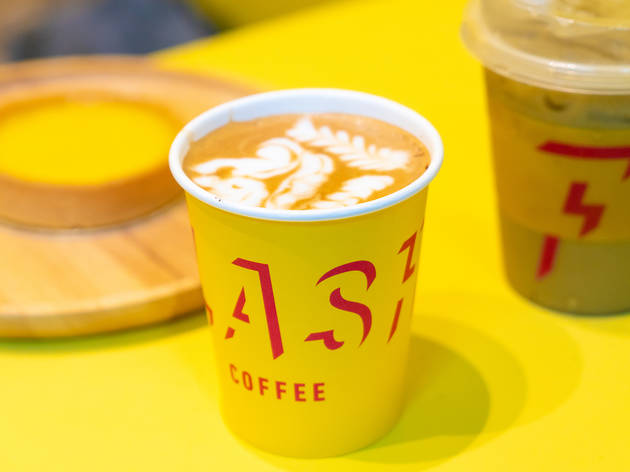
    The tech-enabled coffee chain, Flash Coffee, is accelerating its Asian expansion plan, making its Hong Kong debut this month and committing to opening its first stores in Japan and South Korea later this year.

    Launched last year, Flash Coffee already operates more than 100 locations across Indonesia, Thailand, Singapore, Taiwan and Hong Kong. The chain aims to increase its network to more than 300 stores, expanding its footprint into Malaysia, Vietnam and the Philippines next year.

    The Hong Kong launch follows Flash Coffee’s Series A funding round led by tech investment firm White Star Capital last April where it successfully secured US$20 million from a range of investors, including Rocket Internet, whose subsidiaries include Global Fashion Group and HelloFresh.

    Located at Golden Centre in Sheung Wan, the chain’s first Hong Kong store is – like its others – designed to “fit the needs of the ‘new normal’ and cater to a bustling lifestyle”. Customers can order through a mobile app and pay before picking the order at the store or have it delivered. Meanwhile, Flash Coffee connects its customers and baristas through individualized consumer and barista mobile apps, matching the order with a nearby pick-up outlet.

    The chain also offers a digital coffee loyalty program on the app, offering gamified challenges and personalized rewards.

    “Hong Kong is already recognized as a city that is willing to embrace technology,” said Jonathan Tsao, MD at Flash Coffee. “Over the past few decades the city has also built up a reputation for its love of premium coffee – but so far, this has only been available at premium prices.

    “Flash Coffee intends to shake things up, by offering a new coffee culture built around technology, affordability, and digitally-driven customer-focused solutions.”

    The launch of Hong Kong’s first Flash Coffee store will be followed by a series of new store openings in Causeway Bay, Mong Kok and Wan Chai by the end of next month. The coffee chain aims to reach 50 stores in the territory by mid-next year.

  • Vietnam coffee exports to UK drops

    Vietnam coffee exports to UK drops

    Vietnam’s coffee exports to the U.K. have declined in H1 after its products failed to meet quality requirements and consumer preferences. The fourth wave of Covid-19 that hit the country also affected export activities.

    Coffee exports to Britain fell by 48.4 percent in volume terms and 49.3 percent in value to 16,400 tons and $29 million. Vietnam’s share of that coffee market decreased from 27.32 percent to 16.35 percent.

    The U.K.’s coffee imports from most of its suppliers increased during the period, except from Vietnam and Honduras. Vietnam’s exports to the country are in the form of raw or semi-processed coffee, while the British mainly consume instant coffee.

    Experts said the Vietnamese coffee industry should strive to meet its increasingly stringent requirements and British consumers’ tastes to boost exports.

    Vietnam is the second-biggest coffee producer globally behind Brazil. Last year, its exports fell marginally and were worth $2.74 billion.

  • De’Longhi links coffee lovers and roasters in virtual Coffee Lounge

    De’Longhi links coffee lovers and roasters in virtual Coffee Lounge

    Small appliance brand De’Longhi Australia has launched an online community for coffee lovers including a marketplace linking consumers with artisan coffee roasters around the nation.

    The Coffee Lounge has been created as a space that “brings together the world of beans, milk and machines,” aiming to help educate and support consumers who want to learn more about coffee and enjoy the culture behind the cup.

    “Whether you’re just starting your coffee journey or a more experienced at-home barista looking to refine your skills, this new website is designed to provide you with all the tools and resources you need to create the perfect coffee,” explains George O’Neil, marketing director at De’Longhi.

    “While lockdowns around the country limit how far we can travel at the moment, we want to be able to support roasters across the country with the launch of this new website. Our aim is to support the coffee industry and become the first destination that coffee lovers head to if they wish to learn more and discover the newest, widest variety of artisan blends.”

    De’Longhi expects coffee lovers from all over the world to participate.

    In the Coffee Lounge’s marketplace, consumers can browse and learn about different types of coffee beans so they can create barista-quality coffee at home. It launches with 28 coffee packs from seven local roasters including Industry Beans, Criteria Coffee and Seven Miles Coffee Roasters.

    In a gamified process, consumers can answer a one-minute quiz that helps create a personalised recommendation for visitors of the roast most likely to suit their taste.

    Industry news on trends and innovations, recipes, and tips and tricks from coffee experts are also included in the lounge.

    “The De’Longhi Coffee Lounge aims to bring the world of coffee machines and beans together for all coffee lovers to enjoy,” says O’Neil.

  • Inside Blue Bottle Coffee’s trendy new Osaka store

    Inside Blue Bottle Coffee’s trendy new Osaka store

    lue Bottle Coffee, the Nestle-owned American coffee chain, has entered Osaka with a trendy look designed by Tokyo-based studio, I In.

    Customers entering the store are welcomed by an open space filled with the essence of warm wood and bright light through floor-to-ceiling glass windows. In contrast with the wooden floor, the barista’s drip station is made of hairline polished stainless steel, resembling a stage.

    “I thought it would be great if the store could make the series of things that the barista makes and give to customers the most shining, so I lit up the area of ​​the drip station where the barista stands and made it shine like a stage,” said Yohei Terui, founding partner at I In, who is also in charge of designing the store.

    Throughout the cafe, special blue glass, inspired by Blue Bottle’s signature colour, is used to highlight the brand’s message. A coffee-coloured spherical glass chandelier is installed throughout the atrium at the staircase area leading to the second floor.

    Different from the ground floor, the upper floor is dominated by white-coloured materials. Centrestage is a special area stimulating the five senses of visitors. Customers sitting in this area will encounter a sensory experience where music and images, created in collaboration with Panoramatiks, ‘fall’ from the ceiling.

    “It is not just a concept, but a place that really stimulates the five senses of humans,” the design studio described.

  • Robot baristas to serve coffee in over 30 train stations in Singapore

    Robot baristas to serve coffee in over 30 train stations in Singapore

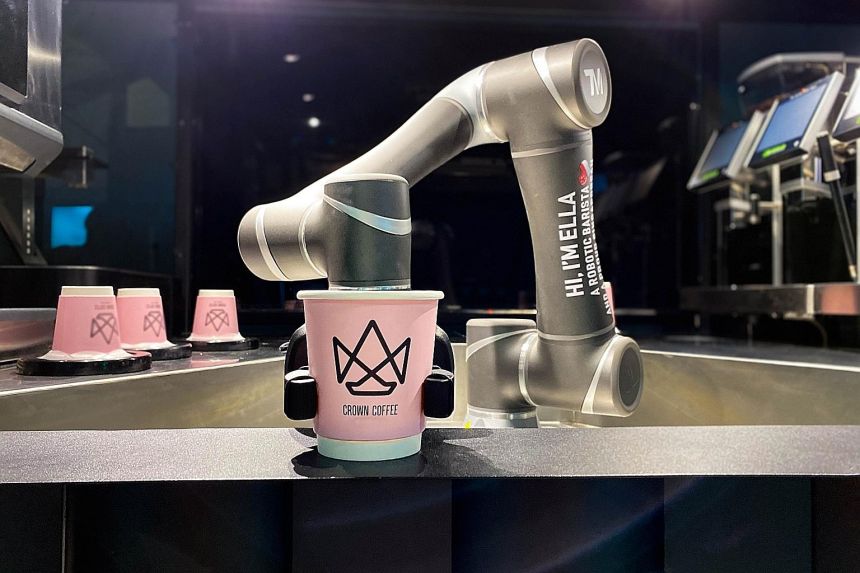
    Singapore-based Crown Digital announced yesterday that it will be installing its robotic baristas at 30 Mass Rapid Transit (MRT) stations in that country by the end of 2022.

    Dubbed “Ella,” Crown Digital’s robo-coffee kiosk is 5 sq. meters, serves a variety of coffee and tea drinks, and can make up to 200 coffees per hour. While Ella uses an articulating arm to make and serve drinks, one of its standout features is its transparent screen that can display information about drinks, orders and even full-motion videos and graphics.

    For these MRT installations, Crown Digital has collaborated with Stellar Lifestyle, which has “expertise in property and retail management, media and digital advertising solutions,” according to the Crown Digital announcement blog post. Crown Digital also wrote that Stella Lifestyle has invested an undisclosed sum in Crown Digital’s pre-Series A round of funding.

    This is the second rail network that Crown Digital has partnered with, following a pilot deal with Japan’s JR East‘s train stations signed at the end of last year. With their high-traffic audiences looking for refreshment on-the-go, transit hubs like MRT stations and airports are popular target markets for robotic coffee kiosk companies that are just now coming market such as Crown Digital, Smyze, and Cafe X.

    Another benefit to robotic coffee baristas in these pandemic times is that they are contactless. Robots don’t get sick, and don’t act as a vector of viral transmission the way that humans do.

    While there are a number of robot baristas coming to market, we have yet to see big coffee chains jump into automation. The exception is Costa Coffee, which bought Briggo last year and re-branded those Coffee Hauses into Costa Coffee BaristaBots. Though I suspect that as more deals like Crown Digital’s start popping up, we’ll soon see other big coffee brands like Starbucks and Dunkin add their own robots as well.

  • Starbucks plans to reduce food waste in Japan

    Starbucks plans to reduce food waste in Japan

    Starbucks today announced a new program to reduce food waste at select Starbucks stores across Japan.

    To ensure unsold food does not go to waste, participating stores have the option of marking down select bakery products by 20% several hours prior to closing.

    As part of Starbucks ongoing commitment to fight against hunger, the company will donate part of the revenue of these discounted sales to Musubie, a local non-profit which provides meals for children across Japan.

  • Retail coffee prices to climb as frost and freight costs bite

    Retail coffee prices to climb as frost and freight costs bite

    A massive shipping logjam caused by the most devastating frost in decades in Brazil and record freight costs wrought by COVID-19 in top coffee producer Brazil is expected to push retail prices to multi-year highs in the coming weeks. have hope.

    A rise in coffee prices will further increase the cost of the shopping cart for other items such as bread, vegetable oil and sugar. The United Nations Food Agency’s index of world food prices for July saw a 31% year-on-year rise at a time when many consumers are struggling financially because of the pandemic.

    The worst cold snap since 1994 in Brazil sent the price of green coffee beans to the highest level in nearly seven years and is expected to pass on to consumers when they buy roasted beans or ground coffee at supermarkets.The price of Arabica coffee on the ICE Futures US exchange has more than doubled in the past 12 months and crops in Brazil have already dried up after the worst drought in 91 years.

    The extent of the damage is still being assessed, but it could take up to seven years for production to fully recover in areas where there are no coffee trees left.

    Shipping disruptions, partly due to increased demand for consumer goods and not enough ships as people stayed home due to the global coronavirus pandemic, have led to a sharp increase in the cost of transporting beans to major consumer countries in North America and Europe. is of. .

    With merchants believing that consumers will soon have to pay more to buy coffee from supermarkets, the price of a latte or Americano at high street coffee chains may not follow suit in the short term.

    “The roast and ground (coffee at the supermarket) only has coffee and a little packaging. Your coffee at Starbucks can’t go up (as much) because you pay more for the shop, the wifi, the experience,” he said.

    Data released by the US Bureau of Labor Statistics showed ground coffee prices rose to $4.75 a pound in April, up 8.1% from a year earlier and the highest level since July 2015, as a drought-hit Brazil. had an early effect on crops.

    Arabica coffee prices on the ICE Futures US exchange rose sharply, however, after the recent frost and retail prices are sure to increase in response.

    In Brazil, the world’s number two consuming country after the United States, prices of roasted and ground coffee rose 3.4% in June, according to the statistics office IBGE.

    They are sure to grow further. Following the July frosts, Brazilian coffee industry group Ebique asked roasters to analyze their costs and adjust prices accordingly to maintain the stability of their businesses.

    Ebic estimates that green coffee prices for roasters in Brazil have increased by about 80% from the end of December to July.

    “Some companies, including market leaders, have already announced price increases,” Ebic said in a letter to affiliated roasters seen by Businesshala.

    JDE Peet’s, whose brands include Douwe Egberts, Kenko and Peet’s, said there has been a sharp increase in material, freight and other costs over the past 12 months.

    “Historically, significant fluctuations in green coffee prices have been reflected in the market (retail prices) and we expect this precedent to continue,” the company said.

    An increase in transportation costs, coupled with a shortage of shipping containers, can play a major role in driving up prices. Coffee is typically shipped in containers, as opposed to items such as cereals, which are transported in bulk carriers.

    Many coffee companies find it easier to cope with an increase in the cost of beans, at least in the short term, than to increase shipping costs because they often price their purchases several months in advance.

    Mark Schneider, chief executive officer of Nestle, recently said, “We’ve been hedging here for a good percentage of our coffee needs for the rest of this year and even part of next year, So I’m not worried about it.” Conference call, adding it was not in terms of transportation costs.

    Carlos Santana, coffee head trader at Aisa Intergricola, a unit of ECOM Trading, said it was very challenging to ship coffee specifically to the US.

    “It’s not nearly as economical to use this route right now. Ports are full in the US, shipping companies don’t want to move as much cargo there, so they charge more. Prices are three times higher than they were before the pandemic,” They said.

    Thiago Cazarini, a coffee broker in the Brazilian state of Minas Gerais, said despite paying very high prices to secure a container, exporters are having problems trying to load them into ships.

    He said the problem is widespread, affecting all players.

    One US coffee importer said, “Brazil is logically such a mess at the moment. I have coffee that arrived two months ago and haven’t received it yet.”

    Julian Thomas, managing director of Maersk Brazil (MAERSKb.CO), part of the world’s largest container shipping line, said: “The current bottlenecks of pandemic containment measures and a strong demand are also affecting supply chains in and outside Brazil. Is.”

    “We are still serving our customers and can meet their growing demand,” he told Businesshala.

    German container shipper Hapag Lloyd (HLAG.DE) said there were delays for shipping goods, “but not just coffee”.

    Brazil accounts for an estimated 30% of global exports and its peak shipment season has already begun.

    Additional reporting by Maytal Angel in London and Ana Mano in So Paulo; Editing by Veronica Brown and David Evans
  • Coffee prices surge to seven-year high

    Coffee prices surge to seven-year high

    Arabica coffee prices rose 10 percent more on Monday, after jumping nearly 20 percent last week, to their highest in nearly seven years as unusual cold weather threatens coffee crops in the world’s largest producer Brazil.

    Severe frosts last week damaged a large part of fields in the main Brazilian coffee belt and a new polar air mass is forecast to move over the same areas later this week, which will be the third strong cold front to hit crops this year.

    Coffee trees are extremely sensitive to frost, which can cause severe damage and even kill trees completely. If a farm needs to replant trees, production would take around three years.

    Preliminary estimates from the Brazilian government’s food supply agency Conab said that last week’s frosts had affected 150,000 to 200,000 hectares – about 11 percent of the country’s total arabica crop area.

    “This marks the first time since 1994 that the country has experienced such a weather event,” coffee trader I & M Smith said in a market update, referring to the July 20 harsh frosts.

    Arabica coffee futures prices on ICE rose sharply on Monday, with the September contract climbing to a peak of $2.1520 per lb, the highest for the front month since October 2014.

    “The extent of the damage is still unclear, however, estimates are now between 5.5 million and 9 million (60 kg) bags, up from 2 million to 3 million last week,” said Charles Sargeant, softs and agricultural commodity broker at Britannia Global Markets.

    Sargeant was referring to the 2022 Brazilian crop. This year’s smaller production has been mostly harvested. A good production next year in Brazil was seen as important in balancing the global supply.

    Arabica coffee futures have risen by about 35% since the end of June, raising the prospect that major brands may have to raise prices in the coming weeks.

    Starbucks, Nestle and JAB Holdings, which are among the largest coffee processors and retailers in the world, declined requests for comments regarding possible impacts to the industry and the prospect of reduced availability next season.

    Smaller players would certainly suffer, while consumers will have to pay more.

    “We have stocks only up to September. We raised prices already three times this year, following the market moves, but the situation remains difficult,” said Luciane Carneiro Mendes, a partner at Cafe Carneiro, a small roaster in Brazil.

    Coffee prices in Brazil, she said, have risen from 400 reais ($77.30) per 60-kg bag in December to around 800 reais this month, but there are estimates for further increases ahead to around 1.000 reais.

  • Starbucks offerering BlackPink merchandise in Thailand

    Starbucks offerering BlackPink merchandise in Thailand

    Today, Starbucks announces a collaboration with the phenomenal K-pop Girl Group BLACKPINK, launching a new limited-edition merchandise collection on July 12 in select stores to Starbucks customers in Thailand.

    The Starbucks® x BLACKPINK ‘Spark in You’ collection features hearts on a dreamy starry background, with BLACKPINK’s iconic black and pink contrasting colors and sparkling star prints. The stylish collection of drinkware and lifestyle accessories is inspired by the courage and perseverance of youth who follow their heart and pursue their dreams with confidence, and the dynamic designs represent the unique personalities of BLACKPINK’s members.

    “Starbucks is very excited to offer a merchandise collection that celebrates young people’s talents and determination, as truly demonstrated by BLACKPINK,” said Nednapa Srisamai, Managing Director, Starbucks Thailand. “Starbucks merchandise collection has always created opportunities for customers to express their personal style. We are delighted to bring this special collection, inspired by BLACKPINK’s journey to stardom, to Starbucks customers in Thailand.”

  • Vittoria Coffee launches first instant coffee in its 64-year history

    Vittoria Coffee launches first instant coffee in its 64-year history

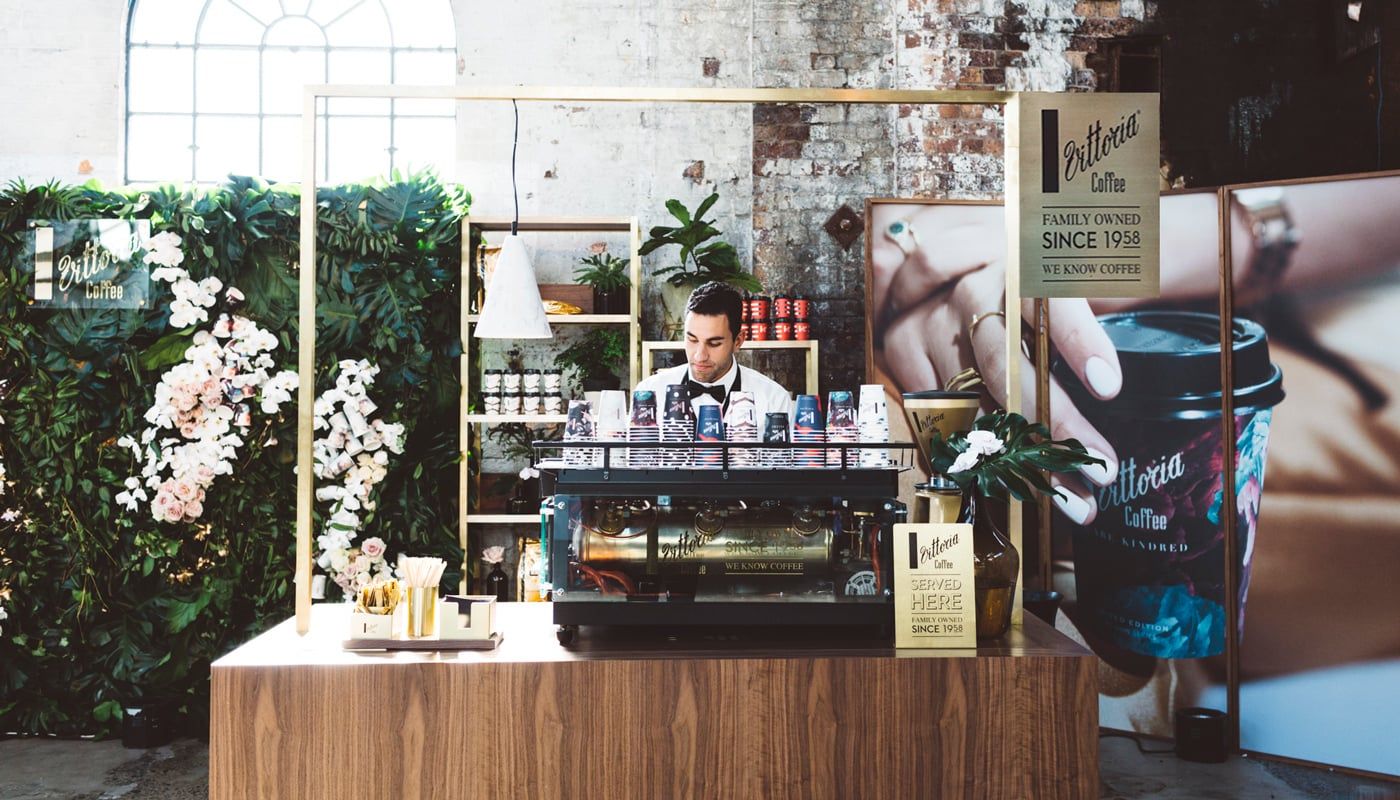
    Vittoria has launched its first range of instant coffee since the company’s inception in 1947.

    The company says the new range capture the richness and balance of a traditionally prepared coffee in the convenience of an instant.

    Made from freeze-dried Arabica beans, Vitoria Instant Coffee is available in 100g jars or single-serve bags that roast in a 3-minute steep.

    The 100g instant coffee jar comes in four different blends – Original Classic, Italian, Latte, and Mountain Grown. While the single-serve coffee bag is available in four 20-serve bags in Espresso, Italian, Mountain Grown, and Long Black.

    “We set out to create new, easier coffee experiences for all our customers,” said Rolando Schirato, MD, Vittoria Coffee. “These new products deliver on the distinctive Vittoria taste and offer our customers the convenience to enjoy our legendary 100-per-cent Arabica blends”.

    Vittoria Instant Coffee is available in all Woolworths supermarkets nationwide.

  • Coffee chains race to establish global presence

    Coffee chains race to establish global presence

    Vietnamese coffee chains are moving to establish themselves in foreign markets as part of expansion plans as well as a strategy to deal with increased domestic competition.

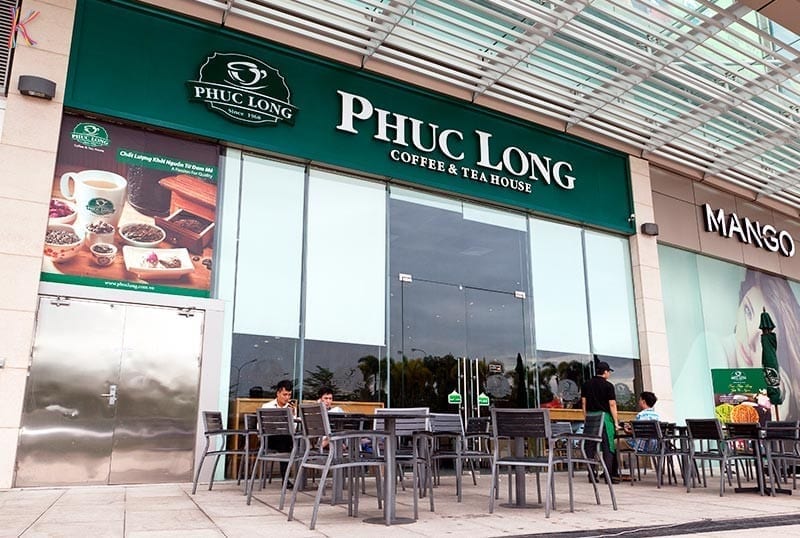
    Tea and coffee chain Phuc Long has just announced plans to open its first store in California in July.

    TNI King Coffee last month launched its first store in the U.S. It has already opened its first outlet in South Korea with a partner.

    Highlands Coffee, one of the biggest Vietnamese coffee chains, has started branching out to other markets since 2011. It now has 39 franchised outlets in the Philippines.

    Cong Ca Phe has six outlets in South Korea and two in Malaysia, while E-Coffee opened its first store in Laos last year.

    The branching out decisions of these brands have happened in the wake of heavy competition in Vietnam’s café chain industry.

    In 2019, Highlands Coffee saw its revenue rise 32 percent year-on-year to VND2.2 trillion ($95 million), after having risen at roughly the same rate in 2018. It was followed by popular competitors like The Coffee House, Starbucks and Phuc Long.

    In terms of outlets, Highlands Coffee ranks top with 437 at the time of publishing, followed by Trung Nguyen E-Coffee with 414, The Coffee House with 180, Phuc Long with 82 and Starbucks with over 60.

    Opening coffee chains in foreign markets, particularly the U.S., is a strategy that Vietnamese chains have been thinking of and preparing for the last 10 years, said branding expert Vo Van Quang.

    “They used to have concerns of going from a small country to a big one, but now they have overcome that fear because they see a lot of potential in entering a huge market,” he said.

    One of the biggest advantages for Vietnamese coffee chains in the U.S. market is that consumers there are not as particular as European ones.

    “Most Americans do not have high standards for coffee. They consider it only as a necessity to help them stay awake to work,” he said, adding that in other markets like France or Japan consumers are more difficult to please.

    Another major advantage is that Vietnamese food and drinks have already established trust in the U.S. as a delicious and healthy alternative to fast food.

    “With two million Vietnamese in the U.S., there are now Vietnamese restaurants in every state. Pho and banh mi have become popular dishes among locals there,” said Quang, referring to the iconic Vietnamese noodles soup and sandwich.

    These types of dishes can be included in the menu of coffee chains to increase their competitiveness, he added.

    The potential of foreign markets has had Vietnamese coffee chains thinking big.

    TNI King Coffee, for example, plans to launch an additional 19 outlets in the U.S. by the end of this year and targets to hit 100 stores there by next year.

    “Opening the first store in the U.S. markets is a strong development step for TNI King Coffee in the global market,” said founder and CEO Le Hoang Diep Thao.

    The company had earlier talked about having 1,000 stores in South Korea, but mentioned no specific time frame.

    Branching out to other markets is a sensible move as local coffee chains have been fighting within a small market in recent years, Quang said, adding: “Recent moves by Phuc Long and King Coffee show that coffee chains have adopted a bigger vision to grow larger abroad.”

  • Campos picked up by Dutch coffee giant for undisclosed sum

    Campos picked up by Dutch coffee giant for undisclosed sum

    Australian coffee chain Campos will be acquired by international pureplay JDE Peet for an undisclosed sum, with the transaction expected to be completed next month.

    Campos serves customers through direct-to-consumer, retail, and its own flagship cafes, as well as being available in over 600 cafes nationwide – channels that complement JDE Peet’s Australian retail operations.

    “We’re incredibly proud of what we have achieved from our humble beginnings on the streets of Newtown in Sydney,” said Campos founder Will Young.

    “We are confident that Campos can and will continue to grow under JDE Peet’s stewardship by continuing to focus on what made us Australia’s number one specialty coffee brand – high-quality coffee and great service.”

    JDE Peet’s general manager in Australia and New Zealand Albert Moncau said the Campos business is the “perfect fit” for the pureplay giant.

    “We look forward to welcoming the Campos team to our world of coffee and tea, learning from each other’s expertise and building on their award-winning coffee experience,” Moncau said.

    JDE Peet also owns and operates the L’OR, Moccona, Harris, Piazza Doro, Espresso di Manfredi, Two Seasons and Pickwick coffee and tea brands in Australia

  • Omotesando Koffee to open first Philippines cafe in Manila

    Omotesando Koffee to open first Philippines cafe in Manila

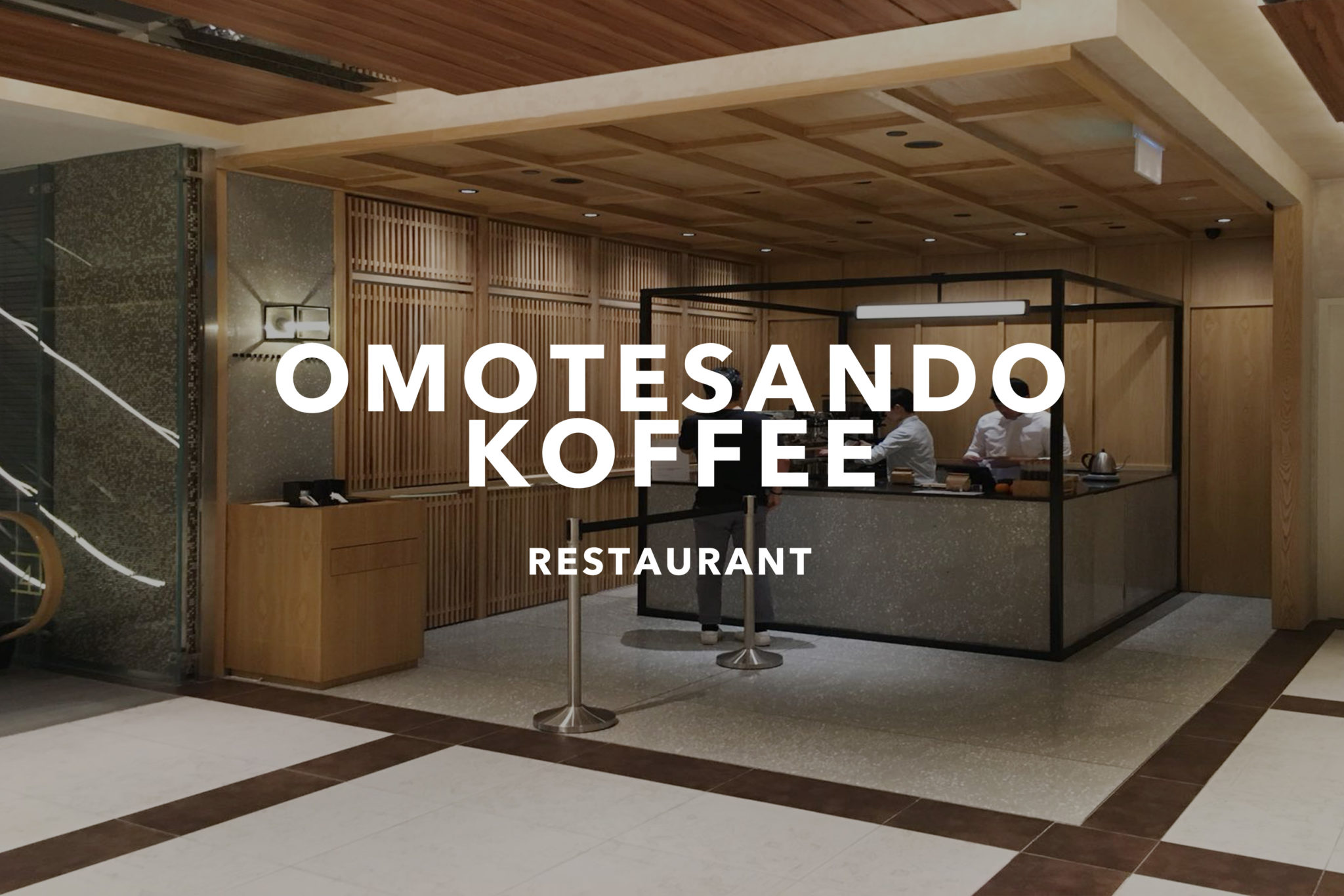
    Japanese coffee shop Omotesando Koffee is officially opening its first Metro Manila branch in Power Plant Mall, Makati City, tentatively slated for an August 2021 launch.

    The famous Zen-style, minimalist coffee shop from Tokyo will be brought into the Philippines by H&F Retail Concepts, the group behind luxury fashion brands Univers, Homme et Femme, Balenciaga, Comme des Garcons, and Fred Perry.

    David Ong, owner and head barista of The Curator and EDSA Beverage Design Group, will be helping out.

    “Well, the cat’s been out of the bag for a while now. This is just formalizing it further. The opening of the first branch is fast approaching, and we’re helping out a little bit,” Ong wrote on Instagram on Tuesday, June 1, posting a call-out for interested baristas to apply.

    According to Ong, two more Omotesando Manila locations will be opening this year, but the hiring process will be for this branch initially.

    News that Omotesando Koffee would open in Metro Manila first circulated late 2020, when the original brand’s Instagram page added “Manila” to a list of locations on their Instagram bio, alongside Tokyo, Hong Kong, Singapore, Bangkok, and London.

    Omotesando Koffee first opened as a humble pop-up shop in Omotesando Hills, Tokyo in 2011, growing in popularity for 5 years until it closed in December 2015 due to the “aging building” it was located in.

    They opened their first Hong Kong branch a year later, and expanded to cities around the world, including a re-opening in Shibuya, Tokyo as Koffee Mameya.

  • Masan acquires 20 pct stake in Phuc Long tea chain

    Masan acquires 20 pct stake in Phuc Long tea chain

    A subsidiary of the Masan Group conglomerate has signed an agreement to acquire a 20 percent stake in tea shop chain Phuc Long Heritage Jsc.

    Masan’s The Sherpa Company Ltd will pour $15 million into the company, established last week to own the Phuc Long brand, which is among the most popular beverage brands in Vietnam with 82 stores nationwide.

    The deal puts Phuc Long Heritage’s valuation at $75 million.

    It will help establish Phuc Long kiosks in over 2,200 VinMart+ convenience stores to provide tea and coffee to consumers.

    In the last three months, four pilot kiosks have been opened in Ho Chi Minh City and another 1,000 will be set up in the next 18-24 months.

    “I believe that in combining the Phuc Long products and VinMart+ network of more than 2,200 stores today and 10,000 stores in the next five years, we will provide 100 million Vietnamese consumers with the opportunity to enjoy the freshest, most delicious tea and coffee,” said Truong Cong Thang, CEO of VinCommerce.

    Each kiosk will share 20 percent of its revenue with VinMart+, adding 4 percentage points to the profit margin of the retail chain.

    Vietnam’s tea and coffee market is valued at $2.3 billion and is expected to grow more than 10 percent per year, according to data from Masan, which also estimates that popular brands like Highlands Coffee, The Coffee House and Starbucks account for 25 percent of the market.