Tag: coffee

  • Vietnam’s May coffee exports extend downtrend to finish at 6-month low

    Vietnam’s May coffee exports extend downtrend to finish at 6-month low

    Coffee exports for the 2016/2017 season have already fallen nearly 7 percent, based on government data. Vietnam, the world’s largest exporter of robusta coffee, will ship an estimated 120,000 tons (2 million bags) of coffee this month, the lowest volume in six months and a drop of around a quarter from a year earlier, the government said on Monday.

    This figure would bring the accumulated volume since October 2016 at the start of the current 2016/2017 crop year to 1.09 million tons, down nearly 7 percent from the previous season, based on data from the General Statistics Office’s monthly report.

    The forecast for May, which is down 25.5 percent from the same month last year, is the lowest since November 2016 when the country exported 114,600 tons.

    Falling shipments from Vietnam, the world’s second largest coffee producer after Brazil, suggest dwindling stocks. Last month’s shipments hit a five-month low of 134,800 tons, based on government data.

    Strong exports in the first months of 2017 have left foreign buyers with adequate stocks and Vietnam with less coffee beans.

    In March, a senior executive from Vietnam’s top coffee export firm Intimex warned the country could fall short of the bitter beans in May or June due to rising shipments and dwindling domestic stocks.

    The country’s stocks at the end of the 2016/2017 crop year are forecast to plunge 64 percent from the previous season to 1.38 million bags, the U.S. Department of Agriculture said in its May report released last week.

    Vietnam’s coffee crop year lasts between October and September.

  • Koreans consume 377 cups of coffee on average in 2016

    Koreans consume 377 cups of coffee on average in 2016

    South Koreans drank a total of 377 cups of coffee per person on average last year, mirroring brisk growth of the sprawling market fueled by a flurry of various franchises, a government report showed.

    The average coffee consumption, based on South Koreans aged over 20, has grown at an annual rate of 7 percent since 2012, according to the report by the Ministry of Agriculture, Food and Rural Affairs and the Korea Agro-Fisheries & Food Trade Corp.

    The size of the domestic coffee market reached 6.4 trillion won (US$5.68 billion) as of end-2016, up 30.6 percent from 4.9 trillion won tallied in 2014.

    Of the figure, coffee franchises accounted for 62.5 percent last year, up from 53.8 percent two years earlier, reflecting that the coffee brands have led the market growth.

    Big coffee chains, such as Starbucks and Paul Bassett Korea that attract customers with high-quality brewed drinks and a wide range of choices, have spurred smaller businesses on to launch their own brands, the report said.

    The outbound shipments of coffee products, which include ready-to-drink coffee that usually come in as powdery or liquid forms in small packs, nearly doubled to US$180.21 million in 2016 from US$91.9 million in 2007. Their imports grew about 3.8 times to US$204 million in the same period.

    Russia was the biggest exporting market for South Korea, accounting for 25.4 percent of the total shipments, due largely to the popularity of Korea-made powdery coffee sticks, followed by China with 17.3 percent and Greece with 11.6 percent.

    The global coffee product market was valued at US$125.6 billion as of end-2015. Japan trumped the market with a 30.9-percent share, trailed by the United States with 17.2 percent. South Korea’s share stood at 1.5 percent.

  • Vietnam’s 2017/2018 coffee output to rise 10 pct on good weather, prices

    Vietnam’s 2017/2018 coffee output to rise 10 pct on good weather, prices

    Good news for exporters with the 2016/2017 crop likely to fall short of expectations. Vietnam, the world’s largest robusta producer, is forecast to harvest 28.6 million bags (1.72 million tons) of coffee from its next 2017/2018 crop, a rise of 10 percent from the current season, thanks to favorable weather conditions and higher domestic prices, a U.S. Department of Agriculture attache said.

    Higher output from Vietnam, which stands only behind Brazil in terms of global coffee production, supports an industry view which envisages stable global supply in the next crop year.

    “Adequate rains starting in January through March helped coffee trees trigger more branches and early flowering,” the USDA attache said in a May 17 report.

    High domestic prices have also helped farmers purchase sufficient fertilizer, triggering higher yields even though the total planting area remains unchanged, the report said.

    Vietnam’s coffee crop year lasts between October and September, starting with the harvest in the Central Highlands region that accounts for around 90 percent of the country’s output.

    While it is still too early to forecast the size of the next harvest, Vietnam’s coffee belt has seen favorable weather for production  in recent months, said Bach Thanh Tuan, head of the Community Development Center, a state-backed facility in Dak Lak Province. The center is tasked with ensuring sustainable production in the province as well as the entire region.

    “The supply outlook for 2017/18 seems increasingly positive,” the London-based International Coffee Organization said in its April report, adding that initial concerns about frost in Brazil and a shortage of rainfall in Vietnam have eased.

    Coffee prices on the domestic market rose to VND47,500 ($2.1) per kilogram on March 21, the highest since September 2011. The price hike coincided with the coffee watering period, during which Vietnamese growers feed fertilizer to their trees.

    Smaller 2016/2017 crop

    The USDA report has revised down its output forecast for the ongoing 2016/2017 crop year by 2.6 percent to 26 million bags, saying extended rain in October-November 2016 had damaged cherries and reduced the quality of beans.

    Vietnam’s coffee exports in the next 2017/2018 crop year are forecast to edge up 0.4 percent to 26.65 million bags, the report said. The export volume includes green beans, soluble and roasted coffee.

    Consumption of roasted, ground and soluble coffee in Vietnam in the next 2017/2018 season is projected to rise 2 percent to 2.93 million bags, the report said.

    It cited the continuing growth of coffee shops, saying domestic market competition remains fierce due to the arrival of foreign brands.

    Even though Vietnam’s coffee exports fell to 2.25 million bags last month, a five-month low, based on Vietnam Customs data, the shipments still helped extend Vietnam’s position as the world’s biggest coffee exporter, which the Southeast Asian nation seized from Brazil in March.

    Robusta beans account for most of Vietnam’s exports and are used mainly for making soluble coffee.

    Top producer Brazil shipped a combined 2.13 million bags of arabica, conillon (a variety of robusta), soluble coffee and roasted beans in April, down 13.5 percent from a year ago, the Brazilian Coffee Exporters Council said in a report released earlier this month.

  • Starbucks gets boost in China with Wechat partnership

    Starbucks gets boost in China with Wechat partnership

    CEO of Starbucks China, Belinda Wong hailed last week the success seen in the company’s China business after teaming up with social media and payment platform WeChat.

    “Partner and customer enthusiasm for the Starbucks brand and the momentum in Starbucks China business have never been greater,” Wong said. “We saw growth in all categories and dayparts. Beverage, food and digital innovation are laser-focused on operational excellence, and targeted brand investments are attracting new customers into our stores and bringing existing customers in more often.”

    Sales for China grew 7% in the first quarter of the year, following a strategic partnership with WeChat parent company Tencent, which was launched last December.

    “Following on that success, in February this year, we launched social gifting to unprecedented customer demand, partner excitement and social media interest. In only the first seven weeks after launch, over 1.2 million gifts were sent and over half have been redeemed by recipients in our stores.”

    China is the company’s second biggest and fastest growing international market.

  • Vietnam’s April coffee exports fall to 5-month low

    Vietnam’s April coffee exports fall to 5-month low

    Export volume has fallen on higher prices and thinning demand. Vietnam’s coffee exports fell to 134,800 tons in April, the lowest level in five months, the country’s customs office reported.

    Shipments last month from Vietnam, the world’s largest robusta producer and exporter, fell 28.3 percent from the same month in 2016, the Finance Ministry-run Vietnam Customs said in its monthly report.

    While the export volume was slightly above market expectations, it dropped to its lowest since November 2016, based on government data.

    In the last week of April, Vietnamese coffee prices rose beyond ICE futures prices for the first time since September 2016 due to thin domestic stocks and a fast decline of futures prices, traders said.

    Robusta beans grade 2, 5 percent black and broken stood at premiums of $20-30 a ton to London’s robusta July contract, narrowing from premiums of $45-$50. The futures contract ended down 0.4 percent at $2,020 per ton on Tuesday.

    “(Foreign) trading firms have not bought anew,” a trader at a European firm in Ho Chi Minh City said. “Some foreign companies (in Vietnam) even have such high stocks that they are ready to resell to others for loading.”

    The fall in export volume is a hit to a positive start to the year after March shipments rose to their highest since April 2016, placing the country ahead of top producer Brazil for the second time in a year.

    The global coffee market continues to be well supplied, with exports in the first half of the 2016/17 crop year starting last October rising 4.8 percent from a year ago to 60 million bags, the International Coffee Organization (ICO) said in its April report released on Tuesday.

    The Ho Chi Minh City-based trader said most domestic stocks are currently in the hands of export firms and foreign trading firms that have established warehouses in Vietnam, while farmers in the Central Highlands coffee belt are holding on to an estimated 10 percent of their harvest.

    Vietnam’s 2017/2018 harvest is due to start in October.

    “The supply outlook for 2017-18 seems increasingly positive,” the ICO report said, referring to global coffee production. However, it noted Brazil’s current low stocks, saying its supply could be at risk if the weather turns unfavorable.

  • Launch of inaugural Café Cambodia 2017 and Franchise & Licensing Cambodia 2017

    Launch of inaugural Café Cambodia 2017 and Franchise & Licensing Cambodia 2017

    Phnom Penh took center stage as the host for the inaugural Café Cambodia 2017 and Franchise & Licensing Cambodia 2017. The exhibitions mark one of largest gathering of visitors from the local business community and the region and members of the coffee industry including baristas, café and coffee purveyors, coffee roasters, equipment distributors and members of the public. Malaysia is the shows’

    Official Country Partner, supported by Perbadanan Nasional Berhad (PNS). The inaugural shows were officially opened by His Excellency Cham Prasidh, Senior Minister, Ministry of Industry and Handicraft, Cambodia. The official opening this morning was also graced by the presence of Yang Berhormat Dato’ Henry Sum Agong, Deputy Minister, Ministry of Domestic Trade, Co-operatives and Consumerism (MDTCC),Malaysia, Dato’ Sri Hasan Malek, Malaysia Ambassador to Cambodia, Yang Berbahagia Dato’ Sri Jamil bin Salleh, Secretary General, Ministry of Domestic Trade, Co-operatives and Consumerism, Malaysia and His Excellency, Mr Pak Sokhom, Secretary of State, Ministry of Tourism, Cambodia.

    Franchise and Licensing Cambodia 2017 and Café Cambodia 2017 offer exhibitors and participants a hub and a B2B platform for key decision makers to source for new business opportunities and explore new collaborations. Franchise & Licensing Cambodia 2017 will showcase well known Asian and international brands in various industries such as F&B as well as the educational and services sectors.

    This hub also serves the industry as a source for café supplies and equipment to cater to the demands of the rising number of specialty coffee drinkers. The show will gather coffee and tea industry players showcasing products such as coffee beans, specialty coffee, specialty tea and beverages, juices, coffee machine, roasting machines and equipment.

    Cambodia has enjoyed steady economic growth in the last two decades. This growth, the favourable investment climate, supportive infrastructure, the presence of established banking and financial institutions and a large domestic consumer market of 16 million population are important reasons why the two shows are timely and will be well received as Cambodia has been attracting an increasing number of international franchise brands and operators especially those in the food and beverage business.

    Café Cambodia plays host to the Cambodia National Barista Championship (CNBC) presented by Gourmet Beverage Solutions (GBS). This inaugural championship brings together Cambodia’s top baristas to showcase their talents and compete for the coveted title of National Champion. The competition focuses on promoting excellence in coffee and seeks to advance the barista profession regionally and globally.

    Positioned as the perfect place to meet coffee professionals of Cambodia and the ASEAN region and to understand the growth of Asia’s franchise, licensing and coffee industries under one roof, the shows boast of a comprehensive programme for visitors who can look forward to learn from franchising and licensing experts, attend an exciting line-up including live presentations, demonstrations and workshops on every aspect of the coffee, tea, gelato and baked goods industries. There is also an extensive range of specialty coffees and teas from around the world to sample. The 3-day exhibition will also be teeming with networking and business opportunities for trade visitors who are looking to elevate their business aspirations. Franchise & Licensing Cambodia exposition offers abundant opportunities for entrepreneurs and prospective franchisees to meet face to face with representatives of international brand concepts across various industries.

    Café Cambodia and Franchise & Licensing Cambodia are co-organized by Conference and Exhibitions Management Services (CEMS) with CamGlobe Business & Investment Consultancy, and are supported by the Cambodia’s Ministry of Commerce, the Ministry of Industry & Handicraft, and the Ministry of Tourism.

    Franchise and Licensing Cambodia is supported by Asiawide Franchise, Cambodia Franchise Association and World Franchise Associates. The Cambodia National Barista Championship is presented by Gourmet Beverage Solutions.

  • Starbucks Reserve opens 10th Singapore store in Changi airport

    Starbucks Reserve opens 10th Singapore store in Changi airport

    American coffee house Starbucks has opened its 10th Reserve café in Singapore. Located inside Singapore’s Changi airport, the 24-hour airport outlet has opened in T3’s public area, in the United Square section.

    While patrons will be familiar with Starbucks, Starbucks Reserve is the coffee chain’s more high-end version of a café or coffee bar.

    Every year, Starbucks coffee buyers travel to coffee-growing regions to find and purchase some of the world’s finest Arabica coffee beans. Starbucks Reserve then offers these to its customers, which are in limited quantity and only available at select Starbucks Reserve stores and online.

    On the ground, Starbucks Reserve allows customers to ask exactly how they would like their coffee brewed at the bar: Starbuck’s proprietary Clover brewer, the Chemex coffeemaker, the traditional Coffee Press and Pour-overs, mimicking a more boutique coffee house.

    While there are several other Reserve outlets in Singapores, the Changi store is the first to feature the interactive Coffee Bar, along with the Black Eagle espresso, and the Nitro Cold Brew, which is served from the tap.

    However, Reserve customers can still order normal Starbucks coffee as seen available at the regular stores.

    For the last financial quarter ending January 26, Starbucks reported revenues of $5.7 billion, up 6.7% on a year-over-year basis.

    Starbucks is a roaster, marketer and retailer of coffee. As of October 2016, the company operated in 75 countries.

  • Gloria Jean’s Coffee leaves Vietnam

    Gloria Jean’s Coffee leaves Vietnam

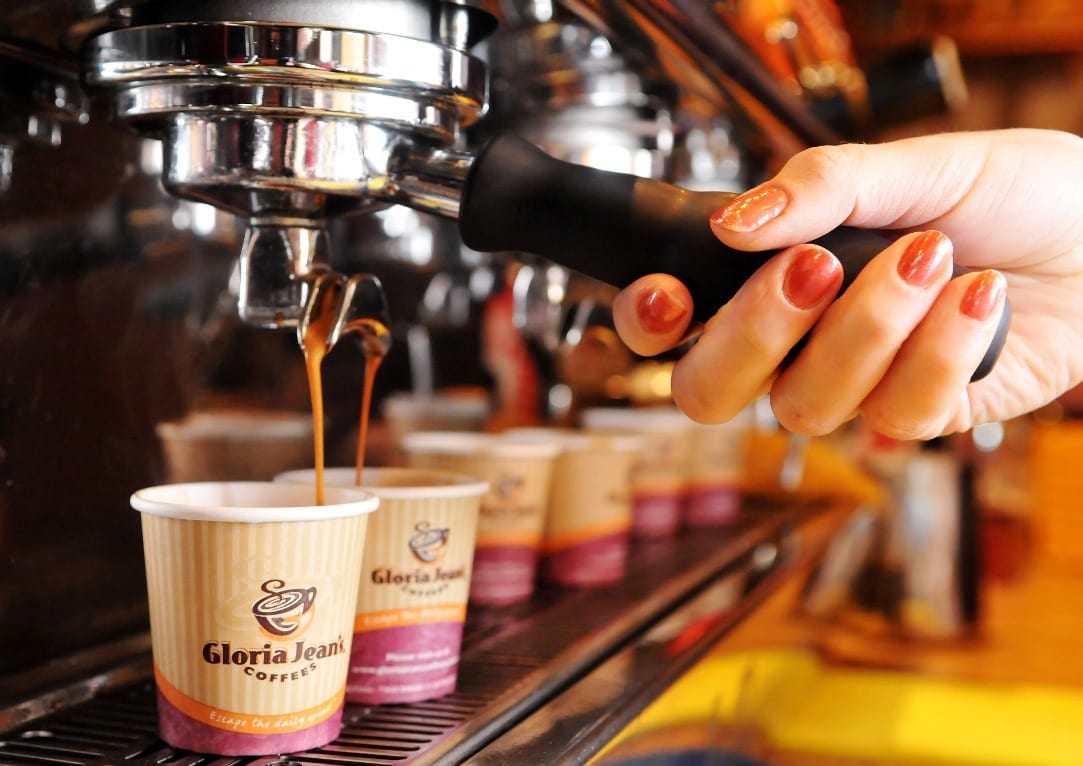
    Australia’s Gloria Jean’s Coffee Vietnam has closed its last coffee shop in Ho Chi Minh City, in the Phu My Hung urban area of District 7, after ten years in Vietnam. It arrived in Vietnam in 2007 under a franchise license secured by the VietLifestyle JSC.

    The ten-year deal saw the master franchisee launch coffee shops in Ho Chi Minh City and Hanoi, each involving investment of $200,000.

    VietLifestyle had aimed to open a further 20 locations over the next two years, offering espresso-based, chocolate-based, and cocoa-based drinks to young people, expats, and foreign tourists familiar with the brand.

    The master franchisee was to achieve this in part through sub-franchising the concept and providing operational, marketing, management, and business development support.

    A slowdown hit a few years ago, however, when its prime corner location on Dong Khoi Street in Ho Chi Minh City closed, partly because of high rents.

    Other locations then began to disappear. By the end of last year, only two stores remained: one on Cong Truong Quoc Te in District 1 and the Phu My Hung outlet in District 7.

    Gloria Jean’s was founded in Australia in 1996 with the ambition of being the most loved and respected coffee company worldwide.

    The chain currently has more than 900 outlets in 39 markets worldwide, including more than 400 in Australia.

  • Vietnam in gradual shift to exporting more roast and ground coffee

    Vietnam in gradual shift to exporting more roast and ground coffee

    A decade ago most of the country’s coffee exports were semi-processed beans. The TNI King Coffee Factory that recently opened in Vietnam’s southern province of Binh Duong is the latest player to join the race to ship more finished coffee products from the world’s second-biggest producer.

    With an investment of $15 million, the factory aims to produce 9,000 tons of roast and ground coffee and nearly 20,000 tons of instant coffee annually for export, according to Le Hoang Diep Thao, director of TNI Corporation and the co-founder of Trung Nguyen Coffee. She has also helped build five plants for Trung Nguyen, one of Vietnam’s biggest coffee makers.

    TNI Corporation, which has recently gained a foothold in China’s online market for instant coffee and plans to start distribution through a supermarket chain there, did not give the size of its annual green bean demand for the new factory.

    But to reach the targeted annual output, the Binh Duong-based facility will need at least 13,000 tons of green beans for roast and ground coffee and another 50,000 tons for the instant variety, according to a Vietnamese coffee expert at a European firm based in Ho Chi Minh City.

    TNI’s factory will have to compete with 200 plants already in operation or which will be going into operation this year and the next, before the government puts a stop to new coffee processing plants in 2020 to ensure quality.

    In December 2016, India’s Tata Coffee said it will set up a freeze dried coffee plant in Vietnam to expand its market. In mid-January 2017, Tin Nghia Coffee Co began construction of a $28 million instant coffee plant in the southern province of Dong Nai, which is slated to open in early 2018.

    Demand for raw materials from the new plants will eat into exportable green bean stocks in Vietnam, the world’s largest exporter of semi-processed robusta beans, which has seen a smaller harvest this season due to adverse weather.

    “Demand is rising about 10 percent a year, and with a higher ratio of bad-quality beans from the last harvest due to bad weather, Vietnam may face shortages in the third quarter,” said the expert, who declined to be identified by name, referring to the three-month period starting this July.

    Top exporter Intimex expects the supply crunch to emerge in May or June, citing Vietnam’s fast export pace in the first months of 2017.

    Smaller harvest

    Vietnam’s 2016/2017 output has dropped 8 percent to an estimated 26.7 million bags (1.6 million tons) due to high temperatures and dry conditions brought by El Nino, the U.S. Department of Agriculture (USDA) said in its December 2016 report. One bag contains 60 kilograms of beans.

    Green coffee bean shipments are forecast to drop 13 percent from the previous 2015/2016 season to 23.5 million bags due to smaller output and more beans being used for domestic consumption or processed for export, the USDA said in its latest report.

    As such, green beans accounted for 90 percent of Vietnam’s total export volume, while roast and ground beans and instant coffee – or finished products – made up the rest. Vietnam’s crop year lasts from October through September.

    The forecasts mark a slow change to the country’s coffee export structure. Five years ago, finished products made up only 2 percent of Vietnam’s coffee shipments, the government said.

    Exports of roast and ground beans in the current 2016/2017 season are projected at 550,000 bags, unchanged from 2015/2016, but above the 457,000 bags shipped in the 2014/2015 season, based on the USDA report. The forecast volume represents 2 percent of Vietnam’s total projected shipments.

    The USDA also forecasts instant coffee exports to remain steady at 2 million bags, which shows a surge of 56 percent from the 2014/2015 season, while it said domestic consumption of roast and ground coffee would rise nearly 10 percent from the previous season to 2.5 million bags.

    Consumption of green beans in Vietnam is estimated at 2.87 million bags, up 9 percent from a year earlier, the USDA said.

    Vietnam does not publish breakdowns for its coffee exports.

    The Vietnamese government has plans to raise the output of roast, ground coffee and instant coffee to 25 percent of total output by 2020, while the output of instant coffee alone will increase to 5.83 million bags by 2030 from the 255,000 tons targeted for 2020.

  • Sales of Indonesian Coffee in Italy Expected to Rise

    Sales of Indonesian Coffee in Italy Expected to Rise

    Indonesian Ambassador to Italy Esti Andayani targets economic growth of Indonesia-Italy investment and trade to rise 25 percent during her term of office in Rome.

    “25 percent is the overall figure, yes, both in investment trade,” Esti said in Jakarta (15/4).

    In 2015, the total of Italy investment realization reached US$ 97,99 million that made it the tenth largest investor in Indonesia. Based the data of Foreign Affair Ministry, the trade volume of both countries was US$ 3,82 billion with Indonesia’s surplus as much as US$ 433 million.

    Esti said that coffee is the main commodity promoted in Italy. Its export is worth US$ 58,8 million or the third largest export after palm (US$ 975 million), and resin (US$ 93 million).

    Esti claimed to have prepared a number of strategies to draw the attention of Indonesian coffee exporters to Italian market, one of which is by means of integrated promotion through participating in annual “World Tourism Expo” in Italy.

    “Well, tourism here not only promotes the place, but also everything, including coffee,” she added.

  • Coffee industry in Vietnam turns bitter

    Coffee industry in Vietnam turns bitter

    The Ministry of Agriculture and Rural Development in turn estimated the export volume in the first quarter when compared against the same three months last year to have dipped 5.4% to 449,000 tons with revenue jumping 25.6% to US$1 billion.

    Average prices in the first quarter ticked up 32% on year to US$2,262 a ton, said MARD, adding that Germany and the US were the two largest buyers with market shares of 17% and 16%, respectively.

    Markets witnessing sharp growth over the same period last year were Belgium (230%), the Republic of Korea (79%), the US (60%), Algeria (50%), Spain (34%), Germany (29%), the UK (27%), Japan (21%) and Italy (20%).

    Compared to the end of February 2017, the price of coffee Robusta in the Central Highlands at the end of March rose by US$.09-US$.10 (US$ VND2,000-VND2,200) to US$2.03- US$2.07 (VND46,000-VND46,900) per kilogram.

    Coffee prices in Dak Lak, the largest coffee bean-growing province in the country, stood at US$2.08-US$2.11 (VND47,300-VND48,000) per kilogram as stockpiles remain low.

    According to Nam, coffee prices look to continue to increase in the near term as farmers are holding back waiting to see if prices will rise even further.

    Despite the higher coffee prices, the profits per hectare remain lower than other alternative crops such as fruit trees and pepper— resulting in many farmers getting out of the coffee business entirely.

    Solutions to boost coffee exports

    The small production scale and lack of sophisticated skills of farmers have stopped them from becoming major players in the global market, said Nam, noting the lack of access to credit has prevented them from replanting with the latest varieties and newest technology.

    Meanwhile, farmers collectively have processed 10% of the total coffee output for the year but instant, roasted and ground coffee products, have not achieved a high volume, strong brand or the quality reputation to compete with top global brands.

    Huynh Quoc Thich, deputy director of Dak Lak Agriculture and Rural Development Department, notes that most actors in the coffee segment in the province have not paid sufficient attention to quality.

    He added that the existing sales prices have not incentivized coffee growers to produce high quality coffee.

    Meanwhile, he looks for exports to drop 25-30% this year. That won’t turn around until actors in the segment comprehensively collaborate to promote brand recognition, food safety and boost added value, he concluded.

  • Indonesia Mulls Hosting Coffee Exhibition in South Korea Next Month

    Indonesia Mulls Hosting Coffee Exhibition in South Korea Next Month

    The Ministry of Commerce assesses that there is a significant opportunity for exporting coffee commodity to South Korea. To achieve this, the Ministry of Commerce plans to hold an exhibition in South Korea.

    Arlinda Director General of Export Development at the Ministry of Commerce, said that coffee has become a trend in South Korea, especially among young people. Therefore, this trend can be utilized  by Indonesian coffee businesses.

    “There is a significant opportunity for coffee in South Korea. We plan on conducting coffee exhibition there next month, and we must use that trend to engage the South Korean markets,” she said in Jakarta on Tuesday (04/04/2017).

    According to Arlinda, the youth market in South Korea will be easier to engage in because of their penchant to drink coffee. Therefore, Indonesia must provide the highest quality coffee, including  Arabica coffee that is a mainstay product in Indonesia.

    “The trend in young people there is coffee and tea. A seminar on food and beverage can provide us with information on local youths’ tastes. Our specialty is coffee Arabica, and we actually have 32 kinds. We are working with coffee exporters to increase their exports,” she said.

  • Police seize fake coffee shipment in robusta king Vietnam

    Police seize fake coffee shipment in robusta king Vietnam

    Over three quarters of the 850kg shipment turned out to be soybeans soaked in chemicals and flavorings. Environment police seized a shipment of fake coffee at a bus station in the central town of Vinh on Tuesday, some 300km (186 miles) south of Hanoi.

    The officers were on a routine patrol when they spotted a truck laden with 16 suspicious-looking bags, which the truck driver declared as coffee.

    The bags weighed 850 kilograms (1,870 lb), but only 200kg was real coffee, while the rest turned out to be roasted soybeans soaked in chemicals and flavoring to make them look like coffee. The beans were on their way for sale in Nghe An Province from a company in the southern province of Binh Duong, the driver told police.

    The catch is the latest in a series of cases involving fake coffee exposed over the past five years in Vietnam, the world’s biggest robusta producer and exporter.

    Fake coffee has been found across the nation, which has one of the world’s fastest growing retail coffee markets, trailing only behind Indonesia, Turkey and India, as reported by global market intelligence agency Mintel.

    Police have also uncovered small processing plants making fake coffee by over-roasting soybeans and corn in Ho Chi Minh City, which is Vietnam’s main coffee trading market, as well as in Can Tho City and provinces like Binh Duong and Thanh Hoa.

    Even in Dak Lak, the country’s top coffee-growing province, market inspectors have found coffee powder containing only 10 percent real coffee, with the majority made up of soybeans, corn and chemicals used to create the bitter taste and bubbles.

    In July 2016, the Vietnam Standard and Consumers Association said it had taken 253 coffee samples from various shops in four locations, including Hanoi and Ho Chi Minh City, and found that one third of them had very low caffeine content, while the stimulant was totally absent in five samples.

    The coffee sold in street-side shops, hospitals and schools tended to have very low caffeine content or no caffeine at all, the association said.

    A kilogram of robusta beans now fetches around VND46,000 ($2.02), while imported soybeans can be bought on the domestic market for VND12,000-14,000 per kilo. These findings by police and market inspectors have caught public attention and have changed consumer behavior.

    Changing awareness

    “Consumers are now aware that fake coffee is a real problem,” said Le Duc Huy, deputy general director of the Dak Lak-based Simexco, one of Vietnam’s biggest exporters of semi-processed robusta beans. “Many now know how to spot fake coffee.”

    He said the content of real coffee sold on the market has now doubled to around 60 percent in the southern region and the Central Highlands coffee belt.

    “But in the northern and the central regions, which lie far from the coffee processing hub, consumers may not be aware, so the coffee content there is as low as 20-30 percent,” Huy told via telephone from Dak Lak.

    Improved awareness among Vietnamese coffee drinkers has been reflected in the rising domestic consumption rate in a country where tea is also a popular drink.

    Vietnam is forecast to use 172,200 tons of coffee at home in the 2016/2017 crop year, up 10 percent from the previous season, the U.S. Department of Agriculture (USDA) said in its December report.

    The domestic consumption rate has been rising in double digits since at least the 2012/2013 season, based on USDA data. The country’s crop year lasts between October and September.

    Rising exports

    Higher domestic consumption, coupled with a rush to sell by exporters in the first months of 2017 and the smaller 2016/2017 harvest due to adverse weather, could disrupt coffee exports, traders said. More instant coffee being produced locally has also been contributing to the tighter export flow, Vietnamese industry officials said.

    Vietnam could export an estimated 180,000 tons of coffee in March, the highest monthly shipment since April 2016, based on government data released on Wednesday.

    Most of the shipments were sold in late January or February as exporters tried to cash in on higher prices while cutting costs, traders said. On the other hand, foreign buyers said they had stepped up purchases based on expectations of a smaller crop in Vietnam.

    The March estimate has brought the country’s total export volume to 847,000 tons in the first half of the 2016/2017 season, up 4 percent from a year ago.

    Vietnam could face coffee shortages from May-June due to rising shipments and dwindling domestic stocks, top export firm Intimex has said.

    Huy of Simexco said Vietnam should do more to fight fake coffee.

    “The media should do its best to help consumers spot real coffee,” he said. “Related agencies should also step up inspections of coffee shops because shop owners are making money by selling fake coffee as it costs up to 50 percent less than real coffee.”

  • Harvest rain takes the flavor out of Vietnamese coffee crop

    Harvest rain takes the flavor out of Vietnamese coffee crop

    Heavy rain that hit swamped Vietnam’s 2016/2017 coffee harvest has raised the ratio of low-quality beans and defects, traders said on Wednesday, with one major exporter saying quality is at its worst in nine years.

    Unseasonal rain that fell from October-December last year in Vietnam’s Central Highlands coffee belt delayed the 2016/2017 crop harvest, resulting in more black and broken beans. The rainy season normally ends in early October.

    The harvest was completed in January as usual, but a higher ratio of black and broken beans – counted as defects in export standards – has emerged.

    These defects, coupled with India’s ban on Vietnamese coffee imports from March 7, have made it more difficult for the world’s top robusta exporter to find buyers for the low-quality commodity this year.

    “The ratio of defects this year has risen by 50 percent from 2016,” said Le Duc Huy, deputy general director of Simexco, a major export firm based in the Central Highlands province of Dak Lak. “The quality is the worst since 2008.”

    Downpours cut Vietnam’s 2007/2008 coffee output by 15 percent to 1.08 million tons.

    Traders say India often buys Vietnam’s low-quality robusta grade 3, with 25 percent black and broken beans and 3 percent foreign matter, to produce instant coffee. Vietnam’s benchmark coffee for export is robusta grade 2 (5 percent black and broken), which is priced at a premium of $120-$180 a ton compared to the grade 3 beans.

    The harvest usually starts in late October and ends in January. Rain during the blossoming period reduces yields, while the wet weather disrupts the outdoor drying process, necessitating the use of electric dryers that turn the beans black and worsen the taste. The exportable volume is therefore lowered.

    Two traders at foreign firms in Ho Chi Minh City, Vietnam’s largest coffee trading market, estimated that low-quality beans made up 10-20 percent of the country’s output this year, which is projected to ease 8 percent from last year to 26.7 million bags, or 1.6 million tons, the U.S. Department of Agriculture has said.

    Vietnamese trade experts say India’s ban is a tit-for-tat action after Hanoi announced it was going to suspend the import of five Indian commodities from late April to prevent peanut beetle from spreading.

    Officials at the Indian Embassy in Hanoi did not immediately comment on the matter.

    The impact of the ban on Vietnam’s overall coffee exports is minimal, Vietnam Coffee and Cocoa Association Chairman Luong Van Tu said.

    India imported 6,900 tons of Vietnamese coffee from January-February this year, down 17 percent from the same period in 2016, based on Vietnam Customs data.

    Last year it spent $79.4 million to import 46,000 tons of coffee from Vietnam, a tiny fraction of the Southeast Asian nation’s total shipments of 1.78 million tons.

    India has the world’s third fastest growing retail coffee market behind Indonesia and Turkey, global market intelligence agency Mintel said in its latest report earlier this month.

    Robusta with high ratios of black and broken beans has also been sold to Vietnamese firms to produce instant coffee, traders said.

    But the ban has affected Indian roasters who had been sourcing their raw material from Vietnam, traders said.

    “Since the ban has been in place, several shipments have been held up and importers do not know how to solve the situation,” said a Vietnamese dealer at a Ho Chi Minh City-based firm which ships coffee to India.

    The ban has also made it difficult for Indian roasters after back-to-back droughts in the past two years damaged various crops, including coffee.

    “Indian roasters may have to switch to other sources, such as the Ivory Coast and other African nations,” a second trader at a European firm in Ho Chi Minh City said.

  • Vietnam’s coffee prices hit highest since late 2011 on lack of good beans

    Vietnam’s coffee prices hit highest since late 2011 on lack of good beans

    Vietnam’s domestic coffee prices edged up this week to the highest since late 2011 on a shortage of beans qualified for exports as the harvest has been hit by rain, traders said.

    Unseasonal rain from October to December last year in the Central Highlands coffee belt delayed the 2016/2017 crop harvest, resulting in more black and broken beans, with one exporter saying quality was at its worst since 2008. The rainy season normally ends in early October in Vietnam, the world’s top robusta producer and exporter.

    Prices rose to a range of VND46,700-47,300 ($2.05-2.08) per kilogram of robusta on Monday in Dak Lak Province, Vietnam’s largest coffee growing area, from VND46,500-47,100 last Friday when May robusta futures ended nearly unchanged at $2,184 per ton on London’s market. Vietnamese coffee prices closely follow London’s futures.

    At VND47,300 per kg, prices are the highest since the week ending September 16, 2011 when the beans stood at VND47,400. The bitter beans are used mostly for making instant coffee.

    “Nobody is selling, and the raw material is too bad for processing, while there is a lack of export-standard coffee,” said a Vietnamese dealer in Buon Ma Thuot, the capital of Dak Lak. The province produces one third of Vietnam’s total coffee.

    Without using the color sorting machine, the black and broken bean ratio reached 7-8 percent, he said, well above the export standard that requires the defect rate to be at only 5 percent. The dealer declined to be identified by name, but his company has a factory in Dak Lak for processing and exporting robusta beans.

    The shortage of export-standard beans has emerged earlier than expected.

    Last week Do Ha Nam, general director of Intimex, Vietnam’s largest coffee export firm, said that Vietnam could fall short of beans in May or June due to rising shipments and dwindling domestic stocks.

    On the other hand, the price hike shows India’s ban on the import of Vietnamese coffee in place since March 7 has little impact on Vietnam’s market. India often buys Vietnamese robusta grade 3, with 25 percent black and broken beans.

    “India has stopped its import, thus raising the volume of Vietnam’s low-quality coffee,” the Dak Lak-based dealer said, referring to India’s ban, which also targets pepper and four other commodities from Vietnam.

    India’s ban was issued after Vietnam had ruled to suspend the import of India’s five commodities for 60 days starting March 1, citing the infection of peanut beetle.

    Businesses in both countries have opposed the restrictions, saying the import right should be brought back to avoid negative impact on prices, while cargoes infected by insects should undergo fumigation as usual.

    Last Friday the Vietnamese government said it had requested the Indian government to abolish the ban.

    A Vietnam Pepper Association official was quoted by a local newspaper as saying amendments to the restrictions would be made after officials from Vietnam’s agriculture ministry met with the Indian embassy in Hanoi last Thursday to tackle the issue.

    The low-quality coffee beans are estimated to account for 20-30 percent of Vietnam’s output in the 2016/2017 harvest that ended in January, well above the ratio of 1-13 percent observed in previous years, the Dak Lak-based dealer said.

    “Rain during the harvest has caused early flowering, and which could result in multiple stages of harvesting as cherries will ripe at different time,” he said.