Tag: coffee

  • Starbucks, Tencent debut social gifting on WeChat

    Starbucks, Tencent debut social gifting on WeChat

    Starbucks Coffee Company and Tencent Holdings have entered an alliance to co-create a new social gifting feature on WeChat.

    The new service, which will be rolled out early next year, will make it easy for Starbucks China customers to gift items to a friend or a family member.

    Customers will be able to select from Starbucks-branded gifts and products and add a personalized message. Recipients of these personal gifts and messages can save their gifts and memories on their WeChat accounts and redeem their gift at Starbucks stores across China.

    Users can use WeChat Pay to pay for their goods and services from their mobile devices at Starbucks retails stores. In China, more than 300 million users (as of March 2016) have linked their bank cards with WeChat or QQ, another flagship service of Tencent.

    “Just as Starbucks cards are among the most gifted around the globe, we aspire to also become the most gifted brand digitally in China,” said Belinda Wong, Starbucks China’s newly appointed CEO.

    The online social gifting platform is part of the company’s growing digital presence focused on connecting with customers through digital channels, including the Starbucks Mobile App, the My Starbucks Rewards program and social media.

    The announcement also builds on Starbucks rapidly expanding the portfolio of digital innovations in the country, which integrates the in-store experience with the digital “Fourth Place” experience.

    Earlier this year, Starbucks also launched a mobile payment system in China aimed at providing My Starbucks Rewards (MSR) members access to a fast, seamless and convenient way to pay for purchases, using their pre-loaded Starbucks Gift Card on their mobile devices.

    Wong, who was appointed from president to CEO of Starbucks China in October, has been instrumental in Starbucks unprecedented growth in country – from 400 stores in 2011 to over 2,300 stores today.

    The company said in a news release when her appointment was announced that she will oversee Starbucks plans to double its scale to operate 5,000 stores in China by 2021.

    Aside from focusing on the company’s overall long-term growth strategy, she will be responsible for key areas, including the vast digital and e-commerce opportunities across the market.

  • Starbucks unveils plans for 12000 new stores over next 5 years

    Starbucks unveils plans for 12000 new stores over next 5 years

    Starbucks said it expects its fast-growing China business could one day eclipse its U.S. market. The company said Wednesday it plans to open 12,000 additional stores globally in the next five years, taking the chain to a total of about 37,000 outlets. Half of the new units will be in the U.S. and China.

    “Our core business has never been stronger in the U.S. and around the world,” Starbucks Chairman and CEO Howard Schultz told analysts at the coffee retailer’s investor day event in New York.

    The CEO also emphasized something he’s said before: “These are the early days of the growth and development of the company. If Starbucks was a 20-chapter book, I still think we’re in chapter 4 or 5.”

    “Demand is there, and our ability to deploy capital and get the return on invested capital is very strong,” Starbucks President and COO Kevin Johnson told attendees. Johnson will become CEO of Starbucks in April, succeeding Schultz, who will continue as the Seattle-based company’s chairman.

    Executives during presentations Wednesday highlighted how the company is focusing on both its flagship Starbucks stores and the higher-end Reserve Roastery and Tasting Room outlets for future growth. The company also has targeted the Reserve Roastery stores, which will sell premium coffee at around $10 a cup, to represent about one-fifth of total outlets by 2021.

    Also, Starbucks plans to open new stand-alone outlets under Princi, a high-end Italian bakery the company invested in over the summer. The bakery will serve pizza and have locations in major markets such as New York, Seattle and Chicago by 2018. Also, Princi food is expected to be offered at all of the company’s new Roastery locations.

    At the meeting, Starbucks presented a five-year strategic plan to grow revenue by 10 percent and earnings per share to 15 to 20 percent. At the same time, the company targeted “mid-single digit” comparable-store sales each year.

    “I know some of you are concerned about the slowdown in U.S. comps, which candidly I don’t share,” Schultz told analysts.

    Schultz said the retailer continues to open 500 to 600 stores annually and the new store performance on a sequential basis has been “better than the year before. There’s no better evidence of the health, the strength, the equity of the brand and the relevance of the Starbucks business.”

    On the international front, Schultz said China is one market that remains particularly attractive for the retailer.

    “Not only will China one day be bigger than the U.S., but our business in China will demonstrate that we will be one of the…most significant winners in terms of a Western consumer brand,” he said.

    Indeed, China remains the company’s fastest growing market and management sees revenue and operating income nearly tripling there over the next five years. The chain is opening a new Starbucks store in China about every 15 hours and will soon reach 2,500 stores in 118 cities.

    “Despite our early success, we are only in the beginning chapters of our growth story,” Starbucks China CEO Belinda Wong told analysts Wednesday. “In the next five years, we’re well positioned to double our scale to 5,000 stores in over 200 cities.”

    Wong said urbanization and an emerging middle class in China will help drive the rapid expansion of the specialty coffee market.

    According to Wong, more than 230 million people in China have been lifted into the middle class in the past decade due to the Asian nation’s booming economy, and over the next six years she said another roughly 300 million people will also attain middle-class status.

    “Coffee consumption in China is currently low, but growing rapidly,” Evercore ISI analyst Matt McGinley said in a research note this week. “On a per person basis, Chinese people consume less than 2 percent of the coffee of U.S. consumers and less than 3 percent of the coffee of Japanese people.”

    The company also said it sees food innovation and its cold coffee beverages as key areas fueling its future growth.

  • Starbucks in Cambodia: From Coffee Beans to Housing Dreams?

    Starbucks in Cambodia: From Coffee Beans to Housing Dreams?

    There’s nothing particularly new with coffee places opening in Phnom Penh. There is a different brand of coffee shop at just about every corner.

    But the recent launching of the Starbucks Reserve brand in Phnom Penh seems to mean something significantly more for both the international F&B franchise sector, and local urbanite Phnom Penh citizens.

    Been There, Done That

    With 45 years of experience in the coffee industry, Starbucks has managed to open around 22,519 stores worldwide (as of June 28, 2015). The brand has become one of the world’s most recognized, through intensive advertising campaigns and aggressive product placement.

    Fast-forward to October of 2016, another branch just opened to serve the Cambodian public in Phnom Penh’s BKK1 district. It was launched under the high-end “Reserve” brand of the company.

    If the market can prove profitable for Starbucks, other international F&B and consumer goods franchises may look to enter the Cambodian market place as well

    The new branch features two floors and 650 square meters filled with local craftsmanship, including a mural centerpiece depicting the Cambodian Folklore of Sovann Maccha.

    Starbucks Cambodia has partnered up with a local NGO – Cambodian Children’s Fund – as part of its long-term community investment. They said, “We take a thoughtful, disciplined approach to growth in Cambodia that is locally relevant and in line with our company’s values. Our growth story is not just about expanding our store count in the market.”

    Something Brewing:

    Yet Starbucks’ opening of another high-end coffee place doesn’t only signal a positive outlook for the F&B industry…

    It also transcends into real estate. A few months back, the World Bank declared Cambodia a lower-middle income country – where Cambodians currently have an average yearly income of between $1,026 and $4,035.

    So, locals are now able to afford items that have a higher price tag, according to the Bank.

    With this rise in consumers’ expendable incomes, Starbucks isn’t worried about the huge difference in price of their coffee compared to local ones. The local coffee costs about $0.74 (and sometimes as cheap as $0.25), while a small latte from Starbucks is $2.95.

    If a cup of coffee is any indication of rising incomes, then sectors like real estate might follow a similar trend. Investors may be getting closer to a market in which the local population can afford resale units and higher rental rates. The current lack of a secondary market, resale and rental, for new development units is proving one of the biggest risks of the Cambodian market for pure investors.

    Furthermore, if the market can prove profitable for Starbucks, other international F&B and consumer goods franchises may look to enter the Cambodian market place as well – spurred by this signal of consumer confidence and affluence.

    So while Starbucks opening in BKK1 has been warmly welcomed by local cafe enthusiasts keen to try an international flavor, its significance for investors may have longer lasting influence.

  • Singapore amongst 20 most expensive cities for coffee

    Singapore amongst 20 most expensive cities for coffee

    Online office supply company Service Partner ONE have released the 2016 Coffee Price Index, detailing which cities offer the best value coffee worldwide. The research, which took into account 75 cities from 36 countries across the globe, found that Rio de Janeiro, Brazil offers the least expensive average coffee price, whilst Zurich, Switzerland was the most expensive city researched.

    To create the ranking, the research team averaged the cost of four separate types of coffee: a cup of coffee in an office, a Grande Latte from Starbucks, a medium cappuccino from an independent coffee shop, and a cup of coffee at home. The research looks into costs of coffee from various sources, not just high street outlets, in order to get a clearer picture of the overall value of coffee in each city.

    Singapore is ranked 20th most expensive city for coffee with coffee priced at $2.33(S$3.30) per cup. This compares to Zurich which came in as the most expensive city overall, at an average of $3.52 (S$5), and Rio de Janeiro where coffee was the most affordable, with an average of $1.02 ($1.44).

    In Asian ranking, Hong Kong emerged as the priciest city for coffee. It is ranked 6th in the global ranking with coffee costing $2.88 (S$4.08) per cup.

  • Yogyakarta`s coffee business potential reaches Rp350.4 billion

    Yogyakarta`s coffee business potential reaches Rp350.4 billion

    Coffee shop ventures generate significant economic potentials in Jogjakarta, and it can reach Rp350.4 billion a year, generated from 800 coffee shops in the city.

    “The current economic realization that comes from 600 registered coffee shops in Jogjakarta reaches Rp262.8 billion per year,” the owner of Pitutur Coffee Shop Ponco Kusumo in Jogjakarta said on Monday.

    He explained in detail that a coffee shops economic realization comes from the volume of coffee sold each day, multiplied by the retail price of each cup.

    For example, every day there would be 80 cups of coffee sold in each shop, at a price of Rp15 thousand per cup.

    “That means that every coffee shop generates Rp1.2 million a day. When we multiply the total with the number of registered coffee shops across the town, the result comes out to be Rp262.8 billion, which is a substantial number,” he reiterated.

    The registered coffee shops are the ones that have signed up for the coffee business community, and there could be twice as many shops that are yet to be registered by the owners, he said.

    To reach a sales target of 80 cups per day, the shops need to operate from 10 am to 10 pm.

    “Our customer target includes students, general public and foreign visitors, who enjoy coffee,” he concluded.

  • 30 percent of Egyptian coffee from Indonesia

    30 percent of Egyptian coffee from Indonesia

    Indonesia’s Ambassador to Egypt, Helmy Fauzy, said that some 30 percent of the coffee in Egypt comes from Indonesia, which is the leading coffee importer in Egypt.

    “This is the reason we bring potential investors from Egypt to Gorontalo, to meet the coffee suppliers, especially to see Robusta coffee,” said Helmy at the “Indonesia Middle East Update (IMEU) 2016”, held in Gorontalo on Oct 9, 2016.

    He explained that Indonesias relationship with Egypt has always been very close, as there are about 4,500 Indonesian students studying in Egypt.

    According to Helmy, Indonesian products have superior penetration in some markets in Egypt, though the volume remains small, at about 1.42 percent. Conversely, imports from Egypt to Indonesia are just 0.09 percent, but volume continues to increase sharply.

    “In the first half year, the trade volume between the two countries has almost reached one billion US dollars and continues to increase,” he said.

    An official of the Ministry of Foreign Affairs, Ridwan Yasin, explains that IMEU is a concrete form of cooperation between the Ministry of Foreign Affairs and the Middle East Directorate of the Ministry of Foreign Affairs, in cooperation with local governments.

    “This is a concrete manifestation of cooperation between the foreign ministry and the local government, to improve the economy in this area,” he explained.

    He said he hoped this year that the IMEU could provide great benefits and a real contribution to economic development in Gorontalo province, and cooperation with countries in the Middle East.

    He added that the Ministry of Foreign Affairs, through Indonesian embassies abroad, never stops scheduling promotions, which provide an opportunity for the region to offer a variety of investments.

    “But the most important thing to keep the investment climate in the area is changing society’s mindset, so they can accept foreigners and work together here, for the mutual benefit of both sides,” he said.

  • Indonesian coffee potential grows unlimited

    Indonesian coffee potential grows unlimited

    The Australian Ambassador to Indonesia, Paul Grigson, who is also a coffee connoisseur, said the potential in unlimited for the Indonesian coffee agriculture and industry.

    In a press release from the Australian Embassy in Jakarta on Friday, the ambassador said the Australians and Indonesians enjoy drinking coffee, often in cozy cafes.

    “As the third largest coffee producer and exporter in the world, Indonesia is a haven for coffee addicts,” he said.

    He added the Australian Rural Development Program (PRISMA), which is part of the Australia Indonesia Partnership For Rural Economic Development (AIP-Rural), has helped more than 2,200 farmers and is expected to reach 10,000 coffee producers in 2018.

    “I was amazed by the incredible coffee culture, where coffee can be cold fusion, pour-over or tubruk. And there’s also some inspiring latte foam art,” Grigson said.

    “Tubruk” coffee is Indonesian-style coffee, in which coarse coffee grounds are boiled, along with solid sugar, resulting in a thick drink.

    According to Grigson, during his stay in Indonesia, almost all coffee grown in the country was enjoyed by him, including Gayo coffee from Aceh, Toraja coffee from South Sulawesi, and Bajawa Flores coffee from East Nusa Tengggara.

    “Jakartas thriving coffee culture not only makes it easier for me to get my coffee, but it opens up more opportunities for young people to enter the business. With many Indonesian baristas learning their art in Australia, this is a fusion of cultures we can all enjoy,” the ambassador said.

    Along with the increase in coffee consumption worldwide, Indonesia, as the third largest coffee producer after Brazil and Vietnam, has a great opportunity to improve the quality and volume of coffee production, in order to meet the international demand for specialty coffee.

    East Java province is estimated to have 54,300 coffee farmers, and a coffee production land area equivalent to 8.1 percent of the nation’s production area.

    Meanwhile, East Nusa Tenggara province has about 51,752 coffee farmers and its area for coffee production reaches 57 percent of the nation’s production area.

  • North Sulawesi to export coffee to China and Italy

    North Sulawesi to export coffee to China and Italy

    North Sulawesi will export coffee from Kotamobagu City to China and Italy, as demand for it is high in those countries.

    “According to a plan this year, North Sulawesi will export coffee from Kotamobagu City to China and Italy,” the Head of the Foreign Trade Department of Industry and Commerce of North Sulawesi, T Hasudungan Siregar, said in Manado on Wednesday.

    Steps are now being taken to start the exports, he added.

    “Currently, we are preparing recommendations for export. Later we will register exporters for the coffee,” he said.

    If once a company has exported about 200 tons of coffee for a year, it would be registered as an exporter, according to him.

    He hoped that people in Kotamobagu City would take advantage of this opportunity, as presently, the market for coffee is wide open.

    The community must also increase production and quality of the coffee so that if demand increases in the future, they should be able to meet it.

    “Consistency is very important in exporting commodities,” he said.

    Currently, the Department of Industry and Commerce of North Sulawesi continues to push for the main commodity of North Sulawesi to be be marketed to different countries in the world.

    This is important for generating foreign exchange for the country.

  • HKTDC Food Expo, Tea Fair & Home Delights Expo Open

    HKTDC Food Expo, Tea Fair & Home Delights Expo Open

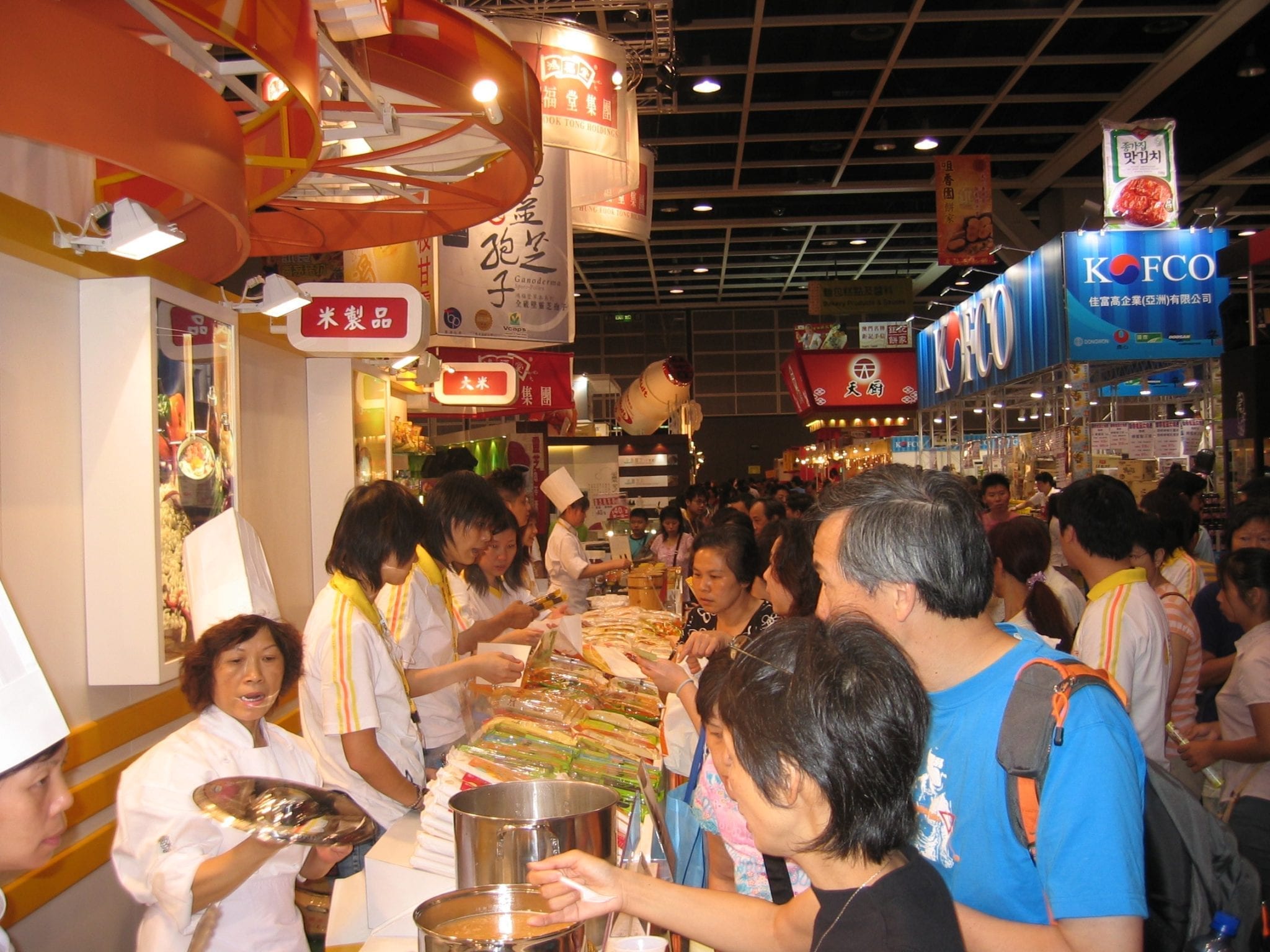
    Organised by the Hong Kong Trade Development Council (HKTDC), four concurrent fairs opened today at the Hong Kong Convention and Exhibition Centre (HKCEC); the 27th Food Expo, the eighth Hong Kong International Tea Fair, the third Home Delights Expo and the inaugural Beauty & Wellness Expo. Together, the fairs gather more than 1,800 exhibitors from around the world, bringing high-quality products and lifestyle solutions to consumers and trade buyers. The two-day International Conference of the Modernization of Chinese Medicine & Health Products (ICMCM), which is jointly organised with the Modernized Chinese Medicine International Association Ltd. (MCMIA), also opened today.

    “These concurrent events spotlight Hong Kong’s reputation as a business hub and lifestyle trendsetter in Asia. Together, they welcome a total of more than 1,800 exhibitors from around the world – each striving to help consumers enjoy a better and healthier lifestyle,” said Margaret Fong, Executive Director, HKTDC. “Now in its 27th year, the Food Expo presents a feast of business opportunities with a record of nearly 1,400 exhibitors from 26 countries and regions taking part. We expect to welcome some 20,000 trade buyers from around the world to the fair this year. Here, they can find trendy and quality products, gather the latest market intelligence and expand their business networks – all under one very large roof!”

    More than 100 buying missions from over 20 countries and regions will visit the Food Expo and Tea Fair this year, to source top-quality products and discover new business opportunities. A selection of local retailers and agents, including 759 Store, Sun Wah Japanese Food Ltd, Cafe Deco Group and DCH Logistics Co Ltd have set up buyers’ booths at the fairground for pre-arranged business matching meetings with exhibitors. This gives exhibitors the chance to connect with high-quality buyers and increase product exposure, while buyers are able to source products more efficiently.

    Foodies paradise spotlights international and green cuisine

    The Food Expo welcomes nearly 1,400 exhibitors and features delicacies from 26 countries and regions, including those of first-time participants from Croatia, Finland and Iceland. The Expo comprises three dedicated areas including Trade Hall, Gourmet Zone and Public Hall.

    Open to public ticket-holders until 14 August, the Gourmet Zone at Hall 3B spotlights flavours from around the globe. More than 70 exhibitors are presenting Asian and Western quality food products and specialty desserts. Responding to the increasing demand for healthy eating, this year the zone adopts a new “Green Palate” theme to place stronger focus on organic and green food.

    The Trade Hall is designed to serve up business opportunities for industry players. Among the thematic zones are the Halal Food Zone, which made a successful debut at the fair last year, and the new Chinese Medicine Zone held in association with the ICMCM. The Trade Hall is open to industry representatives on 11 and 12 August, before opening its doors to public ticket-holders as well on its last day (13 August).

    The Premium Food Zone is the highlight of the Public Hall at Hall 1A-E, featuring more than 30 famous food and beverage brands, including Kee Wah Bakery, On Kee Dry Seafood, Tai Pan, Maxim’s Caterers, Nissin and Tung Chun. Group pavilions from Canada, the Chinese mainland, Japan, Korea and the Philippines are also set up at the Public Hall to offer international culinary sensations.

    During the fair, a series of events including cooking demonstrations by celebrity chefs such as Michelin 3-star chef Alvin Leung, Esther Au who is known as the “Truffle Queen” and also the owner of Dolce Dolce Kitchen & Gourmet, Gabriel Choy who is Topgrade (Holding) Limited Executive Chef and Advisor, and Sze Chiu Kwan, Head Chef of Dong Lai Shun at The Royal Garden. Other events include sharing sessions by famous food critics, the launch of the 2016-2017 Wan Chai a La Carte food map, La Commanderie des Cordons Bleus de France and GHM Recommendation Restaurant Award Ceremony 2016, Q-Mark Selfie – Food Styling Competition with TV Stars, as well as seminars on “Hong Kong Green Purchasing – Food and Beverage Sector” and “Explore the Latest Trend in Food Sustainability”.

    Homemaking expo delights visitors

    Since its launch in 2014, the Home Delights Expo has enjoyed growing popularity. This year, the fair features 150 exhibitors showcasing innovative home appliances and kitchen utensils as well as kitchenware, tableware, household items and home security devices. The Avenue of Delights features about 40 exhibitors presenting a range of premium lifestyle brands such as CLP, Dyson, German Pool, Kenwood, Ladyship, OGAWA, OTO, Philips, STAUB, Towngas, WMF and ZWILLING J.A. Henckels.

    At Hall 3FG, visitors can bid for selected household appliances and products at crowd-pleasing Smart Bidding events. Other activities include lucky draws, product demonstrations, sharing health tips and cooking demonstrations by Cloudland Chinese Cuisine Executive Chef Paul Wong, Lai Sun F&B Management Group Executive Chef (Chinese Division) Albert Au, Media Chef Christy Lai of Zhu Fan Zai, and registered dietitian and author Gloria Tsang.

    Looking good & feeling great are key to quality lifestyle

    With demand for beauty and wellness-related products on the rise, the HKTDC has launched its brand new Beauty & Wellness Expo this year, gathering more than 60 exhibitors from across Asia including Hong Kong, Macau, Thailand, Malaysia and Taiwan. A wide range of cosmetics, skincare, hair care and massage products, nail polish and fitness equipment is on show during the fair.

    Standout displays include a skincare product line using Tibetan water collected from an altitude of 5,100 metres, a smart abs toning belt, a series of Taiwanese protective lotions with added hyaluronic acid that is new to the Hong Kong market and easy-to-use nail polish appliques from the US.

    During the fair, well-known beauty blogger Yoko Tsang and Chinese Medicine practitioner Roy Tsui are sharing tips on beauty trends and how to lead a healthy life. Other must-see events include make-up, hairstyle and nail-art demonstrations that are sure to wow fair visitors.

    Tea fair presents global business platform

    The Hong Kong International Tea Fair gathers more than 240 exhibitors from 10 countries and regions including the Chinese mainland, Hong Kong, India, Japan, Kenya, Korea, Singapore, Sri Lanka, Taiwan and the US to present high-quality tea and related products. The three-day fair is open exclusively to trade buyers on 11 and 12 August and also welcomes public ticket-holders on 13 August.

    An array of exquisite teas is being showcased during the fair, including one of the classics in pu’er tea “88 Yunnan Pu’er Cake”, pu’er tea powder made with tea leaves from aged arbor tea trees that are over 500 years old, as well as French dessert tea that combines organic tea and dried fruits. Japan External Trade Organization (JETRO) has returned this year with a group pavilion featuring 16 exhibitors including companies from green tea producing areas such as Kyushu and Kagoshima. The fair also presents a wide range of tea ware to promote tea culture.

    This year, the International Tea Competition continues to attract elite exhibiting brands, with a panel of professional judges reviewing the entries through blind tasting. Other special events include international tea tasting sessions, international cup warming, international tea arts performances and a seminar on marketing in the digital age.

    Public ticket-holders are welcome to visit on the last day of the fair (13 August), when experts will share tea therapy insights, explore tea appreciation techniques and analyse Pu’er tea and cheese pairing. Another spotlight event of the fair is the International KamCha Competition 2016 (Hong Kong-Style Milk Tea). The International Final will also be held on 13 August. Regional champions from Hong Kong, Guangzhou, Shanghai, Shenzhen, Melbourne and Toronto will compete for the title. The Final for Yuanyang will also be held on the same day.

    Traditional Chinese Medicine opportunities under the microscope

    The ICMCM takes place today and tomorrow with 18 prominent speakers from the United Kingdom, the Netherlands, Japan, Korea, Thailand, the Chinese mainland, Macau and Hong Kong, sharing their views on the opportunities arising from the Belt and Road Initiative, the quality of herbal products in Europe, the globalisation of Traditional Chinese Medicine, regulations and registration strategies for Chinese herbal health food, as well as the latest research and development findings. The ICMCM is an ideal platform for industry players to exchange ideas on the development of Chinese medicine.
  • American franchise coffee house interested in kerinci coffee

    American franchise coffee house interested in kerinci coffee

    An American franchise coffee house is interested in arabica kayu aro coffee from Kerinci district, Jambi province, the Head of Processing and Marketing of Crops at Jambi’s Plantation Office, Arsyad Nur, said on Wednesday.

    “This coffee won the national coffee contest,” he added.

    Currently, the coffee house, which has franchises around the world, is exploring the possibility to cooperate with arabica coffee farmers in Kerinci.

    In Jambi, Nur noted, arabica kerinci only grows in Kayu Aro, which is a plateau situated at a height of 1,400-1,700 meters above sea level.

    “One coffee rod can produce eight kilograms of coffee beans at the most. Within two weeks, the local farmers can produce 20 tons of arabica kerinci coffee beans,” he informed.

    According to him, the arabica kerinci plantations are spread over 1,500 hectares.

    The local administration is working to register arabica kerinci with the Directorate General of Intellectual Property Rights at the Ministry of Law and Human Rights in order to obtain legal protection of Geographical Indications (GI).

    “Arabica Kerinci has specific characteristics that deserve to get GI categorisation,” Nur pointed out.

    Besides arabica kerinci, he added, the district has robusta merangin and liberika tungkal coffee. “Liberika Tungkal grows at an elevation of 0-100 meter above sea level,” he explained.

  • Indonesian coffee showcase to open in Seoul

    Indonesian coffee showcase to open in Seoul

    Indonesia has high hopes of carving out a share of the crowded Korean domestic cafe scene and coffee market.

    A cafe specialising in artisanal Indonesian coffee is planned to open soon on the Bojeong-dong Cafe Street in Seoul. It will sell ground coffee and coffee beans from different regions in Indonesia, according to the Southeast Asian nation’s small and medium enterprises minister Anak Agung Gede Puspayoga.

    “As one of the top coffee consumers in the world, South Korea should buy more coffee from Indonesia,” he said.

    According to USDA data, South Korea’s coffee market is estimated at more than US$3 billion annually. Indonesia does not believe it is getting its fair share.

    The planned Indonesian coffee cafe will initially sell coffee beans grown in three cities: Temanggung in Central Java, Denpasar in Bali and Bandung in West Java, including Priyangan coffee, Indonesia’s version of kopi Luwak, the famed civet coffee, and Temanggung, its Arabica and Robusta coffee.

    The shop is part of a partnership hatched between the Korea Federation of Micro Enterprise, or KFME – which represents South Korea’s 7 million small businesses – and the non-profit International Council of Small Business.

    The partnership will also see prominent Korean bakeries provide training for Indonesian bakers.

  • Starbucks barista from Indonesia Ryan Wibawa competes in the World Brewers Cup finals

    Starbucks barista from Indonesia Ryan Wibawa competes in the World Brewers Cup finals

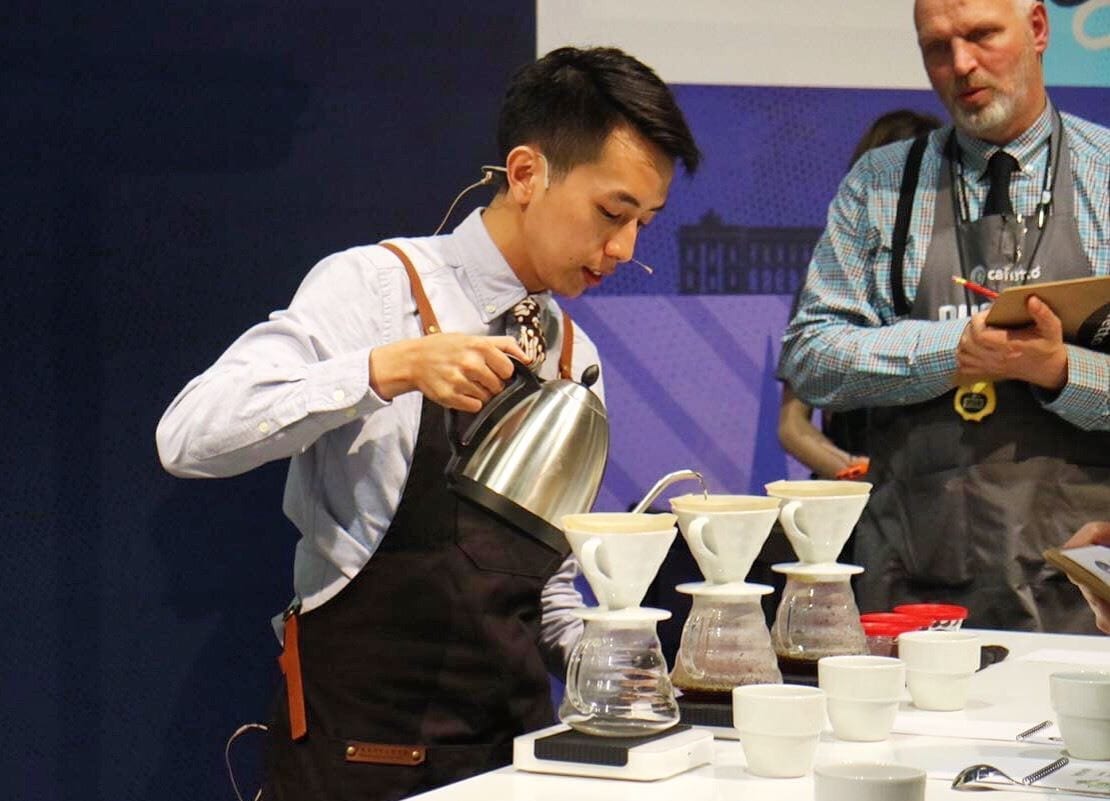
    “It was like a dream come true,” said Wibawa, a Starbucks barista from Indonesia.  I felt very humbled and honored to represent my country in an international competition. The experience was the best teacher.”

    Wibawa was matched against 36 competitors from all over the world at the championships, which took place from June 23-25 in Dublin, Ireland. As part of the competition, he crafted three coffee beverages that were judged on aroma, flavor, taste, acidity, body and balance. Wibawa also had to impress the judges with his customer service skills.

    “The competition was hard, but it was a great challenge for me,” he said. “No words can describe the feeling,” he said. “From every competition I gain something, new knowledge, new friends and new skills.”

    Although a competitor from Japan took first place, Wibawa is proud to have ranked among the top 25.

    Wibawa was first exposed to coffee when he joined Starbucks two years ago. He learned quickly and developed an enthusiasm for all things coffee, which led to being selected as his district’s coffee master in 2014. A year later, he won Starbucks Indonesia’s Barista Championships and ranked number one in the Indonesian Brewers Cup Championship. In February 2016, he placed in the top three at the China and Asia Pacific (CAP) region’s Starbucks Barista Championships. His vast experience paved the way for competing in Dublin.

    “Participating in a world competition definitely had a different feeling,” said Wibawa. “The competitors from all around the world had excellent coffee skills. It was a tough competition and a great learning experience.”

    When Wibawa is not competing, he works at Indonesia’s first Starbucks Reserve store in Jakarta, where he delights customers with his coffee craft. He also shares his expertise by training other Starbucks partners at Indonesia’s third Starbucks Reserve location in Bandung.

    “I am very lucky and grateful to have a very supportive family, friends and all Starbucks partners,” he said. “They gave me the strength to compete in the World Brewers Cup competition.”

  • Indonesia promotes specialty coffee in the Netherlands

    Indonesia promotes specialty coffee in the Netherlands

    Indonesia has again promoted its specialty coffee in the Netherlands to draw the attention of several people in The Hague.

    The promotional activity, being conducted through the Indonesia Coffee Festival, complied with the Indonesian governments policy to conduct economic diplomacy in the Netherlands.

    The promotion at the New Babylon Meeting Center was organized by the Indonesian Embassy in The Hague along with the Indonesian Students Association (PPI) in the Netherlands and PPI in The Hague, Minister Counsellor of Information, Social, and Cultural Affairs for the Indonesian Embassy in The Hague Azis Nurwahyudi informed Antara here on Monday.

    In his remarks, Indonesian Ambassador to the Kingdom of the Netherlands Wesaka Puja stated that coffee was one of Indonesias leading export commodities as the country was the fourth-largest coffee producer in the world.

    The Indonesian government has continued to expand its overseas markets, especially in Europe, he remarked.

    Chairman of the Committee on The Hagues PPI Priska Astasari stated that the joint activity was also aimed at promoting economic development in Indonesia.

    Some seven companies from Indonesia were invited to participate in the festival: Adena Coffee, Javanusa, De Ngokow Coffee, Ephraim Coffee, Asasta Power, Mr O, and Blanco Coffee and Book.

    During the festival, some talk shows were organized to hold discussions on the various traits of Indonesian coffee.

    For instance, Charis Christian Julianto from the Ephraim Coffee Company disseminated information on coffee farming in Indonesia, including the history of the emergence of coffee beans in Indonesia and the concept of sustainable coffee production adopted by the Indonesian coffee farmers and entrepreneurs.

    Thereafter, Sara Datuk from the Javanusa Company provided information on the different flavors of coffee from various regions in Indonesia, such as the provinces of Aceh, West Java, and Papua.

    Aki Baihaki noted that fair trade in coffee should be profitable for entrepreneurs and the coffee farmers.

    Barista Yakup Aydin also demonstrated the ways of making espresso and latte art.

    Bimo Pramana from the Blanco Coffee and Book Company in Yogyakarta Province stated that by attending the Indonesia Coffee Festival in The Hague, he had gained a new experience and had increase his knowledge regarding the demand in the European market, especially in the Netherlands.

    The event also offered an opportunity to build a network among coffee entrepreneurs in both countries.

  • Indonesian coffee introduced in Southeast European market

    Indonesian coffee introduced in Southeast European market

    Indonesian coffee was introduced in Zagreb, Croatia, on June 8-10 during an event titled “Indonesian Specialty Coffee: From Cup to Cup” organized by the Indonesian Embassy in Zagreb in cooperation with local entity, Tanamera Coffee.

    During the program held in two locations — the Indonesian Embassy in Zagreb and a coffee shop in the Croatian capital — a representative from Indonesia introduced a variety of Indonesian coffee beans, including Gayo Aceh, Solok Sumatera, Toraja Sulawesi, Flores, and Malabar.

    “The last day of promotion in the cafe was open for the public, and some 600 people had the opportunity to sample the single origin coffee that our team had brought,” Dini Criddle, Tanamera Coffee owner, noted in a press release received on Monday.

    Tanamera Coffee, as the governments partner in promoting Indonesian coffee in the global market, also presented the process of coffee production, from the enhancement of farmers harvest results and the process of coffee production to the simulation of roasting techniques as well as brewing methods using filters or espresso machines.

    The Indonesian Embassy in Zagrebs Economic Functions Executive Widjoseno Sastroamidjojo remarked that the promotion efforts had drawn the interest of several coffee roasters, industry makers, and Croatian coffee importer to buy Indonesian coffee products and coffee beans that are deemed high in quality.

    This interest will boost the entry of Indonesian coffee into the Croatian market, as well as other European countries, he emphasized.

    “Not a lot of Croatians are familiar with Indonesian coffee. Seeing the high demand for Indonesian coffee and the potential to attract Croatian tourists that reached 12 million in 2015, we are confident that Indonesian coffee products can be successful in the southeast European market,” stated Sastroamidjojo.

    Coffee consumption in Croatia is high as its people prefer spending time in coffee shops in addition to the rapid growth in the number of such outlets in the southeastern Europe country.

    Despite having a total population of only 4.2 million, the coffee consumption rate in Croatia is rather high, reaching 15.9 tons, or 2.8 kilograms per capita in 2013.

    Based on the data retrieved from Euromonitor, Croatia was ranked 14th on the worlds coffee consumption index.

    Meanwhile, other Southeast European countries, such as Slovenia, Serbia, and Bosnia-Herzegovina, are also listed among the 15 countries, with the highest per capita coffee consumption rate, with each reaching 6.1, 5.4, and 4.3 kilograms.

  • Starbucks, Tata extend partnership beyond India

    Starbucks has more than 2,000 cafes in China alone and is opening about 500 new stores a year in the country. John Culver, president of Starbucks’/