Tag: coffee

  • Vietnam’s 2017 coffee exports may dip on low stock as uncertainty mounts

    Vietnam’s 2017 coffee exports may dip on low stock as uncertainty mounts

    A coffee association sees shipments fall 25-30 percent this year. Coffee exports from Vietnam, the world’s second-biggest producer after Brazil, may dip in the calendar year of 2017 due to thin carryover stocks while production of the next crop could be threatened by a lack of water, industry officials said.

    A lower export volume from Vietnam, the largest producer of robusta beans, could tighten global supply of the bitter variety and inflate roasters’ production costs, given a deficit already projected for the ongoing 2016/2017 crop year ending in September.

    The world would face another coffee deficit this season, the third in a row, as production estimated at 151.62 million bags stays below consumption of 155 million bags, the International Coffee Organization said in its February report. Each bag contains 60 kilograms of beans.

    Unseasonal rain in late October and early November last year had delayed harvest of the current crop, traders said. Earlier in 2016, the worst drought in decades damaged some robusta plantations in the Central Highlands coffee belt but did not cut into overall output.

    Growers often pick robusta cherries from late October to January. Rain in most of the October-December period of 2016 had not only slowed the process but also disrupted drying.

    “The rain has caused early blossom in some areas and the flowers are often ruined during the first phase of watering,” Luong Van Tu, chairman of the Vietnam Coffee and Cocoa Association (Vicofa), said Monday. Watering has now been under way in the region comprising five provinces.

    While Vicofa has not made any output forecast for the next 2017/2018 crop, saying it was still too early, the losses of early flowers might lead to a smaller crop, Tu told.

    He has been to Dak Lak Province in the Central Highlands over the weekend to attend a national coffee festival aimed at increasing sustainable production as well as boosting consumption of the beverage and promoting tourism to the region, which provides up to 90 percent of Vietnam’s total output.

    Tu said Vietnam’s coffee exports this year could drop by around a quarter due to “very low stocks” brought forward from the previous season. He gave neither specific volume nor statistics for the stock.

    The U.S. Department of Agriculture (USDA) estimated Vietnam’s coffee stocks at the end of the 2015/2016 season at 230,000 tons, or 3.83 million bags, down 40 percent from the previous season.

    Vietnam exported a record 1.74 million tons between October 2015 and September 2016, based on Vietnam Customs data.

    Exports in 2016/2017 are projected to fall around 12 percent to 1.56 million tons, the USDA said in its December 2016 coffee report.

    Besides, higher domestic consumption and a rising export volume of finished coffee products would also reduce Vietnam’s export of semi-processed beans, industry officials said.

    In 2016, Vietnam’s coffee shipments fetched $3.34 billion, with around 10 percent coming from finished products, Tu said.

    Vietnam has one of the world’s fastest growing retail coffee markets, trailing only behind Indonesia, Turkey and India, global market intelligence Mintel said earlier this month.

    Water

    At a seminar on Sunday in Buon Ma Thuot, the capital city of Dak Lak, Vietnamese industry officials discussed ways to cope with climate change and ensure sustainable coffee production.

    Climate change, with falling rainfall in recent years, and a third of the region’s coffee trees being old have reduced yields, the Dak Lak government said in a statement late Sunday. Dak Lak is Vietnam’s largest coffee planting province, producing a third of the country’s total output.

    Rainfall in March, the peak of the six-month dry season, is forecast to be similar to the average level in recent years in Dak Lak and also in Lam Dong Province, Vietnam’s second-biggest grower, the region’s weather station said. The wet season often returns in early May.

    “Underground water is uneven this year, with some places reporting the water could recede 1.5 to two meters (5-6.6 feet) below last year’s level,” Tu said. The problem has emerged in all but the eastern part of the Central Highlands where rain has been sufficient, he said.

    Ample supply of underground water will ensure success for the third phase of tree watering, while water shortages often lead to smaller cherries, affecting overall yields and output.

    Traders said output forecasts made around June/July would provide more precise figures, after the rainy season returns.

  • Kimly aims to raise $40m in first kopitiam IPO

    Kimly aims to raise $40m in first kopitiam IPO

    Kimly is in line to become the first operator of traditional coffee shops to be listed in Singapore. The company – reported last month as eyeing a listing – tabled its initial public offering yesterday. It is offering 173.8 million new shares at 25 cents apiece, comprising 170 million placement shares and 3.8 million shares for the public.

    The offer closes at noon on March 16, with trading expected to start on the Catalist board on March 20.

    Kimly is a household name for its “kopitiams” offering food and beverage. It has nearly 500 stalls across 64 outlets – 56 coffee shops, five food courts and three industrial canteens.

    The network includes 121 stalls that carry the company brand, selling dim sum, seafood zi char and mixed vegetable rice, among other things. These are managed under the company’s food retail division.

    The rest of the stalls are leased to tenants paying rent and management fees that go to Kimly’s outlet management division. This division accounted for around 57 per cent of Kimly’s total revenue last year.

    The business is highly resilient, with strong cash flows and healthy earnings growth, executive director Vincent Chia said yesterday.

    “We are in a defensive industry that serves a very fundamental market need. This is really a grassroots business – everyone can walk in and have a nice meal at a very affordable price. We don’t talk about income brackets,” he added.

    And despite its size, Kimly only commands a 5.8 per cent market share, “so we have plenty of room to grow”, said Mr Chia.

    Kimly’s revenue expanded from $148.9 million in 2014 to $172.2 million last year – a compound annual growth rate of 7.6 per cent.

    Net profit racked up compound annual growth of 9.9 per cent over the same period to hit $24.2 million last year, implying a price-to-earnings ratio of 12.02 for the stock, while cash flow from operating activities remained steady, from $21.8 million in 2014 to $28.4 million in 2016.

    Cash and bank balances amounted to $29.4 million last year, with no outstanding borrowings.

    “We intend to pay out no less than 50 per cent (of net profit) for dividend,” said Mr Chia.

    He said the listing will not lead to food price hikes, aside from the usual inflation-related adjustments.

    Kimly is looking to raise about $40.4 million of net proceeds from the IPO, with the bulk earmarked for potential acquisitions and joint ventures, with a focus on adding more offerings to its brand. Some funds will also be used to boost productivity, with plans to expand its central kitchen to double the capacity.

    “Last November we launched online delivery service for our dim sum, something that we’re looking to extend to more products. We may be kopi boys, but we are forward- thinking kopi boys,” said Mr Chia.

  • Starbucks’ New Cold Brew Mason Jar Is Only Available in Singapore

    Starbucks’ New Cold Brew Mason Jar Is Only Available in Singapore

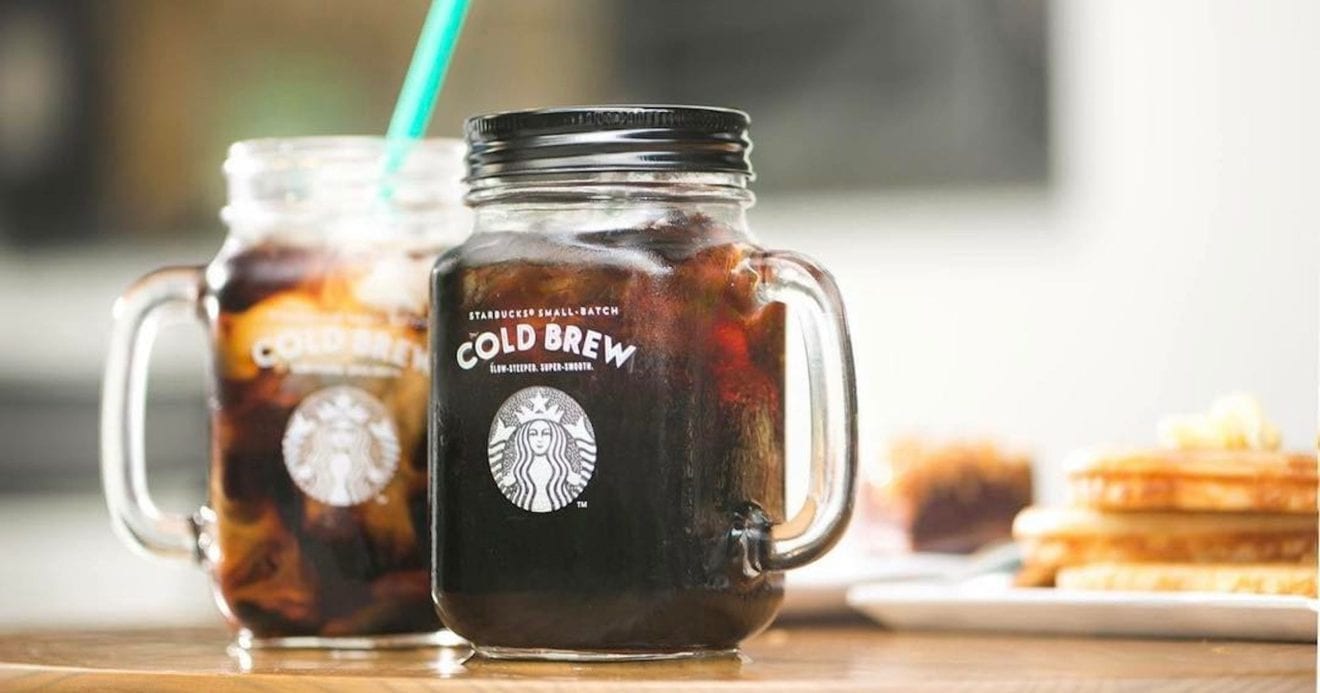
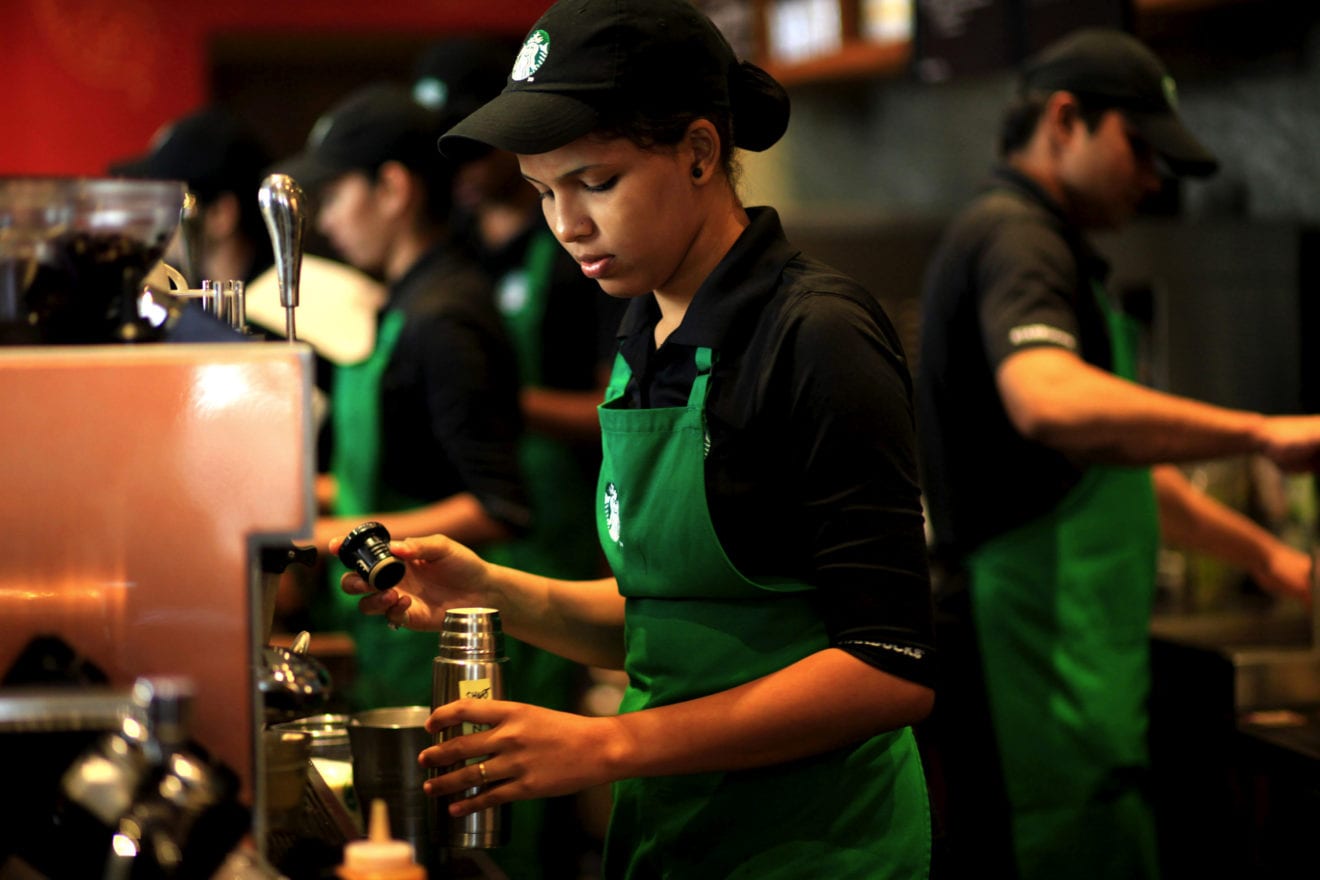
    Starbucks has had an exciting few weeks, with the launch of its barrel-aged coffee, the announcement of its first location in Italy, and two new macchiato drinks. The company has added to this series of new products with the recent debut of cold brew in branded mason jars currently available in Singapore.

    Last year, the company sold mason jars with green caps in South Korea, but the new limited-edition version comes with a black cap instead.

    The jars are emblazoned with the classic Starbucks mermaid logo and appear to come with a screw-top lid.

    Don’t book your tickets to Singapore just yet; the company confirmed to Seventeen that the drinkware is only available in the Southeast Asian island “for now.”

    The mason jars are currently available for 8.90 Singapore dollars ($6.30) retail or SG$5.90 ($4.20) with the purchase of a cold brew.

  • Vietnam’s caffeine thirst puts it in world’s top growing coffee markets

    Vietnam’s caffeine thirst puts it in world’s top growing coffee markets

    The Southeast Asian nation ranks only behind Indonesia, Turkey and India in retail value growth.

    Vietnam has one of the world’s fastest growing retail coffee markets, trailing only behind Indonesia, Turkey and India, a global market intelligence agency said in its latest report.

    The compound annual growth rate (CAGR) of Vietnam, measuring the average value growth in the 2012-2016 period, stood at 14.9 percent, while Indonesia’s market jumped 19.6 percent, followed by 17.5 percent in Turkey and 15.1 percent in India, Mintel said in the report.

    vietnams-caffeine-thirst-puts-it-in-worlds-top-growing-coffee-markets

    Asian markets, where growth is being driven by a surge in innovative coffee products, make up the majority of the world’s fastest growing coffee markets, while European markets plus Australia are among the slowest, the report said. It did not give any market values.

    Even though Germany, the United States, Italy and Spain top the 2016 list of importers of Vietnamese green coffee beans based on Vietnam’s government data, Mintel’s findings suggest that European nations mostly process the bitter variety and re-export the finished products.

    Instant coffee dominates the retail market in Asia. Out of the new coffee products launched in 2016, 42 percent were soluble coffee granule products in Asia Pacific, while the figure was 20 percent in Europe and a mere 6 percent in North America.

    The global coffee market’s retail volume grew 2.7 percent last year from 2015, slightly up from an annual rise of 2.5 percent the previous year, Mintel said.

    “The global coffee industry continues to experience healthy growth, driven by Asian markets in particular,” said Jonny Forsyth, Global Drinks Analyst at Mintel. “Asia has far more growth potential as traditionally tea drinking consumers are converted slowly but surely into coffee drinkers.”

    The International Coffee Organization estimated the CAGR of Vietnam’s coffee consumption at 8 percent for the four-year period ending in 2015/2016, the second-fastest growth rate among the world’s coffee exporting nations after the Philippines. The crop year lasts between October and September.

    The London-based ICO estimated Vietnam’s coffee consumption at around 140,000 tons in the 2015/2016 season, or 8 percent of output, up slightly from 130,000 tons used domestically the previous season.

  • Indonesia Dominates Global Retail Coffee Market

    Indonesia Dominates Global Retail Coffee Market

    Indonesia increases its dominance over the global retail coffee market with an average sales growth of 19.6 percent each year throughout the last five years, followed by India (15.1 percent average growth) and Vietnam (14.9 percent average growth in second and third position, respectively.

    The data gathered by Mintel also revealed that the growth of the global retail coffee market in 2016 had reached 2.7 percent from the previous 2.5 percent in 2015. Meanwhile, Asia continues to dominate the fastest growth in the global coffee market.

    According to the data, the slowest growth in the global coffee market throughout 2011-2016 is recorded by Finland with a -3.7 percent average growth, followed by Australia with a 0 percent growth, Poland with a 0.1 percent growth, Dutch with a 0.5 percent growth, and Belgium with a 0.5 percent growth.

    Mintel’s Global Drinks Analyst Jonny Forsyth, stated that Asia’s coffee market is increasingly growing following the high level of innovations in various processed coffee products in the region. Throughout the same period, the number of newly introduced coffee products in Asia grows by 95 percent.

    In comparison, the number of new tea products introduced in Asia in the same period only grew by 55 percent. Jonny asserted that the numbers showed that the majority of Asian citizens have shifted from the tradition of consuming tea to coffee.

    “In 2016, there was a drastic increase in the number of new coffee products that rivals the previously booming tea product in Asia. It is true tea drinking tradition has been the main obstacle for Asia’s coffee products. But, currently there are many tea-coffee hybrid products that have been introduced in order to solve the problem,” Jonny explained.

  • International coffee, tea and confectionery showcase draws a record number of visitors

    International coffee, tea and confectionery showcase draws a record number of visitors

    CafĂ© Asia 2017, International Coffee & Tea Expo (ICT Expo) 2017 and Sweets & Bakes Asia 2017 captivated some 11,000 visitors with a multi-sensorial showcase of ‘Firsts’. The concurrent shows were declared opened by Guest-of-Honour, Mr Lee Yi Shyan, Member of Parliament of East Coast GRC, on March 2, 2017 at Marina Bay Sands Expo & Convention Centre, Hall E. 

    The highly successful Café Asia and ICT Expo series first launched in 2013 and the Sweets & Bakes series which was introduced a year later, together present the largest showcase dedicated to the team coffee and bakery industries in Singapore and the region. This dynamic B2B platform is sought after by key decision makers as a sourcing destination for their café needs and to explore new collaborations and opportunities in a country where the number of specialty coffee drinkers has increased over the years. 

    Spanning 5,000 square metres this year, Café Asia 2017, ICT Expo 2017 and Sweets & Bakes Asia hosted 168 exhibitors from all around the world namely, Australia, Brazil, China, France, Germany, India, Indonesia, Italy, Japan, Korea, Malaysia, Myanmar, Netherlands, Philippines, Rwanda, Singapore, Switzerland, Taiwan, Thailand, Timor-Leste and Vietnam.

    The 3-day exhibition raised the bar for three industries with innovations that offered solutions for new recipes, better tasting products and productivity. It introduced some of the latest innovations, developments and technologies at exclusive workshops, classes and demonstrations and on the exhibition floor by industry experts, on everything coffee, tea and baked goods. Visitors discovered new sources and a wide array of supplies and innovative and cutting-edge equipment for cafes and bakeries, from coffee beans from traditional and non-traditional coffee producing countries, tea leaves, taste elevating baking ingredients, new exciting brews like Expresso Martini by Justin Metcalf and delectable gelato flavours.

    Keen Competiton at Seven National Competitions

    Top baristas, tea masters and bakers converged at the shows to contend for national titles and to represent Singapore in the world-level championships. New this year is the inaugural Tea Masters Cup Singapore 2017 where Singapore crowned its first-ever Tea Master to compete at the prestigious Tea Masters Cup International 2017. 

    The National Coffee Championships rolled-out a new competition format, the Singapore Coffee in Good Spirits Championships 2017. The championship celebrates barista’s creativity in celebrating the synergy between coffee and alcohol through innovative beverage recipes. Also returning this year are the Singapore National Barista Championship, Singapore Latte Art Championship, Singapore National Brewers Cup Championship and Singapore Cup Tasters Championship.

    The Singapore Bakery & Confectionery Championship 2017 welcomed top bakers and confectioners who showcased their skills to create the most delicious and delightful breads and pastries. The bakers from some of the best hotels and bakeries here in Singapore kneaded, baked and worked magic with their creations, making them into stunning displays of edible art.

    The winners are:

    Championship

    Winners

    Tea Masters Cup Singapore 2017 – Tea Preparation

    Dave Lim of Sun Ray Café

    Tea Masters Cup Singapore 2017 – Tea Pairing

    Dave Lim of Sun Ray Café

    Tea Masters Cup Singapore 2017 – Tea Tasting

    Darren Chang of Smitten Specialty Coffee & Tea

    Singapore Bakery & Confectionery Championship 2017 – Bread Category Champion

    Jacker Tok Siu Hong of Carlton Hotel

    Singapore Bakery & Confectionery Championship 2017 – Cake Category Champion

    Phua Wei Si and Maryann Tan Rui En of Temasek Polytechnic

    Singapore National Barista Championship

    Terence Tan of Santino Coffee Specialists

    Singapore Latte Art Championship

    Jervis Tan of Kinsmen Coffee

    Singapore National Brewers Cup Championship

    Rodman Chan of A.R.C.

    Singapore Cup Tasters Championship

    Rodman Chan of A.R.C.

    Singapore Coffee in Good Spirits Championship

    Natasha Shariff of Bettr Barista

    Café Asia 2017, ICT 2017 and Sweets and Bakes 2017 are organized by Conference and Exhibitions Management Services (CEMS). Café Asia 2017 and the International Coffee & Tea Expo 2017 are hosted by Singapore Coffee Association and Sweets & Bakes Asia 2017 is hosted by Singapore Bakery and Confectionery Trade Association.

  • Dak Lak to shift coffee strategy

    Dak Lak to shift coffee strategy

    The Central Highlands province of Dak Lak plans to increase the proportion of processed coffee such as instant coffee and powdered coffee from less than 10 per cent to 15 per cent in total coffee output by 2020 and up to 30 per cent by 2030.

    Pham Ngoc Nghi, chairman of the province’s People’s Committee, said the province’s policies were being adjusted to attract more domestic and foreign enterprises to invest in coffee processing.

    He said that most locally based processing companies were private firms whose market access and product advertising capacity were modest.

    Dak Lak, which has the largest coffee area and output in Viet Nam, has more than 200,000ha and an annual coffee bean output of 450,000 tonnes.

    However, the province only has 145 coffee processing facilities with a total capacity of 32,100 tonnes, accounting for 5.55 per cent of the province’s total coffee bean output.

    To achieve the targets, the province has created a more favourable investment environment for both domestic and foreign enterprises, particularly those specialising in roasting and grinding, to invest in processing factories.

    The province has also helped coffee enterprises improve their corporate governance, promoted the use of advanced post-harvest and processing techniques and expanded market access for local companies.

    Coffee farmers, producers and businesses are being encouraged to produce beans that can be certified by the coffee global certification programme (UTZ), the fair-trade labelling organisation (FLO), Rainforest Alliance (RFA) and 4C (Common Code for the Coffee Community).

    The province, which has helped organisations, enterprises and co-operatives build brands, has offered assistance to companies to acquire rights to the geographical indication for processed coffee products.

    Last year, Dak Lak produced 28,000 tonnes of processed coffee, including 23,000 tonnes of powdered coffee and 5,000 tonnes of instant coffee.

    It exported 4,520 tonnes of instant coffee worth nearly US$ 27 million, accounting for 7.5 per cent of the province’s coffee export revenue.

    In the 2016-17 coffee season, Dak Lak estimates it will export 230,000 tonnes of coffee to 75 countries and territories.

    Export potential

    Viet Nam’s processed coffee exports are predicted to increase in the coming years due to more investment from domestic and foreign enterprises, according to experts.

    Many coffee companies, including Trung Nguyen, Me Trang and Vinacafe, for instance, are expanding the scale of their production.

    In addition, Viet Nam’s free trade agreements with the EU, Europe-Asian Economic Union and the Republic of Korea will create opportunities to boost Viet Nam’s processed coffee exports.

    Under free trade agreements, exports of Viet Nam’s processed coffee are taxed at only 0-5 per cent compared to 15 -20 per cent in the past.

    The country’s coffee industry is raising the value of coffee beans by speeding up the processing of powdered and instant coffee and other products.

    Processed coffee products from Viet Nam are sold in many international markets.

    The G7 instant coffee of Trung Nguyen, for example, has passed the requirements of Walmart Stores, Inc and is now sold at Walmart stores in many countries such as Chile, Brazil, Mexico and China.

    Luong Van Tu, chairman of the Viet Nam Coffee and Cocoa Association, said China was one of the most important markets for Viet Nam’s processed coffee.

    Coffee consumption in China is rising rapidly, particularly among younger consumers exposed to Western coffee drinking habits, he said.

  • More Filipinos shifting to brandy, 3-in-1 coffee mixes

    More Filipinos shifting to brandy, 3-in-1 coffee mixes

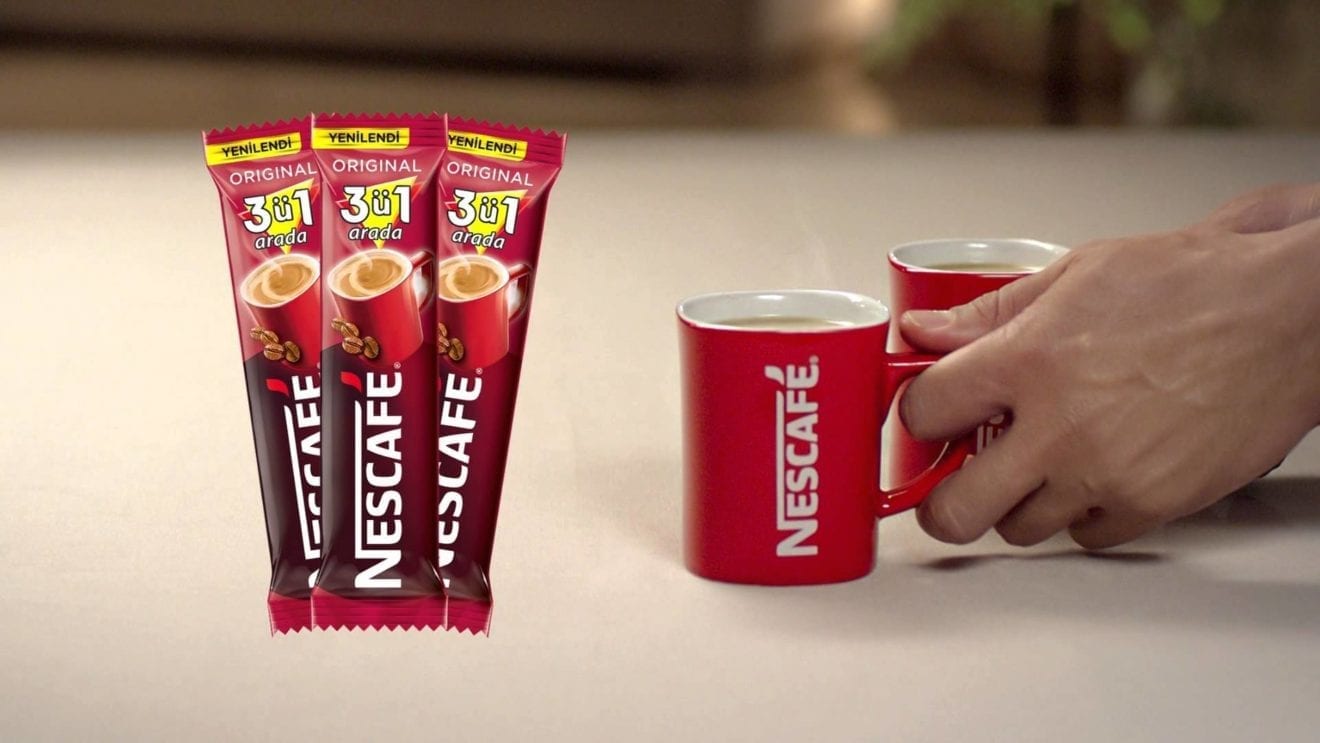
    Great Taste, a local coffee brand, moves up six notches to become the fifth most chosen brand of Filipino consumers in 2014. According to Kantar Worldpanel Philippines’ Brand Footprint ranking, Great Taste leaps to 5th from 11th place due to a 40% increase in Consumer Reach Points (CRPs). However, Nescafe still clinches the top spot with Lucky Me trailing close behind.

    Kantar Worldpanel’s Brand Footprint research provides information on real consumer behaviour. Consumer Reach Points (CRPs), which form the basis of the ranking, is an innovative metric that measure how many households around the world are buying a brand (penetration) and how often (frequency), providing a true representation of the shopper’s choice.

    According to Alexandre Duterrage, General Manager at Kantar Worldpanel Philippines, Great Taste attracted 2.9 million additional shoppers in 2014. It also experienced an increase in frequency of purchase by 4 times more on the average. “Based on the data that we have, the success of Great Taste is propelled by the shift from traditional “pure black coffee” to 3-in-1 coffee mixes, particularly Great Taste White and the introduction of multi-serve packaging formats,” he said.

    Meanwhile, Nescafe recorded 890 billion CRP in 2014, 44 billion more than Lucky Me (846 CRP). Completing the top 5 are Surf (648 billion CRP), Milo (518 billion CRP) and Great Taste (515 billion CRP).

    The 10 Most Chosen Brands in the Philippines revealed by Kantar Worldpanel’s Brand Footprint study are:

    Ten Most Chosen Brands in Philippines

    Rising brands

    Kantar Worldpanel Philippines also listed the top 10 rising brands in the country, which recruited an average of 74 million more homes compared to 2013. Among these emerging stars, only 3 local names found their way to the top 10: Great Taste, Datu Puti and Silver Swan.

    Rising Brands in Philippines

    As most brands struggled to grow in 2014, Datu Puti and Silver Swan managed to maintain their ranking in terms of consumer touchpoints (both with a -1% CRP %change). Kantar Worldpanel notes that stable ranking can be attributed to commercials about the product’s system usage (i.e. using vinegar and soy sauce of the same brand when cooking), and the introduction of new flavours especially for the vinegar category where both brands have product offerings.

    Other PH Brand Footprint highlights:

    1. Importance of personal and home hygiene

    – Calla (a detergent brand manufactured by Peerless) lands into the top 20 Home Care items, surpassing 13 brands. It enticed more households with its budget-friendly offer and gentle-to-hands proposition.
    – Silka and Charmee’s positions in Health & Beauty inched up with a CRP increase of 7% and 5%, respectively. Filipino endorsers, product quality and affordable prices are amongst their success factors.

    2. Products with social function grew well – seen in Health & Beauty and Beverages

    – Dove enhanced consumer touchpoints by 9%, moving up one notch in the health & beauty sector ranking. Thanks to its crusading campaign for real beauty which resonates with consumers emotionally and encourages purchase not only in Philippines but across the world.
    – Krem Top is now amongst the top 20 Beverages in Philippines, jumping by 8 points as it reached more shoppers with the help of its “Change for the Better” campaign which aims to challenge individuals to always strive to become better.

    3. Speed and convenience

    – Ready-to-eat snacks and drinks such as Presto, Clover, Dutch Mill, Pepsi and Royal Tru Orange performed well (CRP growth rates in order: 3%, 4%, 9%, 10% and 18%) as consumers are increasingly turning to FMCG to satisfy hunger between meals.

  • First Starbucks roastery coming to Shanghai in 2017.

    First Starbucks roastery coming to Shanghai in 2017.

    Located along Nanjing Road (West), one of the world’s busiest shopping destinations, the Roastery will be part of the soon to be built HKRI Taikoo Hui Project, Shanghai’s newest premium world-class retail, office, and hotel area.

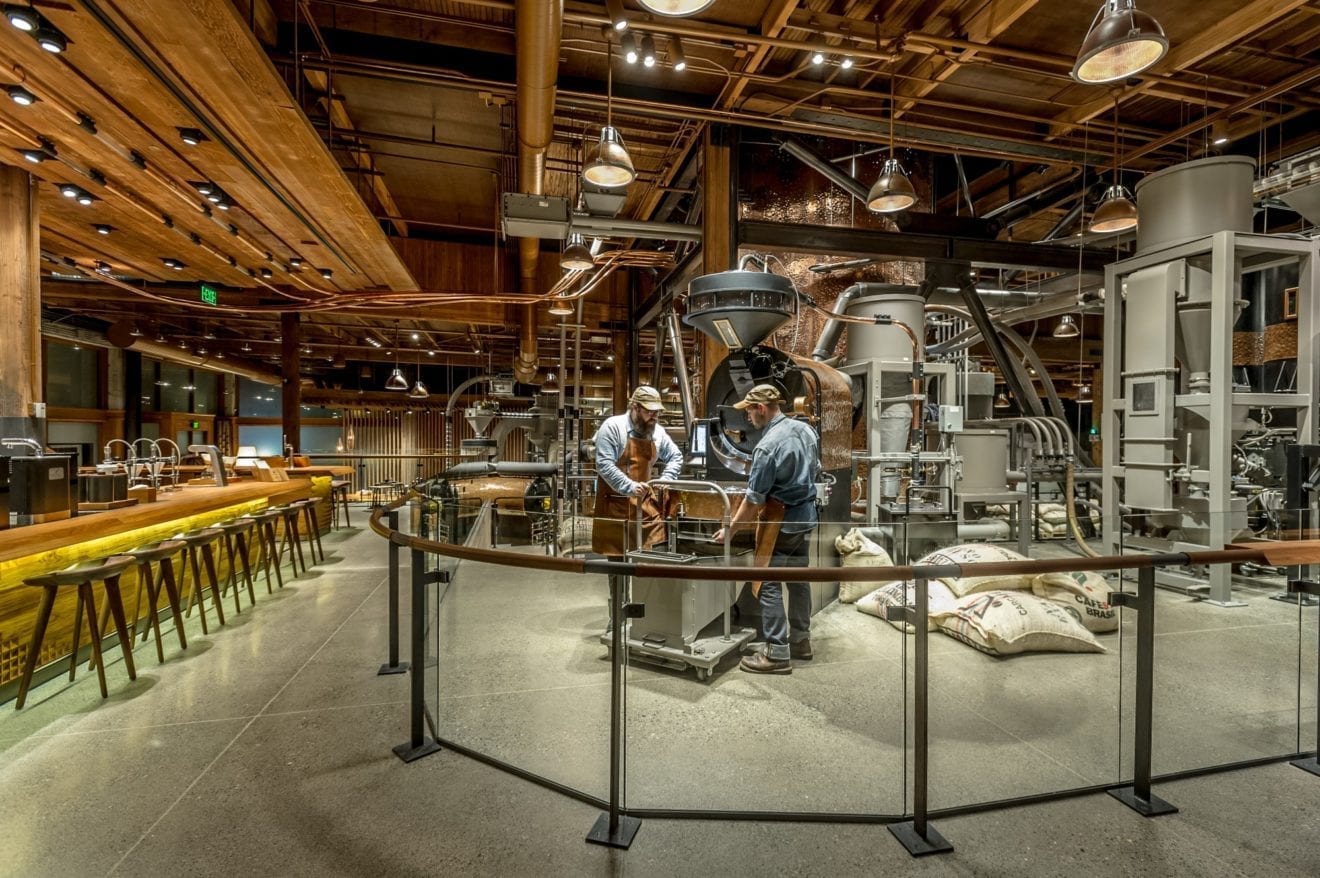
    Scheduled to open in late 2017, the new Starbucks Roastery and Tasting Room in Shanghai will be inspired by the first location that debuted in December 2014 in the company’s hometown of Seattle, Washington. The 2,700 square-meter (30,000 square-foot) Shanghai space will reflect a similar, immersive all sensory experience.  This interactive, retail environment will allow customers in China to better understand the craft of roasting and brewing a range of Starbucks coffees including the rare, limited availability of Starbucks Reserve coffees from around the world.

    “China represents the most important and exciting opportunity ahead of us. As our first international Roastery, we will take even bolder steps to make this Shanghai location our most stunning store, while making it completely unique and relevant to the Chinese customer,” said Howard Schultz, chairman and chief executive officer of Starbucks. “The Starbucks Roastery environment honors coffee innovation as a modern day Willy Wonka experience, where customers are only feet away from the theatre and artistry of our coffee craft. I am confident this will be one of the most highly-anticipated store openings in our international markets.”

    China is, today, Starbucks largest international market with more than 2,100 stores across over 102 cities, including 55 Starbucks Reserve¼ stores. The new Roastery represents Starbucks 45-year relentless pursuit for coffee excellence and promises to bring to China an unparalleled experience that starts with the passionate Starbucks partners. Exclusively at the Roastery, customers will be able to watch freshly-roasted beans arrive, connect with Starbucks coffee specialists and master roasters, enjoy a unique beverage and food menu, as well as savor some of the most unique, small-lot coffees brewed multiple ways. Starbucks believes this revolutionary retail concept will make the new Roastery one of the city’s latest and most iconic must-visit lifestyle destinations and landmarks, for Shanghainese and visitors from China and around the world.

    The Shanghai Jing’an Government has given Starbucks their full support to bring this first-of-its-kind coffee retail experience that combines coffee roasting, manufacturing, education and retail within a single facility in China. Following a meeting with Starbucks global leaders, Shanghai Jing’an Party Secretary, Mr. An Lusheng, and Shanghai Jing’an Mayor Mr. Lu Xiaodong reiterated: “The new Jing’an is focused on developing high-end commercial sectors, establish new developmental goals for a modern cosmopolitan city, and encourage new retail innovations within our district. The government fully supports this pioneering retail experience and initiative from Starbucks.”

    The Starbucks Roastery will be part of the HKRI Taikoo Hui complex, developed jointly between HKR International Limited and Swire Properties Limited, who are fully committed to launch this pioneering project with sustainability and quality at its core. The revolutionary retail experience of the new Starbucks Roastery will be located within a standalone semi-circle building of the complex that faces the bustling Nanjing Road (West), known as China’s Number One Commercial Street, due to its deep history and rich cultural heritage, which is set to become the most anticipated business and lifestyle destination in Shanghai.

  • Capsules serve up competition in Singapore’s coffee market

    Capsules serve up competition in Singapore’s coffee market

    These days, Ms Crystal Ling’s morning coffee comes in the form of a teal-coloured, bucket-shaped capsule.

    By popping it into a Nespresso machine in her office’s pantry, black coffee covered by a light caramel-coloured froth fills her espresso cup in about 40 seconds.

    “I like dark espresso that’s a bit bitter. There’s a cafĂ© near my office that has what I want but at S$7 a cup, it’s not something that I should be having every day,” said the 27-year-old marketing executive, who is contemplating getting her own coffee machine.

    “Because these capsules need to be used with the Nespresso machine, I’m thinking of having one at home. My parents say it’s an expensive toy but I think ultimately, it will be cheaper than what I have been spending at cafes previously
 The capsules cost less than S$1 each and for that price, it’s not bad.”

    Banking on novelty, convenience and an array of flavours, coffee capsules and machines, such as those from Nestle’s high-end brand Nespresso, are fast winning over local consumers like Ms Ling. According to research house Euromonitor, single-serve pods – including soft pods made from filter paper and hard pods that are often known as capsules – have been the fastest growing segment in Singapore’s coffee market since 2011, outpacing other segments with average year-on-year growth of nearly 5 per cent in terms of retail value. In comparison, the instant coffee segment grew an average of 2 per cent year-on-year during the same period.

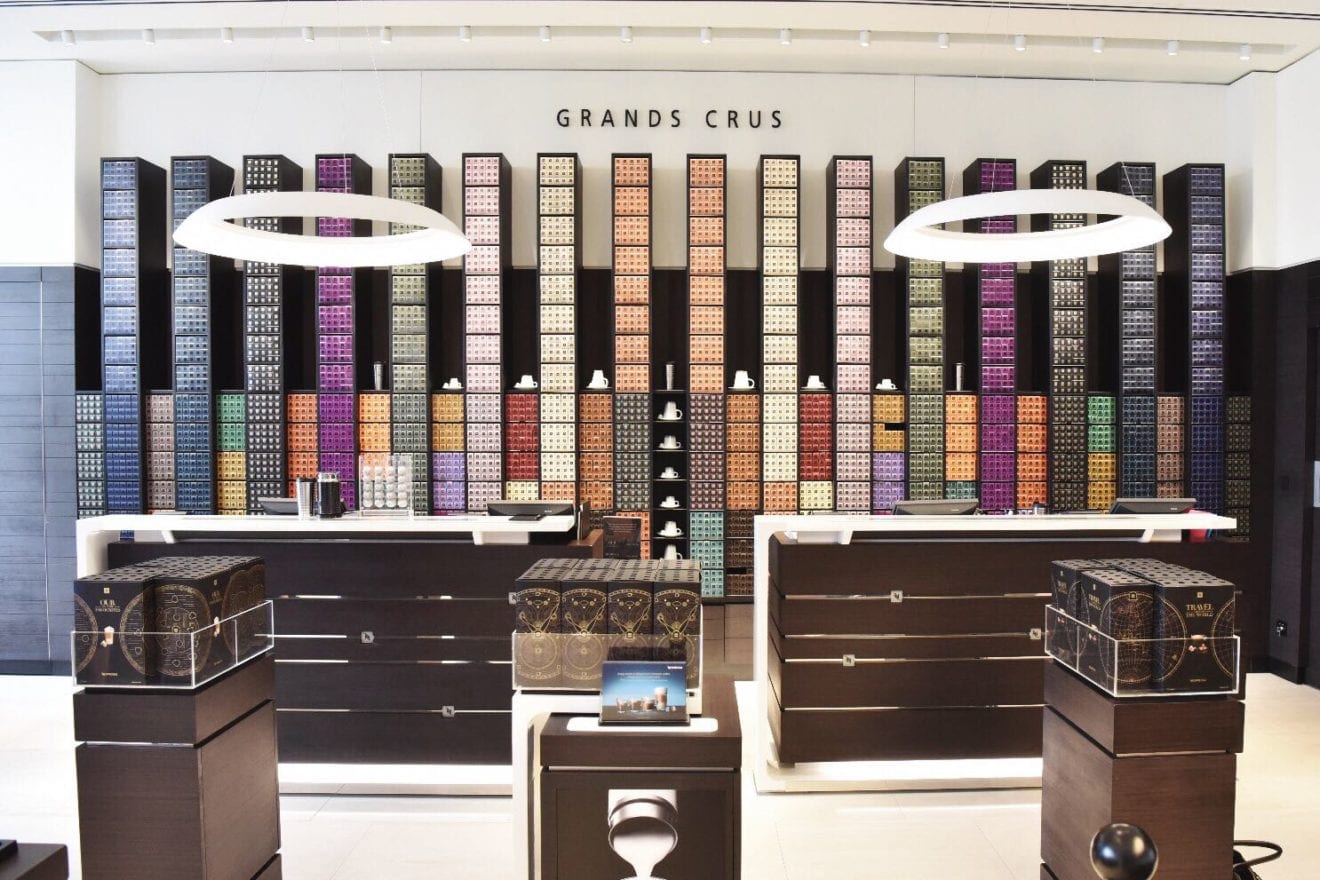
    Within this burgeoning segment, Nespresso, which first entered the local market in 2008, remains the dominant player. Nestle’s younger and cheaper range of single-serve coffee Dolce Gusto follows behind in terms of market share, helped by its lower pricing and wider variety of retail channels, noted Euromonitor’s research analyst Andrea Lianto.
    And even amid an increasingly sluggish economy, industry observers remain upbeat that the coffee-in-a-capsule segment will continue to outperform the broader coffee market in the upcoming years.

    “With higher disposable income, increased need for convenience and growing interest in high-quality coffee, coffee capsules still have room for growth in Singapore,” said Ms Lianto. “(Industry players) need to educate and convince consumers about the convenience and quality of capsules so that consumers are compelled to pay a premium for the product. The sustainability of capsules also depends on players’ efforts to maintain consumers’ excitement in the category, for example through new flavour launches.”

    This optimism is also shared by the market players.

    Nespresso Singapore, for instance, believes that its price adjustment in November means that its capsules have become an “affordable luxury experience” that consumers can have on a daily basis.

    “Even with the slowdown, people will still want to enjoy life and have moments of indulgences
 if you look at the new Nespresso capsule prices, you will realise that a cup of Nespresso coffee is now an affordable luxury that you can have every day,” country manager Matthieu Pougin told Channel NewsAsia. “This is what we see in our boutiques as well. Even with the economy slowing down over the past two years, people continued to shop at our boutiques.”

    Over at Nescafe Dolce Gusto, expectations remain for the brand to see more than 5 per cent growth in the coming years. The Nestle range, which stands for “sweet flavour” in Italian, has logged double-digit growth year-on-year since its foray into Singapore six years ago.

    “The Singapore economy is facing some of its toughest challenges now (but) for the coffee capsule segment, there should still be good growth,” said Mr Chow Phee Chat, the brand’s head of business in Singapore. “Currently, the capsule segment remains one of the smallest within the market so we do project that it will still be growing very fast.”
    BREWING COMPETITION

    But for these brands, a slowing economy that could tighten consumers’ purse strings is not just the only potential challenge looming ahead.

    While Nestle’s dual-brand strategy has continued to ensure its dominance in the Singapore capsule market, it is a different picture globally.

    Keen competitors such as US single-serve coffee company Keurig Green Mountain and other upstarts that have begun making less-expensive capsules compatible with Nespresso machines, have been eating into Nestle’s global market share. According to Euromonitor, the Swiss food giant controlled 11.1 per cent of the global coffee capsule market in 2015, down from 13 per cent in 2011.

    In Singapore, a handful of homegrown instant beverage makers like Owl International and BoncafĂ© have rolled out their respective capsule ranges, and there are other brands of Nespresso-compatible pods that can be easily purchased online. While alternative options have emerged, Ms Lianto said the “minimal presence” of these selections means Nestle will likely be unrivalled for now.

    But that does not mean that local capsule coffee lovers have not begun exploring other options.

    Ms Lim Shiyun, who owns a coffee machine from Nespresso, has bought capsules from other brands such as local cafĂ© chain The Providore. “I’m quite adventurous when it comes to coffee. Since these capsules work with my Nespresso machine, there’s no harm trying out new flavours,” the 29-year-old said.

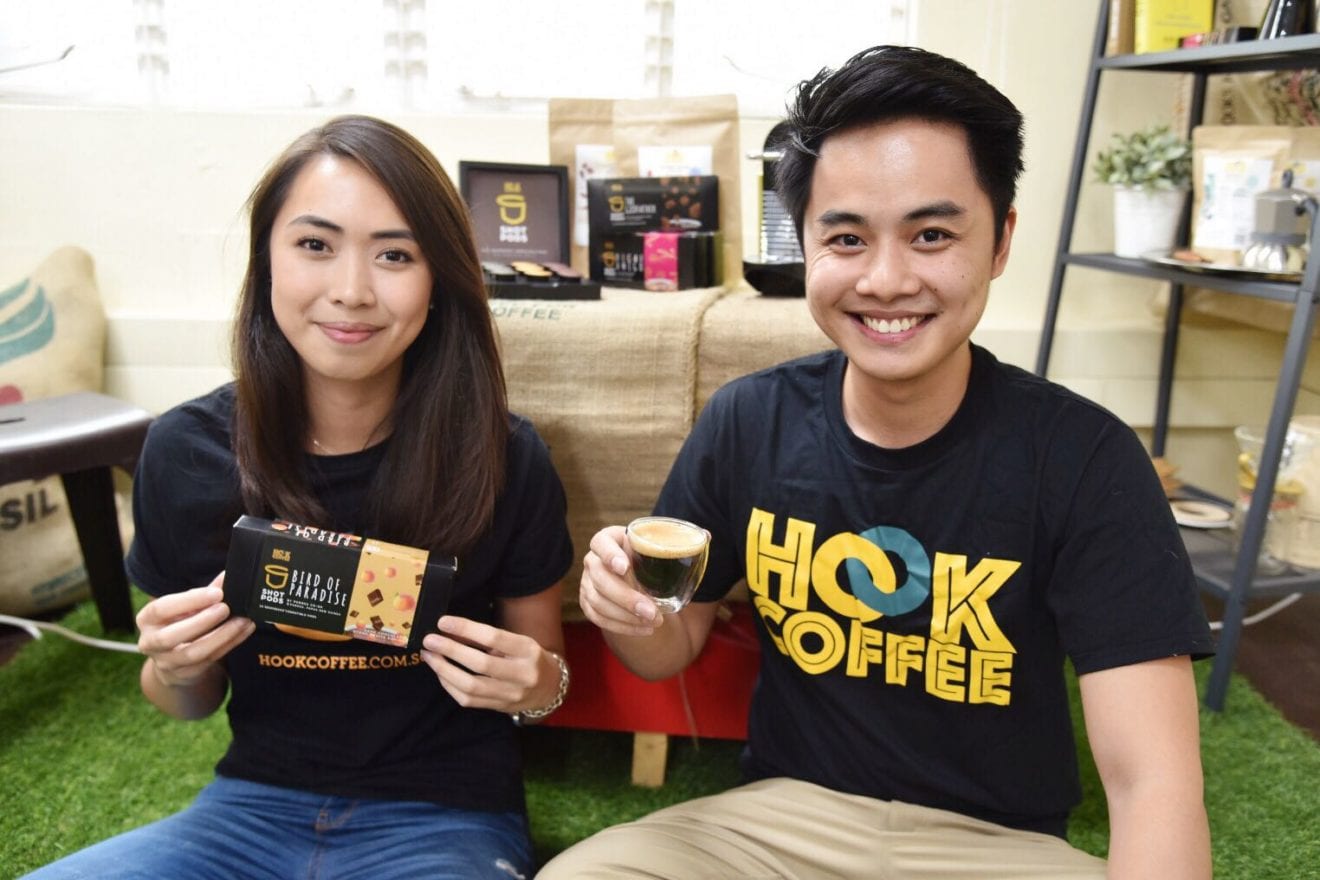
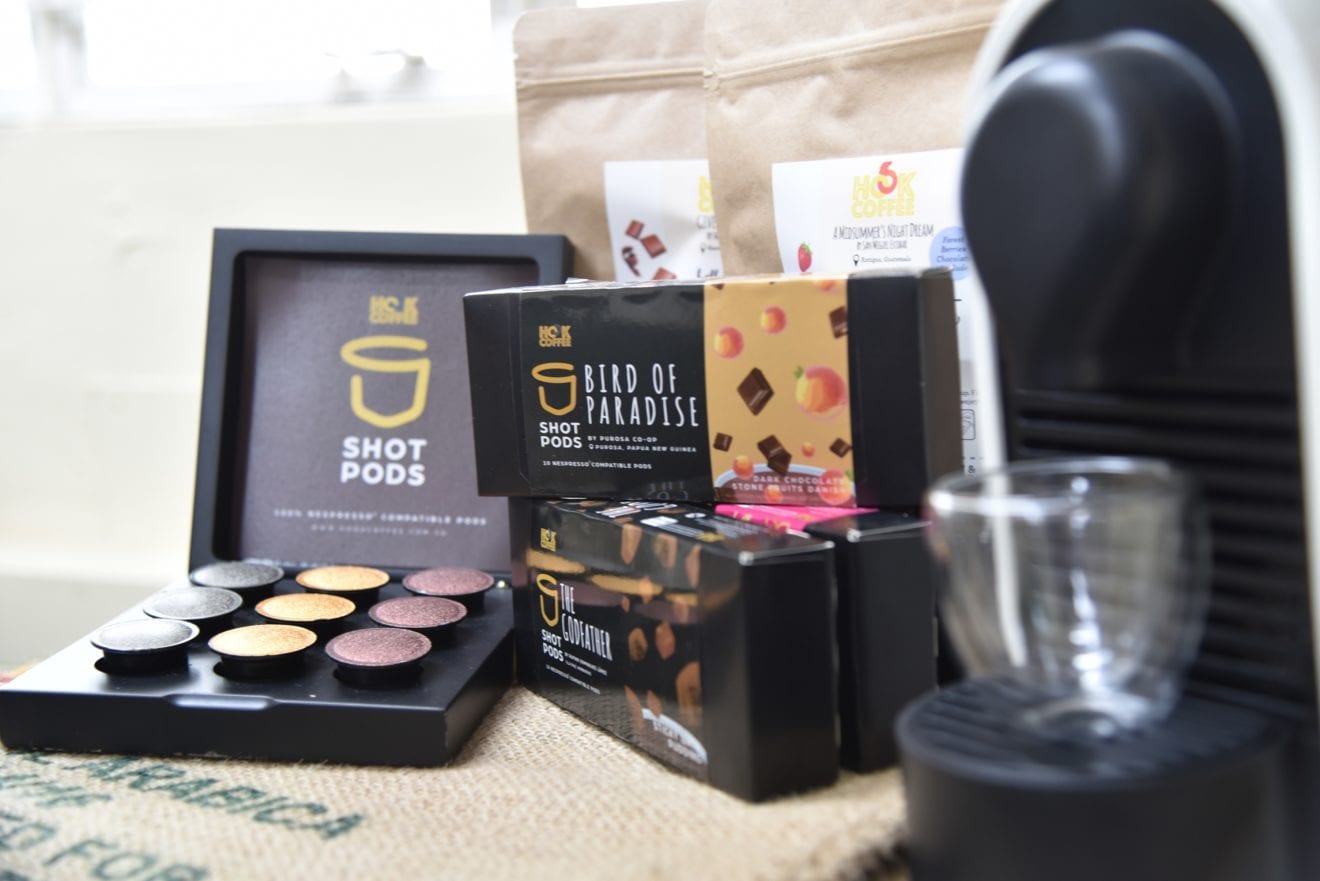
    Singapore-based Hook Coffee, for one, produces Nespresso-compatible capsules with sustainably-grown coffee beans sourced from around the world. Founded in early-2016, the online business also sells specialty coffee in other brewing methods such as French press and drip bags, and offers a coffee subscription service.

    Founders Ernest Ting and Faye Sit told Channel NewsAsia that they introduced capsules to their product line-up last June and since then, sales have been in line with expectations. Given rapid growth in the local capsule market, Mr Ting said the new venture was a no-brainer even if there were significant challenges involved for the young firm.
    For one, the production of capsules involved much more extensive research and development (R&D), compared to other brewing methods.

    “Each pod contains 5.5 grams of coffee and to get the same body and flavour in 30 seconds of extraction time, is very challenging. The roasting technique and the blends have to be precise; even the grinders are different so it’s a very complicated process and a huge amount of R&D investment that goes into making just one pod,” Mr Ting explained.

    That is why the introduction of new capsule flavours have been slower than other brewing options, which usually sees new additions once a month, he added.

    Meanwhile, to prevent wastage, an average of 10,000 capsules are filled during each production cycle. With such a large-sized production, it is crucial for the start-up to get things right before the release of every new flavour, Ms Sit told Channel NewsAsia. “Especially for a small market like Singapore, a large production batch is also tricky so we have to be really careful and do a lot of market research.”

    Despite the difficulties, the two young entrepreneurs still think their five-figure investment into capsules has been worthwhile and remain optimistic on sales, even as competition seems to have been turned up a notch after the market’s biggest player, Nespresso, lowered the prices of its coffee range.

    “Twenty per cent of our total sales right now are capsules. That’s the same as our drip bags and achieved within six months
 As more people want convenient options, we think there will be an increase,” said Mr Ting.

    The 25-year-old added: “Interestingly, when Nespresso lowered their prices, we maintained ours but we didn’t see a drop in subscribers. In fact, it increased slowly so we think consumers are coming to us because we offer a more artisanal option.”
    PRICE CUTS, NEW PRODUCTS TO GET A SHOT IN THE ARM

    Still, industry observers said the nearly 30 per cent price reduction follows Nespresso’s recent adjustments in other markets, and will give the high-end brand a shot in the arm when it comes to competing with lower-priced rivals. For instance, Ristretto and Espresso capsules that were S$0.91 each are now S$0.68, cheaper than Dolce Gusto’s Espresso Intenso that retails at S$11.90 for a box of 16.

    Describing Singapore as a “unique market” where “coffee is part of the people’s DNA”, an increasingly discerning taste for coffee among local consumers has spurred Nespresso’s growth over the past eight years, said Mr Pougin. However, he denied that increasing competition was a catalyst for the recent price adjustment, adding that “Nespresso continues to grow in (Singapore) regardless of competition”.

    “We didn’t make the decision to decrease the price because of competition,” Mr Pougin told Channel NewsAsia. “The reason we did that is because we have been here for more than eight years and we now have the ability and want to offer the Nespresso experience to a bigger group of consumers.”

    Meanwhile, Nescafe Dolce Gusto said it has “no plans to relook (at) its pricing”, primarily because the brand’s competitive edge remains in its capsule beverages that go beyond coffee and its diverse retail locations such as supermarkets.

    “We have a place in the market. We offer a variety of beverages not just for coffee enthusiasts
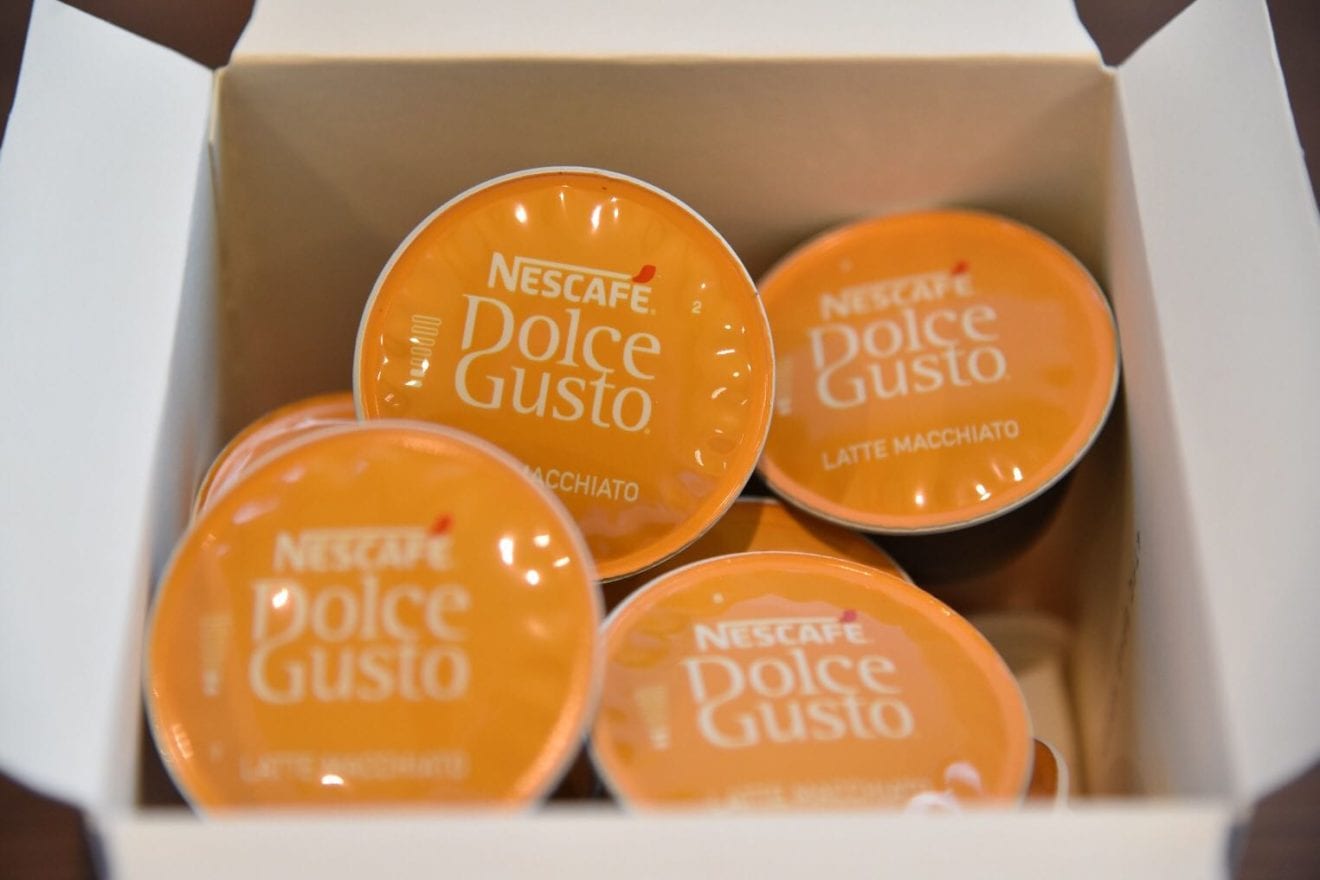
 (but) also tea and hot chocolate. We are a coffee system that not only offers good quality coffee, but beverages for the whole family,” said Mr Chow, who added that the brand’s new varieties including healthier options such as its unsweetened Latte Macchiato will continue to “surprise consumers”.

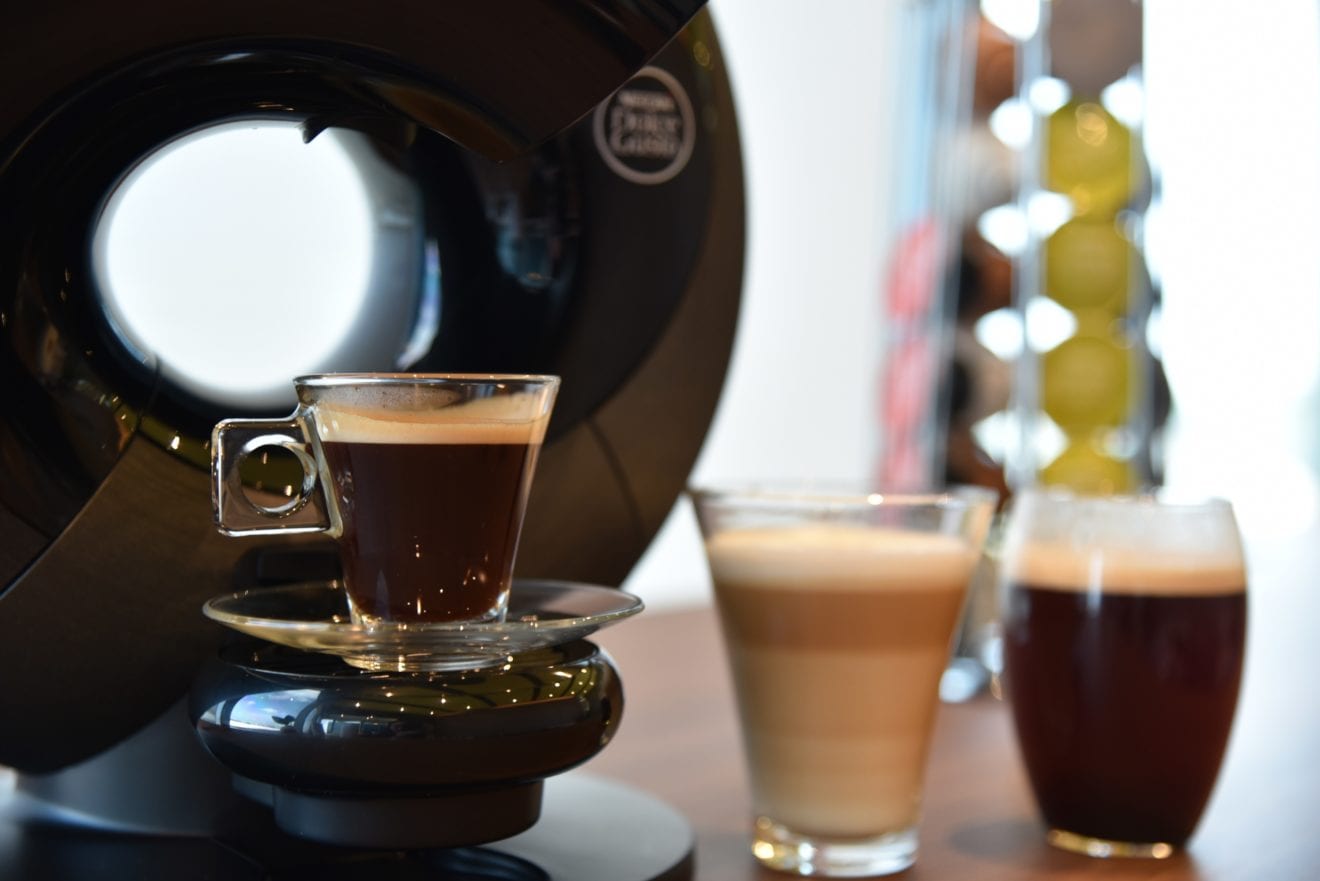
    In the meantime, Dolce Gusto is also betting on new coffee systems to help it keep up with competition. The brand’s latest “Eclipse” machine comes with an unconventional circular design and a touch screen interface.
    DIVERSIFY INTO CAPSULES? MAYBE NOT YET

    Still, there is at least one beverage maker who is opting to sit out of the hype for now.

    Mr Desmond Ng, managing director of local instant coffee brand Gold Kili, told Channel NewsAsia that the rising popularity of coffee capsules has had little impact on sales. The 32-year-old household brand also has no plans to follow in the footsteps of other homegrown beverage makers, given that coffee capsules remain “a non-mainstream option” for now and there are consumers who are not willing to splurge on a coffee machine. “As such, a packet of instant coffee, which is usually four times cheaper than a capsule costing around S$1, remains more attractive to price-sensitive consumers,” Mr Ng added.

    Gold Kili also prides itself on its traditional brew that is achieved by roasting a mixture of Arabica and high-caffeine Robusta coffee beans with sugar or caramel. Even amid the rise of Western-style coffee that uses just Arabica beans, Mr Ng believes that the traditional brew will continue to have its loyal following.

    Eurmonitor’s Ms Lianto agrees: “Instant coffee targets a different segment of consumers through a much lower price point than capsule coffee. On average, one serving of instant coffee costs less than one-third of one serving of capsule coffee.

    “As such, many instant coffee consumers, especially those who are price-sensitive, find themselves reluctant to shift completely to capsule coffee for their regular caffeine fix.”

    However, Gold Kili’s Mr Ng is not ruling out expansion plans to tap on new emerging trends in the local coffee market, such as coming up with specialty coffee bags to attract younger consumers.

    “Capsule machines remain expensive and with capsules far from being the mainstream option for consumers, we won’t be heading in that direction for now,” he told Channel NewsAsia. “But we are considering Western-style coffee bags to cater to the tastes of younger consumers. We think there’s still a gap in this market and there’s a business opportunity for us.”

  • Has Starbucks met its match?

    Has Starbucks met its match?

    Vietnam – known for its deep-rooted coffee culture – has become one of the most diverse markets in Asia for the uplifting beverage, with scores of global giants, local chains and small cafĂ©s severing a wide variety of freshly roasted beans.

    Domestic chains are competing well against international brands including coffee giant Starbucks, which has opened 24 outlets across Vietnam since its debut in the country four years ago.

    Not long after Starbucks entered Ho Chi Minh City, the country’s southern business hub where people drink coffee from sunrise to sundown, local chain Phuc Long stepped up its game and presented a direct challenge to the global giant.

    At a main intersection at the heart of the city, a Starbucks shop is under fierce competition from two Phuc Long stores just a few steps away.

    Phuc Long has shown a determined attempt to take on international brands like Starbucks by building up its presence in busy downtown areas across Ho Chi Minh City that are densely crowded with office buildings and shopping malls.

    Where there’s a Starbucks outlet, there’s a Phuc Long store to draw in those who otherwise would be Starbucks clients, mostly upper- middle class consumers willing to pay a few extra bucks for a cup of premium-branded coffee.

    “We are not overwhelmed by international brands as we have targeted young consumers who enjoy international products at reasonable prices,” said a Phuc Long executive.

    Phuc Long is definitely not the only local coffee chain going head-to-head with foreign players.

    A survey conducted by Financial Times Confidential Research of 1,000 consumers in each of the five biggest economies in Southeast Asia found that Vietnam was the only country where Starbucks was not as frequently visited by local coffee lovers as local brands Trung Nguyen and Highlands Coffee.

    There remains far more growth potential, with more homegrown chains entering the market.

    Saigon Café opened its first shop in July last year. Since then the domestic chain has reportedly invested about $50 billion ($2.2 million), excluding rental costs, in 10 outlets across the city.

    “Despite increasingly fierce rivalry from international brands, we started generating a net profit not long after our first store opened,” said a Saigon CafĂ© executive. “Currently, each outlet is reporting monthly revenues of VND1.5 billion on average. Our estimate is that net profit can range between 20 and 25 percent.”

    Despite the fact international coffee chains such as Starbucks and The Coffee Bean & Tea Leaf have been well received in the Southeast Asian country, there has been a surge in the establishment of homegrown brands.

    On one hand, local coffee chains are confident that locals will stick to the strong taste of Vietnamese coffee. On the other, they have been responsive to the demands of a growing upper-middle class urban population who are more interested in sampling the ambiance of the store than the taste of coffee.

    According to Euromonitor International, a U.K.-based market research organization, annual growth of coffee franchises in Vietnam is currently standing at 7 percent.

  • Vietnam coffee exports grew in 2016 despite drought

    Vietnam coffee exports grew in 2016 despite drought

    Vietnam’s coffee exports have rebounded, notching up double-digit growth this year after being hit by the most-severe drought in almost a century.

    Coffee exports grew, on-year, by 33.6 percent in terms of volume, reaching nearly 1.8 million tons.

    The Ministry of Agriculture and Rural Development said Vietnam’s coffee industry regained its momentum after seeing exports decline by more than 20 percent on-year in 2015.

    Germany and the U.S. remained the two largest buyers of Vietnamese beans and, this year, sales to the two markets grew by 42.4 percent and 49 percent, respectively.

    Exports of coffee also saw impressive increases in emerging markets like the Philippines (83 percent), Algeria (68 percent) and China (50 percent).

    Analysts fear ongoing El Nino conditions could result in a 20 percent decline in coffee production during the coming year.

    Roughly a fifth of Vietnam’s total plantations had been damaged by water shortages, according to the Association of Coffee and Cacao (VICOFA).

    Flooding struck the Central Highlands’ coffee belt in November, making harvesting and drying rather difficult.

    VICOFA chairman Luong Van Tu, however, says Vietnamese enterprises should shift their focus to processing coffee rather than increasingly the amount of raw materials shipped abroad.

    He said new free trade agreements will slash tariffs on coffee sales to the E.U. and South Korea from 15 percent to under five in the coming year.

  • Indonesia seeks to re-brew its coffee glory

    Indonesia seeks to re-brew its coffee glory

    Wake up and smell the coffee. After four years of posting lower production volume and shrinking plantation area, Indonesia is finally making a move to reverse the situation.

    Despite being the world’s fourth largest coffee producer, the country produces mainly Robusta coffee beans that are of lower quality than Arabica, and its own production volume has been falling over the past few years.

    The fact has prompted the government to rejuvenate 8,850 hectares of unproductive coffee plantations and open 200 ha of new ones in Central Kalimantan.

    For 2017, Rp 35.51 billion (US$2.66 million) has been allocated for that purpose, said the Agriculture Ministry’s plantation director general, Bambang.

    “Our vision is to increase plantation size, supported by programs from the government and various stakeholders. We need support from the latter because the state budget is limited,” he said on Friday.

    Ministry data shows overall plantation size has been steadily shrinking every year since 2013. The figure stood at 1.24 million ha back then and is predicted to have fallen to 1.22 million ha in 2016, with further reduction expected this year.

    Seasonal changes, combined with frequent volcanic eruptions, have been named as culprits behind the falling plantation size.

    With diminishing plantations, production volume has declined as well. While the volume reached 675,881 tons in 2013, it is predicted to have dropped 5 percent to 639,305 tons in 2016 and to slump to 637,537 tons in 2017.

    Bambang acknowledged the rejuvenation program would not yield instant results, as coffee plantations normally take three years to harvest and assured that the government had a few more tricks up its sleeves to improve the situation.

    It is in the process of registering more coffee products under the geographical indication (GI) scheme and specialty coffee to the Law and Human Rights Ministry’s Directorate General of Intellectual Property Rights.

    It is also supporting more farmers to plant Arabica coffee plants, as they only account for 30 percent of total plantations. Arabica coffee and those labeled GI, as well as specialty coffee — such as Gayo, Mandailing, Kintamani, Temanggung,

    Ciwidey, Manglayang, Wamena, Toraja and Gowa — are priced higher than Robusta. Arabica is planted on high land of 600 to 2,000 meters above sea surface, while Robusta, with its low acidity and bitterness, is planted on low land of 200 to 800 m above sea surface.

    Yusriadi, a 37-year-old coffee farmer from Bondowoso, East Java, is among farmers that have enjoyed the benefits of planting Arabica coffee. He has a monthly income of more than Rp 10 million, as Arabica sells higher than Robusta.

    “The central government and regional administration introduced Arabica coffee planting with good SOP [standard operating procedures] in 2011, so we can increase productivity and sell the harvest at a much higher price,” he said.

    Meanwhile, M. Kirom of the Indonesian Coffee Exporters and Industry Association (AEKI) said Indonesia still had room to improve its productivity, which stood at around 700 kg per ha compared to Vietnam with 3 tons per ha.

    “We can increase it to 1.5 tons per hectare and still have better quality than Vietnamese coffee because our soil is just naturally suitable for coffee,” he said.

    Separately, Indonesian Coffee Farmers Association (Apeki) chairman Sumarhum lauded the government’s move.

    “In the past, the government was half-hearted toward this commodity, but that’s not the case now. Coffee prices are good and global demand is huge, there’s no way the government is closing its eyes to it,” he said.

  • Starbucks launches first single-origin Yunnan coffee in China

    Starbucks launches first single-origin Yunnan coffee in China

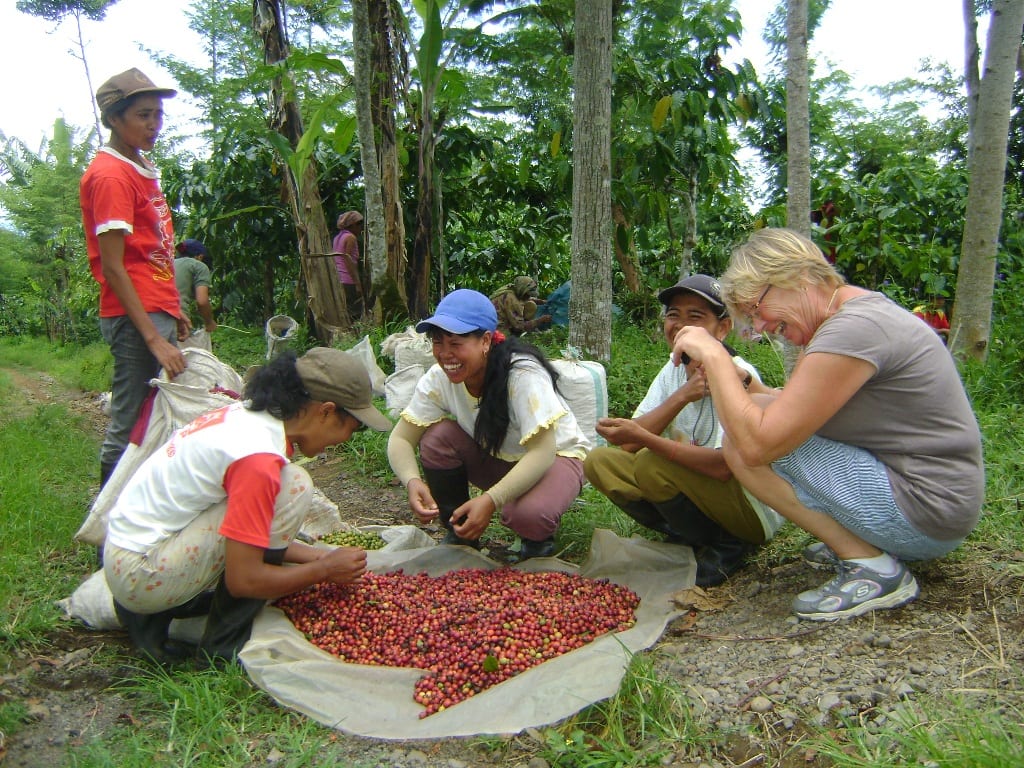
    Starbucks today launched its first Starbucks Single-origin Yunnan coffee to usher in the New Year in China. Available for a limited time across all Starbucks retail locations in Mainland China, the new Starbucks Single-origin Yunnan coffee pays tribute to four years of close collaboration between the Starbucks China Farmer Support Center and local coffee farmers in Pu’er, Yunnan Province. The introduction of the Starbucks Single-origin Yunnan coffee, which features 100 percent arabica coffee from the region, signifies an important step forward to completing the Starbucks China supply-chain, delivering premium coffee from bean to cup.

    “The Starbucks Yunnan Coffee Project is about creating a positive impact on the local coffee farming communities and we are thrilled to bring this vision to life with the launch of the Starbucks Single-origin Yunnan coffee, especially at the beginning of the New Year,” said Belinda Wong, ceo, Starbucks China. “We will continue to build on the strong foundations established by the Starbucks China Farmer Support Center to deepen our partnership with local farmers and to develop even more localized, high-quality coffee that can be celebrated and enjoyed in Starbucks stores across China and globally.”

    Located at the same latitude as other renowned coffee-producing regions, such as Colombia and Jamaica, Pu’er is the coffee capital of China. The distinctive packaging of the Starbucks Single-origin Yunnan coffee is inspired by its sub-tropical landscape, which is home to soaring mountains, running creeks, and vibrant coffee and tea plantations.

    “Over the past few years, we have been extremely humbled by how the local Pu’er coffee farming community has embraced us as part of their extended family,” said Alan Tong, director, Starbucks Farmer Support Center. “The StarbucksÂź Single-origin Yunnan coffee is the fruits of labour for many local farmers and I am very excited that we are able to share them with our customers in China. This medium-roasted coffee is rich, multidimensional and consistently captures the unique flavors of Yunnan in a Starbucks cup – herbal notes, balanced acidity, and a smooth and elegant mouthfeel.”

    Yunnan plays an important strategic role in Starbucks growth in China. In 2012, Starbucks established its first Asia-based Starbucks Farmer Support Center in Pu’er with the aspiration to help improve the quality of Yunnan coffee and to share it with the world. Over the past four years, the Starbucks Farmer Support Center has trained nearly 10,000 farmers in Yunnan province on sustainable farming practices. It has also certified over 1,200 farms, covering nearly 11,000 hectares of land, through the company’s Coffee and Farmer Equity (C.A.F.E.) Practices, which ensures high-quality coffee that is grown in a socially and environmentally responsible manner. In the 12 months between 2015 and 2016 alone, the Starbucks Farmer Support Center has certified 576 farms.

    Starbucks has a long history of collaboration with Yunnan coffee farmers. In early 2009, as part of the Starbucks 10th Anniversary celebrations in China, the company launched the Starbucks South of the Clouds Blend, featuring high-quality Yunnan arabica coffee beans. With firm support from the local and provincial governments, the Starbucks South of the Clouds Blend is now available in Starbucks stores in numerous locations across Asia and the United States.

  • Toby’s Estate Indonesia Launches with North Jakarta Flagship

    Toby’s Estate Indonesia Launches with North Jakarta Flagship

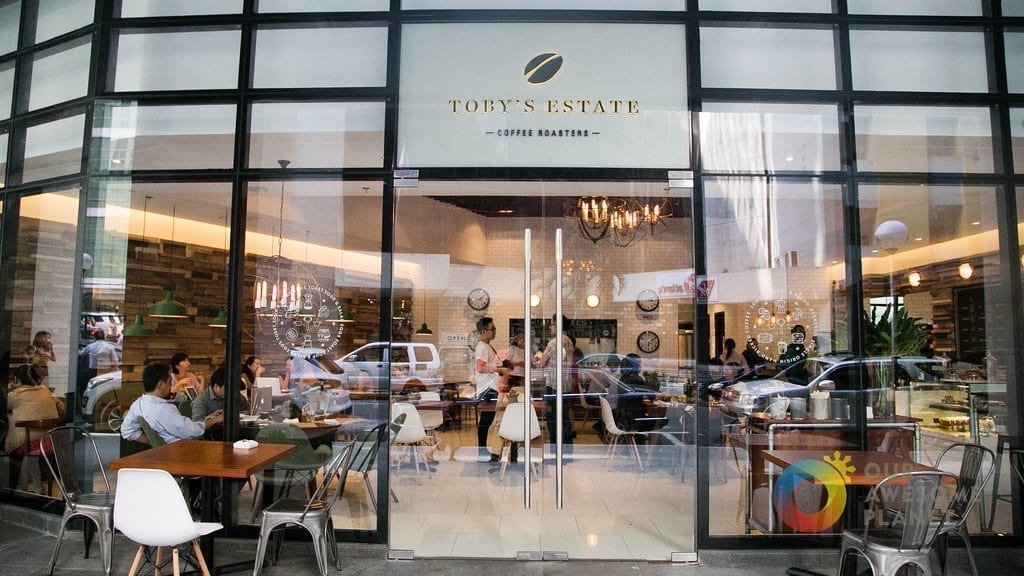
    The 15-year-old Australian-born specialty coffee powerhouse Toby’s Estate has expanded its roasting and retail presence to Indonesia, opening a flagship location in Jakarta on Dec. 10.

    Founded by Toby Smith in Sydney in 2001, the company has since expanded to New York and the Philippines, with each market receiving its own roasting division and brand under the Toby’s Estate umbrella. The company has primary Australian retail outposts in Chippendale, Brisbane and Melbourne, and the New York division has four current locations, with at least one more on the way.

    The Jakarta location is naturally the company’s second within a producing region, with Indonesia being the fourth largest producer in the world. Offering a range of single-origin coffees from throughout the world, Toby’s does source from Smith’s own Toby’s Estate farm — Finca Santa Teresa in Panama — while the Jakarta location has opened with at least one single-origin coffee from Mandheling, Indonesia.

    Toby's Estate Indonesia photo.

    In addition to a full food menu with items such as buttermilk fried chicken and Brioche French Toast — along with other Aussie cafĂ© staples such as avocado toast — the Toby’s team pulled no punches on gear, with a Mavam setup and a Kees van der Westen Spirit helping to power the espresso program.

    Toby’s Estate Indonesia is now open at Pik Avenue Ground Floor, #E2 in North Jakarta.