Tag: Coles

  • Coles launches low-carb bread

    Coles launches low-carb bread

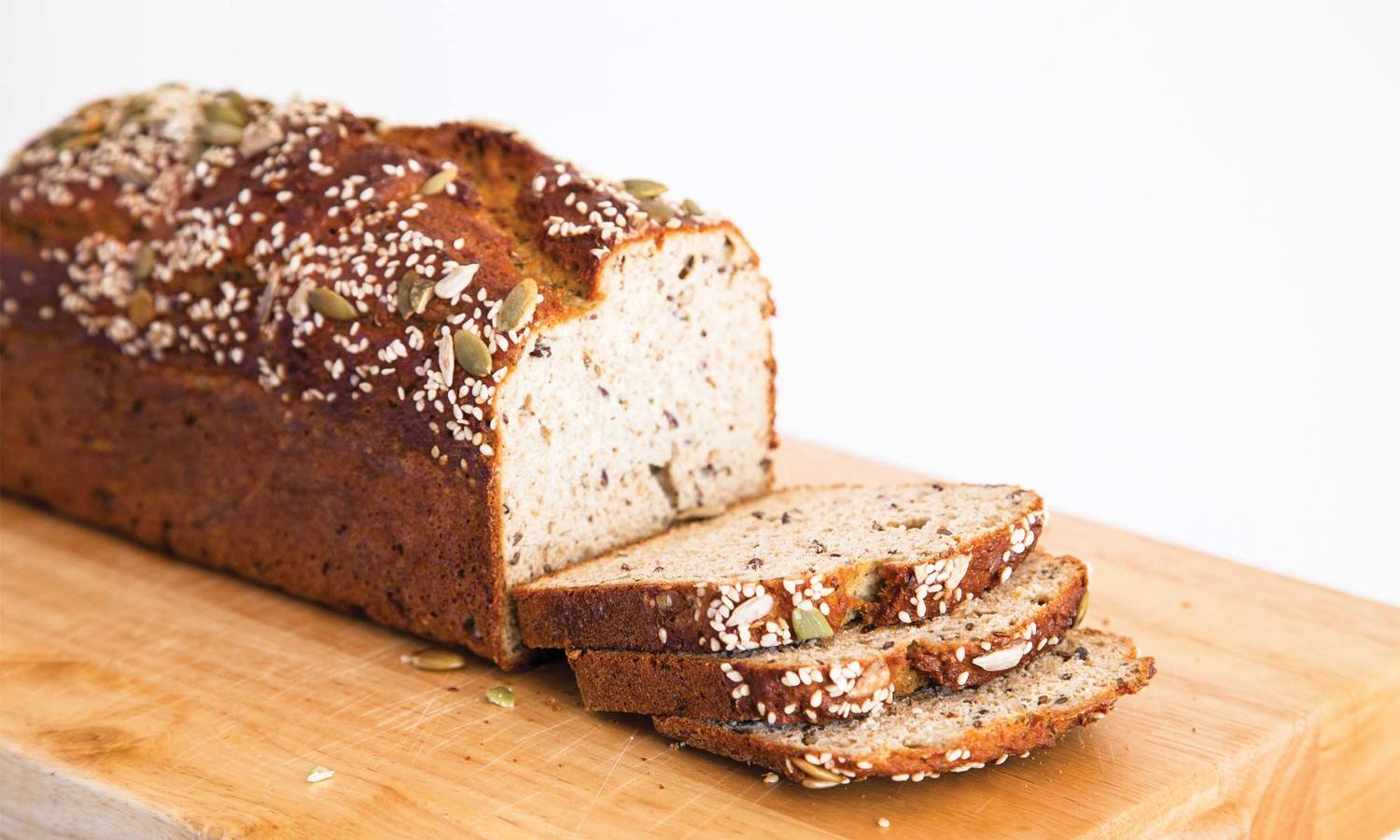
    Coles has launched a new range of low-carb bread after the demand for calorie-conscious bread surged this year. Priced at $4.80 a loaf, Coles 85 percent Lower Carb Loaf contains 21 grams of protein and 8.5 grams of fiber per serve, as well as being vegan-friendly and low in sugar.

    While it only launched in Coles supermarkets a fortnight ago it’s already gone on to become its third best-selling line in the “health bread” category.

    The multigrain loaf has got 85 percent fewer carbs than a traditional multigrain sandwich loaf and was given the tick of approval by Brisbane dietitian Leanne Ward. The bread has proved very popular with customers. Picture: Supplied.

    In a TikTok, which was sponsored by Coles, Leanne said it was “my favorite new high protein bread” and a “great option for those needing/wanting low carb and more protein and fibre”.

    As well as the Coles 85 percent Lower Carb Loaf, the supermarket has also launched a Coles Gluten Free Premiun White Loaf and Herman Brot Complete Protein Loaf exclusive to the supermarket chain.

    Demand for these “health bread” varieties has already grown by 40 percent since they were introduced.

    Coles general manager for bakery Andy Mossop said the new bread was part of the supermarket’s mission to provide new healthy options to customers.

    “At Coles, we want to sustainably feed all Australians to help them lead healthier, happier lives, and our Bakery team is constantly looking at ways we can expand our offering to cater to increasingly health-conscious Australians who are seeking healthier alternatives across the supermarket aisles,” he said.

    Brisbane dietitian Leanne Ward raved about the new bread on TikTok. Picture: TikTok/Leanne Ward.

    “Bread is a household staple and we sell more than 400 million Coles Bakery loaves and rolls from the in-store bakery each year.

    “We’ve worked hard to satisfy the increasing demand for healthier bakery products, offering a great tasting, nutritious and wholesome bread range.

    “Shoppers can feel confident they are not compromising on taste, value or convenience with these new options.”

    Earlier this year Coles announced it had reduced the salt content of its in-store bakery loaves and rolls by up to 25 percent.

    The supermarket also went viral back in July when one shopper spotted Coles was now selling white bread with 50 percent fewer carbs in its bakery section.

    TikTok user Jasmine Templin posted a video revealing how the bread had half the normal carbs and higher protein than a standard loaf of white bread, labeling it an “insane” find for those watching their caloric intake.

  • Coles Plus adds extra benefits

    Coles Plus adds extra benefits

    Coles customers can now earn double Flybuys points on eligible products1every time they shop in Coles Supermarkets and Coles online, thanks to subscription-based service Coles Plus.

    Since launching in February, Coles Plus member numbers have grown rapidly and now Coles is offering members unlimited free delivery2, including free Same Day Delivery at select stores3, for all orders of $50 or more – down from the previous minimum of $100.

    The new offer means customers will be able to save up to $11 per home delivery in the lead up to Christmas.

    For just $19 a month, Coles Plus members also have exclusive access to a number of benefits including a Priority Customer Care line and unlimited use of Click&Collect Rapid, which allows Coles online customers to order and pick up their groceries in less than 90 minutes – a service priced at $5 per order for non-members.

    Coles General Manager Online Commercials Karen Donaldson said Coles was listening to customer feedback and responding to changing customer needs to tailor the benefits offered to Coles Plus members.

    “In the past year we’ve seen more customers adopting a hybrid approach by shopping both in-store and online, so it’s important we expand our subscription program to reward those customers in a meaningful way,” she said.

    “We continue to see significant growth in demand for online grocery shopping and we are investing in customer experience and capacity, which is having a positive impact on customer satisfaction.

    We recently launched our shoppable Coles App enabling customers to order through the app, view the catalog, or build their shopping list and then use it to map out their trip to the supermarket aisle-by-aisle.

    “By rewarding the loyalty of our digitally-engaged customers both in-store and online, it ensures Coles continues to lead anytime, anywhere, anyhow shopping.”

  • Coles partners with brewery to make beer from excess watermelons and bread

    Coles partners with brewery to make beer from excess watermelons and bread

    One of the world’s oldest beer styles is roaring back to life thanks to a truckload of watermelons, 500 loaves of unsold bread, and a creative partnership between Coles Liquor and Melbourne-based craft beer producer Local Brewing Co.

    Local Brewing Co’s limited edition Surplus Sour Watermelon Beer, launched exclusively this week at Liquorland and First Choice Liquor Market, is the first of a series of fruit sour beers made with unsold or excess fruit from Coles’ supermarket suppliers and slated to hit the shelves in the next 12 months.

    Brewed exclusively for Coles Liquor, Surplus Sour Watermelon Beer is made with three tonnes of excess melons donated by long-time Coles produce supplier Rombola Family Farms. In place of brewer’s malt, Local Brewing rescued 300 kilograms of unsold Coles bread to add to the ferment.

    The result is a light, gently fruity, and refreshing beer with a delicate tang that typifies sour beers, one of the fastest-growing craft beer styles in Australia and part of a renaissance of this easy-drinking alternative to traditional ‘bitter’ pale ales.

    Sour beers are synonymous with Belgium, where traditional sour styles such as Lambic have been brewed since early in the 18th century. However, their history can be traced back as far as 4000BC, when brewing involved little more than mixing grain and water together and allowing naturally-occurring microbes to do the rest.

    In addition to yeast, which converts carbohydrates from the grain into alcohol, the microbial population also included lactobacillus, which instead uses carbohydrates to create lactic acid – the same compound that gives sourdough bread its distinct flavor.

    While modern brewing techniques usually avoid so-called ‘wild’ bacteria by using carefully-cultivated strains of yeast to reduce the influence of sour or acidic flavors, the craft beer revolution has reignited interest in traditional styles.

    Local Brewing Co has been creating sour beers on a boutique scale for the last three years however its collaboration with Coles has significantly upscaled production. Importantly for the brewery’s founders, it has also super-charged the positive social impact of a business that was conceived as a social enterprise to help feed those in need.

    Ordinarily, Local Brewing Co contributes the equivalent of one meal from the sale of every four-pack of its beer to food rescue organization SecondBite, which works with charities across the country to help Australians in need.

    However, through this partnership with Coles, co-founder Nick Campbell said Local Brewing would contribute the equivalent of one meal for the sale of every can of its Watermelon Sour beer – four times the usual donation.

    “Our collaboration with Coles Liquor has been incredible – it’s allowed us to brew a genuinely sustainable beer and increase our social impact,” Mr Campbell said.

    “We know from the release of previous sour beers that customers embrace this genuinely unique product and it’s a great way to use food that might otherwise be wasted.

    “Every time we’ve released one of these sours in the past it has been a sell-out in just a few days, so we know customers love the story of transforming rescued food into an entirely new product.”

    Coles Liquor Merchandise General Manager Brad Gorman said the partnership would produce at least three other exclusive fruit sour beers in the next 12 months to meet the growing demand for this style of beer as well as consumer appetite for genuinely sustainable products.

    “We’re already planning new exclusive sours through partnerships with seasonal fruit suppliers in the supermarket business, which will underpin the creation of an exclusive, sustainable sour beer brand that will be unique to Coles Liquor,” Mr Gorman said.

    “Sour beers are a very strong and rapidly growing segment in craft beer and we know our customers love locally made products; it’s a key element of delivering on our ambition to be the local drinks specialist.”

    Fernando Rombola has been supplying watermelons to Coles for the past seven years, during which time he’s seen a significant increase in consumer interest in sustainable agriculture and reducing food waste.

    His company Rombola Family Farms generously donated three tonnes of excess watermelons to the Local Brewing Co, embracing the opportunity to explore an alternative, sustainable route for the fruit, which is otherwise used as compost on the farm.

    “This is super important for us – sustainability is not just about the environment, it’s financial sustainability, it’s sustainability for our people and sustainability for the land, if we are not looking after our land, how are we going to be able to reap the rewards from it?

    “For the first time in my life I had to do an ESG (Environmental, Social, and Governance) statement for the bank on one of our last loans, so there is a lot of interest in sustainability and it’s the right thing to do.

    “If this product is successful, we’d definitely like to see this as a different stream; the more sustainable we are, the more we can grow more with less hectares, which is what we are always trying to do.”

    Local Brewing Co has a long history with SecondBite, partnering with the food rescue group when it was first established to embed philanthropy into the foundations of its craft brewing business.

    “We are so excited that our long running partnership with Local Brewing Co is benefitting from a collaboration with Coles, who we’ve worked with for more than a decade now to end waste and end hunger in Australia,” said SecondBite Chief Executive Officer Steve Clifford.

    “The fact Local Brewing Co is able to increase its support for SecondBite through the launch of this unique sour beer is very exciting for us.

    “We couldn’t be prouder that two of our partners have collaborated to create a product that closes the loop on food waste and provides an opportunity for customers to give back with every purchase.”

  • Coles named as most sustainable food retailer in Australia

    Coles named as most sustainable food retailer in Australia

    The supermarket has come in second in the world for its sustainability efforts.

    Coles was ranked based on its governance, environment, nutrition, and social inclusion practices, beating out of 350 of the world’s ‘most influential food retailers. Furthermore, Coles has ranked tenth in the world in the food and average manufacturing and processors category.

    The WBA found that Coles “ranked first among its retail peers in social inclusion, while landing among the top five in nutrition, and top ten across the governance and strategy, and environment measurement areas.”

    The Chief Sustainability, Property and Export Officer of Coles, Thinus Keeve, shared how the retailer aims to continue its progress to become the country’s most sustainable supermarket. “Coles’ Together to Zero and Better Together ambitions, as outlined in our Sustainability Strategy, underpin the steps we are taking to drive generational sustainability,” he said.

    “Under Together to Zero, Coles has set bold emissions and energy targets, including to be powered by 100 percent renewable energy by the end of FY25, and to deliver net-zero greenhouse gas emissions by 2050 – and we are well on the way to achieving them. We recognize the role we have to play but know that we cannot do this alone, and that we need to work together with our many stakeholders to drive positive change. We know that we are Better Together when we work together with our team members, farmers, suppliers, customers, and the communities we serve.”

    Keeve also explained that despite this impressive feat, the retailer has more work to do. “While sustainability issues are dynamic and evolving, and there is still much to do, we are committed to maintaining momentum on our sustainability journey,” he said.

  • Coles revamps health foods aisle, boosting sports and diet range

    Coles revamps health foods aisle, boosting sports and diet range

    Coles has transformed its health foods section, moving products traditionally found in the category, such as fodmap-friendly soups, gluten-free cereals, oils and nut spreads to their respective mainstream aisles.

    The revamp has provided space for more than 150 sports-performance and health products from brands like Amazonia Raw, Muscle Nation, and Botanika Blends, which join Coles’ shelves for the first time.

    These products include protein bars and custards from Muscle Nation, 20 new protein products and pure creatine from Body Science (BSC), Macro Mike’s powdered peanut butter and brownies mix, Dose & Co Marine Collagen and 180 Nutrition protein powder and bars. New health ingredients include Superfood Protein Ball Mixes from Mount Elephant and Melrose Superfood Powders and MCT Oils.

    According to Coles, the expansion of the health aisle comes as “Sports & Diet” was identified as the fastest-growing segment of the supermarket’s health food aisle between 2014 to 2019. Earlier this month, Coles revealed it had moved cereal products from the health-foods aisle into the breakfasts area.

    “Our transformed health foods aisle is a giant leap towards delivering Coles’ purpose to sustainably feed all Australians to help them lead happier and healthier lives,” said Leanne White, GM, Coles.

    “We’re seeing more and more customers look for healthier options or specific dietary requirements in the main grocery aisles – they no longer expect to go down one dedicated aisle to find these options.”

  • Coles boosts baby products range with 150 new products

    Coles boosts baby products range with 150 new products

    Coles is expanding its baby products range by more than 150 new products while reducing retail price of major baby brands during the next four weeks.

    The 150 new products include reusable nappies and baby wipes such as Nat Baby and Cub Bare, bamboo feeding accessories, organic baby food pouches and limited-edition toys and clothing.

    Coles has also rolled out affordable items such as Little Tikes toddler toys, playpens and baby monitors part of the limited edition Coles’ Best Buys range which is available across 340 Coles supermarkets.

    “We know that more than ever, our customers are looking for baby products that are practical and affordable,” said Jonathan Torr, GM for health and home at Coles.

    Besides boosting the baby products range, Coles has also reduced prices for selected products, including Huggies nappies, Ecostore, Aveeno Baby and Johnson & Johnson bath and body products.

    “The new baby range and slashed prices across the baby aisle are another way we can provide more value to our customers when trying to manage the weekly shopping budget for their growing family,” said Torr.

  • Coles revamps cereals aisle, moving healthy options mainstream

    Coles revamps cereals aisle, moving healthy options mainstream

    Coles is making its healthy breakfast options more accessible, transforming the chain’s cereals aisle by adding a larger range of healthy products.

    More than 50 new healthy cereals, muesli, and breakfasts on the go have been added, to meet surging demand for healthy and nutritious products among Aussie consumers.

    The new range includes Coles’ first breakfast in beverage form, Breakfast on the Move, Wellness Road toasted muesli range with high fibre grain Barleymax, and an exclusive range of 11 ‘Goodness Bowl’ cereals and low sugar mueslis from Uncle Toby’s.

    According to the company, the new aisle is tailored to help customers easily find dietary options in one destination, including a new ‘Gluten Free Cereal’ section which was previously only found in the health food aisle.

    “Customers will love the simplicity of finding their favorite breakfast products in the main aisle and making healthy choices part of their everyday lives,” said Leanne White, GM for grocery at Coles.

    “The changes we’ve made will help make it easier, enjoyable, and affordable for millions of customers, particularly those with special dietary requirements, to shop for suitable healthy breakfast options.”

  • Coles spending $2.5bn on digital over the next two years

    Coles spending $2.5bn on digital over the next two years

    Supermarket Coles will spend $2.5 billion over the next two years on improving its digital offer, the business announced today.

    The business will seek to improve its online shopping, as well as its self-service checkouts, data and automation across its warehouses, in an effort to streamline the experiences and make it even simpler for Australians to buy their groceries.

    Coles’ chief executive Steven Cain said following its demerger from Wesfarmers, and the subsequent Covid-19 pandemic, the business is increasing its pace of change.

    “There’s a myriad opportunity facing us. The market in Australia is very good for food and liquor. It’s growing, there’s plenty of opportunities, and we think we’ve got the assets to exploit some of them,” Cain said.

    “It’s making sure you’re confident that you’ve got the right returns before you press the accelerator. And I think what we’re saying today is we’re pressing the accelerator.”

    According to Cain, when Coles was demerged from former parent company Wesfarmers it wasn’t as advanced as it could have been – there hadn’t been enough investment in its online capabilities at the time, something he is hoping to rectify now.

    These changes have been coming for a while. Last year Coles appointed former Walmart SVP Ben Hassing to the position of Coles’ chief executive e-commerce, who said in February the supermarket’s online transformation will focus on creating a seamless and unified customer experience.

    “To activate this, we are connecting e-commerce and content. And then we’ll begin merging online and offline into a unified experience,” he said.

    This became more important as the changes to shopping behavior throughout Covid-19 opened up new pathways to the ‘omnichannel shopper’: customers who shop both online and offline.

    “These digitally-engaged customers are very, very important to Coles. We find them more loyal, they shop with Coles more frequently and they have a higher participation rate in Flybuys,” Hassing said.

    “This is a fast-growing customer segment for us. The year-over-year growth in total spend with Coles is much higher, as well.”

  • Coles doubles down on payments with launch of Flypay for grocery

    Coles doubles down on payments with launch of Flypay for grocery

    By using Flypay, Coles customers will no longer need to enter their payment and delivery information separately when shopping at Coles group retailers online.

    Once customers set up their Flypay account, all they do is select ‘Flypay’ when completing the transaction.

    This new way to pay also includes the Flybuys reward card, so customers can collect points.

    Coles chief of emerging businesses George Saoud said the new system makes shopping online faster, easier and more secure.

    “Coles is committed to helping our customers shop more easily anytime, anywhere, and we are thrilled to introduce Flypay as a payment option for customers shopping at any of our online liquor retailers,” he said.

    The payments system was co-developed by Coles and Bell Identification, a Visa solution.

    Visa head of merchant sales and acquiring Dan Parsons said speedy and secure ways to pay are “more important than ever”.

    Eligible retail outlets include:

    • Coles online
    • Coles Liquor
    • Liquorland
    • First Choice Liquor and Liquor Market

    More Coles-branded retailers will be added in the coming months, according to the group.

    The Foundation for Alcohol Research and Education (FARE) has flagged concern about easy online ordering of alcohol during COVID-19.

    FARE chief Caterina Giorgi said it would be “seriously worrying” if it were easier for retailers to sell alcohol to people who are intoxicated or who are underage.

    “Even now, fundamental community standards around the way alcohol is sold are not upheld by online alcohol retailers and there is not enough alcohol industry accountability,” she said.

    “Alcohol companies have been taking advantage of people’s fear and anxiety by urging us to drink to cope with the COVID-19 pandemic.

    “This is concerning because the evidence shows that drinking alcohol can make people’s stress, anxiety and depression worse.”

    There are also concerns around alcohol-fuelled harm according to Ms Giorgi.

    “Alcohol-fuelled harm in the home is often invisible and there are strong indications of family and intimate-partner violence escalating,” Ms Giorgi said.

    “As online alcohol retailing increases and expands across platforms we need common sense controls in place to keep families and communities healthy and safe, including ending rapid and late-night delivery and requiring age verification at point of sale and delivery.”

    “We are most concerned about children and young people, and people who are intoxicated being sold alcohol well into the night by online alcohol retailers who aren’t even required by law to verify proof of age.”

    However, a Coles spokesperson told Savings.com.au that Flypay does not make it any easier to pay for alcohol than other ways to pay.

    “We take our responsible service of alcohol obligations seriously,” they said.

    “While Flypay makes it easier for customers to complete their transaction, it does not make it any easier to purchase alcohol than using any other form of payment.

    “For online alcohol purchases, customers need to show ID when they have it delivered.

    “This is the same process for card purchases or Paypal, which we already offer on these websites.”

    In the past week, FARE released a study in conjunction with Women’s Safety NSW that found 51% of family violence specialists across that state have seen an increase in the involvement of alcohol in cases since the COVID-19 restrictions were introduced.

    Earlier in May, FARE also released a report that found in just one hour on a Friday night, 107 sponsored alcohol advertisements were displayed on a person’s Facebook and Instagram accounts – one alcohol advertisement every 35 seconds.

    The report found 58% of the ads’ main message was getting easy access to alcohol without leaving the home.

  • Beyond Meat and Coles launch plant-based meatballs

    Beyond Meat and Coles launch plant-based meatballs

    Beyond Meat has partnered with Coles to bring its plant-based meatballs into Australia.

    Beyond Meatballs will be sold across more than 300 Coles outlets with an RRP of $15. The launch comes at a time when the country is experiencing a rising demand for plant-based products.

    “We’ve seen demand for plant-based meat continue to grow as consumers look for new ways to incorporate plant-based meat options into their diets,” said Ihab Leheta, VP international business development at Beyond Meat.

    “The launch of Beyond Meatballs in Australia marks a new milestone towards our goal in making great-tasting, nutritious and sustainable plant-based meat more accessible to everyone,” said Leheta.

    Beyond Meatballs will join the brand’s existing plant-based products sold in Australia, Beyond Burger and Beyond Mince. Beyond Meat first launched its products in the country in 2018 in partnership with Coles.

  • Coles trialling BYO container scheme in Melbourne this week

    Coles trialling BYO container scheme in Melbourne this week

    This week Coles Group is looking to trial a bring-your-own container scheme at its supermarket in Fitzroy, Melbourne, which will allow customers to fill up on shampoo, coffee, and soaps in a more environmentally sound way.

    The announcement, which will see customers able to use their own containers for select ‘scoop and weigh’ products, came ahead of June 4th’s World Environment Day.

    “To achieve our goal of being Australia’s most trusted retailer and creating long-term shareholder value, you can’t do that if you’re not going to be sustainable,” Coles’ chief sustainability, property and export officer Thinnus Keeve said.

    “We’re under no illusions we’ll need to work together to achieve some of these targets, we cannot do it ourselves.”

    And, according to Keeve, the trial is part of its larger push to reduce the number of plastics it uses company-wide – which saw the company sign on as a founding member of Australia, New Zealand and Pacific Islands Plastic Pact, and investigating the benefits of a local plastics recycling facility in Victoria.

    The facility could recycle old soft plastics into oils that can be used to produce new soft plastics.

    “We are committed to innovating when it comes to packaging so that where we can’t eliminate packaging and plastic, we are ensuring it’s contributing to the circular economy by being produced with recycled content where possible, as well as being recyclable,” Keeve said.

  • Coles launches own-brand premium pet food range

    Coles launches own-brand premium pet food range

    Supermarket chain Coles has launched a new premium pet food range called ‘Elevate’, recognizing Australians’ growing pet ownership.

    Coles said the new range, which features 19 products, was scientifically developed to cater to dietary requirements and health concerns, from digestive support for dogs to hairball and urinary care for cats.

    “We worked closely with pet nutritionists to develop a range that featured vital nutrients and health benefits typically found in top brands without compromising on price,” said Jonathan Torr, GM at Coles.

    Pet nutritionist, treasurer of the Pet Food Industry Association of Australia, and a member of the Australian Pet Food Standards Working Group, Scott Williams also helped to develop Elevate.

    “Food safety was paramount in everything we made for Elevate,” Williams said. “We tested all ingredients to understand their nutritional properties and meet the requirements set by the American Association of Feed Control Officials”.

    According to Coles, more than two-thirds of Australian households own a pet and the number is growing substantially each year. The supermarket also recorded more than 80 percent of pet owners purchasing pet food from its stores, showing the rising demand to this sector.

    “Research showed pet owners are spending $3.6 billion on dog and cat food per year,” Torr said. “In fact, the top two things our customers are looking for when purchasing pet food at Coles is health followed by budget.”

  • Coles ramps up safety for online delivery of alcohol

    Coles ramps up safety for online delivery of alcohol

    Supermarket giant Coles has joined a coalition of some of the world’s largest liquor companies to promote better standards of alcohol sale and prevent underage consumption through online purchasing.

    The International Alliance for Responsible Drinking (IARD) aims to address the harm of overconsumption of alcohol on a worldwide scale, and promote the understanding of responsible drinking behaviors.

    “Most people consume alcohol in a sensible and responsible manner, however, we are committed to harm minimization initiatives that reduce excessive consumption,” said Coles Liquor chief executive Darren Blackhurst.

    “We saw a change in customer behavior during Covid-19 and continue to see strong performance in eCommerce, so we have worked to adopt best practice safety protocols online and are pleased to join the IARD to share information on global initiatives and drive further improvement across the industry.”

    In an effort to cut down on underage drinking made possible by the increase in online delivery of goods throughout the pandemic, Coles is introducing a number of new safety measures to its delivery practices.

    These measures include no unattended same-day delivery, or standard delivery for new or guest customers; no deliveries to be made to a public place in an alcohol-free zone; delivery agents will not be penalized for failing to complete delivery if they believe the recipient is under 18 years of age, or is intoxicated; as well as a ‘self-exclusion program’ where customers can opt-out of delivery services.

    Coles is also a signatory on the Alcohol Beverages Advertising Code and is a founding member of the not-for-profit organization DrinkWise.

  • Coles house brands win global recognition

    Coles house brands win global recognition

    Coles’ exclusive brands, KOi and Woofin’ Good, have won multiple awards in the US-based Vertex Awards 2021.

    With a focus on label and packaging design, the competition attracted 650 entries from 32 countries and 55 retailers.

    Besides winning a Gold award in the personal care category, Coles’ skincare range KOi earned the coveted best in show ‘Publishers Choice Award’. Meanwhile, the dog food range Woofin’ Good also received Gold in the pet-products category.

    Both of the Coles’ exclusive brands were designed by independent Australian branding and design agency Hulsbosch.

    “These products have packaging and design that our customers are proud to put on their shelves,” said Belinda Anderson, head of marketing for Own Brand at Coles. “Exclusive brands like KOi and Woofin’ Good are inspiring customers and strategically important to Coles’ strategy to be an Own Brand powerhouse.”

  • Coles embraces AI for fresh produce management

    Coles embraces AI for fresh produce management

    Coles has partnered up with Finnish tech provider RELEX, to replace manual ordering systems for fresh fruit and veg with AI-enabled, cloud-based tech designed to improve efficiency and reduce waste.

    The technology will be rolled out in all 850 Coles stores throughout the country, and in seven fresh produce distribution centers.

    The RELEX platform will integrate with Coles’ existing in-house analytics system, which has already been rolled out to provide forecasting for other non-fresh categories, chief information officer Roger Sniezek said in a statement.

    “This will enable an improved customer offer by not only taking into account past purchases but also factoring weather and local community events into the forecasting algorithms,” he said.

    This move from Coles is just the latest example of Australia’s grocery behemoths embracing a new, tech-enabled future of retail.

    Last week, Woolworths announced it has paid $223 million to increase its stake in data analytics business Quantium from 47% to 75%, while also ramping up its use of the technology to help shape its strategy and interact with customers.

    Woolies has also recently made a multimillion-dollar investment into Melbourne startup Marketplacer, through its venture capital firm W23. And, Marketplacer is set to build its new online empire.

    This is all part of a broader shift in the sector, exacerbated by the COVID-19 pandemic. Speaking to SmartCompany last week, Marketplacer co-founder and chief Jason Wyatt said the pandemic was a “catastrophic event that forced behaviors to change overnight”.

    For retailers, that meant perfecting — or even creating from scratch — their e-commerce offerings overnight. And, as the economic impact continues, it’s never been more important to know your customer and remain competitive.

    However, Kevin Gunn, Coles’ executive general manager for central operations and transformation, said centralizing the supermarket chain’s replenishment model has been on the cards for more than a decade.

    Fresh produce is one of Coles’ “most complex supply chains”, he explained in a statement, with short shelf life, seasonality, price elasticity, and diverse growing seasons presenting a suite of unique challenges.

    Using AI technology is intended to help the grocery giant expand the range and availability of produce, and simplify processes for both internal teams and suppliers.

    But, Gunn also pointed to the environmental benefits. Centralised ordering should reduce waste on existing products, and minimize waste on new ranges, “which is important to us as Coles aims to become Australia’s most sustainable supermarket.”