Tag: Company

  • Indonesian Conglomerate Passes Away at 98

    Indonesian Conglomerate Passes Away at 98

    Eka Tjipta Widjaja, founder of the Sinar Mas Group, one of Indonesia’s largest conglomerates, passed away on Saturday, one month short of his 98th birthday. Eka, born Oei Ek Tjhong in Quanzhou in China’s Fujian Province on Feb. 27, 1921, was known as a tough and proven entrepreneur, which saw him become one of Indonesia’s richest tycoons, despite his humble origins.

    “He will be buried in his family’s cemetery in Marga Mulya village, Karawang district, West Java,” Sinar Mas managing director Gandi Sulistiyanto Soeherman said in a statement on Sunday.

    Eka passed away at his home in Menteng, Central Jakarta, at 7.43 p.m. His body was taken to the Gatot Soebroto Army Hospital in Senen, Central Jakarta, for a funeral service.

    Gandi said colleagues, relatives and friends were expected to express their condolences on Sunday, starting from 7 p.m., after the funeral service.

    The statement did not specify the cause of death, but Gandi mentioned in another statement to local media that Eka’s health had been deteriorating due to his advanced age.

    Eka’s family controls a widely diversified business through the Sinar Mas Group, which he founded in 1962. The group’s interests span palm oil, pulp and paper, real estate, financial services, agribusiness, telecommunications and mining, represented by various entities listed on the Indonesian and Singaporean stock exchanges.

    GlobeAsia’s 2018 Rich List estimated Eka’s net worth at $13.9 billion.

    Moved to Indonesia

    Eka and his mother migrated to Indonesia in 1931, during the Dutch colonial era, to join his father who had already settled in Makassar, South Sulawesi. There he helped his father run a small shop.

    Eka, who according to his biography only had an elementary school education, became a door-to-door salesman, peddling various goods, including candies, biscuits and various products from his father’s shop.

    He experienced both success and failure in various businesses, which included sales of coconut oil, biscuits and sesame oil, during the Japanese occupation, the early period of Indonesia’s independence and the rule of the country’s first two presidents, Sukarno and Suharto.

    King of Copra

    His business empire started in 1955 when he became a copra trader in North Sulawesi, which earned him the title, “king of copra.”

    Through the Sinar Mas Group, which he founded in 1968, Eka managed to expand his business into various areas, including banking, vegetable oil and real estate. He became well known after the establishment in 1969 of Bitung Manado Oil, which catered to up to 50 percent of demand in the Indonesian cooking oil market at the time.

    In 1972, Eka acquired caustic soda producer Tjiwi Kimia, which he transformed into the Sinar Mas Group’s first pulp and paper manufacturer. In the same year, he started Duta Pertiwi, a property developer and real estate business, and 10 years later, Sinar Mas Multiartha, an integrated financial services company.

    The group started operating its own industrial forest in 1986 through Sinar Mas Forestry, while it also has interests in communications and technology, including mobile phone operator Smartfren.

    Eka overcame many downturns during his nine decades in business, with the largest being the $14 billion default by his crown jewel, Asia Pulp and Paper, due to the 1998 Asian financial crisis. The crisis also forced him to relinquish control of many of his businesses to the government, including his flagship lender, Bank Internasional Indonesia, now known as Maybank Indonesia.

    However, Eka bounced back and his Singapore-listed Golden-Agri Resources has since become the world’s second-largest palm oil producer.

    “Despite only having completed elementary school, there was no hope or ambition too high for him,” Gandi said in the statement. “The philosophy of being honest, credible and responsible, toward family, work and social affairs, became his life’s compass.”

    The tycoon spent millions in scholarships to Indonesian students over the past decade through the Eka Tjipta Foundation and also distributed necessities to disaster-affected areas across the archipelago.

    The patriarch is survived by six children and dozens of grandchildren, who now run the family businesses.

  • Maybank Malaysia vaults into list of world’s top 500 brands

    Maybank Malaysia vaults into list of world’s top 500 brands

    Maybank has made it into the world’s top 500 brands for the first time, after it was named in Brand Finance’s Global 500 Brands – the only Malaysian bank and one of two Malaysian brands to be included in this prestigious listing. Maybank achieved a brand valuation of US$4.2 billion (RM17.3 billion), a 32% increase from last year’s valuation of US$3.16 billion according to its statement.

    Maybank said the group also maintained its position as the top bank brand in Malaysia for the fifth year running, improving its previous rating of “AAA-” to “AAA”.

    At the same time, it registered an increase in the Brand Strength Index (BSI) to 86/100 this year from 82/100 previously. BSI is a key driver that contributes to brand valuation and determines the strength of a brand.

    Maybank was among only eight Asean brands listed in the global ranking. It was placed 494 in the world’s top 500 most valuable brands list.

    Maybank group president and CEO Datuk Abdul Farid Alias said the recognition was a reflection of Maybank’s sustained efforts in building closer relationships with its stakeholders and focusing on delivering consistent value through all its products and services.

    “It is definitely a great honour for Maybank to be listed among the top brands in the world today. We believe it also demonstrates how a homegrown brand from Malaysia is defining new standards and raising the bar in the global stage with support from all its stakeholders.”

    Farid added that Maybank’s strategy in developing a meaningful brand experience was centred on its mission to humanise financial services, as well as its commitment to being at the heart of communities where it operates.

    “While we will continue to strengthen our brand positioning across all our engagement channels, we are also focusing on providing next-generation customer experience given that technology is rapidly influencing our lifestyles and the way people do banking today,” he said.

    Brand Finance in its annual survey, values the brands of thousands of the world’s biggest companies. The results of this analysis are then ranked with the world’s 500 most valuable brands featured in the Brand Finance Global 500 report.

  • Lotte’s Ministop deal falls through

    Lotte’s Ministop deal falls through

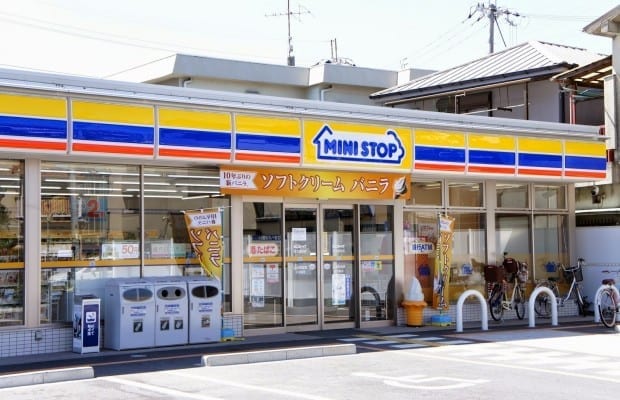
    The sale of convenience store chain Ministop fell apart as potential bidder Lotte and the Japan-based convenience franchise failed to agree on a price. The AEON Group of Japan, the largest shareholder of Ministop Korea, filed a notice on Monday that it has suspended the sale process to sell its full stake in the unit. The AEON Group owns a 76.06 percent share while Daesang Group, a Korean food conglomerate, has a 20 percent stake. Japan’s Mitsubishi holds 3.94 percent.

    Ministop Korea also notified its workers of the suspension, vowing to keep searching for a potential suitor.

    Executives from AEON and Ministop visited Seoul over the weekend to meet Shin Dong-bin, chairman of Lotte Group, which also owns 7-Eleven in Korea.

    The retail giant has been considered the likeliest buyer since it reportedly offered the highest price of around 400 billion won ($357.3 million).

    Other competitors include Shinsegae, which owns convenience store franchise Emart24, and Glenwood Private Equity, a local private equity firm.

    Ministop opened a bidding process back in November, but delayed selecting a preferred bidder.

    The introduction of a government regulation banning the opening of convenience stores within 80 meters (262 feet) of another store led to Ministop requesting a higher price, according to local media outlets.

    Ministop’s sale garnered attention from the beginning because it could impact the highly-competitive convenience store chain market in Korea.

    Ministop operates 2,500 stores across the country. If Lotte had succeeded in acquiring Ministop, it could have increased its number of stores from 9,500 to 12,000.

    CU runs the most stores, at 13,109, while the second player is GS25 with 13,018.

    Emart24 ranks fourth with 3,564 stores.

  • Thai’s King Power Duty Free, World’s Leading Airport Duty Free Operator 2018

    Thai’s King Power Duty Free, World’s Leading Airport Duty Free Operator 2018

    Thailand’s King Power Duty Free has won the world’s ultimate accolade for travel, tourism and hospitality industry excellence, voted ‘World’s Leading Airport Duty Free Operator 2018 in the 25th World Travel Awards. King Power Duty Free triumphed ahead of than a hundred duty free operators worldwide including shortlisted finalists China Duty Free Group, Hong Kong’s DFS, Dubai Duty Free, Swiss-based Dufry, Duty Free Americas, Germany’s Heinemann Duty Free, France’s Lagardere Travel Retail, and South Korea’s Lotte Duty Free and The Shilla Duty Free.

    “The award strengthens Thailand’s tourism image as a world class destination while underlining the outstanding capability of a Thai company,” said King Power Group CEO, Mr Aiyawatt Srivaddhanaprabha. “King Power is proud to be Thai and committed to the national travel retail business, setting a new benchmark for world-class duty free shopping experience.”

    Operated by King Power International, King Power Duty Free was earlier voted Asia’s Leading Airport Duty Free Operator 2018 in the regional finals of the World Travel Awards.

    World Travel Award was established in 1993 to annually acknowledge, reward, and celebrate excellence across key sectors of the travel, tourism and hospitality industries. Today the brand is recognized globally as the ultimate hallmark of industry excellence, voted by travel, tourism and consumer trade executives.

  • Vietnamese banks report plunge in profits

    Vietnamese banks report plunge in profits

    While profit across the banking sector grew by an estimated 40 percent last year, VietinBank, LienVietPostBank and SaigonBank have reported steep declines. The biggest surprise came from state-owned VietinBank, the country’s second biggest lender by assets, which reported a 25 percent fall in profits before tax to go out of the group of five most profitable banks in the country.

    Le Duc Tho, its chairman, said this was a result of having to restrict operations last quarter to begin restructuring.

    Asset growth, credit growth and capital mobilization grew by 6-10 percent, lower than targeted.

    LienVietPostBank reported a 30 percent decline in profit before tax as a result of losses related to securities investments and low marginal interest rates.

    It achieved losses of nearly VND5 billion ($215,140) from securities investments whereas in 2017 it had made a profit of VND380 billion ($16.35 million).

    SaigonBank’s profit before tax fell by more than 26 percent due to provisioning for bad debts. The bank had to increase provision for bad debts by 22 percent to an amount equivalent to 87 percent of its profit from business operations.

    Its bad debts doubled in the first half of 2018 to nearly VND900 billion ($38.72 million), but by the end of the year it brought the rate down from 6.48 percent during mid-year to 2.2 percent. It involved provisioning of VND287 billion ($12.35 million).

    HSBC Vietnam CEO Pham Hong Hai said from 2019 bad debts could reemerge as a problem for banks after the recent lending spurt and the instability of the global financial markets.

    As a result, banks’ profits would most likely see a downward trend this year, he warned.

    The State Bank of Vietnam targets credit growth of 14 percent this year, the same as last year, and keeping non-performing loans to below 2 percent.

  • Viettel sole Vietnamese brand in global 500 listing

    Viettel sole Vietnamese brand in global 500 listing

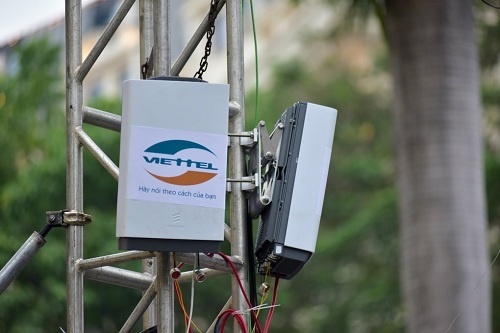
    Military-run telecom giant Viettel is the only Vietnamese firm in the list of 500 most valuable brands in the world. Valued at $4.32 billion, Viettel’s brand was ranked 478th on the list of 500 most valuable brands in the world for 2019, Brand Finance, a leading global brand valuation consultant, announced at the ongoing World Economic Forum in Davos, Switzerland.

    This is the first time a Vietnamese brand has been named in this list.

    Accordingly, Viettel’s brand value in 2019 has increased 35.8 percent year over 2018. The telecom giant’s high brand valuation was largely due to its presence and contribution in 10 foreign markets, suggesting the company was internationally competitive.

    2018 was a successful year for Viettel in  foreign telecommunication sectors, with service revenue growing by 20 percent, mobile subscribers base growing by 70 percent and net cash flow from international operations by $240 million, 3 percent higher compared to 2017.

    Brand Finance’s Global 500 list ranks the most valuable brands in the world covering all business fields including telecommunications, technology, automotive, oil and gas. Some big names in the list include Amazon, Apple, Google, Mercedes-Benz, Shell and Telstra.

    “Every year Brand Finance conducts an assessment of about 5,000 global brands across 40 different areas on various criteria such as revenue, brand strength, and financial health,” said David Haigh, CEO of Brand Finance.

    Out of a total 5,000 global businesses surveyed, there were 500 Southeast Asian businesses, of which only 8 brands made it to the Global 500 list. The listed brands were in three categories: telecommunications, oil and gas, banking.

  • Facebook strikes deal with SK to pay data fees

    Facebook strikes deal with SK to pay data fees

    Facebook reportedly finally agreed to pay data traffic fees to SK Broadband after two years of negotiations. According to local media reports Sunday, the social media giant and internet provider agreed to a two-year network usage deal to set up a cache server for temporary data storage and provide fast Facebook access to SK Broadband users. While the two companies did not confirm the exact sum, Facebook will reportedly pay more than what it previously proposed during negotiations.

    SK Broadband is not the first internet provider that Facebook will be paying in the country. In 2015, it signed a contract with KT to open a cache server. The two companies are currently working on renewing the contract after it expired last July.

    The new deal with SK Broadband comes after Facebook faced negative press for inconveniencing users while trying to avoid paying network fees to SK Broadband and LG U+.

    In late 2016 and early 2017, the social media giant re-routed non-KT users to its server in Hong Kong when they tried to connect to the platform, slowing down access considerably. The Korea Communications Commission charged the company 396 million won ($353,900) in fines and ordered it to change its practices.

    Following the agreement with SK Broadband, the social media giant is expected to open up a cache server with the internet provider.

    The company is also reported to be working with LG U+ on a similar deal.

    The recent deal highlights the question of whether other foreign IT giants will follow suit and pay data traffic fees to Korea’s network providers.

    Many Korean businesses have complained that current laws and practices hurt domestic firms. Naver and Kakao, for example, pay around 70 billion won and 30 billion won every year to Korea’s three network providers to compensate for their high traffic volume, while Google and Netflix – which are thought to be responsible for half of Korea’s data traffic together with Facebook – pay none.

  • Indonesia’s Danamon Bank Plans Merger With BNP

    Indonesia’s Danamon Bank Plans Merger With BNP

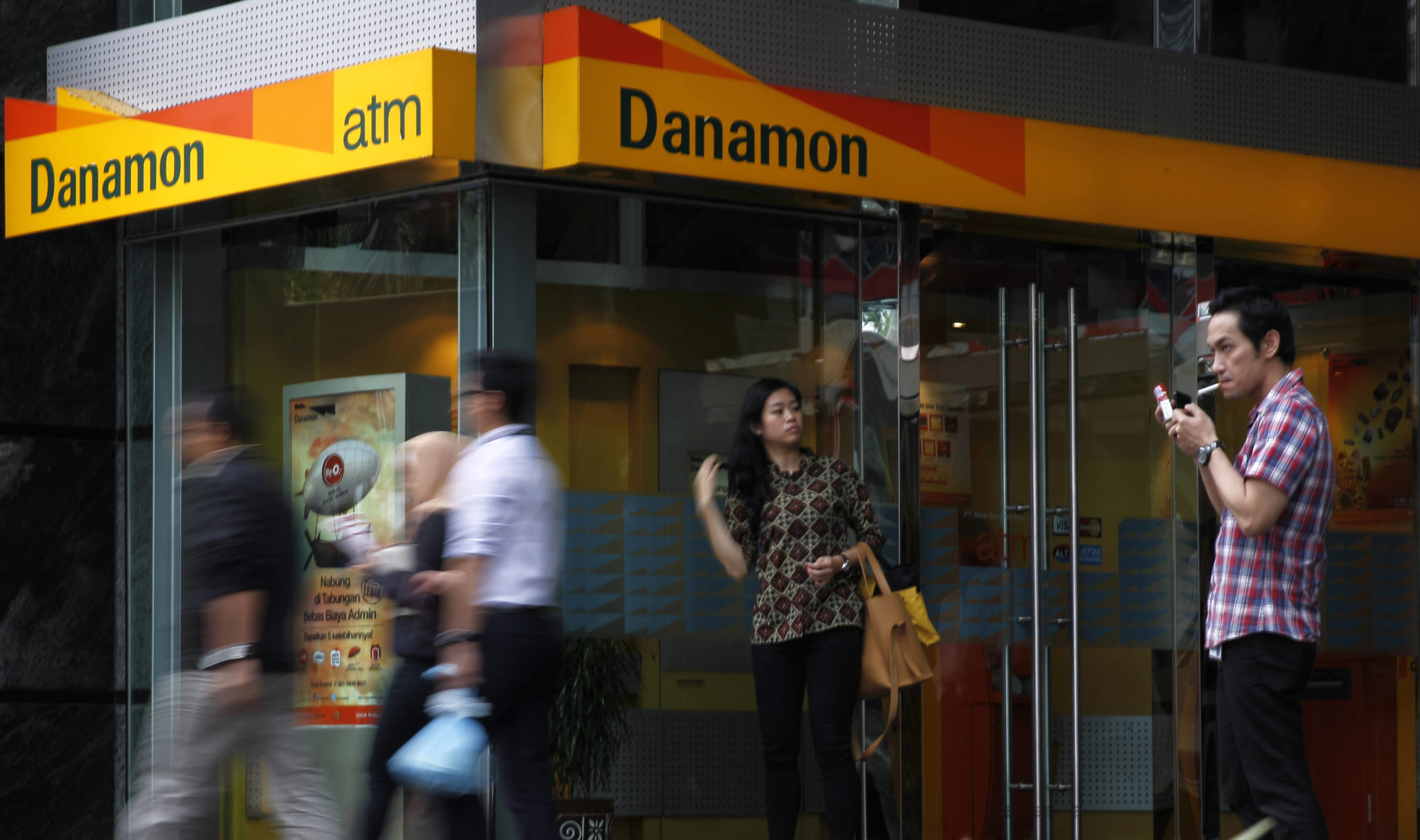
    Bank Danamon, Indonesia’s fifth-largest private lender, announced a plan on Tuesday to merge with local lender Bank Nusantara Parahyangan. “The proposed merger is subject to approval by the relevant regulatory authorities, both banks’ shareholders, and to meeting the legal formalities for such a transaction,” Bank Danamon said in a statement on Tuesday.

    This is part of a larger plan by Japan’s Bank Mitsubishi UFG (MUFG) to acquire a 73.8 percent stake in Bank Danamon.

    Bank Danamon and Bank Nusantara Parahyangan (BNP) are now able to merge after MUFG acquired 40 percent of Danamon in August last year.

    Aside from owning Bank Danamon, MUFG also holds a majority stake in BNP through its subsidiary, Acom, one of Japan’s largest loan companies.

    Bank Danamon and BNP are required to merge as Indonesia applies a single-presence policy, which ensures that one single entity does not hold a majority stake in more than one company.

    MUFG’s plan for acquiring a majority stake in Danamon has been laid out in three stages.

    In the first stage, which was completed in December 2017, MUFG acquired a 19.9 percent stake in Danamon from Singapore’s wealth fund firm Temasek for $1.17 billion.

    The Japanese lender subsequently raised its stake in Danamon to 40 percent last August with the acquisition of a further 20.1 percent. In the final stage, the Japanese lender will seek approval to acquire the remaining shares, which in total, will give it a 73.8 percent stake.

    The acquisition is the part of MUGF’s ambitious plan to expand its presence in the region.

    The deal marks the largest acquisition of an Indonesian company by a foreign entity after American multinational cigarette and tobacco manufacturer Philip Morris International bought a 60 percent stake in HM Sampoerna for $3 billion.

  • International Food Business: Current scenario and future in India

    International Food Business: Current scenario and future in India

    The misconception about Gourmet Food in India is amazing. There are many who equate gourmet with imported food, which is far from the reality. To encapsulate what the concept of gourmet is all about, let me say that it is less about the food than about the person who is the subject of the word. The term and its associated connotations are used positively to describe people with a refined taste and passion towards food.

    Add the word gourmet to any food or drink and, voila, it feels fancier, more upscale and generally more desirable. Gourmet food connotes food and drink that takes extra care to make or acquire. Gourmet food has a certain flair around it as it is usually found or made only in certain locations. The ingredients used are usually exotic, hard to find in regular grocery stores, and they are usually unique in flavor and/ or texture. Gourmet ingredients usually blend herbs and spices in an interesting manner to add flavour to the food. For example, lemon olive oil spray, black truffle balsamic glaze, and white wine vinegar are a unique take on the otherwise simple ingredients.

    Being an advocate of international food business for over 20 years now, I have seen the F&B sector in India go through various highs and lows over the years. But the one thing that I can say with absolute certainty is that the gourmet food category in the country has a tremendous scope and potential to grow in multiple areas, many of which still remain a virgin territory for food companies wanting to explore the business of international foods. We have been working diligently to bring new and exciting global gourmet food brands from all around the world to India. We have built our reputation through a commitment to offer unique products at competitive prices and we strive to never compromise on the quality of products or services that we offer. It is a passion for many of us who function in the realm of international food business and we aim to bring diversity to our Indian consumer base.

    Two-Way Trade is the Key to Future

    We firmly believe in two-way trade and in the current globalized world, it is a grave mistake to keep our consumers deprived of food options and opportunities available elsewhere in the world – from gourmet cheese to epicurean chocolates to the varieties of rice or spices or fresh fruits or exotic vegetables. The list is never ending and we must continue to explore to make it even more expansive. Unfortunately, our trade figures have been none too encouraging on this count. In the calendar year (CY) 2016, India exported consumer foods worth US$ 11 billion and imported consumer foods valued at US$ 4.25 billion. While our exports grew by 0.50 percent over the previous year, imports showed a decline of about five percent.

    The low takeoff of international food in India is surprising considering that there are quite a few success narratives around it: Italian pasta, Vietnamese basa, mayonnaise, Californian almonds, Canadian canola oil, Chileans walnuts and Washington apples, to name a few. When we look at Italian pasta, considered to be one of the most gourmet ingredients in Italian cuisine, the product is widely available in the country – from hand made to artisanal to commercially made – and it has penetrated the deepest corners of the Indian market with extensive marketing, transforming the kitchens of the aspirational Indians.

    A commodity like Californian almonds, which has about 80 percent of almond market share in India, touched a whopping US$ 693 million sales figure in India for 2016.

    For imported foods to expand their consumer base in India, it must be kept in mind that Indian consumers are rational shoppers who want value for money.

    Obviously, there is no one-size fits-all concept for a country as big as India but to have a deeper market penetration it is important to learn from the market leaders and try to do things the right way. Many of us confuse India with China, which is just not the case as the Indian market has its own set of business dynamics and consumption patterns here continue to evolve and offer valuable lessons in business.

    Teething Issues and Role of Associations like FIFI

    While on the one hand, we are facing teething issues like those associated with demonetization or Goods and Service Tax (GST), on the other hand, we also have government agencies like the Food Safety and Standards Authority of India that is willing to think out of the box and listen to the version of the trade side. We, at the Forum of Indian Food Importers (FIFI), have given numerous representations to Government of India and are pleased to note that several of our suggestions have been entertained as we always had a logical and scientific presentation to make. We still have some pending areas of concerns but are pretty confident that the regulator and trade will be able to come together on a common ground in the interest of the greater good of the food industry and consumers. Food safety is of utmost priority for us and, as industry representatives, we want global suppliers to understand the fact that Indian consumers have become very demanding and want only quality products. We are clearly out of the era when international companies looked at India as a not very important market for their food products. For many global food companies, India is now a critical country for doing international trade.

    Government’s Initiatives

    The Food and Beverage sector is governed by several Government of India agencies like Ministry of Health’s Food Safety and Standards Authority of India (FSSAI), Ministry of Food Processing and Industries (MoFPI), Ministry of Consumer Welfare, Food and Public Distribution, Ministry of Agriculture, Ministry of Commerce and Industries, and Ministry of Finance.

    With Government of India’s “Make in India” campaign, MoFPI aims to boost growth in the food processing sector by leveraging reforms such as 100 per cent foreign direct investment (FDI) in marketing of food products and by offering various incentives at the central and state government level along with a strong focus on supply chain infrastructure.

    – Government of India has relaxed foreign direct investment (FDI) norms for the sector, allowing up to 100 percent FDI in food product e-commerce through the automatic route.

    – FSSAI plans to invest around Rs 482 crore (US$ 72.3 million) to strengthen the food testing infrastructure in India, by upgrading 59 existing food testing laboratories and setting up 62 new mobile testing labs across the country. Additionally, FSSAI has been aggressively introducing numerous notifications pertaining to imported Food and Beverage category.

    – The Indian Council for Fertilizer and Nutrient Research (ICFNR) will adopt international best practices for research in the fertiliser sector, which will enable farmers to get good quality fertilizers at affordable rates and thereby achieve food security for the common man.

    International Chains Entering Indian Market

    With India opening the doors to numerous international restaurant chains, the youth is able to break the tradition and try several new international cuisines. This exposure is generating employment, changing the F&B scenario in India, bringing in international business practices, world-class technology, standard operating procedures and opening the way for trade. These chains buy imported ingredients or products to get a marketing edge or when such ingredients are not available domestically. They are able to lead the way for upscale manufacturing in the country and create more avenues for employment. It is important for us as an industry to understand that our strategy should be to grow hand-in-hand with these international chains and to open more ways for doing business with all stakeholders. Some of these chains, which already have a sizable market presence in India, are Chilli’s, Barista, Café Coffee Day, Au Bon Pain, McDonald’s, Subway, KFC, Starbucks, Tacobell, among others.

    Market Size Growing Despite all Odds:

    Despite numerous challenges such as high base tariffs and the fallout from the implementation of new regulations like demonetization and GST, the Indian market for imported and international foods is showing a noticeable growth trend. India is emerging as a favorite market destination for many national and international players in the food business. The Indian foodservice sector is valued at US$ 48 billion and is anticipated to grow to US$ 77 billion at a Compound Annual Growth Rate (CAGR) of 10 percent by 2021. The Indian food and grocery market is the world’s sixth largest, with retail contributing 70 percent of the sales. The Indian food processing industry accounts for 32 per cent of the country’s total food market, is one of the largest industries in India and is ranked fifth in terms of production, consumption, export and expected growth. The Indian gourmet food market is currently valued at USD 1.3 billion and is growing at a CAGR of 20 percent. India’s organic food market is expected to increase three times its current size by 2020.

    The online food ordering business in India is in a nascent stage but has a huge potential and a promising future. The online food delivery industry grew at 150 percent year-on-year with an estimated Gross Merchandise Value (GMV) of US$ 300 million in 2016.

    Emergence of Social Media

    We should not underestimate the role of the new generation bloggers and social media enthusiasts who are instrumental in shaping the trends and are helping brands and products to get visibility and gain popularity with the consumers. They are emerging as an alternative to the traditional media and are a less expensive media tool. However, they also act as watchdogs of quality and standards for the foodservice industry. Social media is helping to generate exciting stories around the foodservice industry but at the same time, we need more honest voices that understand the food business and its nuances better.

    Traditional Marketing Avenues Still Hold True

    While new marketing tools are becoming popular, the traditional methods should not be considered obsolete as they continue to have deeper penetration and visibility. Participation at trade shows and conferences, print and electronic media activities continue to rule the game and offer a range of visibility without comparable alternatives.

    Way Forward for the Imported F&B Industry

    The Indian consumers represent a community of diverse sentiments. A majority of them favour an experimental palate, which creates a plethora of opportunities for the international F&B sector in country. While maintaining a balance between aspiration and tradition agrees perfectly with the Indian palate, culinary trends originating in the West are promptly picked up by Indian social media and are translated on the ground with an instant recognition. The earlier practice of trends coming to India after three to five years of introduction in the Western world is now a thing of the past. This willingness to accept international trends without any inhibition has played a pivotal role in the marketing of international brands in India and has opened up the entire market for international foods. As a result, recent years have seen the launch of numerous new categories like gluten-free breads, organic chocolates and many others products in country. However, as mentioned earlier, it is important for us to ensure quality delivery to our consumers and adhere to the food safety regulations. We need a more organized voice in trade to echo the this message and to take the India story to many more global markets.

  • Crocs India opens 109th store

    Crocs India opens 109th store

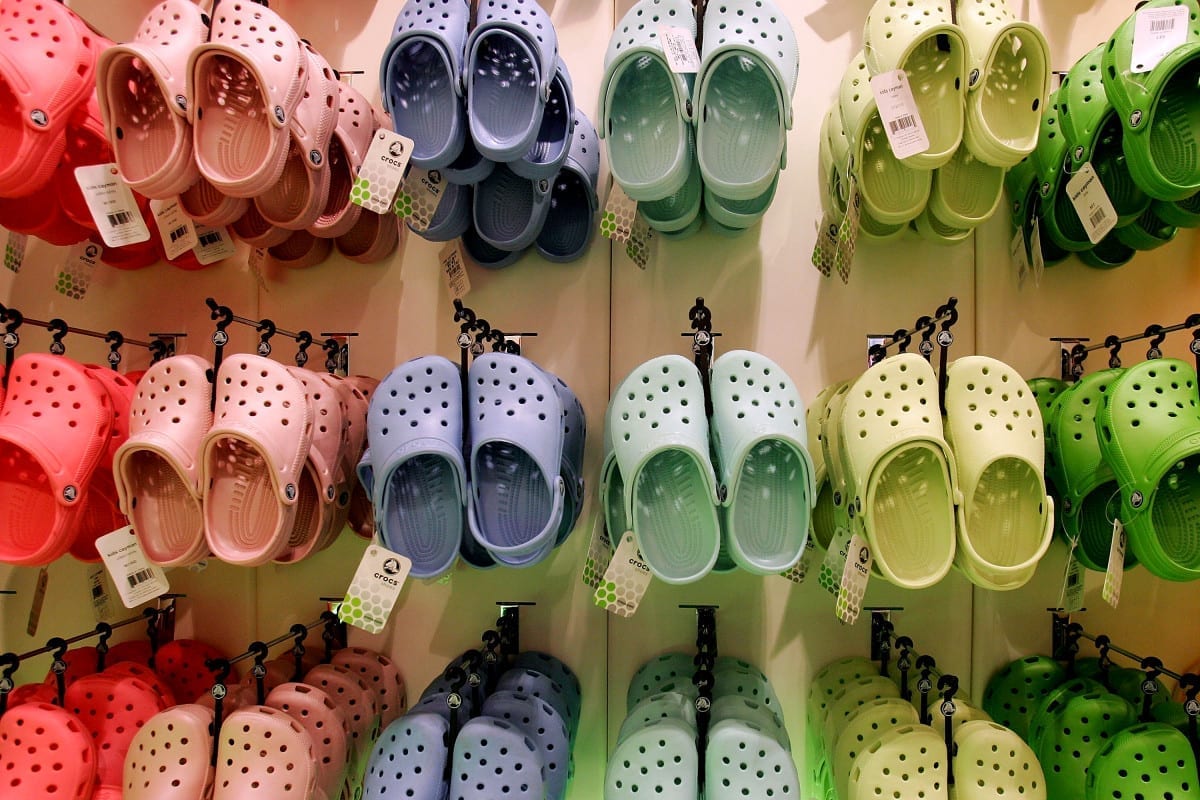
    Crocs, the iconic casual footwear brand, announced the launch of its 109th store in India at Ballygunge, Kolkata. Crocs inaugurated the 580 sq.ft. store situated in one of the poshest high-street vicinity of Kolkata. With this new store, Crocs promises to strengthen the reach of the iconic brand in the ‘City of Joy’; where now has seven stores. The other stores of Crocs in Kolkata are located at City Centre New Town, Camac Street, Forum Courtyard, City Centre Salt Lake, Axis Mall, Rajarghat-New Town, and Acropolis in Kolkata.

    The new store showcases the recently launched Spring Summer’19 collection along with an array of styles which include sandals, loafers, sneakers, flip-flops, and clogs suitable for all age groups.

    Speaking on the launch, Deepak Chhabra, CEO & MD, Crocs India, said, “Kolkata is crucial market for us with huge potential and high fashion sensibilities. We are pleased to announce the launch of our 7th store in the city and will continue to strengthen our presence in the state of West Bengal. In addition to aggressively growing our EBOs, we will be strengthening our presence in tier-2 cities via MBOs and Kiosks. Further, e-commerce will remain an integral part of our distribution strategy and help us reach out to consumers where our brick and mortar presence is limited.”

    With unparalleled brand awareness and break-through product innovations, Crocs is progressing towards becoming India’s top non-athletic casual footwear brand. India is currently the 6th biggest market for Crocs globally with a double-digit growth year on year.

    Over the past 16 years, Crocs has sold more than 350 million pairs of shoes worldwide. Crocs as a brand will continue to focus on clogs and sandals, along with new product innovations and extensions of the current product line.

    Last year, Crocs launched its newest innovation ‘LiteRide™’ which is available in Flips, Slides, clogs, shoes and sandals. The LiteRide™ Collection merges sporty, on-trend styles and silhouettes with the legendary Crocs comfort that consumers expect. LiteRide™ has redefined comfort, taken the brand’s style quotient a notch higher and it has been a stellar success across genders and age groups.

    The associations with Christopher Kane and Balenciaga in the last couple of years has also further elevated the fashion appeal of the brand.

  • Global business leaders raise concerns over e-commerce policy changes in India

    Global business leaders raise concerns over e-commerce policy changes in India

    Several global business leaders have raised concerns over the evolving regulatory challenges concerning the e-commerce sector in India and said they want a stable policy regime to help this space achieve its robust growth and investment potential. According to a report, multiple business leaders attending the World Economic Forum Annual Meeting here said there are confusions in their mind in the backdrop of recent policy changes for e-commerce players having FDI in India.

    They did not want to be named, given the sensitivity of the subject and the evolving nature of the proposed rules, but said they have directly, or through their representatives, raised their concerns with the Government. They wanted to raise the issue directly with Commerce and Industry Minister Suresh Prabhu in Davos, but his plan to come here got changed at the last moment.

    At a session here at the WEF meeting, WTO Chief Roberto Azevedo also said there was a need for a global multilateral framework on e-commerce business.

    India’s FDI policy allows 100 percent foreign direct investment in marketplace model, but investors also want a stable policy and regulatory regime, a senior official of a leading online retailer said.

    An industry lobby group official said there is a fear that certain new rules proposed by the Government could lead to discrimination against investors as this policy is only for foreign players and not for domestic ones in the e-commerce sector.

    Another executive claimed it is being seen as a non-consultative approach even with investors who bring in huge foreign direct investment.

    However, Government officials rejected these allegations and said the new changes seek to safeguard competition and the interest of domestic players. The rules have been made after due consideration and consultations with concerned stakeholders, they added.

    The Commerce and Industry Ministry brought certain changes to Press Note 2 on December 26, 2018 which prohibited e-commerce companies from entering into an agreement for exclusive sale of products along with tightening norms for firms having foreign investment.

    The Government has also barred online marketplaces like Flipkart and Amazon from selling products of companies where they hold stakes and banned exclusive marketing arrangements that could influence product prices.

    The revised policy on foreign direct investment in online retail also requires these firms to offer equal services and facilities to all its vendors without discrimination. The policy would be effective from February 2019.

    In India, the policy as such does not permit FDI in inventory-based model of e-commerce.

    Companies have been seeking more time to implement the changes even as some of them have warned that these substantial modifications in the way they do business pose risks of derailing the e-commerce sector that has been a big job creator.

    Executives from another global retail major said the impact could also be felt by several connected sectors such as advertising, logistics, warehousing and manufacturing.

  • Walmart, Amazon India seek extension of Jan 31 deadline on e-commerce compliance

    Walmart, Amazon India seek extension of Jan 31 deadline on e-commerce compliance

    There is trouble in paradise. The Government’s drastic intervention in e-commerce at the behest of vested domestic interests and the powerful traders lobby has created consternation in the bulge bracket world of e-commerce in India. With the big players having reached out to the Government to give them breathing space on the new compliance measures beyond the January 31 deadline, the Industry ministry has not responded, leading to panic attacks across the board.

    Powerful stakeholders led by Walmart and Amazon from the e-commerce eco system have sought a six-month extension since lakhs of sellers – small and medium-sized – in the market place need to be educated, IT-enabled and connected to meet the statutory audit requirements. Moreover, contracts have to be re-negotiated so that the compliance measures remain ongoing with time being of the essence.

    It is believed that the DIPP or Industry Secretary Ramesh Abhishek, who was earlier encouraging the major players to ramp up their investments in India, has not responded to their pleas and petitions.

    The situation has become precarious primarily because the clarification to press note 2 was even more confusing. On a granular level, the market place cannot have any equity in the seller.

    Hence, Amazon which has five percent equity in Shoppers Stop has to comply with the new standards. The new government directive does not allow private labels, nor does it allow big brands to have commercial tie-ups with the market place. Basically, the rules of engagement have been turned on their head.

    Bain Capital reckons that the heavy lifting e-com players have generated three lakh jobs in India. Over and above this, there are lakhs of vendors.

    Further, the eco system has multiple spin-offs like advertisements, courier companies, logistics companies, supports innumerable manufacturing operations and caters to large scale supply chains. Flipkart has 80,000 employees, 80 fulfilment centres (warehouses), nearly one lakh plus sellers and artisans of all hues across the land. Ditto for Amazon, which has similar numbers across its business spectrum.

    Walmart paid US$ 14 billion for Flipkart stock with a promise of an additional US$ 2 billion in physical structure investment. So, there is a lot riding on these heavy lifters for both know that this is the last frontier in terms of a consumption market, since India consumes 67 percent of its own US$ 2.6 trillion GDP. Interestingly, Walmart runs Flipkart as a stand-alone entity.

    For Walmart this is a priority market and it is keen that the January 31 compliance window deadline is extended. Its commitment to the Indian market can be gauged from the fact that it recently got 100 acres in Bengal for warehousing as a pivot to the northeast market. Hence the size of the commitment is seeing enlargement almost daily.

    It is on the verge of closing another 100 acre fulfilment centre in Telengana to service the southern market. Remarkably, the Indian retail market is estimated to be US$ 650 billion, of which 90 percent is the kirana stores while nearly eight per cent is made up of Indian retail players and only two percent is e-commerce. However, since the biggies in e-com are global behemoths, impediments are being placed in their path.

    At the kernel of the government notification and clarificatory statement is the targeting of e-commerce giants who are quick to retort that they helping small sellers with a channel that is tech-enabled to put their products on the marketplace.

    At the time same time, even as they try and get the government to listen to their litany of woes on immediate compliance, the process of evaluation of sellers will continue and remain ongoing so that they are effectively compliant every single day. The government’s intervention is perceived to be through a non-consultative process and the global giants want more time for compliance and enhanced level of dialogue.

    The audit requirement on the sellers by opening their books to the marketplace in such a short time is reminiscent of the haste in the launch of GST, which threw small businesses out of gear.

    Many of the sellers will now have design IT systems and the marketplace cannot be liable for this. In parallel, there is no clarification on how to conduct the private label business.

  • Reliance Retail is 94th on Deloitte’s top retailer list

    Reliance Retail is 94th on Deloitte’s top retailer list

    The global retailing industry saw a record growth in revenue in 2017 with the top 250 companies increasing their revenue by over 83 percent, according to a latest report by a professional services multinational that said Reliance Retail was the only Indian company in the list. The Deloitte’s ‘Global Powers of Retailing 2019’ said that with the fast moving consumer goods (FMCG) being the main growth drive for the top 250 global retailers, the retail revenue increased by over 83.2 percent generating aggregate revenue of US$ 4.53 trillion in fiscal 2017.

    “Despite the deceleration in the global economy, the consumer and investor sentiment continues to remain positive.

    “Our global reports highlight that of the top 10 companies on the top 250 list, eight were FMCG companies and that sector has been a strong reason for the India retail story,” Deloitte India Partner Anil Talreja said.

    According to the report, Europe had the highest number of top 250 retailers.

    Companies such as Amazon and Reliance doing exceptionally well by climbing 2 and 95 spots, respectively, on the back of exceptional retail growth.

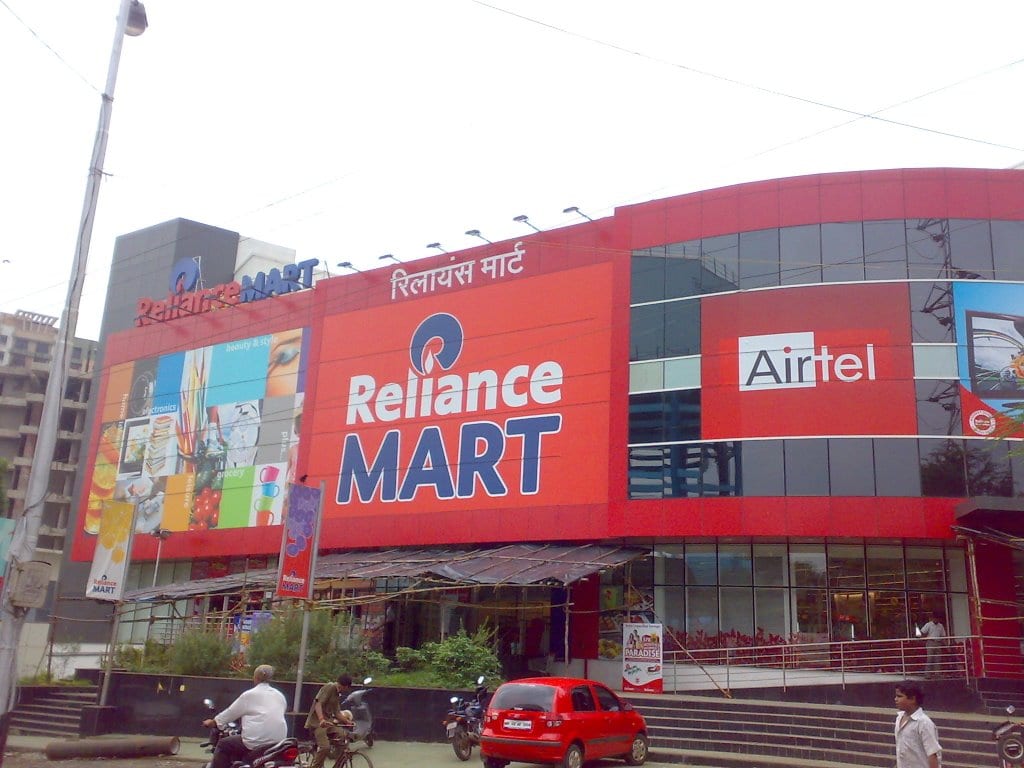
    Reliance Retail as the only Indian company in the top 250 list came in at the 94th position and was also placed sixth among the 50 fastest growing retail companies.

    In fiscal 2017, the company doubled its annual revenue to $10,649 million over the previous year.

    Walmart retained its position as the world’s largest retailer with an improvement in retail revenue growth by three per cent in 2017. Its major growth drivers were the acquisition of e-commerce firms such as Jet.com, ModCloth, Shoes.com, Moosejaw, and Bonobos, besides greater investments in store remodelling and investment in store wages.

    Walmart has recently acquired Indian e-commerce major Flipkart.

    The Deloitte survey reported sluggish growth in Europe, China and Japan, but said retailers continued to grow as a result of increased merger and acquisition (M&A) activity, new store openings, and robust e-commerce activity.

    “The global economy is currently at a turning point. Until early 2018, the global economy displayed strong growth.

    “With inflation accelerating in major markets, governments making shifts in monetary and fiscal policies, and most of the emerging markets experiencing significant currency depreciation the global economy will slow down in the near future,” Deloitte Global Chief Economist Ira Kalishsaid in the report.

    “For retailers, this change will mean slower consumer spending growth, higher consumer prices, and disrupted global supply chains,” he added.

  • Revealing Subway Hong Kong’s new strategy

    Revealing Subway Hong Kong’s new strategy

    Subway Hong Kong has chosen a university campus to launch the first of its new-generation store concepts in Greater China. The Fresh Forward restaurant decor marks a modernisation for the iconic made-to-order sandwich chain which with a new development office in Hong Kong and Macau is achieving same-store annual sales growth of more than 20 per cent. The new development office management team, comprising CEO Christel LeBrun, GM Jamie LeBrun and director Mark Rutherglen have more than 50 years of Subway experience between them.

    Subway Hong Kong’s new Fresh Forward restaurant opened on level 3 of City University’s Lau Ming Wai Building in late August. It takes up a 900sqft site and seats 30 guests, making it one of the largest Subways in Hong Kong and Macau. The larger footprint is representative of the new development office’s strategy to develop the brand on a larger scale, unlike the smaller kiosk-style locations opened in the past.

    During the grand opening the store served more than 1300 customers, fulfilling 200-plus orders an hour during peak lunch periods. “Last year, we focused a lot of energy on better service, fresher products and cleaner restaurants,” said Christel LeBrun. “The way in which our sandwich artists and managers handled the volume on opening day is a testament to how far the operations have come in 12 months.”

    Subway Hong Kong expects that by the end of this year half of its outlets across the two territories will be remodelled to the new concept which Jamie LeBrun describes as “Subway stepping into the 21st Century”.

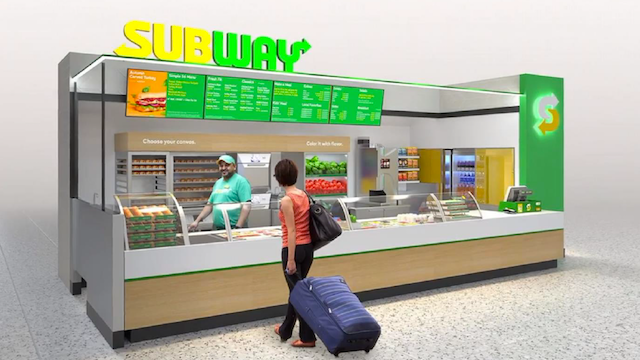
    Features of the new look include digital and interactive menu boards that have a more product-focused design and are controlled centrally via a content-management system.

    New fresh-vegetable and bread displays show customers how the chain’s products are prepared fresh in store each day.

    Brightly coloured furniture and eye-catching graphics on the walls create a more welcoming and “fresh” environment for dine-in customers, who can enjoy the convenience of power points for laptops and USB charging ports to recharge smart devices.

    “Our customers want good food, better value and clean restaurants. And we’re giving them that,” said Jamie LeBrun.

    Michael Kyprianou, director of development with Subway Hong Kong and a part owner of the City University store, describes the new concept as “an absolute game changer”.

    Future Fresh Forward stores in the two cities will be set up to cater better to online ordering.

    “With the move towards services like Deliveroo and Foodpanda, we have redesigned the back of house so where we have a prep bench, you can lift it up and you’ll have a salad bar so you can assemble orders at the back of the store for delivery,” says Jamie LeBrun. “So when orders are coming in online during peak hours, someone will be out the back preparing orders and not interfering with the in-store trade.”

    Jamie LeBrun says some Hong Kong Subway stores can earn up to 25 per cent of their sales online. “That’s how big the online space is. When it’s raining, no one wants to go out and pick it up. People have got short lunchtimes too – no one wants to go stand in line.”

    Menu evolution

    A major part of Subway’s success last year was a revamped menu which Jamie LeBrun says will continue to evolve to reflect local tastes and feature ‘limited-time offers’.

    “Product innovation is the cornerstone of future success for our business.”

    An avocado promotion in stores last year with three popular combinations – Roast Chicken and Avocado, Bacon and Avocado and Turkey, Bacon and Avocado – achieved sales 200 per cent higher than forecast.

    This year, Subway Hong Kong promises a new product every six weeks, including limited time offers such as Black Pepper Beef, Shrimp and Avocado and Rotisserie Chicken sandwiches.

    “Currently in restaurants you will find a Japanese Curry Chicken that offers a great warm flavour for these colder months,” says Christel LeBrun.

    Late last year, the company expanded the core menu offer adding coffee to new restaurants through a partnership with Kolb, offering fair-trade coffee beans and fresh milk in hot or cold drinks made in store.

    This year, Subway Hong Kong plans another menu-centric initiative called ‘restore the core’ – the first part of this initiative will be an analysis of existing items and optimising the menu based on what is popular and what can be removed. The second part is then to improve on the products left on the menu.

    Also this year, Subway will be more engaged in the community by sponsoring major ‘active lifestyle and sporting’ events around the territory to boost its profile and make consumers aware of its new outlet design and menu.

    “We are looking at a few events that complement the Subway brand to partner with this year, we are eager to get back into the event space and engage more with our customers,” says Jamie leBrun.

    On World Sandwich Day the company plans to launch a promotion with proceeds donated to those in need via the St James Settlement in Hong Kong. “A number of restaurants were doing 130 sandwiches an hour, every hour for eight hours on the day last year,” says Christel LeBrun.

    Franchisee search

    The development office has several new outlets scheduled to open during the next six weeks, including a new Fresh Forward outlet on Hollywood Road, Central.

    New franchisees are being sought to to help expand its store network now the brand has revamped its decor and upgraded its menu.

    “We are looking for new franchisees that are team players to help grow the brand in the right way,” explains Christel LeBrun.

    “People that are looking to own their own business or be their own boss. Training is provided so it doesn’t matter what background they come from. We have doctors, lawyers, graduates, teachers, parents and everyone in between,” adds Jamie LeBrun.

    Four new franchisees joined last year with another 10 sought this year with the longer-term goal to have 100 outlets in the two territories within 10 years.

  • Dhaba restaurant opens its 10th outlet in Aerocity India

    Dhaba restaurant opens its 10th outlet in Aerocity India

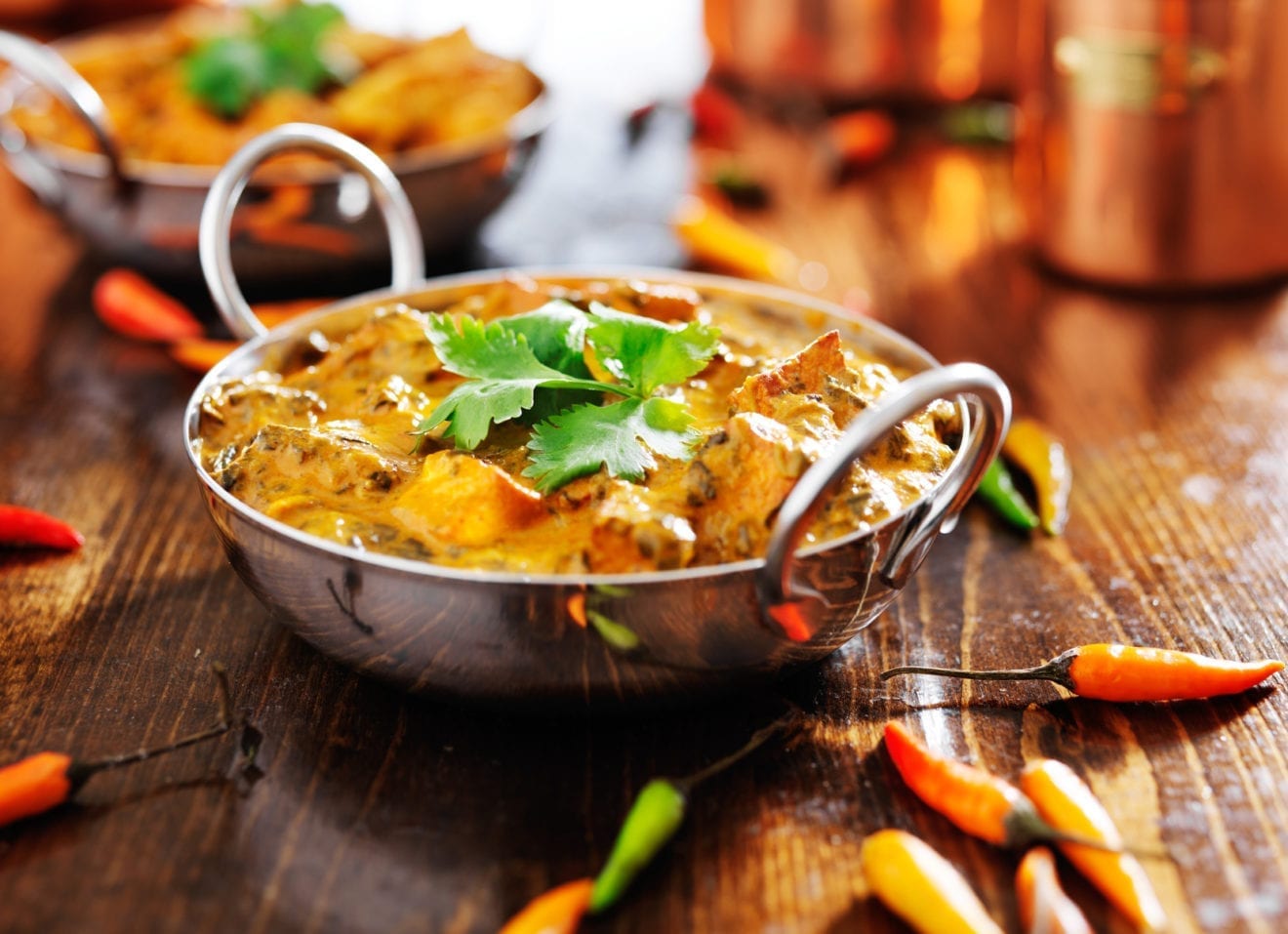
    Dhaba Estd 1986 Delhi by Azure Hospitality is all set to land itself at Delhi’s posh new Aerocity. The award winning deliciousness carries forward the thirty year legacy as it stamps another one at Delhi’s most favourite leisure destinations, The Walk at Aerocity. At Dhaba Estd 1986 Delhi, one not only experiences fabulous Dhaba food but from the moment the patrons enter till the time of their exit, the ambience recreates unparalleled highway eatery nostalgia. Given a shot of new age fun and kitschy interiors with the legendary classics on the menu along with some nouveau beauties – Dhaba is set to recreate the same magic again – but with more full-on Punjabi flair.

    “Keeping the drama to a minimum, we plan another Dhaba, where food is the king yet again. We are thrilled to share that Delhi’s prime food, beverage and leisure destination Worldmark at Aerocity is about to get struck with Dhaba’s dildaar Punjabi love that has been warmly accepted in Delhi NCR, Pune, Chennai, Hyderabad and Bangalore. Aerocity restaurant marks the tenth outlet for us after five successful years across the country. The response has always been heart-warming and we look forward to the same yet again,” say Rahul Khanna and Kabir Suri, Directors, Azure Hospitality.

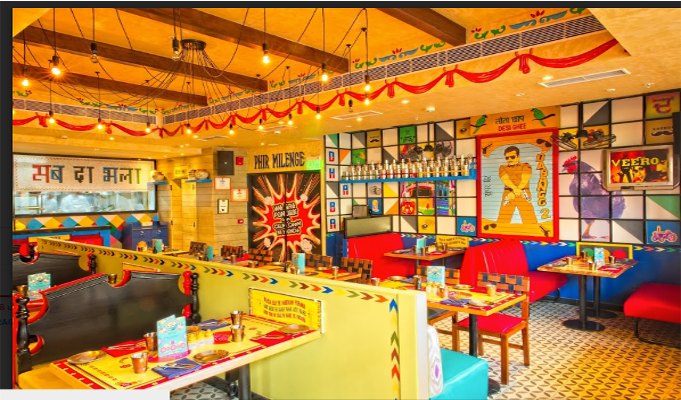
    Dhaba comes in a new avatar with signature kitschy quirk, vintage collages and retro Indian décor of the 80s and 90s, and use of popular Indian weaving techniques in ikat fabrics. Designed by Atul Anand, this 52-seater outlet showcases environmental friendly décor using recycled elements and community tables for group seating. The ambience effortlessly infuses the excitement of a highway meal; and in fact, takes it up a fair few notches! The creative chaos of colours, quirky desi quotes, revival of vintage black and white Bollywood posters and the signature truck art adds to the overall dining experience. The mood of the restaurant is further enhanced by the mock façade of a building, which is designed like a small town.

    With a crafted legacy of over 30 years, the real highway magic always takes place in the kitchen. With a legendary classic Indian menu divided into three drooling parts – the Tandoor, Tawa and Patila, food at Dhaba will be a true showstopper amongst corporate and tourists visiting the location. Chef Ravi Saxena expertly helms the Dhaba kitchen chronicle, reconditioning its fabled signature recipes bringing forth the best of highway cuisine and North Indian cuisine concepts. With signature recipes since 1986 and the new experimental highway specials, there are a whole lot of new and signature dishes for everyone to try.

    The food menu is inspired by travels down the highways of India and the eccentric by-lanes of old towns famous for unique age-old recipes. In addition to the age –old classics, the new menu experiments with newer flavours showcasing Highway specials, not only from Punjab but from all over the country. The essence and soul of Dhaba is Punjabi, however a whole range of regional dishes are now available for indulgence.