Tag: ecommerce

  • Online retail sales growth stagnates in Philippines

    Online retail sales growth stagnates in Philippines

    The Philippines is lagging behind its neighbours in online retail sales growth, says a new report.

    Despite having the second-largest population of Southeast Asia, the Philippines has turned in the lowest B2C e-commerce sales growth figures, according to Research & Markets’ Philippines B2C E-Commerce Market 2018 report.

    Among hurdles to overcome to foster growth in the online retail sector are comparatively low internet use, few credit card holders and restricted consumer confidence in online shopping.

    Online retail sales in the Philippines are expected to rise at a double-digit rate for the next few years even in the face of challenges, says the report. An increasing share of the large population is connecting to the internet, many though mobile devices.

    M-commerce is contributing to the rise in online retail, with mobile making up about three-quarters of connections to e-commerce websites. The Philippine government has done its part to help expand online retail sales by aiming to create a favourable administrative environment.

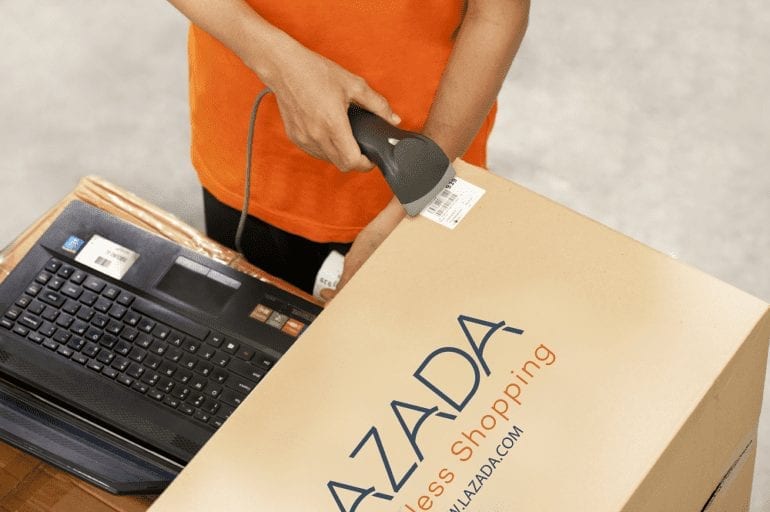
    Leading online merchants in the Philippines include Lazada and Shopee, both with headquarters in Singapore. Local companies Ayala Group and JG Summit are expanding their online presence.

  • Shopee teams up with DHL eCommerce in Thailand to offer a seamless delivery experience

    Shopee teams up with DHL eCommerce in Thailand to offer a seamless delivery experience

    DHL eCommerce, a division of the world’s leading logistics company, Deutsche Post DHL Group, is partnering with Shopee, the leading e-commerce platform in Southeast Asia and Taiwan, to offer greater convenience and choice to Shopee users in Thailand. Sellers on Shopee can now access over 500 DHL ServicePoints across Thailand to drop off their parcels and have them delivered to their shoppers across Thailand. Alternatively, sellers can also arrange a pickup from DHL for door-to-door delivery service to their buyers.

    “We are thrilled to be partnering Shopee to offer greater ease, choice and control over  the online delivery experience. Shoppers’ expectations are growing with regards to their entire purchasing experience — they expect a great and seamless experience from the time they click to purchase until the goods are received. A recent report states that 60% of consumers purchased from one online merchant over another because delivery options were more convenient for their needs, highlighting the pivotal role of delivery in the overall online shopping experience[1] ,” says Kiattichai Pitpreecha, Managing Director, Southeast Asia, DHL eCommerce. 

    “Shopee is excited to work with DHL eCommerce and we are confident that our users will benefit from the suite of services and features offered by DHL. We aim to become the online shopping destination of choice in all our markets and will continue to explore synergies between the two companies to make both buying and selling on Shopee as easy and seamless as possible,” says Terence Pang, Chief Operating Officer of Shopee.

    DHL’s domestic delivery network in Thailand offers high quality delivery service and a range of other services, such as easy IT and API integration, end-to-end tracking, delivery insurance, cash on delivery and more, tailored for the booming e-commerce industry. This enables sellers and leading brands on Shopee to efficiently reach out to customers across the country. Shoppers on the other hand will benefit from the consistent quality and convenience of delivery options. DHL eCommerce will also be growing its ServicePoint footprint in Thailand to over a thousand in the coming months to offer increased touchpoints with users.

    To mark the start of the partnership, Shopee and DHL will be extending a limited period free shipping promotion. Shopee sellers can enjoy free shipping nationwide (terms and conditions apply) from now until 30 June 2018 when they select DHL as the logistics provide for their shipments.

  • Earlier Spike in Travel Expenses Due to GE14

    Earlier Spike in Travel Expenses Due to GE14

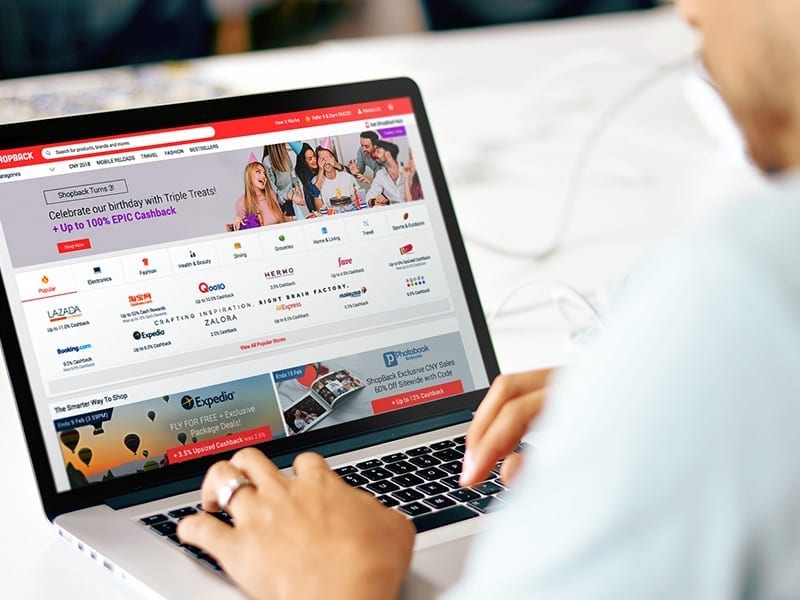
    ShopBack, the leading online Cashback platform that partners majority of transportation and accommodation booking sites in Malaysia, observes a 26% increase in travel purchases among its local users since the unveiling of the 14th General Election’s voting day (May 9th).

    “The next peak period for travel booking after March’s MATTA fair is supposed to be two weeks to a month prior to Hari Raya, but the purchasing trend came sooner this year as GE14 falls before Ramadhan,” says Alvin Gill, Country General Manager of ShopBack Malaysia.

    According to ShopBack Malaysia’s data, partners that offered a discount in flight and bus tickets, as well as reloadable petrol card, are the most sought-after stores under travel category on ShopBack’s web and app.

    “The daily average sales of our travel merchants has got a 26% increment since the voting day announcement. The demand remained strong in the past weeks, and we reckon part of the contributing factors was that AirAsia introduced fixed fares for all voters. ShopBack Malaysia’s users could purchase AirAsia’s tickets via Traveloka and Expedia; at the same time obtain cashback savings from every transaction made. In addition, bus tickets, Petronas gift cards from Lazada and 11street were also among the best-selling products in April,” Alvin explained.

    To cater for those who haven’t got transportation bookings sorted out yet, ShopBack Malaysia will organise a Mid-Year Travel Fair from April 30th to May 6thand offer up to 7.5% cashback together with its travel partners including Malaysia Airlines, Traveloka, Expedia, BusOnlineTicket, Booking.com, Hotels.com, etc. Malaysians could seize the chance and optimise their spending by visiting ShopBack’s website or download its mobile app.

    Malaysia is the No.1 Travel Destination for Locals, Not Overseas

    On the other hand, ShopBack Malaysia’s data also shows Malaysians frequently visits domestic destinations, especially Kuala Lumpur, Malacca, and Johor Bahru. Japan is the second most popular country, followed by Taiwan, Indonesia and Thailand.

    “Malaysians love to travel, and they didn’t stop travelling due to the economy challenges. Instead of flying out, many of them chose to travel within Malaysia and spent on better accommodation, such as 4-star hotel i.e. KSL Hotel & Resort and Hatten Hotel Melaka. Even so, the daily average spending for domestic travel is still significantly lower than Japan and Taiwan (four times lower than Japan and about half of Taiwan’s expenses).”

    Delving into customer purchasing pattern, he said if there’s no special occasion, travel transactions usually happens on Monday and Wednesday, between 3 pm – 6 pm. The year-end holiday season makes the heaviest travel months throughout the entire year, and Malaysians’ online travel spending also tends to spike before every festive period, and during MATTA Fair.

    “Although MATTA fair is an offline event, online booking sites such as Malaysia Airlines, Traveloka, Expedia will jump on the bandwagon and as the platform that empowers shoppers to shop and save smart, ShopBack Malaysia works closely with them to tailor-make best deals and upsized cashback for our users. It is a win-win situation as the result usually is very encouraging – for example, we noticed local airlines achieved 2.5 times more bookings during the past MATTA fair,” Alvin said.

    To date, ShopBack has more than 1 million users in Malaysia and it has rewarded them with more than RM25 million worth of cashback.  What’s better is users are able to stack this on top of their credit card’s cashback, and transfer the money to their bank account once it gets validated. Other than Malaysia, ShopBack is also available in Singapore, Thailand, Taiwan, Indonesia and the Philippines.


     

  • Amazon’s profit doubles

    Amazon’s profit doubles

    Amazon has reported a 43 per cent increase in net sales in the first quarter to US$51 billion, compared with $35.7 billion in the first quarter 2017, topping analysts’ expectations of $49.8 billion and boosting its share price 6 per cent in extended trading.

    Excluding the $1.6 billion favourable impact from year-over-year changes in foreign exchange rates throughout the quarter, the e-commerce giant’s revenue increased 39 per cent compared with first quarter 2017.

    The results were driven by Amazon’s profitable cloud computing business, strong advertising sales and better-than-expected retail performance, particularly in the US, where the acquisition of Whole Foods boosted sales in that segment 46 per cent year-on-year to $30.7 billion in the quarter, according to Brian Olsavsky, Amazon’s chief financial officer, on a call with analysts.

    The company could see further gains from its US retail business, after announcing Thursday that it plans to increase the annual price of Prime memberships from $99 to $119 in May. Amazon CEO Jeff Bezos recently revealed there are more than 100 million Prime members worldwide.

    The e-commerce giant increased its operating cash flow 4 per cent to $18.2 billion for the trailing twelve months, compared with $17.5 billion for the trailing twelve months ended March 31, 2017.

    Operating income increased 92 per cent to $1.9 billion in the first quarter, compared with operating income of $1 billion in first quarter 2017. And net income was $1.6 billion in the first quarter, or $3.27 per diluted share, compared with net income of $724 million, or $1.48 per diluted share, in first quarter 2017.

    Looking ahead, the retail giant expects net sales in the current quarter to be between $51 billion and $54 billion, which would be 34 to 42 per cent higher than net sales in the second quarter 2017. This guidance anticipates a favorable impact of approximately $1.2 billion or 320 basis points from foreign exchange rates.

    Operating income is expected to be between $1.1 billion and $1.9 billion, compared with $628 million in second quarter 2017, assuming, among other things, that no additional business acquisitions, investments, restructurings, or legal settlements are concluded.
  • Ezbuy Announces Dollar Deals With Huge Savings – For Two Days Only

    Ezbuy Announces Dollar Deals With Huge Savings – For Two Days Only

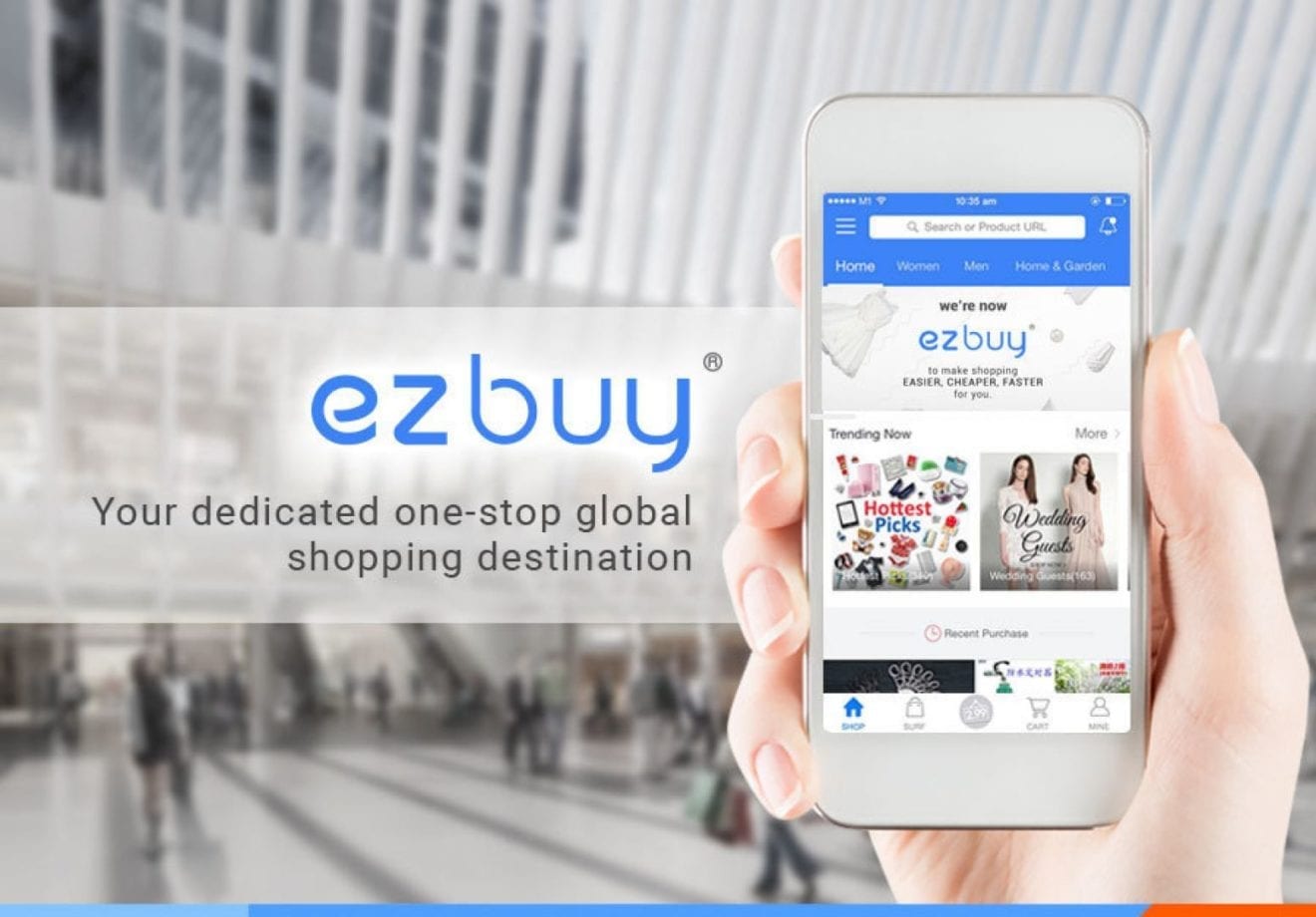
    ezbuy.sg, Singapore’s first and largest global shopping platform, today announced their ezbuy Dollar Deals,offering a variety of the lowest prices, on some of the most popular product categories. Happening for two days only from 29th to 30th April 2018, the ezbuy Dollar Deals will offer heavily discounted prices for customers looking to jump start their shopping spree, with deals going on sale at $1, $3, and $5respectively.

    Customers can look forward to huge savings from over 2,000 products across numerous categories, including men and women’s fashion, accessories, home and living, beauty, food and more. Explore ezbuy’s shopping platform for your favourite products including mobile accessories, jewellery pieces, Bluetooth speakers, patterned tees, dresses, handbags and many more. Products under the ezbuy Dollar Deals will also be at nett prices, with no shipping and agent fee for the entire campaign period.

    To date, ezbuy has not only expanded their suite of product offerings, they have also more sellers on board from China as well as on their various marketplaces including Singapore, Korea, Taiwan and USA. This means that customers now have greater access to their favourite brands and products from these countries with the ease of purchasing them from ezbuy.

  • Justice about to launch online in Indonesia

    Justice about to launch online in Indonesia

    American girls fashionwear brand Justice, distributed by Kanmo Group, has launched an e-commerce store in Indonesia, Shopjustice.co.id.

    Kanmo has partnered with e-commerce agency SmartOSC to design and launch a user-centric experience. The new omnichannel feature enables customers to research and shop online with shipping to their homes or their nearest store for pick-up.

    The “Get a Look” feature enables customers to try experiment with different styles and share the results with their friends. There are also options to book a fitting or special consultation in-store. A blog has also been developed for users.

    With offices in Australia, Japan, Singapore, the UK, The US and Vietnam, SmartOSC is a strategic partner to such companies as Club 21, Courts, Nestle, Lotte, PayPal and Priceline Pharmacy.

    Formed in 2005, Kanmo Group has nearly 200 stores in Indonesia, mainly in the children and  baby segment, and has extended its retail portfolio to include fashion and accessories.

  • Lazada Malaysia links up with Singapore

    Lazada Malaysia links up with Singapore

    In the pilot phase, more than 50,000 products from such categories as fashion, health and beauty, home and lifestyle, and sports and travel are being made available to Lazada Singapore shoppers. They include items from such Malaysian brands as Carlo Rino, Pensonic and Swan.

    The move comes on the eve of Lazada’s annual birthday campaign, which offers special promotions and giveaways.
    The DFTZ is the first e-hub outside of China under the Electronic World Trade Platform. Under this roll-out, a single contract grants access to Singapore. Other Southeast Asian countries will be added later.

    The DFTZ provides a centralised bonded warehouse at KL International Airport Aeropolis, which features advanced technology for sorting, shelving, packing and logistics.

  • Lazada launches regional trade with Digital Free Trade Zone Ahead of 6th Birthday

    Lazada launches regional trade with Digital Free Trade Zone Ahead of 6th Birthday

    Starting today, over 100 Lazada sellers in Malaysia will begin marketing their products to buyers in Singapore, with seamless support from Lazada and the Digital Free Trade Zone (DFTZ).

    This is a significant boost for online trade, allowing Malaysian small and medium enterprise owners to expand overseas, reaching out to new customers among Singapore’s population of 6 million. Through Lazada and the DFTZ, sellers enjoy a one-stop solution with more efficient cargo clearance and GST exemptions, and overall, export processes that are quick and hassle-free.

    In this pilot phase, over 50,000 products from various categories – Fashion, Health & Beauty, Home & Lifestyle, Sports & Travel and more – will be made available to Lazada Singapore shoppers. They include items from iconic Malaysian brands like Carlo Rino, Pensonic and Swan. This provides Malaysian brands increased visibility and representation in today’s global marketplace.

    The kick-off today is strategically timed to precede Lazada’s annual birthday campaign, taking place from 24 to 26 April in Singapore. As for Malaysia, the 6th birthday campaign will take place from 25 to 27 April. During this period, a spike in consumer interest and transactions are expected, owing to a continuous stream of promotions and giveaways.

    Empowering Malaysian Sellers

    The DFTZ is the first e-hub outside of China under the Electronic World Trade Platform. With Lazada and DFTZ, there is none of the administrative and legal hassles associated with entering new markets. A single contract grants access to Singapore in this rollout; and other Southeast Asia countries will be added subsequently. Business owners also need only upload their product information once and Lazada will replicate the content on local portals.

    The DFTZ provides a centralized bonded warehouse at KL International Airport (KLIA) Aeropolis, allowing efficient sharing of inventory among markets. The warehousing hub features advanced technology for sorting, shelving, packing and logistics.

    Fulfilment of orders is also easier on the pocket, with Lazada’s e-Logistics solutions which offer lower-cost and faster delivery.

    Paving the Way for Borderless e-commerce

    “This is a significant milestone in Southeast Asian e-commerce, one we are proud to lead. We see huge potential for expanding trade across Southeast Asia and are working hard to make it happen,” says Hans-Peter Ressel, Lazada Group Chief International Officer.

    “Now, I can bring my sales to the next level and easily reach a new group of customers in Singapore. I don’t have a wide logistics network so Lazada’s ecosystem gives me an amazing chance to participate in overseas trade for the first time,” says Aymen Ben, from ACHLIM HEALTH & BEAUTY, Malaysia.

  • Alibaba in a smart deal with the Thai government

    Alibaba in a smart deal with the Thai government

    China’s Alibaba Group will partner with the Thai government to build a smart digital trading hub in Thailand while also working to develop its capabilities in e-commerce, digital logistics, tourism and training.

    Alibaba says it will work with Thailand on everything from boosting efficiencies in trade to educating Thai entrepreneurs and SMEs in digital commerce. The partnership will give Thailand access to technologies and processes that can help advance its economy, while Alibaba gains a stronger foothold in an important market in Southeast Asia.

    Local news media has valued Alibaba’s Thai investment commitments at THB11 billion (US$352 million).

    The smart digital hub, in Thailand’s Eastern Economic Corridor, will use technologies from Alibaba and its logistics platform Cainiao Network to streamline trade between Thailand and China and other markets, including digitising the customs process.

    At the same time, Alibaba and the Thai government say they will develop educational initiatives for SMEs and entrepreneurs to learn best practices for e-commerce. Included are courses co-developed by Alibaba Business School and Thailand’s Ministries of Industry and Commerce, as well as training centered on the digital economy at Alibaba Business School in Hangzhou.

    Under the deal, Thailand also gains greater access to China’s consumer market. Thai products such as fragrant rice, durian and other tropical fruits are in demand in China.

    In a related move, a flagship store has been launched on Alibaba’s Tmall platform to sell Thai rice, the country’s main export.

    Alibaba’s online travel platform Fliggy is part of the arrangement because of Thailand’s popularity as a destination for Chinese tourists. Fliggy and the Tourism Authority of Thailand will work to develop smart and digital services for those visitors, including online tour guides and electronic ticketing systems.

  • Lazada Singapore celebrating 6th birthday

    Lazada Singapore celebrating 6th birthday

    Online market Lazada Singapore has marked its sixth anniversary with a festival at Plaza Singapura in a lead-up to its online birthday sale, starting next Tuesday.

    Crowds attended the weekend festival which offered surprise boxes and activities at Lazada brand and seller booths. Queues formed four hours before the event opened, with more than 550 people lined up on Sunday morning.

    Lazada sold more than 2000 surprise boxes across the two and a half days in less than two hours each day. Shoppers were also able to score discounts of up to 80 per cent on flash deals available only at the event.

    A 5m-high Super Surprise Box held up to 6000 freebies worth $120,000, available for shoppers spending at least $25 at either Plaza Singapura or on the Lazada app. Shoppers had only six seconds to grab a freebie from the box, echoing the “fastest fingers first” at last year’s Lazada Online Revolution Sale, where several brands sold out all 200 units of their surprise boxes in less than seven seconds.

    Partnering with CapitaLand, Lazada aimed to recreate the online shopping experience and ensure a clear link promoting an omnichannel shopping experience. This included QR codes at brand booths linking directly to their official stores on Lazada, as well as encouraging shoppers to buy at Plaza Singapura to qualify for a gift from the Super Surprise Box.

    All the freebies were claimed. These included Philips irons, Laneige serums, whey supplements, milk formulas and Jamie Oliver kitchenware.

    During the festival, Plaza Singapura had a fivefold increase in foot traffic.

    An innovation for the celebration is Shakin’ Deals, which encourages Lazada app users to shake their phones at midday and 9pm to win vouchers worth up to $120 to be used at the upcoming birthday sale.

    “Our daily app usage spiked by 37 per cent from the same time last month, and on Sunday we generated the highest app interaction we’ve seen all month,” says Lazada Singapore CEO/head of new retail Alexis Lanternier.

  • Walmart kicks off with redesigned e-commerce platform

    Walmart kicks off with redesigned e-commerce platform

    The world’s largest retailer Walmart has unveiled a complete redesign of its North American e-commerce platform to deliver a more local and personalised experience for shoppers.

    The new website, which is now live, sports a completely redesigned look and feel, as well as several new features, including specialty shopping experiences.

    The move comes after Walmart disappointed the market in February with a slowdown in its e-commerce growth to 23 per cent in the fourth quarter, down from 50 per cent in the prior quarter.

    The retail giant is forecasting a further 40 per cent increase in its e-commerce sales in fiscal 19.

    Walmart’s president and chief executive of US e-commerce Marc Lore oversaw the changes and said that personalisation was a key focus for the retail giant, with new sections introduced that showcase top-selling items based on a customer’s location.

    “The majority of the homepage will be personalised in some way,” Lore said in a post about the new site.

    There will be an area of the site dedicated to customers’ local store profiles, which will provide product availability information.

    Specialty shopping experiences have also been introduced, an area of the site dedicated to a specific category, designed to emulate a specialty retail shopping experience.

    “Customers shopping for groceries and household essentials want to quickly re-buy what they always purchase, while those looking for a new couch want to be inspired while browsing the different options,” Lore said.

    “We want each category to feel like you are shopping a specialty store and we plan to build out these specialty experiences for other categories starting later this year.”

    A home specialty experience has already been launched, while a destination for fashion is on the way.

    Advertising has also changed, providing Walmart’s suppliers with the ability to “better tell their stories” on the website within “seamlessly integrated” ads.

  • Meilishuo on the search for IPO in New York

    Meilishuo on the search for IPO in New York

    Online fashion retailer Meilishuo, backed by Tencent Holdings, is seeking an IPO in the US that could value the start-up at about US$4 billion.

    Many tech corporations in China opt for New York for their debut listings as it offers a wide investor base and higher international profile.

    Meilishuo is reported to be talking with investment banks about the move.

    Founded in 2009, the company sells clothes, shoes and handbags. In 2016 it had about 15,000 merchants on its website and a mobile app that had been downloaded 100 million times. That year it merged with rival Mogujie, which was founded in 2011 and had about 130 million registered users. The re-formed company was valued at $3 billion.

  • JD.com promises to add ‘1000 stores a day’

    JD.com promises to add ‘1000 stores a day’

    As 50,000 people apply each day to be franchisees, JD.com promises to open more than 1000 stores a day this year.

    It started the journey last month, with founder/CEO Liu Qiangdong saying almost every store will be a franchise, according to local media reports.

    The ambitious aim is a part of a plan the e-commerce announced 12 months ago, when Liu said it would open a million convenience stores in the next five years, half of them in rural areas. JD.com’s convenience stores are run by independent investors, and the company offers loans for potential franchisees.

    “We receive 50,000 applications every day,” says Liu. “The applicants are mostly migrant workers who have returned to their villages or small towns. Jingdong Finance can provide them with loans to open stores. They can earn more than RMB8000 [US$1275] a month.”

    The first batch of shops, 1111 of them, opened their doors on the same day in November.

    Liu’s latest announcement comes a month after JD.com signed an agreement with convenience store group FamilyMart. This enables JD users to have food delivered to their homes from FamilyMart’s core locations in Beijing, Shanghai, Shenzhen and Chengdu within 30 minutes at any time.

    Smart carts

    And in January, JD.com launched offline fresh-food supermarket 7Fresh, a 4000sqm store in Beijing that features “smart carts” that guide customers to the items they seek to buy.

    JD’s first high-profile deal in the emerging O2O retail sector was its investment of RMB4.3 billion for a 10 per cent stake in Shanghai-listed supermarket chain Yonghui Superstores three years ago.

    Meanwhile, JD.com is partnering with mainland retail conglomerate China Resources Vanguard in a deal to take Vanguard’s shops in Hangzhou and Nanjing to its O2O platform. Customers will be able to buy from Vanguard’s offline stores via JD Daojia, and the partnership will later extend to the brand’s 2000 retail stores in more than 30 major cities in China.

    China Resources Vanguard, formerly China Vanguard Super Department, has more than 3000 retail stores in 200-plus cities and has revenues of RMB103.6 billion last year.

    JD Daojia is a one-hour delivery service that partners with 100,000 local merchants and provides on-demand groceries, fresh produce, snacks, flowers and pharmacy needs in more than 30 cities. It has more than 50 million registered users and 20 million monthly active clients.

  • Amazon now claims a third of all online sales in the UK

    Amazon now claims a third of all online sales in the UK

    Amazon accounted for £4 of every £100 spent in the UK last year and is now the fifth biggest retail business in the market, topping some of its highest profile department stores, GlobalData analysis has found.

    Increasing its retail revenue by an estimated 22.5 per cent in the UK last year, Amazon is outpacing wider online market growth of 8.4 per cent by a factor of 2.6 and now accounts for more than a third (33.5 per cent) of all spending online.

    As the fifth largest player in the market now it is only topped by Tesco, Sainsbury’s Asda and Morrisons.

    It is bigger than the likes of John Lewis, Marks & Spencer, Aldi, Alliance Boots and Dixons Carphone.

    “Amazon is soaring up the ranks of UK retail with the online behemoth only held off the top spot by the big four grocers in 2017,” GlobalData’s senior retail analyst Sofie Willmott said.

    Globaldata

    “Its dominance in the retail market considering it primarily sells non-essential items in comparison to the grocers who benefit from selling indispensable, everyday goods, and that it does not have any physical stores in the UK, is evidence of how Amazon has continually innovated and succeeded in meeting consumer needs, in terms of both product range and shopping experience.’’

    Amazon is this year celebrating its 20th year in the UK, one of its biggest markets outside of the US and the growing point from which it has embarked on its broader European expansion over the last decade.

  • DHL expands e-commerce fulfilment internationally

    DHL expands e-commerce fulfilment internationally

    DHL Parcel and DHL eCommerce are now offering online retailers a global solution for their e-commerce fulfilment needs with a global fulfilment platform and new fulfilment centers in the UK, Americas and South-east Asia.

    Today’s e-commerce market is placing aggressive demands on the retailer to provide fast fulfilment and delivery, and doing so without increasing costs. This is simply not possible for most merchants because they lack capital or the ability to manage the complexity.

    DHL has built a new IT platform that provides access to a network of fulfilment centres and is closely integrated with DHL’s shipping capabilities to allow our customers to meet their fulfilment and shipping requirements in a much more efficient fashion.

    DHL is investing in this platform as well as in expanding its fulfilment centres in key international markets, enabling retailers to reach their consumers worldwide.

    “Without seamless and reliable logistics processes, the current e-commerce boom would be inconceivable. The physical storage of ordered goods, their picking and packaging, the global shipping and delivery to the end-user’s front door or desired address – we now offer all of this in even more markets and from one single source,” says Jürgen Gerdes, CEO of the Post – eCommerce – Parcel division at Deutsche Post DHL Group.

    “By further internationalizing our fulfilment portfolio we will be able to do even more to help online retailers tap into new regions and benefit from the global e-commerce boom.”

    With existing fulfilment centres in the U.S., Mexico, Colombia, Hong Kong, India, Australia, Germany, and now in the United Kingdom and South-east Asia, DHL already covers major e-commerce markets with its own presence and will expand these further in the future.

    Situated near London on an area of about 6,500 square meters, the latest addition to the fulfilment network in the UK town of Radlett, offers great potential for same-day processing for the Greater London area due to the centre’s good transport links.

    Apart from the centre in Radlett, DHL is already working on the expansion of its fulfilment centres across other European markets, like the Netherlands, Poland or Switzerland.

    The new IT platform allows DHL to provide online retailers with access to all of these e-commerce regions from a single source. This ensures simple and secure data synchronization as well as an easy connection to new business locations or regions since a reintegration is no longer required.

    “Online retailers don’t have to look for new logistics partners any more if they want to expand their international reach,” Gerdes says.

    By directly integrating the new DHL solution into the webshop of the relevant retailer, the business can access different reporting options in real time and view current order data, for example, or the stock of individual products.

    More and more retailers and companies recognize the increasing importance of smooth fulfilment processes because traditional approaches that are aligned with individual sales channels have long since failed to satisfy the purchasing habits and expectations of modern consumers.