Tag: ecommerce

  • Analysing the Increased Online Shopping Consumption During Ramadan 2018

    Analysing the Increased Online Shopping Consumption During Ramadan 2018

    The month of Ramadan is considered as the most sacred period for millions of Muslims in Malaysia & Indonesia. As such, a huge number of people observing the religious period would shift their daily routine to focus on spirituality & contribute to charitable initiatives. This also shifts the way consumers shop in a very significant manner as well.

    Just a few weeks into Ramadan, online shopping consumption increased greatly during the fasting month. This was evident as iPrice Group, a price aggregator platform for hundreds of online merchants in Indonesia & Malaysia experienced double-digits growth in online sessions. Undertaking this study, there are unique consumer insights that only occurs during the month of Ramadan.

    Online Shopping at the Wee Hours of the Morning

    While many Malaysians & Indonesians are awake in the wee hours of the morning for Sahur (pre-dawn meal), they are more likely to shop online as well. Analysis suggests that online traffic at 5:00am increased by 105% in Malaysia & 345% in Indonesia when compared to the same time prior Ramadan. The increase was much higher in Indonesia as the country has the largest Muslim population in the world. This is a continuous trend as seen in our study last year in both Malaysia & Indonesia.

    In Malaysia, the increase in online traffic was much higher when compared to our research last year, where we only saw a 90% increase in online traffic at 5:00am. Indicating an increased interest in online products this year as compared to 2017.

    Evident in both countries was that online traffic during Ramadan was significantly higher when compared to the previous period. Overall online traffic was 11% higher in Malaysia & 30 percent higher in Indonesia. In addition to this, online traffic in both countries experienced a dip in online traffic at 7:00pm in Malaysia & 6:00pm in Indonesia as many prepare to break-fast (Iftar). Online traffic decreased 9% in Malaysia & 4% decrease in Indonesia at these periods. After Terawih prayers online traffic in both countries would resume, reaching its peak at 10:00pm.

    Search Trends for Fashion Products During Ramadan

    Fashion products are among the most sought-after items during Ramadan as millions of Malaysians & Indonesians prepare for the Hari Raya Aidilfitri celebrations. Using Google Trends, we saw that keywords such as “Baju Raya” & “Baju Raya 2018” was among the most popular keywords associated with “Raya” (which is closely associated with the Aidilfitri celebrations) in Malaysia.

    In the country, local brands have been actively showcasing their 2018 Raya collection & deals through various advertising, social media, & marketing campaigns across the country. The three most searched local fashion eCommerce brands in Malaysia during Ramadan were Naelofar Hijab, Fashion Valet & Muslimah Clothing. Towards the end of May 2018, Naelofar Hijab launched the “Shine On” collection which is their #naelofaraya2018 campaign. At this same period, Naelofar Hijab garnered a high volume of search interest between 23 – 30 May2018 indicating a successful campaign that caught the attention of many Malaysians.

    Close in fourth place was Siti Khadijah which garnered a high volume of search interest from Malaysians as well. Siti Khadijah specialises in prayer outfits specifically for women known as telekung. As such, the high level of interest for the eCommerce was no coincidence because many women are dedicating their time to pray during Ramadan.

    In Indonesia, there was high search volume for “gamis” which is a long dress worn by Muslim women along with keywords such as “hijab” & “baju muslim”. These keywords indicate that many Indonesians were looking for inspiration or sources for clothing suitable for their religion activities during the month of Ramadan. In addition to this, there was a high level of interest for “Baju Koko”, which is a fashionable traditional top for men most popularly worn during the Aidilfitri celebrations.

    Other Unique Search Trends Prior Aidilfitri

    Utilising Google Trends, there is also a high search interest for airline ticket promotions in Malaysia & Indonesia before Ramadan. This is in line with local trends since many will be travelling back to their hometown prior Aidilfitri celebrations. Search interest for airline tickets began during the second half of May 2018 which takes place a month before the Aidilfitri celebrations on 15th of June.

    In Malaysia, the most popular keywords & brands associated with “promotion” were “Airasia”, ”Malindo Air” &”Malaysia Airlines”. In Indonesia, inhabitants located in Sumatera, Kalimantan & Sulawesi were most interested in airline ticket promotions as compared to other states. This indicates that inhabitants in these regions were more likely to travel to the Java Islands or to other parts of the country for Aidilfitri.

    Other than airline tickets, the second most popular keyword used in Malaysia were related to groceries & merchandise deals. During Ramadan, there is a high demand for Raya goods such as biscuits, traditional delicacies, & other food stuff. Since these items are usually available at major supermarkets & stores many Malaysians are on the lookout for promotions by major retailers in order to maximise their spending. The top brands associated with the keyword “promotion” were:

    • Aeon
    • Giant
    • Tesco
    • Aeon Big
    • Econsave
    • Mydin
  • Muji opens flagship store on JD.com

    Muji opens flagship store on JD.com

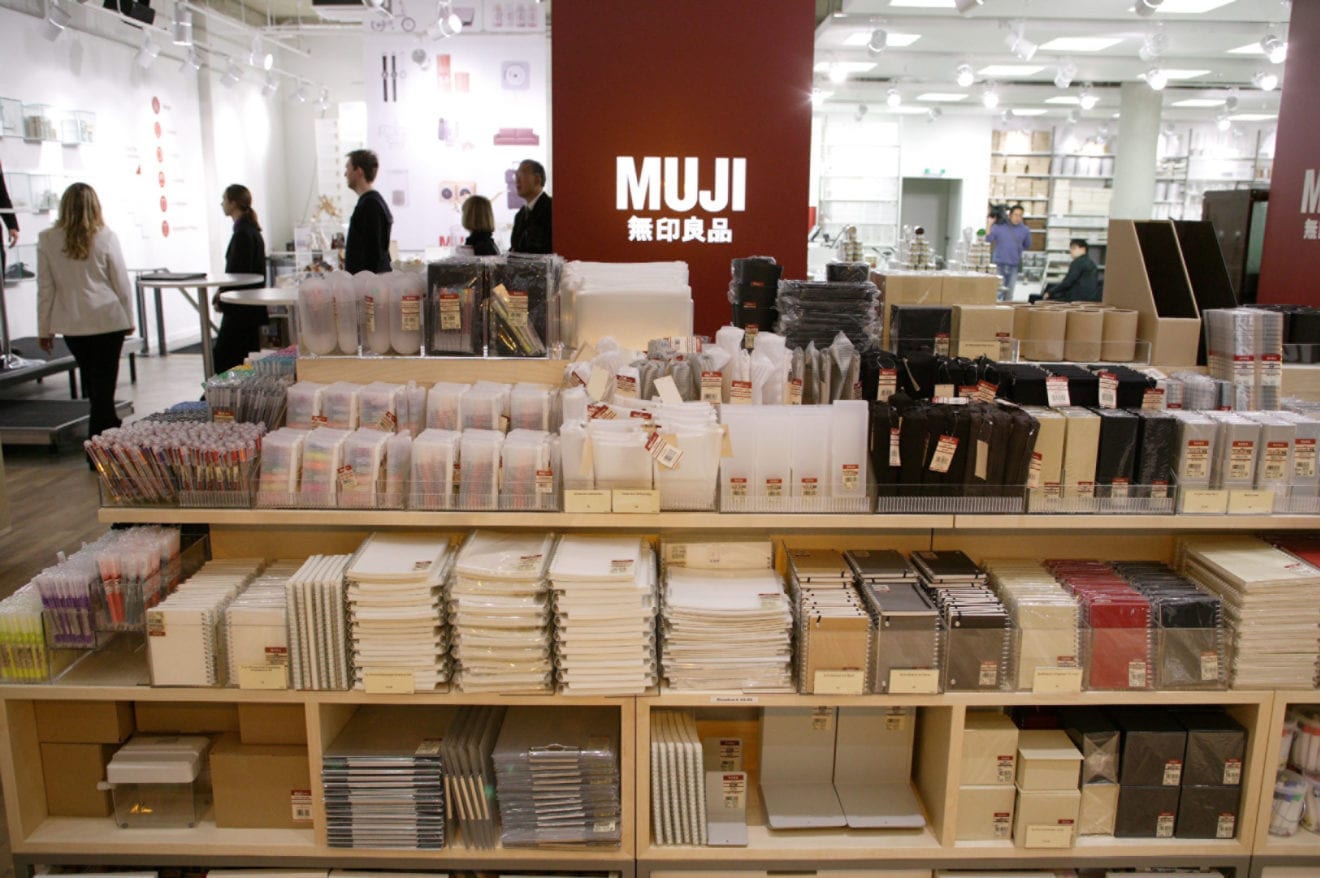
    Muji will launch an online flagship store on JD.com, and promote the partnership with posters in 231 of its stores throughout China, it announced.

    This will make it easier for online Chinese consumers to find and purchase Muji’s full range of Japanese product categories, including clothing, household items, home furnishing and even food.

    “We are very excited to announce the opening of our store in JD.com, following the cooperation with JD Logistics, which began in September 2017,” said Naoyuki Yamamoto, president of Muji  Shanghai. “We look forward to bringing our vision of a simple, pleasant life to people, as well as contributing to society, through this partnership with JD.”

    The e-commerce giant said Muji is a “hugely popular brand” and that the launch on its platform will take it to new levels. “Known worldwide for its simple aesthetic and well-designed products, MUJI has garnered a loyal fanbase of quality-conscious customers. With our commitment to delivering authentic products with world-class service, JD is the perfect home for Muji’s premium wares.”

    The brands plan to deepen their link during the second half of the year with a more comprehensive omnichannel integration covering membership programs, products and more.

    Muji sells low-cost, high-quality items that are renowned for their clean lines and minimalist design.

  • Tmall and Intersport launch interactive megastore in Beijing

    Tmall and Intersport launch interactive megastore in Beijing

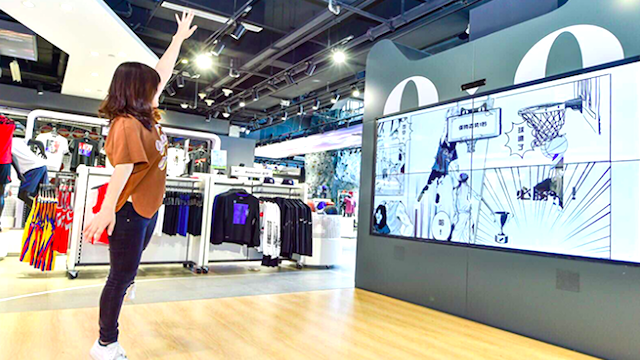
    Tmall and Intersport unveiled a co-branded store in Beijing yesterday, complete with interactive features that offer consumers in China a more engaging and informative shopping experience.

    Under the new name “Tmall x Intersport,” the two-story, 1300sqm space that sits in Beijing’s tourist hotspot Qianmen has been transformed into a futuristic megastore. The revamp underscores that more global brands are recognising the power of New Retail—tech-driven retail model pioneered by Alibaba that captures the best of online and offline shopping experiences.

    “We believe Tmall is the ideal partner in our endeavour to further our engagement with Chinese consumers by providing them the best-quality and most-fashionable sports goods in the market,” said Victor Duran, CEO of the Switzerland-based sportsgoods retailer Intersport.

    Established in 1968, Intersport has more than 5000 branches in 44 countries. It sells sports brands such as Nike, Puma, Reebok, Adidas, North Face and Dynatour. Intersport made its foray into China in 2013 and opened its Tmall flagship store in September 2016.

    “These new in-store technologies provide consumers in China an unprecedented shopping experience that is both entertaining and educational so they can have fun while shopping for the exact products that meet their unique demand,” the CEO said.

    Currently, Intersport has 24 stores in China with the goal of expanding to at least 100 – a combination of larger flagship stores in major cities and smaller specialty stores – during the next couple of years. “It makes sense to have Tmall technologies to be the link to connect all the stores together,” Duran said.

    New Retail is the new solution

    Many industry watchers have pointed to New Retail as the solution for brick-and-mortar retailers feeling the squeeze from e-commerce. By harnessing engaging technologies, store owners can attract more customers through both online and offline channels. Moreover, these technologies can generate insights to help businesses gain a more-precise view of China’s market trends and customer preferences.

    “We are excited to see an extensive range of Tmall’s New Retail technologies and features under one roof in Intersport’s store,” said Jessica Liu, president of Tmall Fashion and Luxury. “What’s even more encouraging is to see our merchants embracing the New Retail concept and exploring its potential. When customers try out these features firsthand, we are confident that they will see the convergence of online and offline shopping as the future of retail.”

    The Tmall and Intersport store is the latest example of how Alibaba’s New Retail technology is helping brands build up and reimagine their business in China since the push began in late 2015. To date, Tmall Fashion has collaborated with over 400 brands, including top names such as Burberry and Zara, and upgraded more than 50,000 storefronts all over China. Liu said the goal is to increase the collaboration to 1000 brands and help digitise 200,000 storefronts nationwide in the next year.

    Educate your customers

    At the grand reopening yesterday, customers were welcomed by an array of state-of-the-art technologies and augmented reality-powered interactive games. For example, the Smart Shelf and the Smart Shoe Mirror can instantly tell customers all the information they need about a certain shoe they pull from the shelf. This way, the customer can make a more-informed decision on whether or not the products fit their individual demands.

    Education on how a product suits an individual’s needs is an especially crucial element in the sportswear and gear market in China, said Tom Birtwhistle, director of China digital strategy at PricewaterhouseCoopers.

    With a government-led mandate to become more physically fit, and as China gears up to host the 2020 Summer Olympic and the 2022 Asia Games, Chinese customers are becoming more interested in adopting an active lifestyle, he added.

    “Chinese consumers are massively curious in learning about new brands and products. For new sports they want to be educated on the activity and understand how technical features can enhance their performance,” said Birtwhistle.

    His research indicates growth in the athletic fashion category is outpacing China’s overall fashion market. The segment is forecast to see 9 per cent growth annually in sales between 2017 to 2020, versus just 4 per cent for men’s and women’s fashion.

    At the smart megastore, shoppers can also get wardrobe tips from an AI Shopping Assistant – an interactive mirror that recommends related accessories or items that complement the article of clothing they are trying on.

    Can’t find what you want in the store? No problem. The megastore is equipped with Cloud Shelf technology, a virtual shelf that quadruples the volume and production selection customers can choose by simply tapping on the touchscreens, according to Tmall.

    A 24-hour interactive window display at the store’s main entrance means people can shop at the megastore around the clock. By using motion-sensor technology, the giant screen wall can distinguish the gender and approximate age of the passersby and recommend the best type of shoes for that person.

    Those who don’t want to lug heavy shopping bags or bulky shoe boxes around the streets of Beijing can opt to have their purchases delivered to a designated address anywhere in the country. Cainiao, Alibaba’s logistics service, can make the delivery in as quickly as two hours for locations within 5km of the store. Next-day delivery is also available for locations outside of Beijing.

    By scanning the QR code of a product on their phones, customers of the Tmall and Intersport store can also place the products in their Virtual Shopping Bag, so they can still buy the item online after they leave the store.

  • China Tech Giants Bet on Untangling Logistics of Indonesian E-Commerce

    China Tech Giants Bet on Untangling Logistics of Indonesian E-Commerce

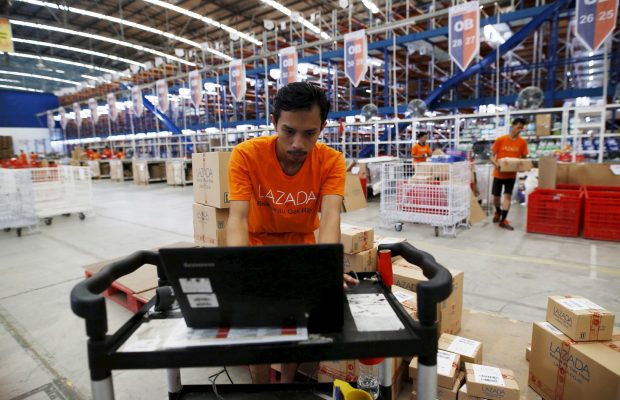
    In a warehouse on the outskirts of Indonesia’s capital, supervisors at e-commerce company Lazada use bikes or electric scooters to zip around a floor the size of four soccer fields, where up to 3,000 staff pack and dispatch goods around the clock.

    The warehouse is one of five that Lazada has opened across Indonesia to cut costs and expand its reach in an archipelago whose 17,000 islands are sprinkled across an area bigger than the European Union.

    Chinese tech firms, including Lazada’s top investor, Alibaba Group Holding, have poured at least $6 billion into nearly every aspect of Indonesian e-commerce.

    Lazada uses Alibaba’s inventory management systems and has tied up with ride-hailing companies, often using their motorbikes to deliver goods in a country with creaking infrastructure and traffic-clogged cities.

    The payoff could be huge. It is a market forecast to grow from about $7 billion last year to $63 billion by 2027, according to Morgan Stanley.

    “Indonesia, both in terms of the customers and behaviour, is a very unique challenge and we need to adapt,” Florian Holm, co-chief executive at Lazada Indonesia said.

    Lazada and Tokopedia, in which Alibaba is also an investor, dominate Indonesia in customer traffic, with more than 117 million monthly website visits each, according to data from e-commerce aggregator iPrice.

    Alibaba doubled its investment in loss-making Lazada to $4 billion in April, underscoring its global ambition to secure a bigger share of the e-commerce market.

    Between the investment and the rewards, however, lie enormous complexities.

    The World Bank has said logistical costs swallow up around a quarter of Indonesia’s gross domestic product, citing bottlenecks in supply chains, long dwelling times in ports and lengthy trade clearances.

    Lazada has opened warehouses in places like Balikpapan, on the coast of Borneo, to avoid hauling everything from Jakarta. Holm said that had in some cases reduced shipping costs by 90 percent. Competitive pressure is growing. Another Chinese heavyweight, JD.com, arrived in Indonesia in 2016. And the US giant Amazon, which opened a warehouse in Singapore last year, may be prepared to dip a toe into the Indonesian market soon.

    Chinese Influence

    Indonesia’s e-commerce sales are set to rise from 3 percent of retail activity now to 19 percent by 2027, Morgan Stanley estimates. The same report said there were 159 million smartphones in Indonesia at the end of 2016, a number that could rise to 275 million by 2021.

    Indonesia’s young population and room for improvement in transportation and communications add to the prospects for growth, the bank said.

    That has attracted other Chinese companies. Tencent Holdings, which owns regional e-commerce player SEA, has entered the fray.

    Tencent and JD.com have stakes in Indonesia’s ride-hailing firm Go-Jek, while JD.com has invested in online travel company Traveloka.

    But Usman Akhtar, a partner at Bain & Co in Jakarta, said Indonesian companies such as Blibli, backed by a unit of the Djarum group, remain a force.

    “I would not characterize Indonesia as turning into a replica of China’s e-commerce market, at least not yet,” said Usman, referring to how JD.com and Alibaba dominate in China. Kusumo Martanto, who heads Blibli, said that the company had seven warehouses in Indonesia with seven more planned, and said it was important for local e-commerce companies to compete against Chinese players.

    Alibaba founder Jack Ma is on an Indonesian government steering committee for e-commerce, advising on areas such as tax, cyber security and human resources.

    Indonesia’s communications minister, Rudiantara, said there was no conflict of interest in Ma’s role, describing him as a “guru” who could help sell the country’s potential.

    But some policies seem to be turning toward Ma’s home turf.

    Indonesia, which is trying to tackle a shortage of talent in the digital sector, dropped sponsorships for 20 students to study in places like Australia and the United States.

    Instead, 10 students will go to India and 10 to China to study this year “because the future of the digital economy is in China and India,” said the minister, who uses one name.

    Eying Amazon

    Caterine, a 30-year-old housewife who lives west of Jakarta, used to shop in conventional stores once a week, but after her baby was born six months ago, she has been shopping online two to three times a week for convenience.

    “I prefer online shopping because it is quick. I can just click and click and the goods will arrive,” she said, adding she mostly used Shopee and Tokopedia for goods such as diapers and clothing.

    Morgan Stanley said delivery times of all types across Indonesia are down to about 3 days from 10 days, while deliveries in big cities can take 24 hours or less.

    While in urban areas delivery times have greatly improved, other parts of Indonesia’s e-commerce supply chain are still inefficient, said Willson Cuaca, co-founder of East Ventures, a tech investment fund.

    “To send goods from point A to B, the logistics company needs at least two modes of transport,” he said, referring to the complications of operating across so many islands.

    Amazon, by contrast, prefers to control its own supply chains from start to finish. But entering a market like Indonesia could require it to revisit that strategy.

    Amazon Singapore did not respond to a request for comment on whether it had plans for Indonesia.

    Much of the U.S. giant’s international focus has been on developing its business in India, even though some view its entry into Singapore last year as a stepping stone for expansion in the region.

    “At this moment, I believe it is trying to test the market, by selling products through third-party sellers,” said Daniel Tumiwa of the Indonesian e-commerce Association.

    Zhang Li, who heads JD.com’s Indonesian joint venture with Provident Capital JD.ID, was not overly concerned about competition from the likes of Amazon.

    “E-commerce is a global and borderless business, so we have to prepare and do continuous improvement to make our customers happy,” Zhang said.

  • E-commerce giants struggle to find profit in Vietnamese market

    E-commerce giants struggle to find profit in Vietnamese market

    Some companies have been forced to shut down due to prolonged losses. Multiple online retailers in Vietnam have been struggling to gain profits for years due to high operational costs in a competitive market.

    Tiki.vn, one of the most popular e-commerce firms in Vietnam, recently reported a VND322 billion ($14 million) loss in two years.

    The loss in 2017 of the online retailer, which sells a variety of products including clothes, household items and electronic devices, has tripled its charter capital and is seven times its loss in 2016.

    Tiki.vn is not the only e-commerce company in Vietnam that has been suffering from losses in recent years.

    Before being acquired by the Chinese giant retailer Alibaba in 2016, Lazada Group said that it has lost $334 million in 2015 the Southeast Asia market, including Vietnam. This lost is double what it posted in 2014, according to TechCrunch.

    Some local e-commerce companies like Lingo.vn, Deca.vn and Beyeu.com have also been forced to shut down due to prolonged losses.

    Challenges for online retailers

    According to experts, e-commerce is an industry which requires a long time to recover capital and gain profit, therefore the losses of these giants in the Vietnamese market is understandable. Big brands in the field such as U.S.-based Amazon and Alibaba has to go for 10 years before having profit.

    Operating cost, especially logistics costs, is one of the main reasons for the losses. As large e-commerce firms often require massive warehouses covering thousands of square meters and hundreds of staff to work in them, logistics costs account for 60-70 percent of online retailers’ revenues, said trade expert Vu Vinh Phu.

    This enormous cost can be seen from the case of Tiki and Lazada Vietnam, each has a storage of over 4,000 square meters (about 1 acres) with 300 staff in Ho Chi Minh City. It is estimated that the operating cost of one of these storages is VND1 billion (about $44,000) a month. With three warehouses in operation, the two companies spend about $2 million a year, according to local media.

    In addition, marketing also plays a part in the high costs of e-commerce companies in Vietnam. When entering the market, Lazada Vietnam invested heavily in television and online advertising to attract users and gain market share. This company used to spend up to $2 million per month for advertising programs, local media said.

    The popularity of shopping on social networks such as Facebook or Zalo is also creating challenges for big online retailers. “There is an unbalanced competition between e-commerce giants such as Lazada, Tiki and Shopee with social network sellers,” said Pham Thai Binh, head of retails at property consultancy Savills Ho Chi Minh City.

    As businesses on social networks don’t have to pay high costs of investment, item price range is lower which in turn attracts the majority of Vietnamese people, Binh said. On the other hand, famous brands have to invest a great deal in terms of staff, operating system and other relating costs, he added.

    As Vietnamese has a habit of physically “touching” a product, they often surf the Internet for prices without actually ordering from the online retailers. The lack of information and customer service tools also plays apart in the problem.

    To compete in the market, retail giants in Vietnam are under pressure of price competition which leads to a loss of profit. Under pressure from investors, many businesses sometimes accept to sell 10 or 20 percent below market price, local media said.

    Potential market

    Despite those difficulties, experts believe that there is still great potential for e-commerce in Vietnam in the future.

    In a survey of about 1,000 participants conducted by CBRE Vietnam, a commercial real estate services and investment firm, 25 percent said that they will reduce the frequency of shopping at stores. About half of participants said that they will shop online more in the future.

    In the annual survey of Vietnam’s Business Studies and Assistance Center (BSA), the number of people shopping online has tripled from 0.9 percent in last year to 2.7 this year. As young people start to participate more in online shopping, e-commerce is a potential area for retailers to exploit, which will bring many benefits to customers, said a representative of BSA.

    E-commerce is a fast growing industry as customers’ behavior change every day, said Tran Tuan Anh, CEO of the online retailer Shopee Vietnam. “This year will be the year of e-commerce as Vietnamese people are now very familiar with online shopping,” he said.

    Price will continue to be an important factor for Vietnamese customers, but product quality and service are becoming more important, he said. As more and more consumers are aware of e-commerce, the brand, service, technology and value added services such as shipping and payment will need to be improved, Anh said.

    Tran Ngoc Thai Son, CEO of Tiki, also believes that the transition from traditional to online shopping is inevitable. E-commerce, now accounts for 3 percent of the $90-billion revenue of Vietnamese retail market, will grow to a 5 or 10 percent segment in the future, Son said. However, online shopping will not be able to replace brick and mortar businesses, he said.

    “The growth rate of Vietnam’s e-commerce market is estimated at about 35 percent, which is 2.5 times higher than Japan,” said industry expert Duc Tam at the Vietnam Online Business Forum 2017.

    According to one estimate, about 30 percent of the population will be buying goods and services over the internet in 2020, with each shopper spending an average of $350 per year.

  • China’s online shoppers expected to spend US$1 trillion in purchases

    China’s online shoppers expected to spend US$1 trillion in purchases

    China has more than 500 million online shoppers whose spending is set to exceed US$1 trillion this year.

    Of this, cross-border e-commerce purchases are about to reach $125 billion, according to new research by consultancy Frost & Sullivan. In partnership with China retail strategy expert Azoya Consulting, it has released the report The Cross-border e-Commerce (haitao) Opportunity in China.

    This includes research among more than 1000 online shoppers in China, together with findings from interviews with more than 100 international retailers and brand owners.

    Frost & Sullivan Asia-Pacific consulting director Mark Dougan says the average online shopper in China spends almost $850 a year on purchases from overseas retailers. “Chinese consumers are significantly motivated by the perceived higher quality overseas retailers offer, while the risk of buying fake goods is lower.”

    The research also shows that cross-border online shopping is growing strongly, with 63 per cent of Chinese shoppers planning to increase their spending this year. Fashion is the top category bought from overseas retailers (22 per cent of online shoppers in the past month), beauty and cosmetics (20 per cent) and mother and baby (15 per cent).

    As a country of origin, Japan gains the most confidence from Chinese online shoppers (72 per cent), followed by South Korea (60 per cent).

    Women are higher cross-border online shoppers than men, spending $976 on average annually, which is 20 per cent more than men. Men seek fast delivery, while women seek Chinese-language customer support. Women are more likely to use an overseas supplier’s standalone direct-to-consumer website (21 vs. 18 per cent of men).

    More than 80 per cent of global retailers see China as an attractive market opportunity yet only 30 per cent are satisfied with their current level of sales in China. This is particularly the case for those using Chinese marketplaces as their online channel, where only 21 per cent of retailers are satisfied with their sales levels.

    “To build a brand that Chinese consumers trust, that commands a healthy profit margin and repeat buyers, retailers need to approach customers through multiple touchpoints,” says Azoya International co-founder Don Zhao.

  • Hong Kong online shoppers using more tablets

    Hong Kong online shoppers using more tablets

    While Hong Kong’s e-commerce market accounts for less than 5 per cent of total retail sales, the behaviour of those shopping online is changing.

    According to data presented by Nielsen at yesterday’s 2018 Hong Kong Retail Summit, organised by the HKRMA, home computers are now used by fewer than half of Hong Kong online shoppers – 48 per cent last year, down 8 per cent from 2016. They are shifting to mobile phones, where 25 per cent shop (up 8 per cent in a year) and tablets, used by 11 per cent, (up 2 per cent). And 13 per cent of Hong Kong online shoppers say they used work computers.

    Michael Lee, MD at Nielsen Hong Kong and Macau, who moderated a panel discussion at the event, said expanding availability of eWallets was making online shopping easy and secure in the territory.

    “The beauty of e-commerce is convenience, so easy checkout method via eWallet and flexible pick up and return policies are a key to winning.”

    Almost half of Hong Kong consumers (46 per cent) now use an eWallet, with the number of active accounts rising 15.4 per cent in the last quarter of 2017 compared with a year earlier. The value of eWallet transactions in the last quarter of 2017 rose 27.7 per cent, “a significant indication of the growth of the ecommerce market,” said Lee.

    Buying on impulse

    Unlike offline shopping, consumers usually spend impulsively online.

    “They are usually triggered to buy online for conditional free shipping/return policy, promotions and discounts as well as easy checkout methods. Among all impulsive purchase categories, the top products are all food-related, the frequently purchased categories being snacks, breakfast cereals, bottled water, instant noodles/pasta/udon as well as ready-to-drink beverages.”

    But, he said, despite the advance in online shopping, consumers are still hesitant about shopping online, nursing concerns about delivery logistics for perishable items, their desire to inspect goods before they buy and their need for convenience and the wish to follow habits.

    “It is important for online retailers to remove the barriers to make online shopping more welcoming and promising for shoppers by providing click and collect, return policies, showroom and cash on delivery as well as unique product range, and purchase incentives,” he said.

    “Because no physical product is in hand in the virtual world, there is nothing more important than creating a better customer experience to win over potential customers. It is therefore crucial for marketers to offer an unmatched online shopping experience by creating a sense of value for money, providing a flexible shopping platform and delivery options, informing customers fully about return policies and making information freely available to customers and giving them the chance to talk about their personal experience.

    Experience is essential

    “Consumer experience is essential,” Lee said. “With online shopping become more popular, it is important for industry players to identify the key ways to win in the ecommerce market in Hong Kong. To stand out in this highly competitive market it is important to provide unique cross-screen experience as well as unique product range for consumers.”

    Meanwhile, Hong Kong online shoppers are getting older. In contrast with just a few years ago, e-commerce is no longer the preserve of the young.

    The Nielsen survey revealed that e-commerce is now relevant to people of all demographics. About 80 per cent of males and females have tried online shopping last year.

    While consumers aged 22-29 and 30-39 represent the most frequent shoppers, 67 per cent of older consumers (aged 50-64) said they had bought online last year.

  • Google explains Hong Kong’s E-commerce Challenges

    Google explains Hong Kong’s E-commerce Challenges

    Mindset and talent are the two factors holding back the Hong Kong e-commerce sector, according to a senior Google executive.

    Speaking at the sell-out HKRMA 2018 Hong Kong Retail Summit this morning, Leonie Valentine, MD sales and operations at Google Hong Kong, said that compared with other major cities around the world, Hong Kong remains in the early stages of digital transformation.

    Here, where retail is a key driver of the economy, e-commerce accounts for just 4.68 per cent of sales.

    Yet across Asia-Pacific, 17.6 per cent of retail sales will be online this year.

    Of the small percentage of retail sales conducted online in Hong Kong, just 37 per cent is on mobile (m-commerce). In the mainland, that figure is 66 per cent and China now accounts for two-thirds of global m-commerce sales, driven by its mobile-first audience. Sales by m-commerce in China are expected to triple by 2021.

    Valentine dismissed the ubiquitous argument that the city’s dense urban layout is the reason Hong Kong e-commerce penetration is so low.

    “It’s the same argument I heard in 2011 when I arrived in Hong Kong, when I questioned why I couldn’t buy a mobile phone or groceries online here. ‘Oh, there’s no need,’ was the reply. ‘There’s a shop on every corner in Hong Kong. No one shops online.’

    “Should I tell that to the millennials in my team? They were  already buying dresses from Korea, shoes from Taobao and books from Amazon in 2011. Yet we really didn’t have as much of a digital industry here then,” said Valentine.

    “So while digital investments by some retailers have lagged behind, most consumers have actually embraced online shopping.”

    Last year, 58 per cent of non grocery sales were influenced by a digital touchpoint, compared with just 13 per cent in 2004.

    “Today’s consumer wants to compare products, features, price, benefits, etc, before they start their purchase process. Eighty-one per cent of the population is connected to the internet. Ninety-eight per cent of smartphone users go online at least once a day. So Hong Kong should rank really highly in digital integration.”

    But it doesn’t.

    “There are two things that hold back Hong Kong. Mindset – in terms of the willingness to embrace new things – and talent. One of the things we really need in Hong Kong is to have a mindset that change is good, that embracing digital is not about distrusting what you have today; it is about complementing that for the benefit of your customers.”

    Those customers are already online, said Valentine. “Everybody here is online: 98 per cent of smart phone users – and that’s everybody – are online at least once a day, from an eight-year old to an 80-year old. And yet where are we? Where are our government services today… on mobile? Where is the ability for you to be able to easily find what you are looking for online?

    “I want to buy a new couch. I can’t find one. I’m searching and I have money to spend and I cannot find a retailer in Hong Kong easily on mobile or on my desktop that has the product that I want. I find that really interesting in a city that is as modern and connected as Hong Kong.”

    Those are her two reasons for Hong Kong e-commerce lagging the rest of the region, she said. “It is very much about the mindset and it’s about having the right talent to drive a lot of the adoption of these ideas.”

    “Take a risk”

    Another speaker, Yann Bozec, president and CEO of Coach China, echoed Valentine’s comments on the mindset.

    “I love to be surrounded by millennials and listen to what they do and how they do it. Even further I am learning a lot from my eight year old daughter about digital [technology]. I think it is about listening and looking at how people, especially younger people, are engaging digitally.

    “[It’s about] being inspired by them and not being shy to take risks and try new things, including new applications.”

    Bozec said besides established giants like Google, a lot of smaller, upcoming applications are making their way onto the market.

    “Businesses who are early adopters and taking some risks can really take a lot of benefits.”

    Retail “a pillar” of Hong Kong

    The 2018 Hong Kong Retail Summit was opened by the SAR’s chief executive Carrie Lam, who congratulated the HKRMA on its 35th anniversary.

    “The retail industry is an important pillar of the Hong Kong economy, contributing about 4 per cent of our GDP and employing some 270,000 people. I am pleased to note that retail sales last year enjoyed moderate growth in both value and volume… with the forecast of a sales increase this year in the 3 to 4 per cent range.”

  • Omnichannel Retail is Coming to Hong Kong

    Omnichannel Retail is Coming to Hong Kong

    The future of retail is about to be delivered to Hong Kong’s commercial developers, and it’s coming via the Internet, according to a report released today by property consultancy JLL.

    The company’s report on the city’s shopping scene, “Reimagining Retail – Bricks, Mortar and the Evolution of E-Commerce in Hong Kong,” forecasts that the value of Internet retail sales in the Asian financial hub will reach US$3.7 billion by 2021, nearly double the US$1.8 billion transacted in 2016.

    However, although government statistics forecast that e-commerce in Hong Kong will have grown at an average of more than 16 percent per year from 2016 through 2021, the burgeoning online sector will become a component in retailer strategies, rather than a replacement for in-store sales, according to the company’s analysts.

    Ecommerce Growth May Not Lead to Lower Rents

    “As the US and mainland China markets have seen an increasing number of vacant shops, together with the continuous growth in online sales, some of our clients start to worry that the demand for brick and mortar stores will diminish once Hong Kong’s online retail takes off,” said Denis Ma, Head of Research at JLL in a press conference held in Hong Kong.

    According to the report, some 90 percent of the city’s landlords believe online sales will grow over the next five years. However, despite a spate of cut-rate lease deals in a number of the city’s top retail locations, that may not translate into lower rents at Hong Kong’s malls.

    “We don’t see the growth in online retail to be a significant factor in influencing rents in the short term. Factors like the number of tourists coming to Hong Kong and unemployment rate are more relevant to the rental level,” said Eric Cheng, Local Director of Retail at JLL.

    Some of Hong Kong’s busiest shopping districts have witnessed sharp rent cuts during the past few months. In March, fashion brand Twist leased a two-storey shop at 24-26 East Point Road in prime shopping district Causeway Bay for 56 percent less than the HK$1.1 million monthly rent that the previous tenant had been paying.

    On Russell Street in the same district, which formerly ranked as the most expensive retail strip in the world, Swatch Group last month secured a 33 percent cut in it’s HK$1 milliion per month rent when it renewed a lease originally signed in 2015.

    HK Retail Goes Omnichannel

    While online retail may not mean an end to traditional shopping, landlords will have to be ready to accommodate retailers that are selling to consumers who use smartphones and desktops for their shopping as much as they rely on strolls through the mall.

    “The future of the retail market of Hong Kong lies in its evolution into omni-channel retailing,” Ma said at a media briefing on the report. “From our perspective, the growing popularity of mobile payments and wider adoption of big data analytics will move us in this direction, as well as enhancing the overall shopping experience of consumers. This certainly requires retailers and landlords, such as mall operators, to invest more heavily in technology.”

    Ma predicts that online retailers will look into establishing brick and mortar stores while existing physical retailers will open up online platforms in the future. “As the rental market is expected to bottom out within this year, our advice to retailers looking to move into bricks and mortar is that they should act fast. Because in a few months’ time, there will be fewer vacant shops available,” said Ma.

    Last year, Chinese phone maker Xiaomi opened two physical showrooms in Hong Kong after the tech unicorns sales had grown 40 percent in the city as of October last year. The Chinese firm originally adopted an online-only strategy by selling its products directly to customers online before it started opening brick and mortar stores in mainland China in 2015.

    Small Living Space Drives People to Malls

    Hong Kong’s Internet retail grew at a compound annual growth rate of 15 percent from 2011 to 2016, and is expected to grow by 16.1 percent in the next five years, data from the Hong Kong Trade Development Council shows. While the growth rate seems steady, the online retail market in the city remains underdeveloped. Online shopping will account for just 6.1 percent of the city’s total retail sales in 2021, well below the 17.3 percent average in Asia.

    The relatively slow expansion of the Hong Kong’s online retail industry is attributed in part to the city’s famously tight living quarters. With 80 percent of the existing private homes below 70 square metres (753 square feet) in area, people tend to spend their leisure time outside of their homes, often in malls, according to Ma.

    A high density of retail shops, poorly designed online platforms and an ageing population also hindered the development of online retail in the city, Ma added.

  • Alibaba Eats up Daraz

    Alibaba Eats up Daraz

    Alibaba Group has acquired south Asian e-commerce platform Daraz for an undisclosed sum.

    This will make Daraz Group’s platform a wholly owned unit of the Chinese e-commerce provider, which also runs the Taobao and Tmall platforms.

    “Together with Daraz, we can empower entrepreneurs to better serve consumers in the region through our technology and expertise,” says Alibaba CEO Daniel Zhang.

    Founded in 2012, Darez has grown throughout Pakistan, Bangladesh, Sri Lanka, Myanmar and Nepal. It has 30,000 sellers and 500 brands on its platform, with 2 million products available to its 5 million customers. Its product offerings range across consumer electronics, household goods, beauty, fashion, sports equipment and groceries. It also offers multiple payment options, including COD.

    Daraz Co-CEO Jonathan Doerr says its acquisition by Alibaba will help drive further growth in its key markets, home to 460 million people, 60 per of which are 35 years and younger.

    Daraz will continue to run under its brand name after the transaction.

  • Amazon looks to UK grocery acquisition

    Amazon looks to UK grocery acquisition

    Amazon’s aim to conquer retail’s largest category, grocery, through the acquisition of bricks-and-mortar supermarkets has been further illuminated by its reported attempt to initiate takeover talks with the upmarket chain, Waitrose, in the UK.

    A recent report in The Sunday Times has suggested that one of Amazon’s most senior executives in Britain, vice president of special projects Ajay Kavan, had several “enormously informal” conversations with a director of the John Lewis Partnership, Waitrose’s parent company, about a possible deal last November. However, a request for a formal meeting was apparently shut down by the board.

    Citing an unnamed source, The Sunday Times reported that Amazon’s interest in the 350-store supermarket chain was known to the partnership’s executive team, including Waitrose’s boss Rob Collins, group finance director Patrick Lewis and head of John Lewis department stores Paula Nickolds, but chairman of the board Sir Charlie Mayfield denied the report.

    “These times are ripe for speculation, but there has been no approach to the partnership by Amazon regarding Waitrose, and nor would I expect there to be,” Mayfield told.

    Analysts have speculated that Amazon could buy a British grocery chain since it launched its online grocery delivery service, Amazon Fresh, in the market two years ago. Morrisons, Sainsbury’s and Waitrose reportedly were all considered potential targets.

    The recent £14 billion merger between Sainsbury’s and Asda has been cast as a move in part to ward off Amazon’s broader move into grocery, which many see as ramping up since the company’s US$13.7 billion acquisition of Whole Foods last summer.

    Since taking over Whole Foods’ 470 stores in the US, Canada and UK, Amazon has cut prices on staples and rolled out free two-hour delivery for online grocery orders in several cities across the US.

  • Vietnam’s e-commerce market sees many new players

    Vietnam’s e-commerce market sees many new players

    Vietnam is among the fastest growing commerce markets. E-commerce makes up 0.5 percent of value of the FMCG (fast moving consumer goods) sector in the four largest cities, while the number of online shoppers increased from 5.4 percent to 8.8 percent in urban areas within one year. The value of one online shopping cart triples the value of a traditional shopping cart.

    The recent report of Kantar Worldpanel says that Vietnam’s e-commerce activities grew by 69 percent in 2017. Meanwhile, Frost & Sullivan predicted that Vietnam’s market value would rise from $1.7 billion in 2016 to $3.7 billion in 2030, or an annual growth rate of 45 percent.

    Chinese firms

    Analysts warned that Chinese online retailers are penetrating the Vietnamese market, putting pressure on domestically made products.

    JD earlier this year announced investment in Tiki to become one of the biggest shareholder of the e-commerce firm. While JD declined to reveal the amount of capital, Tiki has said that it had raised $50 million worth of funds to expand its business.

    Prior to that, Alibaba launched in Vietnam in April 2016 after it wrapped up the takeover of Lazada in SE Asia.

    Headquartered in Singapore, Shopee is still listed among Chinese firms in Vietnam as 40 percent of Shopee shares are held by Tencent, a Chinese technology group.

    All three Chinese ecommerce markets entered the Vietnamese market through mergers and acquisitions.

    According to Google, Lazada, Shopee and Tiki are three out of four most searched e-commerce websites in Vietnam.

    Chinese not the only foreign players

    However, with investors from the US and Japan entering the field recently, the worry about the dominance of Chinese firms has been lifted.

    Most recently, Japanese Scroll acquired 26.9 percent of shares of Cat Dong, the company that owns cungmua.com, nhommua.com and Shipto.vn. This is the second time that Cat Dong transferred capital during its 8-year operation.

    Prior to that, Cat Dong received investment from ACA Investment, a Japanese ifund belonging to Sumitomo which once poured money into Bibomart and Son Kim Land.

    In early March, the e-commerce market welcomed Amazon. The US giant, instead of making investment deals, decided to join hands with the Vietnam E-commerce Association. With the cooperation, Amazon wants to help Vietnamese businesses export their products on the Amazon platform.

  • Vietnam’s e-commerce companies face logistics and price challenges

    Vietnam’s e-commerce companies face logistics and price challenges

    Shipping costs are forcing prices up and driving potential customers away. Vietnam’s e-commerce industry is facing challenges due to poor logistics and consumer price-sensitivity.

    “The challenge for commerce in Southeast Asia in general, and Vietnam in particular, is logistics,” said Vu Duc Thinh, country manager for the logistics arm of Lazada, a Singapore-based e-commerce company which also operates in Vietnam.

    Vietnam’s logistics costs accounted for 20.9 percent of GDP in 2016, according to the World Bank, and were higher than regional peers China, Thailand and Japan.

    Inflated logistics costs are putting a strain on local businesses and need to be cut in order to make firms more competitive, said Prime Minister Nguyen Xuan Phuc during a conference held by the Ministry of Industry and Trade in Hanoi earlier this month.

    The reason for this is the cost of transporting goods via land, Phuc said. In Vietnam, transportation via land accounts for 59 percent of all logistics costs, which is 9.7 times more than via water and 2.5 times more than by train, said Deputy Minister Nguyen Van Cong during the conference.

    Insufficient infrastructure development is to blame for the disparity, with rail links lacking connections to storage depots, and waterway transport taking from 3-5 times longer than by land, according to experts.

    Another factor hindering the advancement of Vietnamese e-commerce companies is consumer price-sensitivity, which is proving to be a challenge when it comes to taking into account shipping fees when companies set their prices.

    “If Vietnamese e-commerce companies want to win customers here, they have to come up with the best prices,” Huynh Mai, 25, a Vietnamese online shopper.

    Online sales in Vietnam have expanded rapidly in recent years, currently accounting for 3.39 percent of the country’s retail market. The total retail market grew 10.9 percent last year to $173.27 billion, as reported by local media.

    The World Bank forecasts that Vietnam’s $200 billion economy is likely to grow to a trillion dollars by 2035. More than half of its population, compared with only 11 percent today, is expected to join the ranks of the global middle class with consumption of $15 a day or more.

    According to one estimate, about 30 percent of the population will be buying goods and services over the internet in 2020, with each shopper spending an average of $350 per year.

  • Fashion reigns as Vietnam’s online shopping queen

    Fashion reigns as Vietnam’s online shopping queen

    With busy schedules occupying people’s lives, e-commerce sites are catching up with the rising demand. With e-commerce booming in Vietnam, shopaholics have been switching from walking from store to store to just sitting back and relaxing with their computers and phones to choose their favorite fashion items.

    Despite spending almost ten hours per day at work, Ha, an office worker in Binh Thanh District, HCMC, can still find the time to buy herself new clothes every month.

    Her computer is bombarded by advertisements for new fashion items that stream from the social media channel she uses to the news sites she usually follows since she searched online for a new dress.

    “I don’t have much free time to stop by every store to find the clothes I want, but I can easily do it online. Of course there are risks buying clothes online, but if I order products from shop and receive exactly what I expected, then I go back to that shop,” she said.

    The trend has become so popular that many Vietnamese women say they spend time almost every night watching online retailers livestreaming their products on Facebook.

    A survey released in October last year by Vietnamese market research firm Q&Me showed fashion standing on top of all products purchased online in Vietnam, followed by IT products, cosmetics, food and beverages, and books and stationary.

    Out of a pool of 966 respondents aged between 18 and 39, 73 percent said they went online to buy fashion products, the survey found.

    Tapping into this trend in Vietnam, online shopping platform Lazada has launched a partnership with Au Chau Fashion and Cosmetic Co. Ltd (ACFC), a distributor of world-leading brands such as Calvin Klein Jeans, Levi’s, Dune and Diesel.

    Lazada said the move expresses its ambition to boost the development of its clothing and cosmetics sector, and its target to become the leader in Vietnam’s e-commerce market by 2020.

    “Last year, Lazada’s revenue from fashion products doubled, and the number of fashion providers registering on its platform rose 4.5 times,” said Nguyen Thanh Thuy, director of brand marketing solutions at Lazada Vietnam.

    Vietnam’s e-commerce market grew by 25 percent last year and is expected to maintain its growth in the next three years, according to the Vietnam E-Commerce Association.

    Revenue from online retail is forecast to hit $10 billion by 2020, accounting for 5 percent of the country’s retail market, it said.

    The thriving market has attracted global giants.

    American e-commerce giant Amazon month entered the Vietnamese market last month, just four months after Chinese e-commerce conglomerate Alibaba officially entered Vietnam by investing in Lazada.

    Earlier this year, China’s second biggest online e-commerce firm JD.com Inc announced plans to invest in Tiki, a Vietnam-based online retailer that it intends to help with fulfillment, logistics and more. JD.com co-led the financing with Vietnamese entertainment and social media firm VNG Corp.

  • Alibaba reaches a new record in transaction volumes

    Alibaba reaches a new record in transaction volumes

    Alibaba Group on Friday reported soaring revenue figures for the quarter ended March 31 and the 2018 fiscal year driven by strong growth in its core commerce business and strategic investments in New Retail.

    Total revenue for the quarter increased 61 per cent year-on-year to US$9.9 billion, with core commerce revenue increasing 62 per cent year-on-year to US$8.2 billion and cloud computing revenue increasing 103 per cent year-on-year to $699 million.

    Revenue from digital media and entertainment increased 34 per cent year-on-year to US$840 million and revenue from other initiatives increased 8 per cent year-on-year to US$158 million.

    Income from operations was US$1.5 billion. Adjusted EBITDA increased 11 per cent year-on-year to US$2.7 billion, while adjusted EBITDA for the core commerce segment increased 19 per cent year-on-year to US$3.5 billion.

    “Alibaba Group had an excellent quarter and fiscal year, driven by robust growth in our core commerce business and investments we have made over the past several years in longer-term growth initiatives,” said Alibaba Group’s chief executive Daniel Zhang.

    “With the continuing roll out of our New Retail strategy, our e-commerce platform is developing into the leading retail infrastructure of China. During the past year we also doubled down on technology development, cloud computing, logistics, digital entertainment and local services so that we are in a position to capture consumption growth in China and other emerging markets,” he said.

    Highest growth rate since IPO

    Alibaba ended the 2018 fiscal year with US$39.9 billion in revenue, a 58 per cent increase over the previous year. US$34.1 billion of that came from the company’s core commerce business, including its Taobao and Tmall e-commerce platforms. This represents a 60 per cent year-on-year increase in core commerce revenue, the highest revenue growth rate since the company’s IPO.

    Revenue growth in core commerce was largely driven by Alibaba’s investments in content and technology to personalise its retail marketplaces, its marketplace expansion through organic growth and acquisitions and its strategic shift to New Retail to capture consumer wallet share through online-offline integrations.

    H&M, Marni and Yonex established flagship stores on Tmall in the quarter, joining the more than 150,000 brands that sell through the platform, 18,000 of which are international brands from 74 countries selling into China through Tmall Global.

    Tmall’s newly established Luxury Pavilion now counts close to 50 brands, including Burberry, Dom Perignon, Tod’s, Zenith, La Mer, Maserati and Guerlain.

    Alibaba saw record transaction volumes in the 2018 fiscal year, with US$768 billion worth of goods purchased through its retail marketplaces, a 28 per cent over the previous year. This represents an acceleration compared to the 22 per cent increase in gross merchandise value it posted in the 2017 fiscal year.

    The company ended the fiscal year with 552 million and 617 million mobile active customers.

    Alibaba’s chief financial officer, Maggie Wu, said the company expects to maintain this high level of growth in the year ahead.

    “Looking ahead to fiscal 2019, we expect overall revenue growth above 60 per cen, reflecting our confidence in our core business as well as positive momentum in new businesses. We expect our new growth initiatives will drive long-term, sustainable value for our customers and partners and increase our total addressable market,” she said.