Tag: ecommerce

  • Online retailers open brick and mortar stores

    Online retailers open brick and mortar stores

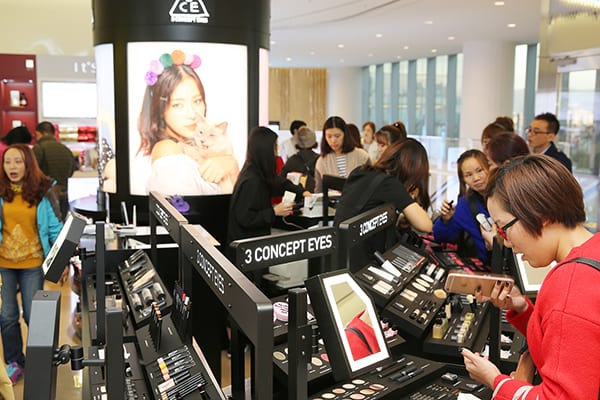
    While many traditional retail stores have embraced technology by having an online presence, online retailers are now opening physical stores (mainly concept stores) in Malaysia, in line with global trends, to gauge feedback on products.

    Retail consulting firm Retail Group Malaysia (RGM) managing director Tan Hai Hsin (pix) said there are still many customers who want to see, feel and touch the products before they decide to buy.

    “They cannot do this online. Customers do not want the hassle of returning products and re-ordering again. To meet this need, online retailers open physical stores,” he said.

    “Also, you can get better feedback on your products and services when you interact with your customers face-to-face. It is easy to give feedback online, but it tends to be short and not comprehensive,” he added.

    Tan said this is not just a trend in Malaysia, but also around the world, with the trend becoming common in the US, the most matured market for online retail.

    Online fashion retailers that have opened physical stores in Malaysia include Christy Ng (five stores), FashionValet (four stores), Bawal Aidijuma (22 stores), Poplook (three stores), Imaan Boutique (six stores), Reebonz (one store) and Finelycup (one store).

    Online foods & beverage retailers that have physical presence here include Fatbaby ice cream (one store), Foodmarket (one store) and Epic Fit Meals Co (three stores).

    Other online retailers that have joined the bandwagon include online grocery store Redtick (three supermarkets), electronics company Xiaomi (five Mi stores) and online jewellery store Jeoel (four stores).

    Tan pointed out that the main difference between (stores of) brick-and-mortar retailers and online retailers is that customers can order online while they are in the physical stores of online retailers.

    “Some customers may like a fashion item but the colour is not available in store but online.

    “They can order online immediately after they have inspected the product. Some customers do not want to carry the products with them after payment as they still want to walk around and visit other places. Some are buying the products for others and instead of carrying the items themselves, they can arrange for it to be delivered directly to the recipients,” Tan explained.

    In terms of locations, he said online retailers open their physical stores anywhere, with some choosing quality shopping malls to build their brand image. Some choose to open in shoplots that can be used as their office, distribution centre, central kitchen and/or storeroom. Some opt to open in locations where most of their customers are residing. Some select locations near their homes.

    “For traditional brick-and-mortar stores, the opening of physical stores by online retailers is seen as new competition to them. If they (brick-and-mortar retailers) do not offer e-commerce facility to their existing customers, they will be left out in the near future,” Tan said.

    Online retailers are setting up physical stores in shopping malls, but the number is still relatively low, he noted.

    “Retail trends change over time. Retailers need to change with time. Or else, they will be phased out.”

    Just like grocery trade in the last 50 years, Tan said it all started with provision shop, then evolving to mini-market, supermarket, overseas supermarket, foreign hypermarket, gourmet food hall, to today’s online grocery store.

    He pointed out that e-commerce would not be replacing physical stores anytime in the near future. In recent years, both sides of the retailing formats crosses over each other’s territory and this trend will continue.

    “The future of retailers should be multi-channel. A retailer is no longer able to operate solely based on physical store, they need to sell their products via other channels as well. Thus, winning retailers are those who are able to offer not only physical stores, but also online shopping sites,” said Tan.

  • E-commerce set to take 10 per cent of Thai retail sales

    E-commerce set to take 10 per cent of Thai retail sales

    Analysts are predicting e-commerce will account for 10 per cent of Thai retail sales within five years, according to a report.

    The observations have been sparked by the imminent entry of JD Central – a partnership between Chinese online services giant JD and local firm Central Group.

    Head of customer strategy for JD Central Jirasak Chirathivat said that the Thai retail business will be stimulated by higher competition, big data, AI and voice commands. “Price is not the only factor for consumers; experience and express delivery are also key motivations,” he said.

    “We are in the process of investing in a second logistics centre that serves countrywide delivery. We aim to achieve the standards seen in China, where JD.com delivers before 11am in the morning when users place their orders before 11pm the night before.”

    JD Central plans to offer 1 million products online, working with Tencent Thailand and Pomelo, each of which list JD as a shareholder.

    Pomelo’s CEO David Jou said e-commerce in Thailand still has room to grow, as it represents only 3–5 per cent of the total retail market compared with 30–35 per cent in China and 15 per cent in India.

  • China’s cross-border e-commerce turnover

    China’s cross-border e-commerce turnover

    China’s cross-border e-commerce is forecast to see turnover top 9 trillion yuan (1.3 trillion U.S. dollars) in 2018, according to a report released by the China E-Commerce Association.

    The report, released on Sunday at the ongoing 20th China International Fair for Investment and Trade (CIFIT), held in Xiamen, east China’s Fujian Province, said that the top 10 import sources of China’s cross-border e-commerce trade in 2017 were Japan, the United States, the Republic of Korea, Australia, Germany, New Zealand, the Netherlands, France, Britain, and China’s Hong Kong Special Administrative Region.

    Cross-border e-commerce is most active in south China’s Guangdong Province, followed by Beijing, east China’s Zhejiang and Shandong provinces and central China’s Henan Province for exports via e-commerce.

    Tong Xiaomin, chief engineer at the Information Center of the Ministry of Industry and Information Technology, said that the Chinese government supports cross-border e-commerce with policies and infrastructure building.

    Globally, however, trade protectionism in forms of tariff barriers and anti-monopoly investigations has posed negative influence on the development of cross-border e-commerce, Tong said.

    He suggested that Chinese e-commerce firms and importers should heed turbulence in the international trade environment and improve their global competitiveness. Meanwhile, the e-commerce platforms should explore new market and adopt new technologies and applications to ensure the high-quality development.

  • Indonesia’s E-Commerce Market Will Grow to $65b by 2020

    Indonesia’s E-Commerce Market Will Grow to $65b by 2020

    Online sales of physical goods in Indonesia are projected to increase more than eightfold to $65 billion annually by 2020, a study by global business consultancy McKinsey & Company shows.

    The report titled, “The digital archipelago: How online commerce is driving Indonesia’s economic development,” concludes that government support, large numbers of young, digitally savvy consumers and increased participation by micro, small and medium enterprises in e-commerce will drive the digital economy and boost online sales over the next five years.

    “We think there will be leapfrog growth for Indonesia’s e-commerce sales in the coming years, which is boosted by the number of internet users,” McKinsey Indonesia president director Philia Wibowo said in Jakarta on Wednesday.

    According to the Indonesian Internet Service Providers Association (APJII), there were 143 million internet users in the country last year, with about 44 percent of them using mobile devices to go online.

    McKinsey noted that e-tailing, or business conducted online through e-commerce firms such as Blibli, Tokopedia, Bukalapak and Lazada, will likely amount to $40 billion by 2020, while transactions on social media platforms, including Facebook, Instagram, Line, WhatsApp and Blackberry Messenger, may reach anything between $15 billion and $25 billion.

    Total e-commerce sales in Indonesia amounted to around $8 billion last year, with $5 billion of that from e-tailing.

    McKinsey also noted that 83 percent of internet users are expected to make online purchases by 2020, compared with 74 percent currently.

    The business consultancy interviewed 60 experts, ranging from chief executives of publicly listed companies, small and medium business owners, startup owners, former ministers to heads of government agencies, across the archipelago.

    The company also surveyed nearly 3,500 people, including 700 online merchants, 500 offline merchants, 2,000 online buyers and 250 dropshippers.

    “We conducted this research because we saw that there are rarely surveys out there that offer comprehensive reports on e-commerce. This particular sector has a real impact on the country’s economy,” Philia said.

    This is McKinsey Indonesia’s first e-commerce survey.

    Social Impact

    McKinsey said e-commerce has had a positive impact on job creation and social equity in Indonesia.

    As the largest e-commerce market in the region, Indonesia could generate about $20 billion in online sales by 2020, compared with $2.5 billion today.

    This projection shows that online sales in the coming years will also come from regions in Indonesia that are currently untapped.

    The business consultancy projects that e-commerce will support 26 million jobs both directly and indirectly by 2020, compared with 4 million now.

    Meanwhile, buyers can also save money through e-commerce. People living outside Java can expect to pay between 11 percent and 25 percent less for goods online, compared with brick-and-mortar shops.

    Buyers living in Java can save between 4 percent and 14 percent, McKinsey said.

    The business consultancy said e-commerce can also improve gender parity and financial inclusion.

    Challenges

    McKinsey noted that there are five key challenges if Indonesia wants to boost its e-commerce sector.

    The government should ensure that logistics and infrastructure are reliable. Indonesia still trails behind many other countries in terms of infrastructure development and it ranked in 63rd place among 160 countries globally in 2016, according to the World Bank data.

    Online payment systems meanwhile also play an important role in the growth of e-commerce. However, only 49 percent of Indonesians currently have access to financial services, compared with 85 percent in Malaysia and 82 percent in Thailand.

    McKinsey said while the internet is key to building a strong digital ecosystem, only around 60 percent, or 36 million small and medium business in Indonesia currently have an online presence. Of those, only about 15 percent have online ordering and payment systems, which shows an urgent need for small business owners to implement reliable technology and payment systems.

    Aside from that, McKinsey said Indonesia also faces a technical skills shortage. The country only produces eight science, technology, engineering and mathematics graduates per 1,000 citizens, while China produces 34 and India 20.

    Supportive Policies

    McKinsey further noted that supportive government policies also play an important part in boosting the country’s digital economy.

    Indonesia revised its negative investment list in 2016 to allow 100 percent foreign direct investment in e-commerce, if the investment exceeds Rp 100 billion ($6.8 million).

    The government is also committed to improving the country’s infrastructure, prioritizing the building and upgrading of ports and roads to lower logistical costs.

    “The focus on infrastructure projects must be continued, especially to improve access to rural areas,” Philia said.

    The government further established several agencies to support the digital economy, including the Bank Indonesia Fintech Office last year and the National Creative Economy Agency (Bekraf) in 2015.

  • Growth of Indian fashion e-commerce

    Growth of Indian fashion e-commerce

    E-commerce is the future of retail, and is taking giant steps as technology is being redefined with each successive year. But, contrary to popular belief, e-tailing can be expected to actually augment the growth of traditional retail in India along with consolidating wholesale and distribution channels.

    The Indian retail market is emerging as one of the most dynamic and fast-paced sector attracting several new domestic and international players. It accounts for over 10 percent of the country’s Gross Domestic Product (GDP) and around 8 percent of the employment. India is the world’s fifth-largest global destination in retail space. The Indian retail market is estimated at Rs 46,15,000 crore (US $710 billion) in 2017, and is expected to grow at a CAGR of 9 percent to reach Rs 1,08,58,000 crore (US $1,672 billion) by 2027. Corporatized retail had only a share of 11 percent in 2017, out of which, e-retail accounted for meagre 2 percent (Rs 92,300 crore). After the implementation of unified taxation under GST regime, it is expected that the share of corporatized retail will increase at higher rate. With increasing penetration of Internet in India, the acceptability of online shopping is expected to grow at a phenomenal pace.

    INDIAN RETAIL MARKET

    The Indian retail market is primarily dominated by food and grocery (~67 percent) followed by apparel and accessories (~8 percent), jewellery and watches (~8 percent) and others.

    India has witnessed a drastic shopping revolution in terms of retail formats, distribution channels and consumer buying behaviour. There has been an increase in purchasing power of consumers owing to the growth of middle class with higher share of disposable income, easy financial options, etc. The consumers today are more educated and well informed thus becoming more experimental and willing to try new products and new modes of purchases.

    E-retail is one of the fastest growing formats in Indian retail market owing to the convenient and personalized shopping experience. The Indian e-retail is estimate at US $16.3 billion in 2017 and is expected to grow at CAGR of 45 percent to reach US $49.5 billion by 2020.

    E-TAILING IN INDIA

    India is expected to become one of the world’s fastest growing e-tail markets, driven by robust investment in the sector and rapid increase in the number of internet users. Under Government initiatives like ‘Digital India’, Internet has penetrated to 400 million users, 48,000 gram panchayats are connected by optical fibres under Bharatnet program and 120.8 million have access to broadband. The increasing spectrum of Internet reach across geographies of India coupled with corporatization of apparel sector is paving way for emergence of e-commerce as a major retail channel in apparel category.

    E-tailing evolution took place in India starting with books and media as the key category. Electronics joined the e-tail bandwagon next and apparel, lifestyle were the third product categories. The other categories that have found traction include babycare, home and living, etc.

    At present, the e-commerce market is led by electronics category with a share of ~49 percent followed by apparel and lifestyle which is ~25 percent (including footwear, bags, belts, wallets, watches, jewellery, etc.). The adoption of e-tail in apparel and fashion industry is resisted by the consumers’ willingness to touch-and-feel the product before making purchase decision. To address this issue, initiatives like cash on delivery, easy return and exchange, discounts and offers are being implemented to encourage consumers to use online channel for shopping.

    E-tailing is in early stage but is growing rapidly and it will be further catalysed with the digital India program and structural reforms like GST implementation. Current share of e-retail in apparel and lifestyle segment is estimated at 4 percent in 2017 and is expected to grow four times from US $4 billion in 2017 to US $13 billion by 2020.

    E-retailers have rapidly scaled up their product offerings, providing a wide choice to customers. Several players have adopted marketplace models (pure or managed) which has enabled them to offer more categories, more brands and greater market reach for brands. E-retailers are opting for Omnichannel retail model by opening their physical store to capture a bigger market share. In addition, E-tailers are also investing into studios to improve uniformity in product catalogue for different suppliers, thereby enhancing customer’s shopping experience.

    Along with faster and easier navigation, most e-tailers provide detailed specifications of the products to make it easier for consumers to make purchase decisions. For instance, high resolution pictures and zoom in features are provided on the website to showcase the details of the products. Multiple images from different angles enable detailed view of product. Measurement charts assist the customer to make the right fit decision in case of apparel products, etc.

    KEY GROWTH DRIVERS OF E-TAIL IN INDIA

    Indian online retail has witnessed a surge in recent years and is expected to swell up to ~15 percent of the total retail by 2020 from current contribution of 4 percent (2017) in apparel and lifestyle segment. There are multiple factors which contribute to the growth of e-tail in India.

    Growth of digital penetration – India is in the midst of a digital revolution. The number of Internet users is likely to cross 650 million by 2020 and it is expected that half of the Indian population will be online in the next 3 years. Mobiles have become the most preferred device to access internet. The availability and affordability of smartphones with access to cheap internet data coupled with the rise in disposable income is fuelling the growth of digital penetration.

    Reach of e-retail channel – In next 3-4 years, more than half of India’s incremental Internet growth is expected to come from rural India. Additionally, the digital user demographic is expected to expand beyond the traditional stereotype, with a significant growth in female and older Internet users by 2020. This will result in a larger market size across different geographies, age and genders and not just a small targeted group. The diversity in the Internet users will facilitate an opportunity for online retailers to expand their product portfolio as per the increasing customer base.

    Impact of digital age – Though, Internet has penetrated to 400 million users today, but they are different in usage behaviour and needs. 60 percent of rural Internet users go online using Internet enabled phones and not smartphones. The major use of Internet in rural consumers is limited to entertainment, education and social networking. The online purchase behaviour is best predicted by the ‘digital age’ (years spent online), and not by demographics. With an increase in digital age, the internet users even from rural areas are expected to use e-retail for making their purchase decisions.

    Increasing fashion demands in small cities and towns – With the media exposure, rising awareness, growing aspirations and increasing share of disposable income, Indian consumers are looking to get access to global fashion brands. Limited reach of brick and mortar retail outlets of brands in smaller cities provides an opportunity for online retailers. Heavy discounts and promotions, availability of exclusive products, customized experience, availability of global brands, etc. Have made consumers residing in Tier -II and -III cities and semi-urban areas migrate to these online channels.

    Improved supply chain and end delivery logistics – E-commerce business is completely dependent on effective supply chain management. Successful supply chain management coordinates and integrates activities like manufacturing, operations, transportation and physical distribution of product with last mile connectivity to end users into a seamless process. For customer acquisition from traditional way of brick-and-mortar channel and their retention, it is necessary to provide customized shopping experience to the consumer by giving several convenience options like various payment options, mode of delivery, point of delivery, etc.

    Growth of private labels – With increasing acceptability of private labels among Indian consumers, e-retailers are entering into this emerging segment. The access to exhaustive informative data on consumer’s buying behaviour and preferences have provided an advantage to online retailers in terms of understanding the consumer’s needs. With private labels, online retailers are able to increase their revenues owing to lower distribution overheads, lesser number of intermediaries and negligible marketing cost involved in private labels.

    KEY CHALLENGES

    Despite high growth, e-tailers face several challenges in the country. Challenges and concerns related to e-tailing in India are enumerated as under:

    Competitive intensity – Changing customer preferences and their competitive demand has made e-tailing a highly competitive business which results in cash-burn with regular promotions/ discounts. High discounts by e-retailers to acquire customers have led to unreal customer expectations, low loyalty and losses.

    Sub-optimal logistics and infrastructural bottlenecks – Most of the logistics companies do not have pan-India reach. As some regions are not easily accessible, retailers have to cancel such orders due to inability of logistics partners to provide service in those areas. Inadequate infrastructure such as poor conditions of roads, highway, etc., is one of the main challenges faced by the e-retailers resulting in a major roadblock in their growth story.

    Inability to convert returns into retails – The conventional brick-and-mortar channel is able to convert the return of product into sales. Consumers when go to shop to return the product, they generally shop for other goods due to easy accessibility to other designs and variety in the shop, which is not the same in case of online shopping.

    Different Drivers for online purchase – The purchase drivers are very different across different geographies, regions and population centres. Factors such as promotions, discount and offers are the key driving factor for online purchase across all the regions – metros, tier -I and II cities. But there are other region specific factors such as, availability of new products, better product assortments, easy return policy, express delivery options, etc., which drive growth in different cities and regions. Thus e-tailers have to develop different strategies for different regions and geographies.

    CONCLUSION

    In the current shopper-centric era, Indian fashion industry is joining hands with technological advancements. Retailers are progressively accepting innovative ideas and tactics to create a memorable and personalized shopping experience, at the same time ensuring lower logistics and operational cost thus leading to higher revenues. With increasing internet penetration, e-commerce is expected to grow at relatively higher rate in comparison to conventional retail channels. With increasing acceptance of private labels within the Indian consumers, e-retailers are venturing into private labels.

    E-tailing can play a crucial role in consolidating wholesale and distribution channels, and in developing India-specific business models. By virtue of the advantages discussed in previous sections, e-tailing can bring down the cost of distribution and can complement the growth of traditional retail. In future, e-retail is expected to take a step ahead in adopting Omnichannel retail strategy, capturing higher market share.


  • IKEA Korea to start Online Sales this Saturday

    IKEA Korea to start Online Sales this Saturday

    IKEA Korea will open an online mall, on September 1, in line with its Swedish headquarters’ efforts to increase its online sales worldwide, the global home furnishing company‘s local subsidiary said.

    “We will officially launch our e-commerce channel September to offer better accessibility to customers nationwide, because we have only two stores in Korea,” IKEA Korea’s country retail manager Andre Schmidtgall said at an IKEA pop-up store in Seoul.

    According to IKEA Korea, a distribution center has already been established to improve inventory and distribution management efficiency. The online shopping platform will offer a comprehensive range of products with a few exceptions such as foods.

    The company is also considering various ways to cater to urban residents.

    The chief executive said his company is moving to open more “customer touchpoints” in downtown areas around Korea to better understand their needs, as IKEA Group CEO Jesper Brodin said during his visit to Korea in April.

    Including the opening of pop-up stores in Seoul, an IKEA Korea taskforce is conducting various tests to consider the possibility, according to Schmidtgall.

    IKEA’s aggressive expansion in Korea is expected to weigh on domestic rivals such as Hanssem and Hyundai Livart, although the furniture makers have ostensibly taken a positive attitude toward the market competition so far, saying the rivalry can improve their productivity.

    “Hanssem will face more difficulty in recovering its stock prices, following the opening of IKEA’s online marketplace,” KB Securities analyst Jang Mun-jun said.

    Schmidtgall, however, said the company still put emphasis on offline stores, citing the stores can display a wider range of products and allow the retailer to directly meet customers and respond promptly to their needs. He promised IKEA will continue to open additional outlets in Korea.

    IKEA Korea, which runs stores in the Gyeonggi Province cities of Gwangmyeong and Goyang, held a groundbreaking ceremony recently for its Giheung-gu store in Yongin in the same province.

    “We are eager to expand our customer touchpoints and reach more of the many people in Korea through the launch of e-commerce and IKEA Giheung, construction of which is set to be complete at the end of next year,” Schmidtgall said.

    IKEA Korea also said it posted 471.6 billion won (US$425 million) in sales between September 2017 and August 2018, up 29 percent year-on-year. It did not disclose its operating profit.

  • Inditex’s Uterqüe arrives in China in partnership with Tmall

    Inditex’s Uterqüe arrives in China in partnership with Tmall

    Zara sister label Uterque has opened a flagship on Alibaba’s Tmall to build brand awareness in China’s premium fashion market.

    Uterque has yet to open any physical stores in China, but the company’s parent Inditex says China is definitely on the radar in the near future.

    According to Alibaba Group news site Alizila, Uterque will continue its tradition of renewing the product selection in stores and online twice a week in China as well and customers of Tmall, Alibaba’s B2C marketplace, will have immediate access to all of the label’s newly launched clothes.

    “With the rapid growth of the market for high-end goods on Tmall, more and more premium fashion brands from Europe and North America have joined the platform, even opening a store on Tmall ahead of its brick-and-mortar roll-out,” said Anita Lyu, VP of Tmall Fashion.

    She said launching online in advance of opening physical stores helps brands understand the market first.

    “Through partnering with Tmall, brands can receive accurate feedback from Chinese users and leverage that to design an overall strategy that suits the China market,” Lyu said. “Meanwhile, tapping Tmall can help boost brand awareness and open up markets more quickly.”

    Inditex operates more than 7448 stores worldwide under eight brands, including Zara, Zara Home, Massimo Dutti, Bershka, Pull and Bear, Stradivarius, Oysho and Uterque. Uterque is the last to open an official store on Tmall.

  • Ikea Malaysia online platform launched

    Ikea Malaysia online platform launched

    Ikea Malaysia has launched an online store.

    The e-commerce site promises to offer the largest online selection of home furnishings in the country. It marks a strong entry into the Malaysian e-commerce market by the Swedish company’s Southeast Asian subsidiary.

    The site’s delivery service will be available nationwide by package or truck, offering more than 9000 products to online buyers throughout Malaysia purchasing with major debit and credit cards accepted.

    Ikea Malaysia recently extended its return policy from 100 to 365 days to provide their customers more time to exchange or return their products after purchase.

  • Uniqlo to use Google voice recognition technology in its mobile assistant

    Uniqlo to use Google voice recognition technology in its mobile assistant

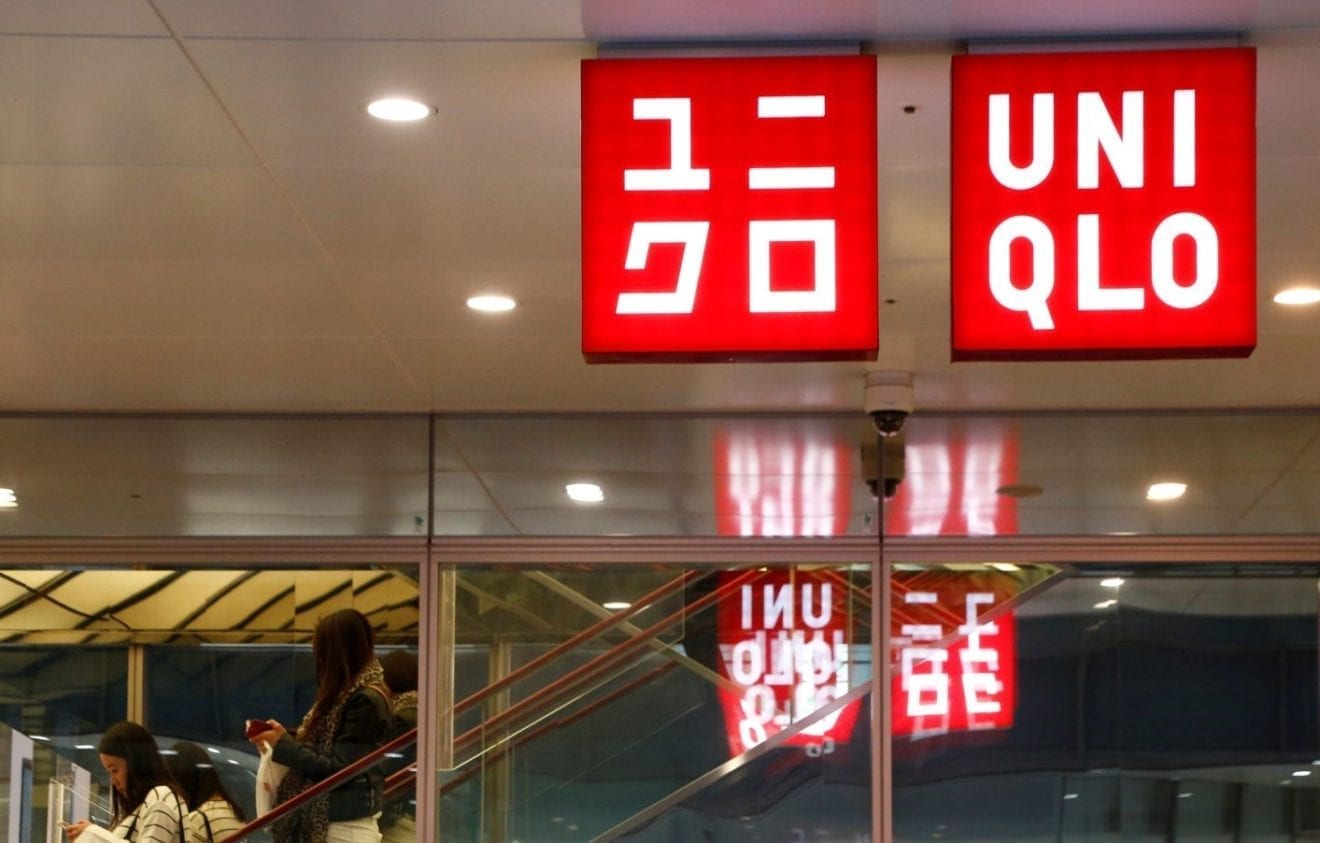
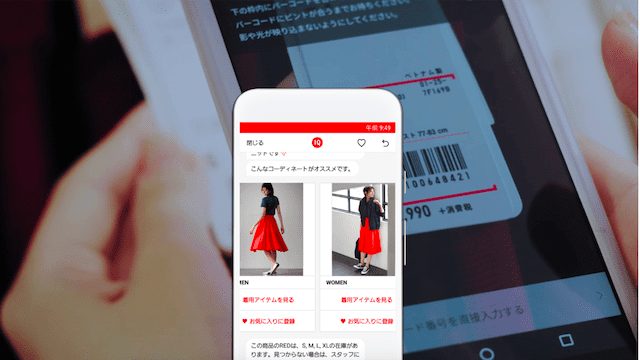
    Japanese retailer Uniqlo has launched a mobile assistant using Google voice recognition technology to personalise recommendations for customers.

    The Uniqlo mobile assistant has already undergone significant testing with development partners in Japan, and is already live there. It is intended to streamline internet garment shopping to make the experience fresher and more inspiring.

    Shoppers throughout Japan can now access the tool via Line, Google Assistant, or the proprietary Uniqlo app. It features product rankings updated hourly, search by occasion type, finding items featured in magazines, and even garment matching according to astrological findings. Shoppers can purchase their selections online or at the nearest physical store if they prefer.

    Cofounder of development partner Inamoto & Co Rei Inamoto said, “As retail moves deeper into the digital realm, shopping needs to be not just portable and perpetual but personal as well. There has been a lot of talk about AI in the last few years but most use cases have been toys, not tools.

    “Available through chat, search and even voice activation, this iteration of Uniqlo IQ is the foundation of how Uniqlo will provide customer service on a personal level not just reactively but also proactively.”

    A spokesperson for Uniqlo said the assistant tool is the first instance of Google working so closely on a partnering brand-specific solution.

  • New e-commerce policy draft may curb deep discounts by India online retailers

    New e-commerce policy draft may curb deep discounts by India online retailers

    Any group company of an online retailer or marketplace may not be allowed to directly or indirectly influence the price or sale of products and services on its platform, a recommendation in the initial draft of a national e-commerce policy suggests.

    The policy draft has been circulated among stakeholders for discussion and could completely restrict e-tailers from giving deep discounts. The draft has also suggested to introduce a pre-set timeframe for offering differential pricing or deep discounts by e-commerce players to customers.

    The suggestions are part of the strategy to address anti-competitive issues in the e-commerce sector effectively, says a report.

    “The restriction imposed on e-commerce marketplace, to not directly or indirectly influence the price of goods and services, would be extended to group companies of the e-commerce marketplace.

    “A sunset clause, which defines the maximum duration of differential pricing strategies (such as deep discounts) that are implemented by e-commerce platforms to attract consumers, would be introduced,” the draft reads, according to a report.

    Further the draft recommended to permit 49 per cent foreign direct investment (FDI) in inventory-based business-to-customer model of e-commerce. Currently, FDI in such businesses is prohibited and it is allowed only in marketplace model.

    It stated that sale of country-made goods through online platforms would be promoted by permitting limited inventory-based business-to-customer model, where 100 per cent made in India items would be sold through Indian owned e-retail companies.

    The initial draft has also talked about adopting a common definition of e-commerce for the purpose of domestic policy making and international negotiations as currently there is no commonly accepted definition.

    At present, industry ministry, consumer affairs, department of IT, WTO, OECD and UNCTAD have separate definitions.

    The draft has proposed that “e-commerce may be understood to mean buying, selling, marketing, selling, marketing, distribution, or delivery of goods, services and digital products (like e-music, e-books, software) through electronic means”.

    It also called for steps to develop capacity for and incentivise data storage in India though creation of facilitative data infrastructure.

    The incentives could include according infrastructure status to data centres and server farms besides extending tax benefits and rebate in customs duties.

    The draft, said that the development of cutting-edge and innovative technologies in India would be promoted by ensuring access to data.

    In context of international trade negotiations, policy space for granting preferential treatment and imposing customs duties on e-transmission to digital items created in India would be retained.

    Further, it recommends steps for increasing use of Rupay. The steps could include identifying deficiencies in infrastructure, providing budget, branding, and addressing quantitative deficiencies in service for wider use of Rupay.

    It suggested to set up a ‘social credit database’ through PPP to promote digital lending and use of blockchain technology for further financial inclusion.

    To enhance participation of MSMEs in e-commerce, it has called for several steps including setting up of e-retail platform, addressing issues of financing for online participation, incentivising platforms and aggregators to engage MSMEs.

    The initial draft has recommended the Competition Commission to consider amending some threshold rules to mandatorily examine competition-distorting M&As below the existing ‘de minimis’ level.

    E-commerce companies may be asked to mandatorily make full disclosure to the consumer regarding the purpose and use of data in a simplified way, and also share main features of their terms and conditions besides disclosing clauses governing their arrangement with the vendors.

    It has also suggested setting up of a central consumer protection authority to act as a nodal agency for intra-government coordination, mandatory registration of all e-commerce operators, registration of complaints.

    “The legal framework governing unsolicited commercial SMSs and calls would be strengthened. A law/regulation to govern unsolicited commercial e-mails would be framed,” the draft stated.

    It said that the grounds for seeking disclosure of source code to government would be expanded to include situations of unfair trade practise, fraud.

    “The policy space to seek disclosure of source code would be retained, by not taking any commitments on this issue in international trade negotiations,” the draft said.

    The relevant GST provisions would be modified to create a level playing field between online and offline delivery of goods and services, besides providing GST refund for goods exported by courier would be considered.

    “A single legislation to address all aspects of ecommerce would be enacted and a single regulator would be set up to consider issues like FDI implementation,” the initial draft said.

  • S. Korean retail sales rise in first half on increased online sales

    S. Korean retail sales rise in first half on increased online sales

    South Korean retail sales rose 7.4 per cent in the first half of this year based on solid performance in e-commerce.

    Data from the Ministry of Trade, Industry and Energy showed online sales running 16.3 per cent higher than during the same time last year, while offline sales rose just 2.7 per cent.

    Grocery shopping via online malls with home delivery saw a major rise this year, with a 20.8 per cent increase in sales over last year.

    Similar rises were reported for convenience stores, department stores and online marketplaces, although a 1.8 per cent drop hit large discount store chains.

  • Lotte prepare e-commerce department launching this week

    Lotte prepare e-commerce department launching this week

    South Korean retailer Lotte will launch a new department in charge of the business group’s online businesses this week.

    The move is part of a plan to speed up efforts to cope with the rapid expansion of the country’s online market.

    Earlier in May, Lotte unveiled the plan to inject 3 trillion won (US$2.69 billion) into its e-commerce business over the next five years, integrating online malls that have been separately operated by its affiliates into one with an aim to generate 20 trillion won in sales by 2022.

    The new e-commerce department, set to launch Wednesday, August 1, will be responsible for a new platform that encompasses seven of the business group’s retail subsidiaries, including the department store business and discount store chain.

    With some 1400 employees, the new branch aims to roll out a mobile app in 2020 and plans to hire 400 additional workers by next year.

    “The new app will become a platform that provides optimised services based on our massive customer data,” Kim Kyoung-ho, who will lead the new organisation, said, noting that nearly 22 million customers are using Lotte online every month.

    Sales of 13 major online stores and marketplaces jumped 17.2 per cent on-year in May, according to government data.

    Online malls reported a 21.3 per cent spike in sales as more people opted to do their grocery shopping online. Online marketplaces, where product or service information is provided by multiple third parties, reported a 12.4 per cent surge in sales.

    Meanwhile, Lotte Duty Free, the conglomerate’s duty-free unit, said it will ramp up marketing efforts for its online, downtown and overseas businesses, as part of its operations at Incheon International Airport, west of Seoul, will be shut down at 8pm tomorrow night.

    The duty-free operator decided to return three of its four money-losing concessions at the country’s main gateway in February. The zones were reorganised into two and went to Shinsegae DF in the follow-up bidding last month.

    Lotte said it expects to save up to 1.4 trillion won of rent by 2020 following the closure of the airport duty-free business.

  • China’s Sandan Fresh to go offline

    China’s Sandan Fresh to go offline

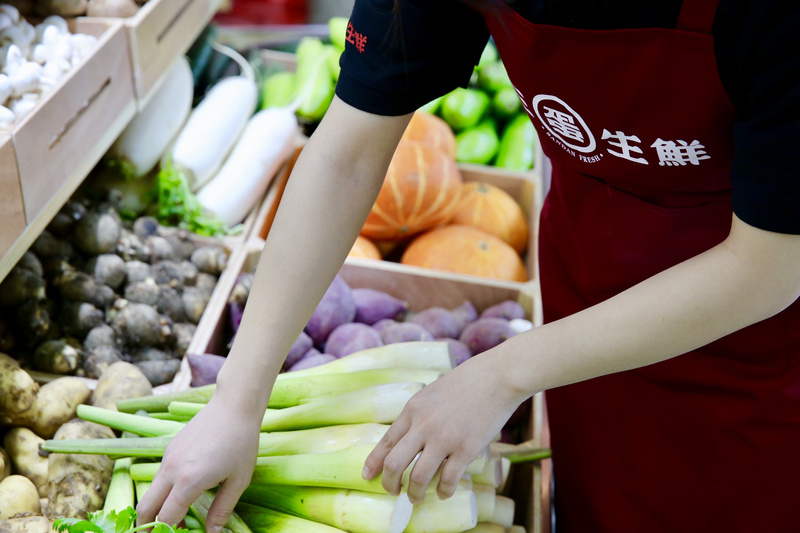
    Chinese online grocer Sandan Fresh has opened its first offline store in Shanghai.

    The Chinese company plans to open 30 more stores in the city over the next year as reported.

    The stores will be small in size, allowing a large number convenience-style stores to be established.

    The first store covers 100sqm, and currently has around 800 – 1000 items including fruit, vegetables, meat, eggs and soy products.

    Through a combination of ‘offline’ stores and ‘smart shelf’ machines, the company can provide customers with more of an integrated shopping solution, including delivery to stores, and home delivery for purchases made through the social media platform WeChat, a Sandan Fresh spokesperson said.

    In addition to its retail stores, Sandan will also install numerous self-service smart-shelf machines around the city for customers to place orders online and pick up their goods there.

    Each of the 30 planned stores are set to be accompanied by 10 smart-shelf machines.

    The company expects about half of its sales to come from in-store purchases and the other half from WeChat purchases for home deliveries.

  • Chinese retail landlords rise to the challenge of e-commerce

    Chinese retail landlords rise to the challenge of e-commerce

    China’s retail real estate arena is the fastest-developing market in the world – forcing landlords to change their strategies to meet the challenge of e-commerce.

    When it comes to mobile shopping, 30-minute delivery and customer apps, China leads the world. Around 20 percent of China’s retail sales are online, placing it ahead of the UK, U.S. and South Korea, the other nations where e-commerce is most entrenched.

    And landlords are having to move fast to adapt to the new online/offline norm.

    “China is leading the world when it comes to blending online and offline retail, to the extent that in a few years’ time, those terms will leave our vocabulary,” says James Hawkey, head of retail for China at JLL. “We are moving to a world where all retail transactions will be internet-influenced.”

    Hawkey notes the historical definition of “online” and “offline” revolves around the place of transaction, something that is becoming increasingly unimportant. “People may go to a store to try something on and then buy it online for home delivery,” he says

    Chinese companies have been ahead of the curve when it comes to successfully blending online and offline retailing. In May, Dalian Wanda Group teamed up with tech firms Tencent Holdings and Gaopeng for a new online/offline retail joint venture.

    The new partnership aims to give Wanda’s shopping malls a “comprehensive digital upgrade”, improving connectivity between stores, malls and customers. Wanda hopes the initiative will bring “enormous online traffic through WeChat and other platforms”, which in turn will bring more physical traffic to its 236 Wanda Plaza shopping centres.

    Developer Chongbang has taken a lead on linking online and offline businesses. Its latest LifeHub malls in China have online fulfilment centres, where customers can pick up, try on and return goods they have ordered online. Chongbang has been bringing previously online-only brands into its malls, with what it calls its O+O (online plus offline) programme.

    Hawkey also cites Alibaba, the online retail giant, which is moving in a significant way into physical retail, with initiatives such as its Hema supermarkets. Alibaba came up with the phrase “New Retail” to describe the step beyond an either/or approach to online and offline retail. Hawkey says the key is the interaction of “people, product and place”, whether that place is physical or virtual.

    He also believes that retailing will become more ‘event-based’ with brands tailoring events and promotions to their community, which will be developed online and offline.

    The landlord challenge

    In response, shopping centre owners need to “create an amazing environment where people want to spend their time,” says Hawkey. This means focusing on design, landscaping and air quality (the latter being crucial in China). A mall’s interior space needs to have a level of flexibility, which can serve brands looking to run special events, or for the centre’s management to organise their own.

    For the China retail owner, tenant mix will become increasingly important, says Hawkey, in order to provide an offering which truly serves the need of its demographic; just leasing up the space as quickly as possible is no longer enough to be sustainable long term.

    China shopping centres also need to integrate their online and offline presence and use customer data intelligently in order to bring people to malls for targeted events and offers. “You can’t just say roll up, roll up, one and all!” says Hawkey.

    However, real estate fundamentals such as location and design cannot be overlooked. “Most of China’s large cities have districts with some oversupply,” says Hawkey. “Prospective new owners of a shopping centre might see problems with management and leasing, which can be rectified, but it is far harder to improve a mall which is poorly located or designed.”

  • Future is for e-commerce, JD.com says

    Future is for e-commerce, JD.com says

    E-commerce has changed the face of retail. A drone can handle delivery, and payments and orders are all done with a smartphone.

    These changes are now coming to South East Asia, said an executive of a prominent Chinese retailer.

    Gloria Li, Corporate Vice President of JD.com, which is described as the largest retailer in the online and offline space, believes “after several years [from now], the penetration of e-commerce in South East Asia market will increase.”

    The expected increase is due to two facts — customer behaviour and the efficiency of the e-commerce, she said during a meeting with a group of visiting media representative recently to Beijing.

    First, the young generation is “gradually getting everything from the internet … Secondly, we are seeing more efficiency in e-commerce versus traditional retail because e-commerce has no boundary. You can access products from either phone or iPad, or PC or, sometimes, smart hardware like a smart refrigerator,” she said.

    JD.com in China is an example of the “amazing speed” of the growth of e-commerce.

    Its 2017 revenues were estimated at $55.7 billion (Dh. 205 billion), recording a 40 per cent increase from the previous year, Li said.

    The company, which started 15 years ago, has today 500 warehouses across China, 301.8 million customers, and 82 per cent of them are ordering via mobile.

    Two years ago, the company started delivering products through drones, particularly in rural areas. It has other methods such as robots too.

    Today, it is the third largest internet company globally after Amazon and Alphabet, according to the company.

    JD.Com, which was listed on Nasdaq in 2014, started expanding beyond China two years ago. It first reached Indonesia, which was quite similar to what the Chinese market looked like a few years ago, Li said. The Chinese retail company then began doing business in Thailand and in Vietnam, she said.

    Delivery using drones does not only depends on technology, but also on laws and policies in other countries, said Li. “We have not entered the ME market yet. It is a very young company,” she said of JD.com.

    “At the same time, we are also seeking opportunities to outreach other markets in the world in the future, like Europe, US, and maybe Africa,” said Li in the interview conducted in the company’s headquarters in the Chinese capital.

    In the company headquarters, JD.com offers customers the opportunity to buy by themselves from stores and display areas. There is a store for different products, including electronics, cosmetics, and accessories.

    There is also a mini supermarket, where entry is allowed using the mobile phone. Cameras located on the ceiling of the small grocery follows the customer and registers the picked up items. At the exit, the money charged using the personal information used for the phone number, and no cash or credit cards are used.

    Commenting on the security procedures against any hacking or piracy, Li said “we have a dedicated team focusing on security and data privacy. This is the most important thing for the customer”.

    During the purchase process, the cameras follows a certain feature of the buyer, such as the colour of the cap or jacket, while the personal information kept private in the system, she explained.

    The JD.com executive refuted the claim that technology is eliminating humans’ opportunities for work.

    “When the company started 15 years ago, it had 38 people. Now, it has 170,000 people. This shows that we recruit on an average 10,000 a year.”

    Human workforce is needed for many tasks such as delivery, monitoring and tracking orders at the warehouses. Humans direct robots, she said.