Tag: ecommerce

  • Alibaba, Richemont ink deal to bring YNAP to China

    Alibaba, Richemont ink deal to bring YNAP to China

    The partnership will use YNAP’s strong relationship with leading luxury brands, some 950 of them being currently distributed through YNAP in China, and launch the brands on Alibaba’s Tmall Luxury Pavilion.

    “Chinese customers at home and abroad are an increasingly important customer base for Richemont and for the broader luxury industry,” said Richemont chairman Johann Rupert.

    “Our digital offering in China is in its infancy and we believe that partnering with Alibaba will enable us to become a significant and sustainable online player in this market. Alibaba has become the preferred online destination in China, with world-class teams in technology, logistics and marketing.”

    Rupert said the company would work with Alibaba to ensure Net-A-Porter and Mr Porter continued to expand “as neutral, open and sophisticated platforms”.

    YNAP group CEO Federico Marchetti said Alibaba provided “a neutral and powerful platform to maximise China’s immense potential” for the group.

    Daniel Zhang, CEO of Alibaba Group, added: “We believe this announcement is just the beginning of a long-term partnership, and together we are committed to exploring many more opportunities to collaborate in the future.”

  • Baby apparel FirstCry in talks with Alibaba, SoftBank for funding

    Baby apparel FirstCry in talks with Alibaba, SoftBank for funding

    Indian online baby product retailer FirstCry is in funding talks with Chinese e-commerce platform Alibaba and Japanese multinational conglomerate SoftBank Group. The firm is seeking at least US$100–$150 million in the deal in a move to put it at the forefront of the market, according to unverified reports. Both investing partners may participate in the funding if the deal goes ahead.

    While none of the parties have released statements on the proposal, previous reports have revealed FirstCry as seeking similar investment figures over the past year.

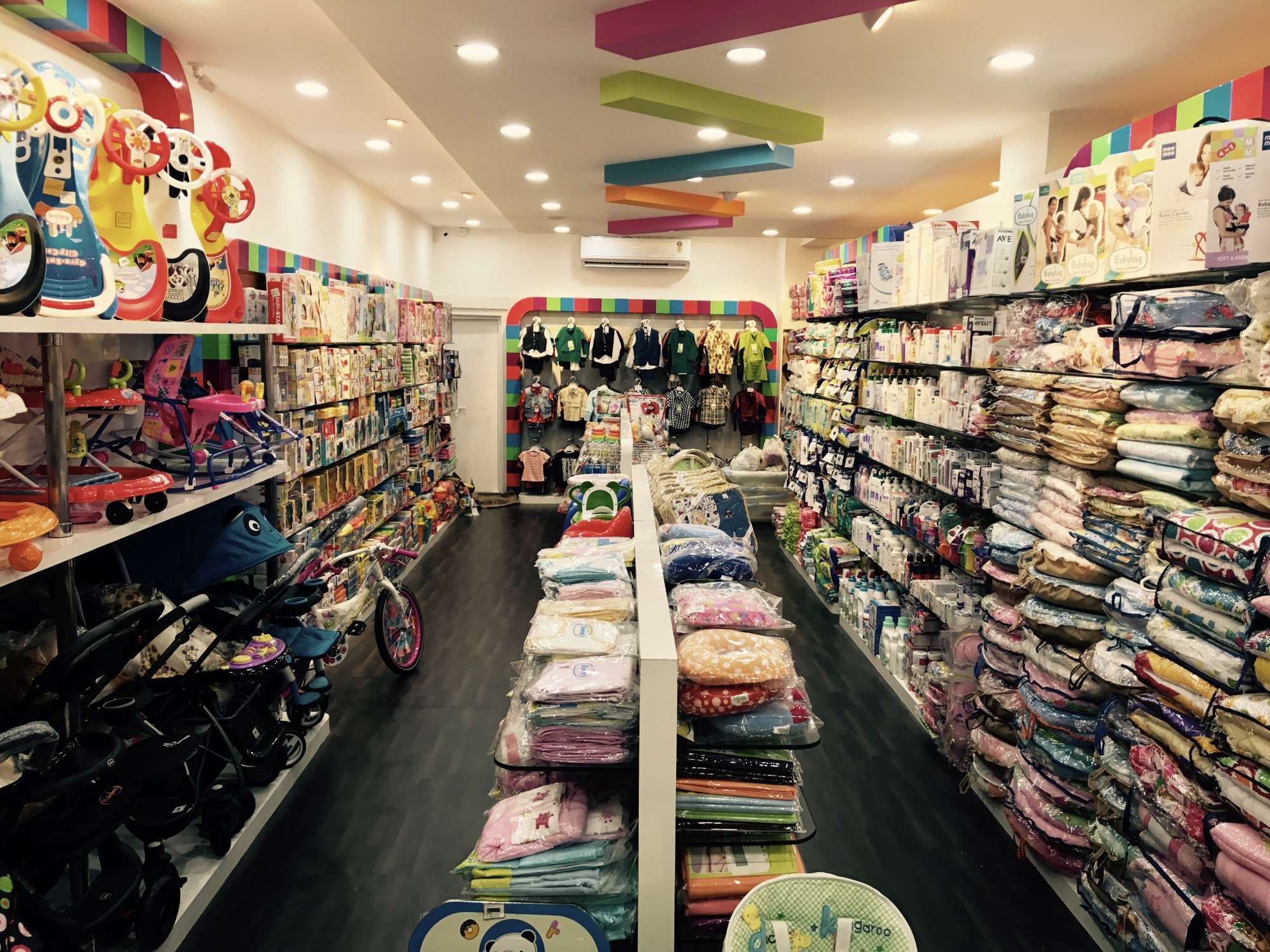
    FirstCry has raised more than $100 million since launching in 2010. The business derives the majority of revenue from a network of more than 300 stores despite the relatively small size of its offline business compared to its online presence.

  • Myntra launches its in-house plus size brand, Sztori

    Myntra launches its in-house plus size brand, Sztori

    Myntra has announced the launch of Sztori, its in-house plus size apparel brand, especially designed to suit a larger range of body shapes and sizes. It is essentially a designer wear in the plus size category, offering consumers, the perfect fit and multiple style options at affordable rates. The apparel is made to suit plus size body types rather than prove to be a mere extension in size on existing profiles, thus breaking the existing age-old norm in the Indian market.

    Post identifying a white space opportunity in the segment, Myntra set out to design and develop merchandise under a new brand to cater to the category and make wearers look fashionable with multiple style options at affordable prices, opening new avenues in the industry.

    Known for democratizing fashion across segments, the launch enables Myntra to go a step further and include size profiles into the ambit of ‘fashion for all’. It champions inclusivity in fashion, evaluating and emphasizing greater attention to styles, trends, designs, fit and fabric for plus sized apparel, in order to bring out the personality of the person wearing it. ‘Sztori’ derives its name and theme from Myntra’s ‘story’ of developing a brand that celebrates a person’s journey and spirit, helping to soar above shape and size.

    The brand offers a range of products for men and women, including, Tees, denims, tops, dresses and more in L to XXXXL (Large to 4 times Large) sizes. Shoppers can choose from over 225 styles and designs at prices ranging from Rs 799-1,999.

    Speaking on the occasion, Manohar Kamath, CXO and Head, Myntra Fashion Brands, said, “We are extremely delighted to announce the addition of Sztori to our portfolio of private brands. Plus size clothing is in great demand and it was time we offered something substantial in the category, opening up more avenues and possibilities for our customers. Research estimates that this segment will account for US$ 5-6 billion in the US$ 40 billion Indian online fashion apparel market, by 2020, which is approximately 10-12 percent of the overall market, making it an important proposition.”

  • E-commerce platform JD introduces reusable packaging

    E-commerce platform JD introduces reusable packaging

    E-commerce platform JD has launched a reusable packaging initiative to promote sustainable consumption. The new program offers JD’s customers the option of ordering reusable packaging for their small and medium-sized parcels, returning the green boxes to delivery personnel after receiving their order. The firm estimates the program can save RMB32.5 million (US$4.68 million) per year if 10 per cent of orders use the new packaging.

    Customers who choose the packaging are rewarded with JD’s “Jingdou” loyalty points, which can be exchanged for products on JD.

    The service, which kicked off in Beijing, Shanghai, Guangzhou and Shenzhen, will expand to Chengdu and five other cities by the end of this month, and will cover 20 cities by the end of the year.

    JD Logistics’ head of planning and development Bing Fu said: “JD.com is always exploring ways to reduce e-commerce waste through green logistics. By using this green packaging, and taking part in our other innovative recycling programs, JD’s customers can enjoy the convenience of e-commerce while knowing that their purchases have involved minimal carbon emissions.”

    By deploying green boxes, JD expects to reduce the number of boxes used throughout the supply chain by 10 billion by 2020. The company has also set the target for 80 per cent of packaging materials to be recyclable; over 50 per cent of plastic packages to be replaced by biodegradable material; and 100 per cent of logistics packaging to be composed of recyclable or reusable materials.

    Meanwhile, JD introduced a fleet of hydrogen energy delivery trucks to greater Shanghai earlier this year, marking the first significant commercial deployment of hydrogen-powered vehicles for logistics in China as well as the latest expansion of JD’s goal to make the ‘last mile’ of the distribution process carbon-free. In early June, the company unveiled a fleet of 50 solar-powered delivery vehicles in Beijing.

  • Online jewellery brand Melorra aims Rs 40 cr revenue this fiscal

    Online jewellery brand Melorra aims Rs 40 cr revenue this fiscal

    Online jewellery startup Melorra aims nearly five times jump in its revenue at Rs 40 crore in the current fiscal on bullish demand from non-metro cities, Saroja Yeramilli, Founder and Chief Executive said Tuesday. According to a report: The company, which sells contemporary lightweight jewellery in gold, diamond and coloured stones, had clocked a revenue of Rs 8.5 crore in the first year (2017-18) of its business, she added.

    “Much of the demand is coming from non-metro cities. We are getting orders from smaller cities and adding 100 new cities for delivery every month. We expect our revenue to touch Rs 40 crore this fiscal,” Yeramilli said.

    With rise in Internet and smart phones users, the company expects revenue to touch Rs 100 crore mark in the next fiscal and start making profits from 2021 onwards, she said.

    The company’s unique selling point is affordable rates, modern designs and quality of gold and diamonds from recognised agencies, she added.

    That apart, the Bengaluru-based company does not carry any inventory as it makes gold jewellery on order and delivers to customers with a return policy in 30 days and lifetime exchange of jewellery at prevailing rates of gold.

    On investment plans, Yeramilli, who had once headed sales division at Tata group jewellery brand Tanishq, said the jewellery start-up has already raised US$ 12 million from a venture capitalist, out of which US$ 8 million has been spent on the business.

    “We still have funds. We will invest that and later look for more funds. Funding has not been a problem. Investors are keen to invest in our company,” she further said.

    Asked if the company would go offline, Yeramilli said, “There are no plans to set up retail outlets. Melorra is an internet brand and it will remain like that.”

    With 100 employees recruited at present, the company plans to expand its marketing and technology division to cater to the growing online customers, she added.

  • Stocking up on Digitalization to Increase Share-of-Basket

    Stocking up on Digitalization to Increase Share-of-Basket

    With the rise of e-Commerce, Asian retailers are under tremendous pressure to continuously push traditional boundaries and embark on digital transformation to engage consumers. Keeping up with the latest trends in providing the best consumer experience have retailers looking to tech innovations, particularly digital technologies, to play a key role in capturing and keeping customers’ attention and loyalty.

    Technologies such as the cloud, Internet of Things (IoT), mobility solutions, and augmented reality (AR) are driving customer-facing innovations such as digital marketing, smart shopping carts, couponing, and mobile apps – that bring people into the store and keep them coming back. Cloud applications also make it easier for store associates and corporate staffers alike to collaborate and take care of back-office needs.

    The reality is that retailers need to embrace digital transformation and use technology in innovative ways to enhance the customer experience if they want to remain competitive.

    Technology Challenges

    However, rapid adoption of digital in retail not only improves outcomes but ignites new challenges for IT administrators in retail organizations. Among the challenges are how to:

    • Support increased customer engagement with in-store technologies that have high-bandwidth demands
    • Support increasing use of applications in the cloud with a resilient and secure network
    • Ensure connectivity and provide secure access for point-of-sale (POS) applications and electronic payment transactions
    • Ensure performance for real-time applications such as voice, video, and unified communications

    Taking on one of these efforts in the past may have required every resource, but now all of these must be accomplished by the same IT staff.  Also, these changes must be deployed across hundreds and even thousands of store locations spanning vast geographical regions.

    Yet the connective element that brings everything together for retailers –  existing networks are now too complex, too expensive, and frankly, too outdated to support the challenges and opportunities that come from digital transformation. A new approach to the retail network is required.

    With a Virtual Cloud Network, retailers can create an end-to-end software-based network architecture that delivers services to applications and data wherever they are located at global scale from edge to edge, with consistent, pervasive connectivity, and security.

    Faster service delivery on the cloud

    Alfamart in Indonesia is an example of a retailer that embarked on digital transformation by adopting cloud and mobility solutions, and reaped the benefits of a modernized, connected business network.

    Faced with a vast network of over 10,300 minimarts spread across the Indonesian archipelago and basic internet infrastructure in many far-flung areas, it was difficult for Alfamart to convey information in a timely manner across its network.

    The slow flow of information impeded the business’ ability to make critical decisions in a timely manner,  resulting in them not being able to react quickly enough to customer feedback or market trends, and affected overall competitiveness.

    Alfamart decided to connect all of its store employees and partners with a bring your own device (BYOD) strategy and an enterprise mobility management platform over the cloud.

    All store employees are now equipped with the most up-to-date product information, prices and stock level at their fingertips, enabling them to act quickly to meet market trends, and manage peaks in demand for the fast-moving perishable goods they provide.

    This has improved their speed-to-market, reduced training costs by 20 per cent, enhanced mobility across device and platforms, and improved internal communications between management and employees. Customer satisfaction levels have also gone up.

    Keeping systems up and goods in stock at all times

    City Mart in Myanmar is another retailer which benefited from modernizing its legacy IT infrastructure by adopting virtualization. Lengthy downtimes were a common occurrence under their old IT system, which affected their supply chain and resulted in unfulfilled customer orders, negatively impacting revenues.

    The supermarket network implemented a software-defined IT infrastructure and automated certain IT processes, which not only eliminated server downtime but also cut operational expenses by half. Predictive analytics and smart alerts also helped improve the system performance.

    With a new inventory management system, City Mart is now able to gain visibility of their stock across their entire network of 180 stores, whether on storeshelves or in the warehouse. This enabled them to better understand changing consumer demand patterns across different stores, ensure that goods are in stock at all times, and build stronger relations with suppliers.

    Ultimately, the virtualized IT infrastructure supports City Mart’s expanding business, enabling the retailer to meet the needs of Myanmar’s growing consumer class.

    Networking for Retail 2020

    The future of networking is software, and the network of the future is the Virtual Cloud Network. Virtual Cloud Networks allow retailers to create a digital business fabric for connecting and securing applications, data, and users across the entire network in a hyper-distributed world. In this way, retailers can simplify networking and wide area network management, optimize cloud access from all locations, assure high performance for even the most demanding applications, and enforce security and compliance across the network in every store location.

  • JD China Will Launch Flagship U.S. Store on Google This Year

    JD China Will Launch Flagship U.S. Store on Google This Year

    Chinese e-commerce platform JD is preparing to launch a flagship US store on Google. The move will allow JD, the second largest online retailer in China, to sell directly to American consumers by the end of the year, despite the emergence of potential new trade restrictions between the US and China.

    Google, which has been making moves to build a strong presence in e-commerce via its planned Google Shopping platform, purchased a US$550 million shareholding in JD this year. JD meanwhile is eyeing global markets as consumption slows in its home market. It is already selling in the US through partner and major investor Walmart.

    JD Logistics’s director of strategy Bao Yan said: “When Google Shopping launches, JD will have a flagship store. We are shipping from US fulfillment centers to US end-customers.”

    JD operates warehouse and delivery services in Los Angeles and has plans to expand its US-based facilities with several new fulfillment centres, ahead of opening its store on Google.

    Google, moving to compete with Amazon, will be responsible for payment and order processing for the enterprise.

  • Shopee becomes top e-commerce in Vietnam in Q3

    Shopee becomes top e-commerce in Vietnam in Q3

    Shopee has become the leading Vietnam e-commerce market player, followed by Lazada and Tiki. The report published by Iprice Insight, ranks the top 50 Vietnam e-commerce market players based on their average quarterly traffic, mobile application ranking, social media followers and number of staff, using data collected in July.

    The report shows that during the quarter, Shopee had a monthly average traffic of 34.5 million visitors while Lazada, which had topped the list since the second quarter of last year, achieved 30.2 million.

    Other players in the Top 5 included local company Tiki, with 29.4 million visitors a month, Sendo with 20.7 million, and Adayroi with 5.3 million.

    All of the top four platforms have foreign investment.

    Iprice predicts significant changes during the next quarter when the platforms offer more promotions to stimulate shopping as year-end approaches.

    The Vietnam e-commerce market has been growing fiercely, with revenue forecast to reach US$10 billion by 2022.

  • Castore Hong Kong prepares for debut next month

    Castore Hong Kong prepares for debut next month

    Castore Hong Kong is set to launch next month. The British sportswear brand will launch websites in Hong Kong, South Korea, Singapore and Japan, and will sell its men’s sportswear range in Hong Kong through local partner Harvey Nichols.

    Harvey Nichols merchandising manager, menswear Marco Lau said Castore creates cutting-edge fitness apparel for athletes who demand both function and style.

    “The multi-purpose use of Castore kit, from outdoor running to indoor gym training, appeals to the Hong Kong consumer and we have no doubt the brand will be a great success.”

    Castore’s head of Asia, David Wakely, said Asia offers a huge opportunity for Castore.

    “The brand has been incredibly well received to date by customers across the region and we are very excited to continue our growth going forward.”

    Co-founder Tom Beahon said the brand’s customers in Asia tend to be professionals, either locals or expats, who take their fitness very seriously.

    “So the demographic fit is perfect for us. We see huge potential among the residents and the millions of tourists who visit Hong Kong and are actively looking at locations to open a standalone Castore Hong Kong store.

    “Sales in Asia are growing at 400 per cent a year and are on track to account for 40 per cent of international sales in the next 12 months.”

  • Tmall’s “See Now, BuyNow” Show Kicks Off 2018 11.11 Global Shopping Festival

    Tmall’s “See Now, BuyNow” Show Kicks Off 2018 11.11 Global Shopping Festival

    Tmall, the largest B2C ecommerce platform for global and domestic brands and retailers in China, hosted its “See Now, Buy Now” Tmall Collection Fashion Show during the weekend in Beijing, kicking off the month-long lead-up celebration to Alibaba Group’s 2018 11.11 Global Shopping Festival.

    This year – the festival’s 10th anniversary – its fashion show added a new interactive element. In addition to popular “See Now” and “Buy Now” features that allow viewers to purchase items shown on the runway instantly from their mobile phones, this year’s fashion show also introduced an innovative feature, “Play Now”. “Play Now” gives viewers the chance to vote for their favorite outfits to create a trend report that would provide insights and instant feedback to participating brands.

    “Tmall Collection is our annual extravaganza to showcase the hottest trends in fashion. We created the ‘See Now, Buy Now’ concept two years ago, and we are excited to boost consumer engagement to a new level with the ‘Play Now’ feature, enabling viewers to share their views with brands real-time,” said Jessica Liu, President of Tmall Fashion and Luxury.  “The ‘See Now, Buy Now’ show provides a powerful sales channel for the world’s leading brands and also has the potential to reshape the fashion industry with the interactive component tailored for the always-online Chinese millennials.”

    The four-hour “See Now, Buy Now” show featured an impressive lineup of more than 60 international and domestic brands showcasing their latest collections, including Estée Lauder, Levi’s, Adidas, Guess, I.T, M.A.C.., G-Star Raw, and Swatch. More top luxury brands participated in the event than ever before, including Stella McCartney, Burberry, MCM, La Perla, Giuseppe Zanotti, and Stuart Weitzman.

    To celebrate the 10th anniversary of the 11.11 Global Shopping Festival, the fashion show also featured a special segment highlighting crossover products that are specifically designed for the Festival. Celebrities participating in the show this year included American fashion designers Anna Sui and Jason Wu, American singer Jaden Smith, and Chinese singer Chris Lee.

    The live runway show had attracted over 57 million online viewership, more than tripling that of last year. It was broadcast live on 10 platforms, including the Taobao app, Alibaba’s video platform Youku, social media platform Weibo, and short video app Tik Tok.

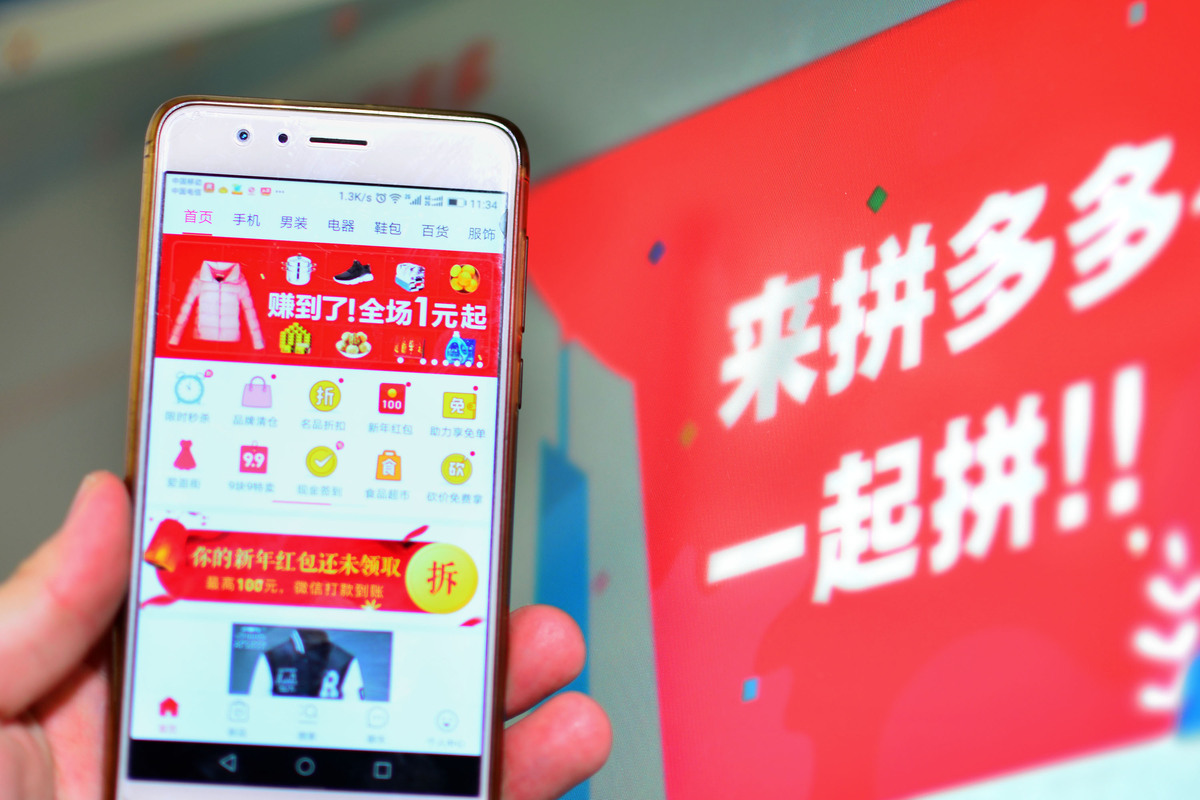
  • The sharp rise of Pinduoduo – What is the secret?

    The sharp rise of Pinduoduo – What is the secret?

    Pinduoduo, also known as PDD, founded by the Ex-Googler Colin Huang, is currently the fastest growing app in the history of the Chinese Internet and the leading Chinese App for social e-commerce. Pinduoduo is reported to have raised a US$3 billion investment round led by Tencent Holdings, at a valuation of US$15 billion. A significant point here is the collaboration with Tecent’s WeChat app (The Chinese analogy to WhatsApp), which plays the most significant role in the functionality of the app and the way it works.

    The app has a list of techniques to push the users share it with their friends and to keep them actively using it after. Pinduodo allows users to participate in-group buying deals with their friends, mostly via Wechat. Pinduoduo can be described best with the words, viral, quick, addictive, attractive, and convenient. Also, probably the most contemporary version to online shopping, bringing into integration the most powerful tools of nowadays communication- messaging and group chats.

    The app, often used through WeChat messaging service, offers merchandise at times 20 percent cheaper than market price by letting consumers buy directly from manufacturers, cutting out middlemen, advertising and acquisition costs. Huang and his developers also used their experience to add gaming elements to the shopping experience, offering coupons and rewards.

    At the end of December 2017, PDD had more than 156.5 million users. PDD gives people a different experience than at traditional e-commerce sites like Amazon.com or Alibaba. PDD is like a digital version of shopping at the mall with friends.

    The strongest asset of PDD is that it is doing extremely well in small cities. Most of the users are price-sensitive women above 40 years old, living in small cities in China. Which gives us a clear picture – frequent purchases for the whole family.

    Pinduoduo has got a few main features:

    1. Group Buying. In order to get discounted price, find a friend to join the group buy deal.
    2. Free products. If you get enough new users to follow the Pinduoduo Official Account, install the App and sign up via WeChat login.
    3. Buy it now coupons. Unlike other coupons in China, PDD offers coupons for two hours only. Which means the user has to take action immediately.
    4. “Bargain” with friends. Each time a friend volunteers to help you “bargain”, the price decreases a bit. You can even succeed getting the product free.
    5. Get cash rewards for inviting friends.
    6. Use of lotteries. Invite friends to join within a specific period of time and win the product for less than 10% of the cost.
    7. Automatic payment. PDD uses automatic WeChat payments. After allowing “password-less payments” by default at the end of your first purchase, you will not have to enter your password anymore and you will be able to pay with one-click payments.

    Pinduoduo has a strong asset over other online retailers and it is in offering cheap deals. To maximize this, Pinduoduo makes the best out of its own users. You may ask how? Very simple, to get the best bargains, users have to invite more buyers, which helps the company maintain the low prices.

    What are the reasons for the fast growth?

    The first point to highlight is the “social shopping” that PDD offers. WeChat has a monthly active user base of over 1 billion. It allows purchases as a group through which users can receive a group discount for purchasing as a group. Users get a product link that they can share with their WeChat friends. The will of users to get a good deal, it is what makes them want to share the app, with as many as possible people. In 2016, when people did not think it was impossible to exponentially grow user traffic, Pinduoduo accumulated one hundred million users through the above method.

    The second smart move of Colin Huang, the Founder of Pinduoduo is the fact that he knew that he must know his market. To understand Pinduoduo, we must understand the users behind Pinduoduo. Comparing Pinduoduo and JD.com’s user distribution, we see that 65% of Pinduoduo users are from third tier cities or more rural areas, while half of JD.com users come from first plus second tier cities, and half from the rest of China. Pinduoduo has achieved unprecedented growth by targeting the low-income population who are also new internet users with its value game.

    Last but not least key move of Huang was giving more profit for the merchants.  Pinduoduo attracts merchants by charging zero fees for selling on their platform. Advertising is achieved through users sharing to social media. As the number of Pinduoduo users grows, the app has formed an ecosystem of user-generated product promotion, allowing merchants to reach the 300 million users directly. By this, satisfying the survival needs of the mid-tail merchants. Colin Huang gave the small merchant a dream opportunity to grow big. And stories such as “Girl born after 1980 achieves 5 million yuan in sales after four months on Pinduoduo”, and “Selling 260 million packs of napkins in two years with three cents of profit per pack” began to appear on the news.

    Along with that, Huang does not compromise on the quality and makes sure that users know that the rapid rise of PDD is not accidental. After some users being dissatisfied with the poor quality, speed of delivery, inconsistencies between product and photo, and failure to receive refunds after waiting for a long time. To address these problems, a customer protection fund was set up by PDD. It helps consumers deal with after-sales disputes and claims. By this focusing on maintaining returning customers and not one time excitement, that will be the end of the customers’ interaction, with the app.

  • An Overview of E-commerce in South East Asian Countries

    An Overview of E-commerce in South East Asian Countries

    Electric commerce or e-commerce is the activity of buying and selling online. Typical e-commerce transaction includes purchase of online books, music purchase and purchase and sales of many other items.  Three known major areas of e-commerce include online retailing, electric market and online auction. Technologies such as mobile commerce, internet market, electronic funds transfer, and electronic data interchange (EDI), online transaction process and many others.

    The practice of e-commerce in Southeast Asia started during the dot.com era in the 90’s just like in many parts of the world. The dot.com era refers to the period where companies started using doing for most of their businesses on the internet, usually through a website that uses the popular domain “.com”. During the dot com era southeastern Asia mainly purchased items from American and European companies that would be delivered in their countries. During this era companies with electronic commerce had shown great prospect with their fast growth and promising profits. Companies’ stock prices skyrocketed and Asia was pretty happy because the rise had resulted to a bubbling economy through electronic commerce.

    Asia then began to attract nearly half of the total capital inflow from developing countries appealing them with high interest rates. Countries like Malaysia, Singapore, Thailand and Indonesia experienced an increase in their GDP rates. Around the year 2000, the e-commerce market was mainly involved in a business to business (B2B) transaction due to customers mistrust after going through the 1997’s financial crises and the bubble burst in southeast Asia – bubble burst is often identified only in retrospect once a sudden drop in price has occurred – The burst is usually profitable for buyers and not sellers. In the 90’s a lot came up as hindrances to the upspring of electronic commerce

    – In those days, aside mistrust e-companies had other issues of which Southeast Asian countries were also affected. As a result of its structural shortcomings, a much more diverse range of payment solutions have become common in the region. The average internet penetration around southeastern Asia with the exception of Singapore was 38% while leading countries have an internet penetration of 70-80%, this made cash on delivery offered by 80% of the players in both Vietnam and Philippines, though bank transfer is another very popular payment method across the SEA. With each of the countries having 94%, 86% and 79% of merchants in Indonesia, Vietnam and Thailand respectively offering it.

    – In addition to a lack of uniformity in payment methods, there is also significant market fragmentation the Southeast Asian consumers have so many platforms to choose for their daily need.

    – Culture also was an inhibiting factor –the influence of Traditions in the Asian region overtime had made people have low trust in bank system and electronic payment, for example; credit card owners and other means used in payment other than in cash is small – government in those times pushed for a cashless policy in their society by trying to implement laws to suit online transactions.

    – Fraud and high level of corruption was another setback to the growth of electronic commerce in the region.

    The prospects and thrive; the battle for supremacy

    The gold rush in the online ecommerce of the as left traditional offline retailers in the Asia region like Thailand and Indonesia scramble for an online business move.

    Over the years until this day the massive growth in e-commerce around southeastern Asian has attracted big name investors into the region. In 2016 the release of the Google Temasek SEA Economy spotlight highlighted Southeast Asia as the world’s fastest growing internet region.  With an existing internet user of 260M which was projected to grow to 480m users by 2020. In the research they predicted that southeast Asia’s internet economy will grow to 200B by 2025 and that $40 – 50bn in investment will be required over a decade to achieve that goal, fast tracking to 2017 they observed that the southeast Asia’s internet user base continues to grow rapidly. there will be 330m monthly active internet users by end of 2017 adding over 70m new users since 2015 13% CAGR.  They estimate that Southeast Asia’s internet economy will reach $50b in 2017, meaning it will Grow at a rate of 27% CAGR outpacing their 20% 10year CAGR projection.

    Asia as a continent had an increase in of around 4.5  billion in the GMV ( gross  merchandise value ) of first hand goods and has had a 41% compound annual growth rate ( CAGR ) in the past couple of years- 2015 to 2017- as given by Google –Temasek’s economy southeastern spotlight 2017 report. The Temasek report went further to predict that CAGR will rise from $5.5bn of 2015 to $88bn by 2026. 2017 witnessed events which proved high results are expected from the e-market in southeastern Asia.  The explosive growth in E commerce as lured china’s two e-commerce giants Alibaba and sd.com to the southeast online market. Amazon much awaited  recent entrance into the E-market of a southeastern nation ( Singapore to be specific) to fast track its online market expansion in southeast Asia also proved there was an attractive raw material in the cyber space of the region.

    The record breaking 1billion dollar sales of shares of Lazadas to Alibaba with alibaba also putting its grip on Tokopedia; arguably a future competitor in Indonesia. The resilience of another China based heavy weight company; Tencent. Tencent has also kicked start investments in companies like SEA (previously Garena) predominantly a gaming powerhouse that runs Shopee, Go-jek, Traveloka, Tiki.nn and Pomelo. The US based KKR  in a bid not to be left out of this massive growth phase through emerald media put US$65million into e-commerce arms dealer Acommerce. This trends of acquiring more shares and grabbing more local companies across the Asian borders by these online giants  is expected in coming years as all stated above points to the fact that the riches in online space of these Asian nations is worth risking for.

    Currently, predictions have given that the home based Asian companies will have to pick sides with either of or stand their ground against the foreign forces from both the western and eastern part of the world.  Predictions went further  to specify that  foreign based companies like Alibaba, Amazon and Tencent is  likely to have a bloodbath battle for the monopoly of the regions  electronic commerce  or share the  Asian online customers, some term this head to head of the western state and eastern state as the clash of the online titans.  It is hope that this clash will result to a much needed gold-shed To Help in the growth of the developing region

    Joe Tsai, Alibaba vice chairman, in speaking with Retail News was quoted as saying “is there a land grab right now for these kind of assets? I think in the land grab they [Tencent] are following us. They are seeing that we have positioned ourselves very well, and they are sort of playing a catch up game. So what we want to do is to work with local entrepreneurs. ”

    Experienced, grown and growing

    Marc woo, Google head of ecommerce , travel and financial services was quoted to have said “Asia pacific (APAC) accounted for 40% of global ecommerce sales in the 1st quarter in 2017, but vast majority of those sales went to larger or more mature markets in the region, particularly china, but also japan, Australia, South Korea, and India. That leaves Southeast Asia as the next frontier for ecommerce in the region.  “

    A steady increase in the advantages of electronic commerce in the region resulted to a 50% growth last year and now totals 200 million individuals across southeastern Asian’s top six economies. The southeastern Asian nation Singapore takes a top spot in Asia with an average of 14.04 sessions per person per year visiting amazon.com. It is rumored and expected that by the end of the year the ecommerce companies should erect physical stores in their resident southeastern nations. This will make a great boost in the economy of this regions.  This huge development in ecommerce have led southeast Asian governments to launch a bid to introduce taxes on ecommerce sales as they look to claim their dollar-and-cents take from one of their most promising engine towards  economic and  financial buoyancy.

    This though might increase the cost price of goods and services offered by the online companies but cannot override nor underestimate its advantage as compared to import and shipping processes. Taxing online sales will align practice with those of world leading countries. It puts online retailers on a leveled playing ground with brick-and-mortar counterpart. This growing market has also initiated an online network process between the Chinese and the Asian region as Alibaba is working to set up a digital free-trade zone in Malaysia and has signed a memorandum of understanding with the government of the Asian country and the authorities of china to simplify cross-border trade between the two regions.

    If this deal falls through under the current government of china a long term mutual profit making relationship is expected to last for a very long time between the Asian nations and the Chinese government  giving that  the china parliament are rumored to have kick started plans in keeping their president more longer in office than usual.  The critical factors responsible or observed to needed for the spontaneous growth of ecommerce in the southeastern region of the continent are

    • A growing middle class – knowing that the middle class contains the highest number of mobile phone users and also the highest number of common goods purchasing.
    • Rapidly expanding internet access are positive indicators for fast paced e commerce growth in coming years. Internet access needs to be at its best for the effective running of electric commerce in a state

    The middle class population of the Asian region is expected to reach a 400million in 2020 from its 190 million of 2012, according to Nielsen project.

    Internet access in the region as not only being expanding at a high pace but has also improved strongly over the years like stated in the research of Google Temasek SEA economy spotlight report stated above.

    The electric commerce has also shown to be of disadvantage though not significant as compared to the many fruit yielded by the online market.

    • The desire for local business owners and the nation’s mobile phone user population to switch online results to more cases of fraud because this system isn’t used to them.
    • Competition between locals and foreigners which should encourage an healthy business environment is not observed as the big guns will slowly silently phase out the local brands
    • The preference of foreign products to locally made products by locals isn’t favorable for the country’s economy.
    • Owing to the creation of a good relationship with certain world leading countries, good tides with others could be altered.
    • If not properly monitored, foreign companies might have a full grip of the southeastern nation economy.

    One major benefit that has been observed to have taken the front line in the advantage of electronic commerce in the southeastern Asian region is the quest for each nation to outperform each other. Especially between Thailand, Vietnam and Indonesia, this healthy beef has led to varying developments in these nations as none wants to be left behind in the development and modernization of their country. These alongside the introduction of big time investors, the rise in economy growth, job creation in nations, strengthening diplomatic tides and many other advantages.

    Stakeholders and experts have advised to government of these Asian nations to support the region to grow by fixing reasonable tax levies in other not to discourage foreign and local investors, encourage a competitive market, improve online network and provide adequate education to ease communication with foreign partners. With the huge wealth emanating from the electric commerce sector, if properly managed these nations can get a massive boost in their nations wealth and reputation. The potentials possessed to build a nations revenue by employing electric commerce cannot and should not be undermined.

     

  • 7-Eleven Outlets In Singapore Are Now Lazada Collection Points

    7-Eleven Outlets In Singapore Are Now Lazada Collection Points

    Lazada and Ninja Van have teamed up with the Singapore 7-Eleven convenience store chain to allow online shoppers to designate any of the nearly 350 stores island-wide as collection points. The collaboration will offer the largest network of collection points around Singapore. The new service debuted at 159 7-Eleven stores this week, with a progressive rollout planned for the rest of the store network by the end of the year.

    Lazada and last-mile logistics provider Ninja Van say the new service eliminates the need for a purchaser to ensure someone is home to receive goods bought online. They can nominate any participating Singapore 7-Eleven store as their delivery point upon checkout.

    “More than 35 per cent of Singaporean households have only one or two residents, with close to 25,000 new dual or single person households forming just between 2016 and last year,” said Crispian Leong, Singapore 7-Eleven head of marketing.

    “Most are working during the day, and many may not find it convenient to receive parcels at their office. With close to 350 participating stores islandwide, we are excited that we can partner with Lazada and Ninja Van to offer this added convenience to consumers’ daily lives and online shopping habits.”

    Ray Chou, country head of Ninja Van Singapore, said the problem will address the high number of failed deliveries its partners encounter, “which is disruptive not only for our customers, but for sellers and delivery companies as well”.

    Users of the service will enjoy free delivery, as opposed to S$1.49 for normal and S$2.99 for express drop-off to their homes.

    Pierre de Bellescize, CEO at Lazada eLogistics Singapore, said partnering with 7-Eleven and Ninja Van will bolster the click-and-collect options the company already offers with SingPost’s PopStations, SPH Buzz Convenience Stores and Parcel Santa Lockers located in Condominiums and others.

  • ZALORA nabs Myntra CMO Gunjan Soni as new CEO

    ZALORA nabs Myntra CMO Gunjan Soni as new CEO

    Global Fashion Group has chosen the head of Jabong India as the new Zalora CEO. Gunjan Soni will over the helm of the Southeast Asian e-commerce portal early next year after she completes her combined tenure as chief marketing officer with India’s largest fashion e-commerce business, Myntra, and the Jabong role.

    Soni has more than 13 years of leadership experience in marketing, strategy and operations and a passion for building new-age consumer businesses.

    “It is truly a huge privilege to lead Zalora, which is already the leading fashion and sports destination, at a time when Southeast Asian markets are poised for increasing fashion and e-commerce consumption,” she said in a statement.

    “When I see Zalora, I see a company with limitless potential and ability to shape the future of fashion commerce in one of the most exciting markets globally. This makes it both exciting and humbling to take on this role.”

    At Myntra, Soni was instrumental in positioning the brand as a leader in fashion and lifestyle and leading the turnaround of the Jabong business post acquisition.

    Prior to joining Myntra, the next Zalora CEO was executive VP for strategy & CEO office with Star India. She also spent a large part of her career at McKinsey where she was a partner, working across multiple consumer sectors and geographies including the UK, Singapore and Bhutan.

    She is a recognised leader in business having featured in Spencer Stuart-Economic Times young leaders 40 under 40 list, Fortune India 40 under 40, and named one of the most influential women leaders in media.

    Patrick Schmidt, Co-CEO of Global Fashion Group, Soni’s experience in leading operations, strategy and marketing in fashion e-commerce and her strong leadership skills will be instrumental in strengthening Zalora’s position as market leader in Southeast Asia’s e-fashion space.

    “She has a deep and broad understanding of the complexities of e-commerce and has contributed to building one of the world’s biggest fashion e-commerce companies.”

  • Alibaba’s Robust Ecosystem Supercharges  2018 11.11 Global Shopping Festival

    Alibaba’s Robust Ecosystem Supercharges 2018 11.11 Global Shopping Festival

    Alibaba Group Holding Limited (NYSE:BABA) today officially kicked off the 2018 11.11 Global Shopping Festival in China’s capital, promising this year’s mega-event will be the largest-ever in terms of scale and reach.

    Businesses within the Alibaba ecosystem will jointly offer hundreds of millions of consumers an enriching experience that supports their pursuit of high-quality products, entertainment and fast, reliable services. The Festival will also demonstrate the enthusiasm of consumers and brands embracing Alibaba’s New Retail strategy – the convergence of online and offline retail through technology.

    “This year marks the 10th anniversary of 11.11. On the back of China’s explosive digital transformation, the Festival’s astounding growth over the past decade has powered the steady growth of quality consumption sought by Chinese shoppers. The evolution also showcases the development of the Alibaba ecosystem over time expanding well beyond e-commerce,” said Alibaba Group CEO Daniel Zhang.

    Zhang conceived 11.11 as a concept a decade ago, turning “Single’s Day” on the Chinese calendar into the world’s largest annual shopping event. The first 11.11 in 2009 brought in US$7.8 million in gross merchandise value (GMV). Total GMV generated in 2017 was US$25.3 billion. Over the past decade, China’s number of Internet users has risen to 802 million and 98% of them are mobile1. Alibaba has captured the hearts and minds of these Chinese consumers and expects to keep leading the way in retail innovation.

    “Over the last two years, we have pioneered the concept of New Retail to accelerate the digital transformation of the offline. We are excited by the impressive results achieved to date and will continue to be the driving force innovating for merchants and customers in the coming decades. We aim to become both the number-one business partner for brands and the number-one shopping destination for consumers,” Zhang added.

    This year, 500,000 items will be available for pre-order on Tmall from October 20. Customers can enjoy additional promotional coupons on Mobile Taobao and Mobile Tmall. Specifically, the 2018 11.11 Global Shopping Festival will have the following features made possible by New Retail and interactive initiatives:

    • Brand Innovation Tmall will continue to give brands access to new digital capabilities – 180,000 brands from China and around the world will participate in this year’s celebration. 200,000 smart stores in China across the apparel, fast-moving consumer goods, beauty products, automobile and home décor industries will help boost traffic to offline and online shopping destinations. Tmall Global provides 3,700 categories of imported goods from 75 countries and regions on its platform.
    • International Consumers Tmall World, AliExpress and Lazada will bring the event to hundreds of millions of overseas users, making 11.11 a truly global event. Lazada will host its first 11.11 Shopping Festival across six countries in Singapore, Malaysia, Thailand, Indonesia, the Philippines and Vietnam, offering more engaged consumer experience and the biggest discounts of the year from LazMall and Lazada marketplace.
    • Participation of Local Services Ele.me’s on-demand platform will provide delivery services for select Starbucks stores across 11 Chinese cities, including full-service coverage in Beijing and Shanghai. In addition, 150,000 merchant partners of Koubei will offer half-price discounts on catering, beauty and hair salons and karaoke bars.
    • New Opportunities for Small Merchants 200,000 mom-and-pop stores powered by Alibaba’s Ling Shou Tong (which translates as “retail integrated”) will provide online sales promotions, along with augmented reality-based red packets that offer discounts at 3,000 “Tmall Corner Stores.” Rural Taobao will also bring coupons to its services in 800 counties across 29 provinces in China.
    • Dining and Supermarket Hema supermarket will designate 11.11 signature stores featuring a number of promotions. RT-Mart will complete the makeover of its nearly 400 stores, fully equipping them with New Retail capabilities.
    • Star-studded Entertainment Tmall Collection’s “See Now, Buy Now” Fashion Show will be broadcast live on ten platforms including Taobao, Youku, Weibo and Toutiao on October 20, starting at 6pm in China. This will provide millions of customers the opportunity to buy their favorite items on the spot and vote for their favorite looks to create a trend report. In addition, the signature countdown Gala will be held on November 10 in Shanghai’s Mercedes Benz Arena, featuring renowned stars.