Tag: ecommerce

  • aCommerce expects online-shopping market share to double to 5.5 percent

    aCommerce expects online-shopping market share to double to 5.5 percent

    E-commerce in the Philippines is gaining ground, given the expectation that its contribution to the total retail market would double to 5.5 percent, according to Southeast Asia’s retail-solutions provider aCommerce.

    Paul Srivorakul, aCommerce Group CEO, said the improved penetration of the online marketplace in the country will further improve as more and more brands move to Web-based retail to expand their presence.

    “Before, it was enough for brands to simply have a web site. But now, brands are starting to realize the importance of utilizing an omnichannel approach to stay ahead of the retail game,” he said.

    The company said this move is due to the changing behavior of the buying public, as they are now beginning to realize that online purchasing is more practical than visiting the so-called “brick-and-mortar” or physical stores.

    In the Philippines aCommerce currently has 25 brand partners. The number could grow to at least 40 next year as its portfolio encompasses consumer goods, home and living, fashion and electronics.

  • E-commerce players feel the heat as bargain hunters call shots

    E-commerce players feel the heat as bargain hunters call shots

    Buyers have become more price sensitive and less loyal to the online platforms in a trend that has prompted an intense “pricing game”, the event heard. Consumers are switching over to the e-commerce operators that offer better promotions and prices.

    The seminar also heard that so-called social commerce (s-commerce) has become another competitor, under a model where sellers and buyers can make shopping transactions directly.

    Pawoot Pongvitayapanu, founder and managing director of Tarad.com, said the platform was launched about 10 years ago as the first e-marketplace in Thailand.

    “Today, we are adjusting the positioning of Tarad.com to cope with more intense competition in the e-marketplace model. Without the new positioning, we would not be able to compete against other marketplaces,” he said.

    Speaking at the e-marketplace forum held on Sunday at Thailand e-Commerce Week 2017, Pawoot said that nowadays competition in the e-marketplace has become more of a pricing game. Consumers have become more price sensitive and have less loyalty as they follow the bargains.

    “Today, the actual competitors in the e-marketplaces are not other e-marketplace players, but s-commerce operators, such as Facebook and Instagram, where sellers and buyers can make their own transactions directly,” said Pawoot.

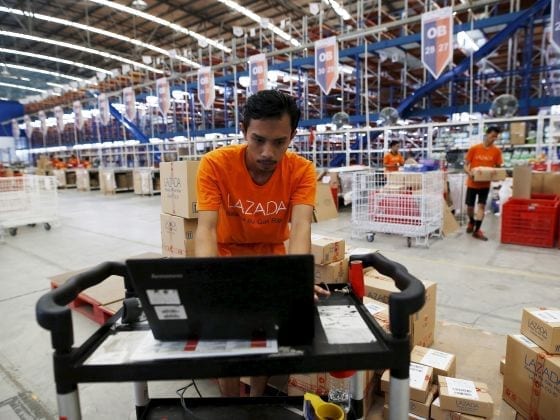
    Thanida Suiwatana, chief financial officer – Thailand, Lazada Group, said that that Thai consumers have become more confident about online purchases.

    “We spent a lot of money in doing marketing campaigns. both offline and online, to generate traffic,” said Thanida, adding that Lazada is now a top 10 e-marketplace in Thailand in terms of traffic.

    “Having good traffic is one of the most important factors for both bricks and mortar stores and online marketplaces. Any online platforms that can generate good traffic will have more chances to sell products.”

    Nuttawit Pholwattanasuk, managing director and co-founder of LnwShop, said that the platform serves individual vendors, enabling them to have their own website and space. It is similar to the idea of a developer of a market or shophouse allowing individual merchants or retailers to do business within their own retail space.

    Eric Bui, head of operation, Shopee Thailand, said that online marketplaces now go beyond the transactional, with a focus on the engagement between buyers and sellers as part of an ongoing relationship.

    “The way we do our listings and provide services to the sellers, everything is free, with no commissions or listing fees,” he said. “The shipping fee has been subsidised by Shopee. There is no reason why the listings on Shopee should not be the cheapest in the country.”

    Haejin Pyun, general manager, marketing strategy, 11street Thailand, said the company started the Thai operation in February.

    “We consider sellers and buyers alike to be very important. While other e-commerce players care about the buyers only, we care about the sellers sometimes more than the buyers,” said Pyun.

    “In Thailand, more than 50 per cent of the transactions come cash on delivery. At 11street, more than 70 per cent of the transactions come from credit cards. We see a big potential to grow in the Thai e-commerce.

    “However, to grow the e-commerce business in Thailand, the payment method is very important. In South Korea, credit card penetration is more than 90 per cent, compared to only 10 per cent in Thailand. Even though they have credit cards, Thai shoppers are still hesitant to put their credit card numbers on an e-commerce site.”

    Thananan Arunragtichai, assistant director of Ascend Commerce, said that the company has operated the weloveshopping.com for 15 years as a store front. For its website, the e-marketplace model was introduced three to four years ago.

    “Today, Thai consumers have greater expectation for marketplace services, such as cheap prices and high quality, as well as good after-sales service. As an e-marketplace operator, we need to manage their expectations properly,” he said.

  • Bic Camera, Rakuten looking at JV

    Bic Camera, Rakuten looking at JV

    Japanese e-commerce site Rakuten and consumer electronics retailer Bic Camera are considering a JV that will marry virtual and real stores.

    They expect to sign a basic agreement soon with a view to setting up their partnership early next year to work toward launching their e-commerce site in April.

    Bic Camera already has an online store on Rakuten Ichiba virtual mall. Through integrating their systems, Bic Camera will upgrade its online store into a joint site that will offer improved services, such as easy booking for delivery and installation.

    Buyers will also be able to search for brick-and-mortar Bic Camera locations that carry the product that interests them. Eventually, the scope of their cooperation will be expanded to cover in-store pickups of online orders, common shopping points and joint delivery services.

    While online sales account for nearly 30 per cent of consumer electronics  and appliance sales in Japan, shoppers say they want to touch and see products before buying. They also criticise the lack of attentive delivery and installation services they can find at physical stores.

    For Bic Camera, 9.2 per cent of its sales, at ¥72.9 billion (US$643 million), were online for the year to the end of August. While the company has its own e-commerce site, it does not anticipate much negative impact from launching the store with Rakuten.

    “Most of the Rakuten Ichiba shoppers will be new customers for us, because people who buy in the ‘Rakuten economic zone’ are different from those who buy from our website,” says a Bic Camera official.

  • Ola Cabs merges with Foodpanda in India

    Ola Cabs merges with Foodpanda in India

    Uber rival Ola Cabs has merged with food-delivery platform Foodpanda India, taking control from Delivery Hero Group of Germany.

    Under the terms of the deal, as well as a handover of shares, Ola has committed to investing US$200 million into Foodpanda’s India business.

    With Foodpanda India CEO Saurabh Kochhar having moved on, Ola founding partner Pranay Jivrajka will be interim CEO.

    Rocket Internet-backed Delivery Hero last year pulled out of Indonesia after tough competition, while Foodpanda wound up its Vietnam business in 2015 and scaled back in India.

    “The partnership with Ola will allow us to further consolidate markets where it strategically makes sense to collaborate with local players,” says Delivery Hero CEO/co-founder Niklas Östberg.

    The acquisition comes shortly after Ola raised $1.1 billion in funding from Japanese telco SoftBank Group and Chinese internet giant Tencent.

    Uber Eats launched in India a few months ago.

  • Bukalapak teams up with TIKI to ease delivery

    Bukalapak teams up with TIKI to ease delivery

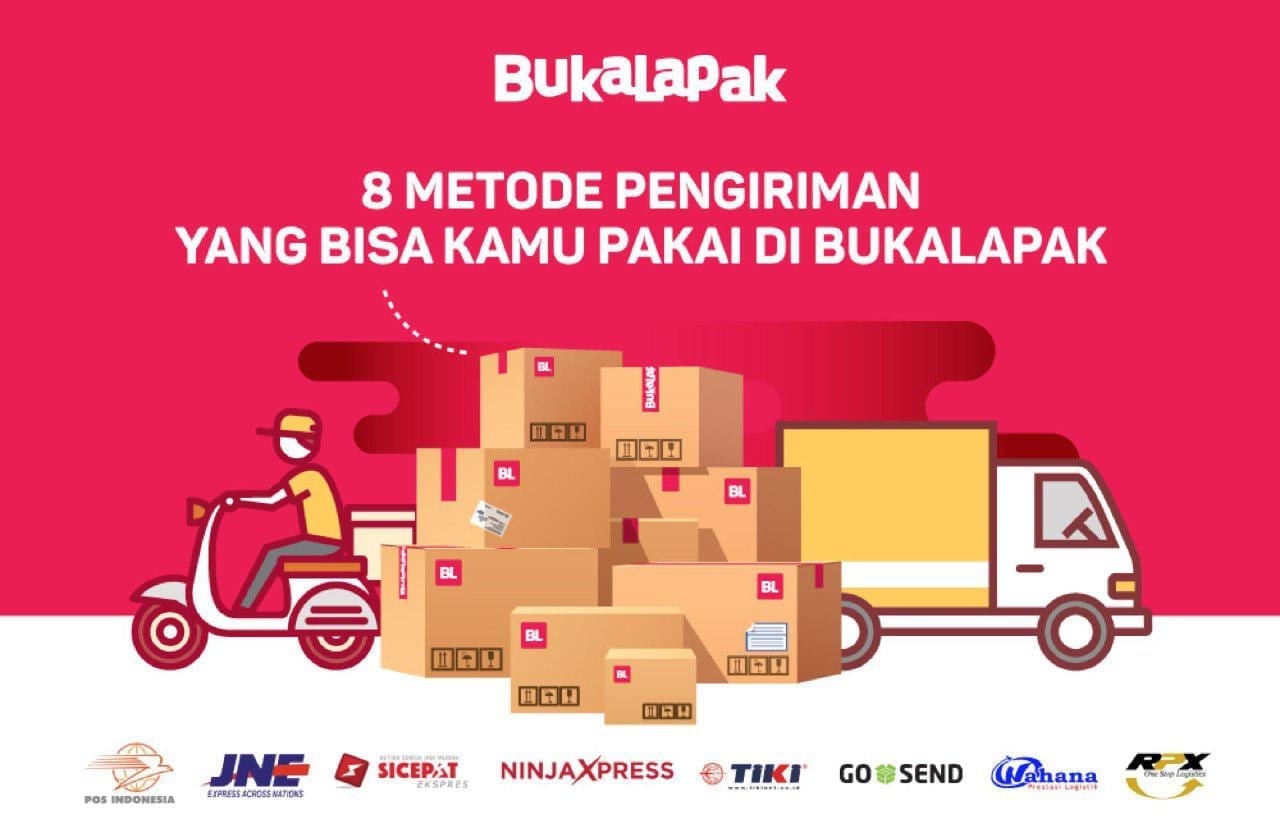
    E-commerce platform Bukalapak kicked off on Wednesday the expansion of its partnership with courier service and logistics company TIKI to facilitate small and medium enterprises (SMEs) in selling their products.

    The new partnership will enable vendors to accelerate product delivery.

    For instance, TIKI provides a “booking code” feature in which vendors can fill in the data of senders and receivers online before sending the packages. When vendors arrive at a TIKI branch, they do not need to wait for TIKI employees to fill in the information anymore.

    “There will be [system] integration between Bukalapak and TIKI. The new features will be launched soon,” Bukalapak co-founder and chief financial officer Muhammad Fajrin Rasyid told at its headquarters in Kemang, South Jakarta.

    Another new feature offered to vendors is pick-up service that allows TIKI couriers to pick up goods from the vendors’ locations. Bukalapak has more than 1.7 million vendors with more than 38 million products offered on its online marketplace. About 500,000 vendors at Bukalapak use TIKI’s services.

  • NBA Teams for Online Stores in APAC

    NBA Teams for Online Stores in APAC

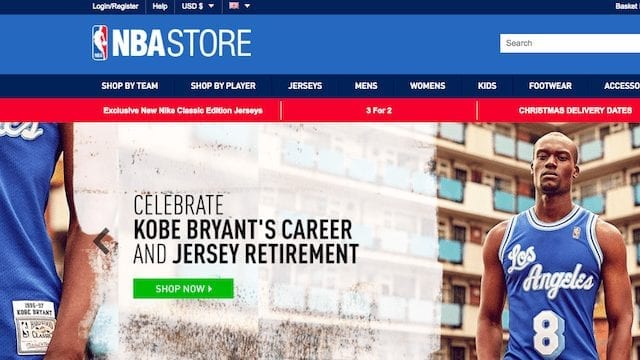
    In partnership with the US National Basketball Association (NBA), sports merchandise e-commerce company Fanatics has launched official NBA online stores across Asia Pacific.

    Fanatics already runs the flagship NBA Store in New York City, the league’s global e-commerce site and its official online store for Europe.

    It has now opened official online stores in Cambodia, Japan, Laos, Malaysia, Singapore, Thailand and Vietnam, as well as Australia and New Zealand. These offer a range of men’s, women’s and youth products from all 30 NBA teams, including oncourt apparel from official outfitter Nike and products from a range of NBA merchandise partners including Mitchell & Ness and New Era.

    There are also exclusive products, including personalised team jerseys.

    As well as paying in local currency, online shoppers will benefit from quicker deliveries and cheaper shipping thanks to Fanatics’ centralised distribution point in Asia.

    “The NBA is becoming an increasingly global league, and we’ve seen a significant uptick in fandom across several regions throughout Asia,” says Fanatics International president Steve Davis.

    With the launch of the new online stores, the league now has 20 international e-commerce sites.

  • H&M Suffers From Online Disruption

    H&M Suffers From Online Disruption

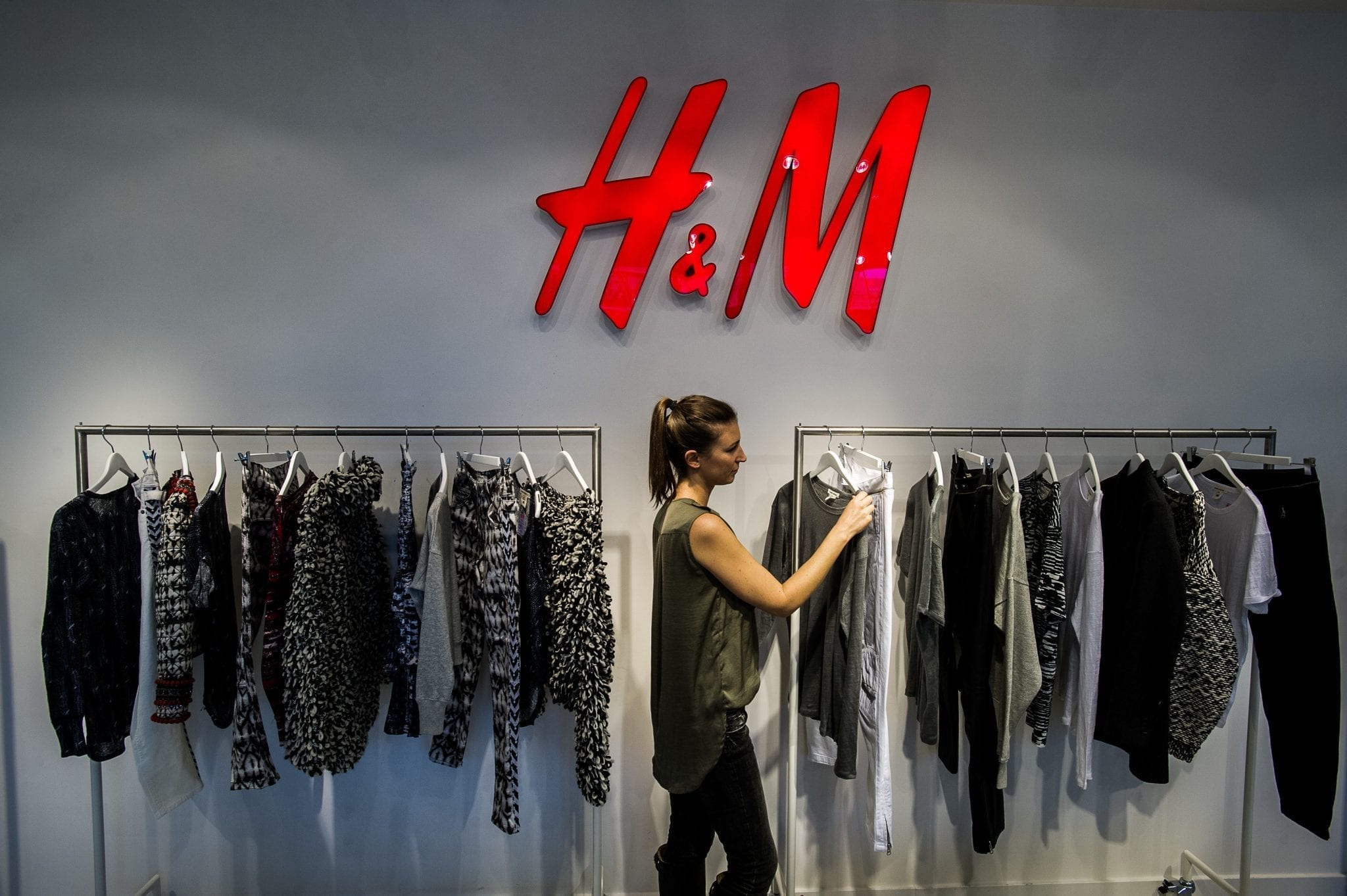
    Shares of the world’s second-largest fashion chain, H&M, have hit its lowest in eight years as the retailer reports plummeting sales at the conclusion of a despondent year.

    In the three months to the end of November 2017, H&M reported a 4 percent drop in sales, and on Friday its shares traded 15 percent lower than its lowest level from back in May 2009.

    Like many high-streets fashion brands H&M is having a difficult year, struggling to cope with the shift to online shopping. The retail giant blamed online shopping as well as “imbalances in parts of the H&M brand’s assortment composition”.

    The company says as a result it would focus more on integrating its online and brick and mortar stores, and re-strategise its physical store footprint by closing more stores and opening fewer.

    “In order to respond even quicker to customers’ fast-changing behaviour the company’s ongoing transformation journey is being accelerated. Among other things, this includes continued integration of the physical and digital stores, and intensifying the optimisation of the H&M brand’s store portfolio – leading to more store closures and fewer openings,” it said in a statement on Friday.

    H&M was one of the first retailers to sell online, but due to slowing its digital stride, it had been quickly overtaken by both pureplays, such as ASOS, and high-street fashion labels such as Zara, Gap and Uniqlo. H&M also had a plan to aggressively grow its physical stores, which clearly now has been reconsidered.

    In a separate note, H&M also announced on Friday that it would start selling its merchandise on China’s Alibaba-owned Tmall e-commerce platform by the second quarter next year. It currently sells its Monki brand on the site, however it’s in negotiations at the moment about selling all of its eight brands on the world’s largest e-commerce platform.

    “We are very happy to be able to make H&M even more accessible in mainland China. Tmall is an important complement to our existing physical and digital stores. We see great potential for substantial future growth and Tmall will be an important part of this,” says Karl-Johan Persson, CEO of the H&M group.

    Controlled by the Pearson family, which still provides the company with a CEO and a chairman, H&M has been under pressure from its minority shareholders, and in February 2018 it will hold its first-ever investor day.

  • China’s cars might finally going to make debut in Western markets

    China’s cars might finally going to make debut in Western markets

    After a decade of development, often through buying or benchmarking foreign technology and know-how, Chinese automakers are looking with greater ambition at selling their cars in major Western markets.

    Improvements in car design, technology and marketing at firms including Geely, GAC Motor and Great Wall Motor have brought them a bigger share in their home market, the world’s largest, and give them a better chance of survival in competitive markets in Europe and the United States.

    Once distant dreams of staking a claim in Western strongholds may now be edging nearer.

    “We have in the Western world an outrageous arrogance. We think we’re ahead. It’s going to change,” says Alain Visser, Senior Vice President of Lynk & Co, a new brand set up by Geely.

    “China is passing you at a speed that in our arrogance we don’t even see,” Visser told Reuters earlier this month.

    Hangzhou-based Geely, which owns Volvo Cars and Lotus and makes London black cabs, has its sights set on selling cars in Europe in 2019 and the United States a year later. The Lynk & Co brand, set up in Sweden with Volvo, will spearhead its attack.

    Geely plans only to sell ‘green’ cars – conventional hybrid, plug-in hybrid and all-electric models – in those markets, and would primarily sell through directly-owned stores and online rather than through traditional dealer franchises. It could also offer cars for rent via a subscription model similar to Netflix and Spotify.

    GAC Motor, whose parent Guangzhou Automobile Group partners Honda Motor, Toyota Motor and Fiat Chrysler in China, may beat Geely to the U.S. market, eyeing entry by end-2019. But unlike Lynk & Co, GAC is more likely to sell through a traditional distribution network of franchised retail stores there.

    It’s taken Chinese automakers years to get this far, and, to be sure, there will be significant road bumps.

    “A key obstacle in markets like the United States is a consumer bias against Chinese-made goods,” said Jeff Cai, a Beijing-based senior director at JD Power & Associates. “Our research found most U.S. consumers think China is a third-world country that builds low-quality products.”

    There’s also the thorny issue of China’s trade surplus with the United States – an imbalance high on U.S. President Donald Trump’s radar. Cars shipped in from China would likely increase that surplus.

    Selling direct, online

    Geely’s Lynk & Co aims to open its own flagship store in Berlin in the second half of 2019, and a similar outlet in San Francisco in 2020.

    In some U.S. states, which don’t allow direct selling, Lynk & Co plans a subscription-based sales model, renting cars to consumers on contracts as short as a month. Those deals will include insurance, warranty and other benefits.

    Visser says Lynk wants to test this unconventional retail model because it reckons around a quarter of revenue is lost through the traditional distribution business in dealer margins and discounting. He expects to recoup more than half those ‘losses’ by selling direct.

    Some of those savings will be passed on to customers by selling Lynk & Co cars at a more affordable price, Visser said, adding Lynk & Co aims to sell 250,000 vehicles a year across Europe and the United States – though he gave no firm timescale for that.

    In the United States, selling direct could put Lynk & Co on a collision course with the politically powerful National Automobile Dealers Association (NADA), the lobby group for franchise dealer operators.

    While Visser says NADA has “unbelievable power”, he believes dealers will eventually come around to Lynk & Co’s retail model as it would likely be franchise dealers who get to service Lynk & Co cars, carrying out repairs and regular maintenance – and that’s where dealers make most money.

    No Trumpchi for U.S.

    For its part, GAC Motor is looking at the possibility of building out its overseas presence from the U.S. northeast, two people close to the company said.

    That region, including Massachusetts, Connecticut, Maine and New York, is seen as being more open to foreign cars and to the sport-utility vehicles (SUV) that GAC Motor plans to sell, they said.

    The company said it has not yet decided a U.S. entry point, but would more likely opt to build a sales network with franchise dealers or join an existing dealer group.

    GAC Motor – which says it has developed rather than acquired its technologies – said it was conducting market research to determine the brand’s positioning and identify products for its U.S. business.

    Its first U.S. offering is likely to be an SUV sold in China as the Trumpchi GS8. Given the political sensitivities, the model will be renamed for the U.S. market.

    “We respect culture in the U.S. and understand there’s no precedence to use the current president’s name as a brand name,” the company said through a spokeswoman.

  • Things you might not know about ballistic bitcoin

    Things you might not know about ballistic bitcoin

    Bitcoin rocketed to another record high close of $16,000 on the Luxembourg-based Bitstamp exchange on Thursday after gaining more than $4,000 in just 48 hours, stoking concerns that a rapidly swelling bubble could be set to burst.

    There were huge disparities between prices across different exchanges. On GDAX, one of the biggest, the price reached $19,500.

    Here are some facts that you might not know about the largest and best-known cryptocurrency.

    How many are there? Bitcoin’s supply is limited to 21 million – a number that is expected to be reached around the year 2140. So far, around 16.7 million bitcoins have been released into the system, with 12.5 new ones released roughly every 10 minutes via a process called “mining”, in which a global network of computers competes to solve complex algorithms in reward for the new bitcoins.

    Energy drain These mining computers require a vast amount of energy to run. As the price increases, more miners enter the market, driving up the energy consumption further. A recent estimate by tech news site Motherboard put the energy cost of a single bitcoin transaction at 215 kilowatt-hours, assuming that there are around 300,000 bitcoin transactions per day. That’s almost enough energy as the average American household consumes in a whole week.

    Bits of Bitcoin If you want to buy bitcoin, you do not need to buy a whole one. Bitcoin’s smallest unit is a Satoshi, named after the elusive creator of the cryptocurrency, Satoshi Nakamoto. One Satoshi is one hundred-millionth of a bitcoin, making it worth around $0.0002 at current exchange rates.

    Bitcoin billionaires Bitcoin has performed better than every central bank-issued currency in every year since 2011 except for 2014, when it performed worse than any traditional currency. So far in 2017, it is up more than 1,400 percent. If you had bought $1,000 of bitcoin at the start of 2013 and had never sold any of it, you would now be sitting on around $1.2 million. Many people consider bitcoin to be more of a speculative instrument than a currency, because of its volatility, high transaction fees, and the fact that relatively few merchants accept it.

    Exchange heists More than 980,000 bitcoins have been stolen from exchanges, either by hackers or insiders. That’s a total of more than $15 billion at current exchange rates. Few have been recovered.

    Mystery creator Despite many attempts to find the creator of bitcoin, and a number of claims, we still do not know who Satoshi Nakamoto is, or was. Australian computer scientist and entrepreneur Craig Wright convinced some prominent members of the bitcoin community that he was Nakamoto in May 2016, but he then refused to provide the evidence that most of the community said was necessary. It is not clear whether Satoshi Nakamoto, assumed to be a pseudonym, was a name used by a group of developers or by one individual. Nor is it clear that Nakamoto is still alive – the late computer scientist Hal Finney’s name is sometimes put forward. Developer Nick Szabo has denied claims that he is Nakamoto, as has tech entrepreneur Elon Musk more recently.

    Inflated Chinese trading Until earlier this year, it was thought that Chinese exchanges accounted for around 90 percent of trading volume. But it has become clear that some exchanges inflated their volumes through so-called wash trades, repeatedly trading nominal amounts of bitcoin back and forth between accounts. Since the Chinese authorities imposed transaction fees, Chinese trading volumes have fallen sharply, and now represent less than 20 percent, according to data from website Bitcoinity.

    “Market cap” The total value of all bitcoins released into the system so far has now reached as high as $283 billion. That makes its total value – sometimes dubbed its “market cap” – greater than that of Visa, and bigger than the market cap of BlackRock and Citigroup combined.

    Crypto-rivals Bitcoin is far from the only cryptocurrency. There are now well over 1,000 rivals, according to trade website Coinmarketcap.

    “Shorting” It is already possible to short bitcoin on a number of retail platforms and exchanges, via contracts for difference (CFDs), leveraged-up margin trading or by borrowing bitcoin from exchanges without leverage. But a number of big financial institutions – including CME Group, CBOE and Nasdaq – have recently announced that they will offer bitcoin futures, which will open up the possibility of shorting the cryptocurrency to the mainstream professional investment universe.

    Lost Bitcoins Many fewer than the 16.7 bitcoins that have been mined are actually in circulation and accessible, because of forgotten passwords, accidental losses, hoarding, owners forgetting about coins or even dying. It is impossible to know for sure how many bitcoins have been permanently lost, because those that have are still in the system, in dormant addresses. But according to a December 2013 research paper by the University of San Diego and George Mason University, 64 percent of the 12 million bitcoins that had by then been mined had never been spent. Bitcoin developer Sergio Lerner estimates that almost 1 million unspent bitcoins belong to the cryptocurrency’s mysterious creator.

    Rich list There are 5,638,155 bitcoins in the 1,000 biggest wallets – more than a third of all bitcoins in circulation. That makes the 1,000 biggest wallet-holders worth a collective $87 billion, at current rates.

    High fees The average fee paid to process bitcoin transactions has soared over the past year, outpacing even the staggering price increase of the cryptocurrency itself. Each bitcoin transaction now costs around $7.30 to process, up from around 30 cents at the start of the year, according to trade website BitInfoCharts.

    Forking off If you owned bitcoin prior to Aug. 1, 2017, you also own Bitcoin Cash – a clone of the original. That is because on that date bitcoin underwent a so-called “fork”, in which the underlying software code was split into two. One unit of Bitcoin Cash is now worth more than $1,300. That adds roughly another 135 percent to the returns from a bitcoin investment at the start of the year.

  • Time to win for Vietnam Tax Department on Facebook e-commerce case

    Time to win for Vietnam Tax Department on Facebook e-commerce case

    Ho Chi Minh City’s tax department has handed a bill of VND9.1 billion ($401,300) to a Facebook retailer in a rare successful attempt to levy sales on social media.

    A source from the department said that the tax declaration submitted by the cosmetics retailer was millions of dollars short compared to information acquired from the retailer’s banks.

    Le Thi Thu Huong, deputy director of the department, said the sum was the biggest amount ever to be claimed by her agency from an online retailer for tax evasion.

    The department contacted nearly 13,800 Facebook accounts earlier this year asking them to pay tax for businesses they were running on the social network, but few complied.

    Facebook is the most popular social network in Vietnam with more than 52 million active accounts, and is also used as an e-commerce platform that tax authorities have struggled to keep track of.

    Vietnam levies a 0.5 percent income tax and a 1 percent value added tax on sales of more than VND100 million ($4,400) per year.

    Local tax authorities have recently stepped up efforts to collect taxes from online businesses that use Facebook and other social media sites such as Instagram and YouTube.

    Tax departments in both Hanoi and Ho Chi Minh City have sent out tax demands to around 27,000 Facebook retailers in a move to target tax avoidance by online businesses.

    Online sales in Vietnam have expanded rapidly in recent years, currently accounting for 3.39 percent of the country’s retail market. The total retail market grew 10.2 percent last year to $118 billion, mainly fueled by a growing middle-class with expanding disposable incomes and an increasing number of internet users.

    In an effort to minimize tax losses, the Ministry of Finance is considering a plan to impose value added tax and income tax on sales with a value of VND1 million ($44) upwards, or multiple sales of a lesser value.

  • Is e-commerce taking over sales in Indonesia?

    Is e-commerce taking over sales in Indonesia?

    The growth rate for retail stores is now at single-digit levels, falling from above 10% in recent years. Online shopping is shouldering part of the blame, but the main culprit is a slowdown in overall consumer spending — long the driver of Indonesia’s economy — due to sluggish wage growth.

    Since the busy Ramadan shopping season ended in the summer, Indonesian consumers apparently have tucked away their wallets, at least at brick-and-mortar establishments. Retail store sales in October 2017 grew by an anemic 1.3% from a year earlier, according to preliminary data released by Bank Indonesia, the country’s central bank.

    This is causing store closures across the country, where the modern retail business model had entrenched itself over the years. At the end of June, all Indonesian 7-Eleven convenience stores closed their doors. In September 2017, Matahari Department Store, the nation’s largest department store chain, shuttered two southern Jakarta stores.

    Same-store sales of the chain over the first nine months of the year fell 2.7% from the same period last year.

    The recent lack of foot traffic at a major Jakarta department store typified the trend. As some 40 clerks stood idly chatting away, a nearby supermarket swarmed with shoppers.

    Many of the vacant store fronts in the country’s commercial centers are due to the increase in e-commerce. According to one survey, online sales surged 22% in 2017 from the previous year to around $7 billion.

    A bevy of powerful e-commerce sites — among them Tokopedia, one of Indonesia’s largest online marketplaces, and Alibaba Group Holding’s Lazada — are siphoning shoppers away from stores, a trend that shows no sign of abating. Online sales are projected to keep climbing at a brisk annual rate of around 20% for the foreseeable future.

    The growth in smartphone usage has also spurred online shopping, especially in rural areas where modern retail shops are still few and far between.

    But the rise in online shopping tells only part of the story. The main reason for tepid consumer spending is weak wage growth. The minimum wage growth rate will slow to 8.71% in 2018, the lowest in recent years, according to the government, noting that relatively low-income earners will be hit particularly hard.

    As recently as 2013, minimum wages had soared more than 40%, fueling the country’s free-spending ways. Now, consumers are being forced to cut back in order to save for future outlays, such as on housing and education. This has put a crimp on spending for even daily products.

    With a population of over 250 million, Indonesia is the largest consumer market in Southeast Asia. Many economists say the country’s consumption will continue to rise over the long term.

    There is little doubt, however, that Indonesian’s retail industry is facing a crisis of sorts, and the government is not helping with the situation.

    If this trend continues, the ensuing shock waves may hit other sectors of the economy, possibly dampening foreign direct investment in the country’s consumer market.

  • Japanese making $62m with an instant-second hand website

    Japanese making $62m with an instant-second hand website

    What if you paid people instantly for their used goods over the internet, with no guarantee that they would hand them over?

    The 36 year-old e-commerce entrepreneur, Yusuke Mitsumoto, launched an app in June 2017 to test the idea. It worked better than he imagined; after 16 hours, he was stunned to discover he was on the hook for 3.6 billion yen (£23m) and shut the service down.

    A day later, truckloads of clothes and electronics gadgets started to arrive, with his startup’s employees forming a bucket line to move packages into his company’s tiny office in Tokyo.

    All told, less than 1 in 10 second-hand-goods sellers didn’t deliver as promised. That was good enough for Mitsumoto, who relaunched the service, called Cash, in August 2017 as a new way to gather inventory for an online flea market.

    Total daily purchases are capped at 10 million yen, and are limited to smartphones, luxury handbags, watches, clothing and other specific items from a list of several thousand. Customers take a photo and are given a non-negotiable offer. Prices are set automatically based on data gleaned from other second-hand marketplaces and Cash makes money by reselling the goods.

    “It was a social experiment,” said Mitsumoto, who started selling goods on the web in 1996. He later launched Stores.jp, Japan’s version of Shopify, which he sold and then bought back. “Of course, I believed that good people would outnumber the bad, but the question was by how much. That’s not something you can find out without trying.”

    Second-hand sales are a big business in Japan and a market worth 1.6 trillion yen, according to the Reuse Business Journal. Bookoff has hundreds of stores that buy and sell everything from used books to video games and electronics. Yahoo Japan operates the country’s biggest online auction site. Mercari became Japan’s first startup to be valued at more than $1bn with a smartphone app that made it easy for people to sell unwanted things to each other.

    What Mitsumoto discovered was a way to remove the last bit of friction for sellers to get rid of stuff, unlocking value wasting away in people’s closets. He tapped into a market of people who lacked either the time or the patience to take nice pictures, write product descriptions and haggle with buyers.

    He also knew that it was only a matter of time before bigger rivals followed with similar offerings. So when Mitsumoto got a Facebook message on 4 October 2017 at 1:58 am, “Hi! This is Kameyama~! Sell Cash to me~! No?” he saw a way to stay ahead of the competition.

    Keishi Kameyama is one of Japan’s richest people and the founder of DMM.com, a media and technology empire with $1.6bn in revenue. Kameyama started with pornography but has grown his company into a vast collection of enterprises that spans a currency trading platform, video games, an online English school and solar farms. Mitsumoto agreed to sell Cash to DMM for 7 billion yen and continue running the business.

    “For people doing internet businesses in Japan, DMM is a scary presence,” Mitsumoto said. “You never know when they may launch their own business and become a tough rival. I figured it’s best to at least meet.”

    Indeed, a week after the deal was announced, Mercari launched an identical offering.

    Kameyama said his team recognized the potential of the market uncovered by Mitsumoto, but admits that the eye-popping valuation for a company of six people that’s not even one year old was also partly an “acquihire” —an acquisition based on hiring.

    “Doing business on the internet is not all capital and equipment, you need a certain intuition, a design sense and ability to get a service going,” Kameyama, 56, said in an interview. “I can also appreciate a bold play. There aren’t that many audacious people in this world.”

  • DHL ecommerce to launch its Indian operations

    DHL ecommerce to launch its Indian operations

    Mail and logistics group Deutsche Post DHL (DPDHL) is expanding its dedicated e-commerce logistics service- DHL e-commerce- in India. The company has been testing e-commerce logistics business in India through its Indian subsidiary Blue Dart Express since 2014.

    The publication reports that Germany-headquartered DHL eCommerce has hired former Reliance Jio marketing head Neeraj Bansal and will be roping in more senior executives to kickstart its operations in the country by March 2018.

    DHL ecommerce has previously made many investments in the country through its BlueDart Express subsidiary. However, the publication added that BlueDart and DHL eCommerce will not be competing against each other but rather co-exist.

    Recent developments in the logistics segment in India

    While there are a number of standalone logistics companies in India. E-commerce players too have started having their own logistic arms in the country.

    Amazon: In November, Amazon India’s logistics arm Amazon Transportation Services (ATS) further received funding of Rs 130 crore from its US-based parent Amazon Inc. Before that, ATS received Rs 207 crore worth of funding from Singapore-based Amazon Corporate Holdings and Amazon Malaysia, in June, and before that, it had received Rs 67 crore in September 2016.

    Flipkart: Etailer Flipkart also owns a logistics arm eKart, in which it invested Rs 961.4 crore in October. In April, Flipkart-owned online fashion website Myntra acquired Bangalore-based logistics startup InLogg.

    Hippo: Hippo Innovations Private Limited, which runs the DIY mobile e-commerce platform StoreHippo, launched an e-commerce logistics solutions aggregation platform called ShipKaro, in October. At present, it lists standalone companies like Delhivery, Aramex, FedEx, Ecom Express, Holisol, Blue Dart, Bombino Express, DTDC, Book A Wheel, Gati, OnlineXpress, Vegostics, and Xpressbees as carrier partners. It claims to deliver to over 20,000 PIN codes across India.

    The government of India: In October, the government of India launched the International Tracked Packet service, which provides cross-border shipping for the e-commerce sector in the Asia-Pacific region. This service is provided by the Department of Post, and offer features like track & trace, volume discounts, pick up facility, and compensation for loss or damage.

    In terms of standalone companies, there are firms like Ecom Express, Locus, Delhivery, Rivigo, Loadshare, Blackbuck, and also NSE-listed Gati, which invested in Browntape.com in November, which is a service which enables vendors to sell on multiple marketplaces with the same pool of inventory, and give them access to data, marketing and technology.

  • Lazada to offer Apple products to Southeast Asia customers

    Lazada to offer Apple products to Southeast Asia customers

    Fans of Apple can soon buy their favourite Apple products on Lazada, Southeast Asia’s leading eCommerce company.  As an authorised online reseller, Lazada’s customers will be able to choose from a wide range of Apple products including iPhone, MacBook, MacBook Pro, iPad, iPad Pro, Apple TV, Beats by Dr. Dre, and other accessories.

    Start shopping this holiday season

    Consumers can start browsing this holiday season when the Apple ‘Shop-in-Shop’ on Lazada officially launches today (8th December) in the PhilippinesIndonesiaThailand and Singapore. This will be followed by Malaysia on 11th December, and then in Vietnam.

    By shopping on Lazada, customers can choose to pay for their Apple devices through Lazada’s 0% financing instalment plans[1]. Exciting surprises also await Lazada customers looking to score savings from deals offered during the finale of Lazada’s Online Revolution shopping event, the 12.12 Final Sale. More details will be announced later.

    The “preferred choice” for global brands

    Lazada Group Chief Executive Officer Max Bittner said the Apple ‘Shop-in-Shop’ concept is a testament to Lazada’s reputation as the undisputed and trusted online shopping and selling platform in Southeast Asia. “Lazada is the preferred choice for global brands who, like us, want to drive the explosive growth of eCommerce in Southeast Asia,” said Mr. Bittner, adding: “It also underscores our commitment to give consumers better and convenient access to the world’s best brands and products, especially those from Apple.”

  • Be Inspired by Zalora to showcase trends

    Be Inspired by Zalora to showcase trends

    Online fashion destination Zalora has launched Be Inspired, a curated page that consolidates fashion trends across various themes.

    Shoppers can readily obtain items on Zalora to help them achieve specific looks.

    Recognising the role of social media in influencing fashion choices, Zalora is also launching #ZaloraStyleEdit, a page for user-generated images from Instagram. By using the hashtag in their posts, shoppers can upload photos of their outfits.

    All the items featured can be bought on the spot as they are linked to either the exact Zalora product or a similar one sold on its site.

    The Be Inspired tab offers a curated experience with a navigation menu that highlights 16 evergreen and seasonal trends, as well as occasions and international fashion inspiration.