Tag: ecommerce

  • A sophisticated e-commerce model attracts 8 major supermarkets

    A sophisticated e-commerce model attracts 8 major supermarkets

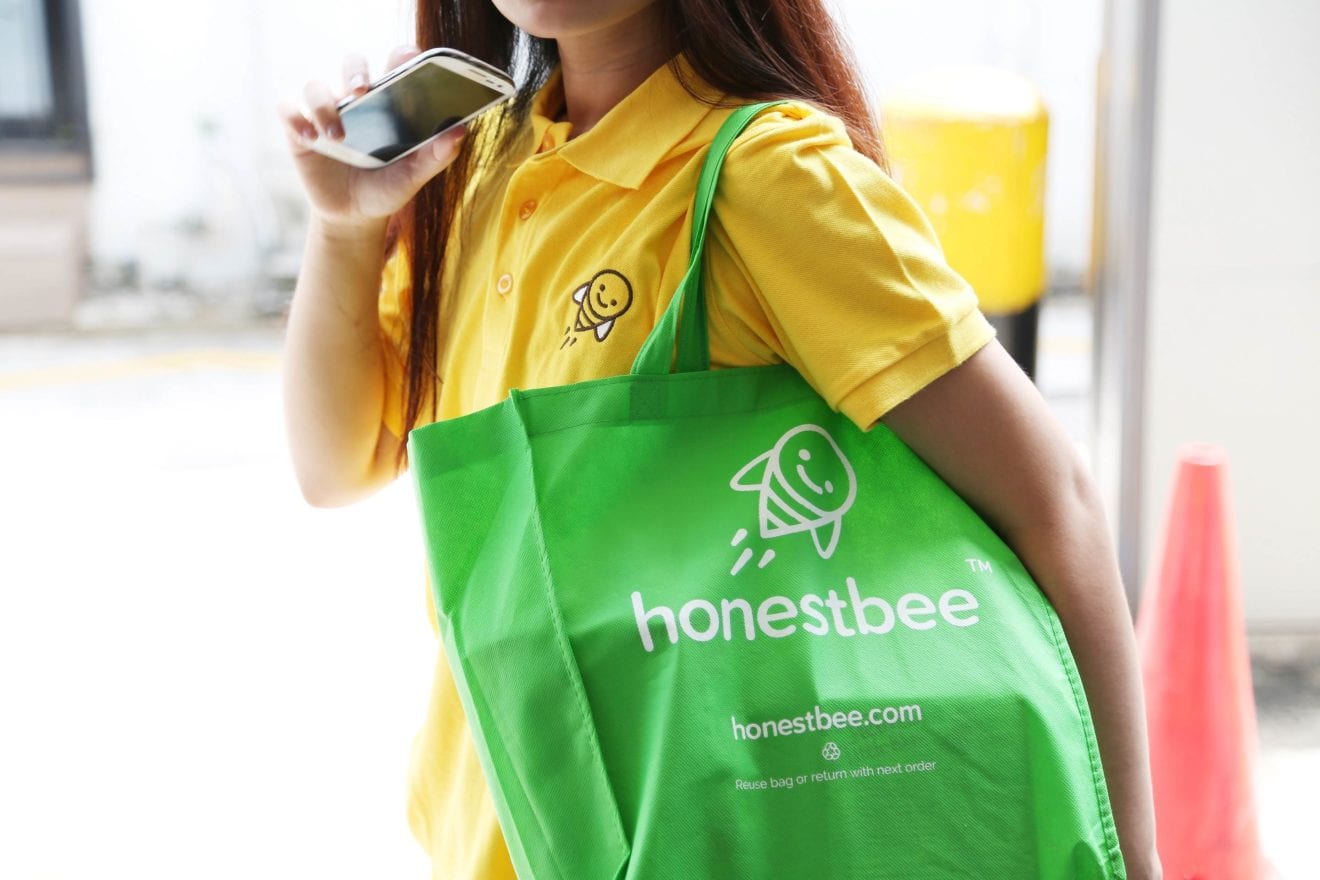
    Honestbee, Asia’s leading online grocery and concierge service, where professional concierge shoppers handpick and deliver fresh groceries from top local stores,
    has announced partnerships with eight well-known major supermarket partners in Hong Kong on June 20th.

    Providing a turnkey solution for supermarkets to gain new customer bases and incremental revenue, Honestbee presents itself as an attractive solution to traditional supermarkets and boutique stores looking to grow their sales and customer base overnight.

    Honestbee, a Singaporean tech startup founded in 2015 operating in eight major cities in Asia including Hong Kong, Singapore, Tokyo, Taipei, Bangkok, Manila, Kuala Lumpur and Jakarta, is now extending its service to include Japanese lifestyle brand YATA Supermarket, local chain supermarket Taste, as well as U select which sells close to 600 products from the UK’s leading supermarket, TESCO.

    Agreements with eight supermarkets including PARKnSHOP, Great Food Hall, Taste, Fusion, International (will launch in July), YATA Supermarket, U select and TESCO have allowed Honestbee to offer over 30,000 items to consumers in Hong Kong. The company continually innovates to improve the shopping varieties and delivery capabilities with the aim of delighting its customers, and building the largest and most convenient online grocery concierge service in Asia.

    Apart from the technological expertise and efficient network, the valuable information and solutions honestbee offers partners has played no small part in attracting new stores. “It’s a turnkey e-commerce solution”, said Hong Kong country manager of honestbee, Derek Winder. “This means, if someone wants to launch an e-commerce platform, they can use honestbee to build their e-commerce store as well as handle the payments, professional customer service team and logistics. Plus, our system captures valuable information like the most popular products, customer frequency, product ordering information and out of stock circumstances. This consumer data is incredibly useful and can easily help our partners realize which items they should stock more of!”

    With no upfront cost and a professional customer service team readily available to offer tailored solutions, honestbee’s e-commerce package presents an attractive offer to potential partners. Additionally, the company provides information not readily available to retailers in brick-and-mortar stores. This can include customer frequency, product ordering information, out of stock circumstances and the geographical location of orders. The ability to share which products are most popular during a certain time frame, for example, allows supermarkets to implement targeted marketing strategies.

    Along with comparatively high rental costs in Hong Kong, honestbee provides the ideal e-commerce platform – a critical component for all the partners looking to boost both online and offline sales.

    Since its launch, the company has successfully grown to become one of the most advanced players in the on-demand category, with 60% of customers making use of the service at least once a week and spending an average of HK$750 per visit. From the beginning, honestbee’s commitment has been to deliver a superior customer experience, become an invaluable partner for retailers, and give back to the community. Other than the major supermarkets mentioned above, honestbee partners with popular boutique stores in Hong Kong including Feather & Bone, The Butchers Club, Pet Line and Baby Central.

    Thanks to the recognizable regional expansion and quality service, honestbee has just won the Wild Digital #BOOM Startup of the Year award on 24th May 2017, which recognizes startups that have demonstrated outstanding growth.

  • Alibaba launches new sales channels in Singapore, Malaysia

    Alibaba launches new sales channels in Singapore, Malaysia

    Chinese e-commerce giant Alibaba Group Holding Ltd on Monday said it is launching new sales channels in Singapore, Malaysia, Hong Kong and Taiwan as China’s deep-pocketed e-commerce firms vie for new users in the region. The new service, branded Tmall World, will allow overseas Chinese users to buy goods from Alibaba’s Tmall, its popular brand-to-consumer retail site, the company said in a statement.

    “Alibaba will provide end-to-end solutions including logistics, payment, and localization support catering to each local market’s needs,” the statement said.

  • E-commerce, rural shoppers boost China’s retail sales in May

    E-commerce, rural shoppers boost China’s retail sales in May

    Retail sales in China for the month of May witnessed double-digit growth, pushed on by incredible growth in online consumer purchases and rural shoppers, according to local data released this week.

    Online sales grew 26.5% in May, accounting for 13.2% of total retail sales

    China’s retail sales jumped 10.7% last month, hitting RMB2.95 trillion (US$434.2 billion), reported the National Bureau of Statistics (NBS).

    Despite the yearly leap, China’s sales growth remained steady from April, just surpassing the median estimate of 10.6% growth from economists surveyed by Reuters.

    The biggest mover and shaker was online sales, which grew 26.5% in May, accounting for 13.2% of total retail sales. This figure compared to growth of 25.9% for the four months ended April. But sales growth at larger enterprises remained flat from April at 10.7%, said NBS.

    By location, Chinese consumption was stronger in rural areas, with retail sales increasing 12.7% last month, besting urban areas, which recorded a retail sales climb of 10.4%.

    Moreover, China’s industrial production was also steady in May, growing 6.5% year on year, and exceeding expectations it would slow to 6.3%, reported the Financial Times.

  • Vietnam launches first specialties e-commerce platform

    Vietnam launches first specialties e-commerce platform

    The site offers about 20,000 agro-forestry-fishery products, herbal food, beverage and handicrafts and others from 5,000 suppliers. All listed goods have clear origins and quality certificates issued by competent authorities.

    The platform sells commodities directly to customers from suppliers. The VNPOST only cooperates with reputable partners who have obtained business licences and food safety certificates.

    Prices of goods and delivery services are posted publicly, while payment for the shipment is collected at the time of delivery.

    At the launching ceremony, Deputy Minister of Information and Communications Nguyen Minh Hong asked the VNPOST to pay attention to technical infrastructure and working mechanism for safe and legal transactions.

    VNPOST General Director Pham Anh Tuan said his company wants to form links with suppliers of specialties across regions.

    Through the site, VNPOST hopes to contribute to promoting the “Vietnamese people give priority to using Vietnamese goods” campaign, Tuan added.

  • Korea’s Mobile shopping soars to record levels

    Korea’s Mobile shopping soars to record levels

    Purchases made through mobile devices like smartphones accounted for record-high levels of all products traded online in April, government data showed.

    Mobile transactions through smartphones and tablets reached 3.68 trillion won (US$3.28 billion) in April, surging 42.2 percent from a year earlier, according to the data by Statistics Korea. The amount was equal to 60.6 percent of all online purchases made in the cited month, which reached 6.08 trillion won, and outpaced the earlier record of 59 percent set in March.

    Mobile purchases in Korea have been on a steep rise for years as a growing number of people are spending more on their smart devices. The percentage of mobile transactions within total online sales was in the 40 percent range in 2015 and went up to the 50 percent level in 2016 before rising to the 60 percent range this year.

    Industry watchers said the increase is attributable to mobile shopping industry that launched aggressive marketing with ‘easy payment’.
    SK Planet Co., the operator of leading e-commerce site 11st offers customized products through ‘Digital Concierge’, which is a consultation service for digital appliances in applications (apps).

    The e-mart mall is equipped with a scanning function to support the mobile viewing of product information, shipping, and sending gifts, as well as the “”always-bought”” corner optimized for shopping malls.
    At the same time, the monthly value of mobile transactions has also been on a roll, reaching an all-time high of 3.74 trillion won in March this year.

    In April, mobile bookings for travel and movie tickets soared 32.9 percent from a year earlier to 509.6 billion won, while mobile sales and deliveries of foodstuffs shot up 68.8 percent to 547.5 billion won. Sales of clothing surged 40.1 percent to 439.8 billion won, while 300.8 billion won worth of cosmetics were sold through smartphones, up 37.2 percent.

  • Malaysia’s online sales set to quintuple by 2025, fashion leads

    Malaysia’s online sales set to quintuple by 2025, fashion leads

    Online sales in Malaysia, which is currently just above 1 per cent of total retail market, is likely to quintuple by 2025, says a report. The rise is due to online outpacing store-based retail, especially fashion sales. The Malaysian government has launched a strategic roadmap for e-commerce and rolled out several initiatives in partnership with the private sector.

    According to the Malaysia B2C E-commerce Market 2017 report by yStats, more than 50 per cent of online shoppers in Malaysia are less than 29 years old. Meaning, the continued maturity and wealth growth of this demographic sits well for the increase of online sales, said yStats.

    Moreover, Malaysia’s internet penetration is one of the highest in the region with approximately one third of internet users make purchases online, said report authors. The product category with the largest share of e-commerce sales in 2016 was clothing and footwear.

    Complementing the government-backed e-commerce development projects, other factors encouraging the growth of online retail in Malaysia are the ready infrastructure and favourable demographics in the Asian nation, said the report.

    In March, Malaysian Prime Minister Najib Razak launched a digital free trade zone along with Jack Ma, founder and executive chairman of Alibaba. At the time, the Chinese e-commerce company said it would set up a logistics hub in Kuala Lumpur that will serve as a regional distribution hub.

    It will be part of a digital free trade zone set to be developed close to the Kuala Lumpur International Airport.

    The e-commerce competition landscape in Malaysia is led by online marketplaces. Lazada.com.my and 11street.my were the most visited e-commerce websites in Malaysia in February 2017, according to a ranking included in the report.

  • Alibaba to lead $1b round into Chinese food delivery startup

    Alibaba to lead $1b round into Chinese food delivery startup

    Alibaba and its finance affiliate, Ant Financial, are in talks to lead a round of at least US$1 billion into Ele.me, one of China’s leading food delivery startups, according to anonymous sources that spoke to us.

    The fresh boost in capital will value Ele.me at US$5.5 billion to US$6 billion, and will help the startup battle against Meituan-Dianping, a competing service backed by Tencent, citing people familiar with the matter.

    “We do not comment on market speculation,” an Alibaba spokesman told us. Ant Financial declined to comment.

    China’s food delivery industry reached a heyday of activity in 2015, the year that food delivery startup Meituan and daily deals service Dianping merged into one entity. That year, both startups employed cash-burning subsidies to win market share.

    The industry quickly became a proxy war between Alibaba and Tencent, with the former backing Meituan and the latter investing in Dianping. However, after making peace over Meituan-Dianping, the fight has reignited – this time between Ele.me and Meituan-Dianping.

    Both are cornerstones of Tencent and Alibaba’s empires. In particular, the two startups fit into Tencent and Ant Financial’s mobile payment strategy, where online services, peer-to-peer payments, and purchases at brick-and-mortar retailers are conducted through the phone. By investing in Meituan-Dianping and Ele.me, both tech giants can embed their digital wallets inside the food delivery apps – and gather transaction data about customers.

  • Young Li is Alibaba’s head of international business

    Young Li is Alibaba’s head of international business

    Alibaba’s Mobile Business Group on Thursday said Young Li has been elevated as the head of International Business Department, and in his new role he will be in charge of the overseas business of UCWeb.Young has previously headed the UC News where he spearheaded the product in markets such as India and Indonesia.
    ”Young and his team have been an integral driver of our strategy of moving ‘From Tool to Content’, addressing the key challenge faced by users and partners, that is, content discovery and navigation for users and content distribution by publishers and partners,” said Jack Huang, President, Alibaba Mobile Business Group, in a statement.

    Jack said the demand for diverse digital content is set to explore and UC News is at the forefront of that revolution, with an initial investment plan of Rs 2 billion and a monthly active user base of 100 million. “In his new role, Young will help us in consolidating all businesses of International Business Department, including our key overseas markets of India, Indonesia and Russia. He will also take lead in product strategy and business for our strategic products like UC News,” he added.

  • Jabong launches ‘The mood store’ – shopping innovation rooted in fashion insights

    Jabong launches ‘The mood store’ – shopping innovation rooted in fashion insights

    Jabong, India’s leading online fashion retailer, launches the ‘Jabong Mood Store’, which redefines how India shops for fashion online. The Mood Store is the first-ever comprehensive fashion store that allows consumers to shop the entire look per their mood. The store is based on deep consumer understanding and analytics around preferences of the Indian fashion customer.

    The Mood Store will help users understand the best choices across moods like hanging out with friends, out for a road trip, stay at home pampering, and working at the office, among many others. Users will also be able to select the entire look based on different price points basis their needs. Building on Jabong’s brand philosophy of ‘Be You’, the Mood Store is the next step in Jabong innovating for growth.

    The Mood Store launch is supported by a 360-degree marketing campaign across TV, outdoor, cinema, CRM and social media. The overall brand campaign will focus heavily on digital promotions where various influencers will showcase their looks in different moods and for different occasions. The commercial will be aired on leading TV channels in entertainment, music, movies, lifestyle and other genres.

    The Mood Store brand campaign will feature day-to-day fashion that is easily shoppable and wearable, as against the typical industry trend of showcasing outlandish, runway fashion that the shoppers grapple to find anywhere. Digital shoppable videos on YouTube and Facebook will allow customers to buy the fashion shown in the video directly by clicking on its product card

    Gunjan Soni, Head of Jabong, says, ‘We understand both fashion and our consumers really well. Jabong consumer is more affluent, well-travelled, fashion forward and likes to buy complete looks, not just apparel. Fashion shopping behaviour tells us that people buy for a specific mood or occasion, not by categories. This insight led to the mood store innovation where consumers can shop entire looks together for a specific mood. With the launch of mood store and several new brand launches we are well set for a growth momentum. Our strategy is to use ‘tailored to fashion’ innovations to attract and retain the experienced fashion shopper. ‘

    Jabong is credited with launching several industry-firsts in Indian fashion ecommerce such as ramp walk video, online shoppable fashion week and the concept of online shop-in-shop. It has also brought several top global brands exclusively to the Indian market. Its high-quality product curation, top international brands, and a deep assortment that caters to the needs of a complete wardrobe make Jabong ideal to launch this unique fashion proposition as a one-stop destination for all moods and styles of a fashion shopper.

  • Vietnam sees rise in mobile e-commerce

    Vietnam sees rise in mobile e-commerce

    By January 2017, Vietnam was home to almost 47.2 million mobile internet users, half of the country’s population, according to the report “Vietnam Digital Landscape 2017” by We Are Social.

    Some 39 percent of the population have purchased products or services online, of them 29 percent have placed at least one online order via a mobile device.

    The total value of the country’s e-commerce market was estimated at about 1.8 billion USD in 2016, the report said.

    The 2017 Vietnam e-Business Index by the Vietnam e-Commerce Association (VECOM) shows that the internet has been a great tool for local enterprises in cross-border trade.

    They can communicate with overseas partners via the internet and can access online public services, for example, e-customs and e-certificate of origin.

    It also found that 45 percent of domestic enterprises own a website but only 19 percent of the websites are compatible with mobile devices, down from 26 percent in 2015.

    To succeed, domestic firms must catch up with mobile e-commerce trends to maintain a competitive edge over the others, said VECOM Vice President Nguyen Ngoc Dung at the Vietnam Mobile Day last weekend.

    Dung suggested that selecting a suitable domain name should be the first step in building a reliable online presence for a business as a domain name is not simply an address on the internet but is closely attached to the enterprise’s operations and branding.

    A mobile-friendly website will draw more customers to the brand name and improve its competitiveness, he added.

    For those who wish to reach out to the global markets, the domain name “.com” indicates credibility thanks to its popularity and stability over the past 18 years, said Executive Director of Mat Bao Corporation Huynh Ngoc Duy at the event.

    Sharing this view, Nguyen Tu Hong Quan, Director of the Nhan Hoa software company, noted that many international companies, including those listed in the Fortune 500, use “.com” for their website, aiming to reach new customers outside their regions.

  • Lazada Singapore moves warehouse operations to SingPost hub

    Lazada Singapore moves warehouse operations to SingPost hub

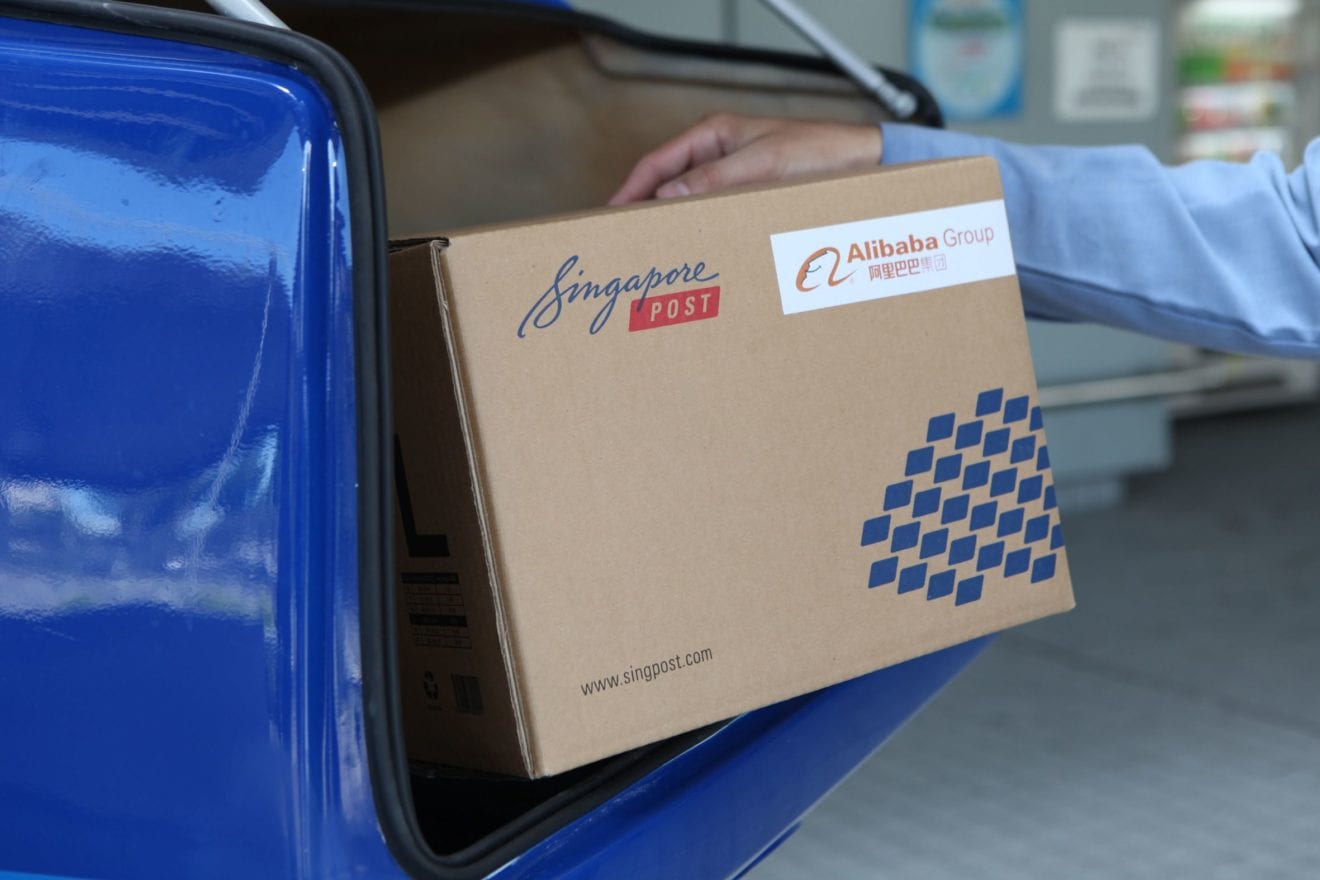
    Lazada, a huge online shopping destination in Southeast Asia, and Singapore Post Limited, the country’s postal and eCommerce logistics service provider, announced that Lazada Singapore has moved its warehouse operations to SingPost Regional eCommerce Logistics Hub in Tampines Logistics Park.

    With investments by Alibaba in both companies, the move allows Lazada and SingPost to leverage on each other’s strengths to meet rising eCommerce demand in Southeast Asia. This combination of strengths in eCommerce and logistics will enable both companies to be in a leading position in the industry to serve a wider spectrum of customers, both in Singapore and the region. This also emphasises Lazada’s aim to work together with the wider eCommerce ecosystem in Singapore.

    “Moving Lazada Singapore’s entire warehouse operations to the SingPost Regional eCommerce Logistics Hub is the next natural step as we seek closer integration with our partners to better serve the needs of Singapore customers,” said Alexis Lanternier, CEO of Lazada Singapore. “With the recent launch of 99SME, our local sellers have access to more than 3.5 million monthly visitors in Singapore. Moving forward, we can help them expand and sell regionally.”

    SingPost Regional eCommerce Logistics Hub consolidates and integrates both warehousing and delivery hub capabilities into one building. With an integrated, end-to-end solution housed in one building, SingPost is able to provide Lazada with improved efficiency, resulting in a faster turnaround time.

    Lanternier added: “This also adequately prepares us for the Great Singapore Sale starting 6 June, and we are bringing in more brands than ever before, local and global. Customers can shop more with the confidence that their orders will be processed and delivered faster.”

    Sam Ang, executive vice president of SingPost, and CEO of Quantium Solutions International said: “Technology plays a big part in our Regional eCommerce Logistics Hub, increasing productivity and efficiency. This collaboration sees Lazada’s eCommerce platform and SingPost’s end-to-end logistics capabilities coming together and it will result in scale and efficiencies for both of us.”

    “Better still, these efficiencies will help the SME eTailers that are connected with the Lazada platform to strengthen their competitiveness in the eCommerce market domestically and internationally. We look forward to working with Lazada and supporting them as they grow in Singapore,” added Ang.

  • Alibaba sales beat estimates, plans $6m share buyback

    Alibaba sales beat estimates, plans $6m share buyback

    Alibaba Group’s first-quarter revenues surpassed industry estimates for the three-month period ending March, as the Chinese e-commerce giant witnessed strong growth in new business lines beyond online shopping.

    Total revenues for the last quarter reached 38.6 billion yuan (US$5.6bil), well above an average forecast of 36 billion yuan according to Thomson Reuters.

    “Our revenue base is now more diversified,” chief financial officer Maggie Wu said. The finance head added that Alibaba’s cloud and entertainment sectors became “more meaningful growth drivers” during the quarter.

    Despite the sales high, earnings fell flat for the three months, with profits adversely affected by tax increases after the expiration of a local tax reduction linked to Alibaba’s investment in Chinese electronics retailer Suning Commerce Group Co Ltd.

    Alibaba’s adjusted earnings per share (EPS), therefore, came in at 4.35 yuan (US$0.63), below estimates of 4.48 yuan.

    Coinciding with the results, Alibaba announced plans to buy back shares worth up to US$6bil over two years.

    The operator of online market place Tmall and financial payments system Alipay said the share repurchase scheme would replace its existing buyback program.

    For the last few years, Alibaba has been targeting news business lines such as cloud computing, big data, entertainment and offline retail as it expands beyond e-commerce.

    However, online shopping remains the firm’s bread and butter. In March, Alibaba said it plans to open a regional distribution hub in Malaysia to cater to its fast-growing business in the region. It also launched its Alipay business in the Asian nation last week, following a debut in the US earlier in the year.

  • E-commerce vs. traditional retailers: who’s winning and why?

    E-commerce vs. traditional retailers: who’s winning and why?

    Who’s winning the hearts of consumers online? Pure-play e-commerce businesses or e-tailers, traditional retailers who have entered the online area?

    This analysis is based on our market reports, where we analyze over 400 popular e-commerce websites in Asia.

    The traffic and engagement data you see here is sourced from a third-party, independent source called SimilarWeb. SimilarWeb uses sources such as local internet service providers, monitored devices, web crawlers, and direct measurement sources to estimate traffic data, time on site, bounce rate, and other metrics.

    In our analysis, we look at Asia Pacific traffic and engagement for the following companies:

    • E-tailers: Woolsworth, Coles Online, Tesco, Sephora, Watsons, Nguyen Kim, Harvey Norman, JIB, Adidas and Louis Vuitton
    • E-commerce: Sociolla, Althea, Hermo, Bhinneka, Orami, Berrybenka, Sales Stock, Zalora, My Sale and Reebon.

    We observe that e-commerce players tend to do better in the fashion and beauty verticals. These strengths reflect how many of these players source their goods.

    Many of the biggest e-commerce firms use marketplace models where they list and aggregate brands. Most e-tailers, on the other hand, use vertically integrated models where they produce their own products.

    This means that e-commerce firms tend to have more traction in verticals where they can easily collect and then sell a wider range of goods at lower prices than their e-tailer counterparts.

    Industries like home, food, and luxury are more difficult for them to do well in because the goods in these verticals are either difficult for third-parties to buy and store in large quantities and range (such as in food and home) or are highly limited in quantity (such as in luxury).

    E-commerce players who use marketplaces also tend to have thinner margins – because they aggregate products from third-party sellers, they make less from sales than they would have if they produced their own goods.

    How do engagement metrics compare across business models? 

    Observation 1: E-commerce businesses are noticeably better than e-tailers at getting visitors to spend time on their websites. However, pages per view and bounce rates are broadly consistent.

    This might be because e-commerce businesses, being purely focused on the online channel, invest more in making sure customers stay on their sites.

    Observation 2: E-commerce players have wider variance than e-tailers in engagement metrics.

    This might indicate that e-tailers have a brand and reputation that gives them solid ground for launching their online experience. Their established reputations usually guarantee them a certain level of success upon their online store’s launch.

    E-commerce companies, on the other hand, must build their brand value from scratch. Their success greatly depends on their ability to provide great online customer experiences.

    E-commerce businesses might also be more vulnerable to competition. These companies have had less time than e-tailers have had to build their brand and differentiate themselves from their competitors. This may mean that many of their customers are likely to switch or use their competitors platforms because they have yet to develop a strong brand attachment.

    How does each vertical draw web traffic? 

    Observation 1: E-commerce players are more effective than e-tailers at using mail and social media to drive traffic.

    In terms of mail traffic, for example, the average e-commerce firm’s share of mail traffic will be more than double the average e-tailer’s share of mail traffic. This suggests that e-commerce players are more proficient at online outreach methods.

    It is interesting to note also that the % share of email traffic in Asia Pacific is significantly lower than US counterparts who can attribute up to 10% of traffic from email.

    Observation 2: E-tailers receive most of their visitors from search.

    This can be attributed to retailers typically being established and trusted brands in their vertical. Customers know them and will instinctively search for them online.

    Observation 3: E-commerce firms receive most of their visitors from direct means.

    This suggests that customers know their online addresses much like they would know that a physical store exists in a certain mall.

    Visitors arriving at a site via direct means are more likely to be repeat visitors who have recognized the value of that site and are returning to access that particular value. E-commerce firms are more likely to receive this type of visitor because they typically advertise a specific form of value (niche products, lower prices etc.).

  • Shilla duty free opens mobile app, online mall for Japanese clients

    Shilla duty free opens mobile app, online mall for Japanese clients

    Shilla Duty Free has launched a mobile app and an Internet website mall targeting Japanese clients to offset the decline in Chinese tourists triggered by the missile defense system row between Seoul and Beijing.

    It is Shilla Duty Free’s second mobile shopping mall for foreigners after one opened for Chinese customers in 2014.
    Chinese travel agencies have in recent months suspended sales of tour packages to South Korea as part of the Beijing government’s retaliation against Seoul’s decision to station the US Terminal High Altitude Area Defense system on its soil. China believes the missile system undermines its security interest. South Korea has maintained that THAAD’s sole aim is to counter North Korea’s evolving nuclear and missile threats.

    Shilla’s mobile app store and Internet shopping mall allow Japanese customers to use Naver Corp.’s flagship LINE messenger to carry out transactions.
    LINE has become a major mobile messenger platform with more than 200 million users around the world. It has a strong presence in Japan.

    The duty-free shop will also invite 1,000 Japanese clients to a fan meeting of popular K-pop boy group SHINee, the shop’s commercial model, in Seoul on May 13. The number of Japanese tourists rose 25 percent last year from the previous year, according to the Korea Tourism Organization. The figure also surged 13 percent and 28 percent in January and February of this year from the same period in 2016.

  • JD.com swings to profit first, revenues surge 41%

    JD.com swings to profit first, revenues surge 41%

    E-commerce giant JD.com said on Monday first-quarter revenues lifted 41% for fiscal 2017, as the second-biggest online retailer in China recorded its first profit as a publicly listed company.

    JD.com reported net income of 239 million yuan ($35 million) for the three months ended March — its first time in the black since listing in 2014. Sales rose 41 percent to 76.2 billion yuan, also topping the 73.6 billion yuan projected.

    JD, which bought Walmart’s Yihaodian local shopping platform in 2016, saw a rapid expansion into household supplies and food, as well as fashion and homewares during the last quarter, which increased users.

    JD also dipped into data, cloud and artificial intelligence services – moves that saw it swing to a profit from a loss in the previous quarter.

    “Margins benefited from our rapidly growing scale across all of our product categories,” JD’s chief financial officer, Sidney Huang, said in a statement.

    In November, JD.com said that it would seek to split off JD Finance, its financial unit, making it a fully Chinese-owned entity. The move allows JD to apply for licenses that Chinese laws forbid foreign-listed firms from holding, including mutual funds and securities. Under the restructuring, CEO Richard Liu will be one of the buyers and JD.com will receive 40% of any pre-tax profit.

    In the financial statement, JD forecast second-quarter revenues to lie between 86.6-89.1 million yuan excluding JD Finance, representing a growth rate of 33-37%, in line with analyst predictions of 36%.

    However, Huang cautioned future investments, such as the construction of warehouses, would “significantly increase” capital expenditure resulting in falling free cash flow.

    “Our quarterly earnings will likely be lower in one or more of the next few quarters,” he said. “The Chinese e-commerce market remains highly competitive and we remain committed to returning a meaningful portion of our incremental gains from scaled economies onto our customers.”