Tag: ecommerce

  • Asos posts half year profit increase

    Asos posts half year profit increase

    Online fashion retailer, Asos, has posted a 14 per cent increase in profits for the six months to the end of February to £27.3 million.

    The company saw a 31 per cent increase in sales to £889.2 million. UK retail sales rose by 18 per cent and international sales went up by 42 per cent.

    Sofie Willmott, senior retail analyst at GlobalData, said Asos’ broad product range sold on local language and currency platforms, along with its aggressive delivery proposition and responsive pricing, allows it to steal market share from well-established international and local players.

    “Asos’ mobile-first approach has paid off with mobile devices now accounting for 58 per cent of orders and 70 per cent of traffic,” she said.

    Willmott said competitors targeting the 16-34 age group should take note that a spotlight on mobile functionality to create a smooth, and enjoyable, shopping journey will drive visitor-purchaser conversion.

    “In a period of weak volume growth, retailers must use mobile channels to capitalise on frequent engagement and implement fast and simple checkouts to capture impulse spend.”

    According to Willmott, Asos has continued to strengthen its product offer by introducing new brands, including competitors Miss Selfridge and Burton, while also broadening its own label offer into niche product areas such as plus size for men which was recently introduced and activewear due to launch in 2017 – allowing Asos to target a larger customer base.

    “Meanwhile, the number of UK Asos premier customers lifted 41 per cent on last year, leading to an eight per cent rise in order frequency in the UK.”

    GlobalData research shows Asos is market leading in driving spend through its delivery subscription scheme, with 60 per cent of consumers shopping at Asos more often since signing up.

    Despite a 14.3 per cent rise in operating profit to £27.1 million, operating margins fell to 2.9 per cent from 3.6 per cent last year, signalling the impact of the highly promotional sector.

    “Since Asos is committed to keeping prices stable despite higher inflation in 2017, we forecast margins to weaken further in H2.”

  • DHL eCommerce expands presence in South China

    DHL eCommerce expands presence in South China

    DHL eCommerce plans to further increase its presence in South China through the introduction of its e-commerce logistics services in the Fujian province.

    The company has also announced the expansion of its Shenzhen Distribution Center and Hong Kong Distribution Center to manage a capacity of 81 million shipments a year.

    “With exports expected to make up 75% of China’s e-commerce turnover three years from now, a strong and reliable logistics framework has to be set in place to meet growing needs,” said Zhi Zheng, Managing Director, Greater China, DHL eCommerce. “Manufacturing and export hubs like Fujian will be the center stage of all future growth of e-commerce exports in China. DHL’s expertise in international shipping and fulfillment, along with our global network and strong e-commerce expertise will play a fundamental role in connecting China’s e-tailers with online markets across the world.”

    Zheng added: “We are expanding our presence in South China to better service merchants here, and provide them with the opportunity to tap on the massive cross-border opportunity. This underpins our growth strategy for South China where we will focus on growing our outbound e-commerce trade and continue to expand our offerings across Tier 2 and 3 cities.”

  • DHL eCommerce expands in Thailand’s booming e-Commerce market

    DHL eCommerce expands in Thailand’s booming e-Commerce market

    DHL eCommerce, a division of the world’s leading logistics company, Deutsche Post DHL Group (DPDHL Group), is capitalizing on the booming Thai e-commerce market expected to more than triple in size to EUR 3.6 billion between now and 2020 by enhancing its nationwide coverage with next day delivery in remote areas and extending pick-up service to small e-commerce merchants to meet its growing customer demands.

    DHL eCommerce, launched January 2016 in Thailand, offers end-to-end domestic delivery services and easy access for local businesses to expand globally through affordable B2C international cross-border shipping and scalable, pay-per-use fulfillment solutions through a global fulfillment network within Deutsche Post DHL Group.

    “The e-commerce market in Thailand is currently second largest in Southeast Asia and expected to grow 22 percent annually till 2020. Along with this remarkable growth, there are increasing demands for cost-effective and high quality logistics solutions to meet rising consumer needs. As such, we are investing now to ensure we are the provider of choice for Thai consumers,” said Kiattichai Pitpreecha, managing director, DHL eCommerce Thailand.

    “We are strengthening our delivery network across the country in order to offer second-to-none nationwide service across Thailand. This will enable merchants to reach out to the growing base of e-commerce consumers outside Bangkok in major provinces and rural areas with superior service quality. We have also extended our pick-up service to include small and large merchants. For the 2.7 million SMEs in Thailand, this means greater convenience and a quicker process to deliver to their consumers — with less time spent travelling and waiting in queues to drop off their goods, they can spend more time focusing on growing their business.”

    Over the past year, DHL eCommerce Thailand has invested significantly in people, service, facilities, vehicles and coverage. The DHL eCommerce 3,222 sqm central hub in Bangkok and its domestic delivery network across Thailand have the capacity to handle over 15 million shipments annually. For merchants, DHL eCommerce offers access to Cash on Delivery (COD) with daily remittance as well as access to a multilingual call center and easy IT integration of online orders to allow shippers to easily prepare orders for delivery into the DHL network.

    Offers cross-border service to help customers expand overseas

    DHL eCommerce also enables Thai businesses to grow internationally and tap on the massive international e-commerce market through its range of affordable international cross-border shipping products and scalable, pay-per-use fulfillment solutions. “We are incredibly positive about the Thailand economy and we are committed to its development. The Thai government’s ‘Digital Thailand’ initiative started in 2016 has brought about a wave of opportunities for businesses across different industries to digitize their operations and services, especially for SMEs to undergo digital transformation,” said Malcolm Monteiro, CEO, DHL eCommerce Asia Pacific.

    “Thailand is ranked as one of our top priority markets in Southeast Asia , and we foresee growth to be largely driven by significant numbers of SMEs extending their business models into online marketplaces. DHL eCommerce is committed to enabling Thai businesses as they fully leverage the huge e-commerce growth locally and internationally.”

    As noted in a recent DHL Express report on the e-commerce industry, the cross-border market opportunity offers growth rates (~25 percent) not found in most traditional retail markets. DHL eCommerce, along with its sister company DHL Express is helping to connect Thai e-tailers to the world through DPDHL Group’s range of cross-border delivery solutions. To cater to varying customer requirements, DHL Express offers premium and faster delivery services while DHL eCommerce provides affordable solutions. Thailand -based businesses can also leverage on DHL eCommerce’s global network of fulfillment centers in the US, Mexico, Europe, Hong Kong, Australia and India so that merchandise can get to the consumers in those regions quicker.

    “Cross-border B2C e-commerce is forecasted to grow to USD1 trillion in 2020. DHL eCommerce Thailand has witnessed tremendous growth in the past year and we are enhancing our service to meet the growing consumer demands,” said Charles Brewer, CEO, DHL eCommerce. “We are incredibly proud to be delivering the smile in the last mile and we will continue to provide more first and last mile solutions.”

  • Courts Singapore Looks to Tackle Southeast Asia’s Growing E-commerce Market

    Courts Singapore Looks to Tackle Southeast Asia’s Growing E-commerce Market

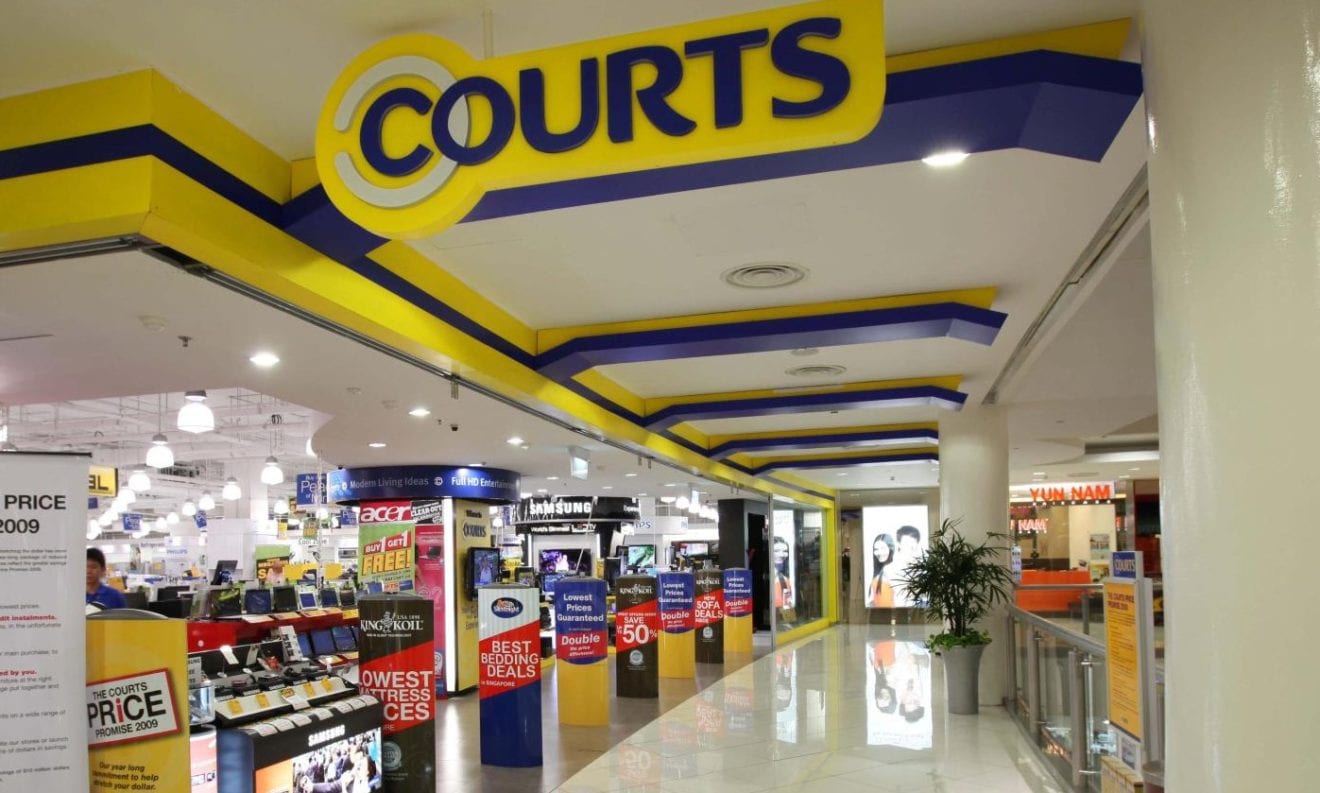
    Courts has recently unveiled its plans to capitalize on the growth of e-commerce in Southeast Asia by rebuilding its online business, originally launched in 2012 with an offering of 7,000 products that has increased to 14,000 today, through a partnership with premier e-commerce agency SmartOSC.

    Under these new plans, Courts will further penetrate into Singapore’s growing e-commerce market, which is estimated to reach US$6.42 billion by 2020, according to research firm Statista.

    Known as a Singapore based retailer specialising in furniture and consumer electronics, from its initial establishment, Courts has seen growth throughout Southeast Asia, most notably in Malaysia and Indonesia.  In April 2016, the business revamped its traditional brick and mortar stores to engage with customers more effectively – the two offline “testbeds” opened in Causeway Point, Singapore and Sri Damansara, Malaysia. As a result of that,  in parallel with an expected boost in productivity from traditional retail stores, the brand now looks at radically reshaping its e-commerce business, moving towards an integrated shopping experience both in-store and online.

    Stan Kim, Court’s Group CIO, explained that their strategy is really about creating an omni-channel experience for customers. The limitations of the current e-commerce framework, including extending functionalities, handling the increasing amount of visitors, as well as personalising the shopping experience, do not fit into the overall commerce strategy.

    “We were looking for partners who not only have technical expertise but more importantly understands how e-commerce and brick-and-mortar stores work together to create a seamless experience for modern shoppers. SmartOSC is a perfect match given their experience in building connected commerce solutions for top retailers, and their capability has been recognized by Magento as the platform’s enterprise solutions partner,” explained Stan Kim.

    Built upon the Magento Enterprise 2.0, combined with innovative technologies for omni-channel, marketing automation, and content management, Courts is looking to establish a new industry-standard for mobile first and user-centric experience. A real-time single view of inventory and customer profiles is activated through integrations with ERP and retail management systems. The brand will also enhance the click and collect offering, which is currently contributing about  50% of Courts’ online sales.

    The platform has also been architected to accompany and facilitate future expansion plans, ready for easier roll-out to other regional markets. Although Southeast Asia’s e-commerce is still in its infancy (relative to European and North American markets), it is expected to grow 32% year on year. The region is currently estimated to be worth $5.5 billion and expected to reach $88 billion by 2025, according to a report by Google and Singaporean sovereign wealth fund Temasek.

    When asked for a statement on the partnership, Stan Kim commented “We’ve been working closely with SmartOSC to ensure an integrated and smooth transition to the new platform. We’re very excited with the current progress – SmartOSC’s depth of knowledge in e-commerce, resource scalability and innovative development has helped us realize our omni-channel potential. We cannot wait to launch this to the public.”

  • Amazon Ready to Launch in the Philippines

    Amazon Ready to Launch in the Philippines

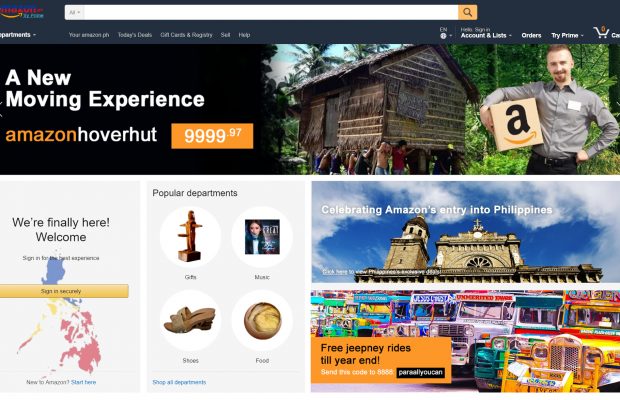
    Amazon with exclusive affiliate partner iPrice Philippines premieres the first screenshots of the all new and exciting online shopping platform: Amazon.ph. Slated to be launched late 2017, millions of local and international products will be made available to Filipinos with same-day delivery service throughout the nation.  Maintaining the ethos of Amazon, the new e-commerce platform in the Philippines will be guided by four principles: customer obsession rather than competitor focus, passion for invention, commitment to operational excellence, and long-term thinking.

    Partnering Amazon in this new endeavor is iPrice, a meta-search website in seven major countries in Southeast Asia as Amazon’s prime affiliate partner. With similar values and vision for ecommerce in Southeast Asia, iPrice’s partnership with Amazon will empower the Seattle based company with the needed marketing channels to aggressively market its products and services to the competitive ecommerce sector.

    Further details of Amazon’s affiliate partnership with iPrice will be revealed at the annual AWS Summit on 20th of April 2017 at the Marriott Hotel Grand Ballroom in Manila. Here is an exclusive screenshot of Amazon.ph.

    The Baguio Barrel Man

    Often seen as the souvenir of choice of most travelers, the Barrel Man offers more than just it’s barrel. Handcrafted from tropical wood unique only to the Philippines, the Barrel Man is a figure that is built of quality material and has the magical powers suited to relieve men of their physiological and psychological barriers.

    Amazon.ph and the Baguio Barrel Man was reviewed by test audiences prior to launch. It assisted in saving a marriage, and restoring one’s manhood.

  • Hermes promises year of ‘digital change’

    Hermes promises year of ‘digital change’

    French luxury retailer Hermes plans to update its digital strategy this year with an initial test run “in a small country”, according to chief executive Axel Dumas.

    He says 2017 will be “a year of digital change for us”, with the company’s e-commerce sales showing “significantly higher” growth rate than overall turnover.

    Dumas says he is proud of the result considering the company’s website “sort of stumbles along”.
    During the Christmas season, the Hermes e-shop was the group’s best-performing outlet for global neck-tie sales.

    “Hermes was the first luxury brand to launch e-commerce, in 2001, especially in the US,” says Dumas. “We are primarily retailers and wanted to handle our own online sales directly rather than hand over this business to an external corporate site.”

    However, he admits the website has aged while new technologies have forged ahead.

    “In wanting to maintain great image quality, we lagged behind in getting a mobile app,” says Dumas, also acknowledging a lack of clear organisation for the website.

    “To recreate the magic of Hermes, we decided to make a site where people could lose themselves. The result: people were really lost,” he says.

    “We hope to launch the new site this year. We will first run a test in a small country.”

  • DHL eCommerce Enables Singapore e-Commerce Retailers to Reach Out to the US Market

    DHL eCommerce Enables Singapore e-Commerce Retailers to Reach Out to the US Market

    DHL eCommerce, a division of the world’s leading logistics company Deutsche Post DHL Group, has launched a new commercial international shipping product facilitating Singapore-based e-tailers, online merchants, manufacturers, and traditional ‘brick and mortar’ retailers to ship their products to consumers in the U.S. using the reliable DHL network in a simple and cost-effective manner.

    Parcel International Direct U.S. is geared towards the burgeoning e-commerce market and seeks to respond to the growing appetite for cross-border e-commerce in the Americas region, allowing businesses to ship products up to 6.5 kg to their customers across the U.S.DHL Logo


    With 71% of retailers and 76% of manufacturers expecting the share of cross-border revenue to grow in the future[1], Parcel International Direct U.S. aims to enable Singaporean retailers to grow their business in the U.S. market with ease.

    The cross-border market is the newest blue chip of the digital retail industry and shows great promise, projected to grow at a rate of 25% annually between 2015 and 2020. This growth will bring the value of the market from USD300 Billion in 2015 to 900 billion in 2020 — almost triple in a matter of half a decade.[2]

    The product offers simple and cost-effective international shipping option with end-to-end tracking and a competitive transit time of 4-6 business days. Through IT integration, the DHL eCommerce Web Portal enables e-tailers to seamlessly integrate their orders into the DHL network by preparing orders for shipping individually or in bulk, track and generate reports all from a single portal. This product follows the company’s launch of Parcel International Direct Australia in October 2016.

    “DHL eCommerce aims to provide best-in-class e-commerce logistics for both merchants and end consumers through high quality, cost-efficient logistics solutions as well as a positive delivery experience. We want to enable local businesses to reach their international consumers with ease and allow them to fully leverage the massive potential that e-commerce brings,” said Sham Alexandra, Managing Director, DHL eCommerce Singapore. “Through Parcel International Direct U.S., we enable retailers in Singapore to expand beyond borders and reach out to the huge consumer market potential in the U.S.”

  • Beumer will be providing information on intralogistics solutions for e-commerce

    Beumer will be providing information on intralogistics solutions for e-commerce

    The Beumer Group will be presenting its high level of expertise in sortation and distribution systems to visitors at ProMAT in Chicago (3 to 6 April). Among other things, this includes tilt-tray and cross-belt sorters, which are distinguished by their high energy efficiency. As an example, these are used to provide sustainable support to mail order companies and service providers.

    At ProMat, the Beumer Group will be providing information on their fully automated high-performance sorting systems such as cross-belt and tilt-tray sorters. Small and large packages, product trays and even products in bags can be sorted quickly and carefully with these systems. They ensure the rapid availability of goods and therefore provide a high level of benefit for the end user. At the same time, these sorting systems require low maintenance, due partly to the non-contact power transmission. In addition, both the cross-belt and the tilt-tray sorter are extremely energy-efficient. The system integrator equips courier, post and parcel services and distribution centers worldwide with these systems.

    The Beumer Group supports its customers from the planning stage right through to commissioning. Users can also secure a competitive advantage and be prepared for future growth in their own mail order company.

  • Lazada on mission to spur e-commerce

    Lazada on mission to spur e-commerce

    As Lazada celebrates its fifth year in the Philippines, the people behind Southeast Asia’s largest online marketplace are embarking on a mission: to make the country one of the “dominant players” in the global e-commerce industry.

    “In terms of Facebook penetration, the Philippines is No. 1 in the world. There are 57 million Facebook accounts—why shouldn’t the same thing apply to e-commerce?” says Inanc Balci, cofounder and CEO of Lazada Philippines. “So we’re now on a mission to make Philippines a dominant player in the world when it comes to e-commerce penetration.”

    Balci cited Taiwan as having the highest percentage of online retail sales at 18 percent; the Philippines, on the other, hand, is only at 1 to 2 percent. “Buying online is as easy as getting an account on Facebook; sometimes easier, because you don’t need an e-mail account for some websites. The Philippines can have a much higher percentage of e-commerce penetration than that of Taiwan,” Balci says.

    Other factors also come into play when it comes to the Philippines’ strong potential in e-commerce, adds Balci. “The middle class is growing very fast; the economy is doing really well among other nations in Asia; there is a very young population; smartphone penetration is higher than any other country in Southeast Asia.”

    As a treat to its customers, Lazada held a birthday sale last March 21-23. These kinds of events, says Balci, are also a form of investment for the company when it comes to addressing one of the three main challenges in the local ecommerce industry: general market size. Promos and special deals allow Lazada to attract new customers and further grow the business, says Balci.

    The other two issues, he adds, are payments and logistics. To address the latter, the company formed its own logistics arm called Lazada Express. “That has, today, 70 percent coverage nationwide, and we are continuing to push it even more,” says Balci. “We are also looking toward improving the payments landscape. There is only about 5 percent credit-card penetration which makes it difficult to transact online, so Lazada was the first to launch nationwide cash on delivery. Not a lot of companies are doing this because it’s a costly way of doing business, but for us to grow, we need to invest.”

    Lazada was initially established in the Philippines as an online retailer selling electronic goods.

    The company then “pivoted” its business strategy in 2014, says Balci, shifting its model to an online marketplace, which was “one of the biggest accelerators” of its growth.

    “Now our business model is a cross of retail marketplace and cross-border marketplace, which is similar to a local marketplace but the merchants are from other countries in the region,” Balci explains.

    As Lazada and the country’s e-commerce industry continue to grow, so does competition—something which Balci welcomes with open arms.

    “It’s always better for the market to have competition to keep you on your toes. We believe that for the market to grow much faster, we need better, healthier competition,” he says.

  • Facebook launches new shopping format

    Facebook launches new shopping format

    Global brands Adidas and Tommy Hilfiger are among the first names to use Facebook’s newly launched shopping ad format, which incorporates creative media into product pages when selling.

    The social media giant said the new platform, dubbed ‘collection’, increases the “likelihood of discovery and a purchase” by featuring a primary creative video or image above relevant product images.

    Global sports brand, Adidas, said it used the platform to drive sales for its a new garment and complementary products, and saw a 5.3x return on ad spend

    “We used collection to showcase a video highlighting the technical features of the Z.N.E. Road Trip Hoodie,” said Rebecca Watts, performance marketing senior specialist, Adidas.

    “People who tapped on the ad were instantly taken to a full-screen shopping experience that included complementary Adidas products to complete the look.

    Meanwhile, American fashion brand, Tommy Hilfiger, said the platform creates a consumer experience that reflects how current generations of digital natives interact with their favorite brands. The fashion brand said it used the platform to for a marketing campaign targeting smartphones and saw a 2.2x higher return on ad spend.

    “Our mission was to democratise the runway and make every look immediately available to all consumers worldwide,” said Avery Baker, chief brand officer, Tommy Hilfiger.

    “We took our video assets to the next level, through integrating shopping functionality. The results exceeded expectations, generating an ROI increase of over 200 per cent.”

    Facebook said the platform was spurred by research that showed three in four consumers say that watching videos on social media influences their purchasing decisions and that 45 per cent of all shopping journeys now contain a mobile action,

    The US corp also said it will start a test of a new outbound clicks metric over the coming weeks, which will show the number of clicks leading people off of Facebook. Marketers with ads that appear on Instagram will also see outbound clicks reported.

  • China’s online retail market is expected to reach RMB 1.3 trillion in 2021

    China’s online retail market is expected to reach RMB 1.3 trillion in 2021

    Despite rapid growth in recent years, the Haitao market is expected to peak within China’s overall online retail market. New research from Mintel reveals that in China the total combined online cross-border e-commerce market, including Business-to-Business and Business-to-Consumer e-commerce, grew by a factor of 10, from RMB 53 billion in 2011 to an estimated RMB 626 billion in 2016, representing a CAGR (compound annual growth rate) of 64%. From 2016 to 2021, growth is expected to slow to a still-strong CAGR of 15%, to reach a total value of RMB 1.3 trillion (RMB 1281 billion).

    Today, the majority of Chinese consumers shop for foreign imported products from domestic shopping websites (73%), compared with only one quarter (27%) who shop from overseas retail websites. Indeed, more than double the proportion of consumers buy from physical stores within China (56%), rather than from overseas shopping websites.

    There is a clear association among Chinese consumers for some products to be more desirable from certain countries. Mintel research reveals that 31% of consumers buy imported food from Taiwan; 36% buy alcoholic drinks from France (principally wine); and 45% buy beauty and personal care products from South Korea.

    SEE ALSO: China retail sales grow slower 9.5% in first two months

    According to Mintel, the only territory seeing an increase in purchasing among urban Chinese consumers over the past two years was France. Of those who have bought imported products online, 16% bought imported products from France in 2016 up from 15% in 2015. Of those who have bought imported products this year, 20% have bought beauty and personal care products from France, while 36% have bought alcoholic drinks, including wine.

    Matthew Crabbe, Director of Research, Asia-Pacific at Mintel, said:

    “While the Haitao market has seen rapid growth over recent years, and should maintain strong growth for the foreseeable future, it is likely to peak soon as a proportion of online retail in China. This does not stop the Haitao route to Chinese consumers from offering significant potential market opportunities to foreign brands, but it does mean that Haitao is likely to be more relevant to brands looking at initial market entry. Retailers and brands should therefore play to their different country specialities when attempting to differentiate from their competitors.”

    When choosing where to buy imported products online, Chinese consumers who have bought imported products online rank proof of quality of products as important (68%), followed by ability to use third-party payment systems (44%). They also want detailed product information (36%) and Chinese-language customer service (25%).

    Additionally, four in 10 (39%) purchasers said they would like to see a better choice of payment options on overseas online shopping websites. Currently, 35% are less confident about the returns policies of overseas websites than they are of domestic online shopping websites.

    Crabbe added, “As well as providing a better and more entertaining experience for Chinese online shoppers of imported foreign products, brands and retailers can improve by providing better practical solutions. Offering better delivery, refund and returns options is a key area where overseas online retail websites can improve, as compared to domestic websites. This does create logistical issues, however, but having links through domestic online retail portals can help combat this.”

    Mintel research reveals that 62% of surveyed consumers who have purchased overseas products agree that online shopping for imported products lacks the excitement of shopping when travelling overseas, with 20% strongly agreeing with this. Additionally, 34% of consumers agree that they are excited when shopping from websites that run interesting advertising campaigns.

    “When selling foreign products online to Chinese consumers, brands and retailers really need to create a sense of excitement and entertainment about the whole process if they are to stand out in an increasingly competitive market. Simply offering a new product is no longer enough.” Crabbe concluded.

  • GoToMalls.com expands to Indonesia

    GoToMalls.com expands to Indonesia

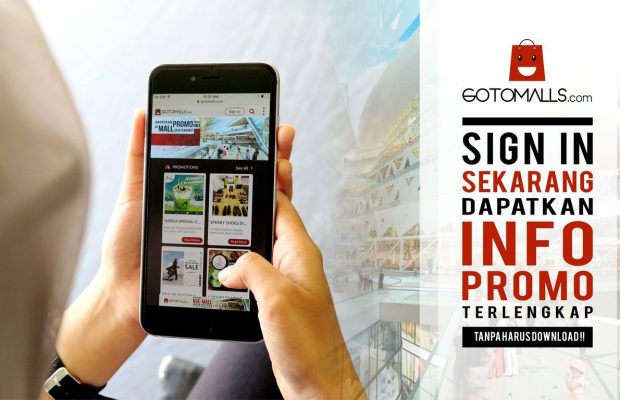
    Singapore-based company DominoPos has launched its proximity marketing and digital media platform GoToMalls.com in Indonesia.

    Offering a geo-located, profile-based smart directory of malls and stores in Indonesia, the website aims to revive offline transactions, “bringing the community’s spirit back to the malls through digital media support”.

    CEO Bruno Zysman says the platform helps offline retail brands publish their own call-to-action campaigns, and promote products or services on a digital platform to their target audience. It lists up to 375 malls and shopping complexes, along with 19,000 stores.

    To ease its entry into the Indonesian market, the site has partnered with telecommunications company PT Indosat, also known as Indosat Ooredoo, and ride-hailing app Grab.

    GoToMalls launched in Singapore in February and plans to expand further internationally.

  • E-commerce firms struggle to gain profits

    E-commerce firms struggle to gain profits

    Large international e-commerce firms such as Amazon and Alibaba only began making profits after 10 first years of operation. The big losses of Vietnam’s e-commerce firms were foreseeable.

    Before it was taken over by Alibaba in 2016, Lazada Group reported loss of $334 million in 2015, twice as much as the loss the year before. VNG’s latest financial report showed the company has incurred a VND100 billion loss since it began injecting money into Tiki.vn in 2016.

    Analysts pointed out that orders from clients must be dealt with through tens of different stages before goods can reach clients, and each stage can gobble up one part of investors’ earnings.

    Investors, for example, have to spend big money on storehouses. It is estimated that Lazada and Tiki have to spend no less than VND1 billion just to run one storehouse in HCMC. As such, with three operational storehouses, they have to spend no less than VND48 billion a year.

    With tens of thousands of orders each day, e-commerce firms will need high numbers of deliverymen, thus bearing high financial cost. Both Lazada and Tiki have to employ deliverymen and outsource the service.

    Lazada Vietnam has 200 workers in Lazada Express, but it still has to join forces with Giaohangnhanh, VNPost and Viettel Post to fulfill orders.

    Besides, the expenses on marketing are also enormous which eat up investors’ profits. Lazada Vietnam had to spend big money on ads in the first years of operation to lure more customers. Some sources said the firm once spent up to $2 million a month on ad campaigns.

    Chotot.vn also reportedly spent billions of dong on the ad clips with the play of comic actors. Meanwhile, Shopee.vn offers free delivery to clients nationwide applied to orders with bills of VND150,000 and higher. With more than 10,000 orders a day, Shopee.vn had to pay nearly VND1 billion on the program.

    E-commerce firms not only have to pay high for input costs and marketing campaigns, but also have to cut selling prices to compete with others. A branding expert who asked to be anonymous said some firms accept to sell goods at a loss of 10-20 percent in order to lure customers. In peak promotion season, the figure could be up to 50 percent.

    The highest risk for e-commerce firms is that they may lose orders because of the COD (cash on delivery) payment method. Customers can cancel orders at the last minute, though firms have to pay expenses to deal with the orders.

  • Cross-border e-commerce to hit $900b by 2020

    Cross-border e-commerce to hit $900b by 2020

    Cross-border e-commerce is now the fastest growing segment in the retail market, according to a report published by DHL Express.

    Cross-border sales volumes are predicted to increase at an annual average rate of 25% – from $300 billion to $900 billion – between 2015 and 2020. This is twice the pace of domestic e-commerce growth, DHL Express said.

    The study found that online retailers are boosting sales by 10-15% on average simply by extending their offering to international customers.

    By including premium service offering such as faster shipping options, retailers and manufacturers also grew 1.6 times their online stores faster on average than other players.

    “Shipping cross-border is much, much easier than many retailers believe, and we see every day the positive impact that selling to international markets can have on our customers’ business growth,” DHL Express CEO Ken Allen said.

    In Asia (Singapore, Hong Kong, and India) and Europe (Italy, Spain, France, Germany), key markets for high-value purchases are being expanded — with growth rates up to two or three times higher than the global average driven by rising consumer education and e-tailer awareness of opportunity.

    The report also noted that the $30 billion market of high-basket value transactions is evenly divided between Asia, Europe, and North America.

    Allen added that DHL Express sees that virtually every product category has the potential to upgrade to premium, both by developing higher quality luxury editions and by offering superior levels of service quality to meet the demands of less price-sensitive customers.

    “The opportunity to ‘go global’ and ‘go premium’ is there for many retailers in all markets,” he said.

    The main challenges highlighted by consumers to cross-border purchases relate to logistics, trust, price, and customer experience.

  • Rakuten drone network under development

    Rakuten drone network under development

    US company AirMap is helping develop technology to manage a Rakuten drone network in Japan.

    Rakuten, Japan’s giant online retail platform, and AirMap hope drones will be allowed to be used at low altitude.

    Rakuten set a world record early this year for the longest drone delivery, flying a container of hot soup 12 km to surfers on a beach.

    CEO Hiroshi “Mickey” Mikitani expects drones to revolutionise the delivery sector. “The capacity in the skies above us is far greater than in the roads beneath our feet,” he has written in a blog post.

    Global rival Amazon is also making a push into drone deliveries.

    With more than 14,000 employees and revenue last year of more than ¥781.9 billion (US$6.8 billion), it is pushing to become a tech giant on the scale of Alibaba or Google.

    So committed is Mikitani to going global that he made English the official company language in 2010. This helped the company dispense with the honorifics and deference of Japanese, and also made it easier to hire foreigners, reports CNN Tech.

    Rakuten takes Japan’s “high-quality, really customer-oriented service mind” and mixes it “with the Silicon Valley, little bit techie, dynamic culture,” says Mikitani.

    A household name in Japan, Rakuten spent $900 million to buy messaging app Viber in 2014, and has also invested in startups such as US transportation company Lyft and Pinterest.