Tag: ecommerce

  • Vietnam e-commerce competition hotting up

    Vietnam e-commerce competition hotting up

    The competition between shopping websites has now switched focus from prices to rapid delivery.

    Analysts said competing by cutting prices by up to 50 per cent is an old story, and with customers’ demand for good service increasing, delivery times have become a key factor.

    Alexandre Dardy, the CEO of the country’s largest online shopping platform, Lazada, said besides increasing the number of merchants and products, his company would soon reduce delivery times.

    Currently the average delivery time that Lazada offers customers is more than two days, with urban areas served faster than rural for obvious reasons.

    At the end of last year the company tied up with AhaMove, a motorbike-based delivery service, and began a new delivery schedule that enables customers to get their product within just 60 minutes in certain cases.

    Another online shopping website, tiki.vn, is also taking measures to improve its delivery process. Currently its average delivery time is two to three days.

    Trần Ngọc Thái Sơn, director of tiki.vn, said product quality and delivery time are the most important factors for customers.

    His company has begun to deliver within 24 hours, he said.

    In case of late delivery, customers will receive a Tiki coin worth VNĐ30,000 (US$1.3) for use next time while shopping.

    The speedier delivery does cost more, the company said.

    Express delivery costs two or three times higher than standard delivery.

    For instance, while standard delivery costs only around VNĐ15,000 for a package weighing less than three kilogrammes, express delivery costs VNĐ30,000.

    However, 50-75 per cent of this is covered by the online shopping companies.

    Dardy said Ahamove gets VNĐ30,000 for express delivery, with Lazada covering VNĐ20,000 of it and only passing on VNĐ10,000 to the customer.

    But despite this, companies have no hesitation in offering express delivery, realising this will encourage customers to return in future.

  • Generation Z prefers in-store shopping decisions

    Generation Z prefers in-store shopping decisions

    An overwhelming number of generation Z, also known as post-millennials, prefer visiting a store as the final step in their shopping process, new research has found.

    In its Evolution of Retail 2017 Generation Z shopper survey, Euclid Analytics found that 66 per cent of the demographic prefers in-store shopping, while 28 per cent wants to interact with store staff members.

    This mobile-first generation – by broad definition, aged under 22 – uses digital to research products, but then prefers to go to the store to touch and try out items before buying, says the survey. The challenge for retailers will be to figure out a way to help cater to this new approach.

    Generation Z prefers to get in and get out when it comes to shopping behaviour, the survey also shows, with 53 per cent saying they dislike browsing in stores and 31 per cent saying it is hard to find items in stores. Meanwhile, 26 per cent want retailers to provide a more tailored shopping experience.
    Euclid Analytics CEO Brent Franson says retailers should reach out to generation Z at this early stage to introduce their brands and forge enduring relationships.

    “Our findings highlight some great opportunities for them to connect with this mobile-first population that is still very much interested in meaningful in-store experiences. Winning their loyalty will mean getting creative about using mobile and social marketing outreach in their physical stores.”

  • KKday Launches E-commerce Travel Platform in Thailand

    KKday Launches E-commerce Travel Platform in Thailand

    KKday, a leading E-commerce travel platform in Asia offering localized travel across the globe officially launched in Thailand today, bringing unique and authentic tour experiences abroad to Thai tourists looking to travel independently and explore other cities around the world through organized excursions.

    Established in 2014, KKday is a Taiwan-headquartered company offering over 6,000 experiences, in 25 different categories, in 174 cities and 54 countries worldwide.

    After recently launching in Singapore, the Thai branch of KKday will appeal to the growing number of FITs (Free Independent Travelers) in Thailand in search of fun activities and memorable sightseeing trips on holiday. Whilst FITs book their own flight and accommodation, they look to online travel experts with local knowledge to book unforgettable travel experiences that give them genuine insights into a destination; discovering local culture and heritage, hidden gems and off-the-beaten-track adventures and sampling incredible food and activities along the way.

    Ming Chen, CEO of KKday, who was at the launch in Bangkok, believes city break tours will appeal to the Thai market. “Thais are renowned for their warm welcome to tourists visiting their country and this openness extends to a genuine interest in other cultures and a love of travel. Asia is home to some spectacular cities and I envisage that KKday members in Thailand will want to soak up the atmosphere and truly experience city breaks in Taiwan, Korea and Japan which are all popular vacation destinations for Thais; exciting cities like Taipei, Seoul and Tokyo. I am pleased to be launching KKday in Thailand and with the huge growth of E-commerce within the country, an online travel experience platform fits perfectly with what the market wants and how consumers behave here.”

    Hassle-free and competitively priced, KKday is easy to browse, read reviews and book online; the ideal travel companion for the digital Y Generation of under 35s who are primarily booking with KKday. In 2017, the travel trend for Gen Y tourists is all about experiential vacations and immersive getaways rather than finding some far-flung undiscovered destination or simply ‘being’ a tourist abroad.

    Today’s travelers want get a more organically native feel for a place that is less ‘touristy’ and is far more interactive and experienced-based. KKday taps into this quest for localized, customized travel.

    The launch of KKday in Thailand is aimed at expanding the platform which already has a presence in Taiwan, Hong Kong, Malaysia, Korea and Singapore. A branch in Thailand will build on KKday’s already 7 million plus page views per month, Facebook fan base of over 600,000 and membership that exceeds 300,000. Promotions are also on the horizon with relationships being established with some big-name brands in Thailand too.

    Expansion is part of the future strategy of KKday with two rounds of funding in 2015 and 2016 totaling $11.5 million led by Singapore-based venture capitalists, Monk’s Hill Ventures and AppWorks, the largest start-up accelerator in Asia.

    In Thailand, KKday has partnered with DTAC Rewards, Eatigo, Tourkrub, Show DC (Lotte) and Nokscoot.

    Celebrating its debut in Thailand with an exciting campaign, #KKvacay rewards one lucky winner and a friend will win a holiday in either Japan, Hong Kong, Korea, Singapore or Taiwan!

  • Central Group turns focus to e-commerce

    Central Group turns focus to e-commerce

    hai retail giant Central Group aims to raise the share of its e-commerce sales to 15 per cent over five years, up from the present 1 per cent.

    Presenting the company’s annual business plan, CEO Tos Chirathivat says the group will aggressively pursue expansion in the digital realm this year.

    About 10 per cent of the 45.53 billion baht (US$1.3 billion) capital investment allocation this year will be devoted to online business. The funds will mainly go toward developing a logistics network and an omni-channel platform, with capital spending on that front to double from next year.

    Central Group’s retail portal, Central Online, will be overhauled this year. The conglomerate acquired the Thai business of fashion e-tailer Zalora last year, and will adapt its know-how for Central Online’s makeover.

    The group is also eyeing markets outside of Thailand, including an online re-entry into China, from where it retreated two years ago. Central Group president Yol Phokasub says it aims to collaborate with a partner this time.

    Vietnam is another promising market. The group has two department stores there and is also a stakeholder in electronics retailer Nguyen Kim.

    Meanwhile, Central says its group sales last year increased 17 per cent to 332.7 billion baht. The refurbishment of key assets such as Bangkok’s Central Plaza Pinklao helped boost sales, along with Zalora and the acquisition of Vietnamese supermarket chain Big C.

    Central aims to reap sales of 382.2 billion baht this year, with a heavy reliance on overseas business, which accounts for 30 per cent of sales, as well as developed online business.

  • China main market for Korean online industry

    China main market for Korean online industry

    Sales of South Korea’s online shopping malls rose dramatically in recent months helped by the growing number of Chinese customers.

    Data released this week shows the Korean online industry growth is happening amid China’s retaliation against South Korea over Seoul’s plans to deploy an advanced US missile defense system on its soil.

    WeMakePrice, a major online shopping mall, said its sales on Alibaba Group’s Tmall rose 100 per cent in January compared with the same period last year. The comparable figure was 50 per cent for February.

    “We don’t expect any drastic decline in the sales in Tmall, one of the biggest online shopping sites in China, unless Chinese consumers stage a boycott of South Korean products,” a WeMakePrice official said.

    GMarket, another online shopping mall, said its sales to Chinese consumers surged 18 per cent in 2016 from a year earlier, and the trend is similar for the first two months of this year.

    A possible decline in the number of Chinese tourists visiting South Korea, however, may adversely affect the South Korea online industry as many Chinese tourists place orders at South Korean duty-free shops online before picking up goods in person while touring South Korea, industry sources said.

    China has been retaliating against Seoul’s decision reached in July to have the Terminal High Altitude Area Defense (THAAD) system deployed on South Korean soil later this year. South Korea says the missile system will not target China but only counter threats from North Korea.

    In the latest retaliation, Chinese travel agencies suspended sales of tour packages to South Korea last week.

  • Augmented Reality Empowers Indonesian Women to Operate Online Stores

    Augmented Reality Empowers Indonesian Women to Operate Online Stores

    While its direct-selling model echoes brands like Avon and Tupperware, Indonesia’s MindStores gives the approach a modern twist—with augmented reality.

    Recognized as the first partnership store network to use augmented and virtual reality, MindStores equips its store owners with their own unique partner cards which customers use to access the stores virtually. The whole process is relatively simple, and takes place in-person only.

    A store owner, who can be located anywhere—from their living room to a public coffee shop—shows a customer their partner card. Using a dedicated app on their own smartphone, that customer scans the card to see a 3D retail store appear on their screen. From there, the customer enters that partner’s virtual store and can browse and purchase merchandise to have shipped to them. The store owner then gets a cut of the sale.

    Slingshot, the Indonesian technology and media company that operates MindStores, announced this week that the store network has opened more than 7,000 stores in Indonesia since its launch last June. They estimate that they will have more than 150,000 active stores by the second quarter of 2017, with the potential to open more than 4 million new stores in the country over the next two years.

    As part of the pilot program, MindStores partnered with Alfamart, a large Indonesian convenience store chain, to have their wares sold through branded Alfamind virtual stores by individual store owners. However, augmented reality gives MindStores the potential to expand their retail partnerships to other companies, with many stores appearing side by side on each scanned store owner card.

    “The future will be an augmented reality city that is working flawlessly with people, with stores, with consumers,” said Daniel Surya, CEO of Slingshot and its parent company, WIR Group, in an interview with NextReality. “Now is just the first phase. We’re looking at a data-driven city using augmented reality.”

    Surya noted that MindStores already has an agreement with one of the largest insurance companies in Indonesia, Astra Life, in collaboration with UK-based Aviva, as their next retail partner. Eventually, MindStores will also give its store owners the ability to sell their own merchandise and crafts—not just partner brands—like on Etsy.

    The company expects to expand to China and India by the end of the year, Latin America and Africa next year and, eventually, the United States. Each expansion will require recruiting partners that resonate with consumers in those markets.

    Working in emerging markets presents challenges in rendering AR and VR animations, since most consumers are equipped with lower-end phones running on processors two or three generations old.

    The stores are designed to render smoothly through its Android or iOS app. To ensure consistent operation, the company built the stores on their own engine, which is compatible with more modest hardware. For instance, minimum requirements to run on Android include OS version 4.2 Jelly Bean, quad-core 1.8 GHz CPU, and 2 GB RAM.

    “We need to be able to present this technology on the simplest, most modest phone available on the market,” said Surya. The app is also optimized to compensate for available connectivity in the emerging markets. According to a spokesperson, the app is designed to allow for offline browsing, though an internet connection is required to place an order.

    Nonetheless, they are also testing the experience with smart glasses, namely Vuzix and HoloLens, and their research and development team maintains relationships with the leading hardware makers so that they are familiar with the next wave of devices.

    Empowering Women Through Community-Based Selling

    Along with the eye-catching AR and VR aspects, community-based selling has been a significant component of the company’s success.

    The direct selling model appeals to mothers of single-income families as supplemental income, according to Surya. Since brand loyalty is low in Indonesia, the ability to offer goods at a discount to friends and neighbors gives store owners and their partner retailers an advantage.

    Through Mindstores we’ve used innovative technology to create something as equally innovative as it is meaningful, through its proven ability to make a positive impact to empower women worldwide. Slingshot will continue enhancing the Mindstores experience, for the benefit and futures of an often-overlooked population: women in less developed regions of the world.

    — Daniel Surya, CEO of Slingshot and WIR Group

    Compared to the cost of opening a brick-and-mortar store or securing a franchise license, the start-up cost for MindStores is relatively modest. Store owners invest a minimum fee (the equivalent of about $100) to serve as capital to purchase inventory credit from Alfamart, the partner retailer.

    Their customers order products through the store and pay the customer in cash. The retailer applies the purchase towards the inventory credit and ships to the customer. Customers pay the store owners directly in cash. Store owners can purchase additional credits once the initial investment is exhausted.

    The store owners receive about 15% of each sale for most of Alfamart’s product categories, such as fashion and household goods, which have 30-40% margins. MindStores takes a 2% cut, with the remainder of the proceeds going to Alfamart. Slingshot reports that participants average $900–$1,200 per month in sales.

    Next Stop: SXSW

    Slingshot is one of five Indonesian companies appointed by BEKRAF (Indonesian Government Agency for Creative Economy) to attend the South by Southwest (SXSW) Conference and Festival, taking place March 10–19 in Austin, Texas. The companies will exhibit in the Indonesian section named Archipelageek.

    “It is a tremendous honor to represent our Country at such a prestigious event,” said Surya. “We’re proud to showcase the creative and innovative technological achievements from Indonesia, which we believe are highly relevant in today’s worldwide marketplace.”

    In addition to its MindStores business unit, Slingshot also operates AR&Co., which specializes in augmented reality content development, and DÄV, an AR media placement company. Founded seven years ago as the AR Group, Slingshot has offices in New York, Los Angeles, Silicon Valley, Jakarta, Singapore, Barcelona, and Malta.

    Slingshot has completed more than 500 projects in 20 countries, working with brands such as Disney, Cartoon Network, Samsung, LG, Intel, Lenovo, and Sony, to name a few.

    Among their notable campaigns include AR-enabled ads for the successful Nigerian presidential campaign of Muhammadu Buhari, holographic Star Trek collectible pins, and the first AR children’s books in Spain.

    “We’ve always been excited about the possibilities of augmented reality and the power it has as an engaging and immersive platform,” said Surya.

  • Anchanto empowers merchants and enterprises with cross-border e-commerce

    Anchanto empowers merchants and enterprises with cross-border e-commerce

    Anchanto, the leading e-commerce logistics and selling platform, announced today the launch of SelluSeller – a one-stop platform that enables merchants and enterprises to sell on various e-marketplaces across Asia. Headquartered in Singapore, Anchanto developed the highly innovative platform as the most suitable tool which will empower sellers to cut across geographies and access global marketplaces to list products outside of their own country. Within the first month of launch of SelluSeller, Anchanto has had four major customer wins – Lazada, Bluebell Group, DKSH and PayTM.

    SelluSeller was officially launched at the Asia E-commerce Dialogue 2017, an industry forum hosted by Anchanto in Singapore which saw the participation of key stakeholders from the e-commerce and logistics industry from around the region.

    “Over the last five years, we have seen a rapid growth in online marketplaces, each portraying its individual strengths appealing to different segments of sellers across markets and product categories. We realised a critical factor which held an opportunity for us to provide a solution to these sellers to seamlessly list products and manage inventory across all channels with the ease of one single platform,” said Vaibhav Dabhade, CEO, Anchanto. “Sellers are also looking for simple platform to sell their products regionally in to Southeast Asia and India on cross-border model. SelluSeller is design and built for cross-border listing and shipping from day one,” he added.

    “The response from industry within the first month of limited launch has been encouraging. We are confident that SelluSeller will bridge the gap perfectly for enterprises, brands and retailers who want to be on e-marketplaces, merchants who want to expand geographies and make the whole process of selling online a fulfilling experience,” Dabhade further added.

    On the SelluSeller platform, sellers can manage prices and promotions, maintain a single common inventory with also comes with an order system, analytics and full-payment reconciliations. Sellers will be able to sell to these marketplaces whether they are a small home-operated seller or a major seller who sells on all the prominent marketplaces in Asia.

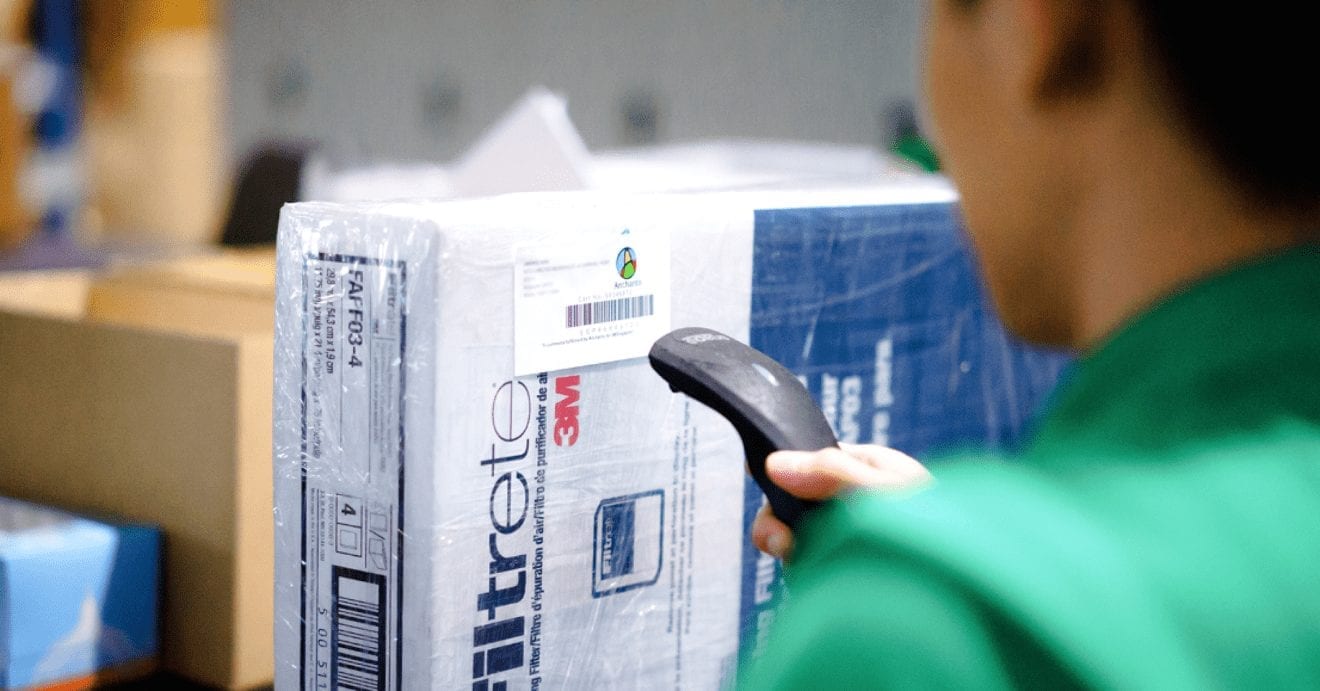
    The seller can choose to use any of Anchanto’s Global Fulfilment Network and e-commerce B2C fulfilment which will fully integrate with SelluSeller and provide them with preferred fulfillment rates. This will be further connected to the firm’s broad network of warehouses spread across the region.

    With the launch of SelluSeller, Anchanto will be establishing itself as a leading player in the e-commerce logistics SaaS industry that is focused on the development of its e-commerce selling and logistics platform.

  • Tencent Offers Integrated Solutions to Help  eCommerce Companies Win in the China Market

    Tencent Offers Integrated Solutions to Help eCommerce Companies Win in the China Market

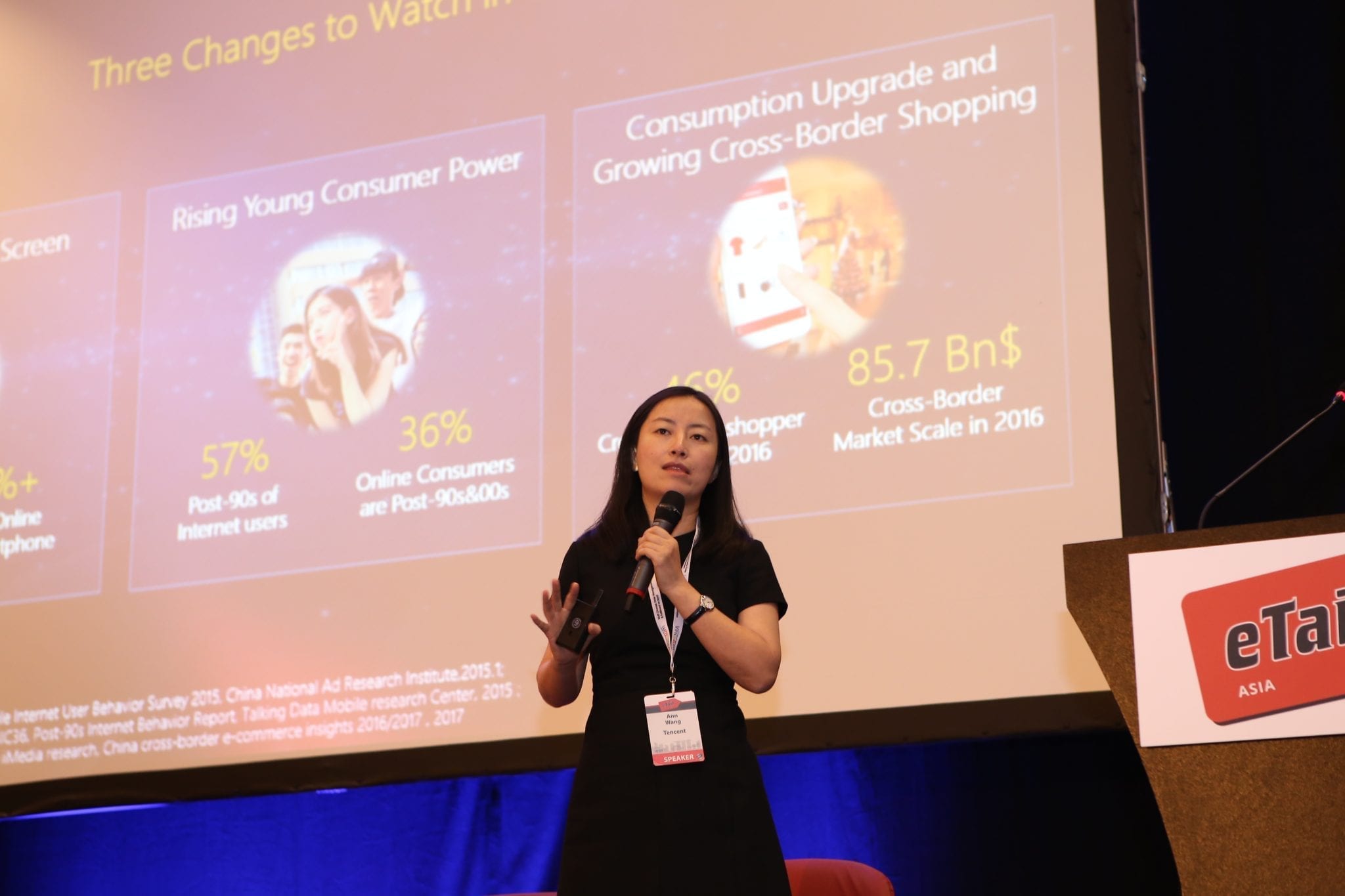
    Speaking today at eTail Asia 2017, a leading platform to help online retailers in Asia build a successful ecommerce business, Ann Wang, General Manager of Performance Advertising Solution, Online Media Group, Tencent, shared insights into China’s unique Internet market environment and consumer behaviors. Wang revealed the Tencent platform’s strength and offered three pieces of advice to help ecommerce companies win in China as the country shifts toward a consumption upgrade.

    In China, 90% of Internet users access the Internet via smartphone, and more than 75% shop online via smartphone. The ongoing consumption upgrade is further stimulating the development of China’s ecommerce market, particularly overseas online shopping. According to statistics, the total volume of cross-border online shopping in China reached US$85.7 billion in 2016, while the number of cross-border online shoppers grew 46% in the same year. The growth of ecommerce in the post-1990s and early 2000s is the main force behind the huge rise in overseas online shopping.

    According to Mary Meeker’s Internet Trends 2016, Chinese mobile users spend more than 55% of their online time on Tencent platforms, including QQ, Qzone, WeChat, v.qq.com and Tencent News. With its focus on social interactions and content, Tencent has built a self-sustained ecosystem, powerful data capabilities and holistic scenarios for quality communications among its users.

    According to Wang, Tencent provides more open, connected data, which links ad exposure to brand attitudes, consumer behavior and sales. Tencent’s algorithms also help marketers engage consumers across scenarios, and elevate pertinence by dynamic and contextual messages, allowing them to reach the broadest coverage of Chinese netizens.

    In her speech, Wang offered three valuable tips for marketers, which she believes can help global brands build a successful business in the increasingly dynamic China market:

    • Build a mobile-first ecosystem: Use all the tools available, including online ecommerce platform solutions, payment services and customer management to set up a mobile-oriented business ecosystem.
    • Go with an integrated marketing approach. Wang suggests marketers partner with a fully integrated platform to get the best of both brand advertising and performance advertising. One good example is Tencent’s co-creation of blockbuster IP with a popular cosmetics brand. The brand’s target audience loves to watch super-realism dramas and movies, worships movie stars, and are willing to consume and spend. Partnering with Penguin Pictures’ self-produced series “Revive,” the cosmetics brand made the leading actress its endorser and incorporated the brand appeal where appropriate. At the same time, it encouraged fans to try out its product used by celebs in the series. What’s more, it hosted offline celebrity meet-up sessions, thus winning the hearts of many fans. After only seven episodes, its Tmall store’s daily sales volume increased 400%.
    • Use the power of online marketing to boost traffic in offline stores. When a luxury automotive brand opened new stores in Hangzhou, it launched geo-targeted ads through WeChat Moment. Both the number of customer information acquisitions and store visits increased significantly as a result of the campaign.

    eTail Asia is the region’s premier event for senior eCommerce and Multichannel Directors of leading retailers. Each year, Asia’s biggest names attend to network and get a 360° perspective on the most pressing challenges and opportunities in digital retail. Also speaking at the event this year were representatives from Google, L’Oreal, Adidas, and Philips, to name just a few.

  • Vietnamese prefer overseas sites for online shopping

    Vietnamese prefer overseas sites for online shopping

    Local consumers say global giants like Amazon and eBay offer a wider range of products and better return policies. Vietnamese online shoppers spend significantly more on overseas purchases than they do domestically as they believe international e-commerce platforms offer better products and service quality, a new report has said.

    The report, from the Vietnam E-commerce Association or VECOM, said that many global retailers like Amazon and eBay have made it easier for Vietnamese consumers to buy online.

    “Meanwhile, a majority of Vietnamese e-businesses, especially small- and medium-sized companies, have yet to make significant investments in market research catering to consumers,” said the report.

    Local online shopping sites are less competitive in terms of product diversity and quality, return policy, and order placement costs, the report highlighted.

    “I shop on both eBay and Amazon,” Quoc Hung, a reader said in a comment. “I can just send a product back if I don’t like it.”

    Most Vietnamese online businesses don’t offer free delivery and free return, another reader pointed out.

    Chinese online retail giant Alibaba is also attracting more Vietnamese customers. Internet company OSB, Alibaba’s authorized agent in Vietnam, said the company’s customer base in Vietnam has expanded to 500,000 after sharp increases over the past three years.

    The online shopping trend is growing rapidly in Vietnam, where 30 percent of the population will be buying goods and services over the internet by 2020, according to the Vietnam E-Commerce and Information Technology Agency.

    The agency, run by the Ministry of Industry and Trade, said revenue from online retail is expected to account for 5 percent of the country’s retail market in 2020, up from only 2.8 percent in 2015.

    Vietnam’s e-commerce market, which has one of the world’s fastest growth rates, jumped 37 percent in 2015 to around $4 billion, based on government statistics.

    The growth rate is about 2.5 times faster than that in Japan, based on some estimates by industry experts.

  • Alibaba-controlled Lazada Readies Itself To Battle Amazon

    Alibaba-controlled Lazada Readies Itself To Battle Amazon

    For now, eMarketer pointed out, Lazada Group dominates the eCommerce activity and web traffic in the markets it serves, which includes mainly in Indonesia, Malaysia, the Philippines, Singapore, Thailand and Vietnam.

    Last December, Lazada’S online properties attracted the largest number of page views among B2C retail sites in Thailand, Indonesia, Singapore, Malaysia and Vietnam, data from SimilarWeb confirmed.

    However, eCommerce estimates point to an expected growth by double digits for online B2C spending in Southeast Asia through 2020, which is sure to attract more competitors for Lazada.

    Amazon is reportedly considering a launch in Southwest Asia sometime this year, eMarketer stated, starting with Singapore.

    Chinese companies are also setting their sights on Southeast Asia as a new market for growth, especially considering the region is home to nearly 620 million people.

    According to a report last year, companies like Alibaba, Tencent, Didi Chuxing and JD.com, are expanding in Southeast Asia, moving beyond the slowing economy in China.

    WSJ noted Alibaba and Tencent have led deals with a value of $1 billion combined to expand their businesses in Southeast Asia, which is the third-largest region for technology mergers and acquisitions by Chinese technology companies in 2016. The deal values combined were $1.9 billion compared to $193 million in the year earlier, WSJ reported, citing data from Dealogic. What’s more, industry watchers said in the report they think that investments on the part of Chinese tech companies will accelerate next year.

    “What we have learned in China, we can apply the fastest in Southeast Asia,” Poshu Yeung, Tencent’s vice president of its international business, said in the report. “Everything in Southeast Asia, particularly in Indonesia, you will experience a pretty good growth rate.”

    EMarketer is projecting that the number of smartphone users will surpass 257 million by 2020, presenting a big opportunity for companies. What’s more, the incomes in the region are growing at the same time smartphone ownership is, noted the report.

  • Closing shop on China’s e-commerce platforms

    Closing shop on China’s e-commerce platforms

    The closures of a number of retail and luxury brand giants on China’s e-commerce platforms indicate that retail competition is no less fierce online than offline.

    It is old news that the Chinese market is highly competitive and unlike any other market in the world. What may sell on the high street in London is not guaranteed to sell in China. The rainbow-lensed promises of e-commerce seem to be an easy way to access China’s 770.4 million working population, 0.2 per cent or over 1.5 million of which have an average income of US$500,000.

    Political concerns and falling sales: Lotte

    In 2015, Lotte Group Retail opened a Tmall store, hoping to widen its reach in China, where over 60 per cent of its overseas stores are located. The large South Korean multinational conglomerate has had a presence in China for over 20 years, with 115 supermarkets and five shopping malls.

    But on January 12 this year, Lotte closed its Tmall store – along with three brick-and-mortar stores in Beijing – after rising political tension between China and South Korea. In December, Lotte’s China headquarters admitted that the company was facing investigations for tax, fire control and safety issues. However, the closure of its Tmall store seems to have stemmed also from the fact that China is Lotte’s only international market where growth is stymying. Sales fell during the last three months of 2016, year-on-year.

    While Lotte remains in the market through its physical shopping malls and supermarkets, and on the JD.com website, the company has not announced whether it will be reopening its Tmall store at any future date.

    Heavy local competition: Asos

    Asos, the UK’s largest online fashion retailer, entered China in 2013 with high expectations. The company announced it was investing RMB 100 million (US$14.5 million) towards the market, importing British styles and developing a sales force. Its business model relied exclusively on e-commerce, with its own website, as well as a Tmall store.

    However, Asos failed to attract enough customers and was running a loss of GBP 4 million (US$5 million) by April of 2016, when it announced that it was shutting down its China operations.

    Asos faced a number of problems in the Chinese market, from operations to marketing. When it first started, the company encountered issues with shipping though China Post, with customers paying import taxes on clothes. Eventually, Asos obtained a local warehouse, but then it encountered complex clothing trade regulations in China, particularly in regards to correct labelling. As a result, Asos had to spend additional funds on restitching to comply with local code, contributing to higher than expected start-up costs.

    Effective marketing was also a major issue for Asos, with the company failing to distinguish itself from local, more affordable brands. While it may be a major player in the US and Europe, Asos was relatively unknown to Chinese millennials, its target consumer base.

    Tmall concerns for luxury brands: Coach

    Coach was one of the first US luxury handbag brands to launch a Tmall store, creating a pop-up store from December 2011 to January 2012, and then an official one in 2015. However, citing a shifting operational strategy, Coach announced that it was leaving the platform just one year later in September 2016.

    China is a critical market for luxury goods, as sales in the US and Europe steadily decline. Many brands see e-commerce as a way to directly access customers and receive greater exposure, which is why many have moved onto online platforms en masse. Despite this, online platforms have always been a concern for luxury brands, who fear appearing too mass market. Moreover, Alibaba has been criticised by brands for not doing enough to remove fake goods, despite a counterfeit removal program. In 2016, Gucci and Michael Kors quit the anti-counterfeit coalition as protest against the program’s inefficacy.

    Coach still remains in the Chinese market through its WeChat account, an avenue that is growing in popularity amongst luxury brands. Cartier, Longchamp, and Montblanc all have WeChat shops with WePay functions. Some companies believe that WeChat offers a more personalised shopping experience, as well as greater control over its brand.

    For many luxury brands, online platforms are more for marketing and building brand image, rather than sales. However, official Tmall flagship stores do not receive priority listing on searches. In fact, according to a 2016 study by L2, only 12 per cent of first page Tmall search results were through the official Coach shop. The only luxury brands that controlled more than 80 per cent of first page search results were Ports 1961, Burberry, Tommy Hilfiger, Calvin Klein, and Tumi.

    Key Takeaways

    E-commerce is a high-growth sector, with online retail sales totaling US$581.61 billion in 2015, and it is estimated to grow 20 per cent annually by 2020. China is now the biggest online retail market in the world, and Chinese consumers make up almost half of all online sales globally.

    Companies looking to take advantage of China’s market size and sell to Chinese consumers often mistakenly believe that e-commerce offers a shortcut to success. While a misconception, this idea is understandable. There are fewer licensing requirements to operate through e-commerce, and customs clearance is faster.

    However, as has been demonstrated through high-profile store closures in 2016, e-commerce requires extensive pre-entry knowledge of current regulations, a realistic logistics plan, and a local marketing strategy. Those who enter the market blindly do so at the risk of expensive learning curves and wasted efforts.

    • This article was first published on dezshira.com.  Since its establishment in 1992, Dezan Shira & Associates has been guiding foreign clients through Asia’s complex regulatory environment and assisting them with all aspects of legal, accounting, tax, internal control, HR, payroll, and audit matters. For inquiries, email [email protected].

  • Lazada Dominates Ecommerce Activity in Southeast Asia For Now

    Lazada Dominates Ecommerce Activity in Southeast Asia For Now

    Southeast Asia’s ecommerce sector may not yet get as much attention as China. But as recent ecommerce estimates suggest, online B2C spending Southeast Asia is set to grow by double digits through at least 2020, making the region a key area of interest for retailers and marketers.

    For now, much of the ecommerce activity and web traffic in Southeast Asia is dominated by one large ecommerce retailer—Lazada Group. In fact, Lazada’s control of the region’s ecommerce sector was enough to entice Alibaba as a suitor; the China-based ecommerce giant purchased a controlling stake in the company last year for $1 billion.

    According to data from SimilarWeb cited by ecommerceIQ, Lazada properties drew the largest number of page views among B2C retail sites in Thailand, Indonesia, Singapore, Malaysia and Vietnam in December 2016.

    Take, for example, SimilarWeb’s figures for Thailand, where Lazada claimed almost 41 million monthly page views during the month. That was more than 16 times the number garnered by JIB.co.th, the second-place finisher.

    Ecommerce has yet to really catch fire in markets like Thailand, where eMarketer estimates retail ecommerce sales will make up just 1.7% of total retail sales this year. But companies like Lazada are betting that growth in internet use will create a new class of consumers looking to make digital purchases. eMarketer projects that retail ecommerce sales in Thailand will hit $5.7 billion by 2020.

    However, Lazada’s long-term success in the region is far from assured. US ecommerce heavyweight Amazon has reportedly been eyeing a launch in Southeast Asia with Singapore sometime in Q1 2017. The moves could kick off a heated battle between Amazon and Alibaba’s proxy for both market share and customers as the region’s ecommerce spending expands.

  • Zalora CEO denies Indonesia exit rumour

    Zalora CEO denies Indonesia exit rumour

    Last week, there was a  speculation that Zalora was withdrawing from Indonesia following a share acquisition of Zalora Philippines by Ayala Group.

    “The rumour that we are selling off our business in Indonesia is certainly not the case. And we announced a deal that’s actually very exciting – an investment from Ayala Corp into Zalora Philippines – which is in no way a signal of a retreat from the country, but more of a commitment,” Gundersen told this portal.

    But why did the rumour surface in the first place? Had there been actual talks about possible investments from MAP Group?

    Gundersen declined to comment. Right now, he said, discussions with MAP are only related to how Zalora could continue adding more brands from MAP’s large portfolio. The two companies have been working together with MAP as a supplier.

    “We are not retreating from Indonesia nor the Philippines,” stressed Gundersen.

    In 2016, Zalora sold its businesses in Thailand and Vietnam to conglomerate Central Group. When news about stake sale in Zalora Philippines and rumour on Indonesia exit emerged, it led to a speculation that Zalora had continued its retreat from the region. Gundersen denies this narrative, saying that the Philippines share sale was very different to what it had done in Thailand and Vietnam.

    “Our investors looked at the operations in Thailand and Vietnam (like they always do, regularly), and decided that it did not have the best outlook. Whereas in the Philippines is very different because we remain the majority. It just made sense to us to have a local partner in the Philippines,” he explained.

    Will Zalora implement the same partnership strategy in Indonesia, as it has now with Ayala? It is always a possibility that the company would always explore, Gundersen said.

    Indonesia, in particular, is a massive market for e-commerce, with high social media and smartphones usage, coupled with growing income. Gundersen reiterated that Zalora is committed to bring more brands – local, international, and in-house – that are more relevant for its Indonesian customers.

    The company is also on the lookout for ways to improve its services, particularly in payments, a sector which Gundersen called “very interesting” to watch.

    “Definitely the space that we want to watch – anything that can help make it easier for our customers to make a purchase we want to be involved. It’s still early days but definitely we want to monitor close,” Gundersen said, when asked about a possibility to partner with local fintech companies.

    Indonesian e-commerce industry has grown in two-digits annually over the past five years, according to a number of reports. This year, e-commerce transactions in the country are expected to reach $45 billion from an estimated $30 billion in 2016. While the opportunities are abundant, the competition is fierce.

    A few months earlier, local firms Berrybenka and SaleStock were reported to have laid off hundreds of their employees. While smaller firms are gasping for breath, giants like MatahariMall.com and Lazada are steadily marching forward. Last year both companies received major funding from global investors, with MatahariMall snatching $100 million from Mitsui (and at least another $25 million from Matahari Department Store) and Lazada pocketing $1 billion from Alibaba.

    Experts have projected that competition will start to sharpen even further – especially if US giant Amazon decides to enter Indonesia – and will force smaller firms to consolidate.

  • Alibaba seeks tougher penalties for counterfeit goods

    Alibaba seeks tougher penalties for counterfeit goods

    Alibaba Group has called for tougher laws, stricter enforcement and stiffer penalties to crack down on purveyors of counterfeit goods in China.

    At a press conference at its headquarters in Hangzhou, Alibaba said China’s “ambiguous counterfeiting laws” were hampering authorities’ ability to build legal cases against counterfeiters, resulting in a low conviction rate that is “the fundamental reason for the inefficiency in combating counterfeiting and protecting intellectual property”.

    “Current regulations are no longer able to cope with the need to fight counterfeiting,” according to the company’s public appeal, which is published in full below. “Criminals can escape any legal consequence, leaving law enforcement agents and consumers feeling helpless, and society bearing the damage.” The company urged authorities to strengthen laws, boost enforcement and impose more punitive penalties to deter counterfeiters.

    Alibaba has long faced criticism over the sale of counterfeits by independent vendors in its giant e-commerce marketplaces, which host some 1.5 billion product listings at any given time.

    “Alibaba Group is itself a victim of counterfeiting,” the note says. “The manufacturing industry and business environment of China suffers even more. Counterfeiting is damaging, not only to consumers and legitimate merchants, but also to innovation and the long-term economic development of our nation, hindering China’s growth as a responsible economic power.”

    To maintain the trust of consumers and legitimate merchants selling on its platforms, the company has been waging an escalating war to control the problem, employing a range of tactics to combat fakes and put counterfeiters out of business. Alibaba screens and monitors product listings using manpower and advanced search, image-recognition and big-data technology. The company also works with authorities in China to track down the source of counterfeits and prosecute offenders. Recently, Alibaba has also used China’s courts to cause pain for fake-goods sellers.

    Alibaba officials stressed the company remains firmly committed to continuing its anti-counterfeiting battle, but its ability to remove merchants and products from its marketplaces will be much less-productive in the long run without the support of more legally enforceable sanctions.

    The full Alibaba Group statement is below:

    In the ongoing war against counterfeiting, society is currently faced with an impasse. In Alibaba Group’s view, progress against this illegal activity is negligible because the costs and risks of producing and selling counterfeits are too low. The only way out of this is to impose tougher criminal sanctions on every individual involved in the chain of operation. Only by doing this, can China’s manufacturing industry return to the path of originality and innovation that ultimately leads to sustainable development.

    In 2016, our Platform Governance Department identified and handled 4495 leads related to counterfeiting. Each involved a value of goods exceeding the statutory minimum of RMB 50,000 for criminal investigation. Of these, law-enforcement departments followed up 1184 leads, which led to just 33 convictions, according to public information, representing a conviction rate of only 0.7 per cent.

    Alibaba came up with the 4495 leads via proactive big-data screening by its Platform Governance team, brand owners’ reports, consumer complaints and random checks. But law-enforcement agencies often found it difficult to classify and quantify incidences of counterfeiting and also had difficulties building legal cases due to ambiguous counterfeiting laws. As a result, public security agents were only able to build 469 cases from 1184 leads.

    The extremely low conviction rate is the fundamental reason for the inefficiency in combating counterfeiting and protecting intellectual property. Current regulations are no longer able to cope with the need to fight counterfeiting. Criminals can escape any legal consequence, leaving law-enforcement agencies and consumers feeling helpless and society bearing the damage.

    Alibaba established its own 2000-member-strong anti-counterfeiting force and has invested over RMB 1 billion each year to proactively combat counterfeiting with the most advanced technology and data models. For the 12 months ended August 2016, Alibaba took down 380 million product listings and shut down 180,000 Taobao stores and 675 operators as a result of its anti-counterfeiting action. As a private enterprise, Alibaba has no law-enforcement power. We can only uncover irregularities, take down the product listings, report the cases to the regulators and wait for law enforcement to handle the cases.

    We do our best to stop counterfeit goods from landing on our platform but cannot entirely stop them from proliferating offline and moving to other platforms. We identify and handle irregularities according to the highest standard of platform-management rules, but cannot impose penalties on the criminals.

    Alibaba Group is itself a victim of counterfeiting. The manufacturing industry and business environment of China suffers even more. Counterfeiting is damaging, not only to consumers and legitimate merchants, but also to innovation and the long-term economic development of our nation, hindering China’s growth as a responsible economic power.

    We therefore call for further development of our laws and regulations, stricter law enforcement and harsher punishments to strengthen the efforts to combat counterfeiting. Counterfeiters are our arch-enemy and we will stop at nothing to fight them.

    The criminalisation of drunk driving once delivered a clear message to society that violators will have to face serious consequences for their actions. Such a message served as a deterrent. We hope our society can reach a consensus to collectively increase the resources and efforts towards combating counterfeiting to no lesser extent than was done with drunk driving. To stamp out counterfeiting in China, all of us should play our part.

    Enlightenment-era criminologist Cesare Beccaria once said, “crimes are more effectually prevented by the certainty of punishment.”

    There is no way to root out counterfeiting with a conviction rate of 0.7 per cent. Only through stricter law enforcement and appropriate punitive measures can we stop criminals from evading responsibility for their actions. Only when counterfeiters get the punishment they deserve will the interests of consumers be properly protected.

  • Vietnam’s annual e-commerce growth to reach 30-50%

    Vietnam’s annual e-commerce growth to reach 30-50%

    “The size of Vietnam’s e-commerce market may reach $10 billion within the next five years,” he added.

    Ms. Dang Thuy Ha, Chief Representative at market researcher Nielsen in Hanoi, said the e-commerce market was worth up to $4 billion last year.

    Of Vietnam’s 91 million people, she said, 45 per cent access the internet and 28 per cent use e-commerce.

    Each person spends $160 a year on shopping via e-commerce platforms. Therefore, growth in e-commerce is 22 per cent, according to Nielsen’s report.

    The report also notes that the number of people using smartphones has increased sharply, giving a boost to e-commerce.

    Thirty-two per cent of enterprises have set up business relations with foreign partners through online channels and 11 per cent have participated in electronic trade floor and website activities, according to a VECOM report.

    Ms. Tran Thi Phuong Lan, Vice Director of Hanoi Industrial and Trade, said that retail revenue via e-commerce in the capital stood at VND30 trillion ($1.3 billion) last year, representing 6 per cent of total retail revenue and up 15 per cent against 2015. More than 5,600 e-commerce websites are registered in Hanoi.

    VOBF 2017 had five sessions: Overview, Cloud Technology and Mobile Phones with E-commerce, Omni Channel, Cross Border E-commerce, and Online Startups. The Vietnam E-commerce Index 2017 was also released.

    This is the first time the Forum has been held. Speakers included representatives from the Vietnam E-commerce and Information Technology Agency, Nielsen, Google, Facebook, Vietnam Post, Verisign, and Lazada.

    Attendees had the chance to meet with representatives from Z.com, VeriSign, Matbao, Bizweb, Gimasys, TrustPay, Interspace, Netnam, and iNet. The special features of startups in the sector was also discussed.

    VOBF 2017 will be held in Ho Chi Minh City on March 3.