Tag: ecommerce

  • Online fashion brand Zalora to exit Philippines; Indonesia next

    Online fashion brand Zalora to exit Philippines; Indonesia next

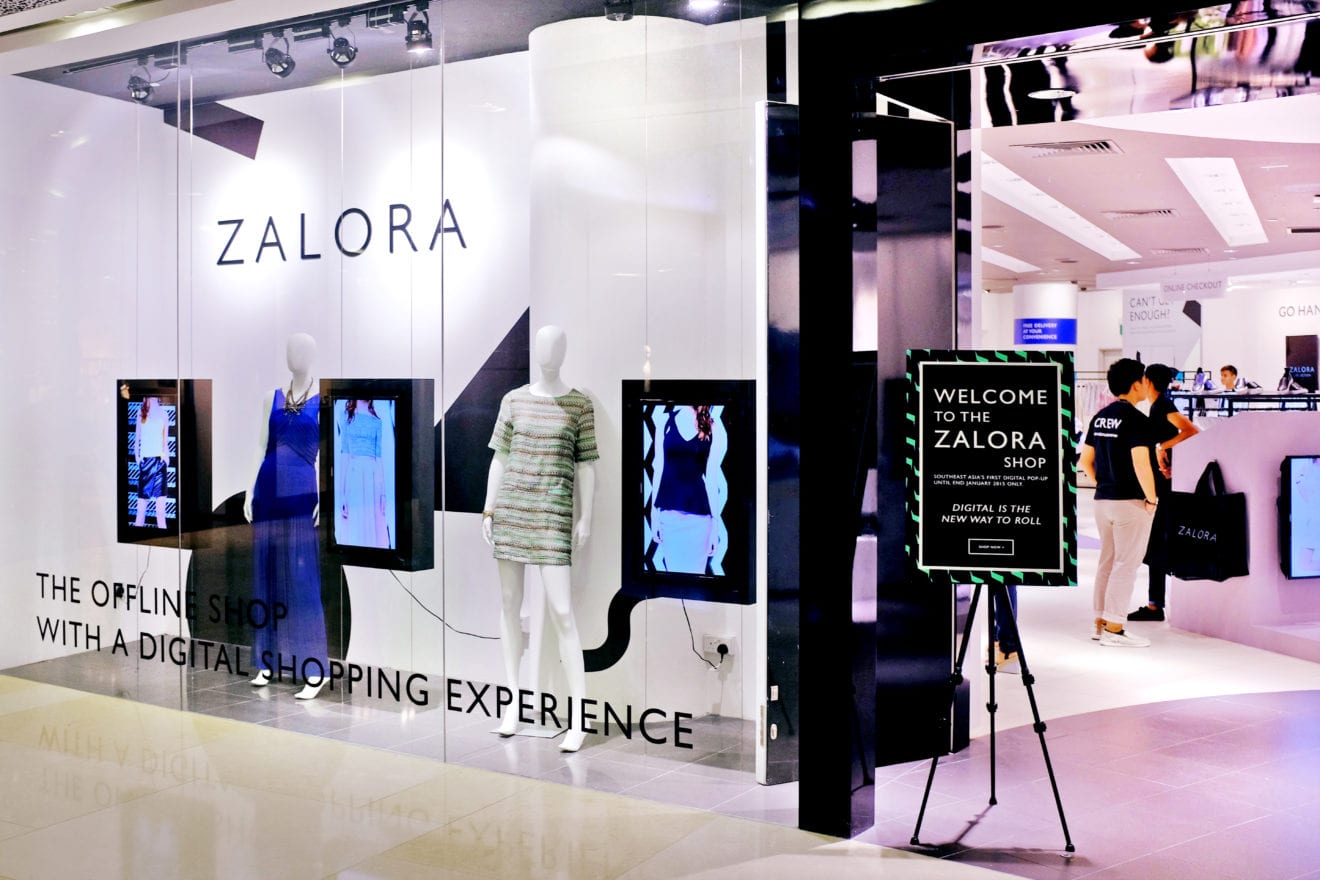
    Southeast Asian fashion ecommerce company, Zalora, has been in the process of shutting shop in a few Asian countries. The company had retreated from Thailand and Vietnam last year, and is pulling out from Philippines and Indonesia.

    Launched in 2012, the Rocket Internet backed online shopping company was functioning in Malaysia, Singapore, Brunei, Hong Kong, Taiwan, Philippines, Vietnam, Thailand, Indonesia, Australia, and New Zealand, managed by Global Fashion Group, which was developed by Rocket Internet to handle all its online fashion businesses across the world.

    In Philippines, 49% of Zalora’s parent company, BF Jade E-Services was bought by one of the oldest real-estate companies, Ayala Group, and the remaining stays with Rocket Internet. BF Jade E-Services owned and operated Zalora in Philippines and the deal is currently subjected to approval from the Philippine Competition Commission.

    e27 also states that the fashion ecommerce company is in talks with retail giant MAP Group for a similar acquisition or investment in Indonesia. MAP group operates more than 1,900 retail outlets in Indonesia and has been experimenting with e-commerce as it launched its MAP e-Mall last year. A merger or acquisition with Zalora could mean that it gets access to the online fashion giant’s ecommerce expertise, as per media speculations.

    Romain Voog, CEO, Global Fashion Group said in a statement, “We are proud of how Zalora Philippines contributed to the development of e-commerce and fashion in the Philippines. This partnership with Ayala will allow us to further strengthen the leadership position of Zalora Philippines, as we invest more into delivering the best online fashion shopping experience for Filipino consumers.”

    In April last year Zalora sold its Thailand and Vietnam businesses to fashion retailer Central Group which also had been wanting to foray into the online ecommerce business. As reported by Forbes, the move was made to streamline its services in light of slowing output and the high cost of customer acquisition in Southeast Asia.

    Jaime Augusto Zobel de Ayala, Chairman and CEO, Ayala Corporation also added, “We see the potential of e-commerce in the country and believe that the Ayala group can benefit and add tremendous value to Zalora. With resources in banking, real estate and telecommunications, the investment presents new opportunities for Ayala to generate synergies throughout the e-commerce value chain.”


  • Ho Chi Minh City seeks to tax sales on Facebook

    Ho Chi Minh City seeks to tax sales on Facebook

    The Ho Chi Minh City government should work with Facebook on how to collect tax from businesses running on the social media site, officials said.

    The city currently hosts a dynamic e-commerce scene with more than 80,000 websites, half of which have stable business, but tax collection from the segment is low, said Pham Thanh Kien, head of the city’s trade department.

    “In particular tax collection has not been done from sales via Facebook,” Kien said at a meeting with the city’s tax authority. “(We) propose the People’s Committee work with Facebook on a mechanism to control tax collection.”

    Ho Chi Minh City, where the most active e-commerce in Vietnam takes place, should find out measures to prevent losses in tax revenues, Deputy Finance Minister Vu Thi Mai told tax officials at the meeting on Sunday.

    Just a quarter of Vietnam’s non-state businesses have declared value-added tax, Mai was quoted by the Tuoi Tre (Youth) newspaper as saying at the meeting.

    A majority of online businesses using social networking sites such as Facebook do not issue invoices, which has prevented the authority from collecting tax.

    Vietnam’s e-commerce market, which has one of the world’s fastest growth rates, jumped 37 percent in 2015 to around $4 billion, based on government statistics.

    The growth rate is about 2.5 times faster than that in Japan, according to Tran Duc Tam, an industry expert.

    The government has projected revenue by Vietnam’s online retail to hit $10 billion by 2020, accounting for 5 percent of the country’s retail market. Last year retail sales rose 10.2 percent from 2015 to $118 billion, based on government data.

    The online tax tightening plan has received mixed responses.

    “Facebook is just a channel to advertise products and communicate with customers. With no electronic invoicing, how to tax them?” a reader’s comment.

    Others raised concerns that many online retailers use anonymous accounts for transactions, while some others could be one-time or small-time sellers with insignificant revenues, making it hard for tax authorities to regulate activities.

    Online marketplaces such as Facebook have made it easy for small businesses and start-ups to set up business due mainly to the convenience they provide and the opportunity to connect with customers, Tuan Anh Pham wrote in another comment. He suggested market regulators take a cautious approach when it comes to requiring online retailers to pay taxes.

  • DHL eCommerce launches Fulfillment Center in Sydney

    DHL eCommerce launches Fulfillment Center in Sydney

    The Fulfillment Center will provide overseas merchants with fast, flexible shipping that integrates inbound freight, inventory, and last mile delivery in a single consolidated service.

    DHL eCommerce, a division of the world’s leading logistics company, Deutsche Post DHL Group, announced the launch of its Fulfillment Center in Sydney, Australia to support booming demand for overseas goods amongst Australia’s online shoppers. International brands and retailers are now able to reach out to the rapidly growing Australia market.

    “Australian shoppers are the second-most likely in the world to buy online from overseas merchants, and the significance of their purchasing power will only increase as cross-border e-commerce grows at an average of 29 percent per year until 2020,” said Damien Sheehan, managing director Australia, DHL eCommerce. “Online retailers need to overcome the traditional problems associated with overseas expansion – finding new suppliers in each market, delivering shipments within days not weeks, and keeping costs in check – if they want to stay competitive in this borderless future.”

    Adding, “The launch of our Australian Fulfillment Center gives our customers immediate access to one of the world’s most mature and fastest growing e-commerce markets, with the scalability and quality needed to reach Australia’s highly savvy online shoppers.”

    The Fulfillment Center will provide overseas merchants with fast, flexible shipping that integrates inbound freight, inventory, and last mile delivery in a single consolidated service. The center also operates using the same service level agreements, management platforms, and customer support as all other parts of DHL eCommerce’s global Fulfillment network, allowing existing customers to expand their sales into Australia with minimal onboarding time and hassle.

    “E-commerce has gone borderless, and order fulfilment needs to do the same,” says Charles Brewer, CEO DHL eCommerce. “Our Australian facility adds another node to our standardized global network of Fulfillment Centers located in US, Mexico, India, Hong Kong and Central Europe, eliminating the need for e-commerce merchants to hunt for new logistics partners as they look to expand their global reach.”

    The center’s design accommodates front-end integration with a range of popular marketplace and web-shop platforms, as well as multichannel order management and last-mile solutions for immediate and highly-accurate deliveries all across Australia. All of the center’s services operate on a pay-per-use model with no capital spend or fixed costs.

    “The value of Australian e-commerce sales is expected to grow by nearly 50 percent between now and 2020, making cost-effectiveness and scalability the critical issues for online retailers in the country,” said Malcolm Monteiro, CEO Asia Pacific, DHL eCommerce. “Whether it’s extending into new channels, offering more delivery options, or simply increasing inventory and warehouse capacity, global brands need fulfilment solutions that can adapt to their needs without requiring hands-on intervention every time a change occurs.”

    Concluding, “Global e-tailers can access our latest fulfillment center for simplified nationwide inventory and last-mile delivery and also as part of a rapid and painless global expansion.”

  • Online Furniture Retailer Castlery Builds Scalable E-commerce Fulfilment Platform

    Online Furniture Retailer Castlery Builds Scalable E-commerce Fulfilment Platform

    Manhattan Associates today announced that Castlery, the Singapore-based online furniture retailer, has selected Manhattan SCALE as a key component of a business transformation programme to build a world-class order fulfilment capability that will ensure a seamless service experience for customers and drive ongoing business growth.

    Launched in 2013 with a mission to make designer furniture accessible to everyone, Castlery has quickly established itself as a leading furniture and homewares designer in Southeast Asia. In order to meet its target of over 100 percent year-on-year growth, Castlery recognised it needed to invest in an order fulfilment technology that would scale in line with its business growth, ensure service level improvements for customers and drive future sales and margin expansion.

    Castlery selected Manhattan SCALE for its ability to handle the unique logistical challenges associated with furniture retailing and distribution and its proven track record supporting ecommerce and omni-channel operations around the world. With a pressing need to be set up before the peak sales season, Castlery needed the Manhattan fulfilment platform to be live and ready for one of its busiest times of the year. Working closely with the Manhattan team, Castlery successfully completed the solution deployment at its Mapletree Logistics Hub in Toh Guan, Singapore, in under three months, remarkably fast for a first implementation.

    Zhou Zhiwei, Chief Technology Officer at Castlery, commented: “As the leader in the Gartner Magic Quadrant for Warehouse Management Systems (WMS) and with many companies we admire already using SCALE, Manhattan ticked many boxes. Their experience with solving problems like ours, high calibre teams, and flexible solutions made picking Manhattan as our partner an easy decision.”

    Travers Tan, Chief Operating Officer at Castlery, added: “Since the solution has been deployed, process execution has improved across our entire distribution operation. We’ve hit 99.99 percent inventory accuracy and seen a 23 percent month-on-month increase in order transactions. We now have a complete view of inventory across the distribution network whilst our order-to-delivery cycle times are compressed significantly. Also, the solution is fully integrated with our ERP system, giving us a “live” picture of available inventory for sale and enabling accurate lead-times to be reflected on our website. Because the system can support multiple DCs, it is perfectly suited to our future plans for expansion into overseas markets. The Manhattan solution’s capabilities support our vision to become the leading furniture e-retailer globally.”

    Richard Wright, Managing Director, Southeast Asia, at Manhattan Associates, commented, “Manhattan provides the expertise and technology to help clients deliver on their brand promise. We’re delighted to see Manhattan SCALE already driving order volume growth for Castlery and are confident that Castlery will continue reaping the rewards from our constantly evolving solutions for many years to come.”


  • Online retail uploads into rapidly expanding Vietnamese market

    Online retail uploads into rapidly expanding Vietnamese market

    E-commerce is forecast to hit $10 billion by 2020, accounting for 5 percent of the country’s retail market. Vietnam’s e-commerce market climbed to about $4 billion in 2016 as one of the fastest-growing markets worldwide.

    Revenue from online retail in Vietnam is forecast to hit $10 billion by 2020, accounting for 5 percent of the country’s retail market.

    “The growth rate of Vietnam’s e-commerce market is estimated at about 35 percent, which is 2.5 times higher than Japan,” said industry expert Duc Tam at the recently-held Vietnam Online Business Forum 2017.

    Online sales in Vietnam have expanded rapidly in recent years, currently accounting for 3.39 percent of the country’s retail market. The total retail market grew 10.2 percent last year to $118 billion, mainly fuelled by a growing middle-class with expanding disposable incomes and an increasing number of internet users.

    The World Bank forecasts that Vietnam’s $200 billion economy is likely to grow to a trillion dollars by 2035. More than half of its population, compared with only 11 percent today, is expected to join the ranks of the global middle class with consumption of $15 a day or more.

    According to one estimate, about 30 percent of the population will be buying goods and services over the internet in 2020, with each shopper spending an average of $350 per year.

    Just three years ago Vietnam was ranked the smallest e-commerce market in Southeast Asia in terms of sales. Now its online retail is gaining momentum with more than half of the country’s 92 million people increasingly turning to online shopping.

    According to Internet World Stats, Vietnam is currently ranked 18th in the world in terms of the number of internet users, with mobile subscription rates as high as 4 out of 10 people.

  • What do Vietnamese people love to buy online?

    What do Vietnamese people love to buy online?

    In contrast, fast-moving consumer goods including cosmetics, food and other household products have been slower to gain in popularity among internet shoppers. For these, Vietnamese people still prefer to go to stores and seek advice from shop assistants.

    With Vietnam becoming more “connected” and nearly half of the population with easy access to the internet, Vietnamese purchasing habits are changing.

    “The online retail ecosystem is fast evolving. The whole retail experience is changing. Today’s shoppers are incorporating digital touch points along the entire path to purchase,” said Roberto Butragueño, associate director at Nielsen Vietnam.

    According to the survey, customer loyalty is varied. More than half of respondents who had purchased travel services or books/music/stationery online admitted they would buy those more often online than in store. Event tickets, which attract only one-fourth of online customer, have become the favorite destination for second time purchasing.

    However, once an online shopper does not necessarily mean always an online shopper. The story is different for fashion, electronics and cosmetics.

    The survey’s findings are based on more than 200 respondents with online access in Vietnam. Survey responses are based on claimed behavior, rather than actual metered data.

  • FedEx to bolster its e-commerce business in Asia

    FedEx to bolster its e-commerce business in Asia

    FedEx will expand its global e-commerce business in an effort to compete for the growing number of packages shipped to consumers from China and Japan, executives said Monday.

    The company, which in 2014 acquired Bongo International, a company that helps shoppers purchase goods from foreign retailers by automatically adjusting currencies, and customs and shipping costs, by location, is rebranding the business as FedEx CrossBorder. The company plans to expand its services to merchants in China and Japan by next June, said Chip Hull, vice president of the newly named division. The company already consolidates shipments for global e-commerce retailers in the U.S., Europe and Peru.

    Asia “is the second-largest region from an export perspective in the cross-border space, on par with Europe, and is growing at a faster rate,” Hull said. As global e-commerce grows at double-digit rates around the world, “Asia is certainly the 800-pound gorilla in the room.”

    FedEx’s international e-commerce efforts have come as other companies are investing in helping retailers with international online-shopping services. United Parcel Service acquired i-Parcel around the same time that FedEx bought Bongo, and Pitney Bowes acquired Borderfree last year. Deutsche Post AG’s DHL also offers international e-commerce services.

  • Amazon India proposes $500m food venture

    Amazon India proposes $500m food venture

    Amazon India has applied to the government to invest US$500 million in a wholly owned venture that will allow the US eCommerce giant to stock locally produced food items and sell them online.

    If successful, it would become the first foreign retailer to enter the segment.

    Amazon already has an eCommerce marketplace in India, but while 100 per cent overseas capital is permitted for such platforms, they cannot sell products of their own. Last year, the government allowed for 100 per cent foreign investment in the retailing of processed foods made in India.

    Amazon has filed its application with the Department of Industrial Policy & Promotion (DIPP), which handles foreign investment in retailing and e­Commerce. The company plans to invest $500 million over five years and could start selling locally produced food items within six months of obtaining approval, says an insider.

    “We are excited by the government’s continued efforts to encourage foreign direct investment in India for a stronger food-supply chain,” says an Amazon spokesperson. “We have sought an approval to invest and partner with the government in achieving this vision.”

    Only Indian grocery delivery companies Big­Basket and Grofers have applied under
    the category, prompting the government to invite companies including CP Foods (Thailand), Heinz, Nestle and Walmart to provide feedback and investment plans.

    This followed the minister for food-processing industries Harsimrat Kaur Badal visiting London with a team of officials last year to meet representatives of such companies as Cobra Beer, Harrods, Marks & Spencer, Sainsbury’s and Tesco to drum up support for the policy.

    Amazon’s current online platform is open to Indian-­owned entities, and similar platforms are run by Flipkart, the country’s largest eCommerce company, and Snapdeal.

  • Global e-commerce: How to win with shoppers in China

    Global e-commerce: How to win with shoppers in China

    With a population of roughly 1.3 billion people, China offers unprecedented growth opportunities for retailers looking to conduct business internationally. China’s National Bureau of Statistics reported last month that online retail sales in China grew 26.2% in 2016 to $752 billion. That’s more than 40 percent of all online sales around the world.

    The e-commerce experience in China is on a scale like no other. From shopping on Alibaba’s Tmall.com storefronts to the immense participation in mobile commerce, consumers in China have high expectations from retailers when it comes to the online shopping experience.

    For retailers looking to break into this competitive international market, here are some tips to win with online shoppers in China and succeed in the world’s largest e-commerce market.

    Invest in the mobile shopping experience

    According to research firm TNS Global, a typical Chinese mobile user spends roughly 30 minutes a day shopping on his/her phone. China is also the world’s largest smartphone market, accounting for 30 percent of the global market. Retailers should make sure their mobile experience is top-notch and localized for shoppers in China.

    The mobile checkout experience, in particular, is important. How important is mobile? According to eMarketer, mobile sales are projected to reach nearly $1.5 trillion globally by the end of 2019. China is driving a huge part of that growth, with mobile sales accounting for nearly half of all of China’s e-commerce sales.

    Mobile payment apps, like WeChat Pay and Alibaba’s Alipay, are examples of the types of payment options consumers want. These two payment options use data and analytics to personalize the mobile shopping experience and are currently the two biggest players in the Chinese marketplace. According to the UPS Global Pulse of the Online Shopper study, 73 percent of online shoppers in China say the most important option when checking out online is having a variety of payment options in addition to a credit card.

    Understand duties, local taxes and the implications for consumers and your business

    According to the UPS study, consumers in China rank duties and taxes as their second most important international shopping issue. Miscalculating duties and taxes, or simply not making them available early enough in the checkout process, can be detrimental to a retailer’s success. For online shoppers, not having a clear understanding of the duties and taxes they are responsible for can be a reason for picking one retailer over another.

    In April 2016, as part of an effort to encourage Chinese citizens to purchase goods domestically rather than internationally, the Chinese government changed the tax rules, making purchasing luxury goods overseas more expensive for import. For retailers, changes to tax rules can cause major roadblocks in their e-commerce strategies. This makes is absolutely critical to show currency conversions and total shipping costs, including duties and taxes, during checkout to reduce cart abandonment.

    There are solutions available, like UPS i-parcel, which take the complexity out of cross-border e-commerce, making it easier and more flexible for retailers to localize the shopping experience. This technology provides all of the information that consumers need to make purchasing decisions up-front—including localized duties and taxes, shipping options, delivery times, and local currency and payment options.

    Win over loyalists by focusing on quality

    Online shoppers in China rank product safety and quality as the top reasons for buying goods from overseas sellers. In fact, 40 percent of Chinese luxury goods purchased in the first half of 2016 were made across borders, according to a report by ContactLab and Exane BNP Paribas Research.

    Retailers looking to win over shoppers in China should make product quality a top priority, especially with the rise of China’s more mature or “rational shopper” as dubbed by research firm Nielsen. These consumers, which make up 40 percent of urban online shoppers in China, keep quality top of mind and will search high and low while paying a premium for highly sought-after items.

    Quality in the online shopping experience extends beyond the products themselves. Chinese consumers expect retailers’ packaging, delivery and shipping options to reflect the quality of the item they are purchasing. For retailers looking to do business in China, it’s important to partner with a logistics provider that has the global shipping and logistics expertise to deliver on heightened consumer expectations.

    Don’t be left behind

    The biggest risk for retailers looking to grow through international e-commerce is not targeting shoppers in China.

    Success begins by partnering with an experienced logistics provider that understands the expectations and behaviors of Chinese consumers and can help deliver a shopping experience that converts these consumers to your customers.

  • Singapore-based ecommerce enabler Shopmatic is striving to get Indians sell their wares online

    Singapore-based ecommerce enabler Shopmatic is striving to get Indians sell their wares online

    It took just one year for Anurag Avula to realise that India is an investment market. “That’s the top learning from India,“ confesses cofounder and CEO of Singapore-based ecommerce enabler Shopmatic, which forayed into the country in January 2016. However, investment for Avula doesn’t mean pumping in millions of dollars. “You need to invest in people, educate them and consult them,“ he says.

    For an ecommerce enabler like Shopmatic–which helps people set up online stores–investment in human resource appears to be its biggest weapon in cracking a market where people are still apprehensive transacting online in spite of a big digital push by the government. Out of an estimated 51 million small and medium enterprises in India, only 10 mil lion are technology ready, according to a recent Google-KPMG report.

    “The opportunity is massive,“ says Avula, adding that the fledgling startup is not confining itself to small enterprises. The target could be anybody. Take, for instance, an aunty that makes pickle, a mom that bakes cake, a student that gives guitar tuitions, a working professional who is also a photographer, or a retired uncle who can offer math tutions.

    “While everybody wants to take their business online, they need a lot of handholding to overcome latent barriers,“ he reckons, informing that the startup has tied up with Confederation of All India Traders, representing over 6 crore merchants.

    From providing free domain names to templates for building stores, to uploading pictures and text, enabling payment and shipping with domestic and international partners, and even helping list on Amazon and eBay, Shopmatic is pushing the envelope to accumulate as many users as possible. Last November, it launched a mobile app GO that enables sellers to build online sites using their mobile phones in just 2 minutes. “We are already clocking over 50,000 downloads, just weeks after launch,“ he claims. While for a first-time merchant who is tentative about the online world, GO is the best option as it helps recruit newbies into the digital world for free; for others Shopmatic offers a subscription model of $20 per month.

    But why would a seller listed on a marketplace or with a page on Facebook page want a bespoke online store? Shenaz Bapooji, chief marketing officer of Shopmatic, contends there are reasons aplenty.

    Some players are tired of parting with high commissions and playing second fiddle to `other brands’ on a marketplace.For them, Shopmatic offers best value.Others consider social media as a catalogue service but have trouble getting closure because the mediums are not ecommerce enabled. There is another category, points out Bapooji, who have built sites through other ecommerce platforms but are switching to Shopmatic as they need to hire experts to manage their sites. “Indians are eager to embrace digital but are waiting for someone to show the way,“ she adds.

    Industry analysts attest to massive business possibilities in making Indians come online. “What is positive about Shopmatic is that it is taking a `handholding’ approach,“ says marketing expert Jessie Paul. When we say `go online’ in India, most businesses would translate that to sell on Facebook, Flipkart and Amazon or more recently on Paytm. They are not likely to look at a specific tool to achieve this and are unlikely to consider a standalone online property, as that requires a lot of brand-building and trust.

    However, the Achilles heel for Shopmatic could be lack of awareness.Unlike more aggressive rivals such as GoDaddy, which has been aggressively advertising on TV, Shopmatic has been under the radar. Avula concedes awareness might be an issue but doesn’t believe in going all guns blazing.

    “It is tempting to put a big burst of money behind TV, but it’s not always possible,“ he says. Shopmatic is instead opting to be efficient about its presence online, by on-boarding `non-digital’ audiences through road shows and market storming activities that help spread awareness.

    “Other companies don’t enable the ecosystem for selling online like we do,“ he claims, adding that he believes in playing a smart and longterm game. “India is a priority market for us and will stay so,“ he signs off.

  • Last Mile Fulfilment Asia returns for the third edition from 2 to 3 March 2017

    Last Mile Fulfilment Asia returns for the third edition from 2 to 3 March 2017

    Last Mile Fulfilment Asia (LMFAsia), the region’s premier trade show for the retail, ecommerce, logistics and parcel industries, returns with the third edition on 2 to 3 March 2017. Themed “Go Global, Deliver Local”, the event aims to drive and strengthen a borderless fulfilment process, where in-market industry players fortify their business locally whilst expanding their foothold in the region through perfecting the last mile beyond borders.

    Amidst a backdrop of economic uncertainties today, Southeast Asia ecommerce market continues to grow to 16 times and will reach $88 billion by 2025 . The two-day conference and exhibition, organised by SingEx Exhibitions will deep-dive into the need to tap on the potential growth of ecommerce, and optimise the cross border fulfilment and delivery processes.

    The multi-track conference component of the trade show will focus on evolutionary topics such as turning fulfilment challenges into opportunities, designing cross-border fulfilment solutions across Asia. In recognising that the last mile of the fulfilment process costs almost 28 per cent of total cost of moving goods , achieving cost efficiency through innovative logistics solutions will be key to amplify the ecommerce market that is already expanding at rapid speed in the region. According to Frost & Sullivan, the global B2B ecommerce market alone will reach US$6.7 trillion by 2020. The 2017 conference will feature a new track “The Future of ecommerce is B2B ecommerce”, in which industry speakers from renowned retail, ecommerce and logistics leaders will share keynotes, highlighting the potential wins of adapting a successful B2C model into the B2B segment to conduct ecommerce business in a similar fashion.

    Separately, the exhibition component of Last Mile Fulfilment Asia will offer a convenient business matching platform for innovative companies to meet potential business partners, and showcase products and technologies that add value in the delivery chain. There will be three thematic zones dedicated to specific solution categories ranging from last mile, fulfilment centres, warehousing to automation.

    Adrian Sng, general manager of SingEx Exhibitions said, “Industry giants from China and US are pursuing significant ecommerce market shares in Asia and it will be a challenging year with headwinds affecting many in the fulfilment business. In order for companies to gain a competitive edge, there is a need to leverage technology to advance and conquer the last mile. This year’s overarching objective will be to bring this to the forefront. Through our focused strategy of curating trade events in emerging markets and industries with high-growth potential, Last Mile Fulfilment Asia will be a driving force for change that will see ecommerce and the fulfilment business playing a much more significant role in the region.”

    Charles Brewer, chief executive officer of DHL eCommerce, who will be sharing during the conference on leveraging opportunities presented in cross-border ecommerce, acknowledges the game-changing benefits last mile fulfilment will bring. “Perfecting logistics is the key to delivering the best ecommerce experience and a great chance to deliver a smile in the last mile. I am looking forward to sharing and connecting with other ecommerce players at the conference to discuss latest trends in this very exciting industry.”

    Joseph Yuen, board chairman of the Hong Kong federation of ecommerce and managing director of China Post Trade Development Company Limited, will also be speaking during the conference on paving the way into doing business in China through “11.11” case study. “Technology brings businesses closer to each other and around the world, but successful cross border ecommerce does need a mastery in the difference in culture, trade practices, government policy and others. On this note, Last Mile Fulfilment Asia 2017 provides a great opportunity for industry stakeholders to catch up with the latest trends and solutions in cross-border ecommerce.”

  • Clothing shoppers prefer stores

    Clothing shoppers prefer stores

    Shopping in-store is still the dominant means of buying apparel in Asia-Pacific, according to the latest study from research company YouGov.

    A poll of 9037 people across the region in December reveals that more than 79 per cent have shopped in a physical store in the past year. This is particularly prevalent for Hong Kong, Australia and Malaysia, where the figures were 88, 85 and 84 per cent respectively.

    Local markets and street vendors attracted 28 per cent of consumers in APAC. They were the most popular in Vietnam, the Philippines and Malaysia, where 41, 38 and 36 per cent of respondents respectively bought apparel.

    Websites turned out the second most popular way to buy apparel. Over the past year, 45 per cent of APAC respondents went online to shop for clothing and accessories, while in China the figure was 75 per cent.

    As yet, apps have not broken into the mainstream, being used for clothing purchases by only 15 per cent of those polled. Apps were most popular in Indonesia, China and Singapore (19, 18 and 18 per cent respectively).

    YouGov says young people are more than six times as likely to have shopped via an app than older generations, and more than twice as likely to have shopped using a website in the past year.

    Between the ages of 16 and 24, 51 per cent shopped using a website over the past year and 19 per cent used an app. By contrast, just 24 per cent of respondents 55 years and older shopped using a website and only 3 per cent via an app.

    Conversely, shopping in-store is most popular with older generations – 90 per cent of those 55 and older have shopped in store compared to 75 per cent of 16- to 24-year-olds. Yet local markets and street vendors seem to buck the trend, being more popular with young people (35 per cent in the 16 to 24 age bracket buy from markets compared with 23 per cent of over 55s.

    The most popular reason for shopping online is that it is quicker than going into a store, with more than half of online and app shoppers says prices are also an advantage.

    However, 78 per cent of buyers like to try out apparel before they buy it, 73 per cent want to check the quality first, and 56 per cent simply enjoy shopping around.  

  • Online shopping in China grows 26.2% in 2016

    Online shopping in China grows 26.2% in 2016

    Online retail sales in China reached 5.16 trillion yuan ($752 billion) in 2016, representing 26.2% growth from 2015—more than double the growth rate of overall retail sales, according to China’s National Bureau of Statistics, the agency charged with tracking economic data. Total retail sales amounted to $33.23 trillion yuan ($4.98 trillion) in 2016, up 10.4% year over year.

    While consumers made 15.5% of their total retail purchases online, the percentage was a bit lower for physical goods, at 12.6%. Overall sales of tangible goods amounted to 4.19 trillion yuan ($610 billion). The remaining nearly $145 billion in retail purchases was of digital goods, such as music and videos.

    The report guarantees China will further extend its lead over the United States as the world’s largest online retail market. U.S. e-retail sales totaled $341.7 billion in 2015, according to the U.S. Commerce Department, and is on track to grow at around 15% in 2016 to around $393 billion. The U.S. Commerce Department will report fourth quarter 2016 and full-year U.S. online retail sales on Feb. 17.

    Helping fuel China’s growth in online retail sales was the rapid integration of stores with online channels, the National Bureau of Statistics says.

    “We expect New Retail, a new form of [online-to-offline sales] promoted by Alibaba and supported by Chinese authorities, will shape the retail landscape for China going forward. Earlier in 2017, Alibaba announced the privatization of Intime Retail Group, which we believe would be a test case for its New Retail strategy. Also, other partnerships between physical stores are Alibaba and Sanjiang, JD.com Inc. and Yonghui Supermarket,” Esme Pau, an analyst at research company Fung Global Retail & Technology, tells Internet Retailer.

    Sales in stores grew 7.8% in 2016, a sizable jump from 5.5% growth in 2015. Specialty stores selling specific brands grew 4 percentage points faster than in 2015, but supermarkets and department stores lost market share, growing about 1.5 percentage points more slowly than in 2015.

    The government agency reported that Chinese consumers bought more premium products in 2016, including sporting goods, sport utility vehicles and electric automobiles. For example, sales of mobile devices grew nearly 12% in 2016. Online sales of food in China went up 28.5% in 2016 over the prior year, clothing sales increased 18.1% and sales of other goods rose 28.8%, the National Bureau of Statistics reported.

    The growth in online and offline retail reflects a still-healthy Chinese consumer economy, despite a slowdown in recent years. China’s gross domestic product grew by 6.7% in 2016, overtaking India, which registered a 6.6% increase in GDP, as the world’s fastest-growing major economy, according to the data released recently by The International Monetary Fund.

    Chinese consumers are fulfilling some of their demand for premium products by buying imported goods online. The number of Chinese consumers who purchased overseas products on Tmall Global, an online marketplace for imported goods, more than doubled in 2016, according to Tmall Global operator Alibaba Group Holding Ltd. Amazon.com Inc., one Alibaba’s main rivals in China, reported earlier that as of the end of August 2016 Chinese consumers had placed more than 10 million orders on the cross-border e-commerce shopping area of Amazon.cn, which launched in 2014.

  • Subdued Amazon results clouds impressive growth

    Subdued Amazon results clouds impressive growth

    Amazon is usually a retailer that operates at full volume, the noise of its sales growth a clarion call in an often muted retail sector.

    However, this quarter that volume seems to have been turned down a couple of notches. While the latest Amazon results show impressive growth, and is a long way above the retail sector overall, by the high benchmark the company has set, the latest numbers have a certain softness. Revenue totalled US$43.7 billion, up 22 per cent year-on-year, below analysts’ expectations.

    Some of the loss in momentum comes down to a more unfavorable exchange rate. On a constant currency basis, Amazon’s overall growth is a more respectable 24 per cent; while its international growth leaps to 23 per cent from 18 per cent, once the impact of the strong dollar is factored out. Even so, these upticks still leave a gap in growth compared to what Amazon delivered over the first three quarters of the fiscal.

    Part of the softness comes down to shipping-related revenue, which grew by its slowest pace in over a year. This has placed a little downward pressure on the revenue line. More worryingly it means that shipping revenue from consumers is now strongly adrift from Amazon’s shipping costs. In the final quarter, the former grew by 29 per cent, while the latter surged by 35 per cent to just over $5.6 billion. This is one of the reasons the company missed its profit forecasts, and why operating profit came in at 2.9 per cent of sales versus 3.1 per cent over the same period last year.

    Arguably, low cost and fast delivery are a fundamental part of Amazon’s appeal to consumers. However, they are also its Achilles’ heel – and with Prime becoming more popular, and with a greater focus being put on speedier shipping times, we have concerns that Amazon could see further profit erosion as it enters its new fiscal year. This view is supported by Amazon’s own guidance for the next quarter, which suggests profit will come in well below last year.

    As niggling as these points are, they do not diminish Amazon’s success in other areas. Over the holiday quarter, the company saw demand for its devices, including the Echo product, boom. This helped Amazon to a very strong performance in electricals at a time when the overall market was struggling with a lack of newness and innovation. It also aids Amazon to extend its ecosystem to more households, something we believe will yield fruit over the coming years as it becomes a more integrated and critical part of people’s lives.

    The AWS (Amazon Web Services) division is also a success story. Here revenue grew by 47 per cent off the back of a very strong prior year comparative. This part of the business is helpful as its relatively strong profitability gives buoyancy to Amazon’s balance sheet.

    As much as this quarter has been more subdued, Amazon remains firmly on the front foot in terms of innovation. This alone will continue to make it a retail outperformer, at least in sales terms, over the next year and beyond.

  • Direct access to China’s online market through Alibaba’s Mr. Fresh

    Direct access to China’s online market through Alibaba’s Mr. Fresh

    The online retail market in China is booming, as are sales of perishables. Ahead of the curve is Tmall (part of the Alibaba Group) which, through Tmall Fresh and Mr. Fresh, has created some of the first B2C platforms that caters for fresh produce online sales and delivery.

    Alibaba’s Tmall is the biggest domestic online B2C retailer. It is a platform for international and Chinese brands to sell goods directly to consumers in Mainland China, Hong Kong, Macau and Taiwan, and has a reach of millions of consumers. Tmall Fresh is the organisation’s new portal for perishable products.

    Usually, due to high subscription costs, only large brands have online ‘flagship stores’ on Tmall and Tmall Fresh. Tmall Fresh currently only hosts Chinese online stores. Most of the existing flagship stores are importers or large distributors, that have been selling products on Tmall in the past before switching to Tmall Fresh.

    Tmall Fresh and Mr. Fresh

    “Tmall Fresh has been launched to meet the growing demand for fresh produce. It is becoming the online sales channel for perishables in China. Products include seafood, meat, dairy and, increasingly, fresh fruits,” says He Chunlei, CEO of Tmall Fresh.

    To assist rookie foreign fresh produce exporters in overcoming difficulties that come with market entry, Mr. Fresh was introduced alongside Tmall Fresh.

    Mr. Fresh is an online flagship store for foreign products on Tmall Fresh, entirely run by the Tmall Fresh Team. It aims to support foreign brands entering China. Mr. Fresh takes care of customers, marketing, sales, logistics and customer services. As such, it provides foreign suppliers with a low-cost entry to the Chinese market, whilst also avoiding the investment costs it takes to open a store on Tmall.

    Supporting foreign exporters

    “For foreign fruit exporters, Tmall offers two solutions. Foreign exporters can either cooperate with Chinese flagship stores, and sell their products through these existing portals on Tmall Fresh. Or, the second option, is that foreign exporters can join Mr. Fresh. Through cooperation with Mr. Fresh, foreign fruits can easily be sold into the Chinese market. We introduced the concept to solve trade barriers that foreign companies are facing entering China as a new market. The idea is that, after having sold their products on Mr. Fresh for a couple of years, foreign exporters are well positioned to open a flagship store on Tmall Fresh,” according to He Chunlei.

    “Mr. Fresh is designed to meet both the needs of the supplier and the consumer. Fruit varieties that are currently sold are New Zealand kiwifruit, Thai durian, Chilean cherries and Vietnamese mangoes. Our mission is to help foreign companies enter the B2C market in China by providing them with a complete solution package. At the same time, we provide the consumer with product and company information. We use our sales data and marketing information to help our suppliers understand the needs and preferences of Chinese consumers. The market for online fresh produce sales is growing at 7% a year. So far, fruits make up a small share of total sales of perishables, but we see huge potential.”

    PMA Fresh Connections China

    From March 15 to 17, the PMA Produce Marketing Association (PMA) is organising Fresh Connections China, a yearly summit taking place in Shanghai. He Chunlei, CEO of Tmall Fresh, will be one of the speakers at the conference organised on the second day.