Tag: ecommerce

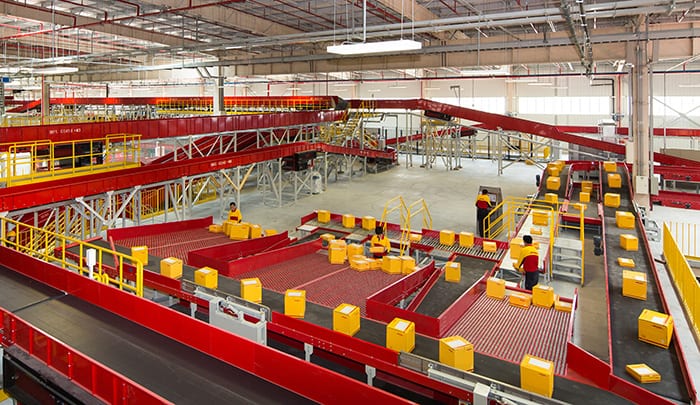
  • DHL eCommerce has launched its fulfillment centre in Sydney

    DHL eCommerce has launched its fulfillment centre in Sydney

    “E-commerce has gone borderless, and order fulfillment needs to do the same,” said Charles Brewer, CEO of DHL eCommerce. “Our Australian facility adds another node to our standardized global network of fulfillment centres located in the US, Mexico, India, Hong Kong and Central Europe, eliminating the need for e-commerce merchants to hunt for new logistics partners as they look to expand their global reach.”

    According to DHL, the new facility integrates inbound freight, inventory and last-mile delivery into a single consolidated service, operating under the same service level agreements, management platforms and customer support as the rest of the DHL eCommerce fulfillment network. All services will be offered on a pay-per-use basis.

    “Australian shoppers are the second-most likely in the world to buy online from overseas merchants, and the significance of their purchasing power will only increase as cross-border e-commerce grows at an average of 29% per year until 2020,” said Damien Sheehan, managing director of Australia at DHL eCommerce. “Online retailers need to overcome the traditional problems associated with overseas expansion — finding new suppliers in each market, delivering shipments within days not weeks, and keeping costs in check — if they want to stay competitive in this borderless future. The launch of our Australian fulfillment centre gives our customers immediate access to one of the world’s most mature and fastest-growing e-commerce markets, with the scalability and quality needed to reach Australia’s highly savvy online shoppers.”

    Malcolm Monteiro, CEO of Asia Pacific at DHL eCommerce, said that cost-effectiveness and scalability are the most critical issues for online retailers in Australia because the value of the country’s e-commerce sales is expected to grow by almost 50% between now and 2020.

    “Whether it’s extending into new channels, offering more delivery options, or simply increasing inventory and warehouse capacity, global brands need fulfillment solutions that can adapt to their needs without requiring hands-on intervention every time a change occurs,” he said. “Global e-tailers can access our latest fulfillment centre for simplified nationwide inventory and last-mile delivery and also as part of a rapid and painless global expansion.”

  • Improving outlook for online shopping

    Improving outlook for online shopping

    More shoppers seen migrating to virtual stores as economy slows down

    AS consumers hold on tighter to their wallets and purses amid a slowing economy, online shopping is expected to be more prominent in the Malaysian retail scene with more brick-and-mortar retailers offering online shopping facilities to customers.

    As in many other countries around the world, the trend of online shopping is gaining a sizeable market share in the Malaysian retail space, according to leading retail consulting firm Retail Group Malaysia (RGM).

    Commenting on this trend for 2017, its managing director Tan Hai Hsin said that although this trend is fast catching up in the country, it is not expected to replace physical stores anytime soon.

    “Malaysians are active in online shopping.

    “But the transaction amount is still low compared to the entire retail industry.

    “Online retail sales only account for less than 2% of total retail sales in Malaysia.

    “Services like telecom services, banking services, movie tickets, government services, etc account for the largest portion of online shopping.

    “More and more brick-and-mortar retailers in Malaysia offer online shopping facilities.

    “This trend covers almost all retail sectors – international luxury brands, clothes, fashion accessories, gifts, toys and books, etc.

    “At the same time, more online retailers in Malaysia are setting up physical stores. Zalora.com.my has a permanent (shop) at Mitsui Outlet Park,” he adds.

    The popular Christy Ng Shoes has set up a showroom in Damansara Utama.

    Popular Facebook Fatbaby has also set up an ice cream parlour in Subang Jaya.

    F Block and Aurora are two good examples of retailers offering both physical stores and online shopping sites at the same time, Tan notes.

    RGM provides retail research and shopping centre consultancy services to retailers, shopping centre developers and shopping centre managers in Malaysia as well as in the region.

    RGM is projecting a 5% growth rate in retail sales this year and has revised downwards the growth rate from 3.5% to 3% for last year or to RM 99.1bil in retail sales value.

    This year will remain a challenging year for Malaysian retailers as significant recovery will only be expected during the second half of 2017, according to the firm.

    As the economy is not expected to recover strongly in the immediate term, Malaysian consumers are expected to hold back on their spending during the first half of this year.

    The continued weakening of the ringgit will impact the costs of retail goods, RGM says, adding that retailers may be forced to raise prices again during the first six months of this year.

    Meanwhile, Malaysia Retail Chain Association (MRCA) president Datuk Garry Chua agrees e-commerce will be the trend to watch out for in the retail space with the government’s initiative to diversify the country’s economy in the e-commerce domain via the setting up of the Digital Free Trade Zone.

    This will help the retail industry in Malaysia to grow and towards this end, he adds MRCA has formed a committee to work closely with the Government pertaining to the Digital Free Trade Zone.

    Alibaba founder Jack Ma has been appointed as the digital economy adviser to the Government for this initiative.

    MRCA is forecasting retail sales growth to improve this year at 5% to 6% compared with about 4% growth for 2016.

    Chua says the higher growth rate in retail sales for this year can be partly attributed to arrival of tourists, especially from China.

    “This year about one million Chinese tourists are expected to arrive in Malaysia which is a boon to the retail industry.

    “Each trip to the country, RM3,500 to RM4,000 will be spent by each individual during shopping. This will lift retail sales amid some challenges in the retail arena,’’ he says.

    Chua says one of the major challenges which may impact the growth of the retail sector is the requirement for employers to pay the levies of their foreign workers under the newly introduced Employer Mandatory Commitment.

    He feels the government should do away with the payment of the levy as it will affect the cost of production and pricing.

    Another challenge for the sector is the escalation of rental rates in prime areas which has put pressure on retailers operational costs, he notes.

    Tan reckons the retail sales performance in 2017 will have a direct impact on the occupancy rates of shopping centres. Many shopping centre owners have introduced rental rebates or reduce rental rates in order to retain existing tenants, he says.

    “Shopping centres that suffered from low occupancy rates in 2016 will still face the same challenges this year. In addition, many new shopping centres will still face difficulty to secure new tenants to take up their retail shops if the purchasing power of Malaysians do not improve by the second half of this year. Numerous shopping centres in Klang Valley scheduled for opening last year have been delayed to this year,” he says.

  • Social media drives Asos success

    Social media drives Asos success

    The first quarter was an especially promotion-abundant period for pureplay UK-based online retailer Asos.

    Blanket discounts of 20 per cent for Halloween and Asos’ five-day Black Friday period as well as 30 per cent off selected categories in the run up to Christmas drove sales growth of 52 per cent.

    Asos’ promotions clearly resonated well with UK shoppers, as first quarter UK retail sales grew to an impressive £244 million. Asos should use the wealth of data it has on customers to offer customers tailored discounts on products they are likely to buy rather than blanket discounting.

    Part of the reason behind the consistent Asos success is the way it successfully targets customers with creative email and social media marketing on platforms such as Twitter and Instagram. The retailer also offers attractive delivery options such as Asos Premier, costing £9.95 for 12 months of unlimited next-day delivery; this encourages consumers to choose Asos over other online retailers over this period. Asos.com is regularly updated with new fashion ranges and featured brands such as 3INA and Young Bohemians, all of which encourage repeat spend and maintain customer loyalty which is vital over the peak trading period.

    Asos is continually future-proofing the business, ensuring it can cope with increased demand as it expands globally. The strong growth in international sales, particularly in the US as a result of the weak pound, means Asos will have to keep up with order fulfilment as the retailer expands. This will be imperative as rival retailer boohoo.com seizes market share away from Asos (which stands at 6.6 per cent for the UK online clothing & footwear market in 2016) through its own global expansion.

    The decision from CEO Nick Beighton in January 2017 not to raise prices should help Asos stay competitive in a busier-than-ever online fashion pureplay market.

  • Alibaba moves to privatise Intime Retail Group

    Alibaba moves to privatise Intime Retail Group

    Alibaba has announced a proposal to privatise the Intime Retail Group, an investment-holding company that manages department stores and shopping malls in China.

    Alibaba Investment, a wholly owned subsidiary of Alibaba Group Holding, together with an entity wholly owned by Shen Guo Jun, the founder of Intime Retail, have asked the board of directors of Intime to put forward to shareholders a proposal to privatise the company by way of a scheme of arrangement.

    Under the proposal, shares in Intime would be cancelled in exchange for a payment by the joint offerors at HK$10 (US$1.29) a share, representing a premium of about 53.59 per cent over the average closing price of Intime shares over the past 60 days, and 42.25 per cent over the closing price of HK$7.03 before trading was suspended on December 28.

    Intime runs 29 department stores and 17 shopping malls, mainly in first- and second-tier cities in China. It has a particularly strong footprint in Zhejiang province, where Alibaba Group is headquartered. Alibaba owns about 28 per cent of the equity interests in Intime pursuant to an initial investment in July 2014 and a conversion into equity of convertible debt securities in June last.

    Under the proposed transaction, Alibaba would become the controlling shareholder of Intime, and it is expected its shareholding in the company would increase to about 74 per cent. This reflects Alibaba Group’s strategy to transform conventional retail by leveraging its substantial consumer reach, rich data and technology.

    Dynamic shift

    The dynamic shift to mobile in China has enabled Alibaba Group to work with brick-and-mortar retailers to integrate online and offline customer data, enhance consumers’ in-store experiences as well as achieve improvements in inventory efficiency and sales turnover.

    As of the quarter ended September, 78 per cent of the gross merchandise volume on Alibaba Group’s China retail marketplaces was generated from mobile, and monthly active mobile users reached 450 million in September.

    “China’s total retail sector is a US$4.5 trillion economy and is growing at 10.7 per cent a year,” says Alibaba Group CEO Daniel Zhang. “Alibaba is working with offline retailers to transform conventional approach, create new consumer shopping experiences and use actions to embrace future opportunities under the new retail model.

    “We don’t divide the world into real or virtual economies, only the old and the new. Those who cling on to the old ways of retailing will be disrupted, and brick-and-mortar businesses will be able to create value for consumers if they are integrated with the power of mobile reach, real-time consumer insights, and technology capability to improve operating efficiency. Our combination with Intime will enable us to tap into the long-term growth potential of a new form of retail in China powered by internet technology and data.”

    Alibaba says the maximum amount of cash needed for the Intime proposal is expected to be about HK$19.8 billion. The two companies are financing the transaction through internal cash resources and/or external debt financing.

    The proposed transaction is subject to customary closing conditions, including approval from Intime’s independent shareholders and the sanction of the Grand Court of the Cayman Islands where the company is registered.

  • Chinese cross-border eCommerce rankings revealed

    Chinese cross-border eCommerce rankings revealed

    Surprisingly, Asia does not feature in the top 10 destinations of Chinese cross-border eCommerce during the holiday season.

    First to market, DHGate.com, a B2B transactional crossborder eCommerce marketplace, has released lists of the 10 destinations accounting for the largest volumes of shipments during the holiday season.

    The data includes the highest-selling product categories, the top countries for GMV (gross merchandise volume), the best-selling products, and the product categories with the largest increase in sales…

    Top 10 product categories
    1. Cell phones and accessories
    2. Consumer electronics
    3. Home and garden
    4. Health and beauty
    5. Sports and outdoors
    6. Shoes and accessories
    7. Apparel
    8. Toys and gifts
    9. Baby/children/parenting products
    10. Lights and lighting

    Top 5 products
    1. Holiday projector using LED lights to project Christmas images
    2. Baby shoes with LED lights
    3. Children’s building blocks, mini-figures
    4. Christmas-themed sequin cushion covers
    5. Nail-art stickers and tools

    Largest increase in sales
    1. Home and garden
    2. Health and beauty
    3. Shoes and accessories
    4. Apparel
    5. Baby/children/parenting products

    Top 10 countries for GMV
    1. US
    2. UK
    3. Canada
    4. Australia
    5. France
    6. Spain
    7. Italy
    8. Holland
    9. Germany
    10. Mexico

    Founded in 2004, DHgate.com services about 10 million global buyers from 230 countries and regions, with 1.4 million global sellers offering 40 million products.

  • Flappy Bird creator lends a wing to Vietnamese startups

    Flappy Bird creator lends a wing to Vietnamese startups

    ‘Just propose those projects to me, no matter how bad it is,’ Nguyen Ha Dong writes on Facebook. The overnight success of mobile game Flappy Bird has turned its creator Nguyen Ha Dong into a star of the local startup scene.

    The game, hailed by the industry as one of the milestones of Vietnam’s startup history, has brought Dong great fame and fortune, all within a short period of time.

    Now Dong is making a pledge to pay it forward and fund Vietnamese startups in the fields of robotics, artificial intelligence, social services, community development and education.

    “Just propose those projects to me, no matter how bad it is,” he wrote on his Facebook page.

    He did not give specific details about mentoring and funding.

    Flappy Bird was released in May 2013 with little fanfare. By February 2014, the sleeper hit topped the charts in more than 100 countries and had been downloaded more than 50 million times. Dong reportedly earned an estimated $50,000 a day.

    The Vietnamese government has seen successes like Flappy Bird as an encouraging sign. It is trying hard to cultivate a startup scene where tech entrepreneurs can create products and services that will go global.

    Unlike the well-developed startup ecosystem in most other countries, where there are venture capitalists and a strong network of entrepreneurs working together, the system in Vietnam is at a fledgling stage, with many funding difficulties.

  • Chinese E-commerce Giant Suning Makes Debut Appearance at CES

    Chinese E-commerce Giant Suning Makes Debut Appearance at CES

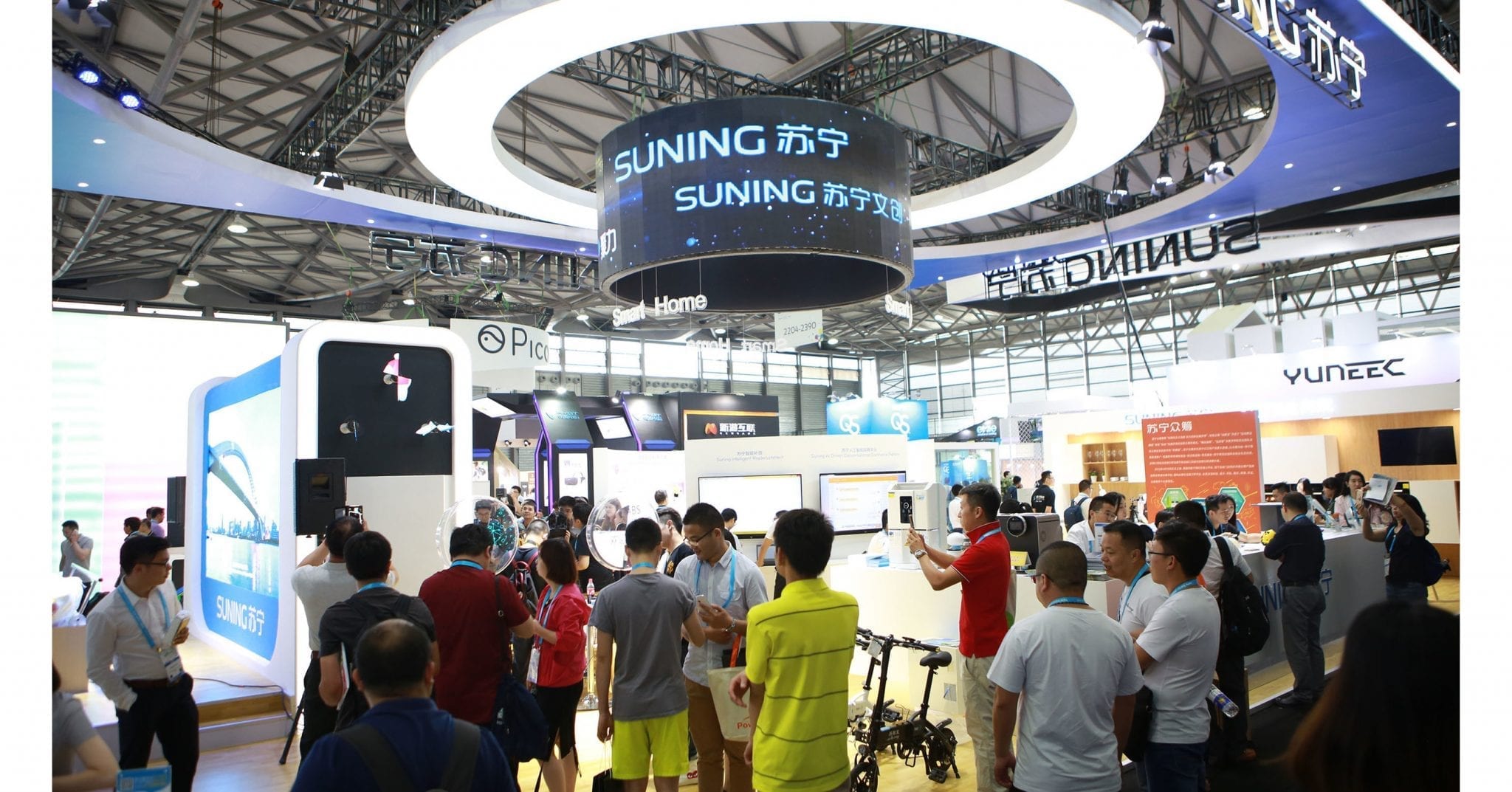
    Suning Commerce (Suning), one of China’s largest e-commerce retailers, is present for the first time when the International Consumer Electronics Show (CES), the world’s largest annual consumer technology tradeshow, throws open its doors in Las Vegas on the morning of January 5, local time.

    In line with the avalanche of “smart retail” and “smart home” products that are sweeping into the marketplace, this year’s CES highlights the technologies that have made the advent of the smart era possible and the conveniences that these newest technologies create for users. Suning showcases zc.suning.com, IT smart home products and other novel solutions in its exhibition zone. An app created by Suning enables interconnection between the Hisense intelligent air purifier, the UCON intelligent remote controller, the Blomberg intelligent refrigerator, the Whirlpool intelligent air conditioner and PPTV televisions. Joshua Xiang, executive vice president of IT at Suning Commerce and the top executive from Suning in attendance at the show, said that the firm is in the process of creating a smart home ecosystem for users by leveraging its online retail platform and bringing together brands.

    CES, the world’s largest and most influential consumer electronics tradeshow, attracts many of world’s top companies who attend annually. As a pioneer in China’s home appliance 3C retail sector, Suning, in collaboration with several of China’s home appliance manufacturers, hosts the “China Innovation” summit forum.

    The company also teams up with AVC and CHEARI to present awards to the many excellent companies and products that have contributed to the “China Innovation” transformation of the country’s economy, as the economic giant exits its earlier “Made in China” role and executes on the “Made in China 2025” initiative. Suning attends CES for the first time, with the aim of not only showcasing its “China Innovation” line of products and solutions, but also providing a model for other Chinese brands who are preparing to enter global markets.

    China Information Technology Industry Federation executive secretary-general Gao Sumei said that several Chinese manufacturers attend the tradeshow where they introduce innovative Chinese consumer electronic products to the world, giving retailers and consumers worldwide an opportunity to learn more about products created in China and paving the way for other excellent Chinese home appliance manufacturers to take their rightful place on the international stage.


  • A selfie to verify your MasterCard? Why Not

    A selfie to verify your MasterCard? Why Not

    Moving from social media to commerce, the “selfie” is about to become verification for online transactions for Mastercard users.

    An executive of the credit-card company says the “selfie verification” technology will be introduced in Singapore and other parts of Asia this year.

    Known as Mastercard’s Identity Check, the system will let card holders use facial-recognition technology to match selfies against their photograph on file to ensure the veracity of online transactions.

    “There could be an issue with twins, but  I would need to have a bad twin,” says Mastercard executive VP for identity solutions Bob Reany. “They would have to break into my house, steal my phone and be at my location.”

    With its prototype, Mastercard will convert head shots into encrypted code to be stored on a mobile device. The “selfie” would not need to be a perfect match, and banks would set the threshold for the accuracy of the matching.

    “We’ll advise the bank and say ‘You don’t want to be too open and have only 20 per cent of the things match’. Then, everybody and their dog could use it,” says Reany.

    The technology can either be as a standalone app or be integrated into an existing bank app. It can also work with other payment brands.

    No specific date has been set for the launch in Singapore, where some banks provide not just tokenisation but also use two-factor authentication for transactions.

    Already the technology has been rolled out in 12 markets in Europe.

    More sophistication

    Mastercard data shows that the rate of online payment fraud is more than three times higher than for physical transactions. Against this, banks are approving just 83 per cent of online transactions, compared to the 96 per cent for physical transactions.

    Reany says cybercrime is also gaining in sophistication, with new forms of malware being evolved. He says the fraudsters are smart. “They are getting PhDs and are finding ways to commit fraud. What we have to do is ruin their business model.”

    He says this runs along the enormous potential for growth in the online payment space, with the number of online and mobile transactions expected to double to 40 billion by 2020.

    Tokenisation already cuts the risk of credit-card numbers being stolen from single individuals and the details being sold in larger batches on the dark web. With tokenisation, a card number is replaced by a unique set of numbers not tied to actual account details. Mastercard is now working to fill another gap by tokenising the card details merchants already have on file.

    Reany says banks and payment companies need to combine various tools to create more secure authentication. This should so significantly raise the costs for criminals to exact fraud that the returns are no longer worth it. “If it’s not a scalable attack, we’re winning.”

  • Vietnam retail e-commerce to earn US$10 billion by 2020

    Vietnam retail e-commerce to earn US$10 billion by 2020

    Data from the Association of Vietnam Retailers (AVR) indicates that in 2015, retail e-commerce surpassed US$4.07 billion, with a growth rate of 20%.

    Ho Thi Kim Thoa, Deputy Minister of Industry and Trade, told a forum on e-commerce and mobile phone technologies in Hanoi on December 8 that e-commerce was a vital development trend in the retail sector.

    Thoa said last year, the growth rate of the retail sector was 9.5%. Traditional retail made up 80%, while modern retail including supermarkets, convenience stores and e-commerce accounted for only 20%. “Notably, in the modern retail channels, the portion of e-commerce was at a low level of around 2.8%,” she added.

    The country had 217 e-commerce trading floors with total revenues of VND1.66 trillion in 2014, double the 2013 figure.

    “Vietnamese businesses have seen positive changes in e-commerce by big firms. The number of small- and medium-size enterprises (SMEs) participating in e-commerce was modest even though 97% of the country’s 600,000 firms are SMEs,” she said.

    The deputy minister noted that the Prime Minister had promulgated a decision on master planning of e-commerce in 2016-20.

    She gave the recent Online Friday on December 2 as an optimistic example of e-commerce development. The number of enterprises joining in the event this year was 3,000, higher than last year.

    She urged businesses to catch up with e-commerce trends and have plans to enhance e-commerce development.

    Dinh Thi My Loan, AVR’s chairwoman, said there were many factors promoting e-commerce development, including the popularity of mobile devices.

    Nguyen Thanh Hung, chairman of Vietnam E-commerce Association (VECOM), agreed that the development of mobile phones and applications had contributed to promoting purchasing activities.

    Hung said the country’s e-commerce had been developing at a growth rate of 30% a year. “Businesses have quickly shifted from offline to online retail. Several are even totally doing business online,” he said.

    However, Pham Thanh Cong  from Nielsen said the sector should ha solutions to meet demand in rural areas as there are 1.3 million traditional shops, accounting for 85% of the retail sector’s revenue.

  • 11street launches online marketplace

    11street launches online marketplace

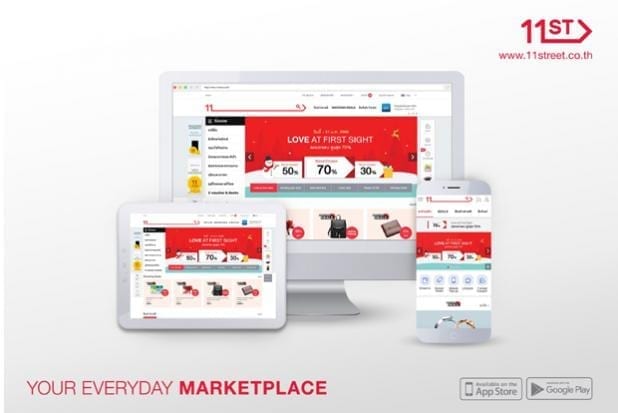
    The South Korean e-commerce leader 11street has opened an online marketplace in Thailand during the festive season to capitalise on rapid growth in online shopping. The wholly owned subsidiary of the mobile operator SK Telecom aims to become Thailand’s biggest e-commerce player by 2020.

    Hong Cheol-jeon, chief executive of 11street (Thailand), said he was excited about giving Thai shoppers the chance to experience the innovative platform from Korea. On its soft opening day last Weddnesday, 11street beat its target with more than 10 million baht in transactions.

    More than 600,000 customers have experienced the platform so far. The 11street platform has attracted more than 6,000 local sellers and aims to have 20,000 by the end of 2017.

    Earlier in August, the company opened its first “sellers’ campus” to train Thai entrepreneurs interested in conducting business online. The 11street platform is designed to work across different operating systems with a seamless experience from desktops to tablets and mobile devices. One feature is a Korea Street, offering products from Korea for sale in Thailand at competitive prices.

    Mr Hong said that in the digital era where data and people are connected, security is one of the most important elements for the platform developer. “Our platform is equipped with latest technology for escrow to ensure the security of online transactions,” he said. Online sales account for lees than 2% of the total retail market in Thailand, meaning there is still huge potential room for growth.

    “Compare that with South Korea where the e-commerce market is worth approximately US$47 billion, which is 18% of the $252-billion retail market,” he said.

  • Alibaba Stimulates China’s Rural Online Retail

    Alibaba Stimulates China’s Rural Online Retail

    Using its strengths in marketplace, big data and logistics, Alibaba Group will help rural communities sell their products to cities dwellers so they can stock up on Spring Festival supplies and along the way help give rural economies a lift. At the same time, quality products from all over the world will be brought to Chinese consumers as they celebrate the most important festival on the Chinese calendar.

    Highlights of this year’s upcomg Chinese New Year Shopping Festival include:

    Promotion of two-way trade:

    To promote trade between rural and urban regions, Tmall.com’s fresh food channel will introduce fresh fruit and meat produce from abroad, such as cherries from Australia, orange roughies from New Zealand and kurobuta pork from the US, to Chinese consumers. At the same time, poultry and meat from villages, including chicken from Qingyuan County of Guangdong Province, beef from the Horqin Grassland of Inner Mongolia, organic mutton from licorice-fed lambs in Gansu Province, yak meat from Aba of Sichuan-Tibet Plateau, and mutton from Yanchi County of Ningxia Hui Autonomous Region, will be brought to dining tables in the cities.

    Live broadcasts about rural produce:

    To give urban consumers peace of mind about rural produce, 12 “village celebrities” will conduct live broadcasts via Tmall and Taobao mobile apps and show urban consumers how some of the farm produce are harvested and processed before they end up as delicacies on the dining table.

    Rural family reunion photo project:

    For rural children whose parents have gone to cities to find work, Chinese New Year is often the only time when they get to see their parents when they return home. For communities where a family photo is often considered a luxury, Rural Taobao’s local services booking platform are mobilising its merchants to give away family portrait packages to 10,000 families across 20 counties as a first step that Alibaba says is to assist bring families closer together.

    Rural employment platform:

    A one-stop village employment platform will be launched by Rural Taobao in January to provide job information for workers returning to their home villages for the Chinese new year holidays. Through the project, it is hoped that some of them will be able to find work closer to home. As a part of the project, Rural Taobao representatives will assist job seekers in completing their résumés and entering their information on the platform.

    New Year Eve’s banquet:

    For the elderly and children who are left behind in villages, Rural Taobao is organising a Chinese new year’s eve banquet for 6,000 tables of guests so they can share in a moment of warmth and togetherness.

    Sun Lijun, Vice President of Alibaba Group who oversees the company’s rural business division, said, “Alibaba strives to create closer connections between urban and rural areas in China, narrowing the wealth gap and improving the living standard of those who live in villages.”

    Alibaba Group launched Rural Taobao in 2014, mainly as a platform to promote rural online trade. Alibaba Group Holding Limited is a Chinese e-commerce company that provides consumer-to-consumer, business-to-consumer and business-to-business sales services via web portals. It also provides electronic payment services, a shopping search engine and data-centric cloud computing services. The group began in 1999 when Jack Ma founded the website Alibaba.com, a business-to-business portal to connect Chinese manufacturers with overseas buyers. 

  • ‘Cloud’ powers Thai e-commerce group’s regional expansion

    ‘Cloud’ powers Thai e-commerce group’s regional expansion

    In August this year, Thailand’s e-commerce enterprise Ascend Group has finished migrating its existing businesses as well as new ventures to the cloud, a move that is expected to support its ambitious regional expansion plans.

    The Ascend Group owns and operates business-to-consumer (B2C) marketplaces WeMall and iTrueMart, and the consumer-to-consumer (C2C) platform WeLoveShopping. It also operates TrueMoney, a wallet solution for digital payments, among other allied businesses.

    Chaiwat Ratanaprateepporn, Chief Technology Officer of Ascend Group, said the company is looking beyond the country’s borders to expand its e-commerce business in the ASEAN region.

    “Most of the operations we have now in ASEAN are under the TrueMoney business. We have Myanmar and Thailand as headquarters, then we have businesses in Cambodia, Vietnam, Indonesia and the Philippines,” he said. Services currently consist of mobile wallet, remittance, top up services, bill payments and the e-commerce payment gateway.

    With a combined population of approximately 600 million, the ASEAN region has a booming e-commerce landscape, which is only logical for the Thai group to target.

    The Ascend Group’s cloud journey started in November 2014 when the company adopted a “cloud first” policy. This has allowed the company to reduce infrastructure build time, improve flexibility and accelerate speed-to-market.

    Chaiwat said the cloud journey is among the preparations it is doing for the expansion move.

    “Why we are moving to the cloud? Our TrueMoney business in Thailand has been around for more than 10 years, while our e-commerce business has been around for just over three years. But we want our start-up companies (though they are no longer startups) to have the same capabilities. They were born in the cloud and are using cloud technologies to move fast and offer customers better services,” he explained.

    In the first quarter of 2015, iTrueMart, an e-commerce retail destination for home appliances and electronic products, hit critical mass.

    “We looked for alternative solutions on how we can manage the traffic and cost and using the technology so we decided to move to Amazon Web Services (AWS). Later that year, we also moved some of the services of TrueMoney to AWS as well,” Chaiwat recounted.

    In the second quarter this year, Ascend also moved the services of WeLoveShopping.com completely to AWS. Thus, its three flagship e-commerce websites are already 100 percent in the cloud. For TrueMoney, however, the company is opting for a hybrid cloud strategy because of the different banking regulations in each of the six ASEAN countries, which make it difficult to operate purely on the cloud.

    Chaiwat, who oversees the digital transformation of the company’s IT infrastructure, shared that when the company launched the WeMall in Thailand, they did so without adding new technical staff to implement, operate and support in addition to iTrueMart.

    “And that is because we leveraged the innovative tools and technology of AWS,” he said. “Ultimately all of this innovation will allow us to better serve our customers and create efficiency that will result in better value for people who shop on Ascend Group’s e-commerce properties.

    The company’s goal is to become the leading e-commerce business in the ASEAN region and leverage the digital technology to expand business opportunities for merchants in Thailand and the region.

    Next steps in the cloud

    What is next for Ascend Group’s cloud journey?

    Chaiwat disclosed that the company’s cloud strategy comprised of three steps. The first step or Version 1.0 is moving the services to the cloud, which they accomplished in the past two years. The second step or Version 2.0, which is being implemented now is using the technology the technology to do more optimizations for cost savings, more automation so they can gain better productivity in the workforce.

    The next step or Version 3.0, which will be implemented starting next year, is really moving to more high-end technology as the data and analytics, machine learning and other capabilities that will help us serve the customers better.

    “What we are aiming ahead are data and analytics. Right now, we are data-driven, meaning we use analytics to do reports on how the transactions are growing. But this is business intelligence, not yet analytics. We are aiming to move there using the capabilities of AWS,” he said.

    For companies starting on their own cloud journey, Chaiwat said it is important to identify or define the benefits that they would want to derive from the cloud. It should help in creating guidelines and the roadmap.

    He stressed, however, that going to the cloud is not all about the benefits. “The company has to transform the workforce, upskill them, and adopt a different mindset and way of working,” he said.

    Nick Walton, Head of ASEAN at AWS, affirmed that e-commerce in Southeast Asia is booming, especially e-commerce on mobile devices.

    “AWS has analytics for mobile, which I think will be relevant for Southeast Asia,” he said. “There are two types of e-commerce – the new e-commerce providers (online only) and the bricks and mortar retailers that are adding the e-commerce experience to the mix. We look at the ability to quickly scale up, get promotions to market quickly, make the needs very successful sales. The last thing you want is a very successful marketing campaign that is let down by the website not performing.”

    The other place for e-commerce is analytics. “This is where we see a good application of the AI technologies like Amazon Polly, a service that turns text into lifelike speech,” Walton noted.

  • Memebox raises $60m in extension round

    Memebox raises $60m in extension round

    South Korean cosmetics startup Memebox has raised US$60 million in a Series C extension round led by existing and new investors.

    Investors include Altos Ventures, Cota Capital, Cowboy Ventures, Formation Group, Funders Club, Goodwater Capital, Janet Gurwitch, Mousse Partners and Pear Ventures.

    Memebox says the round is an extension of the $66 million it raised in its initial Series C, bringing aggregate equity funding to $160 million since its incorporation in 2012. The extra investment will allow it to continue streamlining its mobile shopping experience, develop a database of beauty ingredients and products, and build its global footprint.

    As a result of the transaction, Gurwitch, a partner at private-equity firm Castanea Partners and the founder and former CEO of cosmetics company Laura Mercier, joins the Memebox advisory board. She has specialised in beauty companies during her time at Castanea and has served on the boards of Drybar, First Aid Beauty and Urban Decay. She has also served in an advisory role at Dollar Shave Club, acquired by Unilever this year.

    Gurwitch will be advising Memebox on brand strategy, positioning and developing retail partnerships for its four in-house brands – Bonvivant, I’M Meme, Nooni and Pony Effect – in the US market.

    Memebox CEO/founder Hyungseok Dino Ha says the company has been focussed on bringing innovative, high-quality and approachable beauty to consumers worldwide. “We are a global company with offices in six countries with 14 different nationalities.”

    Global streamlining

    There has been a focus on growth in Asia, particularly China, “but with this funding we plan to streamline our global operations at our company headquarters in San Francisco”.

    Memebox evolved from being a subscription box model in 2012 to retailing beauty products then developing its own brands with R&D labs near Seoul. Its four brands have had 60 per cent growth quarter-over-quarter, says the company.

    Memebox invested early in content-driven mobile shopping. It says its mobile app is used for 88 per cent of its global online transactions, with more than 94 per cent of its customers in Asia shopping through the app.

    “What Memebox is doing with mobile and video is unprecedented in the beauty landscape,” says Goodwater Capital managing partner Eric Kim, also a Memebox board member. “Memebox has the heart of a high-end brand, the brain of a deep-data company, and the muscle memory of a social network.”

  • Why retailers need to consider setting up an online shop

    2 in 3 Singaporeans prefer retailers with e-commerce and mobile app.

    There are only a few days before Christmas and Singaporeans are surely busy shopping around, finding the perfect gift. But what do retailers need to do to keep up with the shopping hype this festive season?

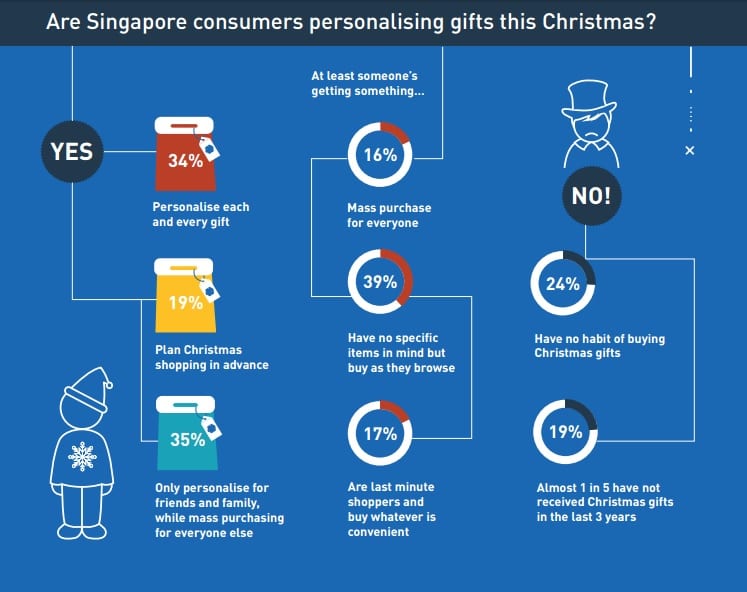
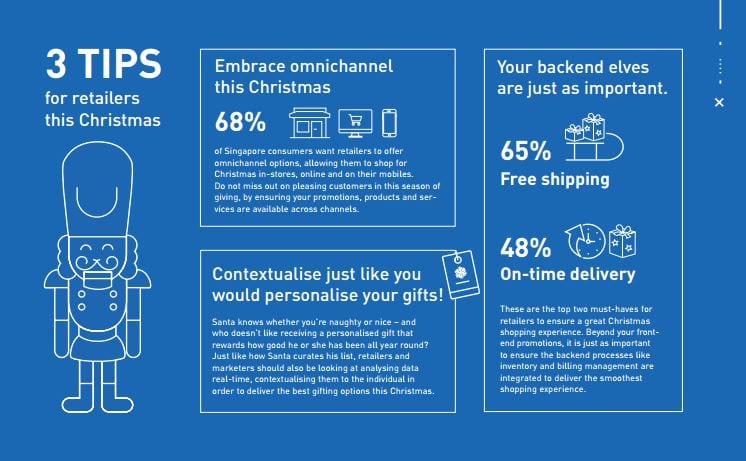
    According to the latest survey by SAP Hybris, Singapore shoppers want cross-channel options more than new-age services like digital wallets and augmented reality store experiences. Over 2 in 3 shoppers (68%) prefer retailers with a physical store coupled with both e-commerce and mobile app while more than half of consumers want retailers which offer self-pickup services as physical stores.

    “With high Internet and mobile penetration rates, it is of little wonder that Christmas online shopping is picking up among Singaporeans. The e-commerce market in Singapore is expected to be worth US$5.4 billion (S$7.46 billion) by 2025, according to a report by Temasek and Google released earlier in May this year, and is expected to make up 6.7% of all retail sales by 2025,” SAP Hybris global vice president of fast growth markets Nicholas Kontopoulos explained.

    More so, 65% of the shoppers stated that retailers can improve their Christmas shopping experience by offering free shipping. Around 48% see on-time delivery as a benefit while 41% noted that gift customization would signal yet another improvement.

    “Singaporeans are amongst the most tech-savvy spenders in Asia, and no strangers to e-commerce. Despite that and reports of Singapore’s continuously challenging retail landscape, the brick and mortar stores are definitely not dead,” Kontopoulos noted.

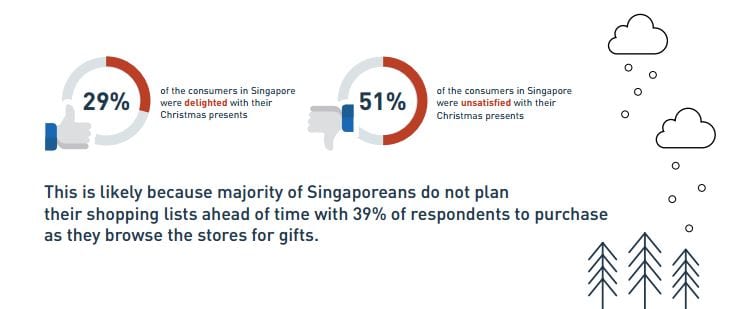
    He furthered, “In fact, the SAP Hybris survey found that 39 per cent of Singaporeans still enjoy browsing through stores. This reinforces what we have been telling retailers for some time: Singapore is a truly multi-channel market, where most consumers are using a combination of devices in their online and offline shopping. The findings also point us to a future where offline and online shopping are no longer two separate business models. Singaporeans are demanding a seamless omnichannel shopping experience.”

  • Fujitsu partners with DHL to target wearable technology, IoT

    Fujitsu partners with DHL to target wearable technology, IoT

    The two companies plan to jointly develop IoT solutions designed to improve safety for emergency services. Japanese ICT firm Fujitsu announced a strategic partnership with DHL Supply Chain U.K. to develop new services based on wearable technology and the “internet of things.”

    Under terms of the partnership, Fujitsu will share its expertise to jointly develop solutions designed to improve safety for emergency services. Fujitsu and DHL also plan to use the partnership to drive the creation of new markets in other sectors, such as airline logistics.

    The use of wearable and IoT technology such as Fujitsu Ubiquitousware is said to enable emergency services to track the health of individuals in the field through a dashboard showing their status and location. This technology is also said to provide real-time tracking for the location of protective equipment.

    “As the global logistics leader, we constantly seek out innovations that improve our customers’ lives,” said Paul Richardson, MD for specialist services as DHL Supply Chain U.K. “Wearable technology is going to transform the way we work, helping us understand the dynamics of what’s happening around us and providing real-time insight on our environment as never before.”

    In a separate project, Fujitsu is working with DHL to support the deployment of GlobeRanger IoT scanning and sensor technologies for airline duty free logistics. Following a successful proof of concept, the project is forecast to deliver annual labor savings of more than $564,000 (530,000 euros) and a 59% return on investment for the organization.