Tag: ecommerce

  • H&M Asia looks to eCommerce

    H&M Asia looks to eCommerce

    H&M will open online stores in five Asian markets this year.

    The H&M Asia online stores will open in Hong Kong, Singapore, Macau, Taiwan and Malaysia. A sixth will open in Turkey.

    And, as previously reported , H&M will open its first store in Vietnam later this year at a site yet to be revealed. Some 430 new stores will open worldwide, including the first in Kazakhstan, Colombia, Iceland and Georgia.

    CEO Karl-Johan Persson confirmed the openings while announcing a 7 per cent increase in global sales for its financial year to November 30.

    Last year, H&M opened online stores in 11 markets, along with a new 427 new brick-and-mortar stores worldwide.

    “This means that H&M is now present in 64 markets of which 35 offer eCommerce. We welcomed more than 13,000 new colleagues which means there are now more than 161,000 colleagues in the group,” he said.

    And this year, the company – which also operates the Cos, Monki, Weekday and Cheap Monday retail brands – will also reveal one or two more brands.

    “In 2017 we are looking forward to delivering strong collections and customer experiences and launching one or two new brands. This, combined with the ongoing improvements and our investments in the omnichannel offering, the supply chain and advanced analytics make us positive towards our opportunities for reaching our newly rephrased growth target, both in 2017 and going forward,” Persson said.

    Most new stores will carry the H&M banner, but 70 to 80 will be for other brands, including its H&M Home offer.

    Global sales reached SEK 222,865 million (US$25.52 billion) in the financial year, however profits were eroded by a higher number of price markdowns and the higher US dollar which impacted on stock purchasing costs, falling from SEK 20,898 million ($2.39 billion) to 18,636 million ($2.13 billion).

  • Players continue to come and go in Vietnam’s ecommerce

    Players continue to come and go in Vietnam’s ecommerce

    In Vietnam today there are three popular e-commerce models: C2C (which connects customers to customers), B2C (business to customer) and Marketplace (which provides a platform to process transactions).

    In the pure C2C model, similar to classified advertisements which connects the buyers and the sellers only in terms of information, chotot.vn remains the most prominent.

    However, to Vietnam’s e-commerce, buyer’s trust and delivery have been the issues, and supplying information seems not enough. Many companies provide a platform with third-party services such as shipping or payment.

    Among this group, Sendo.vn, owned by tech giant FPT Group, is a prime example. Recently Zalo of VNG Corporation, a technology company, also ventured into this market. But the name that has received the most attention recently was Shopee, a company started by Singaporean tech company Garena.

    After nearly two years in Vietnam, this company has been downloaded two million times on mobile and processed 10,000 orders per day. Customer base and volume of orders have been growing 20 per cent per month.

    In the B2C group, after the departures of Lingo.vn, and Deca.vn earlier, and while Adayroi.vn of property giant VinGroup has not made any breakthrough and Lotte.vn remained an unknown, Tiki.vn has continued to be the leader.

    Founded in 2010 as an online bookstore, Tiki.vn has expanded into other fields such as cosmetics and electronics.

    According to Tran Ngoc Thai Son, chief executive officer of Tiki.vn, book sales accounted for 70 per cent of the company’s revenue in 2014, but that ratio is only 30 per cent today with the rest of revenue coming from other fields. Now, Tiki receives 15,000 to 20,000 orders per day.

    Even though Cdiscount.vn, the online shop of Big C supermarket which was acquired by Thailand’s retail giant Central Group, was closed and merged with Zalora, the e-commerce space remains attractive to other retail companies.

    Not long after Korea’s Lotte Group entered Vietnam’s e-commerce with the Lotte.vn website, Japan’s biggest retailer Aeon also arrived with aeoneshop.com at the beginning of the year.

    Finally, in the Marketplace group, Lazada.vn has seen no match with its 30 per cent market share (by revenue) in Vietnam’s online retail market.

    Fierce competition

    The race will intensify in the coming months, because up to now no company has made a profit in e-commerce in Vietnam, so they will compete fiercely for larger market share. The prizes await the final winners of this race.

    Alexandre Dardy, chief executive officer of Lazada Vietnam, said Lazada will focus on attracting more brands to do business on its website in 2017. Its goal is to attract 10,000 companies, triple the current number.

    As for Tiki.vn, the focus will be on sustainable growth. In 2017, Tiki.vn will continue to invest heavily in fulfillment, a service in which sellers just need to send their products to Tiki’s warehouses and let Tiki handle marketing and sales. Currently the company has two warehouses in Ho Chi Minh City and one in Hanoi, with total area of 10,000 square meters.

    Meanwhile, although arriving late, traditional retail companies are always considered strong contenders. While Lotte.vn focuses on cosmetics and fashion that are the strength of Korean brands, aeoneshop.com targets electronics and baby products carrying Japanese brands. Currently aeoneshop.com owns a chain of large modern retail stores from shopping centers to convenience stores.

    In addition directly owning four shopping centers in Ho Chi Minh City and Hanoi, Aeon bought 30 per cent stake in Fivimart and 49 per cent share of Citimart in 2015, and now indirectly owns 18 Fivimart stores in Hanoi and 66 mini-shops in Ho Chi Minh City.

    In essence, the race between purely e-commerce companies and traditional retail companies in Vietnam has not seen the clear winners, and purely e-commerce firms currently have an edge. However, with the determination of retail companies to expand online, the competition will be exciting to watch in 2017.

  • French fashion labels to establish joint online presence in China

    French fashion labels to establish joint online presence in China

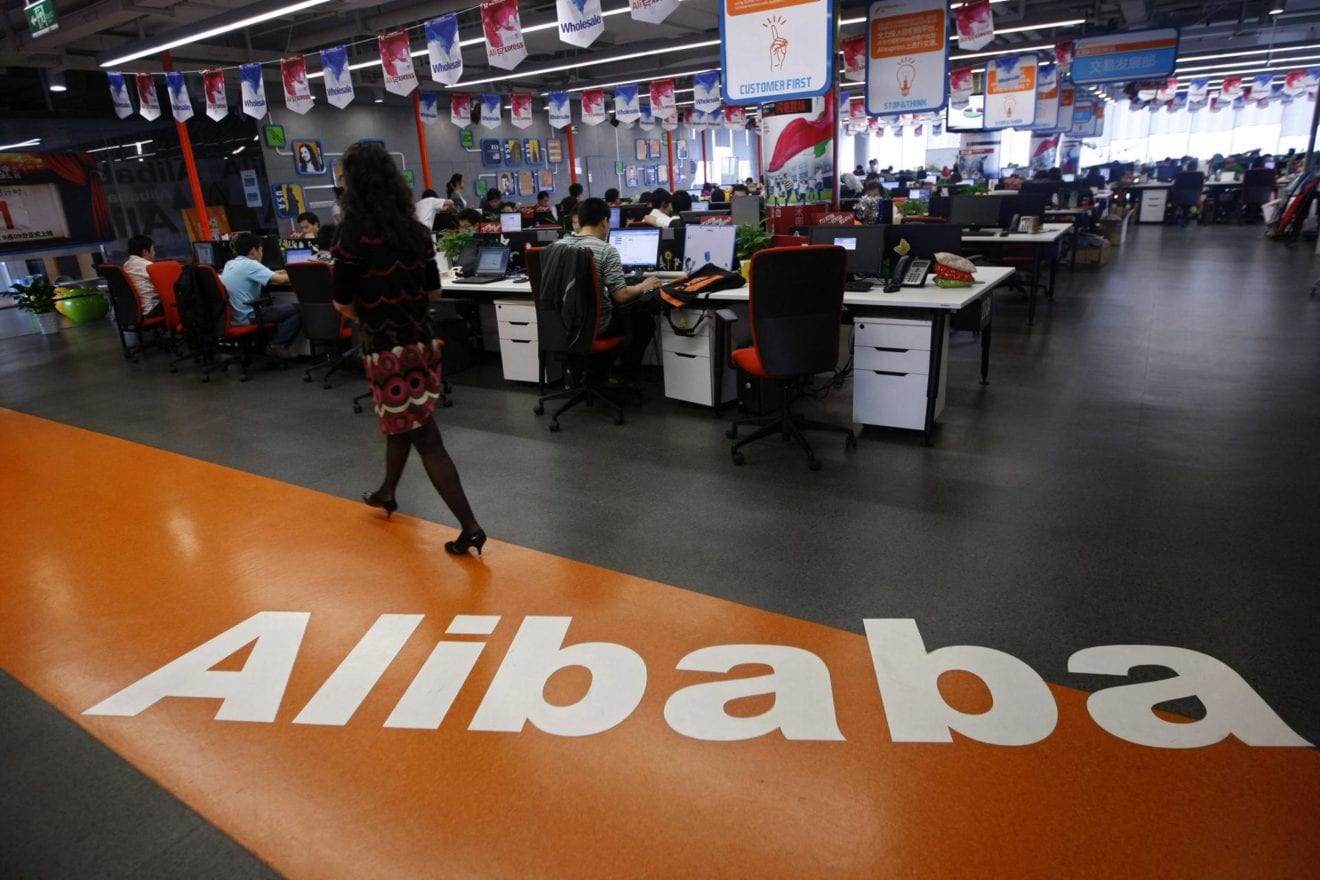
    Twenty French fashion labels are taking their business to China, through the ‘French Boutique’ launched by the French Federation of women’s ready-to-wear apparel (FFPAPF) on Alibaba’s Tmall Global website. Participating labels include Teddy Smith, IKKS, Ateliers de la Maille, Ollygan and Bensimon.

    Labels Prêt pour Partir, Nathalie Chaize, Groupe Mado, Mât de Misaine, Urbahia, Daniel Faret, Zyga Lin’n Laundry, Les Petites Bombes, Lab Dip, Europann and Rica Lewis will also take part in the initiative. They will all be featured on a website that claims it draws 439 million active Chinese customers per year. The market is expected to grow even further, given that only 50% of Chinese consumers currently have internet access.

    The online ’boutique’ will be launched next March, with the support of DEFI. The brands featured on ‘French Boutique’ will be assisted locally by the FFPAPF’s Chinese office, established at the end of 2015 in Hangzhou, also home to the Alibaba Group‘s headquarters.

    FFPAPF President Pierre-François Le Louët underlined how the objective is to introduce a “French multi-brand” presence, presenting Chinese consumers with “the best that French ready-to-wear [labels] can offer.” “The FFPAPF has carried out research work to simplify logistics, and handling social media presence,” said Marion Bayle, Asia business representative for IKKS, which established a foothold in China five years ago through a local partner. The French label is planning to expand internationally, and the initiative is expected to allow IKKS to learn more about its Chinese customers through the information on consumer preferences yielded by the online presence.

  • E-commerce in Japan: 20% of retail by 2022

    E-commerce in Japan: 20% of retail by 2022

    While the U.S. and China are already known as global e-commerce markets, it’s Japan that boasts the largest e-commerce potential, especially over the next three to five years, say two separate consultant groups.

    In 2015, Japan generated roughly $80 billion in e-commerce sales. This compares to some $350 billion of e-commerce sales in the U.S. and China’s whopping e-commerce sales result, which exceeded $650 billion in 2015.

    Yet, e-commerce will be Japan’s largest single retail channel by 2022, according to a recent report produced by JapanConsuming.

    Having overtaken convenience stores to become the second biggest already in 2015, the firm has forecast that Japan’s e-commerce share of retailing will reach 20% by 2022.

    “This is a forecast that few would challenge, although there are plenty of traditional retailers who are in deep denial,” said report authors, of the predictions.

    “The only point of contention is just how far ahead e-commerce will be by then. Given the sea-change in consumer preferences and shopping behaviour already visible, the coming change will be profound,” added the group.

    Japan’s demographic is ripe for e-tail. Approximately 93% of the total Japanese population (126 million) is urban, giving it the highest urban population of the top 10 e-commerce markets, according to e-commerce consultancy PFS. Much like JapanConsuming, PFS predicts Japan’s e-commerce sales to increase almost 40% by 2018, for a market total of over $122 billion.

    Japan also has the highest digital buyer percentage in the Asia-Pacific region, with 77 million digital buyers last year, said PFS, in its Global E-Commerce Report.

    As well as computers, mobile shopping is quickly growing, with half of all e-commerce transactions being conducted via mobile devices in 2015, a trend set to continue by 2022.
    In terms of payment, debit and credit cards are the most popular payment methods when shopping online, with over 66% of shoppers conducting transactions utilising this method.

    As for what online stores are attracting the Japanese e-shopper, marketplaces continue to dominate the e-commerce landscape. Japan’s three big sites, in order of market share, are Rakuten, Amazon Japan and Yahoo Japan Shopping. Collectively, these sites accounted for around 50% of total Japanese annual e-commerce revenue in 2015.

  • Vietnam E-commerce well placed to meet growth targets

    Vietnam E-commerce well placed to meet growth targets

    Last year, e-commerce revenues increased to $5 billion, accounting for about three per cent of the total retail trade and services revenue.

    It has become an indispensable extension for businesses as a rapidly growing country with growing Internet connectivity deepens its global integration process.

    The development of multi-channel businesses that combines physical stores with an online presence has become an inevitable trend.

    Viet Nam has a gross domestic product (GDP) growth rate of more than six per cent per year. Internet connectivity is growing by 50 per cent plus every year. Online marketing revenues in the country increased from US$26 million to nearly $330 million in the 2010-2015 period.

    It is not surprising that with these advantages, the nation’s e-commerce market has witnessed the entrance of large players in the last few years.

    The Vingroup officially stepped into e-commerce in 2015 with its Adayroi trading floor. Earlier, several savvy entrepreneurs had launched online shopping websites that became popular, like sendo.vn, nguyenkim.com, tiki.vn, zalora.vn and lazada.vn.

    The South Korean Lotte Group also entered e-commerce market in Viet Nam last year with its lotte.vn website. It was followed soon by Japan’s largest retailer Aeon, which launched aeoneshop.com at the beginning of this month.

    Given their brand prominence and their large story systems, aeoneshop.com and lotte.vn are expected to offer stiff competition to sites like lazada.vn and tiki.vn that currently dominate the domestic market.

    Tran Trong Tuyen, general secretary of the Viet Nam E-commerce Association, told the Hai Quan (Customs) online newspaper recently that in the past, it was important for businesses to open their stores at a good location, but the situation has changed with 40 million Internet users having the option to buy things online.

    “If retail companies do not invest properly in e-commerce, they will gradually lose customers,” Tuyen said.

    The newspaper also quoted Trinh Van Hoa, director of the Nguyen Kim E-commerce Centre, as saying that the centre studied customer’s shopping habits and understood that they were looking for multi-business shopping facilities.

    Its focus on providing the most convenient shopping solutions for customers has seen the company grow rapidly in recent years, she said.

    The growth of the company, accordingly, also increased several times compared to the previous years, she said.

    Impressive figures

    E-commerce revenues in Viet Nam reached $4.07 billion in 2015, a 37 per cent year-on-year increase. It also accounted for about 2.8 per cent of total retail trade and services revenue.

    Last year, e-commerce revenues increased to $5 billion, accounting for about three per cent of the total retail trade and services revenue.

    The popularity of Online Friday, a mega sales event held every December, has soared, with last year’s sales of VND664 billion, triple that of the previous year.

    These figures show that the nation is well placed to meet its e-commerce targets. The 2016-2020 e-commerce master plan envisages $10 billion in business-to-consumner (B2C) turnover by 2020, accounting for five per cent the country’s total retail sales.

    Despite the rapid growth and enormous potential, the e-commerce market share of Vietnamese enterprises was still modest, Tuyen remarked.

    He said that even though famous names like Tiki and Sendo had millions of users and tens of thousands of orders per day, they were limited to the national scale, and although e-commerce revenue in 2015 was five times that of 2012, the Vietnamese market, had yet to match world leaders.

    In the US, e-commerce transactions accounted for five per cent of total retail sales, and it was 9-10 per cent in China, and about three per cent in Viet Nam.

    Shopping trends

    Market research firm Nielsen recently released the results of an online survey covering 63 countries

    It found more than six out of ten (64 per cent) Vietnamese consumers purchased fashion products online.

    More than half the Vietnamese respondents said they purchased books, music and stationery products (51 per cent) and 47 per cent said they bought travel products or services online.

    Four in 10 respondents (40 per cent) said they purchased personal-care and beauty products online.

    About one-fourth (26 per cent) said they placed online orders for babies and infants; an equal number ordered meal-kits or restaurant deliveries and one-fifth ordered packaged groceries online.

  • Australian E-Commerce Looks to China for Global Growth

    Australian E-Commerce Looks to China for Global Growth

    Chemist Warehouse is geared up to target its online Chinese consumer market this weekend, by supporting the Melbourne Chinese New Year 2017 Festival with a Tai Chi Masterclass Series in Southbank, to celebrate the Year of the Rooster.

    In 2015, the pharmacy chain announced its plans to directly target the burgeoning demand for Australian complementary medicines in China, via its e-commerce website hosted on online retail giant Alibaba’s Tmall platform, projecting $88 million in sales in 2016 via the offering. in China.

    A part of Alibaba Group, Tmall Global is an e-commerce platform developed for international sellers to access Chinese consumers. China’s online shoppers interested in products from a specific country can go to an online country pavilion and access the country that way.

    The strong demand for high quality Australian products in China was one of the factors which drove Swisse and Blackmores to be one of the highest performing Australian brands during Alibaba’s 11.11 Singles Day last year, China’s largest e-commerce shopping event.

    The Pharmacy Guild of Australia, along with other Australian health and wellbeing suppliers, have been asked to attend China’s inaugural Health Product Expo in Qingdao in March this year, which is expected to attract over 60,000 visitors, 7,000 of which are industry buyers.

    Through online shopping, Australian products have found a lucrative channel into the economic powerhouse of China.

    Woolworths set up shop on Tmall Global a year ago, aiming to tap burgeoning Chinese consumer demand for Australian food and grocery products.

    Australia’s largest supermarket retailer engaged with Chinese e-commerce company eCargo Holdings, to build and manage a Woolworths store front the Tmall platform, selling rougly 80 products including Woolworths’ Select and Woolworths Gold milk powder, Swisse vitamins and Devondale milk powder.

    In April last year, one of our largest cosmetics online retailers Adore Beauty, backed by Woolworths (who have 25 percent stake in the company), announced its expansion into the Chinese market by selling its beauty products through Tmall.

    Adore Beauty’s Tmall offering features 50 products, including six popular Australian brands that are currently not available in China, namely Lanolips, Alpha-H, ELEVEN, asap, evo and Skinstitut.

    As off last year, cross border e-commerce in China now favours cosmetic imports, with the tax rate, if the purchase is above 100 yuan, now set at 32.9 percent, compared to 50 percent previously.

    Kate Morris, founder of Adore Beauty says the Chinese market is an exciting and huge prospect for the company, especially in light of China’s demand for our high quality Australian products.

    On a broader perspective, the company recently told us that 2017’s growth strategy is to expand its footprint globally, with China being an important part of that vision.

    Adore Beauty now offers thousands of products to more than 150 countries and territories via its Borderfree e-commerce platform.

    Which Australian products are most popular in China?

    According to Startrack, the most popular Australian product categories in the Chinese market are supplements, dairy, honey, food, skincare and cosmetics, maternity and baby products.

    Why sell to China?

    “China’s middle class is booming. And they want to buy Australian products. Aussie produce is considered clean, green, authentic – Australian retailers are already meeting this growing demand,” says Startrack. 

    According to the e-commerce and parcel delivery company, here are the six most important factors why China is such a great economic powerhouse for our e-commerce industry:

    • China’s middle class is booming
    • Chinese incomes are rising
    • Chinese consumers are shopping more than ever before
    • And most importantly, they want to buy Australian products

    Wine is another up and coming e-commerce market fro Australia to coin in on, in the Chinese market. According to a new report that came out yesterday from the Australian wine industry, our local wine exports are seeing major gains in the Asian market due to changes in our free trade agreement with China.

    If we go back three years, this time, Australia was losing major market share in the global wine industry, mainly to New Zealand and Chile. The reason being, these countries had a free trade agreement with China, but Australia did not.

    Things have changed, and with that has come rapid revolution of the Australian wine market. In 2016 the value of our wine market grew by 7 percent to $2.2 billion, driven by big increases in bottled wine. Exports to China grew by 19 percent to $ 875 million, which overtook the US as our most important wine export market.

    Online wine retailer Vinomofo looks set take advantage of this, with plans to launch into the Chinese market by 2018, which will follow its US launch planned for 2017.

    Following the success of their launch in New Zealand six month ago, the company launched in Singapore last month, which it says will help set it up for its big US expansion, and then China.

    “We’ll start in English, but we will then localise the content. We’ll have plenty of leanings from our Singapore launch, and learning how to operate in a different country. As a startup launching in a different country, we’re always aware that we have to assume that we’re pretty dumb and we have to learn hard about all these things,” Andre Eikmeier, Vinomofo’s co-founder and joint chief executive, told us at the Singapore launch.

  • Alibaba boosts Q4 revenue by 54%

    Alibaba boosts Q4 revenue by 54%

    Chinese e-commerce giant Alibaba Group reported a 54% increase in revenue for the quarter ended December 31.

    Revenue for the quarter reached 53.25 billion yuan ($7.66 billion). This was mainly attributed to the strong growth of its China e-commerce retail business and Alibaba Cloud division, as well as the consolidation of newly acquired businesses (mainly Youku Tudou and Lazada).

    “Our robust December quarter demonstrates the strength of the Chinese consumer and Alibaba’s ability to create value across our vast ecosystem,” said Daniel Zhang, Chief Executive Officer of Alibaba Group.

    The Alibaba chief said the 11.11 Shopping Festival showcased Alibaba’s expertise at integrating commerce, entertainment and social engagement.

    “We are driving the age of ‘New Retail,’ which leverages big data and innovation to provide a seamless online and offline experience for nearly half a billion mobile monthly active users. This retail transformation will make it even easier and more efficient for brands and retailers to engage with these consumers anywhere, anytime,” he said.

    For fiscal year 2017, Alibaba expects revenue to increase 53% year-over-year. “With three quarters of the year coming in ahead of expectations, we are adjusting up our 2017 fiscal year revenue guidance from 48% to 53% year-over-year growth,” said Maggie Wu, Chief Financial Officer of Alibaba Group.

    She disclosed that the company generated $4.9 billion in free cash flow on a non-GAAP basis during the quarter, which enabled it to continue investing in growth areas such as cloud computing (115% revenue increase year-over-year), digital media and entertainment (273% increase year-over-year), and other innovation initiatives (61% revenue increase year-over-year).

    Meanwhile, revenue from core commerce jumped 45% year-over-year to $6.71 billion.

    The Taobao marketplace added 43 million monthly active users (MAU) from September, with relevant content in the app reportedly continuing to drive mobile user growth. Small, on the hand, had another record breaking 11.11 sales with a record $17.4 billion in gross merchandise volume (GMV) settled through its own payment platform Alipay, 82% of which was generated from mobile.

    The company disclosed that its “New Retail” strategy will enable it to tap into the entire $4.8 trillion retail sector in China by eliminating the distinction between online and offline commerce. It also bared plans to partner with brick-and-mortar retailers in different verticals through equity investments and deeper operational integration.

  • Thai e-commerce sector expected to expand by 20 per cent this year

    Thai e-commerce sector expected to expand by 20 per cent this year

    The bullish forecast came as it was revealed the Southeast Asia e-commerce market in 2015 was worth US$900 million (Bt31.7 billion) and is forecast to grow up to 16 times that figure – about $11 billion – by 2025.

    Worawoot Ounjai, chief executive of Central Online, said that the e-commerce market in Thailand would grow more than 15 per cent this year because more consumers would shop online.

    He said only about 3 per cent of Thai consumers currently shopped online, so there was obviously massive growth potential for the market. While the e-commerce ecosystem, such as online payment transaction fees, Internet broadband and logistic, were changing dynamically, he said.

    He added that the use of e-wallets via mobiles and the convenience of online payments would drive more consumers to shop online.

    Only 1 per cent of Central Group’s retail revenue last year came from online.

    Worawoot said an e-commerce marketplace platform would with the next couple of months be provided for all shops in the Central Group and all shops that rent space at Central department store.

    Central will also invest over Bt1 billion in warehouses to support its online business and use of robot management, he said.

    “I think that online shopping will be a big change in behaviour for customers since the coming of the e-wallet via mobile phones, which will create convenience to customers,” he said.

    Thanawat Malabuppha is CEO of Priceza, a provider of shopping searches and price comparisons in six countries – Indonesia, Malaysia, Philippine, Singapore, Vietnam and Thailand.

    Thanawat said the e-commerce market in Southeast Asia was one of the fastest-growing and most promising, with it forecast to grow $11 billion in 2025.

    He said Thailand expected to post e-commerce growth of about 20 per cent this year – the driving factors increased Internet and mobile phone use, as well as improved logistics and e-payment systems. This would create heightened convenience and consumer confidence to shop online.

    He said the quality and reliability of online shopping services were another driving force impacting on the acceptance of e-commerce in the region.

    Thanawat added that Priceza provided a price comparison platform to enable shoppers to search for products from multiple categories offered by the many online shops, which promoted fair competition and empowered buyers with informed buying decisions from shop ratings and buyer reviews while giving them better shipping options.

    Priceza envisions being part of the efforts to make the retail ecosystem in the region as transparent as possible and deliver excellent market competition that benefits both buyers and sellers.

    Nuttawit Polwattanasuk, managing director of LnwShop, said the firm provided an e-commerce platform to support more than 460,000 online shops and had online transaction of over Bt1.8 billion last year. The online payment system will have an important role in driving e-commerce in Thailand in the next few years, Nuttawit said.

    The Electronic Transactions Development Agency has forecast that the total e-commerce market in Thailand this year will be worth Bt2.52 trillion.

    That comprises business-to-business transactions totalling Bt1.38 trillion (54.74 per cent), business-to-consumer transactions worth Bt729 billion (28.89 per cent) and business-to-government transactions valued at Bt413 billion (16.37 per cent).

    This would represent growth of 12.4 per cent from last year’s market value of around Bt2.24 trillion.

    The country has around 41 million Internet users, 41 million Facebook users, 33 million Line users, 7.8 million Instagram users and 5.3 million Twitter users, the agency reported.

  • Online Tết shopping a boon for busy pros

    Online Tết shopping a boon for busy pros

    Lan Anh, an accountant living in District 3, HCM City, is over-worked as the Lunar Year draws to a close.

    She has plenty of reports to finish and very little time to spare for shopping, even for the most traditional, must-have food items for Tết (Lunar New Year), the most important festival celebrated in the country.

    For professionals like her, online shopping is a boon. Ordering and paying have become easy and convenient, although problems of quality and authenticity have also surfaced.

    Many consumers have said that the hectic year-end schedule keeps them so busy that they can’t go shopping, but the development of e-commerce and e-payment is helping them avoid going to stores or supermarkets by themselves. Now, without leaving their office or home, they can place orders online and wait for goods to be delivered at home.

    “To prepare for the New Year, I have ordered some traditional dishes from the central region, like pickled scallion, salted figs and papaya shrimp sauce,” Lan Anh said.

    With Việt Nam boasting a large Internet community and a young, digital-savvy population, the domestic e-commerce market is buzzing with activity ahead of the upcoming festival.

    Xuân Hòa, a resident in HCM City’s Bình Thạnh District, said he had purchased some products via Facebook after seeing many sellers advertise their goods on the social network.

    “I bought green grapefruit and bánh chưng cake for the upcoming holiday. Thanks to Facebook, I can shop and complete my work at the same time as all the transactions are conducted online. I just wait for the bills and goods brought to my house,” Hòa said.

    As the nation pushes its way to modernisation and deeper international integration, online shopping is set to become a habit for many. This is facilitated by several factors including diversified services and products, fast transaction speeds, quick payment and attractive promotions.

    Many large e-supermarkets and social networking sites have announced that they have carefully prepared to ship a large quantity of goods to serve a huge, growing demand, apart from launching various promotions to attract more buyers.

    Hotdeal.vn, one of Việt Nam’s largest e-commerce sites, has launched special shopping programmes for the holiday, providing customers with a wide range of selection of tasty and delicious Tết dishes from common foods to specialities like natural dried dates, pasteurised pennywort powder and hand-made meat pies.

    At e-commerce site adayroi.vn, customers can choose diverse food products, from confectionery, snacks, dried food, beverage and soft drinks to vegetables, fruits as well as provisions like rice, sugar and groceries.

    A representative of an e-commerce business said that with much lower overheads than traditional shopping channels, online shopping centres are able to offer multiple promotions and discounts.

    Some popular sites like sendo.vn, lazada.vn, chodientu.vn, hotdeal.vn, tiki.vn and zalora.vn are offering discounts up to 50 per cent on all types of products, especially those related to fashion and beauty, like shoes, handbags, watches and eyeglasses.

    With foodstuff is most in demand for this holiday, these items are advertised widely on the Internet with many discount programmes. Although the percentage discounts are not high compared to other consumer goods, people can still buy some items like confectionary, soft drinks and noodles for discounts of up to 39 per cent.

    Meanwhile, big supermarket chains in the country, are only accepting delivery orders by phone, while a prominent wholesaler allows only registered business owners to make online purchases.

    Quality question

    While online buying has grown significantly, consumers aren’t completely convinced of the benefits because the platform presents a number of risks and problems for users. Many e-commerce businesses have exploited legal loopholes in e-commerce transactions to swindle customers.

    Thanh Hà, a resident of HCM City’s Tân Phú District, said a very attractive spicy dried chicken has appeared on the e-market this year. After researching social networks, she chose a seller who seemed trustworthy and ordered a small amount to taste the product first.

    After checking and liking the dish, she ordered a larger amount to present to her relatives as Tết gifts. However, the second order turned out to be of bad quality. Hà still had to pay for the goods as it was the very last days of the year and the return process required many complicated steps, she said.

    Several websites are selling what they claim Nike and Adidas brand sports shoes for around VNĐ350,000, much lower than the official prices listed on the brands’ original websites. A pair of Converse brand shoes are being advertised online for just VNĐ100,000- 200,000, while the price of a pair on the official website is between VNĐ1 and 2 million.

    Lawyer Nguyễn Văn Viễn, Chairman of the Intellectual Property Association of HCM City, said punishing violations relating to counterfeit goods would be easier if the affected brand belongs to Vietnamese firms as they can confirm whether the goods are authentic or not.

    It is difficult to get confirmation of pirated products from overseas brand owners, Viễn said, adding that the Government and relevant agencies have to tighten management of online goods. The unprofessional and disreputable behaviour of some e-commerce businesses have badly affected the reputation of authentic companies, he said.

    Nguyễn Thanh Hưng, chairman of Việt Nam E-commerce Association (VECOM), also said that as the country’s e-commerce sector developed rapidly, legal issues were posing a big challenge.

    He said Việt Nam still did not have specific guidelines on the operation of the e-commerce market, thus there is no basis to determine the operational model and management direction for this potential growing market.


  • Taiwan’s VAT On Online Retailers Becomes Law

    Taiwan’s VAT On Online Retailers Becomes Law

    On December 28, Taiwan’s President Tsai Ing-wen signed into law the amendment to the Value-Added and Non-Value-Added Business Tax Act to impose tax on foreign online sellers’ supplies to Taiwanese consumers.

    The amendment is intended to raise additional revenues and level the playing field for Taiwanese bricks-and-mortar retail and service businesses.

    The Ministry of Finance is to draw up the required tax regulations and procedures. In addition, it is to establish a website for simplified business registration and for filing VAT returns and paying VAT.

    Foreign online suppliers selling cross-border goods and electronic services to end consumers will have to register for tax in Taiwan through a permanent establishment, or appoint a VAT or non-VAT tax representative. The permanent establishment or agent will be required to file the necessary bimonthly tax returns. Significant penalties will be imposed for non-compliance.

  • Vietnam’s online market: Some shut down, others pocket big money

    Vietnam’s online market: Some shut down, others pocket big money

    The online retail market is considered very attractive with 9 out of 10 Vietnamese consumers having smartphones as shown by a Nielsen report.

    Meanwhile, Trang Bui from JLL Vietnam commented that the number of credit card holders is increasing, which is a factor that will change consumer behavior.

    However, despite the attractive factors, many online retailers still fail. In August, Lingo.vn suddenly shut down without any notice in advance.

    After receiving investment from Yellow Star Investment, Lingo once set the target of becoming the No 1 e-commerce website. However, within a short time, Lingo incurred a loss of VND150 billion. The ‘sad ending’ for Lingo also happened to Deca.vn, Beyeu.com, Lamdieu.com and Foreva.vn.

    Zalora and Lazada, which are listed as the most redoubtable rivals in the market, are experiencing tough days. In April 2016, Rocket Internet, the owner of Zalora Vietnam, sold Zalora to Central Group from Thailand. In a similar move, Alibaba from China has taken over Lazada in SE Asia after a $1 billion deal.

    One of the reasons for the failure of e-commerce websites was the boom of Facebook. Everyone can do business and sell goods via the social network without paying a fee.

    Facebook has become involved more deeply in e-commerce after launching an app allowing users to exchange and buy/sell goods with others in the community.

    The company doesn’t intend to collect fees from transactions, which gives it an outstanding competitive edge over its rivals.

    However, while many investors have to leave the market silently, others pocket money.

    A report from The Gioi Di Dong, a large high-tech product distributor, showed that iPhone 7 sales on its website have increased by three times, while online revenue in the first 11 months of 2016 reached VND2.944 trillion.

    Meanwhile, Vingroup’s adayroi, FPT’s Sendo and Tiki have been running a race to expand the market.

    In December 2014, Sendo received strategic investment from Japanese investors. It now has 80,000 shops which retail 3 million products in 14 different branches.

    Tiki has received huge investment of $18 million. The once ‘online bookstore’ has been enlargng rapidly, now distributing 100,000 product items in 10 categories of goods.

    The opportunities for online sellers remain very great. According to Tran Trong Tuyen, CEO of DKT, 75 percent of e-commerce market share is in Hanoi and HCMC, while the remaining 25 percent in the other 61 provinces and cities. If the 61 provinces and cities can develop like Hanoi and HCMC in 3-5  years, the e-commerce market scale would be 3-5 times larger.

  • Stadium Goods finds growth in China

    Stadium Goods finds growth in China

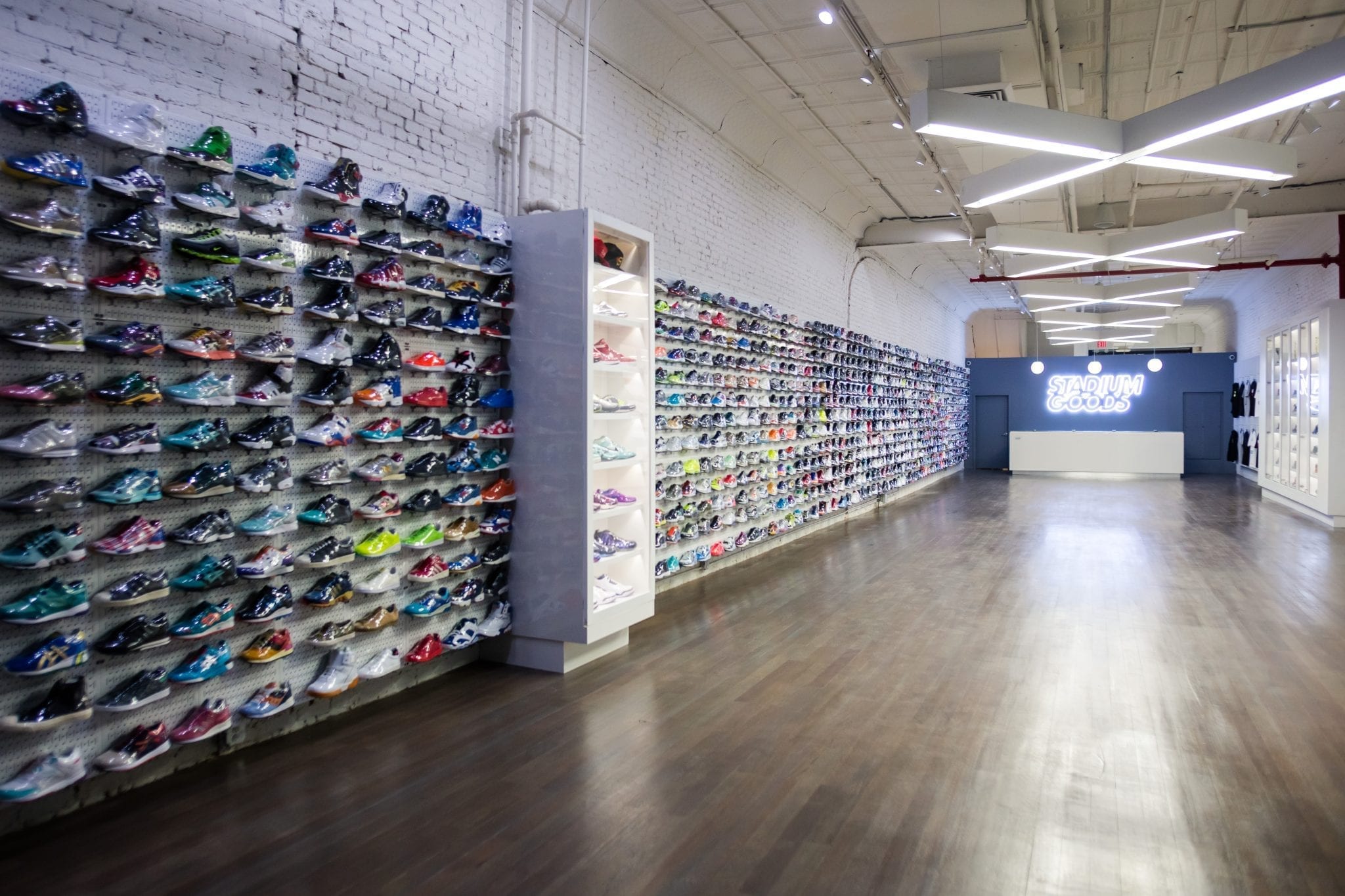
    With ambitions to “scale rapidly”, US sneaker and apparel marketplace Stadium Goods has expanded into China through an exclusive partnership with Tmall Global, an extension of Alibaba Group’s B2C Tmall.com business.

    Stadium Goods co-founder/MD Jed Stiller says the company had already had “tremendous growth” in China.“More importantly, we have helped legitimise the resale model by making it more relevant and accessible to all types of consumers.

    “We’re thrilled to have found the perfect partners in Forerunner Ventures and The Chernin Group, among others, to build on our successes to date as we look to innovate and scale rapidly.”

    Meanwhile, Stadium Goods has just raised more than $4.6 million in fresh equity funding. This will help fuel its expansion into the mainstream footwear market.

    Founded by Still and John McPheters in late 2015, Stadium Goods unveiled StadiumGoods.com and its Soho retail location in New York City, offering sneaker consumers around the world a service-focussed approach to buying and selling collectible footwear, apparel and lifestyle goods.

    “Stadium Goods has transcended a seemingly niche market, proving it can be a critical player in the larger global athletic footwear retail market,” says Forerunner Ventures founder Kristen Green. “There hasn’t been a company of its kind offering this level of aesthetic, product mix or services to date, so we’re very excited to partner with it.”

  • Five E-commerce Business Models Destined to Rule Thailand in 2017

    Five E-commerce Business Models Destined to Rule Thailand in 2017

    2016 predicted Thailand’s e-commerce boom and it has been forecasted that in 2017, internet users in Thailand will make up 50 percent of the population compared to last year’s 43 percent.

    Once plagued by a shaky foundation of uncertain payment settlement systems and a faltering mobile infrastructure, it seems Thailand has overcome that hurdle and in 2016 became Southeast Asia’s fastest growing e-commerce market.

    With a retail market that is expected to reach 3.21 billion by 2020 – according to Euromonitor International, Thailand is without a doubt carving its niche within the world of e-commerce.

    Fueled further by the launch of 4G services, it seems a path has been paved for numerous online retailers to up their game and offer greater formats of product distribution to an internet-savvy pool of consumers.

    Here are five types of e-commerce business models that are currently taking Thailand by storm.

    Meal Delivery Sites

    With the clean eating craze going strong – particularly in cities – healthy food delivery websites are becoming an increasingly popular business model. Offering healthy alternatives that run from organic to vegan to low-calorie and non-processed foods, the success of these websites can be attributed to the fact that they offer to take away the hassle thought to encompass healthy eating, aka grocery shopping etc. By eliminating these factors, the popularity of meal delivery sites can only grow exponentially.

    Online Deal Platforms

    Capitalising on the Thais’ love for a great deals, the humble coupon is back and stronger than ever. With online deal platforms such as Saleduck offering coupons and deals from powerhouse retail websites like Lazada and Expedia, consumers are able to find money-saving deals on everything from electronics to groceries to first-class airline tickets going for up to 80% off. To set themselves apart from competition, deal and couponing platforms often work closely with their partners to release exclusive codes to provide even greater savings to their customer base and the fact that most of these codes can be accessed without a fee is the icing on the cake.

    Social Media Shopping

    In 2016, PWC’s Total Retail survey noted that 51 percent of online shoppers in Thailand shopped directly through social media platforms such as Facebook and LINE citing interactivity as a strong motivator. Whilst price and convenience play a significant role, the driving force behind social media shopping can be linked to the stream of human connectivity that takes its form in reviews, comments and feedback that comes via social media. 53 percent of social media consumers said that customer reviews are what influences their buying decision.

    C2C Mobile Shopping

    Following in the same vein as social media shopping, C2C is also cited as one of the next big things to emerge in Thailand’s e-commerce ecosystem. The person to person interaction is an element that serves as the heartbeat of successful C2C platforms such as Pantipmarket and Tarad.com. Over 50% of online transactions being performed via mobile phone in Thailand, this is expected to further push consumer-to-consumer shopping further into the limelight.

    Digital Content Websites

    From mobile gaming to SVOD, Thailand’s digital revolution has certainly altered the ways in which people consume content. With over 10 different paid platforms for Thais to choose from including iflix and Doonee, Thailand’s affinity for mobile internet use plays a role in how we choose to consume content via digital platforms. In the world of gaming alone, major telecom operators in Thailand have announced strategies in acquiring digital content and games in an effort to meet the rise in demand.


  • E-commerce firms face rivals from Japan, Thailand, China, South Korea

    E-commerce firms face rivals from Japan, Thailand, China, South Korea

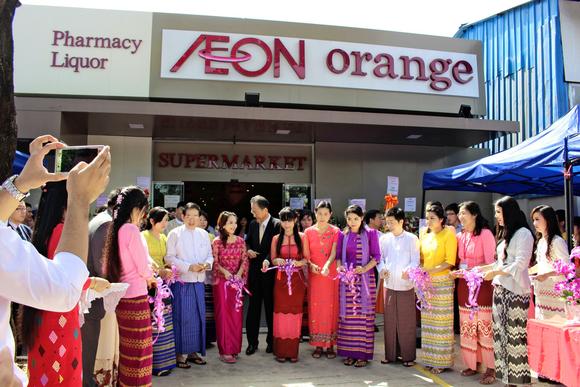
    Aeon, a Japanese e-commerce group, has launched aeoneshop. The website began its operation on January 1, 2017, mostly distributing the products from Japan and the ones bearing Topvalu, an Aeon’s private band. In Vietnam, nearly 1,000 products bear the brand.

    Of the products it distributes, Aeon hopes ‘Me va Be’ (mother and babies) products will be popular with Vietnamese mothers who like Japanese goods.

    Initially, Aeon will only delivery goods in HCMC. Like other e-commerce websites, Aeon will provide free deliveries to orders worth at least VND300,000.

    Analysts said that Aeon’s policies on goods purchases, payments and exchanges are nearly the same as other e-commerce firms.

    With Aeon in Vietnam, the market now has the most powerful rivals in the region. Two months ago, South Korean Lotte launched the Lotte.vn website, hoping for an ambitious plan to hold 20 percent of market share and become a top player in the market.

    Meanwhile, Jack Ma of China, a billionaire who owns Alibaba, has taken over Lazada in Vietnam, while Thailand’s Central Group bought Zalora Vietnam through Nguyen Kim, of which it holds a large capital stake.

    The Vietnamese e-commerce market is known as a ‘money burning machine’, meaning that investors pay big money even though profits are unpredictable.Competing against the four big players from Japan, South Korea, Thailand and China are three Vietnamese groups – Adayroi (Vingroup), Tiki (VNG) and Vuivui (The Gioi Di Dong).

    Lingo, Beyeu and Deca all have left the market because they ‘did not have enough money to burn’. Tiki has reported a loss of VND160 billion in the last eight months since it received investment from VNG.

    Analysts believe that those who have more powerful financial capability will win the battle, leaving the field to foreign companies.

    Commenting about the competitiveness of aeoneshop.com and Lotte.vn, Nhip Cau Dau Tu said they had the advantage of confidence. Lotte.vn focuses on cosmetics and fashion products because ‘South Korean cosmetics’  are popular in Vietnam.

    Aeon focuses on electronics and children’s products because products from Japan have a good reputation among Vietnamese.

    The second advantage is the large store network. Aeon, for example, besides the four shopping malls in HCMC and Hanoi, also has 18 Fivimart shops in Hanoi and 66 Ministop shops in HCMC after acquiring 30 percent of Fivimart and 49 percent of Citimart stakes.

  • Indian fashion platform Fynd looks to SE Asia

    Indian fashion platform Fynd looks to SE Asia

    Indian fashion eCommerce platform Fynd plans to expand in Southeast Asia from April, which could include the Philippines.

    It also plans to expand beyond clothing, footwear and accessories to childrenswear, decor and furnishing.

    Fynd is run by Shopsense Technologies, which has among its investors Facebook executive Anand Chandrasekaran, Arvind Sports chief executive Rajiv Mehta and Snapdeal founders Kunal Bahl and Rohit Bansal. It offers same- or next-day delivery in 11 cities in India, and has tied up with about 250 brands. Its platform is both app- and webpage-based.

    This month Fynd deployed an omni-channel in-store product, Fynd Store, that lets customers browse all products of a particular brand on screens inside the brand’s physical outlet. If a customer cannot find a product or a size at that outlet, it can be ordered and delivered via Fynd Store.

    It is Fynd Store that the company plans to take to international markets.

    In-store initially

    Founded by Farooq Adam, Sreeraman MG and Harsh Shah, Fynd launched in 2012 as an in-store engagement provider, then branched out to an eCommerce platform before evolving into an omni-channel or online-to-offline retail firm.

    “This model would work in the international market, primarily in the areas where the customer is brand conscious and is clear he wants a particular product, whether it be size or colour,” says Shah.

    “Many times when customers shop and cannot find products in their size they settle for something that is one level lower in their liking hierarchy. Fynd is trying to solve this problem.”

    The company’s strategy for international markets will be the opposite of what it did in India — it will first deploy its omni-channel Fynd Store product before launching its eCommerce Fynd app.

    “In India we started with eCommerce then got into omni-channel. The reasoning was that with the retailer, sales is the holy grail. With eCommerce you can immediately show sales. With omni-channel you need to build it up – there’s the training in store and things like that.

    “Internationally we’ll start with Fynd Store because we need to develop delivery infrastructure and then get on to Fynd app,” says Shah.