Tag: ecommerce

  • Garena rebrands as Sea, plans to conquer Indonesian e-commerce

    Garena rebrands as Sea, plans to conquer Indonesian e-commerce

    Garena, widely considered to be Southeast Asia’s most valuable startup, has rebranded itself as Sea Ltd. as the first step in an expansion plan to compete with China’s Alibaba and gain some ground in the untapped, but lucrative, Indonesian market.

    The company’s new name is a popular acronym for Southeast Asia, but is also meant to represent Garena’s regional aspirations. Under the new name will be their existing businesses: online games brand Garena, e-commerce platform Shopee and AirPay, a digital payments service.

    News of the company’s name change follows the announcement of the company’s latest funding round, which helped them secure US$50 million from a handful of investors that include some of the region’s wealthiest dynasties, such as GDP Venture – led by Martin Hartono, son of Indonesia’s richest man – and JG Summit Holdings Inc. – founded by Philippine billionaire John Gokongwei.

    Other investors in the round include Farallon Capital Management, Hillhouse Capital, Cathay Financial Holding Co. and an investment arm of Taiwanese food conglomerate Uni-President Enterprises Corp.

    There are reports the company is preparing to list in the United States, a move that could value them at around US$1 billion. Word is that the company has engaged Goldman Sachs Group to help them oversee their IPO.

    The company got a huge boost when Chinese digital conglomerate, Tencent Holdings Ltd., began investing in the company in 2013. Tencent remains one of their biggest backers and its support has not only been financial. The Chinese techno-giant has given Garena a vision of how to expand out from gaming into other industries that could help it woo investors and get new users onboard with their diversity of services.

    Garena was founded by China-born entrepreneur Forrest Li in 2009. It has since grown to be one of the most significant e-commerce and gaming players in the region. It is estimated Southeast Asia’s gaming market will be worth US$4.7 billion in the next two years. Sea seems to be taking a similar strategy as Tencent, who started with a messaging software and quickly expanded into gaming, e-commerce and (now) artificial intelligence.

    Sea is paying particular attention to the increasingly competitive e-commerce market, where Alibaba and its competitor JD.com are duking it out for dominance. Huge consolidation and acquisitions are beginning to take place, with the latest being JD.com’s investment in Tokopedia, an Indonesian e-commerce platform. Rumors of Amazon’s arrival in the region are still swirling around, so you can be sure the market is only going to keep heating up.

    The big trophy everyone seems to be angling for is Indonesia’s largely untapped market. Though it’s not quite yet at the maturity levels of the Singaporean or Malaysian markets, Indonesia has an Internet-savvy population and a reputation for adopting innovative tech early on and quickly.

    Currently, the e-commerce market is expected to hit US$130 billion in value, only a third behind China and India’s markets – for comparison, Indonesia is home to around 250 million people, compared to China and India’s one billion each.

    The plan for Sea’s expansion into Indonesia includes using the new funds to build up Shopee’s infrastructure in Indonesia. According to the company, Shopee’s annual market value has more than doubled in the last nine months to reach US$3 billion. Other strategies include some significant Indonesia-related hires, such as former Singaporean foreign minister George Yeo, former Indonesian trade minister, Mari Pangestu and the director of an Indonesian coal producer, Pandu Sjahrir.

  • Topshop launches e-commerce platform for Australia

    Topshop launches e-commerce platform for Australia

    British fashion retailer Topshop has officially launched an Australian-dedicated online store, meaning local shoppers can bypass the generic Topshop international site.

    The new Topshop Australia platform allows Australians to browse and shop prices in Australian dollars and pass for free shipping when the total purchase is over AU$75.

    When shopping via the international store, prices are in British pounds and pricey international postage costs are incurred.

    Another feature for Australians is Topshop’s click-and-collect services, next-business-day express shipping and easy postal returns.

    The move sees Topshop’s retail reach extend beyond major capital cities and into remote areas where customers don’t have access to one of the fast-fashion retailer’s physical stores.

    Topshop has also tapped payment service Afterpay for its online store, allowing shoppers to buy now and pay later for purchases. Topshop Australia has offered Afterpay for several months in store.

    Topshop opened its first Australia store in 2011 in Melbourne. Topman went on to open a flagship store in Sydney’s Pitt Street Mall. Today it boasts 57 points of sale across Australia in cities Brisbane, Perth, Adelaide, Sydney and Melbourne, among others.

    It also has concession corners in department store Myer.

    Topshop is part of Sir Philip Green and his Arcadia Group, which also owns Burtons, Dorothy Perkins and Miss Selfredges.

  • LVMH to launch its eCommerce site

    LVMH to launch its eCommerce site

    Luxury goods group LVMH will reportedly launch its own multi-brand e-commerce site in March and offer all 70 of its brands on one site, according to the Financial Times. The site will be part of Le Bon Marché, the Parisian department store acquired by LVMH in 1984, and also sell other brands from outside the conglomerate.

    This is not LVMH’s first foray into multi-brand fashion online retail. In 2000, the company — which counts Louis Vuitton, Fendi, Céline and other brands in its portfolio — launched eLuxury as a platform for luxury designer apparel, accessories, beauty and children’s collections. However, in 2009, LVMH announced that it would shutter the retailer as its brands began to launch standalone e-commerce operations. (eLuxury was, in turn, relaunched as editorial platform Nowness).

    The new e-commerce site will mark LVMH’s most significant digital investment since hiring Ian Rogers as chief digital officer in 2015, which signaled to many in the industry that the conglomerate was finally ready to integrate digital into its business. “The luxury business is in a great position relative to where the world is going,” said Rogers, describing the luxury business as a “mass [market] of niches.”

    LVMH’s re-entry into the online market now is very late to the game. However, it is indicative of a higher priority afforded to digital operations and e-commerce channels since Rogers joined the company.

    It is unclear if the new online iteration of Le Bon Marché will operate on a wholesale or marketplace model, although wholesale is the likely avenue. The wholesale model requires inventory risk and having high working capital, but the company will still capture the full retail margins. The drop-ship marketplace model, in which the platform usually takes a commission on sales in order to generate revenue, makes ensuring a consistent shipping experience difficult. Working predominately with its own brands would ease some of those challenges, however.

    In fiscal 2016, LVMH saw revenue increase 5 percent to €37.6 billion ($40.2 billion) and profits increase 6 percent to €7 billion ($7.1 billion). Its selective retailing category, which includes Sephora, duty free retailer DFS and Le Bon Marche — all multi-brand retailers — saw the highest growth at 7 percent.

    While e-commerce still only makes up a small percentage of overall luxury goods sales, online sales grew four times faster than offline sales between 2009 and 2014. However, McKinsey & Company predicts it will triple to €70 billion by 2025 — representing 18 percent of total luxury sales — and then plateau. Overall, growth in luxury goods has slowed down since 2015 as Chinese demand lessened. The market is expected to grow only 0.5 to 1 percent in 2017, versus the 8 percent compound annual growth rate between 2010 and 2015.

    But a slowdown in overall growth hasn’t stopped several major industry players from getting into the multi-brand e-commerce game over the past two years, including Galeries Lafayette and Condé Nast (with its relaunch of Style.com). As competition heats up, established players have turned to consolidation — see Yoox’s merger with Net-a-Porter and Neiman Marcus Group’s acquisition of MyTheresa.com — in order to scale further.

  • DHL launches e-commerce services in Malaysia

    DHL launches e-commerce services in Malaysia

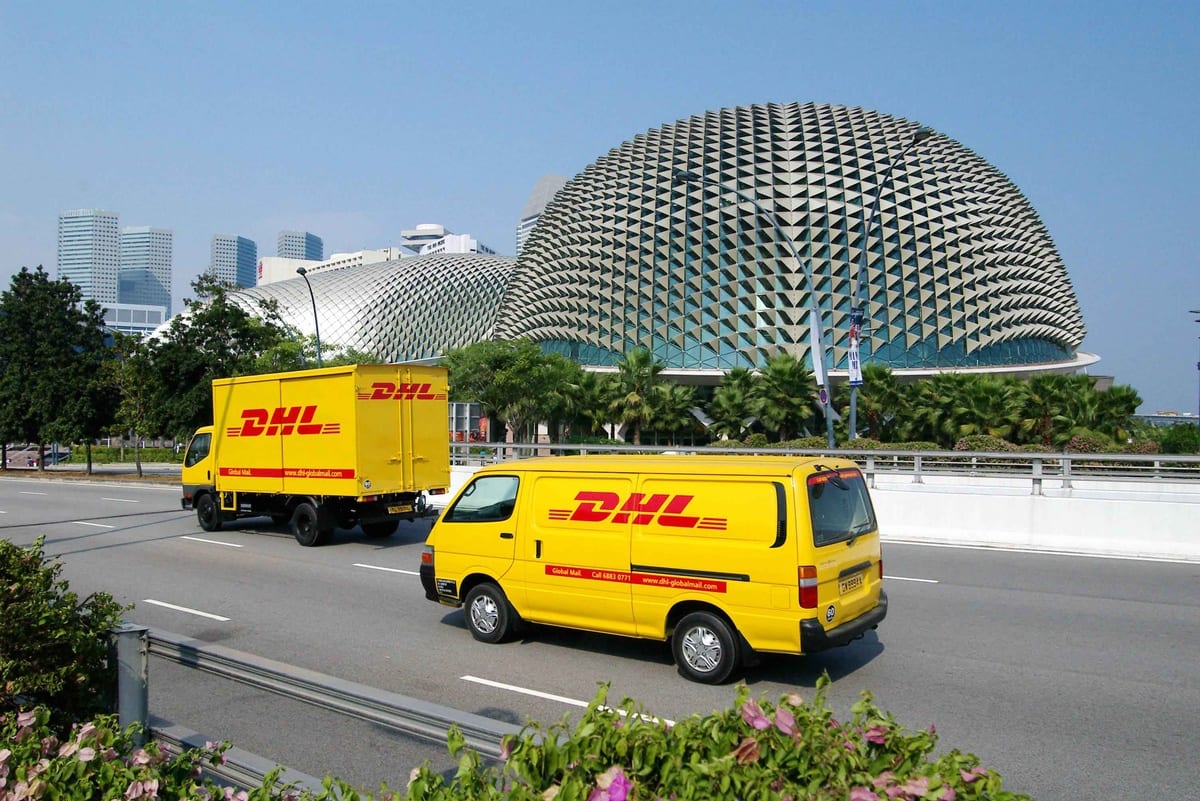
    DHL e-Commerce has launched its domestic delivery operations in Malaysia, as online shopping gets set to grow rapidly in the Asian nation.

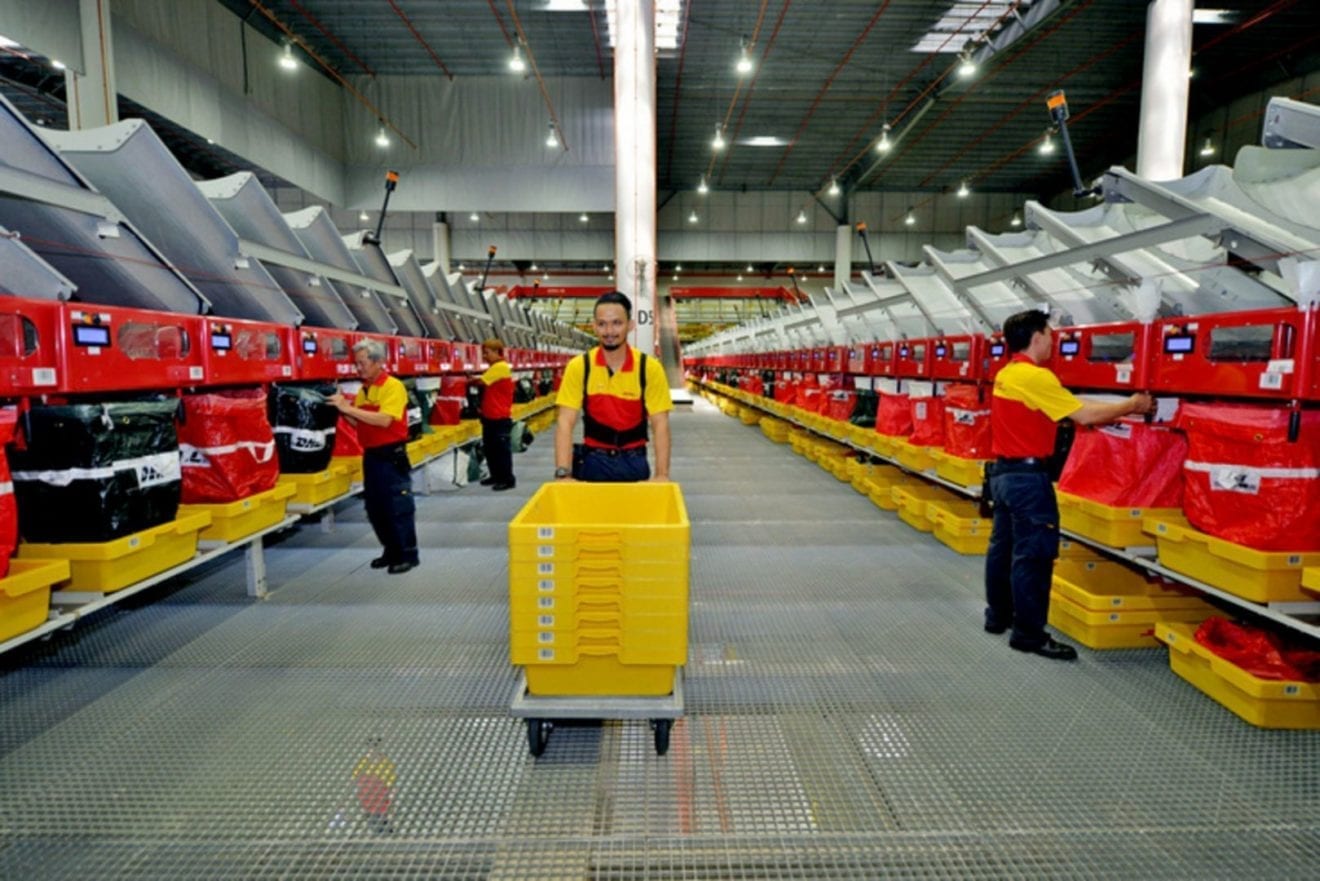
    The investment, from the German-based division of global logistics company Deutsche Post DHL Group, includes a 48,000-square foot distribution centre in Puchong, depots in other critical urban areas such as Penang, Johor Bahru, Cheras and Puchong, and a fleet of 2-wheel and 4-wheel vehicles.

    According to a press release, DHL’s end-to-end domestic delivery solutions will offer pick-up services, track and trace, reverse logistics, cash on delivery with daily remittance and call centre capabilities for deliveries within Malaysia. DHL aims to provide timely delivery and predictive, secure delivery, it said in a statement.

    “E-commerce has become a way of life for Malaysians, with 47% already using their smartphones to shop online,” said Malcolm Monteiro, CEO, Asia Pacific, DHL e-Commerce.

    “Approximately 7 million are already shopping online every month, and with the industry expected to grow to €1bn by 2020 in Malaysia and globally to $1trn in the same year, businesses need high-quality logistics solutions to leverage this immense growth and meet the rapidly changing needs of online shoppers. This makes the need for a tailored e-commerce delivery service greater than ever before.”

    The Malaysian government has more recently been driving e-commerce growth through schemes such as the National E-commerce Strategic Roadmap and the new Digital Free Trade Zone, added Monteiro.
    “Logistics is a key component of this ecosystem, and e-commerce is a vital component of the growth agenda, so we will continue to invest in e-commerce here and worldwide,” he said.

    The Malaysia debut comes as DHL continues to expand its reach in Asia. In March, the company opened a new Fulfillment Centre in Hong Kong, adding to its global fulfillment network in U.S, Mexico, India, Europe and Australia.

    Elsewhere, in December 2016, the firm launched DHL Express Thailand, in a bid to capitalise on the nation’s growing e-commerce business.

  • DHL launches domestic delivery service with nationwide coverage in Malaysia

    DHL launches domestic delivery service with nationwide coverage in Malaysia

    HL eCommerce, a division of the world’s leading logistics company, Deutsche Post DHL Group, has launched its domestic delivery operations in Malaysia with a range of customer-centric services catered to Malaysia’s growing e-commerce market. Malaysian online retailers will also benefit from DHL’s range of cross-border shipping solutions and network of fulfillment centers globally to enable their international expansion. This will further accelerate the e-commerce market in Malaysia which is expected to grow at CAGR of 15.8% to EUR 1 bn by 2020, largely fuelled by recent initiatives such as the National E-commerce Strategic Roadmap, Digital Free Trade Zone and Economic Transformation Program.

    “E-commerce has become a way of life for Malaysians, with 47% already using their smartphones to shop online,” said Malcolm Monteiro, CEO, Asia Pacific, DHL eCommerce. “Approximately 7 million are already shopping online every month, and with the industry expected to grow to EUR 1 bn by 2020 in Malaysia and globally to US$1 trillion[4] in the same year, businesses need high-quality logistics solutions to leverage this immense growth and meet the rapidly changing needs of online shoppers. This makes the need for a tailored e-commerce delivery service greater than ever before.”

    The investment in Malaysia includes a 48,000 sq ft central distribution hub in Puchong as well as depots in Penang, Johor Bahru, Cheras and Puchong and a fleet of 2-wheel and 4-wheel vehicles. The fleet of vehicles will provide next-day delivery to all urban areas in Klang Valley, Penang and Johor Bahru, and two to four day delivery to all other locations across West Malaysia and East Malaysia.

    DHL eCommerce’s end-to-end domestic delivery solutions will offer pick-up services, track and trace, reverse logistics, cash on delivery with daily remittance and call center capabilities for deliveries within Malaysia. It aims to provide best-in-class domestic delivery with quick, predictive and secure delivery.

  • Online shoppers use mobile phones more than computers

    Online shoppers use mobile phones more than computers

    Nearly 54 percent of online shoppers visited trading websites on mobile phones, higher than those accessing by desktop.

    The data was created from a survey of more than 27,000 client websites of Bizweb, an online commercial solutions platform.

    The results showed that 53.8 per cent of online shoppers visited trading websites on mobile phones, higher than those accessing by desktop (41.3 per cent), with the rest using tablets.

    For mobile phones, iPhone was the most popular device, accounting for more than 30 per cent.

    Mobile phones have become popular tools for shopping, meaning businesses and shop owners risk losing more than half of potential customers if the do not ultilise this channel, heard the meeting.

    In order to avert the situation, businesses need strategies to maximise sale opportunities on mobile channels, said Tran Trong Tuyen, CEO of DKT Technology JSC.

    Pham Thong, marketing director of Lazada Viet Nam, said that revenue from orders on mobile phones accounted for 70 per cent of Lazada’s orders.

    Thong said that there has been a shift of consumer habits. “The majority of young people are accessing the Internet by mobile phones”.

    Therefore, the development of e-commerce on mobile phones was indispensable, opening up opportunities for enterprises, said Thong.

    However, the Lazada representative also pointed out challenges that businesses might encounter such as services, tools and even the knowledge of the salesman about trading on mobiles.

    “Therefore, to succeed when selling on phones, businesses need to invest and have appropriate strategies for development,” he advised.

  • Honestbee sweetens Thai operations budget

    Honestbee sweetens Thai operations budget

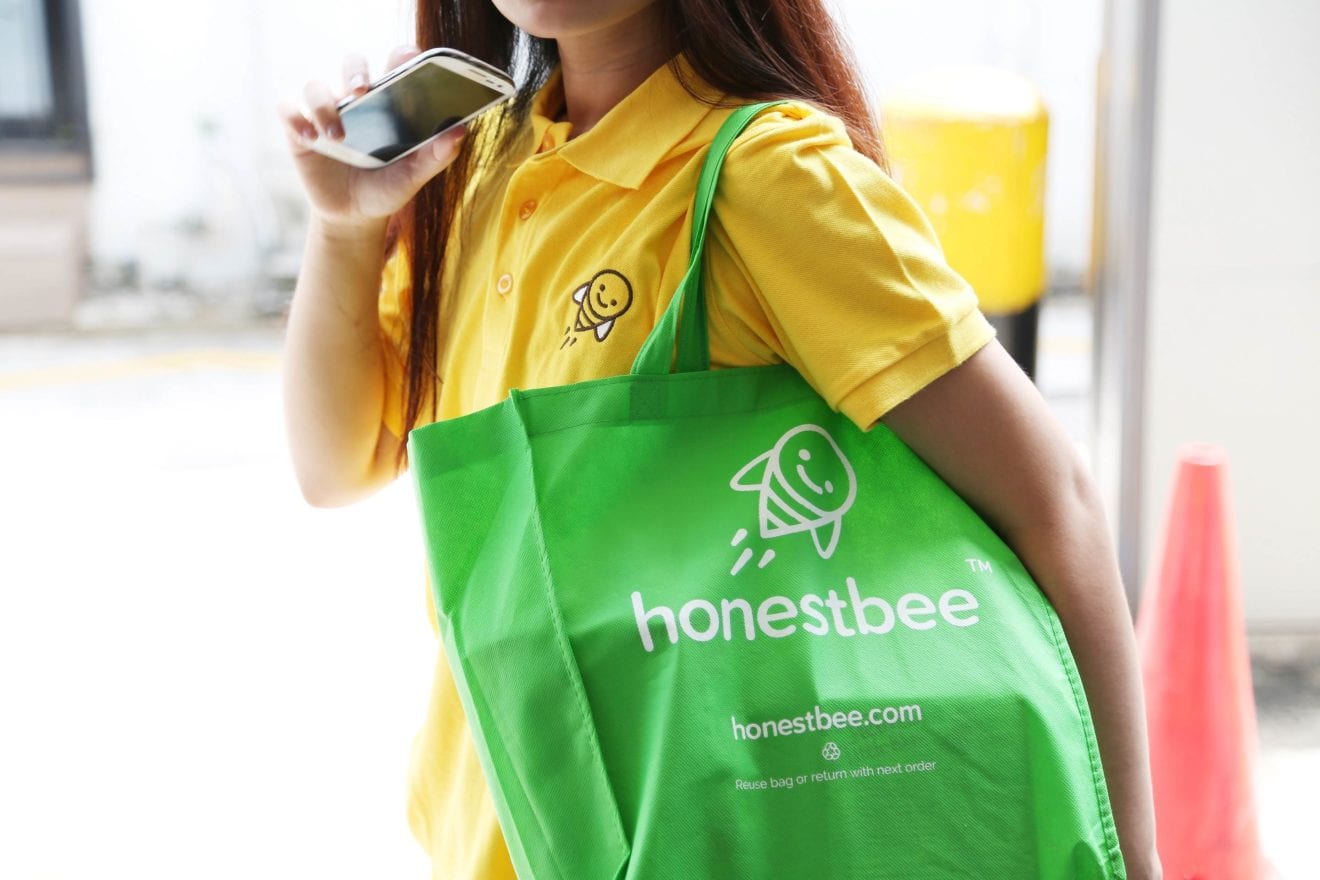
    Honestbee, a Singapore-based online grocery and concierge service provider, is boosting its presence in Thailand to capitalise on lucrative online shopping opportunities.

    “We are spending millions of US dollars in Thailand this year on increasing our local staff, upgrading our IT infrastructure, and adding marketing activities,” said Bounthay Khammanyvong, country manager of HonestBee Thailand.

    He said Thailand is the seventh market in Asia-Pacific for Honestbee since it began operations in 2015, following Singapore, Hong Kong, Japan, Taiwan, Indonesia, and Malaysia. The company is expanding into the Philippines soon, said Mr Bounthay.

    Just three months after it started operations in Bangkok this January, transactions at its Thai website ranked third among the seven countries where it has a presence.

    Honestbee provides online grocery concierge and delivery service through partnerships with leading supermarkets who have no online retail channel.

    Customers choose their products online and place their orders either via its local website — www.honestbee.co.th — or its mobile application through Google Play or the Apple Store. The company’s concierge shoppers then hand-pick their groceries for them.

    Honestbee earns a commission from its merchant partners. The company charges customers a flat rate of 30 baht with no minimum purchase requirements.

    The company has over 10,000 users in Thailand.

    Mr Bounthay said Honestbee’s service does not compete with offline retail stores, instead complementing their offerings to accommodate the shift towards online shopping.

    He said the company is focusing on improving the speed of its delivery service to reach customers’ homes in an hour.

    Its target customers are millennials, housewives, and multi-generational family households with high purchasing power.

  • E-commerce forces brick-and-mortar stores to innovate

    E-commerce forces brick-and-mortar stores to innovate

    With e-commerce being fitted into their arsenals, retailers are now aiming to provide new experiences and greater convenience for shoppers. And while bricks-and-mortar stores will continue to exist, they are no longer places exclusively for shopping, but also must function as showrooms and fitting rooms.

    Many modern shoppers now pick what they want online, search for the best price, find a time slot, choose how they want to pay, and wait for the item to be delivered to their home. However, many consumers still prefer the experience of physical stores, which are developing new attractions to keep customers coming back.

    “Today’s consumer no longer goes shopping, but is shopping, all the time and everywhere,” said Willy Kruh, global chair of consumer markets at KPMG International.

    With its new Central 4.0 concept, Thailand’s biggest retail group is aiming to provide a seamless online experience for shoppers inside its stores and anywhere else they may be.

    “Nevertheless, despite the rise of online shopping, e-commerce still makes up a relatively small percentage of total retail spending.”

    According to a report by eMarketer, worldwide retail sales totalled US$22 trillion in 2016, of which only 8.6% or $1.9 trillion was retail e-commerce. By 2020, total retail sales are expected to reach $27 trillion, with e-commerce accounting for 14.8% or $4 trillion.

    Among those adapting to the new reality is Central Group, Thailand’s largest operator of department stores and shopping malls. Its new “Store as a Theatre” concept combines innovation and technology to offer customers more fun while shopping at Central department stores.

    “Consumers nowadays no longer want only the products but they also want new experiences that are current or ahead of the trend. They also want convenience, promptness, support and responsiveness to personalised needs,” said Piyawan Leelasompop, vice-president of marketing at Central Group.

    OMINOUS SIGNS ABROAD

    Retailers in Asia are keeping a close watch on their peers in North America, where e-commerce has eaten into the revenues of many big chains, to the point where some household names have started to close stores by the dozen. The “hollowing out” of shopping malls is another trend being observed in the United States.

    “This is not a cyclical issue,” said Jason Mudrick, whose $1.6-billion Mudrick Capital Management specialises in distressed investments. “It is secular issue, a forever trend. This is the Amazon effect and it is here forever.”

    In 2015 alone, about 6,400 shopping malls closed in the United States. American Apparel, which had $633 million in sales and more than 200 stores in 20 countries in 2013, is now bankrupt and was sold to Gildan, a Canadian apparel company, for $103 million in January this year. Rue21, an American retailer to young men and women with 1,194 locations in 48 states, this month announced plans to close 400 stores. Also struggling are American Eagle, Abercrombie & Fitch and Aeropostale.

    JC Penney, Macy’s and Sears are also turning off the lights in malls across the US as they adjust to changing tastes and the shift to online spending. Macy’s plans to close 68 stores, resulting in 10,000 job losses. JC Penney shrank from 1,104 stores in 2012 to 1,013 at the end of 2016. It plans to close another 138 locations this year.

    Retailers in the US cut 30,000 jobs in February alone, industry figures showed.

    A similar level of technological disruption is on its way to Southeast Asia but some of the region’s retailers are still unaware of the looming threat, says Anson Bailey, leader of consumer markets in Asia Pacific at KPMG in Hong Kong.

    “Everyone has a plan until they are punched in the face,” he said, quoting Mike Tyson, “and you are about to get punched in the face if you don’t do anything.

    “There is a chance that we will see the fall of these traditional players,” he said, although some will manage to successfully “pivot and do things differently” such as adopting an online-to-offline (O2O) strategy and collaborating with new partners.

    “Bricks and mortar is not going to die because consumers still want to go to the store to touch and feel the products. Millennials don’t shop like the older generations but they still treasure that experience and even the e-commerce players are now setting up physical flagships and pop-up stores to gain trust,” he told Asia Focus.

    Mr Kruh agreed, saying: “E-commerce is not an online-only affair. Both online and offline channels are effective in creating consumer awareness and demand, especially when used together.”

    Retailers across Asia are now trying different strategies to survive. E-Mart Inc, South Korea’s largest retailer, last month started streamlining its physical outlets for the first time in 24 years. It will sell money-losing outlets but is also scouting locations for new stores that will perform better.

    China’s major bricks-and-mortar retailers are increasingly adopting internet technologies. Intime Retail (Group), a Hong Kong-listed department store operator, is going private with a new business model after the Chinese e-commerce titan Alibaba acquired a 25% stake for $692 million in bid to expand into real-world shopping.

    Intime will benefit from the inventory control system developed by Alibaba and its direct purchase channels with manufacturers. This will cut out middlemen and allow Intime to reduce prices to match online competitors.

    Central Group, meanwhile, is adopting a two-pronged strategy focusing on both offline and omni-channel. Its Central 4.0 concept aims to provide a 24-hour seamless online experience for shoppers by concentrating on in-house online shopping and the digitisation of its stores.

    “We can no longer just sell products,” said Ms Piyawan. “Central has to sell experiences that cannot be bought online. We have to be malls that people come to live their lives and not just a place to buy things.”

    The company is introducing iPads to sales staff to help them overcome the language barrier they have with tourists. It is also revamping some stores to combine what customers like into more personalised zones.

    For example, manicure and hairdressing services will now be located in the women’s section, while in home furnishings, shoppers will have access to sewing machines to stitch names onto pillowcases and bedsheets.

    In the children’s department, youngsters will be able to play with toys before their parents buy, and floors are being fitted with more child-friendly materials. Every second Saturday is now Central’s Children Day to provide activities as a reason for parents to bring their children to the stores.

    Central last year spent 100 million baht to give its website a more user-friendly interface. It is planning to increase the number of online products from the current 100,000 or so to 500,000 in the next five years.

    “The aim is to increase online transactions from the current 1 million to around 3 million per year and to push online sales to 15% from the current 1% of total sales,” Ms Piyawan said, adding that the goal for this year was 5% of total sales of 47 billion baht.

    The company so far has refurbished two stores in Bangkok — at Central Plaza Bangna and Central Plaza Pinklao — and has set aside another 3-4 billion baht to add a Central department store in Korat and to renovate CentralPlaza Rama III in Bangkok.

    GROWING OPPORTUNITY

    But no matter how attractive department stores are, they are drawing an increasing number of people for “showrooming” — examining and taking pictures of products that they will eventually buy online. This may sound like bad news for bricks-and-mortar stores but there is an encouraging flipside called “webrooming” — doing research and checking prices online before going to a store to buy a product.

    And while millennial consumers are more likely than older consumers to be influenced by online feedback from social media and peer reviews, a surprising finding of the KPMG survey was that they were also more likely to be influenced by offline channels. Millennials are 25% more likely than Baby Boomers to have seen a product in a shop before they buy it online.

    Despite all the volatility in the retail market, the good news is that the long-term prognosis for Asia is still very positive. The Economist notes that in 2005, household consumption in Asia was $7 trillion but is expected to balloon to $33 trillion by 2030. That figure would be equal to the combined total projected for the US and the European Union.

    “I have no plan to move back to Manchester because Asia is where we are going to see the growth,” said Mr Bailey of KPMG in Hong Kong.

    China is currently leading the way in online spending with 48% of mainland consumers buying things online, followed by 40% of other Asians, well above the 27.9% global average, so the prospects for e-commerce in the region remain bright.

    The middle class in China is also increasing very quickly. The number of high net-worth individuals (people with assets exceeding 10 million yuan or US$1.45 million) is currently around 1.4 million — about four times what it was in 2010.

    Meanwhile, around 120 million overseas trips were made by mainland Chinese in 2016, with Southeast Asia one of their favourite destinations. By 2020, KPMG expects the number will increase to 200 million overseas trips.

    “Are we ready for our retail businesses to serve those future consumers? How can we better serve those future Chinese consumers?” Mr Bailey asked.

    “Consumers are looking for something beyond the shopping experience and as retailers or as landlords, you have to think about how you can develop a new experience for your consumer.”

  • SATS unveils a brand new US$21mn eCommerce AirHub

    SATS unveils a brand new US$21mn eCommerce AirHub

    SATS, a provider of Gateway Services and Food Solutions, unveiled its new eCommerce AirHub, at a ceremony officiated by S Iswaran, Minister for Trade and Industry (Industry).

    The $21 million facility, co-funded by the Civil Aviation Authority of Singapore (CAAS), enhances Changi’s eCommerce mail sorting capability to support the growing eCommerce market. This new 6,000 sqm facility also features new innovations that will improve productivity and enable airport workers to acquire new skills.

    By deploying state-of-the-art technology, SATS has multiplied mailbag processing capacity by more than three times and streamlined the mail sortation process to deliver quicker turnaround for international eCommerce mail. Processing time is now reduced by 50 per cent. At the same time, automation has provided opportunity for employee upskilling. SATS is currently the only ground handler in the region to operate such an automated airside facility.

    Alex Hungate, president and CEO of SATS said, “eCommerce is expected to continue on its growth trajectory in the region and beyond with continued strong consumer demand. The SATS eCommerce AirHub enhances the competitiveness of the whole airfreight industry in Singapore by offering greater speed and transparency, as well as higher capacity to handle future growth.”

    Kevin Shum, director-general of CAAS, said, “CAAS is pleased to support the establishment of the eCommerce AirHub under the Aviation Development Fund. We are delighted that this initiative has enabled SATS staff to benefit from an enlarged job scope, higher pay, and a more comfortable and conducive workplace. Such collaborations are part of our efforts to transform Singapore Aviation, make the  2 sector more efficient and competitive, create better jobs and improve productivity using technology.”

    Tapping on technology for greater efficiency
    At the official opening of the SATS eCommerce AirHub this afternoon, the company unveiled several new innovations. These include a fully automated mail sortation system that increases the mailbag processing capacity of SATS to more than 1,800 an hour – up from 500 previously.

    Additionally, due to interface integration with SingPost’s airmail consignment operations and the facility’s locality within the free trade zone on the airside, mail sortation operation is streamlined to eliminate the need for mailbags to be transported to and from the hub.

    The combination of these factors has enabled faster mailbag processing that reduces turnaround time by 50 percent – from six hours to three – thus allowing international eCommerce mail to connect to an earlier flight for faster delivery.

    Traceability is also improved at the SATS eCommerce AirHub, as customers, such as SingPost, can now better track and trace their mail via the data interface, for example checking connection status by confirming arrival and departure times.

    Woo Keng Leong, chief executive officer, Postal Services, SingPost, said: “The improved efficiency and tracking from our collaboration with SATS will enhance SingPost’s international mail operations amid Singapore’s growing importance as an eCommerce logistics hub.”

    As well as improving service, SATS eCommerce AirHub will also be more productive: airmail consignment operations are targeted to be at least 30 per cent more efficient with full automation.

  • P&G to invest US$100mn in a new Singapore E-center

    P&G to invest US$100mn in a new Singapore E-center

    Procter & Gamble, in partnership with the Singapore Economic Development Board, established its first digital innovation center in Singapore alongside guest-of-honor, S Iswaran, Minister for Trade and Industry (Industry), announcing an investment of over US$100 million over the next five years to support this E-Center. The launch reaffirmed P&G’s commitment to Singapore and aim to strengthen Singapore’s standing as a leading digital and e-Commerce hub in the world.

    The E-Center – P&G’s first outside the United States of America – will be pivotal to its undertaking of end-to-end digital innovation across three core areas: Supply Chain Management, e-Analytics and e-Business. In the area of Supply Chain Management, termed “i-Supply”, the E-Center will focus on transforming P&G’s supply chain end-to-end, enabling greater accuracy, visibility and more efficient processes.

    The e-Business unit aims to translate digital strategies into scalable plans for the region, and to leverage new digital channels to innovate and improve business models. Through its focus on e-Analytics, the E-Center will also leverage predictive analytics and big data to optimize product distribution and marketing strategy.

    With the launch, P&G will be training 40 employees in the first year to take on digital-related roles in these three capability areas. Through the E-Center, P&G will also expand its partnerships with local Small and Medium Enterprises (SMEs) and start-ups to strengthen digital capabilities and co-develop new digital solutions. To bolster the inauguration of the E-Center, P&G also hosted the second edition of its leadership development program – P&G Leadership College – for SMEs in collaboration with SPRING Singapore.

  • Most APAC consumers feel safe shopping online

    Most APAC consumers feel safe shopping online

    While online security remains a top consideration for Asia-Pacific consumers, it hasn’t stopped them from opening up their wallets.

    According to the latest Mastercard Online Shopping Survey, eight in 10 of consumers across the region who have shopped online last year intend to make at least one online purchase in the first half of 2017.

    Purchase intentions are strongest in emerging markets including China (97.3%), Vietnam (96.2%), India (92.9%), Malaysia (92.8%) and Thailand (87.1%).

    Findings from the study indicate that while one in two consumers in Asia Pacific feel secure shopping online, providing secure payment facilities (85.9%) remains the most critical to getting shoppers in the region to make such purchases, along with price (85.5%) and convenience (85.1%).

    This consideration resonates most strongly in Indonesia (95.3%), followed by the Philippines (92.2%), Taiwan (91.5%) and Malaysia (91.2%).

    In Asia Pacific, nine in 10 consumers have made an online purchase in the three months preceding the survey, led by those in South Korea (96.7%), India (95.8%), Japan (95.0%), Vietnam (92%) and China (91.8%).

    A majority of consumers in Asia Pacific (53.9%) feel secure when shopping online. This sentiment is felt especially in India (72.1%), Indonesia (66.4%), China (63.5%), Australia (62.2%) and New Zealand (59.8%).

    On the other hand, consumers in Vietnam (34.0%), South Korea (34.6%), Japan (36.6%) and Hong Kong (37.4%) are more wary of online shopping security.

    Indonesian consumers are the most satisfied with existing opportunities and facilities for online shopping (97.1%) in the region. Consumer satisfaction also rings strongly in India (94.3%) and Malaysia (92.6%).

    “The verdict is in – consumers across Asia Pacific want enhanced security and convenience when shopping online. Despite our research showing that the majority of consumers feel safe when shopping online, we cannot stop our relentless focus on developing solutions that address and erase underlying fears about the safety and security of payments across the board,” Mastercard SVP for Digital Payments and Labs, Asia-Pacific Ben Gilbey said.

    “We know the payment experience consumers are looking for, no matter where they choose to shop. As a result, we will not relent on our commitment to work with merchants and key industry players to design, develop and deploy e-commerce experiences that are fast, easy, seamless and safe. Some of these include digital wallets and biometric payments, which are also reimagining and redefining the shopping experience for consumers.”

  • China’s new cross-border e-commerce rules explained

    China’s new cross-border e-commerce rules explained

    The Chinese government has issued updated guidance on rules for cross-border e-commerce in the world’s second-largest economy, giving stakeholders much-needed clarity on potential changes in policy that have hung over the sector for the past year.

    China’s Ministry of Commerce said in a statement on March 17 that overseas goods purchased online and distributed through bonded warehouses would continue to receive some preferential treatment, avoiding quarantine and quality checks that could have brought the import of many popular foreign products to a halt.

    “We believe this policy move injects confidence into China’s [cross-border e-commerce] industry as it demonstrates the authorities’ determination to provide regulatory clarity and spur growth for the industry,” Fung Global Retail & Technology MD Deborah Weinswig said in an email.

    Dennis Zhang, CEO of Los Angeles-based e-commerce service provider Voyage One, agreed, saying, “It gives everybody, including our clients, peace of mind to let them know that this is something the Chinese government continues to support.”

    Pilot program refined

    Last April, Beijing announced changes to a pilot program meant to bolster Chinese consumers’ ability to buy online directly from overseas merchants via cross-border e-commerce. At the centre of the program are bonded warehouses, where international brands shipped merchandise for sale to Chinese consumers without being subject to normal import duties or rules for quarantine and quality checks on goods such as food, cosmetics and health supplements. The proposed changes would have increased the tariffs paid on that merchandise and removed the preferential regulatory treatment. This caused significant upset among international brands because some of the most popular foreign goods purchased online – the food, health supplements and cosmetics – are also the most tightly regulated by Chinese authorities.

    According to reports, cross-border e-commerce orders plummeted as much as 60 per cent in major trading hubs such as Shenzhen, Zhengzhou, Ningbo and Hangzhou a week after the announcement. A month later, apparently in response to industry concerns, regulators said they would suspend the rollout of the new quarantine and quality check restrictions until the end of this year while leaving in place the higher import tax. In its March 17 announcement, regulators extended that suspension indefinitely, saying that all goods shipped through bonded warehouses would be considered “personal items” and therefore exempt from the stricter regulations.

    The government said it might issue further guidance on cross-border e-commerce before the current rules are formalised on January 1, but the announcement at least gives stakeholders a longer runway with which to prepare for any potential changes.

    “Everything is pretty much business as usual for the rest of this year,” said Ron Wardle, the Shanghai-based China CEO of Export Now, a company that helps retailers sell online in China.

    For Alibaba, by far China’s largest e-commerce player, the news means that the online purchase of overseas goods will continue unabated, with marketing research firm eMarketer predicting the sector will reach $157.7 billion by 2020 from about $86 billion last year.

    Pumping water into pools to raise fish

    Cheng Ouyang, a director at Alibaba’s Cross-Border E-Commerce Research Center, called the announcement a “positive signal” for the sector. Using a popular Chinese idiom to describe the new announcement, Ouyang said the government was “pumping water into pools to raise fish,” which means that Beijing is allowing space for cross-border e-commerce to grow. At the same time, the government will continue to fine-tune its regulations for the sector, while stakeholders are able to take advantage of a burgeoning sales channel for foreign goods.

    Part of the ministry’s announcement also included the addition of five more pilot zones, or testing areas for bonded warehouses, in Dalian, Hefei, Chengdu, Qingdao and Suzhou, bringing the total number to 15. Wardle said the additional zones would allow for faster delivery and reduced shipping costs, “which is great for consumers”.

    Alibaba’s logistics affiliate Cainiao Network said it welcomed the news. “We already have a strong network and will work closely with our partners in the newly announced pilot zones to continuously provide seamless cross-border logistics service and better serve both merchants and consumers,” said James Zhao, director of import logistics at Cainiao.

    While the government’s statement has lent stability to the sector for the moment, Fung Global’s Weinswig said there was still no guarantee about what updates to the policy may look like if they are indeed issued later this year.

    “There are still some unanswered questions,” she said. “Will there be some imports that do not fall within personal items? Is registration for imports required which would slow down [cross-border e-commerce] imports?”

    Wardle, meanwhile, expects that any updates to policy will be a hybrid of those already in place along with recommendations from major players in cross-border e-commerce, such as Alibaba’s cross-border shopping site Tmall Global. Any such model “would benefit both consumers and brands,” he said.

    Whatever the changes, Wardle said he doubts that regulators will backtrack on the progress that has been made in China’s cross-border e-commerce sector. Stakeholders have already made significant investments in infrastructure and resources, while consumers have come to expect access to foreign goods they can’t otherwise get.

    “The floodgates are already open,” he said. “That’s going to be hard to pull everything back.”

  • Younger buyers seen as key for luxury industry

    Younger buyers seen as key for luxury industry

    The younger generation will be key for the luxury industry in the next decade as it enters a “new normal” characterised by lower growth, new research shows.

    To find success, brands will need to refocus on their customers to better anticipate and cater to their needs, according to US global consulting company Bain & Company, which ran the research for luxury fashion e-commerce group Farfetch.

    The research estimates that millennials will represent 40 per cent of the global personal luxury goods market by 2025, and the characteristics of millennial behaviour are already seeping through to older generations, which accounted for 73 per cent of luxury purchases last year.

    The resultant “millennial state of mind” is characterised by three main traits:

    • Uneasiness. Digital interaction with peers is rising when it comes to choosing a product.
    • Urgency. “I want it fast, and I want it now.” The time to make a purchase is shrinking, with younger customers taking a third less time than older customers to make decisions.
    • Uniqueness. Consumers now expect brands to align with their personal values and passions.

    Online interactions are now influencing 70 per cent of luxury purchases, which means at least one digital interaction has taken place with the brand or the product before those purchases.

    For consumers between 18 and 24 years old, 14 per cent make their first luxury purchase online, and digital traffic to websites of luxury brands is double the number of store visits.

    By 2025, says the research, online and monobrand stores will become the two largest channels for luxury sales, each accounting for 25 per cent.

    Bain & Company believes that stores will continue to play a critical role in the luxury market, accounting for 75 per cent of purchases by 2025.

    Asian consumers will continue to account for more than half of the luxury market, with generation Y (millennials) and generation Z accounting for 45 per cent.

    Headquartered in Boston, Bain & Company has 55 offices in 36 countries.

    Farfetch partners with luxury boutiques and brands and was founded in 2008 by Portuguese entrepreneur José Neves. Its online platform is in nine languages, the company has offices in 11 cities globally and it express ships items to more than 190 countries.

  • Samsonite International paying $105m for eBags

    Samsonite International paying $105m for eBags

    Hong Kong-headquartered luggage company Samsonite International is to buy online retailer eBags for US$105 million cash.

    The deal is part of Samsonite’s strategy to accelerate the growth of its e-commerce business.

    “With eBags’ immediate resources and digital expertise, we are able to expand our online retail capabilities in a meaningful way, driving stronger sales growth across all the brands in Samsonite’s portfolio,” says Samsonite CEO Ramesh Tainwala. “E-commerce is fast becoming a vital part of our business, and will continue to be central in our strategy.”

    EBags president/CEO Mike Edwards describes the move as “a perfect match”.

    Founded in 1998, eBags offers travel bags and accessories including backpacks, handbags, business bags, travel accessories and apparel from a range of travel and fashion brands. It had net sales of US$158.5 million last year, up 23.5 per cent from the previous year.

    The acquisition is expected to be completed within a couple of months.

  • Say goodbye to Whatsapp India’s payment service

    Say goodbye to Whatsapp India’s payment service

    Instant messaging app WhatsApp India, owned by Facebook, has advertised for someone to head its digital transactions.

    It is the first time it has looked at moving into digital payment services globally, Reuters reports. India is WhatsApp’s biggest market with 200 million users.

    Earlier, news website The Ken reported that WhatsApp was working to launch person-to-person payments in India in the next six months.

    A job advertisement on WhatsApp‘s website says it is looking for a candidate with a technical and financial background who understands India‘s Unified Payments Interface (UPI) and the BHIM payments app that enables money transfers and merchant payments using mobile numbers.

    “India is an important country for WhatsApp, and we’re understanding how we can contribute more to the vision of Digital India,” says a WhatsApp spokesman, referring to a flagship government program that aims to boost the use of internet-based services in the nation.

    “We’re exploring how we might work with companies that share this vision, and continuing to listen closely to feedback from our users,” the spokesman says.

    Digital transactions in India have surged after Prime Minister Narendra Modi’s shock ban of certain high-value banknotes in November that accounted for more than 80 per cent of the country’s currency in circulation at the time.

    In February, WhatsApp‘s co-founder Brian Acton told local media the app was in early stages of investigating digital payments in India, and that he had spoken to the government about the matter.

    Meanwhile, Swedish communications app Truecaller, which has a large user base in India, has launched a mobile payment service on India’s UPI payment platform.