Tag: ecommerce

  • Nestle offers overseas products to Chinese consumers through new partnership with Alibaba

    Nestle offers overseas products to Chinese consumers through new partnership with Alibaba

    Nestlé has strengthened its global capabilities in e-commerce by signing a partnership with Alibaba in China, to grow online sales, build key brands and offer new products to millions of consumers.

    Nestlé has introduced products including Nido milk powder, Damak chocolate and Nescafé Dolce Gusto BMW MINI coffee machines on Tmall.com, China’s largest shopping website for brands and retailers. Using Taobao.com, the country’s largest shopping site overall, Nestlé is expanding its distribution in rural areas.

    Nestlé e-commerce successes to date include the Nespresso online boutique, and the recent global launch of super-premium chocolate brand Cailler using Amazon as the primary retailer.

    Sebastien Szczepaniak, Vice President of Group Sales and eBusiness, said that Nestlé’s online sales are growing more than 25% per year.

    “Moreover, offline purchases are increasingly influenced by what we see online, so brand building has gone beyond having good television advertising and nice packaging. Our ability to build brands on any touchpoint, be it digital or analogue, is vital,” he said.

  • Niologie China receives RMB20m. boost

    Niologie China receives RMB20m. boost

    Hong Kong women’s apparel company Niologie Limited has received a capital injection of RMB20 million (US$3.034 million) for its wholly owned subsidiary Niologie China from one of China’s largest fashion brands.

    Shanghai La Chapelle Fashion gains a direct holding of 16 per cent of the shares of Niologie China through the investment co-operative agreement with its wholly owned subsidiary Shanghai La Chapelle Enterprise Management.

    Originating in Hong Kong, Niologie China’s Tanni brand is a mid- to high-end lifestyle store brand with romantic European styling encompassing women’s apparel, handbags, footwear and accessories as well as houseware products. A significant characteristic of the brand, which entered mainland China in 2010, is its floral prints, designed exclusively by a UK team.

    Shanghai La Chapelle believes the investment complies with its “product-oriented, fashionable and high-quality” brand philosophy, and will help it consolidate its leading position in China’s apparel market. Through the investment in Tanni, the group aims to enrich its mid-range to high-end product mix and accelerate the development of its multi-brand strategy, while the brand itself can leverage the group’s channels and supply-chain management capability for expansion and improved margins.

    “With the constantly changing fashion trends in apparel and the need to satisfy consumers’ requirements for a more sophisticated shopping experience, apparel retailers have to adjust their sales model in order to capture first-mover advantages and expand market share amid intense market competition,” says La Chapelle executive VP Wang Yong.

    “The Tanni brand has an independent design team, offers individualised products, stable domestic and overseas product channels, an excellent marketing system and speedy and stable logistics systems enabling a fast market response.”

    Founded in 1998, La Chapelle designs, markets and sells apparel products with a focus on mass-market women’s casualwear. Its retail network comprises 7893 outlets in about 2500 locations across China.

    Founded in 2010, Niologie China is the first women’s apparel brand chain in China to introduce European lifestyle-brand shops. The company has directly run shops in major business districts in Beijing, Nanjing, Hangzhou, Shenyang, Dalian and Harbin.

  • Malaysia’s Axiata Digital invests $16 mn in e-commerce enabler StoreKing

    Malaysia’s Axiata Digital invests $16 mn in e-commerce enabler StoreKing

    Malaysian telecom operator Axiata Group Berhad has invested $16 million in Bangalore-based StoreKing, an e-commerce startup that helps retailers to sell products in small towns, through wholly owned unit Axiata Digital.

    This is Axiata Digital’s first investment in India, StoreKing said in a statement.

    Axiata Group, however, is not new to India; it owns about 20% of Indian telecom operator Idea Cellular Ltd.

    StoreKing, run by LocalCube Commerce Pvt. Ltd, ties up with retail store owners in small towns to provide self-service shopping experience to rural shoppers via its digital kiosks.

    The company had earlier raised $6 million from Luxembourg-headquartered venture capital firm Mangrove Capital Partners. Mangrove Capital is an early-stage investor in internet and software startups, and counts voice chat app Skype and instant messaging aggregator Nimbuzz among its past portfolio companies.

    StoreKing has roughly 16,000 mobile kiosks across south India, and delivers about 150,000 orders every month. The startup plans to reach 100,000 retailers by 2017 and up to 250,000 by 2019. It also plans to expand to Axiata’s markets in the near future.

    “StoreKing has created a platform that solves the fundamental constraints in our markets with last-mile logistics and payments, while building trust amongst mass-market consumers. It is pivotal in bringing the rest of our consumers into the digital sphere,” said Mohd Khairil Abdullah, CEO, Axiata Digital.

    The Bangalore-based startup was founded in 2012 by Sridhar Gundaiah, a computer science engineer who previously worked with online travel agency Via.com, and Govardhan Krishnappa, who previously worked with Via Adz and MACS Infosolution. Gundaiah had also founded a location-based startup Yulop and in the past worked at Yellow Tag and EDS.

  • Restructure for Rakuten Europe

    Restructure for Rakuten Europe

    A restructure of Rakuten Europe will see the Japanese eCommerce company exit two countries to focus on France and Germany.

    Following a strategic review of its operations in Europe, Rakuten has decided to close its operations in the UK and Spain, due to the high capital cost of growth relative to the size of the businesses. The company says the move will “ensure it is fit to capitalise on future opportunities in the region”.

    “Rakuten will focus its eCommerce marketplace investment in France and Germany as the businesses there have the scale and potential for sustainable growth,” it said in a statement.

    Rakuten has started to talk with employees around the its plans to close the Rakuten UK marketplaceand its Cambridge operations and the Rakuten Spain marketplace and its Barcelona operations.

    The company will also start serving Austrian merchants from its German operations base after closing its dedicated Austria portal, currently managed out of Vienna.

    Rakuten says the marketplaces will close by the end of August, subject to completion of the consultation process with impacted employees in relevant jurisdictions, as well as other legal processes.

    “Rakuten will continue to evolve the eCommerce business model in countries across Europe, including initiatives such as the launch of a new Price Club to enhance membership loyalty in France and Rakuten Pro in Germany, a low-commission model for merchants aimed at enhancing service quality,” the statement said.

    “Rakuten will also continue to grow its presence in Europe across its diverse business portfolio, from eCommerce to digital content businesses such as Wuaki and Kobo, to the Viber messaging platform and the adtech business Rakuten Marketing.

    Headquartered in Tokyo, Rakuten Inc is one of the world’s leading internet services companies, offering a wide variety of services for consumers and businesses with a focus on eCommerce, finance, and digital content. It is Japan’s largest online retail portal, long referred to as “Japan’s Amazon”.

  • Shopping by phone keeps rising

    Shopping by phone keeps rising

    More Koreans are shopping online via smartphones and tablets than on their laptop or desktop computers.

    According to Statistics Korea Thursday, online shopping transactions rose 11.3 percent in April compared to a year ago, hitting 4.76 trillion won ($4.0 billion). Mobile shopping via mobile devices surged 31 percent during the same period, and accounted for 50.7 percent of total online shopping, or 2.41 trillion won.

    “Mobile payment services have been introduced to allow customers to purchase goods via mobile devices more easily than before, and retailers are improving their mobile apps to attract more customers,” said Sohn Eun-rak, a director at Statistics Korea. “Moreover, customers like to purchase goods via smartphone because retailers offer more promotions and discounts in their mobile apps.”

    Mobile shoppers accounted for only 29 percent of all online shoppers in April 2014. The figure exceeded the 40 percent-level early last year and finally surpassed 50 percent in December.

    Even though transactions rose from a year ago, they dropped from the previous month. Online shopping transactions dropped 8 percent in April compared to March and mobile shopping fell 9.2 percent. In March, overall online shopping transaction recorded 51.7 trillion won, but then fell back to the 40 trillion won-level.

    By sector, people purchased more cosmetics online, while the figure for travel and reservation services fell.

    People spent 32.5 percent more buying cosmetics in April compared to the previous year, while they spent 2.1 percent less for travel and reservation services.

    “The number of Chinese tourists visiting Korea rose 12.1 percent year-on-year in April, and they were interested in buying cosmetics at both brick-and-mortar stores and online retail shops,” said Sohn. He added that reservation service dropped because fewer people went to the movies.

    “In April 2015, there were more people visiting theatres due to hit movies such as ‘Avengers: Age of Ultron’ and ‘Furious 7,’” Sohn said. “Moviegoers in general fell by 2.72 million in April from a year ago, and I think this might have affected the reservation services sector.”

    About 60 percent of online shoppers bought goods such as clothes, shoes, cosmetics and baby supplies via their mobile devices, according to the data.

    Shoppers buying goods at online-only retailers rose 4.2 percent year-on-year in April, while it rose 23.3 percent for retailers that have both online and brick-and-mortar stores.

    Statistics Korea surveyed a total of 991 online retailers.


  • Central Department Store app launched

    Central Department Store app launched

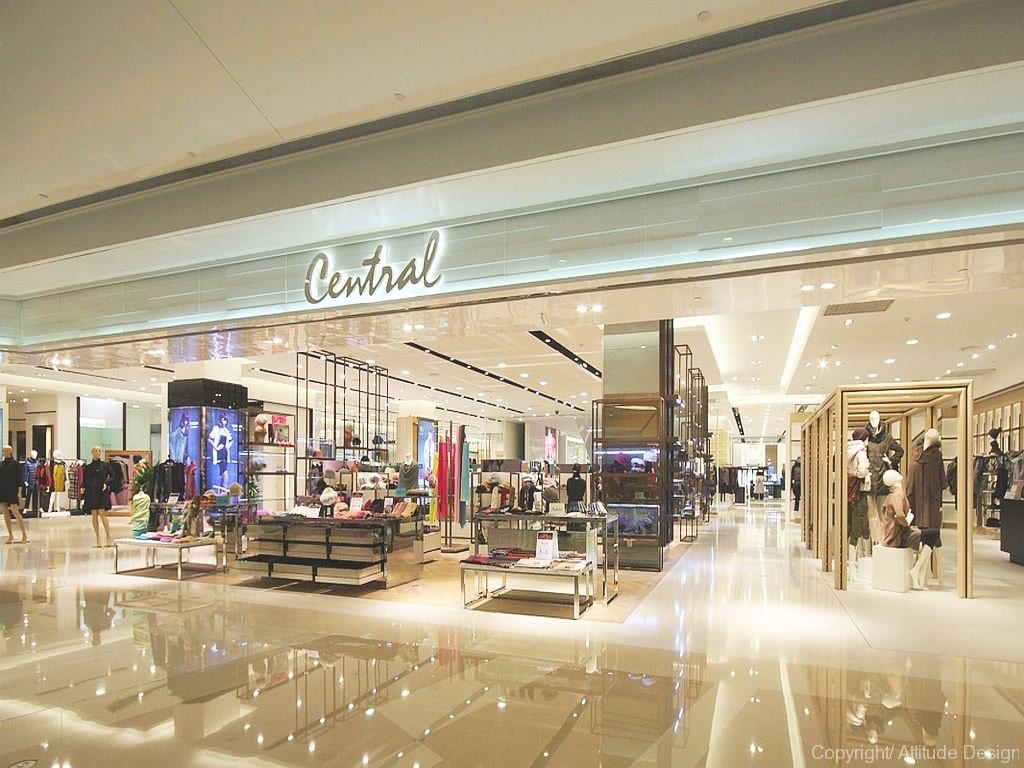
    A Central Department Store app has been launched to keep customers informed about in-store promotions, aiming to drive traffic in the lacklustre market in Thailand.

    In the Thai language, Central Smart Shopper lets users key in such factors as date, store branch and budget. It then shows a list of available promotions from about 20 credit-card companies.

    Executive VP for marketing Piyawan Leelasompop says the aim is to capture younger-generation shoppers. “They are eager to change, and one day we could foster the relationship and build brand loyalty.”

    Part of retail giant Central Group, the department store has invested more than 10 million baht (US$280,000) to develop the app, and targets 100,000 downloads by year-end. It plans to further develop the app to link to online shopping.

    This follows Central Group acquiring the Thai market for online fashion marketplace Zalora, as well as a slump in Thai spending. Thailand’s retail sector slowed to 2.8 per cent growth last year, according to the Thai Retailers Association.

    Central Group will kick off a one-and-a-half-month sale on Friday at its 64 branches nationwide, including Central Department Stores. It will invest 100 million baht in the campaign to offer discounts of up to 80 per cent.

  • Here’s How Estee Lauder Plans To Grow In China

    Here’s How Estee Lauder Plans To Grow In China

    In Q3 2016, Estee Lauder registered an 8% growth in retail sales in China, lower than its all the time high of 20%, but still strong according to the company. The growth in China was primarily due to a 70% growth in e- and mobile commerce sales and 10% of the company’s business in China is now online. Estee Lauder now plans to diversify its brand portfolio in the region along with a geographically diversification by penetrating into more cities in China. It also plans to increase the number of freestanding stores, particularly in cities where there are no alternative distribution solutions such as departmental stores. While the Asia Pacific region (including China) accounts for less than 20% of the company’s net sales, it holds strong potential. Most of the company’s brands expect Estee Lauder registered double digit growth in China for Q3 2016. We believe that its investment in e-commerce, its diversification and increasing focus on distribution channels will drive revenues for the company from this region in future.

    Focus On E-Commerce Initiatives

    Estee Lauder reported that 70% of its growth in China for Q3 2016 came from online sales which now account for 10% of total sales in the region, slightly lower than the 12% figure for the U.S. The company plans to explore the omni channel opportunity in the region, where its freestanding stores will be connected to the online brand and be more efficient. The company also has a store in Alibaba’s Tmall which aims to bring luxury brands to Chinese consumers. Mainland China’s overall luxury market is estimated at $ 17.2 billion. According to a report by KPMG, 50% of China’s domestic luxury consumption will be generated online by 2020. Estee Lauder’s investment in e-commerce initiatives in China is aimed at tapping this market and the company is already witnessing results.

    Diversification – Portfolio and Geographic

    Estee Lauder is looking to spread its geographical reach in China by expanding into more cities through a distribution channel of free standing stores. This model will work well in smaller Chinese cities where there are no departmental stores, but consumers are keen to buy the company’s products. Currently it operates free standing stores of its M.A.C and Jo Malone brands in the region, but expects to add other brands in future. The company believes that over time its speciality channel will also develop in China. Most of its brands, with the exception of Estee Lauder, registered double digit growth in the region for Q3 2016. The company can improve the its visibility in the region by broadening its distribution channel, increasing availability in stores and fostering e-commerce initiatives.

    While Estee Lauder’s sales in China are witnessing growth currently, the company is focused on the region and plans to invest on online and distribution initiatives to generate additional sales. As the Chinese economy shifts towards consumption with an increasing demand for foreign luxury products, Estee Lauder has strong growth prospects in the region.

  • Southeast Asian economies lure Alibaba

    Southeast Asian economies lure Alibaba

    Southeast Asian economies are reaching a stage similar to China’s at the end of the last decade, when eCommerce began to take off, according to Alibaba Group executive vice-chairman Joseph Tsai.

    “I don’t blame you guys for having some degree of excitement about Southeast Asia when you look at the economies here,” he has told a Singapore conference staged by Google and local sovereign wealth fund Temasek.

    For example, he said, the per-capita GDP of Indonesia, the world’s fourth most-populous country, was about $2900. “That’s roughly the same as China’s per-capita GDP in 2009 and into 2010, a period when Alibaba’s C2C marketplace Taobao began to soar, adding about $50 billion in gross merchandise volume.”

    This was one reason Alibaba had invested about $1 billion in Singapore-based Lazada Group last month. Launched in 2012, Lazada now has shopping websites in Indonesia, Malaysia, the Philippines, Singapore, Thailand and Vietnam. It began by selling inventory to customers from its own warehouses but now also runs marketplaces for third-party sellers, as well as using its own logistics networks for deliveries.

    “We’re very excited about our investment in Lazada,” Tsai said. “It is starting from a very small base, but the potential is very, very big.”

    By adding marketplaces in Southeast Asia, Alibaba can offer merchants already selling on its platforms a chance to sell into new markets. “It’s very, very helpful to be able to present something that is more of a geographically diverse platform,” Tsai said. Online healthcare and fintech companies such as Alibaba-affiliate Ant Financial, poised for rapid growth in China, could expand their services to Southeast Asia.

    Tsai said he sees promise in the wide use of the mobile internet in Southeast Asia, a trend that typically gives rise to greater engagement and more purchases by online shoppers.

  • Alfa goes all-out in RI e-commerce battlefield

    Alfa goes all-out in RI e-commerce battlefield

    Publicly listed retail giant PT Sumber Alfaria Trijaya, also known as Alfa Group, is stepping up efforts to intensify its presence in the e-commerce industry with the relaunch of its e-commerce platform on Monday.

    Alfacart.com, an online platform that serves as a complementary feature to physical Alfa outlets, was introduced Monday as the new name for the group’s Alfaonline.com, which was established in 2013.

    “This rebranding strategy is necessary as we want to create a full-fledged e-commerce business,” Alfacart CEO Catherine Hindra Sutjahyo told reporters.

    As a subsidiary of Alfa Group, which also owns minimarket chain Alfamart, grocery store Alfamidi and drugstore Dan+Dan, Alfacart aims to see its sales increase six-fold this year, from its 2015 figures, resting its optimism on untapped e-commerce potential in Indonesia.

    Catherine, however, refused to disclose a specific 2016 sales target.

    Alfacart plans to offer four lines of products, namely fashion, gadgets and electronics, daily necessities and lifestyle items.

    The company is targeting middle-class females and males aged 25 to 35 years old in big cities who are concerned with practicality and time efficiency and prefer to make purchases online.

    As one of its strategies to expand its business, Alfacart, Catherine said, would apply the online-to-offline ( O2O ) strategy to cater to Indonesia’s unbanked: those do not have access to bank accounts, savings and credit cards.

    The feature will enable Alfacart customers to order goods online through an application or website and pick up their purchases at one of the 7,000 Alfamart stores nationwide that have been integrated with Alfacart.

    “Alfamart has about 11,750 outlets nationwide, 7,000 of which are already integrated with Alfacart,” Alfacart chief operating officer and chief marketing officer Haryo Suryo Putro said, adding that the company will concentrate on providing services in the country’s major cities before expanding to smaller ones.

    In addition, Alfacart also allows small and medium enterprises to partner with the company.

    “Although we are selective in choosing our partners, our requirements are simple,” Ernest Tjahjana, the company’s chief commercial officer said, explaining that applicants only need to attach a copy of their tax registration numbers ( NPWP ) and identity card ( KTP ) to apply as a partner.

    In recent years, a growing number of e-commerce fashion, retail, and other businesses have been racing to provide the best online services to Indonesian customers.

    Some of them include an affiliate company of Djarum Group, Blibli, online marketplace Lazada and grocery delivery app HappyFresh.

    Based on data from idEA, the number of online shoppers in Indonesia hit 7.4 million last year, out of a total 250 million people in the country. This shows that the opportunity for e-commerce businesses to grow is still huge.

    Despite the growing number of e-commerce businesses in Indonesia, some have struggled to turn a profit here.

    Many foreign giants, such as Japan’s Rakuten and Germany’s Lamido — who both sell consumer products — exited the market. Clothing site Paraplou, travel booking site Valadoo and financial technology firm Inapay did the same.

    Alfacart’s Catherine, which was also a former director of Zalora Indonesia, acknowledged this was one of the main challenges in the e-commerce industry.

    “One of the biggest challenges in sustaining an e-commerce business is how to make it profitable in the long run,” she said.


  • Indonesia Revises E-Commerce Regulation

    Indonesia Revises E-Commerce Regulation

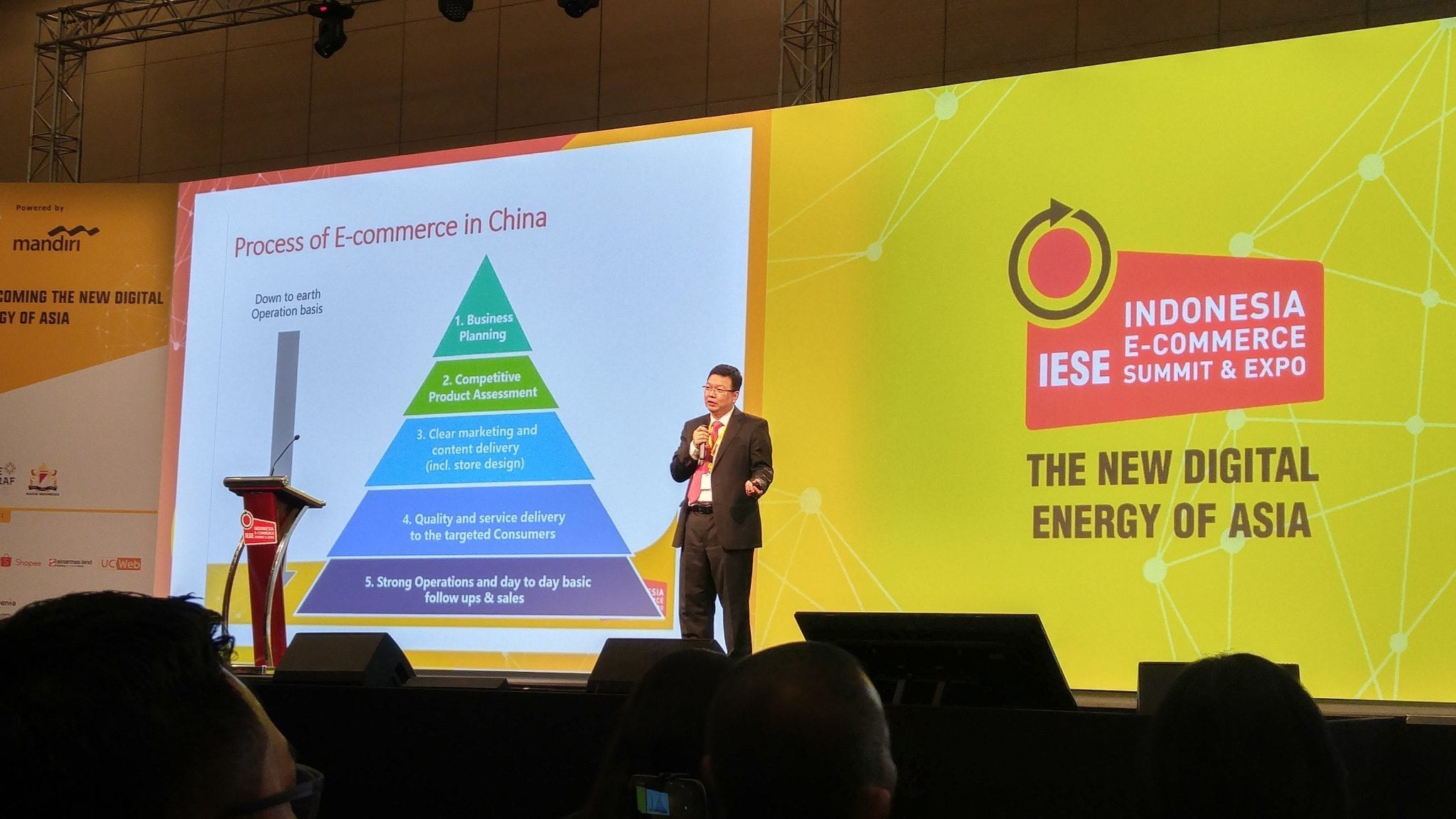
    Indonesia has one of the biggest economies in the Asia-Pacific region and its rate of internet adoption is one of the fastest in the world. So naturally, e-commerce in the region is starting to boom.

    According to Alibaba Group Executive Vice Chairman Joseph Tsai, Indonesia’s per capita GDP is about the same as China’s was in 2009, when Alibaba’s marketplaces really began to take off. Alibaba has taken steps to get a stake in the region, investing US$1 billion in Southeast Asia e-commerce platform Lazada, a Singapore-based company with extensive operations in Indonesia.

    To help help drive e-commerce growth in Indonesia, the government has made moves to open the country up to foreign e-commerce investment and expertise.

    Indonesia’s Investment Coordinating Board (BKPM) is finalising guidelines for foreign e-commerce investment. The new BKPM regulations will allow 100 percent foreign ownership for e-commerce businesses with a minimum investment of Rp100 billion (about AU$10.3 million) or businesses that create 1,000 jobs.

    The guidelines, however, limit foreign ownership to 49 percent for businesses investing below the Rp100 billion mark. The moves are designed to encourage big e-commerce investment from major players, while offering some protection to Indonesia’s local SMB e-commerce players.

    The removal of e-commerce businesses from Indonesia’s ‘negative investment list’ (which outlines business activities that are either entirely closed or conditionally open to foreign investment) provides a significant opportunity for foreign investment into one of South-East Asia’s fastest growing e-commerce markets.

    “I think this is the right time for Indonesia to aim to become the largest digital nation in Asia,” said Rosan Roeslani, Chairman of Indonesian Chamber of Commerce and Industry.

    “What this country needs is not only money but also know-how, which is why we invited incubators to come to Indonesia,” he said.

    “We have also talked about how we can get more start-ups to go through seed stage. One of the possibilities is to encourage big e-commerce players to spin their people off their company… We have not come out with the conclusion yet, but the government is very open for solutions,” he said.

    Indonesian President Joko Widodo is looking to make the country South-East Asia’s largest digital economy by 2020. The lifting of foreign ownership restrictions has been praised by those in the industry who welcome the injection of foreign capital and expertise.

    The removal of e-commerce from the negative list is part of Indonesia’s e-commerce roadmap, which was released earlier this year. The roadmap includes a list or proposals aimed at making it easier for e-commerce firms to operate in the country. Key elements of the roadmap include:

    • Government financied developments of logistics facilities and improvements to communication infrastructure
    • Government financing for start-ups in the form of grants and funds, as well as regulation for crowdfunding
    • Streamlining business licensing processesand increasing consumer protection regulationE-Commerce Regulation
    • Tax breaks for tech start-ups
    • Increased cyber security
  • Alfamart to launch click and collect

    Alfamart to launch click and collect

    Alfamart is going to utilize its 10,000 store network as pickup points for its new online shopping platform Alfacart. Alfacart, the new e-commerce platform will carry one million products from sellers, and is expected to generation IDR1tn (US$70m) transaction. The existing shopping website Alfaonline will be replaced. The advantage of Alfacart over the other e-commerce players lies with its large store network of more than 10,000 throughout Indonesia. The retailer is also expected to be opening another 1,200 stores this year.

    “We understand there are some players in the market but the high cost of last mile is still a concern,” said Sumber Alfaria president Hans Prawira, “We have presence in the market very close to shoppers.”

    E-commerce is due to boom in Indonesia

    With the growth in investment and acceptance of internet and mobile shopping, Indonesia is seen as the next frontier after China and India in Asia. The government wants e-commerce to become the backbone of its growing digital economy and leading players like Alibaba are also accelerating their expansion into Indonesia.

    Even though logistics is still a challenge due to underdeveloped infrastructure and the sheer size of the country, it is only a matter of time before we see the boom of e-commerce.

  • KinerjaPay Enters Partnership With Bitcoin Indonesia

    KinerjaPay Enters Partnership With Bitcoin Indonesia

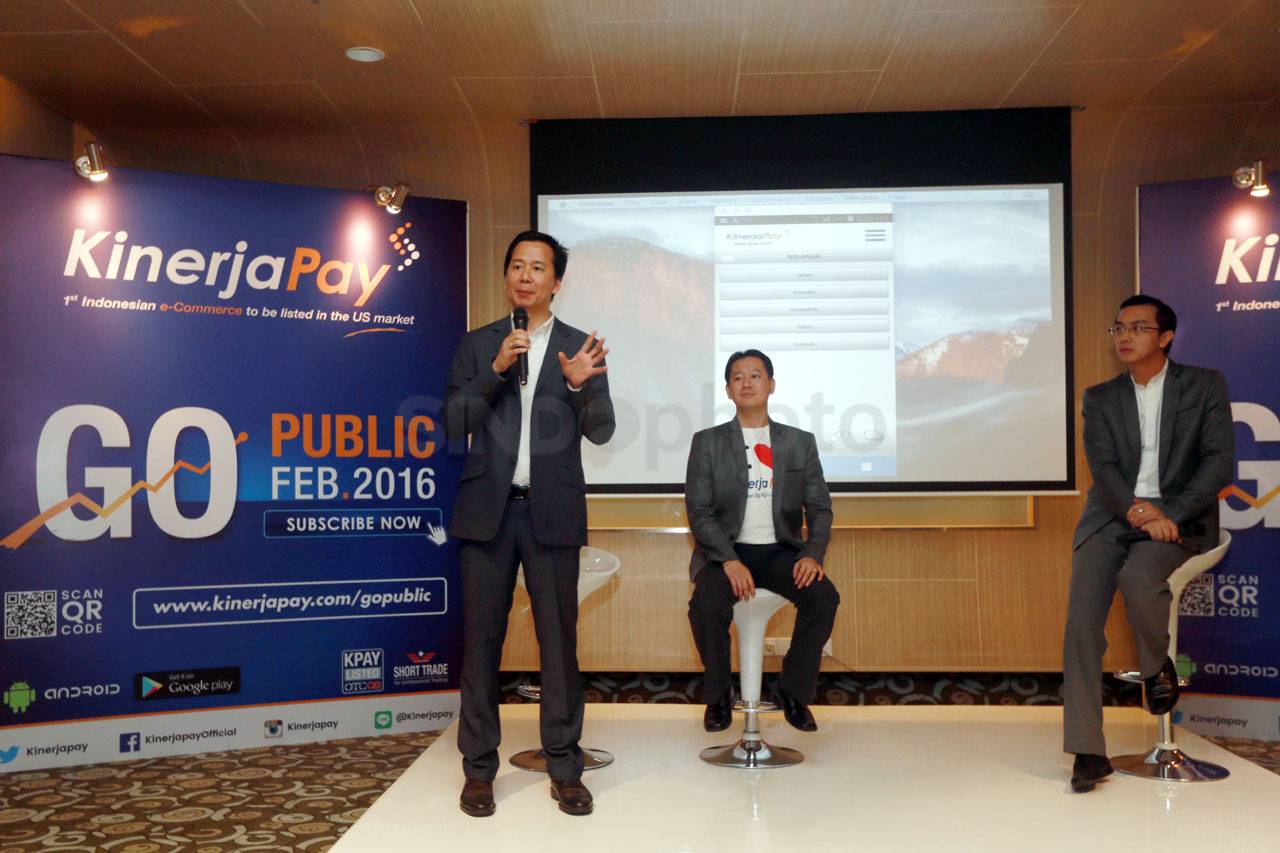
    Customers in Indonesia can now pay online with bitcoin as the country’s leading payment solutions provider KinerjaPay has added the digital currency as one of the payment options on its platform. KinerjaPay, in a recent press release, has announced its partnership with Bitcoin Indonesia to facilitate the Bitcoin option for its merchant partners.

    Apart from offering payment gateway solutions to online merchants, KinerjaPay also operates its own e-commerce portal where people can directly buy goods from the platform itself. By including Bitcoin payments, KinerjaPay has now become the first e-commerce platform in Indonesia to do so. Now customers can convert their bitcoin to Indonesian rupiah on the fly while making a transaction over the payment gateway to pay their bills, transfer money and purchase goods on the internet.

    KinerjaPay and the growth of e-payments in Indonesia

    KinerjaPay is currently one of the fastest growing digital payments platforms in Indonesia. In the past two months, the company has grown by over 300 percent as its user base has increased from around 12000 customers to 50,000. According to the company’s report, this has also led to an increase in the average number of transactions processed per day.

    With over 1500 transactions per day, compared to previous 300 transactions, the company can expect the numbers to grow further with the integration of bitcoin payments. Currently, there are not many online merchants who accept digital currency payments in Indonesia and now the partnership with Bitcoin Indonesia means that the company’s partner merchants will be able to accept bitcoin payments from their customers soon. This will open up a lot of options for bitcoin users in the country.

    In order to make bitcoin payments more popular, KinerjaPay has announced that it will be providing special offers to customers of Bitcoin Indonesia. With these special offers, the company intends to convert at least some of the 150,000 Bitcoin Indonesia customers into theirs as well. In a country where a majority of the population is hesitant to use online payment solutions due to concerns about credit/debit card fraud, KinerjaPay is working hard to build their trust by offering great deals and addressing their concerns. A currency like bitcoin where the user doesn’t have to share his/her bank account or card details will present an attractive option to the masses.

    As a part of its incentives galore, the company is also working on its own branded mining setup, where people can mine digital currency. While speaking about the new developments, the CEO and Chairman of KinerjaPay, Edwin Ng is quoted saying –

    “This partnership enables us to establish relationships with Bitcoin Indonesia’s membership, currently in excess of 150,000 accounts, which we expect will boost the volume of transactions on our platform going forward… We are also working to create a unique bitcoin mining element on our platform, something we believe will be very appealing to our users and will provide KinerjaPay with a real competitive advantage in the e-commerce sector.”

    KinerjaPay is constantly innovating to push the growth of online payments in Indonesia. Partnering with Bitcoin Indonesia is just one among the many which the company intends to follow in order to gain customer confidence and make them change their mind about online payments and digital currency. More developments in the sector can be expected soon.

  • eCommerce slows down international retail expansion

    eCommerce slows down international retail expansion

    Retailers are still looking for growth across borders, with Asia a particular interest to many. Nevertheless, high eCommerce investments have slowed down the international expansion, according to real estate consultant CBRE‘s “How Global is the Business of Retail?”‘s report.

    Hong Kong most appealing

    The annual study, in its 9th edition, analyzes 334 international retailers’ activities in 61 countries. In their quest for expansion, retailers target “established” shopping cities, according to the study. In at least 90 % of the cities, at least 1 new retailer appeared in 2015 (compared to 85 % of cities in 2014). 30 % of all markets in the study welcomed at least 10 new retailers.

    The top 20 of most popular cities for new retailers did feature some new cities: Asia is still the most important region in the top 10, with four of the five most attractive markets. Hong Kong was the most appealing market in 2015, with 73 new retail brands. Singapore is second with 63 newcomers, followed by Tokyo (57), Taipei (47), Moscow (40), London (39), Dubai (38), Beijing (37), Bucharest (35) and Doha (29).

    London is still the most international shopping city in the world, followed by Dubai, Shanghai, Hong Kong, Paris and Tokyo.

    Safeguard the right mixture

    CBRE expects international retailers’ attention to shift to growing cities in Africa and Latin America, especially if the economic situation in the East changes. Established markets like Germany, the United Kingdom, France, the United States and China seems to get priority over others, with retailers choosing a certainty over a gamble.

    International expansion is also slowing down slightly, a trend CBRE attributes to the fact many retailers have invested more in eCommerce platforms and multichannel environments. Retailers are looking at their store portfolio more diligently and are safeguarding the right mixture of locations. They will consider new formulas, like airport stores or stores in train stations.

    Shopping centers are also key for retailers looking to enter new markets. These will have to reposition themselves, in order to shift their focus to food, leisure or lifestyle.

  • Singapore e-commerce market to exceed S$7b in 2025

    Singapore e-commerce market to exceed S$7b in 2025

    The e-commerce market in Singapore is expected to be worth US$5.4 billion (S$7.46 billion) by 2025, according to a report by Temasek and Google released on Tuesday (May 24).

    This is larger than the casino industry in 2015, which was valued at about US$4 billion.

    The report found that Singapore’s e-commerce market was valued at US$1 billion in 2015, with online shopping making up 2.1 per cent of retail sales – the highest proportion of all Southeast Asian countries surveyed.

    Come 2025, Singapore’s e-commerce market is expected to make up 6.7 per cent of all retail sales, behind Indonesia’s 8 per cent, the report stated.

    Southeast Asian e-commerce markets in 2015 and projected figures for 2025. (Chart: Google, Temasek)

    Countries covered in the report included Indonesia, Vietnam, the Philippines, Thailand, Malaysia and Singapore.

    The report also highlighted the growth of ride-sharing services such as Grab and Uber. It noted that in 2015, the Singapore market was valued at US$800 million, tying with Indonesia. Overall, the region’s ride-sharing market was worth US$2.5 billion in 2015, with the figure expected to exceed US$13 billion by 2025.

    Ride-sharing market in 2015 and projected figures for 2025. (Chart: Google, Temasek)

    It added that Singapore will continue to record the highest fare per trip, three times that of the average fare in Southeast Asia.

    The report, which also looked at the venture capital and startup landscape in Southeast Asia, also found that as of 2015, Singapore is the most active country with 37 per cent of deal quantity and 72 per cent of deal value. Activity was mainly driven by two startups – Grab and Property Guru, which recorded investments of about US$350 million and US$130 million, respectively.

    It found that Southeast Asia is the world’s fastest growing Internet region, with an existing Internet user base of 260 million. This is expected to grow to 480 million users by 2020. Consequently, the Internet economy in Southeast Asia is expected to exceed US$200 billion by 2025, driven mostly by the growth of the e-commerce market, followed by online media and online travel, the report said.

    Driving growth are three factors unique to the region: A young population, with 70 per cent under the age of 40, a lack of big-box retail, as well as a rapidly growing middle-class, the report said.

  • Online shopping in China accounts for 13% of retail sales

    Online shopping in China accounts for 13% of retail sales

    China’s online shopping market expanded 36 per cent last year to CNY3.8 trillion ($586 billion) to account for 12.6 per cent of total retail sales of consumer goods.

    Mobile revenue of the country’s top two online retailers accounted for 72 per cent of total online turnover.online shopping

    Business-to-consumer (B2C) spending represented 52 per cent of the total online gross merchandising volume (GMV) in 2015 (up from 45.2 per cent in 2014), which is the first time it had a larger share of online shopping than C2C, according to Beijing-based iResearch. The B2C market grew 56.6 per cent last year, while the C2C market increased by 19.5 per cent.

    As the market matures, iResearch expects growth to fall to 25 per cent next year and 20 per cent in 2018 when GMV approaches CNY7.5 trillion. Next year the B2C segment is forecast to account for 64 per cent of total online retail shopping.


    Alibaba’s Tmall maintained its leading role in the B2C market (see chart, click to enlarge) with a 58 per cent share, followed by JD.com (23 per cent) and Suning (nearly 4 per cent).

    Alibaba’s retail marketplace revenue increased 42 per cent in Q1 to CNY18.3 billion, while mobile revenue surged 149 per cent to CNY13.1 billion, which represented nearly 72 per cent of total retail turnover, according to China Internet Watch.
    China Q1 e-commerce
    JD.com’s GMV for Q1 jumped 55 per cent to CNY129 billion, with mobile accounting for 72 per cent of the total.