Tag: ecommerce

  • Do malls, online shops mix? Zalora says Pinoys have best of both worlds

    Do malls, online shops mix? Zalora says Pinoys have best of both worlds

    Like most disruptions in the past, the advent of ecommerce has been framed as a battle between online convenience and the traditional brick and mortar experience: your couch or the mall.

    Ecommerce has played its part as the upstart in this battle, with brands such as Lazada and Zalora coming from nowhere a few years ago to winding their way into the public consciousness.

    Despite this, ecommerce currently accounts for only about 1% of the local retail market. However, as Paulo Campos III, founder and CEO of fashion retailer site Zalora Philippines pointed out, “Where it’s going – that’s the exciting part.”

    “If you believe that the concept of ecommerce is universal, and not just a western country thing, then the experience of other countries provides a glimpse of what’s in store for the country,” he said in an exclusive interview with Rappler.

    In the US and EU, ecommerce now represents about 8-10% of the retail market including big names like Amazon.com.

    But more relevant to the Philippines is its success closer to home.

    “China is the shining story of ecommerce in emerging markets and and somehow validates the thesis that ecommerce is a global, universal thing and that it’s going to happen eventually here and everywhere else,” Campos said.

    Indeed, some of China’s best known companies, including the record holder for biggest IPO ever, Alibaba, are built upon ecommerce and already have 6-7% of China’s giant retail market.

    But its success there doesn’t guarantee it would work here, especially in a country where malls have become the de facto townsquares.

    This is especially true of a firm like Zalora that plays in the fashion space where the fit and feel of clothes are so essential to the buyer.

    Unlike Uber

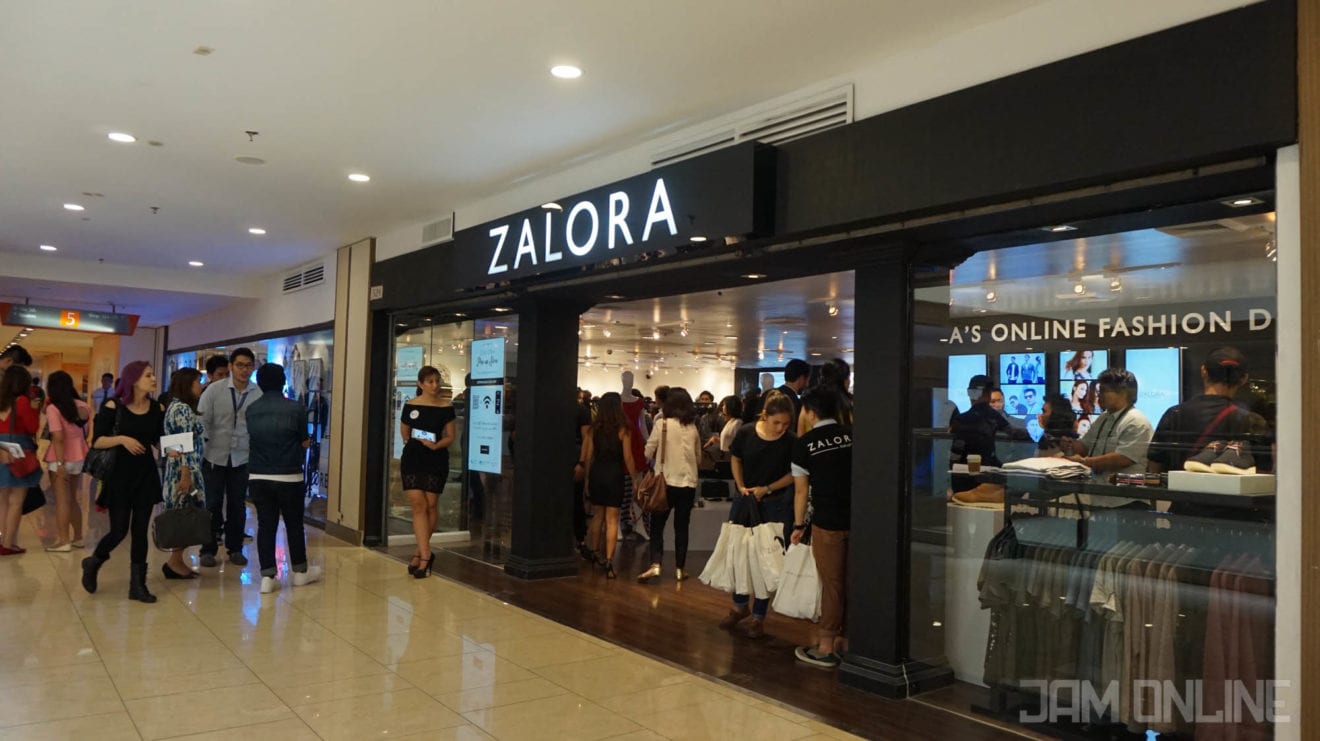
    Setting up shop in the country in 2012, initially as a venture of Rocket Internet, Zalora has since grown to become the leading fashion-focused ecommerce platform in the country, averaging around 200,000 users per day.

    To visualize this, that’s about on par with the amount of daily foot traffic the big malls get, Campos said.

    Yet, he doesn’t see this as a signal that malls will soon be disrupted in a way Uber has done to taxis around the world.

    “Filipinos will continue to go to the mall in the large numbers they do now. Culturally, the mall is more than just a place to go to buy stuff, it’s where people hang out, cool off and even go to Mass,” he said.

    “In terms of how I see the development of the brand, we’re moving to an omni-channel experience,” Campos explained.

    For example, someone goes to the store to check out an item but then does the research online and then might go back to the store or they can just buy from the site.

    “This omni-channel experience means that ecommerce and the mall will coexist and in fact reinforce each other in a harmonious way,” he said.

    Consumer patterns

    Another interesting point about this relationship lies in consumer patterns.

    Campos pointed out that Zalora sales are highest on Wednesday and Thursday, while they are lowest, at only 50% of the highest days, on Saturday and Sunday.

    Within a day, sales are highest between 1 pm and 4 pm and are lowest between 6 pm and 8 pm. This has been true for every week for 4 years.

    These patterns are the exact opposite of sales patterns in the offline world.

    “What I tell our brand partners is that when customers are in the mall, they are shopping with you. When they’re not in the mall like during downtime at the office that’s when people are shopping with us,” Campos said.

    “People are shopping with us on hump day and 1-4 pm, taking advantage of fast Internet at the office. Somehow it’s complementary,” he said.

    He also pointed out that Zalora’s retail brand partners also found that online shopping doesn’t cannibalize sales. It’s just one way of reaching out to customers at another time and through a different channel.

    This blending of both worlds can already be seen in individual brands that all have their own ecommerce websites. You can buy Nikes online but that doesn’t mean they’ve closed down their stores.

    Local retailers like Bench and SSI, both of which sell through Zalora, already have online ecommerce sites, although Campos is confident that they will continue to sell on Zalora.

    “Customers who are shopping for a specific brand can go to its website directly, and those shopping around looking for many brands can go to Zalora. Brands are basically doubling their retailing channels through us,” he said.

    To facilitate this, Campos said that Zalora sells everything at suggested retail price (SRP). This means nothing will ever be cheaper or more expensive in the mall than on the site, and when an item goes on sale offline, it does so online as well.

    GLOBAL GROUP. Having been incubated by Rocket Internet, Zalora Philippines has since taken out different institutional investors and is now part of mother company Global Fashion Group (GFG). Campos describes GFG as essentially the leading fashion ecommerce group player in 27 emerging markets or "all of the interesting ones except for China." Photo from GFG's website

    GLOBAL GROUP. Having been incubated by Rocket Internet, Zalora Philippines has since taken out different institutional investors and is now part of mother company Global Fashion Group (GFG). Campos describes GFG as essentially the leading fashion ecommerce group player in 27 emerging markets or “all of the interesting ones except for China.” Photo from GFG’s website

    Digital department store

    Campos said that what Zalora brings to the table for consumers, besides convenience, is the ability to browse established brands while getting exposed to new ones.

    “About half of our brands, 750, are mall brands that work together with us on a virtual inventory basis or a marketplace basis. The other half are independent brands, the SMEs [small and medium-sized enterprises], and entrepreneurs that don’t have the scale to work with us like the big brands do,” Campos said.

    He added that while they have the top 20 online retail sellers, they don’t have a store so most consumers have never heard of them. On top of that, Zalora also has its own brand that encompasses about 20% of sales.

    He also pointed out that many users visit the site as an information resource to check on product alternatives and get reviews on different items.
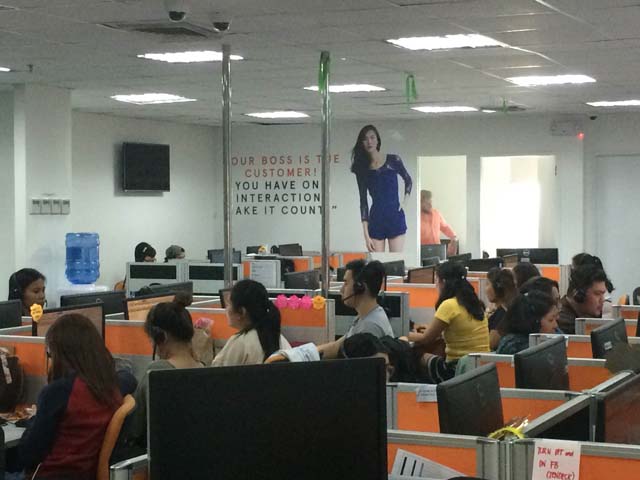
    CUSTOMER SERVICE. Zalora Philippines now employs around 100 customer services representatives with 10 servicing excess demand from sister site The Iconic, serving Australia and New Zealand. Campos says that the firm plans to increase this number in the future as global ecommerce grows. Photo by Chris Schnabel/Rappler

    CUSTOMER SERVICE. Zalora Philippines now employs around 100 customer services representatives with 10 servicing excess demand from sister site The Iconic, serving Australia and New Zealand. Campos says that the firm plans to increase this number in the future as global ecommerce grows. Photo by Chris Schnabel/Rappler

    Tip of the iceberg

    Approaching its 4th anniversary in the Philippines, Campos said that Zalora is profitable on a unit economics basis. But at the moment it is sacrificing profitability for the bigger battle for market share.

    Far from traditional retailers, Campos said that the main challenge facing Zalora, as well as other big ecommerce players, is getting consumers comfortable with buying online, which is why it is channeling money into various marketing efforts.

    These efforts include the pop-up stores they had last year as well as hosting a Zalora Style Awards Ceremony to be held on April 7, and a regional model scouting competition to mark its 4th anniversary.

    Just getting consumers online is also proving to be tricky with Campos sharing that they are still fighting a battle on educating Filipinos on how to use mobile data.

    “I recently saw a Google study that showed that among all our peers in Southeast Asia, we use Internet on a fewer number of days per month than any other ASEAN country and significantly so,” he shared.

    “Out of 30 days, only 80% use it 1-5 days a month. So this phenomenon of being constantly connected or being a digital native is not true for most people in the country,” Campos added.

    Even potential customers who are connected are hampered by poor network infrastructure.

    “We have the benefit of comparing all the ASEAN countries that have Zalora side by side and through the comparison you can really see that we really do have an inordinately slow mobile Internet speed even compared to Indonesia or Vietnam,” he said.

    On the flipside, Campos pointed out that 40 million Philippine users have access to the Internet now, and the number is expected to go up to 75 million in the next two years. If the Internet improves in the next few years, this would bring huge potential to online businesses.

    With Internet speeds improving, the firm is hoping that as more and more consumers become digital natives, they would eventually get comfortable browsing the site from anywhere.

    Maybe even while hanging out in a mall.
  • Alibaba likely to surpass Walmart as world’s top retailer

    Alibaba likely to surpass Walmart as world’s top retailer

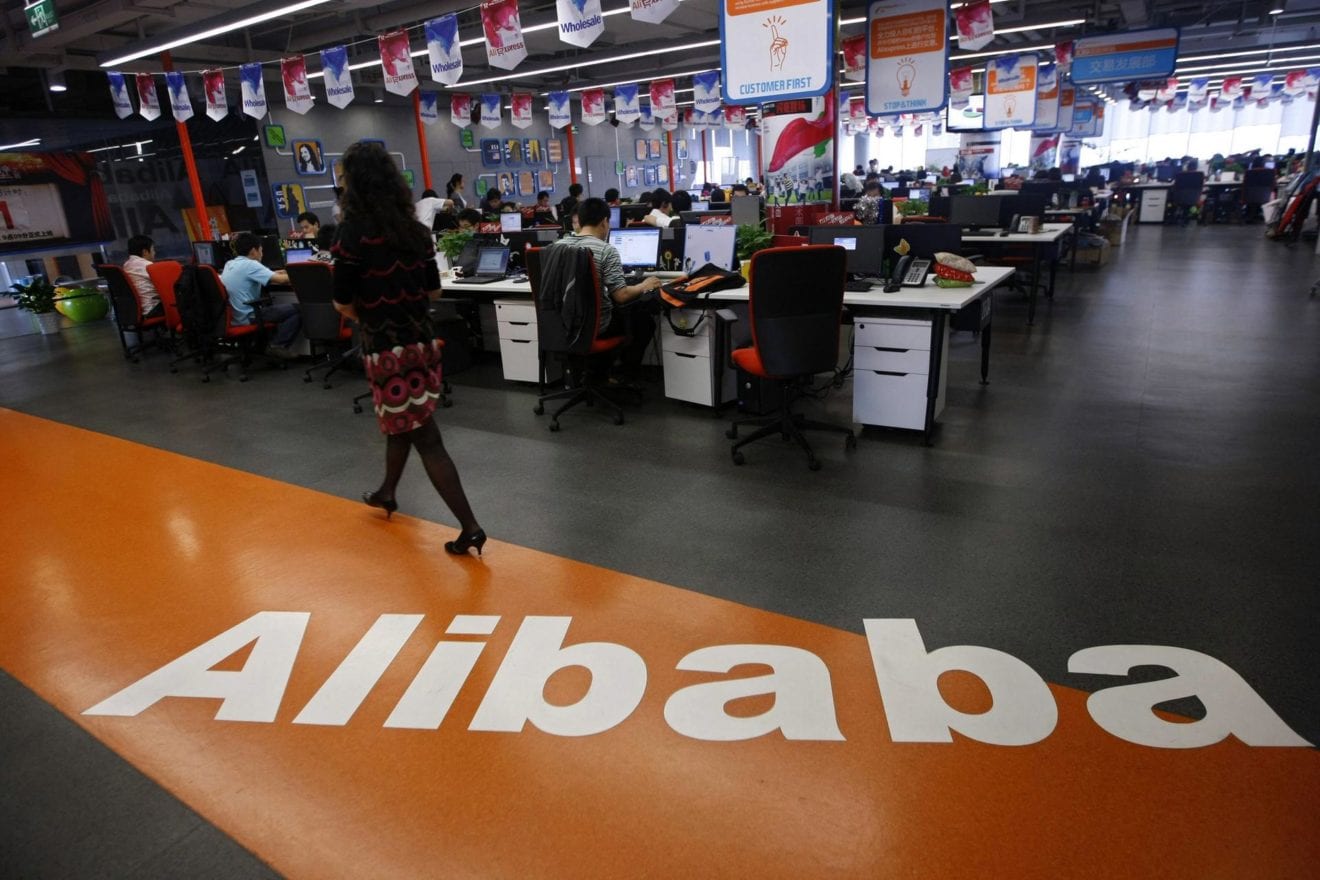
    Chinese e-commerce giant Alibaba is expected to surpass the US multinational firm WalMart soon as the world’s largest retail platform with its total trading volume this fiscal year set to exceed USD 463.3 billion, an official media reported today.

    Chinese e-commerce giant Alibaba is expected to surpass the US multinational firm WalMart soon as the world’s largest retail platform with its total trading volume this fiscal year set to exceed USD 463.3 billion, an official media reported today.

    An official announcement by Alibaba Group Holding Ltd expected to be made at the end of this fiscal year on March 31.

    WalMart Stores Inc posted net sales of USD 478.6 billion for its fiscal year ending Jan 31, while the latest trading volume figure for Alibaba amounted to three trillion yuan (USD 463.3 billion), the company said yesterday.

    It is equivalent to China’s Sichuan province’s gross domestic product (GDP) last year, when the province’s GDP ranked sixth on the Chinese mainland, state-run China Daily reported today.

    Zhang Yong, the company’s CEO, said in Hangzhou that the figure was recorded on the company’s business-to-customer platform Tmall, consumer-to-consumer platforms Taobao and Rural Taobao, and group-buying site Juhuasuan.

    Zhang said he expected the company will achieve an annual trading volume of six trillion yuan by 2020 (about USD 980 billion) and that “in 2024, we wanted to be a business platform serving 2 billion consumers and tens of millions of enterprises at home and abroad.”

    According to Zhang, the company will strive to combine cloud computing and big data technologies with the Internet and the Internet of Things, as well as consumer terminal equipment, to spur its development.

    The Internet of Things is the network of physical objects devices, vehicles, buildings and other items embedded with electronics, software, sensors and network connectivity that enables these objects to collect and exchange data.

    Citing the National Bureau of Statistics and McKinsey & Co figures, Gao Hongbing, director of AliResearch, said that of Alibaba’s 3 trillion yuan in total trading volume, about 660 billion to 1.17 trillion yuan is newly increased consumption.

    “Online shopping has been an important engine to promote consumption, which meets the nation’s strategy of promoting domestic demand,” Gao said.

    Last year, Chinese consumers’ willingness to spend reached the highest level since 2012, despite the economic slowdown, according to a study published in February by The Nielsen Company.

    “This is a result of China’s commitment to shifting from an investment-driven to a consumption-driven economy,” said Kiki Fan, managing director of Nielsen China, China Daily reported.

    “Booming online shopping provides more variety and convenience to customers, thus fuelling their spending desire,” the Daily quoted Fan as saying.

    Despite its economic growth falling below 7 per cent (USD 6.9 per cent) for the first time since 2009, China surpassed the United States last year to become the largest e-commerce market in the world, according to statistics from multinational consultancy Forrester Research Inc.

    Chinese government has fixed 6.5 to seven per cent GDP target for this year.

  • Warm weather chills TSI Holdings bottom line

    Warm weather chills TSI Holdings bottom line

    With unseasonably warm weather at the end of last year dampening demand for winter clothing, Japanese apparel retailer TSI Holdings had weaker earnings for the year ended February 29.

    Its operating profit was flat at about 1 billion yen (US$8.86 million), falling short of a 1.2 billion yen projection. Sales fell about 9 per cent to 165 billion yen against a predicted 167 billion yen.

    Same-store sales, including online data, eased 3.6 per cent, with dips of 8 per cent for November and 4.1 per cent for December. High-margin items such as wool overcoats from mainstay brand Natural Beauty Basic met lukewarm demand.

    During the quarter, the company opened 58 stores for 21 brands, and has been negotiating with domestic and overseas apparel and natural cosmetics companies, leading to partnerships with a Chinese apparel company and a domestic beauty industry company.

    TSI also reports a “drastic shift” from paper media to digital promotion, and is enhancing its relationship with Google. This follows its eCommerce ratio growing from 9.6 to 10.8 per cent.

    Almost all brands’ O2O sites are now on the table, says the group, which is developing smartphone apps. Four brands opened sites – Free’s Mart, Jill Stuart, Natural Beauty and Zio Bernardo. Free’s Mart also became the first Japanese brand launched on the Zalora eCommerce site in Southeast Asia.

    The group’s own eCommerce sites grew 129 per cent year-on-year, from 11 to 20.

    TSI has 14 apparel subsidiaries in Japan and three overseas, and its 63 brands include Adore, Callaway, High Street, Nano Universe and Stussy.

  • 7 Tips for a Safe and Low-Priced Online Shopping Experience

    7 Tips for a Safe and Low-Priced Online Shopping Experience

    The possibilities for online shopping seem endless. To buy clothing, electronics and even your groceries you don’t have to leave the house anymore. Buying online is usually cheaper than buying in store too, because you can find really great discounts and deals online.

    But can you trust your mailman to deliver the package, won’t someone steal your package from your mailbox and how about the safety of online payments? Here we will share with you how to find discounts for your online shopping adventures and how to shop safely.

    1. Choose cash on delivery

    Well known webshops such as Lazada and Zalora give you the option to choose ‘cash on delivery’ (COD) as a payment method. In short, this means that you pay the delivery man in cash when he hands over the package to you on your doorstep. This way you only pay when you actually receive your package. Most of the time the delivery is free of charge. If you don’t want the hassle of staying at home until the postman arrives you can also let them deliver your package at work.

    2. Look at reviews

    Not too sure about the webshop you are about to order from? Get advice from others! You can check Trusted Company to view experiences per webshop from fellow shoppers.

    3. Check payment security systems

    Check if a webshop is Norton Secured and/or PCI DSS approved. The Norton Secure seal means that sensitive data is protected and the PCI DSS seal tells you that the security standards for account data protection are high. Your payment details are most likely to be secured when a webshop shows the two seals.

    4. Shop at international shops

    European and American shoppers have been shopping and paying online for ages already. They are not hesitating to pay online, simply because it always goes smoothly. Big international merchants, like Asos and The Body Shop are not trustworthy but also have good customer service. The only downfall is that international shipping will take longer.

    5. Use discount code websites

    Websites like Saleduck collect all discount codes and deals from webshops for you. When you are in the check-out process of a webshop and about to pay, a lot of webshops give you the option to fill in a discount code. If you don’t have a discount code, most of the time you can find one at a discount code website.

    6. Get in app discounts

    A lot of webshops really want to promote their app so they offer you a great discount when you download it. If you purchase something through their app for the first time, you can count on a nice discount, for example 15%.

    7. Use credit card discounts

    If you own a MasterCard, Citibank or CIMB Bank creditcard, you are in luck. A lot of webshops have special promotions for customers that pay with these cards. Discounts go up to an additional 25% off. Sometimes these offers are only valid on certain days, like MasterCard’s Monday promotions.

  • Central Market and 11street Take 19th Century Malaysian Handicrafts Online

    Central Market and 11street Take 19th Century Malaysian Handicrafts Online

    Online marketplace 11street (www.11street.my) and Central Market, one of Kuala Lumpur’s oldest and most famous centres for Malaysian culture and handicrafts products, have signed a Memorandum of Understanding (MoU) to make the historic venue’s offerings available to customers online.

    Customers throughout the country can now browse and buy a huge variety of products from Central Market’s diverse mix of retailers, ranging from home & living, fashion, sports & leisure, electronics and even groceries. 

    “This strategic collaboration will enable a business, which began life in the 19th century to make its products available to consumers across the country through a state-of-the-art 21st century medium,” said Hoseok Kim, Chief Executive Officer of 11street during the signing ceremony.

    Central Market has a rich history that dates back nearly 130 years to 1888. It currently hosts a total of 300 tenants and has become a landmark for souvenir shopping as well as an iconic opportunity to sample some of the finest aspects of Malaysian culture.

    “Collaborating with 11street has been a fantastic development for us. One of the secrets of Central Market’s unbroken track record of success has been its location within the heart of Kuala Lumpur. Being close to a public transportation hub has also played a role in making it a major attraction for both tourists and Malaysians alike,” Cheong Wai Mun, Complex Manager of Central Market.

    “Now, with the brand new presence on 11street, Central Market has broken its reliance on geography. Retailers can focus on doing what they do best – offering an incredible range of artistic and exciting products as well as services at attractive prices – to a wider group of audience,” Cheong said.

    The move has been warmly welcomed by Central Market’s tenants. One of them is Gadis Manis Malaysia, a brand that promotes Malaysian’s cultural diversity, with products such as bags, t-shirts, tableware, stationary and aromatic oils inspired by Malaysia’s nature, architecture and cultures.

    “I founded Gadis Manis in 2008 after moving to Malaysia and falling in love with the cultures diversity. I’m confident that partnering with 11street will add a new dimension to the business. I look forward to introducing my unique creations to a hugely expanded online customer base,” said founder, Florence Lambert Lee.

    Staying under the same roof, Wau Tradisi, a traditional handicraft shop that sells homemade Wau, congkak, gasing, wayang kulit and many more takes part on welcoming the collaboration. Wau, a uniquely designed Malaysian kite is a tradition inherent to the culture of Eastern States of Malayan Peninsula residents, such as Kelantan and Terengganu. Whereas congkak, gasing and wayang kulit are the traditional Malay games that have a century of history. 

    Expressing the happiness, Sarimah, founder of Wau Tradisi said, “E-commerce is universal nowadays, I’m glad that both Central Market and 11street make the effort to promote Malaysia culture by having our traditional items sold at 11street. With the combination between traditional products and modern online marketplace, I believe we can continue to carry on and bring our culture to more people, and even the future generation.”

    Other than Gadis Manis and Wau Tradisi, the list of enthusiastic tenants also includes Borneo Pearl, which sells hand assembled jewellery pieces using pearls cultured in Sabah, and the Coconut Shop, which offers a wide range of products crafted from coconuts.

    “All of Central Market’s tenants will benefit from the solid marketing support that 11street offers to its customers in order to make their online businesses a success. That includes education and training programs which covering effective product listing, digital content strategy, integrated online marketing, and photography,” Kim added.

    In conjunction with the new launch, a series of Central Market’s promotional offers and discounts that are close to 40% will be available on 11street until 24 February 2017.

  • All eyes on Indonesia’s e-commerce pie

    All eyes on Indonesia’s e-commerce pie

    Squinting at the electronic tablet screen, shopkeeper Maihar tapped the colourful icons to top up her customer’s mobile phone credit.

    “Today I sell phone credits. Tomorrow I will run an online grocery store from my bed,” the 59- year-old told The Sunday Times from her small provision shop in Jakarta, which she has been running for the past 20 years.

    “I used to be ‘gaptek’. I knew only how to switch the computer on and off,” she said, using the Indonesian slang “gagap teknologi”, which refers to people who are technologically backward. “But the Internet is changing the way we do business so I am learning to use it.”

    Madam Maihar made the plunge into cyberspace four months ago when she was introduced to Kudo, a local tech start-up which allows “agents” like her to sell clothes and concert tickets from its 10-odd merchant partners through a shopping application installed on its tablets.

    So far, she has used it to pay utilities and phone bills for her customers. In return, she gets shopping discounts from Kudo.

    GETTING ON THE DIGITAL BANDWAGON

    I used to be ‘gaptek’. I knew only how to switch the computer on and off. But the Internet is changing the way we do business so I am learning to use it.

    MADAM MAIHAR, an Indonesian shopkeeper, using the Indonesian slang “gagap teknologi” to refer to people who are technologically backward.

    Small-time entrepreneurs like Madam Maihar as well as big capital owners and tech start-ups like Kudo and others, including from Singapore, are all eager for a piece of Indonesia’s e-commerce pie, valued at US$12 billion (S$16 billion) in 2014 and US$18 billion last year.

    Billed as the next frontier in e-commerce after China and India, Indonesia’s market is expected to swell to US$130 billion in 2020, with an annual growth of 50 per cent, Information and Communications Technology Ministry spokesman Ismail Cawidu told The Sunday Times.

    The government wants e-commerce to become “Indonesia’s backbone in digital economy so we can become the biggest in Southeast Asia in 2020”, he said. It will soon roll out a road map for the industry that will provide clear guidelines on logistics services, financing for start-ups, consumer protection, taxes and cyber security.

    Recognising Indonesia’s digital potential, Singapore’s Foreign Minister Vivian Balakrishnan during a visit to Jakarta in January proposed a new partnership between the two neighbours.

    “We believe Indonesian universities and technical institutes will produce many graduates with digital skills and we are thinking of launching a scheme in which Singapore companies which are looking for talent will be able to recruit talent here, deploy them here and provide services for the rest of the world,” Dr Balakrishnan said.

    With nearly a third of its 250 million population able to access the Internet, seven in 10 of whom do so on their smartphones, Indonesia has a ready captive market.

    This, coupled with low labour costs and growing affluence, is a big draw for budding tech firms.

    Mr Ivan Tan, IE Singapore’s group director of South-east Asia Group, which has helped 50 Singapore firms to collaborate with Indonesian players, said: “The increased spending power of the middle class and the rapid adoption of new technology will drive e-commerce growth in this country.”

    While traditional on-demand transport, food and shopping services such as Go-Jek motorcycle-hailing service and Tokopedia online marketplace continue to dominate the industry, new ventures such as UangTeman, which provides short-term micro loans online, and HaloDiana, a private virtual assistant, have sprung up.

    Low Internet penetration rates and service gaps such as poor infrastructure which drive up logistical costs, patchy mobile connectivity and limited banking facilities have spawned a new breed of innovative businesses.

    For instance, Kudo, whose investors include two from Singapore, targets the “have-nots” by recruiting agents in rural locations to shop on behalf of their less technologically savvy communities.

    Bareksa, an investment portal start-up, allows people to start mutual funds online with only $10 without stepping into a bank.

    Singapore firms also are jumping on the bandwagon, despite challenges such as language barrier, few business connections, foreign investment restrictions, bureaucracy and online payment problems.

    SingPost said it has “a special arrangement with Pos Indonesia” with full online tracking and work sharing at a discounted price that helps to lower logistic costs and cut delivery times for Chinese e-commerce giant Alibaba merchants selling to the Indonesian market.

    Mr Henry Chan, business development head at ShopBack, which returns a portion of cash to shoppers who buy through the website, said while China has high demand, its “competitiveness is also very, very high”.

    “Indonesia is closer to home and something we can relate to a lot more on a cultural basis,” he said.

    Despite an “imperfect ecosystem”, from unclear government regulations to Indonesians’ love for haggling, it is only a matter of time before the country completely embraces the idea of e-commerce, technology experts say.

    Said Indonesian Internet Service Providers Association chairman Jamalul Izza: “There’s no way but up. When we are lazy to go out or get stuck in a traffic jam, what else is there to do but shop or buy food online?”

  • Ecommerce Turns into Mcommerce in China

    Ecommerce Turns into Mcommerce in China

    The shift of ecommerce sales from the desktop to mobile devices has been under way in China for a couple of years. And according to data from the end of 2015, the tilt toward mobile is clear.

    Analysys International Enfodesk reported that nearly two-thirds of retail and consumer-to-consumer (C2C) ecommerce sales in China in Q4 2015 occurred via mobile. That was up from 55.5% the previous quarter—the first time mobile accounted for a majority of ecommerce sales in the country.

    2015 may have been a turning point, but the rise of mobile has been ongoing since early 2013, when 9.0% of retail and C2C ecommerce sales occurred via mobile devices.

    eMarketer estimates that mcommerce sales were just shy of the 50% mark as a share of ecommerce sales for the full year last year.

    This year, eMarketer forecasts retail mcommerce sales in China will grow by 51.4%, to reach 55.5% of retail ecommerce sales in the country this year. That will still amount to just 10.9% of total retail sales, however.

    By 2019, the end of our forecast period, mobile users in China will spend nearly $1.5 trillion on mobile commerce, which will amount to nearly a quarter of the country’s retail market.

  • Everything you need to know about payments, ecommerce, and venture capital in Indonesia

    Everything you need to know about payments, ecommerce, and venture capital in Indonesia

    Macquarie’s annual conference in Jakarta on telecoms, technology, and ecommerce is one you shouldn’t miss. Last week, it brought together top decision makers in Indonesia’s digital economy.

    Macquarie Group’s corporate advisory branch Macquarie Capital gained relevance in Asia’s tech industry through advising startups and tech companies on capital raising, IPOs, as well as mergers and acquisitions. It’s, for example, responsible for advising aCommerce and PropertyGuru on their recent fundraises.

    Speakers at the event included Indonesia’s tech minister Rudiantara; executives of the three major telcos Telkom, Indosat, and XL; CEOs of retail giants; venture capitalists; and founders and CFOs of Indonesia’ most talked-about startups.

    Here are two days of back-to-back panels, distilled into digestible insights.

    1. A new ‘light touch’ approach to internet regulations

    Indonesia produced its share of confusing headlines about internet policies. Suddenly it wants to regulate everything: ecommerce, transportation, foreign investments.

    The new mantra is a “light touch approach” – allow change to happen and regulate where necessary.

    While opaque announcements caused concern, it’s obvious the current administration sees the digital economy as a key factor defining Indonesia’s future. It’s willing to go great lengths to support its growth.

    If you listen to tech minister Rudiantara or trade minister Thomas Lembong speak on the subject, you’ll hear their new mantra is a “light touch approach” – allow change to happen and regulate where necessary.

    It may still take some time for the administration to adopt the new mantra, but Rudiantara demonstrated he walks the talk when he refused transportation minister Jonan’s request to block access to app-based transportation services Grab and Uber. The Macquarie event coincided with a day of massive street protests organized by the taxi industry.

    Indonesia’s information and communications technology minister Rudiantara.

    Indonesia’s information and communications technology minister Rudiantara at a Tech in Asia event.

    2. Retail’s inevitable shift to ecommerce is on the way

    Similar to the changes in the transportation industry, a shift to ecommerce from offline retail is inevitable, Lippo Group director John Riady said. Consumers would eventually demand the higher convenience and product variety made possible by ecommerce.

    Lippo Group was an early mover last year when it launched its ecommerce endeavor Matahari Mall. This year, most of the big traditional retailers in the archipelago are getting on board with ecommerce plans of their own. Luxury brand retailer Mitra Adiperkasa is one of them, launching Map Emall in February.

    Lippo and Mitra Adiperkasa have taken different paths to achieving this shift to digital. Lippo’s strategy was to assemble a team of ecommerce professionals to start Matahari Mall from scratch as a separate corporation. Mitra Adiperkasa prefers to keep things close to home and manages its ecommerce site from within.

    Both John Riady and Ravi Kumar, COO at Mitra Adiperkasa, agreed that logistics and payments are still challenges to overcome. Indonesian shoppers lack trust in online payments.

    Facebook’s Head of ASEAN Kenneth Bishop offered advice on how to encourage customers to build trust: ecommerce applications should consider adding social features that let buyers ask questions before making a purchase.

    vp-sharma-map-emall-

    Mitra Adiperkasa’s VP Sharma launches Map Emall.

    3. A mobile world means engaging with customers around the clock

    The challenges of creating online services for a mobile-first market cropped up often in the discussions. Large parts of Indonesia’s young generation are coming online for the first time with smartphones, and don’t have access to desktop computers.

    Anthony Fung, the CEO of Zalora, and Fajrin Rasyid, CFO at Bukalapak, both observed that visits and transactions from mobile devices had overtaken those from desktop computers.

    Along with the shift to mobile comes a shift to new shopping behaviours. Whereas most online shopping used to occur during work hours, that pattern is starting to fade. Potential customers can now be engaged throughout the day, and even late in the evening.

    This requires brands to build even stronger emotional bonds with their customers. Zalora for example does this by focusing not only on selling products, but having a sense of fashion of its own. “If we want to be a fashion player, we need to be fashionable, know the trends, or even create them” said Anthony.

    4. More Youtube stars and on-demand video portals

    A more robust mobile infrastructure and Indonesia’s shift to 4G means streaming video on mobile devices is easier than ever.

    mobile-messaging-indonesia-BBM

    Mobile phones are part of everyone’s lives.

    This will likely lead to a digital video explosion this year. On one side that’s going to be user-generated content created by Indonesian millennials on platforms like YouTube, where social media stars like comedian Raditya Dika are already raking in millions of views on popular videos.

    There will be an explosion of digital video content this year.

    On the other are video streaming portals like iFlix, that offer quality international and regional video content for a subscription fee. iFlix will come to Indonesia in a tie-up with one of the local telcos, iFlix special advisor David Goldstein said at the Macquarie event.

    It must have learned from US-based competitor Netflix’ mistakes. Netflix got blocked by Indonesia’s state telco Telkom and its mobile operator subsidiary Telkomsel after it launched here last month.

    Video streaming is a sensitive issue in Indonesia for two reasons – first, content provided by on-demand portals will have to undergo the scrutiny of the local censorship body, and second, it eats up a lot of bandwidth, which is a challenge for the telcos.

    Regional players who understand Indonesia’s cultural sensitivities and partner with telcos could have the upper hand in the archipelago – that’s clearly the path Malaysia’s iFlix intends to take.

    5. Southeast Asia grows closer through startup mergers and acquisitions

    Tech startups growing into regional enterprises in Southeast Asia is an ongoing trend.

    Adrian Vanzyl, co-founder and CEO of Thailand-based Ardent Capital just went through a major merger with one of Ardent’s portfolio companies, Moxy. The women-focused ecommerce portal merged with Indonesia’s Bilna, forming Orami.

    “Mergers and acquisitions are a really good way to expand into markets with speed and efficiency,” Adrian said.

    After an initial phase of bringing together the teams and creating a new company culture, an effective merger or acquisition can be cost saving compared with trying to conquer a new market alone. “You’re in a new league of traction numbers and you can talk to a new league of investors,” Adrian explained, which is why he’s confident that we’ll see more merger and acquisitions in Southeast Asia’s tech sector this year.

    Orami-launch-event-team

    Moxy and Bilna rebrand as Orami after a completing one of the biggest ecommerce mergers Southeast Asia has seen so far.

    6. Profitability can wait

    The potential in Indonesia’s digital economy is so good that startups should focus on growth and brand building, not immediate profitability.

    Startups should focus on growth and brand building, not immediate profitability.

    Most of the players in Indonesia’s startup ecosystem, whether big ecommerce companies like Matahari Mall or on-demand services like Go-Jek, are not profitable yet.

    But that’s not the issue, John Riady said. “Focus on long-term value, not immediate profitability, make sure you can withstand trends and fluctuations,” he suggested.

    What’s necessary is a clear path toward profitability. Bukalapak’s Fajrin Rasyid said ideally, a startup should be able to switch between a profitability mode and growth mode at will. However, the panel agreed, there are also market forces at play which may force a startup to spend more to stay in the race.

    7. Waiting for a breakthrough in online payments

    What’s needed to catapult Indonesia’s digital economy to the next level is an online payments system that is widely accepted, works smoothly on mobile devices, and makes it easy and safe for customers to pay for things online.

    So far, there’s no such solution. Online payments are fragmented and complicated, which leads to many customers abandoning transactions.

    “Ecommerce payment methods have changed little in the past year,” said Chris Eyles from Fusion Payments who moderated the fintech panel at the Macquarie Event. “Over 50 percent of ecommerce transactions are still paid for via asynchronous offline payments such as cash on delivery and bank transfers which is limiting ecommerce growth and costing online retailers a lot of lost orders,” he added.

    startups-lending-money-poor-indonesia

    Payments are best done offline in Indonesia.

    One problem is that banks are still on the fence about their strategy in dealing with online transactions, which is holding back the entire ecosystem.

    Indonesian banks, for now, seem to prefer mobile wallet systems, but it has led to a situation where each bank offers its own ewallet version.

    Telcos also each have their own ewallets, but are planning closer collaboration in the future, which could possibly lead to the merger of the wallets of the three major telcos – a silver lining in Indonesia’s siloed payments landscape.

    Chris also observed that Indonesia’s fintech ecosystem lacks funding. “Why has Indonesia yet to see any major investments in the fintech space despite hundreds of millions being invested in the local ecommerce industry?” he asked.

    It could be due to unclear regulations, the dominance of banks, economic uncertainty, or a lack of suitable companies to invest in – most likely a mixture of all four factors.

    What became obvious is that Indonesia needs a breakthrough in online payments for its digital economy to make a leap. If there’s no local solution, it could fall into the hands of a global player to fill that gap.

    8. Investors continue to find value in Indonesia’s tech sector but are getting pickier

    Indonesia-landscape

    Anupam Garg, who leads Macquarie Capital’s telcos, media, and technology investments advisory in Asia, observed that the investing community still shows a great deal of optimism on the Indonesian technology space, despite there now being a higher focus on unit economics when assessing the value of individual businesses.

    “We expect tech fundraising to continue to thrive in Indonesia with some potential pickup in M&A activities,” he said.

    The general outlook was optimistic on a panel with VCs from some of the most active funds in Southeast Asia. The advice was to pick investments wisely, and to avoid certain verticals..

    Steven Venada form CyberAgent Ventures said that there already are three big winners in the ecommerce space: classified, retailers, marketplace. He doesn’t see many more opportunities for startups in this space, “unless you can outgrow them by 10x,” he warned.

    Better chances, according to him, are now in different verticals and niche markets.

    Stefan Jung from Venturra Capital explained his own caution about investing in fintech. “Should I wait until the regulation in this space becomes more clear?” he asked. “But then maybe I’m too late. Fintech is one of the most outstanding opportunities on a global level.”

  • Rakuten launches mobile e-commerce app in Taiwan

    Rakuten launches mobile e-commerce app in Taiwan

    Japanese e-commerce giant Rakuten has launched  consumer-to-consumer mobile e-commerce app Rakuma in Taiwan.

    The app, first launched in late 2014 in Japan, enables the sale of goods between individual consumers via smart devices. It allows quick product listing and direct communication among users.

    Rakuten said the app will target Taiwanese consumers interested in easy mobile access to e-commerce and is available for free download on Google Play and the iTunes Store.

    “We are excited about Rakuma making the leap from Japan to Taiwan with this popular mobile app and providing Taiwanese users with the opportunity to ‘sell and buy’ their personal, home and fashion goods seamlessly on their smart devices,” said Rakuma Business Manager, Takafumi Inoue.

    Taiwan is a priority market for Rakuten’s global growth strategy as Taiwan Rakuten Ichiba is already a leading e-commerce company in Taiwan and other newer Rakuten services, such as the Rakuten Card credit card and Rakuten Travel, continue to experience rapid growth.

    Rakuten is building its ecosystem of services that offers Taiwan users valuable membership benefits.

  • E-Commerce Latecomer Chow Tai Fook to Chase Online Giant Alibaba

    E-Commerce Latecomer Chow Tai Fook to Chase Online Giant Alibaba

    The Chow Tai Fook brand took almost 90 years to become a family empire spanning Hong Kong shopping centers, the world’s largest jewelry chain and casinos to give patriarch Cheng Yu-tung a $10 billion net worth. Alibaba Group Holding Ltd.’s founder Jack Ma needed less than five years to amass an e-commerce fortune almost triple that.

    Now, the Cheng family’s holding company is making a move to chase Alibaba and other Internet retailers by expanding its online presence. It invested 350 million yuan ($54 million) in shopping platform CTFHOKO.com in December and a mall to showcase products sold online. Its website offers genuine imports such as infant formula, diapers and cosmetics at prices at least 10 percent cheaper than shops in mainland China and is aimed at consumers wary of counterfeit goods online.

    The company is banking on its decades-old reputation. While Hong Kong-based Chow Tai Fook has little e-commerce experience compared with JD.com Inc. and Alibaba’s Tmall, it “can offer confidence in product quality while some existing websites may have fake products,” said Chan Sai-cheong, executive director of Chow Tai Fook’s jewelry unit in charge of the venture.

    Cheng family’s flagship Chow Tai Fook Jewellery Group Ltd. joins other retailers in stepping up its online business that has long been dominated by Alibaba and other e-commerce companies. It’s also seen its traditional business suffer its worst year since 2011 as China’s slowing economy and anti-graft campaigns curb demand for luxury goods.

    The prize is a $100 billion-a-year online Chinese market for imports such as cookies and diapers, according to a report by Mintel Group Ltd., as consumers remain concerned about local products after a series of scandals over fake goods. China’s e-commerce industry is dominated by Alibaba and JD.com, with market shares of 52 percent and 20 percent respectively, according to the report.

    “It’s unlikely for newcomers to compete for website visitation” because China’s most popular online platforms such as Alibaba attracts the most traffic, said Ray Zhao, an analyst at Guotai Junan Securities Co. “It has to cooperate with China’s Internet companies to let Chinese consumers know there is a new website.”

    The hurdle for Chow Tai Fook is not just homegrown. Amazon.com Inc., the world’s largest e-commerce company, is also putting together a plan to take on Alibaba as it vies to capture China’s growing cross-border e-commerce market, which by 2020 is expected to swell into a $1 trillion industry serving 900 million shoppers, according to a June report from Accenture and AliResearch, Alibaba’s research arm.

    No Partnership

    While other brick-and-mortar companies have paired up with established platforms to break into China’s online market, such as the partnership between LVMH-owned cosmetics retailer Sephora and JD.com as well as department store chain Intime Retail Group Co.’s venture with Alibaba, Chow Tai Fook is prepared to go at it alone.

    “We don’t need to have any partnership in expanding the business — we are strong enough to do it by ourselves,” Chan said in an interview in his Hong Kong office. “What we care is that the business model has potential to grow.”

    Cosmetics, Cakes

    To complement its online offerings, Chow Tai Fook built a companion shopping mall in the Qianhai free trade zone in the southern city of Shenzhen to exhibit products sold online, while some are also for sale at the stores.

    Since the first phase of the three-story mall opened in December, Chow Tai Fook has invited 21 Hong Kong retail brands such as cosmetics retailer Sa Sa International Holdings Ltd. and Maxim’s Cakes to display their wares there and sell on its website. At least another 50 retailers will open outlets at the mall when its next phase is ready in May, said Chan.

    All products in the CTF HOKO mall and sold on its sister website are shipped from Hong Kong or other countries outside China, and prices for products such as cosmetics, milk powder and diapers are cheaper than at shops. That’s because the government has adopted lower taxes for online retailers that import through specific ports, under a program labeled “cross border e-commerce.”

    Chow Tai Fook isn’t the only traditional retailer to try and benefit from the program. China Resources Holdings Co. started ewj.com last July and opened a companion showroom in Shenzhen, while Wal-Mart Stores Inc. also plans to introduce a cross-border e-commerce service this year.

    Imported products for infants have been the most popular category since Chow Tai Fook opened its platform, as “Chinese parents don’t stint on baby products,” said Chan. “They want to give their children everything that’s good quality, and they don’t trust domestic brands after some scandals.”

    Showroom Expansion

    The company plans to open other showrooms across China to market its online offerings. It could draw more traffic with low-value goods before switching back to the luxury products for which Chow Tai Fook is known, said Bloomberg Intelligence analyst Catherine Lim.

    “New players can only succeed in surviving by focusing on some niche segments that existing players don’t focus on,” she said.

  • Overseas E-Retailers Represent 25% of China’s 500 Top Web Merchants

    Overseas E-Retailers Represent 25% of China’s 500 Top Web Merchants

    The 500 largest e-retailers in China ranked by annual web sales grew their combined online sales by 59.6% in 2015 to $198.30 billion from $124.22 billion a year prior, according to Internet Retailer’s newly published 2016 China 500. Now in its third edition, the e-commerce research ranks the 500 leading e-retailers in China based on their annual web sales. Of them, 398 are based in China while 102 hail from overseas; this latter group, which includes 52 U.S.-based web merchants, grew web sales by 124.0% to $21.31 billion in 2015. By comparison, U.S. online retail sales grew roughly 15% per year from 2011 to 2014, according to the U.S. Commerce Department.

    The fastest-growing U.S.-based e-retailer in China, according to the data in the 2016 China 500, is no. 11-ranked Apple Inc., which increased its web sales in the country by nearly 150% in 2015 to $2.2 billion, up from $897.6 million a year earlier. Computers/electronics as a merchandise category among the 2016 China 500 e-retailers grew by 49.8% in web sales in China last year.

    More analysis of the fastest-growing e-retailers by merchant type and merchandising category can be found in the 2016 China 500. The database version provides 139 metrics for each retailer, including web sales, web traffic, conversion rates and other key metrics. A 45-page downloadable PDF executive report provides rankings, summary market data and in-depth analysis of competitive trends in China’s e-commerce market.


  • Zizan Razak and Elizabeth Tan are the new faces of 11street!

    Zizan Razak and Elizabeth Tan are the new faces of 11street!

    Underlining its intent to localise and grow its business in Malaysia, 11street (www.11street.my), Malaysia’s most exciting e-mall, today announced Zizan Razak, prominent local actor-cum-entertainer and Elizabeth Tan, Malaysia’s YouTube sweetheart-turned-singer as its new Brand Ambassadors for 2016.

    “As we turn one in April, we felt it was necessary to have two youthful, engaging, and exciting Malaysians to better connect with our customers and community moving forward. Both Zizan and Elizabeth share these qualities and we are delighted to have them represent our brand in 2016,” said Hoseok Kim, CEO of 11street.

    They will both be officially unveiled and make their first appearance at 11street’s 1st Anniversary celebration, themed ‘11street’s Shocking Deals Come to Life’! The online marketplace invites all Malaysians to join the party – a fun-filled carnival with games, goodies and coupons to be given away.

    It will take place on April 11(Monday) from 11:00am to 7:30pm at NU Sentral Shopping Centre, Kuala Lumpur. Well-known celebrity influencers, such as Intan Ladyana and Atikah Suhaime will present to the jubilant birthday celebration. During the event, 11street will also be announcing its collaboration with Xpax, the main prepaid brand for youth under Celcom Axiata Berhad, to help people to save more in 2016.

    On the other hand, leading up to the anniversary, 11street is running various onsite promotions from 1st to 11th April 2016, where unlimited discount coupons will be given out to its loyal consumers.

    As a treat to both customers and fans, 11street is also announcing its “Fly High LIKE A STAR with 11street” contest. By just spending a minimum of RM11 on 11street mobile app and answering a simple question, participants will stand to win a breath-taking helicopter ride followed-by an intimate dinner session with Zizan and Elizabeth. For those who are interested, do participate the contest from 23rd March until 3rd April on 11street.

    11street will definitely ‘WOW’ you at it’s full of shock 1st year anniversary!

  • WearYouWant presents a five-step guide to safe online shopping

    WearYouWant presents a five-step guide to safe online shopping

    WearYouWant, Thailand’s leading online fashion and beauty marketplace has created a five-step guide to smart shopping online for Thai consumers, with useful information on how to shop safely through reputable e-commerce sites.

    WearYouWant Co-Founder and CEO, Julien Chalté acknowledges that e-commerce in Thailand is still in its infancy and would like to guide Thai consumers into making smarter decisions when shopping online.

    “We are very aware that we are a part of a fairly new industry in the midst of enormous growth which does not enjoy the same immediate trust as our offline peers. Therefore, it is important for WearYouWant, as one of the leading players in the vertical markets, to take responsibility and provide our customers with a seamless and genuinely safe shopping experience all the way.  We offer a simple five-step guide to shopping safely online in the hope that more Thai consumers will enjoy online shopping – hopefully little by little spurring the e-commerce industry in Thailand to become the regional frontrunner.”

    Agreeing with Chalté, Pawoot Pongvitayapanu, President of the Thai e-Commerce Association highlights how the WearYouWant’s anti-cybercrime checklist is an invaluable guide. “There has been a huge rise in e-commerce in Thailand and this is positive news for online retailers attracting Thai consumers, as well creating more choice for customers.  However, the Thai e-commerce industry is still new and presently constitutes a fairly small part of retail as a whole. Alongside this expansion, we need greater education towards consumers to expand consumer knowledge about e-commerce and shopping online in general. The five-step guide from WearYouWant can help us all and we see it as incredibly useful.”

    The five-step guide:

    Step 1: Check for clear contact information:  Whilst a web shop may not have a physical retail outlet, credible e-commerce sites do have easily visible contact information. If contacts are difficult to find or simply not shown then proceed with caution. Look for a local Thai contact with a phone number or an email address and other company details for an international business.

    Step 2: Check for spelling mistakes and language problems:  E-commerce sites that are not legitimate are often full of glaring errors. This may not be an issue with a tourist site, but for an online shopping site, bad spelling and weird sentence construction should be a red flag. If a site is not an authentic e-commerce site, then it may be created quickly, using a simple translation tool. Check out the pages which list the conditions of purchases too, as well as the ‘about us’ page. Information about employees and photos can be a good indication of authenticity.

    Step 3: Check payment certifications:  E-commerce sites always display logos showing secure payment methods, such as PCI and Norton. The logos should be crisp, clear and recognizable. If there are blurred edges or if a certification has never been heard of before, it is advisable to be cautious. The rule is, if in doubt do not enter your payment details. Quite often a quick search online will reveal methods used by cyber criminals, such as company names regularly used and methods.

    Step 4: Check the company out on Google: Search engines are a shopper’s ally when it comes to investigating companies online. Simply typing in the business name into Google or any search engine should reveal some details which validate the business. This could range from the site and products being reviewed, advertised in various locations through sponsored links and mentioned in press releases and articles. Forums and social media sites can be great platforms to discover any negative experiences associated with a company and/or its founders.

    Step 5: Check common sense warnings: Instinct, logic and experience of online browsing are good indicators of whether an e-commerce site is the real deal and the products on sale are authentic. The golden rule is that while there are some amazing offers online, if a deal seems too good to be true, and then it probably is. Shoppers need to be realistic about offers in relation to the expected price of certain brand names and quality products. 

  • Faster way to shop online with Visa

    Faster way to shop online with Visa

    According to Visa Consumer Payment Attitudes Study 2015, 67% of Malaysians shop online at least once a month, an increase from 53% in 2014.

    However, 81% of online shoppers in the country have abandoned a purchase because it took too much time to complete the payment process, revealed a study conducted by eCommerce Monitor in 2015.

    Now, online and mobile shoppers can purchase their desired items without much fuss because there is a better way to do so.

    Visa has just officially launched its Visa Checkout in Malaysia, a fast, easy and secure payment service that allows Malaysian consumers to pay for goods online, on any device, in just a few clicks.

    All users need to do is enter their username and password rather than a 16-digit credit card number, and select their required Visa credit, debit or prepaid card to complete the transaction.

    Visa country manager for Malaysia Ng Kong Boon noted the increasing significance of technology becoming part of Malaysians’ everyday lifestyle, including shopping online and on mobile devices.

    “Visa Checkout is designed to improve the digital shopping experience by making the payment process fast and secure, reducing the number of steps required to complete an online purchase.

    “We have partnered with several key merchants in the country to be part of our launch and we are confident consumers will embrace Visa Checkout across all their devices,” said Ng, adding that at least 100 merchants are expected to engage in Visa Checkout by year end.

    Visa Checkout is now accepted at a wide variety of online merchants in Malaysia including Golden Screen Cinemas (GSC), Superbuy.com, SweetSpot Digital, Little Whiz, Twenty3, Avenue 86, CUTI, Malindo Air and Lelong.my.

    There are also 13 banks in Malaysia on board for this service, with Maybank being the first bank to enrol Visa cardholders for the service and offer Visa Checkout acceptance to merchants across the country.

    With the roll-out of Visa Checkout, Visa aims to concentrate on its existing cardholders for this service.

    “Today, we have more than 20 million debit and credit cards issued in the market, and all these cards will be targeted for the Visa Checkout enrolment. Of course, new customers are welcome to enrol too,” shared Ng.

    In conjunction with the Visa Checkout launch, both GSC and Malindo Air are giving special offers to Visa Checkout users.

    Customers can enjoy normal movie tickets at a flat fee of RM8 until June 3, with a maximum of six tickets per Visa card per transaction.

    Those purchasing Malindo Air flight tickets or holiday packages with minimum transaction of RM250 will get a RM50 discount code for subsequent purchases from the airline.

    Both offers are subjected to terms and conditions.

  • Freelancer.com eyes Indonesia

    Freelancer.com eyes Indonesia

    Online jobs listing platform Freelancer.com is set to expand its presence in Indonesia, with company CEO Matt Barrie praising the country’s efforts to drive innovation and investment in technology.

    Mr Barrie’s comments came as he and his team, including senior vice president of growth, Indonesian-born Willix Halim, played host to a delegation of Indonesian officials in Freelancer’s Sydney offices.

    The delegation, headed by the Indonesian minister of trade Thomas Lembong, discussed a number of topics with Freelancer’s management, with a particular focus on touting the efforts of the Indonesian government to create a more welcoming environment for local and foreign start-ups in the country.

    Mr Lembong said he was committed to making investment leaner, faster and friendlier in Indonesia. Under initiatives signed off by Indonesian president Joko Widodo, the country is looking to potentially reduce start-up capital costs and time for foreign companies to establish themselves in Indonesia.

    The country recently unveiled its e-commerce platform that’s designed to reduce the bureaucratic burden for entrepreneurs

    Mr Lembong also hinted at the prospect of Australian universities given the chance to establish campuses in Indonesia. Both Singapore and Malaysia have had similar policies regarding foreign universities for almost two decades and while the trend of Australian universities branching out geographically is on the wane the move signals the Indonesian government’s desire to boost its local innovation ecosystem.

    Indonesia is an important market for Freelancer, with 1 million of its 18 million users globally hailing from the country.

    Mr Barrie said that he was impressed by the level of activity in Indonesia.

    “I am very impressed with how many people in Indonesia’s cabinet are from the private sector with domain experience directly in the sector of their portfolio,” he said.

    “Why can’t we do this in Australia? It would take how Australia is governed into the 21st century and away from petty politics that is the mainstay of career politicians.”

    “I thoroughly enjoyed discussing the challenges and rapid progress that Indonesia has made and will make through technology-enabled reform and “breaking taboos to get things done” with the minister,” he added.