Tag: ecommerce

  • Korean online bookstores in delivery war

    Korean online bookstores in delivery war

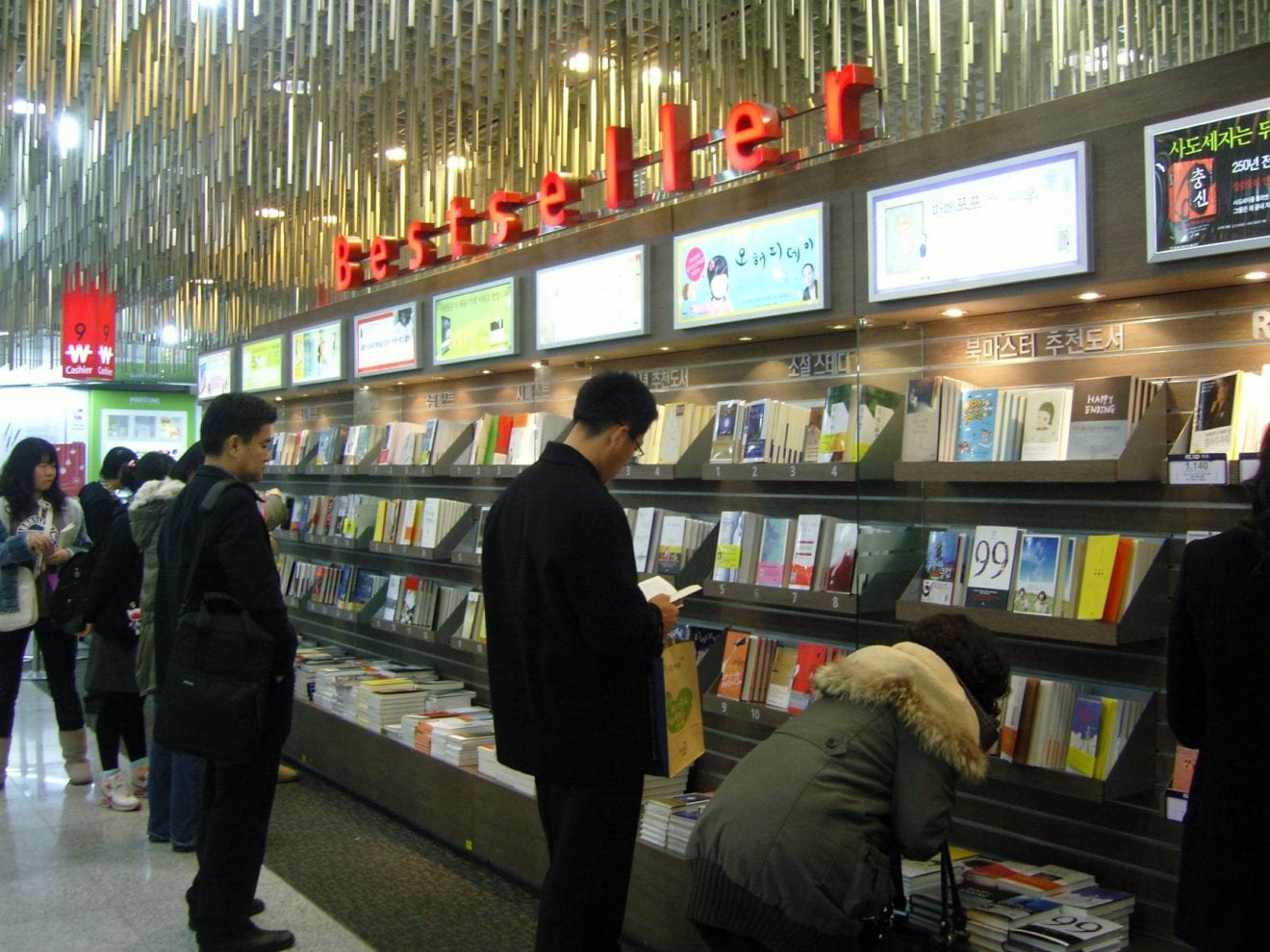
    Korean online bookstores are pushing back their deadlines for same-day delivery, and jumping into the current delivery war that started when Coupang launched its ‘Rocket Delivery’ service.

    But while the bookstores’ new service is expected to attract more customers, concerns are rising over driver safety.

    Yes 24, the largest online bookstore in Korea, announced  it will extend the deadline for same-day delivery service by one hour. Customers will be able to receive purchased products on the same day for orders placed before 2pm, with those in Seoul benefiting from an extra hour and a 3pm deadline.

    Yes 24’s changes follow a move by competing online bookstore Aladdin, which has already pushed back it’s same-day delivery deadline by an hour.

    Coupang started the wave of delivery wars in Korea with the launch of an ultra-fast delivery service called ‘Rocket Delivery’ in March 2014, and the establishment of its own logistics system.

    Henry Ro, Coupang VP, said the Rocket Delivery service offers the greatest customer experience. “Rocket Delivery is an integrated ‘end-to-end’ service that has never been attempted in other countries.”

    However, despite consumer satisfaction, Coupang is expected to log over 400 billion won (US$326.9 million) in operating losses when it files its 2015 audit report in mid-April, due to rising costs in building new logistics centers and hiring new staff, according to industry sources.

    Other negative side effects are also pervasive. While Korean consumers are accustomed to ‘super quick’ deliveries provided by almost every type of business, the number of delivery people injured on the job is skyrocketing.

    According to data from the Korea Occupational Safety and Health Agency, 4460 delivery people were injured on the job between 2012 and 2014. News reports of delivery people involved in fatal accidents are also becoming common.

    Popular 30-minute delivery services are an example. Pizzerias used to compete to deliver pizza within 30 minutes, promising free pizza if the delivery is late. However, 30-minute delivery is now banned, as it was identified as the cause of numerous accidents.

    In the meantime, other online bookstores are looking into joining the delivery war with Yes 24 and Aladdin.

    Interpark plans to extend its deadline for same-day deliveries as well, and Kyobo Books is also looking into providing the service.

    Bookworms are thrilled that they can get the books they ordered right away. One customer commented on the convenience of the service, noting, “we no longer have to make the long trip to the bookstore every time we want to buy a book”.

    However, some point out that bookstores should be focused on providing other services instead of fast deliveries. “The books are so expensive. I would rather have additional benefits such as discounts or book points that can be used at the bookstores,” one customer said.

  • Lazada Philippines Celebrates 4th Anniversary

    Lazada Philippines Celebrates 4th Anniversary

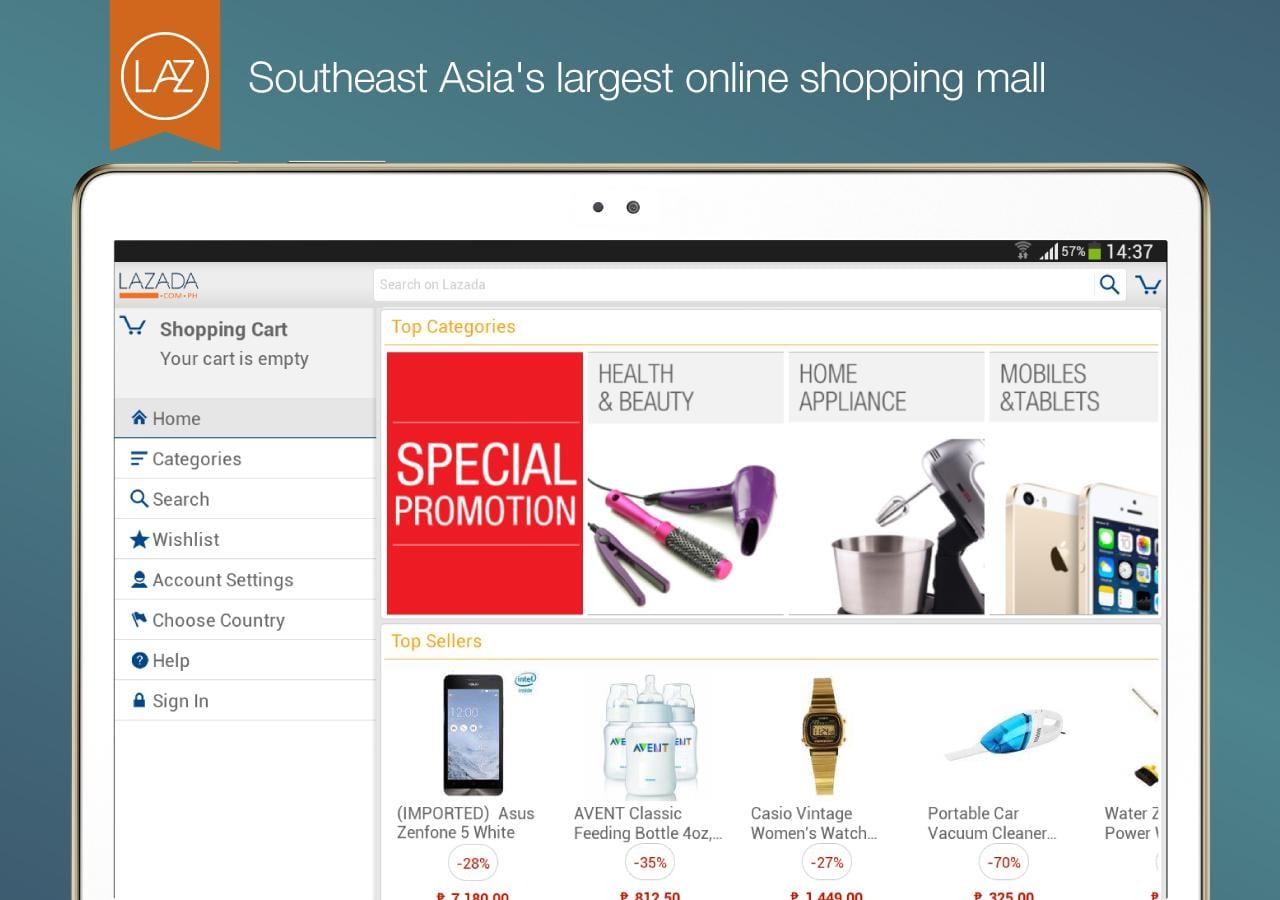
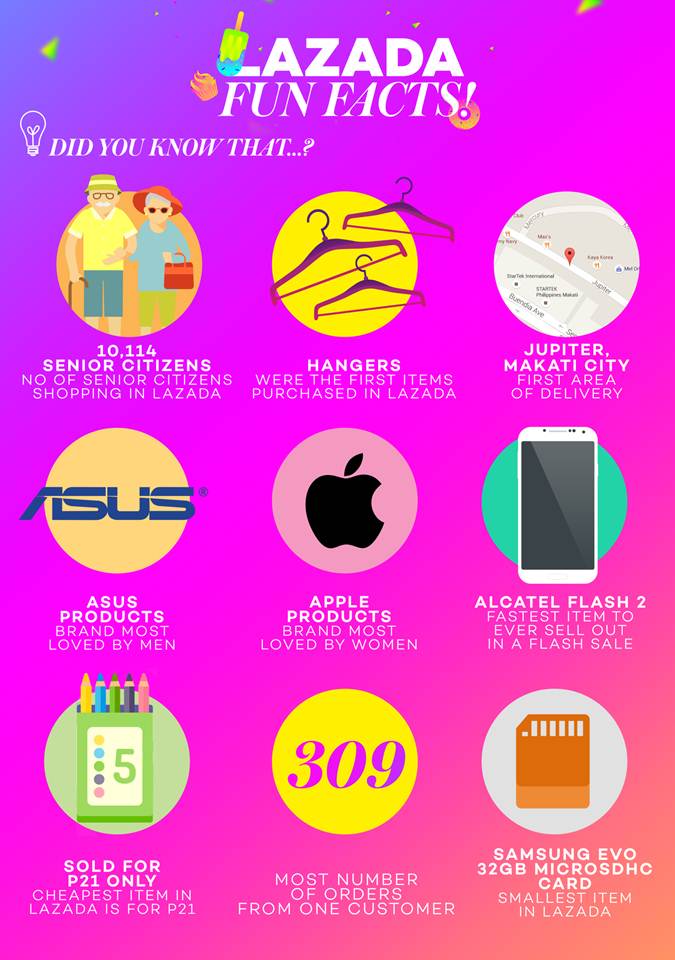
    Lazada, the leading online shopping and selling destination in Southeast Asia is celebrating its 4th anniversary with a 4-day Birthday Sale from March 15-18.

    The Birthday Sale will treat shoppers to a range of deals of up to 90% across a wide selection of categories featuring Home and Living, Travel and Luggage, and Consumer Electronics.  Well-known brand partners including Samsung, Microsoft, Tosot, Unilever, Nestle, and Belo will also participate in the sale offering special promotions throughout the celebration.

     image002 

    Birthday blowout highlights include:

    ·         Hourly Flash Deals

    ·         Php 4 Sale

    ·         Jackpot games for additional discounts

    ·         Facebook & Instagram games where customers have a chance to win a TV and smart phones

    ·         A chance to win a trip to Dubai for two with every Cherry Mobile purchase  

    Brand ambassadors LA Aguinaldo and Kelsey Merritt, who personify Lazada’s fun and effortless vibe, will join the country’s largest online party.  

    Birthday Milestones  

    Where Customers go, Lazada goes

    Since its launch in 2012, Lazada PH has experienced rapid growth. “We delight in witnessing how Filipinos’ shopping habits have evolved, as we commit to give customers more options to make the most out of their busy lifestyles. 60% of Lazada customers already shop via mobile – a clear indication of how Lazada has successfully adapted to modern Filipino digital habits. We collaborate closely with the biggest brands to offer the best assortment and prices, which has made Lazada a primary destination for every shopper,” said Lazada PH CEO Inanc Balci.  

    Empowering a growing SME segment

    Balci stressed Lazada’s commitment to helping SMEs tap wider markets. “In our four years of operations in the Philippines we have seen tremendous opportunity for SME’s in the e-commerce industry. We currently have 7,000 merchants onboard, and continue to make enhancements in our sellers’ platform to encourage more entrepreneurs to sell online. We commit to provide logistics capabilities to make selling more effortless for our merchants.”  

    More products, more places, more birthdays to come

    “Looking ahead, Lazada Philippines will continue to focus on increasing our product assortment, expand our logistics infrastructure and introduce payment solutions to further enhance the effortless shopping experience for our customers,” Inanc added.

    Future Plans

    Lazada PH has recently unveiled the new site 30-sqm Fulfillment Center in Cabuyao, Laguna which will for be completed by end-year.  The center, which is double the capacity of the current warehouse, will have automated features for inventory, selection, parcel movement and dimensional weight measurement.

    Lazada Express, the in-house delivery arm is and modernizing the Sortation Center and opening 20 hubs throughout the country to increase delivery footprint and reach.

    And as part of Lazada’s commitment to make shopping more effortless for everyone, an express delivery option will be launched in Metro areas for rush deliveries.

  • Zalora Turns 4 this March

    Zalora Turns 4 this March

    ZALORA, Asia’s online fashion destination, is celebrating its fourth anniversary this year. To commemorate the milestone, ZALORA will host a series of events and activities for customers, media and partners in Singapore, Malaysia, Indonesia, Hong Kong, Taiwan, Philippines, Vietnam and Thailand throughout the next two months.

    “Over the past four years, ZALORA has consistently strive to improve its product offering, brand proposition and customer experience to change the online fashion retail scene in Asia. According to a research, only 40% of the Southeast Asia population have access to the internet1, this is still below the global average. As an online retailer in an emerging markets, it’s important for ZALORA to contribute to the growth of e-commerce in the region and offer a platform where brands can reach more consumers and for fashion consumers to have access to the best fashion brands anytime, anywhere,” said Michele Ferrario, CEO, ZALORA Group.

    ZALORA celebrates by giving back to fashion

    As part of the fourth year anniversary celebration, ZALORA is introducing two exciting initiatives: ZALORA Style Awards and Make Me a ZALORA Model. In its effort to encourage and support the region’s fashion community, ZALORA will honour talented individuals who made the fashion scene in Southeast Asia a hotbed for creativity and expression through the ZALORA Style Awards, which is set to debut in late March 2016. ZALORA strongly believes that fashion is a great enabler and by giving recognition to individuals in the industry who have been contributing to their respective local fashion communities, ZALORA hopes to inspire future fashion players to pursue a career in the industry.

    In April, ZALORA will launch the first ever regional model scouting competition, using Instagram and the infamous “selfies” as a platform for its search. From a modelling contract with ZALORA to fantastic gift prizes, Make Me a ZALORA Model is an opportunity for aspiring models to fast track their career and become the newest face in modelling scene. More information will be available soon.

    How ZALORA is changing the way people shop fashion in Asia

    Access

    From the start, ZALORA saw navigating the complex and fragmented Southeast Asian infrastructure – achieved with heavy investments in operations and logistics resources and strong local teams – as essential to the company’s success. This focused vision and execution have directly resulted in access to otherwise inaccessible global and local fashion and beauty brands for fans in second and third cities or remote places in Southeast Asia – many hours away from the closest offline store.

    Bridging offline and online

    To introduce ZALORA to consumers in the region and build trust with first-time online shoppers, ZALORA launched the first click-and-mortar shop in Asia that gives consumers a physical ZALORA experience where shoppers can try on products and get familiarised with shopping ZALORA’s e- commerce site. The success of the first digital pop-up store in Singapore led to the opening of more pop-up stores in the region – Penang, Malaysia, Jakarta, Indonesia, Hong Kong, Ho Chi Minh, Vietnam and Manila, Philippines. Designed to increase awareness, this omni-channel approach has proven to be a success as up to 90% of consumers who bought from the pop-up store are new customers.

    Platforms

    The number of smartphone users in Asia Pacific – more than 1 billion in 2015 – is projected to increase by almost 50% by 20192. Keeping pace with the regional growing popularity of m-commerce, ZALORA is focusing on providing a World-Class experience through its apps which are available on all Android and iOS platforms, ensuring that mobile consumers are empowered with the convenience of shopping

    anytime and anywhere they go even in areas where connectivity is not yet very fast. This results in more than 10 million downloads of the award-winning ZALORA app.

    Growth

    In developing countries/cities where hard assets infrastructure is not as developed and distribution of goods are weaker, mobile phone becomes more than a communication tool; it is a platform to procure goods. Based on MasterCard’s Mobile Shopping Survey, half of smartphone users in Asia Pacific are shopping on their device – a clear indicator of a shifting consumer habit as more people are venturing into mobile commerce. Nearly half of the respondents across Asia Pacific (49.5%) cited convenience as the most compelling reason for shopping on their smartphone. Other motivating factors include the ability to shop on the go (43.9%). Driven by this shift, ZALORA is constantly improving its apps, enhancing efficiency and ease of use for the customers. The effort has paid off: more than 50% of site visits in 2015 were from the ZALORA App or mobile site, with more than half of the orders coming from mobile devices.

    During the annual cyber event 12.12 Online Fever in December 2015, fashion thumb shoppers also gained grounds on desktop shoppers: 78.5% compared to 21.5%. Additionally, the number of customers who shopped on ZALORA through mobile had a 250% increase from 2014. This is in line with the changing consumer behaviour and the growing trend of consumers in the region shopping heavily through their mobile devices.

    ZALORA’s 12.12 Online Fever – Asia’s version of Cyber Monday – played a pivotal role in the boost of the regional confidence in online purchase, subsequently converting traditional consumers into e- consumers. This initiative was met with strong support from fashion consumers across the eight markets – Singapore, Malaysia, Indonesia, Philippines, Thailand, Vietnam, Hong Kong and Taiwan – with over six times the volume of any previous day, and an acquisition of 32% first time ZALORA customers in 2015.

    According to PayPal Cross-Border Consumer Research 2015, fashion emerged as the top category for both online cross-border shopping (53%) and mobile shopping (27.9%). To keep pace with the demand, ZALORA carries over 6,000 global and local fashion brands on one single site, carefully curated to provide the best fashion offering for its customers.

    In recognition of the growth in online fashion shopping, ZALORA will sustain its dedication to an ever- improving and meaningful online shopping experience: the access to favourite brands and same-day delivery, all achieved with a few clicks. Every day, ZALORA is one step closer to revolutionising the way people shop and redefining the high-street fashion accessibility in this part of the world. To date, ZALORA has served close to four million customers in just a few years.

    Driven by a team of young experts in fashion, logistics, data analytics, marketing, and design, paired with guidance from business consultants and tech geniuses, ZALORA’s vision is set on growth, making ZALORA the online fashion authority in Asia. ZALORA will continue to strive for excellence, enhance the customer experience by improving interface and customer engagement, particularly through mobile applications, boost confidence in online shopping and transform the way fashion is purchased in Asia to help build an e-commerce friendly environment.

    Follow ZALORA’s fourth anniversary celebrations at #ZALORA4You.

  • Philippines SMEs urged to pursue eCommerce

    Philippines SMEs urged to pursue eCommerce

    Philippines SMEs and micro-businesses are being urged to pursue eCommerce in a government initiative.

    Micro, small and medium enterprises (MSME) should benefit from global trade opportunities through eCommerce, says the Philippine government.

    The Department of Trade and Industry (DTI) targets to reach out to 100,000 MSMEs, 11 per cent of total MSMEs doing local eCommerce – by 2020.

    “We are focusing our promotion activities on eCommerce not only within the East Asia sub region but [also in the Philippines], to help MSMEs to engage in borderless trade, ” said Prudencio Reyes, Trade and Industry Undersecretary for Special Concerns.

    This will help MSMEs engage in borderless trade, given East Asia’s huge market for eCommerce, said Reyes during the recent Brunei Darussalam-Indonesia-Malaysia-Philippines East ASEAN Growth Area press conference in Davao, in the south of the Philippines.

    With aid from faster internet connection and increased number of internet users, an eCommerce roadshow for entrepreneurs will focus on e-business models, e-payments, eCommerce website development, eCommerce platforms and eCommerce marketing.

    ASEAN already has 143 million internet users; 44.2 million of them from the Philippines.

    The Philippine eCommerce Roadmap 2016-2020 is a product of private, academic and government discussions, launched in February.

    On March 9-11, 2016, the DTI will join the Asian Development Bank’s Workshop on Cross-Border eCommerce: Towards Seamless Connectivity event in Bangkok.

  • Indonesia’s Emtek, Murdoch invest in Malaysia’s

    Indonesia’s Emtek, Murdoch invest in Malaysia’s

    iFlix CEO Mark Britt shows his company’s streaming TV series and video service on a gadget. The Malaysia-based company has just received a capital injection from Indonesia’s Emtek and Rupert Murdoch’s Sky plc., the owner of national TV stations SCTV and Indosiar, has spread its wings by investing in Malaysia’s streaming movies and TV series provider iFlix.

    Along with European investor Sky plc, owned by mogul Rupert Murdoch, Emtek through PT Surya Citra Media has become a new investor in iFlix. Sky said it has injected $45 million into the company.

    “The investment will support our continuing commitment to providing our members with the best in entertainment,” said iFlix CEO and co-founder Mark Britt in Kuala Lumpur on Thursday.

    Providing a service similar to Netflix’s, iFlix is available in Malaysia, Thailand and the Philippines. Indonesia is likely to be the company’s next market for expansion.

    In April 2015, iFlix got a $30 million injection from Malaysia’s Catcha Group and Philippine Long Distance Telephone Company (PLDT). PLDT is owned by Indonesian tycoon Anthony Salim and his family through Hong Kong-based First Pacific Finance.

    Sariaatmadja family, who owns Emtek, is known to have tight business relations with the Salim family. It can be seen from the share ownership-swap deal between Sariaatmaja’s London Sumatera Plantations (Lonsum) and Salim’s Indosiar Visual Mandiri (Indosiar TV).

    Salim bought Lonsum from Sariaatmadja in 2007 through plantation company PT Salim Ivomas Pratama In 2011, Sariaatmadja bought Indosiar through PT Surya Citra Media.

    It strengthened both families in their core business. Salim is prominent in the consumer goods business, mainly with Indofood, while Sariaatmadja is strong in the media business.

  • Behind the glitz and glamour is where Indonesia can shine, says Anchanto CEO

    Behind the glitz and glamour is where Indonesia can shine, says Anchanto CEO

    As the startup industry in Southeast Asia develops, we become increasingly familiar with fast changes and daily happenings that continually make the news. It seems that every new day brings with it a flashy new tech startup, else a venture investment that makes your salary seem like nothing at all.

    However, we often forget that these companies and investor monies are highly dependent on the other not-so-flashy modes of business, such as those that Anchanto’s CEO Vaibhav Dabhade, fully embrace. Set to share his views on Echelon Indonesia 2016’s Steer stage panel this April, Dabhade wants to empower Indonesia’s E-commerce roadmap, bringing the logistics lowdown back into the tech space.

    Logistics and entrepreneurship are deeply embedded into Dabhade’s life and family history. He regards his grandfather, who started a logistics business for trucks in central India in 1945, as a huge influence. Today, Dabhade has taken two generations of logistics experience and learning and brought this into a new, digital era.

    He co-founded Anchanto in 2011 out of a belief that e-commerce logistics and fulfilment can be made seamless through technology and the right platform. In his role as Chief Executive Officer, Dabhade oversees Anchanto’s regional business and heads company strategy. This includes management of marketing, sales, product, talent acquisition and regional market expansion.

    Dabhade holds an executive education from Harvard Business School and IIM as well as qualifications in Electronics & Telecommunication Engineering. He also spends his spare time dreaming about being a painter and excels at graphic design and arts.

  • Lazada to intensify promotion, presence in major Indonesian

    Lazada to intensify promotion, presence in major Indonesian

    Entering its fourth year of operations, regional e-commerce giant Lazada Group is seeking to expand its customer base in more major Indonesian cities in a bid to win the online store competition in Southeast Asia’s biggest economy.

    Lazada Indonesia CEO Magnus Ekbom said Monday that the company would focus on intensifying its presence in major cities outside the Indonesian capital of Jakarta, including Yogyakarta, Medan in North Sumatra, Bandung in West Java and Surabaya in East Java, through road shows and other promotional efforts.

    “The road shows in these cities will connect us with our customers and understand unique regional factors,” Ekbom said.

    “We have also studied what products seem to be the most popular [in the cities] and the results have often been interesting.”

    Lazada Group is a privately owned e-commerce company founded in 2011 by Rocket Internet with the goal of building Southeast Asia’s version of Amazon.com.

    Lazada, which began operations in the Philippines in 2012, led Internet retailing in the country last year with a 20 percent market share as it met rising demand for gadgets and electronic appliances, from smartphones, tablets to home theater systems, at prices that were a “huge” discount, according to a Euromonitor International January 2016 report.

    Aside from the Philippines, it operates sites in Indonesia, Malaysia, Singapore, Thailand and Vietnam. Singapore’s Temasek Holdings Pte is one of its large shareholders.

    On March 12, on its anniversary date, the Singapore-based Lazada Group announced that its gross merchandise value (GMV) last year stood at US$1.3 billion across its six Southeast Asian countries of
    operation.

    Lazada runs its business as both an online retailer and marketplace for other online merchants.

    There are currently 11,000 merchants utilizing Lazada Indonesia.

    Since the platform’s Indonesian beginnings, it has grown from employing 200 workers in 2012 to more than 750 in 2016. Currently, 60 percent of transactions on Lazada are made through mobile phones, indicating the mobile-savvy nature of Indonesian customers.

    “Lazada sees up to a quarter of a billion activities daily, which involve customers browsing for items, customers buying items, or even just adding things to their wish list,” Lazada’s SVP head of data science John Berns said.

    “It’s a remarkable scene, because Indonesia currently has about 70 million internet users, and will probably reach 100 million by the end of the year,” he added.

    To celebrate its fourth anniversary, Lazada Indonesia will have a sale from March 15 to March 18, which is expected to attract around 15 million visitors.

    Ekbom said that the e-commerce platform would offer up to 540,000 special deals for all customers during the sale, at discount rates of up to 90 percent, around three times more than what Lazada offered during its birthday sale in 2015.

    Brands that will participate in the sale include those in the IT, sports, automotive ad beauty product segments, including L’Oréal, Infinix, Panasonic, Lenovo, Samsung, Nike, Sharp and many more.

    Indonesia’s e-commerce market is forecast to grow to $25 billion this year from only $8 billion in 2013, according to e-commerce provider Vela Asia.

    A number of e-commerce players, both online retailers and marketplaces, plan to develop their businesses. Lippo Group has launched shopping website mataharimall.com and plans to invest $500 million. Existing marketplaces such as Bukalapak and Tokopedia have also secured some new funding.

  • China completes drafting e-commerce law

    China completes drafting e-commerce law

    China has completed a draft version of the country’s first e-commerce law, a lawmaker said on Thursday.

    The draft will be submitted as early as possible to the Financial and Economic Affairs Committee of the National People’s Congress (NPC) for review, said Uzhitu, vice chairman of the committee.

    After that, the draft e-commerce law will be presented to the NPC Standing Committee for further reading, Xinhua news agency quoted Uzhitu as saying.

    The legislation is necessary to deal with new problems in data protection and infringements upon customers’ interests, he added.

  • China’s Alibaba signs 5-year loan deal

    China’s Alibaba signs 5-year loan deal

    China’s Alibaba Group Holding Ltd  said it has signed a deal for a $3 billion five-year loan, which will help the e-commerce giant as it snaps up stakes in companies within China and overseas.

    Alibaba, led by founder Jack Ma, has been expanding in areas beyond its core e-commerce base, such as online video, as volume growth in its online shopping business slows.

    The firm said in a filing to the US Securities and Exchange Commission (SEC) that it had signed the syndicated loan deal with a group of eight lead arrangers. It added that the amount could increase if there was steep demand.

    “The loan, which is subject to upsize through over subscriptions in syndication, has a five-year bullet maturity and is priced at 110 basis points over LIBOR,” the company said in the filing, referring to the benchmark interest rate used by many global banks when making loans.

    Alibaba added that the loan would be used for “general corporate purposes”, without expanding on what this meant.

    The Wall Street Journal cited sources last month saying Alibaba was in talks with several banks to borrow up to $4 billion to fund expansion plans, including acquisitions.

  • Online wine sales in China rising fast

    Online wine sales in China rising fast

    JD.com‘s head of wine business, Zhao Dabin, told in an exclusive interview that the retailer sold 400m yuan (US$61.5m) of wine direct to consumers in 2015. That figure is expected to triple in 2016, he said.

    JD also hosts pages for individual merchants, acting as a gateway to a new generation of mainstream wine consumers in China – beyond the gift-giving between government officials that has been significantly curtailed by the present regime.

    Wine sales through these JD.com-hosted, online ‘shopping malls’ for merchants are expected to hit 1.5bn yuan this year.

    His comments tally with those from several wine importers and merchants in China, which are freeing up investment for e-commerce.

    Total online retail sales of physical, consumer goods in China rose by 32% in 2015, to reach 3.2tn yuan, or US$492bn, according to Chinese government figures. Online sales of tobacco and liquor products increased by nearly 13% versus 2014, to 196bn yuan.

    JD is seeking to compete with larger players in the market, such as Alibaba‘s Tmall and Taobao platforms.

    In wine, JD’s Zhao sees a lot of potential. ‘Most of our wine consumers are still at entry level,’ he said. ‘Only 3% to 4% of our registered users buy wines at the moment. There’s still plenty of room to grow.’

  • Ensogo mobile marketplace takes wings

    Ensogo mobile marketplace takes wings

    Ten weeks after its launch, the mobile marketplace of Australia-listed Hong Kong-based eCommerce platform Ensogo has reported “exceptional” growth.

    Ensogo connects products for sale to more than 600 million consumers throughout Hong Kong, Indonesia, Malaysia, Singapore, The Philippines and Thailand.

    Ensogo app

    The company says its marketplace’s inventory has rocketed 3000 per cent, with the number of sellers swelling 600 per cent over the first two weeks of January, following a strong fourth-quarter.

    “The introduction of Ensogo’s mobile marketplace represents a game-changing shift for the business,” says co-founder and CEO Kris Marszalek. “Since its launch, we have seen an exponential increase in both new and active sellers, adding hundreds of thousands of products to our offering.

    “Exciting merchandise is a prerequisite to successful customer acquisition and retention, and Ensogo now offers consumers across the region a vastly expanded and truly exceptional range of products at competitive prices.”

    Powerful personalisation technology drives product discoverability while creating individualised shopping experiences on the marketplace, which with its rapid traction underscores the company’s transition away from its legacy services business. Along with changing trends and consumer behaviours in Southeast Asia, the company believes a streamlined offering is critical as the business moves into its next stage of growth. “The eCommerce opportunity in Southeast Asia is enormous, and has immense potential for further growth,” says Marszalek.

  • Online boom not deterring global retailers

    Online boom not deterring global retailers

    Global retailers are undeterred from expanding their bricks and mortar stores this year despite growing online sales, says a new report.

    In the seventh edition of How Active Are Retailers Globally?, real estate service company CBRE also says China remains the top target market of global retailers in Asia-Pacific. Its study covered more than 150 major international brands based in the Americas, Asia Pacific and EMEA.

    While European countries dominate the target destinations this year, China is the top target market in Asia-Pacific and the fourth most popular globally, with 27 per cent of retailers looking to expand there. This is followed by Hong Kong in sixth position (24 per cent), Japan seventh (22 per cent) and Singapore ninth (21 per cent).

    Globally, the top three were Germany (35 per cent), France (33 per cent) and the UK (29 per cent).
    China and Hong Kong maintained fourth and sixth place respectively, while Japan (seventh), Singapore (ninth) and Australia (11th) all rose higher in the rankings, up from 13th, 18th and 15th respectively.
    Most Asia-Pacific markets saw increased interest for this year compared with last, except for China and South Korea, which softened somewhat, says the report. Meanwhile, interest in Southeast Asia surged, with Malaysia (10 per cent), Indonesia (9 per cent ), Thailand (8 per cent), Vietnam (8 per cent) and The Philippines (8 per cent) all receiving more than double the interest they saw last year, when those markets achieved only between 1 and 3 per cent.

    When questioned about the risk factors facing them in the coming year, brands indicated that real estate cost escalation (56 per cent) and unclear economic prospects (42 per cent) continue to be at the forefront of their minds.
    “We’re seeing more of a challenging economic environment, and concerns such as high  operating costs and a lack of quality space mean retailers are somewhat more wary this year,” says CBRE head of research for Asia Pacific Dr Henry Chin.

    “However, even as markets such as China and Hong Kong are seeing a slowdown, we see increasing numbers of opportunistic retailers looking to enter markets like Hong Kong, supported by strong underlying consumer demand. Japan and Australia remain attractive, while Southeast Asia showed strong growth because of opportunities for retailers around an expanding middle class and stronger economic growth.”

    He says there are still opportunities for retailers to grow their business in Asia, as the region has four of the top 10 most popular destinations worldwide.
    “The goal now for all brick-and-mortar retailers is to build an engaging offer that encourages people to stay longer and spend more,” says CBRE senior director and head of retailer representation Joel Stephen.
    Of the brands surveyed, 83 per cent suggest their physical store expansion plans for this year will not be affected by the growth of eCommerce, and only 22 per cent see online retailing as a threat to their business.

    At the same time, retailers are cautiously optimistic about physical expansion. Of those questioned, 17 per cent have large-scale ambitions, many of them looking to open more than 40 stores this year (up from 9 per cent last year). Most retailers (67 per cent) are considering up to 20 stores.
    “A physical store in key locations is still critical to the strength of a brand’s image,” says Stephen. “Stores still need to create an emotional affinity with shoppers, and customers still feel a need to go into stores, to touch a product and enjoy the feel-good factor associated with a particular brand experience.

    “The store is integral to the shopping journey and can be used in a number of different ways, such as to click and collect, research of the product or brand, or to test the product. It isn’t solely about the transactional side.”

    In a new trend, a fifth of brands, largely from the Americas and EMEA, intend to expand into travel hubs such as airports and train stations this year to gain access to high footfall in busy locations. However, for Asia-Pacific retailers, shopping malls are still the most-preferred destination by far (nearly 90 per cent).
    While globally the key concern for brands in lease negotiations is “lease length”, Asia-Pacific retailers are most concerned with turnover rent clauses as well as changing consumer behaviour (40 per cent), which is higher than the global average (31 per cent).

  • How UK Retailers Can Embrace The Chinese Ecommerce Opportunity

    How UK Retailers Can Embrace The Chinese Ecommerce Opportunity

    Within the next two years, China’s e-commerce market will top $1 trillion, making it bigger than the e-commerce markets of the US, UK, Japan, Germany, and France combined. Fuelled by greater internet and smartphone penetration, an expanding middle class with higher disposable income, and greater consumer confidence, over half of Chinese internet users having now made a purchase on the web.

    Surely then, UK retailers should be fighting tooth and nail for the loyalty and spend of these Chinese shoppers?

    Surprisingly, this is not the case. While over half of UK retailers (55%) ship to China, our research – into the international shopping experience offered by the UK’s top 150 online retailers – shows a massive variation in the quality of shopping experiences offered to Chinese shoppers.

    UK e-tailers are failing to accommodate a great number of Chinese shopping preferences and reducing the likelihood of conversions. For example, just over a quarter (26%) of retailers that ship to China offer shoppers the ability to pay in Yuan and present prices in local currency.

    The remainder are leaving shoppers in China to estimate for themselves how much products will cost to buy, which means shoppers could be hit by sudden currency exchange fluctuations or fees from their bank.

    Similarly, only 22% of retailers that ship to China offer shoppers the ability to pay using local payment methods, such as e-wallets and bank transfers like Alipay or Tenpay, which account for more than 80% of ecommerce payments, or Chinese payments cards such as UnionPay.

    Of retailers that do accept Chinese payment methods, 42% offer a single option, barring some prospective customers from making a purchase.

    Added to this, just one in ten (10%) retailers that ship to China offer shoppers a Mandarin-language shopping experience. Since the majority of people living in China don’t speak English fluently, shoppers are likely to feel unconfident about making a purchase if they are expected to use an English-language checkout.

    It’s clear from these customer experience shortcomings that the majority of UK retailers are failing to exploit the burgeoning Chinese ecommerce market fully. This puts them on the back foot when it comes to winning long term loyalty and purchasing preference.

    Retailers simply can’t afford to offer shoppers a second rate experience, especially when failing to localise the online store can make shoppers nervous and can quickly sour a great online experience.

    So, how can retailers rectify this and improve the customer experience to grow sales in China?

    Here are our top tips-

    •       Improve the experience for Chinese shoppers. The first rule of international trade is that, in order to be successful, customers must enjoy the same experience regardless of where they are in the world. Retailers should offer shoppers in China the same, high quality experience that shoppers in the UK and elsewhere expect to receive.

    •       Offer multiple shipping options at reasonable rates. To give Chinese shoppers the confidence to buy, retailers must offer greater choice as well as competitive prices. This is especially critical in China where clearance processes can be very lengthy for non-experienced carriers. Moreover, it’s important to have a simple and transparent returns process in place, so if something goes wrong, shoppers will be confident that it will be resolved quickly and easily.

    •       Display prices in Chinese Yuan. There are few things more off-putting than exchange rate uncertainty when buying from a retailer in another country, and this is particularly disconcerting at times of high currency fluctuation. Retailers should present shoppers in China with prices in the local currency, so that shoppers can feel confident about how much they are paying.

    •       Try to put the customer’s mind at ease. Most shoppers in China expect and prefer to pre-pay customs charges or handling fees when shopping online, so retailers should avoid any potential for nasty surprises, by being upfront about these charges and offering pre-payment.

    With e-commerce sales in China set to exceed $1 trillion next year, retailers must pay more attention to China in the years ahead. However, delivering a localised shopping experience doesn’t have to require a dedicated Chinese website or months spent negotiating with the local supply chain.


  • China $1.1T eCommerce Market On Horizon

    China $1.1T eCommerce Market On Horizon

    According to a recent report from Forrester, total eCommerce revenue for China, Japan, South Korea, India and Australia is projected to nearly double in the next five years, from $733 billion in 2014 to $1.4 trillion by 2020. That same report goes on to detail how these five Asian online economies have already outpaced the combined online retail markets in the U.S. and all of Western Europe, with China and India ranking as the two largest and fastest-growing markets worldwide.

    It goes on to point out that the Chinese market already surpassed that of the U.S. in 2015, and China remains the world’s largest eCommerce market, despite seeing its overall economic growth dip below 7 percent for the first time since 2009.

    “While the days of staggering year-over-year eCommerce growth in China are gone,” wrote Lily Varon, lead author of the Forrester report and analyst for eBusiness and channel strategy, “current growth rates are solid and more consistent with other mature markets in the region, like Japan and South Korea.”

    Varon also went on to project that China would continue to lead the region’s market growth, expanding to be nine times larger than Japan’s $122 billion market in 2020 and 17 times larger than South Korea’s $65 billion.

    India is also projected to see online sales expand by five times, fueled by a rapidly increasing number of online shoppers entering the market and per capita online spend continuing to increase. However, in the case of India, Varon noted that the country’s underdeveloped logistics, “challenging” connectivity, as well as a traditionally cash-based culture, would pose significant challenges to online retailers looking to grow the online India market.

    The Forrester report goes on to note an important and defining trend across the region: the dominance of Web-only retailers, such as Rakuten and Amazon in Japan; Taobao, Tmall and Jingdon in China; and Flipkart and Snapdeal in India.

    “Consumers have flocked to online pure-plays rather than their traditional retail counterparts,” Varon wrote. “In very few markets in the region do traditional retailers hold any dominant position or even come close to competing with the Web-only giants.”

    Having noted the significance of Web-only players, Varon shared that omnichannel functionality had not been as robust in Asian markets as it had in the U.S. or U.K. This, though, was starting to shift, as more traditional retailers start to make the move towards eCommerce in Asia. Australian retailers have been forced to play catch-up, with omnichannel offerings, such as click-and-collect, being adopted by global players, like TopShop and Zara, and helping to bring omnichannel services to the local market.

  • Alibaba plans stake in China business magazine

    Alibaba plans stake in China business magazine

    The publisher of one of China’s most respected business magazines, Caixin, said today it was seeking new investors following reports e-commerce giant Alibaba plans to take a stake in the company as it looks to expand its media empire.

    Alibaba founder Jack Ma is seeking to diversify beyond the core business of providing online retail platforms and in December bought Hong Kong’s premier English-language newspaper, a move that raised concerns about media independence.

    Caixin Media provides financial and business news through its flagship magazine and several other platforms under the editorial leadership of Hu Shuli, who has received international attention for her brand of investigative journalism within the boundaries of the Communist-ruled state.

    Bloomberg News said today that Alibaba’s financial services unit Ant was in talks to invest in Caixin Media, but gave no size or price for the stake.

    China’s TMTpost, a business technology information provider, reported that the deal had already been signed.

    Caixin Media said in a statement it was about to bring in “several high-quality institutional investors”, without identifying them.

    “The new investors, like the original shareholders, respect Caixin Media’s principal of editorial independence which is not influenced by the business interests of shareholders,” it said.

    A spokesman for Alibaba declined to comment.

    The December purchase of Hong Kong’s South China Morning Post for $266 million has sparked fears the newspaper will lose its independent voice, in what analysts see as part of a gradual erosion of press freedoms after the semi-autonomous city was returned to Chinese rule in 1997.

    Others have compared Alibaba’s media push under Ma to that of Amazon founder Jeff Bezos, who bought the respected Washington Post newspaper two years ago. Ma’s net worth is now around $27.3 billion, according to Bloomberg Billionaires.

    Caixin’s biggest shareholder is China Media Capital, a Shanghai-based media and entertainment investment firm, which in December bought a $400 million stake in Premier League football giants Manchester City.