Tag: Economy

  • Luk Fook Plans to Expand in China to maintain growth

    Luk Fook Plans to Expand in China to maintain growth

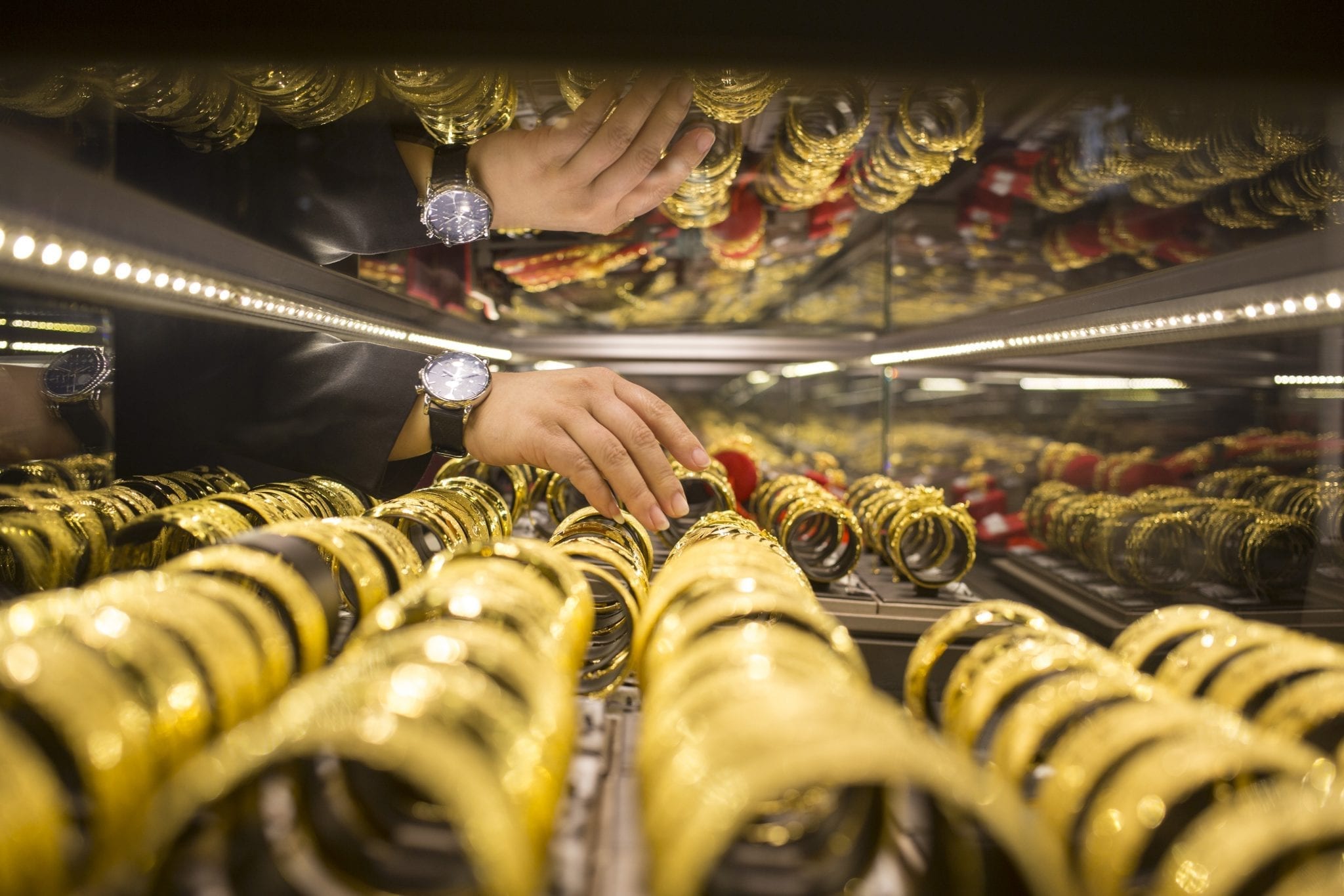
    Luk Fook will add at least 150 stores in Mainland China this year as it looks to mitigate falling sales in Hong Kong.

    Releasing its results for the financial year to March 31, Luk Fook said profit attributable to shareholders rose 9 percent to HK$1.5 billion on sales up 8.8 percent to $15.9 billion.

    During the year the company added 194 stores on the mainland taking its global network to 1833.

    “As Mainland China remains to be a market with promising growth potential in the mid- to long-term, the group will continue to focus on business expansion [there],” said Luk Fook chairman and CEO Wai Sheung Wong.

    “The target for net addition of shops in Mainland China in the coming year, including newly developed brands, is not less than 150 shops and will expand its network to lower-tier cities by opening mainly licensed shops. The group is also committed to further developing its e-commerce business and strengthening cooperation with e-commerce platforms in Mainland China, aiming to grow e-commerce revenue by 20 per cent,” he said.

    “In light of the enormous spending potential of young consumers on online sales platforms, the group will step up its efforts to promote the sales of affordable luxury jewelry products to expand its footprint in the young consumer market.”

    Last year was one of two differing halves for Luk Fook, the first half of growing sales in Hong Kong and Macau, the second of declining sales as trade tensions grew between China and the US and consumer sentiment dived. That trend continued from April through to three weeks into this month with same-store sales in Hong Kong and Macau down by the low-double digits and on the mainland by the mid-single digits for company-owned stores and low-single digits for licensed shops.

    Given the continuing uncertainties on the macro-economic environment arising from the US-China trade war, Luk Fook expects “flattish” revenue and profit growth for the current financial year but hopes to maintain profitability at last year’s level.

    Last year, the retail business was Luk Fook’s main source of revenue, rising by 9.8 percent

    Year on year to $12.075 billion and accounting for 76.1 percent of total sales.

    The group’s retail revenue in the Hong Kong market increased by 11.6 percent to $7.44 billion, despite a lackluster second half.

  • Indonesian Retail Sales Down Last Month

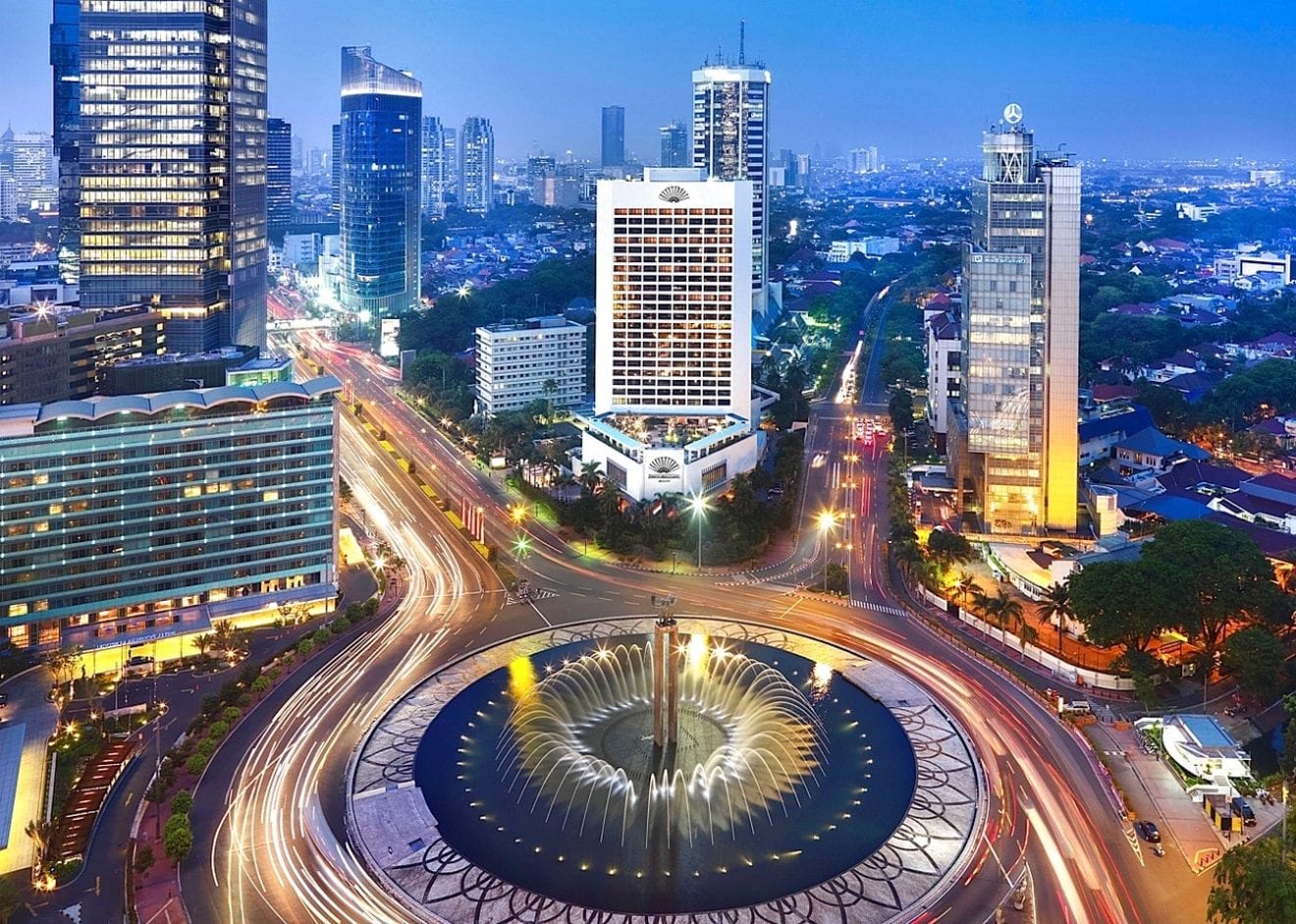
    Indonesian Retail Sales Down Last Month

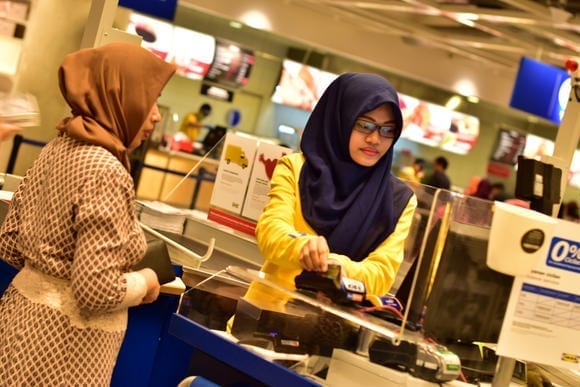
    Indonesian retail sales grew by 10.1 percent in March following a 9.1 percent increase in February, according to central bank survey data.

    The strong March performance was underpinned by sales of apparel along with automotive parts and accessories.

    However, the bank’s survey predicted that Indonesian retail sales growth will rise by a more modest 5.7 percent in April, the same figure it projects for the full year.

  • Australian dollar slightly up again

    Australian dollar slightly up again

    The Australian dollar has dipped slightly, buying 71.70 US cents from 71.69 US cents on Monday.

    On Monday morning, the dollar was buying 71.71 US cents from 71.61 US cents on Friday.

    Last Friday morning, the local currency has fallen, buying 71.25 US cents from 71.61 US cents on Thursday.

    It had flatlined near a six-week peak as losses on Asian share markets chilled risk sentiment somewhat.

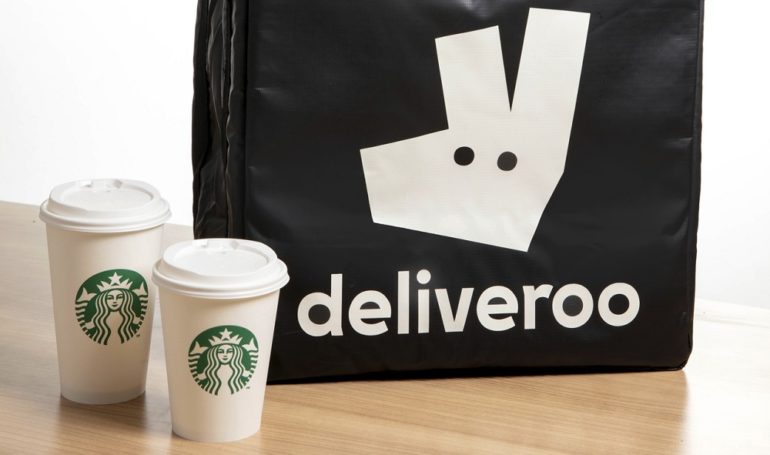
  • Deliveroo Supports 2K+ Jobs and Adds HK$1.3 Billion Revenue to Hong Kong Economy

    Deliveroo Supports 2K+ Jobs and Adds HK$1.3 Billion Revenue to Hong Kong Economy

    Showcasing its positive influence on the Hong Kong economy, Deliveroo today published a new report assessing its impact on partner restaurants and the wider market. Amongst other findings, the research indicates that Deliveroo supports 2,100 jobs in Hong Kong and adds HK$1.3 billion in revenue.*

    The major, independent study was commissioned by Deliveroo and conducted by leading independent economic consultants Capital Economics. It shows the full, positive economic impact of Deliveroo’s activities in Hong Kong and globally, examining increased revenues received by restaurants and their suppliers as a result of partnering with Deliveroo; the impact of spending of Deliveroo riders and employees; the impact of spending by Deliveroo on suppliers; and the tax generated by Deliveroo’s operations.

    The report reveals that in Hong Kong:

    • Deliveroo supports approximately 2,100 jobs across the Hong Kong economy. This is on top of the approximately 2,500 riders and walkers in Hong Kong to whom Deliveroo currently offers flexible, well-paid work delivering meals.
    • Deliveroo supports 1,700 additional jobs in the Hong Kong restaurant sector, of which 1,200 are in chain restaurants and 490 are in independent restaurants.
    • Deliveroo generates HK$956 million in additional revenue for the restaurant sector in Hong Kong, of which HK$668 million is in chain restaurants and HK$288 million is in independent restaurants.
    • In total, Deliveroo supports HK$1.3 billion in revenue across the economy of Hong Kong.
    • 54% of restaurants who partner with Deliveroo in Hong Kong say that, as a result, they have seen increased revenue from people dining in at their restaurant.
    • Deliveroo’s tax contributions in Hong Kong amount to HK$29 million in employee taxes and HK$74 million in corporation taxes.
    • Deliveroo’s contribution to economic growth (measured by Gross Domestic Product) in Hong Kong is HK$596 million.
    • Capital Economics project that if Deliveroo continues to grow at its current rate, the report projects that the company’s operations would support somewhere in the region of 4,500 jobs and HK$1.1 billion of economic output (measured by Gross Domestic Product) in Hong Kong by 2020.

    The report was conducted across all of Deliveroo’s 13 markets worldwide. Globally, the report found that:

    • In total, Deliveroo supports 67,000 jobs across the economies of the markets in which it operates, which is on top of the 130,000 riders to whom Deliveroo provides flexible, well-paid work.
    • Deliveroo supports 59,000 additional jobs in restaurant sectors across the economies of the markets in which it operates, of which 41,000 are in or from chain restaurants and 18,000 are in or from independent restaurants.
    • Deliveroo generates a total of HK$22.2 billion in additional revenue for restaurant sectors across the economies of the markets in which it operates, of which HK$15.4 billion is in chain restaurants and HK$6.8 billion is in independent restaurants.
    • Capital Economics project that if Deliveroo were to continue to grow at the same rate it is today, the report estimates that it would support somewhere in the region of 200,000 jobs and HK$41.1 billion of economic output globally by 2020.

    Brian Lo, General Manager of Deliveroo Hong Kong, said, “Hong Kong boasts one of the most dynamic F&B markets in Asia, with fierce competition, demanding diners and an ever-evolving landscape of local, regional and international players. In this context, Deliveroo is proud to be an innovative and influential force for the restaurant sector, making a positive economic impact. Deliveroo helps to increase restaurants’ sales, increase the number of people employed in restaurants and ultimately helps restaurants to grow their businesses.

    This, as a result, brings more choice and food options to local communities, so more people can have more amazing food whenever and wherever they want it.”

    *         NB: all figures cover the output arising from Deliveroo’s operations/activities over the 12 months to November 2018.

  • Indonesian retail sales growth speeds up

    Indonesian retail sales growth speeds up

    Indonesian retail sales surged 9.1 per cent in February – a rate higher than anticipated.

    The growth rate appeared to be driven by shoppers splurging on Lunar New Year celebrations as well as an increase in apparel sales during the month.

    February’s rise followed a 7.2 per cent improvement in January and government statisticians have predicted a rise of 8 per cent for March.

  • Economy Vietnam Q1 inflation lowest in 3 years

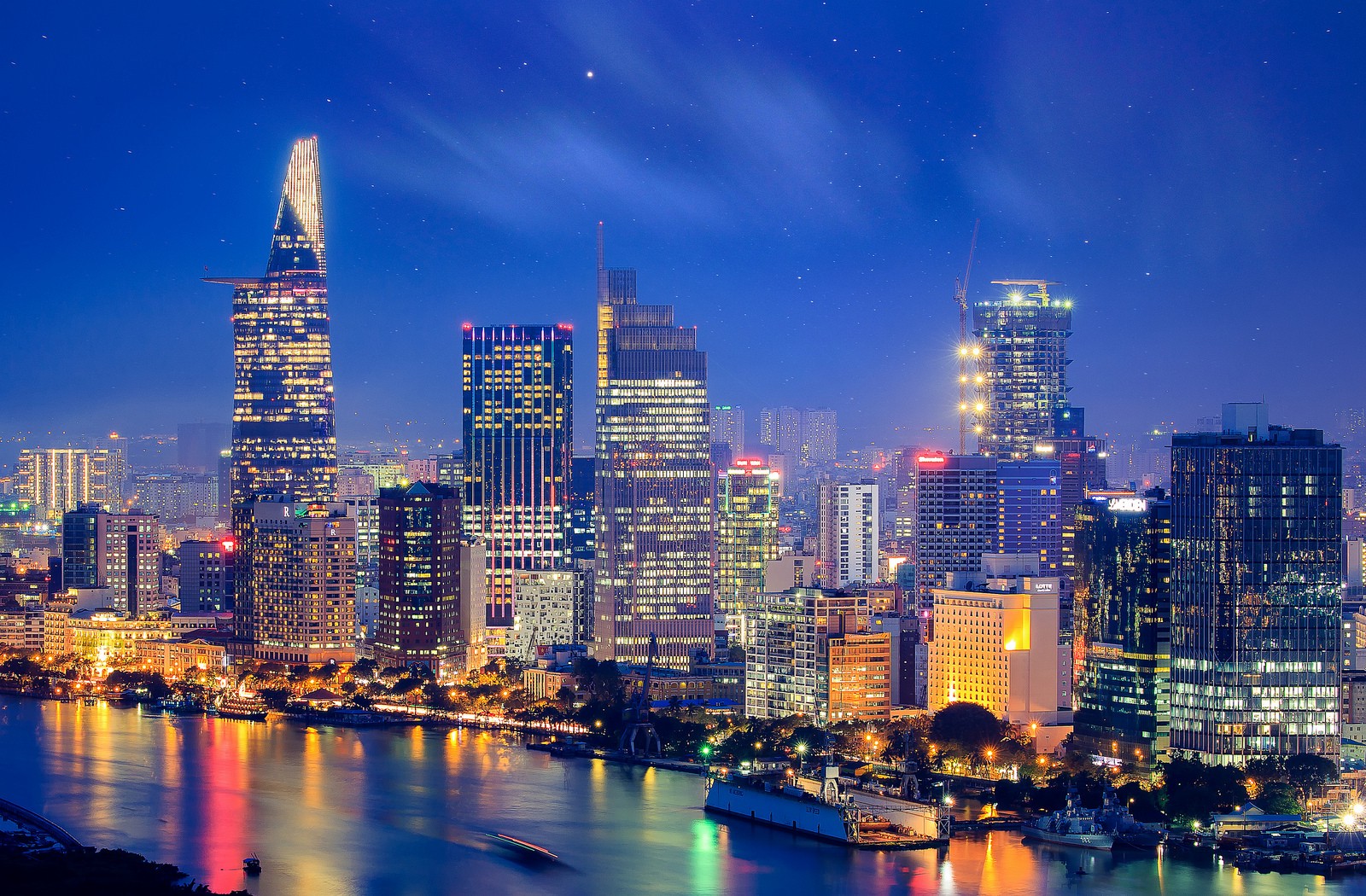
    Economy Vietnam Q1 inflation lowest in 3 years

    March prices fell 0.21 percent over February, according to the General Statistics Office (GSO). There was a fall in the prices of seven of 11 items in the basket of consumer goods and services that make up the index.

    According to Do Thi Ngoc, director of the GSO, the reasons for the low inflation rate were the African swine fever outbreak and lower petrol and gas prices during the period. A 1.42 percent fall in the prices of essential foods, including eating out, was the biggest drag on the CPI.

    The African swine fever epidemic has meant that in some places pork prices have fallen by 40 percent since the beginning of February.

    Other notable decreases were of the prices of clothing and telecommunications, which were down by 0.17 percent and 0.07 percent.

    At a recent meeting of the Steering Committee on Price Management Thursday, Deputy Prime Minister Vuong Dinh Hue said in the current scenario the target of keeping this year’s inflation at 3.3-3.9 percent is within reach.

    CPI in 2018 increased by 3.54 percent, well below the 4 percent target set by the National Assembly.

  • Is Asia the Art Market’s New Frontier?

    Is Asia the Art Market’s New Frontier?

    Despite pre-opening jitters over the state of the Chinese economy, Art Basel Hong Kong has already reported brisk sales at its seventh edition, which opened to the public today.

    With the region’s growing wealth and appetite for art, art fairs like Art Basel Hong Kong, which opened to the public today, are big business, drawing collectors from China and across Asia, as well as farther afield. Of the 80,000 visitors expected at the Hong Kong Convention and Exhibition Centre, 40,000 are coming from abroad, Art Basel said.

    The Art Market, a report jointly published by Art Basel and UBS earlier in March noted that art fairs are highly important in Asia, with between 92–97 percent of HNWI collectors from Hong Kong and Singapore having purchased from an art fair in the past.

    It’s not just China—it’s Singapore, it’s Malaysia, it’s Taipei. It’s not one market, Artnet quoted New York-based dealer Sean Kelly as saying about the fair, which has 242 galleries from 35 countries participating through the weekend.

    Increasingly, the market’s center of gravity does feel as if it is being pulled eastward,» Artnet reported from the exhibition floor, while Artnews reported «high energy» at the fair and quoted a dealer as saying, The quality of this fair is now on par with the great European fairs. It is highly sophisticated.

    Swift Sales

    The Art Newspaper also reported swift sales among the 107 galleries – 75 percent of which are Asian – at the Art Central fair concurrently taking place just around the corner from Art Basel. Here at we’re meeting a lot of Australian and Chinese collectors. Hong Kong is a very good market, a dealer exhibiting from the Philippines was quoted as saying.

    Art Basel reported that sales already concluded include a significant work by Andy Warhol at White Cube for $2.85 million, a work by Alice Neel for $1.7 million at David Zwirner, and a painting by George Condo at Almine Rech Gallery for between $1.2 million to $1.4 million. David Zwirner sold its entire booth, including four new sculptures by Carol Bove for $400,000 to $500,000 each, on Wednesday, the first VIP day.

    China Dominates

    We previously reported that the global art market grew by 6 percent in 2018, reaching total sales of $67.4 billion – its second-highest level in 10 years.

    Asia’s has recorded a growing share of world imports of art and antiques in the past decade, which mirrors the growing regional wealth. In particular, sales in China reached $12.9 billion in 2018. China accounted for 45 percent of all art imports into Asia (compared to 17 percent in 2000), with 95 percent of these imports going into Hong Kong, according to «The Art Market» report.

  • Vietnam’ E-commerce revenue forecast to hit $15 bn in 2020

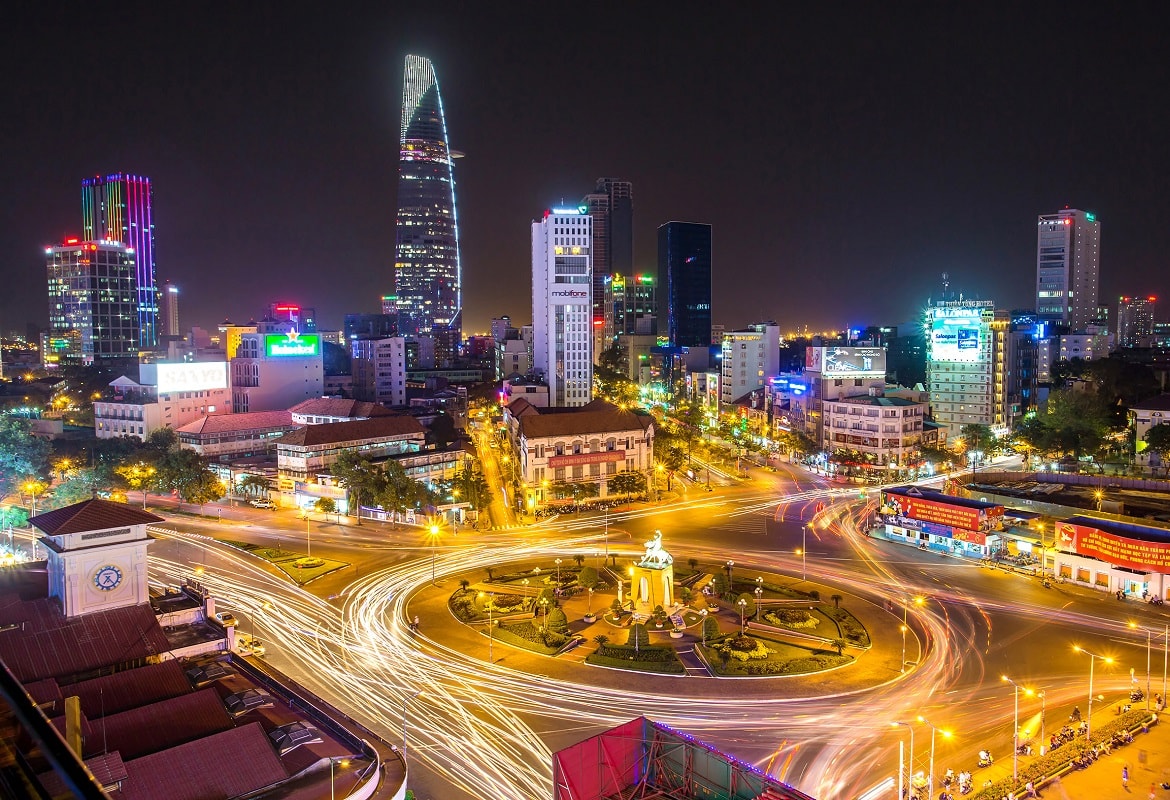
    Vietnam’ E-commerce revenue forecast to hit $15 bn in 2020

    With 53 per cent of its population using the internet and nearly 50 million smartphone subscribers, Vietnam’s e-commerce market is expected to beat the previous revenue forecast of $10 billion in 2020 and may reach $15 billion, according to experts. The country’s e-commerce sector records annual average growth of 35 per cent; 2.5 times higher than the figure in Japan, making it one of the countries with the fastest e-commerce growth in the world.

    Mr. Dang Hoang Hai, Director of the E-Commerce and Information Technology Agency under the Ministry of Industry and Trade,  as saying that retail sales from e-commerce earned $8 billion in 2018, much higher than the forecasted figure of $7 billion.

    Therefore, revenue from e-commerce in 2020 could surpass the projected $10 billion, he said.

    A report on online shopping in 2018 conducted by market researchers Q&Me shows that Shopee accounts for the lion’s share of the domestic e-commerce market, at 35 per cent, with over 700 active brands and sellers, according to the news agency.

    It quoted Mr. Le Anh Huy, Deputy General Director of the Sen Do Technology JSC, the operator of the Sendo online commerce platform, as reporting that it recorded a threefold surge in 2018 over the previous year, serving more than 10 million consumers around the country.

    Experts have said, however, that e-commerce in Vietnam still faces various obstacles, including legal issues, skills for e-commerce development, security rights for concerned parties, and infrastructure for the sector.

    Support for e-commerce development in Vietnam’s remote and mountainous regions also remains modest.

    According to experts, Vietnam should consider the establishment of a State management agency to tackle those challenges and bolster the development of logistics in line with the digital economy, or assign such tasks to a ministry.

    Vietnam should also regularly update its legal system as well as develop synchronous infrastructure and a national payment system for e-commerce development, the experts suggested.

  • Why does the Vietnam Economy lags behind?

    Why does the Vietnam Economy lags behind?

    The core of the doi moi (renovation) in Vietnam is the shift from single-ownership into a multi-ownership economy, where the central planned regime no longer exists. The 1987 Law on Foreign Investment, the 1990 Corporate Law & the Law on Private Enterprises, and the 1999 Enterprise Law have encouraged the development of Vietnam’s private economic sector.

    One of the revolutionary viewpoints of the 1999 Enterprise Law was that ‘people can do anything that are not prohibited by the laws’, rather than ‘people can only do the things allowed by the laws’, which was one of the major reasons hindering economic development in many decades before.

    Khai then set a goal that Vietnam would have 1 million businesses by 2010.Soon after the Enterprise Law took effect, the then PM Phan Van Khai set up a task force in charge of implementing the Enterprise Law, which deserved credit for removing half of sub-licenses, considered obstacles on businesses’ development way.

    However, the business environment did not improve as expected to pave the way for the development of private enterprises. The ask-and-grant scheme still existed and businesses still had to ‘ask for grant’ from state management agencies.

    News vendors also had to obtain licenses valid for 3 months and scrap dealers needed to have licenses for six months.

    Old sub-licenses were removed, and new licenses have come out. One chocolate bar must obtain 13 kinds of licenses to be able to hit the market, while farmers complain that it takes longer to obtain a license to sell chicken than to raise chicken.

    As a result, the private enterprise network is shrinking and their competitiveness is getting weaker, while Vietnam is more deeply integrating into the global economy.

    The 2017 master economic survey conducted by the General Statistics Office (GSO) found that as of January 1, 2017, Vietnam had 517,924 operating enterprises. Vietnam had 800,000 enterprises already in 2008.

    The GSO’s report on the socio-economic situation in the first 11 months of 2018 showed that the number of businesses suspending operation or awaiting to get dissolved increased sharply by 64 percent, while the number of newly established businesses increased by 4.5 percent only, compared with the same period 2017.

    The report pointed out that the number of small & medium enterprises (SMEs) increased sharply, now accounting for 98 percent of total enterprises. Of SMEs, 74-75 percent are micro businesses.

    The Communist Party Politburo Resolution No 39 released on April 17, 2015 said that the number of state officers must be cut by 70,000 a year, or 140,000 after two years, to streamline the civil service However, in reality, the number of officers has increased by 96,000.

    As a result, the ratio of civil servants per 1,000 people in Vietnam is 43, not including policemen and military officers, much higher than other countries. In the Philippines, there are only 13 civil servants, including policemen and military officers for every 1,000 people.

    Vietnam has 30 ministries and ministerial-level agencies, while Japan has 11, Singapore 15 and China 20.

    Vietnam has more than enough deputy heads of divisions. A report shows that there are 81,492 ‘deputy heads’, from deputy head of divisions to Deputy Minister, accounting for 21.7 percent of total civil servants from the central to district levels.

    The cumbersome apparatus requires a huge budget to feed it. In 2011-2015, regular spending accounted for 65 percent of total spending, increasing by 2.2 times compared with five years before.

  • Vietnam Jan-Feb FDI inflows up 9.8 pct to $2.58 bln

    Vietnam Jan-Feb FDI inflows up 9.8 pct to $2.58 bln

    Vietnam received $2.58 billion in foreign direct investment (FDI) in January-February, up 9.8 percent from the same period a year earlier. FDI pledges, which indicate the size of future FDI disbursements, were more than 2.5 times higher than the same period last year, climbing to $8.47 billion, the Ministry of Planning and Investment said in a statement on Tuesday.

    Of the pledges, 81.8 percent are to be invested in manufacturing and processing, while 5.6 percent would go to real estate, the ministry said.

    Hong Kong was the top source of FDI pledges in the period, followed by Singapore and South Korea.

    The Southeast Asian country reported a record high FDI inflows of $19.1 billion last year, up 9.1 percent.

  • Tokyo stocks close lower after Indian air strike reports

    Tokyo stocks close lower after Indian air strike reports

    Tokyo stocks closed lower on Tuesday following media reports saying Indian warplanes crossed into Pakistani airspace over the ceasefire line in Kashmir and dropped payloads. The benchmark Nikkei 225 index, which opened higher, lost 0.37%, or 78.84 points, to end at 21,449.39 while the broader Topix index was down 0.23%, or 3.67 points, to 1,617.20.

  • Korea’s Woori Bank partners with Chinese banks on remittance

    Korea’s Woori Bank partners with Chinese banks on remittance

    Woori Bank launched a money-transfer service linked with Chinese banks to allow its customers to readily and easily send money to people holding Chinese bank accounts. On Monday, the bank said the service will be carried out in real time. The partnered entities include the Industrial and Commercial Bank of China, the Bank of China, the Bank of Communications and also Chinese financial services company UnionPay.

    The service will charge 10,000 won ($8.9) in fees for a transaction less than 2 million won. For remittance over 2 million won, the charge will increase to a flat rate of 20,000 won.

    The service was jointly developed by Woori Bank, Woori Card and UnionPay. Once a user sends money, the service will notify the user of the transfer result via text message.

    The sender must send Korean won and the receiver will receive Chinese Yuan.

  • Petronas Chemicals share price up on higher profit

    Petronas Chemicals share price up on higher profit

     Petronas Chemicals Group Bhd’s share price up 0.66% or 6 sen this morning, after its net profit jumped 27.9% to RM1.29 billion for the fourth quarter ended Dec 31, 2018 (Q4). As at 11.56am, the stock stood at RM9.22 with 2.93 million shares changing hands. The group said the higher profit was due to lower tax expenses and higher share of profits from joint ventures and associates.

    Its revenue also increased by 6.8% to RM5.06 billion compared with RM4.74 billion in the previous year’s corresponding quarter.

    It has proposed to declare a second interim dividend of 18 sen per share amounting to RM1.44 billion in respect of the financial year ended Dec 31, 2018.

  • Foreign investors return to surging Vietnamese stock markets

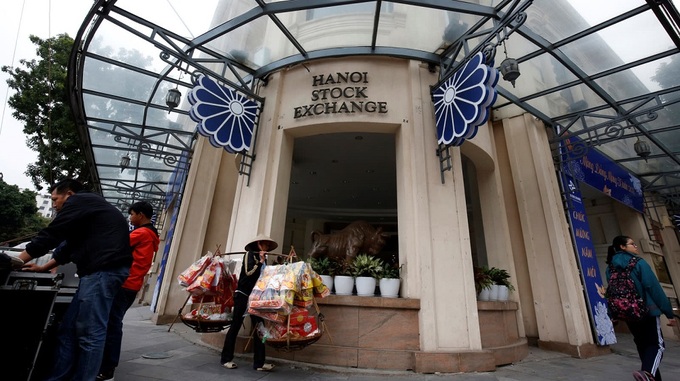
    Foreign investors return to surging Vietnamese stock markets

    At over VND3 trillion ($129.21 million), foreign buying in the local bourses from February 1-25 is three times the January figure. Foreign investment since the beginning of the year has been worth over VND4.3 trillion ($185.16 million). They have been focusing on blue chips like Hoa Phat (HPG), one of Vietnam’s leading steel producers. The company, ignored for the last several months, returned to the portfolio of foreign investors and saw millions of shares traded every day in February.

    In the 11 sessions after the market reopened February 11 after the nine-day Lunar New Year (Tet) holiday from Feb 2-10, foreigners bought 20 million shares for more than VND600 billion ($25.8 million). A month earlier they had been net sellers of over 10 million shares.

    Other blue chips like Vietnam’s biggest dairy company Vinamilk (VNM), private conglomerate Masan Group (MSN) and the biggest bank by assets Vietcombank (VCB) have all run up quite sharply as a result of buying by foreign investors.

    The benchmark VN-Index has gained more than 100 points this year, equivalent to over 11 percent. On Monday it closed at 994.43 points, within touching distance of the psychological 1,000-point mark.

    Foreigners have played a significant role in the recovery, having invested over VND4.3 trillion ($185.16 million) in the period, almost half of it since Tet.

    According to Rong Viet Securities Company, foreign investment this year could actually go down as a result of the reduction in monetary easing and fiscal stimulus across the globe this year, meaning there is less foreign cash available to invest in marginal markets such as Vietnam.

    But it also points out that Vietnam is on the verge of being upgraded to ‘emerging’ market, which could be a positive sign for foreign investors.

  • Hanoi businesses do brisk business with Trump-Kim summit specials

    Hanoi businesses do brisk business with Trump-Kim summit specials

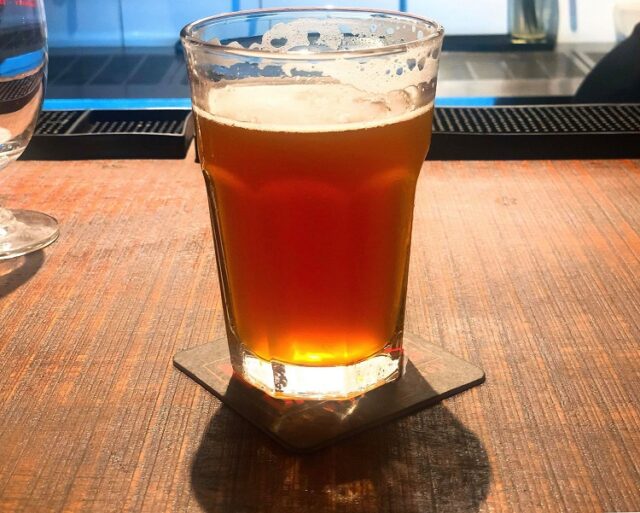
    Several enterprising businesses have cashed in on the Trump-Kim summit with signature products – craft beer, cocktails, haircuts and T-shirts. A standing bar on Tran Vu Street has already gained a lot of attention with a craft beer named Kim Jong Ale, a kimchi flavored beverage concocted in Saigon.

    Huong Anh, who manages the bar, has waxed lyrical about the beer for the occasion. “Kim Jong Ale is a customers’ favorite here. The inspiration behind this beer is the pure streams of Mount Paektu, which is located between North Korea and China,” she told reporters.

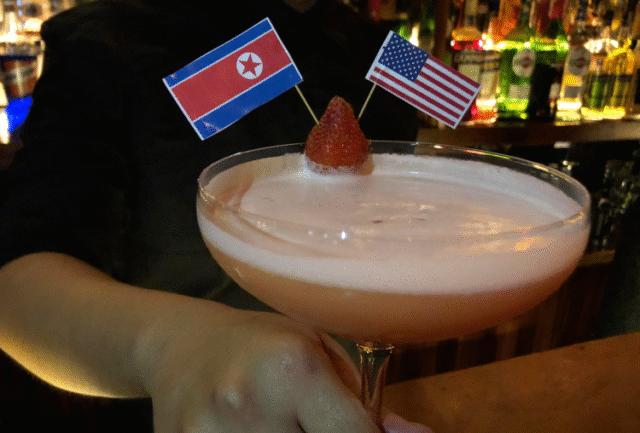
    Yet another bar on Hang Than Street brought out a cocktail called “Make the world great again”, mixing soju, bourbon and Fireball Cinnamon Whisky, pineapple juice, vanilla and grenadine.A wine bar in the capital city has also helped itself to some publicity and increased business with a cocktail called “Peace Negroniations,” a variation of the classic Negroni, made with pink-grapefruit soju, vermouth and bitters. We replaced gin with soju for this special cocktail,” bartender Chau said.

    It took two days to complete this recipe, said Ngo Dinh Tien, a bartender.

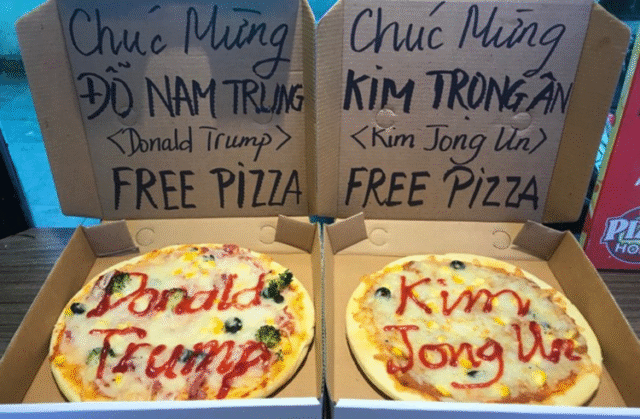
    A pizzeria has been offering free pizzas to people with names similar to that of Kim Jong-un and Donald Trump, and to those sporting the distinctive haircuts of both leaders, from February 20-28.

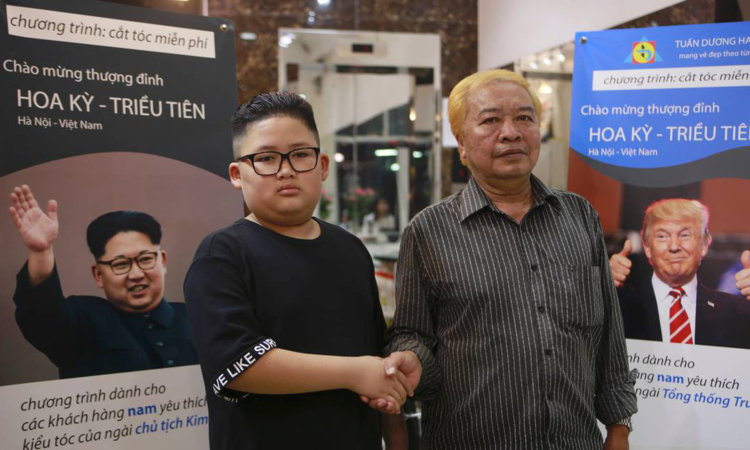
    To get such haircuts, the place to go to is the one on De La Thanh Street that has been offering these for free. The salon is even organizing a contest for people getting such haircuts, with the grand prize being free haircuts for three years.

    A South Korean restaurant in the My Dinh area has hung a banner on their door, featuring Kim Jong-un and Donald Trump and welcoming the summit. The owner said the poster has attracted a lot of attention with many customers taking selfies with it.

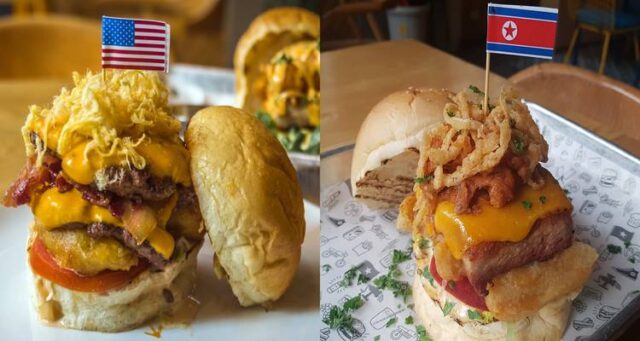
    An Old Quarter restaurant has hogged some attention for itself with hamburgers named after the two leaders – “Durty Donald” and “Kim Jong Yum,” served with U.S. and North Korean flags.


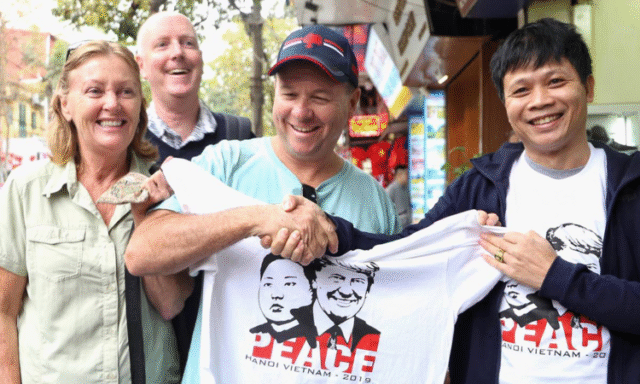
    Perhaps the hottest summit item has been souvenir T-shirts. Truong Thanh Duc’s small shop on Hang Bong Street has been operating at full capacity, making 500 shirts a day with a design that says peace and carries pictures of both leaders. Each T-shirt costs less than $5


    .