Tag: Electric vehicles

  • US and China Agree to $30 Billion Tariff Relief as Chinese EVs Eye Entry

    US and China Agree to $30 Billion Tariff Relief as Chinese EVs Eye Entry

    Chinese electric vehicle makers plan to enter the United States market despite bilateral trade talks in Washington on Thursday and Friday concluding without a breakthrough agreement on automotive import access.

    High vehicle prices and sustained inflation in the American domestic market keep Chinese automakers focused on entry routes even after negotiators limited bilateral tariff relief to 30 billion dollars of non-sensitive goods for each country.

    Export Volumes Drive Overseas Push

    Automakers in China are accelerating their export strategies as domestic competition reaches a consolidation point. BYD set a target of 2 million overseas sales in 2026, building on vehicle sales momentum across Brazil and Europe.

    Rising vehicle retail prices and fuel expenses in North America provide commercial incentives for Chinese manufacturers. Smaller players are also gaining global scale, with Zhejiang-based Leapmotor surpassing the global sales volumes of legacy Japanese automakers Subaru and Mitsubishi Motors.

    Competitive Shift Across Asian Automakers

    For Asian automotive supply chains, the push toward Western markets represents a permanent structural realignment. Japanese carmakers are already altering production schedules and supplier networks to counter Chinese pricing and manufacturing speed.

    Suzuki plans to halve vehicle development cycles to match Chinese design timetables, while Honda committed nearly 2.5 billion dollars to construct a dedicated hybrid vehicle assembly plant in the United States. Traditional tier-one components suppliers in Japan face margin pressure as Toyota expands extended-range electric vehicle production using Chinese facilities and local supply bases.

    Bilateral Talks and Tariff Boundaries

    The latest diplomatic meetings in Washington between United States and Chinese leaders established selective tariff relief covering 30 billion dollars of goods on each side. The bilateral framework excluded automotive imports, leaving existing trade barriers and tech scrutiny in place.

    Commercial transport startups are testing alternative international regulatory pathways in parallel. Autonomous delivery developer Neolix launched robovan trials in Belgium to build European commercial logistics operations ahead of broader international rollouts.

    Manufacturing Targets to Watch

    Market attention turns to full-year delivery reports to verify whether BYD can hit its 2 million export vehicle threshold by December 2026.
  • Chinese Automakers Launch Five-Minute EV Fast Charging

    Chinese Automakers Launch Five-Minute EV Fast Charging

    Chinese electric vehicle makers have introduced ultrafast charging systems this week that replenish passenger car batteries in five minutes, cutting charging times to rival standard petrol pump stops.

    The engineering milestone targets range anxiety directly as automakers deploy high-voltage platforms across new production models to secure domestic market dominance.

    High Voltage Platforms Hit Dealerships

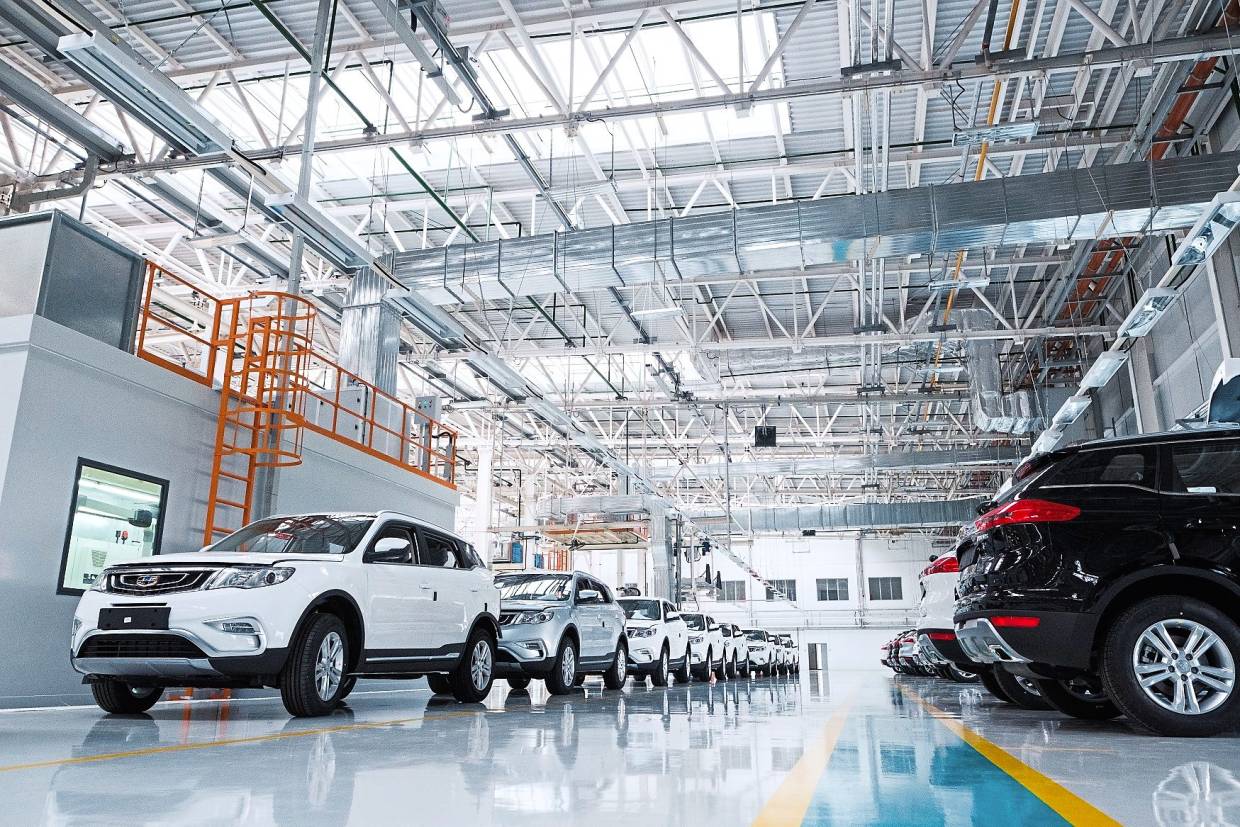
    Domestic manufacturers showed the updated charging architecture across production models, including the Geely Galaxy E8, at the Auto China exhibition in Beijing. The vehicle architecture relies on high-voltage electrical systems that handle higher current loads without overheating battery cells.

    Accelerated charging speeds require dedicated station hardware capable of delivering high power outputs safely. Automakers are pairing vehicle releases with dedicated charging infrastructure investments across tier-one cities in China to guarantee headline charging speeds for retail buyers.

    Infrastructure Demands and Grid Integration

    Deploying five-minute charging shifts operational pressure from vehicle powertrains to urban electrical distribution networks. Fleet operators, commercial landlords, and charging networks must install industrial-grade battery energy storage systems at stations to buffer the grid against sudden spikes in electrical demand.

    For retail and property operators hosting charging points, five-minute turnaround times dramatically increase station throughput and customer turnover. Shorter dwell times change how commercial landlords monetize driver visits, shifting retail strategy from long-stay amenities to high-frequency grab-and-go formats.

    Regional Competitive Pressure

    Legacy foreign automakers face renewed margin pressure across Asian markets as Chinese brands commercialize battery breakthroughs faster. European and Japanese competitors selling into China continue to rely on longer 15-to-30-minute fast-charging cycles on mainstream consumer lines.

    The technology gap threatens foreign brand equity in Southeast Asia and Latin America, where Chinese original equipment manufacturers are expanding retail dealership footprints. Buyers in export markets increasingly treat charging speed as a primary purchasing criterion alongside upfront sticker price.

    Manufacturing Milestones

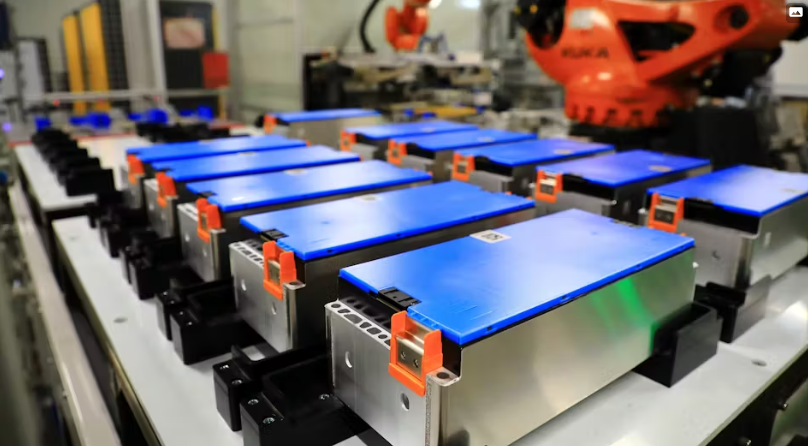
    Chinese battery suppliers spent recent development cycles optimizing cell chemistry and thermal management systems to handle continuous high-current inputs. The commercialization of five-minute charging marks the transition of advanced silicon-carbon anodes and liquid-cooling designs from laboratory test benches to high-volume assembly lines.

    Vehicle brands are integrating these platforms across entry-level and premium product lines rather than restricting ultrafast charging to low-volume halo vehicles. The broader rollout lowers component unit costs across suppliers in the domestic supply chain.

    Commercial focus now turns to highway network operators as charging infrastructure providers work to deploy compatible multi-megawatt public dispensers along national transit corridors.

  • CharIN Tests 1,000 kW Megawatt Charging Systems at 2026 Testival

    CharIN Tests 1,000 kW Megawatt Charging Systems at 2026 Testival

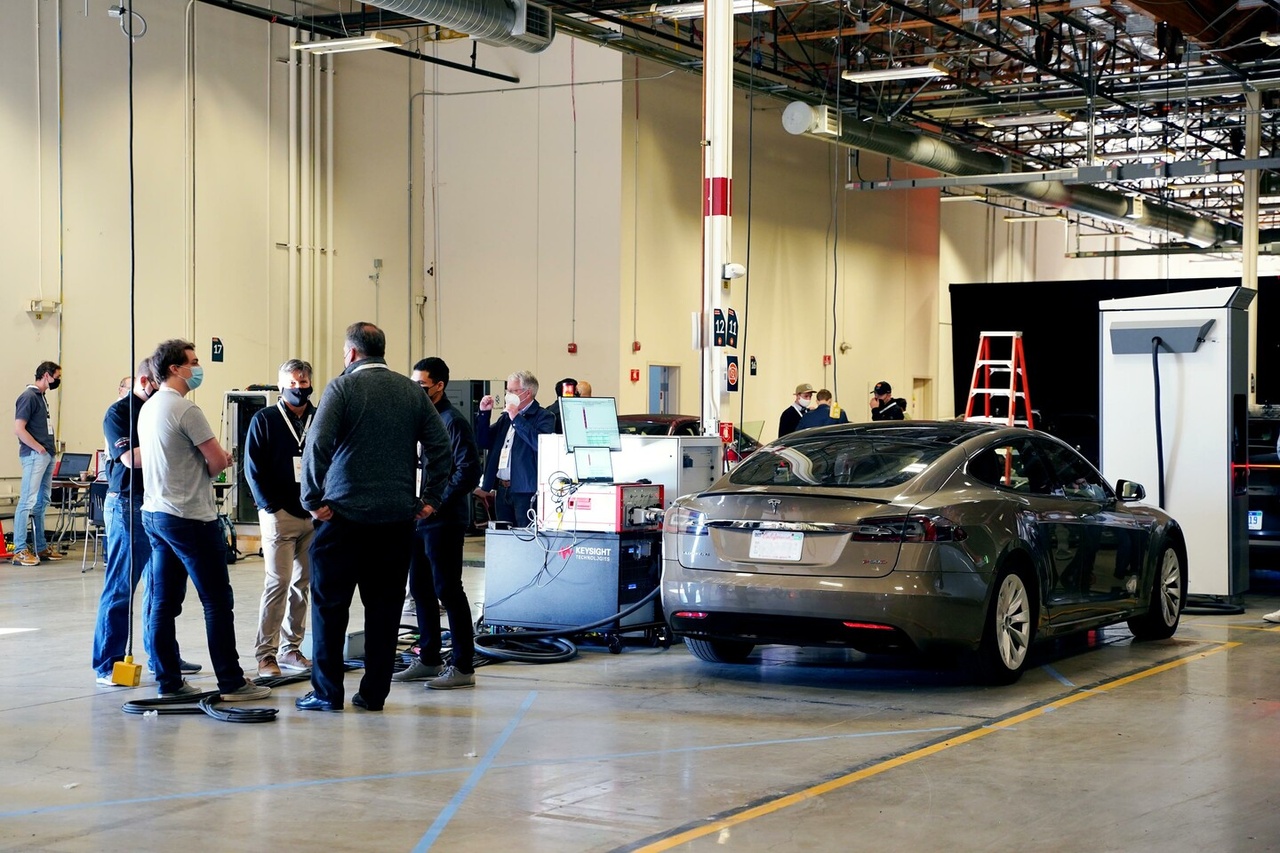
    Global charging alliance CharIN stepped up interoperability testing for heavy-duty electric trucks and passenger vehicles as hardware communication failures continue to disrupt high-power charging deployments in 2026.

    Live trials using Phoenix Contact systems delivering up to 720 kW revealed persistent connection handshaking delays between vehicle software and chargers, proving that standardisation on paper has outpaced field implementation.

    The tests evaluated the Megawatt Charging System, known as MCS, alongside the second-generation ISO 15118-20 communication protocol. Commercial vehicle demonstrations verified throughput capacity of up to 1,000 kW on the Mercedes-Benz eActros 600, 750 kW on the MAN eTGX, and 700 kW on the Volvo FH Aero Electric. CharIN, which has coordinated MCS specifications across 120 member companies since 2018, confirmed that physical socket standards remain governed under IEC TS 63379 specifications.

    Protocols Advance Faster Than Hardware

    Software standardisation moved forward following the release of the ISO 15118-20 Amendment 1 update in July 2026. That revision incorporated MCS services, grid-tied alternating-current distributed energy resource applications, and updated TLS 1.3 cryptographic security protocols. Yet physical trials revealed ongoing mechanical locking and inlet alignment faults across multiple hardware vendors.

    Michael Keller, chief technology officer of CharIN, stated during the trials: “Without 100% interoperability, the customer has no guarantee of a successful charging process when they arrive at an unfamiliar charging station.”

    Vehicle-to-grid capabilities showed wider compliance variations during system trials. Out of 23 direct-current test systems evaluated for bidirectional energy flow, 13 handled European grid feedback specifications, while only seven out of 11 alternating-current systems functioned under simulated grid conditions. CharIN confirmed that automated energy management and bidirectional communication channels require extensive local certification before utility networks permit commercial power exports.

    Implications for Asian Logistics Hubs

    For fleet managers and warehouse operators across Asia-Pacific logistics corridors, the lack of plug-and-play uniformity introduces direct capital risk. Port operators and long-haul logistics fleets in markets like South Korea, China, and Australia cannot afford failed charging handshakes during tight freight turnaround windows. Purchasing megawatt-rated dispensers does not guarantee scheduled power delivery if proprietary truck control units reject public charger firmware.

    RetailNews Asia notes that retail distribution centers face secondary property planning bottlenecks alongside vehicle testing. Megawatt-level charging requires dedicated onsite battery buffering, dynamic load balancing, and restructured depot layouts to accommodate non-standard charging port positions. Operators building high-voltage freight hubs must design facilities around shifting cable lengths, cooling hardware, and transformer lead times rather than vehicle specifications alone.

    Grid Constraints Dictate Rollout Timelines

    Distribution network operators also struggle to process high-capacity grid hookups at the pace demanded by fleet operators. German electrical industry body ZVEI pointed out that local substation headroom and administrative approvals form the primary constraint on fast-charging hubs. In response, regulators such as the Federal Network Agency began publishing regional utility connection timelines to expose connection bottlenecks.

    Municipal public transport operators have already hit these limits during depot conversions. Local authorities in districts like Lippe reported that while over 50 percent of municipal bus fleets are now electrified, expanding depot connections requires balancing local rooftop solar arrays against uncoordinated central energy directives.

    Regional Testing Heads to South Korea

    Standardisation efforts previously focused primarily on light passenger vehicles before shifting toward megawatt-class haulage at trials in Arnhem earlier this year. Those earlier Dutch sessions validated basic bidirectional direct-current flows but left connector durability and automated communication handshakes unresolved for mass-production trucks.

    Testing now moves to the Korea Electrotechnology Research Institute in Ansan-si on October 12, 2026. Industry participants, including GridWiz, VertexCom Technology, and GENIS Korea, will test HomePlug GreenPHY validation workflows and ISO 15118-20 interfaces against Asia-Pacific grid codes.

  • Mazda Adds Hesai LiDAR to Updated EZ-60 in China Starting at 113,900 Yuan

    Mazda Adds Hesai LiDAR to Updated EZ-60 in China Starting at 113,900 Yuan

    Changan Mazda launched its updated 2027 EZ-60 electric SUV in China on Saturday. Pricing starts at 113,900 yuan ($16,880) across four new LiDAR-equipped variants.

    The roof-mounted sensor package sits on upper trims, lifting the top of the nine-model range to 172,900 yuan before a promotional 6,000 yuan discount across all configurations. The baseline official guide price holds steady at 119,900 yuan. That matches the entry level from the model’s debut.

    Buyers pay a 12,000 yuan premium for the LiDAR options. The extended-range electric vehicle (EREV) Pro LiDAR variant costs 151,900 yuan, while the battery electric (BEV) Max LiDAR edition tops the lineup at 172,900 yuan. Dimensions stay unchanged. The SUV measures 4,850 mm long, 1,935 mm wide, and 1,620 mm tall on a 2,902 mm wheelbase.

    Sensor Package and Driver Assistance Architecture

    A single Hesai ATX LiDAR mounted on the roof line drives the driver assistance suite. The optical unit delivers a detection range of 200 meters. It works alongside three millimeter-wave radars, 11 high-definition cameras, and 12 ultrasonic sensors to scan forward past 250 meters.

    Software runs on an end-to-end architecture that handles highway navigation assistance between 0 and 130 km/h. Urban navigation assist operates between 0 and 80 km/h. Automated parking supports more than 300 bay geometries. Features like memory parking will arrive via over-the-air updates alongside 25 active safety functions.

    Powertrain Options and Battery Capacities

    Powertrains carry over unchanged. EREV trims pair a 70 kW 1.5-liter range extender with a rear electric drive motor producing 190 kW (255 hp) and 290 Nm of torque. A 31.73-kWh battery pack provides 200 kilometers of pure electric driving range under the CLTC cycle.

    Pure electric trims use a 77.94-kWh lithium iron phosphate pack with the same 190 kW rear-wheel-drive motor. That setup delivers a CLTC driving range of 600 kilometers per charge.

    Joint-Venture Rivalry in China’s Electric Market

    Legacy joint ventures face intense pricing pressure in China as domestic automakers make semi-autonomous driving standard in mass-market brackets. International brands have largely avoided putting LiDAR on mid-tier models to protect profit margins. That left their products exposed against high-specification Chinese rivals.

    Putting Hesai LiDAR and end-to-end software below 180,000 yuan takes direct aim at rivals like the Buick Electra E7 and the Nissan NX8. Japanese and American joint ventures need this equipment bundling to protect showroom share in China’s tier-two and tier-three cities.

    Global Export Track and Deployment Plans

    The EZ-60 anchors Mazda’s electrification export program developed with Changan Automobile. It serves as the production base for the CX-6e, which debuted at the Brussels Motor Show in January. Retail shipments to European distributors are already underway.

    Changan Mazda launched the original EZ-60 on September 26, 2025, bringing this refresh 12 months into the lifecycle. Other Japanese carmakers are also expanding electrified lineups in China. Nissan recently updated its N7 sedan, and Toyota plans to introduce localized extended-range models in April 2027.

    Deliveries of the LiDAR-equipped EZ-60 trims begin at dealerships across China next month. The 6,000 yuan launch subsidy will run through the initial intake window.

  • BYD Teases Shark Pickup China Launch After Selling 29,997 Units Overseas

    BYD Teases Shark Pickup China Launch After Selling 29,997 Units Overseas

    BYD began promoting the domestic launch of its Shark plug-in hybrid pickup truck on September 24, after selling 29,997 units across international markets in the first eight months of 2026.

    The carmaker released official promotional images across its social media channels under the slogan “The overseas champion returns,” assigning the model to its specialized Fang Cheng Bao sub-brand. The campaign follows two years of sales abroad, reversing the standard practice among Chinese vehicle manufacturers of establishing domestic volume before attempting foreign distribution.

    Export track record and platform specifications

    Overseas deliveries of the Shark reached 4,300 units in August alone. BYD first introduced the pickup in Mexico in May 2024, followed by rollouts in Australia, Brazil, Cambodia and Pakistan.

    Built on the company’s off-road dual-mode platform, the truck pairs a 1.5-litre turbocharged petrol engine with two electric motors. Regulatory filings published by the Ministry of Industry and Information Technology in July show peak motor outputs of 170 kW at the front axle and 150 kW at the rear. The vehicle uses lithium iron phosphate packs produced by BYD’s battery manufacturing division, FinDreams Battery.

    Dimensions submitted to regulators match the export specification. The body measures 5,457 mm in length, 1,971 mm in width and 1,925 mm in height, riding on a 3,260 mm wheelbase.

    The domestic utility vehicle landscape

    Entering the domestic pickup segment pits BYD directly against Great Wall Motor, the long-standing market leader in Chinese commercial haulers, and Geely Auto’s electric utility brand Radar. Retail buyers in China have historically treated pickups as commercial workhorses rather than lifestyle vehicles, constrained by municipal traffic bans that restrict light trucks from entering major downtown cores.

    Those regulatory limits keep the overall category small relative to passenger cars. Chinese buyers purchased 455,000 pickup trucks between January and August 2026, according to figures from the China Passenger Car Association. By comparison, total retail passenger car volume reached 11.7 million units over the same eight months, of which 7.78 million were plug-in hybrids or pure battery-electric models.

    Electrification trends in commercial light trucks

    New energy pickups remain a small slice of commercial sales, but demand is expanding faster than the wider commercial truck market. Electrified pickup sales climbed 18 per cent year on year to 62,000 units through August. Commercial fleet buyers and municipal contractors in regional provinces have adopted plug-in models to cut operational fuel costs and comply with local emissions caps.

    Assigning the Shark to Fang Cheng Bao indicates BYD intends to market the truck to private off-road enthusiasts rather than commercial fleet buyers alone. Fang Cheng Bao general manager Xiong Tianbo confirmed the model’s inclusion in the brand portfolio earlier this year, aiming to broaden a lineup that previously focused on rugged sport utility vehicles.

    Regulatory steps and launch timeline

    The consumer promotional push marks the final marketing stage before open sales begin. Li Yunfei, general manager of branding and public relations at BYD, first outlined plans for a Chinese release in October 2025, followed by the formal MIIT filing three months ago.

    Dealership distribution timelines and domestic retail pricing remain unannounced. The Ministry of Industry and Information Technology has yet to release battery capacity and pure electric driving range figures for the localized configuration.

  • GAC and Huawei Joint Brand Aistaland Launches GX7 SUV from 229,900 Yuan

    GAC and Huawei Joint Brand Aistaland Launches GX7 SUV from 229,900 Yuan

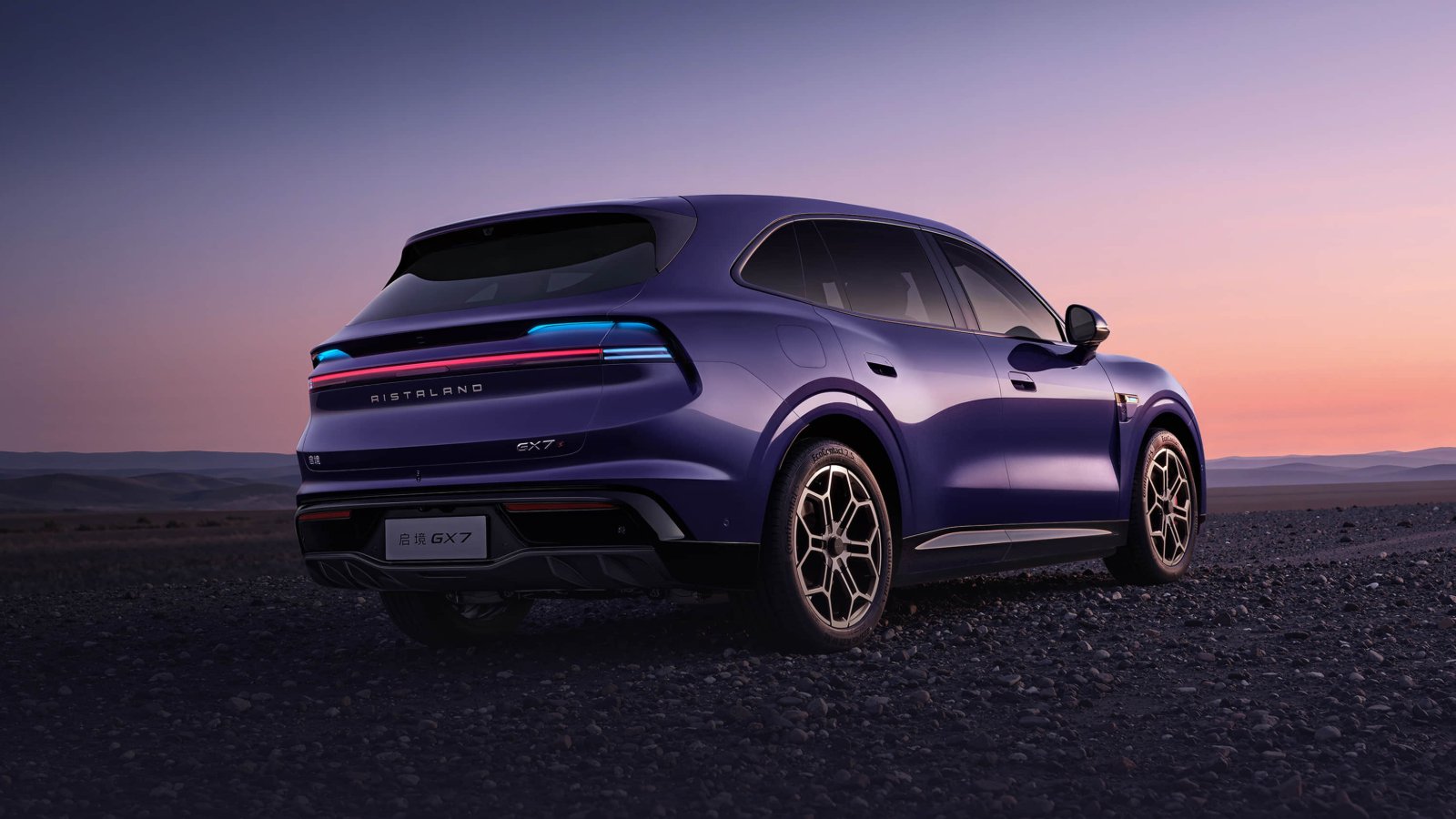
    Aistaland rolled out its second production vehicle on September 23 in Guangzhou. The carmaker priced the GX7 extended-range SUV at an introductory 229,900 yuan ($34,060) to fight sluggish brand sales.

    That promotional price sits 20,000 yuan below the pre-sales floor opened on September 4. Buyers also get a 10,000 yuan payment rebate and an optional 8,000 yuan trade-in subsidy.

    Standard sticker prices for the five-seat SUV span 239,900 yuan to 301,900 yuan across three variants. With the launch promotion, the base rear-wheel-drive Ultra sells for 229,900 yuan. The dual-motor all-wheel-drive version costs 249,900 yuan, and the tri-motor flagship tops the lineup at 291,900 yuan. Applying the trade-in allowance drops the entry point to 221,900 yuan.

    Pricing and Powertrain Variants

    Every GX7 variant runs on a 1.5-litre turbocharged petrol range extender paired with electric drivetrains. The single-motor Ultra delivers 200 kW (268 hp). It reaches 100 km/h in 7.6 seconds. Stepping up to the dual-motor model raises output to 340 kW and cuts the sprint time to 4.9 seconds. The range-topping tri-motor model produces 550 kW, hitting 100 km/h in 3.9 seconds.

    Contemporary Amperex Technology Co. Ltd. Supplies the battery systems. Buyers choose between a 52 kWh lithium iron phosphate pack and a 67 kWh ternary lithium pack. Pure electric range on China’s light-duty vehicle test cycle covers 325 km to 385 km. Total combined range reaches between 1,500 km and 1,580 km.

    Fast replenishment separates the flagship from entry variants. The tri-motor version adopts an 800-volt electrical architecture supporting 5C charging speeds, taking the battery from 30 per cent to 80 per cent in 10 minutes. The other two models require 15 minutes for the same charge.

    Autonomous Driving Architecture and Cabin Tech

    Driver-assist hardware forms the core marketing proposition for the new model. The GX7 is among the earliest vehicles fitted with Huawei’s Qiankun ADS 5 driver-assistance suite. That system relies on 38 sensor points and four LiDAR units, including an 896-channel dual-optical-path system. Aistaland built the vehicle with hardware redundancies across eight operational systems, power supply, braking, steering, computing, perception, communications, positioning, and user interaction, to support Level 3 autonomous driving requirements.

    Inside, the cabin draws heavily on Huawei software. The setup integrates the HarmonySpace 6 operating system, dual 15.6-inch console screens, an 88-inch augmented-reality head-up display, and a 21-speaker proprietary sound system. The rear seats fold into a flat bed in 20 seconds. That mechanism supports 12 layout adjustments inside a body that spans 5,099 mm in length, 2,006 mm in width, and 1,750 mm in height on a 3,070 mm wheelbase.

    Crowded Field in Family Extended-Range SUVs

    Targeting the full-size five-seat SUV segment shifts Aistaland directly into China’s most contested vehicle category. Extended-range models continue to take market share from pure battery-electric rivals because family buyers want road-trip reliability without charging station queues during holiday travel. The GX7 goes head-to-head with Li Auto’s Li L6, the Seres-built Aito M7, and Xiaomi’s upcoming YU7.

    Retail distribution and brand overlap present clear commercial risks. Huawei already supplies intelligent cockpit and driving systems across multiple automotive partnerships, including the Harmony Intelligent Mobility Alliance network. Because Aistaland operates under a separate bilateral structure, GAC must handle vehicle assembly and showroom footfall alone while pitching the GX7 against Huawei-equipped rivals in identical price bands.

    Reversing the GT7 Sales Slide

    GAC and Huawei based their collaborative team in Guangzhou to speed up product launches after signing their co-development pact. The joint venture introduced its debut vehicle, the GT7 shooting brake, on June 26 with a starting tag of 209,900 yuan. Deliveries peaked at 2,658 units in July. They dropped 58.62 per cent to 1,100 units in August, exposing limited demand for wagon body styles.

    Factory lines in Guangdong have now shifted production capacity to the higher-volume SUV platform. Deliveries for the three GX7 trims start across national dealership networks before the close of September, making fourth-quarter sales the decisive trial for the joint venture.

  • Leapmotor Overtakes Subaru and Mitsubishi Motors in Global Sales

    Leapmotor Overtakes Subaru and Mitsubishi Motors in Global Sales

    Chinese electric vehicle startup Leapmotor surpassed Subaru and Mitsubishi Motors in global quarterly deliveries for the first time between April and June. Strong domestic sales in China drove the shift. An accelerating rollout across European dealerships also lifted volume.

    The Hangzhou-based manufacturer built momentum on budget battery-electric models and extended-range powertrains. Those lower prices unlocked retail demand in mainland tier-three cities. They also found buyers in price-sensitive European export markets.

    Shift in Global Volume

    Overtaking two established Japanese automakers shifts the competitive baseline for entry-level passenger cars. Subaru and Mitsubishi built multi-decade international sales networks through independent franchised dealers. Their slower battery-electric transition left budget segments exposed to cheaper Chinese rivals.

    Leapmotor entered European showrooms by pricing compact electric models against legacy petrol hatchbacks. That approach bypassed the premium segment. European and Japanese marques still hold stronger brand loyalty in that higher tier.

    Pressure on Traditional Dealerships

    Across Europe and Asia, independent auto retailers and multi-brand dealer groups must now adjust inventory allocation. Dealerships facing sluggish demand for internal combustion models are handing floor space to Chinese brands. These vehicles deliver higher unit turnover, though dealer margins are tighter.

    Component vendors and regional distributors tied exclusively to mid-tier Japanese manufacturers face direct exposure. As sales volume drifts toward Chinese electric platforms, legacy suppliers face shrinking factory orders unless they win contracts on dual-fuel and battery architectures.

    Export Trajectory

    Behind the quarterly milestone are two years of factory scaling and targeted export homologation by Leapmotor. The company previously relied almost entirely on mainland China registrations before opening European distribution channels.

    Delivery numbers through the second half of the year will test the expansion as European trade policy and regional import tariffs take effect.

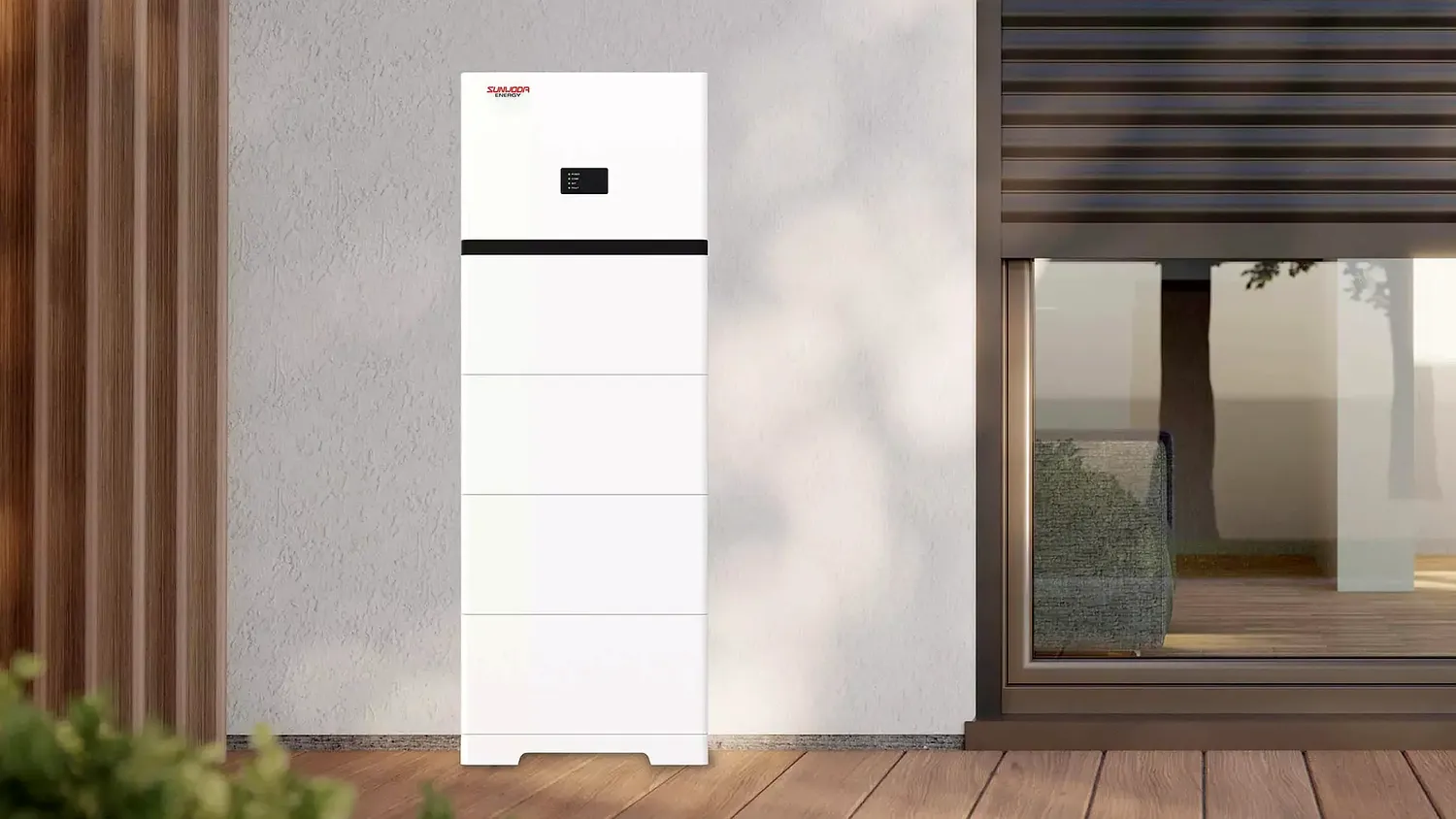
  • Sunwoda Unveils 15C Flash Battery to Challenge BYD in Fast Charging

    Sunwoda Unveils 15C Flash Battery to Challenge BYD in Fast Charging

    Sunwoda Electric Vehicle Battery unveiled a 15C flash charging system in Zaozhuang on September 17 that charges an electric vehicle from 10 to 97 per cent in nine minutes.

    The system matches the benchmark room-temperature charging speed established by market leader BYD. It also comes with a company commitment to deploy 10,000 megawatt charging stations by the end of 2027.

    Charging Performance and Cold Weather Specs

    At room temperature, the battery charges from 10 to 70 per cent in five minutes. That adds 100 kilometres of driving range in 60 seconds. Total driving range exceeds 700 kilometres on a full charge.

    Cold weather tests show the pack charges from 10 to 97 per cent in 15 minutes at minus 20 degrees Celsius. Sunwoda attached a warranty covering 10 years or 300,000 kilometres to non-commercial vehicles with unlimited ultrafast charging cycles, targeting buyer anxiety over high-current cell degradation.

    Hardware Architecture and Grid Storage

    Hardware diagnostics rely on proprietary cell sensors, an energy domain controller and a cloud monitoring engine. Sunwoda stated the platform identifies more than 20 separate failure modes between two and 10 days before a breakdown. Its detection rate reaches 99.77 per cent.

    On the grid side, the company introduced an integrated platform that bundles solar generation, stationary battery storage, liquid-cooled charging posts and megawatt-scale dispensers. The multi-brand terminal design allows third-party automakers to access the high-voltage stalls under commercial sharing agreements.

    The Race for Megawatt Infrastructure

    China’s EV power race has shifted from laboratory power ratings to physical network footprint. BYD crossed its 10,000th flash charging station milestone on August 28. It maintains a target of 20,000 operational stations by the end of 2026.

    Other domestic manufacturers are pushing similar power thresholds. Dongfeng introduced a prototype 1,500-kilowatt charger on July 29, matching BYD’s peak terminal rate. FAW Hongqi posted July laboratory results showing a 10-to-70 per cent charge in three minutes and 41 seconds with battery partner CNET. In Hong Kong, Xpeng energised its first one-megawatt X-Energy stall with 400 kilowatt-hours of local storage on September 15.

    Commercial Rollout and Factory Timelines

    Sunwoda EVB faces a crowded manufacturing landscape. CATL and BYD command more than 60 per cent of China’s domestic vehicle battery volume. Total battery installations across the country grew 26.3 per cent year-on-year in August, but second-tier cell makers must prove station economics to justify high capital spending on utility-scale grid connections.

    Initial announcements omitted capital expenditure figures, manufacturing site allocations, commercial vehicle partnerships and the first production passenger car chosen for the 15C pack. Filings with the Ministry of Industry and Information Technology will soon show which automaker integrates the hardware first ahead of the 2027 station rollout target.

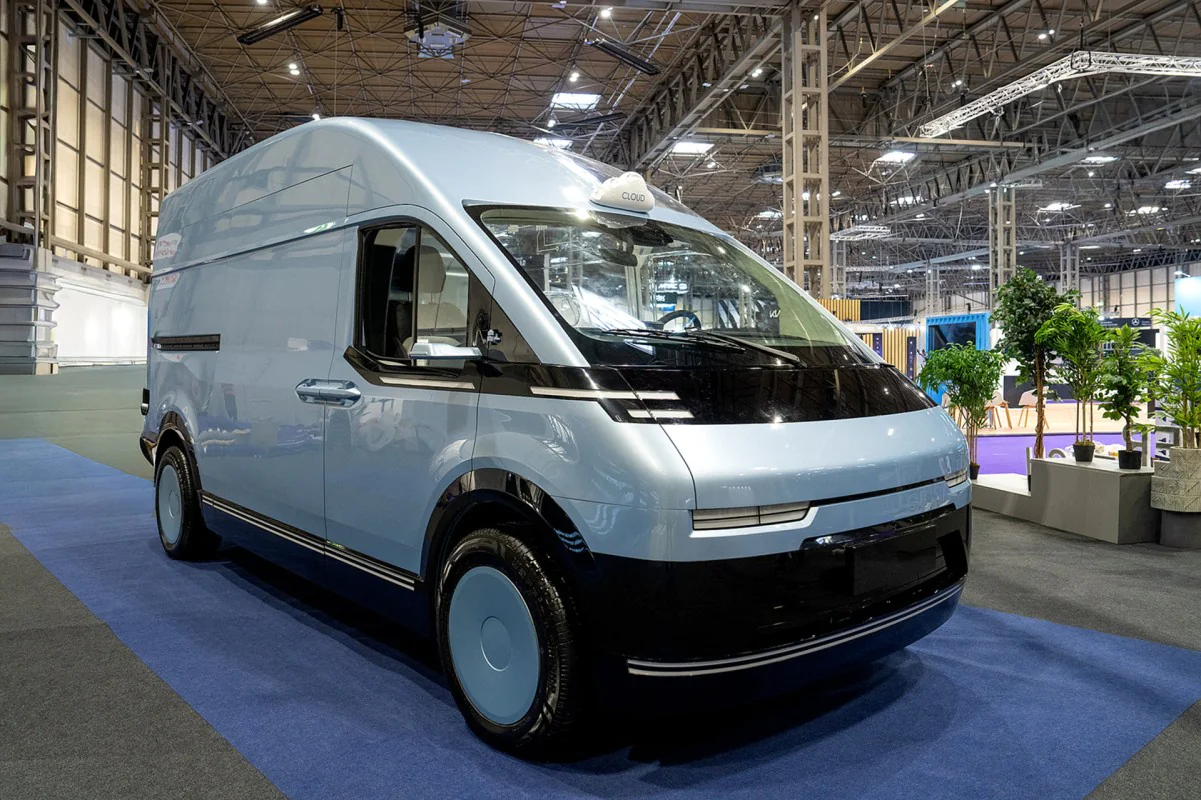
  • Chery Delivan Targets 100 UK Dealerships for Electric Van Expansion

    Chery Delivan Targets 100 UK Dealerships for Electric Van Expansion

    Chery Commercial Vehicle brand Delivan plans to establish more than 100 UK dealership sites over the next five years to sell electric delivery vans.

    The Chinese automotive group unveiled its production van range at the IAA Transportation show in Hanover, preparing for commercial deliveries in 2027 across Britain, Germany, France, Spain, Italy and the Nordic region.

    Hardware specifications and conversions

    Delivan built its launch lineup on a single electric architecture, offering battery capacities between 50.4 kilowatt-hours and 97.4 kilowatt-hours. The vehicles deliver up to 426 kilometres of WLTP combined range with speed capped at 100 kilometres per hour, while direct-current fast charging takes the battery from 15 percent to 80 percent in roughly 22 minutes.

    The range includes the L1H1 panel van with a 1,400-kilogram payload, the larger L2H3 panel van offering 11.6 cubic metres of cargo capacity, and the L3 chassis cab supporting payloads up to 2,120 kilograms. Both panel vans carry a 2,500-kilogram towing rating. Delivan also displayed four specialist conversion bodies developed with European bodybuilders: a crew van, a refrigerated box, an integrated tool storage layout and a three-way tipper.

    Fleet software and uptime service

    Commercial operations will run on a package the company calls its 1+3 proposition, combining vehicle hardware with three digital support layers. Delivan I handles telematics, route efficiency and real-time energy usage tracking, while Delivan PRO links operators to an uptime centre for predictive maintenance and remote diagnostics. Delivan X oversees third-party vehicle conversions and bodybuilder certifications.

    Software integration has become a primary sales mechanism for Chinese commercial vehicle exporters targeting overseas corporate buyers. Fleets evaluate total cost of ownership through vehicle availability and software integration rather than purchase price alone. Delivan is attempting to bypass typical import friction by embedding diagnostics and bodybuilding approvals directly into European fleet workflows.

    Dealership network strategy

    Distribution in Britain will combine franchised car retailers with dedicated commercial vehicle centres. Chery plans to convert selected existing passenger-car showrooms to carry Delivan while appointing independent commercial vehicle specialists to cover high-density logistics corridors.

    Establishing physical workshops and rapid parts supply presents the main execution hurdle for new commercial vehicle brands in Europe. Delivery companies cannot absorb prolonged vehicle downtime. While Chinese electric passenger cars rely heavily on direct retail or light dealer agreements, light commercial vehicles require round-the-clock maintenance agreements and guaranteed replacement turnarounds to win institutional fleet tenders.

    European expansion timeline

    Delivan initiated its Western European rollout in April at the Commercial Vehicle Show in Birmingham, where Chery first introduced the commercial sub-brand. The company subsequently established regional operating headquarters and technical teams in the UK and Germany to adjust suspension, cargo packaging and cab ergonomics for local delivery routes.

    “Using real-time connected-vehicle data, our in-house smart system applies AI to connect the entire operational chain, from individual vehicles to fleet management,” said Yueqiong Gong, vice president of Chery Holding Group and general manager of Chery Commercial Vehicle.

    Chery will finalize its initial UK dealer appointments over the coming months before opening order books ahead of customer deliveries in 2027.

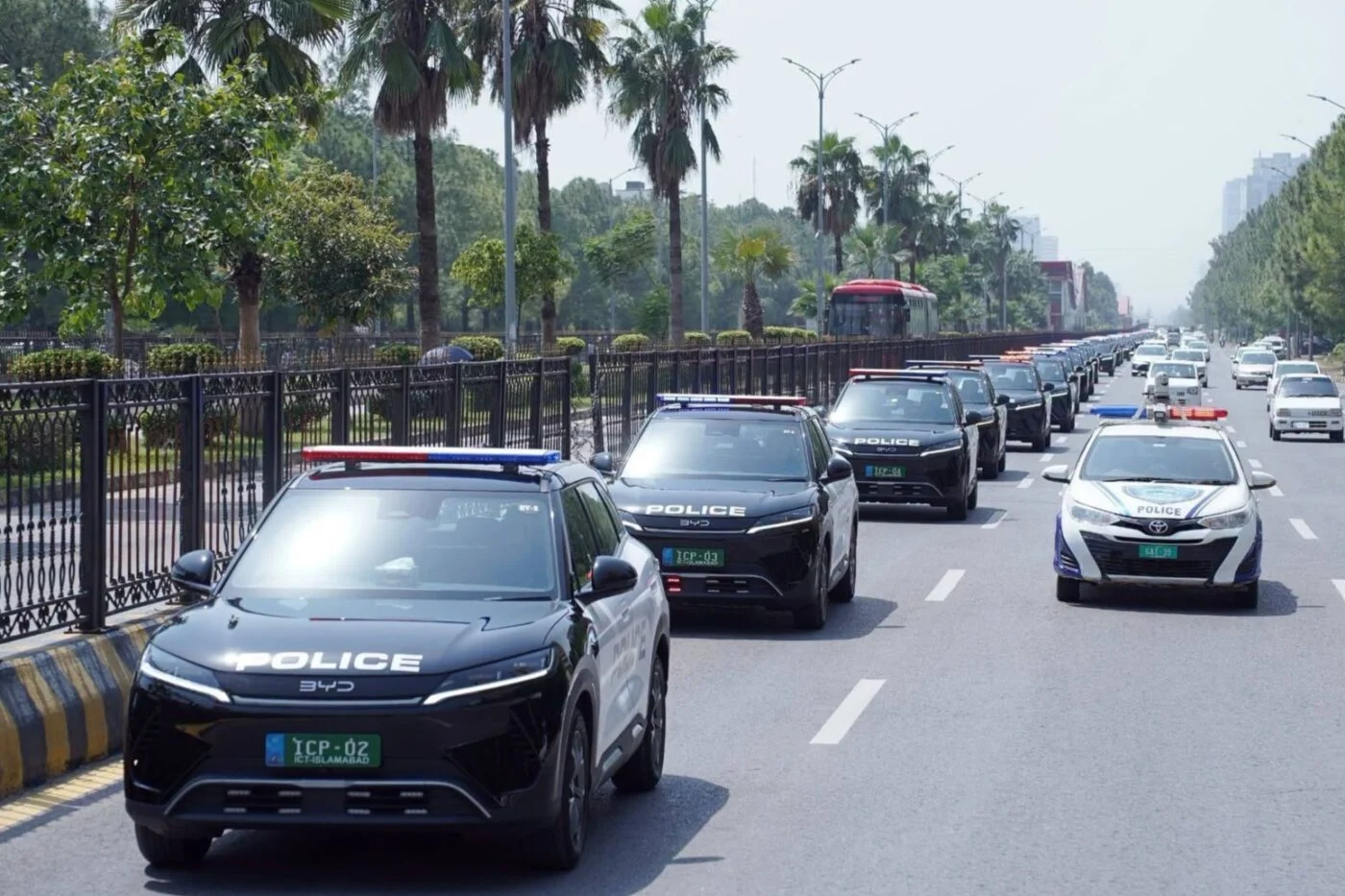
  • Islamabad Police Deploys 50 BYD Atto 2 Electric SUVs for Capital Patrol

    Islamabad Police Deploys 50 BYD Atto 2 Electric SUVs for Capital Patrol

    Islamabad police deployed 50 BYD Atto 2 electric sport utility vehicles across the Pakistani capital, establishing a dedicated 200-officer patrol unit. The fleet cost 7.29 million Pakistani rupees per vehicle and will cut monthly municipal fuel spending by roughly 34 million rupees.

    Pakistani Prime Minister Shehbaz Sharif transferred the vehicle keys on 8 September to Federal Minister for Interior Mohsin Naqvi and Inspector General of Islamabad Police Syed Ali Nasir Rizvi. The rollout equips the newly formed Capital Patrol force to handle urban surveillance and emergency calls.

    Fleet deployment and financial return

    Municipal calculations indicate the monthly fuel savings will recover the capital outlay for each vehicle in ten and a half months. Lower operational expenses allow the department to reallocate budget lines from fuel procurement to frontline equipment and maintenance.

    Police leadership expects the electric fleet to improve urban response times across Islamabad. Rapid torque delivery from electric powertrains and reduced maintenance downtime give city patrols higher daily availability than aging internal combustion units.

    Powertrain and battery specifications

    The deployed Atto 2 models run on a single powertrain configuration. A front-mounted permanent magnet synchronous motor generates 130 kW of power and 290 Nm of torque, allowing acceleration from zero to 100 kilometres per hour in 7.9 seconds.

    Energy storage relies on a 45.12 kWh lithium iron phosphate battery pack. The system delivers an operating range of up to 380 kilometres under NEDC testing standards, and fast charging restores battery capacity from 30 per cent to 80 per cent in 30 minutes.

    Local assembly plans in Sindh

    The municipal procurement aligns with BYD’s manufacturing roadmap in Pakistan through its local partner, Mega Motor Company. Mega Motor, an associate of power producer Hub Power Company, is building a vehicle assembly plant in Gharo, Sindh.

    Establishing domestic production enables the Chinese automaker to lower import tariffs and compete aggressively against traditional Japanese vehicle assemblers that dominate Pakistan’s passenger market. Fleet deals with government agencies provide stable initial volumes while retail distribution develops.

    Commercial network expansion

    Mega Motor plans to complete construction of the Gharo assembly facility by the end of 2026. The Atto 2 serves as the primary candidate for initial local assembly lines once production begins.

    Watch the rollout of charging infrastructure along capital patrol routes and the completion timeline for the Sindh factory ahead of the late 2026 manufacturing target.

  • BYD Seeks over 8,000 Workers at Xi’an Base as Production Ramps up

    BYD Seeks over 8,000 Workers at Xi’an Base as Production Ramps up

    BYD is hiring more than 8,000 workers across its Xi’an manufacturing complex in September 2026 after finishing assembly line overhauls at the site.

    The northwestern hub is the automaker’s largest production base. It spans four development phases with an annual capacity of 1.5 million vehicles.

    Recruitment notices from local human resource agencies and municipal bureaus show the push covers several divisions. Signing bonuses reach up to 6,000 yuan ($889), paired with monthly wages up to 10,000 yuan for technical staff. Roles in welding, painting and vehicle assembly make up most of the open positions.

    Incentives and Skilled Labor Demand

    Hiring ends temporary operating limits at the plant. Output slowed during the first half of the year as BYD reconfigured machinery for its second-generation Blade Battery and retooled chassis lines. During that tooling phase, the company transferred workers to facilities in Zhengzhou, Hefei and the Shenzhen-Shanwei cooperation zone.

    All four factory sites in Xi’an have returned to standard shifts. Filling technical roles quickly will prevent bottlenecks on final assembly lines. Those lines supply both finished cars and knocked-down kits to international transport corridors.

    The Line Rebuild and Factory Rebound

    Provincial industrial data reflects the factory overhaul. Vehicle output across Shaanxi province fell nearly 50 per cent year on year through the first seven months of 2026 during the plant retooling.

    Production rebounded once the lines reopened. Shaanxi auto output climbed to 138,900 units in August, up 55.4 per cent from July. That was 17.9 per cent higher than August last year, according to China’s National Bureau of Statistics.

    For regional suppliers, the Xi’an ramp-up secures component volumes for the core Dynasty and Ocean series. Component makers that lowered deliveries during spring retooling now face tighter lead times. Automakers competing with BYD across Southeast Asia and Latin America will face fresh pressure as export shipments normalize.

    Domestic Headwinds versus Export Surge

    Plant operations restart against a split in BYD’s customer base. Deliveries hit 440,293 new energy vehicles in August. That was a 17.8 per cent gain year on year and its best monthly volume of 2026.

    Export shipments drove the total. Overseas sales jumped 134.5 per cent year on year to 189,466 units in August, setting a monthly export record. Domestic retail deliveries fell 14.3 per cent over the period as showroom price wars deepened in China.

    That split puts utilization risks on domestic lines. Export variants run on full schedules. Lines built for the home market must defend share against aggressive local discounts.

    Global Assembly Footprint

    Xi’an reached peak output in 2024 when volume topped 1 million vehicles. Matching that mark depends on how fast overseas markets absorb inventory before foreign assembly hubs open.

    BYD continues to tweak its global manufacturing footprint. European advisers say the automaker will eventually need three vehicle assembly plants and one battery hub in Europe to meet quotas and handle tariffs.

    Factory managers in Xi’an are now pushing to clear order backlogs before fourth-quarter shipping deadlines arrive.

  • Geely Farizon Expands European Van Network with Six Partners

    Geely Farizon Expands European Van Network with Six Partners

    Geely commercial vehicle brand Farizon presented partnerships with AMF-Bruns, Allianz Partners, BNP Paribas, CATL, Bosch, and ZF at the IAA Transportation in Hanover to expand operations across Europe.

    The agreements underpin European sales for the Chinese group’s Farizon SV electric van, priced from 44,900 euros net, and the smaller V7E model starting at 32,600 euros.

    Farizon, officially represented in Germany since May 2026, announced plans to establish dedicated subsidiaries in Germany and France alongside a European headquarters.

    Component supply and vehicle engineering remain anchored by long-running ties with battery manufacturer CATL, chassis specialist ZF and tier-one supplier Bosch. Farizon already operates a central spare parts distribution warehouse in Germany, which works alongside a dedicated European engineering division formed earlier in 2026 to handle local homologation and fleet customization.

    Expanding Direct Operations in Germany and France

    Farizon plans to incorporate wholly owned operational subsidiaries in Germany and France to anchor its European business. The company is currently selecting a site for its regional European headquarters as it expands beyond early distribution channels in Britain, Spain, Serbia and the Benelux region.

    Fleet operators in Germany can order the SV van with either a 67 kilowatt-hour or 83 kilowatt-hour lithium iron phosphate battery pack sourced from CATL. The larger battery pack delivers a driving range of up to 376 kilometers under WLTP testing standards. For inner-city delivery routes, the smaller V7E transporter comes fitted with 50 kilowatt-hour or 67 kilowatt-hour batteries, yielding a maximum driving range of 328 kilometers between charges.

    Platform Applications and Autonomous Production

    The SV platform also serves as the structural base for specialized autonomous transport. Chinese autonomous driving developer WeRide placed an order for 2,000 units of its GXR robotaxi, built directly on the Farizon SV architecture.

    Production for the WeRide GXR run is scheduled to start in the third quarter of 2026. At the Hanover exhibition, Farizon also presented the Homtruck, a heavy-duty battery-electric tractor unit developed for regional freight and long-distance hauling routes.

    Commercial Fleet Pressures and Chinese Expansion

    For European logistics operators, Farizon offers an alternative to legacy European van makers at a lower acquisition cost, but the real test lies in parts availability and residual values. Fleet buyers cannot tolerate stranded vehicles waiting weeks for imported Chinese components. Establishing local financing and insurance through BNP Paribas and Allianz directly addresses fleet credit and residual risk, removing two primary barriers that have slowed Chinese commercial vehicles in the European market.

    European manufacturers such as Stellantis and Renault face intensified price competition in the light commercial sector as Chinese electric platforms scale up. Farizon uses the manufacturing scale and battery supply chains of Zhejiang Geely Holding Group to price its mid-size electric delivery vans well below comparable European rivals. The main operational hurdle remains long-term resale value, where unproven Chinese commercial nameplates still face steeper depreciation curves than established brands.

    Preceding European Entry and Next Steps

    Farizon formally entered the German market in May 2026 after completing initial safety and homologation testing for the SV and V7E. The SV van secured a five-star Euro NCAP commercial safety rating and finished as a runner-up in the International Van of the Year 2026 evaluations, giving the platform regulatory validation before commercial deployment.

    Engineering teams are preparing an updated version of the Farizon SV featuring an all-wheel-drive powertrain, revised electric motors and higher-capacity battery options tailored for winter driving and unpaved terrain. Farizon has not yet disclosed technical specifications or pricing for the four-wheel-drive model, which will roll out as European legal entities in Germany and France complete their formal incorporation.

  • US Recycler R3 Lithium to Enter Vietnam Battery Industry

    US Recycler R3 Lithium to Enter Vietnam Battery Industry

    American lithium recycling specialist R3 Lithium plans to enter Vietnam to process electric vehicle batteries, opening discussions with domestic automotive manufacturers and electronics assemblers.

    The Vietnamese government confirmed the talks this week as demand for recovered battery-grade metals climbs across Southeast Asian manufacturing hubs.

    Talks with domestic manufacturers

    R3 Lithium targets Vietnam to secure feedstock from spent electric vehicle packs and consumer electronics waste. The US-based processor aims to extract battery materials locally rather than shipping untreated black mass abroad.

    Government officials in Hanoi confirmed the discussions cover partnerships with both vehicle makers and consumer hardware producers operating factories across the country.

    Building regional supply security

    Securing domestic recycling capacity gives vehicle manufacturers an immediate channel to recover critical minerals without depending entirely on raw mineral imports. Battery producers across Southeast Asia face stricter local content rules and mounting scrap volume from early EV production runs.

    Setting up closed-loop recovery inside Vietnam shortens transit times for active materials. It also keeps valuable cathode raw materials inside the domestic supply chain.

    Shifting automotive supply chains

    Vietnam has accelerated the conversion of domestic transport fleets to battery power, creating a captive volume of end-of-life cells. Global electronics contract manufacturers in northern industrial corridors also produce substantial scrap volumes during cell assembly and pack integration.

    Processing that material domestically allows electronics and vehicle brands to meet cross-border scrap compliance rules while sourcing secondary raw materials directly on site.

    Next regulatory approvals

    Industrial licensing and site approvals represent the immediate hurdle before R3 Lithium can break ground on local recovery infrastructure. Environmental permits for hydrometallurgical processing will determine the operational schedule.

    Final partnership agreements between R3 Lithium and its prospective automotive manufacturing partners in Vietnam will set the initial processing capacity target.

  • Beijing Hyundai Sets September 29 Launch for China-Built Ioniq V

    Beijing Hyundai Sets September 29 Launch for China-Built Ioniq V

    Beijing Hyundai launches its Ioniq V electric sedan in China on September 29. Pricing starts at 119,900 yuan ($17,770) to compete with domestic battery-electric rivals.

    Buyers can choose from three variants topping out at 139,900 yuan. That entry price targets China’s most price-sensitive automotive segment as the carmaker fights to recover lost market share.

    Local Design and Hardware Specifications

    Engineers at Hyundai’s China design center led development of the vehicle. It is the brand’s first mass-produced Ioniq model built specifically for the mainland ahead of planned exports overseas. The production car derives from the Venus Concept shown at the Beijing Auto Show in April. Built on Hyundai’s E-GMP platform, the fastback body measures 4,900 mm long, 1,890 mm wide, and 1,470 mm tall on a 2,900 mm wheelbase. It features frameless doors and eight exterior paint options.

    Power comes from single-motor rear-wheel drive systems rated at 140 kW or 168 kW. Contemporary Amperex Technology Co. Ltd supplies the lithium iron phosphate battery packs in 53.5 kWh and 66.8 kWh capacities. These packs deliver a CLTC driving range between 520 km and 650 km. An 800-volt electrical architecture enables high-voltage fast charging.

    Chinese Tech Integration in the Cabin

    Beijing Hyundai replaced its global software stack with local digital suppliers to match domestic expectations. Inside, the cockpit runs on Qualcomm’s Snapdragon 8295 processor. It mounts a 27-inch 4K ultra-slim display alongside a projection heads-up system. Infotainment voice processing integrates artificial intelligence large language models from Baidu’s Ernie Bot and ByteDance’s Doubao.

    Highway driver-assist software comes through a partnership with Chinese autonomous driving startup Momenta. The system supports Level 2-plus automated driving functions on highways. That setup addresses mainland buyers who abandoned foreign joint venture brands over laggy cockpits and basic navigation software.

    The Stakes for Hyundai in China

    Foreign automakers in China face shrinking volume as domestic rivals like BYD capture market share through vertical integration and rapid software development. Hyundai chose to outsource critical infotainment and assisted-driving components to Chinese vendors. That decision moves away from proprietary global tech stacks that failed to attract younger local buyers.

    Pricing pressure sits squarely in the 120,000 to 140,000 yuan bracket. That space is crowded with established Chinese pure-electric and plug-in sedans operating on razor-thin gross margins. An 800-volt architecture at 119,900 yuan provides a strong headline specification. Even so, retail execution depends on whether consumer perception of the joint venture brand can recover in Tier 1 and Tier 2 cities.

    The Path to 2030 Volume Targets

    The rollout follows a restructuring of Hyundai’s Chinese manufacturing footprint, which shed excess capacity when Changan took over an assembly plant in late 2025. Hyundai formally restarted its local product strategy in April with the launch of the Ioniq sub-brand. Pre-sales for the Ioniq V began at the Chengdu Auto Show in August.

    Deliveries after the September 29 launch will test the first phase of Beijing Hyundai’s five-year turnaround roadmap. The joint venture plans to roll out 20 battery-electric and extended-range models over the next five years, targeting annual China sales of 500,000 vehicles by 2030.

  • Pentagon Blacklist of Nearly 200 Chinese Companies Threatens Trump and Xi Talks

    Pentagon Blacklist of Nearly 200 Chinese Companies Threatens Trump and Xi Talks

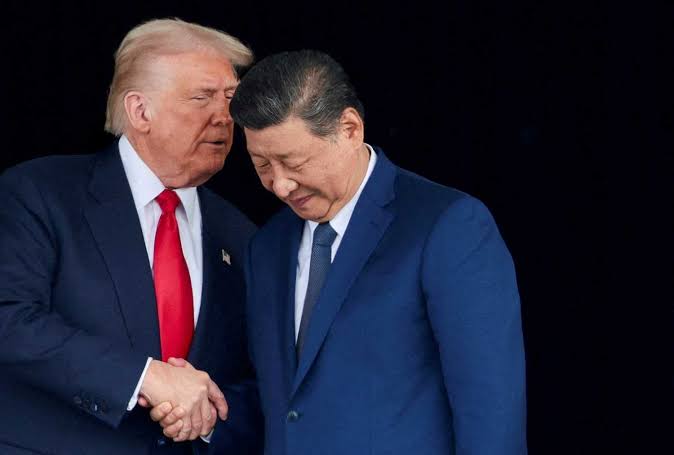
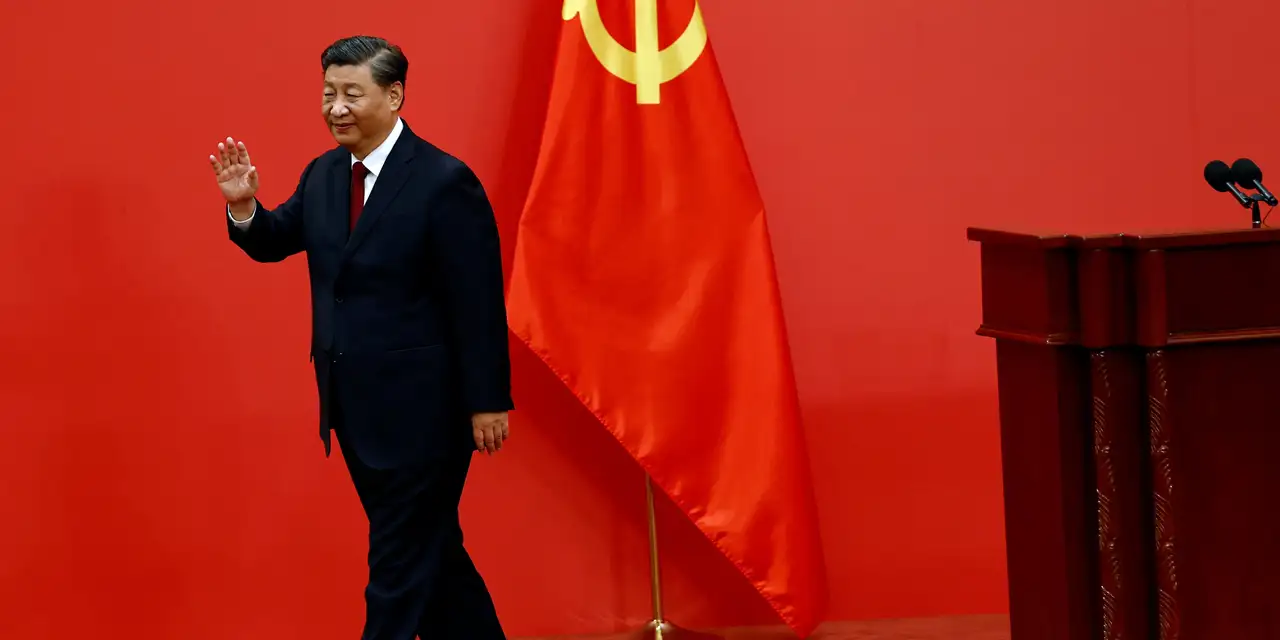
    President Donald Trump and Chinese counterpart Xi Jinping will address the Pentagon’s 1260H blacklist this week after the roster expanded to nearly 200 Chinese corporate champions.

    The register now includes e-commerce group Alibaba, search provider Baidu, and electric vehicle maker BYD, creating friction across consumer technology and automotive supply chains.

    Mandated by the US Congress, the 1260H designation penalizes companies accused of assisting the Chinese military. The listing restricts designated firms from securing US government contracts and cuts off access to Washington lobbying firms under rules that took effect on June 30. Companies on the list face heightened scrutiny from international supply chain partners, institutional shareholders, and trade compliance desks.

    Court Challenges and Boardroom Pushback

    Corporate targets are fighting the designations in federal court rather than waiting for diplomatic resolutions. Alibaba, autonomous driving sensor producer Hesai Group, biotechnology contractor WuXi AppTec, and drone maker DJI have secured interim procedural victories in US district courts over evidentiary standards used by defense officials. The legal wins provide temporary relief, though federal judges traditionally defer to executive discretion on national defense matters.

    Beijing retaliated following the June blacklist updates by enforcing export curbs and procurement reviews against selected American suppliers. Chinese trade officials are now including executives from designated companies, including battery giant Contemporary Amperex Technology and optical transceiver manufacturer Zhongji Innolight, in summit delegations to force direct negotiations.

    Supply Chain Exposure Across Asia

    For consumer tech and automotive operators across the Asia-Pacific region, the expansion of 1260H creates direct commercial risk. Suppliers integrating components from BYD or Hesai must navigate secondary compliance questions when selling assembled goods into North American distribution networks. Cloud software developers utilizing AI tools from Alibaba or Baidu face parallel questions regarding data provenance, as Washington claims Chinese platforms extracted training data from US labs.

    Asian retail and hardware brands cannot treat 1260H as a symbolic naming list. Institutional investors often mirror federal defense rosters in their internal risk matrices, constraining equity valuations and raising borrowing costs across Hong Kong and mainland bourses. The practical consequence is a sharp division in enterprise software and mobility hardware: vendors must either ring-fence their Western operations or absorb complete exclusion from public sector contracts.

    I would not be surprised if Beijing raises 1260H around the summit, particularly because several prominent Chinese companies now on the list are also being discussed as part of Xi’s business delegation.

    Legislative Escalation in Washington

    The latest dispute follows a nine-year diplomatic gap that paused when Trump visited Beijing in May. The Pentagon updated the blacklist weeks after that meeting, prompting the China Daily newspaper to publish a June 14 editorial arguing the enforcement contradicted efforts to stabilize bilateral commerce. Treasury Secretary Scott Bessent attempted to calm tensions on Sunday in New York during trade talks with Vice Premier He Lifeng, establishing a bilateral artificial intelligence working group.

    Capitol Hill is pushing in the opposite direction, with lawmakers introducing 64 separate bills referencing 1260H since last year. Proposals under review in the draft National Defense Authorization Act would widen the designation criteria to target any enterprise where the Chinese state holds even a single publicly traded share.