Retail News CRM

Tag: Ericsson

  • Ericsson, Microsoft to push IoT globally

    Ericsson, Microsoft to push IoT globally

    Ericsson will further strengthen the global Internet of Things (IoT) ecosystem with Microsoft by enabling enterprises to speed up the time it takes to launch mobile network-based IoT services.

    Their collaboration will help simplifying the launch of mobile network-based IoT services for enterprises.

    Ericsson IoT Accelerator allows enterprises to deploy their IoT solutions using Azure, which connects them directly to the ecosystem of mobile operators using the connectivity management service delivered by the Ericsson Device Connection Platform (DCPEricsson will further strengthen the global Internet of Things (IoT) ecosystem with Microsoft by enabling enterprises to speed up the time it takes to launch mobile network-based IoT services.

    Their collaboration will help simplifying the launch of mobile network-based IoT services for enterprises.

    Ericsson IoT Accelerator allows enterprises to deploy their IoT solutions using Azure, which connects them directly to the ecosystem of mobile operators using the connectivity management service delivered by the Ericsson Device Connection Platform (DCP), which is part of the Ericsson IoT Accelerator.

    Ericsson IoT Accelerator, a cloud-based, horizontal cross-industry offering comprising platform services and near-product services for telecom operators and selected industries, provides a continuous incremental set of functionality offered as a service to enable agile creation and deployment of solutions for IoT.

    The connectivity management service of the Ericsson IoT Accelerator allows telecom operators to design, launch and evolve managed IoT connectivity offerings towards enterprises requiring cellular connectivity.

    By cooperating with the continuously growing number of other telecom operators connected to Ericsson DCP, telecom operators can address the needs of global enterprises without making one-off investments alone. The platform gives the enterprise a unified service expEricsson will further strengthen the global Internet of Things (IoT) ecosystem with Microsoft by enabling enterprises to speed up the time it takes to launch mobile network-based IoT services.

    Their collaboration will help simplifying the launch of mobile network-based IoT services for enterprises.

    Ericsson IoT Accelerator allows enterprises to deploy their IoT solutions using Azure, which connects them directly to the ecosystem of mobile operators using the connectivity management service delivered by the Ericsson Device Connection Platform (DCP), which is part of the Ericsson IoT Accelerator.

    Ericsson IoT Accelerator, a cloud-based, horizontal cross-industry offering comprising platform services and near-product services for telecom operators and selected industries, provides a continuous incremental set of functionality offered as a service to enable agile creation and deployment of solutions for IoT.

    The connectivity management service of the Ericsson IoT Accelerator allows telecom operators to design, launch and evolve managed IoT connectivity offerings towards enterprises requiring cellular connectivity.

    By cooperating with the continuously growing number of other telecom operators connected to Ericsson DCP, telecom operators can address the needs of global enterprises without making one-off investments alone. The platform gives the enterprise a unified service experience for their entire device fleet.

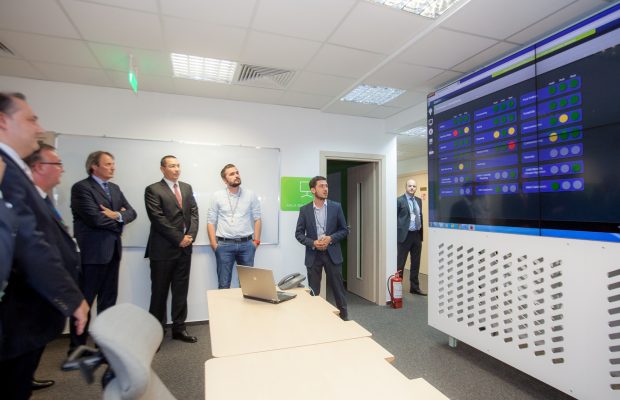
    Also, Landmark chose Ericsson to build communications infrastructure for its intelligent micro grid ecosystem across North America.

    The program includes Ericsson’s Zero Site communications platform, cloud, core and IoT software solutions. Ericsson will provide micro grid management, integrating communications for the industrial IoT with battery storage applications and grid-control software.
    Also, Landmark chose Ericsson to build communications infrastructure for its intelligent micro grid ecosystem across North America.

    The program includes Ericsson’s Zero Site communications platform, cloud, core and IoT software solutions. Ericsson will provide micro grid management, integrating communications for the industrial IoT with battery storage applications and grid-control software.), which is part of the Ericsson IoT Accelerator.

    Ericsson IoT Accelerator, a cloud-based, horizontal cross-industry offering comprising platform services and near-product services for telecom operators and selected industries, provides a continuous incremental set of functionality offered as a service to enable agile creation and deployment of solutions for IoT.

    The connectivity management service of the Ericsson IoT Accelerator allows telecom operators to design, launch and evolve managed IoT connectivity offerings towards enterprises requiring cellular connectivity.

    By cooperating with the continuously growing number of other telecom operators connected to Ericsson DCP, telecom operators can address the needs of global enterprises without making one-off investments alone. The platform gives the enterprise a unified service experience for their entire device fleet.

    Also, Landmark chose Ericsson to build communications infrastructure for its intelligent micro grid ecosystem across North America.

    The program includes Ericsson’s Zero Site communications platform, cloud, core and IoT software solutions. Ericsson will provide micro grid management, integrating communications for the industrial IoT with battery storage applications and grid-control software.


  • Ericsson unveils Dynamic Orchestration solution

    Ericsson unveils Dynamic Orchestration solution

    Ericsson has launched its Dynamic Orchestration solution to facilitate the rapid introduction and closed-loop automation of services across physical and virtual networks.

    The company said this signifies a strategic move forward in the company’s ambition to lead IT transformation services for its customers.

    Ericsson Dynamic Orchestration provides a flexible and modular solution for the management of existing technologies while virtualization capabilities are integrated and controlled.

    With support for zero-touch automation, rapid provisioning and policy-driven service assurance, Ericson Dynamic Orchestration helps operators achieve faster time to market and superior delivery of new and differentiated services.

    “The opportunities offered by virtualization are significant, but due to the complexity, many operators are taking an incremental step-by-step approach to get there,” Ulf Ewaldsson, head of business area digital services at Ericsson.

    “Ericsson Dynamic Orchestration enables our customers to excel at traditional services delivery while simultaneously incorporating virtualization capabilities to embrace emerging market and business opportunities driven by 5G and IoT,” said Ewaldsson.

    Ericsson Dynamic Orchestration is an end-to-end, automated service orchestration solution that provides rapid validation of Virtual Network Functions (VNFs), design and onboarding of new services, inventory, resource and capacity management, service configuration management and service assurance.

    The use of policy and real-time analytics across the lifecycle affords zero-touch operations and is the foundation for SLA compliance.

  • KT, Ericsson moving forward with 5G trial network

    KT, Ericsson moving forward with 5G trial network

    South Korea’s KT is in the final stages of testing for the 5G trial network that will support next year’s Winter Olympic Games in PyeongChang.

    Technology partner Ericsson announced that the companies have recently agreed on the details of the planned deployment and optimization of a trial 5G network in the nation this year.

    The 28-GHz trial network will include a virtualized radio access network and core system.

    Ericsson and KT have also jointly been testing components of the planned trial network along the new high speed rail line linking Seoul with the Incheon International Airport. The tests included a handover between 5G base stations along the railway, and achieved a peak throughput of 4Gpbs.

    The companies now plan to jointly develop beam forming and tracking technology for 5G and 5G-LTE interoperability technology to help operators optimize capacity and coverage.

    “Stability and interoperability among multiple services, systems and device manufacturers needs to be verified well in in advance of the trial network. We are raising the bar through our collaboration with partners such as Ericsson who are leading 5G technology and standardization,” KT head of networks Seong-Mok Oh said.

    Ericsson head of networks Fredrik Jejdling added that the companies have been working closely on 5G development since signing the 5G collaboration agreement in 2015.

  • Ericsson, MTS test new 5G features

    Ericsson, MTS test new 5G features

    Ericsson have built a prototype 5G network and completed a successful test of new radio network features.

    The scope of the trial covered features such as massive and multi-user MIMO (multiple input multiple output), beam tracking and dynamic TDD (time division duplex), concepts and technologies that are available in Ericsson’s commercial portfolio, and included stationary and mobile test cases.

    The prototype system comprises a base station with integrated multiple antennas and two sets of user equipment, and is located in Moscow.

    The massive and multi-user MIMO features are based on hardware including up to 512 smart antennas with integrated transceivers per cell, which significantly improves throughput for subscribers.

    Also, the multi-user MIMO feature enables operators to serve multiple subscribers in one sector of a cell with the same spectrum, and thus increase the efficiency of frequency use and the cell capacity.

    “With a scalable and dynamic 5G network as a base, an array of new services and revenue streams will be available to operators,” said Hannes Ekstrom, head of customer unit MTS in Europe & Latin America. “It will enable the automation and business transformation required for the Internet of Things, as well as services like virtual and augmented reality.”

    Ericsson and MTS plan to further develop the 5G prototype system to an extended 5G demo zone in time for the 2018 international soccer competition in Russia.

  • SoftBank taps Ericsson to improve indoor coverage

    SoftBank taps Ericsson to improve indoor coverage

    Japan’s SoftBank plans to deploy Ericsson’s Radio Dot system across Japan to improve indoor coverage for its large subscriber base.

    The operator will target medium to large buildings in high-density urban areas including Tokyo, Osaka and Nagoya with the deployment, Ericsson said. Deployment will commence in the densest areas of the three cities, in buildings including office towers, shopping malls and train stations

    SoftBank began testing Radio Dot technology in Japan in June 2015 as the company explored ways to better meet the huge demand for improved indoor coverage in urban areas. Now after extensive testing and verification, the operator is ready to enter the mass deployment stage.

    “We are always interested in adopting the latest technologies to ensure our subscribers receive the best possible network service,” SoftBank SVP Hideyuki Tsukuda said.

    “After evaluating a number of options, we concluded that the Ericsson Radio Dot System was the most cost-efficient solution for large buildings. Its deployment in crowded urban indoor environments will enable us to meet user expectations for a consistently high quality of network coverage.”

  • Ericsson, IIT Delhi team to launch ‘5G for India’

    Ericsson, IIT Delhi team to launch ‘5G for India’

    Ericsson and the Indian Institute of Technology Delhi (IIT Delhi) have signed a MoU to jointly roll out a ‘5G for India’ program, conceptualized to fast-track realization of Digital India initiatives and aid application development for Indian start-ups and industries.

    Under the partnership, Ericsson will set up a Center of Excellence with a 5G test bed and incubation center at IIT Delhi and use this facility to drive the development of the country’s 5G ecosystem.

    In addition to hosting the Center of Excellence, IIT Delhi will conduct research and development to explore how some of the country’s challenges can be addressed with mobile technologies.

    The first series of tests under this program are due to begin in the second half of 2017 and will place India on par with other developed countries in terms of 5G network and application deployment.

    “The 5G for India program is a major step towards understanding the power of 5G technology and how it can help aid Digital India initiatives, including the development of smart cities,” said Paolo Colella, head of region India at Ericsson.

    “The program will focus on delivering research, innovation and industrial pilots that use next-generation 5G networks as an enabler. It will help initiate cross-industry research collaborations focused on the integration of ICT in industry processes, as well as products and services,” said Colella.

  • Ericsson names head for SEA, Oceania and India

    Ericsson names head for SEA, Oceania and India

    Ericsson has announced the appointment of a new head for Southeast Asia, Oceania and India as part of its restructuring strategy.

    Nunzio Mirtillo will take responsibility for Ericsson’s business across markets such as India, Australia, New Zealand, Indonesia, Singapore, Malaysia, Thailand, Vietnam, Myanmar, the Philippines and Bangladesh.

    Nunzio has had a 29 career with Ericsson, serving in roles in areas including solutions development, sales, marketing and delivery. He was most recently head of the Mediterranean region, managing Ericsson’s operations across 25 countries.

    “I’m looking forward to bringing my experience of working in different roles across a diverse range of markets to the newly-combined Market Area South East Asia, Oceania and India,” Nunzio said.

    “Ericsson’s strengthened portfolio focus and simplified organizational structure will enable us to better partner with our customers, to help them succeed in tough market situations and capitalize on new growth opportunities within ICT.”

    The appointment forms part of Ericsson’s reorganization strategy, which includes transitioning from 10 regions to five market areas and from four business units to three business areas.

    The restructuring, announced last month, comes as Ericsson seeks to slim down and focus more on mobile networks to restore profitability and competitiveness.

    As part of the appointment Nunzio has also been named a member of Ericsson’s executive team.

  • Ericsson to book up to $1.7b in charges in Q1

    Ericsson to book up to $1.7b in charges in Q1

    Ericsson has announced plans for a major strategic refocus after allocating up to $1.7 billion in provisions, writedowns and restructuring charges for the first quarter.

    The company announced it will take provisions of around 7 billion to 9 billion krona ($792.8 million to $1.02 billion) during the first quarter, triggered by “recent negative developments related to certain large customer projects.”

    Ericsson did not provide further details of the reason for the provision, which has raised the eyebrows of investment analysts.

    In addition, the company will write down assets during the first quarter that will have an estimated impact on operating income of 3 billion to 4 billlion krona ($339.8 million to $453.1 million), and has allocated around 2 billion krona for restructuring charges for the period.

    As a result of the challenges it is facing, Ericsson said it will pursue a more focused business strategy to restore profitability and healthy operating margins, focused on leveraging the potential of 5G, IoT and cloud.

    Ericsson’s portfolio will be reduced to fewer areas, and the company will be more focused on developing solutions combining products and services. The company aims to simplify its organizations structure and accelerate its R&D investments in certain core areas.

    “For some time Ericsson has been challenged on both technology and market leadership and the group strategy has not yielded expected returns,” Ericsson CEO Börje Ekholm said.

    “In our strategy review we have listened carefully to customers around the world and made an in-depth analysis of our portfolio and performance. To enable us to immediately take action and move with speed in execution we are today outlining our path to restoring profitability and to lead with innovation and best in class solutions in areas we have decided to focus on.”

    Focus areas will include networks and network rollouts, digital services, the IoT, managed services as well as ICT cloud infrastructure hardware.

  • SoftBank, Ericsson to trial 5G over 28-GHz

    SoftBank, Ericsson to trial 5G over 28-GHz

    Ericsson and Japan’s SoftBank have announced plans to demonstrate 5G over 28-GHz millimetre wave spectrum, as part of the next stage of their joint 5G trials.

    The companies said they are moving forward with more advanced 5G tests following the successful completion of basic 4.5-GHz and 15-GHz 5G trials in Tokyo last year.

    The upcoming trial will involve both indoor and outdoor testing environments and cover both device mobility and stationary tests. The trial will use Ericsson’s mmWave 28-GHz 5G Test Bed base station and device prototype solution.

    SoftBank and Ericsson will make use of advanced 5G technologies including Massive-MIMO, massive beamforming, Distributed MIMO, Multi-user MIMO and beam tracking.

    “SoftBank started to verify 4.5-GHz radio back in August 2016 and now 4.5GHz is becoming the leading candidate band for 5G services in Japan together with 28-GHz,” the operator’s SVP Hideyuki Tsukuda said.

    “We are leveraging Ericsson’s Test Bed with 28-GHz radio to validate a lot of advanced features at super low-latency and high throughput, which helps position us as a pioneer of 5G.”

    Ericsson Japan head Mikael Eriksson added that he is confident that the company “will be the first to deliver 5G services and that we will deliver the best performing end to end network in Japan.”

  • Singtel working with Ericsson to build shared IoT ecosystem

    Singtel working with Ericsson to build shared IoT ecosystem

    Singtel and Ericsson are using Mobile World Congress 2017 in Barcelona to conduct a joint demonstration of their Assured+ integrated IoT platform.

    The companies are working to co-create a shared IoT ecosystem for operators, networks and devices.

    The jointly-developed Assured+ will support IoT applications including elder care, connected cars and other IoT applications focused on providing connected life management for consumers.

    It aims to address industry challenges associated with a fragmented IoT market, whereby most devices developed today are place-centric and closed.

    “In order to realise the full potential of IoT and offer our customers the best user experience, we need to ensure collaboration between people, devices and networks,” SingTel CEO consumer Singapore Yuen Kuan Moon said.

    “Singtel believes an open ecosystem and the Assured+ solution will enable us to achieve these aims. By integrating standalone applications into one solution, Assured+ will bring convenience to our customers and also pave the way for more IoT solutions, such as smart home, to be launched in a seamless manner.”

    Ericsson has projected in its latest Mobility Report that there will be 18 billion IoT related devices by 2022.

    US operator AT&T has separately forged a long term agreement with members of the Bridge Alliance mobile operator group aimed at extending connected car initiatives into new territories.

    The two organizations will work to grow the number of connected cars on the road in territories covered by Bridge Alliance members, which spans the Asia-Pacific and MEA regions.

    The agreement sets forth a framework to extend the geographic coverage AT&T will be able to provide to automotive manufacturers for their infotainment and other offerings.

    Bridge Alliance members will meanwhile be able to access solutions like Wi-Fi hotspots, internet radio and live traffic for car makers to implement.

    “Our collaboration with AT&T is based on the alignment and integration of processes,

    platforms and propositions. This presents exciting possibilities for the automotive industry,

    helping to accelerate the delivery of cutting-edge connected car solutions in our markets,” Bridge Alliance CEO Eileen Tan said.

  • China Mobile, Ericsson demo IoT-powered factory

    China Mobile, Ericsson demo IoT-powered factory

    China Mobile and Ericsson have completed a trial involving what the companies say is the world’s first cellular IoT-based connected factory.

    The companies are presenting the outcomes of the trial at Mobile World Congress 2017 in Barcelona.

    The factory is implementing multiple applications for low-power wide area (LPWA) networks and devices, including production line monitoring, warehouse monitoring and package and materials tracking.

    Ericsson’s demonstration in Barcelona highlights a connected high-precision screwdriver, with motion sensors attached to NB-IoT modules that transmit real-time data from the tools to the cellular IoT network.

    The factory has around 1000 high-precision screwdrivers that each require routine calibrations and lubrications based on usage.

    The solution being developed for the factory covers terminals, networks to the platform and analytics.

    It is powered by Ericsson radio equipment and NB-IoT software, as well as Intel’s pre-commercial NB-IoT software, an Intel modem embedded in a Fibocom module and China Mobile’s OneNet IoT platform.

    “The combination of cellular IoT and Industry 4.0 has so far been fairly unexplored,” Ericsson head of north east Asia Chris Houghton said.

    “Enabling IoT network technology such as Cellular LPWA, together with cloud-based solutions, give manufacturing firms access to more information than ever before. The opportunity to use data to increase productivity is not only beneficial to a firm, but the whole of society as well.”

    China Mobile has been helping to lead the development of cellular IoT technology, having completed the world’s first lab testing on NB-IoT and moving towards large-scale field trials.

  • Telstra taps Ericsson for network evolution

    Telstra taps Ericsson for network evolution

    At Mobile World Congress 2017, Australian operator Telstra announced it has selected Ericsson to support its major “Network of the Future” transformation program.

    Ericsson will supply equipment and services to support the program, which includes a nationwide optical network transformation and expansion.

    The program will also include 5G new radio (NR) trials, the creation of a new Media Delivery Cloud to complement Telstra’s Telco Cloud project and deployment of CAT M1 functionality nationwide to establish Australia’s largest IoT network.

    Under the agreement, Ericsson will deliver a three-year optical transmission network and rollout plan to expand Telstra’s long haul, metro and regional optical networks, supplying and installing converged packet-optical technologies from Ciena.

    Ericsson, Telstra and Qualcomm will meanwhile collaborate on interoperability testing and an over-the-air field trial based on the 3GPP’s expected 5G NR specifications. Telstra is also a member of the group pushing for accelerated 5G NR standardization

    For the IoT initiative, Telstra and Ericsson have now commenced localized CAT-M1 trials in Melbourne and Tasmania in the first stage of a deployment across Telstra’s 4G network, which covers over 98% of Australia’s population.

    “These projects… provide the foundation for Telstra’s Network of the Future program, which is essential to delivering our customers a brilliantly connected future,” Telstra group managing director for networks Mike Wright commented.

    “Our expanded optical network will support important emerging network capabilities such as IoT, 5G and enhanced media delivery. And our move to virtualization through the Telco and Media Cloud projects will enable us to deliver our customers unique and differentiated services to meet their personal and business needs.”

    Telstra said its Telco Cloud network is now delivering live traffic. Telstra first announced its network function virtualization infrastructure (NFVi) program at last year’s Mobile World Congress and the company has now compled the first video call over a virtualized EPG.

  • Ericsson launches its 5G platform

    Ericsson launches its 5G platform

    Ericsson has announced it has become first to market with its new 5G platform, comprising combined 5G core, radio and transport portfolios, as well as digital support systems, transformation services and security.

    The 5G portfolio supports federated network slicing for 5G roaming, network slice management, 5G policy and user data, distributed cloud architecture and 5G transformation services.

    “With this launch, we introduce our 5G platform to support the beginning of a huge change in network capabilities, allowing our customers to offer more advanced use cases and new business models to their customers. It is an important milestone enabling operators to continue their evolution journey to 5G,”

    SK Telecom and Ericsson separately revealed that they completed the first end-to-end demonstration of a 5G trial system at Ericsson’s lab in Kista, Sweden late last year.

    The live demonstration was based on joint development with SK Telecom. It used Ericsson’s Cloud Core, virtual RAN and over-the-air new radio/LTE interworking technologies.

    Nokia separately announced it has successfully conducted the first connection based on the pre-standard 5GTF interface.

    The trial at Oulo in Finland used commercially available 5G-ready Nokia AirScale radio access and AirFrame data center platforms. It used an Intel 5G mobile trial platform designed to support both sub 6-GHz and mmWave 5G bands.

    “This first 5G connection is a true landmark for the telecommunications industry, and yet another mark of Nokia’s capabilities in 5G,” Nokia head of 5G Harold Graham said.

  • SKT, DT, Ericsson demo 5G federated network slicing

    SKT, DT, Ericsson demo 5G federated network slicing

    SK Telecom, Ericsson and Deutsche Telekom have successfully built and demonstrated the world’s first intercontinental 5G trial network.

    The companies used federated network slicing for 5G roaming between trial networks in South Korea and Germany.

    The demonstration was hosted at SK Telecom’s 5G Testbed at the BMW driving center at Yeoungjong-do, as well as Deutsche Telekom’s corporate R&D center in Bonn, Germany.

    With 5G technology, network slicing will allow operators to configure end-to-end networks that provide the desired functionality and service parameters. Federated network slicing will extend this functionality to visited networks for roaming services.

    Implementing this will require enhanced cooperation between international operators, because it will require them to open their networks to host partner services.

    This will require pre-existing agreements covering aspects including network slice availability at the access layer, availability in the core network and connections to customer application services. The network slicing will be managed by edge cloud resources.

    “5G is not just a faster network. 5G will provide extreme user experience anywhere and anytime, even when the user roams across different operators globally,” SK Telecom CTO Alex Jinsung Choi  said.

    “Federated network slicing will enable seamless platform sharing among operators at a global scale for continuous and guaranteed user experience.”

    SK Telecom plans to show off federated network slicing functionality at Mobile World Congress 2017 in Barcelona later this month.

  • Ericsson launches telco security automation tool

    Ericsson launches telco security automation tool

    Ericsson has launched a new telecoms security product designed to enable automated security orchestration across multiple ICT domains.

    The Ericsson Security Manager supports out-of-the-box security for telco cloud operations, physical and virtual networks and digital support solutions, as well as enterprise networking applications.

    It is designed to provide real-time, contextual security management using a customizable, adaptive policy engine.

    The new product will comprise part of the Ericsson Digital Support System, and will enable customers to set and enforce security policies to protect important assets. It supports continuous monitoring of threats, vulnerabilities and compliance with the capability for automated remediation

    “In today’s ICT landscape, security is of the utmost importance for organizations across all domains,” Ericsson head of IT and cloud products Anders Lindblad said.

    “Ericsson Security Manager leverages our leadership and expertise across a wide array of ICT domains to bring to the market an innovative, adaptive and contextual security automation solution for telecom networks as well as cloud, IoT and enterprises.”

    Ericsson plans to showcase the new suite at Mobile World Congress 2017 in Barcelona later this month.