Retail News CRM

Tag: Ericsson

  • IBM, Ericsson make phased-array breakthrough

    IBM, Ericsson make phased-array breakthrough

    IBM and Ericsson have announced a joint R&D breakthrough that the vendors say could accelerate the launch of 5G networks.

    The companies have created a contact silicon-based millimeterWave (mmWave) phased array integrated circuit operating at 28GHz within a phased array antenna module designed for use in future 5G base stations.

    The development is a result of a more than two-year collaboration to research phased-array antenna technologies. This partnership was first announced in November 2014.

    According to the companies, the prototype module has the potential to meet the size, weight, cost and performance standards that would be required for future 5G phased array deployments to be commercially viable.

    The module measures around 2.8 inches by 2.8 inches, and consists of four monolithic integrated circuits and 64 dual-polarized antennas. It supports a beam-steering resolution of less than 1.4 degrees for high precision pointing towards users.

    “There has been a lot of encouraging progress in 5G standardization last year including the beginning of live field trials,” Ericsson senior advisor for network products Thomas Noren said.

    “Big efforts in research and development are key to this and our collaboration with IBM Research on phased array antennas can help operators to effectively deploy radio access infrastructure necessary to support a 5G future.”

  • SKT, Ericsson, BMW achieve 3.6Gbps for 5G connected car trial

    SKT, Ericsson, BMW achieve 3.6Gbps for 5G connected car trial

    SK Telecom achieved what it says is the world’s fastest 5G speed for a connected car during a demonstration conducted with Ericsson and BMW Korea.

    SKT said the trio has successfully tested its pilot 5G network on a connected car running at 170 kilometers per hour, reaching a 3.6Gbps transmission speed over the 28-GHz band.

    The demo was conducted at the German car maker’s driving center in Yeongjong Island, Incheon, where the trio first successfully tested its pilot 5G network for multi-vehicular communications last November.

    SK Telecom said with 5G avoiding obstacles is difficult at high speeds, but the operator achieved this through the application of advanced beamforming and beamtracking technologies.

    “Connected car is regarded as the barometer for 5G as it can only be realized through the combination of all 5G technologies. As ultra-high speed and ultra-low latency are prerequisites for realizing autonomous driving and immersive media services, the 3.6Gpbs transmission speed we successfully demonstrated today not only brings us a step closer to realizing autonomous driving, but will also have a great impact on a broader range of industries,” SK Telecom said in a statement.

    The demo significantly enhances the stability of connected car services by improving image recognition and V2X (Vehicle to Everything Communication) technologies, the operator added.

    “That is, a vehicle will be able to communicate, in real time, with other vehicles, traffic lights and surveillance cameras to understand and respond to unexpected situations and obstacles… in a much shorter time.”

  • China Mobile, Ericsson, Mobike trial IoT in Shanghai

    China Mobile, Ericsson, Mobike trial IoT in Shanghai

    China Mobile Shanghai  has teamed up with Ericsson and bike-sharing service startup Mobike to conduct a cellular IoT trial on the Chinese operator’s live network in Shanghai.

    During the trial, Ericsson’s latest cellular IoT technologies were used to more accurately locate the IoT-enabled bikes of Mobike, providing a more convenient and enhanced bike-sharing experience to Mobike’s users.

    Coverage areas were also extended to places that traditional mobile coverage can hardly reach, such as underground parking lots. The new technologies will also significantly reduce the time to unlock the bikes and users will enjoy “open upon scanning” without waiting.

    Mobike vice president Yang Zhongjie said latest cellular IoT technologies like CAT-M1 and NB-IoT will greatly enhance the user experience in the future and solve existing challenges encountered by Mobike such as coverage in difficult locations.

    “We also expect Chinese operators to complete the nationwide deployment of cellular IoT as early as possible,” Yang added.

    New cellular IoT technologies provide better coverage and faster response time with narrower bandwidth and fewer resources than mobile technology. They also bring energy-saving and deep-coverage features which enable five-to-seven-fold coverage improvements for operators in the same site environment. The battery life also extends to more than 10 years.

    The successful trial marks an important step forward in the large-scale commercial deployment of cellular IoT in China, Ericsson said in a statement.

    China Mobile and Ericsson recently signed an IoT agreement as part of China Mobile’s Big Connectivity strategy.

  • Telstra, Ericsson demo 10G intercontinental encryption

    Telstra, Ericsson demo 10G intercontinental encryption

    Australia’s Telstra and Ericsson have separately demonstrated secure end-to-end encryption over  10Gbps intercontinental link.

    The companies encrypted data in transit at 10Gbps between Los Angeles and Melbourne, Australia using Ciena’s ultra-low latency 10G wire-speed encryption technology.

    The companies said the trial demonstrates that data can be encrypted in transit – beyond the walls of a data center – at high speeds without any impact to performance.

    “The outcome of this test shows that data can now be encrypted while in transit across a long distance, while maintaining the speed and reliability our customers have come to expect from our international network,” Telstra executive director of international operations and services Darrin Webb said.

    “We will continue to work with Ericsson and Ciena to take this trial to the next level with a 100Gbps encryption test.”

    “This time last year Telstra and Ericsson achieved an encryption trial between Melbourne and Sydney. We have now extended the distance from Melbourne to Los Angeles with data in transit encryption at 10Gbps, which is the typical speed used today over these distances without encryption,” Ericsson head of customer unit Australia and New Zealand Emilio Romeo added.

    Ericsson and Telstra next plan to demonstrate 100Gbps encryption over the same intercontinental route in the first half of the year.

  • Ericsson, Cisco to virtualize VHA’s core, IP network

    Ericsson, Cisco to virtualize VHA’s core, IP network

    Vodafone Hutchison Australia (VHA), operator of the Vodafone Australia brand, has engaged Ericsson and Cisco to evolve and virtualize the operator’s core and IP network.

    Ericsson has won a contract to lead the transformation program, building the infrastructure as well as delivering an end-to-end operational system.

    The vendors will deliver a joint architecture solution comprising an Ericsson hyperscale data center system and software components, as well as Cisco’s WAN automation engine, network service orchestrator, IP network VNFs and security gateway.

    Through the project, VHA plans to simplify its network and infrastructure to enable the operator to become more agile and proactive in the way it brings services to market. The transformation also promises to reduce opex and capex and ultimately improve the customer experience.

    The deal marks the first major collaboration between Ericsson and Cisco on telecoms cloud infrastructure, and comes as part of the global business and technology partnership the two vendors formed in November 2015.

    “Ericsson and Cisco are our existing providers of core and routing functions making

    them good partners to move into a virtualized environment,” VHA CTO Kevin Millroy said.

    “This transformation allows us to introduce new applications to drive innovation and improve customer services and user experience. The new infrastructure opens the door to new business models and markets – such as IoT for Vodafone. We are excited about the future prospects this partnership offers.”

  • Ericsson, Cisco to launch joint Wi-Fi solutions

    Ericsson, Cisco to launch joint Wi-Fi solutions

    Ericsson and Cisco have announced an expanded partnership covering the delivery of a new Wi-Fi solution for mobile, cable and other industries’ customers.

    The new Evolved Wi-Fi Networks (EWN) offering combines Ericsson’s 3GPP access and core network technologies with Cisco’s Wi-Fi portfolio.

    The offering will cover pre-integrated solutions including indoor small cells and operator Wi-Fi over Ericsson outdoor access networks and Ciso WLAN.

    Integrating Cisco WLAN with Ericsson macro or indoor access networks will also allow operators to steer users between mobile and Wi-Fi access networks to ensure a superior end-user experience.

    In addition, core network integration will allow operators to offer all their core network services over Wi-Fi for multi-mode devices.

    Design and deployment of new products based on the offering will be handled by Ericsson’s services organization, and the solutions will be bundled with Ericsson managed services as well as customer support, design and deployment services.

    “Our strategic partnership brings together the capabilities of two leading players in networking, mobility and cloud, creating the best end-to-end solutions and opportunities for our customers,”

    Ericsson Head of Region North America Rima Qureshi said.

    “By adding Wi-Fi solutions into the partnership, we will enable our customers to offer best-in-class Wi-Fi in their networks, complemented by our leading 3GPP portfolio and services organization.”

  • SKT, Ericsson and Qualcomm collaborate on 5G NR trails

    SKT, Ericsson and Qualcomm collaborate on 5G NR trails

    SK Telecom, Ericsson and Qualcomm have announced plans to conduct interoperability testing and over-the-air field trials based on 5G New Radio (NR) standards currently under development by the 3GPP.

    In a statement, the companies said the trials will drive the mobile ecosystem toward rapid validation and commercialization of 5G NR technologies at scale.

    The interoperability testing and trials will launch in Korea starting in the second half of 2017.

    “As 5G rapidly gains momentum, a globally agreed and unified standard becomes imperative to achieve early commercialization of 5G and build an efficient ecosystem around it,” said Alex Jinsung Choi, EVP, chief technology officer at SK Telecom.

    “As 3GPP NR is a global 5G standard, we are delighted to announce early 3GPP NR trials with leading 5G players, Ericsson and Qualcomm, with which we have made remarkable world’s first footprints in the past with previous generations of groundbreaking mobile technologies.”

    During the trails, SK Telecom, Ericsson and Qualcomm will showcase new 5G NR technologies which utilize wide bandwidths available at higher frequencies to increase network capacity and achieve multi-gigabit per second data rates.

    The proliferation of 5G NR technology can make it more cost-effective and easier for multi-gigabit internet service to reach more homes and businesses.

    These technologies will be critical to meeting the increasing consumer connectivity requirements for emerging consumer mobile broadband experiences such as virtual reality, augmented reality and connected cloud services.

    The trials will employ 3GPP 5G NR Multiple-Input Multiple-Output (MIMO) antenna technology with adaptive beamforming and beam tracking techniques to deliver sustained mobile broadband communications at higher frequency bands, including non-line-of-sight (NLOS) environments and device mobility.

    It will also make use of scalable OFDM-based waveforms and a new flexible framework design which are also part of the 5G NR specifications.

    The trials will also provide valuable insight into the unique challenges of integrating 5G NR technologies into mobile networks and devices. This will enable timely commercial network launches based on 3GPP Rel-15 standard compliant 5G NR infrastructure and devices.

    “The roadmap of 5G technologies is incredibly complex, and trials based on the global 3GPP 5G standard, such as this, are critical to continuing our long history of leadership integrating advanced wireless technologies in form-factor accurate devices to ensure timely deployment of 5G networks,” said Matt Grob, executive vice president and chief technology officer, Qualcomm Technologies.

  • Ericsson, Huawei, Nokia and Cisco join forces on NFV testing

    Ericsson, Huawei, Nokia and Cisco join forces on NFV testing

    Ericsson, Huawei, Nokia and Cisco have teamed up to launch a new initiative that aims to help telecoms operators address the challenges related to NFV deployment and cloud transformation within multi-vendor network environments.

    The four signed Tuesday a MoU to create the NFV Interoperability Testing Initiative (NFV-ITI), which will address NFV multi-vendor interoperability challenges for telcos, enabling them to optimize NFV deployment and integration costs, and reduce time-to-market for new services.

    While telecos are at different stages of implementing NFV into their networks, the deployment and integration of virtual network functions within today’s multi-vendor environments can introduce new interoperability challenges.

    To addresses these challenges, NFV-ITI members will cooperatively support the interoperability of NFV elements in specific customer situations to accelerate the commercial implementations, and to reduce the time-to-market for new applications and services.

    All existing NFV interoperability related testing activities are triggered by different industry needs, including the European Telecommunications Standards Institute (ETSI) NFV Testing WG, OPNFV testing projects, Network Vendor Interoperability Testing (NVIOT) testing, and the New IP Agency (NIA) interoperability testing.

    NFV-ITI will complement all existing NFV interoperability testing activities in the industry and focus on testing interoperability configurations of commercial NFV solutions used in the telcos’ networks, the companies said.

    It will recommend generic principles, including interoperability test cases, test criteria, processes, methods, guidelines, templates and testing tools, and will also apply best practices from all existing interoperability testing activities in the industry, such as NVIOT forum efforts.

    In addition, NFV-ITI will be well-aligned with the ETSI NFV Industry Specification Group and the OPNFV project.

  • Ericsson, 20th Century Fox ink feature film deal

    Ericsson, 20th Century Fox ink feature film deal

    Ericsson has entered int o an exclusive, multi-year feature film deal with leading international content distributor 20th Century Fox Television Distribution for its subscription video on demand (VOD) service, Nuvu.

    The output deal includes 20th Century Fox-produced titles along with an extensive selection of global film franchises for territories across sub-Saharan Africa in multiple language.

    Titles include The Maze Runner, The Devil Wears Prada, Rio 2, Dawn of the Planet of the Apes, The Fault in Our Stars, The Monuments Men, and Kingsman: The Secret Service, as well as film franchises such as Die Hard and X-Men.

    “Through this partnership, Nuvu subscribers will have access to some of Hollywood’s hottest films as part of their package, localized on a market-by-market basis,” said Thorsten Sauer, head of broadcast and media services at Ericsson.

    The built-in ability to distribute content to consumers during off-peak periods is a core feature of the service. This minimizes data costs for both operator and consumer, addressing the key cost challenge that has so far been an obstacle for VOD uptake in Africa.

    Further, Ericsson has signed an exclusive media delivery services contract with Australian public service broadcaster, Special Broadcasting Service (SBS).

    The contract sees Ericsson aggregate, prepare and deliver content from multiple international content owners and distributors through its broadcast and media services hub in London and deliver media assets directly into SBS’s headquarters in Sydney in a format ready for transmission.

  • Ericsson launches Accelerated Network Build

    Ericsson launches Accelerated Network Build

    Ericsson has launched a new solution the company said will allow operators to cut network build time in half.

    The new Accelerated Network Build process incorporates a series of technical innovations, including a cloud-based toolkit with automation functionality, to streamline the rollout process.

    Pilots with operators in developed and emerging markets indicate that Accelerated Network Build can cut build time by 50%, reduce the number of required site visits by 70% and offer 99% first-time-right delivery, Ericsson said.

    With 5G uptake expected to significantly outpace previous generations, operators will be under pressure to rapidly deploy networks to meet demand. Ericsson’s Mobility Report predicts that there will be over 500 million 5G subscriptions by the end of 2022.

    “”Fast time to revenue and reduced cost is a must have right now – it’s a pain point for operators that needs to be solved with innovation, Technology Business Research executive analyst Michael Sullivan-Trainor said.

    “New technologies are going to make things even more complex and it’s very timely that Ericsson is addressing how to fix the infrastructure deployment model now, both for today and for tomorrow when 5G and the Internet of Things will come.”

  • Ericsson deploys Elastic RAN for SoftBank

    Ericsson deploys Elastic RAN for SoftBank

    Ericsson has completed the first commercial deployment of its new Elastic RAN for Japan’s SoftBank, and entered an agreement to build a 5G trial network in parts of Tokyo with NTT DoCoMo and Intel.

    SoftBank has implemented Ericsson’s Elastic RAN at Tokyo station, one of the biggest train stations in the world.

    The deployment allows for an unlimited number of cells to be co-ordinated across a network to improve flexibility in the aggregation of different network carriers.

    Ericsson said tests indicate that downlink throughput has increased by up to 40% during peak hours for commuters using three-carrier aggregation compatible smartphones.

    “The Japanese market is highly developed, and our customers enjoy using the latest mobile broadband technologies with their smartphones and applications,” SoftBank SVP and deputy head of technology Hideyuki Tsukuda said.

    “We are excited to partner with Ericsson in the first introduction of the Elastic RAN solution to enable peak performance of the most advanced smartphones in the world, in the densest and most challenging areas of our network.”

    He said SoftBank plans to continue deploying the RAN across these dense urban areas.

    Ericsson separately announced an agreement with DoCoMo and Intel to build a 5G trial network in parts of the city from 2017.

    Ericsson will provide 5G radio, baseband, virtualized RAN and core networks, while Intel will contribute its chipset in user devices. The trial will use the 28-GHz spectrum band that the Japanese government is considering designating for 5G use.

  • SmarTone signs pre-5G partnership with Ericsson

    SmarTone signs pre-5G partnership with Ericsson

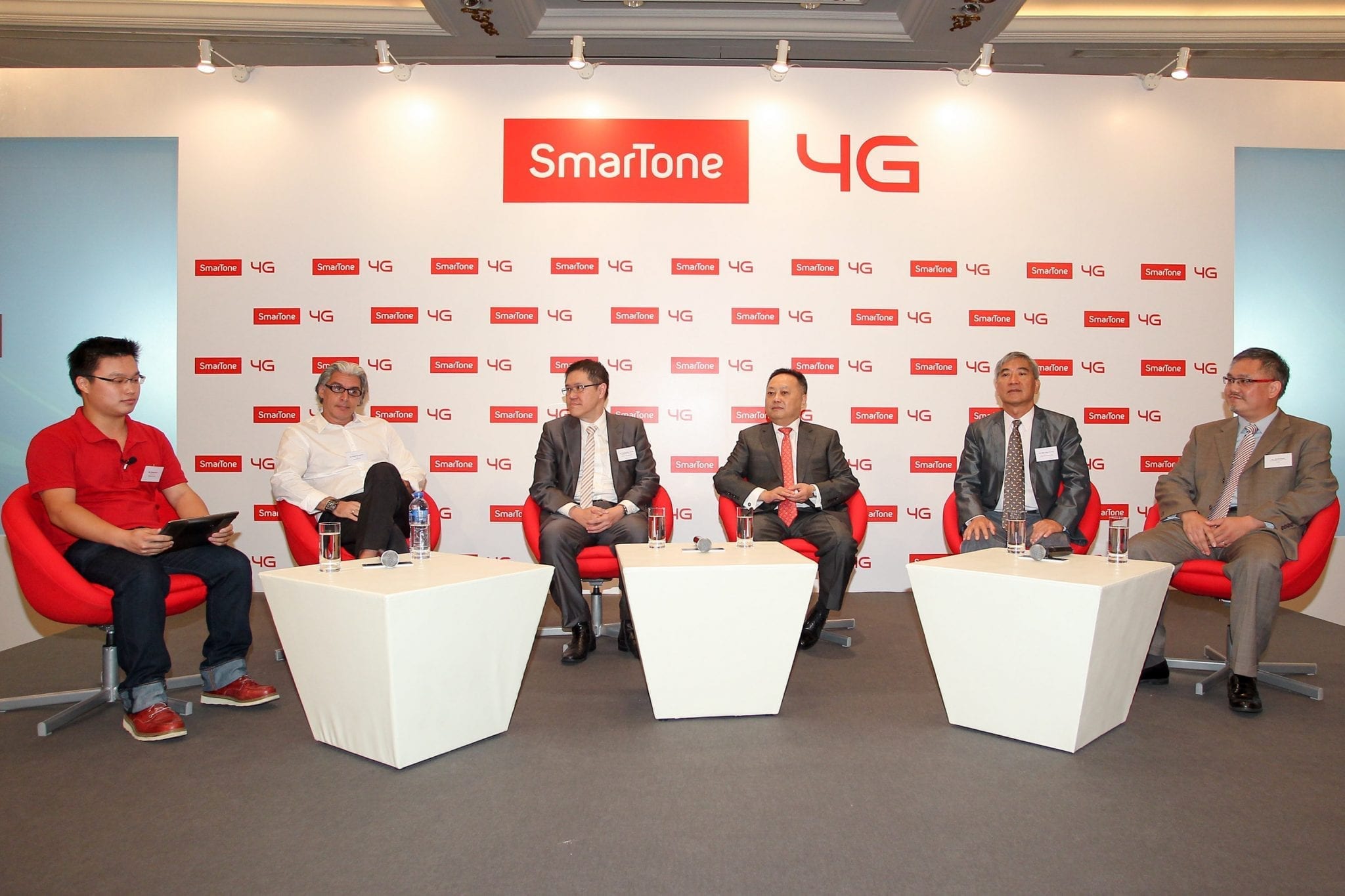
    Hong Kong’s SmarTone has contracted Ericsson as its sole supplier for core and RAN equipment over the next five years, as part of a partnership aimed at paving the way for 5G deployment.

    The companies plan to conduct early trials and pilot deployments of key pre-5G technologies from this quarter.

    Ericsson will help SmarTone upgrade and expand its network infrastructure and refarm more spectrum for LTE, and will deploy NFV and SDN technologies to improve network performance and efficiency.

    The companies have been working to introduce technologies including LTE-Advanced and LTE-Advanced Pro to the SmarTone network.

    “SmarTone is pleased to extend our strategic partnership with Ericsson to pave the way for 5G in Hong Kong,” SmarTone CTO Stephen Chau said.

    “[We] will continue to invest in spectrum and pre-5G technologies within the next few years to provide a superior customer experience and to evolve our network into an advanced, dynamic and cloud-based network architecture.”

    He said the deployment will help the company capture future business opportunities from new types of applications including VR and M2M applications such as the IoT.

    SmarTone was established in 1992 and publicly listed in 1996. The company provides voice, mobile and fixed broadband services in Hong Kong and Macau.

  • Ericsson appoints new CEO

    Ericsson appoints new CEO

    Ericsson has appointed long-time board member Börje Ekholm president and CEO, effective from mid-January.

    Ekholm will replace interim CEO Jan Frykhammar on January 16, who is standing in following the resignation of Hans Vestberg in July.

    Ekholm joins Ericsson from Patricia Industries, a division of Sweden’s Investor – Ericsson’s largest shareholder -where he is CEO. Prior to this he was CEO of Investor AB between 2005 and 2015, and has held positions at companies including Novare Kapital and McKinsey and Co.

    “I am very excited about this opportunity. As the networks and applications become even more important in a 5G connected world, our customers, and the industry, look for continuous innovation,” he commented.

    “I look forward to joining the great team at Ericsson and work closely with existing and new customers around the world in shaping the future of our industry.”

    Ekholm is also a board member of Alibaba and several other companies. He is based in the US, and will stay there when he takes the role. He will retain his position on the Ericsson board.

    Ericsson recently announced plans to cut 3,000 jobs in Sweden as part of the vendor’s ongoing cost cutting program.

  • Ericsson swings to $22.4m Q3 loss

    Ericsson swings to $22.4m Q3 loss

    Ericsson swung to a loss of 200 million kronor ($22.4 million) in the third quarter as a result of weaker sales, particularly in the networks segment.

    The net loss – which marked a reversal from a 3.1 billion kronor net income in the third quarter – can be attributed to a number of negative industry trends impacting demand, according to Ericsson.

    Reported sales declined 14% year-on-year to 51.1 billion kronor, with network segment revenues down 19% due to weaker demand for mobile broadband.

    Gross margins also shrank significantly – from 33.9% to 28.3% – as a result of the decline in demand for network equipment in comparison to the lower-margin services segment.

    “The negative industry trends from the first half of 2016 have further accelerated, impacting Q3 sales, primarily relating to mobile broadband…The current industry trends indicate a somewhat weaker than normal seasonal sales growth between the third and fourth quarters,” Ericsson president and CEO Jan Frykhammar said.

    “In addition a renewed managed services contract in North America, with reduced scope, will impact sales negatively. The current business mix of coverage and capacity sales in mobile broadband is anticipated to prevail in the short term.”

  • Ericsson signs raft of content deals for Nuvu

    Ericsson signs raft of content deals for Nuvu

    Ericsson has signed a slate of deals with leading content distributors for its subscription video on demand (SVOD) service Nuvu, acquiring more than 2,500 hours of content from international distributors including Viacom (MTV, BET, Nickelodeon), MGM, CBS, Al Jazeera, DHX Media and Mattel.

    Titles include globally recognized hit TV franchises such as Hawaii Five-O, Next Top Model, CSI: Miami, Being Mary Jane, SpongeBob SquarePants, Bob the Builder, Vikings and many others along with a raft of premium Hollywood movies.

    Ericsson has also licensed dozens of pan-regional and local African TV series and movie content from distributors such as iRoko, Trace and Agwhyte International along with hundreds of music videos from the 960 Music Group, which is home to some of West Africa’s most influential music artists including P-Square, 2Baba and Yemi Alade.

    “We created Nuvu to help mobile operators in emerging markets to address a significant untapped market for video content,” said Thorsten Sauer, head of broadcast and media services at Ericsson. “Africa has some of the highest mobile adoption rates globally and there is a high demand for quality content from consumers.”

    Nuvu is a complete end-to-end SVOD service developed by Ericsson for mobile operators in emerging markets, which spans both the technology platform and the content licensing. The service leverages the company’s extensive over-the top capabilities based on Ericsson Managed Player and components of Ericsson MediaFirst TV Platform.