Retail News CRM

Tag: Ericsson

  • ZTE, China Mobile, Ericsson conduct 5G-4G VoLTE call

    ZTE, China Mobile, Ericsson conduct 5G-4G VoLTE call

    ZTE, the Guangzhou branch of China Mobile and Ericsson have announced a joint demonstration of a VoLTE voice and video call between 5G and 4G smartphones.

    The successful call, completed at the end of March, utilized non-standalone 5G networks provided by different vendors, as well as China Mobile Guangzhou’s existing 4G network.

    It used ZTE’s 5G and 4G smartphones for the VoLTE voice and video call, as well as network equipment from the two vendors.

    Guangzhou is one of five 5G pilot cities for China Mobile, which is investing the most heavily in 5G among China’s big three mobile operators.

  • Airtel contracts Ericsson for VoLTE upgrade

    Airtel contracts Ericsson for VoLTE upgrade

    India’s Bharti Airtel has contracted Ericsson to expand its voice over LTE (VoLTE)services to cater to growing demand.

    Under the agreement, Airtel will deploy Ericsson’s Cloud VoLTE solution, which is used to deliver HD voice enabled VoLTE services onto a customer data center.

    Ericsson Cloud VoLTE includes a virtual IMS and supporting nodes to add VoLTE services onto existing LTE data networks.

    The upgrade forms part of Bharti Airtel’s network transformation program, Project Leap, and is aimed at helping Airtel carve out a larger share of the growing Indian VoLTE market. Ericsson’s latest Mobility Report predicts that there will be 780 million VoLTE subscriptions in India by 2023.

    “We remain committed to building a state-of-the-art future-ready network as part of…Project Leap, and delivering best-in-class digital experiences to our smartphone customers,” Bharti Airtel CTO Randeep Sekhon commented.

    “This partnership with Ericsson will allow us to rapidly increase VoLTE capacity to serve our growing traffic, and make our network prepared to easily introduce new communication services today and in 5G.”

  • Ericsson to provide 5G NR equipment for KT

    Ericsson to provide 5G NR equipment for KT

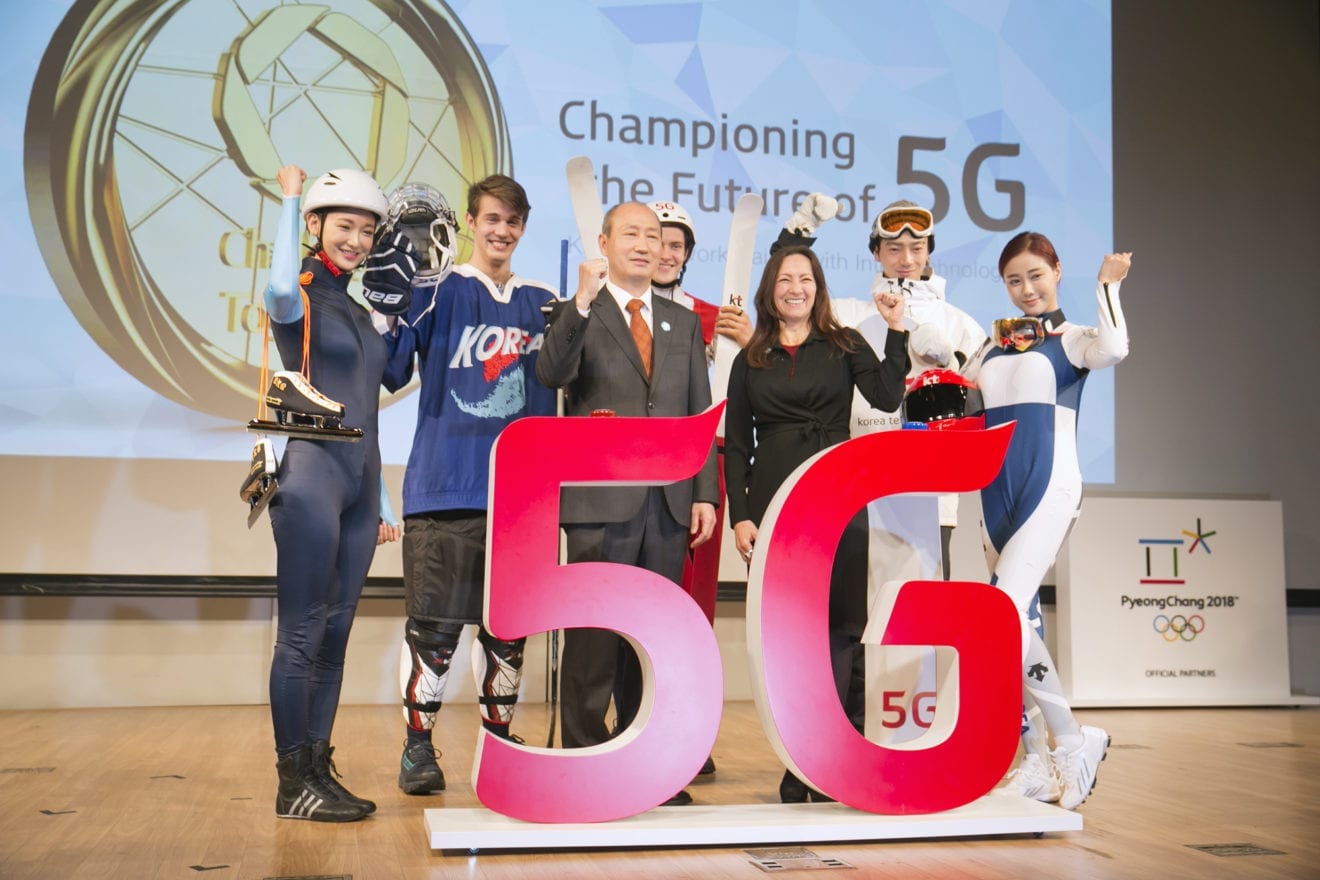
    South Korea’s KT has awarded Ericsson a 5G contract aimed at allowing the operator to launch commercial 5G services early next month.

    South Korean operators have agreed to launch 5G services at the same time in April at the request of regulator KCC.

    Under the contract with Ericsson, the vendor will provide 5G new radio hardware and software for KT’s 3.5-GHz non-standalone 5G network.

    KT selected Ericsson as a key 5G supplier in November last year as part of its preparations for a commercial launch.

    “Having worked successfully with Ericsson on 4G LTE, we are pleased to continue that partnership to make our 5G ambitions a reality with Ericsson’s leading 5G technology,” KT VP of access network design Jinho Choi said.

    “Korea is one of the most competitive and technology-advanced markets in the world. By taking a global lead to enable nationwide commercial 5G services through commercially available 5G smartphones, KT is demonstrating our commitment to our customers and showing how we can drive a global 5G ecosystem where Korea plays a key role.”

  • RCom chief spared jail over debt to Ericsson

    RCom chief spared jail over debt to Ericsson

    Reliance Communications (RCom) has terminated a deal to sell its telecom assets to Reliance Jio Infocomm after failing to receive regulatory approval.

    But RCom’s founder Anil Ambani has been granted a last-minute reprieve from being imprisoned for failing to meet the company’s court-ordered repayment obligations to major creditor Ericsson after support from his older brother and founder of Reliance Jio Mukesh.

    In a stock exchange filing, RCom blamed its decision to terminate its asset sale plan to factors including a failure to receive the required permissions from the Department of Telecom.

    RCom also has not received notice of consent or objection from more than 40 of its foreign an Indian lenders regarding the proposed sale, despite holding over 45 meetings over a 15 month period, the company said.

    RCom has also decided to attempt fast track resolution of its overall debt through the National Company Law Tribunal, and the Tribunal has restrained the company from selling or transferring ay assets while the case is ongoing.

    But due to last minute intervention from Mukesh Ambani, RCom revealed in a second statement that the company has managed to make the required 5.5 billion rupee ($80.1 million) payment to Ericsson before the deadline for him to be jailed.

    Ambani was last month found to be in contempt of court over a failure to make the 5.5 billion rupee payment RCom had promised to make to Ericsson in September. He was given four weeks to make the payment or face being jailed for three months.

    “My sincere and heartfelt thanks to my respected elder brother, Mukesh, and Nita, for standing by me during these trying times, and demonstrating the importance of staying true to our strong family values by extending this timely support,” Anil Ambani said in a statement.

    “I and my family are grateful we have moved beyond the past, and are deeply grateful and touched with this gesture.”

    Ambani was referring to the fallout the two brothers had over the inheritance of Reliance Industries from their father Dhirubhai Ambani following his death in 2002. The brothers have since reconciled.

  • Ericsson to supply gear for XL Axiata’s 5G transport network

    Ericsson to supply gear for XL Axiata’s 5G transport network

    Indonesia’s XL Axiata has awarded Ericsson a contract to contribute to the deployment of the operator’s planned 5G ready transport network. Under the expanded partnership, Ericsson will provide 5G ready routers for the rollout over the next three years, commencing in the second quarter. Ericsson will provide its Router 6000 for all sites selected to be modernized under the contract. The router is optimized for 10G/100G connectivity, as well as the low latency, high accuracy internal clock and IPsec security capabilities required in 5G backhaul networks.

    “We are looking forward to continuing our partnership with Ericsson with state of the art transmission equipment,” XL Axiata director Yessie D Yosetya said.

    “We believe this will increase our network capacity performance and also beneficial for our customers to deliver a good user experience. This is one of our initiatives into the 5G era.”

    XL Axiata announced during Mobile World Congress in Barcelona that it has partnered with Huawei to construct Southeast Asia’s first 5G-ready simplified transport network covering all of Indonesia.

    Huawei is providing its Optical Networking 2.0 solution to help the operator simplify network architecture and build a simplified transport network.

  • Vodafone Idea taps Ericsson for 5G-ready LTE upgrade

    Vodafone Idea taps Ericsson for 5G-ready LTE upgrade

    Vodafone Idea has contracted Ericsson to deploy 5G-ready LTE equipment as part of its network consolidation and modernization program. Under the agreement, Ericsson will help integrate the networks of the merged Vodafone India and Idea Cellular. As part of the contract, Ericsson will supply radio systems and transport equipment from its 5G-ready Ericsson Radio System portfolio.

    The deployments will provide Vodafone Idea with high capacity, low latency microwave backhaul and an easy upgrade path to 5G.

    Vodafone Idea plans to consolidate its existing deployed 2G and 3G network to maximize spectrum availability for LTE. This will be followed by ongoing optimization of the network in order to enhance end-user experience.

    “We have been strategic partners to both Vodafone India and Idea Cellular for several years, and now we enter a new phase of partnership with this deal with Vodafone Idea,” Ericsson head of SEA, Oceania and India Nunzio Mirtillo said.

    “The 5G-ready solutions in the Ericsson Radio System portfolio will help boost the capacity of Vodafone Idea’s LTE network and broaden the availability of high-quality mobile broadband services for its customers. These deployments will play an important role in building [the operator’s] future-ready 5G network.”

    Vodafone India and Idea Cellular completed a $23 billion merger in September, but the combined company is currently operating both the Vodafone and Idea brands independently.

  • Korea’s KT skips Huawei for 5G

    Korea’s KT skips Huawei for 5G

    KT has chosen Samsung Electronics, Ericsson and Nokia as suppliers of 5G network equipment. As expected, Huawei was excluded from the list.  “In choosing 5G equipment providers, the company considered a wide range of factors: the level of technology, investment costs and management stability based on the compatibility with the existing LTE network,” KT said in a statement.

    The bid results, announced by the company Thursday, come a month after SK Telecom named Samsung Electronics, Ericsson and Nokia as its 5G equipment providers.

    This is the second time Huawei was left out despite having participated in internal tests along with the three selected.

    SKT and KT’s choices were anticipated because both had used equipment from Samsung, Ericsson and Nokia for their 4G LTE networks.

    Compatibility of equipment is an advantage for mobile carriers in terms of cost and maintenance, especially in the early stages when 5G equipment is not fully installed nationwide.

    LG U+ is the only one among Korea’s three mobile carriers that has not yet announced 5G equipment suppliers. The smallest mobile carrier is likely to include Huawei on its list. It partnered with the Chinese company for its 4G LTE network, along with Samsung, Ericsson and Nokia.

    An LG spokesman said Thursday that the company “does not have plans to openly disclose selected bidders for 5G network equipment at the moment,” as it is not mandatory.

    However, LG U+ Vice Chairman Ha Hyun-hwoi gave a strong hint at the parliamentary audit late last month when he gave a positive answer to a lawmaker’s question on whether it was “unavoidable” to use Huawei’s 5G equipment as its 4G equipment was from the same company.

    The biggest advantage of Huawei’s 5G equipment is cost efficiency. The Chinese company is known to charge prices that are 20 to 30 percent lower than other global competitors for high-quality 5G equipment. A factor that argues against Huawei is security concerns.

    Due to its ties to the Chinese government, there have been worries that the company’s equipment is being used for spying. In August, the U.S. and Australian governments banned Huawei from supplying equipment for their 5G wireless infrastructure citing security reasons. Britain said in July it “is less confident” about the integrity of Huawei products.

    The concern is shared by some local customers as well. Online petitions at the Blue House’s official website have been posted since June requesting a stop to LG’s adoption of Huawei’s 5G equipment. Huawei has been denying such allegations.

    In a press release last month, the Chinese tech company highlighted that, despite ongoing security concerns, there has been zero cases of actual information leakage in the past.

    “We have supplied LTE equipment for LG U+ since 2013, and until now, there were no cases of security accidents,” said the statement. “After multiple verifications by the government, it has been proved that there have been no problems.”

  • Ericsson, LimeLight to collaborate on content delivery

    Ericsson, LimeLight to collaborate on content delivery

    Ericsson has announced an agreement with Limelight Networks to add content delivery capabilities to its new Ericsson Unified Delivery Network (UDN) platform.

    Ericsson aims to develop UDN as a webscale edge delivery network, and is using the agreement with Limelight Networks to add content delivery as the first application built on the platform.

    Edge computing promises to address rapid increasing demand for data by leveraging distributed infrastructure to support low laency applications such as IoT, gaming and virtual reality.

    “We are always looking for ways to improve the performance and reach of our network,” LimeLight Networks CEO Bob Lento said.

    “The strength of Ericsson’s partnerships with communications service providers through the UDN Network is a key component of this agreement that enable us to offer even better reach and performance for our customers. We are delighted to work with Ericsson on this initiative.”

    According to Frost and Sullivan principal analyst Dan Rayburn, edge computing and content delivery are a powerful combination.

    “Combining content delivery technologies with an edge cloud platform that’s distributed inside ISPs is one of the best ways to guarantee optimal performance and allow application providers to use edge services to improve the end-user experience,” he said.

  • Ericsson posts first quarterly profit since 2016

    Ericsson posts first quarterly profit since 2016

    Corrupt business practices dating back to 2007 have led to the dismissal of 50 employees and will likely result in a “material” fine for Ericsson once the Justice Department and Securities and Exchange Commission complete their investigation into the matter, the Swedish company said Thursday.

    During an earnings call with analysts, CEO Börje Ekholm said the company found evidence of corruption during an internal investigation and reported those findings to authorities. “We don’t know how the discussions will go, but we think it is likely that some measures will be taken,” he said.

    Top executives at the company were allegedly involved in a bribery scandal in Africa, Asia, Europe and the Middle East. Ekholm said the company has declined to make provisions against the expected financial penalties because it’s unsure of the magnitude of what the ongoing investigation will uncover.

    The tempered admission of guilt on the part of Ericsson overshadowed an otherwise successful quarter for the business, its first profitable quarter since June 2016.

    Investments in research and development along with 18 months of cost reductions are finally contributing to the company’s financial performance, according to Ekholm. The company has laid off 22,000 employees since June 2016 and had a total head count of 95,000 workers at the end of September.

    Strong demand for 5G network equipment in the United States also boosted sales to almost $6 billion during the quarter. “There is strong momentum in the global 5G market with lead markets moving forward,” Ekholm said in a statement. “More work remains, however, to get all parts of the business to a satisfactory performance level.”

    Net sales in North America, the company’s biggest regional market behind Europe, jumped 21% year over year and network equipment sales increased 24% in North America during the same period.

    Ericsson banked a net profit of $304 million during the quarter. Sales in North America reached nearly $1.7 billion during the quarter, representing almost 28% of its entire business. The company forecasts a steady research and development cost during the final quarter of 2018 and says it will primarily focus those expenses in the network division.

  • Ericsson CEO talks 5G with US FCC

    Ericsson CEO talks 5G with US FCC

    Ericsson president and CEO  Börje Ekholm recently met with FCC Chairman Ajit Pai to talk about how the US is making more millimeter wave spectrum available for 5G, its progress in reducing the time involved in tower siting and clearing the way for network slicing, a key component of 5G.

    Ekholm applauded the FCC’s recent order removing barriers to infrastructure investment and expressed appreciation for the chairman’s focus on releasing spectrum, particularly millimeter wave spectrum, to help fuel increased innovation and investment in 5G. Ekholm also noted that the Internet Freedom order clears away a cloud of uncertainty over network slicing, according to an ex parte filing(PDF).

    Also present during the October 3 meeting were Niklas Heuveldop, president and CEO of Ericsson North America; Lynn Starr, senior director for Ericsson Government Affairs; Jared Carlson, vice president for Ericsson Government Affairs; and Rachael Bender, Chairman Pai’s wireless and international legal adviser.

    Importantly, Heuveldop covered some of the investments Ericsson is making in the US, including Ericsson’s decision to begin manufacturing in the US in the fourth quarter of this year. The Swedish vendor plans on providing volume production of next-generation radios in order to introduce products into the US market faster.

    Ericsson is also opening a new software development center with a baseband focus in 2018, eventually employing more than 200 software engineers when it’s fully operational.

    In addition, Ericsson said it will increase its investment in artificial intelligence and automation, employing about 100 specialists in North America by the end of this year. The team will work on using AI technologies to accelerate automation, examine product road maps and explore new business opportunities.

    It’s worth noting that Heuveldop joined a chorus of other industry leaders in urging the FCC to move forward with plans to make more midband spectrum available for 5G. He also stressed that the US mobile industry will need significantly more than 100 MHz in the 3.7-GHz to 4.2-GHz band for operators to offer the combination of speed and coverage they need for 5G.

    Midband spectrum also is of great interest to Ericsson’s rival Nokia, whose CEO Rajeev Suri met with Chairman Pai earlier this year. Suri and other Nokia executives stressed the urgency of making spectrum available in the 3.7-GHz to 4.2-GHz band as the centerpiece for nationwide 5G deployment in the U.S.

    This past summer, the FCC adopted an Order and Notice of Proposed Rulemaking that identifies new opportunities for flexible use in up to 500 megahertz of midband spectrum between 3.7-GHz and 4.2-GHz. The notice proposes to add a mobile allocation to all 500 megahertz in the band and seeks comment on various proposals for transitioning part or all of the band for flexible use, including market-based, auction and alternative mechanisms.

  • Telstra, Ericsson, Intel claim another 5G first

    Telstra, Ericsson, Intel claim another 5G first

    Australian operator Telstra, Ericsson and Intel announced they have jointly completed the first end-to-end 3GPP non-standalone 5G data call on a commercial network in a multi-vendor setup.

    The trial at Telstra’s 5G Innovation Centre on the Gold Coast used licensed 3.5-GHz spectrum, and Ericsson 5G new radio, baseband and packet core solution, a Telstra SIM and the Intel 5G Mobile Trial Platform.

    The trial involved a network connection to an Ericsson virtualized 5G packet core running on Ericsson’s network functions virtualization infrastructure. The 5G slice was then connected into the existing Telstra mobile network.

    Ericsson and Intel jointly completed the first lab-based end-to-end non-standalone 5G data call earlier this month, and the live demonstration builds on this milestone.

    Demonstrating this 5G data call end-to-end using my own personal SIM card on Telstra’s mobile network is the closest any provider has come to making a ’true’ 5G call in the real world-environment, and marks another 5G first for Telstra,” Telstra group managing director for networks Mike Wright said.

    Previous 5G firsts have included the first 5G data call over 26-GHz spectrum, Australia’s first 5G connected vehicle trial and its first 5G mobile gaming demonstration.

    “We continue to work with global technology companies Ericsson and Intel as well as global standards bodies to advance the deployment of commercial 5G capability in Australia,” Wright concluded.

  • Verizon names former Ericsson chief as new CEO

    Verizon names former Ericsson chief as new CEO

    Former Ericsson chief executive Hans Vestberg was named Friday as the new CEO of US telecom group Verizon, succeeding Lowell McAdam as of Aug 1.

    Vestberg, 52, is currently chief technology officer and head of global networks for Verizon, the leading US wireless telecom group which also owns the AOL and Yahoo brands and is a major broadband provider.

    McAdam, 64, who has been CEO since 2011, will serve as executive chairman until the end of next year, when he will retire and become non-executive chairman, a Verizon statement said.

    Under McAdam, Verizon took over the stake in the important wireless unit from Britain’s Vodafone and built a customer base of more than 150 million.

    He also led efforts to buy faded internet stars AOL and Yahoo to create a digital media operation within the firm, under the brand known as Oath.

    Vestberg, a native of Sweden, served for six years as president and CEO of that country’s big telecom-networking group Ericsson before moving to Verizon.

    He takes over as telecom firms race to build fifth-generation, or 5G networks expected to lead to an array of new services such as telemedicine and autonomous vehicles.

    The transition also comes amid a pending tie-up between number three and four carriers T-Mobile and Sprint, subject to regulatory review.

    Verizon’s main competitor, AT&T, is seeking a transformation with the purchase of media-entertainment giant Time-Warner, a deal being challenged by US antitrust authorities.

    “I am humbled to be appointed CEO of Verizon at such an exciting and dynamic time for our company and industry,” Vestberg said.

    “We are experiencing unprecedented changes in the way users interact in the digital world, and we are racing ahead to remain at the forefront of technology, connectivity and mobility.”

  • Ericsson, Fraunhofer Institute demo industrial 5G for jet engine

    Ericsson, Fraunhofer Institute demo industrial 5G for jet engine

    Ericsson is partnering with the Fraunhofer Institute for Production Technology to explore and develop industrial applications for 5G.

    The first example is producing so-called blade integrated disks, or blisks, for Germany-based jet engine manufacturer MTU Aero Engines.

    Blisks are high-tech components where the disk and blades are produced as a single piece and serve the purpose of compressing the air inside jet engines. They are milled out of solid pieces of metal and have extremely high requirements towards accuracy and surface integrity.

    Typically the milling process takes 15-20 hours and the total lead time is around three to four months, including the coating processes and quality checks.

    At the trial Ericsson has built a 5G trial system operating on 3.5-GHz, which is connected to an acceleration sensor mounted directly on the blisk in the production machinery.

    Vibrations are transmitted in real time via 5G to the evaluation system. The very low latency of 5G technology helps correlate the vibration to the tool’s position and enable prompt adjustment of the production process.

    “Applying 5G in the manufacturing industry has many important benefits in terms of costs, quality, and flexibility. The ultra-low latency and very high bandwidth make it possible to control machines in real-time, reducing manufacturing costs and improving the quality of products,” Ericsson said.

    The Swedish vendor said the 5G-enabled production process can help a single factory save €27 million ($32.7 million) per year in efficiency. It also helps cut CO2 emissions – from both the production of blisks and their operation in jet engines – by some 16 million tons annually on a global basis.

    These efficiencies and benefits would be impossible if using fixed line technology because of the complexity of production, the vendor added.

    Ericsson said the Blisk project, which was presented at the Hanover Fair in Germany late April, is the company’s first published tangible case study.

    “The Blisk project is a perfect example of what is possible in the industrial context with 5G in the future. Ultra-low latency of 5G makes this industrial use case feasible,” said Arun Bansal, Ericsson’s senior vice president and head of market area for Europe and Latin America.

  • Ericsson recovering but still posts Q1 loss

    Ericsson recovering but still posts Q1 loss

    Ericsson has reported its sixth straight quarterly net loss for the first quarter, but the vendor significantly improved its performance year-on-year.

    Ericsson posted a net loss of around 700 million kronor ($82.7 million), but this compared to a loss of 10 billion kronor in the first quarter of 2017.

    The vendor’s operating loss was meanwhile reduced to 300 million kronor from 11.3 billion kronor.

    Revenue for the quarter fell 9% year-on-year to 43.4 billion kronor, but adjusted for currency fluctuations revenue fell just 2%.

    Gross margins meanwhile improved significantly to 34.2%, from 15.7% a year earlier and 21.6% during Q4.

    During the quarter, Ericsson also cut its global workforce by a further 3,000 jobs, to take the number of positions eliminated since July up to 18,000.

    Ericsson CEO Börje Ekholm said the results indicate that the vendor is making strong progress with its ongoing turnaround program. To date the annual run-rate effect of the cost reduction program is around 8.5 billion kronor, he said, which compares to a target of 10 billion kronor for mid-2018.

    “We have continued to execute on our focused business strategy creating solutions that help our customers improve their business. Our efforts to improve efficiency in service delivery and common costs are starting to pay off,” he said.

    “The improvements in the quarter are encouraging. However, more work remains to be done. We have confidence in the strategic direction laid out and remain fully committed to our long-term targets.”

  • Ericsson rings up huge losses in 2017

    Ericsson rings up huge losses in 2017

    Swedish telecoms giant Ericsson said Wednesday that it rang up huge losses last year as network competition, restructuring costs and investment in lightning-fast 5G technology pushed it deeply into the red.

    The news sent Ericsson’s share price tumbling nearly nine percent on the Stockholm stock exchange in early trading, in a flat market.

    Ericsson said in a statement it booked net loss of 35.1 billion kronor (3.6 billion euros, US$4.4 billion) in 2017, compared with profit of 1.9 billion kronor the year before.

    The group also booked an underlying or operating loss of 38.1 billion kronor last year after profit of 6.3 billion kronor in 2016, while revenues dropped by 10% to 201.3 billion kronor, the statement said.

    “The focus during 2017 has been on reshaping overall strategy and on improving company structure and performance,” explained chief executive Borje Ekholm.

    “2017 was also the year when 5G went from vision to real business opportunities while we at the same time had good traction for our 4G portfolio,” he continued.

    “We are fully committed to our plans and our targets and expect to see tangible results of our turnaround in 2018.”

    Below target

    In the fourth quarter alone, Ericsson’s net loss widened to 18.9 billion kronor from a loss of 1.6 billion kronor a year earlier, while sales slumped by 12% to 57.2 billion kronor.

    “The fourth quarter was in line with our overall expectation, with gradual improving performance in networks and continued significant losses in digital services. The result is however far below our long-term ambition,” CEO Ekholm said.

    Earlier this month, Ericsson had announced that writedowns of 14.2 billion kronor would be booked in the fourth quarter, originating mainly from goodwill from investments made a decade ago.

    Investors fled after the earnings report was published.

    “When I look at the order book there’s not a lot of meat on the bone in there … I’m surprised the (share price) fall is so steep, but it’s an automated-traded share,” Jonas Olavi of Alfred Berg investment bank said.

    “Ericsson needs to turn over every rock in the search for new sources of income,” Mikael Tornwall, telecoms expert for daily Svenska Dagbladet, said.

    Ericsson said it had reduced the number of its employees and external workforce by 10,000 during the fourth quarter, part of its restructuring plan aimed at cost savings of 10 billion kronor by mid-2018.