Tag: etail

  • South Korean online retail sales show steep climb

    South Korean online retail sales show steep climb

    South Korean online sales posted double-digit growth in February, underpinned by soaring demand for air purifiers.

    The spike in demand was caused by an instance of fine-dust pollution that hit Korea during the month.

    The findings were published in a Ministry of Trade, Industry and Energy report last Thursday that registered a 12 per cent advance in online retail sales compared with the same period last year.

    Home appliances sales, encompassing air purifiers, grew 62.2 per cent over the course of the month.

    The February figures contrasted with a 0.4 per cent dip in revenue by both online and offline major retailers and a 7.1 per cent decline in offline sales. Discount outlet sales also dropped by 13.7 per cent.

  • Indian online grocer BigBasket raises Millions for next Phase

    Indian online grocer BigBasket raises Millions for next Phase

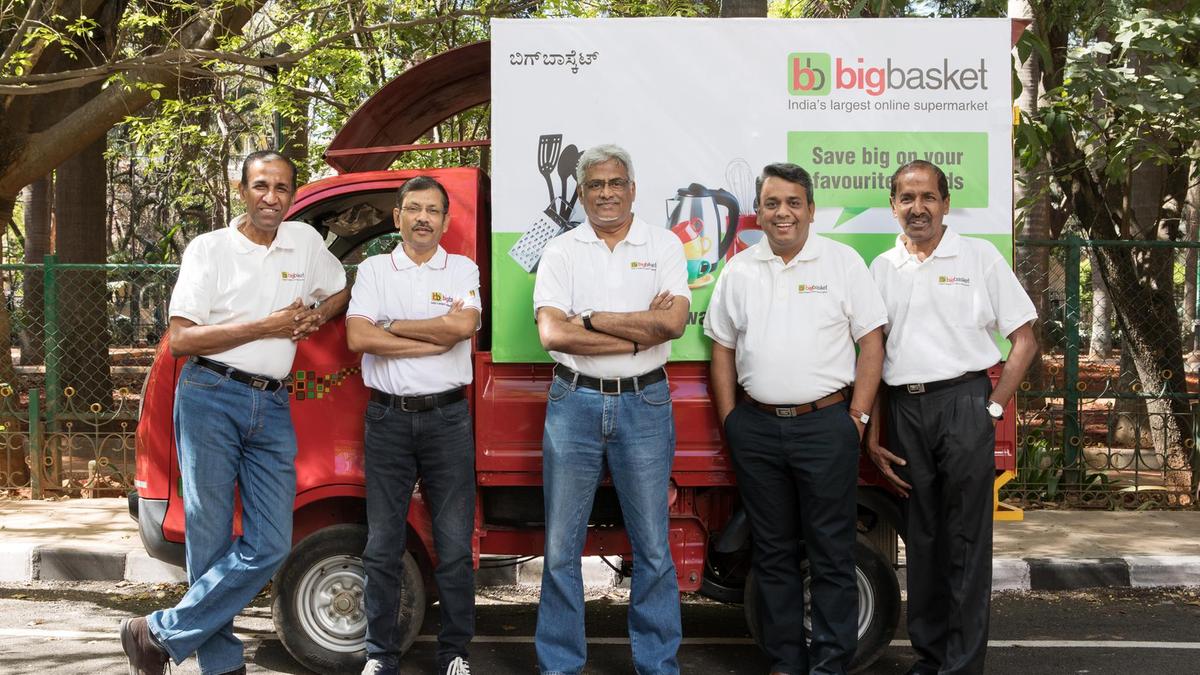
    Indian online grocery platform BigBasket has raised investment capital of about US$150 million.

    The investors include South Korean Mirae Asset Management (at about $60 million), the UK’s CDC Group (at $40 million), and existing investor Alibaba (about $50 million). The investment figures were shown in documents submitted to the Ministry of Corporate Affairs.

    BigBasket received $300 million in February last year from Alibaba and other investors and has been discussing seeking further funding since last November. The firm aims to generate revenues of the equivalent of $2.5 billion by next year.

    The online-grocery market is burgeoning in India, and accounts for a sizeable proportion of unorganised retail in the country.

  • Meet Alipay’s Western Expansion Partner: RiverPay

    Meet Alipay’s Western Expansion Partner: RiverPay

    Alipay is one of the dominant forces in Chinese mobile payments solutions, but its ultimate goal, like with any payments company, is global expansion. You’ve recently covered some of Alibaba’s expansion into the UK through their partnership with Barclaycard, but there’s an unknown partner I want to introduce you to that’s giving Alipay access to over 12,000 store locations and over 30,000 points of sale in the U.S., Canada and Europe.

    Meet RiverPay: Alipay’s authorized payment service partner that connects global merchants with over 1 billion Alipay users around the world, especially Chinese travelers abroad. (69% of whom used mobile payments last year, according to Nielsen.)

    All of RiverPay’s merchant customers are adopting Alipay as a payment option, including top luxury retailers like Saks Fifth Avenue, Hudson’s Bay, Dolce & Gabanna and Prada. With payments integration in less than two weeks and compatibility with over 80 percent of mainstream enterprise resource planning systems, RiverPay can help merchants adopt Alipay fast without interruption to cashiering systems.

  • Alibaba Launches “Fliggy Buy” Shopping Channel with Merchants

    Alibaba Launches “Fliggy Buy” Shopping Channel with Merchants

    New service offers convenience to Chinese travelers, advances “Global Fun” strategy Hangzhou, China, March 26, 2019 – Fliggy, the travel service platform of Alibaba Group, has launched its Fliggy Buy service, which offers overseas merchants a new solution to capture opportunities presented by the growing purchasing power of Chinese outbound travelers.

    The service offers a new shopping channel for Chinese travelers to browse and buy goods on Fliggy before reaching their destination, picking them up in stores after they arrive. It also advances Alibaba’s “Global Fun” strategy, which promotes international travel for Chinese tourists by working with industry players to give the tourists a richer experience while abroad.

    Merchants on Fliggy Buy will include duty-free and tax-free stores, both overseas and within mainland China, internationally renowned brands, specialty local stores and an increasing range of shopping destinations. Furla Hong Kong and Laox of Japan have already joined this channel, and more merchants are expected to join.

    “Fliggy is committed to making it easy to conduct travel business in the digital era. The launch of Fliggy Buy represents our latest move to work with merchants targeting the vast numbers of tourists from China to develop innovative solutions, and offer them targeted customer traffic. Our aim is also to embrace the potential of digital technology and provide a holistic travel experience encompassing food, accommodation, transportation, sightseeing, shopping and entertainment,” said Roman Zhu, Head of Fliggy Buy at Fliggy.

    Through Fliggy Buy, Chinese customers can access detailed information and buyers’ reviews about products, presented in their own language, prior to an overseas trip. This helps them understand features and compare prices across different merchants before committing to a purchase. They can ensure the items they want, especially limited editions, are in stock before the trip and make reservations online, as well as seek online customer service. Buying from duty-free and tax-free stores is an added benefit.
    Chinese travelers using this service can choose from a range of products, including cosmetics, suitcases, bags and alcohol offered by popular merchants. After selecting a pickup store, as well as inputting their personal information and completing payment, consumers can then pick up their goods at their leisure, allowing them more time to explore and experience the destination.

    “Duty-free and tax-free stores are our focus during the first phase of rollout, as they are the most visited shopping and consumption venues amongst Chinese outbound tourists. Our next step is to enrich the product categories on Fliggy Buy and recruit more overseas merchants to include high-end luxury brands, household electronics sellers, as well as pharmacy and cosmetics stores, assisting them to reach more Chinese consumers,” Zhu said.

    With users visiting 192 countries and regions in 2018, outbound travel is an important part of Fliggy’s business. Fliggy’s insights show an upward tendency of Chinese travelers spending overseas, as the average spending of these travelers grew 9% year-on-year in 2018. As a platform operator, Fliggy is dedicated to helping merchants and associations working in the tourist industry worldwide to build direct relationships with Chinese consumers.

    As a key component of the Alibaba Economy, Fliggy is committed to promoting Alibaba Group’s “Global Fun” initiative. Global Fun together with Global Buy, Global Sell, Global Pay and Global Delivery are the five core aspects of Alibaba Group’s globalization strategy to realize its long-term vision of serving two billion consumers around the world and supporting 10 million businesses to operate profitably on its platforms by 2036.

  • Home-and-living brand Jiyoujia debuts in Singapore

    Home-and-living brand Jiyoujia debuts in Singapore

    Alibaba’s e-commerce platform Taobao has launched its home-and-living channel, Jiyoujia in Singapore.

    Marking the brand’s first foray into an overseas market, products are on show at Taobao Home store at NomadX store.

    “Singapore is an important market for Taobao, and we continue to witness strong and sustained demand for the home-and-living category here by shoppers,” said Mickey Xiong, country director for Southeast Asia, at Taobao.

    “In fact, the home-and-living category is our fastest-growing segment here.”

    Jiyoujia also launched its Home Lab portal, one week after its debut in China. Using the portal, curated sets of Jiyoujia products are recommended to customers, promoted through interactive digital showcases. Surfers can hover over each item for more information.

  • Lululemon says e-commerce investment pays off

    Lululemon says e-commerce investment pays off

    Athleisure retailer Lululemon’s investment in e-commerce — revamping its website and improving on direct-marketing efforts to draw new customers — has paid off. Lululemon has posted a 46 per cent increase in its online revenue last year, adding that it has reached an e-commerce penetration rate of 26 per cent.

    The company announced it will be investing aggressively in e-commerce in new territories and plans to open e-commerce markets in France, Japan and Germany. The retailer also said it will roll out its “order online, pick up in store” program across the US by the winter holidays this year.

    The Canada-based retailer said they will step up on their international expansion plans, saying more than half of its planned 40 to 50 store openings this year would be in overseas markets.

    Lululemon posted a 24 per cent increase in revenue to $3.3 billion for the fiscal year ending February 3 from the $2.65 billion from the previous corresponding period.

    “Lululemon has delivered one of its strongest years yet, a result of broad-based strength across the business,” said company CEO Calvin McDonald in a press release.

    “We are energised to build upon our momentum and to seize the many opportunities ahead for Lululemon around the world.”

    For the fourth quarter, Lululemon said net revenue rose 26 per cent to $1.2 billion aided by holiday sales.

    Total revenue for fiscal 2018 was $3.3 billion.

    The retailer’s profitability in Asia and Australia more than offset the operating loss in Europe. Now with the company having 21 stores in Europe, Lululemon said it was about a year and half away from breaking even in Europe.

    The company forecast the momentum would continue this year, saying they expect a net revenue to be in the range of $3.7 billion to $3.74 billion for the full fiscal 2019.

  • Japan’s small retailers gain global e-commerce platform presence

    Japan’s small retailers gain global e-commerce platform presence

    The Japan External Trade Organisation is offering free international e-commerce site access to small-scale domestic retailers to help them sell products in 18 markets abroad.

    The initiative is expected to bolster exports for small and medium-sized businesses, taking advantage of the global popularity of Japanese products as international online trade remains on course to reach US$994 billion next year – up from $530 billion two years ago.

    Twenty four e-commerce sites, including Japan’s Rakuten; China’s Alibaba, Red and JD; and Singapore’s Redmart are signed up to participate in the program, featuring selected Japanese products on their platform without charging listing fees.

    Walmart’s Seiyu and British retailer Ocado will bring Japanese products into markets outside of Asia.

  • Walmart is taking on Amazon with its upcoming tablet

    Walmart is taking on Amazon with its upcoming tablet

    Soon, those searching for a cheap Android tablet won’t have to deal with the lack of Google Play Services found on the low-priced Amazon Fire Tablets. The line, powered by a forked version of Android, does not come with core Google apps including the Play Store. Instead, Amazon’s own app storefront is included. A tweet disseminated by XDA’s Mishall Rahman reveals that discount retailer Walmart is prepping an 8-inch Android slate that has Android 9 Pie pre-installed. The device will offer the usual bevy of Google apps and will feature the Google Play Store. Made in China, the tablet will carry Walmart’s own ONN brand, which it uses on low-priced tech accessories like headphones and cables.

    The new tablet, model number ONA19TB002, is expected to be “kid-friendly” according to a subsequent Bloomberg report. The 8-inch display will carry a resolution of 1200 x 800. Other specs included in Rahman’s tweet mention that the tablet will have a quad-core MediaTek MT8163 chipset under the hood, along with 2GB of memory and 16GB of expandable storage. The slate will have a microUSB port, and carry a 3500mAh battery.

    Walmart’s tablet has already received certification from the FCC, and could be priced under $200. A low priced tablet like this will probably not to do much to reverse the decline in shipments of the device. Strategy Analytics says that tablet shipments declined 6.2% last year. The Apple iPad remains the market share leader followed by Samsung and Amazon.

  • Majority of online shoppers check brands on Amazon

    Majority of online shoppers check brands on Amazon

    Most online shoppers compare a brand or retailer’s site to Amazon before purchasing something, according to a study released by Episerver.

    Episerver’s third annual Global Consumer Study shows that 87 per cent of online shoppers compare what they find on a brand or retailer’s site to Amazon before completing a purchase. Ninety-seven per cent won’t complete a purchase if they see incorrect or incomplete content on a brand’s website and/or mobile app.

    “Product education, personalised content and site search, purchasing ease, promotions on multiple channels, peer reviews and performance of the site itself can all make a difference,” said Ed Kennedy, senior director of Commerce at Episerver.

    According to Episerver, marketplaces like Amazon reign supreme due to their wide variety of price options, product selections and shipping features.

    The study, which surveyed 4500 online shoppers in eight countries, also showed that nearly half of online consumers, 46 per cent, said having too many options online has prevented them from making any purchase at all.

    Almost half of the people surveyed start their online purchase journey at an online marketplace, Amazon included, Kennedy said.

    Sixty per cent of consumer prefer marketplaces for their price options and over half, 58 per cent, for their product selections.

    “Knowing only a small fraction of customers do not use Amazon to compare products can certainly be a cloud over a retail operation seeking engagement and conversions on their digital properties,” Kennedy said.

    “However, knowing consumers’ mindsets that casual swiping can turn into committed shopping, retailers can drive interest and ultimately, sales, by lessening the burden of choice and doubling down on experience-driven commerce.”

  • Prime members can get Amazon’s Fire tablets at massive discounts

    Prime members can get Amazon’s Fire tablets at massive discounts

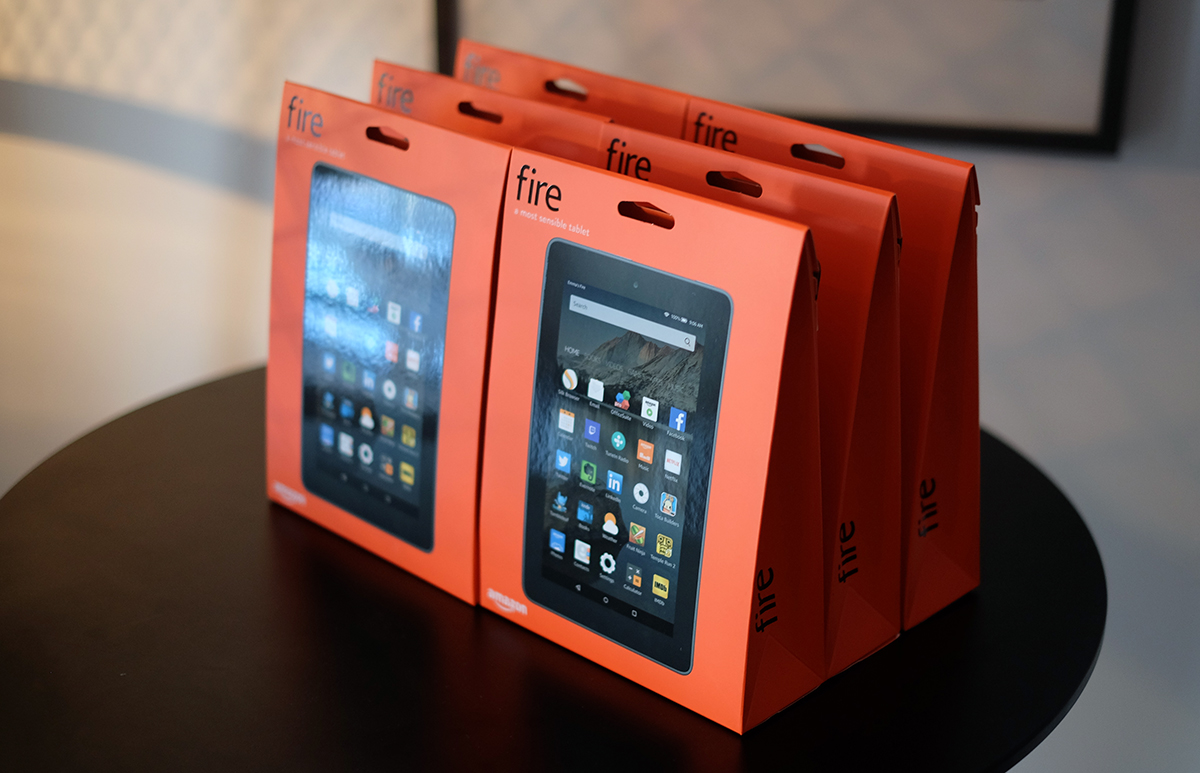
    If you’re in the market for a significantly cheaper tablet than the likes of Apple’s 2018-released iPad Pros or the last two Surface Pro generations, the Amazon Fire 7, Fire HD 8, and Fire HD 10 should be at the top of your wishlists. By no means powerhouses, these three typically deliver some of the best possible bang for your buck starting as low as $50.

    Even better, they’re frequently on sale at hefty discounts, recently reaching as high as 30 percent off the list price of a kid-friendly Fire 7 variant. Unfortunately for parents thinking of introducing their children to mobile technology, the Fire 7, HD 8, and Fire HD 10 Kids Editions are not marked down this time around. But if you’re an Amazon Prime member, you can get the regular Fire HD 10 for a whopping 50 bucks less than usual.

    That represents a 33 percent price reduction that brings the 10-incher down to its lowest retail cost in several months. The same $50 discount applies to the 64GB configuration as it does to the entry-level 32 gig version, both of which pack a respectable 2GB RAM and quad-core processor clocked at up to 1.8 GHz. The 10.1-inch screen delivers decent 1920 x 1200 resolution while helping the battery last an excellent 10 hours of mixed use between charges.

    Naturally, the Amazon Fire HD 8 is both smaller and slightly lower-end, with a slower quad-core chipset, 1.5GB RAM, and 1280 x 800 display in tow, but the same winning 10-hour battery endurance rating. The 8-incher can be had at $30 off with a Prime membership in 16 and 32GB configurations, the former of which is thus discounted by a sweet 37 percent or so.

    Finally, the ultra-low-end Amazon Fire 7 is getting the smallest markdown of the trio, but it’s actually dropping to its lowest ever price, also as an exclusive Prime offer. The $15 discount applies to both 8 and 16GB variants, the latter of which is however listed as “temporarily out of stock” at the time of this writing. The 7-incher comes with a modest screen, 1GB RAM, and only up to 8 hours of battery life, but just like its bigger brothers, it supports hands-free Alexa interaction.

  • Nearly half of Vietnamese shoppers buy premium products online

    Nearly half of Vietnamese shoppers buy premium products online

    Forty-eight percent of Vietnamese consumers buy premium products online from local retailers, with cosmetics the top category, a report says. Although the majority of survey respondents, 69 percent, said that they still purchase their premium products at local physical stores, the online ratio was higher than the global rate of 45 percent, says a global report by market research firm Nielsen.

    Nielsen’s Changing Consumer Prosperity study also found over a quarter of Vietnamese respondents, 27 percent, were inclined to buy online from overseas e-retailers, and 23 percent even travel overseas for these premium goods.

    Cosmetics are the top premium products that Vietnamese consumers spend their money on, according to 46 percent of respondents, following by clothing/shoes (44 percent), electronics (43 percent), body care (41 percent) and meat or seafood (38 percent).

    What Vietnamese people care most about a premium product is its high quality, according to 65 percent of respondents, and superior performance, 58 percent. Over half the respondents also seek premium products that contain environmentally friendly materials or natural/organic ingredients.

    When it comes to trying new premium products, Vietnamese rated peer recommendations as the most influential factor.Half of the respondents said that recommendations and encouragement by friends and family influenced their decision, followed by product research (46 percent), online advertising (42 percent), television advertising (39 percent) and in-store advertising (39 percent).

    In another survey released recently, Nielsen said that Vietnamese people remain among the most optimistic consumers even as global confidence fell in Q4 2018. Despite considerable increase in savings, Vietnamese consumers are still willing to fork out just as much or possibly even more money on big-ticket items such as new clothes, holidays or out-of-home entertainment, it said.

    Vietnam’s e-commerce sector has been booming in recent years. E-commerce revenue reached $2.26 billion last year, a growth of 30 percent over 2017, according to Germany-based data portal Statista. It estimated that this figure will reach $2.7 billion this year.

  • Vietnam’ E-commerce revenue forecast to hit $15 bn in 2020

    Vietnam’ E-commerce revenue forecast to hit $15 bn in 2020

    With 53 per cent of its population using the internet and nearly 50 million smartphone subscribers, Vietnam’s e-commerce market is expected to beat the previous revenue forecast of $10 billion in 2020 and may reach $15 billion, according to experts. The country’s e-commerce sector records annual average growth of 35 per cent; 2.5 times higher than the figure in Japan, making it one of the countries with the fastest e-commerce growth in the world.

    Mr. Dang Hoang Hai, Director of the E-Commerce and Information Technology Agency under the Ministry of Industry and Trade,  as saying that retail sales from e-commerce earned $8 billion in 2018, much higher than the forecasted figure of $7 billion.

    Therefore, revenue from e-commerce in 2020 could surpass the projected $10 billion, he said.

    A report on online shopping in 2018 conducted by market researchers Q&Me shows that Shopee accounts for the lion’s share of the domestic e-commerce market, at 35 per cent, with over 700 active brands and sellers, according to the news agency.

    It quoted Mr. Le Anh Huy, Deputy General Director of the Sen Do Technology JSC, the operator of the Sendo online commerce platform, as reporting that it recorded a threefold surge in 2018 over the previous year, serving more than 10 million consumers around the country.

    Experts have said, however, that e-commerce in Vietnam still faces various obstacles, including legal issues, skills for e-commerce development, security rights for concerned parties, and infrastructure for the sector.

    Support for e-commerce development in Vietnam’s remote and mountainous regions also remains modest.

    According to experts, Vietnam should consider the establishment of a State management agency to tackle those challenges and bolster the development of logistics in line with the digital economy, or assign such tasks to a ministry.

    Vietnam should also regularly update its legal system as well as develop synchronous infrastructure and a national payment system for e-commerce development, the experts suggested.

  • Why does the Vietnam Economy lags behind?

    Why does the Vietnam Economy lags behind?

    The core of the doi moi (renovation) in Vietnam is the shift from single-ownership into a multi-ownership economy, where the central planned regime no longer exists. The 1987 Law on Foreign Investment, the 1990 Corporate Law & the Law on Private Enterprises, and the 1999 Enterprise Law have encouraged the development of Vietnam’s private economic sector.

    One of the revolutionary viewpoints of the 1999 Enterprise Law was that ‘people can do anything that are not prohibited by the laws’, rather than ‘people can only do the things allowed by the laws’, which was one of the major reasons hindering economic development in many decades before.

    Khai then set a goal that Vietnam would have 1 million businesses by 2010.Soon after the Enterprise Law took effect, the then PM Phan Van Khai set up a task force in charge of implementing the Enterprise Law, which deserved credit for removing half of sub-licenses, considered obstacles on businesses’ development way.

    However, the business environment did not improve as expected to pave the way for the development of private enterprises. The ask-and-grant scheme still existed and businesses still had to ‘ask for grant’ from state management agencies.

    News vendors also had to obtain licenses valid for 3 months and scrap dealers needed to have licenses for six months.

    Old sub-licenses were removed, and new licenses have come out. One chocolate bar must obtain 13 kinds of licenses to be able to hit the market, while farmers complain that it takes longer to obtain a license to sell chicken than to raise chicken.

    As a result, the private enterprise network is shrinking and their competitiveness is getting weaker, while Vietnam is more deeply integrating into the global economy.

    The 2017 master economic survey conducted by the General Statistics Office (GSO) found that as of January 1, 2017, Vietnam had 517,924 operating enterprises. Vietnam had 800,000 enterprises already in 2008.

    The GSO’s report on the socio-economic situation in the first 11 months of 2018 showed that the number of businesses suspending operation or awaiting to get dissolved increased sharply by 64 percent, while the number of newly established businesses increased by 4.5 percent only, compared with the same period 2017.

    The report pointed out that the number of small & medium enterprises (SMEs) increased sharply, now accounting for 98 percent of total enterprises. Of SMEs, 74-75 percent are micro businesses.

    The Communist Party Politburo Resolution No 39 released on April 17, 2015 said that the number of state officers must be cut by 70,000 a year, or 140,000 after two years, to streamline the civil service However, in reality, the number of officers has increased by 96,000.

    As a result, the ratio of civil servants per 1,000 people in Vietnam is 43, not including policemen and military officers, much higher than other countries. In the Philippines, there are only 13 civil servants, including policemen and military officers for every 1,000 people.

    Vietnam has 30 ministries and ministerial-level agencies, while Japan has 11, Singapore 15 and China 20.

    Vietnam has more than enough deputy heads of divisions. A report shows that there are 81,492 ‘deputy heads’, from deputy head of divisions to Deputy Minister, accounting for 21.7 percent of total civil servants from the central to district levels.

    The cumbersome apparatus requires a huge budget to feed it. In 2011-2015, regular spending accounted for 65 percent of total spending, increasing by 2.2 times compared with five years before.
  • Lazada strengthens its position as Singapore’s top eCommerce platform with RedMart’s move to the Lazada app

    Lazada strengthens its position as Singapore’s top eCommerce platform with RedMart’s move to the Lazada app

    With RedMart officially completing its move to the Lazada platform on 15 March, customers can now enjoy a one-stop solution for all their shopping needs. Those who buy their groceries online via RedMart now have access to more than 400,000 retailers in Lazada’s ecosystem, all within the same app and at redmart.lazada.sg. The move also makes Lazada the top eCommerce platform in Singapore in terms of traffic and product range.

    RedMart’s move is part of Lazada’s plan to become Southeast Asia’s biggest eCommerce ecosystem and offer customers the best selection of products across all categories. Combined with RedMart, Lazada has more than 165,000 grocery and supermarket offerings, more than any other grocer (retail or otherwise) in Singapore and Southeast Asia.

    James Chang, CEO of Lazada Singapore, said: “Bringing Lazada and RedMart together is an ambitious project aimed at offering Singapore customers a platform to shop for all their needs more easily and conveniently. Customers can compare similar products across all the retailers in our ecosystem, shop for complementary offerings and benefit from having more payment options, such as the Lazada Wallet.”

    “Since making the move, order volume generated via the new RedMart store on Lazada has been encouraging, with customer orders submitted in the first five days after the move (15-19 March) growing at a similar rate as on the previous platform. This shows that we have been successful in bringing together general merchandise and groceries to create a truly one-stop shopping experience. Lazada is now the top eCommerce platform in Singapore, offering more products and attracting more shoppers than any other platform.”

    Lazada will be rolling out a series of app updates over the next few months to further enhance the shopping experience for customers.

    “We are constantly looking at ways to improve the platform. We take our customers’ feedback seriously and want to ensure that we not only offer them the best selection of products, but also the best user experience,” James added.

    Lazada will launch the following RedMart features and functionalities by end-June 2019:

    1. Order Amend – allowing customers to add more items to an existing placed order;
    2. Delivery Slot Incentives – incentivising customers to consolidate deliveries within the same area and timeframe to reduce our carbon footprint;
    3. My List Features – including managing lists and stock up reminders.

    Other improvements in the pipeline include:

    1. Search Functionality – additional sorting by relevance and/or savings;
    2. Delivery Slot Reservation – allowing customers to reserve their delivery slot before they add items to their shopping cart;
    3. Order Rescheduling – allowing customers to change their delivery timing post-checkout.

    Orders made on the new RedMart on Lazada will continue to be fulfilled according to customers’ chosen two-hour delivery slot between 7AM and 10PM, seven days a week including public holidays, while orders with other Lazada sellers will be fulfilled separately. LiveUp Loyalty Programme members will continue to enjoy free shipping on RedMart for orders over $40, and cashback benefits in the form of Lazada credits which can be used for any orders on Lazada, including for RedMart items.

  • Tmall Global Unveils New Initiatives to Boost China’s Imports

    Tmall Global Unveils New Initiatives to Boost China’s Imports

    Tmall Global today unveiled two key initiatives that further Alibaba’s plans to bring $200 billion worth of international goods into China over the next five years and help businesses of all sizes enter the China market.

    The initiatives – the Centralized Import Procurement (CIP) and Tmall Overseas Fulfillment (TOF) – are import solutions offered by Tmall Global to help international brands accelerate their entry into China and capitalize on hot demand for high-quality products.

    As the biggest cross-border platform in China, Tmall Global not only helps brand  open up flagship stores on the platform, but also offers direct import services that can help bring international goods, from companies of all sizes sell into the Chinese market, benefiting Chinese consumers with an expanded choice of imported products.

    “These new initiatives on Tmall Global, supported by the entire Alibaba ecosystem and benefiting both current and future partners, are needed enhancements as we strive to meet the rising demand of Chinese consumers for high-quality international products,” said Alvin Liu, General Manager of Tmall Import-Export, at the Tmall Global 2019 Global Partners Summit.

    At the China International Import Expo in November last year, Alibaba pledged to bring $200 billion worth of international goods into China over the next five years through its platforms.

    Alibaba unveiled the CIP program today as a key part of Alibaba’s new retail business. By leveraging the six procurement centers Alibaba has set up across the globe, the program sources imported goods for all the online and offline outlets within the Alibaba ecosystem, including technology-driven grocery chain Freshippo (also known as “Hema” in Chinese), Tmall Supermarket and Intime Department Store. The program is a quick and low-risk way for international brands to enter China, allowing them to reach the nearly 700 million active users on Alibaba platforms.

    TOF is a consignment solution that allows brands to place a small batch of products at one of the TOF centers to be sold on the Tmall Global platform. This gives businesses around the world a chance to try out and fine tune their product assortment before making a full entry into China. TOF centers are currently available in Japan, South Korea and the US, with plans to expand into Europe later this year.

    To support these new initiatives, Alibaba’s smart logistics network, Cainiao, will continue to expand its network of bonded warehouses in China, with an aim to triple its total size to three million square meters in three years.

    “Over the years, Tmall Global has added a full suite of innovative and value-added services to help overseas brands succeed in the China market, including plugging them in to the entire Alibaba economy. The consumer insight from our ecosystem provides Tmall Global partners a complete view of their customers’ engagements even if they do not have operations in China. These market entry and in-market expansion programs are our key differentiators and have created unique benefits for international brands,” said Liu.

    Tmall Global data shows China’s demands for imported goods is gaining strong traction across age groups, regions and categories. Those born after 2000, or “Generation Z,” is the fastest-growing consumer group on the platform. The platform is attracting more shoppers in less developed regions, and Tmall Global has successfully propelled the growth of three categories: anti-hair loss products, beauty-from-within products such as collagen drinks and trendy footwear in 2018.

    China’s “Generation Z” is also fueling demand for pet products and beauty devices. In 2018, the number of pet-related brands on Tmall Global doubled from the previous year, and sales of beauty devices on the platform also quadrupled from a year earlier.

    Recognizing young Chinese consumers’ love for content, Tmall Global will continue to offer brands a raft of content-generating tools to boost brand awareness. By tapping into Alibaba’s own digital-media channels, such as Taobao Livestream, brands can directly speak to Chinese consumer through multiple touchpoints, including livestream services, videos and testimonials by popular influencers and key opinion leaders.

    According to Chinese data-analytics firm Analysys, Tmall Global is the biggest cross-border platform in China. The platform offers Chinese consumers over 20,000 overseas brands and over 4,000 product categories from 77 countries and regions.