Tag: etail

  • Walmart launched subscription service With Kidbox

    Walmart launched subscription service With Kidbox

    International retailer Walmart and Kidbox, the curated childrenswear subscription service, are teaming up to offer Walmart.com customers an exclusive, curated stylebox for kids.

    The service features an option to receive a seasonal selection, without a styling fee.

    The new stylebox will offer Walmart.com customers personalised styles selected from more than 120 premium kids’ brands. The stylebox will include four to five fashion items for US$48 – about 50 per cent off the suggested retail price for the group of bundled items.

    Clothing will include items from premium brands including BCBG, Butter Super Soft, C&C California and Puma.
    Walmart customers can order a stylebox by visiting the store’s website and completing a short style quiz for their child. Kidbox stylists use the quiz to tailor each box based on the child’s style preferences, the season and where the child lives.
    “We are thrilled to partner with Kidbox to introduce our first kids’ subscription apparel service offering premium fashion brands at a substantial savings,” said Walmart US e-commerce head of fashion Denise Incandela.

    “Over the last year, we have significantly expanded our portfolio of kids’ fashion brands as part of our broader effort to establish Walmart.com as a destination for fashion. Our partnership with Kidbox enables us to round out our offering with additional national and premium kids’ brands.”

    The Walmart and Kidbox collaboration has a charitable aspect as well. For every stylebox purchased on Walmart.com, Kidbox will clothe a child in need through its partnership with Delivering Good.

    “Walmart has done a lot over the past year to establish itself as a go-to retailer for all things fashion, and we’re honored to partner with the retailer to expand its kids’ assortment online, while also saving parents time and offering them the value and convenience of a stylebox,” said Kidbox CEO Miki Berardelli. “At Kidbox, we pride ourselves on understanding kids’ fashion preferences while also creating moments for them to learn about the importance of giving back.”

    Walmart.com has an expanding kids’ fashion assortment, which features more than 100 new brands that have been added over the last year, including Betsey Johnson, Kapital K, Levi’s, Limited Too and The Children’s Place. The retailer has also launched new shopping destinations for dance essentials and gymnastics, and licensed children’s clothing, making it easier for customers to shop for fashion featuring top movie, TV and gaming characters.


  • A Short Review Guide On Jared Goetz Shopify Ecom Hacks Academy 

    A Short Review Guide On Jared Goetz Shopify Ecom Hacks Academy 

    eCom Hacks Academy is an in-depth course for building your online business in Shopify. CNBC and Entrepreneur, Inc. featured its founder, Jared Goetz, in 2017 as he was able to earn 2 million USD in 60 days from his store. A lot of people are enticed by how Jared worked for only 30 minutes a day, which is included in the eCom Hacks Academy training. If it sounds too good to be true, check out this Jared Goetz review for a rundown of what you can learn in the eCom Hacks Academy.

    If you’re considering to avail of the training included in eCom Hacks Academy, take note that the price is 1,999 USD. Before enrolling, it’s best to know what to expect, which are the following:

    1. Training Course

    Jared teaches what he called dropsurfing, which is different from the more commonly known dropshipping. Here are some differences between the two:

    • Accordingly, dropsurfing only sells viral products while dropshipping sells what seems like a profitable product of your own choice.
    • With dropsurfing, you can travel the world without worrying for your inventory, unlike in dropshipping where you need to buy products in bulk, which could pile up in your garage.
    • Dropsurfing uses Shopify as its store while dropshipping uses both Shopify or Amazon. However, the difference is controlling traffic sources for dropsurfing, and it only hopes to make a sale on Amazon.
    • The profit dropsurfing promises for using Shopify ranges from 30-40%, which is higher from dropshipping earnings that range from only 5-10%.

    The dropsurfing concept is what Jared offers through his course: a dream business where you can work at home and travel any time. In the course, he shows you how it’s done from his own formula, which consist of the following:

    • Structure of the store
    • Techniques to convert leads
    • Effective ways to find products
    • Partnering with suppliers
    • Ads creation and scaling
    • Customer service

    Moreover, the content of the course that incorporates videos are as follows:

    • Module 1 – Overview of the structure, which has ten lessons, such as how to register with Shopify’s free 21-day trial, creating a store, establishing your domain name, phone setup, your store’s mode of payment, and basic search engine optimization (SEO) meta descriptions. Although helpful, almost all of these are available online.
    • Module 2 – Talks about setting up your store, which comes in 16 lessons. It focuses on conversion rate methods, email setup, and maximizing sales through upsells and free shipping.
    • Module 3 – Includes four lessons focusing on the products, from finding products and suppliers, to the fulfillment of orders through Oberlo.
    • Module 4 – Has 16 lessons that discuss strategies to keep your store running. Marketing campaigns such as Facebook Ads and using it like a pro, testing methods, and your budget are included in this module.
    • Module 5 – A bonus lesson that talks about conversion hacks, customer services, customer audience, and templates for abandoned cart email, which are in PDF form.
    1. Pros

    The best part of the eCom Hacks Academy is that it is legitimate, unlike many online training courses being offered on the internet these days.

    Moreover, the following are pros that make the eCom Hacks Academy beneficial:

    • Proven Method – Since the structure and formula are personally tested by its founder, eCom Hacks Academy’s strategies can give you financial freedom, similar to what happened to Jared.
    • Suitable for Beginners – Since lessons are understandable, a zero-knowledge Shopify wannabe can learn a lot from the training.
    • Teaches, Not Feeds – Unlike other courses that offer a website they’re affiliated to, Jared’s academy only guides you on how to create and operate your own site. You may even learn how to increase your sales through a new website, akin to what happened to Walmart.
    1. Drawbacks

    The training program may teach you a lot, but like any other program, there are also drawbacks to the eCom Hacks Academy. Here are some of them:

    • Expensive – A lot of online training courses come way cheaper than what Jared offers, and with the content of the program, it has a high price.
    • Not suitable for Shopify experts – Because the content is not new for existing Shopify users, the structure may only be beneficial for beginners. When it comes to setting up an account and website, which existing users may already know, it may not be worth the price for them.
    • Unrealistic Expected Sales – A promise of 5 million USD as your income may be too much. Moreover, the highlight that attracts people, which is working for four hours each week while earning 5 million USD, is a high expectation. Especially if you’re a beginner, this may not be reachable.

    Conclusion

    This review guide may help you balance your expectations regarding the eCom Hacks Academy training program. What is guaranteed is the legitimacy of Jared’s academy, but his claims may not be realistic, as his working style may not be applicable when starting up. Reaching a large amount of income may mean working hard and working smart, but it may take some time for most people. Nevertheless, feel free to try out the training program if you think this will suit and benefit you.


  • Tmall Reinforces Go-to Platform Status for Product Debuts

    Tmall Reinforces Go-to Platform Status for Product Debuts

    Alibaba Group’s Tmall today announced it will launch a dedicated gateway for customers to discover new products through the Taobao mobile app, looking to cement its position as the “go-to” platform for such launches.

    From Wednesday, customers clicking on the “Tmall” icon in their Taobao app will be directed to the “Tmall New Products” channel, which includes a full array of new features, such as Tmall’s “Most Sought-after New Items,” “The Next New Things,” “Limited Editions” and “New Flagships.” Working with brands and key opinion leaders, the channel will provide customers with in-depth information and recommendations on new products.

    Tmall has long been an effective platform for showcasing new products, a one-stop shop for consumers to find the hottest new items online, and a creative, experiential channel to interact with and learn more about new products.

    The new channel for product launches is powered by Tmall’s already impressive suite of marketing tools, such as “Hey Box” and the Tmall Innovation Center (TMIC). In the past year, 82% of new products tailored by TMIC became a top-three “hot” item in its category within 30 days of launch. TMIC has also reduced the product development cycle by half, to an average of nine months.

  • Online sales not sufficient to save Oxfam

    Online sales not sufficient to save Oxfam

    Oxfam Australia will start the process of shutting down its retail, wholesale and e-commerce operations in June due to commercial pressures and the difficult retail environment in Australia.

    The decision affects nearly 100 staff, made up of approximately 40 permanent and 60 casual positions.

    “We know this will be very difficult news for our staff and volunteers – and our customers,” Tony McKimmie, Oxfam Australia chief operating officer, said in a statement.

    “We sincerely thank them all for their dedication and significant contribution to our core mission of tackling poverty.”

    The closure will see eight physical stores around Australia shuttered, as well as Oxfam’s online store and wholesale division, which supplies coffee, tea and chocolate products to supermarkets.

    “The business shifted last year to placing a stronger emphasis on its online trading business and reduced emphasis on its shops, with an assessment of each store’s financial viability as shop leases became due for renewal,” McKimmie explained.

    “This resulted in the closure of five stores, howeverdeclining revenue and profitability – including flat online sales growth – meant the financially responsible decision was to close all of Oxfam Australia Trading oper ations.”

    Goods sold through these stores are sourced from a global community of ethical artisans and farmers, which helps “communities to learn and living and lift themselves out of poverty”.

    “Oxfam Australia will continue its work empowering communities to tackle poverty through long-term development programs, emergency response and advocacy,” McKimmie said.

  • Mountain Designs relaunches witch New E-commerce Platform

    Mountain Designs relaunches witch New E-commerce Platform

    Australian adventure brand Mountain Designs has officially relaunched, with a new e-commerce website sporting the brand’s full range.

    Spotlight Group chief executive of leisure brands Chris Lude said the business was committed to maintaining its 45 year heritage.

    “We are dedicated to ensuring the iconic Mountain Designs brand remains Australian owned, operated and designed,” Lude said.

    The relaunched brand also offers a renewed range, with the business having redeveloped 14 of its best sellers, as well as newly designed apparel and gear.

    “Adventure is in the Mountain Designs DNA, and the new range will continue to provide quality, technical, multi-functional gear that people know and love,” Lude said.

    Acquired in early 2018 by Spotlight Retail Group for an undisclosed sum, Mountain Designs confirmed it would offer a selection of goods, including thermals, apparel and equipment, within the Spotlight-owned Anaconda chain.

    Prior to being acquired by Spotlight Retail Group, Mountain Designs had been shuttering its bricks-and-mortar locations to focus on a purely online model to create a more sustainable platform for the business moving forward.

    During this period, the brand’s website was also closed to facilitate this shift, remaining offline until earlier this week.

    Spotlight Retail Group has recently indicated a larger push into the New Zealand market amid a larger revamp of its brands, with craft retail chain Spotlight to open a Christchurch flagship later in the year.

    It remains to be seen if this initiative extends to Anaconda or Mountain Designs – both of which operate solely in Australia.

  • Walmart Hires robots to handle cleaning and unboxing

    Walmart Hires robots to handle cleaning and unboxing

    US retailer Walmart is adding thousands of robots to its stores to handle cleaning tasks, allowing workers more time to help customers.

    Walmart said by February 2019, it will have introduced the 920-pound autonomous floor scrubbers at 1,860 of its 4,700 US stores.

    The robots will clean the floors and unload boxes in its stockrooms. The “smart assistants” can scan shelf inventory at 350 stores and bots will be placed at 1,700 stores to automatically scan boxes as delivery trucks drop them off and they are sorted onto conveyor belts.

    “The overall trend we’re seeing is that automating certain tasks gives associates more time to do work they find fulfilling and to interact with our customers,” CEO Doug McMillon told of the new technology last year.

    Walmart is hoping that the bot army will increase sales and in-store efficiency. The retailer said it’s quite difficult to find workers to work overnight to receive the supplies from trucks.

    “We’re seeing increases in sales and reductions in turnover in what had been a very difficult job to fill,” CEO McMillon told.

    Walmart goes high tech

    Last year Walmart invested over US$2 billion to remodel stores around the country and improve online shopping services for its new in-store pickup feature. Walmart said on Tuesday that it would bring 16-foot-tall automated vending machines to 900 new stores this year to quickly fetch customers’ online orders.

    “There is a labor shortage in retail. It will not be easy for Walmart to add labor to perform these functions. So a high level of automation is required,” said Kirthi Kalyanam, director of the Retail Management Institute at Santa Clara University told.

    Earlier this month the retailer announced a partnership with Google on the new Walmart Voice Order which allows shoppers to order groceries through Google Assistant.

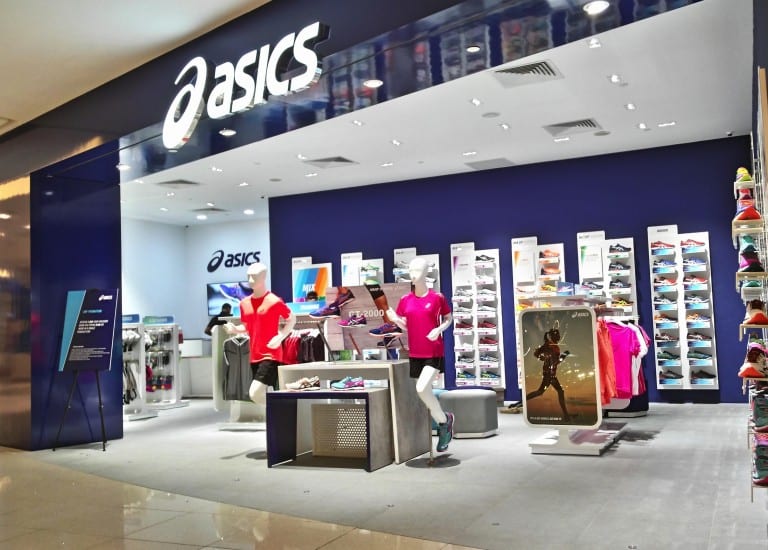
  • Asics Singapore E-commerce Platform Launched

    Asics Singapore E-commerce Platform Launched

    Asics Singapore has launched an online store, with other Southeast Asian markets to follow soon.

    The one-stop destination for all Asics products introduces an integrated shopping experience with shoes exclusive to the online store and a seamless check-out experience.

    The e-commerce site will strengthen Asics’s omnichannel retail strategy in Singapore, providing avid runners with easy access to shoes across all categories and a platform to browse for new purchases while on the move.

    Shoppers can choose to collect their orders directly from the stores or have them delivered.

    Asics’ brick-and-mortar stores will have tablets accessible to customers who want to  experience the Asics.com portal while in store.

    During the next eight weeks, shoppers can collect Asics shopping vouchers at pop-up vending machines across the island. By answering the questions posted weekly on the machines, shoppers can receive an eight-digit code to obtain the vouchers.

    This month, vending machines will be placed at SAFRA EnergyOne Toa Payoh from April 8 to 17; at SAFRA EnergyOne Yishun from April 18 to 27; and at Singapore Polytechnic (InnoMall) from April 28 to May 5. More locations will be revealed on the Asics Instagram account.

  • Zilingo received fresh investment funding

    Zilingo received fresh investment funding

    Online marketplace Zilingo has raised US$226 million in its recent Series D funding.

    The fresh capital round brings the total amount raised by the company to $308 million. Having secured its latest investments, the company is now looking to China as well as other key Asian markets as part of its growth strategy to expand its B2B business.

    Key investors from this latest round included Sequoia Capital, Temasek Holdings, Burda Principal Investments, Sofina, Singapore investment fund EDBI as well as existing investors.

    “Sequoia’s investment in Zilingo dates back to when the company wasn’t even yet incorporated and the name wasn’t finalised,” said Sequoia Capital (India) Singapore’s MD Shailendra Singh.

    “Ankiti and team have rapidly transformed their original ideas about Zilingo into a platform company that serves fashion consumers, merchants, retailers, brands and manufacturers, collectively representing a multi-hundred-billion-dollar market size. We are amazed by the team’s ability to envision and execute against such an ambitious roadmap and are excited to continue to support them on their journey.”

    The company says it plans to invest the capital in long-term value building across the supply chain, building new and deeper relationships with manufacturing partners in Vietnam, Cambodia, Sri Lanka and China, and expanding into new markets such as the Philippines, Indonesia, Australia and the US this year.”

  • Amazon Products Now Available in Australia

    Amazon Products Now Available in Australia

    Amazon has launched another key part of its business in the Australian market – it’s advertising products.

    Amazon Advertising, the part of the company that offers display and video ads and an online tool to programmatically buy ads, launched in Australia on Friday, according to a company blog post.

    This gives businesses a way to reach the millions of unique visitors who land on Amazon’s local website each month, according to figures the company cited from SimilarWeb.

    “With Amazon Advertising, agencies and advertisers – regardless of whether or not they sell on Amazon – can deliver relevant messages to customers on and off Amazon, throughout their customer journey,” the blog post reads.

    The launch comes amid a recent revamp of the US e-commerce giant’s advertising business. In 2017, the company added a new office and 2000 jobs, mostly in advertising, in New York City. It has also introduced self-service buying tools, among other new products, and started providing deeper insights into its enormous customer database.

    These efforts seem to be paying off. Advertising was part of Amazon’s fastest growing business segment last year. Revenue from the company’s “other” category, which includes advertising, grew 115 per cent in 2018, to US$10.1 billion. Research firm Magna estimated that advertising accounted for US$6 billion of that figure.

    Most of this growth has come at the expense of rival digital advertising giant, Google, according to a report last week

    The report stated that WPP PLC, the world’s largest ad buyer, spent about US$300 million on Amazon search ads in 2018, and about 75 per cent of that money came from Google search. This was up from the US$100 million to US$150 million it spent on Amazon search ads in 2017, according to sources familiar with the matter.

    Advertising at the point of purchase

    One reason Amazon may be attracting more advertising dollars is that it enables businesses to reach customers much closer to the point of purchase than Google or Facebook, although both tech giants – particularly Facebook, which owns Instagram – have been working to close the gap between the discovery and purchase stages of the customer journey for some time.

    But before retailers completely upend their advertising budgets, they may want to consider the metrics they’re using to allocate budget to begin with. New research from Monash University has revealed that ‘last touchpoint attribution’, a key metric most advertisers use to measure ad effectiveness and allocate budget, is not accurate.

    “At the moment, if a consumer buys a new toy online, Google can look at the search patterns that person has had over the past few days, or whether they’ve received any emails from a department store such as Kmart,” Peter Danaher, head of the department of marketing at Monash Business School, said.

    “They use a method called ‘last touchpoint attribution’. So, if the consumer last opened an email about toys, the email gets the credit. It they last did a Google search on toys before making the purchase, Google gets the credit.

    “The advertising industry has used this method for the past five years because it’s simple and effective. The problem is, this method ignores how long consumers remember an advertisement.”

    According to Danaher, last touchpoint attribution doesn’t take into account the cumulative effect of seeing ads in different places, and allocating budget based on this metric is less effective than allocating budget to maximise profit.

  • Online grocery marketplace Dei Lifts Off in Singapore

    Online grocery marketplace Dei Lifts Off in Singapore

    Home-grown online grocery marketplace Dei has launched in Singapore.

    Standing for ‘Daily Everything’, Dei hosts more than 70 physical Singapore-based Indian retailers, and 15,000 products categorised into canned goods, clothing, locally sourced vegetables, fruit and meat.

    Consumers will enjoy same-day delivery along with post-sale services.

    “Dei was founded to promote digital transformation and introduce new technologies for Little India’s merchant community,” said Jay Varman, co-founder and CEO.

    “With Dei, Little India’s retailers and merchants can enjoy greater access to the greater Singapore community and increase their revenue by up to 30 per cent.”

    Appointed by the Little India Heritage Association (LISHA) and the Singapore India Chamber of Commerce and Industry (SICCI), Dei was soft-launched in 2016, and has gained year-on-year growth of 120 per cent, peaking at an average of 50 daily orders with an estimated $900,000 in total revenue.

    “Dei helps to bridge the gap between e-commerce and the traditional brick and mortar space, allowing for the consolidation of shipments into one,” said Rajakumar Chandra, chairman of LISHA,

    “We hope to collectively onboard all business owners and merchants of Little India to ensure that everyone benefits from the nationwide digitalisation push. Furthermore, we are in discussions with representatives from Chinatown and Kampong Glam to expand into their respective precincts, thus providing a truly seamless experience for all Singaporeans.”

    The platform is currently raising seed funding for future expansion. It plans to build hyperlocal, omnichannel-integrated marketplaces across Southeast Asia.

  • Shiseido and Alibaba Collaborating to Please Chinese Customers

    Shiseido and Alibaba Collaborating to Please Chinese Customers

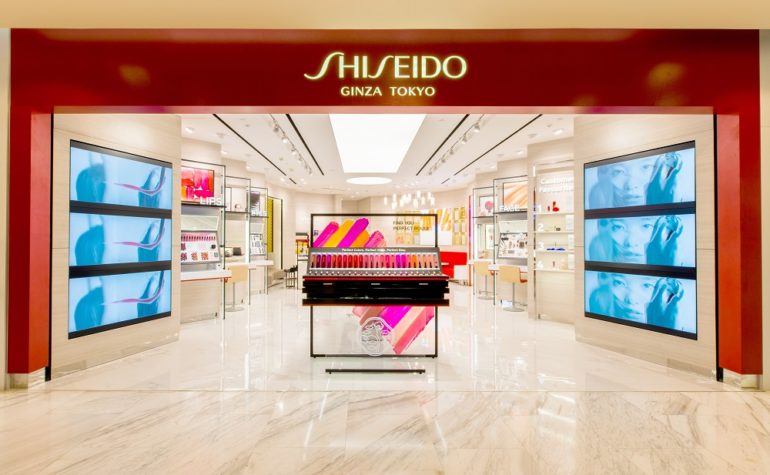
    Japanese cosmetics giant Shiseido on Sunday become the world’s first multinational cosmetic company to open a dedicated office in Hangzhou to work with Alibaba Group and co-create products specifically tailored for Chinese consumers.

    The Shiseido and Alibaba office, within walking distance of the Alibaba Xixi headquarters, will house a team of around 20 Shiseido employees by next year. The purpose is to tighten collaboration with Tmall, Alibaba’s B2C marketplace and better position Shiseido in China, said the makeup company’s China region CEO Kentaro Fujiwara.

    “China is Shiseido’s biggest and most-important market [outside of Japan]. By combining Alibaba’s strengths in digitisation and consumer engagement with Shiseido’s world-class standards in research and development, we can create products that can precisely capture the appetite of the Chinese consumer,” he said. “I hope this unprecedented collaboration will pave the way for further innovations for the entire [Shiseido] group.”

    According to Shiseido, its China business saw the fastest acceleration in 2018 with sales growth of 32.3 per cent year-on-year to RMB 11.6 billion (US$1.73 billion). China accounted for 17.4 per cent of Shiseido’s total net sales last year, making it the profitable country market, following its home market Japan. Shiseido said it expects e-commerce to generate 40 per cent of its China sales by next year.

    “Without a doubt, whether it be e-commerce or digital innovation, Alibaba is the leader. Alibaba is one of the most important strategic partners for Shiseido China as well as for the entire group,” said Fujiwara.

    Mike Hu, president of Tmall’s fast-moving consumer goods division, said Shiseido’s leadership position in the industry and its quick adaptation to digital transformation is a common value shared by Alibaba.

    “Our primary mission is to enable others, and we are always eager to work with the world’s leading companies to help them bring their best products into the China market in the most effective and efficient way. This definitely includes Shiseido, a reputable brand that is synonymous with high standard and high quality,” he added.

    “The opening of the Shiseido and Alibaba office represents an important and historical milestone of our long-term collaboration,” Hu said.

    One of Shiseido’s cosmetics brands, Za, opened a Tmall flagship store in September 2011. Since then, 12 flagship shops and 15 major brands also launched on the platform. Fujiwara said there is a plan to bring Shiseido’s mother-and-baby product brand into China later this year via Tmall.

  • Pininfarina Launches New Website To Strengthen Its Online Presence

    Pininfarina Launches New Website To Strengthen Its Online Presence

    Mahindra-owned Pininfarina has announced the launch of its new website detailing out its complete product and service that are on offer. The Italian marque says that the new website will further aid to strengthen the company’s digital presence and showcase how broad and structured its service offer is. For this project, Pininfarina has roped in the creative agency Vangogh from Milan, which has designed and developed the new website.

    Talking about the company’s new website, Giuseppe Bonollo, Director Sales and Marketing, Design, Pininfarina S.p.A. said, “We are a company made up of people with a multitude of skills, from car design to engineering, from industrial design to architecture, from digital design to the ability to build prototypes and cars in small series. A wealth of skills that allows us to have a unique and comprehensive approach to projects, always consistent with our mission from the beginning: the creation of products and services that transform and innovate the experience for the end user. The new site is, therefore, the global showcase of the plurality of our skills and services”.

    In addition to the company’s several design projects, the website also offers details about its all-new fully-electric hypercar the Battista, which was revealed early this year in Cambiano, Turin. Furthermore, the website also talks about Mahindra’s recently launched intermediate commercial vehicle, the Mahindra Furio.

    Max Galli, President of vangogh said, “We are excited to collaborate with Pininfarina, another Italian excellence that entrusts to our agency the objective of enhancing the Made in Italy talent oriented to the global export of quality. Creativity, innovation and effectiveness are the levers that will guide us in this precious “collaboration”, in which the values of Pininfarina reflect those of our agency”.

  • What Makes Dropshipping the Future of E-commerce

    What Makes Dropshipping the Future of E-commerce

    There are plenty of articles floating around on the internet with numbers that reveal how much dropshipping is making. And those who believe that e-commerce is a thing in just North America and Europe are wrong. It is a global phenomenon and will continue to be one of the cornerstones for the future. But what makes drop shipping so popular for both individuals who are looking to make some extra money on the side and massive companies that dominate their area of expertise? The answer is not that simple as there are quite a few reasons why that is. The most attractive aspect of this business model is that the best dropshipping products can be found anywhere: Google, YouTube, AliExpress, etc. You don’t have to look far to find a winner!”

    Product Sourcing

    If you consider how regular e-stores operate, it can become quite problematic for those who get their products from other manufacturers and sell them after. The whole thing becomes even more of a headache if it is in another country. Items are delivered in bulk, so calculating how much you are going to sell beforehand is crucial. And who is capable of doing calculations that are perfect? The more you delve into it, the clearer it becomes how much money, time, and other resources it takes.

    Meanwhile, dropshipping eliminates all these problems and allows you to focus on marketing and profits. Even if you do have to deal with issues that arise with the products, it is no more than a couple of emails every day or so.

    Storage

    While this point has been mentioned above, it would still be worth emphasizing how much of a difficulty it can be to store your products. Take used car parts for instance. There will be another issue besides the lack of space. It is not that great for the environment, so if certain agencies get the hang of what you have, you might end up in trouble. And there are a number of products that would cause this.

    Order Fulfillment

    Packing, going to the post office, etc. is not that big of a problem if you have just a few items to ship every other day. However, as soon as things start to pick up, you will more than likely not have enough time for all of that. And if you are stuck all day dealing with order fulfillment, there will not be enough time to focus on the website and marketing. Once the scaling begins, it will be physically impossible to deal with everything yourself, and hiring others will mean paying them. Again, this is another problem that does not exist in dropshipping. Logistics are not the same.

    Photos and Cataloging

    To shine in the world that is dominated by big companies, a new e-shop owner will have to put as much effort as possible. Products will need to appear as attractive as they can, which means that there will be a need for an expensive camera, and even a professional photographer. It would not be a stretch to say that you will need to get an entire studio for things to work out in your favor. Meanwhile, drop shippers have it easy thanks to the amazing product importing feature app. This app allows for photos to be instantly imported.

    Potential to Scale

    The potential to become a powerhouse in e-commerce by drop shipping is massive. There are plenty of companies that started out as nothing but an individual or a group of people who had the same goal. Since the method requires very little money to invest, a lot of money can be used for expansion. The more time you spend learning about how it works, the easier it will become to make your dream a reality.

    Testing Different Products Without Spending

    It is more than likely that you will not have a lot of success with your first venture. But that is not a bad thing as it will be a good experience for the future. Dropshipping allows you to sell and test without spending money yourself. Finding the perfect product to focus on will take time, but if there is one method that allows you to do so without worrying about financial loss, it is this one.

    All in all, it should become clear why dropshipping is such a great thing and will continue to be one of the cornerstones of e-commerce in the future. What is dropshipping is the question that first-timers might pose, but it is thoroughly explained in the second chapter of the ebook by Oberlo titled “Dropshipping 101: Ecommerce Without Inventory”. So if you are interested in starting something of your own, give this ebook and other sources of information a read.


  • Walmart partners with Google for voice shopping

    Walmart partners with Google for voice shopping

    US retail giant Walmart and tech company Google have collaborated on voice technology to assist customers with grocery shopping.

    Starting this month, Walmart Voice Order will allow consumers to order groceries through Google Assistant by saying, “Hey Google, talk to Walmart”.  Google Assistant will then follow the orders directly and add grocery items to their Walmart Grocery cart.

    “We continue to innovate for the future and look to technology to make great services even better in the future. Introducing: Walmart Voice Order,” said Tom Ward, senior vice president, Digital Operations, Walmart US.

    “With the new voice ordering capabilities we’re building across platforms with partners like Google, we’re helping customers simply say the word to have Walmart help them shop … literally.”

    “Best of all, customers can be extra confident that we can quickly and accurately identify the items they are asking for with the help of information from their prior purchases with us. The more you use it, the better we’ll get,” added Ward.

    When shoppers say “add milk to my cart,” the Google Assistant will add the specific milk brand the customer usually buys, meaning there is no need to continually repeat the brand, volume and whether it’s a low fat or whole milk.

    Shoppers can use Walmart Voice Order on Smart Displays like Google Home Hub, Android phones, iPhones, watches, etc.

    “We know when using voice technology, customers like to add items to their cart one at a time over a few days – not complete their shopping for the week all at once. So, this capability aligns with the way customers shop. We can’t wait to hear what they think about it and how it’s making shopping easier for them,” Ward explained.

    Walmart, Amazon competes in the US grocery sector

    Walmart’s latest move comes in light of Amazon’s plans to slash prices at Whole Foods Market and to give major discounts to Amazon Prime members. Amazon also offers voice-activated shopping using its own Alexa-enabled devices, which dominates the US smart speaker market, with 67 per cent market share in 2018.

    “We still don’t see a lot of people shopping and buying with smart speakers yet, but this may change if more lower-cost models begin to incorporate screens. We’re also likely to see people doing more things with their voice assistants as they find their way into cars and other home-based devices,” said analyst Victoria Petrock.

    There are still a minimum number of shoppers who are using speakers to shop. Voice commerce in 2018 accounted for approximately 0.4 per cent of US e-commerce sales. Analysts expect it to increase in the next few years.

  • Vingroup buys Vietnam c-store chain Shop&Go

    Vingroup buys Vietnam c-store chain Shop&Go

    Vingroup has acquired 87 Vietnamese Shop&Go convenience stores for just US$1.

    Vingroup’s retail arm VinCommerce, which manages Vinmart supermarkets and Vinmart+ convenience stores, will upgrade infrastructure, staff and goods at the acquired stores by the end of next month.

    According to a VinCommerce statement, Shop&Go made the approach and offered to sell itself.

    “The competition is more intense than we imagined; that is why we’ve decided to leave,” a Shop&Go spokesperson said, admitting Vietnamese retail market still has potential for growth.

    “We have sold our stores to Vingroup so it can continue to develop them.”

    Opened in 2006, Shop&Go was one of the earliest convenience store chains in Vietnam.

    By 2016, it had aggregated losses of almost VND205 billion (US$8.81 million).

    VinCommerce runs 108 VinMart supermarkets and 1900 VinMart+ convenience stores.

    Last year, it acquired supermarket chain Fivimart with 23 outlets.

    In a report last year, Nielsen Vietnam observed a rise in visits by Vietnamese to convenience stores. The average shopper uses a convenience store 4.5 times per month – three times the frequency of 2010.