Tag: etail

  • Thinking about creating an e-commerce shop in Asia?

    Thinking about creating an e-commerce shop in Asia?

    Thinking about how to create your e-commerce store in Asia? This exclusive event has all your answers.

    Moni, a digital commerce and brand experience agency, providing an end-to-end suite of e-commerce services in the region, is set to take centre stage on April 2 in Central, Hong Kong.

    Moni, with more than 12 years of experience of delivering digital-commerce experiences, joins together with Magento – the world’s No 1 e-commerce platform – to host an exclusive event to teach merchants how to kickstart and grow their online store. The insightful event will also explore the best practices of ever-evolving online shopping experiences. Moni is one of the few Certified Magento Partner Agencies in Asia.

    Who should attend?

    Retailers, B2B companies, and brands who are looking to expand their online presence and reach through e-commerce, or who are interested in understanding the nuances of Magento platform.

    Join the conversation and network with knowledgeable community members who will help you grow your business to the next level. The event will help you discover why Magento is right for your business, how to drive traffic and sales to your e-commerce store, with some of the best practices detailed along with case studies to learn from.

    The event hosts developers, system integrators, subject-matter experts, merchants, service providers, speakers and technology partners from Hong Kong and Singapore under one roof. Moreover, the event will also host an interactive talk session enabling attendees to get the queries answered in real-time.

    What will you gain?

    The session will equip attendees with a broad understanding of the Magento platform and its benefits such as modernised technology stack, better performance and scalability, smooth customisation, seamless integration and minimised testing efforts.

    David François, MD at Moni, will direct the audience through several successful e-commerce projects in Asia. For more than 20 years he has specialised in helping brands create digital customer experiences that drive tangible results and outcomes.

    Mel Lim, enterprise sales manager at Magento, comes from Singapore, and will share details about the full suite of Magento capabilities. She has a decade of experience working with brands across Asia Pacific on their digital-transformation journeys, specialising in commerce customer experience.

    Each merchant today can capitalise on commerce system flexibility, buying patterns, maximising gross margins, driving innovation and meeting end-to-end customer expectations.

    To attend this exclusive event, click here to RSVP.

  • Afterpay starts cross-border payments

    Afterpay starts cross-border payments

    Buy now, pay later provider Afterpay is enabling shoppers to make cross-border payments through the service, following a successful trial.

    The feature means that businesses that offer Afterpay at checkout will now be able to offer the payment method to customers in other countries where Afterpay is active.

    The feature is initially limited to Australian and New Zealand businesses, where a combined 2.7 million people use Afterpay, but will eventually be extended to include businesses in the US and later the entire Afterpay network.

    “We are confident that [this] will add value to our retail partners, and open up the opportunity for them to seek and delight new customers from different countries,” Afterpay chief executive Nick Molnar said.

    “Customers will be able to pay directly in their currency and not be hit with any additional foreign exchange fees after the payment is processed.”

    The payment provider also will remove the complexity of foreign exchange, through a proprietary global payments solution that allows funds to be settled in their country of origin.

    Afterpay’s support for cross-border payments is expected to be a boon for online retailers looking to grow their sales outside of the domestic market.

  • Instagram users can now buy items from ads inside the App

    Instagram users can now buy items from ads inside the App

    Instagram is taking its Shopping ads one step further by making it possible for people to buy the products in the ads without leaving the app.

    The feature, called Checkout on Instagram, is currently being tested in a closed beta program by nearly two dozen businesses and is only available to users in the US.

    Retail News has asked for details about if and when the feature will be available outside the US but had not received a reply at the time of this writing.

    Adidas, Burberry, Dior, H&M, Michael Kors, Nike, Outdoor Voices, Uniqlo and Zara are among the 23 fashion, beauty and accessories brands now rolling out the feature. Others will be added in future, according to Instagram, which is owned by Facebook.

    When users tap on a product in a Shopping ad from one of these businesses, they now see a “Checkout on Instagram” button. By tapping the button, they can select the size and colour of the item they want and enter their payment and shipping details to purchase.

    Users receive notifications about shipment and delivery within the Instagram app, and the platform saves all their information for future purchases.

    In the past, if users wanted to purchase a product linked to a Shopping ad, they were redirected to the brand’s website. The new feature removes this step and – crucially for Instagram – keeps consumers in the app.

    “Social selling is really taking shape both in Australia and globally and it’s great to see Instagram leading the way through the next stage of the social selling journey. Giving consumers the option to complete a purchase right then and there in the app will simplify the shopping process and allow brands to connect more easily with shoppers,” said Jordan Sim, group product manager at BigCommerce, an e-commerce platform that has been active in offering integrations with Shopping on Instagram to its users.

    “We’ve seen our merchants both globally and locally in Australia have a great deal of success using BigCommerce’s integration with Shopping on Instagram and are looking forward to unlocking the power of this new integration for our Aussie retailers in the near future. We know the value of simplifying the checkout process to drive sales and this new function on Instagram will facilitate just that.”

    Many brands have said that Shopping ads drive sales, but there’s a trade-off: visibility and control over their customer data. As Instagram continues to make the purchasing process more seamless – that is, takes control of the process – some businesses will undoubtedly question whether the trade-off is worth it.

    It is unclear whether the Checkout feature applies to Shopping posts in Instagram Stories, or only to posts in the feed. Last June, Instagram revealed that of the 500 million people using Instagram every day, 300 million use Stories every day.

  • V-MORE announces planned Thailand expansion

    V-MORE announces planned Thailand expansion

    V-MORE, an e-commerce supply chain management platform, has revealed its intention of expanding into Thailand.

    V-MORE aims to recruit new Thai e-commerce merchants as part of its expansion strategy and has rolled out onboarding programs for new merchants and users.

    V-MORE is a one-stop marketplace where consumers can shop and be rewarded at over 500 marketplace and shopping sites including leading online brands, hotel and flight booking sites, technology as well as food and beverages merchants. Thai merchants can participate in its e-commerce program and increase their exports to other countries in Asia and beyond.

    “We are pursuing a plan of expansion and hope to achieve revenue growth through mass adoption by users and merchants in our ecosystem. Thailand is fast becoming the leading e-commerce market, and we seek to increase our user and merchant base through user incentive programs, brand awareness and marketing programs,” said Sir Eldee Tang, CEO and Founder of Noble Vici Group.

    According to research, there are more than 57 million internet users in Thailand who are well-versed with digital technologies, mobile and e-commerce. The market is valued at $3.5 billion and is expected to generate revenue growth rate of 13.2% annually, reaching $5.8 billion by 2022.

    “We look forward to new local merchants to come on board our platform and welcome sellers and buyers to experience the online marketplace for the first time,” Eldee added.

  • Furla Exceeds 500 Million

    Furla Exceeds 500 Million

    Turnover of the storied Italian leather goods brand increased to 513 million euros. Over the course of the fiscal year, the company made significant investments to strengthen its supply chain and technology – and began 2019 with the launch of its new sneaker collection

    Furla Group continues to grow: over the past four fiscal years, it has doubled its turnover, hitting 513 million euros in 2018, a 5.2% increase at constant exchange over 2017 (or a 2.8% increase at current exchange).

    Analyzing sales by geographic area and at constant exchange, the Asia Pacific region shines, with an 18.2% year-on-year increase in 2018; it now accounts for 26% of total turnover. The United States, meanwhile, saw an increase of 13.2%, and now accounts for 8% of total turnover. Japan remains the brand’s leading market (22% of total sales), and sales there were up 3.6% compared to 2017. The EMEA region, which represents 44% of global turnover, maintains its market position.

    Furla Group continues to seek direct control of its brand distribution through a strengthening of its mono-brand stores, which produced 70% of turnover in 2018. Direct distribution, combined with multi-brand sales points and franchising, allows Furla to have a far-reaching presence in 98 countries worldwide: its 490 mono-brands (285 directly owned, 163 franchisees and 42 travel retail doors) are in the most prestigious international shopping locations. Over 1,200 select multi-brands and department store corners complete the company’s distribution network.

    Of particular note is the travel retail sector, which is in continuous evolution and in 2018 registered a 16.2% increase over 2017, accounting for 7.3% of the Group’s turnover through its sales at 293 doors, from boutiques, corners, shop-in-shops, aircraft and cruise ships, across 64 countries.

    The company paid special attention to its direct e-commerce platform, where, thanks to repeated investments, there was a substantial turnover increase in 2018: 45.7% over the previous year, at constant exchange.

    Furla Group is focused on solidifying the wild growth it has experienced over the past several years. The company has directed major resources toward strengthening the supply chain, as well as systemically integrating countries with direct and indirect distribution networks into Furla’s corporate culture and technology.

    The supply chain, which is key to guaranteeing the quality and timeliness of manufacturing, has recently benefited from the company’s adoption of a more evolved and high-performing computer system, as well as financial tools that free up resources so that suppliers can invest in bettering the manufacturing cycle.

    After years of geographic expansion across the globe, the Group is now focused on a more selective development and on categories of merchandise that are complementary to its core business: in February of this year, during Milan fashion week, Furla introduced its new sneaker collection, supported by a series of important 360° marketing activities.

    Furla has further strengthened investment in its marketing operations, underlining its particular attention to digital communication and social channels, which have shown an important increase of followers (+64% versus 2017 on Instagram and WeChat), while maintaining one of the highest engagement rates (1,59%) within the fashion luxury category.

    Furla Group’s continuing investments in human resources have long allowed it not only to add jobs, but also to provide a better quality work life at the company and incentivize employees through its corporate welfare system “Furla for You.” This initiative has been recognized two years in a row for its excellence, with Furla listed among Italy’s Top Employers.

    “We are highly satisfied with these financial results, which we achieved at a challenging time for the international market,” said Alberto Camerlengo, Chief Executive Officer of Furla Group.  “We’ve invested significant financial resources in managing the unrestrained growth the company has experienced over the last several years, from acquiring total control of our retail distribution network in China, Hong Kong,Macau and Singapore, to strengthening our supply chain. Our single, fundamental goal has always been to guarantee continuity and excellence in all of Furla’s creations.”

  • Chinese Streetwear brand INXX Expands

    Chinese Streetwear brand INXX Expands

    Chinese streetwear brand INXX is officially launching its US e-commerce site.

    “We want to open up to a broader market and develop more forward-looking and global design paths while forming our own symbols,” said co-founder Henry Mao.

    Targeting global youth, INXX achieved US$3.5 million in sales on China’s 2018 Single’s Day and is now setting sights on the major fashions of worldwide street trends. By keeping roots in its blended Asian streetwear background, the brand has been able to forge a strong identity while growing into new markets.

    INXX made its 2018 debut with a presentation on Vfiles. In its showcase at New York Fashion Week SS19, INXX blended craftsmanship with an underground urban street aesthetic, mixing surreal grungy graphics and a strong focus on design detail to achieve “a look without boundaries”.

  • Pomelo secures RedMart’s Jim Boland

    Pomelo secures RedMart’s Jim Boland

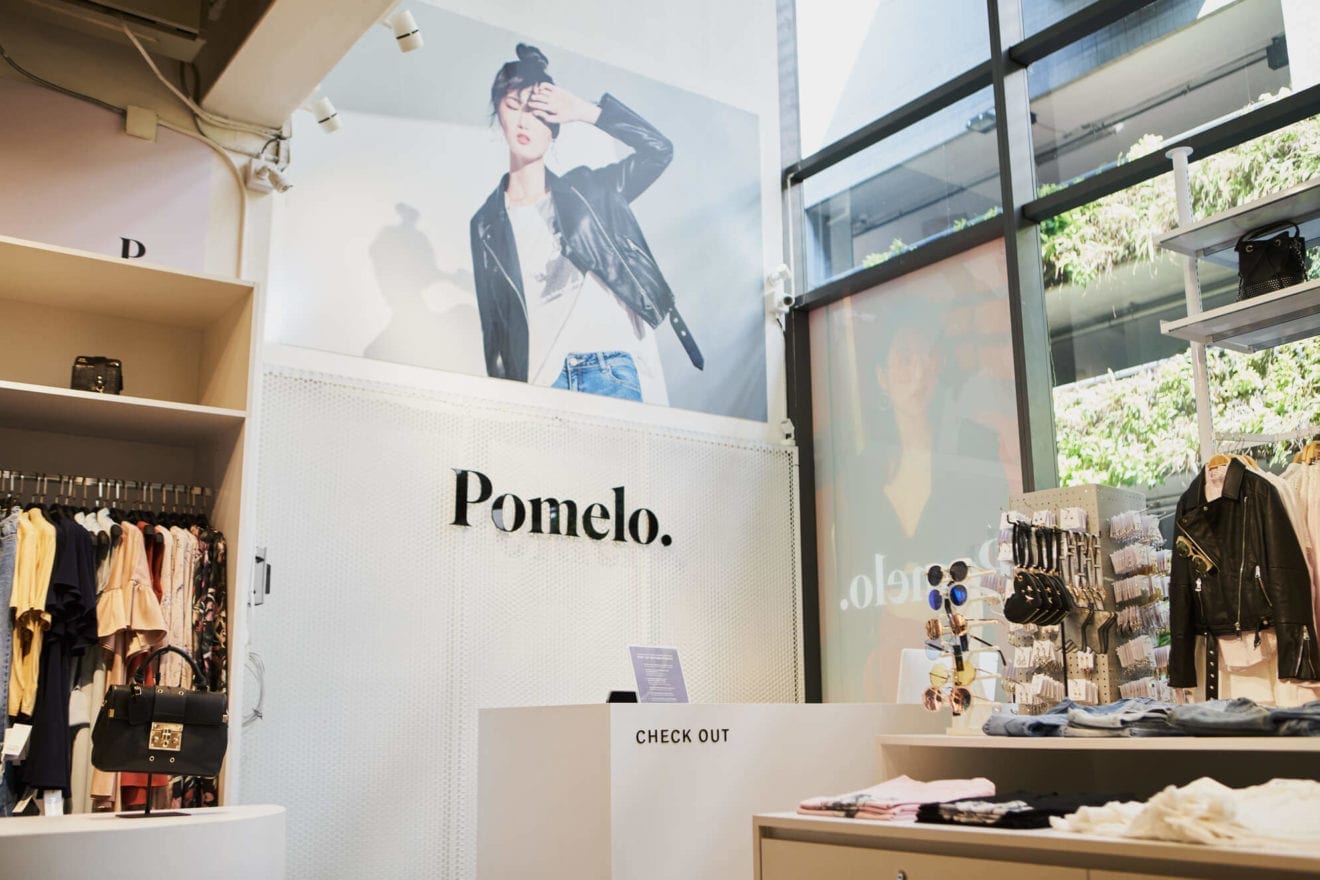
    Bangkok-headquartered omnichannel fashion company Pomelo has appointed Jim Boland, former RedMart CFO, as its new CFO.

    Boland has successfully led finance organisations in fast-growing e-commerce businesses for more than 19 years in leadership roles at Amazon, Dell and Alibaba-owned RedMart. His appointment will see him aiming to build up Pomelo’s financial infrastructure to drive profitability while enabling rapid growth across the region.

    “I am delighted to join this innovative company, which has designed a business model strategically suited to grow fast and profitably,” said Boland. “As a digitally native, vertically integrated omnichannel brand, Pomelo presents an exciting opportunity to leverage my past experience with vertical integration, retail, and e-commerce, especially during the critical scaling up phase.”

    With Boland’s new role as CFO, Pomelo’s co-founder and former CFO Casey Liang is transitioning to Pomelo’s growth team, which encompasses the performance-marketing and business-intelligence teams, a cross-functional unit that will work closely with other teams to accelerate customer acquisition and retention.

    “As we continue in this period of rapid expansion, I am excited to foster more coordination between our creative and technical teams to further accelerate our growth rate and help more customers to experience Pomelo’s unique value proposition,” said Liang.

    Pomelo’s CEO David Jou expressed excitement at the hire as the firm pursues building the “first global fast fashion brand out of Asia”.

  • Jack Ma steps down from Alibaba divisions

    Jack Ma steps down from Alibaba divisions

    Alibaba founder Jack Ma has stepped back from active roles in five subsidiary companies as he prepares to hand over executive chairmanship of the company in September.

    Management of Alibaba say the moves were intended to improve the firm’s governance and administrative transparency.

    Ma has exited Alibaba’s Technology, Education Technology, Taobao Software, Network Technology, and Software departments.

    Stepping away from the business divisions was signalled before Ma announced last September his intention to resign as executive chairman and officials say the latest move is normal industry practice.

    One commentator described the step as “goodwill” and encouraging transparency when he is no longer active in Alibaba on a day to day basis.

    In an interview last September, which Ma owns, he said relinquishing the executive chairmanship was “not about retiring, stepping away, or backing off”. “This is a systematic plan,” he said.

  • V-MORE Enters Thailand’s E-Commerce Market With More Than 500 Marketplace Platforms and Merchants

    V-MORE Enters Thailand’s E-Commerce Market With More Than 500 Marketplace Platforms and Merchants

     V-MORE, Asia’s leading e-commerce supply chain management platform, has announced its plans to expand into Thailand. Over the pasts 12 months, the fast-growing one-stop e-commerce platform which has already garnered 500,000 users in the region.  V-MORE aims to recruit new Thai e-commerce merchants as part of its expansion strategy and has rolled out onboarding programs for new merchants and users.

    “We are pursuing a plan of expansion and hope to achieve revenue growth through mass adoption by users and merchants in our ecosystem. Thailand is fast becoming the leading e-commerce market, and we seek to increase our user and merchant base through user incentive programs, brand awareness and marketing programs,” said Sir Eldee Tang, CEO and Founder of Noble Vici Group.

    V-MORE is a one-stop marketplace for high quality products which are value for money. Its unique shop, save and earn program has gained the trust of many online shoppers. Through V-MORE, consumers can shop and be rewarded at over 500 marketplace and shopping sites including leading online brands, hotel and flight booking sites, technology as well as food and beverages merchants. Thai merchants can participate in its e-commerce program and increase their exports to other countries in Asia and beyond.

    According to research, there are more than 57 million internet users in Thailand who are well-versed with digital technologies, mobile and e-commerce. The market is valued at USD 3.5 billion and is expected to generate revenue growth rate of 13.2% annually, reaching USD 5.8 billion by 2022.

    “We look forward to new local merchants to come on board our platform and welcome sellers and buyers to experience the online marketplace for the first time,” Eldee added.

  • Reebonz teams up with Japan’s Komehyo

    Reebonz teams up with Japan’s Komehyo

    Singapore’s e-commerce platform Reebonz has partnered with Japanese offline pre-owned luxury product boutique Komehyo.

    Reebonz is expected to make Komehyo’s products available to an estimated 5.5 million members on its platform, supporting both companies’ missions to bring authentic pre-owned luxury to consumers around the world.

    “The next step for us is to continuously support their growth in sales across Asia Pacific,” commented Nupur Sadiwala, Reebonz CFO.

    “Furthermore, with the growing demand for authentic pre-owned luxury complemented by growing demand for new luxury products, we believe that this partnership will allow us to further deepen our ecosystem strategy of offering the broadest selection of quality new and pre-owned luxury products.”

    “In addition to the opportunity for us to amplify our brand awareness, we believe that by working with Reebonz, we will be able to further improve our consistency in delivering authentic high quality products to aspiring consumers across the region,” added Shinji Kai, Komehyo’s IT department assistant GM.

    Established in 1979, Komehyo currently has 40 retail stores across Japan and an online platform, selling bags, jewellery, leather goods and accessories, to watches, shoes and apparel.

  • Pomelo Fashion Beefs Up Management Team with Key Hires from Across SEA

    Pomelo Fashion Beefs Up Management Team with Key Hires from Across SEA

    Pomelo, a leading omnichannel fashion company headquartered in Bangkok, announced the appointment of Jim Boland, former CFO of RedMart, to Pomelo’s core team as its new CFO. As part of Pomelo’s strategic approach to recent key hires, Boland’s appointment will see him
    building up Pomelo’s financial infrastructure to drive profitability while enabling rapid growth across the region. Boland has successfully led finance organisations in fast-growing ecommerce businesses for over 19 years in leadership roles at Amazon, Dell and Alibaba-owned RedMart.
    ”I am delighted to join this innovative company which has designed a business model strategically suited to grow fast and profitably.

    As a digitally native, vertically integrated omnichannel brand, Pomelo presents an exciting opportunity to leverage my past experience with vertical integration, retail, and ecommerce, especially during the critical scaling up phase.” said Boland. With Boland’s new role as CFO, Pomelo’s Co-founder and former CFO, Casey Liang transitions to enhance Pomelo’s growth team which encompasses the performance marketing and business intelligence teams. This cross-functional team will work closely with the engineering, design, and product teams to accelerate customer acquisition and retention.

    “As we continue in this period of rapid expansion, I am excited to foster more coordination between our creative and technical teams to further accelerate our growth rate and help more customers to experience Pomelo’s unique value proposition“ said Liang. Commenting on Pomelo’s spate of new hires, David Jou, CEO of Pomelo says “We’re excited to have Jim on-board as we continue on the path of building the first global fast fashion brand out of Asia.” Jim Boland’s appointment reinforces Pomelo’s commitment to investing in key talent across Southeast Asia.

    In Q4 2018, Pomelo also welcomed aboard Cathriona Nolan as its AVP of Creative Operations, and Vorada Hiransomboon as its AVP of Buying. Previously from Burberry, Nolan brings extensive creative experience in brand development and marketing to the table to strengthen Pomelo’s creative direction, while Hiransomboon, most recently former Head of Buying at Inditex, leads the buying and merchandising team with her keen knowledge of market trends and efficient supply chain management.

  • DHL renews partnership with Africa’s largest e-commerce event

    DHL renews partnership with Africa’s largest e-commerce event

    DHL Express in Sub-Saharan Africa (SSA) has announced that the company has once again signed on as lead sponsor for the 2019 DHL eCommerce Africa Conference and Exhibition, which will be held at the Cape Town International Convention Center on the 19thand 20thof March 2019.

    The eCommerce Africa Conference and Exhibition, delivered by DHL, is hosted by South African conferencing company, Kinetic, and is one of Africa’s biggest opportunities to bring stakeholders in the ecommerce sector together. Later in the year, Kinetic will also bring the conference to Kenya, with the eCommerce East Africa Edition, also delivered by DHL, set to take place in Nairobi on the 12thand 13th of June 2019.

    This year’s event offers participants an opportunity to learn from world-class thought leaders, both from Africa and the rest of the globe, on the innovative strategies that will unlock e-commerce opportunities over the years to come. Delegates from some of the continent’s biggest tech, retail, banking and legal firms will be in attendance to share their experience and engage with attendees to exchange knowledge.

    According to the McKinsey Global Institute’s report, Lions Go Digital, e-commerce and fintech represent two of Africa’s biggest growth opportunities, with the growth of the mobile technology market driving both of these sectors. “More than half of urban African consumers already have Internet-capable devices and this number is increasing. Online shopping in Africa could account for up to $75 billion in retail sales by 2025.”

    Steve Burd, Vice President Sales for DHL Express Sub-Saharan Africa, explains that the ongoing partnership between DHL and eCommerce Africa is a good fit. “As the market leaders in express logistics in Africa, we have extensive first-hand experience of the positive impact that ecommerce has on the continent. The massive growth in cross-border and international ecommerce in Africa sees DHL working with thousands more customers across the continent each year, helping them to expand their brand across borders.”

    He adds that the development of ecommerce in Africa continues to unlock major opportunities for growth. “E-commerce allows entrepreneurs and SMEs to connect with a large customer base and scale up rapidly, which accelerates the need for support services. E-commerce growth therefore has a ripple-effect on many other industries on the continent.”

    “DHL’s partnership with eCommerce Africa provides us with an additional platform to connect with organisations and help them to understand key logistics considerations, and learn how to plan for and overcome any logistical challenges,” adds Burd.

    Terry Southam, Kinetic Managing Director, says that the collection of thought leaders and the topics under discussion this year are aimed at creating an immediate impact for African ecommerce companies.

    “From marketing to fulfilment, the world’s best will be on stage sharing best practice and innovative hacks to drive online growth. It is quite remarkable to have all of these industry leaders on the same stage – not only willing to share but actively working to grow the industry and ensure African customers receive a world-class online shopping experience. This year’s theme for the conference is ‘Conquering Scale’ and we couldn’t be happier to have a market leader like DHL on board, to help us deliver 2 key e-commerce events on the continent this year,” he concludes.

  • Regulating Facebook could hinder small businesses

    Regulating Facebook could hinder small businesses

    Digital platforms provide a host of challenges for governments. Questions about how to best protect privacy, democracy, and speech online become more pressing every year.

    But policies that affect online platforms also affect international trade. Many Australian small businesses rely on digital platforms to stay on par with their international competitors.

    As Australia starts tackling the challenges wrought by digital platforms, policymakers should be careful not to undo the good things that stem from an evermore connected world. That includes the critical role of these platforms in helping retailers sell their products to overseas customers.

    Platforms facilitate exports

    As my new research with colleague Danielle Parks shows, digital platforms appear to significantly reduce the economic distance and trade costs between buyers and sellers.

    Take Facebook, for example. Facebook is both a social networking platform and digital market platform, where Facebook’s Marketplace helps business owners connect with potential customers.

    The social networking interface allows buyers and sellers to message each other and exchange information about what the seller has, and what the buyer wants. Meanwhile, Marketplace features like identity verification and buyer ratings help to facilitate connections more quickly, and with more trust, than might otherwise be possible.

    There isn’t a lot of large-scale data on cross-border e-commerce, so researchers must get creative to study digital platforms and trade. The findings are extraordinary.

    One study found that 97% of US-based eBay sellers export product to overseas buyers. Another found the “economic effect of distance” to be 65% smaller on eBay. In other words, the digital platform reduces the challenges of selling to people in other countries.

    Research conducted by PayPal showed that 79% of US small businesses on its platform sell to foreign markets. And PayPal merchants that exported, outperformed businesses in general. Interestingly, that finding held for coastal and non-coastal businesses, and for rural and urban businesses alike.

    In our new study, we surveyed Australian businesses on Facebook. We found that those with a Facebook presence were 63% more likely to export their products internationally than other businesses. The propensity to export was higher across all business sectors and nearly all company sizes.

    This emerging pattern shows how world markets are opening up to smaller businesses that might not otherwise be able to compete with their larger, multinational rivals. These findings can partly be attributed to export-prone firms being more likely than others to use digital platforms. But there is no question that the platforms can also enable trade.

    Most governments recognise the need to dismantle barriers to foreign market access, and any new policies regarding digital platforms should not make it harder for small and medium sized businesses to engage in trade.

    How regulation could hurt small businesses

    The Australian Competition and Consumer Commission (ACCC) is currently conducting an inquiry into digital platforms at the request of the treasurer.

    The ACCC’s preliminary report recognises how digital platforms have revolutionised the ways consumers and businesses communicate with one another. The report also highlights concerns over data privacy and the influence of bad actors producing and spreading misinformation.

    The final report, expected in June, will make policy recommendations that aim to address these concerns. But these policies could also inadvertently threaten the revenue streams of businesses that advertise on these platforms or that use them to facilitate online sales.

    Restrictions on the cross border flow of consumer information could interfere with everyday business practices. For example, a key advantage of e-commerce, especially for small businesses, is using search engine techniques to reach larger audiences, and target potential customers. So, search engine restrictions could limit the way businesses target customers with advertising, therefore limiting a business owner’s ability to reach customers abroad.

    Other regulations could restrict business owners from storing the personal information of customers – such as credit card information, consumer preferences and purchase history. That would then limit businesses in how they interact with customers at home and abroad.

    What’s happening at the moment

    Australia is not alone in considering these tough issues. The landscape of digital data flows, data privacy, and e-commerce is a work in progress for governments across the globe.

    The EU recently enacted data privacy regulation called the General Data Protection Regulation (GDPR), which is designed to:

    […] fundamentally reshape the way in which data is handled across every sector, from health care to banking and beyond.

    Meanwhile, the United States Congress will likely consider new internet privacy legislation this year.

    Provisions on digital data flows have been included in major recent international trade agreements. Both the United States-Mexico-Canada Agreement (USMCA) and the Trans Pacific Partnership (TPP) bar data localisation requirements. That means foreign companies would only be allowed to work in a country if they built out or leased separate data infrastructures in that country – a costly endeavour, especially for smaller businesses.

    On the other hand, USMCA and TPP do not allow participating countries to require that platforms disclose their source code or algorithms. These provisions do not necessarily preclude countries from adopting privacy protections, but they do make it easier for platforms like Facebook to operate without fear that they will be asked to handover important intellectual property.

    As the government considers the Australian Competition and Consumer Commission report, one thing should be clear: any policy changes should not overlook the role of these platforms in helping Australian small businesses sell goods to customers in the global marketplace.


  • Lazada Excels cross-border business across Southeast Asia

    Lazada Excels cross-border business across Southeast Asia

    Lazada is boosting its cross-border operations for international brands and merchants to after its cross-border sales quadrupled over the last three years The Alibaba-owned company says it plans to bring onboard more quality international brands and will identify and nurture the top 300 brands in each of the six. countries that Lazada operates in: Indonesia, Malaysia, the Philippines, Singapore, Thailand and Vietnam. This will allow those brands to grow their business and enjoy benefits such as higher visibility of their products when users search and browse the site.

    “We want to serve as that bridge between our quality cross-border merchants and some 560 million consumers in Southeast Asia,” said Lazada Group’s co-president Jing Yin, speaking in Shenzhen at the company’s first cross-border seller conference for this year.

    “Backed by the best expertise and infrastructure from Alibaba, as well as our in-depth understanding of Southeast Asia, we are able to equip our cross-border sellers and brands with the knowledge and tools to ride this massive growth in the region,” Yin told more than 1000 merchants at the event.

    What Lazada describes as “a meteoric rise in e-commerce spending in Southeast Asia” reflects the increasing demand for cross-border products as the GMV from Lazada’s cross-border category grew by 4.6 times between 2016 and 2018. According to industry estimates, Southeast Asia’s e-commerce market is on track to hit US$240 billion by 2025, surpassing earlier estimates by $40 billion.

    Among the key initiatives announced at this week’s conference was a revamped Global Collection: a dedicated channel showcasing an assortment of Lazada’s cross-border merchants from all around the world. Global Collection 2.0 taps on algorithm-based search functions to filter the wide cross-border assortment to spotlight sellers offering popular and good quality products so customers can find them easily.

    “With the new Global Collection, customers will get their parcels much faster,” said a Lazada spokesperson. “They can get their parcels within seven working days from the day they place their orders if they choose the standard shipping option.”

    First launched in 2013, Lazada’s cross-border business has grown to become one of the most diverse marketplaces featuring brands and merchants from all over the world. The top five markets which cross-border sellers come from are Mainland China, Hong Kong, Korea, the US and Europe, with women’s fashion, home and living and kids’ fashion ranking among the most popular cross-border items. Lazada is now looking at launching new categories, offering bulky products like furniture and home appliances.

    Last year, Lazada set a new record, with its last-mile delivery fleet across Southeast Asia delivering more than 1 million parcels in a day.

  • Shoppers prefer human interaction over bots, says study

    Shoppers prefer human interaction over bots, says study

    New research reveals 75 per cent of shoppers prefer live-agent support for customer service verses 25 per cent support for self service and chatbots. The research, from cloud contact-centre operator NewVoiceMedia, identified consumer concerns about sharing sensitive information, a lack of understanding of bots and their inability to resolve issues.

    “Chatbots can provide customers with quick answers to frequently asked questions or issues, and the survey notes the benefit of chatbots for certain interactions, such as 24-seven service,” the survey’s authors concluded.

    But when it comes to handling sensitive financial and personal information, most customers are more comfortable with a live agent, and just 13 per cent say they would be happy if all service interactions are replaced by bots in the future.

    Foremost among consumer concerns about using chatbots include:

    • A lack of understanding of the issue (65 per cent).
    • The inability to solve complex issues (63 per cent).
    • The inability of chatbots to provide answers to simple questions (49 per cent).
    • The lack of a personal service experience (45 per cent).

    While less than half of the people surveyed (48 per cent) said they would be willing to use chat bots for service – versus the 38 per cent who wouldn’t – 46 per cent also felt that bots kept them from reaching a live person.

    Banks (82 per cent) and medical services (75 per cent) were the businesses that people were least likely to want to deal with bots.

    Customers prefer live agents for technical support (91 per cent); getting a quick response in an emergency (89 per cent); making a complaint (86 per cent); buying an expensive item (82 per cent); purchase inquiries (79 per cent); returns and cancellations (73 per cent); booking appointments and reservations (59 per cent); and paying a bill (54 per cent). However, when asked about buying”a basic item”, 56 per cent would choose a chatbot over a live interaction.

    The top benefit cited for dealing with chat bots was 24-hour service.

    “When a situation becomes emotional or complex, people want to engage with people”, says Dennis Fois, president of NewVoiceMedia. “As businesses add more customer service channels, conversations are becoming more complex and higher value, and personal, emotive customer interactions play a critical role in bridging the gap for what digital innovation alone cannot solve,” he said.

    “For this reason, companies must find the right balance between automation and human support to deliver the service that customers demand. Frontline contact centre teams will continue to be the difference makers on the battlefield to win the hearts and minds of customers, and organisations deploying self-service solutions should ensure that there is always an option to reach a live agent”.

    There is a sense consumers may warm to chatbots in the future, however, given that younger respondents (aged 18-44) were more open to using chatbots overall and across the individual scenarios compared to older consumers (45-60+).