Tag: etail

  • Chinese Streetwear brand INXX Expands

    Chinese Streetwear brand INXX Expands

    Chinese streetwear brand INXX is officially launching its US e-commerce site.

    “We want to open up to a broader market and develop more forward-looking and global design paths while forming our own symbols,” said co-founder Henry Mao.

    Targeting global youth, INXX achieved US$3.5 million in sales on China’s 2018 Single’s Day and is now setting sights on the major fashions of worldwide street trends. By keeping roots in its blended Asian streetwear background, the brand has been able to forge a strong identity while growing into new markets.

    INXX made its 2018 debut with a presentation on Vfiles. In its showcase at New York Fashion Week SS19, INXX blended craftsmanship with an underground urban street aesthetic, mixing surreal grungy graphics and a strong focus on design detail to achieve “a look without boundaries”.

  • Pomelo secures RedMart’s Jim Boland

    Pomelo secures RedMart’s Jim Boland

    Bangkok-headquartered omnichannel fashion company Pomelo has appointed Jim Boland, former RedMart CFO, as its new CFO.

    Boland has successfully led finance organisations in fast-growing e-commerce businesses for more than 19 years in leadership roles at Amazon, Dell and Alibaba-owned RedMart. His appointment will see him aiming to build up Pomelo’s financial infrastructure to drive profitability while enabling rapid growth across the region.

    “I am delighted to join this innovative company, which has designed a business model strategically suited to grow fast and profitably,” said Boland. “As a digitally native, vertically integrated omnichannel brand, Pomelo presents an exciting opportunity to leverage my past experience with vertical integration, retail, and e-commerce, especially during the critical scaling up phase.”

    With Boland’s new role as CFO, Pomelo’s co-founder and former CFO Casey Liang is transitioning to Pomelo’s growth team, which encompasses the performance-marketing and business-intelligence teams, a cross-functional unit that will work closely with other teams to accelerate customer acquisition and retention.

    “As we continue in this period of rapid expansion, I am excited to foster more coordination between our creative and technical teams to further accelerate our growth rate and help more customers to experience Pomelo’s unique value proposition,” said Liang.

    Pomelo’s CEO David Jou expressed excitement at the hire as the firm pursues building the “first global fast fashion brand out of Asia”.

  • Jack Ma steps down from Alibaba divisions

    Jack Ma steps down from Alibaba divisions

    Alibaba founder Jack Ma has stepped back from active roles in five subsidiary companies as he prepares to hand over executive chairmanship of the company in September.

    Management of Alibaba say the moves were intended to improve the firm’s governance and administrative transparency.

    Ma has exited Alibaba’s Technology, Education Technology, Taobao Software, Network Technology, and Software departments.

    Stepping away from the business divisions was signalled before Ma announced last September his intention to resign as executive chairman and officials say the latest move is normal industry practice.

    One commentator described the step as “goodwill” and encouraging transparency when he is no longer active in Alibaba on a day to day basis.

    In an interview last September, which Ma owns, he said relinquishing the executive chairmanship was “not about retiring, stepping away, or backing off”. “This is a systematic plan,” he said.

  • V-MORE Enters Thailand’s E-Commerce Market With More Than 500 Marketplace Platforms and Merchants

    V-MORE Enters Thailand’s E-Commerce Market With More Than 500 Marketplace Platforms and Merchants

     V-MORE, Asia’s leading e-commerce supply chain management platform, has announced its plans to expand into Thailand. Over the pasts 12 months, the fast-growing one-stop e-commerce platform which has already garnered 500,000 users in the region.  V-MORE aims to recruit new Thai e-commerce merchants as part of its expansion strategy and has rolled out onboarding programs for new merchants and users.

    “We are pursuing a plan of expansion and hope to achieve revenue growth through mass adoption by users and merchants in our ecosystem. Thailand is fast becoming the leading e-commerce market, and we seek to increase our user and merchant base through user incentive programs, brand awareness and marketing programs,” said Sir Eldee Tang, CEO and Founder of Noble Vici Group.

    V-MORE is a one-stop marketplace for high quality products which are value for money. Its unique shop, save and earn program has gained the trust of many online shoppers. Through V-MORE, consumers can shop and be rewarded at over 500 marketplace and shopping sites including leading online brands, hotel and flight booking sites, technology as well as food and beverages merchants. Thai merchants can participate in its e-commerce program and increase their exports to other countries in Asia and beyond.

    According to research, there are more than 57 million internet users in Thailand who are well-versed with digital technologies, mobile and e-commerce. The market is valued at USD 3.5 billion and is expected to generate revenue growth rate of 13.2% annually, reaching USD 5.8 billion by 2022.

    “We look forward to new local merchants to come on board our platform and welcome sellers and buyers to experience the online marketplace for the first time,” Eldee added.

  • Reebonz teams up with Japan’s Komehyo

    Reebonz teams up with Japan’s Komehyo

    Singapore’s e-commerce platform Reebonz has partnered with Japanese offline pre-owned luxury product boutique Komehyo.

    Reebonz is expected to make Komehyo’s products available to an estimated 5.5 million members on its platform, supporting both companies’ missions to bring authentic pre-owned luxury to consumers around the world.

    “The next step for us is to continuously support their growth in sales across Asia Pacific,” commented Nupur Sadiwala, Reebonz CFO.

    “Furthermore, with the growing demand for authentic pre-owned luxury complemented by growing demand for new luxury products, we believe that this partnership will allow us to further deepen our ecosystem strategy of offering the broadest selection of quality new and pre-owned luxury products.”

    “In addition to the opportunity for us to amplify our brand awareness, we believe that by working with Reebonz, we will be able to further improve our consistency in delivering authentic high quality products to aspiring consumers across the region,” added Shinji Kai, Komehyo’s IT department assistant GM.

    Established in 1979, Komehyo currently has 40 retail stores across Japan and an online platform, selling bags, jewellery, leather goods and accessories, to watches, shoes and apparel.

  • Pomelo Fashion Beefs Up Management Team with Key Hires from Across SEA

    Pomelo Fashion Beefs Up Management Team with Key Hires from Across SEA

    Pomelo, a leading omnichannel fashion company headquartered in Bangkok, announced the appointment of Jim Boland, former CFO of RedMart, to Pomelo’s core team as its new CFO. As part of Pomelo’s strategic approach to recent key hires, Boland’s appointment will see him
    building up Pomelo’s financial infrastructure to drive profitability while enabling rapid growth across the region. Boland has successfully led finance organisations in fast-growing ecommerce businesses for over 19 years in leadership roles at Amazon, Dell and Alibaba-owned RedMart.
    ”I am delighted to join this innovative company which has designed a business model strategically suited to grow fast and profitably.

    As a digitally native, vertically integrated omnichannel brand, Pomelo presents an exciting opportunity to leverage my past experience with vertical integration, retail, and ecommerce, especially during the critical scaling up phase.” said Boland. With Boland’s new role as CFO, Pomelo’s Co-founder and former CFO, Casey Liang transitions to enhance Pomelo’s growth team which encompasses the performance marketing and business intelligence teams. This cross-functional team will work closely with the engineering, design, and product teams to accelerate customer acquisition and retention.

    “As we continue in this period of rapid expansion, I am excited to foster more coordination between our creative and technical teams to further accelerate our growth rate and help more customers to experience Pomelo’s unique value proposition“ said Liang. Commenting on Pomelo’s spate of new hires, David Jou, CEO of Pomelo says “We’re excited to have Jim on-board as we continue on the path of building the first global fast fashion brand out of Asia.” Jim Boland’s appointment reinforces Pomelo’s commitment to investing in key talent across Southeast Asia.

    In Q4 2018, Pomelo also welcomed aboard Cathriona Nolan as its AVP of Creative Operations, and Vorada Hiransomboon as its AVP of Buying. Previously from Burberry, Nolan brings extensive creative experience in brand development and marketing to the table to strengthen Pomelo’s creative direction, while Hiransomboon, most recently former Head of Buying at Inditex, leads the buying and merchandising team with her keen knowledge of market trends and efficient supply chain management.

  • DHL renews partnership with Africa’s largest e-commerce event

    DHL renews partnership with Africa’s largest e-commerce event

    DHL Express in Sub-Saharan Africa (SSA) has announced that the company has once again signed on as lead sponsor for the 2019 DHL eCommerce Africa Conference and Exhibition, which will be held at the Cape Town International Convention Center on the 19thand 20thof March 2019.

    The eCommerce Africa Conference and Exhibition, delivered by DHL, is hosted by South African conferencing company, Kinetic, and is one of Africa’s biggest opportunities to bring stakeholders in the ecommerce sector together. Later in the year, Kinetic will also bring the conference to Kenya, with the eCommerce East Africa Edition, also delivered by DHL, set to take place in Nairobi on the 12thand 13th of June 2019.

    This year’s event offers participants an opportunity to learn from world-class thought leaders, both from Africa and the rest of the globe, on the innovative strategies that will unlock e-commerce opportunities over the years to come. Delegates from some of the continent’s biggest tech, retail, banking and legal firms will be in attendance to share their experience and engage with attendees to exchange knowledge.

    According to the McKinsey Global Institute’s report, Lions Go Digital, e-commerce and fintech represent two of Africa’s biggest growth opportunities, with the growth of the mobile technology market driving both of these sectors. “More than half of urban African consumers already have Internet-capable devices and this number is increasing. Online shopping in Africa could account for up to $75 billion in retail sales by 2025.”

    Steve Burd, Vice President Sales for DHL Express Sub-Saharan Africa, explains that the ongoing partnership between DHL and eCommerce Africa is a good fit. “As the market leaders in express logistics in Africa, we have extensive first-hand experience of the positive impact that ecommerce has on the continent. The massive growth in cross-border and international ecommerce in Africa sees DHL working with thousands more customers across the continent each year, helping them to expand their brand across borders.”

    He adds that the development of ecommerce in Africa continues to unlock major opportunities for growth. “E-commerce allows entrepreneurs and SMEs to connect with a large customer base and scale up rapidly, which accelerates the need for support services. E-commerce growth therefore has a ripple-effect on many other industries on the continent.”

    “DHL’s partnership with eCommerce Africa provides us with an additional platform to connect with organisations and help them to understand key logistics considerations, and learn how to plan for and overcome any logistical challenges,” adds Burd.

    Terry Southam, Kinetic Managing Director, says that the collection of thought leaders and the topics under discussion this year are aimed at creating an immediate impact for African ecommerce companies.

    “From marketing to fulfilment, the world’s best will be on stage sharing best practice and innovative hacks to drive online growth. It is quite remarkable to have all of these industry leaders on the same stage – not only willing to share but actively working to grow the industry and ensure African customers receive a world-class online shopping experience. This year’s theme for the conference is ‘Conquering Scale’ and we couldn’t be happier to have a market leader like DHL on board, to help us deliver 2 key e-commerce events on the continent this year,” he concludes.

  • Regulating Facebook could hinder small businesses

    Regulating Facebook could hinder small businesses

    Digital platforms provide a host of challenges for governments. Questions about how to best protect privacy, democracy, and speech online become more pressing every year.

    But policies that affect online platforms also affect international trade. Many Australian small businesses rely on digital platforms to stay on par with their international competitors.

    As Australia starts tackling the challenges wrought by digital platforms, policymakers should be careful not to undo the good things that stem from an evermore connected world. That includes the critical role of these platforms in helping retailers sell their products to overseas customers.

    Platforms facilitate exports

    As my new research with colleague Danielle Parks shows, digital platforms appear to significantly reduce the economic distance and trade costs between buyers and sellers.

    Take Facebook, for example. Facebook is both a social networking platform and digital market platform, where Facebook’s Marketplace helps business owners connect with potential customers.

    The social networking interface allows buyers and sellers to message each other and exchange information about what the seller has, and what the buyer wants. Meanwhile, Marketplace features like identity verification and buyer ratings help to facilitate connections more quickly, and with more trust, than might otherwise be possible.

    There isn’t a lot of large-scale data on cross-border e-commerce, so researchers must get creative to study digital platforms and trade. The findings are extraordinary.

    One study found that 97% of US-based eBay sellers export product to overseas buyers. Another found the “economic effect of distance” to be 65% smaller on eBay. In other words, the digital platform reduces the challenges of selling to people in other countries.

    Research conducted by PayPal showed that 79% of US small businesses on its platform sell to foreign markets. And PayPal merchants that exported, outperformed businesses in general. Interestingly, that finding held for coastal and non-coastal businesses, and for rural and urban businesses alike.

    In our new study, we surveyed Australian businesses on Facebook. We found that those with a Facebook presence were 63% more likely to export their products internationally than other businesses. The propensity to export was higher across all business sectors and nearly all company sizes.

    This emerging pattern shows how world markets are opening up to smaller businesses that might not otherwise be able to compete with their larger, multinational rivals. These findings can partly be attributed to export-prone firms being more likely than others to use digital platforms. But there is no question that the platforms can also enable trade.

    Most governments recognise the need to dismantle barriers to foreign market access, and any new policies regarding digital platforms should not make it harder for small and medium sized businesses to engage in trade.

    How regulation could hurt small businesses

    The Australian Competition and Consumer Commission (ACCC) is currently conducting an inquiry into digital platforms at the request of the treasurer.

    The ACCC’s preliminary report recognises how digital platforms have revolutionised the ways consumers and businesses communicate with one another. The report also highlights concerns over data privacy and the influence of bad actors producing and spreading misinformation.

    The final report, expected in June, will make policy recommendations that aim to address these concerns. But these policies could also inadvertently threaten the revenue streams of businesses that advertise on these platforms or that use them to facilitate online sales.

    Restrictions on the cross border flow of consumer information could interfere with everyday business practices. For example, a key advantage of e-commerce, especially for small businesses, is using search engine techniques to reach larger audiences, and target potential customers. So, search engine restrictions could limit the way businesses target customers with advertising, therefore limiting a business owner’s ability to reach customers abroad.

    Other regulations could restrict business owners from storing the personal information of customers – such as credit card information, consumer preferences and purchase history. That would then limit businesses in how they interact with customers at home and abroad.

    What’s happening at the moment

    Australia is not alone in considering these tough issues. The landscape of digital data flows, data privacy, and e-commerce is a work in progress for governments across the globe.

    The EU recently enacted data privacy regulation called the General Data Protection Regulation (GDPR), which is designed to:

    […] fundamentally reshape the way in which data is handled across every sector, from health care to banking and beyond.

    Meanwhile, the United States Congress will likely consider new internet privacy legislation this year.

    Provisions on digital data flows have been included in major recent international trade agreements. Both the United States-Mexico-Canada Agreement (USMCA) and the Trans Pacific Partnership (TPP) bar data localisation requirements. That means foreign companies would only be allowed to work in a country if they built out or leased separate data infrastructures in that country – a costly endeavour, especially for smaller businesses.

    On the other hand, USMCA and TPP do not allow participating countries to require that platforms disclose their source code or algorithms. These provisions do not necessarily preclude countries from adopting privacy protections, but they do make it easier for platforms like Facebook to operate without fear that they will be asked to handover important intellectual property.

    As the government considers the Australian Competition and Consumer Commission report, one thing should be clear: any policy changes should not overlook the role of these platforms in helping Australian small businesses sell goods to customers in the global marketplace.

  • Lazada Excels cross-border business across Southeast Asia

    Lazada Excels cross-border business across Southeast Asia

    Lazada is boosting its cross-border operations for international brands and merchants to after its cross-border sales quadrupled over the last three years The Alibaba-owned company says it plans to bring onboard more quality international brands and will identify and nurture the top 300 brands in each of the six. countries that Lazada operates in: Indonesia, Malaysia, the Philippines, Singapore, Thailand and Vietnam. This will allow those brands to grow their business and enjoy benefits such as higher visibility of their products when users search and browse the site.

    “We want to serve as that bridge between our quality cross-border merchants and some 560 million consumers in Southeast Asia,” said Lazada Group’s co-president Jing Yin, speaking in Shenzhen at the company’s first cross-border seller conference for this year.

    “Backed by the best expertise and infrastructure from Alibaba, as well as our in-depth understanding of Southeast Asia, we are able to equip our cross-border sellers and brands with the knowledge and tools to ride this massive growth in the region,” Yin told more than 1000 merchants at the event.

    What Lazada describes as “a meteoric rise in e-commerce spending in Southeast Asia” reflects the increasing demand for cross-border products as the GMV from Lazada’s cross-border category grew by 4.6 times between 2016 and 2018. According to industry estimates, Southeast Asia’s e-commerce market is on track to hit US$240 billion by 2025, surpassing earlier estimates by $40 billion.

    Among the key initiatives announced at this week’s conference was a revamped Global Collection: a dedicated channel showcasing an assortment of Lazada’s cross-border merchants from all around the world. Global Collection 2.0 taps on algorithm-based search functions to filter the wide cross-border assortment to spotlight sellers offering popular and good quality products so customers can find them easily.

    “With the new Global Collection, customers will get their parcels much faster,” said a Lazada spokesperson. “They can get their parcels within seven working days from the day they place their orders if they choose the standard shipping option.”

    First launched in 2013, Lazada’s cross-border business has grown to become one of the most diverse marketplaces featuring brands and merchants from all over the world. The top five markets which cross-border sellers come from are Mainland China, Hong Kong, Korea, the US and Europe, with women’s fashion, home and living and kids’ fashion ranking among the most popular cross-border items. Lazada is now looking at launching new categories, offering bulky products like furniture and home appliances.

    Last year, Lazada set a new record, with its last-mile delivery fleet across Southeast Asia delivering more than 1 million parcels in a day.

  • Shoppers prefer human interaction over bots, says study

    Shoppers prefer human interaction over bots, says study

    New research reveals 75 per cent of shoppers prefer live-agent support for customer service verses 25 per cent support for self service and chatbots. The research, from cloud contact-centre operator NewVoiceMedia, identified consumer concerns about sharing sensitive information, a lack of understanding of bots and their inability to resolve issues.

    “Chatbots can provide customers with quick answers to frequently asked questions or issues, and the survey notes the benefit of chatbots for certain interactions, such as 24-seven service,” the survey’s authors concluded.

    But when it comes to handling sensitive financial and personal information, most customers are more comfortable with a live agent, and just 13 per cent say they would be happy if all service interactions are replaced by bots in the future.

    Foremost among consumer concerns about using chatbots include:

    • A lack of understanding of the issue (65 per cent).
    • The inability to solve complex issues (63 per cent).
    • The inability of chatbots to provide answers to simple questions (49 per cent).
    • The lack of a personal service experience (45 per cent).

    While less than half of the people surveyed (48 per cent) said they would be willing to use chat bots for service – versus the 38 per cent who wouldn’t – 46 per cent also felt that bots kept them from reaching a live person.

    Banks (82 per cent) and medical services (75 per cent) were the businesses that people were least likely to want to deal with bots.

    Customers prefer live agents for technical support (91 per cent); getting a quick response in an emergency (89 per cent); making a complaint (86 per cent); buying an expensive item (82 per cent); purchase inquiries (79 per cent); returns and cancellations (73 per cent); booking appointments and reservations (59 per cent); and paying a bill (54 per cent). However, when asked about buying”a basic item”, 56 per cent would choose a chatbot over a live interaction.

    The top benefit cited for dealing with chat bots was 24-hour service.

    “When a situation becomes emotional or complex, people want to engage with people”, says Dennis Fois, president of NewVoiceMedia. “As businesses add more customer service channels, conversations are becoming more complex and higher value, and personal, emotive customer interactions play a critical role in bridging the gap for what digital innovation alone cannot solve,” he said.

    “For this reason, companies must find the right balance between automation and human support to deliver the service that customers demand. Frontline contact centre teams will continue to be the difference makers on the battlefield to win the hearts and minds of customers, and organisations deploying self-service solutions should ensure that there is always an option to reach a live agent”.

    There is a sense consumers may warm to chatbots in the future, however, given that younger respondents (aged 18-44) were more open to using chatbots overall and across the individual scenarios compared to older consumers (45-60+).

  • Indian mall supply industry booming

    Indian mall supply industry booming

    A three-fold jump in Indian mall supply from 3.2 million sqft last year to nearly 10 million sqft this year has been reported in India, following supply rollover from the previous year.

    The figures were outlined in the research report Customer Experience (CX) – The Epicentre of Retailing by property consultant firm Anarock, released at the Retail Leadership Summit 2019 in Mumbai this week. The report finds that customer experience and ‘built environment’ are completely metamorphosing the retail business in the country, and that these trends have already started influencing and impacting both the online and the offline retail segments.

    “With the new e-commerce policy in effect from early this month, online retail giants are realigning their business strategies and focussing to expand their offline presence,” said Anarock chairman Anuj Puri.

    “Brick-and-mortar retailers who were earlier under threat from e-commerce can now look forward to a more level playing field and tap into the rapidly growing Indian consumer market with renewed confidence and business prospects. The new e-commerce policy will bring parity between the online and offline retailers and address the concern of data colonisation as well. Even as online players may lose many of their competitive advantages – such as high price discounts on their private labels – brick-and-mortar stores will focus on offering superior customer experience to enhance customer loyalty.

    “The new e-commerce policy will cause online retail entities to invest seriously in offline stores,” he continued. “They will consider tie-ups with offline retailers or buy stakes in them. However, as competition stiffens, customer experience will be the key differentiator to the success and sustenance of any new retail venture.”

    Kumar Rajagopalan, Retailers Association of India CEO, added: “A combination of essential and value-added services, along with sound marketing strategy, is now the key to customer attraction and therefore successful mall performance. F&B and entertainment are critical ingredients for attracting footfalls into retail developments. Simultaneously, style, variety, and overall quality of malls also play crucial roles in ensuring customer satisfaction.”

    Historically dominated by unorganised mom-and-pop stores, the Indian retail sector’s dynamics are rapidly changing post liberalisation and subsequent e-commerce boom across the country. The rise in internet subscribers and active social media users, changing lifestyles and increasing disposable incomes have transformed the rural and urban consumer bases alike. This dynamic resulted in the increasing prominence of e-commerce across the country, leading to India’s emergence as a key global retail market.

    Nearly $1.42 billion FDI has already been infused in the Indian markets between April 2000 to June 2018 – and global investments into Indian retail are all set to increase further, states the report. The Indian retail sector is expected to reach $1.750 trillion by 2026, due to changing demographics and increasing consumer expenditure, which is expected to rise to $3.6 trillion by 2020.

  • How to get the right online pricing strategy in 2019

    How to get the right online pricing strategy in 2019

    More than 70 per cent of e-commerce retailers are leaving money on the table – and it all comes down to a single digit in their online pricing strategy.

    ‘Left-digit bias’, or the economic behavior where consumers use the leftmost-digit of a price tag in guiding their decision making, is an age-old observation in the brick-and-mortar world. (For example, $5 is perceived as significantly more expensive than $4.99, while $4.99 is perceived as just one cent more than $4.98.)

    While this concept isn’t new – research was conducted as early as 1936 – with consumer spending increasingly moving online, the more pressing question now is whether the same principle can be applied to online businesses.

    It turns out the answer is “yes.” In looking at more than six years of anonymised data from 100,000+ online businesses operating on Stripe, we discovered that the left-digit bias holds the same sway over consumers online, as it does offline. And this is especially acute across subscription businesses models, such as media streaming services and even software-as-a-service.

    Today, more than 70 per cent of online businesses worldwide are not taking advantage of this pricing model, potentially costing their businesses millions of dollars. Meanwhile, online merchants that have made the switch to an optimal pricing model stand to gain a potential revenue uptick of several percentage points or more.

    Here are some key takeaways for online businesses looking to tune up their pricing strategies in 2019 and take advantage of left-digit bias:

    0 is the most popular pricing strategy:

    Despite the popularity of prices ending in 9 offline, the most popular pricing strategy for online merchants is actually 0. The only exception here were items priced in euros.

    Pricing ending in 9 are only second-most popular, with 27 per cent of subscription prices ending in 9.

    Prices ending in 5 are also popular, perhaps because the number is an optically pleasing midpoint.

    While these are the patterns for pricing among merchants, it does not mean that they are optimal for consumers, as we’ll see below.

    It’s time to bring back 9:

    Cross referencing merchant pricing with merchants that received the most website traffic and those that are VC-funded revealed that more sophisticated businesses are more likely to set prices ending in 9 compared to other online businesses.

    While correlation doesn’t equal causation, it is reasonable to assume that these more ‘popular’ businesses are likely larger, more well-funded, or have made it a priority for them to analyse a different online pricing strategy.

    This could be an opportunity for smaller firms that do not have the same resources to analyse pricing strategies to take advantage of the left-digit bias identified by their larger or better funded counterparts.

    .

    Left-digit bias applies to luxury items too:

    There is a widely-held opinion that only sale items should end in 9. However, this misconception may actually be causing merchants to miss out on significant gains.

    According to the study, left-digit pricing was found to be influential with both luxury ($700, $800, $900 and greater in cost) and non-luxury items. In fact, new customers cluster at these higher-priced cutoff points, buying products whose prices end in 9.

    Implementing your pricing strategy:

    For online businesses looking to test the 9-digit pricing in the new year, there are a few considerations to keep in mind:

    • Larger online merchants with the benefit of higher volumes should consider testing 9-digit pricing on a portion of their offerings. The evidence shows that pricing items and subscriptions in such a way stimulates consumer buying behaviour for items as inexpensive as $0.99, all the way up to the hundreds of dollars.
    • Smaller, high-growth merchants should simply consider 9-digit pricing as a smart default. At lower volumes, running pricing experiments can take a much longer time and are prone to data ‘noise’. Instead, these businesses ought to consider 9-digit pricing as standard practice, helping to potentially level the playing field against larger competitors.

    Pricing is key in today’s competitive market, especially for lean online businesses. It can set a business apart from competitors and close a transaction with a fickle consumer. This is especially crucial in an industry where revenue gains of even a few percentage points can go a long way to ensuring long-term growth and success.

  • Coles starts selling food on eBay

    Coles starts selling food on eBay

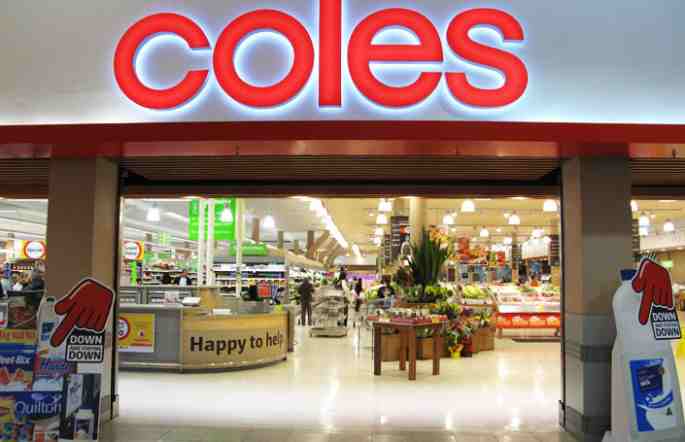
    Coles on Wednesday started selling a range of ‘everyday essentials’ on eBay, in a bid to reach some of the marketplace’s 11 million unique monthly visitors. The offering includes perishable and non-perishable items in Coles’ everyday essentials range across several categories, including select pre-packaged fresh food, pantry, personal care and household items. The items at launch are available to eBay shoppers in metro Sydney, Melbourne and Brisbane. Shoppers will initially have just one delivery option, though more will be added throughout the year, according to a statement from eBay and Coles. 

    Alister Jordan, chief executive of Coles Online, described the partnership as being all about convenience.

    “By partnering with eBay, we are providing our customers another convenient way to access our products and have them delivered straight to their door,” he said in a statement.

    The idea is that consumers who are already buying fashion, homewares and electronics on eBay can also complete their food shopping on the online marketplace, rather than having to make a second – virtual – trip to Coles’ e-commerce site.

    “It really comes down to convenience and being able to choose from a great range of groceries as well as those bigger ticket items you can’t get from a supermarket,” Julie Nestor, eBay’s CMO told.

    “Think about planning for a dinner party and being able to purchase everything from the table setting to the meal ingredients on the one site – it’s a more convenient, seamless way to shop online.”

    There is also the fact that more and more brands stocked on supermarket shelves are increasing their direct-to-consumer sales through their own websites or marketplaces like Amazon, which expanded into the pantry category last October, though it doesn’t yet offer fresh food in Australia. For eBay, the partnership seems to be about growing its eBay Plus membership program, which it launched in May 2018 in what many saw as a response to Amazon Prime. The program, which costs $49 a year, includes unlimited delivery and returns on new items bought on eBay, discounts on the Stan streaming service and opportunities to earn points through Coles’ flybuys loyalty program.

    Nestor confirmed that launching Coles’ food offering on eBay has been in the works for some time.

    “After we successfully launched our partnership with flybuys last year, this is a natural extension of our relationship with Coles,” she said.

    Nestor declined to say how many members are currently signed up to the eBay Plus program, but she described the uptake so far as “really positive” and said the company expects it to continue to grow with the launch of Coles on eBay. EBay Plus members get free delivery on orders that are $49 and over, and they earn double the number of flybuys points on all orders.

  • Amazon crafts new grocery offerings

    Amazon crafts new grocery offerings

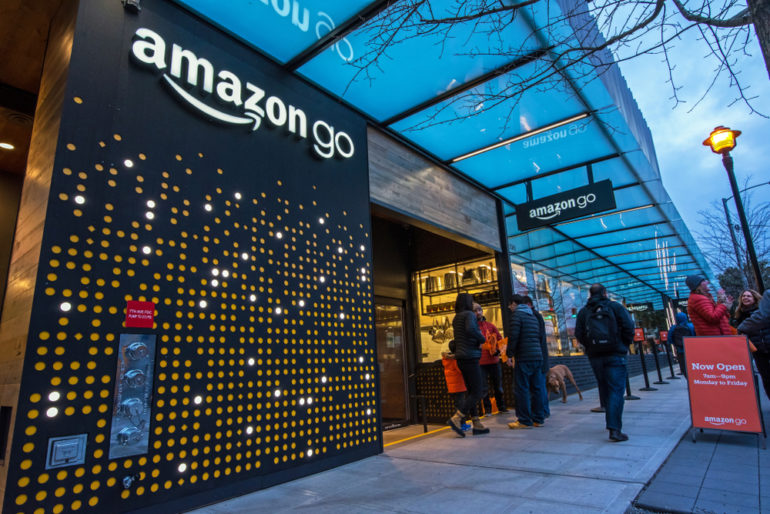
    E-commerce giant Amazon is plotting a new grocery business in the US. The online retail giant is planning to strengthen its supermarket brand by purchasing local grocery chains that operate at least a dozen stores, the report claims.

    The first store is expected to open in Los Angeles by the end of the year, with leases signed for two more locations, set to open by early 2020. The business is in talks to bring the grocery stores to shopping malls in San Francisco, Seattle, Chicago, Washington, D.C. and Philadelphia.

    Amazon, which bought the healthy supermarket chain Whole Foods for $13.7 billion in 2017, had “ambitions in this space” for a long time.

    Amazon’s big rival, Walmart has already been preparing for a battle with the retail giant, the source said. Walmart is introducing grocery pickup at 3,100 stores by next January and will also offer grocery delivery from about 800 more stores by the end of 2019.

  • 6 Tips and Tricks to Boost your eCommerce Business

    6 Tips and Tricks to Boost your eCommerce Business

    We have heard it all before, eCommerce is the future of retail sales. In 2018 the worldwide online retail sales amounted to 2.84 trillion US dollars. By 2021, the market will evolve to 4.88 trillion US dollars in worldwide online retail sales. This is a growth rate of 72% in just three years!

    The big question now is, how can you be a part of this exponential growth and enjoy a piece of the cake? There are many different alternatives to exploit eCommerce sales. One is to sell through established marketplaces like Amazon, eBay and Walmart; the other option is to build your own eCommerce store. It is even possible to do both at the same time, thereby creating a truly omnichannel experience.

    Whatever online sales channels you pursue, one thing is clear – the eCommerce industry is marked by growth, also in terms of buyers. In 2017, 21.8% of the world’s population made an online purchase. By 2021 this figure is projected to increase to 28.2%. As more people buy online, there will be more businesses that will move their retail stores online. This will foster a competitive environment, where only the best will survive.

    To boost your eCommerce business and maintain a strong market position, there are a range of tips and tricks that can be applied. These will pave the way for success!

    Source the RIGHT products

    As you might assume, the specific products you sell have an effect on your sales. But how do you know which products to source in the first place?

    Well, products that are high in demand, low in competition and sell at a profitable margin. Of course, this is easier said than done. In fact, such analyses require in-depth product market research. However, manual estimations of product sales data are subject to human error and will require extensive effort.

    However, there is a solution to this problem! Product market research BI platforms like Algopix provide actionable data that sellers can leverage to identify the RIGHT products to sell. Algopix shows product specific profit analyses, demand levels, sales performances, average seller ratings, number of competitive offerings, keyword insights and product details.

    The platform services 16 international Amazon, eBay and Walmart marketplaces. This data can be exploited to either develop smart sales strategies in established marketplaces or get insights needed to build your own eCommerce store.

    The success of your eCommerce business starts with sourcing the RIGHT products: They are the foundation of your business and should be selected with careful consideration. Making use of BI platforms like Algopix will significantly improve your ability to source high demand and margin products that are low in competition. Naturally, your products will sell better.

    Generate high-quality traffic

    It is a number one priority to generate traffic! If there is no traffic to your online store, nobody will look at your products and your sales will be low or even close to zero.

    However, increased traffic is not enough! If the traffic to your website is not relevant to the offered product or service, customers will likely not engage on the website (i.e. sign-up, subscribe, etc.). The quality of the traffic also plays a critical role and companies should aim to concentrate their marketing efforts on targeted customer groups.

    So, how do you stimulate traffic and get buyers to your online store? The best ways to do this is to exploit a range of different marketing channels and improve SEO.

    The list of different marketing channels is long. Companies can make use of paid advertising, email campaigns, social media coverage, affiliate programs, influencer marketing and content creation (e.g. guest blogs). By harnessing these channels, online store owners can target specific audiences and draw them to their website. Of course, the importance of these channels depends on unique business needs.

    Marketing channels are not the only ways to attract buyers. In fact, 70%-80% of Google users are solely focused on organic search results. This shows that SEO is the most important factor in generating traffic. To position your company perfectly and allow your target audience to navigate to your online store easily, SEO is critical but not easy to master. In fact, SEO should be handled by professionals to promote an online store through effective channels, thereby organically navigating buyers to the online store.

    Content is king

    The content of an online store plays a fundamental role in customer acquisition and retention. The most important factor is that the content is targeted to the right audience and is relevant to them. Next to the written content, visual content is nearly as important and of course, should also be in high resolutions. Why should anybody buy a product that is not clearly described or displayed?

    To create exceptional content on your website, there are a couple of tips and tricks that can be applied. First, it is vital to have convincing landing pages! The first impression of a customer on your online store often determines if you are able to convert him or not. Also, good landing pages will lower your bounce rate and keep customers engaged, moving them down the sales funnel. It is also important to note that convincing landing pages will need to have effective Call to Action (CTA) buttons. Especially the UI and UX are critical for driving conversions.

    Another tip is to make use of videos to explain a complex service to customers. They don’t want to read long texts and be bothered by minor details. Instead, make a short video explaining the value of your product or service that can be accessed fast and understood easily.

    Businesses or online stores that have a blog are more likely to generate traffic towards their website. In fact, these companies will have improved SEO because Blog posts on selected topics will likely have high rankings in search results. It is also an excellent way to engage readers and inform them about news, developments or any other topic of interest.

    Foster trust among your customers

    Trust is one of the biggest hurdles in eCommerce. Due to the fact that online retail businesses find it hard to replicate an in-store customer experience, they have to convince their buyers in different ways.

    One such way is through customer reviews and testimonials: Inside knowledge on a product or service is valuable and a key decision maker in online purchases. According to a study, 77% of shoppers take the time to read product reviews before they make any purchases online. This shows that reviews and testimonials will make or break your online business. To avoid any negative reviews, make sure to offer exceptional customer service.

    This includes being available on phone, email and chat for any inquiries, no matter how superficial they are. Customers want immediate service as well. The longer you keep them waiting, the more likely they will feel irrelevant. In contrast, if you reply fast, customers will remember the outstanding experience they had and the capable company they were buying from.

    Good customer service can also be expressed by offering a free return policy and free shipping. These are like unspoken rules of eCommerce. In fact, 9 out of 10 customers say that free shipping is the top incentive to shop online. Return policies have a similar effect because it reduces the risk for the buyer. If the product does not fit or is broken, it can simply be returned at the expense of the seller.

    There are also other ways to signal trust to your customer base. One of them is to work with established brands and integrate them. For example, offering payment services such as PayPal signals to the buyer that there is a secure payment channel. This will improve your brand reputation because you have trusted companies in your ecosystem which customers probably have already had contact with. Similarly, quality badges or rewards from reputable institutions or organizations will signal trust.

    Drive conversions

    The average conversion rate for eCommerce websites is 2.86%, which is close to nothing! To get a different view, 97.14% of the customers visiting your landing page do not subscribe to the newsletter, do not sign-up and will not make a purchase. This shows how hard it is to move customers through the sales funnel and convert them. There are some tips and tricks though…

    Discounts are a great way to incentivize conversions. Everybody likes to shop at reduced prices and customers are willing to search for the best deal that they can find out there. 88% of online buyers compare different marketplaces and online stores to find the offer with the best price. Hence, discounts attract buyers and drive sales.

    Another effective way to drive conversions is to create a sense of urgency on your landing pages and website. A good example would be a discount that is restricted in time (e.g. get 30% discounts if you buy in the next hour). Subconsciously, this influences buyers to engage and convert quickly.

    The UX and UI of a landing page or website are also important to encourage conversions. Customers should not have to search for CTA buttons and the whole experience should be effortless. This will allow customers to navigate your online store intuitively and keep engaged until conversion. UX and UI are also not tasks that can be delivered in perfection. It is important to objectively evaluate the performance of different landing pages, CTA buttons and illustrations based on A/B testing. Only this will reliably show how effective they are and what preferences your customers have.

    Frictionless checkout process

    The checkout process or shopping cart on your website is the last step before completing a purchase. Buyers have come all the way through the sales funnel and are now finally ready to make a purchase! Or are they…? A study by the Baymard Institute shows that 27% of customers leave the customer checkout process because it is too long and complex.

    You, as an online seller, do not want to lose those sales! To avoid this, make your checkout process as smooth as possible. Most important is reducing the number of stages in the checkout process to the bare minimum. Get rid of anything that seems unnecessary, as it only annoys customers.

    To make this possible, online businesses will have to include the option to checkout without signing-up. Just enable them to make a purchase as a guest user. It will likely take customers 2-3 minutes to sign-up and they will feel unnecessary commitment. Therefore, enable the option to checkout directly and fast as a guest.

    Lastly, a progress bar in the checkout can be extremely helpful because it shows the buyer progress. It comes naturally that he will be less likely to abandon the shopping cart if he has already completed 80% of it. These are small details that can make a big difference in purchasing decisions.

    eCommerce success is not a piece of cake

    These six tips and tricks will boost your eCommerce business and empower your success. Of course, there are also other recommendations, but these are the most valuable ones along the sourcing and buying process. They often intersect and are dependent on each other, because online sellers need to create a completely integrated and fluid sales process that runs smoothly. To achieve this, sellers will most likely have to facilitate technology and BI as well. It is a journey and there is competition, but don’t forget: The market is huge and the opportunities are endless. Therefore, your effort will be rewarded!

    Company Description:

    Algopix is a comprehensive product market research platform that provides essential data to analyze market demand, possible margins and shipping costs for current and future inventory.

    By providing rapid actionable product insights, Algopix helps sellers save time on manual research, increase sales volume and reduce risks of buying low-demand or low margin inventory.