Tag: etail

  • Asia is the new e-commerce battlefield

    Asia is the new e-commerce battlefield

    Retail news is flush with GAFA (Google, Apple, Facebook, Amazon) and BAT (Baidu, Alibaba, Tencent) stories, as if the US and Chinese internet giants are dominating our digital planet.

    Indeed, at times it feels like they are…but are they really? What is going on in Asia Pacific? How big is each country’s e-commerce market? How fast are they growing? Who is dominating them: GAFA or BAT; or other players we don’t hear so often about? What are the implications for global brands active in these markets? And, along the way, what’s the situation in Hong Kong?

    E-commerce market size and growth in 2017

    It was no surprise that China and Korea lead the world by far in terms of e-commerce’s share of their total retail market, at  20 per cent and 19 per cent respectively. Japan and Korea are second and third behind China in terms of absolute e-commerce market RSV (Retail Sales Value), at US$79 billion and $51 billion respectively. India is fourth already, at $30 billion. But they are all dwarfed by China’s $449 billion e-commerce which is close to six times six times larger than Japan’s. (Notably, China’s total retail market is only 2.2 times larger than Japan’s.)

    Surprisingly, the total of Southeast Asian e-commerce market’s RSV in 2017 (six countries including Singapore, Malaysia, Indonesia, Thailand, Vietnam and the Philippines), was $9.1 billion, barely comparable to Taiwan’s $9.3 billion.

    Meanwhile, the fastest growing e-commerce markets in Asia Pacific over the last three years have been India – at an amazing 50 per cent CAGR from 2014-2017 – and Indonesia at 35 per cent CAGR, (just below China’s 38 per cent over the same period). Other Southeast Asian markets are not far behind:  Malaysia at 33 per cent, Vietnam at 34 per cent and Singapore at 26 per cent. If the trend continues, the Southeast Asian region will soon become one of the most attractive e-commerce arenas globally. No wonder, then, that global giants Amazon and Alibaba are establishing beachheads in these markets.

    The laggard

    Hong-Kong, however, is lagging, its e-commerce market worth just US$1.9 billion in RSV and its share of the total retail market just 4 per cent, comparable to Singapore’s 5 per cent but dwarfed by China, Korea, Taiwan and Australia. So, why is Hong Kong lagging other APAC markets so much? Here are some of the possible reasons:

    • Hong Kong has a very dense physical retail environment. Basically, shopping is easy and convenient in offline stores because there are plenty of them, close to everyone’s home. But the UK also has a very high retail density and its e-commerce penetration is as high as in China.
    • Hong Kong has a strong cash culture. Hongkongers use cash more often than in other markets (rather than credit card or electronic payment). The Octopus card has limited usage beyond MTR and convenience stores, whereas in Mainland China, for example, electronic payment is widely embraced, the country on its way to becoming a cashless society.
    • Less availability of local e-commerce sites. Perhaps the Hong Kong market is too small to justify a dedicated investment and entrepreneurs would rather build a website for China than for Hong Kong.
    • Global players have not invested in Hong Kong until recently (for example, Alibaba extending its 11/11 promotions and introducing Alipay in local restaurants and taxis) because they may have considered the market too small.
    • More importantly, unlike Singapore, Hong Kong may not be considered a gateway to a larger regional market like Singapore is for Southeast Asia. In fact, quite the opposite is true: global e-commerce companies may simply consider Hong Kong as a natural extension of the China market. If that is so, the good news is that Hong Kong may quickly catch up the rest of China, under the influence of BAT.

    The biggest e-commerce players in APAC

    There is no need for me to introduce Alibaba and Tencent/JD.com. China’s internet giants and their respective integrated ecosystems stretching from payment to logistics are battling for leadership in the world’s largest e-commerce market. Although protected from foreign intrusions, the rivalry between the two camps is brutal, each one matching the other’s advances, move after move, like the recent investments they made in the grocery sector.

    Meanwhile, Amazon has become the number one e-retail and marketplace platform in Japan, with more than 20 per cent market share, ahead of historical marketplace pioneers Rakuten and Yahoo! Japan. The rest of the Japanese e-commerce ecosystem is very local, with a few notable pureplays like Zozotown in fashion, and many online extensions of local offline retail incumbents like convenience store chains 7 and FamilyMart, and big box electronics retailer Yodobashi Camera.

    Amazon is also very active in Australia, where it is already number four behind pioneer eBay and Apple and Woolworths. But its recent decision to create an Australian website with a local distribution centre, enabling the introduction of its coveted Prime service, is likely to turn the Australian market upside down.

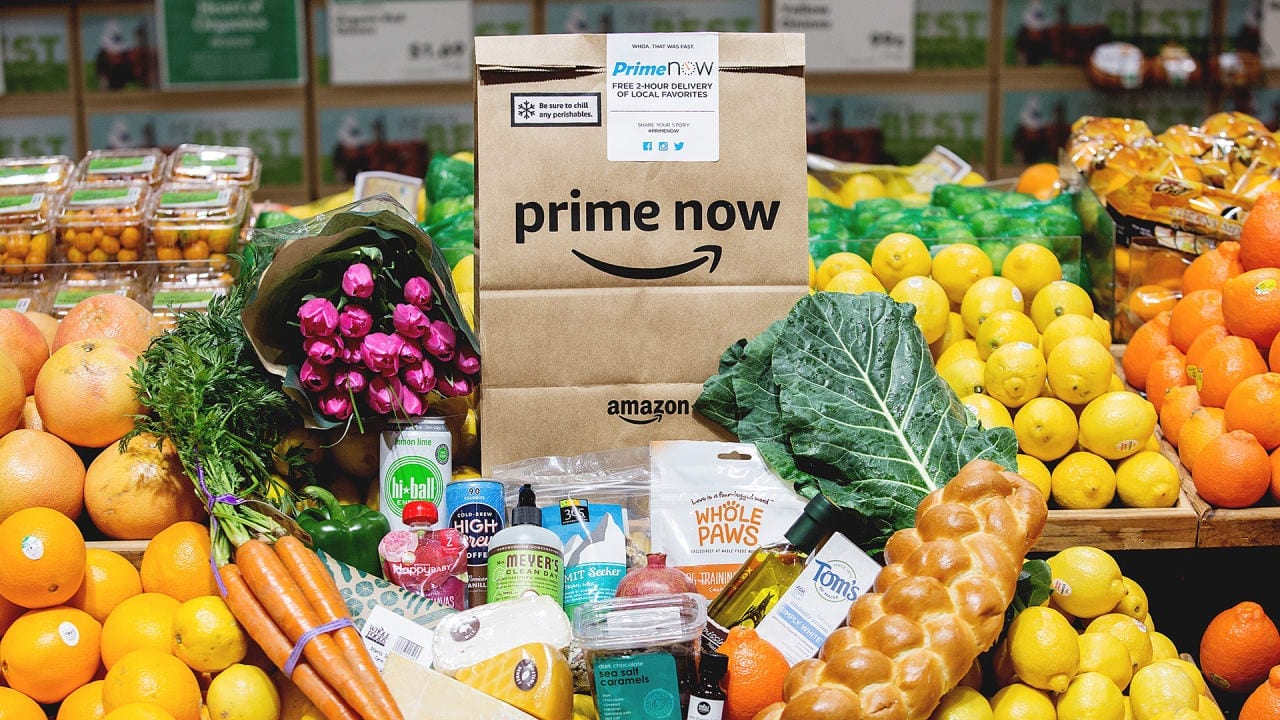
    Amazon has chosen Singapore as its beachhead entry point into Southeast Asia, where it has recently launched its Prime Now service.

    Ebay was the pioneer in South Korea where the company holds the number one position with more than 23 per cent market share through top player G-Market and the third largest player Auction. But venture capital-backed Coupang and 11Street are the fastest-growing challengers, with distinct value propositions. They might soon change the Korean ranking.

    Ebay is also number one – for now – in Singapore, with a 33 per cent share of the island-state’s e-commerce market through its locally owned leader Qoo10, leveraging the experience that eBay acquired in Korea’s most advanced e-commerce environment.

    Chinese giant Alibaba has put a stake in the ground in Southeast Asia through its acquisition of multi-market platform Lazada, which is present in six markets: Singapore, Malaysia, Indonesia, Thailand, Philippines and Vietnam. Benefiting from its parent’s huge capabilities and investment power, Lazada is growing at a fast speed and has already grabbed regional leadership with a 20 per cent market share in Southeast Asia.

    China’s second giant JD.com is quietly building infrastructure in Indonesia and entering alliances in Thailand and Vietnam while its parent Tencent is investing in technology, e-payment and C2C platforms.

    However, early entrant German capital-backed Zalora, which used to be present in every market in Southeast Asia, exited Thailand and Vietnam, selling its business to local players. In the Philippines, it sold a 49 per cent share of the business to mall operator Ayala, entering an omnichannel partnership which also includes Ayala’s BPI bank.

    Likewise, Japan’s Rakuten, which was an early entrant in Singapore, Indonesia and Malaysia, retreated from these markets in 2016.

    So the stage now seems set for an Asia Pacific face-off between Amazon, eBay and Alibaba.

    What about Hong-Kong?

    Hong-Kong’s e-commerce environment is still dominated by international platforms Amazon, Apple, Yahoo!, G-Market (eBay), Zalora, Asos, Rakuten and flash player Reebonz through their international websites, with very limited local adaptation or local infrastructure investment, which means a relatively basic service level.

    Meanwhile, China’s Alibaba and JD/Tencent have gradually become more available to Hongkongers:

    WeChat payment and AliPay have become increasingly accepted in Hong Kong restaurants and taxis, and Hongkongers can now enjoy Alibaba’s Singles’ Day and other promotions.

    It looks like Hong Kong’s e-commerce destiny is to become part of the huge China market and therefore China’s digital ecosystem – just as Hong Kong will soon be connected to the mainland by powerful road and rail links.

    What does this mean for Hong Kong e-commerce strategies?

    Betting on technologies and capabilities that are compatible with large Chinese platforms will undoubtedly boost Hong Kong’s e-commerce energy. That means local retailers should embrace WeChat, Alipay and other Chinese standard capabilities as Hong Kong standards.

    Likewise, Hong Kong entrepreneurs and investors may focus on building e-commerce websites and capabilities with the ambition to serve China, not just Hong Kong.

    With such strategies in place, Hong-Kong’s e-commerce players may be able to capture an opportunity at the scale of China – 236 times bigger than the Hong Kong market!


  • E-commerce giants struggle to find profit in Vietnamese market

    E-commerce giants struggle to find profit in Vietnamese market

    Some companies have been forced to shut down due to prolonged losses. Multiple online retailers in Vietnam have been struggling to gain profits for years due to high operational costs in a competitive market.

    Tiki.vn, one of the most popular e-commerce firms in Vietnam, recently reported a VND322 billion ($14 million) loss in two years.

    The loss in 2017 of the online retailer, which sells a variety of products including clothes, household items and electronic devices, has tripled its charter capital and is seven times its loss in 2016.

    Tiki.vn is not the only e-commerce company in Vietnam that has been suffering from losses in recent years.

    Before being acquired by the Chinese giant retailer Alibaba in 2016, Lazada Group said that it has lost $334 million in 2015 the Southeast Asia market, including Vietnam. This lost is double what it posted in 2014, according to TechCrunch.

    Some local e-commerce companies like Lingo.vn, Deca.vn and Beyeu.com have also been forced to shut down due to prolonged losses.

    Challenges for online retailers

    According to experts, e-commerce is an industry which requires a long time to recover capital and gain profit, therefore the losses of these giants in the Vietnamese market is understandable. Big brands in the field such as U.S.-based Amazon and Alibaba has to go for 10 years before having profit.

    Operating cost, especially logistics costs, is one of the main reasons for the losses. As large e-commerce firms often require massive warehouses covering thousands of square meters and hundreds of staff to work in them, logistics costs account for 60-70 percent of online retailers’ revenues, said trade expert Vu Vinh Phu.

    This enormous cost can be seen from the case of Tiki and Lazada Vietnam, each has a storage of over 4,000 square meters (about 1 acres) with 300 staff in Ho Chi Minh City. It is estimated that the operating cost of one of these storages is VND1 billion (about $44,000) a month. With three warehouses in operation, the two companies spend about $2 million a year, according to local media.

    In addition, marketing also plays a part in the high costs of e-commerce companies in Vietnam. When entering the market, Lazada Vietnam invested heavily in television and online advertising to attract users and gain market share. This company used to spend up to $2 million per month for advertising programs, local media said.

    The popularity of shopping on social networks such as Facebook or Zalo is also creating challenges for big online retailers. “There is an unbalanced competition between e-commerce giants such as Lazada, Tiki and Shopee with social network sellers,” said Pham Thai Binh, head of retails at property consultancy Savills Ho Chi Minh City.

    As businesses on social networks don’t have to pay high costs of investment, item price range is lower which in turn attracts the majority of Vietnamese people, Binh said. On the other hand, famous brands have to invest a great deal in terms of staff, operating system and other relating costs, he added.

    As Vietnamese has a habit of physically “touching” a product, they often surf the Internet for prices without actually ordering from the online retailers. The lack of information and customer service tools also plays apart in the problem.

    To compete in the market, retail giants in Vietnam are under pressure of price competition which leads to a loss of profit. Under pressure from investors, many businesses sometimes accept to sell 10 or 20 percent below market price, local media said.

    Potential market

    Despite those difficulties, experts believe that there is still great potential for e-commerce in Vietnam in the future.

    In a survey of about 1,000 participants conducted by CBRE Vietnam, a commercial real estate services and investment firm, 25 percent said that they will reduce the frequency of shopping at stores. About half of participants said that they will shop online more in the future.

    In the annual survey of Vietnam’s Business Studies and Assistance Center (BSA), the number of people shopping online has tripled from 0.9 percent in last year to 2.7 this year. As young people start to participate more in online shopping, e-commerce is a potential area for retailers to exploit, which will bring many benefits to customers, said a representative of BSA.

    E-commerce is a fast growing industry as customers’ behavior change every day, said Tran Tuan Anh, CEO of the online retailer Shopee Vietnam. “This year will be the year of e-commerce as Vietnamese people are now very familiar with online shopping,” he said.

    Price will continue to be an important factor for Vietnamese customers, but product quality and service are becoming more important, he said. As more and more consumers are aware of e-commerce, the brand, service, technology and value added services such as shipping and payment will need to be improved, Anh said.

    Tran Ngoc Thai Son, CEO of Tiki, also believes that the transition from traditional to online shopping is inevitable. E-commerce, now accounts for 3 percent of the $90-billion revenue of Vietnamese retail market, will grow to a 5 or 10 percent segment in the future, Son said. However, online shopping will not be able to replace brick and mortar businesses, he said.

    “The growth rate of Vietnam’s e-commerce market is estimated at about 35 percent, which is 2.5 times higher than Japan,” said industry expert Duc Tam at the Vietnam Online Business Forum 2017.

    According to one estimate, about 30 percent of the population will be buying goods and services over the internet in 2020, with each shopper spending an average of $350 per year.

  • China’s online shoppers expected to spend US$1 trillion in purchases

    China’s online shoppers expected to spend US$1 trillion in purchases

    China has more than 500 million online shoppers whose spending is set to exceed US$1 trillion this year.

    Of this, cross-border e-commerce purchases are about to reach $125 billion, according to new research by consultancy Frost & Sullivan. In partnership with China retail strategy expert Azoya Consulting, it has released the report The Cross-border e-Commerce (haitao) Opportunity in China.

    This includes research among more than 1000 online shoppers in China, together with findings from interviews with more than 100 international retailers and brand owners.

    Frost & Sullivan Asia-Pacific consulting director Mark Dougan says the average online shopper in China spends almost $850 a year on purchases from overseas retailers. “Chinese consumers are significantly motivated by the perceived higher quality overseas retailers offer, while the risk of buying fake goods is lower.”

    The research also shows that cross-border online shopping is growing strongly, with 63 per cent of Chinese shoppers planning to increase their spending this year. Fashion is the top category bought from overseas retailers (22 per cent of online shoppers in the past month), beauty and cosmetics (20 per cent) and mother and baby (15 per cent).

    As a country of origin, Japan gains the most confidence from Chinese online shoppers (72 per cent), followed by South Korea (60 per cent).

    Women are higher cross-border online shoppers than men, spending $976 on average annually, which is 20 per cent more than men. Men seek fast delivery, while women seek Chinese-language customer support. Women are more likely to use an overseas supplier’s standalone direct-to-consumer website (21 vs. 18 per cent of men).

    More than 80 per cent of global retailers see China as an attractive market opportunity yet only 30 per cent are satisfied with their current level of sales in China. This is particularly the case for those using Chinese marketplaces as their online channel, where only 21 per cent of retailers are satisfied with their sales levels.

    “To build a brand that Chinese consumers trust, that commands a healthy profit margin and repeat buyers, retailers need to approach customers through multiple touchpoints,” says Azoya International co-founder Don Zhao.

  • Hong Kong online shoppers using more tablets

    Hong Kong online shoppers using more tablets

    While Hong Kong’s e-commerce market accounts for less than 5 per cent of total retail sales, the behaviour of those shopping online is changing.

    According to data presented by Nielsen at yesterday’s 2018 Hong Kong Retail Summit, organised by the HKRMA, home computers are now used by fewer than half of Hong Kong online shoppers – 48 per cent last year, down 8 per cent from 2016. They are shifting to mobile phones, where 25 per cent shop (up 8 per cent in a year) and tablets, used by 11 per cent, (up 2 per cent). And 13 per cent of Hong Kong online shoppers say they used work computers.

    Michael Lee, MD at Nielsen Hong Kong and Macau, who moderated a panel discussion at the event, said expanding availability of eWallets was making online shopping easy and secure in the territory.

    “The beauty of e-commerce is convenience, so easy checkout method via eWallet and flexible pick up and return policies are a key to winning.”

    Almost half of Hong Kong consumers (46 per cent) now use an eWallet, with the number of active accounts rising 15.4 per cent in the last quarter of 2017 compared with a year earlier. The value of eWallet transactions in the last quarter of 2017 rose 27.7 per cent, “a significant indication of the growth of the ecommerce market,” said Lee.

    Buying on impulse

    Unlike offline shopping, consumers usually spend impulsively online.

    “They are usually triggered to buy online for conditional free shipping/return policy, promotions and discounts as well as easy checkout methods. Among all impulsive purchase categories, the top products are all food-related, the frequently purchased categories being snacks, breakfast cereals, bottled water, instant noodles/pasta/udon as well as ready-to-drink beverages.”

    But, he said, despite the advance in online shopping, consumers are still hesitant about shopping online, nursing concerns about delivery logistics for perishable items, their desire to inspect goods before they buy and their need for convenience and the wish to follow habits.

    “It is important for online retailers to remove the barriers to make online shopping more welcoming and promising for shoppers by providing click and collect, return policies, showroom and cash on delivery as well as unique product range, and purchase incentives,” he said.

    “Because no physical product is in hand in the virtual world, there is nothing more important than creating a better customer experience to win over potential customers. It is therefore crucial for marketers to offer an unmatched online shopping experience by creating a sense of value for money, providing a flexible shopping platform and delivery options, informing customers fully about return policies and making information freely available to customers and giving them the chance to talk about their personal experience.

    Experience is essential

    “Consumer experience is essential,” Lee said. “With online shopping become more popular, it is important for industry players to identify the key ways to win in the ecommerce market in Hong Kong. To stand out in this highly competitive market it is important to provide unique cross-screen experience as well as unique product range for consumers.”

    Meanwhile, Hong Kong online shoppers are getting older. In contrast with just a few years ago, e-commerce is no longer the preserve of the young.

    The Nielsen survey revealed that e-commerce is now relevant to people of all demographics. About 80 per cent of males and females have tried online shopping last year.

    While consumers aged 22-29 and 30-39 represent the most frequent shoppers, 67 per cent of older consumers (aged 50-64) said they had bought online last year.

  • Google explains Hong Kong’s E-commerce Challenges

    Google explains Hong Kong’s E-commerce Challenges

    Mindset and talent are the two factors holding back the Hong Kong e-commerce sector, according to a senior Google executive.

    Speaking at the sell-out HKRMA 2018 Hong Kong Retail Summit this morning, Leonie Valentine, MD sales and operations at Google Hong Kong, said that compared with other major cities around the world, Hong Kong remains in the early stages of digital transformation.

    Here, where retail is a key driver of the economy, e-commerce accounts for just 4.68 per cent of sales.

    Yet across Asia-Pacific, 17.6 per cent of retail sales will be online this year.

    Of the small percentage of retail sales conducted online in Hong Kong, just 37 per cent is on mobile (m-commerce). In the mainland, that figure is 66 per cent and China now accounts for two-thirds of global m-commerce sales, driven by its mobile-first audience. Sales by m-commerce in China are expected to triple by 2021.

    Valentine dismissed the ubiquitous argument that the city’s dense urban layout is the reason Hong Kong e-commerce penetration is so low.

    “It’s the same argument I heard in 2011 when I arrived in Hong Kong, when I questioned why I couldn’t buy a mobile phone or groceries online here. ‘Oh, there’s no need,’ was the reply. ‘There’s a shop on every corner in Hong Kong. No one shops online.’

    “Should I tell that to the millennials in my team? They were  already buying dresses from Korea, shoes from Taobao and books from Amazon in 2011. Yet we really didn’t have as much of a digital industry here then,” said Valentine.

    “So while digital investments by some retailers have lagged behind, most consumers have actually embraced online shopping.”

    Last year, 58 per cent of non grocery sales were influenced by a digital touchpoint, compared with just 13 per cent in 2004.

    “Today’s consumer wants to compare products, features, price, benefits, etc, before they start their purchase process. Eighty-one per cent of the population is connected to the internet. Ninety-eight per cent of smartphone users go online at least once a day. So Hong Kong should rank really highly in digital integration.”

    But it doesn’t.

    “There are two things that hold back Hong Kong. Mindset – in terms of the willingness to embrace new things – and talent. One of the things we really need in Hong Kong is to have a mindset that change is good, that embracing digital is not about distrusting what you have today; it is about complementing that for the benefit of your customers.”

    Those customers are already online, said Valentine. “Everybody here is online: 98 per cent of smart phone users – and that’s everybody – are online at least once a day, from an eight-year old to an 80-year old. And yet where are we? Where are our government services today… on mobile? Where is the ability for you to be able to easily find what you are looking for online?

    “I want to buy a new couch. I can’t find one. I’m searching and I have money to spend and I cannot find a retailer in Hong Kong easily on mobile or on my desktop that has the product that I want. I find that really interesting in a city that is as modern and connected as Hong Kong.”

    Those are her two reasons for Hong Kong e-commerce lagging the rest of the region, she said. “It is very much about the mindset and it’s about having the right talent to drive a lot of the adoption of these ideas.”

    “Take a risk”

    Another speaker, Yann Bozec, president and CEO of Coach China, echoed Valentine’s comments on the mindset.

    “I love to be surrounded by millennials and listen to what they do and how they do it. Even further I am learning a lot from my eight year old daughter about digital [technology]. I think it is about listening and looking at how people, especially younger people, are engaging digitally.

    “[It’s about] being inspired by them and not being shy to take risks and try new things, including new applications.”

    Bozec said besides established giants like Google, a lot of smaller, upcoming applications are making their way onto the market.

    “Businesses who are early adopters and taking some risks can really take a lot of benefits.”

    Retail “a pillar” of Hong Kong

    The 2018 Hong Kong Retail Summit was opened by the SAR’s chief executive Carrie Lam, who congratulated the HKRMA on its 35th anniversary.

    “The retail industry is an important pillar of the Hong Kong economy, contributing about 4 per cent of our GDP and employing some 270,000 people. I am pleased to note that retail sales last year enjoyed moderate growth in both value and volume… with the forecast of a sales increase this year in the 3 to 4 per cent range.”

  • Amazon looks to UK grocery acquisition

    Amazon looks to UK grocery acquisition

    Amazon’s aim to conquer retail’s largest category, grocery, through the acquisition of bricks-and-mortar supermarkets has been further illuminated by its reported attempt to initiate takeover talks with the upmarket chain, Waitrose, in the UK.

    A recent report in The Sunday Times has suggested that one of Amazon’s most senior executives in Britain, vice president of special projects Ajay Kavan, had several “enormously informal” conversations with a director of the John Lewis Partnership, Waitrose’s parent company, about a possible deal last November. However, a request for a formal meeting was apparently shut down by the board.

    Citing an unnamed source, The Sunday Times reported that Amazon’s interest in the 350-store supermarket chain was known to the partnership’s executive team, including Waitrose’s boss Rob Collins, group finance director Patrick Lewis and head of John Lewis department stores Paula Nickolds, but chairman of the board Sir Charlie Mayfield denied the report.

    “These times are ripe for speculation, but there has been no approach to the partnership by Amazon regarding Waitrose, and nor would I expect there to be,” Mayfield told.

    Analysts have speculated that Amazon could buy a British grocery chain since it launched its online grocery delivery service, Amazon Fresh, in the market two years ago. Morrisons, Sainsbury’s and Waitrose reportedly were all considered potential targets.

    The recent £14 billion merger between Sainsbury’s and Asda has been cast as a move in part to ward off Amazon’s broader move into grocery, which many see as ramping up since the company’s US$13.7 billion acquisition of Whole Foods last summer.

    Since taking over Whole Foods’ 470 stores in the US, Canada and UK, Amazon has cut prices on staples and rolled out free two-hour delivery for online grocery orders in several cities across the US.

  • Vietnam’s e-commerce market sees many new players

    Vietnam’s e-commerce market sees many new players

    Vietnam is among the fastest growing commerce markets. E-commerce makes up 0.5 percent of value of the FMCG (fast moving consumer goods) sector in the four largest cities, while the number of online shoppers increased from 5.4 percent to 8.8 percent in urban areas within one year. The value of one online shopping cart triples the value of a traditional shopping cart.

    The recent report of Kantar Worldpanel says that Vietnam’s e-commerce activities grew by 69 percent in 2017. Meanwhile, Frost & Sullivan predicted that Vietnam’s market value would rise from $1.7 billion in 2016 to $3.7 billion in 2030, or an annual growth rate of 45 percent.

    Chinese firms

    Analysts warned that Chinese online retailers are penetrating the Vietnamese market, putting pressure on domestically made products.

    JD earlier this year announced investment in Tiki to become one of the biggest shareholder of the e-commerce firm. While JD declined to reveal the amount of capital, Tiki has said that it had raised $50 million worth of funds to expand its business.

    Prior to that, Alibaba launched in Vietnam in April 2016 after it wrapped up the takeover of Lazada in SE Asia.

    Headquartered in Singapore, Shopee is still listed among Chinese firms in Vietnam as 40 percent of Shopee shares are held by Tencent, a Chinese technology group.

    All three Chinese ecommerce markets entered the Vietnamese market through mergers and acquisitions.

    According to Google, Lazada, Shopee and Tiki are three out of four most searched e-commerce websites in Vietnam.

    Chinese not the only foreign players

    However, with investors from the US and Japan entering the field recently, the worry about the dominance of Chinese firms has been lifted.

    Most recently, Japanese Scroll acquired 26.9 percent of shares of Cat Dong, the company that owns cungmua.com, nhommua.com and Shipto.vn. This is the second time that Cat Dong transferred capital during its 8-year operation.

    Prior to that, Cat Dong received investment from ACA Investment, a Japanese ifund belonging to Sumitomo which once poured money into Bibomart and Son Kim Land.

    In early March, the e-commerce market welcomed Amazon. The US giant, instead of making investment deals, decided to join hands with the Vietnam E-commerce Association. With the cooperation, Amazon wants to help Vietnamese businesses export their products on the Amazon platform.

  • Vietnam’s e-commerce companies face logistics and price challenges

    Vietnam’s e-commerce companies face logistics and price challenges

    Shipping costs are forcing prices up and driving potential customers away. Vietnam’s e-commerce industry is facing challenges due to poor logistics and consumer price-sensitivity.

    “The challenge for commerce in Southeast Asia in general, and Vietnam in particular, is logistics,” said Vu Duc Thinh, country manager for the logistics arm of Lazada, a Singapore-based e-commerce company which also operates in Vietnam.

    Vietnam’s logistics costs accounted for 20.9 percent of GDP in 2016, according to the World Bank, and were higher than regional peers China, Thailand and Japan.

    Inflated logistics costs are putting a strain on local businesses and need to be cut in order to make firms more competitive, said Prime Minister Nguyen Xuan Phuc during a conference held by the Ministry of Industry and Trade in Hanoi earlier this month.

    The reason for this is the cost of transporting goods via land, Phuc said. In Vietnam, transportation via land accounts for 59 percent of all logistics costs, which is 9.7 times more than via water and 2.5 times more than by train, said Deputy Minister Nguyen Van Cong during the conference.

    Insufficient infrastructure development is to blame for the disparity, with rail links lacking connections to storage depots, and waterway transport taking from 3-5 times longer than by land, according to experts.

    Another factor hindering the advancement of Vietnamese e-commerce companies is consumer price-sensitivity, which is proving to be a challenge when it comes to taking into account shipping fees when companies set their prices.

    “If Vietnamese e-commerce companies want to win customers here, they have to come up with the best prices,” Huynh Mai, 25, a Vietnamese online shopper.

    Online sales in Vietnam have expanded rapidly in recent years, currently accounting for 3.39 percent of the country’s retail market. The total retail market grew 10.9 percent last year to $173.27 billion, as reported by local media.

    The World Bank forecasts that Vietnam’s $200 billion economy is likely to grow to a trillion dollars by 2035. More than half of its population, compared with only 11 percent today, is expected to join the ranks of the global middle class with consumption of $15 a day or more.

    According to one estimate, about 30 percent of the population will be buying goods and services over the internet in 2020, with each shopper spending an average of $350 per year.

  • Alibaba reaches a new record in transaction volumes

    Alibaba reaches a new record in transaction volumes

    Alibaba Group on Friday reported soaring revenue figures for the quarter ended March 31 and the 2018 fiscal year driven by strong growth in its core commerce business and strategic investments in New Retail.

    Total revenue for the quarter increased 61 per cent year-on-year to US$9.9 billion, with core commerce revenue increasing 62 per cent year-on-year to US$8.2 billion and cloud computing revenue increasing 103 per cent year-on-year to $699 million.

    Revenue from digital media and entertainment increased 34 per cent year-on-year to US$840 million and revenue from other initiatives increased 8 per cent year-on-year to US$158 million.

    Income from operations was US$1.5 billion. Adjusted EBITDA increased 11 per cent year-on-year to US$2.7 billion, while adjusted EBITDA for the core commerce segment increased 19 per cent year-on-year to US$3.5 billion.

    “Alibaba Group had an excellent quarter and fiscal year, driven by robust growth in our core commerce business and investments we have made over the past several years in longer-term growth initiatives,” said Alibaba Group’s chief executive Daniel Zhang.

    “With the continuing roll out of our New Retail strategy, our e-commerce platform is developing into the leading retail infrastructure of China. During the past year we also doubled down on technology development, cloud computing, logistics, digital entertainment and local services so that we are in a position to capture consumption growth in China and other emerging markets,” he said.

    Highest growth rate since IPO

    Alibaba ended the 2018 fiscal year with US$39.9 billion in revenue, a 58 per cent increase over the previous year. US$34.1 billion of that came from the company’s core commerce business, including its Taobao and Tmall e-commerce platforms. This represents a 60 per cent year-on-year increase in core commerce revenue, the highest revenue growth rate since the company’s IPO.

    Revenue growth in core commerce was largely driven by Alibaba’s investments in content and technology to personalise its retail marketplaces, its marketplace expansion through organic growth and acquisitions and its strategic shift to New Retail to capture consumer wallet share through online-offline integrations.

    H&M, Marni and Yonex established flagship stores on Tmall in the quarter, joining the more than 150,000 brands that sell through the platform, 18,000 of which are international brands from 74 countries selling into China through Tmall Global.

    Tmall’s newly established Luxury Pavilion now counts close to 50 brands, including Burberry, Dom Perignon, Tod’s, Zenith, La Mer, Maserati and Guerlain.

    Alibaba saw record transaction volumes in the 2018 fiscal year, with US$768 billion worth of goods purchased through its retail marketplaces, a 28 per cent over the previous year. This represents an acceleration compared to the 22 per cent increase in gross merchandise value it posted in the 2017 fiscal year.

    The company ended the fiscal year with 552 million and 617 million mobile active customers.

    Alibaba’s chief financial officer, Maggie Wu, said the company expects to maintain this high level of growth in the year ahead.

    “Looking ahead to fiscal 2019, we expect overall revenue growth above 60 per cen, reflecting our confidence in our core business as well as positive momentum in new businesses. We expect our new growth initiatives will drive long-term, sustainable value for our customers and partners and increase our total addressable market,” she said.

  • Online retail sales growth stagnates in Philippines

    Online retail sales growth stagnates in Philippines

    The Philippines is lagging behind its neighbours in online retail sales growth, says a new report.

    Despite having the second-largest population of Southeast Asia, the Philippines has turned in the lowest B2C e-commerce sales growth figures, according to Research & Markets’ Philippines B2C E-Commerce Market 2018 report.

    Among hurdles to overcome to foster growth in the online retail sector are comparatively low internet use, few credit card holders and restricted consumer confidence in online shopping.

    Online retail sales in the Philippines are expected to rise at a double-digit rate for the next few years even in the face of challenges, says the report. An increasing share of the large population is connecting to the internet, many though mobile devices.

    M-commerce is contributing to the rise in online retail, with mobile making up about three-quarters of connections to e-commerce websites. The Philippine government has done its part to help expand online retail sales by aiming to create a favourable administrative environment.

    Leading online merchants in the Philippines include Lazada and Shopee, both with headquarters in Singapore. Local companies Ayala Group and JG Summit are expanding their online presence.

  • Shopee teams up with DHL eCommerce in Thailand to offer a seamless delivery experience

    Shopee teams up with DHL eCommerce in Thailand to offer a seamless delivery experience

    DHL eCommerce, a division of the world’s leading logistics company, Deutsche Post DHL Group, is partnering with Shopee, the leading e-commerce platform in Southeast Asia and Taiwan, to offer greater convenience and choice to Shopee users in Thailand. Sellers on Shopee can now access over 500 DHL ServicePoints across Thailand to drop off their parcels and have them delivered to their shoppers across Thailand. Alternatively, sellers can also arrange a pickup from DHL for door-to-door delivery service to their buyers.

    “We are thrilled to be partnering Shopee to offer greater ease, choice and control over  the online delivery experience. Shoppers’ expectations are growing with regards to their entire purchasing experience — they expect a great and seamless experience from the time they click to purchase until the goods are received. A recent report states that 60% of consumers purchased from one online merchant over another because delivery options were more convenient for their needs, highlighting the pivotal role of delivery in the overall online shopping experience[1] ,” says Kiattichai Pitpreecha, Managing Director, Southeast Asia, DHL eCommerce. 

    “Shopee is excited to work with DHL eCommerce and we are confident that our users will benefit from the suite of services and features offered by DHL. We aim to become the online shopping destination of choice in all our markets and will continue to explore synergies between the two companies to make both buying and selling on Shopee as easy and seamless as possible,” says Terence Pang, Chief Operating Officer of Shopee.

    DHL’s domestic delivery network in Thailand offers high quality delivery service and a range of other services, such as easy IT and API integration, end-to-end tracking, delivery insurance, cash on delivery and more, tailored for the booming e-commerce industry. This enables sellers and leading brands on Shopee to efficiently reach out to customers across the country. Shoppers on the other hand will benefit from the consistent quality and convenience of delivery options. DHL eCommerce will also be growing its ServicePoint footprint in Thailand to over a thousand in the coming months to offer increased touchpoints with users.

    To mark the start of the partnership, Shopee and DHL will be extending a limited period free shipping promotion. Shopee sellers can enjoy free shipping nationwide (terms and conditions apply) from now until 30 June 2018 when they select DHL as the logistics provide for their shipments.

  • Earlier Spike in Travel Expenses Due to GE14

    Earlier Spike in Travel Expenses Due to GE14

    ShopBack, the leading online Cashback platform that partners majority of transportation and accommodation booking sites in Malaysia, observes a 26% increase in travel purchases among its local users since the unveiling of the 14th General Election’s voting day (May 9th).

    “The next peak period for travel booking after March’s MATTA fair is supposed to be two weeks to a month prior to Hari Raya, but the purchasing trend came sooner this year as GE14 falls before Ramadhan,” says Alvin Gill, Country General Manager of ShopBack Malaysia.

    According to ShopBack Malaysia’s data, partners that offered a discount in flight and bus tickets, as well as reloadable petrol card, are the most sought-after stores under travel category on ShopBack’s web and app.

    “The daily average sales of our travel merchants has got a 26% increment since the voting day announcement. The demand remained strong in the past weeks, and we reckon part of the contributing factors was that AirAsia introduced fixed fares for all voters. ShopBack Malaysia’s users could purchase AirAsia’s tickets via Traveloka and Expedia; at the same time obtain cashback savings from every transaction made. In addition, bus tickets, Petronas gift cards from Lazada and 11street were also among the best-selling products in April,” Alvin explained.

    To cater for those who haven’t got transportation bookings sorted out yet, ShopBack Malaysia will organise a Mid-Year Travel Fair from April 30th to May 6thand offer up to 7.5% cashback together with its travel partners including Malaysia Airlines, Traveloka, Expedia, BusOnlineTicket, Booking.com, Hotels.com, etc. Malaysians could seize the chance and optimise their spending by visiting ShopBack’s website or download its mobile app.

    Malaysia is the No.1 Travel Destination for Locals, Not Overseas

    On the other hand, ShopBack Malaysia’s data also shows Malaysians frequently visits domestic destinations, especially Kuala Lumpur, Malacca, and Johor Bahru. Japan is the second most popular country, followed by Taiwan, Indonesia and Thailand.

    “Malaysians love to travel, and they didn’t stop travelling due to the economy challenges. Instead of flying out, many of them chose to travel within Malaysia and spent on better accommodation, such as 4-star hotel i.e. KSL Hotel & Resort and Hatten Hotel Melaka. Even so, the daily average spending for domestic travel is still significantly lower than Japan and Taiwan (four times lower than Japan and about half of Taiwan’s expenses).”

    Delving into customer purchasing pattern, he said if there’s no special occasion, travel transactions usually happens on Monday and Wednesday, between 3 pm – 6 pm. The year-end holiday season makes the heaviest travel months throughout the entire year, and Malaysians’ online travel spending also tends to spike before every festive period, and during MATTA Fair.

    “Although MATTA fair is an offline event, online booking sites such as Malaysia Airlines, Traveloka, Expedia will jump on the bandwagon and as the platform that empowers shoppers to shop and save smart, ShopBack Malaysia works closely with them to tailor-make best deals and upsized cashback for our users. It is a win-win situation as the result usually is very encouraging – for example, we noticed local airlines achieved 2.5 times more bookings during the past MATTA fair,” Alvin said.

    To date, ShopBack has more than 1 million users in Malaysia and it has rewarded them with more than RM25 million worth of cashback.  What’s better is users are able to stack this on top of their credit card’s cashback, and transfer the money to their bank account once it gets validated. Other than Malaysia, ShopBack is also available in Singapore, Thailand, Taiwan, Indonesia and the Philippines.


  • Amazon’s profit doubles

    Amazon’s profit doubles

    Amazon has reported a 43 per cent increase in net sales in the first quarter to US$51 billion, compared with $35.7 billion in the first quarter 2017, topping analysts’ expectations of $49.8 billion and boosting its share price 6 per cent in extended trading.

    Excluding the $1.6 billion favourable impact from year-over-year changes in foreign exchange rates throughout the quarter, the e-commerce giant’s revenue increased 39 per cent compared with first quarter 2017.

    The results were driven by Amazon’s profitable cloud computing business, strong advertising sales and better-than-expected retail performance, particularly in the US, where the acquisition of Whole Foods boosted sales in that segment 46 per cent year-on-year to $30.7 billion in the quarter, according to Brian Olsavsky, Amazon’s chief financial officer, on a call with analysts.

    The company could see further gains from its US retail business, after announcing Thursday that it plans to increase the annual price of Prime memberships from $99 to $119 in May. Amazon CEO Jeff Bezos recently revealed there are more than 100 million Prime members worldwide.

    The e-commerce giant increased its operating cash flow 4 per cent to $18.2 billion for the trailing twelve months, compared with $17.5 billion for the trailing twelve months ended March 31, 2017.

    Operating income increased 92 per cent to $1.9 billion in the first quarter, compared with operating income of $1 billion in first quarter 2017. And net income was $1.6 billion in the first quarter, or $3.27 per diluted share, compared with net income of $724 million, or $1.48 per diluted share, in first quarter 2017.

    Looking ahead, the retail giant expects net sales in the current quarter to be between $51 billion and $54 billion, which would be 34 to 42 per cent higher than net sales in the second quarter 2017. This guidance anticipates a favorable impact of approximately $1.2 billion or 320 basis points from foreign exchange rates.

    Operating income is expected to be between $1.1 billion and $1.9 billion, compared with $628 million in second quarter 2017, assuming, among other things, that no additional business acquisitions, investments, restructurings, or legal settlements are concluded.
  • Lazada Malaysia links up with Singapore

    Lazada Malaysia links up with Singapore

    In the pilot phase, more than 50,000 products from such categories as fashion, health and beauty, home and lifestyle, and sports and travel are being made available to Lazada Singapore shoppers. They include items from such Malaysian brands as Carlo Rino, Pensonic and Swan.

    The move comes on the eve of Lazada’s annual birthday campaign, which offers special promotions and giveaways.
    The DFTZ is the first e-hub outside of China under the Electronic World Trade Platform. Under this roll-out, a single contract grants access to Singapore. Other Southeast Asian countries will be added later.

    The DFTZ provides a centralised bonded warehouse at KL International Airport Aeropolis, which features advanced technology for sorting, shelving, packing and logistics.

  • Lazada launches regional trade with Digital Free Trade Zone Ahead of 6th Birthday

    Lazada launches regional trade with Digital Free Trade Zone Ahead of 6th Birthday

    Starting today, over 100 Lazada sellers in Malaysia will begin marketing their products to buyers in Singapore, with seamless support from Lazada and the Digital Free Trade Zone (DFTZ).

    This is a significant boost for online trade, allowing Malaysian small and medium enterprise owners to expand overseas, reaching out to new customers among Singapore’s population of 6 million. Through Lazada and the DFTZ, sellers enjoy a one-stop solution with more efficient cargo clearance and GST exemptions, and overall, export processes that are quick and hassle-free.

    In this pilot phase, over 50,000 products from various categories – Fashion, Health & Beauty, Home & Lifestyle, Sports & Travel and more – will be made available to Lazada Singapore shoppers. They include items from iconic Malaysian brands like Carlo Rino, Pensonic and Swan. This provides Malaysian brands increased visibility and representation in today’s global marketplace.

    The kick-off today is strategically timed to precede Lazada’s annual birthday campaign, taking place from 24 to 26 April in Singapore. As for Malaysia, the 6th birthday campaign will take place from 25 to 27 April. During this period, a spike in consumer interest and transactions are expected, owing to a continuous stream of promotions and giveaways.

    Empowering Malaysian Sellers

    The DFTZ is the first e-hub outside of China under the Electronic World Trade Platform. With Lazada and DFTZ, there is none of the administrative and legal hassles associated with entering new markets. A single contract grants access to Singapore in this rollout; and other Southeast Asia countries will be added subsequently. Business owners also need only upload their product information once and Lazada will replicate the content on local portals.

    The DFTZ provides a centralized bonded warehouse at KL International Airport (KLIA) Aeropolis, allowing efficient sharing of inventory among markets. The warehousing hub features advanced technology for sorting, shelving, packing and logistics.

    Fulfilment of orders is also easier on the pocket, with Lazada’s e-Logistics solutions which offer lower-cost and faster delivery.

    Paving the Way for Borderless e-commerce

    “This is a significant milestone in Southeast Asian e-commerce, one we are proud to lead. We see huge potential for expanding trade across Southeast Asia and are working hard to make it happen,” says Hans-Peter Ressel, Lazada Group Chief International Officer.

    “Now, I can bring my sales to the next level and easily reach a new group of customers in Singapore. I don’t have a wide logistics network so Lazada’s ecosystem gives me an amazing chance to participate in overseas trade for the first time,” says Aymen Ben, from ACHLIM HEALTH & BEAUTY, Malaysia.