Retail News CRM

Tag: export

  • Hyundai Motor sells more than 10 million cars in China

    Hyundai Motor sells more than 10 million cars in China

    Hyundai Motor, Korea’s largest carmaker, said Sunday that accumulated sales of its vehicles in China surpassed the 10 million unit mark in 2018. The milestone was reached 16 years after the company entered the key neighboring country, which has since become the largest market for new cars in the world.

    Hyundai first sold the midsize Moinca, a localized version of the Sonata, in the first year, which was followed by the Elantra. By 2008, it had increased its lineup to six, with sales exceeding 1 million units. In 2013, the carmaker said it sold 1 million vehicles in the world’s most populous country, with some 5 million cars being sold overall. Up until 2016, annual car sales exceeded the 1 million mark, although this plunged 31.3 percent on year to 785,000 units in 2017, amid a diplomatic dispute over the deployment of a U.S. missile defense system in Korea.

    For 2018, the carmaker said Hyundai sales edged up 0.6 percent from a year earlier to a little over 790,000, with numbers for this year not looking too promising.

  • Vietnam’s coffee traders cut output forecast by 10 percent

    Vietnam’s coffee traders cut output forecast by 10 percent

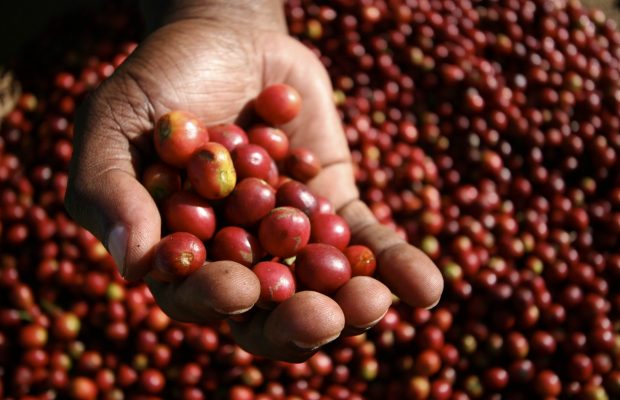
    Traders in Vietnam lowered their coffee output forecasts by 10 percent this week as a bumper harvest came to an end. They now expect an output of about 27 million bags of 60 kg each for the 2018/19 crop year that began on Oct. 1, compared with earlier forecasts of 30 million bags. “We are not surprised to see a lower output as stubbornly low domestic prices have discouraged many farmers to fertilize and water their trees, while weather condition was also not supportive,” a trader based in the province of Dak Lak said on Thursday.

    “Farmers in the Central Highlands have harvested all of the fresh beans of the 2018/19 crop year,” he said.

    Farmers in the Central Highlands, the country’s key coffee growing area, sold coffee at 33,500-34,000 dong ($1.44-$1.47) per kg on Thursday, compared with 33,200 dong-33,700 dong a week earlier.

    “Though output is lower, domestic prices have not risen due to external factors, including larger forecasts by foreign agencies,” said another trader based in Ho chi Minh City.

    Vietnam’s coffee exports in January are forecast to be between 150,000 tonnes and 180,000 tonnes, compared with an estimated 160,000 tonnes in December.

    Traders in Vietnam offered 5 percent black and broken grade 2 robusta at a $40 per tonne discount to the March contract, compared with a $45-$50 discount last week.

    Meanwhile, in Indonesia, trading continued to be muted with traders saying premium for the grade 4 defect 80 robusta stayed unchanged for a fourth straight week at $20-$30 to the March contract.

    “Supply may only start coming around April because some areas in Bengkulu will have some harvest then,” said a trader, referring to a province neighbouring Lampung.

    Main robusta harvest in southern Sumatra typically takes place around the mid-year, but a smaller harvest usually happens a few months earlier.

  • Malaysia’s GDP growth to ease to 4.7% this year: Moody’s

    Malaysia’s GDP growth to ease to 4.7% this year: Moody’s

    Malaysia’s real gross domestic product (GDP) growth is expected to recede to 4.7% in 2019 after averaging at around the 5% mark between 2015 and 2018 on the back of external headwinds, according to Moody’s Investors Service. For 2020, the economy is projected to moderate further to 4.5%. The rating agency foresees external headwinds from trade protectionism to weigh on trade activity, while the review of infrastructure projects and slowdown in public spending will also prove to be a further drag to growth.

    “Nevertheless, economic expansion will still stay stronger than the median average for A-rated sovereigns, even taking moderating growth into account,” it opined.

    Moody’s said Malaysia’s credit profile, which is rated at “A3 Stable” reflects its large and diversified economy with healthy medium-term growth prospects, and relatively high government debt that is partly offset by a favourable debt structure and large domestic savings.

    It pointed out that the govern-ment’s recent fiscal policy choices, particularly in abolishing the goods and services tax, will narrow its revenue base and reduce fiscal flexibility – while its debt burden which is significantly higher than the A-rated median, will remain a credit constraint.

    “However, deep domestic capital markets and high savings provide a stable funding pool for the government’s debt, and partly offset these fiscal weaknesses. A solid institutional framework that includes effective monetary policy supports the country’s credit profile,” Moody’s said.

    It also noted that pervasive corruption will likely to remain a challenge for the government, which will also undermine policy effectiveness.

    Moody’s said that given a stable outlook of the sovereign rating, a change in the rating is unlikely in the near term, but could face upward pressure if the scope for fiscal consolidation increases.

    Conversely, the rating agency said it would consider downgrading the sovereign rating in the event of weakened fiscal prospects, increased debt burden, growing political tensions and diverging views within the government, which could undermine policy effectiveness or impair the government’s ability to adhere to its fiscal consolidation objectives, potentially threatening the stability of capital flows to the country in the process.

  • Korean imported vehicle sales up 11.8 percent last year

    Korean imported vehicle sales up 11.8 percent last year

    Sales of imported vehicles in Korea continued to rise last year, aided by firm demand for foreign brands and the resumption of sales by Audi Volkswagen, industry data showed Friday. The number of newly registered foreign vehicles reached 260,705 last year, up 11.8 percent from a year earlier, the Korea Automobile Importers & Distributors Association said in a statement.

    The total number of imported cars sold in 2018 is an all-time record.

    The market share of foreign cars rose to a record high of 16.7 percent last year, shattering the previous all-time high of 15.5 percent in 2015, the data showed.

    The three best-selling models were the Mercedes-Benz E 300 (8,726 units sold) and E 300 4MATIC (9,141 units) and the Lexus ES300h (8,803 units).

    Mercedes-Benz became the first imported cars to sell more than 70,000 vehicles. It took the No. 1 spot among imported cars.

    BMW, despite controversy of its engine catching fire, kept its second spot by selling 50,524 vehicles.

    Toyota took third place with 16,774.

    Seven out of 10 imported vehicles sold in Korea last month were from Germany, the statement said.

    In December alone, however, the sales of foreign vehicles fell 8.7 percent on year to 20,450, it said.

    In 2017, imported vehicle sales reached 233,088 units, up from 225,279 a year earlier.

  • Vietnam eyes top 15 agriculture spot in 10 years

    Vietnam eyes top 15 agriculture spot in 10 years

    “Vietnam must strive to become a top 15 country in agriculture development in 10 years,” says PM Nguyen Xuan Phuc. “In particular, the agriculture processing sector should be in the top 10,” Phuc said at a conference held by the Ministry of Agriculture and Rural Development (MARD) on Thursday. “Vietnam must strive to become a global centre for wood processing and shrimp production,” he added.

    The PM also set a 3 percent growth target for the whole sector (agriculture, forestry and fisheries), and a $42-43 billion export target for 2019.

    Phuc asked the agriculture ministry to deploy the best measures and promote innovation to achieve targets set.

    “This is a difficult and challenging task but it must be done, a political duty, if we do not do it, our people’s lives will still remain difficult,” he emphasized.

    In order to achieve the goals, the ministry should develop good legal institutions and remove obsolete ones, the PM said.

    The ministry needs to step up efforts to restructure agricultural and rural development systems, including the creation of key national and provincial products, he added.

    It should also perform well its marketing functions, namely, forecasting, assessing supply and demand, developing new markets, and brand building for Vietnamese agricultural products like rice, shrimp and wheat, in which Vietnam is “a little slow compared to Thailand and Cambodia,” Phuc noted.

    He called for enhanced application of science and technology, hi-tech, biotech, artificial intelligence and other technological breakthroughs of Industry 4.0.

    Minister of Agriculture and Rural Development Nguyen Xuan Cuong said that the sector will maintain its good form while undertaking comprehensive and synchronous reforms.

    He said the sector still has several limitations that need to be addressed, including uneven development of different segments, limited innovation of existing processes, and inadequate managerial manpower for market regulation.

    The sector would aim to build a smart industry in 2019, foster international integration, adapt to climate change, increase value additions for products and services and ensure sustainable development through building better rural areas, he noted.

    Vietnam’s agricultural growth had reached 3.65 percent year-on-year in 2018, the highest since 2012, according to the General Statistics Office.

    Last year, the country earned $22 billion from agricultural and forestry product export, and $8.8 billion from fishery shipment, respectively increasing 10 percent and 6.3 percent over the previous year, said the office.

  • Export growth breezes in for Daikin Malaysia

    Export growth breezes in for Daikin Malaysia

    Air conditioning company Daikin Malaysia Sdn Bhd, which has allocated a capital expenditure (capex) of RM434 million for the next financial year ending March 31, 2020 (FY20), will ramp up its efforts on driving export growth, in line with its aim for export to contribute 70% of its total sales by FY20, from 65% now. COO Ooi Cheng Suan said products from its flagship factory here, mainly air conditioners for residential (household) use, as well as light commercial and commercial, are exported to 70 countries in the world.

    “We are driving export because the Malaysian market is not big and it is limited. To expand, we must go beyond, go out (of Malaysia). Being made in Malaysia, it (our products) is well accepted. In these two years, our ringgit has weakened and this has given us certain advantage when exporting. We become more competitive,” he said.

    He said traditionally, the company had been exporting to Europe, with the more prominent countries being Italy, Greece, France, UK, as well as the Middle East. This year, in addition to Central Europe, it has expanded its export to the US and Latin America.

    “We want to achieve at least 70% export for this factory here (remaining 30% for local market). As per our plan and budget, we’re on track to move towards 70%,” said Ooi.

    He explained that the US-China trade war has given the company an opportunity of exporting into the US due to the imposition of tariffs on products from China, which impacted Daikin China’s export into US.

    “Malaysia’s platform is similar to China’s platform, so we can transfer that demand from US (supplied originally by China) to Malaysia. We’re in a good position (to secure that opportunity) because we’re competitive and we’re able to respond fast to changes so there’s a high chance that the demand of US (for Daikin) will shift to Malaysia (from China),” explained Ooi.

    In Malaysia, Daikin, the world’s industry leader in air conditioning, prides itself as the number one air conditioner maker in terms of sales turnover and the number of air conditioners sold in the market. Annually, its Sungai Buloh factory produces 1.4 million sets (comprises indoor evaporator and outdoor condenser). Currently the residential segment makes up over 60% of its sales, while the remaining 40% comes from the light commercial, commercial and industrial segments.

    Ooi, who is also deputy regional general manager for Asia emerging districts, claims that the Japanese brand Daikin is also the top air conditioner maker in almost all of the markets in Southeast Asia (SEA), based on its survey.

    “Some players claim they’re number one at serving only a niche market. Daikin has the full range of air conditioners, from as small as 0.5 horsepower to a few thousand horsepower. We cover the full spectrum of the market,” said Ooi.

    The company is expecting to close FY19 with a double-digit growth based on its current sales momentum.

    “For the Malaysian market, the situation (sales) is slow, but the upcoming Chinese New Year will spur some buying from consumers. From past experience, when it comes to February and March, the weather turns hot and this will spur impulse buying.

    “Air conditioner has become a necessity. The price of air conditioner in Malaysia is not too far reaching that it becomes a luxury item. It has been relatively low, affordable for the public,” said Ooi, adding that globally, demand for air conditioner from developing countries like India and Africa is growing fast.

    He stressed on two important pillars for growing the local market, including the introduction of R32 refrigerant products (low global warming potential), as well as educating the market to move to energy-efficient products, such as the Inverter series.

    Daikin Malaysia will invest RM100 million annually as capex for facility and machine upgrading.

    Its two new factories in Shah Alam and Banting will focus on manufacturing applied products, comprising chillers and air handling units, for large, high rise buildings, shopping centres and industrial use. The Shah Alam factory, which was set up at RM140 million, will start its full-fledged production by 2019 and is expected to have a turnover of RM100 million per year in the beginning.

    “This is the only applied factory in SEA Oceania and this will be the factory that will support the whole SEA Oceania. With our plan to expand our applied business in SEA Oceania, we’ve set up our applied regional hub in Malaysia and Singapore to expand the sales in SEA.”

    Meanwhile, it will also invest RM125 million to set up a factory in Shah Alam to make electronic devices (air conditioner controllers), which will come into production by 2020. Ooi said this factory will supply to Daikin’s affiliates, of which there are 73 factories in the world.

    “Currently we’re already exporting to Daikin factories in Turkey, Vietnam, Czech Republic and the US. We can’t cater to the whole demand of Daikin. These factories that we’re catering for are less than 20% of the demand of Daikin group. A good percentage is still supplied by others,” said Ooi.

    It is also allocating RM135 million to set up a centralised logistics centre, which is expected to start operations by early 2020-2021.

    In addition, some RM74 million has been budgeted for research & development in FY20.
  • Malaysian economy likely to bottom out in Q2, says AmBank Research

    Malaysian economy likely to bottom out in Q2, says AmBank Research

    AmBank Research, which anticipates further pressure on Malaysia’s economic growth in the first quarter of the year (Q1 2019), believes that gross domestic product (GDP) growth should register slight improvement in the second quarter and pick up thereafter. This is partly attributable to the low base effects as well as support coming from domestic activities and foreign direct investments, and complemented by exports as the electronics cycle slows down, added with softer commodity prices, it said in a note today.

    The research house said it foresees growth prospects remaining weak, anti-cipating Q4 2018 GDP growth to ease to around 4% to bring the full-year growth to 4.6%.

    “With our base case GDP outlook for 2019 at 4.5% with the upside at 4.8%, we foresee further weakening pressure on growth in Q1 2019,” it added.

    Malaysia’s third quarter GDP growth moderated to 4.4%, bringing about a nine-month expansion of 4.7%. Bank Negara Malaysia is due to announce Q4 GDP figures on Feb 14.

    AmBank Research highlighted that the strong foreign approved investments amounting to RM48.8 billion as of Q3 2018, which is an all-time high, is expected to support growth in 2019.

    The growth drivers are seen coming from petroleum refineries with RM17.2 billion investment being approved, followed by electrical and electronics (RM10.2 billion), basic metal products (RM5.7 billion), chemical and chemical products (RM4.6 billion) and rubber products (RM3.5 billion).

    Additionally, it said, agriculture, mining, and plantation and commodities saw a notable increase in approved investments with 54 projects as of Q3 2018, compared with 48 projects in 2017.

    Furthermore, investments in the services sector will continue to boost growth largely coming from local players with RM60.4 billion approved investments compared with RM96 billion in 2017, while foreign investments remained muted at RM9.5 billion as of Q3 2018 from RM28.5 billion in 2017.

    Commenting on the slump in the Nikkei Malaysia Manufacturing Pur-chasing Managers’ Index (PMI), AmResearch said it indicates downside risks with overall demand to be weak, thus causing companies to become less willing to hold stocks.

    The headline PMI fell to a six-month low of 46.8 in December 2018 from 48.2 in the previous month. The demarcation between expansion and contraction is 50.

    The data points to the sharpest deterioration in the health of the goods-producing sector since May. It also extended the current period of decline to two months. The drag largely came from severe reductions in production and new businesses.

  • Malaysia’s November export growth expected to slow to 3%

    Malaysia’s November export growth expected to slow to 3%

    RAM Ratings expects Malaysia’s export growth to decelerate to 3% in November 2018, as front-loading activities that had temporarily propped up exports by 17.7% in October subside. The rush to front-load orders in October was driven by greater concerns over the planned increase in US tariffs – from 10% to 25% – on US$200 billion (RM827 billion) of Chinese imports, the ratings agency said in a note today.

    RAM is of the view that the export stimuli will remain limited over the next few months – a scenario further supported by a contraction in China’s manufacturing export orders in the last several months.

    In line with the weaker external demand, RAM expects that import growth would ease to 1.8% in November.

    Overall, the trade surplus is projected to come in at RM11.1 billion in November.

    To date, Malaysia has yet to ratify the Comprehensive and Progressive Agreement for Trans-Pacific Partnership (CPTPP) that came into force on Dec 30 with seven members.

    That said, RAM’s head of research Kristina Fong opined that Malaysia’s absence is unlikely to have significant implications for its trade performance in the near term, given that it already has free trade agreements (FTA) with five of the seven signatories.

    “The two remaining countries, Canada and Mexico, constitute a small share of overall exports at just 0.4% and 1%, respectively, thus limiting potential adverse trade diversion away from Malaysia,” she explained.

    Furthermore, she said this trade diversion risk is also mitigated by the fact that the tariff reductions on major goods imported from Malaysia that also overlap with key imports from other CPTPP members, is mostly less than one percentage point.

    While the direct impact of Malaysia’s absence from the deal could be muted in the short run, RAM said it could potentially cause the country to lose out over the long term as regional members in the multilateral FTA could be favoured as foreign direct investment destinations.

    “Standardised rules of origin and lower regulatory barriers brought about by the CPTPP could entice firms to more readily build up supply chains between member countries. This dynamic could in turn foster the development of new industries and global value chains and build new capacities within this alliance,” it added.

  • Japanese cosmetics surges in export number

    Japanese cosmetics surges in export number

    Japan’s cosmetics exports are on track to surpass 500 billion yen ($4.53 billion) for the first time in 2018, marking a sixth consecutive record year, thanks to Asian tourists who continue to buy these products after returning home. Exports in the January-November period grew 44% on the year to 482.8 billion yen, according to a tally of 16 types of cosmetics compiled from trade data by Nikkei. Demand for gifts tends to boost exports in December, and with major cosmetics makers’ plants running at high capacities, the full-year figure is expected to reach around 520 billion yen.

    Mainland China was the top buyer from January through November, accounting for 34.9% of exports by value, followed by Hong Kong at 25.9%, South Korea at 10.3%, Taiwan at 7.3% and Singapore at 7.3%. Asia accounted for 90% of the total.

    Japan’s cosmetics exports have tripled in the last four years along with a rise in visitors to Japan. Exports exceeded imports for the first time in 2016 as inbound tourism creates new customers for high-quality Japanese goods who continue to buy them online or in stores upon returning home.

    Cosmetics exports are likely to keep climbing in 2019. China will implement in January its first e-commerce law, which will require domestic online platforms to register with the government. With the crackdown on illegal marketing, direct exports of Japanese cosmetics are expected to increase as smaller Chinese retailers that sell goods procured directly from shops in Japan decline.

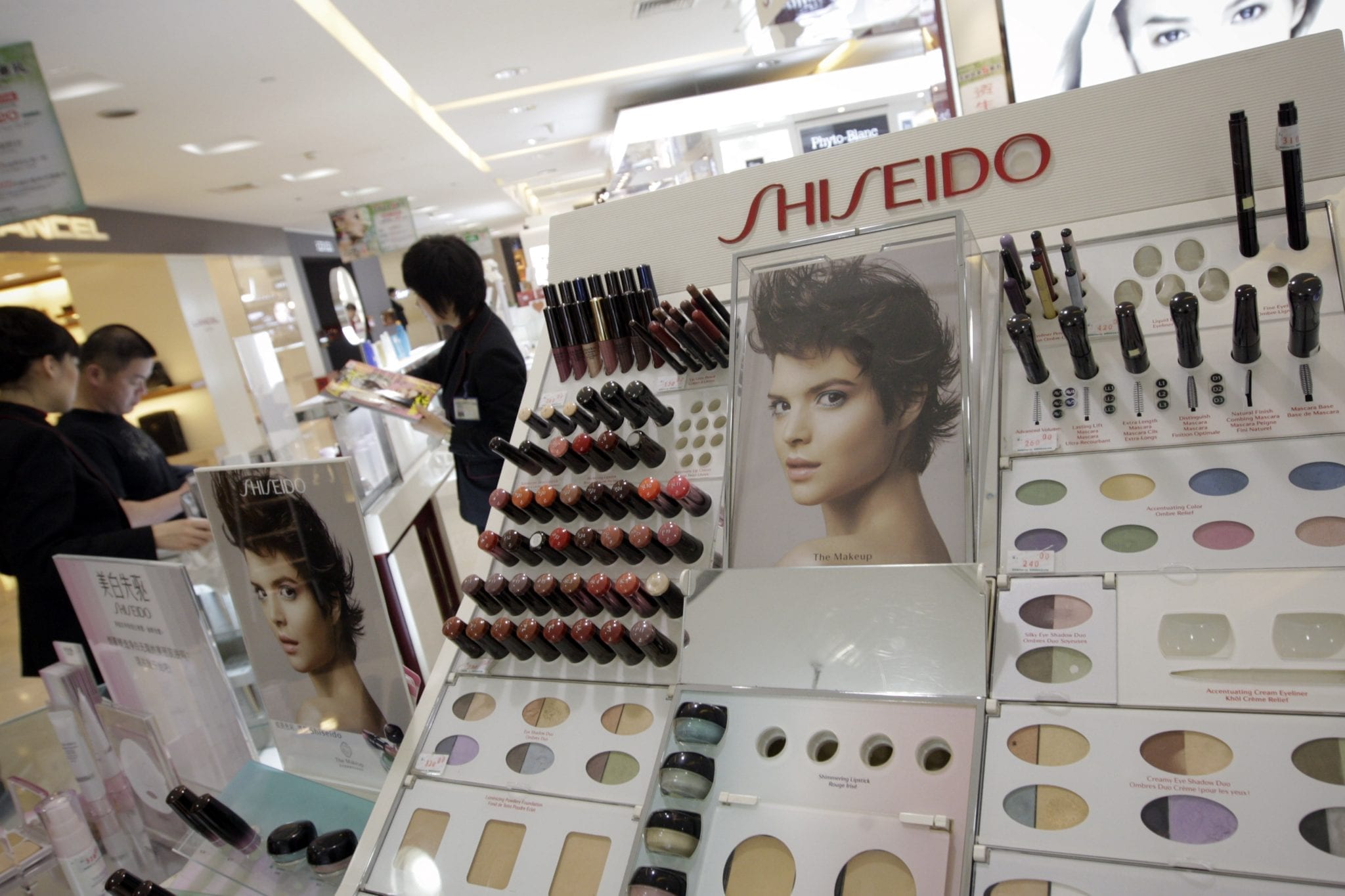
    Top cosmetics makers are also actively expanding their sales. Shiseido plans to begin in 2019 officially selling new products in China from its namesake mainstay brand, which launched worldwide this fall. The company will open a facility for collaboration with Alibaba Group in Hangzhou from January and jointly develop products with the Chinese e-commerce empire.

    Kao plans to double the number of stores in China carrying its popular Freeplus skin care brand to more than 2,000 by 2020. It will also cultivate sales for its makeup brand Kate, which launched a Chinese marketing campaign in December. Kose is accelerating the online sales campaign it began in China this autumn for its luxury brand Decorte.

    Japanese cosmetics makers are increasing the capacity of domestic plants to meet the surging export demand. Shiseido plans to bring a new domestic factory online in 2019 for the first time in 36 years, in Tochigi Prefecture, to produce more items like skin care products. It will also begin operations at a new facility in Osaka Prefecture in 2020.

    Kao will roughly double production for its Freeplus brand from 2017 levels, too, by investing in its main factory in Kanagawa Prefecture. Boosting domestic production is likely to encourage exports further by increasing supplies of “made-in-Japan” cosmetics.

  • Indonesia Posts Narrowest Budget Deficit in 6 Years in 2018: Finance Minister

    Indonesia Posts Narrowest Budget Deficit in 6 Years in 2018: Finance Minister

    Indonesia posted the smallest fiscal deficit in six years in 2018 and less than initially projected, despite turbulence in its financial markets due to capital outflows, Finance Minister Sri Mulyani Indrawati said in a Facebook post. The estimated budget deficit last year was equal to 1.72 percent of gross domestic product, narrower than both the government’s original plan of 2.19 percent and the latest estimate of 1.83 percent, Sri Mulyani said in a message posted late on New Year’s Eve.

    As a percentage of GDP, that was the smallest since 2012, the former World Bank managing director said.

    The 2018 budget also has a Rp 4.1 trillion ($283 million) surplus in its primary balance, or budget balance before interest payments, which Indrawati said was the first surplus since 2011.

    “We have done our duty to manage government finances well. The year 2018 was not an easy year with fluctuations in the global economy, commodity prices, capital flows and exchange rate,” she said, while also noting higher interest rates at home and globally.

    The rupiah plunged to its weakest in 20 years in 2018 due to capital outflows linked to worries about its twin deficits, US interest rate increases and concerns about the fallout for Asia from the US-China trade war.

    However, inflows towards the end of the year bounced it back and the currency closed the year 6 percent weaker compared with end-2017.

    Sri Mulyani said 2018 income from taxes and other revenue sources grew “high and healthy.” She previously said higher oil prices and a weaker rupiah had resulted in higher government revenues.

    The minister is expected to hold a news conference on budget realization on Wednesday.

  • India eyes $100 billion FDI in next two years

    India eyes $100 billion FDI in next two years

    India will aim to receive $100 billion in foreign direct investments in the next two years and special industrial clusters are being created for countries like Japan, South Korea, China and Russia where their companies can invest and operate, Union minister Suresh Prabhu said. The commerce and industry minister said his ministry has also identified sectors and countries which holds huge potential for investments in India.

    “I have given a target. $100 billion of FDI should come from different sectors into India. It will not happen in one year. We have identified companies, sectors and countries and now we are going for road shows to attract investors,” Prabhu said.

    He said India would remain a top destination for foreign investors in 2019 and the ministry would look at all sectoral issues that may come come in the way to attracting overseas investments.

    “For countries like Japan, South Korea, China and Russia, we are creating industrial clusters where they can invest and operate,” Prabhu said.

    The minister said China has agreed to set up industrial parks in India and the Chinese authorities have been asked to give a list of companies that are willing to set up factories in India.

    Similarly, India would be happy to welcome firms from Europe and the US who want to move out of other countries and set up manufacturing bases in India, Prabhu said.

  • Hyundai reveals a glimpse of the future

    Hyundai reveals a glimpse of the future

    Hyundai Motor Group offered a glimpse of its new concept autonomous car Friday in a short video. The concept car is electric. In the video, the electric car finds its way to a charging station inside a nearby parking lot on its own after the driver gets off at its destination. The station offers wireless charging. When charging is finished, the car then parks itself in an empty lot to make room for other vehicles to charge. When the driver calls the car back using their smartphone, the car drives itself to the requested meeting point.

    The Korean automaker described the feature as an “automated valet parking system.” The feature could take the burden off drivers struggling to park and also save time as they won’t need to find charging stations or empty lots.

    For this system to work, parking lots, cars and drivers need to continuously share information through a connected network, Hyundai said. For instance, parking lots need to send the location of charging stations and empty parking lots to cars, and wireless chargers need to notify drivers of cars’ battery status via text message or other means.

    “In the upcoming era where autonomous driving cars become prevalent, there will be growing demand for various driving control features using self-driving technology,” a spokesperson from Hyundai Motor Group said. “We will focus on developing services that enable drivers to make convenient and safe use of self-driving cars.”

    The company said it expects the wireless charging system and automated valet parking system to be applied to its autonomous driving cars scheduled for launch in 2025.

  • Vietnam GDP growth tops 7 pct, highest in a decade

    Vietnam GDP growth tops 7 pct, highest in a decade

    Vietnam’s GDP growth of 7.08 percent this year retained its status as one of the best performing economies in the world. It was the highest growth the country has experienced since 2008 and compared with the median estimate of 6.9 percent in a survey of 12 economists.

    The scale of the economy at present value is over VND5.53 quadrillion ($237.38 billion), with average GDP per capita at $2,587 per person, a $198 increase over 2017, Nguyen Bich Lam, head of the General Statistics Office, said Thursday afternoon.

    According the office, the agriculture, forestry and fisheries sector grew by 3.76 percent this year, and contributed to 8.7 percent to the country’s GDP. Corresponding figures for industry and construction sectors were 8.85 percent and nearly 49 percent; and that of the service sector, 7.03 percent and approximately 43 percent.

    Lam said that the consumer price index (CPI) in December 2018 fell by 0.25 percent compared to the previous month. On average, CPI in 2018 increased by 3.54 percent, well below the 4 percent target set by the National Assembly.

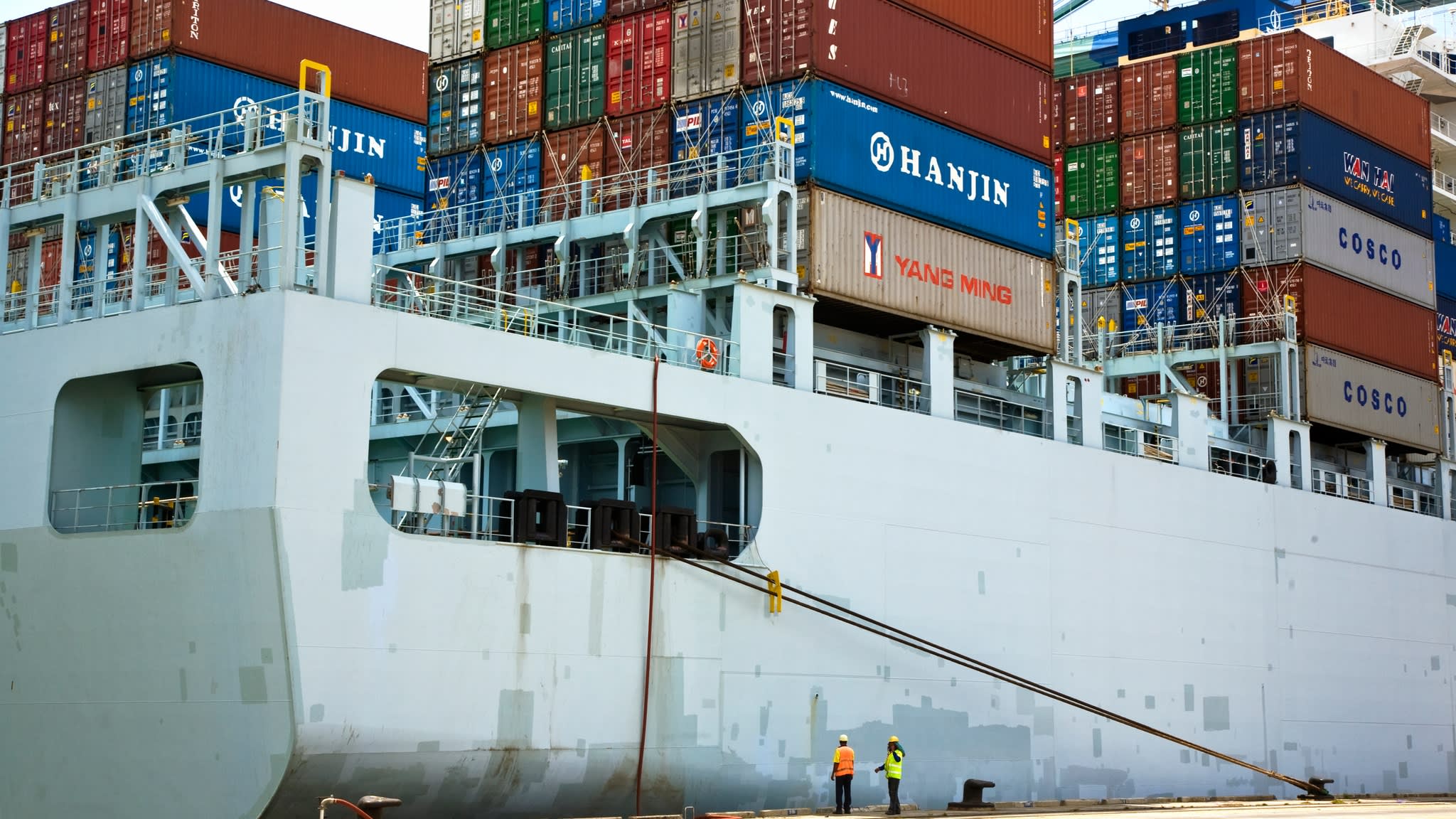
    Export turnover for the year is estimated at over $244.7 billion, up nearly 14 percent compared to 2017.

    The FDI sector (including crude oil) still accounts for nearly 70 percent of export turnover, at more than $175.5 billion.

    On the other hand, Vietnam imported more than $237.5 billion the whole year, up 11.5 percent over 2017.

    Overall, in 2018 Vietnam achieved a trade surplus of $7.2 billion.

    “The quality of economic growth has improved,” Lam said.

    The GSO director general explained that labor productivity this year saw an increase of nearly 6 percent compared to 2017, at VND102 million (nearly $4,512) per person.

  • Vietnam’s 2018 coffee exports at 1.88 mln tonnes, surges from last year

    Vietnam’s 2018 coffee exports at 1.88 mln tonnes, surges from last year

    Vietnam’s coffee export volumes for 2018 are expected to increase 20.1 percent from last year, while rice exports are estimated to rise 4.6 percent.

    Coffee

    Coffee exports from Vietnam will climb an estimated 20.1 percent this year to 1.88 million tonnes, equal to 31.37 million 60-kg bags, the General Statistics Office said in a report on Thursday.

    Coffee export revenue for Vietnam, the world’s biggest producer of the robusta bean, will edge up 1.2 percent to $3.54 billion in the year, the report said.

    December coffee exports were estimated at 160,000 tonnes, worth $287 million.

    Rice

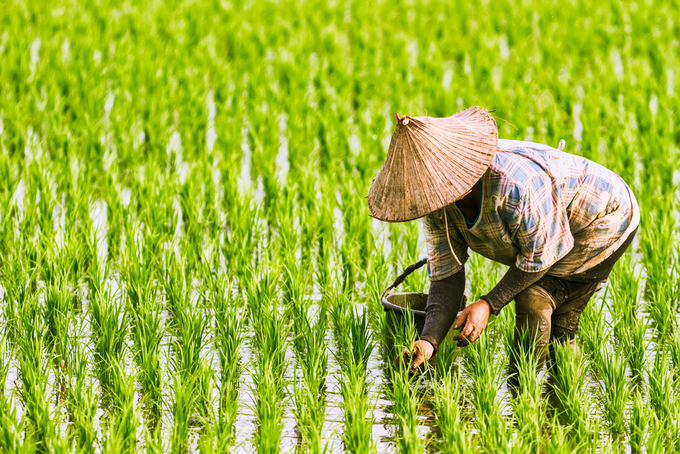
    Rice exports in 2018 from Vietnam were forecast to rise 4.6 percent from last year to 6.09 million tonnes. Revenue from rice exports in the period was expected to grow 16 percent to $3.05 billion.

    December rice exports from Vietnam, the world’s third-largest shipper of the grain, were estimated at 450,000 tonnes, worth $220 million.

    Energy 

    Vietnam’s 2018 crude oil exports were seen plunging 39.5 percent from last year to an estimated 4.12 million tonnes. Crude oil export revenue in the year is expected to decline 21.2 percent to $2.27 billion.

    Oil product imports in the year were estimated at 11.35 million tonnes, falling 12.1 percent from the same period last year, while the value of product imports rose 7.8 percent to $7.61 billion.

    Vietnam’s 2018 liquefied petroleum gas imports were seen increasing 4.9 percent from last year to 1.43 million tonnes.

  • Ramyeon Korea set to cross the $400 million export mark

    Ramyeon Korea set to cross the $400 million export mark

    Exports of ramyeon are sure to exceed $400 million this year, a state food agency reported Wednesday. Shipments of ramyeon totaled $385 million as of the end of November, up 11.2 percent from the same period last year, according to Korea Agro-Fisheries & Food Trade.

    The figure is already more than the total for 2018. Given the sum so far, the monthly average exports are $35 million, suggesting that exports will $400 million by end of this year. South Korea broke the previous threshold of $300 million just last year.

    Ramyeon remains popular in the United States and in Southeast Asia, while China’s boycott of Korean products due diplomatic disagreements has weakened, according to the agency.

    Related data showed Korea exported $8.56 billion worth of agricultural and fisheries products in the first 11 months of the year, a gain of 2.6 percent from last year.

    By country, exports to Japan were the highest, at $1.94 billion, followed by $1.38 billion to China, $980 million to the United States and $530 million to Vietnam.

    The figures indicate a 0.3 percent fall for Japan but increases of 1.2 percent for China, 0.2 percent for the United States and 1 percent for Vietnam.

    Exports of farm and livestock products rose 2.4 percent to $6.37 billion, and those of fisheries goods were up 3.1 percent to $2.2 billion.