Retail News CRM

Tag: export

  • Malaysia reviewing palm oil export duties

    Malaysia reviewing palm oil export duties

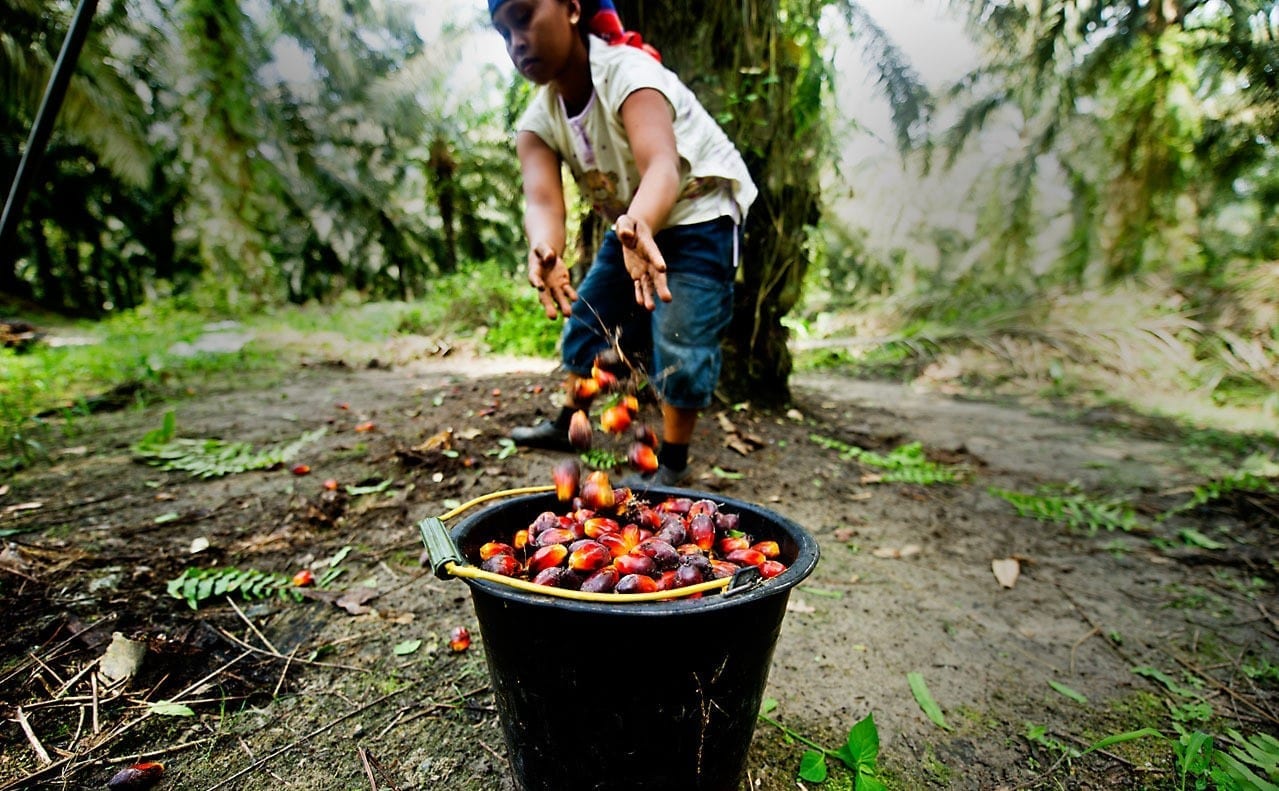
    Malaysia, the world’s second-largest palm oil producer, is reviewing the duty structure for its exports of the edible oil, according to its minister in charge of agriculture produced for export, to boost demand and reduce burgeoning stockpiles.

    “We are currently reviewing our present export duty structure to ensure a level playing field in the market,” said Primary Industries Minister Teresa Kok in an emailed response today to questions submitted earlier by Reuters.

    Palm oil producers in Southeast Asia have been grappling with slow exports as demand has waned on weaker currencies and higher import taxes. The demand slump has caused inventories in Malaysia to build to their highest in nearly 18 years while stockpiles in Indonesia, the world’s biggest palm producer, have also climbed.

    Palm oil prices fell to their lowest in three years earlier this month amid the demand slump, and were down 0.9% at RM2,108 a tonne today morning.

    Despite Malaysia cutting its export tax on crude palm oil to zero since September, industry participants say Indonesian palm is still more competitive as the country’s producers have sharply discounted their prices, causing Malaysia to actually increase imports from Indonesia. Production costs in Indonesia are also typically less than in Malaysia.

    Earlier this month, Indonesia also eased its rules on palm oil levies and derivative products to boost its exports.

    To counter the Indonesian import, Kok said the government is “currently encouraging our companies to use domestically produced palm oil to reduce the stockpile.”

    “By reducing imports, we could see a significant reduction in palm oil stocks in Malaysia and this would boost prices.”

    Prices next year are expected to be supported by demand from traditional markets as they replenish stocks, said Kok, adding that the implementation of a higher biodiesel mandate in 2019 will also help palm prices.

    Malaysia will raise the minimum bio-content in biodiesel to 10% for the transport sector and 7% for the industrial sector.

    Kok also said she expected production “in the region of 20 million tonnes” in 2019. The government last month forecast output of 20.5 million tonnes for 2019 and 19.8 million tonnes for this year.

  • Vietnam wants China to import more, invest more

    Vietnam wants China to import more, invest more

    China should increase imports of Vietnamese goods and make more hi-tech investments, government officials and business representatives say. Le Hoai Trung, Vietnam’s Deputy Minister of Foreign Affairs, proposed at the Vietnam-China Economic Promotion Forum Thursday that China creates more favorable conditions for more Vietnamese goods to enter the country through border gates.

    “We hope that the Chinese government will be more open to the Vietnam market, especially for products that Vietnam has strong supply and China has high demand for, such as rice, pork, milk, agriculture, seafood, electronics and consumer goods,” Trung said in the forum attended by 500 Vietnamese government and business representatives and 200 Chinese counterparts.

    Vietnam has a high trade deficit with China. From January to November, the country exported $37.7 billion worth of goods to China and imported $59.6 billion, a trade deficit of $21.9 billion, according to Vietnam Customs.

    Vu Tien Loc, chairman of the Vietnam Chamber of Commerce and Industry, said: “Although Vietnam’s exports to China have been increasing this year and trade deficit is declining, I don’t think this trend will be sustainable.”

    He said it would require a big effort from authorities to pave the way for Vietnamese goods, especially agriculture products, to enter China.

    Loc also proposed that that unofficial trade activities between the two countries at the border be formalized to guarantee long-term benefits for both sides.

    As protectionism in the world rises, Vietnam and China need to cooperate to control trade cheating, like Chinese businesses exporting its goods via Vietnam to other countries, which would impact on sustainable development of both countries, Loc said.

    Trung said at the forum that Vietnam welcomes foreign direct investment from China that is focused on high technology in infrastructure, supporting industry and agriculture.

    He added that Chinese FDI businesses should ensure environmental protection and Vietnamese labors’ benefits when investing in the country.

    Loc added that China, as a leading country in the world in the high-tech sector, can provide this kind of investment to Vietnam.

    “Vietnam is looking for a new type of foreign investment which has higher quality, integrate more with Vietnamese businesses using high-technology which are environment-friendly,” he said.

    China is Vietnam’s largest import market, while Vietnam is China’s largest trading partner in ASEAN and the 8th in the world.

    From January to November, bilateral trade turnover reached over $97 billion, up 16.5 percent year-on-year, according to official data.

    China has invested in over 2,000 projects in Vietnam, with a total registered capital of $13 billion. It ranks 7th out of 129 countries with FDI in Vietnam.

  • Vietnam to top 7 pct growth in 2018 and 2019

    Vietnam to top 7 pct growth in 2018 and 2019

    Vietnam may grow more than 7 percent in 2018, the highest in 10 years, and is likely to maintain the rate next year, experts say. Nguyen Xuan Thanh, director of development, and public policy lecturer at the Fulbright University of Vietnam, said the country’s economy is expected to grow at over 7 percent this year, the highest level since 2007.

    “The major contributor of growth comes from industries that benefit from policies to replace import goods, such as automobile and pharmaceutical production,” he said at a conference organized Thursday by the National Financial Supervisory Commission (NFSC).

    In 2017, Vietnam rode on 20-30 percent growth of phones and electronics, but this year, that sector’s growth slowed down to only 11 percent in the first 11 months of 2018, Thanh explained.

    He also noted that a positive aspect of the growth this year has been that it is no longer dependent on credit. The NFSC estimates credit growth to have slowed significantly to 15 percent this year from 18 percent in 2017.

    “Many experts were concerned that Vietnam’s high growth rate in previous years was linked to credit growth, but there has been strong economic growth this year without high credit growth,” Thanh said.

    Meanwhile, NFSC leaders said Vietnam’s growth may exceed 7 percent in 2018 and remain at between 6.9-7.1 percent in 2019.

    Truong Van Phuoc, acting chairman of the NFSC, said the high growth in 2018 is due to large contributions from the private sector. In addition, trade agreements such as the Comprehensive and Progressive Agreement for Trans-Pacific Partnership (CPTPP) and the EU-Vietnam Free Trade Agreement (EVFTA), which are expected to come into effect in 2019, may also bring positive impacts.

    Vietnam also has the opportunity to attract investment as well as new opportunities from the field of information technology and biotechnology, he added.

    But experts also point out some factors that could affect economic growth next year. Thanh noted that growth this year was not only due to investment and export but also the heavy consumption.

    Any changes to consumption can have immediate effect on economic growth, he said.

    In the first nine months this year, Vietnam’s GDP grew by 6.98 percent, the highest nine-month growth rate since 2011. The economy grew by 6.81 percent last year, the highest rate in a decade.

  • Completion of Heaviest and Tallest Cargo Transportation in the History of Uzbekistan

    Completion of Heaviest and Tallest Cargo Transportation in the History of Uzbekistan

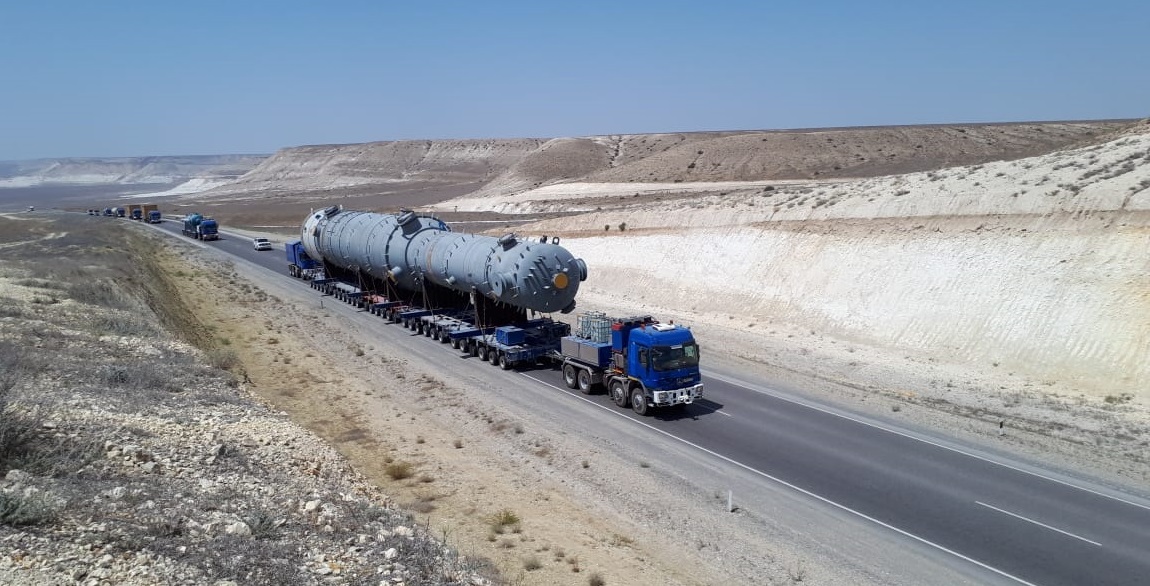
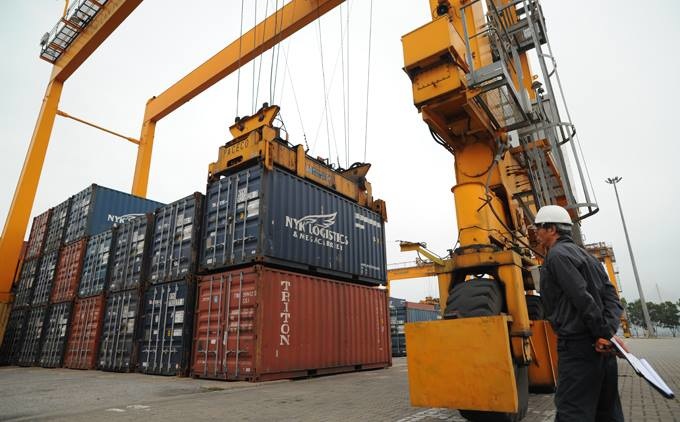
    In 2017, Bolloré Logistics Japan was awarded the transportation of materials and equipment from Mitsubishi Corporation for a large-scale fertilizer plant in Navoiy, a city in the central region of Uzbekistan. By September 2018, our team had successfully transported 24 heavy-lift units by hydraulic conventional trailers, including 17 units over 100 MT each.

    Located in Central Asia, Uzbekistan is one of only two landlocked countries in the world surrounded by five countries, namely, Afghanistan, Kazakhstan, Kyrgyzstan, Tajikistan and Turkmenistan. This makes Uzbekistan one of the most difficult areas to transport cargoes. The port of discharge selected by Bolloré Logistics varied from one time to another as there was no standard transportation route. Depending on the port of loading & discharge, weight, dimensions, transit time, and cost efficiency, Bolloré Logistics Japan provided the best transportation route and mode for Mitsubishi Corporation.

    The heaviest unit, an Ammonia Converter, registered at 422 tons and the widest and tallest unit, a Package Boiler, recorded at LWH (mm) 12,700 x 8,700 x 10,720 – making history as those were the heaviest and tallest cargoes handled in Uzbekistan.

    The scope of work included Free On Board (FOB) from various ports of loading to Navoiy’s site, together with import customs clearance formalities.

    Timely arrangement of breakbulk vessel, Volga-Don class sea river vessel or barge, road permits, conventional hydraulic trailers and more were requested from our team in order to meet the construction schedule’s deadline with all the requirements.

    As for the heaviest and most voluminous cargoes, Bolloré Logistics visited the vendor’s factories several times prior to the breakbulk shipments and physically checked the cargo figures, lifting points, lashing points, to successfully design the transportation plan accordingly.

    But the most challenging part remained the inland transportation from the Caspian Sea port to the job site.
    First of all, the distance from the Caspian Sea port to the job site is around 1,700 km. These days, most cases of heavy lifts are handled by self-propelled modular transporter (SPMT), just for short distances only, but in our case it was transported by conventional hydraulic trailers, for 1,700 km. As 1,700 km is a long journey, Bolloré Logistics Japan had to anticipate unexpected trouble on the way and prepare a backup plan, while respecting the construction schedule.

    Road surveys were carried out several times and we decided to adopt the safest transportation route. However, it was still not enough as infrastructures were limited and could not withstand transportation of such heavy and voluminous cargo; it therefore had to be improved.

    As a result, Bolloré Logistics improved 24 bridges (including the construction of a new bridge and installation of new piles on another bridge), constructed 15 bypass roads (including two long ones), expanded five corners, replaced electric poles at one place, and widened roads at four points.

    Yet, it was still not enough. During the transportation of heavy lifts cargo, Bolloré Logistics mobilized construction machinery teams such as dump trucks, road rollers, wheel loaders, etc., in order to improve unpaved road temporarily. We also mobilized an electrical team such as cherry pickers, mobile cranes to shut down / remove power cables and other overhead obstacles.

    Thanks to Mitsubishi Corporation’s full cooperation and Bolloré Logistics’ team effort; we were able to meet the cargo readiness in accordance with heavy lift transportation schedule and unloading heavy lifts on time at the site.

  • Supporting industry should be a major priority: PM Vietnam

    Supporting industry should be a major priority: PM Vietnam

    Vietnam needs to make its supporting industry a production base for the global manufacturing chain, PM Nguyen Xuan Phuc says. “Vietnam should become a production base for multinational companies. This is what the Ministry of Industry and Trade and other government bodies should think about in their development strategy,” Prime Minister Nguyen Xuan Phuc said Wednesday.

    He was speaking at the conference on “Solutions for Promoting the Development of Supporting Industry in Vietnam,” held in Hanoi.

    He said that Vietnam should strive to compete in regional and global markets, manufacturing parts for cars, motorbikes and even airplanes.

    The government has always been prioritizing land access for the supporting industry, and has never said no to any such request, Phuc said.

    Supporting businesses should speed up and start operations earlier, Phuc said, adding that there were firms in the industry that could finish clearance and lay their foundations in just three months, while some have left things hanging for as long as three years.

    The supporting industry in Vietnam remains weak, having to import nearly 90 percent of raw materials, spare parts and components needed for production, according to the Ministry of Industry and Trade.

    This means a low localization rate, even in industries with great supporting industry potential, like automobiles and textiles and garments, it said.

    Minister of Industry and Trade Tran Tuan Anh said at the conference that only 300 supporting firms were currently part of the supply chain for multinational companies. As of last year, Vietnam had 75,000 manufacturing firms.

    The number of new businesses in this sector has barely increased in recent years, even though this is a key foundation for industrialization, Anh said.

    Therefore, those making finished products in the country are having to import accessories and parts from other countries or produce them on their own, he added.

    He cited Japan as a good example of a strong supporting industry. Even though the majority of Japanese supporting businesses are medium, small and micro sized, they are integrated deeply in the global manufacturing chain with high added value. They provide accessories and parts to the aviation industry, he noted.

    The trade minister added that Vietnam’s policy for attracting foreign direct investment (FDI) does not create favorable opportunities for local supporting businesses to develop and join the global manufacturing chain.

    There are over 3,000 supporting industry businesses in Vietnam, accounting for 4.5 percent of the manufacturing and processing sector, creating jobs for over 550,000 employees, according to the Ministry of Industry and Trade.

    From January to November this year, Vietnam imported $30.66 billion worth of machines, accessories and parts, and exported $15.13 billion worth of products, according to Vietnam Customs, marking a trade deficit of $15.53 billion.

  • Vietnam to work on cheaper premium Japanese beef

    Vietnam to work on cheaper premium Japanese beef

    Vietnamese businesses are racing to raise upmarket Japanese cattle at home to produce cheaper Wagyu beef. Beef from cattle raised in Vietnam is 2-4 times cheaper than imported ones. Two years ago, Huy Long An Limited Company in the southern province of Long An imported thousands of Wagyu cattle, from which the famous Japanese beef is produced.

    Vo Quang Huy, the company’s director, said his company has signed a deal with Japan’s Sawai Farm to develop a farming model for Wagyu beef in Vietnam.

    “We are selling the beef on a trial basis to hotels and restaurants. The product will hit the markets in 2019, when production is stabilised. Although it’s difficult to raise them (Wagyu) in Vietnam, they’re worth a lot,” Huy said.

    He said a kilo of Wagyu beef can sell for VND700,000 ($30) to VND1 million ($42.84) a kilogram.

    Like the Huy Long An company, the Kobe Beef Vietnam company has also been breeding Wagyu cattle in the Central Highlands province of Lam Dong. Nguyen Tri Vu, general director of the company, said he imported genetic material for the Japanese breed from the U.S.

    The company is currently rearing 420 cows, and on average sells one every week. Each cow is worth VND200-250 million ($8,567- 10,708), many times higher than that of other cow breeds in the market today. Each kilogram of ‘Viet Wagyu’ sells for VND2-4 million ($85.67- 171.34) per kilogram.

    “This beef is mostly sold to restaurants, hotels and gourmets, mainly in Hanoi, Ho Chi Minh City and Da Lat. This is a premium breed. It costs VND150,000 ($6.43) a day to feed one cow. They are also fed some materials that have to be imported, hence the high price,” Vu said.

    Local beef now costs from VND100,000-500,000 ($4.4-22.02) per kilogram.

    Other Japanese farms have also announced their intention to start raising cattle in Vietnam.

    Speaking on the potential of the market, an agriculture expert said that demand for Japanese beef was increasing, but among those with high earnings.

    Import prices are relatively high, with the cheapest around VND1 million (($42.84)) per kilogram and the most expensive nearly VND19 million ($815.89), and the average ones at VND9 million ($386.47) per kilogram. On the other hand, beef from cattle raised in Vietnam have very competitive prices.

    However, if the local breeders do not establish good brands, they could lose market share to products of no clear origin, he said

    Vietnam’s cattle industry is failing to meet the country’s increasing demand for beef, forcing local consumers to turn to imported products, the expert added.

    Last year, the country imported more than 262,300 live cattle, and nearly 42,000 tons of beef and buffalo meat valued at more than $410 million, according to the Animal Husbandry Department under the Ministry of Agriculture and Rural Development.

    The deputy director of the department, Tong Xuan Chinh, said Vietnamese people’s diets have changed drastically in recent years, and they’re now eating more beef and buffalo meat.

    Average consumption has doubled to 5-6 kilograms of beef and buffalo meat per year in the past decade, but the cattle industry has been unable to keep up with the rise in demand. Local supplies of beef and buffalo meat only meet 80 percent of the current demand, he said.

  • Indonesia’s November Trade Deficit Widest Since July 2013

    Indonesia’s November Trade Deficit Widest Since July 2013

    Indonesia posted its widest monthly trade deficit in over five years in November as exports, especially that of palm oil and pulp, slumped, data from the statistics bureau showed on Monday. The deficit in November was $2.05 billion, compared with October’s revised deficit of $1.77 billion and the biggest trade gap since July 2013, according to Refinitiv data. A Reuters poll had expected a deficit of $830 million.

    The rupiah weakened slightly after the trade data to 14,620 a dollar at 12.45 p.m. from 14,600 before the announcement.

    Exports surprisingly fell 3.28 percent in November from a year earlier to $14.83 billion, the worst monthly performance since June 2017. The poll’s median was for a 3.95 percent increase for exports.

    A decline in overseas sales of a range of products, such as palm oil, jewelry, pulp and paper, and crude oil, was the main reason for the drop, Central Statistics Agency (BPS) head Suhariyanto said at a news conference.

    Export revenues from vegetable oils, including palm and coconut oil, fell nearly 19 percent in November from a year earlier due to weak prices, he said.

    November imports stood at $16.88 billion, up 11.68 percent from a year earlier, topping the poll’s 10.50 percent estimate, but down from the nearly 24 percent growth in October.

    Southeast Asia’s largest economy has been struggling to contain imports in recent months. Some measures, including higher tariffs, have been imposed to curb imports.

    Authorities have also sped up negotiations for free trade deals to gain better access for exports, in a bid to reduce the trade gap and support the rupiah.

    Bank Indonesia has also hiked interest rates six times since May to try to attract portfolio investment needed to fund the widening current-account deficit.

    Fakhrul Fulvian, an economist at Trimegah Sekuritas, said the worse-than-expected trade deficit would “lower the expectation of improving current-account balance” in the fourth quarter. But he argued that the central bank would not have to raise rates again because it already did in November.

    Maybank Indonesia economist Myrdal Gunarto agreed.

    “The movement of the exchange rate in domestic market remains manageable and the trade deficit was supported by returning foreign inflows,” Gunarto said. “With that, we project Bank Indonesia will still maintain its policy interest rate at the current level.”

  • Korea’s auto exports on the rise, but local industry still struggling

    Korea’s auto exports on the rise, but local industry still struggling

    Attractive prices and returns have seen the number of Chinese customers buying high-end apartments in HCMC soar this year. Duong Thuy Dung, senior director of real estate market research firm CBRE Vietnam, said at a recent forum that 31 percent of high-end apartment buyers in HCMC in the first nine months were Chinese. This figure increased from only 2 percent in 2016 and 4 percent last year.

    In the last two years, Chinese were sixth among all buyers, but this year, they have surpassed Vietnamese to rank first.

    Only 24 percent of high-end home buyers are Vietnamese, CBRE data shows.

    Stephen Wyatt, country head of property service firm JLL Vietnam, said the number of Chinese buyers has been increasing because Vietnam has an attractive price compared to other markets like Hong Kong, Japan, Singapore, South Korea and Taiwan.

    Chinese people often compare prices in Vietnam with Shanghai when they buy properties, he said, adding that they hope to gain profit from higher property prices in Vietnam in the future.

    A high-end apartment in the city costs around $5,000 per square meter, but the same one in Hong Kong could cost four times, said Nguyen Khanh Duy, director of residential sales at real estate service provider Savills HCMC.

    Nguyen Hoang, director of research and development at real estate firm DKRA, said that the number of Chinese and South Korean buyers in HCMC started to increase last year.

    Chinese from Shanghai and Hong Kong are buying properties as investments (not to stay in). “Most projects that foreigners bought in the last two years are under construction,” he said.

    Other industry insiders said that the high returns that HCMC high-end apartments offer is attracting many foreign buyers.

    The rate of return is 5-6.5 percent in Thao Dien ward and Thu Thiem Peninsula in District 2, while in other Asian countries, this rate is only 3.7-5.2 percent, Duy said.

    CBRE senior director Dung added that it was not just Chinese, but foreign buyers in general who are showing an increasing interest in HCMC real estate.

    Dung said that each foreigner group has a different preference for high-end apartments. Customers from mainland China, Hong Kong and Taiwan prefer large-scale projects near the downtown HCMC.

    South Koreans like to buy apartments in the southern District 7 that hosts a large community of South Koreans, while Western buyers often look for a quieter lifestyle in eastern District 2.

    Dung said HCMC is estimated to receive 40,000 new apartments in the 2018-2020 period, 60-70 percent of these in the high-end segment.

    In the last three years 35,000 luxury apartments have come into the market, CBRE said.

    This is a major increase from 2012-2014 when fewer than 10,000 units were on offer, CBRE said.

  • Renault to start making Twizy cars in Korea from next year

    Renault to start making Twizy cars in Korea from next year

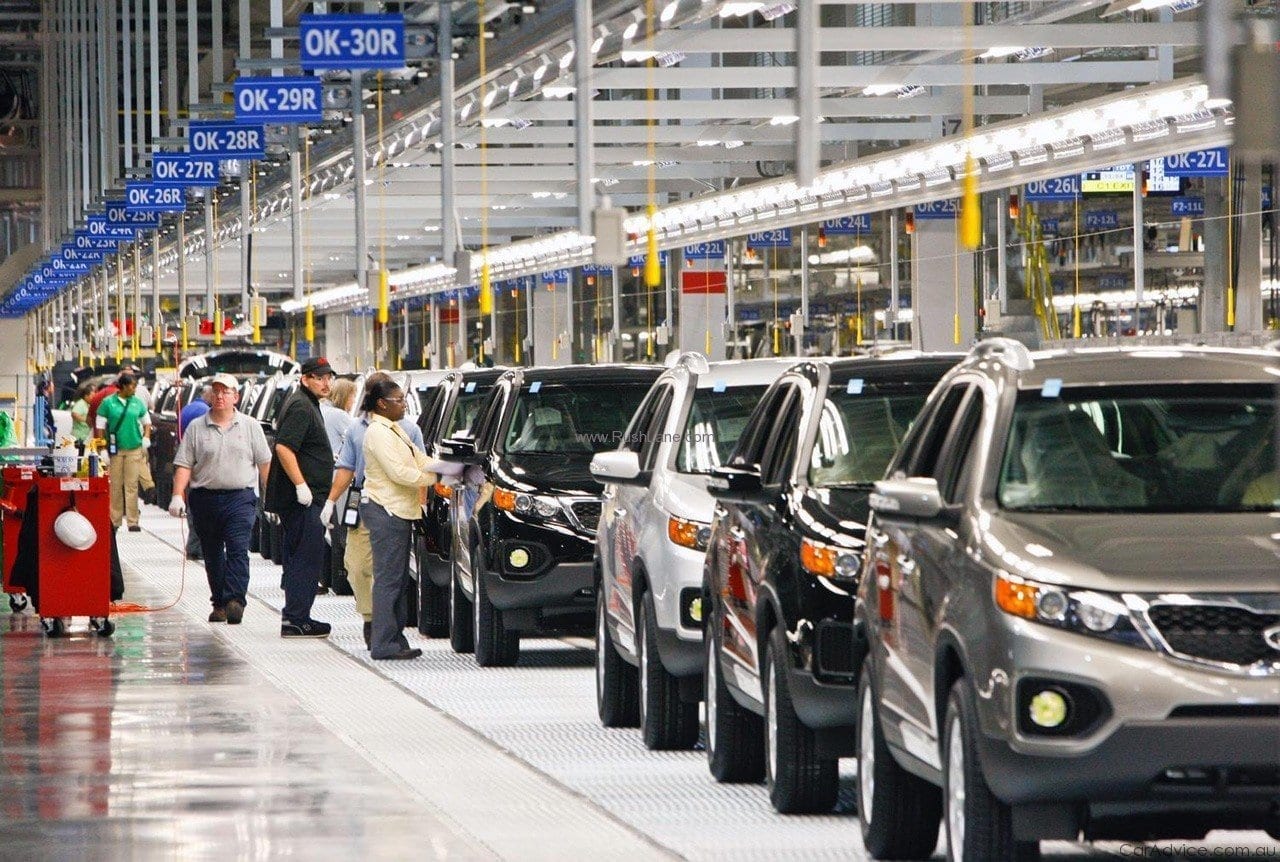
    Renault Samsung Motors, the Korean unit of French carmaker Renault S.A., is planning to start producing the Twizy ultra-small electric car in its sole domestic plant next year, industry sources said Monday. Renault Samsung, Busan Metropolitan City, and the Ministry of Trade, Industry and Energy are expected to sign an initial agreement this month to begin manufacturing Twizys, which are classified as heavy quadricycles in some countries, a person with direct knowledge of the matter said.

    He said assembly will begin “sometime during the 2019” at the carmaker’s plant in Busan, some 453 kilometers (281.5 miles) southeast of Seoul.

    This year, Renault Samsung has sold most of the 1,000 Twizys that were produced in its parent Renault’s plant in Valladolid, Spain, and shipped to Korea, a company spokesman said.

    The company plans to roll out up to 15,000 Twizys annually for domestic sales and exports to Asian markets, another person familiar with the matter said.

    Renault Samsung didn’t confirm the plan.

  • Vietnamese currency falls to new low, could go lower

    Vietnamese currency falls to new low, could go lower

    The official exchange rate between Vietnamese dong and U.S. dollar reached its highest this year Wednesday, and  experts said the dong could depreciate further. The State Bank of Vietnam set a central exchange rate of VND22,757 on Wednesday, the sixth time the rate has gone up in the last two weeks.

    The dong has fallen by VND352, or 1.57 percent, against the greenback since the beginning of the year.

    The dollar’s value increased at commercial banks. At 3p.m. Wednesday, Vietcombank sold the dollar for VND23,350, VND15 higher than Tuesday.

    Vietinbank also sold its dollar for VND23,350, VND17 higher than Tuesday, while BIDV sold it at VND23,355, VND25 higher.

    The dollar also inched up on the free market. At 11.30 a.m. Wednesday, it was selling for VND23,360-23,410, VND10-20 higher than on Tuesday.

    Economist Nguyen Tri Hieu said that the reason for the hike was high demand for dollars toward the end of the year as businesses often import large amounts of materials needed for manufacturing.

    The ongoing U.S.-China trade war continues to exert exchange rate pressures, despite the U.S. announcing a 90-day halt on additional tariffs on Chinese goods starting next year, as there is no certainty that tensions will decline, he said.

    “There is a high possibility that the dong’s value will continue to fall this year,” Hieu said.

    Hieu said that the government should also devaluate the dong against the Chinese yuan so that the trade deficit between Vietnam and China can be reduced.

    Vietnam relies heavily on China for materials and equipment for its labor-intensive manufacturing sector.

    As the yuan’s value has fallen by 9 percent to the dollar since the beginning of this year, some experts have said that the dong should be devaluated even more to avoid impacts a cheaper yuan. Cheap made-in-China goods could be imported in large quantities to Vietnam and compete with domestic products, they said.

    But economist Tran Dinh Thien said that the dong should be kept at a balanced rate between the U.S. dollar and the Chinese yuan. A 2-3 percent band a year is acceptable, he added.

    A stronger dollar will benefit exporters, but will also create stronger pressure on inflation and interest rates which will increase business costs in a country with high imports and public debt, Thien said at a recent conference.

    He added that the fluctuation of the dong should be controlled to help local companies conduct their business with greater certainty.

    The government doesn’t want businesses to suffer shocks, he said.

    Prime Minister Nguyen Xuan Phuc had said in August that the devaluation of the dong needs to be kept within a 2-percent band this year compared with the end of last year.

  • Indonesia’s November Inflation Rate Surprisingly Picks Up

    Indonesia’s November Inflation Rate Surprisingly Picks Up

    Indonesia’s annual inflation rate accelerated for a second straight month in November, the statistics office said on Monday, against an expectation for price pressures to ease. The consumer price index rose 3.23 percent in November from a year earlier, Central Statistics Agency (BPS) chief Suhariyanto said, attributing the increase to rising prices of some food products and airfares. On a monthly basis, it rose 0.27 percent.

    October’s rate was 3.16 percent, while a Reuters poll had expected a November annual inflation rate of 3.15 percent.

    The November rate was still well within the central bank’s target range of 2.5 percent to 4.5 percent for 2018.

    The annual core inflation rate, which excludes government-controlled and volatile prices, also picked up more than expected in November to 3.03 percent, from 2.94 percent in October. The poll had expected a core inflation rate of 2.97 percent.

    Bank Indonesia has hiked interest rates six times this year by a total of 175 basis points since May to support the rupiah, despite benign inflation. The currency plumbed levels not seen since 1998 earlier this year but has sharply strengthened last month due to improving global investor sentiment.

  • Vietnam Jan-Nov coffee exports up 23 pct, rice 4.8 pct

    Vietnam Jan-Nov coffee exports up 23 pct, rice 4.8 pct

    Vietnam’s coffee export volumes from January to November have grown 23 percent year-on-year and rice exports have risen by 4.8 percent, official data shows.

    Coffee

    Coffee exports from Vietnam will climb an estimated 23 percent between January and November from a year ago to 1.725 million tonnes, equal to 28.75 million 60-kg bags, the General Statistics Office said in a report on Thursday.

    Coffee export revenue for Vietnam, the world’s biggest producer of the robusta bean, will edge up 2.9 percent to $3.3 billion in the 11-month period, the report said.

    November coffee exports were estimated at 140,000 tonnes, worth $264 million.

    Rice

    Rice exports in January-November from Vietnam were forecast to rise 4.8 percent from a year ago to 5.7 million tonnes. Revenue from rice exports in the period was expected to grow 16.8 percent year-on-year to $2.86 billion.

    November rice exports from Vietnam, the world’s third-largest shipper of the grain, were estimated at 450,000 tonnes, worth $218 million.

    Energy

    Vietnam’s January-November crude oil exports were seen plunging 42.5 percent year-on-year to an estimated 3.6 million tonnes.

    Crude oil export revenue in the first 11 months of 2018 were expected to decline 20.4 percent to $2.1 billion.

    Oil product imports in the 11-month period were estimated at 10.7 million tonnes, falling 8.1 percent from the same period last year, while the value of product imports rose 15.4 percent to $7.3 billion.

    Vietnam’s January-to-November liquefied petroleum gas imports were seen increasing 1.5 percent from a year earlier to 1.3 million tonnes.

  • US, China trade war finally (temporary) stops

    US, China trade war finally (temporary) stops

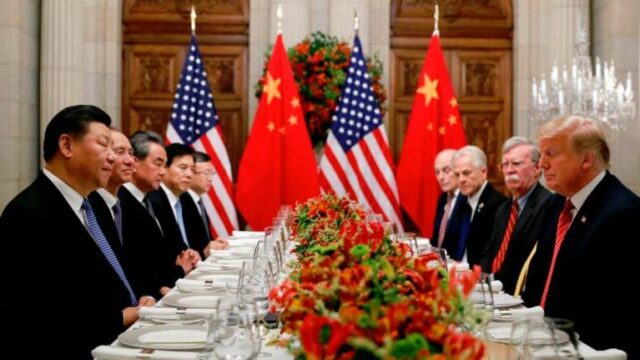
    China and the United States agreed to a ceasefire in their bitter trade war on Saturday after high-stakes talks in Argentina between US President Donald Trump and Chinese President Xi Jinping, including no escalated tariffs on Jan 1. Trump will leave tariffs on US$200 billion (RM835.8 billion) worth of Chinese imports at 10% at the beginning of the new year, agreeing to not raise them to 25% “at this time”, the White House said in a statement.

    “China will agree to purchase a not yet agreed upon, but very substantial, amount of agricultural, energy, industrial, and other product from the United States to reduce the trade imbalance between our two countries,“ it said.

    “China has agreed to start purchasing agricultural product from our farmers immediately.”

    The two leaders also agreed to immediately start talks on structural changes with respect to forced technology transfers, intellectual property protection, non-tariff barriers, cyber intrusions and cyber theft, services and agriculture, the White House said.

    Both countries agreed they will try to have this “transaction” completed within the next 90 days, but if this does not happen then the 10% tariffs will be raised to 25%, it added.

    The Chinese government’s top diplomat, state councillor Wang Yi, said the negotiations were conducted in a “friendly and candid atmosphere”.

    “The two presidents agreed that the two sides can and must get bilateral relations right,“ Wang said adding they agreed to further exchanges at appropriate times.

    “Discussion on economic and trade issues was very positive and constructive. The two heads of state reached consensus to halt the mutual increase of new tariffs,“ Wang said.

    “China is willing to increase imports in accordance with the needs of its domestic market and the people’s needs, including marketable products from the United States, to gradually ease the imbalance in two-way trade.”

    “The two sides agreed to mutually open their markets, and as China advances a new round of reforms, the United States’ legitimate concerns can be progressively resolved.”

    The two sides would “step up negotiations” toward full elimination of all additional tariffs, Wang said.

    The announcements came after Trump and Xi sat down with their aides for a working dinner at the end of a two-day gathering of world leaders in Buenos Aires, their dispute having unnerved global financial markets and weighed on the world economy.

    After the 2½ hour meeting, White House chief economist Larry Kudlow said the talks went “very well,“ but offered no specifics as he boarded Air Force One headed home to Washington with Trump.

    China’s goal was to persuade Trump to abandon plans to raise tariffs on US$200 billion of Chinese goods to 25% in January, from 10% at present. Trump had threatened to do that, and possibly add tariffs on US$267 billion of imports, if there was no progress in the talks.

    With the United States and China clashing over commerce, financial markets will take their lead from the results of the talks, widely seen as the most important meeting of US and Chinese leaders in years.

    The encounter came shortly after the Group of 20 industrialised nations backed an overhaul of the World Trade Organisation, which regulates international trade disputes, marking a victory for Trump, a sharp critic of the organisation.

    Trump told Xi at the start of their meeting he hoped they would achieve “something great” on trade for both countries. He struck a positive note as he sat across from Xi, despite the US president’s earlier threats to impose new tariffs on Chinese imports as early as the next year.

    He suggested that the “incredible relationship” he and Xi had established would be “the very primary reason” they could make progress on trade.

  • Trade war refugees race to relocate to Vietnam, Thailand

    Trade war refugees race to relocate to Vietnam, Thailand

    Experts say this is the biggest shift in cross-border supply chains since China joined the World Trade Organisation in 2001. Fred Perrotta spent four years building a network of Chinese suppliers for his line of trendy backpacks, but as soon as the United States announced tariffs on almost half of its Chinese imports, he started looking for suppliers in other countries.

    That process is now so far advanced it would be too late to reverse it even if U.S. President Donald Trump and his Chinese counterpart Xi Jinping call a truce in their growing trade war at this week’s G20 summit, the 33-year-old said.

    Perrotta’s company, Tortuga, is joining what industry experts say is the biggest shift in cross-border supply chains since China joined the World Trade Organisation in 2001.

    The shift is creating stiff competition to secure new facilities in neighboring countries and rebuild supply chains outside of China, home to a fifth of global manufacturing.

    “Everyone is nervous and scrambling around,” Perrotta said by phone from Oakland, California, where he recently took delivery of the first samples from a potential new supplier in Vietnam.

    “Long-term, we will probably shift everything.”

    The scramble is driven by the risk of more, and higher, U.S. tariffs on China, and fears that nearby emerging economies can only accommodate new businesses on a “first come, first served” basis.

    Vietnam and Thailand are emerging as preferred destinations, but they still face capacity constraints ranging from red-tape to skilled labor and limited infrastructure.

    Frenzied activity 

    In an interview with more than a dozen company executives, trade lawyers and lobby groups in various industries revealed a frenzy of activity across Asia in recent months: executives are requesting product samples, touring industrial parks, hiring lawyers and meeting with officials.

    In June, Hong Kong-listed furniture maker Man Wah Holdings bought a factory in Vietnam for $68 million and said earlier this month it plans to almost triple its capacity to 373,000 square meters by the end of 2019.

    “The acquisition is to mitigate the risks posed by tariffs,” Man Wah said in a statement.

    Vietnam-based industrial real estate developer BW Industrial says inquiries have surged since October, and all its factories are now leased out.

    “The manufacturers are from all over the world but they all have production plants in China and need to start production ASAP,” Chris Truong, a sales manager at BW Industrial said.

    In Thailand, SVI Pcl, which provides electronics and manufacturing solutions, said it has just selected four new deals worth about $100 million with existing customers who have operations in China.

    “The trade war is good for us,” CEO Pongsak Lothongkam said. “We have been approached by so many companies that we have to prioritize.”

    KCE Electronics, Southeast Asia’s biggest maker of printed circuit boards (PCBs), has been contacted by U.S. companies who want to seek a new supplier to replace one in China, CEO Pitharn Ongkosit said.

    “It’s a good opportunity. Many customers have contacted us to ask about our products and prices. But there are no sales yet as it will take time,” he said.

    Stars Microelectronics Pcl, another Thai electronics manufacturing services provider, is also getting new business.

    “Two (or) three companies will start moving their production base (out of China) to us soon,” CEO Peerapol Wilaiwongstien said.

    Cambodia is also attracting interest, with Parsippany, NJ-based bicycle maker Kent International Inc shifting Chinese production to the Southeast Asian country.

    “We have a big business in the United States,” Arnold Kamler, the company’s majority owner and chief executive said. “There is no choice but to as rapidly as possible look to move production away from China.”

    Disruption 

    The re-sourcing and relocation efforts mark an acceleration of an already established trend as China’s economy shifts towards services, consumption and high-tech production.

    “We are on the cusp of the biggest sourcing disruption that we have seen in a generation,” said Stephen Lamar, executive vice-president of the American Apparel&Footwear Association, whose more than 1,000 members contribute over $400 billion annually to U.S. retail sales.

    “The No. 1 thing I hear from companies is along the lines of: ‘For years we have been talking about diversifying from China and now we have to actually do it’.”

    Shifting production can take years to complete: firms need to secure funding, find the right suppliers, sort out new logistics – all while dealing with new legal and accounting issues in a country they may not know well.

    “Any relocation away from China is going to be very slow and very uncertain,” said Aidan Yao, senior Asia EM economist at AXA Investment Managers.

    Low tech goods and low value manufacturing would be the quickest to migrate while higher value-added exports in the machinery, transport and IT category would likely take decades to relocate due to high R&D costs and competitive Chinese labor costs, UBS said in a note earlier this month.

    Yet a regional client poll by Citi conducted in the last month showed more than half of them already adjusting their supply chain to limit upheaval to their business.

    China’s sophistication in areas such as automation means no one country can replace China, said trade lawyer Sally Peng of Sandler, Travis&Rosenberg.

    “So everyone is looking for that China Plus One, Plus Two, Plus Three country strategy, all the way to Africa,” she said.

    Companies hold out little hope for a truce in the trade dispute when Trump and Xi are due to meet on the sidelines of the G20 summit in Buenos Aires this week.

    Indeed, Trump said on Monday he expected to move ahead with raising tariffs on $200 billion in Chinese imports to 25 percent from the current 10 percent.

    While Chinese export data shows little sign yet of an impact from the trade war, some economists say that is because companies are rushing to get shipments out ahead of more tariffs.

    Collateral victims 

    To be sure, smaller emerging Asian economies are not necessarily licking their lips about the prospect of the trade war between the world’s top two economies worsening.

    Growth has slowed in the third quarter across Southeast Asia, as well as in Taiwan, Japan and South Korea, with officials partly blaming the trade war for it.

    Thailand’s exports of electronic integrated circuits, for instance, rose 4 percent to the United States in October but fell 38 percent to China. Vietnam’s manufacturing sentiment indicator is the highest in Asia but is well off its peak.

    A lack of infrastructure is also a problem for countries seeking to pick up business.

    Thailand is 41st in World Bank infrastructure quality rankings, Vietnam is 47th, compared to China’s 20th ranking.

    Bangkok is seeking to address that with its Eastern Economic Corridor, an ambitious $45 billion development project which plans improvements to deep water ports, airports and railways.

    Beyond infrastructure bottlenecks, red tape – particularly in Vietnam – remains hard to navigate and skilled labor is not easily available.

    Vietnam’s unemployment rate is 2.2 percent. Thailand’s is even lower.

    “The proportion of unskilled labor in Vietnam remains large and there hasn’t been any effective plan to improve this issue, and I don’t see any significant change in five or even 10 years,” said the vice chairman of the Vietnam Electronic Industries Association, Nguyen Phuoc Hai.

    “Whether cheap labor will remain one of Vietnam’s advantages in the face of the fourth industrial revolution is questionable.”
  • Korea’s manufacturing and mining shipments up 7 percent

    Korea’s manufacturing and mining shipments up 7 percent

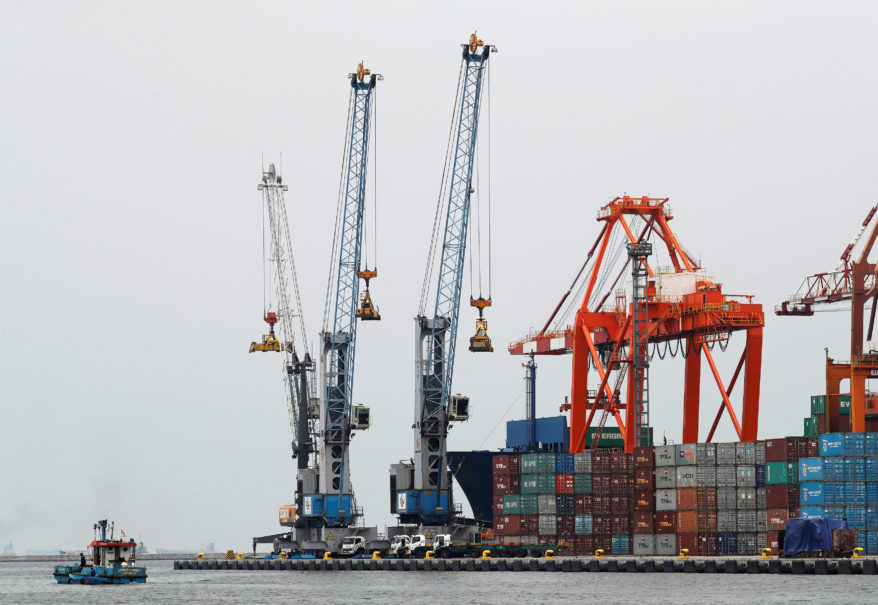
    Korea’s manufacturing and mining industry shipments increased in 2017, mainly due to growth in the electronics, refined petroleum and machinery sectors, a government report showed on Tuesday. Combined shipments by companies in the sectors with more than 10 employees reached 1,516 trillion won ($1.34 trillion), up 7 percent, or 99.7 trillion won, from the year before.

    The increase is attributable to a 14.6 percent year-on-year rise in electronics shipments and a 26.6 percent gain in shipments from local refined petroleum businesses during the one-year period, the agency said. The machinery sector posted a 19 percent year-on-year rise last year.

    Such gains offset losses in the shipbuilding and automaking sectors, it said.

    The report also said that the average shipments for manufacturing companies stood at 21.7 billion won last year, up 6 percent from 2016.

    It said value-added product deliveries by mining and manufacturing companies rose 8.1 percent, or 41 trillion won, in 2017 to over 547.7 trillion won.

    As of the end of 2017, there were 69,790 mining and manufacturing companies in the country employing 2.96 million people. This represents a slight fall from the year before.