Retail News CRM

Tag: export

  • Malaysia’s exports rebound in September

    Malaysia’s exports rebound in September

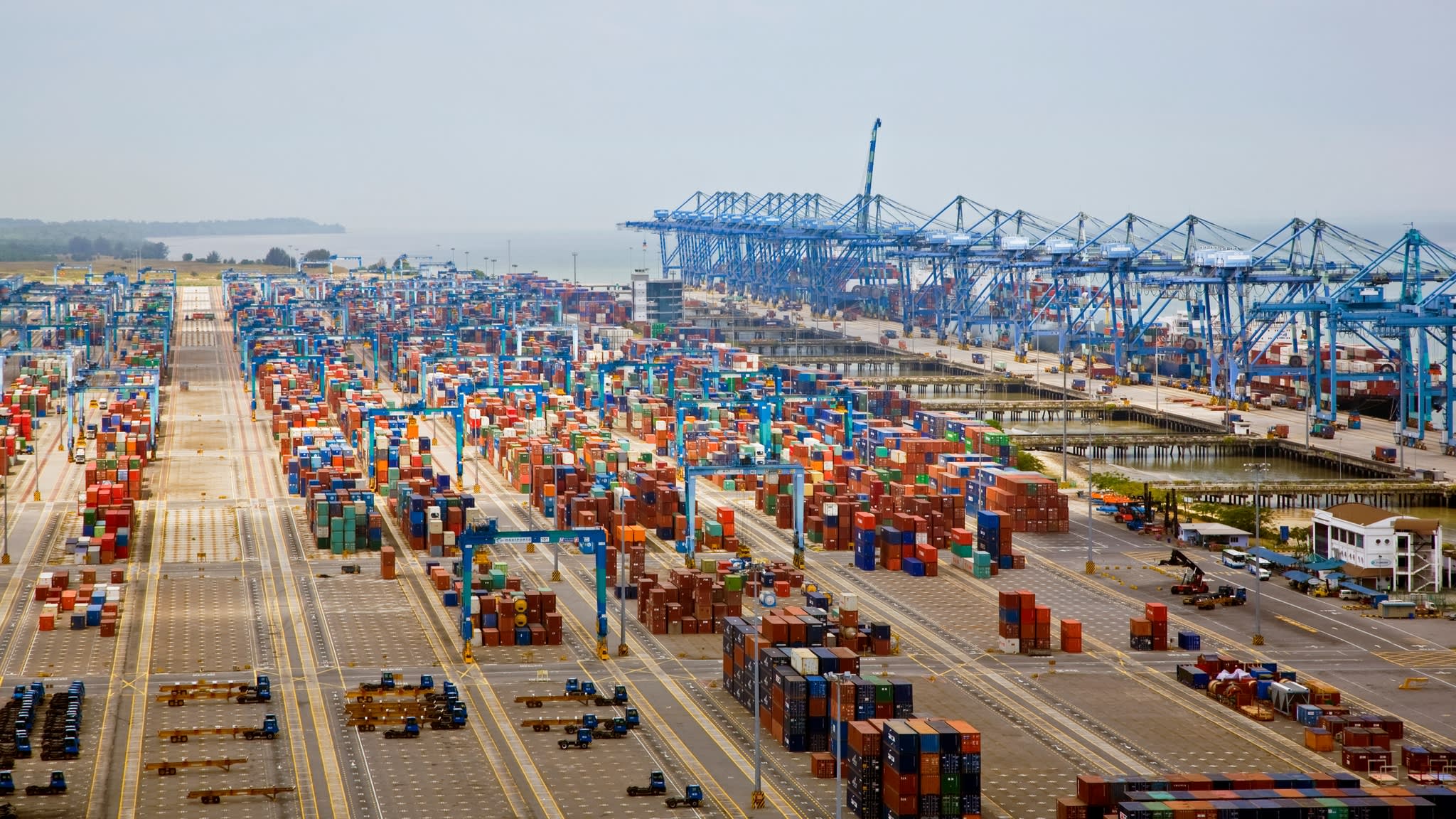
    Malaysia’s exports rebounded by 6.7% in September 2018 to RM83 billion year-on-year (y-o-y) after a slight decrease in the previous month, according to Statistics Department. Total trade which was valued at RM150.8 billion increased RM3.3 billion or 2.3% in September 2018, chief statistician Malaysia Datuk Seri Dr Mohd Uzir Mahidin said in a statement.

    Mohd Uzir said the trade surplus recorded the highest value since October 2008 at RM15.3 billion, increased RM7.1 billion or 85.9% from a year ago.

    Re-exports was valued at RM16.5 billion registering an increase of 26.2% y-o-y and accounted for 19.9% of total exports, while domestic exports increased 2.7% or RM1.8 billion to RM66.5 billion.

    The export growth was contributed by expansion in exports to Hong Kong, Taiwan, Singapore, Australia and Republic of Korea. Meanwhile, lower imports were mainly from India, Republic of Korea, Vietnam, UAE and EU.

    The main products which contributed to the expansion in exports were electrical & electronic products, refined petroleum products, crude petroleum and liquefied natural gas (LNG).

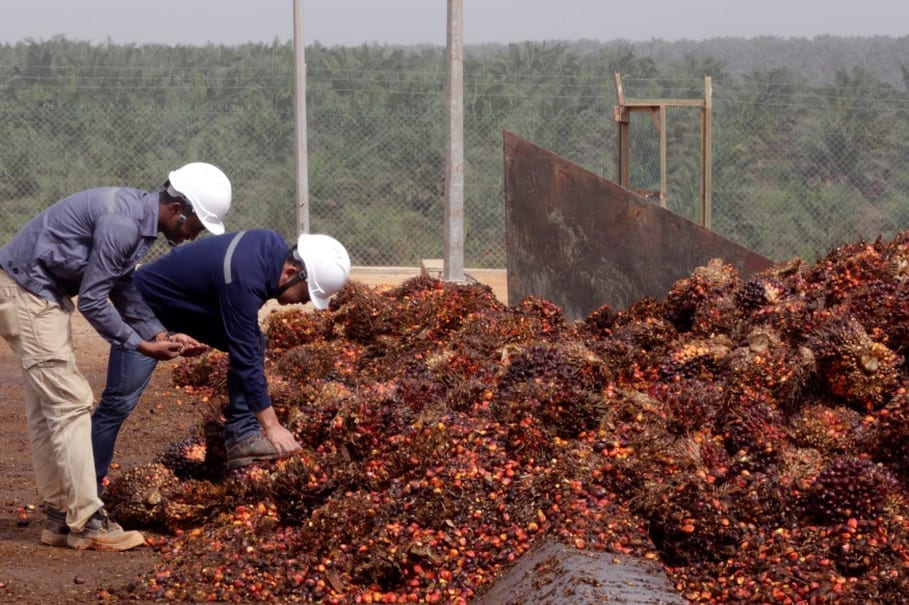
    However, the department said decline was recorded for palm oil and palm oil-based products, timber and timber-based products and natural rubber.

    For imports, the lower in imports by ‘end use’ was mainly attributed to intermediate goods, capital goods, and consumption goods, it added.

  • Vietnam urges China to import more agriculture produce

    Vietnam urges China to import more agriculture produce

    China should import more Vietnamese products, especially agriculture produce, so as to balance bilateral trade, PM Nguyen Xuan Phuc said Sunday. “As Vietnam is seeing a great trade deficit with China, you [Chinese businesses] should import more products from Vietnam, starting with agricultural products, to balance bilateral trade,” the prime minister said at a meeting with Chinese businesses in Shanghai before the November 5-10 China International Import Expo (CIIE).

    “This is in line with the policy of China’s top leaders, who have repeatedly told us that they are keen to move towards a trade balance between China and Vietnam,” he noted.

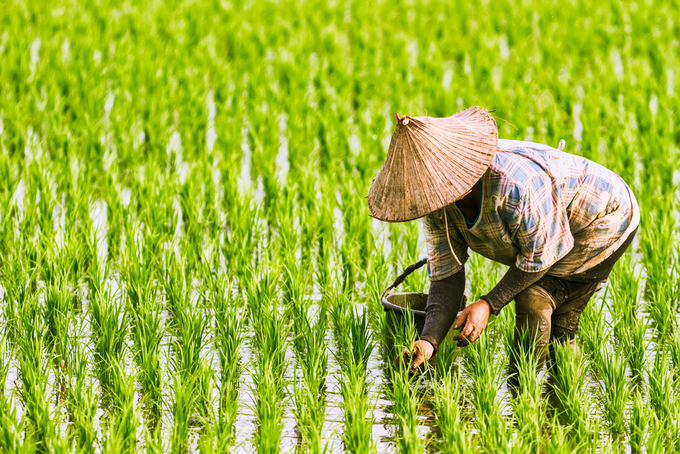
    China is currently the largest market for agricultural products in Vietnam with the export turnover of agriculture, forestry and fishery products this year estimated at over $35 billion, up nearly 9 percent over the same period last year, Phuc said.

    However, most Vietnamese produce are mostly consumed in China’s southern Yunnan Province and the Guangxi region bordering Vietnam, not in the rest of the country, he said.

    As the second largest agricultural produce exporter in ASEAN with over 20 agriculture products that have an annual export value of over $1 billion worth, Vietnam offers many products favored by Chinese consumers, the PM said.

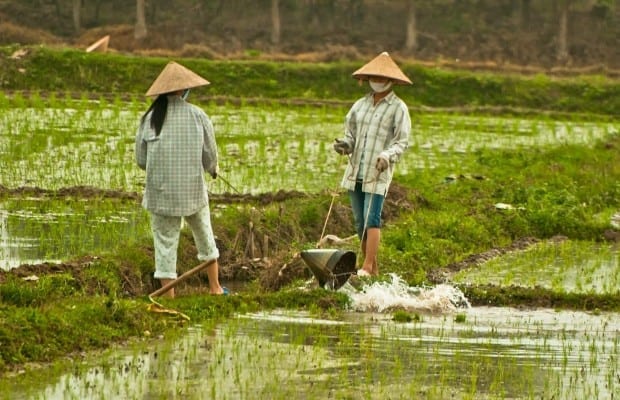
    Many Vietnamese agriculture produce are among the world’s best, like rice, pepper, cashew, pangasius fish and shrimp, he noted, adding that its fruits, like dragonfruit, mango, longan and watermelon, have passed import standards set by Australia, the EU, Japan, South Korea and the U.S.

    These products have great potential to boost bilateral trade cooperation, the PM stressed.

    Representatives of Chinese corporations at the meeting said they value the investment potential in Vietnam and are interested in bringing Vietnamese agriculture produce to China and and the world.

    Pu Jian, executive director of the CITIC International Asset Management company, said that he could bring Vietnamese products more deeply into the Chinese market as his company specializes in importing rice, fruits and other produce.

    His corporation also owns 60 percent of McDonald shares with over 3,500 stores in China, and this could be a potential channel to consume Vietnamese produce, he added.

    Johnson Choi, executive director of China’s conglomerate Sunwah Group and general director of Sunwah Vietnam, said that his company would like to distribute Vietnamese coffee in the Chinese market and invest in Vietnam’s “green” agriculture.

    In a meeting with Chinese President Xi Jinping the same day on the sidelines of the CIIE, China’s major event seeking more import opportunities, PM Phuc stressed that Vietnam always attaches great importance to the development of friendly, stable and healthy relations with China.

    China should adopt policies and practical measures to reduce the current large trade deficit with Vietnam, he added.

    Xi said that his country doesn’t want to pursue a trade surplus with Vietnam, and will increase imports from Vietnam towards more balanced and sustainable bilateral trade.

    Vietnam-China trade reached $93.69 billion last year, up 30.2 percent from 2016. Vietnam earned $35.46 billion from exports to China, up 61.5 percent, while spending $58.22 billion on imports from the country, up 16.4 percent.

    In the first nine months this year, bilateral trade between the two countries reached $76.06 billion, up 18.7 percent over the same period last year.

    China continues to be Vietnam’s largest trading partner and the one with which it has the largest trade deficit. It is also Vietnam’s second largest export market after the U.S, according to Vietnam Customs.
  • Indonesia Gov’t Considers Reducing Its Levy on Palm Oil Exports

    Indonesia Gov’t Considers Reducing Its Levy on Palm Oil Exports

    The government is considering reducing its levy on palm oil exports, Coordinating Economic Affairs Minister Darmin Nasution said on Thursday, as the country pushes to maintain its position in international markets for the commodity.

    Speaking at an industry conference in Bali, the minister said an “adjustment” to the levy was among steps to be taken by the government, although he later said that this was still being discussed.

    “We don’t have final position yet,” Darmin said on the sidelines of the event. “We have to calculate that carefully. We don’t want lowering it only to result in lower prices.”

    Indonesia, the world’s top producer of the commodity, currently imposes a levy of up to $50 per metric ton on various palm oil products.

    The Indonesian Palm Oil Association (Gapki) said last week that it had proposed cutting the palm oil export levy by $20 per ton until prices of the vegetable oil reach $700 per ton.

    The government’s reference price for crude palm oil has stayed below $750 per ton for over a year.

    Darmin said the government would discuss the levy adjustment intensively over the next two months, hoping to reach a decision around year-end.

  • EU trade pact can reduce Vietnam’s reliance on China, US

    EU trade pact can reduce Vietnam’s reliance on China, US

    The Vietnam-EU trade pact can diversify export markets and help reduce reliance on China and the U.S., experts say. On October 17, the European Commission submitted the EVFTA for signature and conclusion to the European Council. Once authorized by the Council, the agreement will be signed and presented by the end of this year to the European Parliament for ratification. The European Parliament is set to ratify the EVFTA early next year.

    The trade pact, which has been negotiated since June 2012, is considered a game changer as it would eliminate almost all trade tariffs between the two sides.

    Luu Bich Ho, former head of the Vietnam Institute for Development Strategies under the Ministry of Planning and Investment, said that the deal would play a major role in reducing Vietnam’s reliance on the U.S. and China, the world’s two largest economies.

    “This is obviously an opportunity for Vietnam to increase export [to the EU] to avoid being affected should the U.S. seek to limit imports from Vietnam,” Ho said.

    It’s also a chance for Vietnam to diversify its markets as it is still heavily dependent on China in trade, he added.

    In the first nine months this year, the U.S. was Vietnam’s largest export market, accounting for 19.5 percent of Vietnam’s total exports, a growth of 13.2 percent year-on-year, according to Vietnam Customs.

    Although the EU came second and accounted for 17.4 percent, this market has the smallest growth rate among Vietnam’s top six export markets at 10.5 percent.

    China was the third largest export market, had the highest growth rate of 29.9 percent. It was also Vietnam’s largest import market, accounting for 27.3 percent of Vietnam’s total imports.

  • Vietnam to navigate rough trade war waters

    Vietnam to navigate rough trade war waters

    Parliament members say the ongoing US-China trade war has had visible impacts, and Vietnam needs to reduce dependence on both nations. At the ongoing National Assembly session, several National Assembly deputies Saturday stressed the need for Vietnam to make policy changes and diversify markets.

    Ha Sy Dong, a deputy from Quang Tri Province, said that the escalating tension between the U.S. and China is not confined to trade.

    It is also a long-term political conflict that has had visible impacts on Vietnam’s economy, he said.

    “The obvious impacts are higher risks in trade, and fluctuating currency and capital flows,” Dong said.

    A report by the National Center for Socio-Economic Information and Forecast (NCIF) released in August said that Vietnam’s GDP could drop 0.03 percent this year, 0.09 percent next year and 0.12 percent in 2020 and 2021 due to impacts of the US-China trade war.

    This equals a GDP drop of VND1.65 trillion ($71 million) this year and VND5.3 trillion ($228 million) next year. The decline will climax at VND8 trillion ($344 million) in 2021.

    The Vietnam Institute for Economic and Policy Research (VEPR) had previously cautioned that the trade war could prompt large corporations to send their capital back to the developed countries as developing countries lose their attraction.

    Technology giants like Foxconn are investing more in manufacturing in the U.S. as a result of the trade war, the VEPR noted.

    “We need to diversify our markets and trade partners to reduce dependence on China and the U.S.,” Dong stressed.

    In the first nine months this year, the U.S. was Vietnam’s largest export market, accounting for 19.5 percent of Vietnam’s total exports, a growth of 13.2 year-on-year, according to Vietnam Customs.
    China was the third largest export market, with the highest growth rate of 29.9 percent. It was also Vietnam’s largest import market, accounting for 27.3 percent of Vietnam’s total imports.

    Tran Tuan Anh, Minister of Industry and Trade, said that as geographical and political tensions between the U.S. and China escalate, the Vietnamese government needs to limit risks for the country.

    He told the National Assembly that he would report in more detail on this issue.

    Taking advantage

    Dong said that Vietnam could also benefit from the tensions, exporting more to the U.S. and welcoming more foreign direct investment as companies leave China.

    U.S. sports apparel company Brooks Running has recently announced that it is considering shifting its manufacturing operations from China to Vietnam to avoid the trade war tariffs of 45 percent.

    Adidas CEO Kasper Rorsted also said in May that his company was shifting footwear sourcing from China to Vietnam, and data from Nike showed that Vietnam produced 46 percent of its footwear last year, against 27 percent in China.

    The U.S.-China trade war escalated last month as the U.S. levied new tariffs of 10 percent on about $200 billion worth of Chinese products, with the tariffs to go up to 25 percent by the end of this year.

    China retaliated immediately with 5 and 10 percent tariffs on $60 billion worth of U.S. products.

  • Vietnam agriculture export shows progress

    Vietnam agriculture export shows progress

    Vietnam’s coffee exports grew 21.5 percent and rice exports 3.4 percent year-on-year in the first ten months, government data showed on Monday.

    Coffee 

    Coffee exports from Vietnam will rise an estimated 21.5 percent between January and October from a year ago to 1.58 million tons, equal to 26.3 million 60-kg bags, the General Statistics Office said in a report on Monday.

    Coffee export revenue for Vietnam, the world’s biggest producer of the robusta bean, rose 1.1 percent to $2.98 billion in the 10-month period, the report said.

    October coffee exports were estimated at 130,000 tons, worth $230 million.

    Rice

    Rice exports in January-October from Vietnam were forecast to rise 3.4 percent from a year ago to 5.24 million tons. Revenue from rice exports in the period was forecast to grow 16.1 percent year-on-year to $2.64 billion.

    October rice exports from Vietnam, the world’s third-largest shipper of the grain, were recorded at 350,000 tons, worth $180 million.

    Energy

    Vietnam’s January-October crude oil exports plunged 45.4 percent year-on-year to an estimated 3.22 million tons.

    Crude oil export revenue in the first 10 months of 2018 fell 24.8 percent to $1.82 billion.

    Oil product imports in the 10-month period were estimated at 10 million tonnes, falling 5.1 percent from the same period last year, while the value of product imports rose 20 percent to $6.77 billion.

    Vietnam’s January-to-October liquefied petroleum gas imports increased 5.7 percent from a year earlier to 1.2 million tons.

  • For Vietnamese exporters, ASEAN market remains bridge too far

    For Vietnamese exporters, ASEAN market remains bridge too far

    Vietnamese companies are struggling to sell their products to ASEAN member countries despite the abolition of tariffs within the bloc. Analysts blame this on their lack of market information and poor understanding of consumer needs among other factors.

    With the formation of the ASEAN Economic Community (AEC) three years ago, members had to reduce over 90 percent of their tariff lines to zero percent, though Vietnam, Laos, Cambodia, and Myanmar were allowed until 2018 to do so.

    Yet Vietnam’s intra-ASEAN exports accounted for only 11 percent last year while this number for other members averaged 24 percent even in 2016, Nguyen Thi Tue Anh, deputy head of the Central Institute of Economic Management (CIEM), said at a recent conference.

    Anh said besides Vietnamese enterprises’ lack of market information, they have also failed to adequately differentiate their products from those of competitors within the bloc.

    A spokesperson for a business based in southern Soc Trang Province said his company, which produces dried fish and other fisheries products, wants to take its products to the ASEAN market but does not know how.

    He said that there are many factors such as package design, marketing and market research, and it does not know where to begin since all are equally important.

    Ha Xuan Anh, chairman of HCMC-based textile maker Son Viet, said his company’s products – undergarments – are sold at many modern retail outlets. But for the last 10 years it has sought to sell to Singapore, Thailand and Malaysia, and has been unable to do so.

    He explained that though the quality of his company’s products is competitive, Vietnamese brands remain unknown in these markets.

    It only sells in markets with less competitive products such as Laos, Cambodia and Myanmar.

    Pham Thiet Hoa, director of the HCMC Investment and Trade Promotion Centre (ITPC), also blamed the weaknesses of Vietnamese enterprises for their inability to export, listing lack of product diversification, failure to closely liaise with authorities responsible for foreign affairs, and poor marketing.

    ITPC said small companies entering a new market alone would find it very difficult to identify foreign business partners and distribution chains.

    Hoa said it is therefore necessary for trade envoys to work with their counterparts in foreign markets to bridge this gap.

    Participating in fairs, exhibitions and trade promotion programmes in target markets enables companies to assess the competitiveness of local rivals, he said.

    Despite the free trade environment, each country in the bloc has differences in culture, religion and consumer preferences, and businesses need to understand them before venturing into those countries, he said. “Enterprises should also carefully study the technical barriers and legal regulations to avoid losses.”

  • Malaysia’s Aug exports decline 0.3%, trade surplus at nearly 4-year low

    Malaysia’s total exports fell marginally by RM215.2 million or 0.3% to RM81.8 billion in August, the second time exports recorded a decrease in 2018 after February due to the high base effect, according to the Department of Statistics.

    Trade surplus also recorded the lowest value since November 2014 at RM1.6 billion on the back of a double-digit growth of 11.2% or RM8.1 billion in imports to RM80.2 billion in August.

    Total trade stood at RM162 billion, RM7.9 billion or 5.1% higher than the same month a year ago.

    The main products which contributed to the decline in exports were palm oil and palm oil-based products (-RM1.5 billion); liquefied natural gas (-RM918.3 million); timber and timber-based products (-RM49.0 million); and natural rubber (-RM39.5 million).

    However, increases were recorded for crude petroleum (+RM1.3 billion); electrical & electronic products (+RM985.5 million); and refined petroleum products (+RM232.2 million).

  • Vinalines to build 2 terminals at $299 mln in Lach Huyen Port

    Vinalines to build 2 terminals at $299 mln in Lach Huyen Port

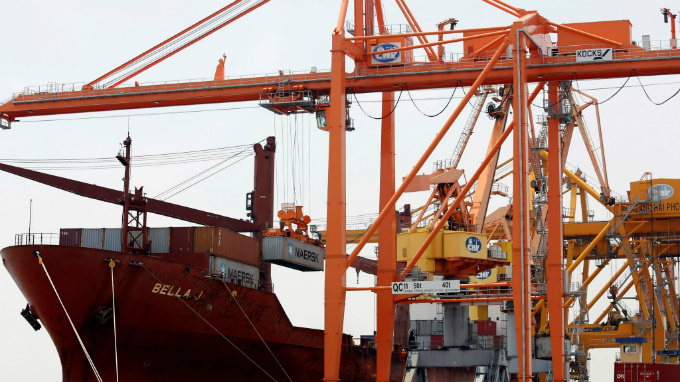
    Vinalines is seeking approval from the government for building two container terminals at Lach Huyen Port in northern Hai Phong City.

    Nguyen Canh Tinh, director of the state-run Vietnam National Shipping Lines (Vinalines), said its subsidiary, Haiphong Port JSC, would build terminals No.3 and No.4 at the port.

    He said the Haiphong Port JSC used to work mainly at Hoang Dieu terminal, which has now been taken over for the construction of an urban area, and so new terminals are needed in its place.

    The two proposed terminals would have a total length of 750 meters and the capacity to handle vessels of up to 100,000 DWT (8,000 TEU), and cost around VND7 trillion ($299 million), he said.

    Vinalines and Hai Phong Port JSC, in which Vinalines owns a 65 per cent stake, also plan to develop a logistics center of around 250ha in the area to optimize the handling, storage, processing, and distribution of cereals.

    Tinh said the investment in the terminals would be a strategic step in the company achieving its plan to handle around 30 percent of cargo at ports nationwide by 2020.

    Lach Huyen is set to become a modern port complex and the only one in the north that can berth ships of up to 150,000 tons.

    It is expected to have nine terminals with a combined length of 3,000 meters by 2020.

  • Indonesia to Work With Alibaba’s Jack Ma to Increase Exports: Minister

    Indonesia to Work With Alibaba’s Jack Ma to Increase Exports: Minister

    Indonesia will partner with Alibaba chief executive Jack Ma to look into ways to use of the e-commerce giant’s ecosystem to increase its exports, particularly to China, Communications Minister Rudiantara said on Sunday.

    “We are also discussing how to work together to develop tech talents to meet the needs of Indonesia and the region,” Rudiantara said after meeting Ma and President Joko “Jokowi” Widodo on Saturday.

    The Alibaba founder and chief executive, who was in Jakarta for the 2018 Asian Games, was named an e-commerce adviser to the Indonesian government in 2017.

    McKinsey estimated in a report released on Aug. 30 that the value of Indonesia’s e-commerce market will grow to at least $55 billion by 2022 from $8 billion in 2017.

    Alibaba is China’s biggest e-commerce firm, but its ecosystem includes payments platform Alipay and a cloud computing arm.

    Rudiantara told Reuters the details of the deal would be finalized during a second visit by Ma in October.

  • August Korea exports reach record, pass $50 billion

    August Korea exports reach record, pass $50 billion

    Korea exported more than $50 billion of goods in August despite fears of a global trade war, but experts continue to worry about the overreliance on a handful of popular products.

    According to data from the Ministry of Trade, Industry and Energy released over the weekend, Korea Inc. shipped out $51.2 billion worth of goods in August this year, up 8.7 percent compared to the same period last year.

    “Factors that contributed to the increase in exports include the improved condition of the global manufacturing sector, expansion of the gross domestic products of major economies and the increases in gas price and the prices of Korea’s main export items,” said an official from the Trade Ministry.

    August is the fourth straight month this year that monthly shipments from Korea have exceeded the $50-billion threshold.

    It is also the first time ever that August exports in any year have passed the $50-billion mark, another milestone for the Korean economy.

    “We expect the average monthly increase in exports in the second half will be maintained at around 5 percent,” said Paik Un-gyu, the minister for trade, industry and energy. “Accordingly, the total amount of exports from this year will surpass $600 billion for the first time in history.”

    From January to August, outbound shipments from Korea totaled at $399.8 billion, up 6.6 percent from the same period last year and a record high for the period.

    Despite the strong numbers, concerns loom large that the economy is unable to break free from depending too heavily on one or two export items, including computer chips.

    Data shows that semiconductor exports in August catapulted by 31.5 percent from a year ago to $11.5 billion, beating the historic high it set just two months ago in June at $11.2 billion.

    As a result, computer chip shipments are taking a bigger share of the pie each month. In January, semiconductors took up 19.7 percent of total exports. In August that figure had jumped up to 22.5 percent.

    If semiconductor exports are taken out of the picture, Korea’s outbound shipments from January to August have only risen by 0.37 percent. More disconcerting is the slowdown in investment by semiconductor companies. Data from Statistics Korea shows that facilities investment has dipped for five straight months since March this year.

    An official from the statistics agency explained that the investment made by major chip companies began slowing as new facilities entered the final phase of construction.

    “The Korean economy is in an unstable situation where, if semiconductor exports take a hit, it could be in crisis,” said Sung Tae-yoon, a professor of economics at Yonsei University. “The economy needs a strategy where it reduces its reliance on semiconductors while also increasing the competitiveness of the industry itself.”

  • Dip in Indian rates on rupee weakness dulls Vietnam offers

    Dip in Indian rates on rupee weakness dulls Vietnam offers

    Rice export prices in India fell this week as the rupee weakened, weighing on demand for the Vietnamese variety.

    Rates for India’s 5 percent broken parboiled rice fell by $3 per tonne to $389-$393 per tonne this week.

    “Rupee depreciation is allowing us to lower prices, but at the same time competitors are also lowering their quotes,” said an exporter based at Kakinada in the southern state of Andhra Pradesh.

    The Indian currency fell to a record low against the dollar on Thursday.

    Farmers in India had planted summer-sown paddy rice on 30.78 million hectares as of Aug 10, down 2.9 percent from a year ago due to scant rainfall.

    Monsoon rains in India are likely to be below-normal levels in 2018, a private weather forecaster said earlier this month, raising concerns over farm output and economic growth in Asia’s third-biggest economy, where half the farmland lacks irrigation.

    The falling rice prices in India also weighed on the market in Vietnam, the third largest exporter, but rates for the country’s 5 percent broken variety were unchanged at $395-$400 a tonne.

    “Trade is slow as Vietnamese prices are comparatively higher, especially compared with Indian prices … Exporters have lost their African customers to Indian rivals due to that,” a Ho chi Minh City-based trader said.

    Vietnam exported 444,235 tonnes of rice in July, down 17.4 percent from June, government customs data released late last week showed. That was slightly lower than a government forecast of 450,000 tonnes.

    In Thailand, the world’s second biggest rice exporter, demand also remained soft, traders said.

    Thailand’s benchmark 5 percent broken rice price was quoted at $390-$393, free on board (FOB) Bangkok, little changed from last week’s $390-$395.

    The commerce ministry on Wednesday said Thailand had exported 6.99 million tonnes of rice worth 3.52 billion baht this year by August 15, a 2 percent increase from a year ago.

    Meanwhile, Bangladesh, which had emerged as a major importer of rice since 2017 after floods damaged its crops, continued to procure rice domestically.

    In the 2017-18 financial year that ended in June, Bangladesh imported a record 5.7 million tonnes of rice. However, imports dropped sharply after the government imposed a 28 percent tax on shipments to support its farmers following a revival in local output.

    Rice at government warehouses stood at nearly 1.3 million tonnes, data from the country’s food ministry showed.

  • Indonesian ban on poultry from Malaysia has no impact on exporters

    Indonesian ban on poultry from Malaysia has no impact on exporters

    Indonesia’s ban on the import of fresh poultry and unprocessed products from Malaysia shipped after Aug 9 will not have any impact on Malaysian exporters, as they have not been in the market for more than a year now.

    According to an industry player who declined to be named, a ban on Malaysian poultry has actually been in effect since the H5N1 avian influenza outbreak early last year.

    “Basically we don’t export that much or none at all. If you remember the outbreak of H5N1 avian flu in Kelantan. Malaysian poultry or veterinary products have been banned in Indonesia since then.

    “The ban has not been lifted, so there is no effect at all and this is just a continuity of the ban,” he said, adding that the announcement could be due to unofficial movement of poultry from Sabah and came on the heels of an outbreak of avian flu there.

    Malaysia External Trade Development Corp said that Malaysia’s exports of live poultry within Asean stood at RM746.3 million in 2017 while that meat and edible offal of poultry stood at RM56.4 million.

    There are some 10 poultry-based companies listed on Bursa Malaysia. Five of them were losers at the close of trading yesterday.

    Lay Hong fell 2.07% to 71 sen on volume of 8.17 million shares, Sinmah Capital declined 1.70% to 29 sen on 12.25 million shares, CAB Cakaran Corp skidded 1.06% to 93 sen on 123,900 shares, QL Resources eased 0.33% to RM5.96 on 297,200 shares and CCK Consolidated Holdings weakened 0.55% to 90.5 sen with 292,100 shares traded.

    DBE Gurney Resources, PWF Consolidated and Teo Seng Capital were flat at 3.5 sen, 85 sen and 84 sen respectively.

    TPC Plus was the lone gainer, rising 1.35% or 0.5 sen to 37.5 sen.

    LTKM’s shares were untraded.

  • Indonesia VP Says Stronger Measures Needed to Keep Export Earnings in Indonesia for Longer

    Indonesia VP Says Stronger Measures Needed to Keep Export Earnings in Indonesia for Longer

    Vice President Jusuf Kalla said Indonesia must impose stricter measures to ensure that dollars earned from exports remain in the country for longer, amid the continuous depreciation of the rupiah, which has been among the worst performers in Asia this year.

    The currency has weakened by 6.21 percent against the dollar so far this year, amid a global sell-off of emerging-market assets, triggered by higher US interest rates and a stronger greenback. A weaker rupiah has many negative effects on the nation’s economy, as it increases the cost of imports, while raising the interest burden on public- and private-sector foreign debt.

    In a discussion in Jakarta on Thursday (02/08), Kalla criticized Indonesia’s existing free-floating foreign-exchange regime, which has made the country highly dependent on capital inflows, particularly in the short run. He highlighted the fact that under current laws, regulators are powerless to force exporters to keep their earnings onshore for longer.

    “There needs to be stronger measures so that foreign-exchange earnings from exports can stay [in the country],” he said, adding that Indonesia adopted very loose foreign-exchange controls, especially in the aftermath of the 1998 Asian financial crisis.

    The vice president cited as an example Thailand, which has implemented a strict foreign-exchange regime that requires export proceeds to stay in the country’s financial system for at least six months. He believes such a policy could help boost Indonesia’s supply of foreign exchange.

    However, Bank Indonesia Governor Perry Warjiyo made it clear last month that the central bank has no intention to impose tougher regulations that would force exporters to keep their dollars in the country for longer. Under current laws, the monetary authority is independent from the executive.

    The central bank has been using a mix of policies aimed at tightening its monetary policy. This includes raising its benchmark policy rate three times since mid-May to 5.25 percent and introducing new a benchmark interest rate in the country’s overnight interbank money market to boost the reliability of reference rates.

    Biodiesel

    Indonesia has been susceptible to capital outflows as it is one of a few emerging markets in Asia that run current-account deficits. The country’s financial markets are also still very shallow and lack product diversity, while on the other hand, the government runs a budget deficit, which adds to a greater reliance on foreign funds to help stimulate the economy.

    The government has taken various measures within its jurisdiction to reduce the current-account deficit, including a policy that will make the use of biodiesel-blended fuels mandatory for vehicles and heavy machinery from Sept. 1. This program is expected could save billions of dollars in diesel imports.

    Kalla also highlighted the government’s efforts to improve exports and reduce imports. He said the palm oil industry received particularly close scrutiny because it is the country’s greatest source of foreign exchange.

    The European Parliament agreed in June to extend its deadline on phasing out the use of palm oil as biodiesel in the bloc to 2030 from 2021. This means biofuels from Indonesia, the world’s largest palm oil producer, will still enter the European market for the next 12 years, instead of three years as was the case under the previous deadline.

    “We were forced to threaten European countries by saying we would stop buying Airbus. After that, their ambassadors came to clarify, so their policy to stop the use of palm oil is delayed until 2030,” Kalla said.

    Lion Air, Indonesia’s largest low-cost carrier, ordered 234 aircraft worth $23.8 billion from France-based Airbus in 2013 – the biggest order in the aircraft producer’s history.

  • Malaysia’s June exports rise 7.6% year-on-year

    Malaysia’s June exports rise 7.6% year-on-year

    Malaysia’s exports in June 2018 was valued at RM78.7 billion increasing by 7.6% year-on-year (y-o-y), a reversal of the trend of the five previous months where export growth was stronger than imports, according to Statistics Department.

    Chief Statistician Malaysia Datuk Seri Dr Mohd Uzir Mahidin said in a statement that re-exports increased 63.1% to RM15.7 billion y-o-y and accounted for 20% of total exports.

    However, he said that domestic exports was lower by 0.8% decreasing RM512.5 million to RM62.9 billion.

    Meanwhile, the department said imports growth registered a higher increase of 14.9% y-o-y to RM72.6 billion resulting a trade surplus of RM6 billion.

    Total trade which was valued at RM151.3 billion increased RM15 billion or 11% from June 2017, it noted.

    It said the export growth was contributed by expansion in exports to Hong Kong, China, Taiwan, Vietnam and Republic of Korea, while higher imports were mainly from China, Singapore, Taiwan, Republic of Korea and Saudi Arabia.

    The department said main products which contributed to the increase in exports were electrical and electronic products, refined petroleum products and crude petroleum.

    However, it said declines were recorded for these products; palm oil and palm oil-based products, liquefied natural gas (LNG), natural rubber, and timber and timber-based products,” it added.

    “While for imports, all the main categories of imports by end use and broad economic category classifications (BEC) recorded increases from a year ago, namely intermediate goods (RM1.2 billion), capital goods and cosumption goods,” it added.