Tag: export

  • Indonesian ban on poultry from Malaysia has no impact on exporters

    Indonesian ban on poultry from Malaysia has no impact on exporters

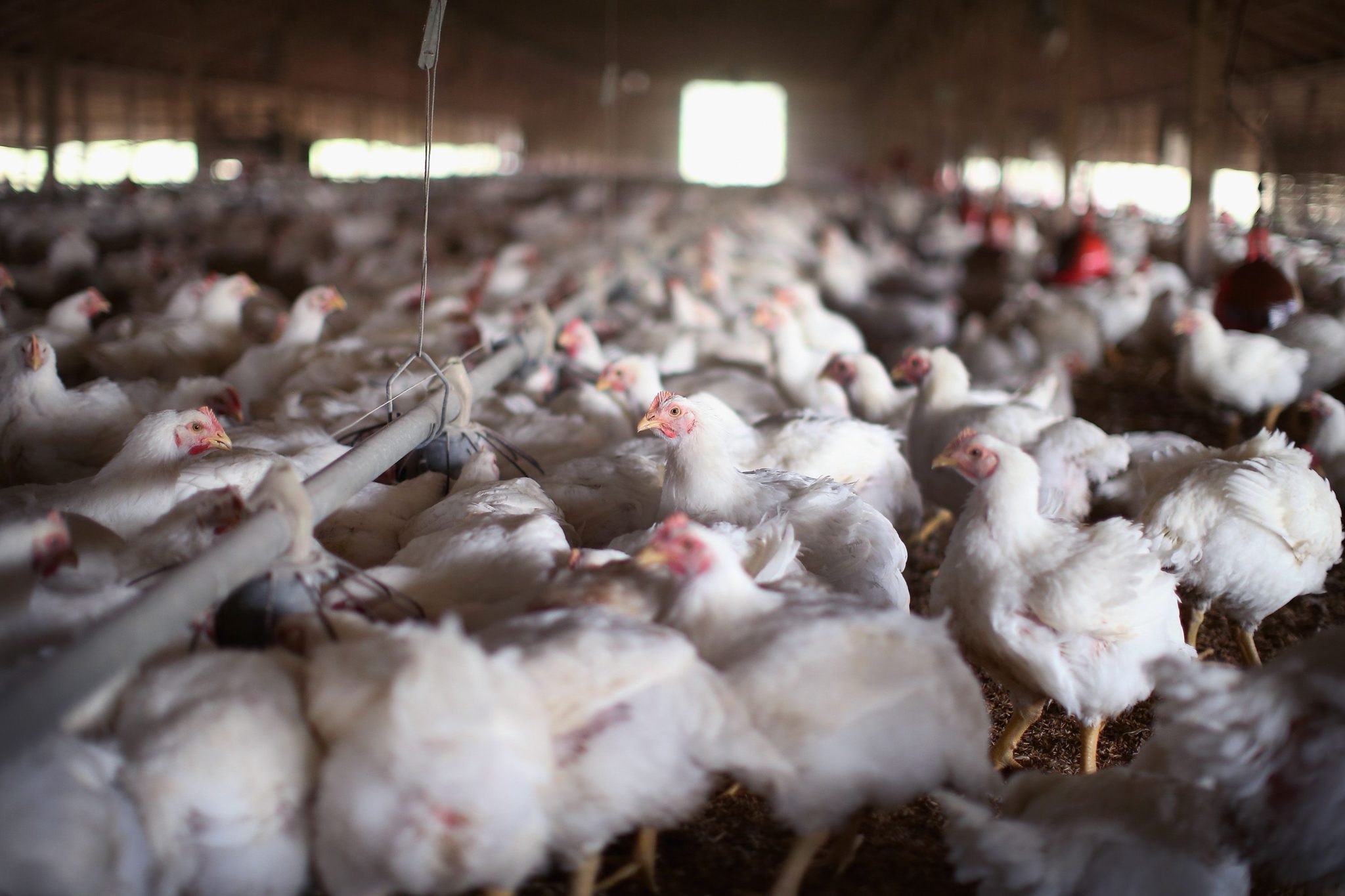
    Indonesia’s ban on the import of fresh poultry and unprocessed products from Malaysia shipped after Aug 9 will not have any impact on Malaysian exporters, as they have not been in the market for more than a year now.

    According to an industry player who declined to be named, a ban on Malaysian poultry has actually been in effect since the H5N1 avian influenza outbreak early last year.

    “Basically we don’t export that much or none at all. If you remember the outbreak of H5N1 avian flu in Kelantan. Malaysian poultry or veterinary products have been banned in Indonesia since then.

    “The ban has not been lifted, so there is no effect at all and this is just a continuity of the ban,” he said, adding that the announcement could be due to unofficial movement of poultry from Sabah and came on the heels of an outbreak of avian flu there.

    Malaysia External Trade Development Corp said that Malaysia’s exports of live poultry within Asean stood at RM746.3 million in 2017 while that meat and edible offal of poultry stood at RM56.4 million.

    There are some 10 poultry-based companies listed on Bursa Malaysia. Five of them were losers at the close of trading yesterday.

    Lay Hong fell 2.07% to 71 sen on volume of 8.17 million shares, Sinmah Capital declined 1.70% to 29 sen on 12.25 million shares, CAB Cakaran Corp skidded 1.06% to 93 sen on 123,900 shares, QL Resources eased 0.33% to RM5.96 on 297,200 shares and CCK Consolidated Holdings weakened 0.55% to 90.5 sen with 292,100 shares traded.

    DBE Gurney Resources, PWF Consolidated and Teo Seng Capital were flat at 3.5 sen, 85 sen and 84 sen respectively.

    TPC Plus was the lone gainer, rising 1.35% or 0.5 sen to 37.5 sen.

    LTKM’s shares were untraded.

  • Indonesia VP Says Stronger Measures Needed to Keep Export Earnings in Indonesia for Longer

    Indonesia VP Says Stronger Measures Needed to Keep Export Earnings in Indonesia for Longer

    Vice President Jusuf Kalla said Indonesia must impose stricter measures to ensure that dollars earned from exports remain in the country for longer, amid the continuous depreciation of the rupiah, which has been among the worst performers in Asia this year.

    The currency has weakened by 6.21 percent against the dollar so far this year, amid a global sell-off of emerging-market assets, triggered by higher US interest rates and a stronger greenback. A weaker rupiah has many negative effects on the nation’s economy, as it increases the cost of imports, while raising the interest burden on public- and private-sector foreign debt.

    In a discussion in Jakarta on Thursday (02/08), Kalla criticized Indonesia’s existing free-floating foreign-exchange regime, which has made the country highly dependent on capital inflows, particularly in the short run. He highlighted the fact that under current laws, regulators are powerless to force exporters to keep their earnings onshore for longer.

    “There needs to be stronger measures so that foreign-exchange earnings from exports can stay [in the country],” he said, adding that Indonesia adopted very loose foreign-exchange controls, especially in the aftermath of the 1998 Asian financial crisis.

    The vice president cited as an example Thailand, which has implemented a strict foreign-exchange regime that requires export proceeds to stay in the country’s financial system for at least six months. He believes such a policy could help boost Indonesia’s supply of foreign exchange.

    However, Bank Indonesia Governor Perry Warjiyo made it clear last month that the central bank has no intention to impose tougher regulations that would force exporters to keep their dollars in the country for longer. Under current laws, the monetary authority is independent from the executive.

    The central bank has been using a mix of policies aimed at tightening its monetary policy. This includes raising its benchmark policy rate three times since mid-May to 5.25 percent and introducing new a benchmark interest rate in the country’s overnight interbank money market to boost the reliability of reference rates.

    Biodiesel

    Indonesia has been susceptible to capital outflows as it is one of a few emerging markets in Asia that run current-account deficits. The country’s financial markets are also still very shallow and lack product diversity, while on the other hand, the government runs a budget deficit, which adds to a greater reliance on foreign funds to help stimulate the economy.

    The government has taken various measures within its jurisdiction to reduce the current-account deficit, including a policy that will make the use of biodiesel-blended fuels mandatory for vehicles and heavy machinery from Sept. 1. This program is expected could save billions of dollars in diesel imports.

    Kalla also highlighted the government’s efforts to improve exports and reduce imports. He said the palm oil industry received particularly close scrutiny because it is the country’s greatest source of foreign exchange.

    The European Parliament agreed in June to extend its deadline on phasing out the use of palm oil as biodiesel in the bloc to 2030 from 2021. This means biofuels from Indonesia, the world’s largest palm oil producer, will still enter the European market for the next 12 years, instead of three years as was the case under the previous deadline.

    “We were forced to threaten European countries by saying we would stop buying Airbus. After that, their ambassadors came to clarify, so their policy to stop the use of palm oil is delayed until 2030,” Kalla said.

    Lion Air, Indonesia’s largest low-cost carrier, ordered 234 aircraft worth $23.8 billion from France-based Airbus in 2013 – the biggest order in the aircraft producer’s history.

  • Malaysia’s June exports rise 7.6% year-on-year

    Malaysia’s June exports rise 7.6% year-on-year

    Malaysia’s exports in June 2018 was valued at RM78.7 billion increasing by 7.6% year-on-year (y-o-y), a reversal of the trend of the five previous months where export growth was stronger than imports, according to Statistics Department.

    Chief Statistician Malaysia Datuk Seri Dr Mohd Uzir Mahidin said in a statement that re-exports increased 63.1% to RM15.7 billion y-o-y and accounted for 20% of total exports.

    However, he said that domestic exports was lower by 0.8% decreasing RM512.5 million to RM62.9 billion.

    Meanwhile, the department said imports growth registered a higher increase of 14.9% y-o-y to RM72.6 billion resulting a trade surplus of RM6 billion.

    Total trade which was valued at RM151.3 billion increased RM15 billion or 11% from June 2017, it noted.

    It said the export growth was contributed by expansion in exports to Hong Kong, China, Taiwan, Vietnam and Republic of Korea, while higher imports were mainly from China, Singapore, Taiwan, Republic of Korea and Saudi Arabia.

    The department said main products which contributed to the increase in exports were electrical and electronic products, refined petroleum products and crude petroleum.

    However, it said declines were recorded for these products; palm oil and palm oil-based products, liquefied natural gas (LNG), natural rubber, and timber and timber-based products,” it added.

    “While for imports, all the main categories of imports by end use and broad economic category classifications (BEC) recorded increases from a year ago, namely intermediate goods (RM1.2 billion), capital goods and cosumption goods,” it added.

  • Vietnam posts $3.1-billion trade surplus in Jan-July

    Vietnam posts $3.1-billion trade surplus in Jan-July

    Vietnam’s trade surplus in the first seven months was $3.1 billion as exports rose 15.3 percent year-on-year to $133.7 billion.

    Domestic companies accounted for $39 billion of the exports, up 18.7 percent, while foreign firms registered $94.7 billion, up 14 percent, according to the General Statistics Office (GSO).

    Cell phones and components topped the list of exports at $26.1 billion, followed by textile and garment at $16.5 billion and electronics and computers and components at $15.7 billion.

    The U.S. was the biggest importer, with shipments rising by 8.9 percent to $25.5 billion.

    The EU was second with $24.2 billion, up 12.9 percent, followed by China with $19.5 billion, up 24.7 percent.

    Imports rose by 10.2 percent to $130.6 billion, with domestic companies accounting for $54.16 billion spent by firms, up 12.7 percent.

    Imports by foreign companies were up 8.5 percent.

    The GSO has however warned exporters and importers to be prepared for any eventuality given the ongoing trade war between the U.S. and China.

    The U.S. imposed 25 percent tariffs on an initial $34 billion of imports from China on July 6, which then led China to respond with similar sized tariffs on U.S. products.

    The Donald Trump administration claims the tariffs are necessary to protect national security and U.S. businesses’ intellectual property, and to reduce the country’s trade deficit with China.

    The administration said Wednesday that Trump has sought to ratchet up pressure on China for trade concessions by proposing a higher 25 percent tariff on $200 billion (152.33 billion pounds) worth of Chinese imports.

  • Indonesia Needs ‘Dollars Now,’ President Says, Urging Greater Biodiesel Use

    Indonesia Needs ‘Dollars Now,’ President Says, Urging Greater Biodiesel Use

    Indonesia’s President Joko “Jokowi” Widodo on Tuesday (31/07) urged his ministers to make “serious” efforts to strengthen foreign exchange reserves by widening biodiesel use to combat pressures caused by a global trade war.

    Indonesia requires foreign inflows to finance its current account deficit and the central bank has spent about $12 billion of its forex reserves in recent months to defend the rupiah, which has lost about 6 percent this year.

    “The country needs dollars now,” Jokowi told a cabinet meeting. “I don’t want to keep doing meetings without good implementations.”

    The cabinet has met at least six times since the start of July to tackle concerns over trade and the rupiah currency, and Jokowi called for swifter action to prop up the currency.

    He sought immediate implementation of a government’s plan to widen the mandatory use of B20 biodiesel to all diesel vehicles, including locomotive engines and heavy equipment.

    Expansion of the B20 programme could be launched as soon as Thursday, Industry Minister Airlangga Hartarto said this week. He estimated the measure could save Indonesia $5 billion in diesel imports each year.

    Replacing imports could benefit Indonesia, one analyst said.

    “In the short term, this would be a faster solution, compared to trying to boost exports,” said Josua Pardede, an economist with Bank Permata in Jakarta.

    “Replacing imports would be one alternative to maintain the current account deficit at a healthy level,” he added. “The oil and gas deficit has been continuously expanding in the last year due to the rising oil price.”

    Biodiesel can cut fuel costs and reduce emissions, but some varieties need special handling and equipment as the fuel has a solvent effect, corroding engine seals and gasket materials, and it can solidify in the cold.

    Indonesia’s auto industries group, Gaikindo, has said stepping up biodiesel blends can increase fuel consumption and could cause engines to overheat.

  • Jokowi Begs Exporters to Bring Earnings Back Home

    Jokowi Begs Exporters to Bring Earnings Back Home

    President Joko “Jokowi” Widodo has pleaded with exporters to bring home earnings they currently keep offshore to help manage the rupiah from falling further, the country’s finance minister said on Friday (27/07).

    Repatriated earnings could help Southeast Asia’s largest economy refill its declining foreign exchange reserves, which the central bank has been using to keep the rupiah from falling too sharply amid a heavy selloff in emerging market currencies.

    The president on Thursday met with executives from about 40 exporters, including Budi Hartono, the owner of cigarette maker Djarum, chief executive of Indofood Sukses Makmur Anthony Salim and chairman of GarudaFood Group Sudhamek Agung, for two and a half hours to make his case.

    “We hope they keep their export earnings in Indonesia. If they have to use it to buy raw materials and imports, the FX could be used … but we hope the rest can be kept in Indonesia and be converted to rupiah,” Finance Minister Sri Mulyani Indrawati said.

    BI in 2012 ordered exporters to receive their payments through local banks, in the hope that some of the money would stay in the country and be converted into rupiah. However, some still prefer to keep their earnings abroad.

    Indrawati said BI and the government will continue to maintain close communication with the business community, while monitoring whether they need to issue new policies on the matter. She did not elaborate.

    BI governor Perry Warjiyo has repeatedly said he has no plans to implement tougher rules for export earnings.

    Between February to June, forex reserves had declined $12.2 billion or about 9 percent, according to Bank Indonesia (BI) data, yet the rupiah is still down more than 6 percent in 2018. The currency was trading near its weakest level in nearly three years on Friday, at 14,460 a dollar.

    The central bank said that the end-June reserves level of $119.8 billion was equal to 7.2 months of imports, higher than the international adequacy standard of 3 months of imports.

  • US-China Trade War Will Affect Indonesia Regional Economies

    US-China Trade War Will Affect Indonesia Regional Economies

    Regional economies in Indonesia will be affected if the United States suspends its special tariffs for some of the country’s exports, a minister said on Tuesday (10/07).

    The US is currently reviewing Indonesian products on its Generalized System of Preferences (GSP) list — a trade incentive that gives duty-free entry to 129 poor and developing countries and territories.

    Last year, Indonesia ran a $9.7 billion trade surplus out of its total $17 billion exports to the US.

    It is the fourth biggest GSP beneficiary, after India, Thailand and Brazil.

    “If the exports of [the listed] products or commodities are disrupted, we are worried that our regional economies, where the goods come from, will also be affected,” National Development Planning Minister Bambang Brodjonegoro said on Tuesday.

    Indonesia’s exports, not only to the US, come mostly from the manufacturing sector, especially in Java.

    Last year, they made up 76 percent of the country’s total exports and were worth $125 billion, nearly $15 billion more than in the previous year.

    West Java and East Java together were the main contributors ($44 billion) to the country’s total experts, followed by East Kalimantan, Riau, Riau Islands and North Sumatra.

    “We can divert our exports to other countries and this should not be a problem. But we need to prepare ourselves,” Bambang said.

    Indonesia has been trying to enter markets in Africa and South America to lessen dependence on its traditional importers such as China, the US and Japan.

    However, exports to Africa (mainly South Africa and Egypt) amounted to only $264.7 million last year, Ministry of Trade data show.

    A team consisting of Ministry of Trade, Ministry of Foreign Affairs and Ministry of Agriculture officials is set to visit the US at the end of July, with a lobby mission to keep the special tariffs for Indonesia unchanged.

  • S. Korea firms diversify exports to India

    S. Korea firms diversify exports to India

    South Korean companies are pumping up their efforts to diversify export items to India as they seek to tap deeper into Asia’s third-largest economy, industry sources said Friday.

    So far, South Korean companies have focused on such manufacturing sectors as autos, chemicals, electronics, steel and machinery, but their recent push represents a strategy of finding new growth engines in India with great growth potential.

    Leading the pack are South Korean food companies and fruit growers, which are eager to discover new revenue sources in the fast-growing economy with a population of 1.3 billion, the world’s second-largest after China.

    In March, Ottogi Co., South Korea’s second-largest maker of instant noodles called “ramyeon,” started exporting a veggie noodle product to India, targeting Indian vegetarians who make up nearly 30 percent of the country’s population.

    Years earlier, South Korean instant noodle makers tried to make forays into the Indian market, but they fell by the wayside due to strict labeling rules and other regulations.

    Ottogi, however, had carried out a thorough survey of Indians’ tastes and the country’s food laws since 2016, with its latest veggie ramyeon obtaining a certificate from the food safety regulator here.
    The veggie noodle product is currently on sale not only at large stores in New Delhi and Mumbai but also at restaurants frequented by Indians, according to Ottogi.

    “India is expected to grow into an instant noodle market worth 1 trillion won ($890 million) by 2020. Initially, Ottogi aims to export 10 billion won worth of ramyeon to India by that year,” a company official said.

    Instant noodles are not the only product of note. South Korea has also recently succeeded in exporting pears to India.

    According to the local daily Economic Times, the Indian government recently gave the go-ahead to imports of South Korean pears and other fruits. South Korean pears will be sold to consumers after being treated in low temperatures and fumigated.

    “Pears will become the first South Korean fruit imported into India. The move will give more options to Indian consumers,” a local food industry source said.

    India imported $15.2 million worth of pears between April 2017 and February 2018, mainly from the United States, the Commonwealth of Independent States and South Africa.

    In addition, Lotte Confectionery Co., a key food unit of South Korean retail giant Lotte Group, currently operates a factory in Noida, northern India.

    Orion Corp.’s Choco Pie cake and other South Korean food products are also popular among Indian consumers. Choco Pie — an individually-wrapped, chocolate-covered, marshmallow-filled snack cake — sells in other foreign countries, including China and Russia.

    On top of South Korean foodmakers’ push into the subcontinent, companies already operating in India are redoubling efforts to upgrade their businesses by exploring new areas and taking other measures, the New Delhi office of the Korea Trade-Investment Promotion Agency (KOTRA) said.

    “Automakers are shifting their focus to electric cars, while manufacturers of electronics and electric goods are seeking localization of parts production in a departure from complete knock-down (CKD) kits,” a KOTRA official said.

    According to informed sources, shipbuilding and startups have emerged as promising industrial sectors as the Indian government has put forward a set of measures to boost those areas.

    Despite India’s support measures, South Korean companies are still confronted with a poor environment for corporate establishment and living in the country, they added.
  • Malaysian export growth to moderate to 5.5% in May

    Malaysian export growth to moderate to 5.5% in May

    RAM Ratings expects Malaysia’s export growth to moderate to 5.5% in May 2018 after a strong increase of 14% in April.

    The rating agency said in a statement today that this could be partially attributable to a high-base effect from May 2017, when export growth surged 32.4% – the highest level since March 2010.

    RAM said the continued decline in imports of intermediate goods also suggests an expectation of a corresponding moderation in external demand growth going ahead.

    Meanwhile, the import growth is projected to contract 2.5% in May in anticipation of the deceleration in exports.

    “Furthermore, some risk aversion in the lead-up to the 14th General Election may also have caused some hold-back in investments, thereby contributing to the slower pace.”

    For May, the trade surplus is estimated to come in lower at RM11.8 billion compared with RM13.1 billion in April.

    RAM pointed out that the direct impact arising from the US’s protectionist policies and tariffs on Malaysia’s exports has been limited to date, as exports of affected goods to the US (blanket tariffs on solar panels, washing machines, and steel and aluminium) constituted only 0.8% of Malaysia’s total exports in 2017.

    However, it cautioned that the second-round effects from the escalating trade tensions between the US and China, which bears the brunt of most of the American tariffs, will pose a bigger concern to the Malaysian economy.

    “This ripple effect will be more strongly felt through the global value chain (GVC) and also in global trade and economic growth.”

    “Notably, the US tariffs announced have a more far-reaching impact beyond China and have significant spillover effects to the GVC given the intermediate nature of the goods taxed. China’s set of retaliatory tariffs, on the other hand, seemingly target the US specifically,” said RAM head of research Kristina Fong.

    Having said that, the research house noted that large trade gains could be derived as US substitutes its demand for imports away from China to other established technology markets, in addition to inward investment gains from American and Chinese firms seeking to bypass these trade tariffs by relocating their operations.

    “However, the latter will take time to materialise as firms will require greater certainty in terms of how long and how significant this trade war will turn out to be.”

    In the near term, RAM said, significant downside risks may arise from the widespread uncertainty and heftier production costs, primarily for the US, which could in turn affect the current positive global economic momentum through higher unemployment and lower investments.

    “Moreover, greater-than-expected inflationary pressure may also spur faster-than-anticipated monetary tightening by the US Federal Reserve, which may further hurt investment and global restocking demand.

    “For Malaysia as a small open economy, weak external demand is a clear downside risk to growth momentum; this will require very close monitoring,” the rating agency said.

  • Korea’s cosmetics exports in January-May up 36.7 percent on year

    Korea’s cosmetics exports in January-May up 36.7 percent on year

    South Korea’s beauty exports remain unfazed, gaining nearly 40 percent in the first five months of the year against a year-ago period.

    According to data released by the Korea Customs Service on 28 June, K-beauty exports between January and May this year amounted to US$2.06 million, up 36.7 percent against a year ago and showing little signs of softening.

    Last year, cosmetics exports reached an all-time high of US$3.92 billion, nearly quadrupling from US$1.05 billion in 2013 and overwhelming imports of US$1.17 billion.

    The bulk went to ethnic Chinese – 37.4 percent in the mainland and 24.6 percent in Hong Kong. Of the remainder, 9.4 percent was consumed by Americans, 5.0 percent by Japanese, and 3.4 percent Thais.

    Chinese have been the biggest non-Korean consumers of K-beauty products since 2000. Exports reached US$1.47 billion last year alone, also helped by a sales tax cut on cosmetics in China.

    Korean beauty products are rapidly gaining ground in Vietnam. Exports to Vietnam hit US$123 million last year, up a whopping 109.5 percent on year. Shipments to traditional beauty powerhouses of France and the United Kingdom have also been on a steady rise.

    Basic skin care products accounted for the largest 50.7 percent of the country’s total cosmetics exports last year while makeup products made up 9.5 percent, those for eye makeup 3.6 percent, and lipsticks 3.2 percent.

    The Korea Customs Service forecast cosmetics exports to extend strong growth this year, fueled by renewed popularity of K-pop and Korean entertainers.

  • VN’s seafood exports to face difficulties following EC’s warning extension

    VN’s seafood exports to face difficulties following EC’s warning extension

    Truong Dinh Hoe, general secretary of the Vietnam Association of Seafood Exporters and Producers (VASEP), noted that the seafood volume sent to the European Union (EU) will drop as both exporters and importers will suffer from more time-consuming customs clearance procedures, resulting in higher costs.

    VASEP deputy general secretary Nguyen Hoai Nam pointed out that the EC will return to Vietnam next year to check whether the country has clamped down on illegal, unreported and unregulated fishing.

    Meanwhile, the country’s management of fishing and origin traceability remains inadequate. Vietnam currently has nearly 110,000 fishing boats, with 33,000 of them specializing in offshore fishing. However, only some 3,000 boats have satellite-positioning devices installed.

    Although the EC’s recommendations have been included in the 2017 fisheries law, decrees and guiding documents, law enforcement needs to be strengthened at the local level.

    Answering a question by Retail News on the possibility of a red card for Vietnam’s seafood, which would entail a complete ban on Vietnamese seafood exports, if the country fails to fix the situation as requested by the EC, Hoe said the EC is not likely to issue a red card as the local seafood sector is striving to cope with its shortcomings and comply with the EC’s recommendations.

    However, it is not easy to resolve the existing problems over the short term. Thailand, for example, has had a yellow card for several years, Hoe added.

    Nguyen Thi Trang Nhung, deputy director of the Department of Science, Technology and International Cooperation under the Directorate of Fisheries of the Ministry of Agriculture and Rural Development, said that the department will hold a press conference on the problem on July 3.

    The EC on October 23, 2017 announced a yellow card for Vietnam’s seafood exports to the EU market.

    The nine recommendations given to Vietnam to act on within the six-month period from October 23 last year to April 23, include ensuring the effective adoption of revised laws; enhancing the effective execution of international regulations and management measures; increasing the traceability of seafood products; preventing sales of products from illegal, unreported and unregulated fishing; and promoting cooperation with other countries.

  • ASEAN the next big fish for Vietnam’s seafood industry

    ASEAN the next big fish for Vietnam’s seafood industry

    Almost unnoticed, ASEAN is emerging as big market with big potential for Vietnamese seafood, industry insiders say.

    Vietnam exported $612 million worth of seafood last year to ASEAN countries, 9.2 times the $66 million in 1998.

    Local media reports have cited the Vietnam Association of Seafood Exporters and Producers (VASEP) as saying that last year, Vietnam exported seafood to all nine countries in the regional bloc.

    Of these, Thailand, the Philippines and Singapore were the largest importers. Thailand bought $248 million worth of seafood from Vietnam last year, accounting for 40 percent of total export value to ASEAN countries. Seafood export to Thailand reflected the regional intake, multiplying nine times in the last 20 years.

    Philippines, in the second place, imported seafood worth $132 million, a 2,000-fold increase over the paltry $63,000 in 1999.

    Export of sea fish to ASEAN countries reached $289 million last year, making it Vietnam’s main seafood export item to the regional bloc. Squid and octopus came in second at $71 million, more than 10 times the $7 million in 1998.

    The surge and potential of the ASEAN market notwithstanding, Vietnamese businesses have kept their main focus trained on the traditionally top markets for seafood export – the U.S., Japan, China and South Korea.

    These four countries account for 52.7 percent of total export value of Vietnamese seafood last year, according to the Ministry of Agriculture and Rural Development.

    In the first four months this year, China recorded a strong year-on-year growth of 28.8 percent in seafood imports from Vietnam. China is also the largest importer of Vietnamese pangasius fish, and potentially of shrimp in the future, a VASEP report says.

    The association has urged local businesses to look at ASEAN as the next potential market, saying establishment of ASEAN Economic Community (AEC) in 2015 has created an opportunity for Vietnam’s seafood industry with significant tax incentives.

    Moreover, ASEAN population is estimated to reach 790 million in 2050, creating a considerable demand for food. VASEP estimates that seafood consumption in the bloc will increase from 24.5 million tons in 2015 to 37 million in 2030, and per capita seafood consumption will grow from 38.4 kilograms per person a year to 51.5 kilograms in 2030.

    Vietnam exported $8.32 billion worth of seafood last year, a growth of 18 percent over 2016.

  • Korea now fifth-biggest beauty exporter to EU

    Korea now fifth-biggest beauty exporter to EU


    Korea is now one of the top beauty product exporters to the European Union, surpassing Japan to take the No. 5 spot in terms of value.

    According to a report released by the International Trade Association on 5 June, Korea exported 135 million euros (US$158 million) of beauty products to the EU last year, pushing Japan down to the No. 6 spot.

    The United States took the top spot last year, with 1.2 billion euros of exports to the EU. China came in second with 630 million euros, followed by Switzerland with 574 million euros and Canada with 137 million.

    Although it placed fifth overall, Korea actually recorded the highest year-on-year increase among the top five, at 46.8 percent. The report added that the 135 million euros was a 10-fold increase compared to 2010.

    A major contributor to the rise in popularity of Korean beauty goods across Europe is the growing trend for eco-friendly or vegan lifestyle. The analysis, from Korea International Trade Association’s (KITA) Brussels office, pointed out that Korean brands managed to cater to these changing tastes as they heavily promote the use of natural ingredients like ginseng, green tea and aloe plants.

    This was backed by a survey conducted by Cosmetics Europe in April last year: 52 percent of respondents answered that a product’s effect on the environment was a major factor they considered when making beauty purchases.

    The analysis said that there is a growing perception in Europe that Korean beauty products are good quality. Korean brands also offer products that are otherwise hard to find from European brands, like sheet masks and cushion foundations.

    For companies that aim to launch businesses in Europe, KITA advised that it’s necessary to verify that product ingredients are not animal-tested, as such testing was banned by the European Union in 2013.

    “Several European companies said Korean brands have to work more to increase awareness and particularly make sure to emphasize that they are Korean, as a lot of European consumers know that animal-testing is mandatory for beauty products in China,” said the report.

  • Malaysia exports in April up 14% to RM84.2b from a year ago

    Malaysia exports in April up 14% to RM84.2b from a year ago

    Exports grew 14% to RM84.2 billion in April 2018 from a year ago, driven by electrical and electronic (E&E) products, refined petroleum, crude petroleum, timber and timber-based products, palm oil and palm oil-based products, while liquefied natural gas (LNG) and natural rubber recorded decreases in export volume and average unit value.

    This is the second highest monthly export value recorded for the year after March’s exports of RM84.5 billion.

    Imports expanded by 9.1% from a year ago to RM71.2 billion, supported mainly by capital goods, as intermediate goods and consumption goods imports fell.

    Malaysia’s total trade grew 11.7% from a year ago to RM155.4 billion in April, bringing the total trade balance to a surplus of RM13.1 billion (50.9%), according to the Statistics Department.

    FXTM global head of currency strategy & market research Jameel Ahmad said the annualised 14% growth in exports for April will certainly help provide positive momentum for the country’s second quarter gross domestic product (GDP), which is expected to continue growing above 5%.

    He noted that this will take away some concerns in the manufacturing sector which experienced the biggest decline in new orders since late 2016 and reduce risks, which could weigh down GDP prospects.

    Re-exports were valued at RM20.1 billion (+84.3%) in April and accounted for 23.9% of total exports. Domestic exports increased RM1.2 billion (1.8%) to RM64.1 billion.

    On a month-on-month (m-o-m) basis, Malaysia’s total trade in April saw an increase of RM1.2 billion or 0.8% from March, while the trade surplus stood 11% or RM1.6 billion, lower.

    Meanwhile, on a m-o-m basis, April exports decreased 0.3% or RM224.7 million from RM84.5 billion in March, mainly attributable to decreases in mineral fuels (1.3%) followed by animal and vegetable oils and fats (0.7%) and inedible crude materials (0.5%). However, in seasonally adjusted terms, exports registered an increase of 9.5%.

    Imports rose RM1.4 billion or 2.0% from RM69.8 billion contributed by consumption goods although on a seasonally adjusted terms, imports increased RM6 billion (8.8%) to RM74 billion.

  • Aavin India to export dairy products to 15 more countries by year-end

    Aavin India to export dairy products to 15 more countries by year-end

    After successfully making foray into the Singapore markets with the ultra high temperature (UHT) milk in November last year, Aavin is now eyeing exports of dairy products to 15 more countries by the end of the current year.

    The countries which the Aavin dairy products will make a beeline for are: Malaysia, Britain, UAE, Hongkong, Qatar, Bahrain, Kuwait, Saudi Arabia, Sri Lanka, Oman, Africa, Vietnam, China, Cambodia and Mauritius, said Minister for Dairy Development KT Rajenthrabhalaji in the Assembly on Friday while replying to a debate on the demand for grants to his department.

    “I take pride in informing the House that we have appointed dealers,” he said. The policy note of the Dairy Development department stated that the quality of the products and packaging would be ensured to make the products on a par with global standards and an exclusive wing was created to focus on exports of milk and milk products. All these steps were expected to help propagate the brand name of Aavin at the global level.

    UHT milk sale in Singapore was launched in November last year. Since then 84,000 litres of  milk were exported to Singapore.

    Procurement and sale

    Referring to procurement and sale of milk in the State, the Minister noted that procurement rose to 30.67 lakh litres per day (LLPD) in May this year, registering 15 per cent growth when compared to the figure of the corresponding month last year (26.62 LLPD).

    The sale of milk registered 22.08 LLPD in May this year while it stood at 21.02 LLPD in the corresponding month last year.

    Revenue through sale

    Aavin’s revenue through sale of dairy products too has registered a growth. It stood at `5,281 crore in 2016-17 but rose to `5,478 crore in 2017-18.

    New dairy products unit

    Rajenthrabhalaji informed that a new dairy products manufacturing unit, at a cost of `10 crore, will be established in Virudhunagar. It will be equipped with machineries to extract butter, produce ghee, packaging and preparing rasagulla, palkova and cold storage.

    CCTV checking

    With a view to ensuring quality and check wrongdoings, closed circuit television cameras (CCTV) will be installed at 341 bulk milk cooling units and 34 chilling centres at a cost of `60 lakh.

    App for milk producers and veterinarians

    The Minister also announced creation of an Android app for helping the milk producers and the veterinarians to feed them with information on rearing milch animals, services provided to the farmers, cattle health maintenance and veterinary medical services. A sum of `20 lakh will be spent for the purpose of creating the app.