Tag: export

  • Vietnam is world’s second largest shoes exporter

    Vietnam is world’s second largest shoes exporter

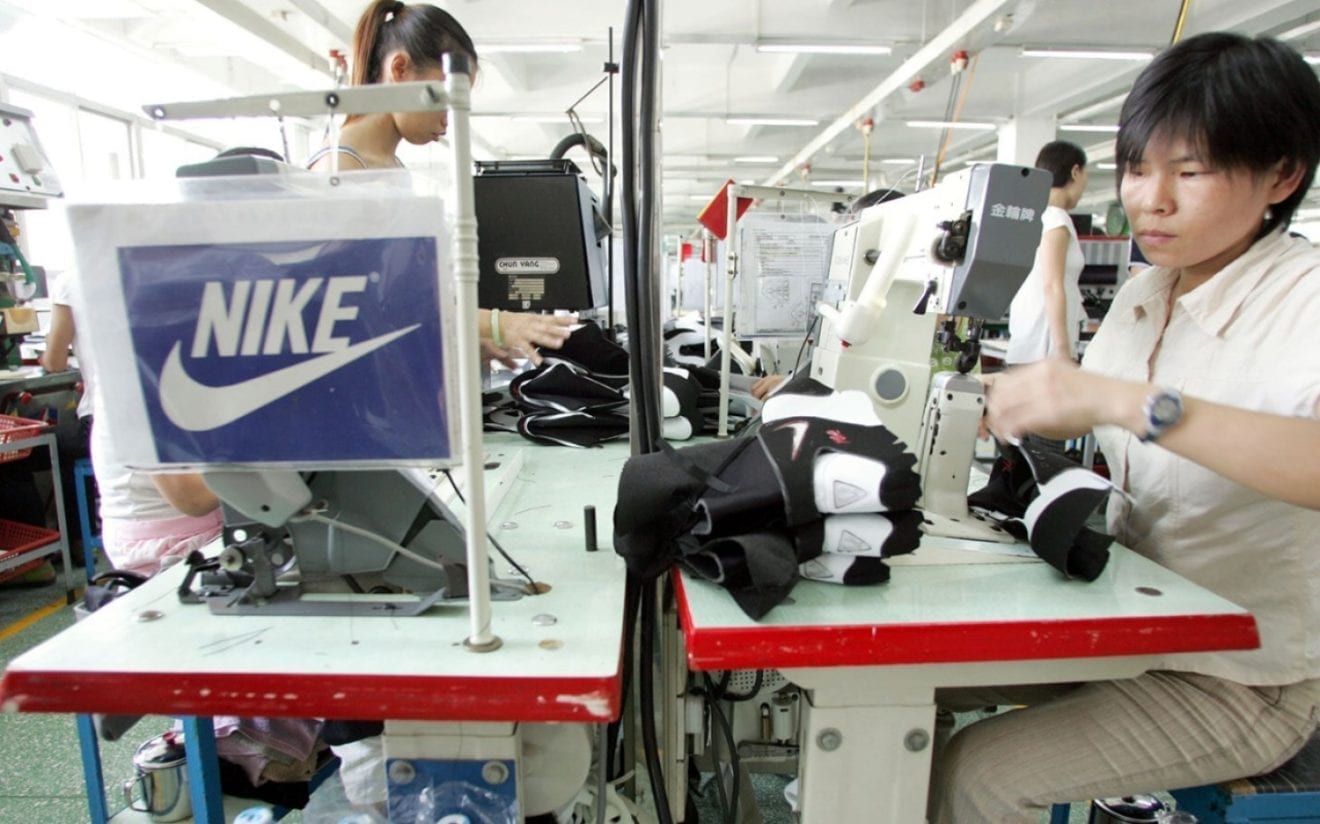
    Of 23 billion pairs of shoes sold worldwide in 2017, Việt Nam exported over one billion pairs, continuing to maintain the second position (after China) in shoes export.

    According to the latest statistics of the World Footwear Magazine in 2017, Việt Nam continued to rank second among the top 10 largest footwear exporters, with 1.02 billion pairs of shoes, equivalent to 7.4 per cent of the global footwear supply, said Diệp Thành Kiệt, vice chairman of the Việt Nam Leather, Footwear and Handbag Association (LEFASO).

    China still maintained the top position in exporting shoes, with 9.31 billion pairs, representing 67.3 per cent of the total 23 billion pairs of shoes the world consumed in 2017.

    Asia continued to be recognised as the world’s leading region in the production and consumption of footwear throughout the world.

    Meanwhile, the United States was the largest footwear importer; the country imported 2.34 billion pairs of shoes last year, accounting for 19.6 per cent of global footwear consumption.

    Export of Việt Nam’s backpacks and handbags continued to rise, to make it to the top five countries exporting these products in the world today.

    In 2017, the export turnover of backpacks and handbags in Việt Nam was estimated at US$3.3 billion, accounting for 5.5 per cent of global production, but only about one-seventh as compared to China’s supply.

    Kiệt said the biggest challenge for the domestic footwear-handbags industry was the low level of technology application in management and production, as compared to regional and foreign direct investment (FDI) enterprises.

    The labour productivity of domestic enterprises was only equal to 60-70 per cent of FDI enterprises. Most domestic firms have not joined the global supply chain; meanwhile, international brands usually tend to deeply control the global supply chain. In addition, labour costs in Việt Nam were rising significantly, Kiệt added.

    Not only interfering in the price of the goods, importers were now gradually intervening in the traceability of raw materials and factories supplying machinery for production.

    On the other hand, the time taken for supplying goods, product confidentiality, the level of technology used, and advantages of raw material supply are given priority to help consumers select where to place an order and process production, Kiệt said.


  • Vietnamese fruits struggle to gain foothold in international markets

    Vietnamese fruits struggle to gain foothold in international markets

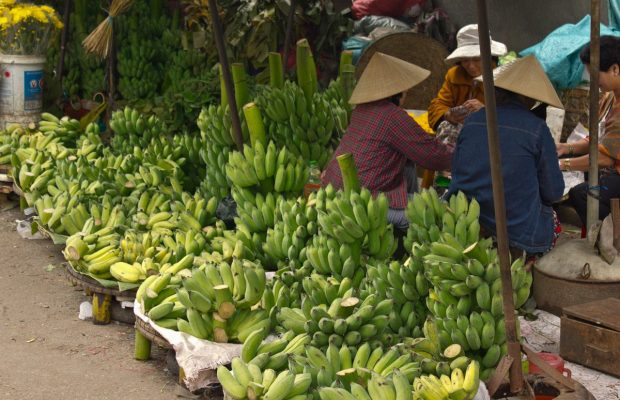
    Vietnam is struggling to find international buyers for its tropical fruit, despite having been licensed to export by demanding markets such as the U.S, Australia, Canada and Japan.

    Starting December 29, the U.S. Department of Agriculture will allow imports of fresh mangoes from Vietnam, following in the footsteps of dragon fruit, rambutan, lychees, longan and star apple.

    Earlier this year, Australia also opened its doors to fresh dragon fruit imports from Vietnam after nine years of negotiations. Vietnam delivered its first dragon fruit shipment to the market in September, becoming the sole country allowed to ship the fruit to Australia to date.

    But despite these breakthroughs, strict requirements still make it difficult for fresh fruit to enter these markets.

    Mango exports to the U.S. are a prime example. Fresh mangoes from Vietnam will be subject to regulations that include orchard requirements, irradiation treatment and port of entry inspections.

    The fruit must also be imported in commercial consignments accompanied by a phytosanitary certificate issued by Vietnam’s Plant Protection Department.

    Even if these requirements are met, sales of Vietnamese mangoes are not guaranteed as they depend on consumer tastes and distribution, said Dam Quang Thang, CEO of fruit exporter Agricare Vietnam.

    In addition, local mangoes may find it hard to compete with those from Mexico, which has the biggest mango output in the Americas at over 1.5 million tons each year. Mexican mangoes are good quality and meet U.S. import requirements, he added.

    It’s too early to say if Vietnam will be able to export 3,000 tons of fresh mangoes to the U.S. each year as planned, equivalent to one percent of U.S. import volume and its total domestic output, Thang said.

    Another obstacle to fruit exports is high transport fees that raise retail costs in overseas markets.

    For example, Vietnamese dragon fruit is sold for $8 per kilogram in the U.S., 10 times higher than prices in the local market, while Vietnamese lychees are sold for $16 per kilogram in Australia, 16 times higher than at home, according to some fruit exporters.

    Vuong Dinh Khoat, director of local fruit exporter Hugo, said aviation fees often account for more than half of Vietnamese fruit export prices.

    A representative from a fruit exporter in the southern province of Binh Duong said her firm had to temporarily halt shipments of mangoes to Japan because of high transport fees that made the product uncompetitive.

    She said her firm had to pay an aviation transport fee of $1.8 per kilogram of mangoes shipped to Japan, 50 percent higher than that paid by Thai exporters despite the shorter distance.

    Explaining the issue, she said many countries like Australia and Thailand offer transport subsidies to domestic traders to boost exports.

    Together with high aviation fees, poor trade promotions have limited Vietnam’s fruit export expansion. Despite infiltrating the U.S., local fruits are only sold in a limited number of places, such as California and New York, due to inefficient promotional activities, according to the Vietnam Fruit and Vegetable Association.

    To boost exports, the Vietnamese government should subsidize transport fees for local fruit exporters without violating its international commitments, according to industry insiders.

    Meanwhile, producers should try to apply new cultivation models and set global food safety standards as their top priority, they added.

    Major foreign currency earner

    Vietnam’s total fruit and vegetable exports hit $3.2 billion in the first 11 months of this year, marking a jump of 43.1 percent on-year and leaving other key agricultural exports far behind.

    A growing appetite among foreign consumers for Vietnamese fruit is expected to reduce the country’s reliance on China, which accounted for 70 percent of Vietnam’s fruit and vegetable exports in 2016. Local fruits are now exported to 60 countries and territories.

    At a recent session of the legislative National Assembly, Nguyen Thien Nhan, the chief of Ho Chi Minh City’s Communist Party, called for the government to focus on helping farmers grow fruit and vegetables for export to combat rural poverty.

    Last year, total export revenue from fruit and vegetables surpassed that of crude oil, Vietnam’s key export, for the first time, he said, citing that Vietnam earned $2.4 billion from shipping crude oil and $2.45 billion from fruit and vegetable exports.

    The growth of crude oil exports has slowed over the past five years, while fruit and vegetable export revenue has increased 30 percent each year, he added.

    “Fruit and vegetable export value will reach an estimated $9-10 billion by 2020, higher than crude oil even at its peak,” Nhan told legislators.

    Minister of Agriculture and Rural Development Nguyen Xuan Cuong said his ministry is reviewing farming production to help rural areas make the most of their local conditions.

    Each commune should focus on certain products for export, he said.

    “We have nearly 9,000 communes nationwide with different climate conditions and the potential to grow specialty fruit and vegetables that would create huge export earnings,” he added.
  • Indonesia Posts Trade Surplus in October, Third Month in a Row

    Indonesia Posts Trade Surplus in October, Third Month in a Row

    Indonesia posted a trade surplus for a third straight month in October, the Central Statistics Agency said on Wednesday (15/11), as improved demand for commodities underpinned exports from Southeast Asia’s biggest economy.

    The trade surplus in October was $0.9 billion, the agency said. The surplus was supported by larger commodities shipments such as coal and metal, as well as manufactured goods.

    Demand from China continued to support Indonesian exports, the agency said.

    The surplus, however, shrunk from September’s surplus of $1.76 billion. Analysts polled by Reuters had expected a $1.63 billion surplus for the month.

    Exports rose 18.39 percent in October on an annual basis, compared with a 16.59 percent increase forecast in the poll.

    October exports were worth $15.09 billion.

    Meanwhile, imports jumped by 23.33 percent to $14.19 billion, picking up pace from a 13.13 percent rise in the previous month and compared to a forecast of 16 percent growth.

    The rise in imports was due to purchases of raw materials for industrial use.

  • Vegetable and fruit exports face tough competition from imports

    Vegetable and fruit exports face tough competition from imports

    With turnover of $375 million in May, fruit and vegetables were among the biggest export items for Vietnam, while imports of the same equalled $183 million.  The high export turnover of $375 million represented a sharp increase of 75 percent in comparison with the same period last year.

    The increase of $161 million in vegetable and fruit export turnover made up 26 percent of the total exports increase of 13 key farm produce and agriculture material items.  Analysts said the target of $3 billion in vegetable and fruit export turnover this year is within reach.

    However, Vietnam, which takes pride as a big vegetable and fruit exporter, also had to import $183 million worth of products in May, a sharp rise of 79 percent compared with the same period last year, raising the import turnover to nearly half a billion of dollars in the first five months of the year.

    Nguyen Dinh Bich, a trade expert, pointed out big problems in the market structure. The exports to the Chinese market have been increasing rapidly from less than 30 percent in 2014 to 65 percent in 2015.  The growth rate exceeded 70 percent in 2016, while it reached 75.5 percent in the first five months of 2017. In 2014, Vietnam exported $435 million worth of products to China, but exported $1.054 billion to other markets.

    The trend reversed in 2015: while exports to China increased sharply by $760 million in turnover to $1.195 billion, exports to other markets decreased by $410 million to $644 million. The same situation was seen in 2016 and the first five months of 2017.

    “Do Vietnam’s fruit flow to China’s Guangxi province to be sorted and labeled as ‘made in China’ for re-export to the world market?” Bich asked, emphasizing that Guangxi is China’s ‘fruit granary’ with output of 359 kilos per head per annum,1.8 times higher than the average level of the country.

    Imported fruits are displayed in advantageous positions at supermarkets for the upper and middle class, and sold at high prices.

    Thai exporters enjoy big benefits from the Vietnamese market. In May 2015, Vietnam imported $13 million worth of fruit from Thailand, which accounted for one-third of total fruit import turnover.

    Meanwhile, the figure soared to $38 million in May 2016 and to $129 million in May 2017.

  • Vietnam’s fruit, vegetable exports growing

    Vietnam’s fruit, vegetable exports growing

    Minister of Agriculture and Rural Development, Nguyen Xuan Cuong said the export potential of fruits and vegetables is huge, with the products key to restructuring the sector.

    Cuong said the ministry has focused on promoting the use of modern technologies in agriculture, aiming to create quality products, thus improving the sector’s competitiveness and expanding export markets.

    “Exports of fruits and vegetables will grow in the upcoming time. The sector should develop association models for investing in hi-tech agriculture. Businesses should work with farmer collectives to establish concentrated raw material areas,” he added.

    The minister said growing the agricultural sector, and fruits and vegetables in particular, would largely depend on export value and changes in the market.

    However, if businesses and farmers build production chains of safe fruits and vegetables together with hi-tech agriculture development, the export target of US$3 billion this year will be reached, he said.

    Exports of fruits and vegetables hit $1.38 biliion in the first five months of this year, a year-on-year increase of 38 per cent.

    China, the US, Japan and South Korea markets accounted for nearly 84 per cent of total vegetable and fruit export value. Vietnamese fruits and vegetables have been exported to about 60 markets globally.

    Many farmers have applied the safe agricultural production processes of VietGap and GlobalGap, giving Vietnamese fruits and vegetables a foothold in foreign markets.

    According to the ministry of agriculture, restructuring of the sector is going well, with export structure focused on commodities such as coffee, rubber and fruit.

    Dinh Cao Khue, general director of Dong Giao Food Export Company said their products have been exported to 50 countries thanks to a closed supply chain of materials, collection, processing and trading.

    “We have invested in specialised and concentrated material areas. Product quality should be priorities for both local consumption and exports,” Khue said.

    Experts said export markets such as the US and Europe have potential but also high risk as they have strict requirements on product quality, so domestic producers should strictly follow health and safety requirements.

    Vu Kim Hanh, chairwoman of the Vietnam High-quality Product Association said local agricultural producers should change their mindset in production and organising supply chains. Each segment should have standards to satisfy export markets’ requirements.

  • Indonesia Eyeing Export Opportunities to Afghanistan

    Indonesia Eyeing Export Opportunities to Afghanistan

    Afghanistan has expressed interest to import Indonesian products. Indonesia and Afghanistan have already establish trade relations covering finished products albeit at a relatively small amount. Industry Minister Airlangga Hartarto said that the government has welcomed Afghanistan’s import proposal. The export will primarily include consumer goods.

    “Afghan President has come here, and now they said that they are interested in importing some commodities from Indonesia. Indonesia and Afghanistan trade volume is not quite significant yet,” Airlangga said yesterday after meeting Afghanistan Ambassador to Indonesia Roya Rahmani in Jakarta.

    Airlangga said that Afghanistan is one of Indonesia’s industrial product export destinations as the country imports almost 90 percent of its daily needs. Some products, according to Airlangga, have the potential to be exported to Afghanistan, such as textile, pharmaceutical, construction products, and food and beverages. Indonesian business delegates will be departing for Afghanistan in the near future.

    Data from the Industry Ministry show that electronics and its appliances make up the most of Indonesia’s industrial product exports to Afghanistan, reaching US$ 3.54 million last year.

    Other products with high export value are pharmaceutical, household products, cosmetics, mirror, tea and coffee, vegetable oil, rubber and chemicals. In 2016, Indonesia’s export to Afghanistan is valued at US$16.22 million.

    In the same period, imports from Afghanistan amounted to US$ 31.1 million, meaning that Indonesia posted a US$ 16.19 million surplus. Indonesia imported some commodities from the country such as processed fruit, electronics and steel products.

  • Indonesia`s fresh pineapples enter Italian market

    Indonesia`s fresh pineapples enter Italian market

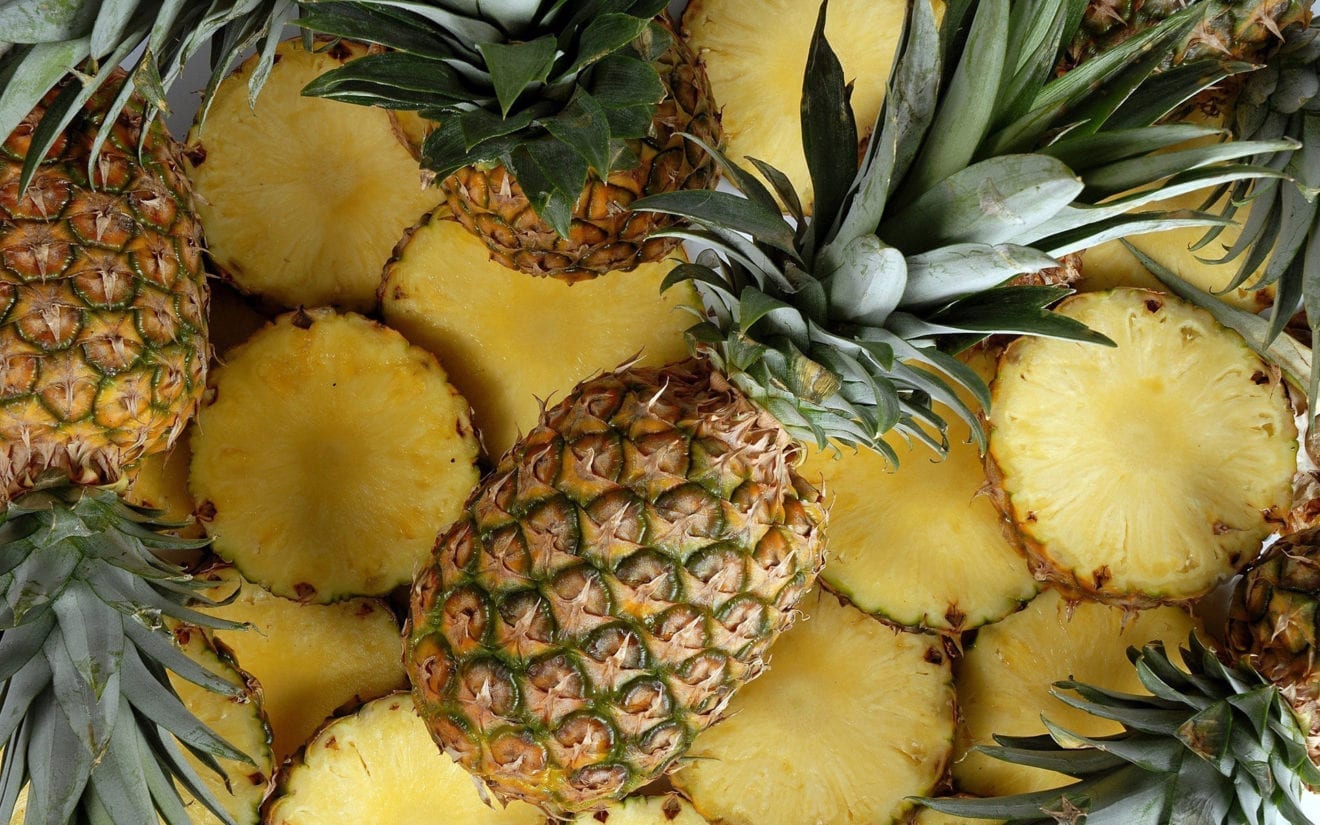
    Indonesian fresh pineapples can now be consumed by Italian consumers after a container holding 18 tons of the commodity arrived in Italys city port of Venezia over the weekend.

    The 18 tons of fresh pineapples were exported in a maiden shipment by PT Great Giant Food in cooperation with Italian importer SAMA SpA.

    SAMA is planning to import up to 20 containers of the commodity until the end of the year, Counselor Charles F. Hutapea of the Indonesian Embassy in Rome, told us in Jakarta on Saturday.

    Previously, the Italian consumers could only enjoy Indonesian pineapples in the form of canned product. The unloading of the maiden export of fresh pineapple was witnessed by Indonesian Ambassador to Italy Esti Andayani together with general manager of SAMA, Giorgio Masiero.

    Ambassador Andayani expressed happiness over the fact that Italian consumers are increasingly fond of Indonesian fresh pineapples which could compete with fruit from other countries.

    “So far, many kinds of Indonesian fruits are imported by countries in Europe and now Indonesian pineapples could also penetrate the Italian market,” she said.

    The Italian company previously imported pineapples from Caribbean and African countries with a length of delivery time of about three weeks.

    The length of time for the importation of pineapples from Indonesia is about four weeks.

    However, the longer period does not affect the quality of and shape of Indonesian pineapples. According to the agriculture attache, Yusral Tahir, in Rome, pineapple is one of the Indonesian mainstay types of fruit.

    Pineapple production is ranked third in the volume of Indonesias fruit outputs after bananas and mango. Almost all regions in Indonesia produce pineapples.

    Pineapple production centers in Indonesia included the provinces of Lampung, West Java, North Sumatra, East Java and Jambi.

    Indonesias pineapples production reaches 1.84 million tons with productivity of 117.5 tons per hectare.

  • Chinese exports, imports beat forecasts but analysts wary

    Chinese exports, imports beat forecasts but analysts wary

    Exports rose 8.7 percent on-year to $191 billion while imports jumped 14.8 percent to $150.2 billion. China on Thursday posted a forecast-busting surge in exports and imports in May, signaling improvement in the world’s number two economy, but there were warnings Beijing would struggle to maintain its momentum.

    The readings will come as a relief after a series of weak readings suggesting a recent pick-up could be fizzling, while there are also lingering concerns about U.S. President Donald Trump’s protectionist rhetoric.

    Exports rose 8.7 percent on-year to $191 billion while imports jumped 14.8 percent to $150.2 billion.

    The data were far better than the 7.2 percent rise in exports and 8.3 percent increase in imports predicted by analysts in a survey by Bloomberg News. The trade surplus rose to $40.8 billion, up $2 billion from April.

    The news comes as the global economy also shows signs of strength.

    However, Julian Evans-Pritchard, China economist at Capital Economics, said the government’s efforts to rein in the country’s ballooning debt could weigh on future trade data.

    “Looking ahead, the current strength of imports is unlikely to be sustained if, as we expect, slower credit growth feeds through into weaker economic activity in the coming quarters,” he warned.

    “Exports growth is also likely to edge down further ahead but should fare better than imports given the relatively upbeat outlook for China’s main trading partners,” he said.

    China had been showing signs of life in early in the year, fuelling hopes the world’s top trader in goods and a key driver of global growth was stirring after a years-long growth slowdown.

    Too early for optimism

    However, other figures have pointed to slowing growth in the Chinese economy as it deals with weaker demand and excess industrial capacity left over from a debt-fuelled infrastructure boom.

    Imports and exports picked up at a weaker rate in April from March, while a private survey of factory activity indicated the manufacturing sector contracted in May for the first time in almost a year, hinting at deteriorating conditions for producers.

    Industrial output, retail sales and fixed-asset investment also hit the brakes, data showed last month.

    “It’s still too early to be optimistic on China’s imports. The outlook for fixed asset investment and infrastructure construction will be key,” said Betty Wang at ANZ Research in a note.

    “While May’s better-than-expected trade data may provide a boost to market sentiment amid tighter financial regulation, it’s premature to draw any solid conclusion.”

    Authorities have been trying to clean up the country’s toxic brew of unregulated and risky lending that for years has fuelled the economy’s spectacular growth, though some analysts doubt its willingness to quit its debt addiction.

    Worries about rising debt levels led agency Moody’s to last month slash China’s credit rating for the first time in almost three decades.

    China’s economy expanded last year at its weakest rate in more than a quarter of a century and Beijing has indicated it expects growth to slow further this year.

    Weak growth is a major concern for stability-obsessed policymakers and it complicates their efforts to retool the economy into one driven by consumer demand rather than state investment and exports.

    The transformation has been rough at times and China is hoping that its much-vaunted Belt and Road infrastructure project will provide a new source of growth.

  • Vietnam rice exporters face challenges

    Vietnam rice exporters face challenges

    The rice price is forecast to continue soaring in near future, buoyed by the higher demand for rice of some countries, but Vietnam is having difficulty boosting rice shipments, heard a seminar in Hanoi last week.

    A study conducted by the Institute of Policy and Strategy for Agricultural and Rural Development shows there are nine million rice farming households nationwide, but around 300,000 of them account for the bulk of Vietnam’s rice export volume.

    Meanwhile, the nation has over 300,000 rice milling facilities, but a majority of them are small. But in Thailand, there are a mere 1,000 rice milling plants. Besides, Vietnam has around 100 rice exporters, but a mere 22 of them focus on China, one of Vietnam’s largest rice buyers.

    Industry experts said these two hindrances had led to the global market share of Vietnamese rice shrinking. Statistics of the Ministry of Agriculture and Rural Development show the country’s rice shipments last year dropped 27% in volume and 23% in value against 2015.

    Vietnam has seen gradual declines in rice exports to China, European Union, Middle East, and Sub-Saharan Africa.

    Despite the decrease in rice exports, local enterprises have shown little or no interest in the domestic market.

    Vietnamese rice producers have not been able to develop premium rice brands, according to Sergio René Araujo Enciso, an economist from the Trade and Markets Division under the Food and Agriculture Organization of the United Nations.

    Key importers of Vietnamese rice products have adopted food security policies. China, for instance, is buying rice from different countries, said Pham Kim Dung, the study’s lead researcher.

    The World Bank and the International Monetary Fund forecast that rice prices might inch up in the short term as some countries are stocking up on rice, such as Malaysia with 950,000 tons and Bangladesh with 600,000 tons.

  • Vietnam’s May coffee exports extend downtrend to finish at 6-month low

    Vietnam’s May coffee exports extend downtrend to finish at 6-month low

    Coffee exports for the 2016/2017 season have already fallen nearly 7 percent, based on government data. Vietnam, the world’s largest exporter of robusta coffee, will ship an estimated 120,000 tons (2 million bags) of coffee this month, the lowest volume in six months and a drop of around a quarter from a year earlier, the government said on Monday.

    This figure would bring the accumulated volume since October 2016 at the start of the current 2016/2017 crop year to 1.09 million tons, down nearly 7 percent from the previous season, based on data from the General Statistics Office’s monthly report.

    The forecast for May, which is down 25.5 percent from the same month last year, is the lowest since November 2016 when the country exported 114,600 tons.

    Falling shipments from Vietnam, the world’s second largest coffee producer after Brazil, suggest dwindling stocks. Last month’s shipments hit a five-month low of 134,800 tons, based on government data.

    Strong exports in the first months of 2017 have left foreign buyers with adequate stocks and Vietnam with less coffee beans.

    In March, a senior executive from Vietnam’s top coffee export firm Intimex warned the country could fall short of the bitter beans in May or June due to rising shipments and dwindling domestic stocks.

    The country’s stocks at the end of the 2016/2017 crop year are forecast to plunge 64 percent from the previous season to 1.38 million bags, the U.S. Department of Agriculture said in its May report released last week.

    Vietnam’s coffee crop year lasts between October and September.

  • Vietnam’s 2017/2018 coffee output to rise 10 pct on good weather, prices

    Vietnam’s 2017/2018 coffee output to rise 10 pct on good weather, prices

    Good news for exporters with the 2016/2017 crop likely to fall short of expectations. Vietnam, the world’s largest robusta producer, is forecast to harvest 28.6 million bags (1.72 million tons) of coffee from its next 2017/2018 crop, a rise of 10 percent from the current season, thanks to favorable weather conditions and higher domestic prices, a U.S. Department of Agriculture attache said.

    Higher output from Vietnam, which stands only behind Brazil in terms of global coffee production, supports an industry view which envisages stable global supply in the next crop year.

    “Adequate rains starting in January through March helped coffee trees trigger more branches and early flowering,” the USDA attache said in a May 17 report.

    High domestic prices have also helped farmers purchase sufficient fertilizer, triggering higher yields even though the total planting area remains unchanged, the report said.

    Vietnam’s coffee crop year lasts between October and September, starting with the harvest in the Central Highlands region that accounts for around 90 percent of the country’s output.

    While it is still too early to forecast the size of the next harvest, Vietnam’s coffee belt has seen favorable weather for production  in recent months, said Bach Thanh Tuan, head of the Community Development Center, a state-backed facility in Dak Lak Province. The center is tasked with ensuring sustainable production in the province as well as the entire region.

    “The supply outlook for 2017/18 seems increasingly positive,” the London-based International Coffee Organization said in its April report, adding that initial concerns about frost in Brazil and a shortage of rainfall in Vietnam have eased.

    Coffee prices on the domestic market rose to VND47,500 ($2.1) per kilogram on March 21, the highest since September 2011. The price hike coincided with the coffee watering period, during which Vietnamese growers feed fertilizer to their trees.

    Smaller 2016/2017 crop

    The USDA report has revised down its output forecast for the ongoing 2016/2017 crop year by 2.6 percent to 26 million bags, saying extended rain in October-November 2016 had damaged cherries and reduced the quality of beans.

    Vietnam’s coffee exports in the next 2017/2018 crop year are forecast to edge up 0.4 percent to 26.65 million bags, the report said. The export volume includes green beans, soluble and roasted coffee.

    Consumption of roasted, ground and soluble coffee in Vietnam in the next 2017/2018 season is projected to rise 2 percent to 2.93 million bags, the report said.

    It cited the continuing growth of coffee shops, saying domestic market competition remains fierce due to the arrival of foreign brands.

    Even though Vietnam’s coffee exports fell to 2.25 million bags last month, a five-month low, based on Vietnam Customs data, the shipments still helped extend Vietnam’s position as the world’s biggest coffee exporter, which the Southeast Asian nation seized from Brazil in March.

    Robusta beans account for most of Vietnam’s exports and are used mainly for making soluble coffee.

    Top producer Brazil shipped a combined 2.13 million bags of arabica, conillon (a variety of robusta), soluble coffee and roasted beans in April, down 13.5 percent from a year ago, the Brazilian Coffee Exporters Council said in a report released earlier this month.

  • Japan April exports rise for fifth straight month

    Japan April exports rise for fifth straight month

    Japan‘s exports rose in April to mark the fifth straight month of gains, an encouraging sign that more robust overseas demand could underpin a steady economic recovery.

    Exports rose 7.5 percent in April from a year ago, below the median estimate of 7.8 percent annual growth, finance ministry data showed on Monday. It followed a 12.0 percent rise in March.

    The data also showed Japan’s trade surplus with the United States narrowed.
    Japan’s exports are expected to continue rising as global economic growth gains momentum, but concerns about U.S. President Donald Trump’s pledges to adopt protectionist trade policies cloud the outlook for export-reliant Japan.

    The drop in Japan’s trade surplus with the United States, however, could take some pressure off Japan as it makes it more difficult for Trump to justify criticising Japan for its trade practices.

    Exports to the United States increased 2.6 percent in April from a year ago, rising for the third straight month. But Japan’s trade surplus with the United States fell 4.2 percent in April from a year ago to 586.7 billion yen ($5.27 billion).

    Imports surged 15.1 percent versus the median estimate for a 14.8 percent increase.

  • Vietnam fruit exports have to meet high standards in foreign markets

    Vietnam fruit exports have to meet high standards in foreign markets

    Vietnam is well known for its tropical fruits, but it has to meet many strict requirements by importing countries in order to export its fruit. GDC said Vietnam’s fruit export turnover in 2016 reached $2.46 billion, a sharp increase of 33.6 percent compared to 2015. Turnover has been increasing in the last three years: by 28.4 percent in 2014 and 23.7 percent in 2015.

    China remains the biggest market for Vietnam with exports increasing by 45.8 percent to $1.74 billion.

    China bought 70.4 percent of Vietnam’s fruit exports, while the US only consumed 3.4 percent, Japan 3.1 percent and South Korea 3.6 percent.

    However, in order to obtain the modest figure of 3 percent, Vietnam had to go through some hardships because the markets are all choosy.

    As for the Japanese market, for example, only some kinds of fruits, such as bananas, mango and dragon fruit, can be exported to the country as they have met the requirements set in Japan’s plant quarantine law.

    Vietnam’s Ministries of Industry & Trade (MOIT) and Agriculture & Rural Development (MARD) had to spend many years to persuade the Japanese side to remove the technical barriers against certain kinds of fruits.

    The company owned by Vo Quan Huy became the first Vietnamese enterprise selling Fohla brand bananas to Japan. About 2-3 containers of bananas are exported to the Japanese market each week.

    Huy said that before signing the contract on buying bananas, the Japanese side sent staff to his banana farms to take soil, water and air samples to bring to Japan for testing 230 physiological and biochemical indicators.

    The aim was to make bananas safe, clean and delicious, with no heavy metal residue, no bacteria, no pesticide residue and no growth stimulus.

    Australia is another fastidious market. It sets high requirements on farm produce imports, especially requirements on radiation that not many Vietnamese companies can satisfy.

    To date, only two kinds of fresh fruits have licenses to enter the Australian market – litchis (received in 2015) and mango (2016).

    A senior executive of a fruit export company said there is always an American expert from FDA in charge of checking fruit samples before putting fruit into radiation.

    If the expert discovers soil or insects on fruits, the whole consignment will be refused. The company once had one consignment of rambutan rejected.

  • Vegetables exports bring in $8.2 million per day

    Vegetables exports bring in $8.2 million per day

    Export turnover for vegetables has reached $857 million this year up to April 15, an increase of 30 per cent year-on-year and bringing in $8.2 million to Vietnam each day. Vegetables are therefore Vietnam’s third-highest agricultural and aquatic export, after seafood and coffee.

    Growth in vegetable exports is faster than for aquatic products (7.8 per cent) and coffee (21 per cent), with the gap in export turnover narrowing.

    Vietnamese fruit and vegetables can now be found in many countries and regions such as the US, Japan, Australia, South Korea, and EU countries like Germany and the Netherlands.

    The largest market, however, is China. According to the latest figures from the General Department of Vietnam Customs, exports of fruit and vegetables to Vietnam’s northern neighbor reached $512 million, accounting for 73 per cent of total export value.

    Mr. Nguyen Huu Dat from the Executive Committee of the Vietnam Vegetables and Fruit Association (VINAFRUIT) said this is a positive result for Vietnam’s vegetable exports and is supported by a number of factors.

    The first is the results of the Vietnamese Government’s trade promotion and market expansion efforts, with fruit and vegetables beginning to gain a foothold in fastidious markets like the US, Japan, South Korea, and the EU.

    “Although the value of export turnover to these markets is not large, meeting their high requirements increases the prestige of Vietnam’s fruit and vegetables,” Mr. Dat said.

    He added that high demand among international customers is a good opportunity for Vietnam’s exports in the time to come.

    He emphasized the role of scientists, the business community, and producers and farmers in efforts to diversify products and product quality and promote Vietnam’s brand.

    Total vegetable turnover stood at $2.45 billion in 2016, up 33.6 compared to 2015.

  • Vietnam plans to send more skilled workers abroad to curb unemployment

    Vietnam plans to send more skilled workers abroad to curb unemployment

    Vietnam’s labor ministry is outlining a new plan to send more skilled workers abroad in the next few years as the number of unemployed Vietnamese has surpassed the million mark.

    According to Deputy Minister Doan Mau Nghiep, the plan will focus on sending engineers to South Korea and health workers to Japan and Germany and also exploring new markets like Slovakia, the Czech Republic and Israel.

    “The ministry wants to find solutions for well-trained workers, who have graduated from universities or colleges but can’t find jobs,” he said. “But we have to assess whether the quality of our labor force meet the requirements of recipient countries.”

    According to official data, Vietnam had around 1.1 million unemployed workers, 2.3 percent of the workforce. Around one third were college graduates.

    Experts have said that the quality of Vietnamese labor force is generally low compared to Asian peers such as South Korea, India and Malaysia.