Retail News CRM

Tag: export

  • Low export numbers put Hyundai profit in the red

    Low export numbers put Hyundai profit in the red

    Hyundai Motor swung to a net loss in the fourth quarter last year, largely due to the strength of the won over the U.S. dollar and weak global sales. It is the worst quarterly earnings reported since 2010, when the company first started posting earnings based on the International Financial Reporting Standards. Korea’s No. 1 automaker by sales on Thursday posted a net loss of 203.3 billion won ($180 million) for the quarter that ended December, a considerable drop from the 1.29 trillion won net profit inked a year earlier.

    The company cited weak earnings from its affiliated locomotive maker Hyundai Rotem, unfavorable currency rates and the sluggish growth of the global automotive industry as major reasons that pulled down earnings in the fourth quarter.

    It added that the cost of its investment into developing futuristic cars was also reflected.

    Hyundai already surprised investors when it posted 306 billion won in net profit in the third quarter, a 67.4 percent year-on-year drop. At the time, the company blamed one-off costs of airbags, engine quality control and marketing activities as well as currency rates to explain its losses and said the fourth quarter would be a better quarter.
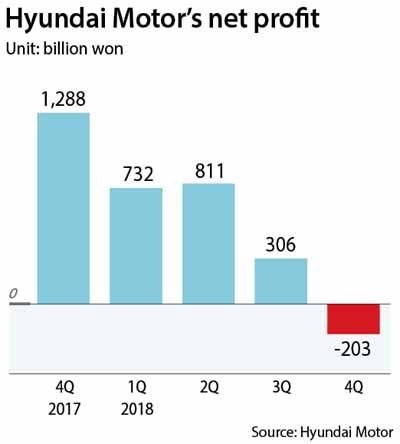
    Following the two bad quarters, the carmaker’s annual net profit also dropped to a record low since 2010 – 1.645 trillion won last year, less than half of 2017’s 4.546 trillion won. In 2012, its annual net profit exceeded 9.056 trillion won.

    Choi Byung-chul, chief financial officer at Hyundai Motor, however, said the automaker was able to ramp up automotive sales in the fourth quarter thanks to newly-released SUVs and that the company’s performance could bounce back with several new car launches scheduled this year.

    According to the earnings report, revenue from the automotive business increased by 9.3 percent on year to 20,399 billion won in the fourth quarter. Operating income also jumped up 556.7 percent year on year to 463 billion won for automotives.

    The most recently launched Palisade SUV has been well received by Korean consumers after its launch last month, and a Hyundai Motor spokesperson said it is considering expanding production of the SUV in accordance with the demand. The carmaker has taken orders for 30,000 Palisades so far, according to Koo Za-yong, head of investor relations at Hyundai Motor.

    “Growth of the global automotive market is expected to slow down, but we will strengthen our brand competitiveness by launching cars in segments [that Hyundai had little presence in],” said Koo during a conference call with analysts on Thursday.

    Highly anticipated Hyundai cars this year include a new Sonata sedan and a premium SUV GV80 branded under Genesis.

    Hyundai plans to sell a total of 4.68 million cars this year by selling 712,000 units domestically and 3.97 million units abroad. Last year, the company sold 4.59 million cars at home and abroad, a 1.8 percent increase year on year.

    The automaker commented on its governance reform plans during the conference call as well. It plans to complete reforms this year to break the cross-shareholding structure between affiliates and improve shareholder returns. Last year, its attempt to reform its governance structure failed after facing a series of complaints from U.S. activist hedge fund Elliott Management.
  • Malaysia may feel bite of China economic slowdown

    Malaysia may feel bite of China economic slowdown

    The slowdown in China may impact Malaysia more given the strong trade linkage with China, according to PublicInvest Research. “China is not only our biggest trade partner in 2018 (YTD 2018: 16.7%) but also our largest export market (YTD 2018: 13.9%) and our second biggest import source after Singapore (YTD 2018:19.8%). This could bring negative ramifications not only to Malaysia but also to other peers like Singapore, Thailand, Indonesia and the Philippines and hence, the growth prospects of Asean-5,“ the research house said in a report.

    In fact, it said, the simmering trade stress has caused noticeable dent to export momentum in November with Singapore, Thailand and Indonesia suffering a contraction in exports. This could be repeated in December.

    PublicInvest Research said unfavourable outcomes to the trade negotiation may see longer times taken for growth to normalise due to demand deficiencies which are always more damaging than supply shocks.

    “Other than this, the pullback in global financial and commodity markets arising from pockets of stress mentioned above can hurt Malaysia as well due to contagion effects. This can bring down the ringgit in addition to putting a cap in the prices of our key commodity exports like crude oil, crude palm oil and rubber,“ it explained.

    The slowdown in China is particularly alarming and shows signs of worsening following the release of its 2018 growth of 6.6% (2017: 6.8%), the slowest since 1990.

    “We don’t see negative surprises in this as it is within the People’s Bank of China’s estimates,“ it said, adding that the International Monetary Fund (IMF) expects China’s slowdown to continue, forecast to ease to 6.2% in 2019 amid firmed commitment to reforms and rebalancing on the back of the trade collision with the US.

    PublicInvest Research said the slew of IMF downgrades could result in negative ramifications not only to global financial markets but also commodities. Risk aversion could heighten, pushing investors to take less risks which may be precursor to elevating demand for safe haven assets particularly bonds.

    “Among all the growth risks mentioned by IMF, we are particularly concerned over China given its extensive trade network and huge economy.”

    PublicInvest Research said unfavourable trade negotiations could be harmful not only to China’s outlook but also emerging economies, particularly Asean, given their strong interdependence on trade. This could lead to inexorable downturns to Asean economies, particularly those that depend on China’s exports (intermediate goods).

    “Over and above all, we think that China still has sufficient tools to support growth should trade negotiations turn unfavourable although the impact could still be there.”

  • Malaysia’s GDP growth likely to return to 4.6-5.0% range in 2020: UBS economist

    Malaysia’s GDP growth likely to return to 4.6-5.0% range in 2020: UBS economist

    Malaysia’s real gross domestic product (GDP) growth is likely to return to the 4.6-5% trend range in 2020 as economic drag diminishes, said UBS Investment Bank economist Edward Teather. He said the impact of the trade war and the government’s institutional reforms should go from drags on growth to net positive contributions to the country’s economy this year.

    “Pakatan Harapan’s institutional reforms and the Comprehensive and Progressive Agreement for Trans-Pacific Partnership (CPTPP) membership would improve prospects in 2020.

    “Malaysia is also a key potential beneficiary of the CPTPP trade deal,” he said during a conference call on global and Asian 2019 outlook.

    However, he said, Malaysia might lose some potential gains if it decided to pull out of the trade deal and this would impact GDP growth next year.

    “Without CPTPP, there will be less potential to be tapped; but it’s possible without the deal, the government would consider liberalisation, introducing more transparency and level playing field between private companies,” he said.

    Teather said trade war, slower China growth and institutional reform and fiscal consolidation policy initiatives would continue to drive the weakness in growth in the near term.

    Hence, he said, UBS expected Malaysia’s growth to be at 4% this year from the estimated 4.7% in 2018.

    “2019 will likely be a case of pain before gain. First, we expect Malaysia to be impacted by trade war-related disruption, but also to be well placed to subsequently take market share from China in the United States,” he said.

    Meanwhile, Teather expects the ringgit to fall to the RM4.40 level to the US dollar this year before improving in 2020. Malaysia being an open economy, the ringgit was pressured by the lower trade growth, he said.

    “Exports, in dollar terms, rose 10% in 2018 and would only grow 1% in 2019. So it’s quite a strong slowdown and that is partly because of lower oil prices and less demand for products and components,” he added.

    On the Overnight Policy Rate (OPR), he said Bank Negara Malaysia (BNM) may leave interest rates on hold throughout 2019.

    “Soft growth should allow BNM to look at acceleration in inflation driven by the change from the goods and services tax to the sales and service tax in 2018 and fuel subsidy reforms.

    “In early 2020, better growth momentum, confidence in CPTPP and trade war-linked supply-chain adjustments in Malaysia’s favour could lead to a 25-basis point rate hike by BNM,” he said.

    He forecast the US Federal Reserve would raise its benchmark interest rate once this year, in September, and that the Brent crude to hover at US$65 per barrel this year and US$73 per barrel in 2020.

  • Samsung spent $3.12M lobbying in U.S. last year

    Samsung spent $3.12M lobbying in U.S. last year

    The American subsidiary of Korean tech giant Samsung Electronics spent $3.12 million on lobbying U.S. politicians and officials last year, the second-largest amount following 2017, data from a Washington-based research group showed Monday. Samsung Electronics’ lobbying expense was the ninth largest among electronics companies operating in the United States, moving up two notches from a year earlier, according to the Center for Responsive Politics (CRP).

    Microsoft spent the most with $7.18 million, followed by Qualcomm with $6 million, Oracle with $5.47 million and Apple with $5.09 million, said the nonprofit research group, which tracks the effects of money and lobbying on elections and public policy.

    Among foreign companies, Samsung Electronics was the second-biggest lobbying spender after German engineering group Siemens.

    The Korean tech conglomerate has been intensifying its lobbying efforts in its key market since U.S. President Donald Trump took office in 2017 and advocated more protectionist trade policies.

    Samsung’s lobbying expenses over the past two years amounted to $6.62 million, far surpassing $6.04 million spent during former President Barack Obama’s second term from 2013-16, data showed.

    Trade-related issues were Samsung’s main lobbying target in the United States last year, with 13 cases out of 81 total in this area.

    The company also made extensive lobbying efforts for the telecommunication sector as it has been exploring ways to expand its foothold in the 5G network equipment market.

    Last month, Samsung and American telecommunication company Verizon announced their plan to launch 5G-compatible smartphones in the U.S. market in the first half of 2019.

  • Hyundai develops safer airbag deployment system

    Hyundai develops safer airbag deployment system

    Hyundai Motor Group, Korea’s biggest carmaker by sales, said Monday it has developed a safer airbag deployment system to better protect people from multiple crashes. The advanced airbag system immediately prepares for additional crashes once it recognizes an initial collision, in cases where the collision is not serious enough to warrant a deployment, the conglomerate said in a statement.

    “If the first collision is a minor one, but the vehicle continues on and collides with something else, such as trees or street lamps, the airbag system optimizes itself to prepare for additional crashes,” a company spokesman explained to reporters over the phone.

    It is the first time a Korean carmaker has developed such a multi-crash airbag system, the statement said.

    Existing airbag systems do not inflate once they determine the initial collision is minor, even if subsequent impacts involve greater force and can lead to serious injury, it said.

  • ​Vietnam to remain a fast growing Asian economy

    ​Vietnam to remain a fast growing Asian economy

    With a 2019 GDP growth of 6.9 percent, Vietnam will remain one of the fastest growing economies in Asia. “We remain positive on Vietnam’s medium-term growth on strong manufacturing activity as FDI inflows to electronics manufacturing remain strong,” says economist Chidu Narayanan of Standard Chartered Bank. According to a report recently issued by the bank, the country is likely to reach GDP growth of 6.9 percent this year.

    The manufacturing sector has expanded by double digits for most of the past four years and this pace is likely to continue in 2019, says the report.

    The bank expects manufacturing growth to remain strong this year, though mildly lower than in 2018. Strong FDI inflows to manufacturing will likely support robust manufacturing output, it says.

    Standard Chartered economists also forecast FDI disbursement to stay at $15 billion this year and FDI inflows to the manufacturing sector, particularly electronics manufacturing, to remain high in the medium term.

    FDI disbursement in Vietnam reached a record $19.1 billion in 2018, a year-on-year increase of 9.1 percent,  according to the Ministry of Planning and Investment.

    “Most macro-economic indicators improved in 2018, interest and foreign exchange rates were kept stable despite the Fed’s hike in interest rates and U.S.-China tension, and non-performing loans were well-managed below three percent,” says Nirukt Sapru, CEO Vietnam and ASEAN and South Asia Cluster Markets.

    “We believe that the Vietnamese economy will remain one of the fastest growing in Asia and likely the fastest-growing ASEAN economy in 2019.”

    The World Bank forecast that Vietnam’s GDP is likely to drop to 6.6 percent in 2019 and 6.5 percent in 2020. Meanwhile, the Asian Development Bank (ADB) estimates the country’s GDP for 2019 at 6.8 percent.

    Vietnam’s GDP growth of 7.08 percent in 2018 was the highest in a decade, according to the General Statistics Office.

  • Korean SUV sales soar globally

    Korean SUV sales soar globally

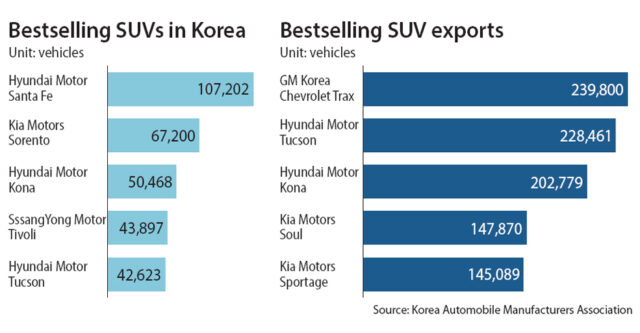
    SUVs have recently grabbed the spotlight in Korea, breaking both local and export sales records. According to the Korea Automobile Manufacturers Association (KAMA), the number of exported SUVs by five local automakers reached a new record of 1.38 million units in 2018, a 6.7 percent increase from the previous year. In just 17 years, the figure rose by 700 percent – exports recorded merely 196,111 units in 2000.

    Over the same period, overall exports of passenger vehicles declined 3.1 percent to 2.34 million units. The share of SUVs also reached an all-time high.

    Compact SUVs from Korea were most popular in export markets.

    GM Korea’s Chevrolet Trax was shipped the most, at 239,800 units, followed by Hyundai Motor’s Tucson at 228,461 units.

    Small-sized SUVs also performed well, with 202,779 units of Hyundai Motor’s subcompact SUV Kona shipped abroad, a 437 percent rise from the previous year.

    Kia Motors’ Stonic exported 58,989 units, increasing 75.8 percent from 2017.

    Much of the enthusiasm surrounding SUVs in markets abroad was also present in the local market.

    Last year, 519,883 SUVs were sold in Korea, passing the 500,000 unit mark for the first time.

    With a 12.7 percent rise from 2017 sales figures of 461,385 units, SUVs currently take up a 40.1 percent share in the overall passenger car sales figures.

    Meanwhile, passenger car sales, excluding SUVs, dropped 6.9 percent last year from the previous year.

    Hyundai Motor’s mid-sized SUV, the Santa Fe, was the most popular in Korea, selling 107,202 units. This was the first time that an SUV model recorded an annual sales figure over 100,000 units.

    The SUV market is expected to grow this year.

    As compact and small-sized SUVs are poised to lead exports and medium and small-sized SUVs the local market, large-sized SUVs are also being rolled out this year.

    Hyundai Motor’s Palisade, unveiled last November, recorded over 25,000 preorders in just three weeks, hitting 62.5 percent of the automaker’s annual sales target of 40,000 units for the model.

    It will likely take customers around seven months to receive the vehicle if ordered now.

    According to Hyundai Motor, the large-sized SUV is popular among older drivers. Customers in their 40s accounted for 37 percent of orders and those in their 50s made up 26.9 percent.

    “As high-quality amenities and vehicle stability that used to be developed through sedans is now applied to SUVs, there was quite a bit of progress,” said Kim Pil-soo, a professor of automotive engineering at Daelim University.

    “This year’s SUV sales and market share will grow as local and foreign SUVs have adopted the advantages of sedans,” added Kim.

  • Vietnam trade deficit could balloon to $3 billion

    Vietnam trade deficit could balloon to $3 billion

    Vietnam could face a trade deficit of $3 billion this year, after achieving the highest trade surplus in a decade in 2018. Export turnover in 2019 is expected to reach about $265 billion, down 17.4 percent from 2018. However, imports are expected to rise by 13.2 percent, reaching $268 billion, meaning a trade deficit of $3 billion, the Ministry of Industry and Trade has predicted.

    The volatility of trade policies of major economies like the U.S. and EU could hurt Vietnam’s exports this year, Deputy Minister of Industry and Trade Hoang Quoc Vuong said at a recent review conference.

    Geopolitical tensions and monetary policies which were tightened earlier than expected in many economies are other challenges for Vietnam’s export sector this year, he added.

    Global agricultural supply this year is expected to rise as countries hike up production of own agriculture sectors to avoid reliance on imports, and competition for agricultural and seafood products is set to intensify.

    Meanwhile, imports are forecast to continue to grow in manufacturing sectors that rely on imported materials or machinery.

    “Trade protection looks to be on the rise, especially after the U.S. has raised tariffs on imports from other countries. The US-China trade war is also not showing signs of cooling down,” Vuong said.

    Nguyen Xuan Cuong, Minister of Agriculture and Rural Development, said at the conference that 2019 was going to be a more difficult year after 2018’s windfall.

    “We’ve hit very high targets last year, so going even higher is extremely difficult. In addition, world trade is unstable, U.S.-China trade relations have not returned to normal, and Brexit remains unfinished. These are difficult challenges for our industrial and agricultural sectors this year,” said Cuong.

    He suggested that the Ministry of Industry and Trade supports growth in the agricultural sector, using its influence on supply chain areas like marketing and distribution.

    Vietnam had an export surplus of $7.2 billion in 2018, three times higher than that of 2017 and the highest in the past decade.

  • Indian rice prices slip as demand lags; Vietnam awaits major harvest

    Indian rice prices slip as demand lags; Vietnam awaits major harvest

    Rice export prices slipped in India as the rupee weakened and demand waned, prompting buyers to turn to other markets such as Vietnam. India’s 5 percent broken parboiled variety eased to $379-$384 per tonne this week from the $382-$387 range last week. “Demand is still weak due to higher prices,” said an exporter based in Kakinada in the southern state of Andhra Pradesh, adding that despite the fall, prevailing high rates were prompting buyers to look at other markets, such as Vietnam.

    The Indian rupee hit a month low on Thursday, increasing exporters’ margins from overseas sales and thereby prompting a reduction in prices.

    Export prices in India had shot up after the central state of Chhattisgarh, a leading rice producer, raised minimum paddy buying prices to 2,500 rupees per 100 kg from 1,750 rupees.

    In neighboring Bangladesh, an increase in domestic rates for rice could prompt the government to cut the import duty on the staple grain, traders said.

    The south Asian country, which emerged as a major importer of the grain in 2017 after floods destroyed crops, imposed a 28 percent duty in June last year to support its farmers after local production revived.

    In Vietnam, rates for 5 percent broken rice fell to $355-$360 a tonne from $370-$375 last week ahead of the country’s largest harvest, expected to begin in two weeks.

    “Indonesia’s state food procurement agency’s recent announcement that it may not import rice this year has also weighed on prices,” a Ho Chi Minh City-based source said.

    “We are negotiating a deal for around 10,000 tonnes to be delivered late February, and we are stuck at pricing. We’re asking for $360 and they are offering $345,” the trader said, adding that the shipment would be bound for Africa.”

    Another trader said China’s move to limit rice shipments from Vietnam may not be as bad as some traders initially feared.

    “It’s only the beginning of the year now and importing countries can change their import plans, especially when hit by natural disasters,” the trader said.

    In second biggest exporter Thailand, prices of the benchmark 5 percent broken variety widened to $385-$400, free on board Bangkok, from $390-$400 the previous week, mostly due to fluctuations in the value of the domestic currency.

    “Demand remains flat, but some exporters are starting to talk about possible orders from the Philippines,” a Bangkok-based trader said.

    The Thai market is likely to see additional supplies flowing in toward the end of this month, from the seasonal harvest, and this could in turn move prices, another trader in Bangkok said.

  • Vietnam seafood export remains red

    Vietnam seafood export remains red

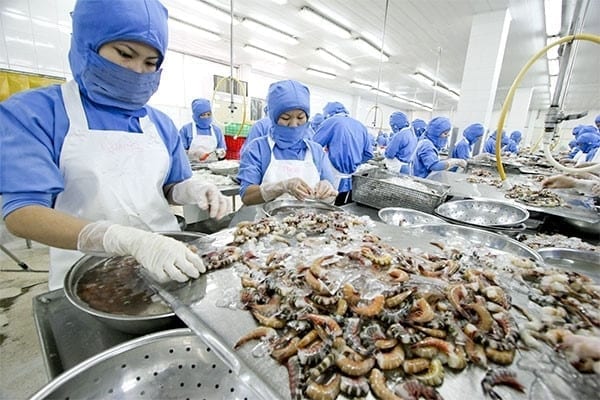
    Agifish, a major seafood company, reported a second straight year of losses in 2018 as both exports and domestic sales fell. The recently released 2018 audited financial report of one of Vietnam’s 10 largest seafood export companies puts its loss at VND178 billion ($7.66 million). The An Giang Fisheries Import Export Joint Stock Company, to give its formal name, had lost VND190 billion ($8.2 million) a year earlier.

    The company said the loss came as sales downed 43 percent to VND1.29 trillion ($55.27 million) in 2018, due to lower fish exports and domestic sales as well as lower revenues from by-products.

    The poor performance last year caused auditors to raise doubts about the company’s ability to remain a going concern, but the management rejected this, saying it would increase domestic and export sales, adjust prices and reduce costs to return to the black in 2019.

    Agifish has total assets of VND1.23 trillion ($52.92 million) and debts of VND800 billion ($34.42 million).

    The Vietnamese seafood industry faced some challenges last year such as being subject to a “yellow card” warning by the European Commission for failing to demonstrate sufficient progress in the fight against illegal, unreported and unregulated (IUU) fishing. There were also technical barriers and anti-dumping duties in several markets.

    Seafood export value rose 5.8 percent year-on-year in 2018 to reach $8.8 billion, according to the Vietnam Customs.

  • Indonesia Posts Biggest Trade Gap in 2018

    Indonesia Posts Biggest Trade Gap in 2018

    Indonesia posted a wider than expected trade deficit in December, bringing the gap for 2018 to the largest ever, the Central Statistics Agency, or BPS, said on Tuesday. December’s trade deficit was $1.10 billion, in a third consecutive month where the gap was wider than market expectations. A Reuters poll had expected a deficit of $930 million. Southeast Asia’s largest economy had a deficit of $8.57 billion in 2018, the widest ever, a stark contrast to its $11.84 billion surplus in 2017, BPS chief Suhariyanto said.

    Last year was challenging because exports had slowed at a time when imports surged due to a recovering domestic economy, said Josua Pardede, an economist at Bank Permata in Jakarta. This year would probably be equally challenging, he said.

    “Global economic growth is stagnating. Growth in our major trading partners such as China, the United States, Japan and Europe is slowing. If we can’t find new destinations for our products, export growth could slow further,” Josua said, noting that falling oil prices could cool down imports.

    Economists also warned that the trade data could mean Indonesia’s current-account deficit in the final quarter of 2018 was also wider than expected.

    Bank Indonesia Governor Perry Warjiyo previously said the current-account gap in the fourth quarter was expected at more than 3 percent of gross domestic product, though the full-year gap was seen at about 3 percent.

    The authorities issued a slew of measures to control imports last year, including mandating wider use of biodiesel, raising import tax and delaying big, import-heavy infrastructure projects.

    The central bank also raised interest rates six times by a total of 175 basis points last year to try to bring the current-account gap down, and Perry said the deficit in 2019 was expected at 2.5 percent.

    Fakhrul Fulvian, Trimegah Sekuritas economist, said December trade data proved that Indonesia may need to slow its GDP expansion further to “bring back the balance” and improve the current-account deficit.

    In December, exports dropped 4.62 percent to $14.18 billion on a yearly basis, a second month of contraction, compared with the poll estimate of 1.81 percent increase, largely because of a slump in shipments of mining products.

    Exports to China, Indonesia’s largest trading partner, also fell in December mostly because of a decline in coal and steel sales.

    Meanwhile, December imports were worth $15.28 billion, 1.16 percent up from a year ago, but slower than the forecast of 6.6 percent.

  • Trade war could drag Malaysia’s GDP down to 3.2% this year

    Trade war could drag Malaysia’s GDP down to 3.2% this year

    A full-blown trade war could drag Malaysia’s gross domestic product (GDP) growth to 3.2% this year, from an earlier projection of 4.7%, according to Affin Hwang Investment Bank Bhd head of research and chief economist Alan Tan. Tan said if the trade spat between the US and China were to escalate to a situation where tariffs are fully implemented on all Chinese goods, Malaysia’s GDP growth could be hit closer to 1.5 percentage point.

    “If Malaysia’s GDP is at 5%, the 1.5% will push the GDP growth down to 3.5%,” he told reporters at the press conference in conjunction with the bank’s launch ceremony of its Securities Borrowing and Lending (SBL) facility for retail investors yesterday.

    “Malaysia is an open economy and is still relying on trade. As we know, China today is the major market for Malaysia and if the global trade war were to escalate, we think that the Chinese economy, which has already shown signs of slowing down, may slow even further.

    “Therefore, we are of the view that Malaysia’s exports to China will be slowing down towards the second half of 2019 assuming if the trade war continues to drag on,” he added.

    However, Tan said domestic demand will continue to support the economic growth this year driven by several measures introduced by the government in Budget 2019, supporting the bank’s forecast on the GDP growth at the region of 4.7% this year.

    Additionally, he said that the bank opined that this time around, both US and China will be more willing to negotiate and possibly come out with a trade compromise by end of the first quarter this year, in view of the external uncertainties and weaker business sentiment.

    “Going into 2019, we already seeing signs of slowing down in the US and China. Unlike six months ago, where both economies continue to do relatively well,” he noted.

    Therefore, he said the bank believes that in the second half of 2019, following the resolutions of the global trade war, coupled with the weakening US dollar, interest will come back to the emerging market, including Malaysia.

    However, Tan said the bank expects that the market will remain flat in the first half of 2019 and looking at end-2019 target for the FBM KLCI at 1,810 points.

    On ringgit, he said the local currency is expected to appreciate to RM3.90-RM4.00 level in the second half of 2019, and possibly ending the year at RM3.90 against the US dollar, as the greenback is likely to soften towards the second half of the year.

  • Amazon offers Vietnamese products route to global market

    Amazon offers Vietnamese products route to global market

    Amazon is collaborating with Vietnam’s trade ministry to sell the country’s products on its system globally. Vu Ba Phu, director of the Ministry of Industry and Trade’s Trade Promotion Agency, said while announcing news of the collaboration that the U.S. e-commerce company would help especially small and medium-sized enterprises (SMEs) develop their brands on its website.

    It would also train Vietnamese firms in e-commerce and selling on its system, he said. Vietnamese businesses would be able to reach over 300 million users of the world’s largest online retailer by participating in Amazon Global Selling, he added.

    Bernard Tay, Amazon’s regional director for Southeast Asia, said Vietnam is among the top countries in the region in terms of capability to export via Amazon.

    It has strengths in household products, textile, footwear, and handicrafts, items that sell well on Amazon, he said.

    Vietnamese firms need to make products adopted to global trends and improve their English and branding skills, Tay added.

    Phu said Vietnamese SMEs would have to meet the high standards in many markets.

    “Big markets like the E.U., U.S. and Japan all have strict regulations on product quality and origin, and Vietnamese exports will have to comply with them.”

    Last year Amazon had organized a number of training programs for Vietnamese SMEs on how to sell on its system.

    Chinese e-commerce behemoth Alibaba is also interested in Vietnamese sellers. It started looking for sellers on its AliExpress website last July, saying it wanted to enable them to reach over 200 markets around the world.

    Vietnam’s e-commerce market grew by 25 percent in 2017, according to the Vietnam E-commerce Association (VECOM), which expects this rate to continue until 2020.

  • Proton aims to double exports in 2019

    Proton aims to double exports in 2019

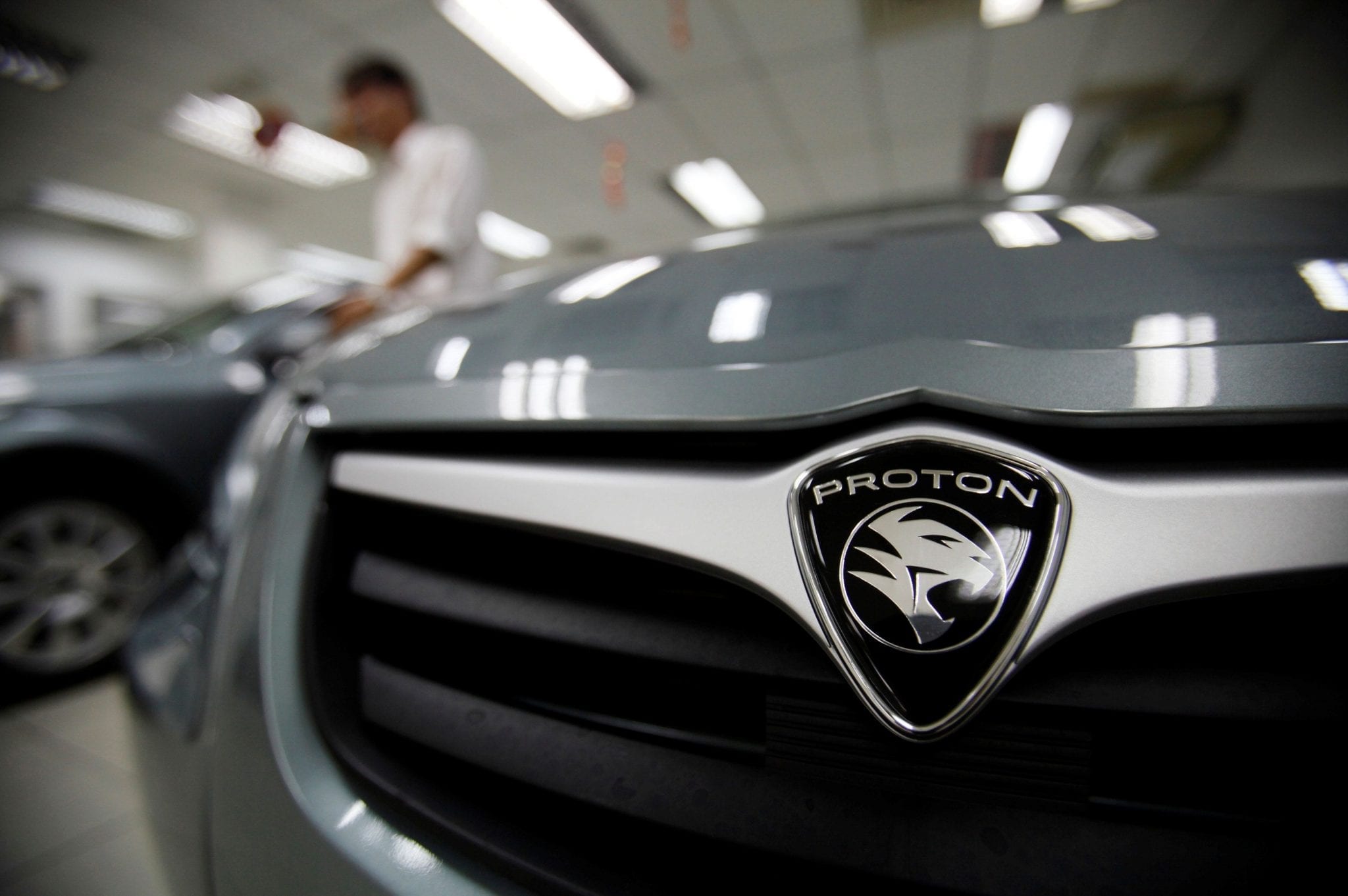
    Proton Holdings Bhd aims to double the export of its cars to at least 3,000 units this year from 1,388 units in 2018. “In 2017, we exported 248 units. This year we want to export more,” its CEO Li Chunrong said. With the support from the Malaysian government, he said, the group could export up to 4,000 to 5,000 units this year. Asked on the group’s plans to enter the Pakistani and the Middle Eastern markets, Li responded by saying that Asean will remain as the group’s focus for its export business, but it does not intend to abandon other markets.

    “We don’t want to forget the other markets (as well). We are trying our best to enter other markets,” he added.

    On response to the Proton X70 that was officially launched on Dec 12, 2018, the group said bookings for the sports utility vehicle have exceeded 15,000 units, with over 2,000 units delivered so far.

    Earlier, Proton deputy CEO Datuk Radzaif Mohamed said the group expects to bring an initial investment of RM47 million into the country through the second set of collaboration agreements between its vendors and their overseas counterparts.

    On Oct 10, 2018, Proton hosted its first signing ceremony where eight colla-boration agreements were signed and they are expected to help bring in an initial investment of RM170 million into the country.

    Radzaif said the collaborative agreements will range from technical tie-ups and joint ventures to 100% foreign direct investments with foreign vendors investing into the Malaysian economy.

    Aside from the investments in facilities and technology, he said, the collaborations are also expected to create about 450 new jobs in the automotive industry that range from assembly to design engineering.

    Additionally, these vendors will supply parts to Proton’s manufacturing facility in Tanjung Malim, which is undergoing expansion at a cost of RM1.2 billion.

    Meanwhile, Deputy International Trade and Industry Minister Ong Kian Ming, who witnessed the signing ceremony, said the government is targeting RM15 billion from exports of local automotive components and spare parts by 2020.

    Malaysian Automotive, Robotics and IoT Malaysia (MARii) CEO Datuk Madani Sahari shared that the value of exports for automotive components and parts could have easily touched the RM12 billion mark by end of December 2018.

  • Malaysia won’t lose out to Vietnam: Council

    Malaysia won’t lose out to Vietnam: Council

    Malaysia will not lose its competitiveness to Vietnam even though it does not ratify the Comprehensive and Progressive Agreement for Trans-Pacific Partnership (CPTPP). Malay Economic Action Council researcher Mohd Effuan Aswadi Abdul Wahab said there was no significant proof that there would be an increase in investment once a country signed a free trade agreement (FTA).

    “It is said that many companies, especially manufacturing firms will move to Vietnam after the country has ratified the CPTPP as the trade agreement is being seen as opening doors for companies to go to countries which have ratified the FTAs. This is certainly not true,“ he said.

    He said investors would look into various factors, including political stability, better infrastructure, skilled workers and rule of law, before making any investment decision.

    “Investors will certainly look into Malaysia’s economic policies before they make any investment decision.